LaPerm Cat Colors: Every Coat Color, Pattern, and Coat Type Explained
A complete visual guide to LaPerm cat colors: every accepted color and pattern, the shorthair versus longhair coat split, the curly vs straight-coat variant, a color-and-coat-type chart, eye colors, and which LaPerm colors are actually rare.
Petful is reader supported. As an affiliate of platforms like Amazon and Chewy, we may earn a commission when you buy through links on this page. There is no extra cost to you.
The Cat Fanciers' Association (CFA) accepts every single one of the laperm cat colors with zero restrictions, stating in its breed standard that "all coat colors and eye colors are acceptable." That one rule makes the LaPerm one of the most color-diverse cats alive: a single litter can hold a red tabby, a blue tortie, a seal point, and a silver smoke, and no two LaPerms look exactly alike. But color is only half the story with this curly-coated rex breed. The other half is coat type, because every color comes in two coat lengths (shorthair and longhair) and, occasionally, in a straight-coated variant that carries the curl gene without showing it. This guide breaks down the shorthair versus longhair split first (since that is what most buyers search for), then walks through every accepted color and pattern, a combined color-and-coat-type chart, the genetics behind the curls, and a clear answer on which LaPerm colors are actually rare.
- 1The CFA, TICA, and GCCF all accept every color and pattern in the LaPerm, with no points for coat color, pattern, or eye color
- 2LaPerms come in two coat lengths, shorthair and longhair, and both can be any color
- 3Tabby, red, and tortoiseshell are the most common colors because of the breed's foundation lines
- 4The curl is caused by a dominant gene, so the same gene also occasionally produces straight-coated kittens
- 5Eye color (copper, gold, green, blue, or aqua) has no genetic link to coat color in this breed

Sign up for expert-backed reviews and safety alerts all in one place.
LaPerm shorthair vs longhair: the first thing to decide
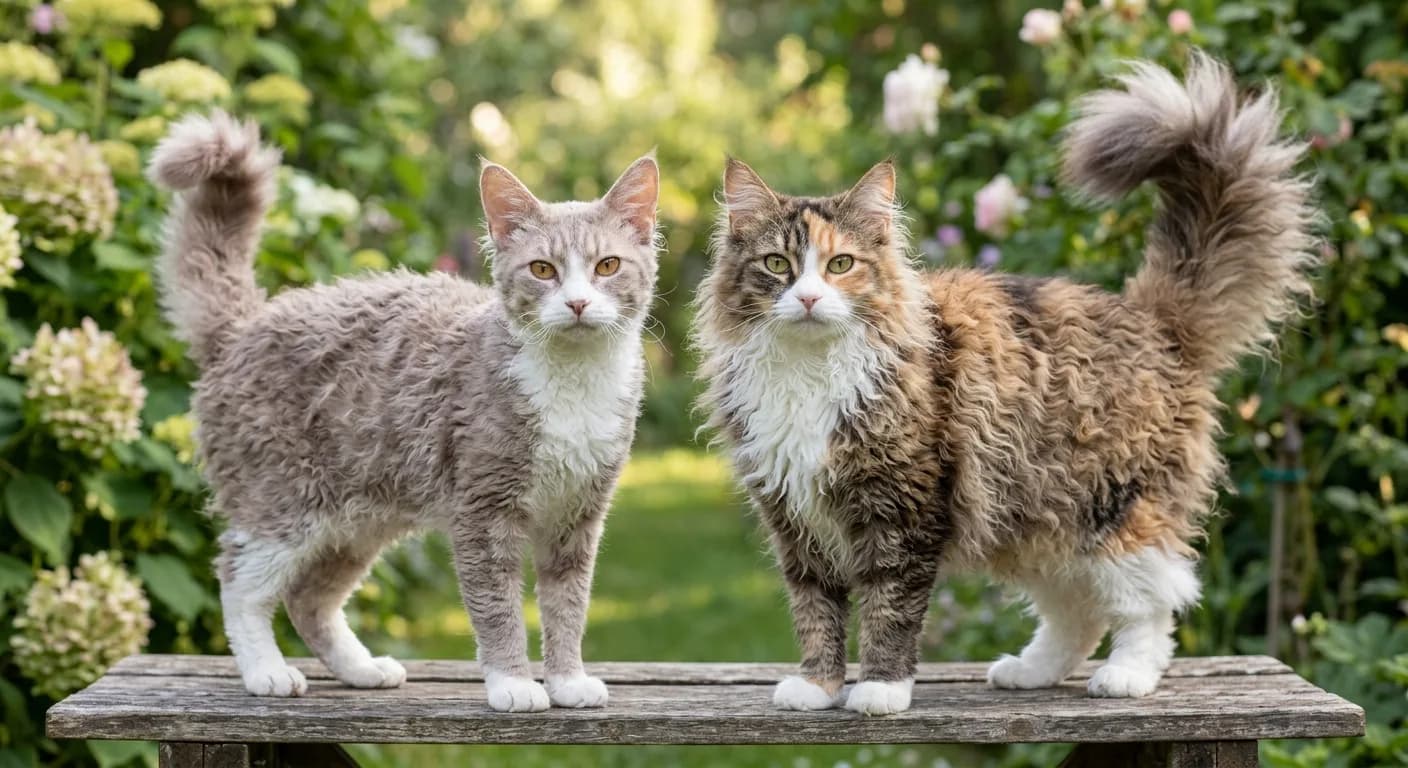
Before you pick a color, you pick a coat length, because the LaPerm comes in two recognized varieties: the LaPerm Shorthair and the LaPerm Longhair. Both carry the same dominant curl gene, both are shown and registered, and both can appear in any color or pattern. The difference is the length and the way the curl presents.
The LaPerm Shorthair has a coat that is short to medium, with a crisper, more textured curl that the GCCF standard describes as "waves over most of the cat." The hair tends to stand away from the body and often parts down the middle of the back, and the tail can look like a bottlebrush rather than a plume. Shorthairs show off the wave more on the legs, the underside, and around the face and ears.
The LaPerm Longhair is the variety most people picture when they think of the breed. The coat is medium-long, the curl is softer and forms longer ringlets, and the tail becomes a dramatic curly plume. The GCCF notes the longhair coat should "stand away from the body with minimal undercoat," and curl is preferred over wave. Longhairs typically have a fuller curly ruff around the neck and the curliest hair on the belly, throat, and behind the ears.
- Coat length and coat color are inherited separately in the LaPerm. Any color or pattern in this guide can appear on either a shorthair or a longhair, so choose your coat length and your color as two independent decisions.
Neither variety is rarer or more valuable as a rule. Longhairs are more visible in show photos and on breeder pages, which can make shorthairs feel less common, but breeders produce both regularly, and the two are often born in the same litter. If you want to compare the LaPerm's coat against other curly and wavy breeds, our guide to the Selkirk Rex covers a plush, dense curl that looks very different from the LaPerm's airy ringlets.

Never Scoop Again® with the Whisker Litter-Robot, the smart self-cleaning automatic litter box. Monitor visits and track weights for better overall care in the Whisker® app. Multi-cat friendly.
Petful may earn a commission when you click through to Whisker, at no extra cost to you.
Curly vs straight coat: the LaPerm variant most guides skip
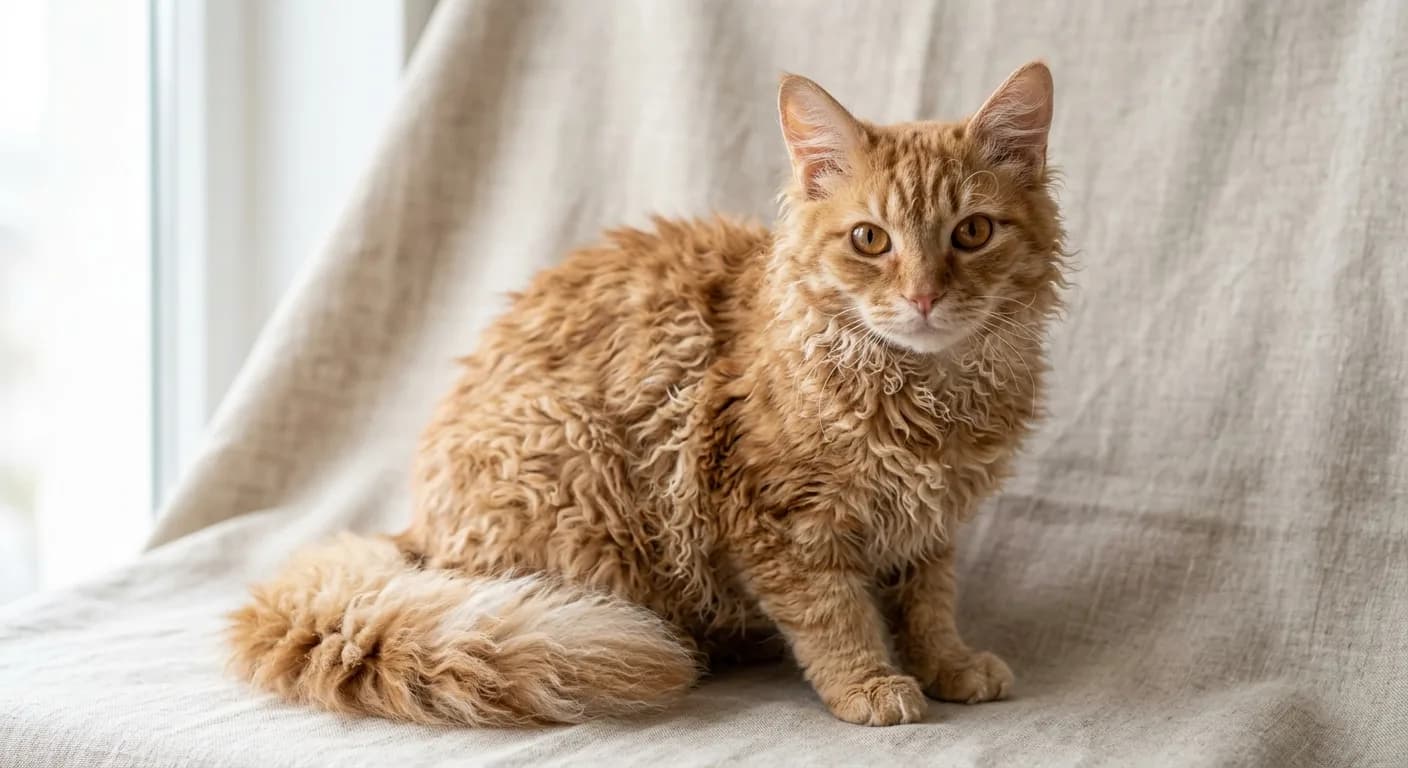
Here is a detail almost no LaPerm color guide explains: not every LaPerm is curly. Because the curl comes from a dominant gene, a LaPerm that inherits only one copy will be curly, but the breed's genetics still throw the occasional straight-coated variant, a cat that carries LaPerm ancestry and the curl gene's pairing but presents with a normal, straight coat.
These straight-coated LaPerms are real, recognized within the breed's breeding programs, and genetically valuable, because they can still pass the curl on to their kittens. Wikipedia's LaPerm entry even documents a "Lilac Point LaPerm Straight Hair Variant," confirming the straight coat shows up across colors and patterns just like the curly coat does. A straight-coated LaPerm looks like an ordinary cat at a glance but comes from curly parents and belongs to the same pedigree.
Most LaPerm kittens are also born looking nothing like their adult selves. Many arrive bald or with a short, sparse, almost straight baby coat, lose much of it around two weeks of age, and then grow their true curly (or, occasionally, straight) coat in over the following months. A kitten's curl can take up to six months or longer to fully develop, so the coat you see at eight weeks is not the coat you get at maturity.
- If a breeder offers a straight-coated kitten from curly LaPerm parents, it is a genuine LaPerm carrying valuable curl genetics, often sold as a pet or kept for breeding. It is not a mixed cat or a mistake, just the dominant curl gene not expressing the visible coat.
Every accepted LaPerm color and pattern
The LaPerm has no color standard to restrict it, which is why registries describe it as having every possible color and pattern recognized in cats. The CFA standard is explicit ("all coat colors and eye colors are acceptable"), the GCCF confirms "all colours and patterns are allowable," and TICA registers the breed with the same open palette. Below is how that enormous range breaks down into families you can actually recognize.
Solid colors
Solid (or "self") LaPerms are one even color from nose to tail. The recognized solids are white, black, blue (a soft blue-grey), red, cream, chocolate, cinnamon, fawn, and lilac (lavender). Blue, cream, lilac, and fawn are the "dilute" versions of black, red, chocolate, and cinnamon respectively, produced when a cat inherits two copies of the dilution gene that lightens the pigment.
Tabby patterns
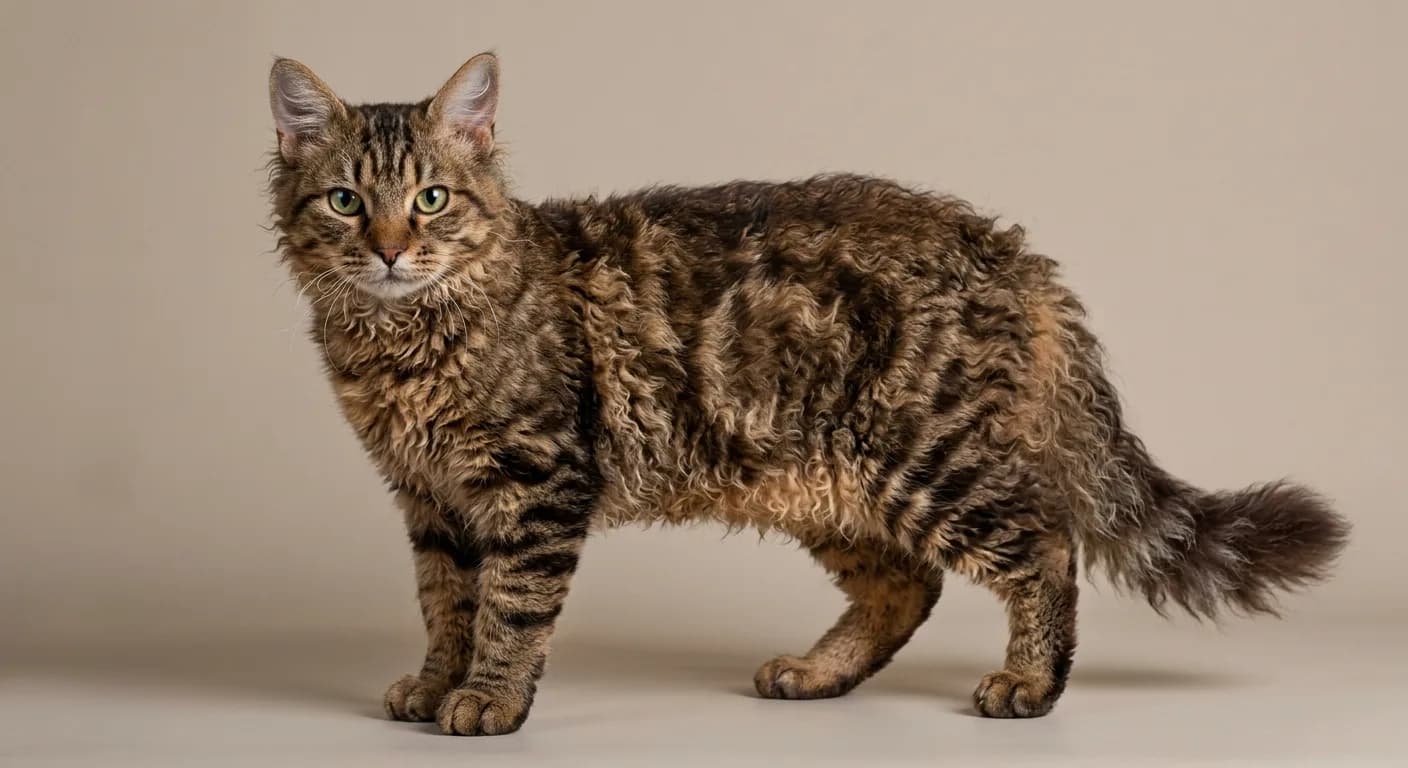
Tabby is one of the most common looks in the breed, a nod to the LaPerm's barn-cat foundation. All four tabby patterns appear: classic (bold swirls), mackerel (narrow vertical stripes), spotted, and ticked (agouti hairs with little patterning). Tabby comes in many ground colors, including brown, blue, red, cream, chocolate, cinnamon, lilac, fawn, and silver. A red tabby LaPerm with springy curls is one of the breed's signature looks.
Tortoiseshell, calico, and blue-cream
Tortoiseshell LaPerms mix black (or a dilute of it) with red in a mottled, brindled pattern, and they are almost always female because the red gene sits on the X chromosome. The family includes tortoiseshell, chocolate tortoiseshell, blue tortoiseshell (blue-cream), and lilac tortoiseshell. Add white and you get tortie-and-white or calico (large patches of black, red, and white), one of the most photographed LaPerm looks. A "torbie" is a tortie with tabby striping layered on top.
Pointed (Siamese-style) colors
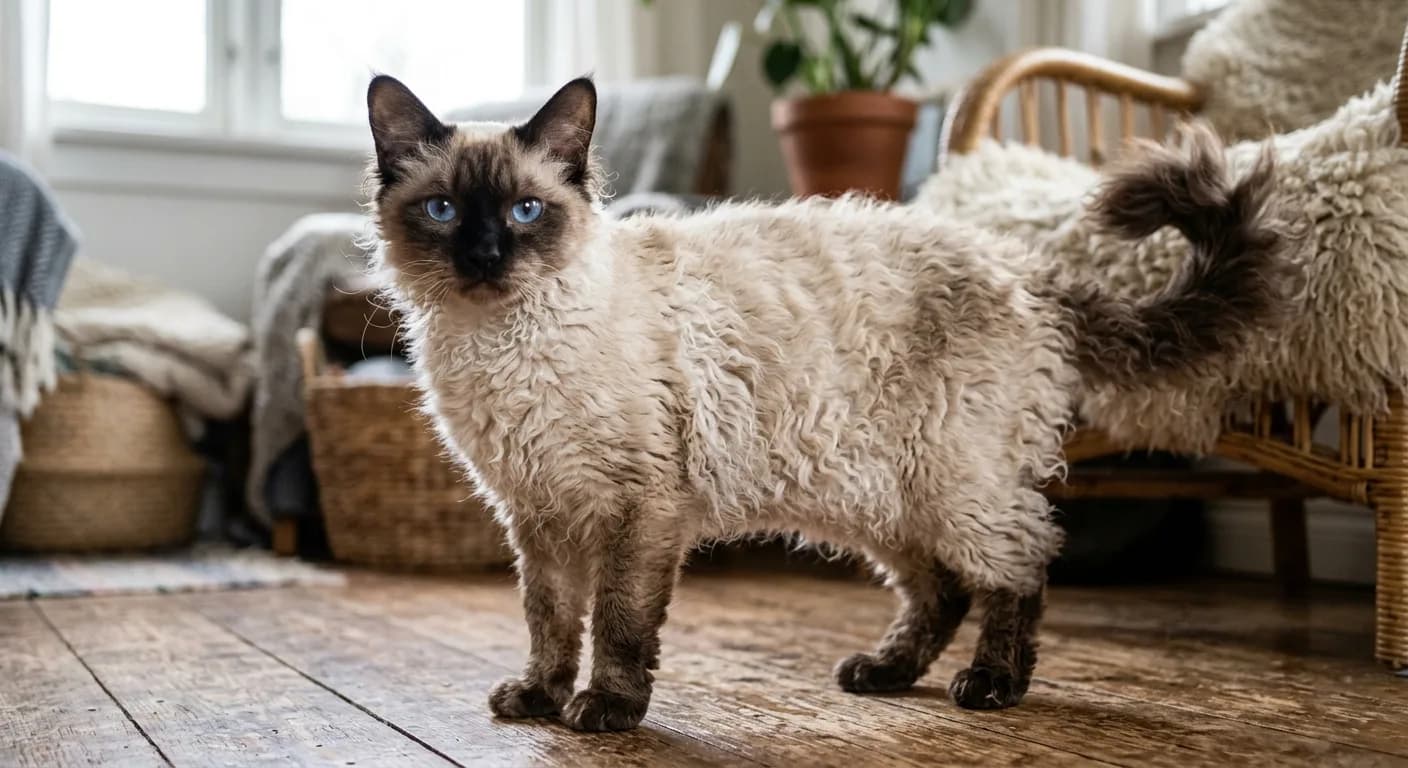
Yes, LaPerms come pointed. The colorpoint pattern gives a pale body with darker color concentrated on the ears, face mask, legs, and tail, exactly like a Siamese, and it brings blue eyes with it. Recognized points include seal point, blue point, chocolate point, lilac point, red point, cream point, plus tortie points and tabby (lynx) points such as seal tabby point. Because the curl plus the point pattern is an unusual combination, pointed LaPerms are a favorite for buyers who want something that reads as both exotic and soft.
Silver, smoke, and shaded
The silver series is where the LaPerm palette gets spectacular. The "inhibitor" gene removes pigment from the base of each hair, leaving color only on the tips. Depending on how much of the hair is colored you get smoke (color on most of the hair, silver-white roots that flash when the cat moves), shaded (color on about the top third), or silver tabby (silver ground with dark tabby markings). These come in black, blue, red, cream, chocolate, cinnamon, lilac, fawn, and tortie versions, giving names like blue silver shaded and chocolate tortie smoke.

63-inch multi-level cat tree with scratch posts, hammock, plush perches, and dangling toys. Vertical territory is non-negotiable for high-energy climbing breeds like the Bengal.
Petful may earn a commission when you click through to Chewy, at no extra cost to you.
Sepia and mink (Burmese and Tonkinese restriction)
A subtler group exists too. LaPerms can carry the sepia (Burmese color restriction) and mink (Tonkinese, "darker points") patterns, which are gentler versions of the pointed gene. Sepia cats show a rich, even color with only slightly darker points, and mink cats sit between sepia and full colorpoint with aqua or blue-green eyes. These are less common but fully accepted under the breed's open standard.
- Because the LaPerm has no color restriction and pulls from a genetically diverse barn-cat foundation, a single pair can produce kittens in completely different colors and patterns. Breeders select for coat curl and temperament first, and let color fall where the genes land.
LaPerm color and coat-type chart
Use this chart to match what you are seeing to the right name. The first column is the color family, the second shows how it presents, and the last reminds you that every one of these can come as a shorthair or a longhair, in a curly or (occasionally) straight coat.
| Color Family | What It Looks Like | Coat-Type Availability |
|---|---|---|
| Solid (self) | One even color: white, black, blue, red, cream, chocolate, cinnamon, fawn, lilac | Shorthair or longhair, curly or straight |
| Tabby | Classic, mackerel, spotted, or ticked stripes in brown, blue, red, silver and more | Shorthair or longhair, curly or straight |
| Tortoiseshell and calico | Mottled black-and-red, or tortie patches plus white; mostly female | Shorthair or longhair, curly or straight |
| Pointed (colorpoint) | Pale body, dark ears, mask, legs and tail; blue eyes | Shorthair or longhair, curly or straight |
| Silver, smoke and shaded | Silver-white roots with color on the hair tips, dramatic in motion | Shorthair or longhair, curly or straight |
| Sepia and mink | Subtle Burmese or Tonkinese shading; aqua eyes on minks | Shorthair or longhair, curly or straight |
- Read the label left to right: base color, then any modifier, then the pattern. "Blue silver tabby" is a blue cat with the silver gene in a tabby pattern. "Chocolate tortie point" is a chocolate-based tortoiseshell in the pointed pattern. Decode the parts and any breeder label makes sense.
What color are LaPerm cats' eyes?
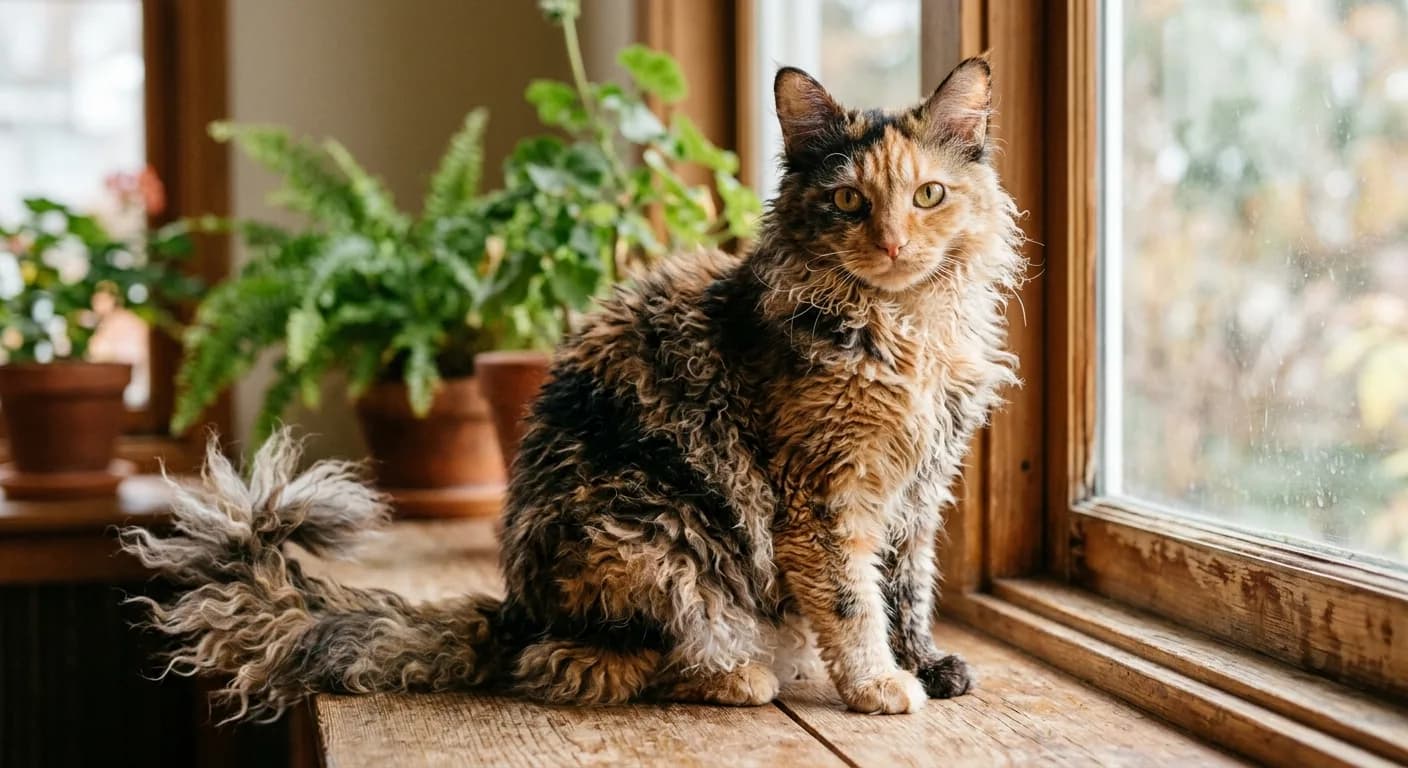
Unlike many breeds, the LaPerm has no required eye color and no link between the eyes and the coat. The GCCF standard states plainly that "the eye colour has no relation to the coat colour," and registries accept the full range: copper, gold, green, hazel, blue, and aqua. The only soft rule is that pointed LaPerms always have blue eyes (a built-in feature of the colorpoint gene) and mink-patterned LaPerms tend toward aqua. A solid black LaPerm might have brilliant copper eyes, while a silver tabby might have green, and both are perfectly correct.

108-oz stainless steel pet fountain with quiet pump and water-level window. Bengals are notoriously water-obsessed; a flowing fountain encourages hydration and pulls them away from sinks and toilets.
Petful may earn a commission when you click through to Chewy, at no extra cost to you.
Which LaPerm colors are rare?
Because the breed accepts everything, "rare" in a LaPerm is about genetics and breeding frequency, not about official recognition. A few honest patterns hold up.
The most common colors trace to the breed's foundation: tabbies, reds, and tortoiseshells appear most often because those were the colors in the original Oregon barn-cat lines. Solid black, blue, and brown tabby are easy to find.
The less common colors need recessive genes that both parents must carry. Chocolate and cinnamon, and their dilutes lilac and fawn, are genuinely harder to produce, so they show up far less often. The silver, smoke, and shaded series is striking and selectively bred, which keeps it less common and often more expensive. Pointed LaPerms (the curl-plus-Siamese-look) and the sepia and mink patterns are also less frequently seen.
The honest caveat: rarity in this breed reflects how hard the genes are to line up, not better health or quality. A common red tabby and a rare lilac silver are equally good cats. For more on how coat and color factor into purchase price, see our LaPerm cat price guide.
- Some breeders charge a premium for unusual colors like silver, lilac, or chocolate. The color genetics are harder to produce, but a rare coat does not make a healthier or better-tempered cat. Prioritize health testing (HCM screening) and a reputable breeder over chasing a color.
Does color affect a LaPerm's coat, shedding, or allergies?
Color does not change the LaPerm's defining traits. Whether seal point or silver tabby, the coat is the same soft, springy, low-shedding rex coat, the trademark curls trap loose hair rather than dropping it, and the breed sheds notably less than most cats. That low shed is why LaPerms are often (and somewhat inaccurately) called hypoallergenic. No cat is truly allergen-free, since the Fel d 1 protein lives in saliva and skin oils rather than the hair itself, but a low-shedding curly coat can spread fewer allergens around a home. We cover that nuance in detail in our guide to whether the LaPerm is hypoallergenic, and you can compare it with another low-allergen favorite in our Siamese hypoallergenic breakdown.
Grooming also stays the same across colors. A weekly comb-through keeps ringlets tidy, and a light mist of water can revive the curl on a longhair. Over-brushing actually loosens the curl, so the LaPerm is famously low-maintenance regardless of how dramatic its color is.
- No LaPerm color is immune to the breed's known concerns, chiefly hypertrophic cardiomyopathy (HCM) and possible kidney issues. Choose a breeder who screens for HCM and provides health records, and never let a rare or trendy coat stand in for documented testing.
Color, coat, and choosing your LaPerm
The smart way to shop is to separate the two decisions the way breeders do. First choose your coat length: a crisp, wavy shorthair or a soft, ringleted longhair. Then choose your color and pattern from the breed's wide-open palette, knowing that common foundation colors (tabby, red, tortie) are easier to find and rarer recessive colors (chocolate, lilac, silver) may cost more and take longer to source. Curl type is the third variable, with the rare straight-coated variant being a valuable carrier rather than a flaw.
If you are still weighing the LaPerm against other curly and rex cats before you commit, our comparisons of the Cornish Rex versus Devon Rex and our full list of cat-ownership pros and cons are useful next reads, and the breed's complete temperament, care, and history picture lives in our main LaPerm cat breed profile.
- 1Choose coat length (shorthair or longhair) and color separately, since they are inherited independently
- 2Foundation colors like tabby, red, and tortoiseshell are the most common and most affordable
- 3Chocolate, cinnamon, lilac, fawn, and the silver and smoke series are the rarest and often pricier
- 4A straight-coated LaPerm from curly parents is a genuine, valuable variant, not a defect
- 5Every LaPerm color shares the same low-shedding curly coat and the same need for HCM health screening
Frequently asked questions about LaPerm cat colors
All of them. The CFA, TICA, and GCCF all accept every color and pattern in the LaPerm with no restrictions. That includes solids (white, black, blue, red, cream, chocolate, cinnamon, fawn, lilac), every tabby pattern, tortoiseshell and calico, pointed (Siamese-style) colors, and the silver, smoke, and shaded series. Tabby, red, and tortoiseshell are the most common because of the breed's barn-cat foundation.
Among LaPerms, the chocolate and cinnamon colors and their dilutes (lilac and fawn) are the rarest because they need recessive genes from both parents, and the silver, smoke, and shaded varieties are striking but selectively bred and less common. No color is officially "rare" since the breed accepts everything, so rarity is about breeding frequency, not recognition.
Both are recognized varieties carrying the same curl gene and the same open color palette. The shorthair has a short-to-medium, crisper, wavier coat that stands away from the body with a bottlebrush tail, while the longhair has a medium-long coat with softer ringlets, a curly ruff, and a dramatic plumed tail. They are often born in the same litter.
Yes. Because the curl comes from a dominant gene, the breed occasionally produces straight-coated kittens from curly parents. These straight-coated LaPerms are genuine pedigreed cats that still carry and pass on the curl gene, so they are valued in breeding programs rather than treated as defects. Most LaPerm kittens are also born bald or short-coated and grow their full curl over several months.
Any color. The GCCF standard says eye color has no relation to coat color in this breed, and copper, gold, green, hazel, blue, and aqua all occur. The only built-in rule is that pointed LaPerms have blue eyes and mink-patterned LaPerms tend toward aqua, both effects of those specific color genes.
The LaPerm is a rex breed with a soft, springy, curly coat caused by a unique dominant gene unrelated to other rex cats, and it accepts every coat color and pattern, so no two look alike. It comes in shorthair and longhair varieties, sheds very little, is famously affectionate and people-oriented, and is sometimes (though not perfectly) called hypoallergenic.
A LaPerm kitten from a reputable breeder typically ranges from about $600 to $2,000, with rarer colors and patterns (such as silver, chocolate, lilac, or pointed) and show-quality lines pushing toward the higher end. Coat color can affect price, but health testing and breeder reputation matter far more than the coat. See our LaPerm price guide for a full breakdown.
LaPerms are generally hardy, but like many breeds they can be prone to hypertrophic cardiomyopathy (HCM), a heart condition, and occasionally kidney issues. Coat color has no bearing on health risk, so choose a breeder who screens breeding cats for HCM and provides documented health records regardless of the kitten's color.
LaPerms typically live 12 to 15 years, and many reach the upper end of that range with good care, a healthy weight, and regular veterinary checkups. Lifespan is tied to overall health and genetics, not to coat color or pattern.
Very. LaPerms are known as one of the more affectionate and people-oriented cat breeds, often described as clever, extroverted, and lap-loving. They tend to seek out their owners, ride on shoulders, and stay close, and this temperament is the same across every color and coat type.
Across shelters generally, plain solid black cats are statistically the least adopted, a pattern sometimes called "black cat syndrome." Within the LaPerm the dynamic flips, since the breed is prized for its curly coat rather than its color, and even a solid black LaPerm is sought after for its rare curls.

Coreen Saito is a pet writer and longtime shelter volunteer with more than a decade in animal rescue. She covers cat behavior, breed care, and the small, ordinary science of sharing a life with companion animals, with a particular focus on honest takes about the products and decisions that actually matter. At home in Arizona, she's outranked by Mac (a dog with the loudest opinion in the house), Rebel (a cat who governs by quiet authority), and Meri (an orange tabby who runs the late shift and the laundry basket). She writes about all three, plus the rescues that keep coming through her life, at LifeWithMinty.com.
Sign up for expert-backed reviews and safety alerts all in one place.