Is the LaPerm Cat Hypoallergenic? A Vet-Reviewed Look
Is the curly-coated LaPerm hypoallergenic? A vet-reviewed, evidence-based answer: the breed is low-shedding and traps loose hair, but still produces Fel d 1, so it is lower-allergen, not allergen-free, plus practical allergy-management tips.
Petful is reader supported. As an affiliate of platforms like Amazon and Chewy, we may earn a commission when you buy through links on this page. There is no extra cost to you.
Is the LaPerm cat hypoallergenic? The honest answer is no, not in the strict sense, and the peer-reviewed allergy research is blunt about why: every cat, the curly-coated LaPerm included, produces the major cat allergen Fel d 1, so there is no such thing as a truly allergen-free or hypoallergenic breed. A landmark study titled "Do hypoallergenic cats exist?" measured Fel d 1 across so-called hypoallergenic and normal breeds and found all of them make the protein, with up to an 80-fold swing between individual cats rather than between breeds. What the LaPerm's rex coat does do is shed very little, and because its springy ringlets trap loose, allergen-coated hair instead of scattering it around your home, many allergy sufferers genuinely react less to a LaPerm than to an ordinary cat. That is a real, meaningful difference, but it is "lower-allergen," not "no-allergen," and this guide (reviewed by veterinary surgeon Dr. Pippa Elliott) walks through exactly what is going on and how to live comfortably with one.
- 1No cat breed is truly hypoallergenic; all cats, including the LaPerm, produce the Fel d 1 allergen in saliva and skin glands
- 2The LaPerm is genuinely low-shedding, and its curly rex coat traps loose hair so fewer allergen-coated hairs spread around the home
- 3Fel d 1, not cat hair itself, is the protein that triggers most cat allergies; it is spread when a cat grooms and the dried saliva flakes off and goes airborne
- 4Individual cats vary enormously (up to 80-fold) in how much allergen they make, so meeting the specific cat before committing matters more than the breed label
- 5Practical steps (a reduced-allergen diet, HEPA filtration, hand-washing, and a cat-free bedroom) can cut your real-world exposure substantially

Sign up for expert-backed reviews and safety alerts all in one place.
What "hypoallergenic" actually means for a cat
The word "hypoallergenic" is widely misunderstood. It does not mean "causes no allergy." It means "below average" allergy potential, literally less allergy-causing, not allergy-free. So when breeders, breed clubs, or pages near the top of Google call the LaPerm hypoallergenic, the accurate reading is that this breed tends to provoke a lower allergic response than a typical cat, not that it is safe for everyone with a cat allergy.
This distinction matters because cat allergies are common and can be serious for sensitive people, ranging from itchy eyes and sneezing to asthma flare-ups. According to allergy and veterinary sources, the overwhelming majority of people with a "cat allergy" are not reacting to fur at all. They are reacting to a specific protein the cat's body makes. Understanding that one fact reframes the entire LaPerm question.
- A hypoallergenic cat is one that, on average, triggers a milder allergic response than other cats. It is a relative claim. No cat, the LaPerm included, is genuinely non-allergenic, so always test your own reaction before bringing one home.
Meet the allergen: Fel d 1, not cat hair
The protein behind roughly 90 percent of cat allergies is called Fel d 1. Peer-reviewed research shows it is produced mainly in a cat's salivary glands and sebaceous (skin oil) glands, with the anal glands contributing too. When a cat grooms itself, and cats groom constantly, that saliva coats the hair and skin. As the saliva dries, microscopic flakes of allergen-laden dander break loose, drift into the air, and settle on furniture, carpets, and clothing, where they can linger for months. That is what your immune system is reacting to.
Never Scoop Again® with the Whisker Litter-Robot, the smart self-cleaning automatic litter box. Monitor visits and track weights for better overall care in the Whisker® app. Multi-cat friendly.
Petful may earn a commission when you click through to Whisker, at no extra cost to you.
This is the crucial point for the LaPerm: Fel d 1 lives in saliva and skin, not in the hair shaft. So a cat could be completely bald and still produce the allergen (which is exactly why the hairless Sphynx is not hypoallergenic either). A curly coat does not switch off the gland that makes the protein. The LaPerm makes Fel d 1 like every other cat.
- Because Fel d 1 comes from saliva and skin glands rather than the hair itself, no coat type can prevent it. The LaPerm's curls help by holding shed hair in place, but the cat is still producing and depositing the allergen every time it grooms.
So why do so many people with mild cat allergies report doing better around a LaPerm? The answer is not that the LaPerm makes less protein by breed. It is about how much allergen actually reaches you, and that comes down to shedding and coat structure.
What the LaPerm's curly coat really does
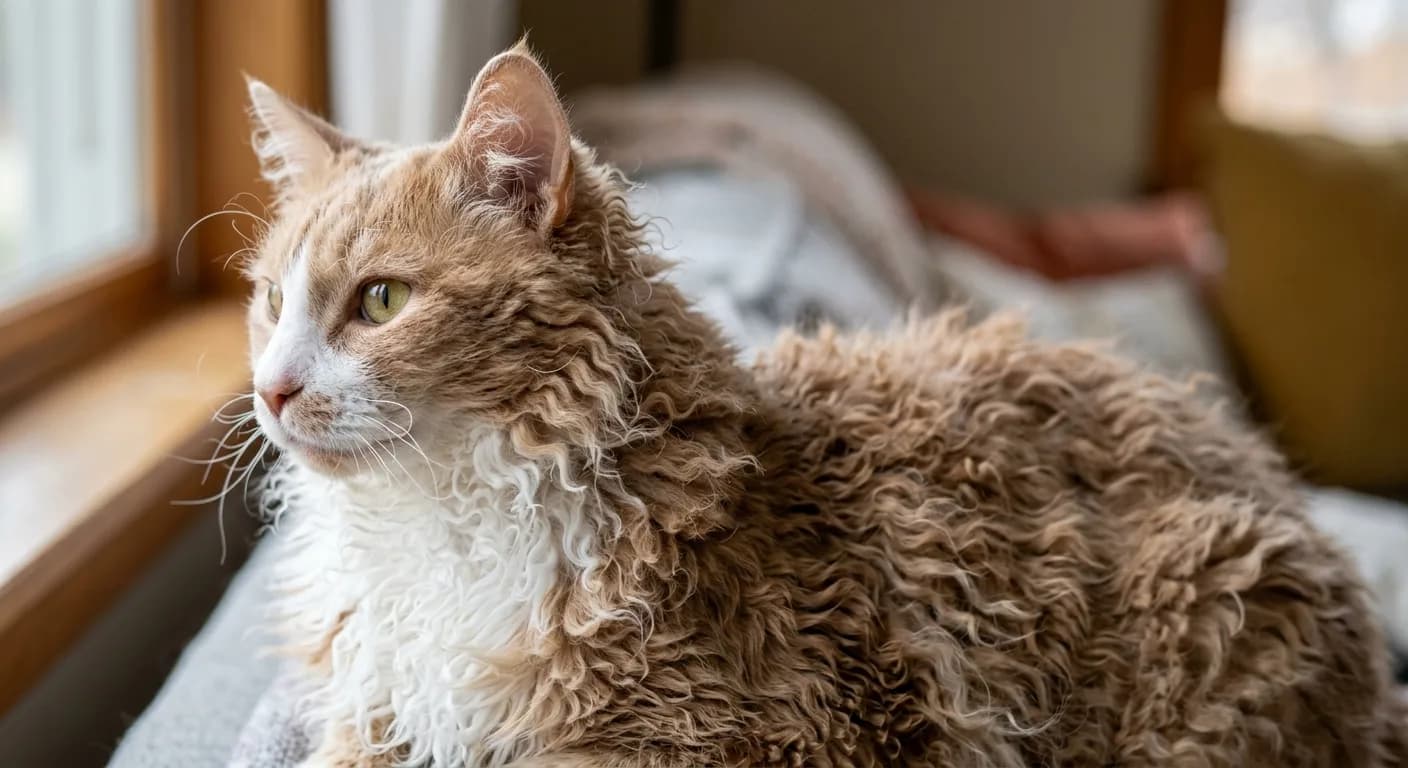
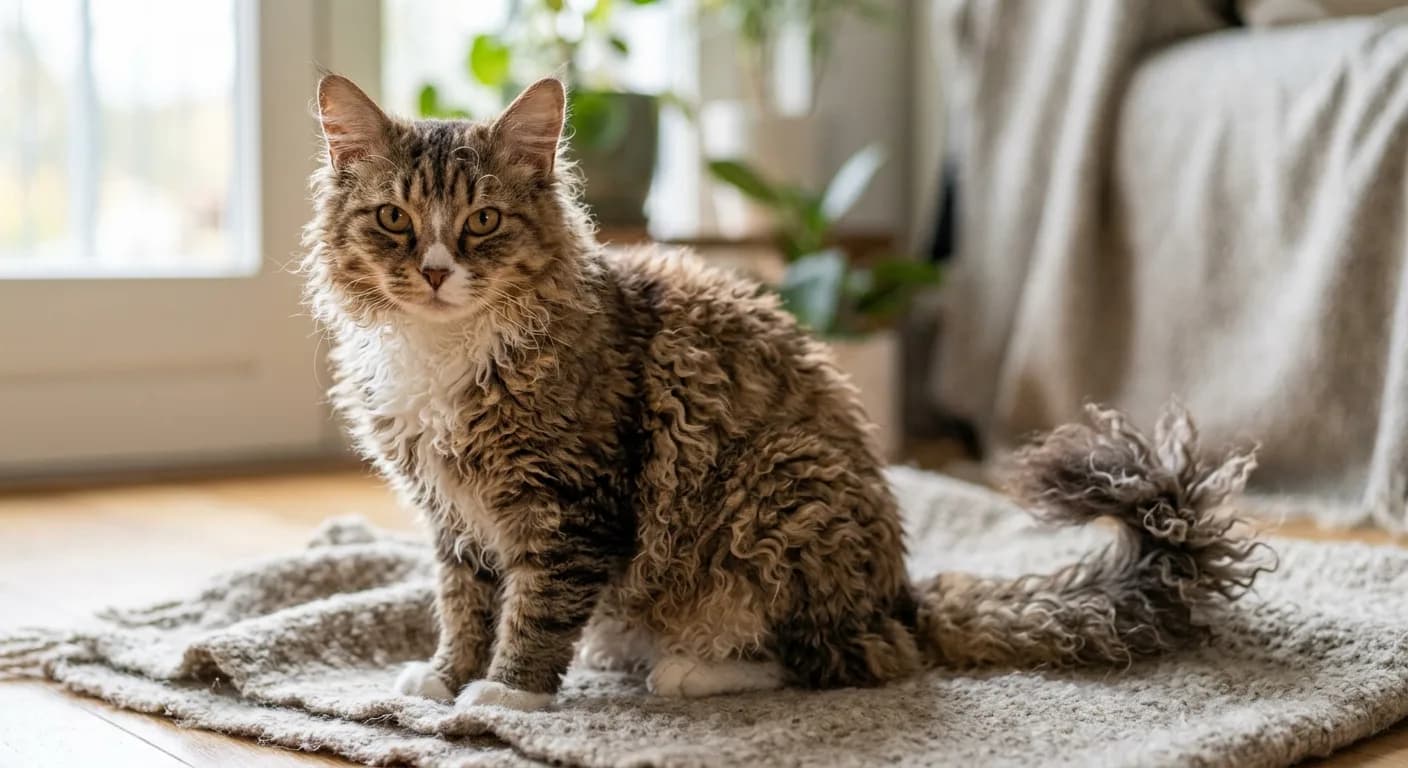
The LaPerm is a rex breed, meaning it carries a natural genetic mutation that produces a curly coat. The International Cat Association (TICA) describes that coat as "soft, curly, low-maintenance" with "loose, light, airy curls and bouncy ringlets," complete with curly whiskers and kinked eyebrows. The curls are tightest on the belly, the throat, and at the base of the ears. TICA also explicitly calls the coat "low shedding," and the breed rarely mats. Crucially, the LaPerm has no dense double undercoat like a Maine Coon or Persian, and that thin, single-layered structure is a big part of the low-shed story.
Here is the mechanism that genuinely helps allergy sufferers, as explained by the LaPerm Cat Club. First, less shedding means fewer allergen-coated hairs end up loose in your home in the first place. Second, the curl itself acts like a net: rather than dropping randomly the way straight fur does, shed hairs get caught and held within the cat's own ringlets until you comb them out. A cat with a thick, voluminous coat is essentially a larger reservoir for dried saliva and dander, while the LaPerm's lighter, hair-trapping coat keeps more of that allergen contained on the cat and out of your airspace.
That is a real reduction in the allergen load floating around your living room. It is not the same as the cat producing less Fel d 1. Think of it as exposure control rather than allergen elimination, and it is exactly why honest sources land on "low-shedding but not hypoallergenic."
- Both the shorthaired and longhaired LaPerm shed little, but the LaPerm Cat Club notes the shorthaired variety is generally the more allergy-friendly of the two, since the shorter coat holds and spreads slightly less allergen. If allergies are your top concern, lean shorthaired and spend time with the individual cat first.
The honest verdict: lower-shedding, not allergy-proof
Putting the science and the breed reality together, here is the verdict a careful owner should walk away with. The LaPerm is an excellent choice among lower-allergen cats because it sheds little and contains loose hair well, and many people with mild to moderate cat allergies live happily with one. But it is not hypoallergenic in the literal sense, it still produces Fel d 1, and someone with a severe cat allergy or cat-triggered asthma should be cautious and consult an allergist before committing.
The single biggest variable is not even the breed. It is the individual cat. Because Fel d 1 output varies up to 80-fold from one cat to the next (intact males tend to produce the most, neutered cats noticeably less), the specific LaPerm you bring home matters more than the breed name on the pedigree. This is why spending a few hours with a particular cat, ideally in a small room, is the most reliable allergy test there is.
| Factor | LaPerm Rating | What It Means for Allergy Sufferers |
|---|---|---|
| Shedding level | Very low | Fewer allergen-carrying hairs released into the home |
| Fel d 1 production | Normal (like all cats) | The breed does not make less of the actual allergen |
| Coat structure | Curly rex, hair-trapping | Loose hairs stay caught in ringlets until combed out |
| Dander spread | Reduced versus heavy-coated breeds | Less dried-saliva dander goes airborne |
| Undercoat | None (single, light coat) | No dense reservoir holding extra allergen |
| Best fit | Mild to moderate cat allergies | Severe allergy or asthma: test first, ask an allergist |
For the complete picture on temperament, care, and history beyond the coat, our full LaPerm cat breed profile covers everything you need before adopting, and because this is a rare breed, it is worth checking our LaPerm cat price guide to budget realistically.

63-inch multi-level cat tree with scratch posts, hammock, plush perches, and dangling toys. Vertical territory is non-negotiable for high-energy climbing breeds like the Bengal.
Petful may earn a commission when you click through to Chewy, at no extra cost to you.
How the LaPerm compares to other "hypoallergenic" cats
The LaPerm is often grouped with other breeds marketed as allergy-friendly, and it helps to know where it actually sits. The two other rex breeds, the Cornish Rex and Devon Rex, are the closest comparisons: like the LaPerm, they have light, low-shedding coats that release fewer hairs. Our breakdown of the Cornish Rex versus Devon Rex explains how those two short, wavy coats differ, and the same "lower-shedding, not allergen-free" rule applies to all three rex types.
The Selkirk Rex is another curly-coated relative worth knowing, though its plush coat behaves differently from the LaPerm's airy ringlets; you can compare its profile in our Selkirk Rex guide. Outside the rex family, the Siamese is frequently cited as allergy-friendly thanks to its fine, low-shed coat, and we cover that claim with the same evidence-based scrutiny in our piece on whether the Siamese cat is hypoallergenic. Across all of these breeds, the consistent message from the research is the same: choose for low shedding and individual allergen levels, never assume the label means safe.
- Siberian, Balinese, Siamese, Sphynx, Bengal, and the rex breeds all get the hypoallergenic label, yet studies confirm every one of them produces Fel d 1. The differences come down to shedding, coat type, and individual variation, not a breed that skips the allergen.
Living comfortably with a LaPerm if you have allergies
If you love the LaPerm and have a manageable allergy, several evidence-backed steps can meaningfully lower your day-to-day exposure. None of them eliminate Fel d 1, but stacked together they make a real difference.
Try a reduced-allergen diet
This is the newest and most science-backed tool. Researchers developed a cat food coated with an anti-Fel d 1 antibody (sourced from egg, called IgY) that binds and neutralizes the allergen in the cat's saliva before it ever reaches the coat. In a peer-reviewed clinical study published in 2019, cats eating this food showed an average drop of roughly 47 percent in active Fel d 1 on their hair by week ten, with individual reductions ranging from about a third to two-thirds. It does not work for every cat or every allergic person, but for many households it is the single most effective intervention available.

108-oz stainless steel pet fountain with quiet pump and water-level window. Bengals are notoriously water-obsessed; a flowing fountain encourages hydration and pulls them away from sinks and toilets.
Petful may earn a commission when you click through to Chewy, at no extra cost to you.
- A reduced-allergen diet lowers how much active Fel d 1 is on the coat, while regular combing removes the allergen-trapping hairs the curls hold onto. Used together they address both the source and the carrier. Give any diet at least three weeks before judging results, since that is when the studied reductions began.
Groom and bathe on a schedule
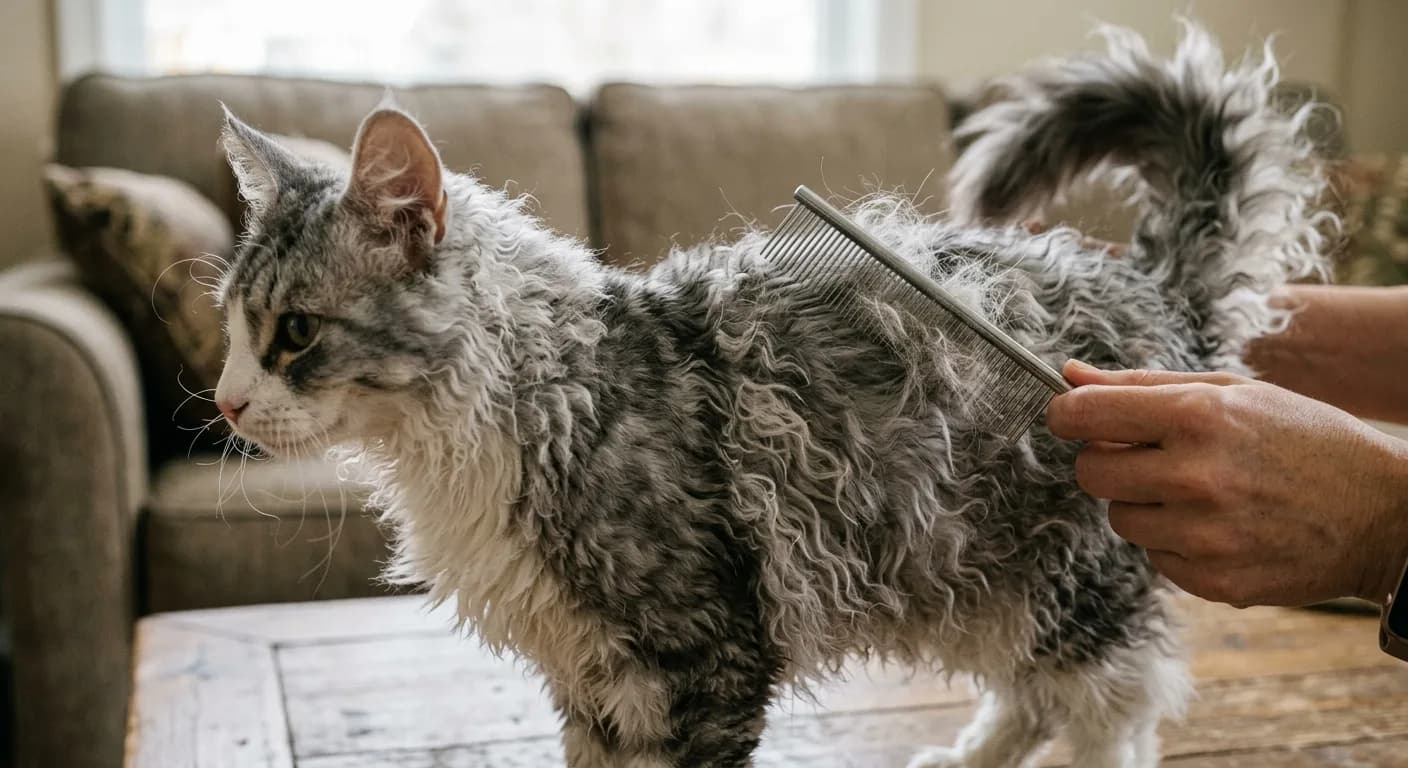
Because the LaPerm's curls hold shed hair, a gentle weekly comb-through (more often for longhaired LaPerms) physically pulls allergen-laden hair off the cat and into the trash rather than your sofa. Wiping the coat with a damp cloth between grooming sessions and an occasional bath can further reduce surface allergen. If you are allergic, have a non-allergic family member do the brushing where possible, or wear a mask and wash your hands and forearms afterward.
Control the environment
Standard allergen-reduction measures work well with a low-shedding cat. Run a HEPA air purifier in the rooms you use most, vacuum with a HEPA-filter vacuum, and cut down on heavy textiles (thick rugs, upholstered headboards) that trap dander. Wash hands after handling the cat and avoid touching your face, since rubbing your eyes after petting is a common trigger.
Keep the bedroom a cat-free zone
You spend roughly a third of your life in your bedroom, so keeping the cat out of it gives your airways a long daily break from exposure. A closed door plus a HEPA filter in that room is one of the highest-impact, lowest-effort changes an allergic owner can make.
- If you have asthma or have had strong reactions to cats, talk to a board-certified allergist before adopting any cat, hypoallergenic-labeled or not. Allergen-immunotherapy (allergy shots), prescription antihistamines, and proper asthma control can make cat ownership safe, but that plan should come from a clinician, not a breed page.
Is the LaPerm right for your household?
If your cat allergy is mild and you are realistic about the work involved, the LaPerm is one of the better-matched breeds you can choose. It is affectionate, people-oriented, low-shedding, and its curly coat genuinely keeps loose allergen-coated hair under control. Pair the cat with a reduced-allergen diet, sensible grooming, HEPA filtration, and a cat-free bedroom, and many sensitive owners do very well.
If your allergy is severe or you have cat-triggered asthma, treat the "hypoallergenic" label with healthy skepticism, spend real time with the individual cat first, and get an allergist's input before you commit. For a frank rundown of what to weigh before adopting any cat, our guide to the pros and cons of owning a cat is a useful next read.
- 1The LaPerm is low-shedding and allergen-trapping, making it a strong pick for mild to moderate cat allergies, but it is not truly hypoallergenic
- 2All cats produce Fel d 1 in saliva and skin, so manage exposure rather than expecting an allergen-free pet
- 3A reduced-allergen diet, regular combing, HEPA filtration, and a cat-free bedroom together cut real-world exposure the most
- 4Individual cats vary up to 80-fold in allergen output, so always meet and spend time with the specific cat before adopting
- 5Anyone with asthma or a severe cat allergy should consult an allergist before bringing home any cat
Frequently asked questions about the LaPerm cat and allergies
Not in the literal sense. No cat breed is truly hypoallergenic, because all cats, including the LaPerm, produce the Fel d 1 allergen in their saliva and skin glands. The LaPerm is, however, genuinely low-shedding, and its curly rex coat traps loose, allergen-coated hair instead of scattering it, so many people with mild cat allergies react less to a LaPerm than to an ordinary cat. Think "lower-allergen," not "allergen-free."
Two reasons, and neither is that it makes less allergen. First, it sheds very little, so fewer allergen-carrying hairs end up loose in your home. Second, its springy curls hold shed hair in place until you comb it out, rather than dropping it onto furniture. A heavy-coated cat acts as a larger reservoir of dried-saliva dander, while the LaPerm's light, hair-trapping coat keeps more allergen contained on the cat.
It is a protein called Fel d 1, which causes roughly 90 percent of cat allergies. It is made mainly in a cat's salivary and sebaceous (skin oil) glands, not in the hair. When a cat grooms, the saliva coats the coat, dries, and flakes off as microscopic airborne dander, which is what your immune system reacts to. This is why even a hairless cat is not hypoallergenic.
Both shed little, but the shorthaired LaPerm is generally the more allergy-friendly of the two, since the shorter coat holds and spreads slightly less allergen. Whichever you choose, the individual cat matters more than coat length, so spend time with that specific cat before deciding.
Yes, to a degree. A peer-reviewed 2019 study found that a cat food coated with an anti-Fel d 1 egg antibody (IgY) cut active Fel d 1 on the cat's hair by an average of about 47 percent by week ten, with individual results ranging from roughly a third to two-thirds. It does not work for every cat or every allergic person and takes about three weeks to start, but for many households it is the most effective single step.
Beyond the coat, the LaPerm is prized for its temperament: it is extremely affectionate, people-oriented, and clever, often following its owner around like a dog. Its hallmark is the curly rex coat of loose ringlets and corkscrew curls, with curly whiskers and kinked eyebrows. The breed traces to a single curly kitten named Curly born in Oregon in the early 1980s.
LaPerms are a relatively rare breed, so prices from a reputable breeder typically run higher than for common cats, often in the four-figure range depending on lineage, location, and whether the cat is pet or show quality. Our dedicated LaPerm price guide breaks down the full cost of buying and owning one.
The LaPerm is a hardy breed with a typical life expectancy of about 12 to 15 years, and TICA notes some individuals live as long as 20 years with good care. There are no breed-specific health conditions strongly tied to the curly-coat gene, though all cats benefit from routine veterinary care.
Yes. LaPerms are affectionate, adaptable, and people-focused, which makes them well suited to indoor life, and keeping a cat indoors is also safer and helps you control allergen spread. Provide climbing space, interactive play, and company, since this is a social breed that dislikes being left alone for long stretches.
Very. LaPerms are known for being gentle, lap-loving, and strongly bonded to their people, frequently seeking out shoulders and laps and reaching out to touch their owners' faces. That affectionate nature, combined with the low-shedding coat, is a big part of the breed's appeal for families.

Coreen Saito is a pet writer and longtime shelter volunteer with more than a decade in animal rescue. She covers cat behavior, breed care, and the small, ordinary science of sharing a life with companion animals, with a particular focus on honest takes about the products and decisions that actually matter. At home in Arizona, she's outranked by Mac (a dog with the loudest opinion in the house), Rebel (a cat who governs by quiet authority), and Meri (an orange tabby who runs the late shift and the laundry basket). She writes about all three, plus the rescues that keep coming through her life, at LifeWithMinty.com.
Sign up for expert-backed reviews and safety alerts all in one place.