Exotic Shorthair vs Persian Cat: Key Differences
Exotic Shorthairs and Persians share a breed-group body type, but coat length changes grooming and daily maintenance. Compare the practical differences.
Petful is reader supported. As an affiliate of platforms like Amazon and Chewy, we may earn a commission when you buy through links on this page. There is no extra cost to you.
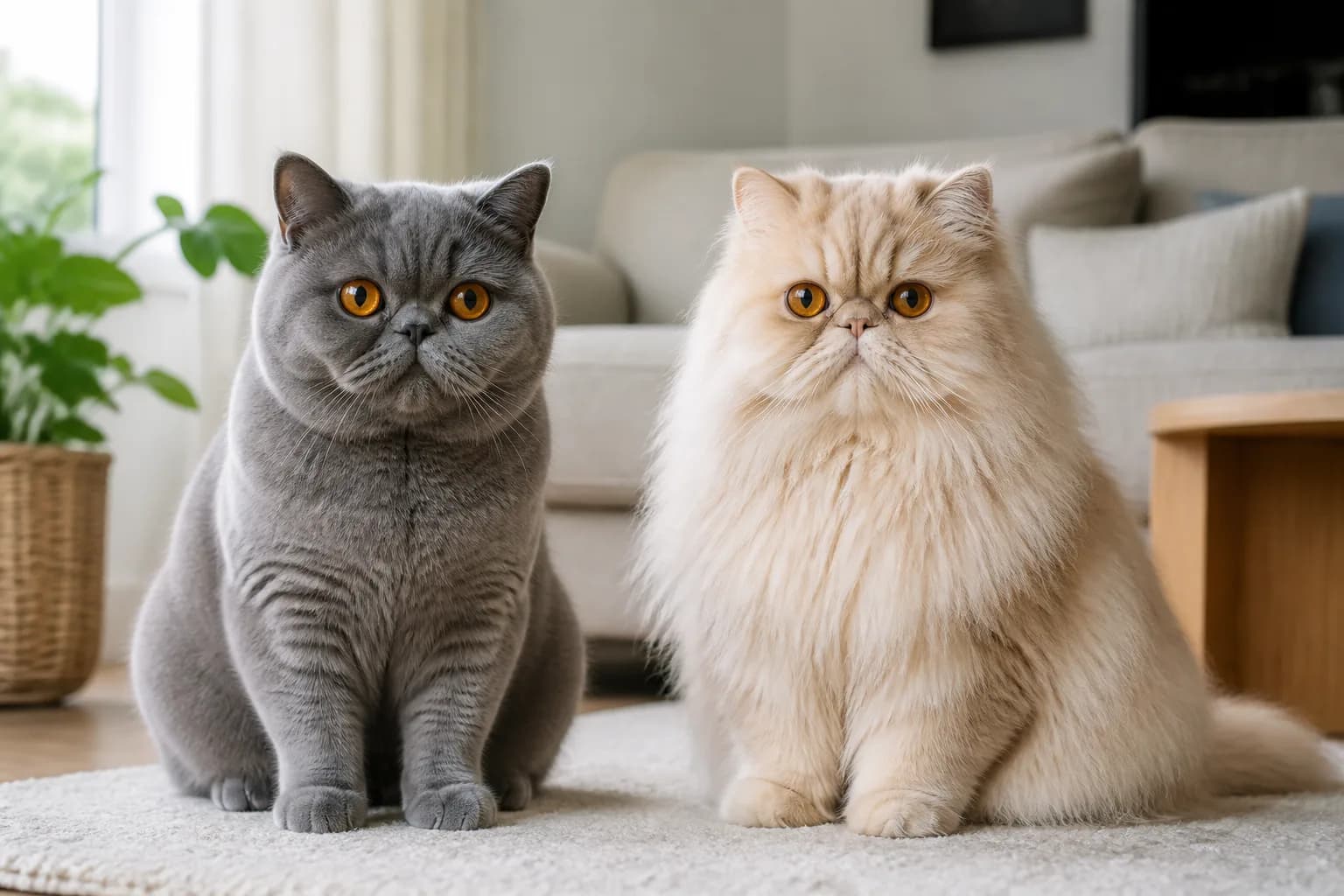
The central Exotic Shorthair vs Persian cat difference is coat length. Both belong to the Persian breed group and can share a substantial body, round head, short facial structure, broad color palette, and generally gentle companion-breed tendencies. The Exotic has a short dense coat, while the Persian has a long flowing coat that usually creates a larger daily grooming commitment.
Short coat does not mean no grooming, no face care, or no health considerations. The better choice depends on the individual cat, documented history, facial function, coat-care time, activity, household routine, and budget rather than one breed nickname.

Sign up for expert-backed reviews and safety alerts all in one place.
Exotic Shorthair vs Persian Cat at a glance
Persian cat vs Exotic Shorthair comparisons should begin with the short, dense Exotic coat and the long, flowing Persian coat because coat length creates the clearest recurring workload difference. The Exotic generally needs less combing, while the Persian usually needs more frequent, thorough grooming and mat prevention. Both still require individual face, eye, dental, breathing, nutrition, activity, and veterinary planning.
Exotic Shorthair vs Persian does not mean easy cat versus difficult cat. A useful decision separates the known coat and grooming distinction from shared Persian-group context, then checks the actual cat's records, facial function, coat condition, handling tolerance, activity, behavior, and household history. The comparison should also include available care time, grooming backup, ordinary cost, emergency readiness, and whether the home can maintain the routine through travel, illness, and aging.
- 1Answer-first breed guidance starts with coat length because it creates the clearest daily grooming difference
- 2Individual cats can vary in facial function, coat condition, activity, handling tolerance, and behavior
- 3The Exotic's short coat reduces combing work but does not remove face, eye, dental, breathing, or veterinary considerations
- 4Choose around records, function, time, and household fit
Exotic Shorthair vs Persian at a glance
The TICA Exotic Shorthair profile identifies the Exotic within the Persian breed group, while the CFA Exotic profile describes the short plush coat as the practical distinction. The shared group context matters because the cats can look closely related beneath the coat.
Use this at-a-glance comparison as a screening step, not a verdict. The Exotic generally reduces coat work, while the Persian increases daily grooming and mat-prevention time. Both still require individual assessment of facial function, eye comfort, dental findings, body condition, behavior, records, preventive care, and household capacity. Compare the actual cat and a maintainable routine before treating a breed tendency as the deciding fact.
The Persian cat vs Exotic Shorthair decision should separate coat work, face care, ordinary observation, and veterinary planning. Clear decision labels make those tradeoffs scannable, while source-aware breed distinctions prevent a group tendency from becoming a promise about one cat.
| Clear decision labels | Exotic Shorthair | Persian |
|---|---|---|
| Coat | Short, dense, plush coat | Long, flowing coat with a full silhouette |
| Grooming frequency | Regular combing and shedding control, adjusted to the individual | Usually daily coat attention plus careful mat prevention and hygiene |
| Face care | May need routine eye-area and facial-fold care | May need routine eye-area and facial-fold care |
| Body and face | Persian-group cobby body and round head | Persian-group cobby body and round head |
| Activity | Often gently playful, with individual variation | Often calm to moderately playful, with individual variation |
| Source-aware breed distinctions | Short coat lowers one workload but does not prove lower overall care | Long coat raises grooming work but does not define personality |
| Best fit | Household wanting the group type with less coat work | Household prepared for sustained long-coat grooming |

Petful may earn a commission when you click through to Chewy, at no extra cost to you.
Shared breed group and history
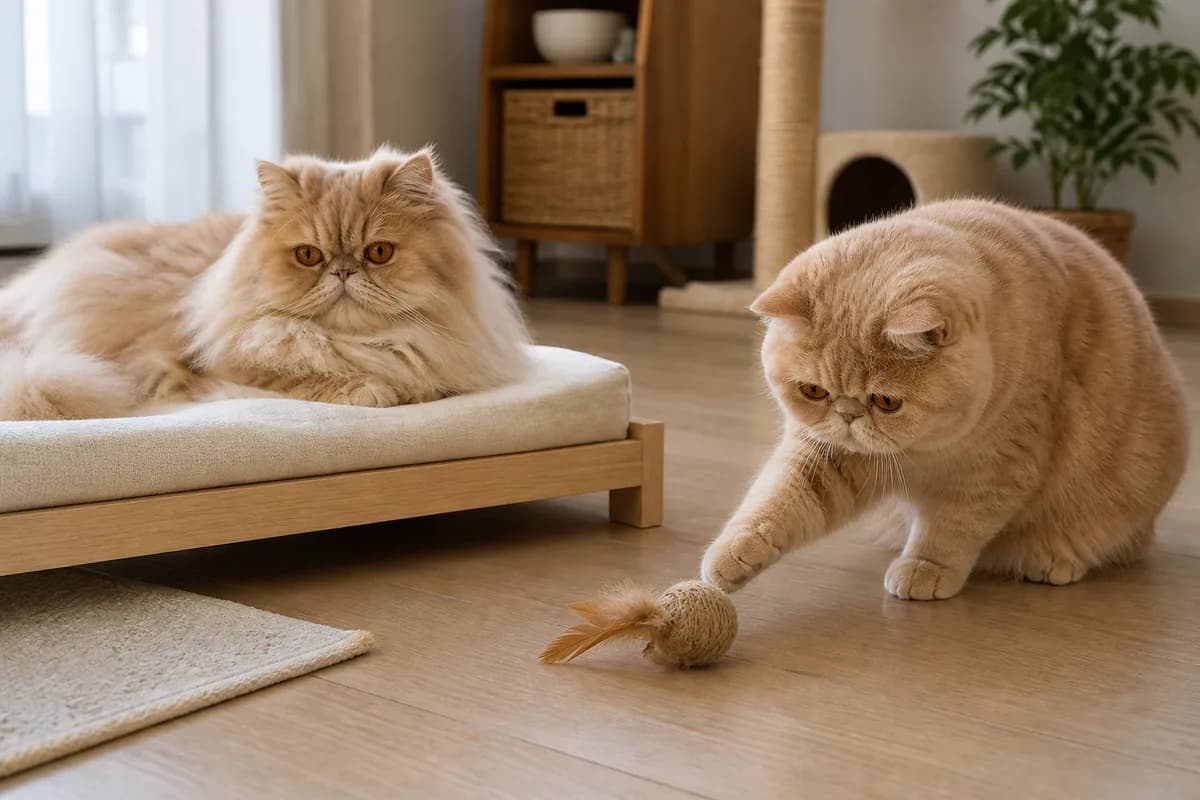
Exotic Shorthairs were developed as the short-coated counterpart within the Persian breed group. That relationship explains the shared body, head, facial structure, eye shape, colors, and many broad temperament descriptions.
It also prevents a common mistake. The Exotic is not simply any Persian-looking cat with short fur, and a longhaired kitten related to Exotics should not be identified from appearance alone. Pedigree and registry documentation tied to the individual establish identity.
Petful's Exotic Shorthair breed guide owns the complete Exotic profile. Petful's Persian cat breed guide owns the longhaired breed's history, traits, and care overview.
Why the shared group matters
The relationship explains why a coat-only comparison is incomplete. Both cats may need eye-area observation, facial-fold care, dental attention, heat-aware housing, and veterinary assessment based on the individual. The long coat adds substantial grooming work, while the short coat changes only one layer of daily care.
Ranking pages can imply short coat means low care overall. That shortcut is misleading because coat length does not reveal airway function, tear drainage, dental arrangement, body condition, grooming tolerance, behavior, ordinary face care, or future veterinary needs. Use the coat to compare recurring combing and mat risk, then evaluate the rest separately with records, direct observation, and veterinary guidance for the individual cat.
Similarity is useful, but not proof
Use visible traits as observations:
- Round head and full cheeks.
- Short, broad facial profile with individual variation.
- Substantial cobby body and relatively short legs.
- Large round eyes.
- Broad range of coat colors and patterns.
Then keep the evidence boundary intact. Appearance can support a resemblance description, while records establish ancestry. A shelter, seller, photograph, or veterinary intake label can repeat reported history without independently verifying it.
Coat length and grooming
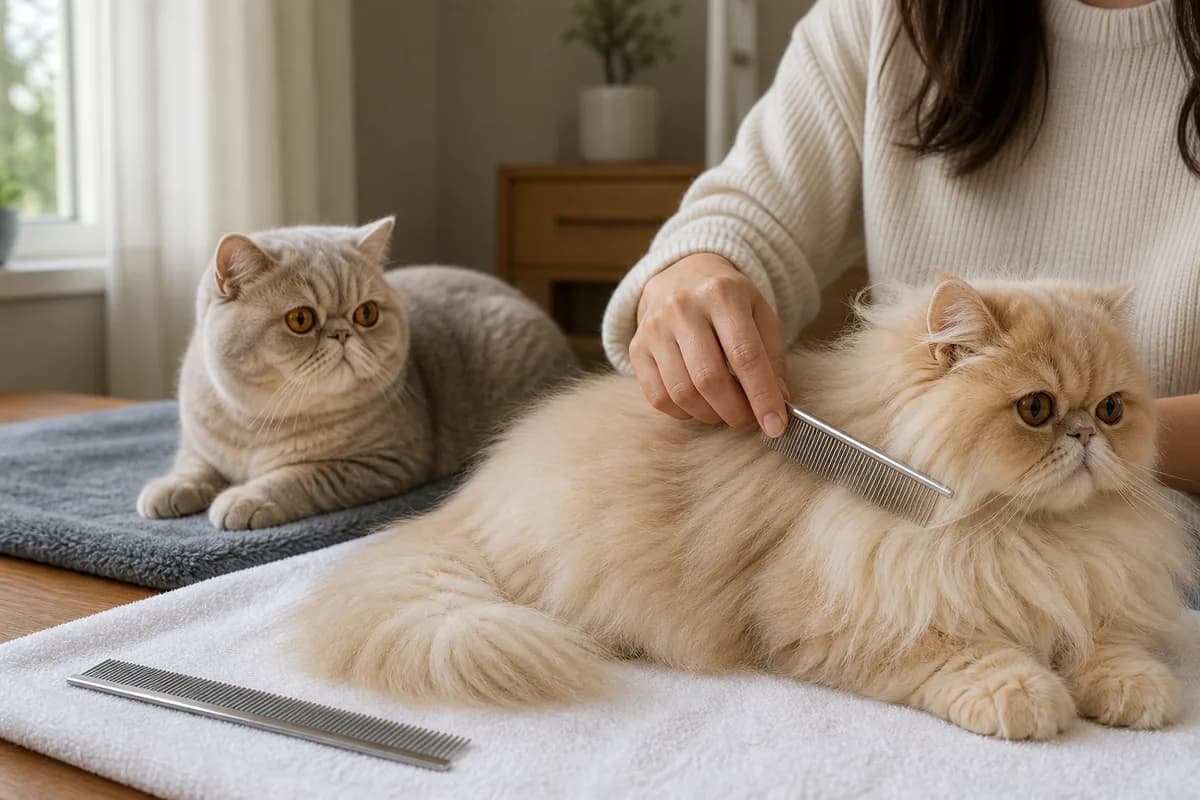
The Exotic's short dense coat generally needs less combing time than a Persian's long coat. That is a meaningful practical advantage, but it does not make the coat maintenance-free. Both breeds shed, and either cat may need more help with grooming because of age, body condition, arthritis, illness, or individual coat texture.
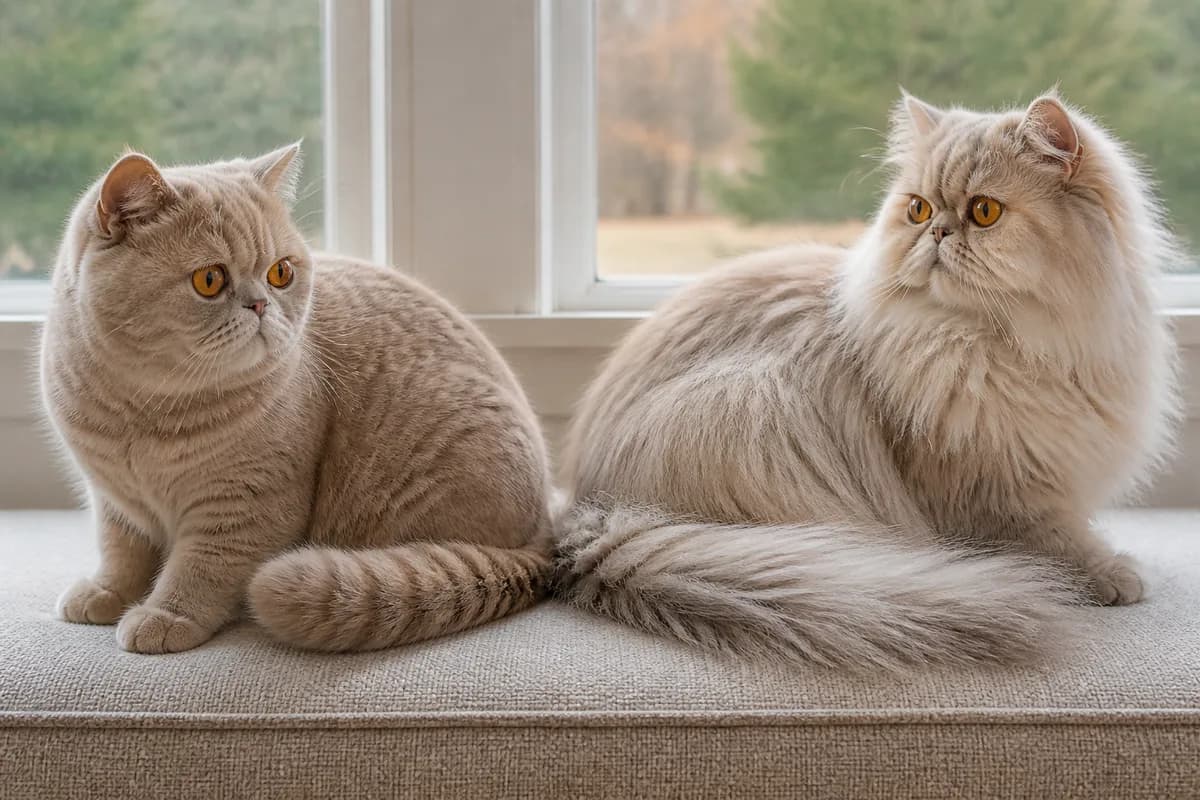
For an Exotic Shorthair, a regular combing schedule can remove loose hair, reveal skin changes, and reduce swallowed fur. For a Persian, consistent long-coat combing is more important because tangles can become mats close to the skin. Pay particular attention to friction areas such as behind the ears, under the legs, chest, belly, and hindquarters.
Do not pull or cut a tight mat at home. Skin can be drawn into the mat and injured. Ask a veterinarian or qualified feline groomer for safe options, especially when the cat is painful, fearful, elderly, or medically fragile.
A daily, weekly, and seasonal care comparison
This daily, weekly and seasonal care comparison with an evidence-confidence ladder keeps recurring work separate from uncertain individual needs. Use the framework, then adjust it to the cat:
- Daily: Observe eyes, face, appetite, breathing, comfort, litter use, and coat condition. A Persian may also need a complete gentle coat check.
- Several times weekly: Comb the Exotic as needed; continue thorough Persian grooming; inspect skin and high-friction areas.
- Weekly: Wash bedding, inspect tools, review nails and ears without unnecessary cleaning, and note any change.
- Seasonally: Expect shedding shifts, reconsider room temperature and hydration, and adjust grooming frequency.
Translate the framework into time
For one week, time the care you can actually sustain. Include setting up tools, cooperative handling, combing, cleaning the grooming area, laundering bedding, and checking the face. Do not count only the minutes when the cat is calm and the coat is already easy.
The Exotic usually has the lower coat-care burden, but grooming frequency still depends on shedding, skin, age, body condition, and self-grooming ability. The Persian generally needs more frequent and thorough coat work to prevent tangles from becoming mats. A professional grooming plan may be useful for some individuals, but it does not replace daily observation at home.
Use an evidence-confidence ladder
Start with direct observation of the actual coat and handling tolerance. Add veterinary or groomer findings when pain, skin disease, mats, mobility, or another health issue affects care. Treat a seller's broad temperament or “easy coat” statement as reported history until it is supported by records and the individual cat's behavior.
Readers need time and grooming tradeoffs separated from shared facial considerations. The daily, weekly, and seasonal schedule answers the time question by identifying recurring combing, coat checks, tool cleaning, bedding care, and backup labor. The health section below addresses the separate facial and veterinary context, including breathing, heat, eyes, dental findings, and function that coat length cannot reveal or predict.
A Necoichi wall scratcher can provide a stable vertical scratching option for either breed. Scratching supports normal stretching and marking behavior but does not remove loose undercoat or prevent mats.
Petful may earn a commission when you click through to Chewy, at no extra cost to you.
Shared and individual health considerations
The comparison page delegates Exotic Shorthair health problems to the dedicated Exotic Shorthair health and lifespan guide. The term brachycephalic describes a shortened skull and muzzle. Both breeds can have facial structure, tear overflow, facial folds, dental concerns, and heat or breathing considerations, but only an individual veterinary assessment can interpret signs, function, urgency, and findings for the named cat.
The Exotic's short coat does not eliminate those needs. Likewise, the Persian's long coat adds grooming work without proving that one individual will have more severe facial or medical concerns than another.
Face and eye care
When simple cleaning is appropriate, use soft clean material and gentle motions on the fur below the eye. Stop if the cat is painful or resistant. Squinting, an eye held closed, cloudiness, marked redness, visible injury, changed pupil, or sudden discharge deserves prompt veterinary guidance.
Short facial structure can also affect breathing and heat tolerance. Open-mouth breathing, pronounced effort, blue or gray gums, collapse, or rapid worsening requires urgent veterinary triage. No comparison page can determine whether a sound is normal.
Use the dedicated health guide for breathing, eye, kidney, dental, heart, urgent-sign, and health-record questions without letting this comparison page cannibalize that intent. For a Persian, follow the individual's veterinary records and breed-specific guidance rather than assuming that every Persian-group concern is identical across cats.
Body, face and size
Both breeds should present the Persian-group impression of a substantial balanced body, broad chest, round head, full cheeks, and large round eyes. Coat length changes the silhouette. Long Persian fur can make the body look larger and the legs look shorter, while the Exotic's plush short coat reveals the underlying outline more clearly.
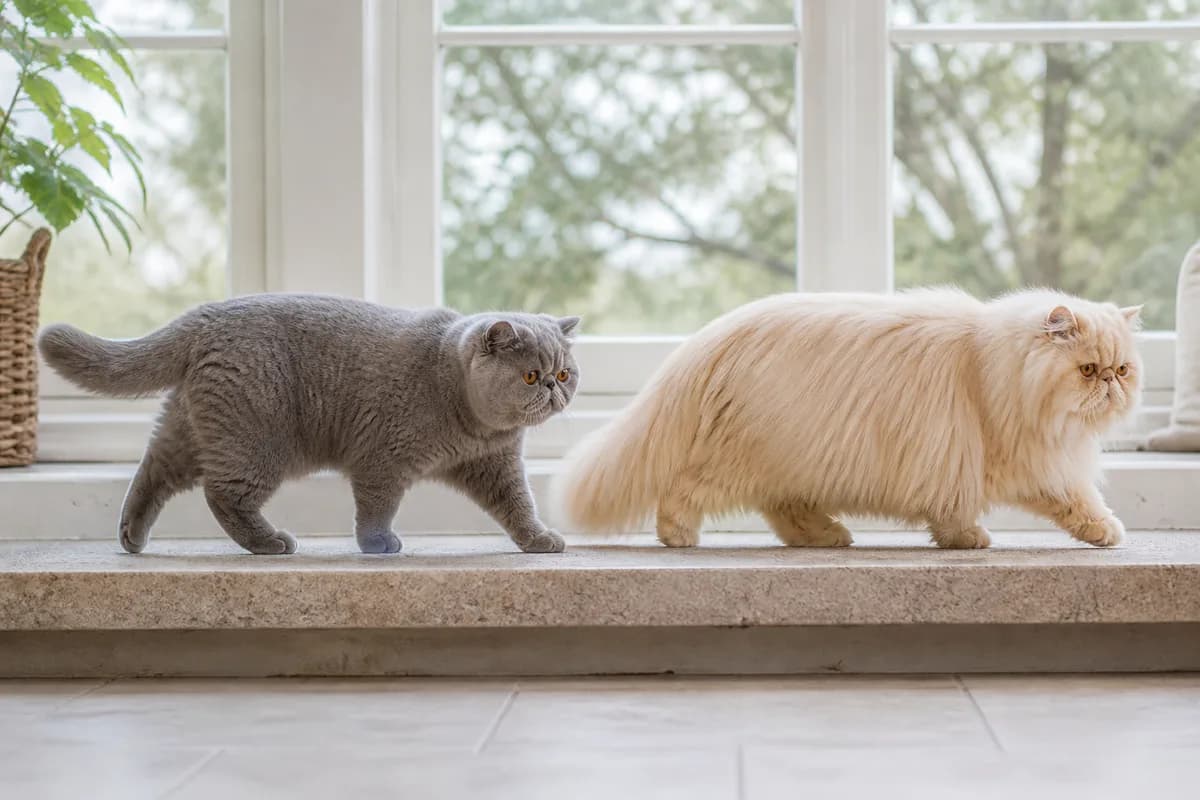
Do not compare size from one photograph. Camera angle, coat volume, posture, body condition, age, and sex can distort the impression. Observe the cat standing and moving naturally, and use veterinary weight and body-condition trends for health decisions.
Facial appearance versus function
The visible degree of facial flatness cannot reveal the entire airway, dental arrangement, tear drainage, or eye exposure. A cat with a less extreme-looking profile can still have a health issue, while a flatter-looking cat cannot be diagnosed from a picture.
Ask the seller or rescue about breathing at rest and during mild activity, eye care, dental findings, prior procedures, heat tolerance, and veterinary records. Then arrange independent veterinary care based on the individual.
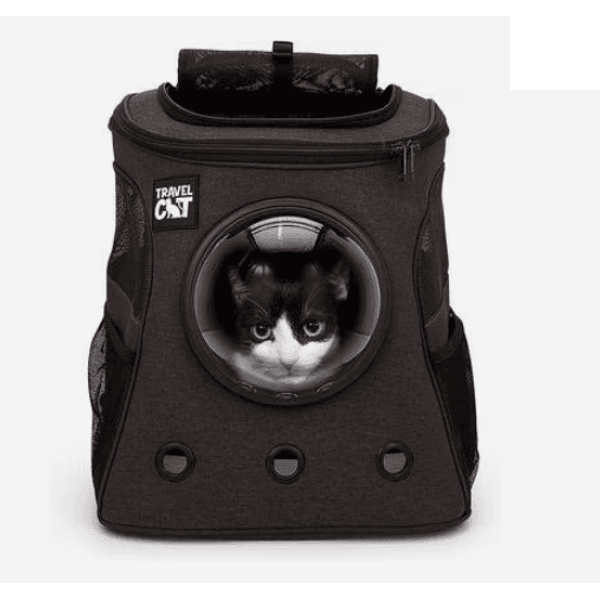
A Travel Cat Fat Cat backpack carrier may support transport if its dimensions and ventilation fit the cat. Persians and Exotics can differ individually in body size, coat bulk, heat tolerance, and comfort. Choose fit and airflow rather than assuming one breed uses one carrier size.
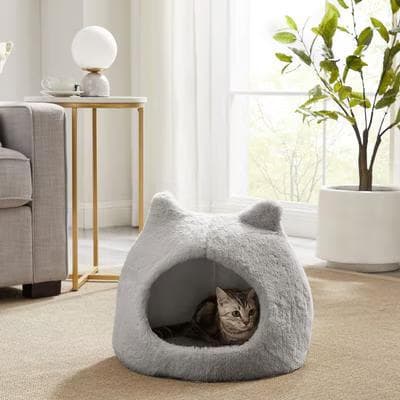
Covered, igloo-style cat bed in soft plush with a water-resistant bottom, giving cats a cozy enclosed spot to curl up. Grey.
Petful may earn a commission when you click through to Chewy, at no extra cost to you.
Personality, activity and household fit
The Exotic Shorthair vs Persian personality comparison usually describes both as gentle, affectionate companions. Exotic Shorthairs are sometimes portrayed as a little more playful, while Persians are often portrayed as quieter. These are broad tendencies, not promises about one cat.
Personality variation within either breed can be substantial. Age, health, pain, early socialization, genetics, previous experience, household noise, handling, and current stress all influence behavior. A quiet cat may be relaxed, tired, fearful, painful, or overwhelmed, while a playful cat may be confident in one familiar room but uncertain around grooming or visitors. Observe several ordinary situations before deciding.
Useful questions include:
- Does the cat approach voluntarily and recover after a new event?
- What play does the cat choose, and for how long?
- How does the cat respond to combing and face handling?
- Is there a documented history with children, dogs, or other cats?
- Does the cat eat, use the litter box, groom, and sleep comfortably?
- Which spaces or resources does the cat guard or avoid?
WebVet's interactive cat toys guide can help create short cat-led play sessions. Play should match breathing comfort, mobility, and interest. Stop when the cat disengages or shows distress.
The Petlibro Granary WIFI automatic feeder can support scheduled dry-food portions for either breed. It cannot prove which cat ate in a multi-cat home, select the right calorie target, or diagnose appetite change.
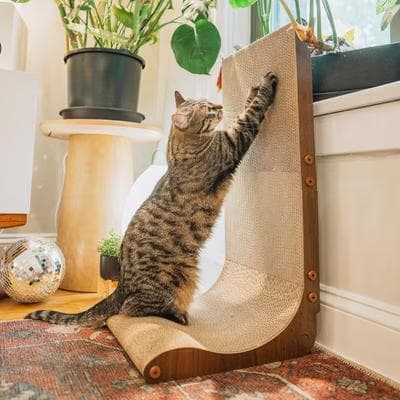
Curved cardboard wall scratcher with a wood frame that protects walls and gives cats a satisfying vertical scratch surface.
Petful may earn a commission when you click through to Chewy, at no extra cost to you.
Cost and time tradeoffs
The Persian's long coat can add daily grooming time, professional grooming needs, or both. The Exotic may reduce coat-maintenance time, but owners should still budget for regular combing, face care, veterinary care, dental care, food, litter, transport, and emergencies.
Acquisition price varies by location, documentation, age, seller practices, and included care. A higher fee does not prove health or ethics. Compare itemized quotes only after verifying seller identity, pedigree and registration records, parent and kitten health records, contract terms, and live access to the cat.
Optional devices do not erase care time
The second Petlibro automatic feeder mention belongs in the time budget only if automation solves a real routine need. It still requires filling, cleaning, monitoring, and a backup plan.
A Best Friends by Sheri covered cat bed can offer either breed a protected low rest area. A longhaired Persian may leave more visible coat on bedding, but laundering needs depend on the individual, not a fixed breed schedule.
Compare care time before deciding
For one week, track the time you can reliably devote to:
- Eye and facial observation or cleaning.
- Short-coat combing or long-coat grooming.
- Interactive play and movement.
- Litter and feeding observation.
- Bedding and equipment cleaning.
- Veterinary travel and follow-up.
Do not count only enjoyable grooming sessions. Include the time needed when a senior cat is stiff, a coat tangles faster, medication is added, or a clinic visit interrupts work.
Plan for a multi-cat household
Breed tendencies do not determine whether two cats will share space comfortably. Introduce individuals gradually, provide separate feeding and water locations, distribute litter boxes, and offer more than one resting and scratching route. Do not expect a quieter Persian to surrender resources or a playful Exotic to welcome every companion.
Track each cat's appetite, litter use, rest, and activity separately. A shared automatic feeder or one litter area can hide avoidance and make it difficult to know which cat's pattern changed. Direct observation matters when weight, medication, urinary health, or conflict is a concern.
Groom the cats individually so tools, technique, and session length match each coat. Clean tools between cats when skin disease, parasites, or infection is suspected and follow veterinary guidance. A long Persian session should not force the Exotic to wait nearby or compete for treats.
Learn more about Persian cats
A Persian cat has a long coat that changes the daily grooming and mat-prevention workload, but this comparison is not a complete Persian profile. Petful's Persian cat breed guide covers Persian history, appearance, temperament tendencies, and care in greater depth.
Use that page when the decision has moved beyond a side-by-side choice and into Persian-specific research. Keep this article focused on the practical difference between the breeds, especially coat length, grooming time, shared facial context, and individual household fit.
The separate Persian cat colors guide owns the long-coat palette. A shared color does not erase the coat-length difference or prove that a cat belongs to either breed.
What to verify before you decide
Documentary evidence matters for either breed. Ask for pedigree, registry records, parent health-screening reports, kitten veterinary records, microchip information, contract, return terms, and known behavior history. Match names, identifiers, birth date, sex, color, and parent information across the documents.
- Verify documentary records for pedigree, registration, parent screening, veterinary history, microchip, identity, and contract details. Population estimates are not guarantees of breathing comfort, eye health, veterinary cost, behavior, grooming tolerance, or lifespan. A short coat reduces one maintenance burden but does not prove easier overall care.
The GCCF Exotic Shorthair profile provides another official breed and health context. Registry guidance helps frame questions but does not endorse every seller or predict an individual outcome.
Evidence-confidence ladder
Grade each claim by its source:
- Visible observation: Coat length, color, body outline, and behavior in one setting.
- Reported history: Useful for questions, but not independently verified.
- Veterinary record: Documents findings and care for the named cat.
- Pedigree and registry record: Supports ancestry when tied to the individual.
- Named screening report: Supports the specific tested result for the named parent or cat.
Do not promote a lower-confidence observation into a higher-confidence conclusion. A Persian-looking long coat or Exotic-looking short coat does not replace pedigree evidence.
Is this the right choice for your household?
Choose the Exotic Shorthair when the Persian-group look and companion profile appeal but the household can more reliably sustain short-coat grooming. Choose the Persian when the long coat is genuinely desired and daily grooming can remain consistent through busy weeks, travel, illness, and aging.
Choose neither breed from a nickname alone. The right individual should have a care plan, health and identity records, behavior evidence, and a routine the household can maintain.
- Household fit factors include grooming time, face care, handling tolerance, activity, budget, and emergency readiness
- Exotic Shorthairs usually require less coat work than Persians
- Both breeds can fit calm companion homes
- Adult behavior evidence can improve matching
- Individual behavior can vary despite breed tendencies
- The Exotic's short coat does not remove face or health considerations
- Persian grooming can be a substantial daily commitment
- Either breed needs documented sourcing, preventive care, and emergency planning
The second Travel Cat carrier link belongs in either household's readiness check. The covered cat bed is likewise an optional comfort tool, not evidence that one breed is more sedentary.
A second Necoichi scratcher link can support distributed scratching resources in a multi-cat home. Provide more than one route and location so a quiet Persian or playful Exotic does not have to compete for the only resource.
Petful's Exotic Shorthair colors guide owns the deeper Exotic palette questions. Color overlap should not control a coat-and-care decision.
Run a seven-day household audit
Before choosing, record seven ordinary days of available care time. Include morning and evening face observation, realistic grooming windows, feeding and litter monitoring, play, bedding cleanup, and the time needed for clinic travel. Mark who can cover each task when the primary caregiver is away or unwell.
Then compare the actual schedule with each cat's documented needs. A Persian plan should remain workable when a daily coat session takes longer than expected. An Exotic plan should still include combing, face and eye observation, dental care, and health follow-up. If either plan depends on perfect weeks, no travel, and no backup caregiver, revise the timing before placement.
The audit does not predict behavior or disease. It tests whether the household can sustain the known work without relying on a breed nickname. Keep some capacity for individual behavior variation, a grooming change, medication, senior accessibility, or an unexpected veterinary visit.
Exotic Shorthair vs Persian Cat FAQs
The average cost of an Exotic Shorthair Persian kitten cannot be stated reliably because the phrase may combine two distinct breed descriptions. Price also varies by location, seller, age, pedigree, registration, included veterinary care, screening records, transportation, and contract. First confirm how the kitten is registered, then compare current itemized local quotes. Price alone cannot establish breed identity, health, ethical breeding, or a good household match.
Coat length creates the clearest day-to-day difference. Exotic Shorthairs have a short, dense, plush coat, while Persians have a long coat that requires more intensive mat prevention. A useful comparison covers daily, weekly, and seasonal care, including combing, shedding, nails, teeth, eyes, facial comfort, heat, and veterinary needs. Compare the individual cat's function, behavior, records, and handling tolerance before deciding.
A Persian generally needs more coat grooming because its long hair requires frequent combing and careful mat prevention. An Exotic Shorthair's shorter plush coat usually takes less combing, but it is not maintenance-free. When comparing the evidence, rank the confidence of pedigree records, veterinary findings, repeated observations, and broad breed tendencies in that order. The actual workload still depends on coat condition, health, handling tolerance, season, and the routine you can maintain.

Coreen Saito is a pet writer and longtime shelter volunteer with more than a decade in animal rescue. She covers cat behavior, breed care, and the small, ordinary science of sharing a life with companion animals, with a particular focus on honest takes about the products and decisions that actually matter. At home in Arizona, she's outranked by Mac (a dog with the loudest opinion in the house), Rebel (a cat who governs by quiet authority), and Meri (an orange tabby who runs the late shift and the laundry basket). She writes about all three, plus the rescues that keep coming through her life, at LifeWithMinty.com.
Sign up for expert-backed reviews and safety alerts all in one place.