Exotic Shorthair Colors and Patterns: Complete Guide
Exotic Shorthair colors span a broad Persian-group palette. Learn to read base color, pattern, white spotting, silver, smoke and point contrast without treating appearance as identity proof.
Petful is reader supported. As an affiliate of platforms like Amazon and Chewy, we may earn a commission when you buy through links on this page. There is no extra cost to you.
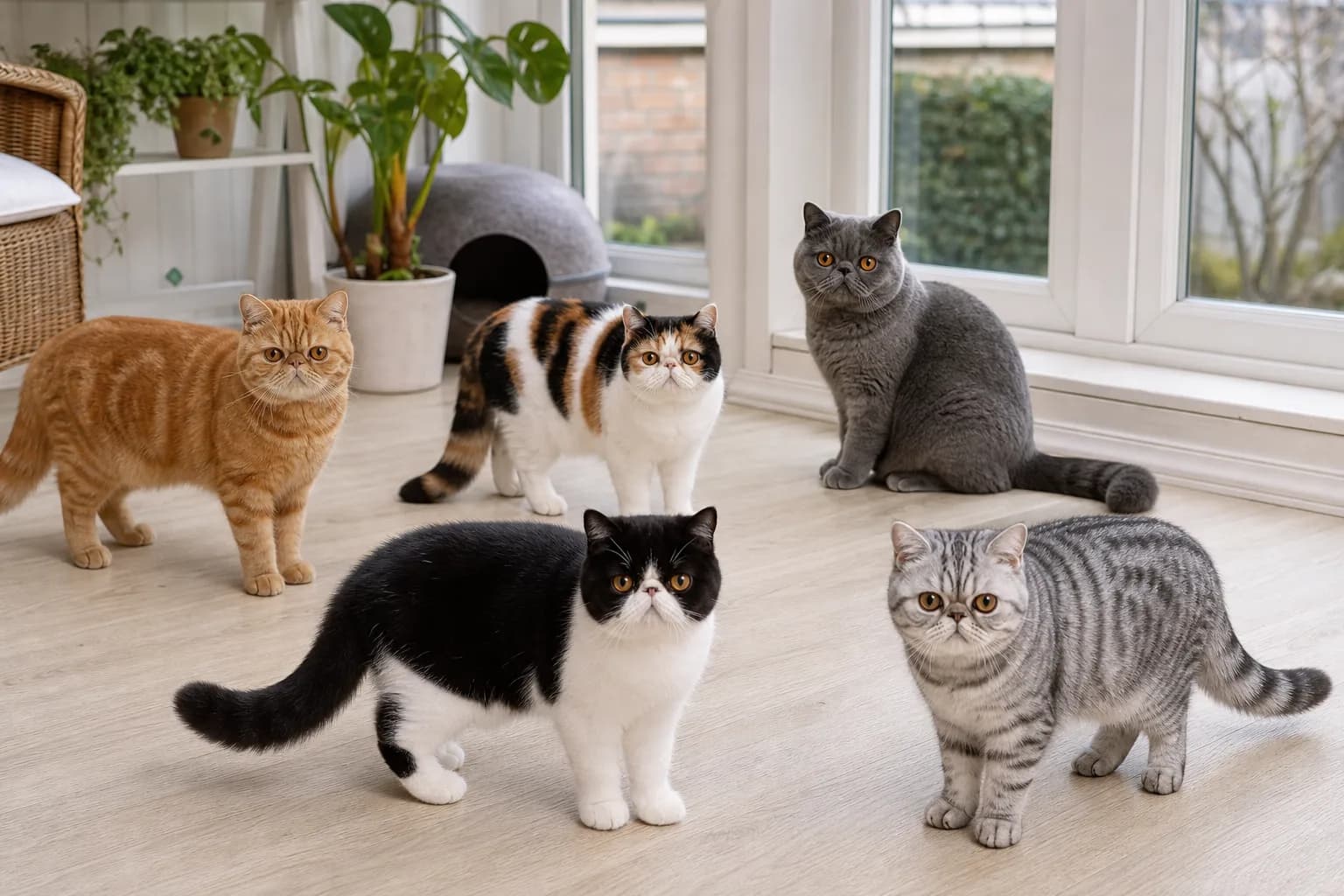
Exotic Shorthair colors span a broad palette because the breed shares the Persian breed group's color range. The palette includes solid, tabby, bicolor, calico, tortoiseshell, silver, smoke, shaded, and pointed expressions within the documented breed population.
The clearest way to read an Exotic Shorthair coat is in layers: base color, pattern, white spotting, hair-shaft effect, and point contrast. That method is more accurate than trying to fit the whole cat into one casual label. It also preserves an essential boundary: color describes appearance, while pedigree and registry records establish breed identity.

Sign up for expert-backed reviews and safety alerts all in one place.
Exotic Shorthair Colors and Patterns at a glance
- 1Answer-first breed guidance begins with a layered coat description, not one casual color label
- 2Individual cats can vary in shade, contrast, markings, eye color, and coat development
- 3Orange, calico, blue, black-and-white, silver, and pointed appearances are coat descriptions
- 4Color cannot prove pedigree, health, or personality
Exotic Shorthair colors at a glance
The CFA Exotic breed profile and TICA Exotic Shorthair profile describe the Exotic as the short-coated member of the Persian breed group. That relationship explains why the color vocabulary overlaps so heavily with Persian cats.
Existing pages show lists but rarely teach the layered description system. This guide therefore uses a four-layer coat-reading method: base color, pattern, white spotting and hair-shaft or point effect. The clear decision labels below support source-aware breed distinctions while keeping a visible color separate from documentary ancestry. That method helps a reader describe what is visible, compare photographs consistently, and identify which wording still needs confirmation in registration, pedigree, or other records tied to the individual cat.
Read a coat through five questions:
- What is the base color?
- Is the cat solid, tabby, tortoiseshell, calico, bicolor, or pointed?
- Is white spotting present, and where?
- Is there a silver, smoke, shaded, or other hair-shaft effect?
- Do the registered description, pedigree, and current appearance agree?
| Clear decision labels | Source-aware breed distinctions |
|---|---|
| Base color | Black, blue, red or orange, cream, white, and other standard-recognized expressions |
| Pattern | Solid, classic or mackerel tabby, tortoiseshell, calico, bicolor, or pointed distribution |
| White spotting | White paws, chest, face, underside, or larger areas that combine with the underlying color and pattern |
| Hair-shaft or point effect | Silver, smoke, shaded, tipped, or pointed expression layered over the base color and pattern |
| Identity limit | The same visible colors occur outside the breed, so documentary records establish Exotic Shorthair ancestry |
Petful may earn a commission when you click through to Chewy, at no extra cost to you.
How the color map works
A color name may describe several features at once. “Blue-and-white bicolor” identifies a diluted black base plus white spotting. “Silver tabby” combines a pale silver ground with darker tabby markings. “Calico” describes red and black areas together with white.
This layered vocabulary is useful because photographs can hide important details. Warm indoor light can turn cream toward orange, shadow can make blue look black, and white balance can flatten the contrast in silver or pointed coats.
Start with the broadest layer
Begin with the base color visible in the pigmented areas. Next identify whether markings form a tabby, tortoiseshell, or another pattern. Record white spotting separately, then note whether silver, smoke, shading, tipping, or point contrast changes the way pigment appears along the hair or across the body.
Do not force every observation into a formal registry label. A useful description can say what is visible, under what light, and which part remains uncertain. Formal registration wording comes from documents tied to the cat, while a photograph remains a record of appearance at one time.
Registered color versus visible color
A registry description is documentary evidence tied to the cat's pedigree. A current photograph is an observation made under one set of lighting and coat conditions. The two may use slightly different everyday language without creating a contradiction.
Kitten coats also develop. Contrast can deepen, point color can become more apparent, and the texture or density seen in a young kitten may not match the adult coat. Ask for the registered description and parent records without demanding that an early photograph look exactly like an adult reference image.
When descriptions differ, preserve both forms. Record “registered as blue tabby” and “appears gray-blue with visible leg and tail markings in daylight” instead of silently replacing one with the other. That wording separates documentary identity from a current observation and makes later comparison easier.
Make a repeatable photo record
For a useful record, photograph the cat:
- In indirect daylight without a strong color cast.
- From the side, front, and above while the cat stands naturally.
- With one close view of the parted coat when smoke or silver is in question.
- Without beauty filters, artificial saturation, or background replacement.
- With a neutral gray, beige, or white reference in the frame.
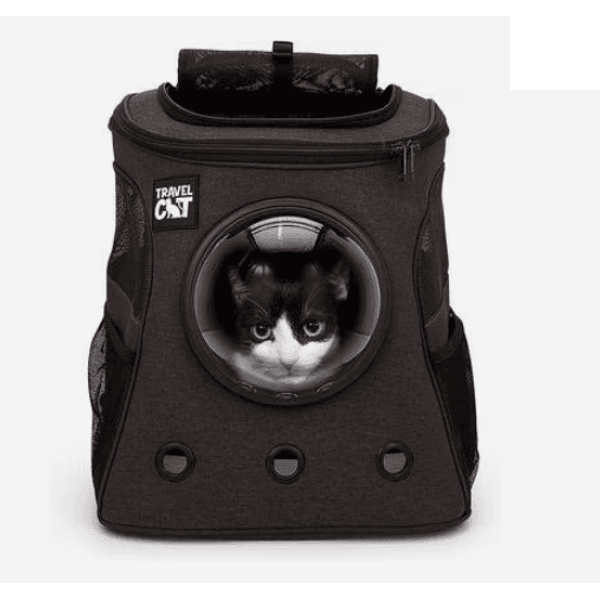
A Travel Cat Fat Cat backpack carrier can support safe travel to a registry event or veterinary appointment if its dimensions, ventilation, closures, and weight rating fit the individual. It should not become a cramped photography prop. Let the cat stand naturally in a safe familiar space.
Orange and red Exotic Shorthairs
In everyday speech, many people say orange. Formal cat-color vocabulary often uses red. The visible coat may be a rich red-orange, a paler cream, or a tabby expression with deeper markings over a lighter ground.
Orange and calico modifiers deserve direct realistic images. Pattern, white spotting, and facial contrast are difficult to understand from a list alone, so the orange photograph below shows ordinary tabby striping in neutral daylight rather than a decorative or painted-looking pattern. A realistic image can clarify plausible coat distribution and contrast, but it cannot prove pedigree, registration, genetic status, health, temperament, or value. Use the photograph as an observation aid and verify documentary claims separately.
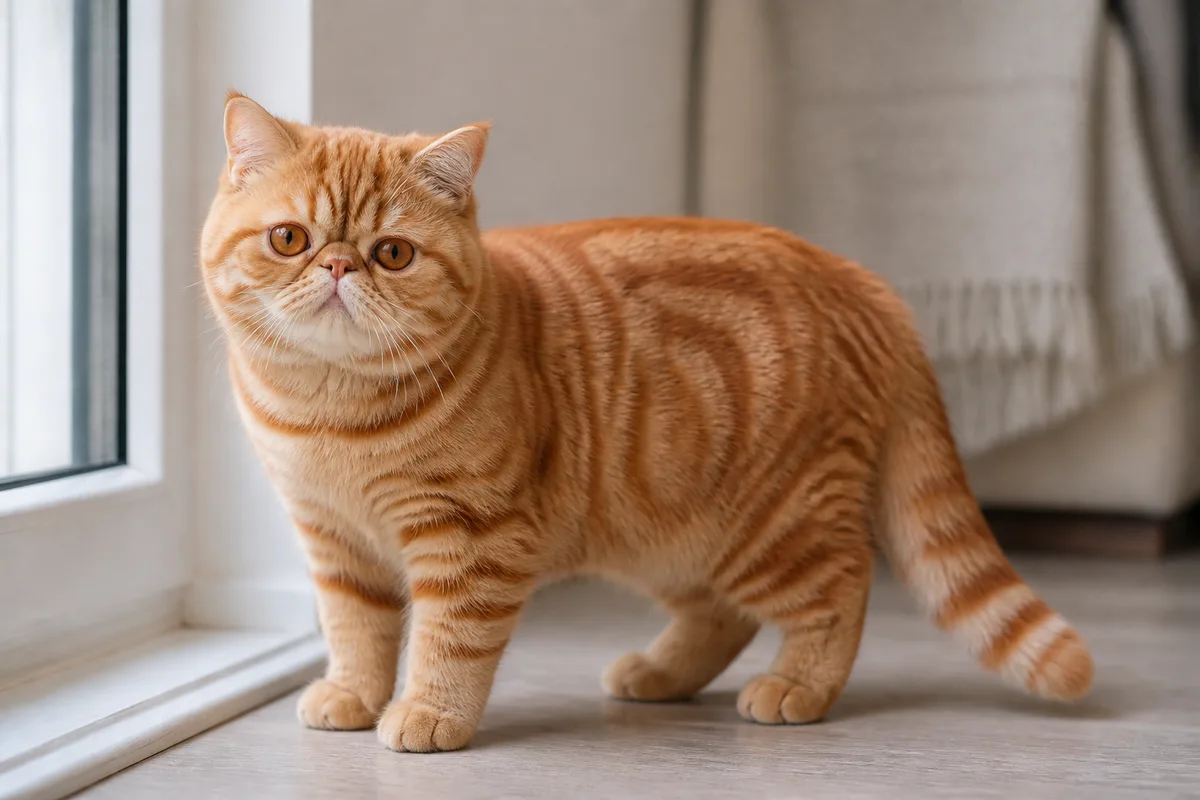
Tabby markings can include facial lines, leg bars, tail rings, and body pattern. Classic tabby creates broader swirls, while mackerel tabby creates narrower vertical stripes. Pattern clarity varies with coat length, density, contrast, lighting, and movement.
Orange does not predict a friendly, mischievous, vocal, or relaxed personality. Sex-linked color genetics affect how red and black pigment are inherited, but behavior still reflects the individual cat, early experience, health, environment, and learning.
Describe pattern before personality
Record the visible forehead lines, leg bars, tail rings, side markings, and white spotting. Then stop. A coat description should not become a claim that an orange cat will behave a certain way, respond to handling, or fit a particular household.
If the registered wording and everyday label differ, keep both. “Registered red tabby, commonly called orange” is clearer than treating one term as evidence that the other is wrong.
Red versus cream
Cream is the dilute expression of red and appears softer or paler. A warm photograph can make cream look orange, while overexposure can wash red toward cream. Compare several neutral-light views before labeling the shade.
The Exotic Shorthair breed guide owns the broader body, coat, history, and personality discussion. Use color vocabulary here without turning one coat into a complete breed profile.
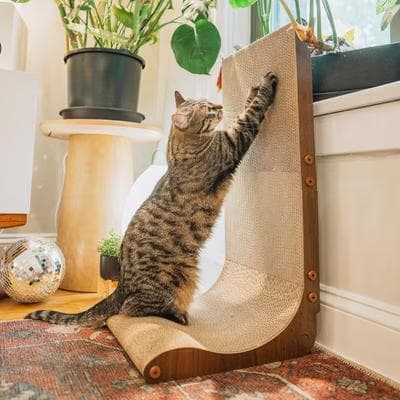
Curved cardboard wall scratcher with a wood frame that protects walls and gives cats a satisfying vertical scratch surface.
Petful may earn a commission when you click through to Chewy, at no extra cost to you.
Calico and tortoiseshell Exotic Shorthairs
Tortoiseshell combines red and black-based areas, which may be densely intermingled or appear in larger patches. An Exotic Shorthair calico adds clearly visible white spotting. Dilute versions replace black with blue and red with cream.
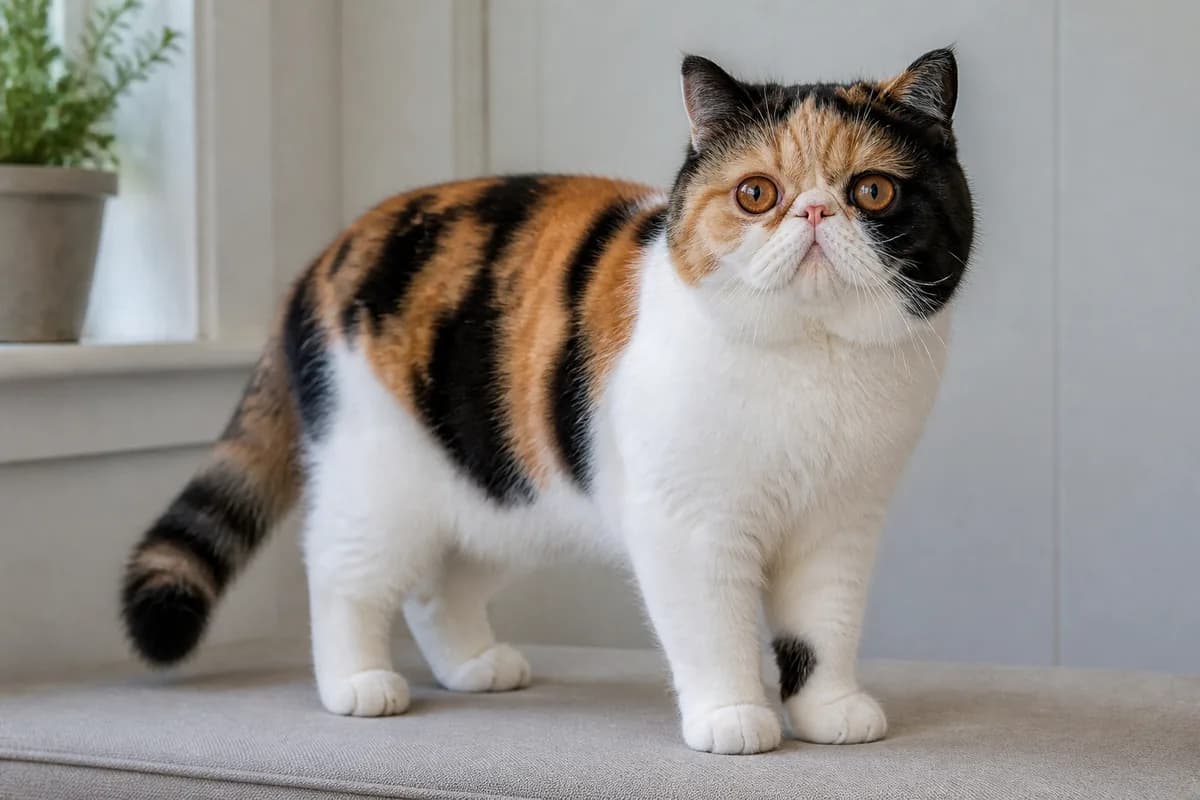
Use four observations:
- Is white spotting clearly present?
- Are the red and black-based areas large patches or intermingled?
- Are tabby markings visible within the red or dark areas?
- Do the colors appear full-strength or dilute?
A patched tabby may combine tabby pattern with red areas, while a calico may also show striping within colored patches. One casual name can hide these layers, so describe what is visible before deciding on a formal term.
Map the patches without over-labeling
Use a full side view to show the distribution of colored and white areas, then add a face and chest view. If tabby markings are visible inside a red or dark patch, record them as another layer rather than assuming the entire cat has one simple pattern.
A dilute calico may show blue, cream, and white rather than black, red, and white. Lighting can mute or warm these colors, so compare neutral-light images before changing the record. The photograph supports observation, while registry documents support the registered description.
Color is not temperament
The familiar “tortitude” stereotype is not a reliable personality assessment. Observe the individual cat during play, quiet rest, handling, feeding, visitors, and transitions. Pain, fear, overstimulation, and prior experience can shape behavior regardless of coat.
A Best Friends by Sheri covered cat bed can offer a protected rest choice for any coat color. It does not make a calico calmer or a tortoiseshell more private. Some individuals prefer open beds, high perches, or familiar blankets.
Black, white, blue and bicolor coats
A black Exotic Shorthair with a solid coat should appear consistently dark across the pigmented hair, though sunlight, coat condition, age, and photography can reveal warmer tones. A white Exotic Shorthair can have different eye-color combinations, while hearing and health questions belong to veterinary assessment rather than visual assumption.
A blue Exotic Shorthair has the cat-fancy term for diluted black and appears gray-blue. A black coat photographed in low contrast can resemble blue, and a blue coat under warm light may appear taupe. View the cat in neutral daylight before deciding.
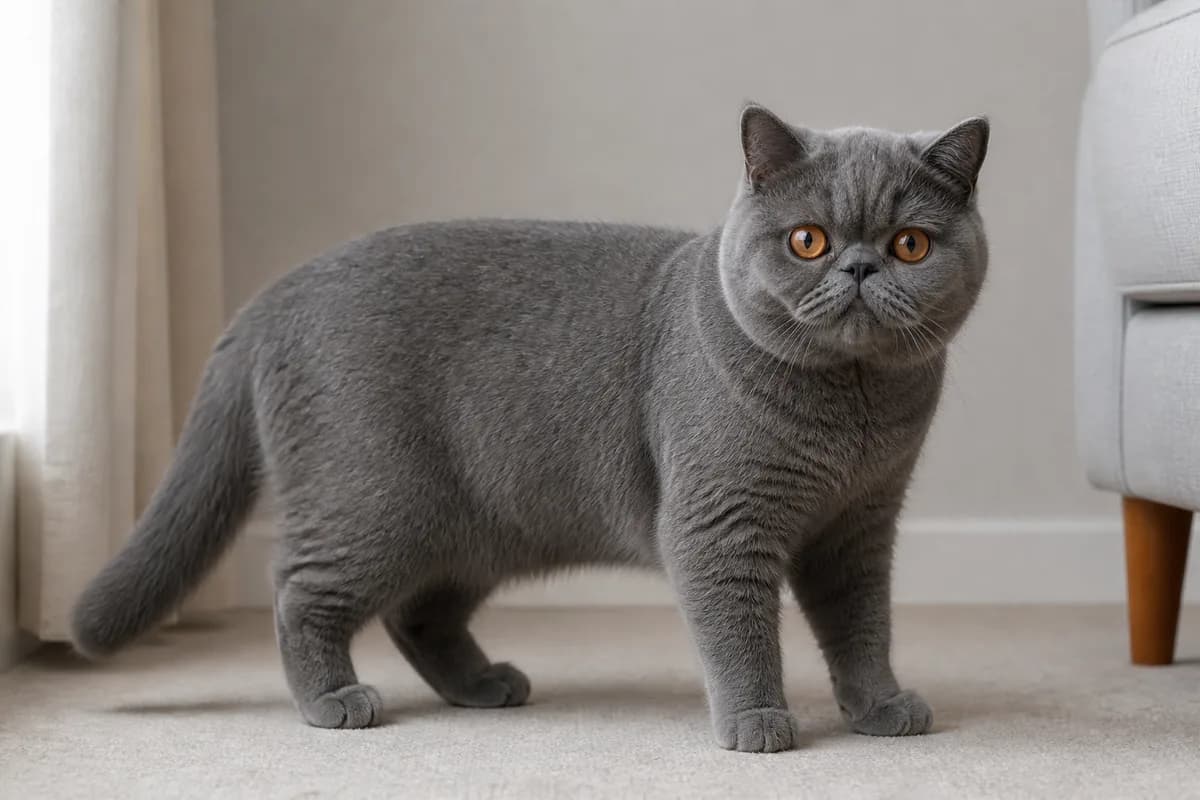
Bicolor means white spotting appears with another color or pattern. “Tuxedo” is a useful informal description for certain black-and-white distributions, but it is not one rigid pattern and does not identify breed.
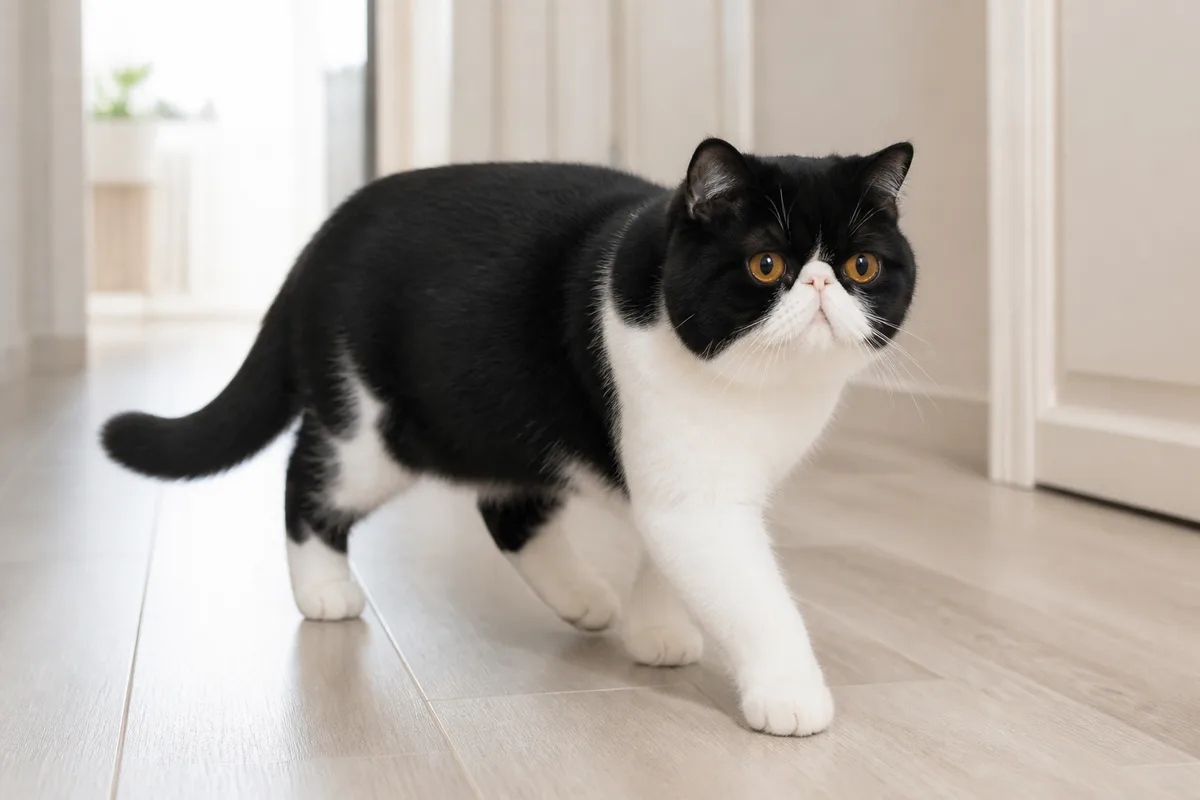
Separate color, white spotting, and pattern
Describe a black-and-white cat in two steps: identify the black base, then map the white spotting. If tabby markings appear in the dark areas, add that information rather than using “tuxedo” as the complete description. Informal vocabulary can remain useful as long as it does not replace the visible layers or registered wording.
For a blue-and-white cat, apply the same method. First confirm the gray-blue pigmented areas under neutral light, then note where white appears. A warm room photo or cool camera setting can change the apparent boundary between black and blue, so retain an unedited original.
White spotting changes the whole description
Record the white distribution separately from the underlying color. A cat might be blue-and-white, red-tabby-and-white, or calico depending on which pigments and patterns appear outside the white areas.
Eye color completes the visible description
Eye color can be part of a formal coat description, especially with white and pointed patterns, but lighting and pupil size change what a camera captures. Observe both eyes in safe indirect light. Do not use bright flash or force the cat to face a lamp.
Eye color is not a home health test. A new cloudiness, redness, squint, visible injury, changed pupil, or apparent difference between the eyes deserves veterinary guidance. Do not dismiss a change because an online color chart shows variation within the breed.
Avoid using face markings as a personality cue. A dark mask may make a neutral expression look stern, while a white muzzle can make the same facial structure appear softer. Those are human visual interpretations, not behavioral evidence.
Photograph without forcing a pose
The Necoichi wall scratcher can provide a consistent vertical surface for natural standing photographs while serving a real scratching need. Mount or stabilize it according to directions, and do not force the cat to pose or stretch against it.
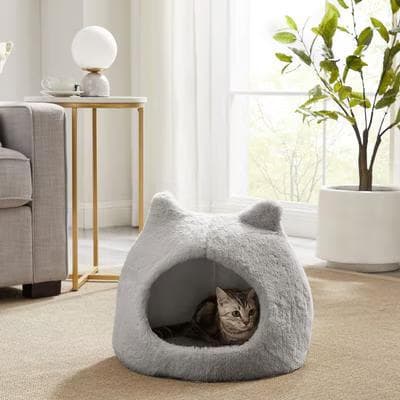
Covered, igloo-style cat bed in soft plush with a water-resistant bottom, giving cats a cozy enclosed spot to curl up. Grey.
Petful may earn a commission when you click through to Chewy, at no extra cost to you.
Tabby, silver, smoke and shaded patterns
Tabby is a pattern family, not a breed. Exotic Shorthairs can display classic swirls, narrower mackerel stripes, facial markings, leg bars, and tail rings across several base colors.
Silver changes the ground color and contrast. Smoke may appear mostly solid until the fur moves or parts, revealing paler roots beneath a stronger surface color. Shaded and tipped effects involve a lighter overall coat with pigment concentrated toward the hair tips.
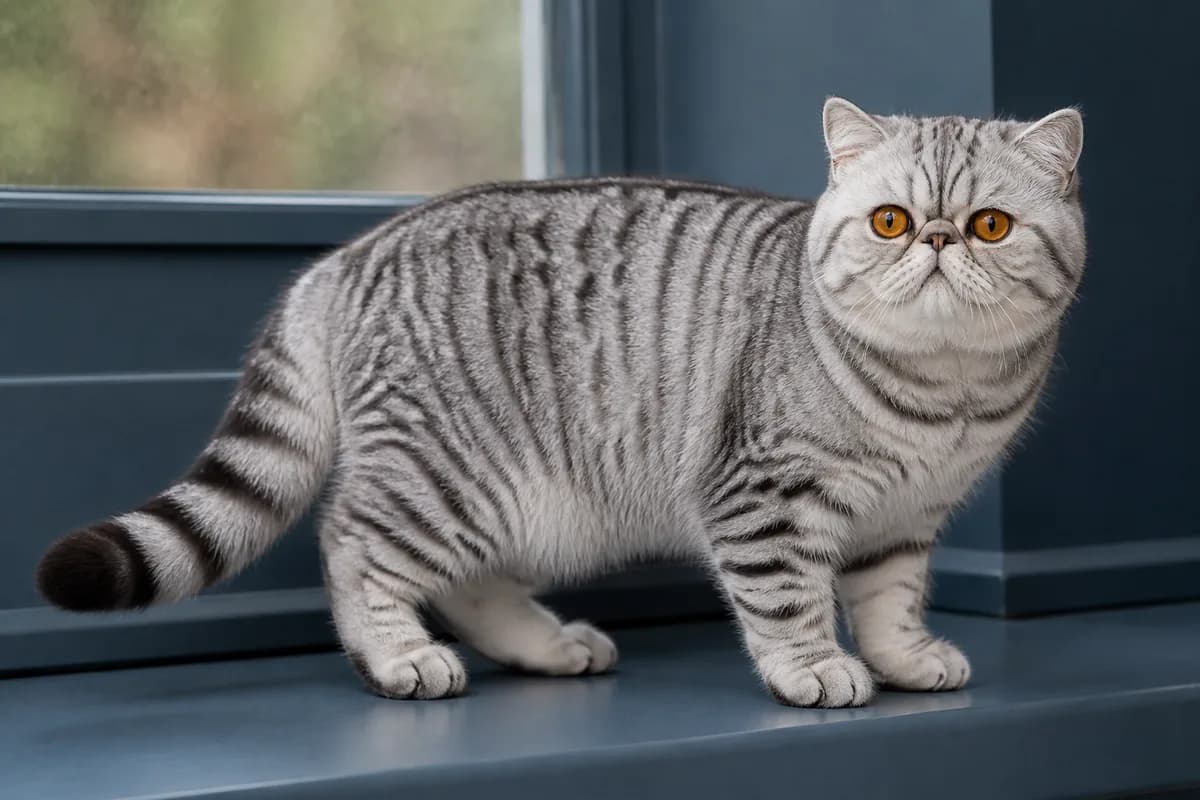
Read pattern and hair shaft separately
A silver tabby has both a tabby pattern and a silver effect. A smoke cat can look more nearly solid from the surface because the lighter base becomes clearer when the coat moves or parts. Naming the pattern first and the hair-shaft effect second prevents one dramatic word from hiding the structure of the description.
Coat density can make the transition difficult to see in a still photograph. Use gentle observation in soft light, respect the cat's choice to move away, and do not repeatedly part the coat for a label. If the evidence remains unclear, record the uncertainty and return to the registered wording.
How to inspect a hair-shaft effect
Let the cat stand in soft daylight. Without pulling, separate a small area of fur with clean fingers and observe the root, middle, and tip. Release the coat immediately if the cat moves away. A still image of the topcoat alone may not distinguish black from smoke or silver from a cool brown tabby.
Do not use harsh flash, dye, powder, or repeated restraint to intensify a pattern for a photograph. Coat color should be documented without compromising comfort.
A second Necoichi scratcher link is relevant when comparing a stable neutral background with a moving cat's side pattern. Its purpose remains scratching and stretching. Check mounting, edges, and wear regularly.
Silver does not prove breed
Silver coats are visually striking, and a round silver tabby can resemble an Exotic Shorthair. That appearance does not establish pedigree. Similar colors and body features occur across pedigreed and non-pedigreed cats.
Use the Exotic Shorthair versus Persian comparison to understand how shared breed-group features and coat length relate. Then use the actual pedigree and registry documents for identity.
Pointed Exotic Shorthair coats
Pointed cats have a lighter body with darker color concentrated on cooler areas such as the face, ears, legs, and tail. Eye color is typically blue in the pointed expression. Contrast can change with age, temperature, coat condition, and photography.
Read a pointed coat with the same layered method used elsewhere. Record the body color, the darker face, ears, legs, and tail, any white spotting, and the blue eye color visible in safe indirect light. Then compare that observation with the registered description rather than treating point contrast alone as proof of Exotic Shorthair ancestry.
The photograph should answer a visual question without manufacturing contrast. Use a comfortable room, natural posture, and ordinary light. Do not cool, heat, restrain, over-groom, or position the cat beside a strong lamp to deepen the points for a picture.
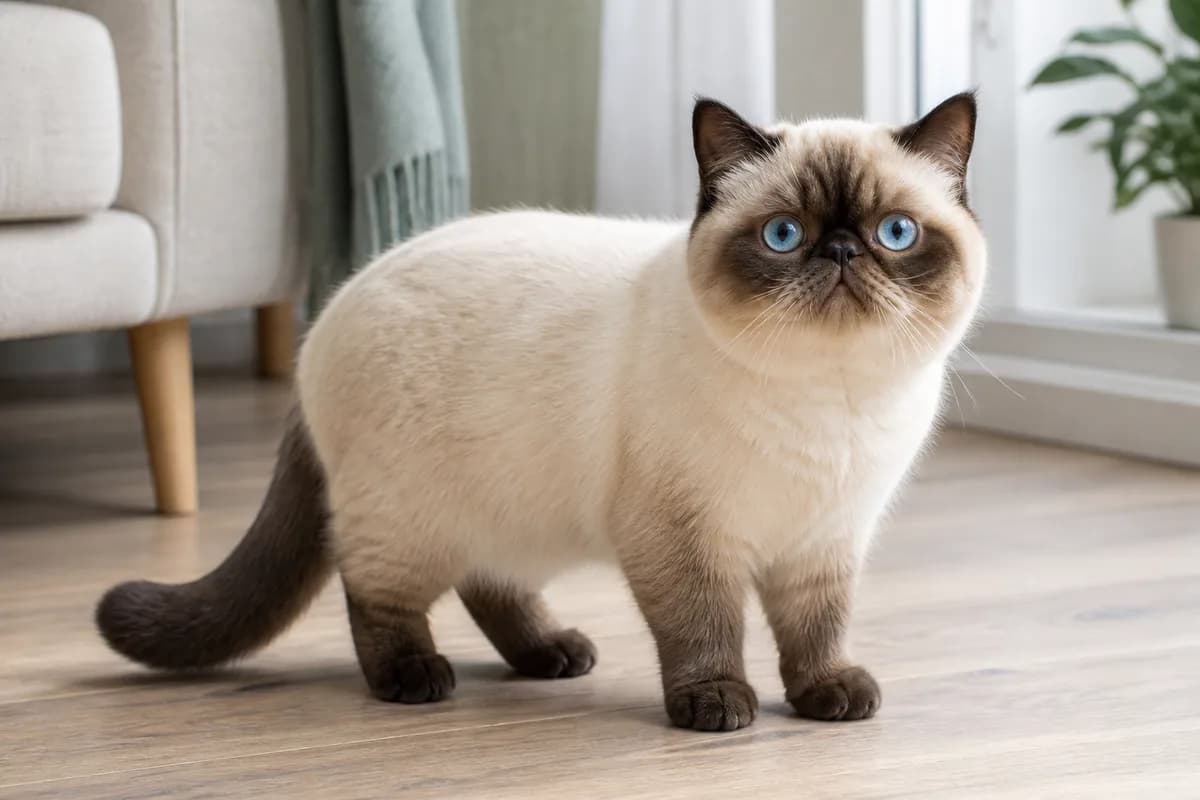
A kitten's body may appear lighter before contrast develops. An adult may darken over time. That visible change does not mean the breed or underlying identity has changed.
Temperature can influence pigment expression in color-pointed cats because darker color develops most strongly in cooler body areas. This does not justify exposing a cat to cold or heat for appearance. Keep the environment comfortable and let ordinary development provide the evidence.
Compare development, not staged contrast
Compare photos taken months apart only when the camera settings, lighting, and angle are reasonably similar. A dramatic difference between a warm indoor phone photo and a cool daylight portrait may reflect photography more than coat change.
The Persian palette overlap is expected because the Exotic belongs to the Persian breed group. Petful's Persian cat colors guide provides the long-coat visual counterpart without asking this page to own Persian color searches.

Petful may earn a commission when you click through to Chewy, at no extra cost to you.
Why the palette overlaps Persian cats
The Exotic was developed within the Persian breed group, with the short dense coat as the central practical distinction. CFA, TICA, and the GCCF Exotic Shorthair profile provide registry-specific history, standard, and care context.
Shared colors do not make every short-coated Persian-looking cat an Exotic Shorthair, and they do not turn every longhaired relative into a Persian by visual guess. Use records tied to the individual.
Color is not pedigree. Orange, calico, black, white, blue, silver, tabby, pointed, or bicolor appearance can describe a cat accurately but cannot establish Exotic Shorthair ancestry. Confirm breed identity with pedigree and registry records tied to the same individual.
Coat care across colors and patterns
The short dense coat benefits from gentle regular combing adjusted to the individual. Frequency can change with shedding, age, health, body condition, and the cat's ability to groom. Color does not determine the care schedule.
Watch the skin beneath the coat. New hair loss, sores, redness, odor, scaling, swelling, sensitivity, or excessive licking deserves veterinary attention. Tear staining on pale facial fur may be more visible, but visibility does not measure severity.
Keep feeding and travel separate from color
The Petlibro Granary WIFI automatic feeder can create a predictable dry-food schedule while the owner observes coat and body trends. It does not choose the right calorie target or diagnose a dull coat. Investigate appetite, weight, and skin changes rather than assuming color makes them normal.
A second Travel Cat carrier mention fits a show, registry, or veterinary travel checklist. Choose safe fit and ventilation, not a carrier color intended to make the coat look dramatic.
Photographing coat change for the veterinarian
Take a neutral-light overview and a close image with a size reference. Record the date, location, itch or pain, grooming change, products used, and whether the area is growing. Do not edit color or contrast when the photograph may inform care.
Build a useful color record
Keep four images rather than one beauty portrait: a full side view, a face and chest view, a top view, and a close parted-coat view when hair-shaft color matters. Add the registered color wording, date, age, and lighting conditions. This small record can help with registry questions, coat development, and veterinary discussions.
Avoid relying on social media filters or automatic “vivid” camera modes. Those settings can exaggerate orange, erase cream, cool black toward blue, or brighten a silver ground. If the phone applies processing automatically, include a neutral object and keep an unedited original.
When two people use different names, ask which layer they are describing. One may be naming the base color while the other names the pattern or white spotting. “Blue,” “blue tabby,” and “blue-tabby-and-white” can all refer to the same cat at different levels of precision.
Match accessories to care, not coat
The covered cat bed should be washed on schedule because pale or dark fabric can hide debris differently. Inspect the actual coat and skin rather than using how much hair is visible on the bed as the only shedding measure.
What to verify before you decide
- Verify documentary records by matching pedigree, registration, microchip, veterinary, screening, and contract details to the same cat. Population estimates are not guarantees that a color is rare, valuable, healthy, or linked to a particular personality. Use neutral-light observation for appearance and records for ancestry.
Ask for the registered color wording and compare it with the actual cat in neutral light. A difference in everyday language may be harmless, but conflicting identifiers, substituted photographs, or records for another cat are not solved by a convincing color label.
When the color is still developing, preserve uncertainty. Record the date and visible layers, then compare later without claiming that a kitten must reach one exact shade or contrast. This protects both accuracy and the cat's welfare because no cold, heat, restraint, dye, or intensive grooming should be used to manufacture a more dramatic appearance.
Choosing a color without compromising safety
A preferred color can help narrow a search, but it should never outrank health records, seller practices, temperament evidence, or household fit. Scarcity language can pressure buyers into skipping verification.
Ask for:
- Live access to the kitten and environment.
- Pedigree and registry documents tied to the cat.
- Parent and kitten veterinary or screening records.
- A written contract with deposit and return terms.
- Honest discussion of adult color development.
- No guarantee that coat predicts personality or health.
A second Petlibro feeder link belongs in a setup plan only when portion automation fits the household. It should never be a bundled product that distracts from missing records.
WebVet's interactive cat toys guide can support an enrichment plan independent of color. Select toys by safe construction and the individual cat's play style, not by a stereotype attached to orange, calico, or pointed coats.
Treat rarity claims as a verification cue
“Rare color” is often sales language rather than a measured population statement. Ask which registry term the seller means, whether the color is documented on the individual record, and what current evidence supports the availability claim. A rare label does not improve breathing, eyes, dental health, temperament, or household compatibility.
Never accept unsafe breeding, premature placement, missing health records, or pressure payment to obtain a preferred coat. If the seller will not provide ordinary identity and care evidence, step back even when the pictured color is difficult to find locally.
Color preference is reasonable after the welfare and evidence gates are met. Give greater weight to the actual cat's health record, handling comfort, observed behavior, and the household's ability to provide lifelong care.
Is this the right choice for your household?
- Household fit factors can be considered after health, records, welfare, and care capacity are verified
- Layered color vocabulary makes observations more precise
- Neutral-light photos help compare coat changes over time
- A preferred coat can guide an aesthetic choice after safety gates
- Individual behavior can vary regardless of orange, calico, blue, silver, pointed, or other appearance
- Color cannot prove pedigree, health, or temperament
- Scarcity language can weaken buying judgment
- Forced posing or grooming can compromise welfare
A color preference is reasonable when it remains an aesthetic preference. The household still needs to support the individual cat's grooming, face care, play, veterinary needs, transport, and long-term cost. No palette choice makes those responsibilities disappear.
Observe the actual cat rather than matching behavior to a color stereotype. Handling tolerance, social recovery, play, rest, appetite, and interaction history are more useful for fit than a coat label. If evidence and welfare are strong, use color as a final preference rather than an early shortcut.
Exotic Shorthair Colors and Patterns FAQs
Exotic Shorthairs come in a broad Persian-group palette that can include black, white, blue, red or orange, cream, silver, golden, tortoiseshell, calico, tabby, bicolor, and pointed appearances. A complete description may combine several features rather than use one color word. Registries organize colors and patterns through their own standards, so confirm the registered wording when a formal breed description matters.
Start with the base color, then identify the visible pattern, the amount and placement of white spotting, and any hair-shaft or point effect. For example, tabby markings, bicolor white areas, silver tipping, or darker points can change the complete description. Use neutral daylight and unedited photographs when comparing coats, and allow for a kitten's contrast or shading to develop before treating a description as final.
No. Coat color and pattern can describe appearance, but they cannot establish breed identity, pedigree, registration, health, temperament, rarity, or value. Many colors seen in Exotic Shorthairs also occur in other cats. Verify identity through records tied to the individual cat, including pedigree, registration, microchip details, veterinary history, and contract. Treat scarcity or color-based marketing claims cautiously and confirm the cat's welfare and seller information separately.

Coreen Saito is a pet writer and longtime shelter volunteer with more than a decade in animal rescue. She covers cat behavior, breed care, and the small, ordinary science of sharing a life with companion animals, with a particular focus on honest takes about the products and decisions that actually matter. At home in Arizona, she's outranked by Mac (a dog with the loudest opinion in the house), Rebel (a cat who governs by quiet authority), and Meri (an orange tabby who runs the late shift and the laundry basket). She writes about all three, plus the rescues that keep coming through her life, at LifeWithMinty.com.
Sign up for expert-backed reviews and safety alerts all in one place.