Exotic Shorthair Lifespan and Health Problems
Exotic Shorthair health planning should account for facial structure, eyes, kidneys, dental care, and ordinary preventive needs without assuming an individual outcome.

BVMS, MRCVS
Petful is reader supported. As an affiliate of platforms like Amazon and Chewy, we may earn a commission when you buy through links on this page. There is no extra cost to you.
The Exotic Shorthair lifespan is commonly estimated at about 8 to 15 years in veterinary-reviewed breed guidance. That wide range helps with long-term planning, but it cannot predict how long one cat will live. Genetics, facial structure, weight and muscle condition, dental comfort, preventive care, indoor safety, disease, and timely treatment all matter.
Exotic Shorthair health planning deserves special attention to breathing, heat tolerance, eyes, skin folds, teeth, kidneys, and heart, alongside the same preventive care every cat needs. Breed predisposition is not a diagnosis. An individual cat may never develop a listed condition, while a cat with an ordinary or unexpected problem still needs care based on actual signs and veterinary findings.

Sign up for expert-backed reviews and safety alerts all in one place.
Urgent warning signs come first
Emergency breathing guidance is often buried, so it is placed before monetization and routine care here. Seek urgent veterinary care for any of these signs:
- Open-mouth breathing, obvious breathing effort, blue or gray gums, or collapse.
- Severe weakness, seizure, major trauma, severe pain, toxin exposure, or rapid decline.
- Inability to urinate or repeated unproductive litter-box trips.
Move a cat with breathing or heat distress to a cool quiet setting, minimize handling, and contact an emergency clinic while arranging transport. Readers need symptom urgency separated from routine face care. Routine care may include veterinarian-directed gentle cleaning when the eyes, skin, and breathing are comfortable. Squinting, cloudiness, sudden discharge, marked redness, injury, changed breathing effort, open-mouth breathing, collapse, or rapid decline instead belongs to prompt or emergency veterinary triage. Cleaning advice cannot assess or correct breathing difficulty, eye injury, or sudden decline.
Eye injuries and some eye conditions can also become urgent. Sudden squinting, an eye held closed, cloudiness, marked redness, visible injury, a changed pupil, severe discharge, or apparent loss of vision warrants prompt veterinary guidance. Do not put human eye medication or leftover pet medication into the eye unless a veterinarian directs it.
- Open-mouth breathing, pronounced abdominal effort, blue or gray gums, collapse, severe weakness, or rapid worsening needs urgent veterinary triage. Do not delay for a breed article, home device, grooming product, or scheduled appointment. Keep the cat cool and calm and call the nearest emergency clinic.
The urgent boundary comes before routine care and all product discussion because a flat-faced cat's noisy breathing should not be assumed to be harmless or normal for the breed.
Exotic Shorthair Lifespan and Health Problems at a glance
- 1Answer-first breed guidance uses the 8-to-15-year estimate for planning, not prediction
- 2Individual cats can vary in facial function, health, care needs, and longevity
- 3Breathing distress, collapse, severe eye changes, or rapid decline require veterinary triage
- 4Routine monitoring supports observation but cannot diagnose disease
 Sponsored
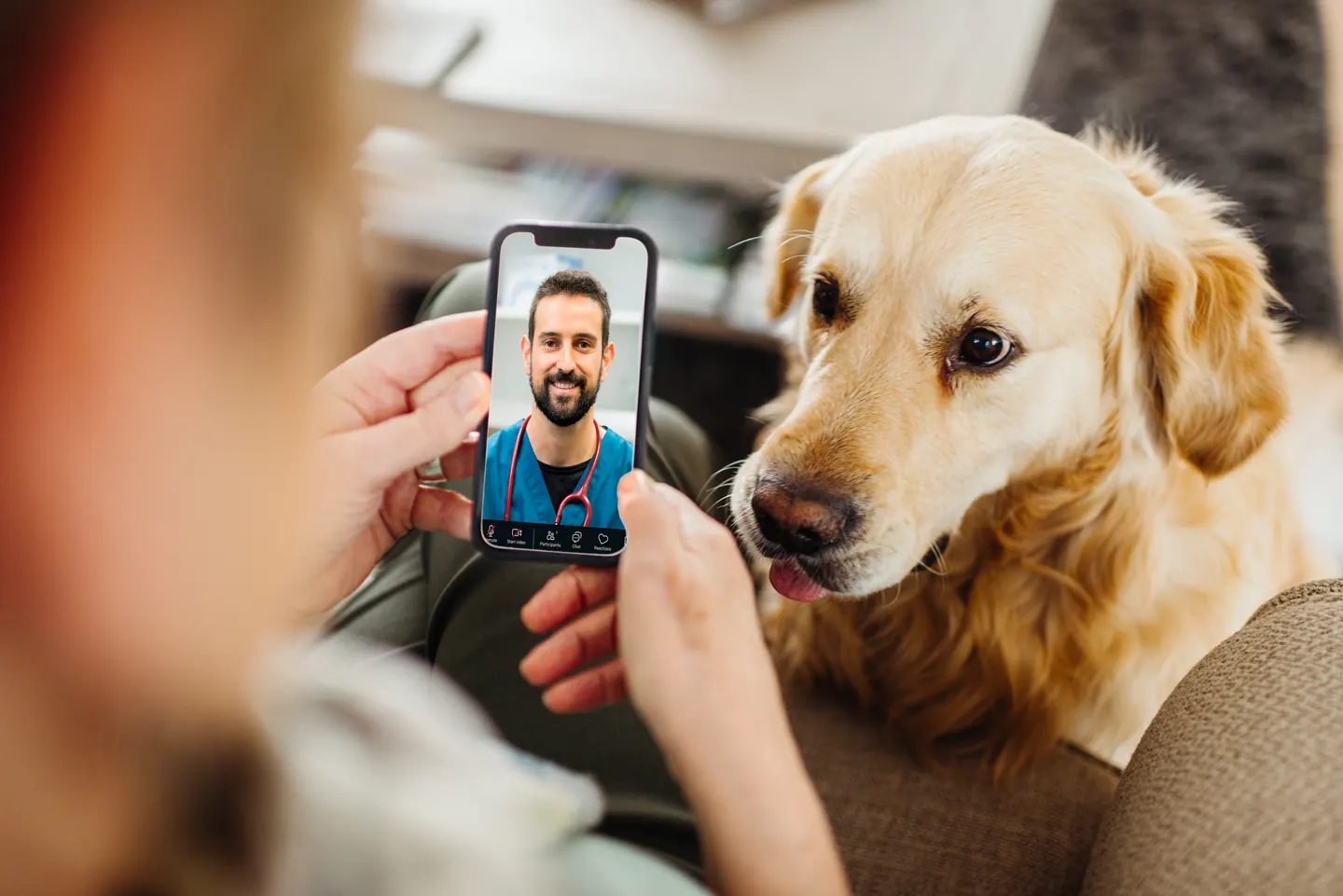
Have a health question about your pet?
Talk to a licensed vet at Dutch over video or message, including nights and weekends.
Use code Pets60
Plans start at $12/month · covers up to 5 pets
- Licensed vets in most states
- Rx for 150+ conditions
- 4.7 on Trustpilot
Exotic Shorthair lifespan at a glance
The PetMD Exotic Shorthair health guide lists an estimated lifespan of 8 to 15 years. Other sources use narrower ranges, which shows why a population estimate should not become an individual deadline. An Exotic Shorthair lifespan range is not a guarantee for one cat. Use it to plan years of preventive, dental, and age-related care while following the individual cat's veterinary findings and changes over time.
Use the range to plan for:
- Long-term preventive examinations and dental care.
- Nutrition changes across kitten, adult, mature, and senior stages.
- Possible screening and monitoring informed by family history.
- Accessible litter, food, water, resting, and transport options.
- Insurance or a medical reserve that can adapt as the cat ages.
The native framework below is a routine, prompt and emergency triage table for breathing, eyes, appetite, hydration and behavior. Its clear comparison labels organize action by urgency, while its source-limited values avoid turning a population estimate or breed tendency into a diagnosis.
| Clear decision labels | Source-aware breed distinctions and source-limited values |
|---|---|
| Framework use | Present the promised comparison, map, budget, or life-stage framework in a native accessible table with clear labels and source-limited values |
| Emergency | Open-mouth breathing, marked effort, blue or gray gums, collapse, or heat distress requires emergency veterinary triage now; keep the cat cool, quiet, and minimally handled during transport planning |
| Prompt eye assessment | Squinting, eye held closed, cloudiness, injury, changed pupil, or sudden vision concern needs prompt or urgent veterinary assessment based on severity and clinic advice |
| Prompt change assessment | New discharge, increased tearing, appetite change, altered drinking, behavior change, or altered breathing noise warrants veterinary contact and dated notes |
| Routine discussion | Mild stable tear staining without pain, redness, or behavior change can be discussed at routine care while following the veterinarian's cleaning plan |
| Trend review | Weight, dental, thirst, urine, mobility, or behavior trends without acute distress need an appropriate examination with dated notes, photos, medication list, and family-history records |
Petful may earn a commission when you click through to Chewy, at no extra cost to you.
Facial structure, breathing and heat
Exotic Shorthair breathing problems deserve observation of function, not assumptions from appearance. The term brachycephalic describes a shortened skull and muzzle, while brachycephalic airway syndrome refers to a veterinary concern that cannot be diagnosed from a photograph or breed label. Watch ordinary breathing at quiet rest, comfortable recovery after voluntary mild activity, sleep quality, eating, grooming, and heat tolerance without deliberately testing the cat's limits.
Open-mouth breathing, pronounced chest or abdominal effort, blue or gray gums, collapse, inability to settle, or rapid worsening requires urgent veterinary triage. For non-emergency changes, record the timing, room temperature, recent activity, sleep position, and whether the sound is new, then contact the veterinarian. Individual cats with similar-looking faces can have different function, so source-aware breed context should guide questions rather than normalize distress.
Exotic Shorthair health problems
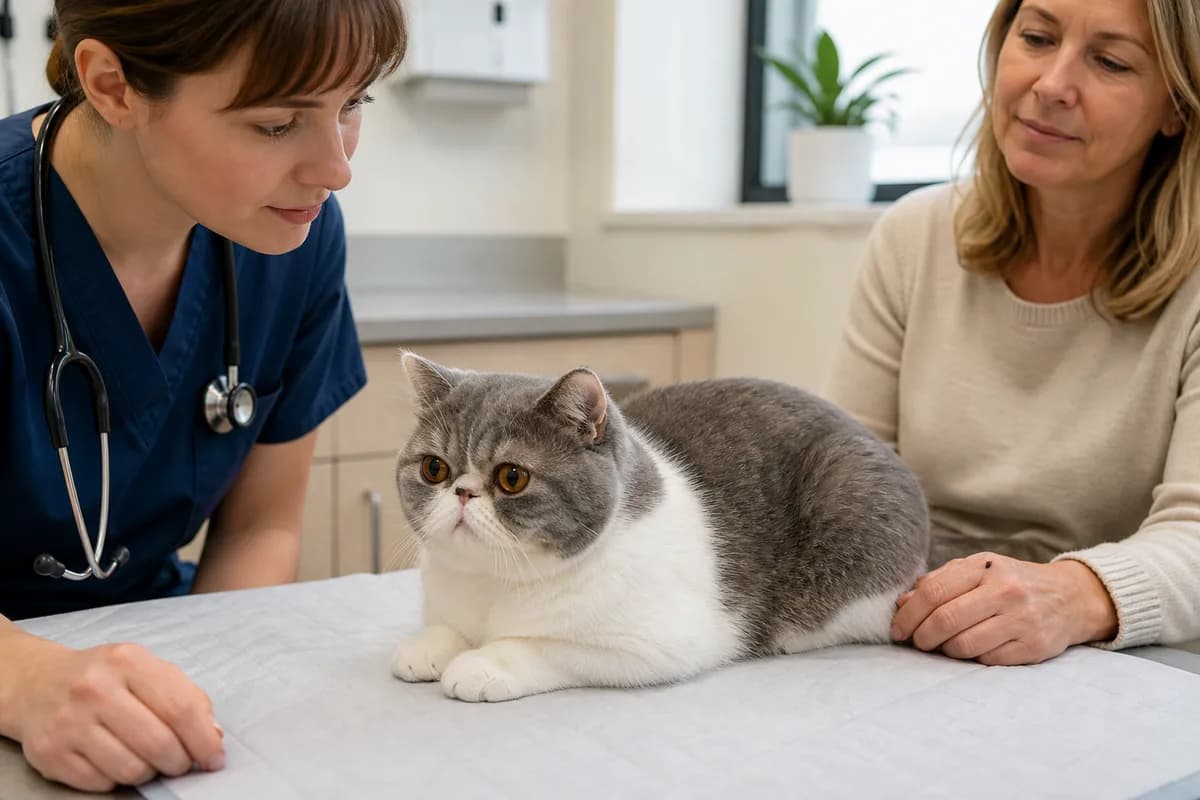
Exotic Shorthairs belong to the Persian breed group and share several health considerations linked to ancestry and brachycephalic facial structure. The Governing Council of the Cat Fancy Exotic Shorthair profile and PetMD both describe breed-relevant health and care needs. The terms brachycephalic airway syndrome, tear overflow, dental crowding, polycystic kidney disease, and hypertrophic cardiomyopathy name different concerns and should not be collapsed into one prediction about the breed.
Important topics include:
- Brachycephalic breathing and heat-tolerance problems.
- Excess tearing and eye-surface concerns.
- Skin irritation in facial folds.
- Dental crowding or disease.
- Polycystic kidney disease, or PKD, in affected lines.
- Heart disease context, including hypertrophic cardiomyopathy.
- Weight gain and the secondary effects of reduced activity.
This list should guide questions, not create a home diagnosis. Snoring, tearing, a round body, or quiet behavior can have several explanations. Compare the individual with their own normal baseline and use veterinary examination and appropriate testing.
Predisposition is not a diagnosis
A predisposition changes which questions are worth asking. It does not establish that a cat has a condition, predict severity, or determine the correct test. Veterinary assessment starts with the individual's history, current signs, physical findings, and the purpose of any recommended diagnostic work.
Keep separate records for inherited-risk results, present structure, and current disease. A DNA result, pedigree note, physical examination, imaging report, and laboratory panel answer different questions. The most useful record is the one tied to the correct named cat and interpreted for the decision being made.
Build an individual baseline
Record the cat's normal resting breathing, appetite, water use, urination, stool, play, sleep, grooming, and social behavior when healthy. Weigh as advised and keep a simple dated log. A change from that baseline is often more useful than comparing the cat with a generic breed average.
The TICA Exotic Shorthair profile provides breed context, while Petful's Exotic Shorthair breed guide owns the broader temperament, coat, size, history, and daily-care overview. Health decisions should still follow the individual cat.
Breathing signs and heat planning
Brachycephalic means the skull and muzzle are shortened. The visible face does not reveal the full airway, and cats with similar-looking faces can have different function. Exotic Shorthair breathing problems can include narrowed nostrils, airway resistance, noisy breathing, reduced exercise tolerance, sleep disruption, or heat sensitivity, but appearance alone cannot diagnose brachycephalic airway syndrome or show its severity.
Watch for:
- Louder or newly changed breathing sounds.
- Open-mouth breathing outside a very brief exceptional context.
- Pronounced chest or abdominal effort.
- Reluctance to move, play, or eat because breathing appears difficult.
- Heat intolerance or slow recovery after mild activity.
- Restlessness, unusual sleeping position, or interrupted sleep.
- Pale, blue, or gray gum color.
Avoid deliberately exercising a cat to test breathing. Record a short video only if doing so does not delay care. Note the room temperature, recent activity, duration, and whether the sound is new.
Describe function without testing limits
Useful observations come from ordinary life: breathing during quiet rest, comfort after voluntary mild activity, sleep quality, eating, grooming, and recovery in a normal indoor temperature. Do not withhold water, add heat, prolong play, or create stress to see what happens. A deliberate challenge can worsen distress and still cannot identify the cause.
When contacting the clinic, report whether the cat is open-mouth breathing, using the abdomen forcefully, extending the neck, unable to settle, or changing color. Say when the change began and what happened immediately beforehand. Follow the clinic's transport directions rather than waiting to collect a perfect video.
Keep the environment conservative
Provide cool indoor spaces, shade, fresh water, and activity at the cat's comfortable pace. Avoid hot cars, poorly ventilated rooms, and stressful handling during heat. Ask the veterinarian what travel and anesthesia precautions are appropriate for the individual.
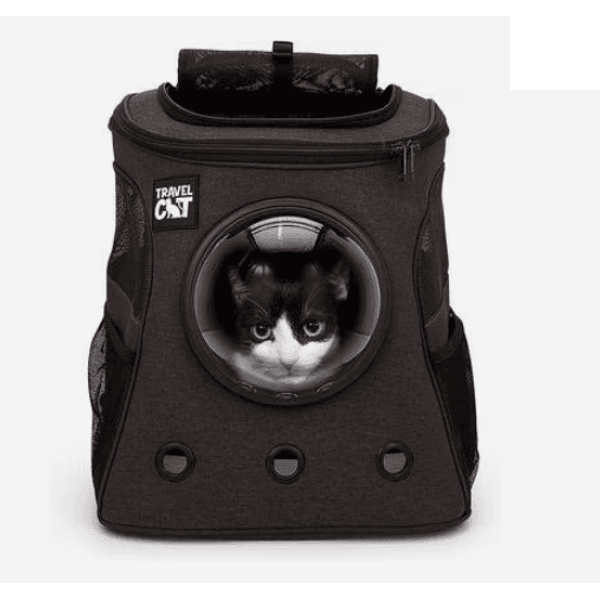
A Travel Cat Fat Cat backpack carrier may support transport only if the cat fits comfortably and ventilation is adequate. A hard-sided or other well-ventilated carrier may be safer for a particular cat. The product does not correct breathing difficulty. Keep the trip cool, secure the carrier, and call ahead when signs are urgent.
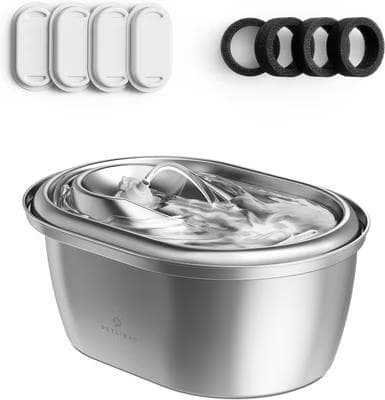
304 food-grade stainless steel pet water fountain, 101 oz. The circulating, filtered water encourages cats to drink more, which supports urinary tract and kidney health.
Petful may earn a commission when you click through to Chewy, at no extra cost to you.
Eye and tear-duct concerns
Short facial structure can affect tear drainage and expose the eyes. Exotic Shorthair eye problems can include chronic tear overflow or staining, but pain, redness, cloudiness, squinting, sudden discharge, rubbing, or a changed appearance is not merely cosmetic.
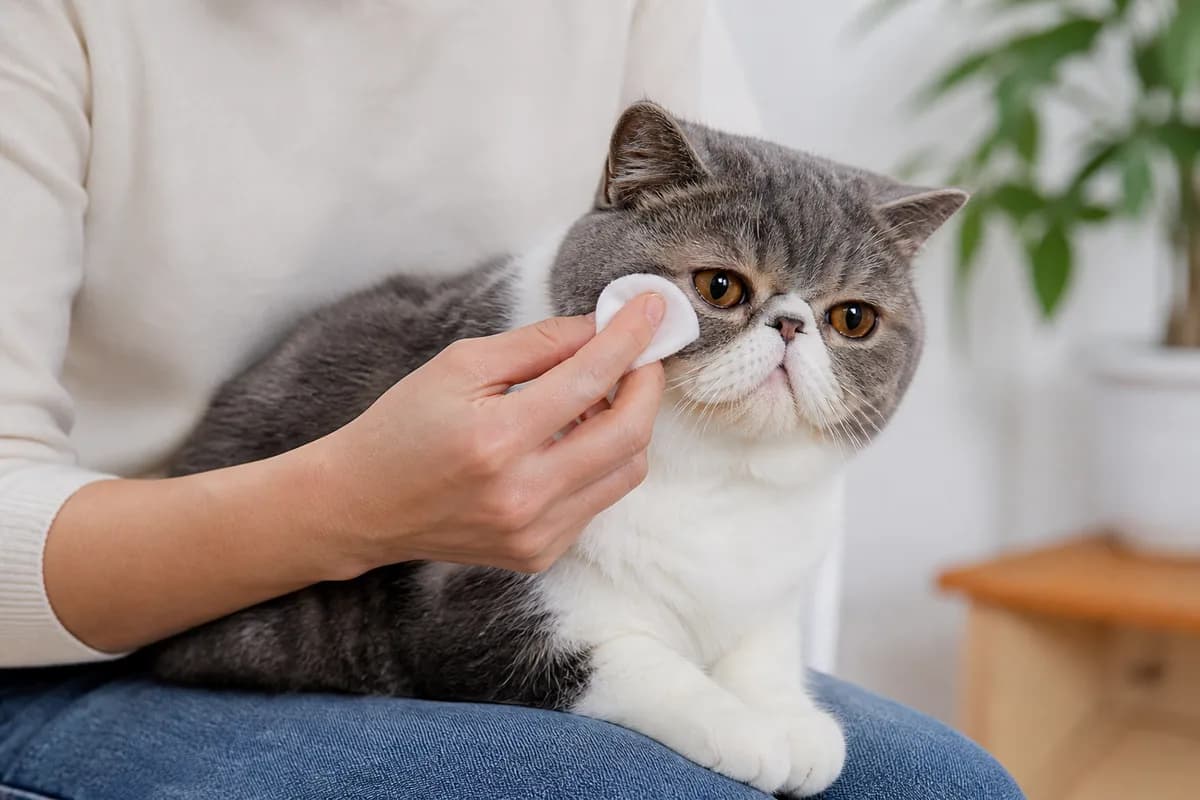
Follow the veterinarian's routine for the individual cat. When simple cleaning is appropriate, use clean soft material and gentle outward motions on the fur below the eye. Use a separate clean area for each eye, avoid rubbing the eye surface, and stop if the cat is painful or resistant.
Do not assume a new pattern is normal because the breed often tears. Record whether the discharge is clear or colored, one-sided or both-sided, and associated with squinting, swelling, odor, skin irritation, appetite loss, or behavior change.
Separate routine observation from prompt signs
Routine observation means noticing the usual amount and location of moisture, keeping fur clean only as directed, and watching the surrounding skin. It does not mean repeatedly wiping an uncomfortable eye or using a cosmetic stain product to hide a change.
Prompt signs include a closed or painful eye, cloudiness, injury, marked redness, a changed pupil, sudden discharge, vision concern, or rapid worsening. Contact the veterinarian because similar-looking surface signs can have different causes and urgency. Do not delay assessment to see whether more cleaning solves the problem.
Facial-fold skin
Moisture and debris can irritate facial skin. Check for redness, odor, swelling, sores, hair loss, or sensitivity. A veterinarian can determine whether the problem involves simple moisture, infection, allergy, eye disease, anatomy, or another cause.
Routine grooming should be cooperative. Introduce brief touches with rewards and stop before the cat becomes distressed. Never force a painful face-cleaning session or use harsh household products.
PKD and kidney screening
Polycystic kidney disease is inherited in Persian-related populations and can cause fluid-filled cysts in the kidneys. A DNA result can identify a known variant, while ultrasound and clinical testing answer different questions about the kidneys. Ask what test was used, which cat was tested, and how the result is connected to the records.
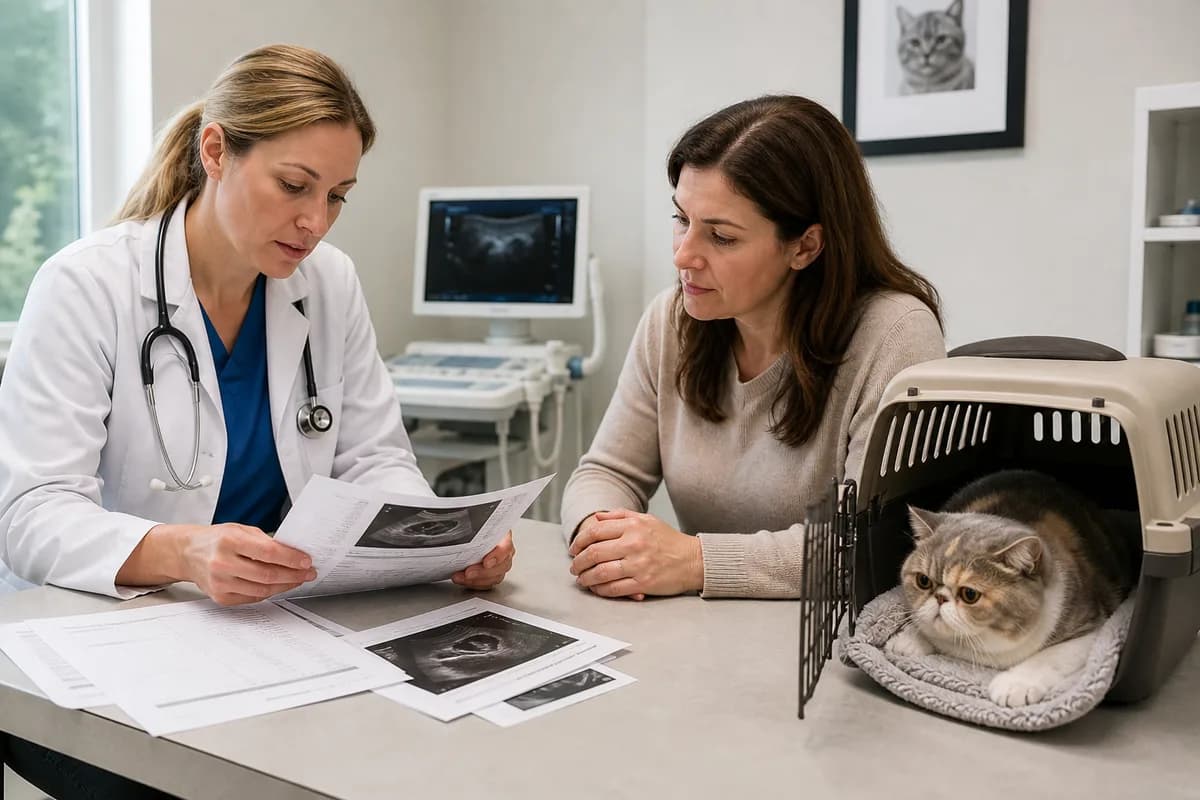
For a prospective kitten, request documented parental screening and the kitten's veterinary record. Petful's Exotic Shorthair kitten and buying-safely guide owns the full seller and record-verification process. A verbal statement that the line is clear is not the same as a report tied to the named parent.
For an owned cat, increased thirst or urination, reduced appetite, weight loss, vomiting, lethargy, or changes in coat and behavior can have many causes. Arrange veterinary assessment rather than trying to infer kidney disease from one sign or ancestry.
Understand what a test can prove
Use this evidence ladder:
- Reported history: Useful for asking questions, but unverified.
- Named laboratory report: Stronger when the identity matches the parent or cat.
- Veterinary imaging or clinical test: Answers a specific current question when interpreted in context.
- Repeated monitoring: Shows trends over time but still requires professional interpretation.
No single normal result guarantees lifelong health, and a breed predisposition does not diagnose disease.
Separate inherited risk, current structure, and current disease
These are three different evidence questions. An inherited-risk test may identify a known variant, but it does not describe every possible cause of kidney disease. A physical examination can assess the cat today, but it cannot guarantee that no future condition will develop. Imaging or laboratory work answers specific clinical questions when interpreted with history and findings.
Keep reports in their original form and record who ordered them, when they were completed, and which named cat they concern. A cropped screenshot, handwritten assurance, or test result for an unnamed relative should prompt more questions. If a breeder says a test is unnecessary, ask the veterinarian or registry guidance what evidence would resolve the actual concern.
This distinction keeps both optimism and caution proportional. A clear result can reduce uncertainty about a specific inherited variant. It should not be turned into a claim that the line is free of all kidney, heart, airway, eye, dental, or unrelated disease.
 Sponsored
Vet care that's always there
Unlimited video calls and messaging with licensed vets for less than a typical vet visit. One membership covers up to five pets.
Use code Pets60
Plans start at $12/month · covers up to 5 pets
- Licensed vets in most states
- Rx for 150+ conditions
- 4.7 on Trustpilot
Dental care, heart context and body condition
Crowded or misaligned teeth can make plaque control and oral comfort more challenging in some short-faced cats. Dental disease may cause bad breath, drooling, pawing at the mouth, difficulty chewing, food dropping, reduced appetite, or subtle withdrawal. Cats often hide oral pain, so a normal appetite does not rule it out.
Discuss home dental care with the veterinarian. Use only cat-appropriate products, build handling gradually, and never force brushing into a painful mouth. Professional assessment determines whether cleaning, imaging, extraction, or another plan is needed.
Heart findings need individual interpretation
Hypertrophic cardiomyopathy, or HCM, is a thickening of the heart muscle and can occur in cats. A normal-looking or playful cat can still have heart disease, while a murmur does not define the final diagnosis. Ask what family history is available and follow veterinary recommendations for examination or referral.
Sudden collapse, pronounced breathing difficulty, or sudden painful weakness or paralysis of the hind limbs is an emergency. Do not wait for a routine appointment.
Weight and muscle are different
Track body condition and muscle condition with veterinary help. A round outline can reflect frame, fat, posture, coat, or photography. Do not reduce food sharply from appearance alone. Rapid or poorly supervised weight loss can be dangerous in cats.
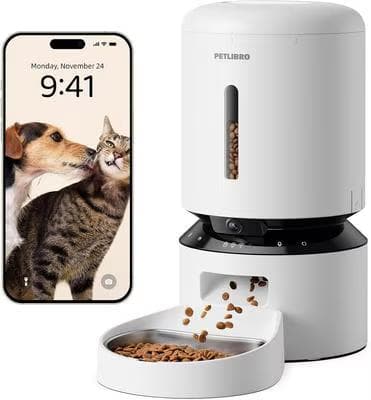
The Petlibro Granary WIFI automatic feeder can dispense scheduled dry-food portions, but it does not calculate the correct calories or confirm which cat ate. Measure actual intake, make diet changes gradually as directed, and investigate appetite change rather than masking it with automation.
Petful may earn a commission when you click through to Chewy, at no extra cost to you.
Preventive care by life stage
The AAFP feline life-stage guidance supports tailoring care to age, lifestyle, health, and risk. Examination frequency is not one-size-fits-all. Kittens, seniors, and cats with active concerns may need different schedules from healthy adults.
Exotic Shorthair dental care belongs in every life-stage discussion, not only after bad breath or eating difficulty appears. Ask the veterinarian about oral examination, home care that the individual can tolerate, and when professional assessment or dental imaging is appropriate. Never force brushing when the mouth may be painful.
Plan conversations by stage:
- Kitten: Growth, nutrition, vaccination, parasite risk, microchip, sterilization, congenital findings, socialization, and parent records.
- Young adult: Baseline weight and muscle, dental care, activity, diet, breathing, eyes, skin, and exposure-based prevention.
- Mature adult: Weight or muscle trends, blood pressure and laboratory discussions, dental status, kidney and heart context, mobility, appetite, and litter changes.
- Senior: More frequent trend review as advised, pain, cognition, sleep, hydration, kidney and thyroid conversations, dental comfort, and home accessibility.
- Every age: Prompt assessment of meaningful change, current emergency contacts, safe carrier access, and a complete medication list.
Bring dated notes rather than a general impression. Include food amount and format, medication or supplements, breathing videos when safely obtained, water and litter changes, grooming observations, and relevant family-history reports.
Prepare a useful preventive visit
Before the appointment, write down the cat's normal food amount, recent weight trend, water and litter observations, activity, sleep, grooming tolerance, breathing at rest, and any change in eye moisture. Bring original records when available instead of relying on a summary from memory.
Ask which observations belong at routine follow-up and which should trigger earlier contact. The answer may differ for a kitten, a healthy adult, a cat with a known finding, or a senior. A life-stage label helps organize the conversation but does not replace an individualized interval.
Daily monitoring without over-monitoring
Useful monitoring is simple and repeatable:
- Notice whether meals are eaten, not merely dispensed.
- Observe urine and stool patterns while cleaning boxes.
- Feel for coat, skin, or body changes during willing contact.
- Note play, mobility, sleep, and social changes.
- Check breathing at rest without disturbing the cat.
- Weigh on a schedule recommended for the individual.
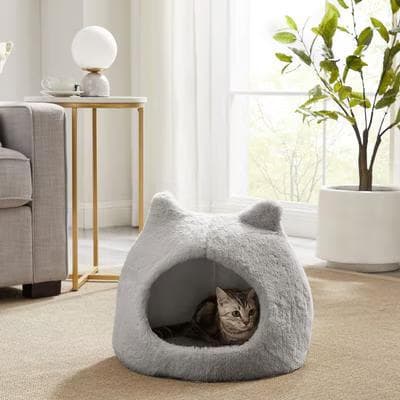
Covered, igloo-style cat bed in soft plush with a water-resistant bottom, giving cats a cozy enclosed spot to curl up. Grey.
Petful may earn a commission when you click through to Chewy, at no extra cost to you.
A Petlibro stainless steel cat fountain can offer another water location if the cat likes moving water. It cannot diagnose hydration or kidney disease. Clean it on schedule, retain still-water options, and contact the veterinarian about meaningful changes in drinking or urination.
Daily habits that support health
No daily routine guarantees a long life, but predictable care improves observation and supports ordinary feline needs. Feed a complete and balanced diet appropriate to life stage and health, provide fresh water, maintain litter hygiene, encourage comfortable movement, protect sleep, and arrange preventive care.
The second Petlibro automatic feeder link fits only when timed portions make intake more visible. In a multi-cat home, separate feeding or a different access system may be necessary. Sudden refusal to eat warrants prompt guidance, especially when it persists or appears with pain, vomiting, breathing change, or lethargy.
WebVet's interactive cat toys guide offers ideas for short, cat-led activity. Choose gentle play that does not provoke breathing distress or overheating, and stop when the cat disengages.
Keep routine care observable
Predictable routines make changes easier to notice. Offer food in a way that lets someone confirm it was eaten, keep water sources clean, and observe litter use while maintaining hygiene. In a multi-cat home, separate resources may be necessary when one device or shared station hides which cat's pattern changed.
Record only enough detail to support decisions. A short dated note about appetite, breathing, eye comfort, activity, and litter use is usually more useful than constant handling or repeated testing. Monitoring should preserve rest and normal behavior.
Is this the right choice for your household?
- Household fit factors include capacity for daily observation, face and coat care, veterinary follow-up, cool housing, and emergency transport
- A simple baseline makes meaningful changes easier to spot
- Preventive examinations can identify concerns before crisis
- Accessible resources help mature and senior cats maintain choice
- Individual behavior can vary, so handling and routine plans must fit the actual cat
- Devices cannot diagnose disease or verify every behavior
- Breed assumptions can cause owners to dismiss urgent changes
- Forced grooming can worsen pain, fear, or injury
A suitable home can maintain ordinary feline care while also responding to the individual's facial function, eye comfort, dental needs, weight and muscle trends, and family history. It should have a realistic plan for routine appointments, prompt concerns, and emergency transport before a problem occurs.
The decision is not a promise that a cat will become ill. It is a commitment to observe without normalizing distress, keep records organized, and seek veterinary guidance according to signs and findings. If that routine cannot be supported consistently, a different individual or adoption timeline may be safer.
Supporting a mature or senior Exotic Shorthair
Mature and senior cats may need easier access without losing useful movement. Place resources where the cat does not need to cross slippery floors, jump high, or compete with another pet. Keep one familiar setup while introducing changes gradually.
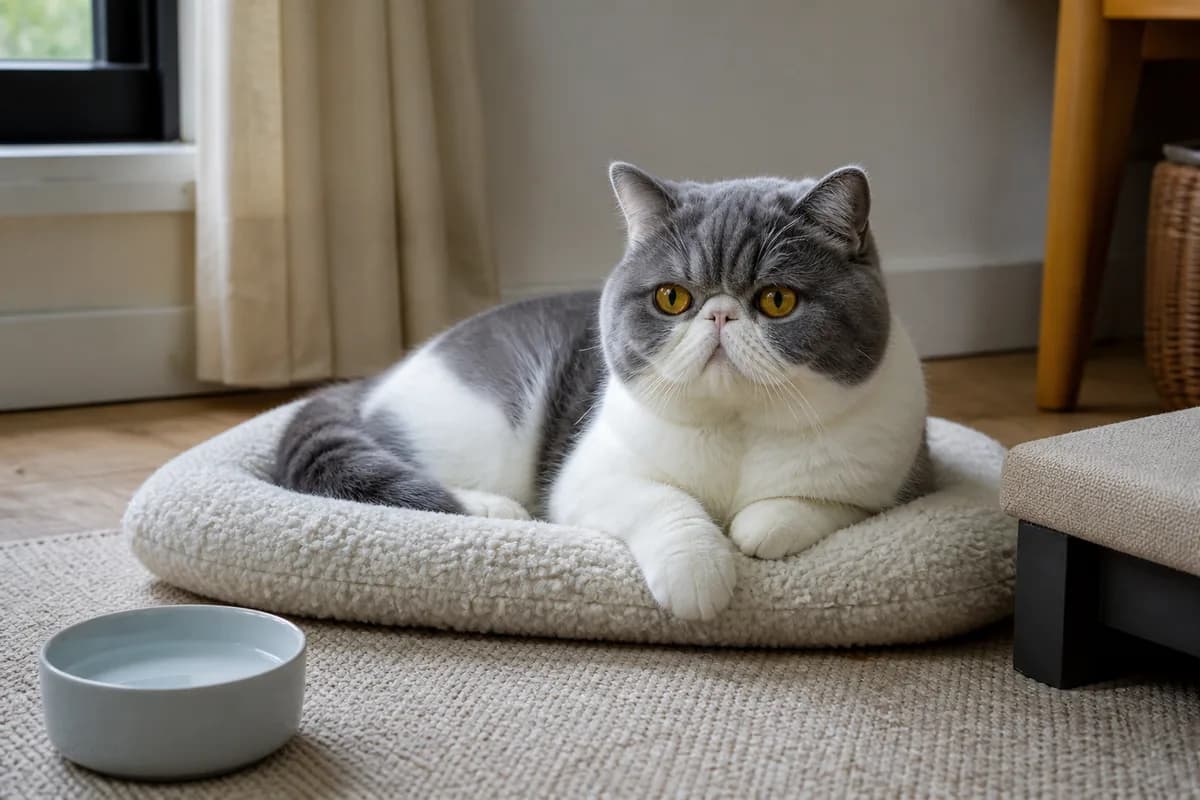
A Best Friends by Sheri covered cat bed can provide a low protected retreat when the opening, warmth, and washability suit the individual. Some cats need an open bed or firmer surface. A bed does not explain new hiding, stiffness, pain, or reduced interaction.
The second Petlibro fountain mention is relevant when adding water access near a preferred resting area. Keep it clean and easy to reach, but do not use increased fountain visits as reassurance if thirst or urination has changed.
Keep transport and rest resources accessible
Keep the Travel Cat carrier accessible so veterinary transport does not begin with a chase. Add familiar bedding, confirm secure closures, and choose a carrier whose opening and interior allow a stiff or painful cat to enter with minimal handling.
A second covered bed link can help price distributed rest areas, but reuse of a familiar washable blanket may be better than buying another product. Follow the cat's comfort and hygiene needs.
Watch trends, not age labels
Do not dismiss appetite loss, weight change, reduced grooming, altered sleep, vocalization, house-soiling, or reluctance to jump as ordinary aging. These signs can reflect pain, dental disease, kidney problems, thyroid disease, cognitive change, stress, or other conditions.
Ask the veterinarian how often to reassess and which screening discussions fit the cat's age, history, and findings. The care interval should change with the individual rather than a fixed breed calendar.
Make the home easier without removing observation
Place food, water, litter, and rest areas so the cat can reach them without climbing a long staircase or crossing a hot room. Use nonslip paths on smooth floors and low stable steps when advised. Keep resources far enough apart that a second animal cannot guard all of them at once.
Accessibility should preserve normal choices. A senior cat may still prefer an elevated view, so a low series of stable steps can be better than removing every perch. Likewise, placing food beside the bed may help temporarily, but a sudden need to eat or drink only while lying down deserves veterinary attention.
Review nail length, coat condition, and hygiene without assuming the cat can no longer groom because of age. Reduced grooming can reflect pain, dental disease, obesity, weakness, stress, or another problem. Assist gently while arranging appropriate assessment.
Health evidence to request
Exotic Shorthair health testing questions should begin with parent identity, pedigree and registration information, PKD screening records, veterinary records, and a written contract. Determine whether each report belongs to the parent, the kitten, or the broader line. Confirm the issuing laboratory or clinic through independently found contact details.
Create a record map with separate columns for the sire, dam, and kitten. For each document, record the full registered name or other identifier, test or examination date, issuing source, result, and what question the evidence answers. Leave the field blank when a document has not been provided instead of filling it from a verbal assurance.
The Exotic Shorthair price guide explains how screening, included care, contract terms, and transport belong in a complete cost comparison. Never treat a higher fee as a substitute for records.
What to verify before you decide
- Verify documentary records by matching names, identifiers, dates, and issuing sources across pedigree, registration, screening, veterinary, microchip, and contract documents. Population estimates are not guarantees that an individual will reach a certain age or avoid breathing, eye, dental, kidney, heart, or unrelated health problems.
Ask what each result can and cannot establish. A named PKD DNA report addresses a particular inherited variant. A veterinary examination documents findings at that time. A pedigree supports recorded ancestry. None of those records alone describes every airway, eye, dental, heart, kidney, behavioral, or future health outcome.
Keep original documents after placement and add the cat's own veterinary results over time. The goal is continuity, not a perfect file. A dated baseline and an organized record make it easier to explain change and avoid mistaking an old family-history statement for a current clinical finding.
Exotic Shorthair Lifespan and Health Problems FAQs
Exotic Shorthairs can have health problems associated with shortened facial structure and Persian ancestry, including breathing or heat intolerance, eye and tear concerns, facial-fold irritation, dental crowding, and polycystic kidney disease in affected lines. Not every cat develops these conditions. The article's triage table separates routine, prompt, and emergency decisions involving breathing, eyes, appetite, hydration, and behavior so that a sudden change is not mistaken for ordinary care.
Exotic Shorthair cats can live roughly 8 to 15 years, but that broad range is useful for planning rather than predicting an individual cat's future. Genetics, airway and eye comfort, kidney and dental health, body condition, preventive care, home safety, and access to timely veterinary treatment can all matter. Build care around the individual cat's baseline, changes over time, and veterinary guidance rather than treating a published range as a promised age.
The health tests Exotic Shorthair breeders should provide include written, verifiable results for every screening they claim, particularly named PKD testing connected to the correct parent and pedigree. Also request parent identities, registration records, relevant family history, the kitten's veterinary record, microchip details, and contract. Screening reduces uncertainty but does not diagnose the kitten or rule out every future condition, so have your veterinarian review the records and examine the cat.
BVMS, MRCVS
Dr. Pippa Elliott, BVMS, MRCVS, is a veterinarian with nearly 30 years of experience in companion animal practice. Dr. Elliott earned her Bachelor of Veterinary Medicine and Surgery from the University of Glasgow. She was also designated a Member of the Royal College of Veterinary Surgeons. Married with 2 grown-up kids, Dr. Elliott has a naughty Puggle named Poggle, 3 cats and a bearded dragon.
Sign up for expert-backed reviews and safety alerts all in one place.