Cymric Cat: The Long-Haired Manx Breed Guide
A Cymric cat is simply a long-haired Manx, sharing the same tailless genetics, rounded body, dog-like temperament, and Manx Syndrome risk as its short-haired cousin. Here is what owners need to know about the coat, grooming, health, and price.
Petful is reader supported. As an affiliate of platforms like Amazon and Chewy, we may earn a commission when you buy through links on this page. There is no extra cost to you.
The Cymric cat is recognized by CFA and TICA as one and the same breed as the Manx, with both registries placing the two in a single breed group that differs in exactly one trait: coat length. CFA registers the Cymric as the long-haired division of the Manx, and TICA states the Manx and Cymric "differ only in coat length." That single sentence is the whole story. Everything that makes a Manx a Manx (the tailless genetics, the rounded "cobby" body, the longer back legs and hopping gait, the famously dog-like personality, and the Manx Syndrome health risk) carries over to the Cymric unchanged. The only real difference is the soft, semi-long double coat and the extra brushing it asks for.
- 1A Cymric is simply a long-haired Manx, identical in body, tail genetics, temperament, and health risk.
- 2The dominant Manx gene that shortens the tail is the same gene behind Manx Syndrome, a spinal condition that affects a minority of cats.
- 3Plan on brushing the semi-long double coat two to three times a week to stay ahead of mats and shedding.
- 4Expect a dog-like companion: loyal, playful, trainable, often fascinated by water, and bonded to its people.
- 5Budget roughly $600 to $1,500 for a pet-quality kitten from a reputable breeder, more for show-quality lines.

Sign up for expert-backed reviews and safety alerts all in one place.
What Is a Cymric Cat?
A Cymric cat is a long-haired Manx. Genetically it is a Manx that also carries a recessive gene for semi-long hair, so a litter of Manx kittens can include both short-haired (Manx) and long-haired (Cymric) siblings. The two are the same breed under the major registries, judged by the same standard apart from coat length, which is why you will also see the Cymric called the Longhair Manx or Manx Longhair.
That shared identity is not a Petful opinion. The Cymric knowledge panel that Google shows for this breed, sourced from Wikipedia, puts it plainly: some registries treat the Cymric as a semi-long-haired variety of the Manx rather than a separate breed, and "except for the length of fur, in all other respects, the two varieties are the same, and kittens of either sort may appear in the same litter." Cats.com, TICA, and the Cat Fanciers' Association all describe the relationship the same way.
So when you read a Cymric profile, you can borrow almost everything from the Manx: the round head, round eyes, and round rump, the compact muscular build, the heavier hindquarters that lift the back end into an arch, and the loyal, interactive temperament. The pages that follow walk through each of those traits and then focus on the two things that actually set a Cymric apart from a short-haired Manx: the coat and the grooming.
- Most cat registries class the Manx (short hair) and the Cymric (long hair) as one breed group. CFA folds the Cymric in as the long-haired division of the Manx, while TICA recognizes "Cymric" as the breed name for the long-haired cats. Same body, same tail rules, same standard, different coat length.
Cymric vs Manx: What Is the Difference?
The honest answer is "very little, and only one thing that matters day to day." A Cymric and a Manx share their origin, their genetics, their body type, their tail types, their personality, and their health profile. The Cymric simply wears a longer coat, and that longer coat means more grooming. Here is the side-by-side. There is more on this in Petful’s guide to Manx cat personality.

Never Scoop Again® with the Whisker Litter-Robot, the smart self-cleaning automatic litter box. Monitor visits and track weights for better overall care in the Whisker® app. Multi-cat friendly.
Petful may earn a commission when you click through to Whisker, at no extra cost to you.
| Trait | Cymric (Long-Haired Manx) | Manx (Short-Haired) |
|---|---|---|
| Coat | Semi-long, plush double coat with a neck ruff and fluffy "breeches" | Short, dense double coat |
| Grooming | Brush 2 to 3 times a week (more in shedding season) | Brush about once a week |
| Body type | Round, compact, "cobby," muscular, arched topline | Identical |
| Tail genetics | Same dominant Manx gene; rumpy, rumpy riser, stumpy, or longy | Identical |
| Temperament | Dog-like, loyal, playful, social, often loves water | Identical |
| Health risk | Same Manx Syndrome risk from the same gene | Identical |
| Registry | CFA long-haired division of Manx; TICA "Cymric" | CFA and TICA "Manx" |
| Lifespan | About 9 to 14 years | About 9 to 14 years |
If you have read a Manx breed profile, you already know the Cymric. The coat and the brush schedule are the only practical differences you will notice as an owner.
Origin and the Name "Cymric"
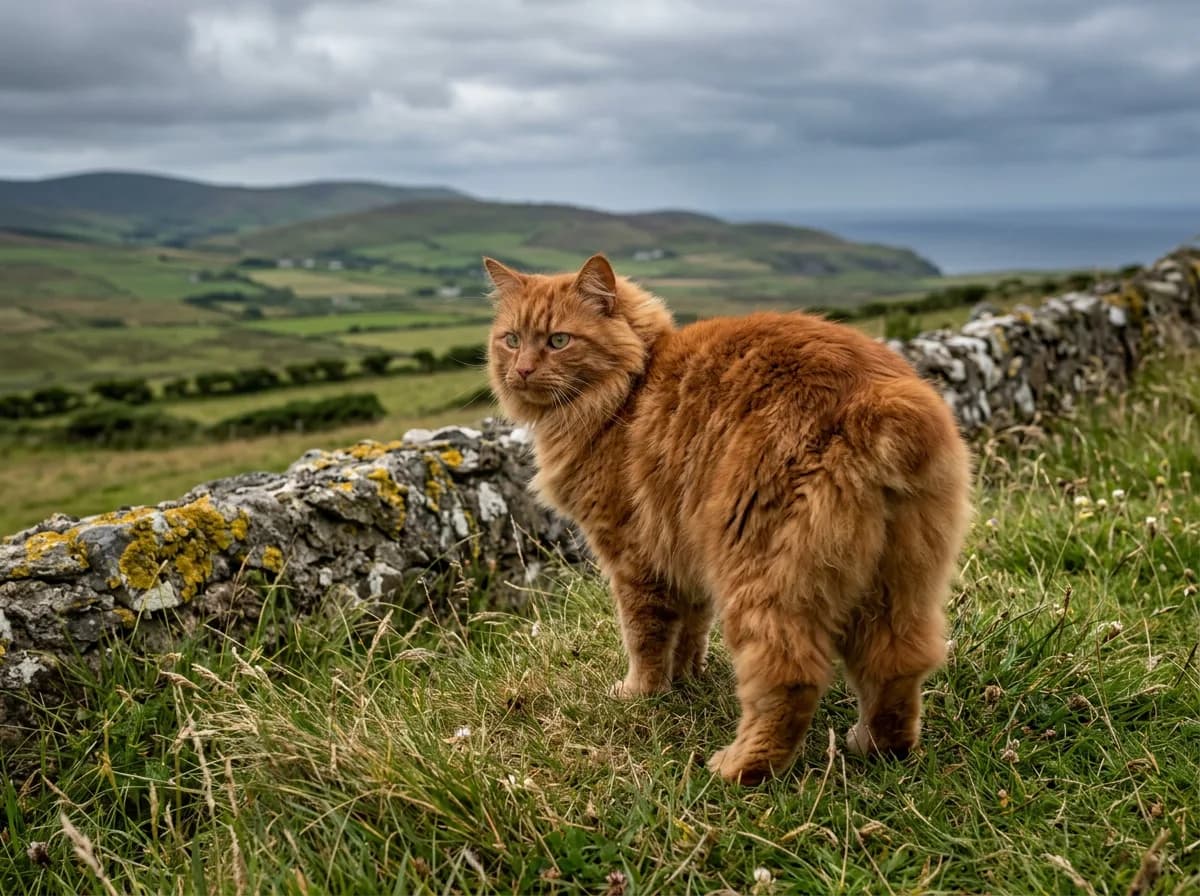
The Manx breed comes from the Isle of Man, a small island in the Irish Sea, where taillessness arose as a natural genetic mutation in an isolated cat population centuries ago. It is one of the oldest known natural breeds. The long-haired cats appeared in those same litters all along, but they were not developed and recognized as a distinct show variety until the 1960s and 1970s, largely through North American breeders. The Canadian Cat Association granted the long-haired Manx championship status in 1976, and the Cat Fanciers' Association later folded the variety in under the name "Longhair Manx" in 1994. Because of that development history, you will sometimes see "Canada" listed alongside the Isle of Man as an origin, but the breed's tailless roots trace to the island.
The name itself is a nod to Celtic heritage. "Cymric" (commonly pronounced KIM-rik or KUM-rik) comes from "Cymru," the Welsh-language name for Wales. The cats have no special connection to Wales; breeders chose a Celtic name to echo the breed's Manx, Isle-of-Man origins.
- You will see charming stories that the Manx and Cymric lost their tails when Noah shut the Ark door on them, or that the cat is a rabbit-cat hybrid. These are legends, not history. The taillessness is a documented genetic mutation, and cats cannot crossbreed with rabbits.
Appearance and the Semi-Long Coat
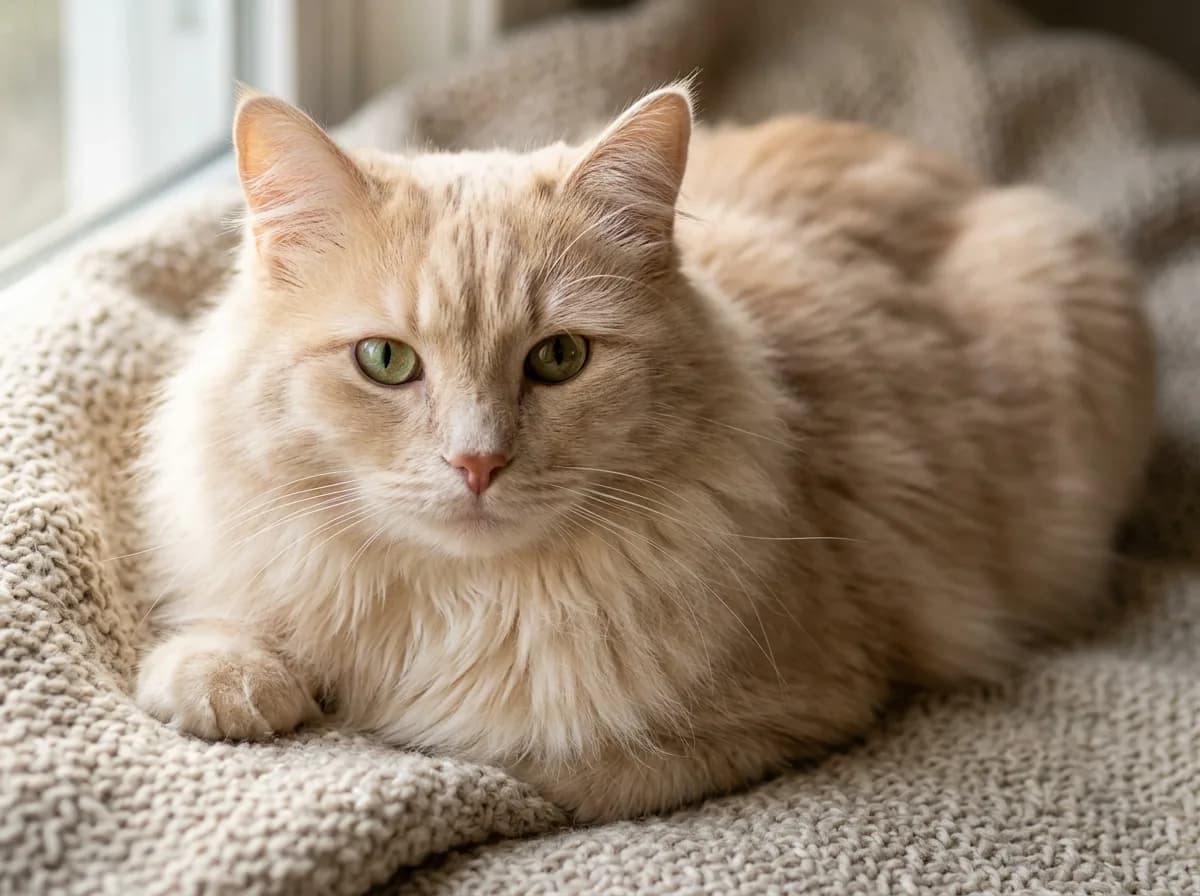
A Cymric is built like a Manx: medium-sized but solid and surprisingly heavy for its size, with a rounded head, large round eyes, a short compact back, and a deep flank. The hind legs are noticeably longer than the front legs, which raises the rump above the shoulders and gives the breed its signature arched topline and a rabbit-like hopping gait. Owners often joke that a Cymric looks like "a bowling ball on legs," and the long coat only adds to that round, plush impression.
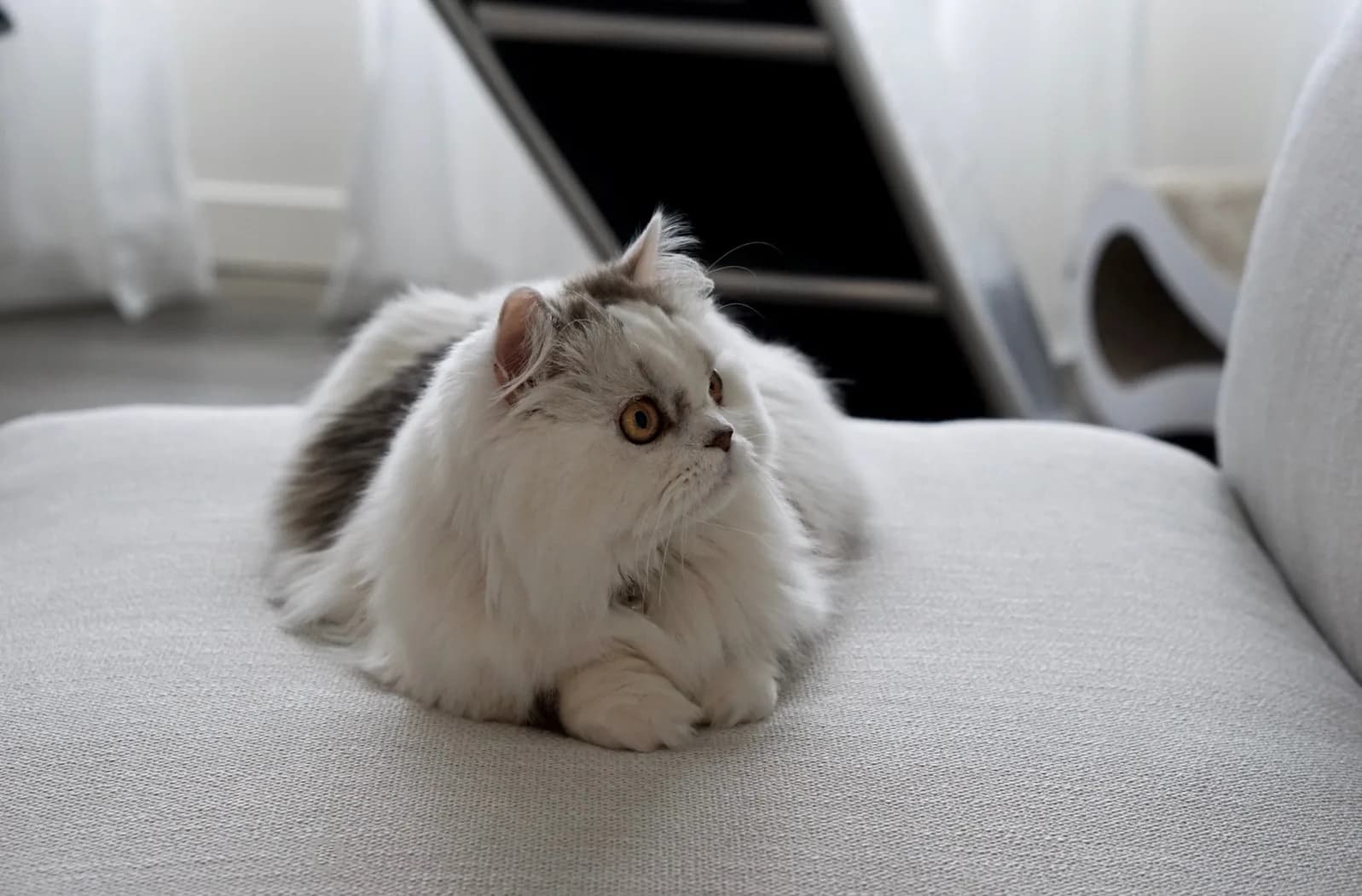
The coat is the headline feature. It is a semi-long, dense double coat, soft and silky to the touch, fuller than a Manx but not as long or flowing as a Persian. Expect a ruff around the neck, fluffy "breeches" on the back legs, a full belly coat, and tufting between the toes and on the ears. A Cymric is slow to mature, taking up to around five years to reach full size, coat, and muscle.
Tail Types: Same Four as the Manx
Because the Cymric carries the same dominant tail gene as the Manx, it shows the same range of tails, from none at all to a full-length tail. Breeders and registries use four standard terms.
| Tail Type | What It Looks Like |
|---|---|
| Rumpy | Completely tailless, often just a small dimple where the tail would be (the show ideal) |
| Rumpy riser | A small knob of a few fused vertebrae that may rise when the cat is petted |
| Stumpy | A short, often kinked partial tail |
| Longy | A near-normal or full-length tail, common in pet and random-bred cats |
CFA shows only rumpy and rumpy riser cats in competition, but stumpy and longy Cymrics are perfectly common as pets. So if you meet a long-haired, round-bodied cat that clearly has a tail, it can still be a Cymric.
- Taillessness comes from a single dominant gene (the "Manx gene"). A Cymric carries one copy of it plus one normal copy. Two copies are fatal early in development, so no living Cymric has two, and every Cymric can pass on the normal copy and produce tailed kittens. This is also why responsible breeders never pair two fully tailless cats.
Temperament: A Dog in a Cat's Body
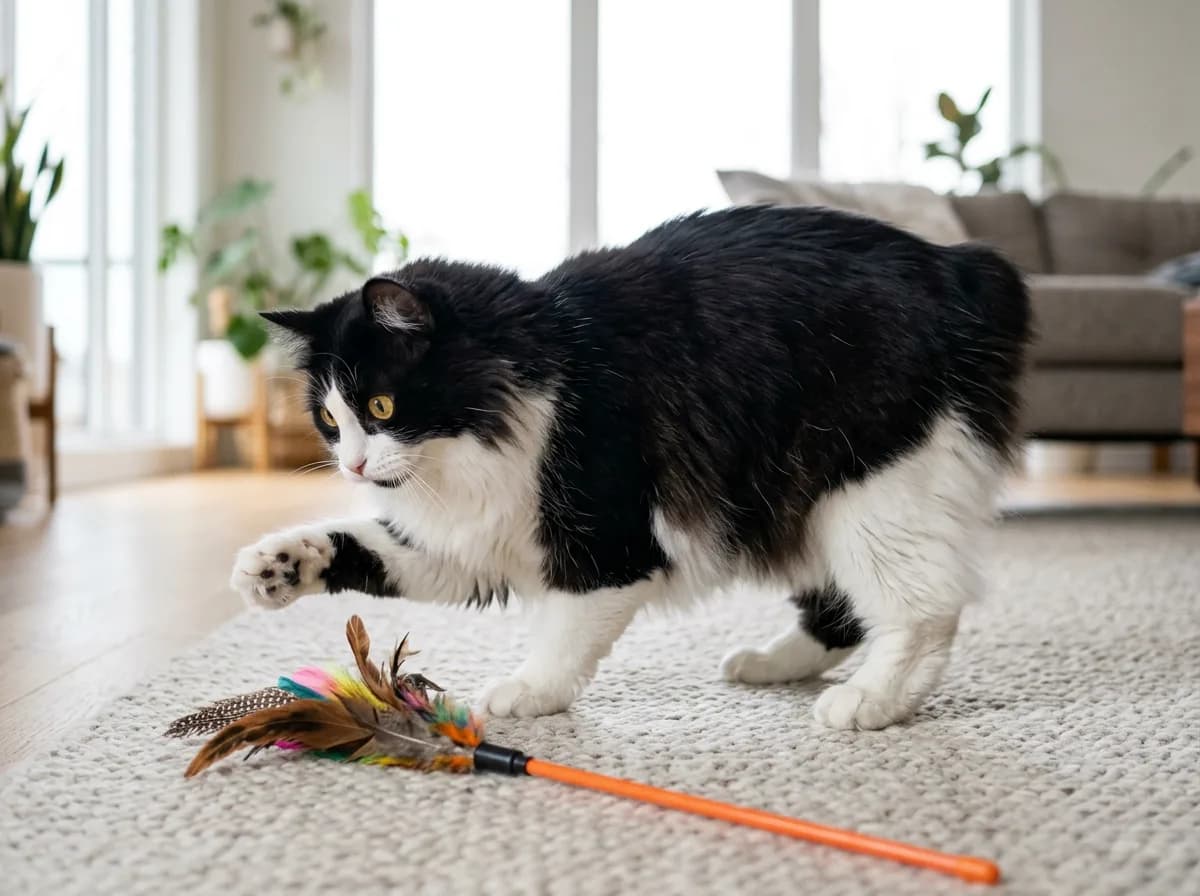
The Cymric personality is the same one that made the Manx famous: dog-like. These are devoted, social, intelligent cats that bond hard with their families and often pick one favorite person to shadow from room to room. Many Cymrics learn to fetch, respond to their names, and pick up tricks, and a lot of them keep a "watchdog" habit of trotting to the door or greeting visitors. Wisdom Panel describes the breed's loyalty as flat-out "dog-like," and the temperament traits Google surfaces for the Cymric read like a golden retriever in miniature: sociable, intelligent, friendly, easygoing, and affectionate.
They are playful and moderately active well into adulthood (remember, they mature slowly), and many are famously fascinated by water, batting at faucets and dunking toys in their bowls. They tend to be quiet, communicating with a soft trill or chirp rather than constant meowing. They do not love being left alone for long stretches, so a household with company around, or a second pet, suits them well.

63-inch multi-level cat tree with scratch posts, hammock, plush perches, and dangling toys. Vertical territory is non-negotiable for high-energy climbing breeds like the Bengal.
Petful may earn a commission when you click through to Chewy, at no extra cost to you.
- Cymrics generally do well with respectful children and with cat-friendly dogs, in keeping with their easygoing, people-first nature. Early socialization and gentle introductions help any cat, and the Cymric's sociability gives you a head start.
For a deeper look at affectionate, people-oriented breeds, the Ragdoll cat breed profile is a useful comparison: another large, dog-like cat known for following its humans around the house.
Grooming: The Real Difference From a Manx
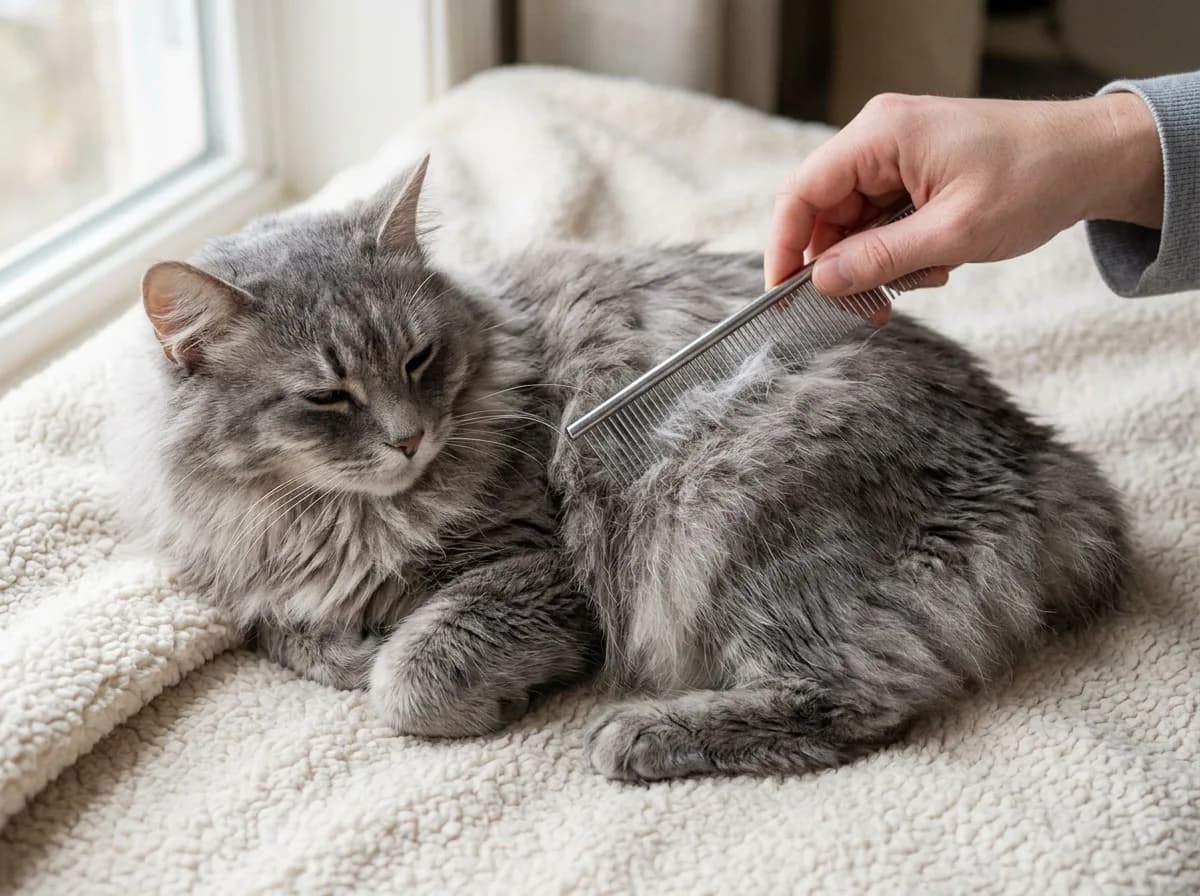
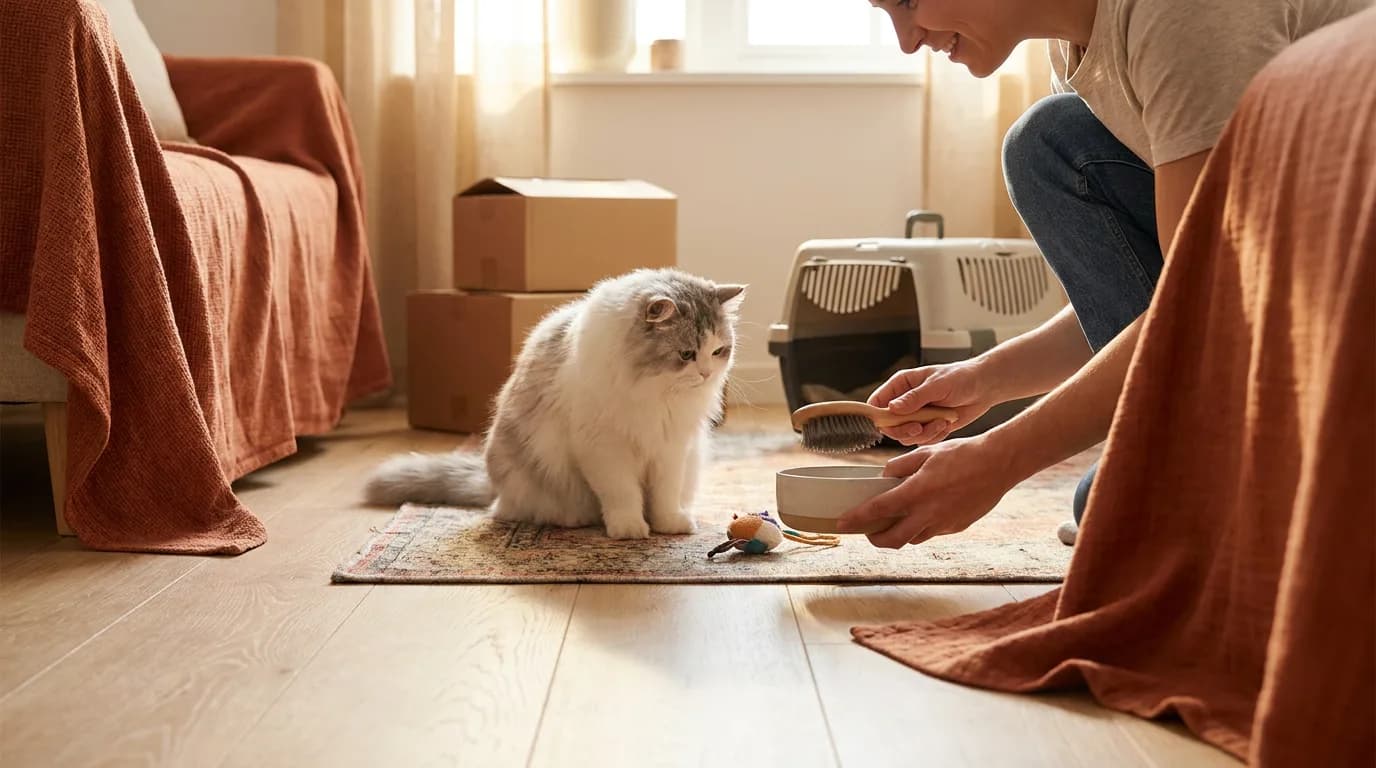
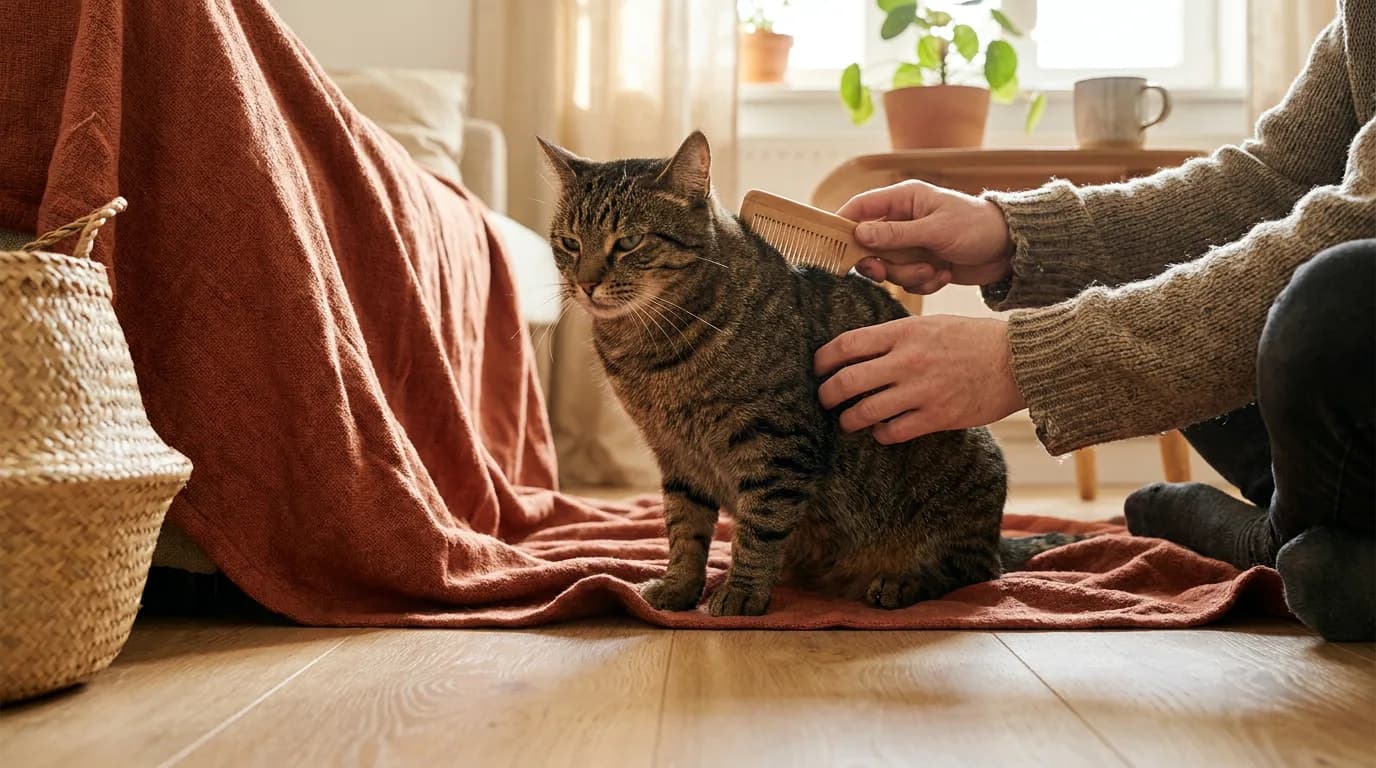
If there is one chore that separates owning a Cymric from owning a Manx, it is the brushing. The semi-long double coat needs combing two to three times a week to remove loose undercoat and prevent mats, and it sheds more heavily during seasonal coat changes in spring and fall, when daily brushing for a stretch keeps the fur off your furniture and out of your cat's stomach. A stainless steel comb plus a slicker brush handles most coats; pay special attention to the ruff, the breeches, the belly, and behind the ears, where tangles form first.
Beyond the coat, Cymric care is standard cat care: weekly nail trims, regular ear checks, and dental care (daily tooth brushing is ideal, weekly is a reasonable floor). Because these cats have hearty appetites and a solid, rounded build, watch portions and keep them at a healthy weight rather than letting the "bowling ball" look tip into actual obesity.
Two other semi-long-haired breeds make helpful grooming benchmarks. The Siberian cat carries a triple coat that also blows out seasonally, and the Maine Coon profile covers the demands of a large, long-coated cat in detail. If you have groomed either, a Cymric will feel familiar.
Are Cymric Cats Hypoallergenic?
No. The Cymric is not a hypoallergenic breed. Cat allergies are driven mainly by the Fel d 1 protein in saliva and skin secretions, not by hair length, so a long coat neither causes nor prevents a reaction. If anything, the heavier seasonal shedding of a semi-long double coat can spread more dander around a home. No cat is truly allergen-free, and the Cymric is an average shedder of allergens, not a low one. Allergy-prone households should spend time with an adult Cymric before committing.
Health and the Manx Syndrome Risk
Cymrics are generally hardy cats, but they carry the same defining health concern as the Manx, because they carry the same gene. The dominant mutation that shortens the tail can also over-shorten the spine, producing a condition called Manx Syndrome (sacrocaudal dysgenesis), a spina-bifida-like malformation of the lower spine and spinal cord.

108-oz stainless steel pet fountain with quiet pump and water-level window. Bengals are notoriously water-obsessed; a flowing fountain encourages hydration and pulls them away from sinks and toilets.
Petful may earn a commission when you click through to Chewy, at no extra cost to you.
Signs usually show up early, by four to six months of age, and can include hind-limb weakness, an exaggerated hopping gait, fecal or urinary incontinence, constipation, and recurrent urinary tract infections. The condition affects a minority of cats in the breed (sources commonly cite up to roughly 20 to 30 percent showing some degree of effect, with severe cases less frequent), and the risk is highest in fully tailless (rumpy) cats and in rumpy-to-rumpy breeding. Mild cases can live good lives with veterinary management; severe cases carry a poor prognosis. This is the breed's most important welfare issue, and it is the single biggest reason to buy only from a breeder who screens their lines.
- Because Manx Syndrome typically appears by 4 to 6 months, responsible Cymric breeders avoid rumpy-to-rumpy pairings, screen their lines, and hold kittens until they can confirm no signs of the condition, usually at 4 months and up. A breeder pushing tailless kittens out the door at 8 weeks is a red flag. When in doubt, have your own veterinarian examine any kitten before purchase.
Other documented issues in the breed include corneal dystrophy (a clouding of the cornea), and arthritis at the tail base in stumpy and longy cats. None of those change the bottom line: a Cymric from health-screened parents, kept at a healthy weight, commonly lives about 9 to 14 years and sometimes into the mid-teens. Another single-gene-mutation breed, the Scottish Fold, is worth reading about if you want to understand how a defining mutation and a linked health risk go hand in hand.
Colors and Patterns
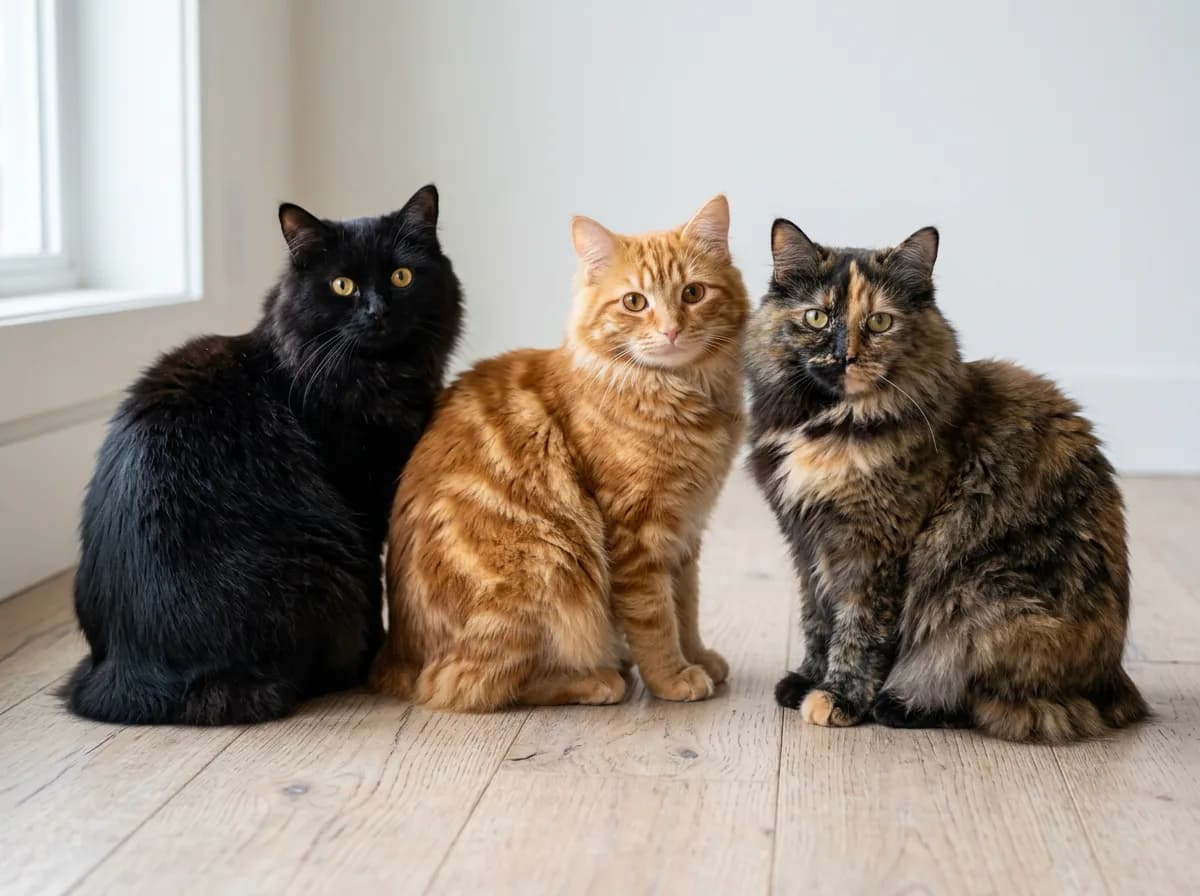
The Cymric comes in nearly every color and pattern, just like the Manx. You will find solid colors (white, black, blue, red, and cream), the full range of tabby patterns (classic, mackerel, spotted, and ticked), tortoiseshell, calico, bicolor, smoke, and silver or shaded coats. Eye color generally follows the coat. For more, see Petful’s guide to Manx cat colors.
The traditional Manx and Cymric standard does not include the colorpoint (Siamese) pattern, and the pointed-related chocolate and lilac colors are not part of the classic standard either. (Registries differ on this point, which is worth checking with a specific club if a particular color matters to you.) Black is the most-searched Cymric color, with orange (red), tabby, tortoiseshell, and calico also popular. Color does not affect a Cymric's price or health, so choose the look you love. For a sense of how a single breed can span the whole color wheel, the Siamese cat colors guide is a good visual reference.
Price: How Much Does a Cymric Cat Cost?
A Cymric is less common than mainstream breeds, so expect to pay accordingly and to wait. As a general guide:
| Source | Typical Price Range |
|---|---|
| Shelter or breed rescue (adoption) | $75 to $200 |
| Pet-quality kitten from a reputable breeder | $600 to $1,500 |
| Show- or breeding-quality (health-screened rumpy / rumpy-riser lines) | $1,500 to $2,000 and up |
Show-quality, fully tailless cats from well-bred, health-screened lines sit at the top of the range. Several factors push the price up: rarity, the breeder's health screening and registration, the tail type (rumpy show cats cost more than longy pets), and your location. Because reputable Cymric breeders are uncommon, many keep waitlists, so plan ahead rather than expecting to bring a kitten home next week. Adopting through a Manx or Cymric rescue is the most affordable route and a great option if you are flexible on age and color.
- A genuine reputable breeder may have a months-long waitlist, ask you questions, show health testing, and hold kittens to four-plus months. A "breeder" with tailless kittens always in stock, no health screening, and pressure to pay a deposit fast is the warning sign, not the waitlist.
Is a Cymric Right for You?
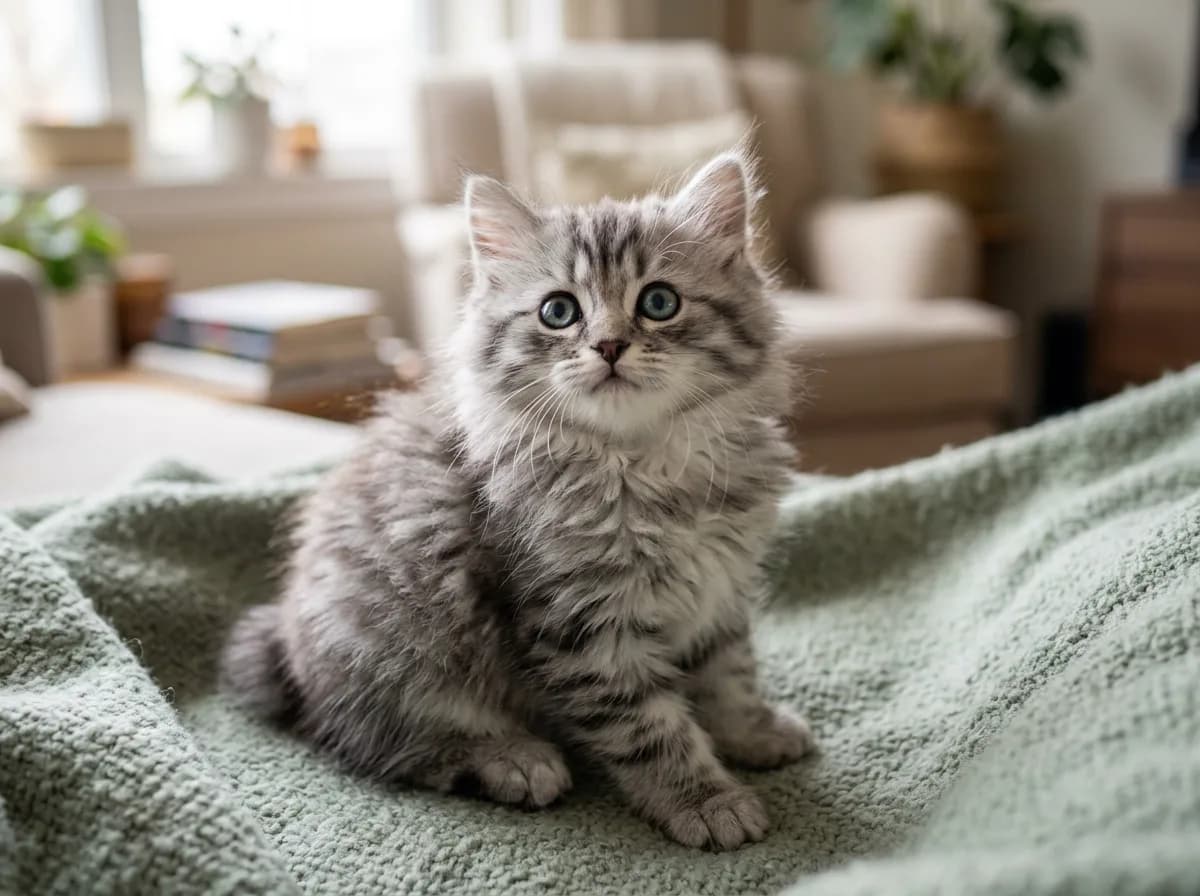
A Cymric suits someone who wants a genuinely interactive, dog-like cat and does not mind a standing two-to-three-times-a-week brushing habit. You get a loyal, playful, water-curious companion that greets you at the door and may learn to fetch, wrapped in a soft, plush coat. In exchange you take on regular grooming, the patience to find a responsible breeder, and a clear-eyed understanding of the Manx Syndrome risk that comes with the breed's signature tail. For the right home, that is a very fair trade.
A Cymric is a long-haired Manx. Genetically it is a Manx that also carries a gene for semi-long hair, so it shares the Manx body, tail genetics, temperament, and health profile and differs only in coat length. CFA registers it as the long-haired division of the Manx, while TICA recognizes it under the name Cymric.
Yes. The Manx and Cymric make up one breed group that, in TICA's words, "differ only in coat length." Short-haired and long-haired kittens can appear in the same litter, and the two are judged by the same standard apart from the coat.
Yes, relatively. Cymrics are far less common than mainstream breeds, and reputable breeders are scarce enough that many keep waitlists. Their rarity is one of the reasons they cost more than a typical pedigreed cat.
It varies. Many Cymrics are completely tailless (rumpy) or have just a small rise (rumpy riser), but stumpy (short partial tail) and longy (full-length tail) cats are common, especially as pets. So a Cymric may have no tail, a stub, or a full tail.
Roughly $75 to $200 to adopt from a rescue, about $600 to $1,500 for a pet-quality kitten from a reputable breeder, and $1,500 to $2,000 or more for show- or breeding-quality, health-screened lines. Tail type, rarity, and location all affect the price.
No. Cat allergies come mainly from the Fel d 1 protein in saliva and skin, not from hair length, so the Cymric's long coat does not make it hypoallergenic. Its seasonal shedding can even spread more dander. Allergy-prone households should spend time with an adult Cymric first.
A healthy Cymric typically lives about 9 to 14 years, and some reach the mid-teens. Cats from health-screened parents that stay at a healthy weight tend to do best.
Yes, they carry the same risk as the Manx because they have the same gene. Manx Syndrome (sacrocaudal dysgenesis) affects a minority of cats in the breed, usually appears by 4 to 6 months, and is most common in fully tailless cats. Buying from a breeder who screens their lines and places kittens at 4 months or older is the best safeguard.

Coreen Saito is a pet writer and longtime shelter volunteer with more than a decade in animal rescue. She covers cat behavior, breed care, and the small, ordinary science of sharing a life with companion animals, with a particular focus on honest takes about the products and decisions that actually matter. At home in Arizona, she's outranked by Mac (a dog with the loudest opinion in the house), Rebel (a cat who governs by quiet authority), and Meri (an orange tabby who runs the late shift and the laundry basket). She writes about all three, plus the rescues that keep coming through her life, at LifeWithMinty.com.
Sign up for expert-backed reviews and safety alerts all in one place.