Balinese vs Siamese: The Complete Breed Comparison
Balinese vs Siamese comes down to one gene: coat length. Both share the same pointed pattern, vivid blue eyes, and demanding personality. Here is the full comparison covering coat, grooming, allergens, health, price and how to tell them apart.
Petful is reader supported. As an affiliate of platforms like Amazon and Chewy, we may earn a commission when you buy through links on this page. There is no extra cost to you.
The balinese vs siamese question has a surprisingly simple core answer: the Balinese is the long-haired Siamese. Not a cousin breed, not a distant relative. The Balinese arose from a natural genetic mutation within Siamese litters and was developed as a distinct breed in the United States starting in the 1950s. The two breeds share the same pointed color pattern, the same vivid blue eyes, the same slender oriental body, and the same loud, affectionate, people-dependent personality. The single meaningful difference is coat length, and everything that flows from it: grooming time, tail shape, and a slight edge in allergen tolerance.
- 1Balinese = long-haired Siamese, same gene pool, same temperament and pointed colors
- 2Primary difference is coat: Balinese has a silky single-layer semi-long coat with a plumed tail; Siamese has a short close-lying coat
- 3Both are extremely vocal, social, and demanding of attention
- 4Allergy-prone owners often tolerate Balinese slightly better due to less airborne Fel d 1
- 5Shared health risks: PRA, HCM, amyloidosis, dental and respiratory issues

Sign up for expert-backed reviews and safety alerts all in one place.
Balinese vs Siamese: Full Comparison Table
| Trait | Balinese | Siamese |
|---|---|---|
| Origin | Natural longhaired mutation of the Siamese; USA 1950s, CFA championship 1970 | Ancient Thailand (formerly Siam); one of the oldest recognized breeds |
| Coat Length | Semi-long (1.5-2 inches), silky, lies flat | Short, fine, close-lying against the body |
| Coat Type | Single-layer, no dense undercoat | Single-layer (also lacks significant undercoat) |
| Point Colors (CFA) | Seal, blue, chocolate, lilac | Seal, blue, chocolate, lilac |
| Point Colors (TICA) | Seal, blue, chocolate, lilac, plus tortie, lynx and other tabby points | Seal, blue, chocolate, lilac, plus many extended colors |
| Eye Color | Vivid deep blue (almond-shaped, slightly slanted) | Vivid deep blue (almond-shaped, slightly slanted) |
| Body Type | Slender, tubular, fine-boned, long legs and neck | Slender, tubular, fine-boned, long legs and neck |
| Head Shape | Long tapering wedge, flat skull, large triangular ears | Long tapering wedge, flat skull, large triangular ears |
| Adult Weight | 6-11 lbs (females smaller) | 6-14 lbs (Siamese skew slightly heavier in males) |
| Tail | Semi-long, silky plume (up to 5 inches of feathering) | Thin, tapering whip-like tail, short fur |
| Shedding | Moderate (longer hairs more visible on surfaces) | Low to moderate (shorter hairs embed more in fabric) |
| Grooming | 2-3 times per week brushing | Weekly light comb or glove; minimal effort |
| Vocalization | Very vocal; voice often described as slightly softer than Siamese | Very vocal; classically the louder of the two |
| Temperament | Social, affectionate, intelligent, loyal, velcro cat | Social, affectionate, intelligent, loyal, velcro cat |
| Lifespan | 15-20 years (Balinese often described as slightly longer-lived) | 12-20 years |
| Price Range | $800-$2,500 from reputable CFA or TICA breeder | $400-$2,000 from reputable CFA or TICA breeder |
| Availability | Less common; fewer active breeders in the US | More common; established breeder network globally |
The Same Breed in Two Coats: Origins and Genetics
The Balinese was not bred from a foreign cat; it was discovered within the Siamese breeding population. Long-haired kittens had appeared sporadically in Siamese litters as early as the early 1900s, and breeders at the time considered them culls. It was not until American breeders Helen Smith and Sylvia Holland began selectively developing these kittens in the 1940s and 1950s that the Balinese was treated as a breed in its own right.
Smith chose the name "Balinese" because she felt the cats moved with the grace of Balinese dancers. The breed has no actual connection to Bali or Indonesia. According to the Cat Fanciers Association (CFA), the Balinese received full championship status in 1970, and the International Cat Association (TICA) also formally recognizes both breeds with near-identical standards except for coat description.
The genetic explanation is a single recessive mutation in the FGF5 gene, which encodes the fibroblast growth factor 5 protein responsible for regulating hair length. Both the Balinese and Siamese carry pointed coloration through the same temperature-sensitive albinism at the TYR locus, which is why both breeds develop darker color only on the cooler extremities. The genetics of color, eye color, body type, and temperament are shared. Only coat-length inheritance differs.
For a complete deep dive into the breed's history and care requirements, the Balinese cat breed profile covers everything from the CFA standard to feeding and enrichment. The Siamese cat breed profile is the companion piece.
Never Scoop Again® with the Whisker Litter-Robot, the smart self-cleaning automatic litter box. Monitor visits and track weights for better overall care in the Whisker® app. Multi-cat friendly.
Petful may earn a commission when you click through to Whisker, at no extra cost to you.
- The Cat Fanciers Association (CFA) and The International Cat Association (TICA) both recognize the Balinese and Siamese as separate breeds. CFA standards for both breeds use nearly identical language for body, head, eye color, and temperament; only the coat section differs.
Appearance: What Makes Each Breed Look Distinct
Coat, Tail, and Texture
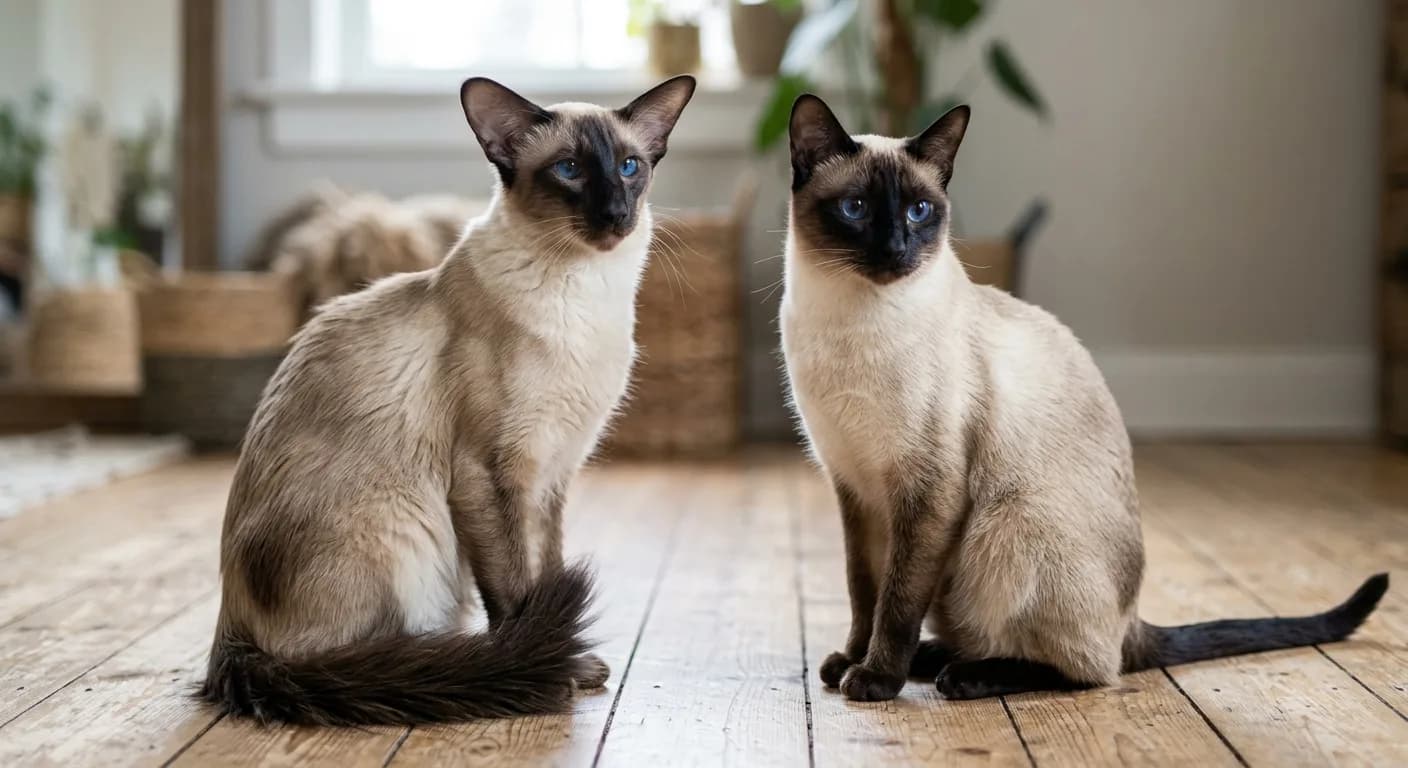
The visual difference between the two breeds is immediately legible even to someone who has never owned either. The Balinese coat is semi-long, typically 1.5 to 2 inches in length, with a silky texture that lies flat against the body rather than standing out. Critically, the Balinese coat is a single layer with no significant undercoat. This is what distinguishes it from longhaired breeds like Ragdolls or Birmans, which carry a double coat. The Balinese tail develops a distinctive plume of fur up to 5 inches long, one of the breed's signature features. For more, see Petful’s guide to Birman vs Ragdoll.
The Siamese coat is short, fine, and close-lying. It has essentially no undercoat either, which is why both breeds are sometimes described as producing less allergen-containing dander than double-coated breeds. The Siamese tail is thin and tapering, whip-like from base to tip, with the same short fur as the rest of the body.
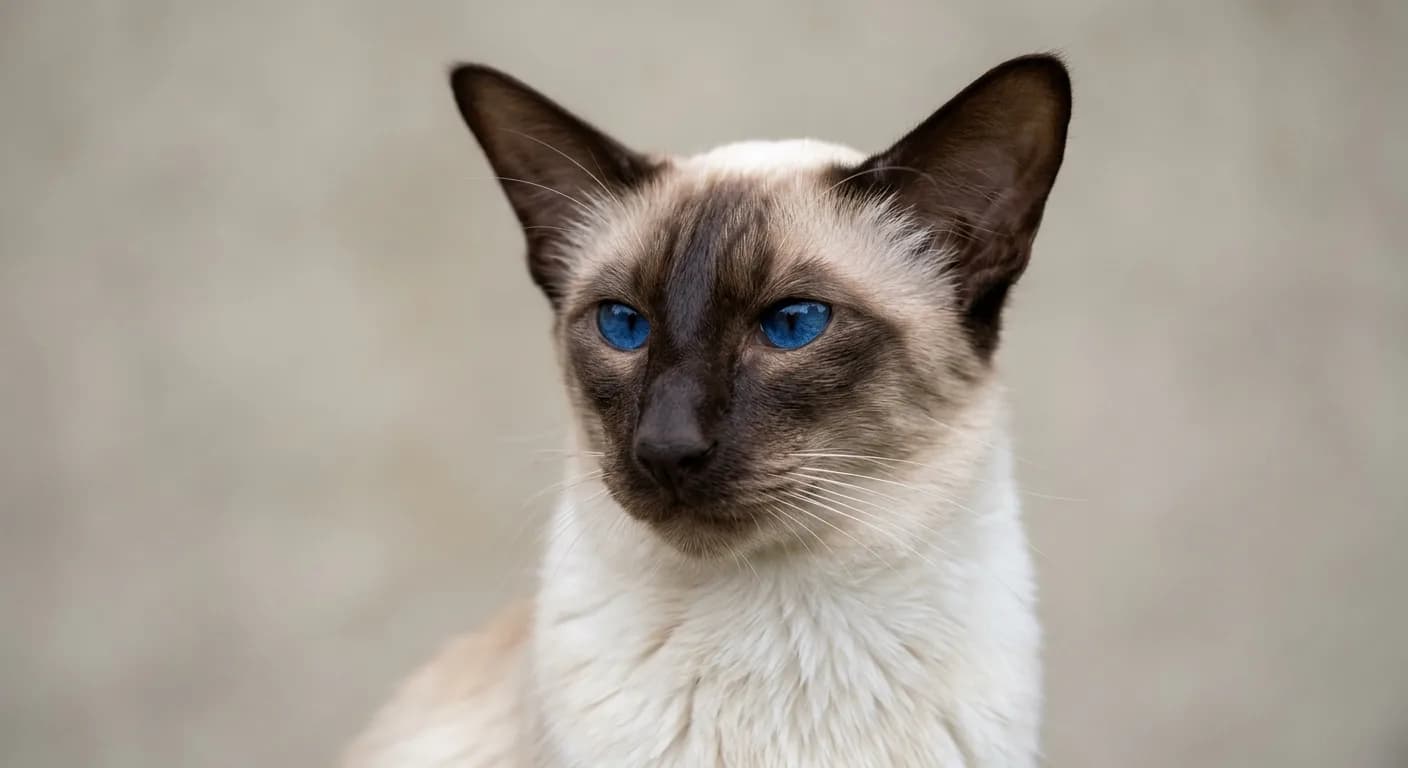
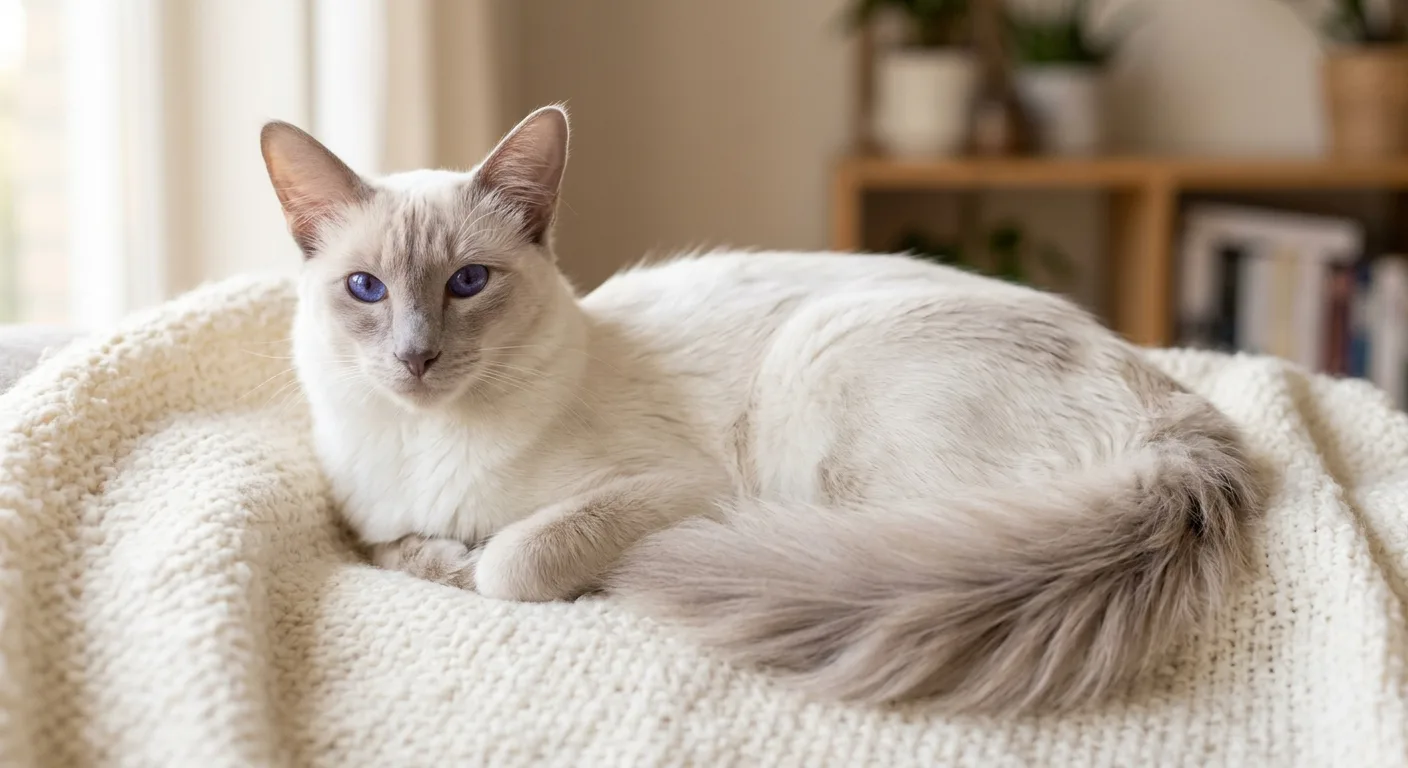
Despite the coat difference, both breeds carry the identical pointed pattern recognized by the CFA in four traditional colors: seal (dark brown points on a pale cream to fawn body), blue (slate-grey points on a cool white body), chocolate (warm milk-chocolate points on ivory), and lilac (pale pinkish-grey points on the palest possible body). TICA extends recognized colors in both breeds to include tortie points, lynx (tabby) points, and additional combinations. Eye color remains vivid, deep blue in every accepted color class for both breeds, throughout their lives.
Body Type: Modern vs Traditional
Both the Balinese and Siamese are described by their respective breed standards as having an elongated, tubular body, long tapering legs, a long neck, and a long tapering wedge head with large, wide-set triangular ears. This oriental body type distinguishes them from rounder-bodied breeds.
It is worth noting that both breeds exist in two informal type variants that reflect the evolution of the show standard. The modern or "extreme wedge" show type (favored in CFA show rings from the 1980s onward) is very elongated with an extreme wedge head and very large ears. The traditional or "apple-head" type is slightly rounder in the head and less extreme overall. Both types exist in both breeds, and a buyer should ask a breeder specifically which type their lines represent. The apple-head Siamese is sometimes marketed as a "Traditional Siamese" or "Thai cat." Neither type is definitively healthier, though the extreme wedge can be associated with narrower nasal passages.
Personality and Temperament: Effectively Identical
This is the most important finding for anyone trying to choose between these breeds: the temperaments are functionally the same. Both the Balinese and Siamese consistently rank among the most vocal, social, and attention-demanding domestic cat breeds. They are not independent cats. They are not cats that will be content with solo time while you are at work. They want to be involved in your daily life, and they will make this preference loudly known.
Both breeds display the following behaviors with high consistency:
They follow their owners from room to room. They vocalize frequently, holding what owners describe as actual conversations. They greet people at the door. They sleep on or next to their person rather than alone. They become stressed when left alone for extended periods, which can manifest as destructive behavior or compulsive grooming. They respond well to interactive toys, puzzle feeders, and positive reinforcement training. Both breeds have been successfully leash-trained, taught basic commands, and even trained to retrieve.
The Siamese has a longer reputation for being the louder talker of the two. Siamese vocalization is often described as demanding and insistent. Many Balinese owners report their cats have a slightly softer, less piercing voice, though this varies widely between individual cats and family lines. Do not choose either breed hoping for a quiet cat.
Both breeds are highly suitable for families with children and cat-friendly dogs. Early and consistent socialization produces the best results. They do not do well as only pets when left home for long workdays without enrichment. Many breeders recommend adopting a pair.
- Both breeds are prone to separation anxiety when left alone. Adopting a bonded pair, or pairing a Balinese or Siamese with another social cat breed, is one of the most effective ways to prevent boredom-driven behavioral issues.
Grooming Needs: The Key Practical Difference
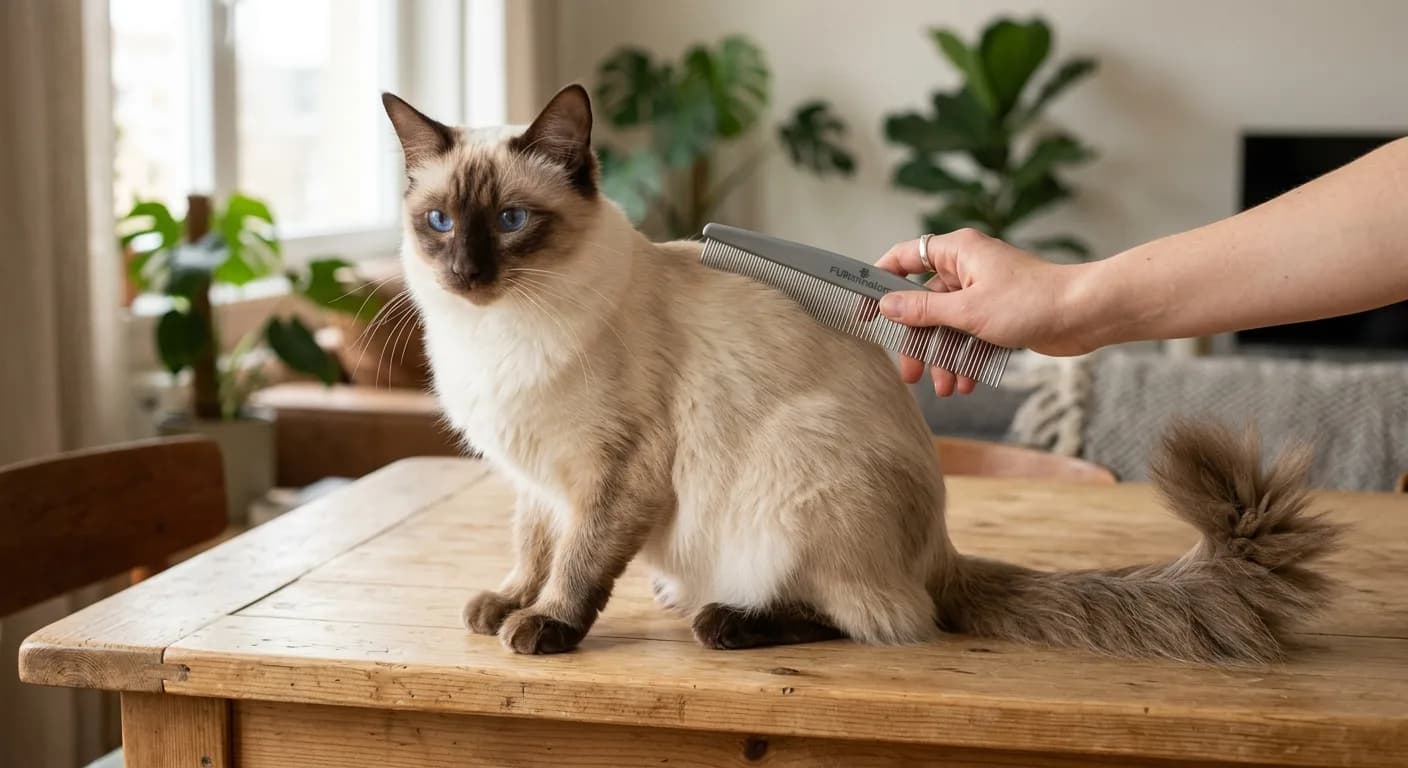
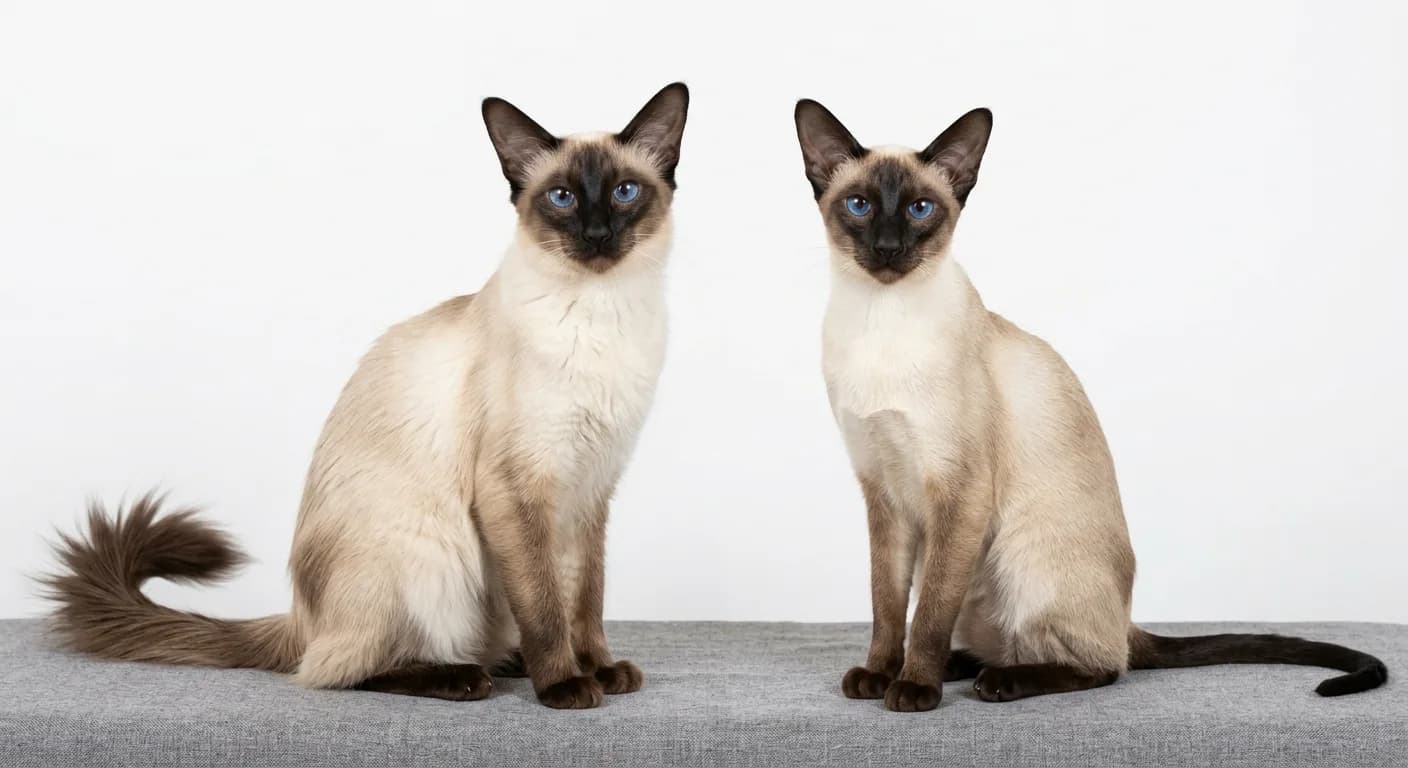
The grooming difference between these two breeds is real but often overstated. The Balinese is not a high-maintenance longhaired cat. Its single-layer coat without a dense undercoat means the fur does not mat the way a Persian or Maine Coon coat will. A thorough brushing two to three times per week is sufficient for most Balinese. During seasonal changes, additional brushing sessions may be needed to manage increased shedding.
The Siamese requires minimal grooming. A weekly once-over with a fine-tooth metal comb or a grooming glove removes loose hair and distributes skin oils. The short coat rarely mats and does not require bathing under normal circumstances.
Both breeds should have their nails trimmed every two to three weeks, ears checked weekly for wax accumulation, and teeth brushed regularly. Dental care is particularly important in both breeds due to their narrower jaw structure.
- Both the Balinese and Siamese are predisposed to dental disease due to their wedge-shaped heads, which can cause crowded teeth. Veterinary dental cleanings and home brushing are an important part of routine care for both breeds.
Shedding and Allergen Profile: The Hypoallergenic Question
Neither the Balinese nor the Siamese is hypoallergenic. No domestic cat is. However, both breeds produce relatively lower levels of the primary cat allergen, Fel d 1, compared to many other breeds. This is partly because both have single-layer coats without a dense undercoat that would trap and re-shed dander-laden fur.
Between the two, the Balinese is frequently cited as the better option for mild allergy sufferers. The reasoning: the Balinese coat, despite being longer, does not shed the same volume of fine short fibers that embed in fabric and become airborne. Some research and many breeder reports suggest Balinese cats produce less airborne Fel d 1 than short-haired Siamese, though individual variation is significant.
The Siamese's short hairs can actually be harder to remove from upholstery because they work into fabric fibers. Longer Balinese hairs tend to sit on top of surfaces and are easier to vacuum.

63-inch multi-level cat tree with scratch posts, hammock, plush perches, and dangling toys. Vertical territory is non-negotiable for high-energy climbing breeds like the Bengal.
Petful may earn a commission when you click through to Chewy, at no extra cost to you.
Any allergy-prone person should spend time with the specific cat they intend to adopt before committing. Genetics, diet, and individual biology all affect Fel d 1 production. For a detailed breakdown of what "hypoallergenic" actually means in the context of the Balinese, see our full explainer on Balinese cats and hypoallergenic claims.
Health and Lifespan: Same Genetic Risks
Because these breeds share the same gene pool, they share the same hereditary health vulnerabilities. Prospective owners should be aware of the following conditions, documented in both CFA and TICA breed health guidance and peer-reviewed veterinary literature:
Progressive Retinal Atrophy (PRA): A degenerative condition of the retinal photoreceptors that can lead to vision loss and blindness. A genetic test is available. Responsible breeders test breeding stock and should provide documentation.
Hypertrophic Cardiomyopathy (HCM): The most commonly diagnosed feline cardiac disease, HCM causes abnormal thickening of the heart muscle. Regular echocardiographic screening is recommended. A DNA test for one associated mutation is available but does not cover all HCM variants; cardiac screening remains necessary.
Amyloidosis: A condition in which abnormal amyloid protein deposits in organs, primarily the liver in Siamese-related breeds. This condition can progress to organ failure. There is no genetic test; selecting from long-lived, healthy lineages is the best mitigation.
Respiratory issues: The elongated skull of the modern wedge type can result in narrower nasal passages, predisposing to upper respiratory conditions and snoring.
Dental disease: Crowded teeth due to the jaw shape increase plaque and tartar accumulation. Annual professional cleanings and home care reduce risk.
Asthma: Both breeds appear more prone to feline asthma than average. Environmental triggers should be minimized (no aerosol sprays, air fresheners, or scented cat litter in the home).
Both breeds are long-lived when healthy. Lifespans of 15 to 20 years are documented in both, with many individuals reaching 18 or older. The Balinese is sometimes described as slightly more robust in longevity, though controlled studies are limited. Choosing from a breeder who performs genetic health testing and offers a written health guarantee is the single most impactful step a buyer can take.
- Before purchasing from any breeder, request documented results for PRA genetic testing and cardiac (HCM) echocardiographic screening on both the sire and dam. Reputable CFA- or TICA-affiliated breeders will provide this without hesitation.
Price and Availability: What to Expect
Balinese
The Balinese is a relatively uncommon breed in the United States. Fewer active breeders maintain Balinese lines compared to Siamese, and demand frequently exceeds supply from quality breeders. Expect to pay $800 to $2,500 from a reputable CFA- or TICA-affiliated breeder, with show-quality cats at the higher end. Wait times of six months to a year are not unusual. For a detailed breakdown of pricing factors, see our Balinese cat price guide.

108-oz stainless steel pet fountain with quiet pump and water-level window. Bengals are notoriously water-obsessed; a flowing fountain encourages hydration and pulls them away from sinks and toilets.
Petful may earn a commission when you click through to Chewy, at no extra cost to you.
Balinese cats occasionally appear in rescue and the Balinese breed-specific rescue network, though availability is unpredictable. General Siamese-and-related rescue organizations sometimes have Balinese.
Siamese
The Siamese is one of the most widely recognized and frequently bred cats in the world. Prices from reputable breeders range from $400 to $2,000, with show-quality cats and rare color variants at the top. Because the breed is more common, wait times tend to be shorter. Siamese also appear regularly in breed-specific rescues and general shelters, where adoption fees typically run $75 to $200.
- Use the CFA's breeder referral database or TICA's cattery directory to find breeders with registered catteries. Avoid sellers who cannot show champion lineage documentation, genetic health test results, or who sell kittens under 12 weeks of age.
How to Tell if Your Cat Is Balinese or Siamese
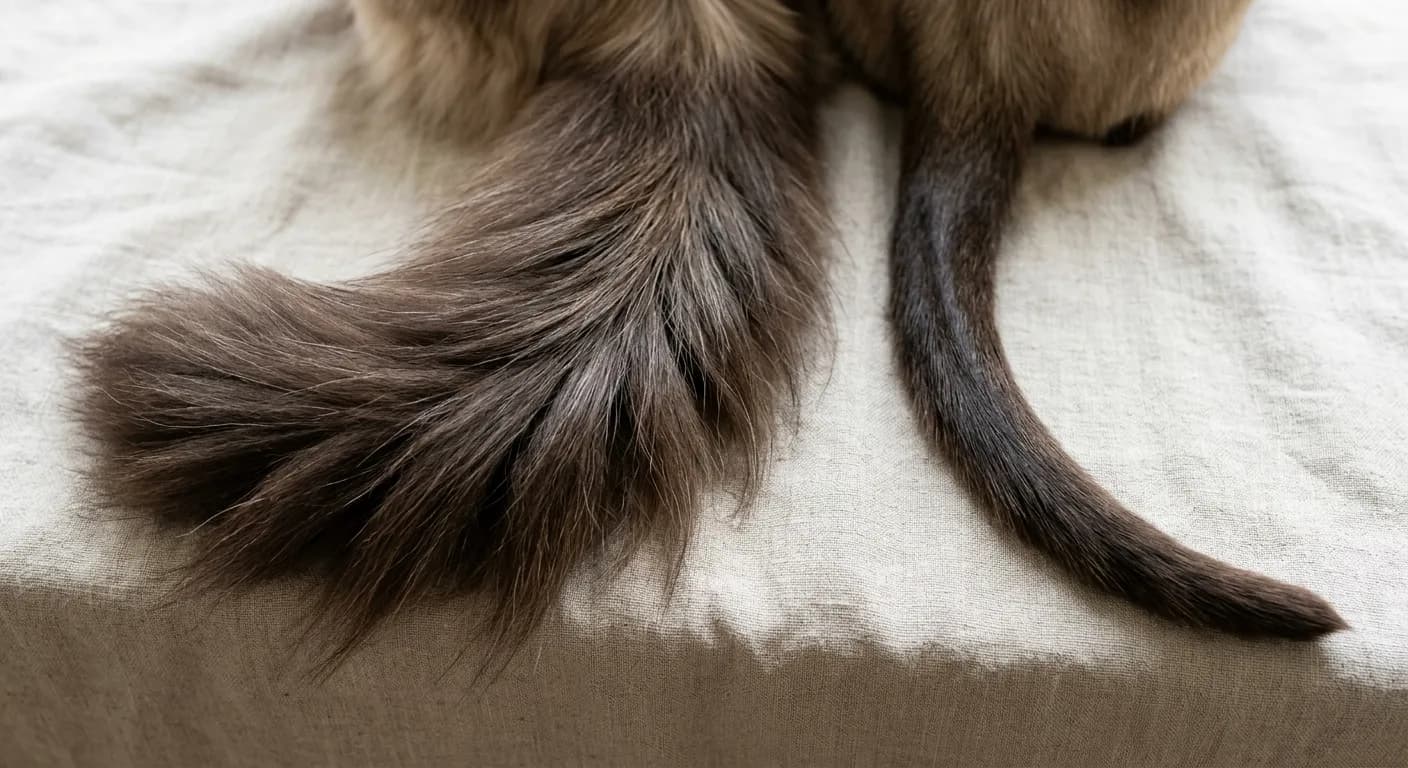
For people with a cat of unknown parentage, distinguishing between the two is usually straightforward. Coat length is the primary indicator: if the cat has semi-long, silky fur with a clearly plumed or feathered tail, it is likely Balinese or Balinese-mix. If the coat is short and close-lying with a thin, smooth tail, it is more consistent with the Siamese type.
Both breeds will have the pointed pattern (darker coloring on the face mask, ears, legs, and tail against a lighter body) and vivid blue eyes. A cat with pointed coloring but green or gold eyes is not a purebred Siamese or Balinese; eye color is a disqualification in both breed standards.
Body type provides additional clues. Both breeds are slender and fine-boned. A pointed cat that is stocky or round-headed is likely a mixed-breed colourpoint rather than a purebred of either line.
For definitive breed identification in a cat without registration papers, a DNA breed test (Basepaws or Wisdom Panel for cats) will identify Siamese and Balinese genetic markers with reasonable confidence.
Balinese vs Siamese vs Tonkinese and Other Pointed Breeds
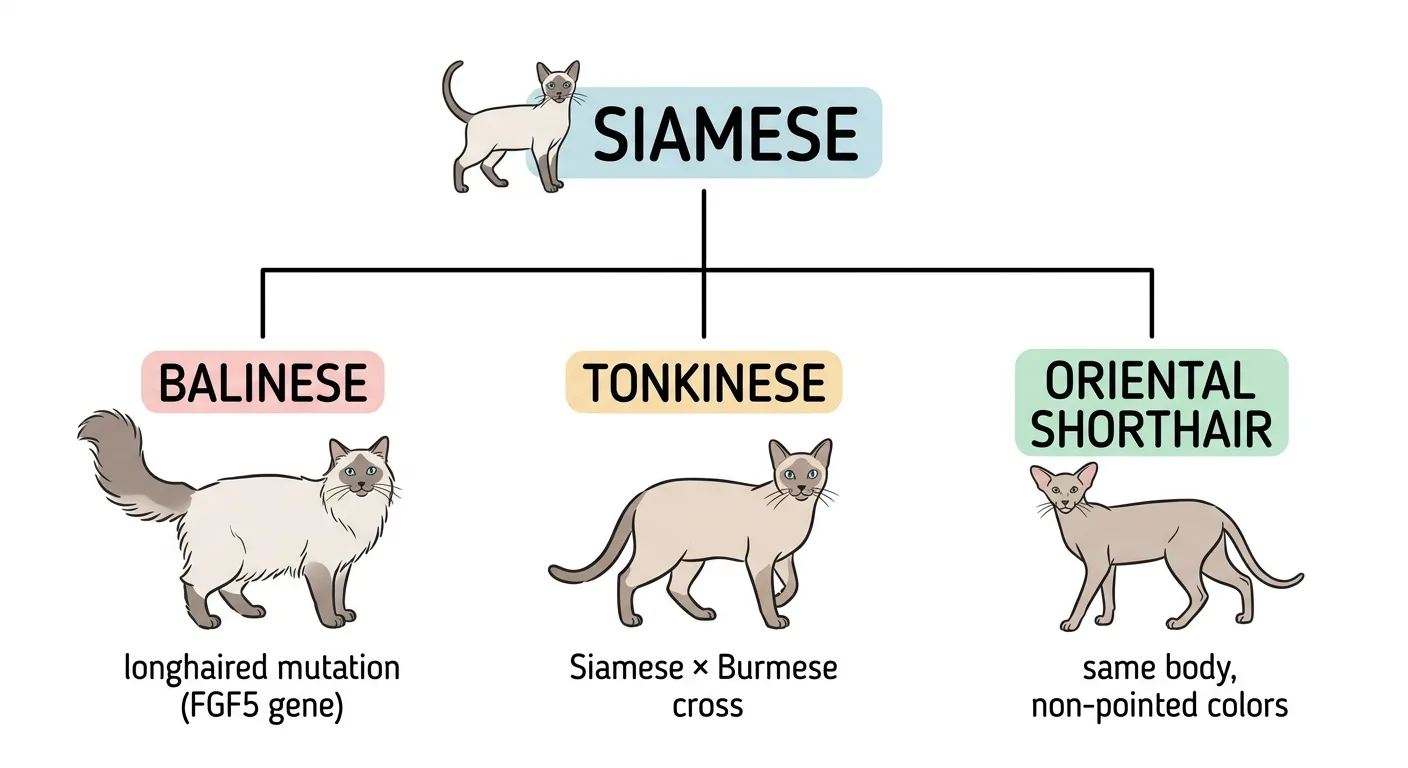
A common point of confusion is conflating the Balinese with other longhaired pointed breeds. The Balinese is not a Birman (which has a denser semi-long double coat, white gloves on the paws, and a rounder head). It is not a Ragdoll (which is much larger, has a different temperament, and carries the blue-eyed pointed gene from a different genetic source). The Balinese is specifically the Siamese with one coat-length gene difference.
The Tonkinese, another breed in the SERP-related searches, is a cross between the Siamese and Burmese breeds and carries different eye color genetics (aqua rather than vivid blue is the show standard for pointed Tonkinese). The Siamese cat colors article explains the color genetics shared by the Siamese-family breeds in detail.
Which Breed Is Right for You?
If you want the lowest grooming commitment: choose the Siamese. A weekly once-over is all it needs. If you want flowing fur without the commitment of a Persian-style double coat, the Balinese is the answer. Its single-layer coat is far easier to maintain than it looks.
If you have mild cat allergies: the Balinese is generally the better starting point, though spending time with the specific cat first is essential.
If either breed's temperament sounds appealing: it should. Because the personalities are essentially identical, the coat preference is really the deciding factor for most people. Both will follow you around the house, tell you about their day, sleep on your pillow, and expect your undivided attention. Both will become miserable if left alone for long stretches without enrichment or a companion animal. Both will reward patient, engaged owners with extraordinary loyalty and affection.
The Balinese cat breed profile and Siamese cat breed profile on Petful both link to breed-specific rescue organizations for anyone considering adoption. Check the cat breeds section for comparisons with related breeds including Tonkinese, Birman, and Oriental Shorthair.
Frequently Asked Questions
Functionally, yes. The Balinese is a natural longhaired mutation of the Siamese and carries the same pointed pattern, blue eyes, body type, and temperament. The CFA and TICA recognize them as distinct breeds, but they share the same gene pool. The only meaningful biological difference is coat length, controlled by a single recessive gene variant.
The primary indicator is coat length and tail shape. A Balinese has semi-long silky fur (1.5 to 2 inches) with a distinctly plumed or feathered tail. A Siamese has a short, close-lying coat with a thin smooth tail. Both have pointed coloring and vivid blue eyes. A cat with pointed markings and non-blue eyes is likely a mixed-breed colourpoint, not a purebred of either line. DNA testing via Basepaws or Wisdom Panel can confirm breed ancestry definitively.
Neither breed is truly hypoallergenic, but both produce relatively lower Fel d 1 levels compared to many other breeds. Between the two, Balinese cats are generally better tolerated by mild allergy sufferers. The Balinese's single-layer coat disperses less airborne dander during normal activity than the Siamese's short coat, which sheds fine hairs that embed in fabric and become airborne. Individual variation is significant; spending time with the specific cat is essential before committing.
The Balinese tail is semi-long with flowing, silky fur that forms a characteristic plume (feathering up to 5 inches long). This plumed tail is one of the Balinese's most recognizable features. The Siamese tail is thin, whip-like, and tapers smoothly from base to tip with the same short fur as the rest of the body.
Yes, the same issues as Siamese: progressive retinal atrophy (PRA), hypertrophic cardiomyopathy (HCM), amyloidosis, dental disease, asthma, and respiratory issues related to the wedge head shape. Because the breeds share the same genetic foundation, they share the same risk profile. Reputable breeders screen for PRA and HCM; ask for documentation before purchasing.
If your cat has semi-long silky fur and a plumed tail with pointed coloring and blue eyes, it is consistent with the Balinese. If the coat is short and the tail is thin and smooth with pointed coloring and blue eyes, it is consistent with the Siamese. A stocky build or non-blue eyes suggest mixed parentage rather than either purebred. A cat DNA test provides the most reliable confirmation.
In practice, many allergy-prone people report better tolerance of Balinese cats than Siamese. The leading explanation is that the Balinese's longer, flatter-lying single coat disperses less Fel d 1 protein into the air compared to the Siamese's fine short fur. However, Fel d 1 production varies by individual cat, sex (intact males produce more), and diet. No cat is guaranteed safe for allergy sufferers.
Both breeds are high-energy and highly social. If forced to choose, many owners describe the Balinese as having a slightly softer disposition and marginally less intense vocalization than the Siamese, though individuals vary widely. Neither breed would qualify as a calm, quiet cat. Both thrive with enrichment, interaction, and ideally a companion animal.
Balinese kittens from reputable breeders typically cost $800 to $2,500. Siamese kittens from reputable breeders run $400 to $2,000. The Balinese is less common, which drives the higher price. Both breeds appear in breed-specific rescues at adoption fees of $75 to $200.
Yes, extremely well. Because they share the same temperament, activity level, and social needs, a Balinese and Siamese pair often bond closely and benefit from the mutual company, which reduces separation anxiety when owners are away. Many breeders and owners recommend pairing any Siamese-family cat with a same-breed or compatible social companion.

Coreen Saito is a pet writer and longtime shelter volunteer with more than a decade in animal rescue. She covers cat behavior, breed care, and the small, ordinary science of sharing a life with companion animals, with a particular focus on honest takes about the products and decisions that actually matter. At home in Arizona, she's outranked by Mac (a dog with the loudest opinion in the house), Rebel (a cat who governs by quiet authority), and Meri (an orange tabby who runs the late shift and the laundry basket). She writes about all three, plus the rescues that keep coming through her life, at LifeWithMinty.com.
Sign up for expert-backed reviews and safety alerts all in one place.