Are Balinese Cats Hypoallergenic? Vet-Reviewed Allergy Guide
Balinese cats produce less Fel d 1 and shed minimally, making them a top choice for allergy-prone households. No cat is truly allergen-free and reactions vary, but the right home management steps make a measurable difference.
Petful is reader supported. As an affiliate of platforms like Amazon and Chewy, we may earn a commission when you buy through links on this page. There is no extra cost to you.
Are Balinese cats hypoallergenic? According to the Cat Fanciers' Association (CFA), no cat breed is truly allergen-free, but the Balinese consistently ranks among the top choices for allergy-prone households because they produce measurably lower levels of the primary feline allergen, Fel d 1, than most other breeds. If you or someone in your home reacts to cats, understanding exactly why the Balinese earns this reputation, and what it actually means for your symptoms, is the difference between a happy match and a miserable mistake.
- 1No cat is 100% hypoallergenic: the allergen is a protein (Fel d 1) in saliva and skin secretions, not in fur itself.
- 2Balinese cats are widely reported to produce less Fel d 1 than average, making them a lower-allergen choice.
- 3Their single-layer silky coat sheds less than double-coated breeds, so allergen-carrying dander spreads less through the home.
- 4Individual reactions vary: you may do fine with one Balinese but still react to another.
- 5Practical management steps (HEPA filtration, no-bedroom rule, allergen-reducing diet) can reduce symptoms further.

Sign up for expert-backed reviews and safety alerts all in one place.
What Actually Causes Cat Allergies?
Before evaluating any breed, it helps to understand the real culprit. Most people assume cat allergies are triggered by fur, but that is a widespread misconception. The primary cause is Fel d 1, a small, sticky glycoprotein produced in a cat's sebaceous (skin) glands and salivary glands. Every cat produces it. Every cat spreads it through grooming, because saliva dries on the fur and then flakes off as microscopic dander particles that float through the air for hours.
Secondary allergens include Fel d 2 (a blood serum protein), Fel d 4 (produced in the submandibular glands), and Fel d 7, though Fel d 1 accounts for the vast majority of allergic reactions in humans.
- Fel d 1 is so lightweight and sticky that it clings to clothing, upholstery, and walls. It can remain airborne for up to six hours after a cat leaves a room, which is why some people react even in homes where a cat "was here two weeks ago."
When a sensitized person inhales or touches Fel d 1, their immune system treats it as a threat and releases histamine, triggering familiar symptoms: sneezing, runny nose, itchy eyes, skin hives, and in severe cases, asthma attacks. Severity depends on the amount of allergen exposure and the individual's immune sensitivity, not simply on how fluffy the cat is.
Never Scoop Again® with the Whisker Litter-Robot, the smart self-cleaning automatic litter box. Monitor visits and track weights for better overall care in the Whisker® app. Multi-cat friendly.
Petful may earn a commission when you click through to Whisker, at no extra cost to you.
Why Balinese Cats Are Considered Lower-Allergen
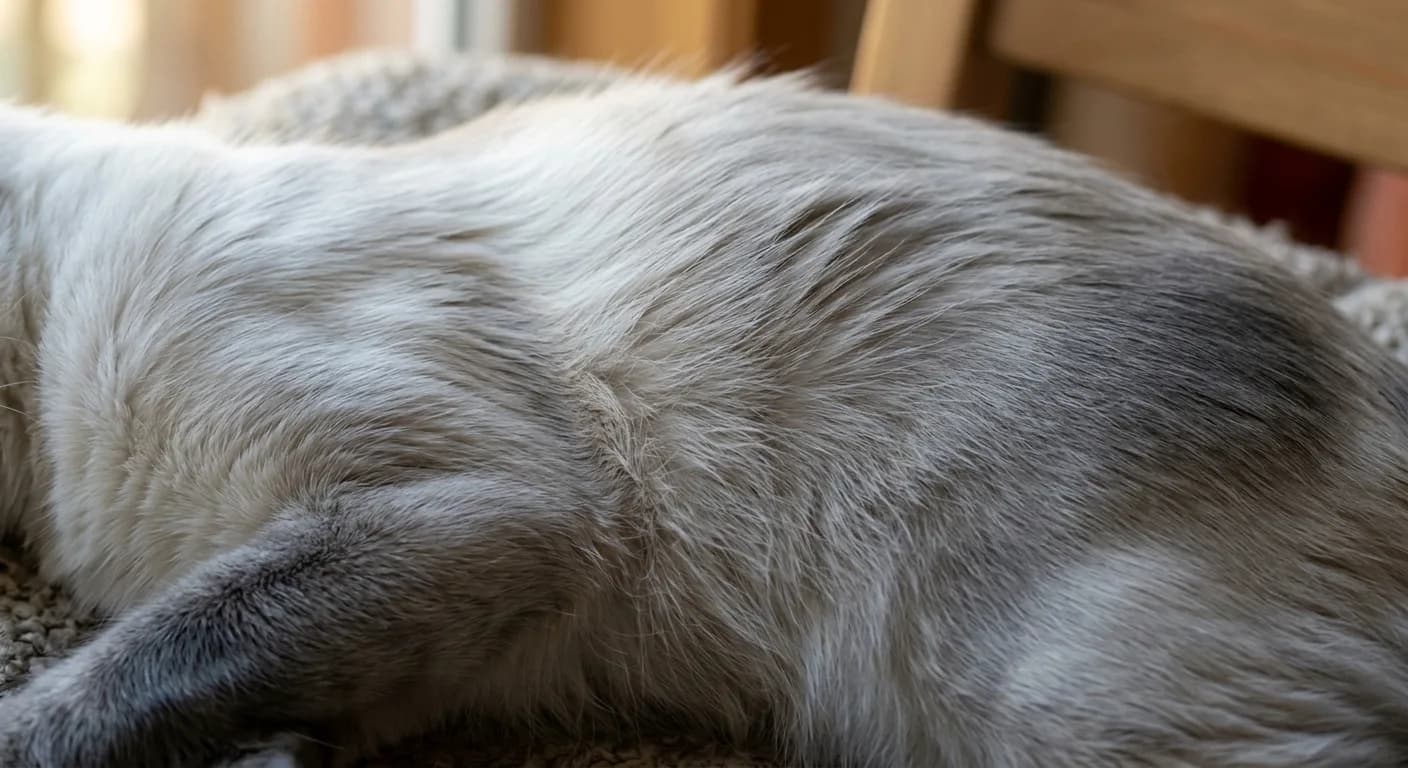
The Balinese is essentially a long-haired Siamese. A spontaneous mutation in Siamese litters produced kittens with silky, medium-length fur and a dramatically plumed tail. The CFA officially recognized the breed in 1970. Despite the flowing coat, the Balinese has one defining structural advantage over most long-haired breeds: a single coat with no dense undercoat.
Double-coated breeds like the Maine Coon or Norwegian Forest Cat carry a thick insulating undercoat that sheds heavily year-round, releasing enormous quantities of dander-laden fur. The Balinese coat, by contrast, lies close to the body, mats infrequently, and sheds minimally. Less shedding means less airborne dander, which means less Fel d 1 landing on surfaces throughout your home.
Beyond coat structure, breeders and veterinary professionals have long observed that Balinese cats appear to produce lower levels of Fel d 1 in their saliva and skin secretions compared with the average domestic cat. This observation is backed by a body of anecdotal reports from allergists and owners, and is consistent with what has been documented in Siamese cats (their close genetic relatives).
- Peer-reviewed studies specifically quantifying Fel d 1 production in Balinese cats are limited. The lower-allergen reputation is well-established in veterinary and breeding communities, but the evidence base is primarily observational rather than large-scale clinical. Discuss this honestly with your allergist before adopting.
It is worth noting that a 2019 study published in the journal *Frontiers in Immunology* confirmed that Fel d 1 levels vary substantially between individual cats of the same breed, and that factors like sex (intact males produce the most), age, and individual genetics all play a role. Two Balinese siblings from the same litter can have meaningfully different allergen profiles.
Balinese vs. Other Lower-Allergen Breeds: A Comparison
Not all "hypoallergenic" cats are equal. Here is how the Balinese stacks up against other breeds commonly recommended for allergy sufferers.
| Breed | Coat Type | Fel d 1 Level | Shedding | Notes |
|---|---|---|---|---|
| Balinese | Long, single-layer silky | Low (reported) | Minimal | Close genetic relative of Siamese; vocal and social |
| Siamese | Short, single-layer | Low (reported) | Low | Same Fel d 1 profile as Balinese; shorter coat |
| Russian Blue | Short, dense double | Low (documented) | Moderate | Produces less Fel d 1; unique glycoprotein layer on coat |
| Siberian | Long, triple-layer | Low (documented in studies) | Seasonal heavy | Multiple studies support lower Fel d 1; large breed |
| Devon Rex | Short, fine, curly | Variable | Very low | Minimal shedding; not necessarily low Fel d 1 |
| Sphynx | Hairless | Normal | None | No fur shedding but normal Fel d 1 in saliva and skin secretions |
Key takeaway from the table: the Sphynx is hairless but NOT low-allergen (normal Fel d 1). The Siberian has the strongest documented evidence for reduced Fel d 1. The Balinese occupies a strong middle ground: minimal shedding plus a lower-allergen profile, in a cat with exceptional personality.
The Balinese Coat: Why Less Shedding Matters
Even if two breeds produced identical Fel d 1 levels, the breed that sheds less would spread far fewer allergens through the home. The Balinese coat works in your favor here for two reasons.
First, with no undercoat, there is no seasonal blowout. Many double-coated breeds drop enormous amounts of fur in spring and fall. The Balinese sheds lightly and consistently year-round rather than in concentrated bursts, making allergen levels in the home more predictable and manageable.
Second, the single-layer coat is easier to groom regularly. A weekly brush-out with a soft slicker brush removes loose dander-coated fur before it can distribute through the air. Compare this with a Maine Coon's undercoat, which requires daily combing and still releases dander continuously.

63-inch multi-level cat tree with scratch posts, hammock, plush perches, and dangling toys. Vertical territory is non-negotiable for high-energy climbing breeds like the Bengal.
Petful may earn a commission when you click through to Chewy, at no extra cost to you.
- Have a non-allergic family member do the weekly brush-out, or wear a dust mask if you are the primary groomer. Groom the cat outdoors or in a well-ventilated area and dispose of collected fur in a sealed bag. Wash your hands immediately afterward.
Practical Steps to Reduce Allergens When Living with a Balinese
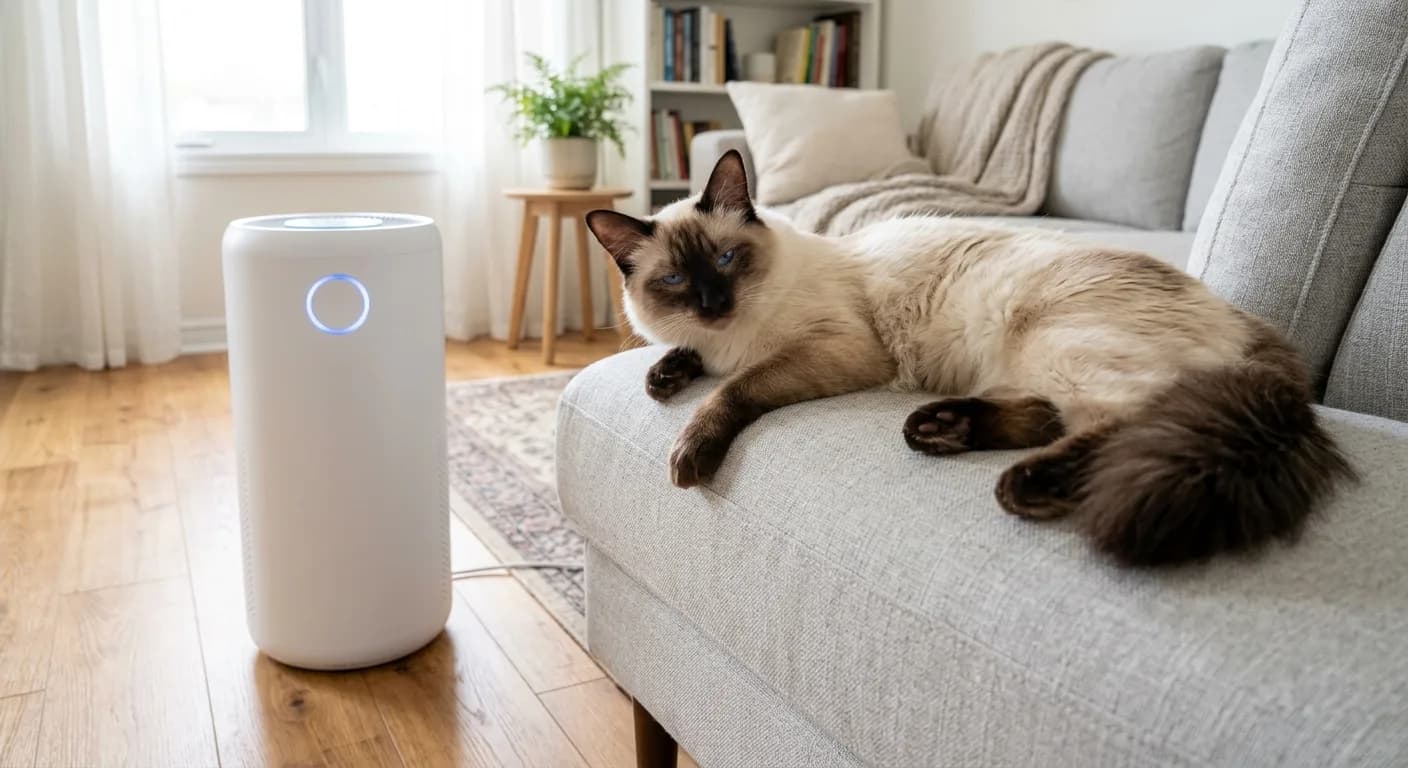
Choosing a lower-allergen breed is step one. Reducing total allergen load in your home is step two. These strategies compound each other: a Balinese cat in a well-managed environment may produce a fraction of the symptomatic exposure of a random cat in an unmanaged one.
| Strategy | Why It Works | How to Implement |
|---|---|---|
| HEPA air purifier | Captures particles as small as 0.3 microns, removing airborne Fel d 1 | Run one in every main living area; replace filters per manufacturer schedule |
| No-bedroom rule | Cats spend 8-10 hours in your bedroom if allowed; keeping them out dramatically cuts overnight exposure | Use a door or baby gate; wash bedding weekly in hot water |
| Weekly grooming | Removes loose dander-coated fur before it disperses | Use a soft slicker brush; have a non-allergic household member groom when possible |
| Hand-washing | Removes Fel d 1 from skin after contact | Wash with soap and water for 20 seconds; avoid touching your face before washing |
| Allergen-reducing cat food | Diets containing anti-Fel d 1 antibodies (from egg product technology) can reduce active Fel d 1 in saliva by up to 47% | Look for formulas like Purina Pro Plan LiveClear; feed as the sole diet |
| Hard flooring | Carpet holds up to 100x more allergen than hard surfaces | Replace carpet in primary living areas with hardwood, tile, or vinyl; use washable rugs |
| Regular vacuuming | Removes settled dander from surfaces | Use a vacuum with a HEPA filter; vacuum twice weekly in areas the cat frequents |
| Air duct cleaning | Forced-air systems distribute allergens through the whole home | Have ducts cleaned annually; install HEPA filters on return vents |
Allergen-Reducing Cat Foods: Do They Work?
One of the most significant advances in feline allergen management in recent years is the development of cat foods that actively reduce Fel d 1 in a cat's saliva. The mechanism: certain egg-derived antibodies, when included in a cat's diet, bind to Fel d 1 in the cat's saliva before it is spread during grooming. Published clinical data on one such formula (Purina Pro Plan LiveClear) showed a mean reduction of active Fel d 1 on cat hair and dander of approximately 47% starting at week three of feeding.
This is not a cure. Allergy sufferers will still produce a reaction to Fel d 1; the diet simply reduces the amount present in the environment. But a 47% reduction in a cat that already produces less-than-average Fel d 1 can be clinically significant for mild-to-moderate allergy sufferers.
- Allergen-reducing diets are a relatively recent addition to veterinary nutrition. Your veterinarian can confirm whether a specific formula is nutritionally complete and appropriate for your Balinese's age, weight, and health status before you switch foods.
Should You Visit a Balinese Before Adopting?
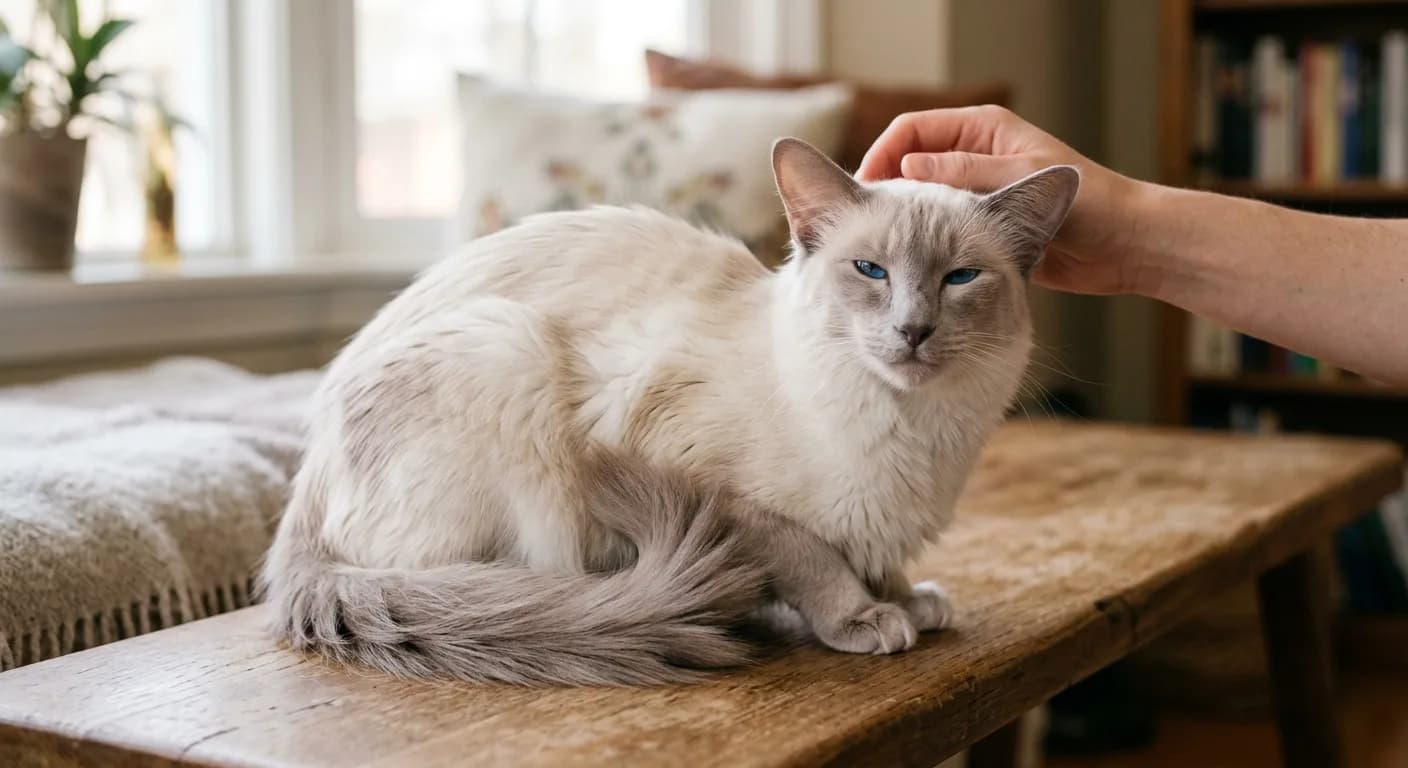
This is the single most important practical step any allergy sufferer can take. Because Fel d 1 production varies between individual cats, you may react strongly to one Balinese and barely at all to another from the same litter. There is no substitute for direct exposure testing.

108-oz stainless steel pet fountain with quiet pump and water-level window. Bengals are notoriously water-obsessed; a flowing fountain encourages hydration and pulls them away from sinks and toilets.
Petful may earn a commission when you click through to Chewy, at no extra cost to you.
Spend at least 30 to 60 minutes with the specific cat you plan to adopt (not just in the breeder's general facility). Handle the cat, let it groom your hands, and sit in the same room for an extended period. Note any symptoms. If possible, return for a second visit before committing.
If you already take antihistamines or other allergy medications daily, discuss with your allergist whether to skip a dose before the visit to get a clear read on your response.
- Some allergy symptoms (particularly asthma-related responses) build with cumulative allergen exposure over days or weeks. A 60-minute visit shows your immediate response, not necessarily your long-term tolerance. Discuss this with your allergist, who may recommend an extended supervised exposure period.
Are Balinese Cats Good for People with Allergies? The Bottom Line
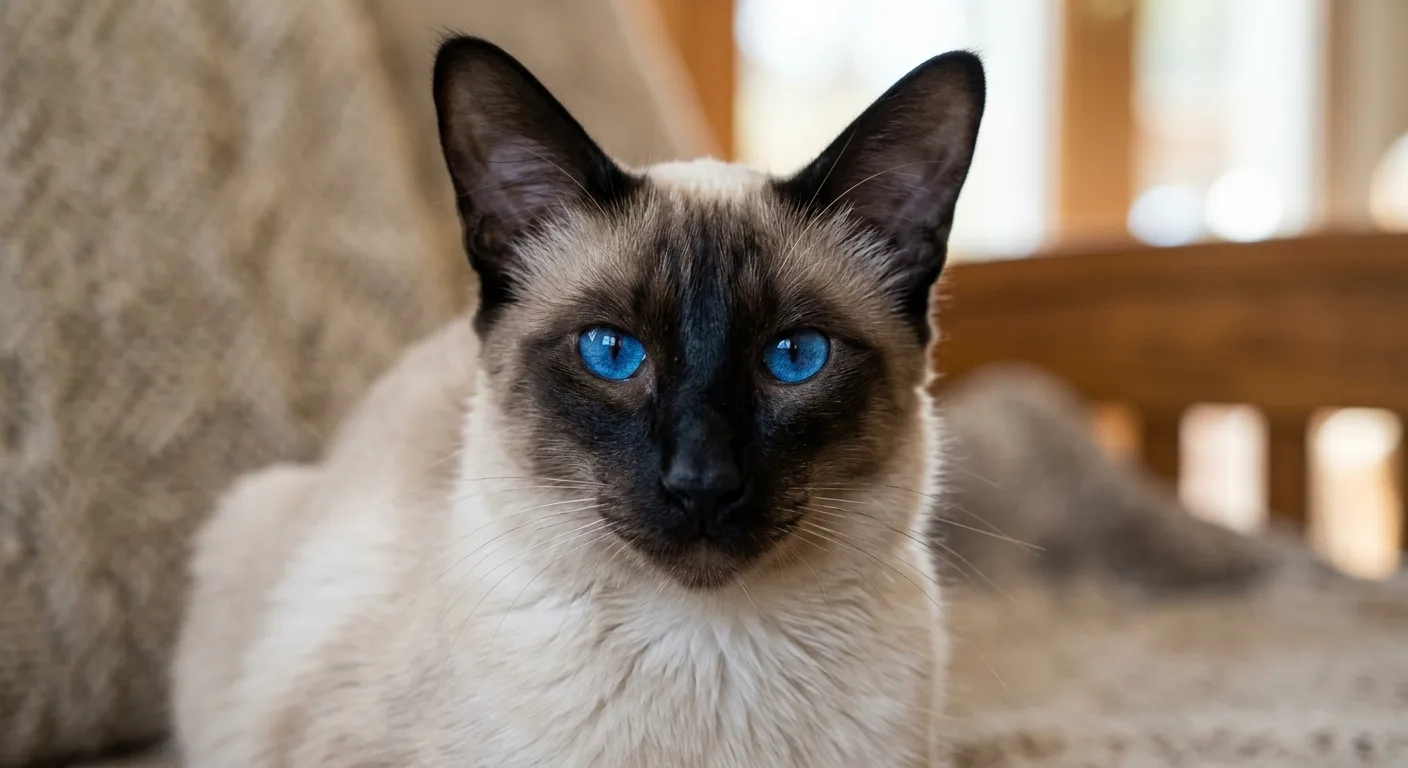
The honest, vet-reviewed answer: yes, for many allergy sufferers, but not for everyone. The Balinese is among the most allergy-friendly cat breeds available for three compounding reasons: lower reported Fel d 1 production, a single-layer coat that minimizes dhedding, and a coat length that is easy to manage with weekly brushing. Paired with a well-managed home environment and, where appropriate, an allergen-reducing diet, many people with mild-to-moderate cat allergies live comfortably with Balinese cats long-term.
That said, "hypoallergenic" is a marketing shorthand that no cat breed fully earns. If your allergies are severe or your reactions include asthma, the risk calculus changes significantly. In those cases, an allergist's input is essential before adoption.
If the Balinese is not the right fit, the Siberian (with the strongest Fel d 1 study data) and the Russian Blue (documented lower allergen output) are the closest alternatives worth evaluating.
For a full profile of the breed's personality, health, and care requirements, see our Balinese cat breed profile. If you are weighing the Balinese against its close cousin, our Balinese vs. Siamese breakdown covers the key differences. Wondering what you should budget? Our Balinese cat price guide covers breeder, rescue, and ongoing care costs.
What Cats Are Worst for Allergies?
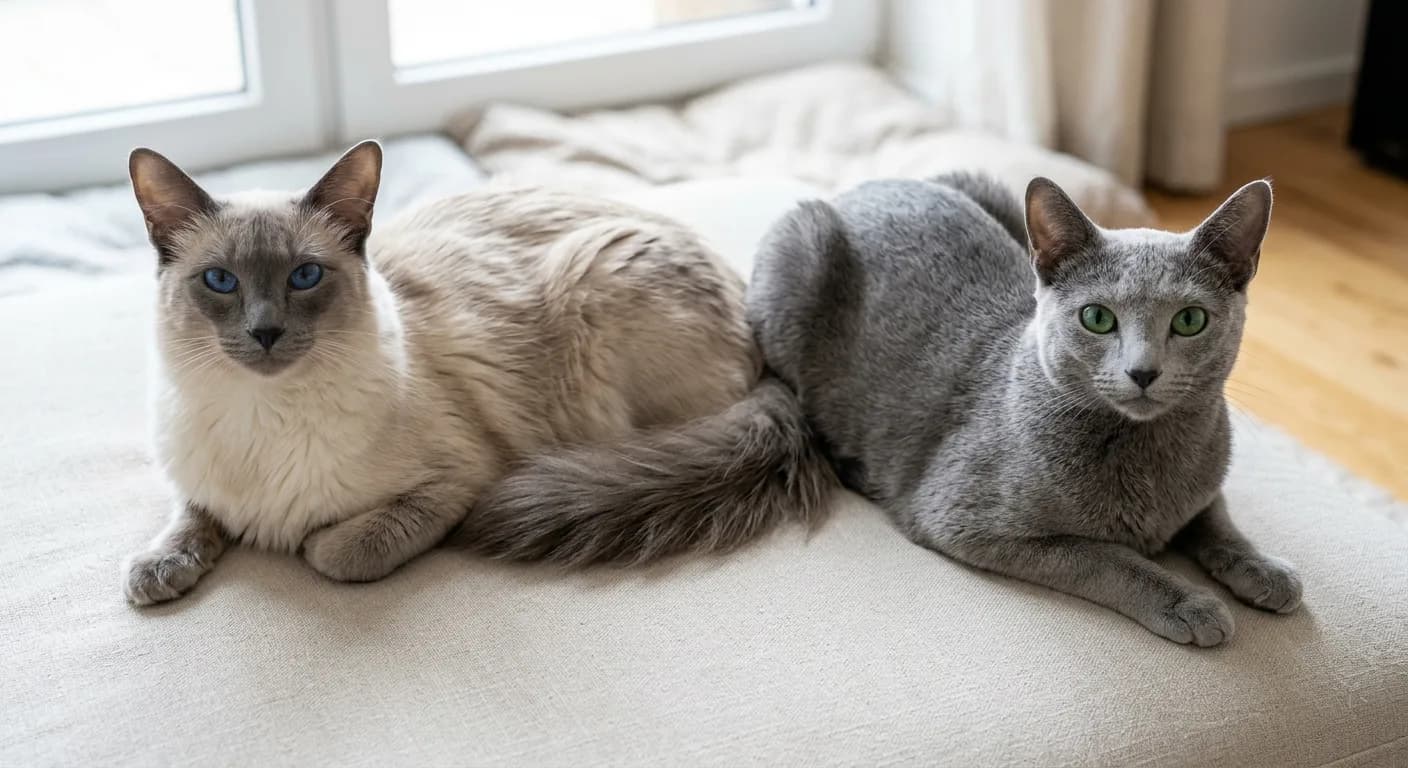
For context, the breeds most likely to trigger severe allergic reactions produce the highest levels of Fel d 1 and shed heavily. Intact male cats of any breed produce significantly more Fel d 1 than spayed females. Breeds consistently associated with higher allergen load include the Persian, the Himalayan, and any long-haired double-coated breed with heavy seasonal shedding. If you are allergy-prone, these are the cats to avoid.
Related reading: our Siamese cat hypoallergenic guide explores how the Balinese's parent breed compares. For more on the broader cat breeds category, visit our cat breeds hub.
Yes, for many people with mild-to-moderate cat allergies. Balinese cats produce lower levels of the Fel d 1 protein than most breeds, and their single-layer coat sheds minimally. They are not allergen-free, but they are consistently ranked among the best choices for allergy-sensitive households.
The Siberian has the strongest peer-reviewed evidence for reduced Fel d 1 production. The Balinese and Russian Blue are also well-regarded. No single breed is "the best" for every person, since individual cats vary and individual immune responses vary.
For a semi-long-haired cat, yes. Their single-layer silky coat rarely mats and needs only weekly brushing. They do require significant social interaction and mental stimulation, as they are highly intelligent and vocal, and can become destructive when bored.
Balinese cats are very talkative (inherited from the Siamese), which some owners find demanding. They are highly social and do poorly when left alone for long periods. Health considerations include a genetic predisposition to progressive retinal atrophy, strabismus (crossed eyes), and hypertrophic cardiomyopathy. They are not cheap to purchase from a reputable breeder.
Purebred Balinese kittens from reputable breeders typically range from $800 to $2,000 in the United States. Show-quality cats from champion lines can cost more. Rescue or rehome options exist at a fraction of the price.
Intact male cats of any breed produce the most Fel d 1. Among breeds, Persians, Himalayans, and heavy-shedding double-coated breeds are generally associated with higher allergen loads and worse allergy symptoms.
Yes, but minimally compared with most long-haired breeds. Because they have no undercoat, they do not experience heavy seasonal shedding. Light, consistent year-round shedding is typical. Weekly brushing keeps dander and loose fur well-managed.
Generally yes, but they share some genetic health concerns with the Siamese, including hypertrophic cardiomyopathy (HCM), progressive retinal atrophy, liver amyloidosis, and a structural tendency toward crossed eyes (strabismus). Purchasing from health-tested breeding lines reduces risk.
Balinese cats are not common. They are significantly rarer than Siamese cats and can be difficult to find from reputable breeders, particularly outside major metropolitan areas. Wait lists of six to twelve months are not unusual.
The Balinese is among the most affectionate and people-oriented breeds. They form strong bonds with their owners, follow family members from room to room, and vocalize frequently. This trait makes them wonderful companions but means they need consistent company or a feline companion to prevent separation anxiety.

Coreen Saito is a pet writer and longtime shelter volunteer with more than a decade in animal rescue. She covers cat behavior, breed care, and the small, ordinary science of sharing a life with companion animals, with a particular focus on honest takes about the products and decisions that actually matter. At home in Arizona, she's outranked by Mac (a dog with the loudest opinion in the house), Rebel (a cat who governs by quiet authority), and Meri (an orange tabby who runs the late shift and the laundry basket). She writes about all three, plus the rescues that keep coming through her life, at LifeWithMinty.com.
Sign up for expert-backed reviews and safety alerts all in one place.