Great Pyrenees: Temperament, Size, Health and Care
Great Pyrenees are giant, independent livestock guardians. Learn how size, barking, coat care, training, health and secure boundaries shape household fit.
Petful is reader supported. As an affiliate of platforms like Amazon and Chewy, we may earn a commission when you buy through links on this page. There is no extra cost to you.
The Great Pyrenees is a giant livestock guardian developed to think independently, watch a boundary, and decide when something deserves attention. That history still shapes life with the breed. A well-adjusted Pyr can be calm, patient, deeply loyal, and gentle with family, but the same dog may bark after dark, distrust an unsecured boundary, cover the house in white undercoat, and treat a repeated cue as information rather than an order.
This breed guide explains the Great Pyrenees temperament, adult size, exercise, coat care, health planning, and household fit. Detailed questions about puppies, cost, growth, health, training, grooming, and mixes belong to the linked Petful spokes. Breed tendencies are planning clues, not promises about one dog. Evaluate the individual dog's history, health, behavior, and present environment before deciding that a Pyr is right for your home.

Sign up for expert-backed reviews and safety alerts all in one place.
Great Pyrenees at a glance
- 1Great Pyrenees are giant, independent livestock guardians rather than oversized obedience dogs
- 2Many are calm indoors when their exercise, enrichment and watchful instincts have appropriate outlets
- 3Secure fencing, patient reward-based training, coat care and a realistic barking plan are core needs
- 4Adult males are commonly larger than females, but body condition matters more than chasing a number
- 5A breed profile cannot predict one dog's behavior, health or compatibility
The American Kennel Club Great Pyrenees profile describes a dog whose traditional work was protecting flocks in the Pyrenees Mountains. The Great Pyrenees Club of America maintains the parent-club standard and ownership information. The National Great Pyrenees Rescue fit guide adds a practical rescue perspective on barking, shedding, independence, fencing, and surrender risk.
| Decision | What the breed history suggests | What to verify in the individual dog |
|---|---|---|
| Boundary safety | Guardians patrol and may expand their territory | Fence security, gate habits, digging, climbing and recall history |
| Noise | Alert barking is functional behavior | When, how long and how intensely this dog barks |
| Social life | Calm with family and reserved with strangers are common descriptions | Actual responses to adults, children, visitors, dogs and livestock |
| Handling | Giant size magnifies ordinary pulling and resistance | Leash skill, grooming tolerance, transport and veterinary handling |
| Coat | Dense weather-resistant double coat sheds heavily | Skin health, mats, seasonal coat blow and grooming tolerance |
| Health | Giant breeds need joint, weight and emergency planning | Records, screening, gait, body condition and veterinary findings |
Is a Great Pyrenees a good house dog?
Questions involving Pros, tradeoffs and who should not choose this breed and Exercise, fencing, barking and roaming realities are best resolved by observing the individual dog, documenting recovery and matching training to the real household. The short answer is yes: a Great Pyrenees can be a good house dog when the home accepts guardian behavior and manages it humanely. A yard is useful, but it must be securely enclosed and does not replace walks, training, companionship or indoor rest. Apartment life is possible for an unusually quiet, well-managed individual, yet shared walls, elevator encounters, limited outdoor space and nighttime barking make it a difficult default recommendation. The breed is less suitable when the household needs reliable off-leash freedom, silent nights, effortless recall, a low-shedding coat, or a dog who enjoys constant novelty. It is also a poor impulse purchase. Before bringing one home, plan for a giant crate or gated safe area, transportation, food storage, grooming, professional support, veterinary care, and what happens when a 100-pound adolescent chooses not to move.
What are the pros and cons of owning a Great Pyrenees?
The short answer is that the pros include a calm presence, loyalty, patience and natural watchfulness. The cons include alert barking, roaming risk, heavy shedding, independent training and giant-dog costs. Those tradeoffs are manageable in a prepared household with secure boundaries, but they make the breed a poor match for anyone seeking a quiet, low-maintenance or reliably off-leash companion.
- Fit the PetSafe Easy Walk medium/large harness on the standing dog after parting the dense chest coat. Check clearance behind the front legs, shoulder movement and escape risk before using it for a giant guardian around doors or visitors.

Petful may earn a commission when you click through to Chewy, at no extra cost to you.
- Use the PetSafe Easy Walk medium/large harness only when its current fit supports controlled transitions without rubbing or restricting gait. Pair it with practiced turns, check-ins and distance from triggers rather than relying on equipment alone.
History and livestock-guardian purpose
Questions involving History and livestock-guardian purpose and Appearance and breed standard are best resolved by connecting the label to the individual dog's records, condition, behavior and daily care needs. Great Pyrenees worked with shepherds and flocks rather than waiting beside a handler for every instruction. A guardian needed to notice changes, investigate sounds, deter predators, and conserve energy between events. That job rewarded steadiness and independent judgment. It did not select for the rapid, repetitive cue response expected of many herding or sporting dogs. The breed is called the Pyrenean Mountain Dog in many countries. Historical accounts connect these white guardians with the mountain region between France and Spain, and French court associations helped create the popular phrase "Royal Dog of France." Romantic history is interesting, but it should not hide the practical legacy: watchfulness, territorial awareness, nocturnal activity, and a willingness to make decisions without permission. Modern companion homes should give those instincts safe outlets. Sniffing walks, observation from a secure yard, predictable visitor routines, food-search games, and calm training can all help. Leaving a Pyr outdoors alone to "guard" the neighborhood usually increases barking, escape practice, conflict at the fence, and exposure to weather or theft.
Great Pyrenees appearance and size
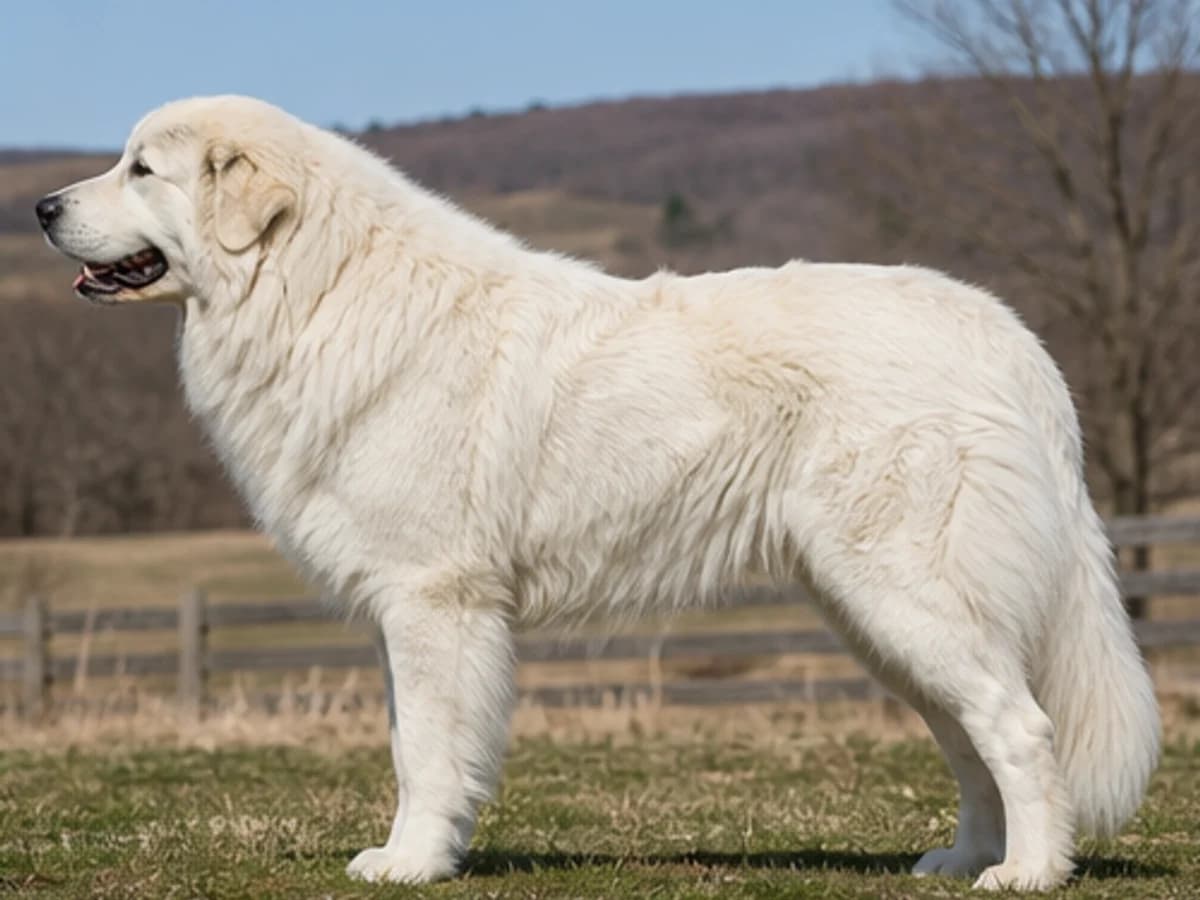
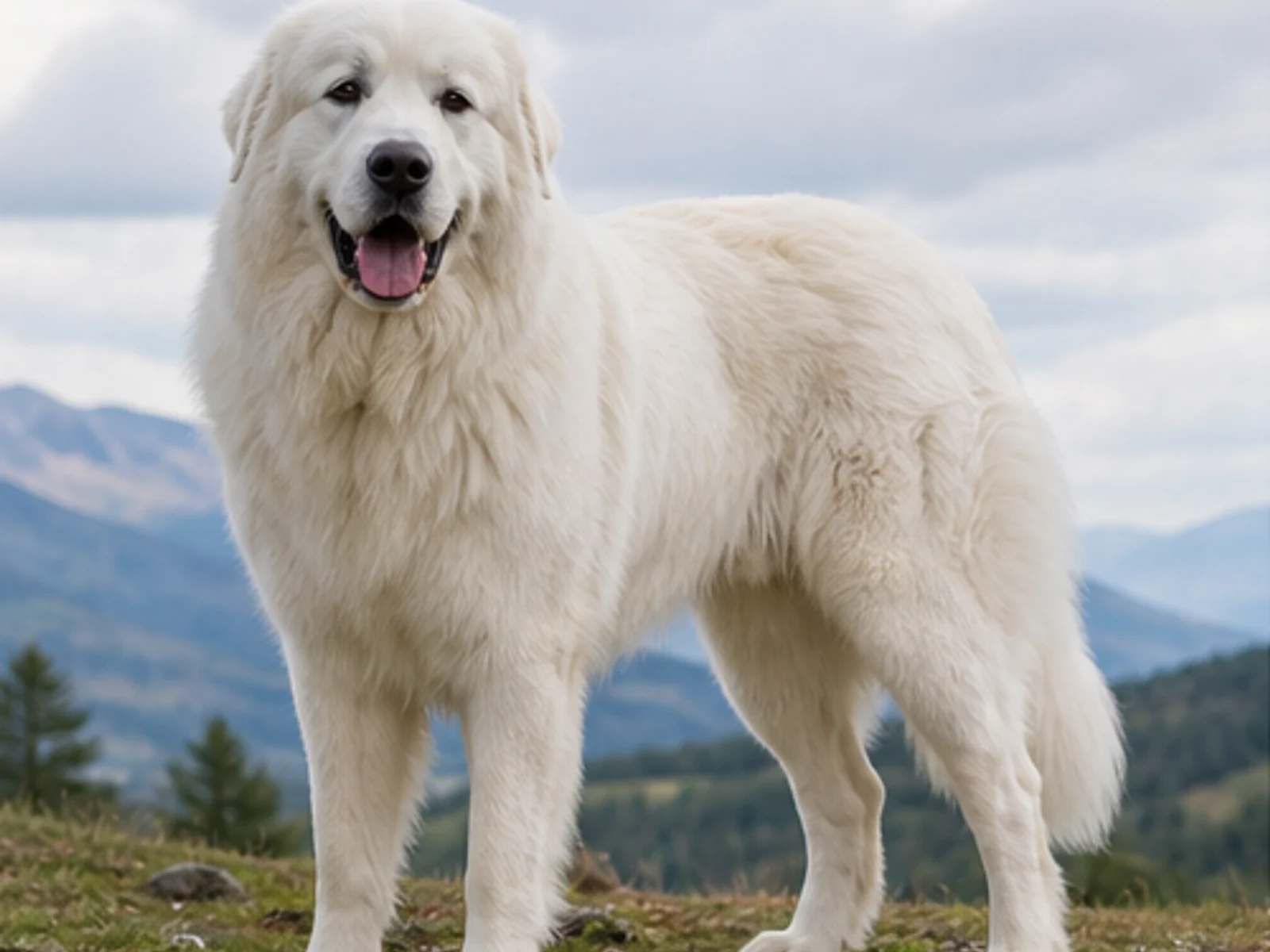
The Great Pyrenees is a powerful, balanced dog with a dense white or principally white coat. Markings may appear in accepted shades described by the official standard, but a photograph cannot prove pedigree. Double dewclaws on the rear legs are a notable breed feature, yet even a familiar physical trait is not documentary evidence of ancestry.
Adult size is substantial. Official standards describe different height ranges for males and females, while actual healthy weights vary with sex, frame, muscle, age, and body condition. Petful's Great Pyrenees size, weight and growth guide explains measurement and puppy ranges without turning one chart into a diagnosis.
Use hands as well as eyes to judge body condition because a full coat can disguise the ribs and waist. Your veterinary team can show you how to feel for appropriate fat cover and track a trend. Rapid weight change, difficulty rising, limping, reduced stamina, or reluctance to use stairs deserves assessment rather than an attempt to force the dog toward a breed-average number.
Great Pyrenees temperament in everyday life
Great Pyrenees temperament is often described as calm, patient, confident, and protective. Those words need context. Calm does not mean inactive, patient does not mean tolerant of rough handling, and protective does not mean that aggressive behavior should be encouraged. A stable guardian should be discerning, but every dog still needs social learning, management, and protection from situations it cannot handle safely.
Many Pyrs conserve energy indoors and become more alert in the evening. They may position themselves where they can watch a doorway or yard. Some are affectionate without being constantly demonstrative. Others lean, paw, or press close to family. Individual variation is substantial, especially among dogs with unknown early environments or mixed ancestry.
Are Great Pyrenees sensitive?
Great Pyrenees can be sensitive to handling, conflict and abrupt changes even when they appear physically imposing. Sensitivity is not weakness and does not mean every dog reacts the same way. Watch recovery after a correction, visitor arrival, grooming session or unfamiliar surface. A dog who stays worried, avoids touch or stops taking food needs less pressure, more distance and a clearer training step.
Use predictable cues, reward-based teaching and choice during routine care. Pain can also look like stubbornness or touch sensitivity, especially when a previously tolerant adult becomes guarded about the hips, feet, ears or coat. A sudden behavior change should be discussed with the veterinarian before it is treated only as a training problem.
Barking is not a small footnote
Alert barking is one of the most common reasons the breed conflicts with a household. The dog may respond to wildlife, delivery vehicles, neighbors, distant dogs, wind-blown objects, or sounds people cannot identify. Punishment can increase anxiety or conflict without changing the underlying guardian motivation.
A practical plan reduces rehearsal and gives the dog a predictable alternative. Bring the dog indoors before the neighborhood becomes active at night, block visual triggers, use white noise, reinforce checking in, and teach a quiet return to a bed or mat. If barking changes suddenly or comes with restlessness, pain, confusion, or panic, investigate health and behavior causes rather than assuming defiance.
Family, children and visitors
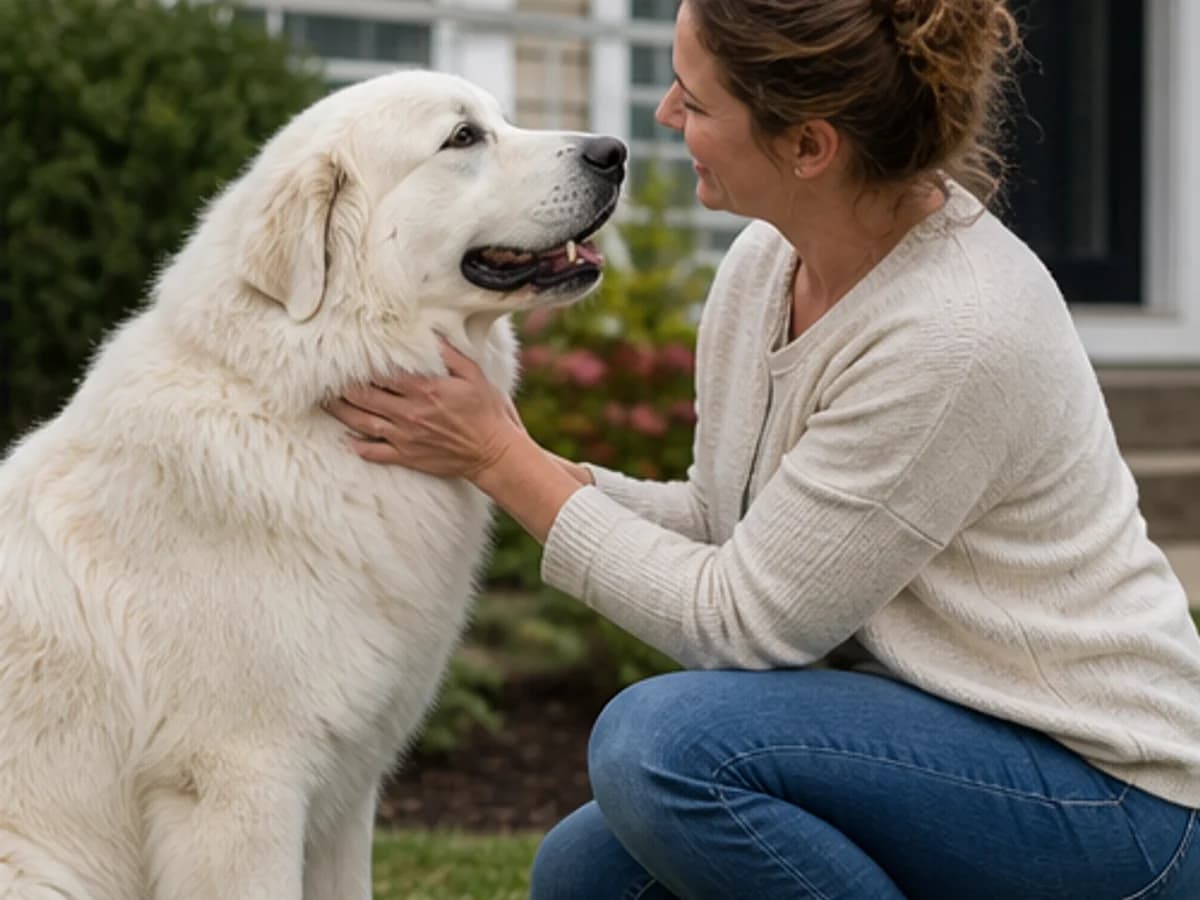
Many Great Pyrenees live successfully with families, but giant size changes the safety calculation. A friendly dog can knock over a child, trap a hand with a paw, or guard a doorway without intending injury. Adults should supervise close interactions, protect the dog's food and resting areas, and teach children to invite contact rather than climb, hug, chase, or disturb sleep.
Visitor introductions work best when they are structured. Use a secure barrier or leash, give the dog space to observe, reward calm behavior, and avoid forcing contact. A dog who freezes, hard-stares, growls, lunges, or cannot recover needs distance and qualified help. Do not ask a stranger to prove friendliness by reaching over the dog's head.
Living with dogs, cats and livestock
Compatibility is an individual finding, not a breed entitlement. Use parallel movement or barrier observation for dog introductions, separate food and chews, and protect both dogs' resting areas. A calm first meeting does not establish permanent compatibility; watch behavior around doorways, visitors, play, and valued resources over time.
Managing compatibility with other pets
Cats need dog-free rooms and vertical escape routes. A Pyr who fixates, stalks, chases, or cannot disengage should remain managed even if it has previously lived with another cat. Livestock placement requires more than ancestry. Age, stock species, fencing, mentorship, husbandry, and the individual dog's predatory or playful behavior determine whether contact is safe.
For controlled walks, the PetSafe Easy Walk medium/large harness is one tracked option to compare with the dog's chest measurements and movement. A harness does not train the dog by itself, and no product is escape-proof. Check fit through the thick coat, watch for rubbing behind the legs, and pair equipment with reinforcement for a loose leash.
If you are choosing between walking setups, WebVet's guide to stopping a dog from pulling on the leash explains the training side of the decision. Recheck the PetSafe Easy Walk harness after coat changes and growth; a strap position that worked in summer may sit differently during winter coat.
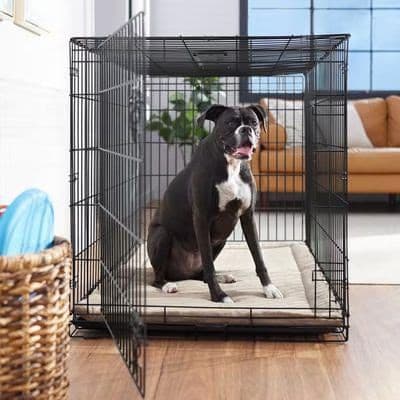
- Compare the Frisco XL collapsible wire crate with the adult Pyr's standing height and full body length, then check whether the selected location still leaves clear household pathways. A crate that fits the dog but blocks safe movement is not a workable house setup.
Petful may earn a commission when you click through to Chewy, at no extra cost to you.
- Introduce the Frisco XL collapsible wire crate as a voluntary rest and transport skill, not as a substitute for fencing, exercise or companionship. Stop increasing duration if the dog pants, claws, drools or cannot settle.
Exercise, enrichment and secure boundaries
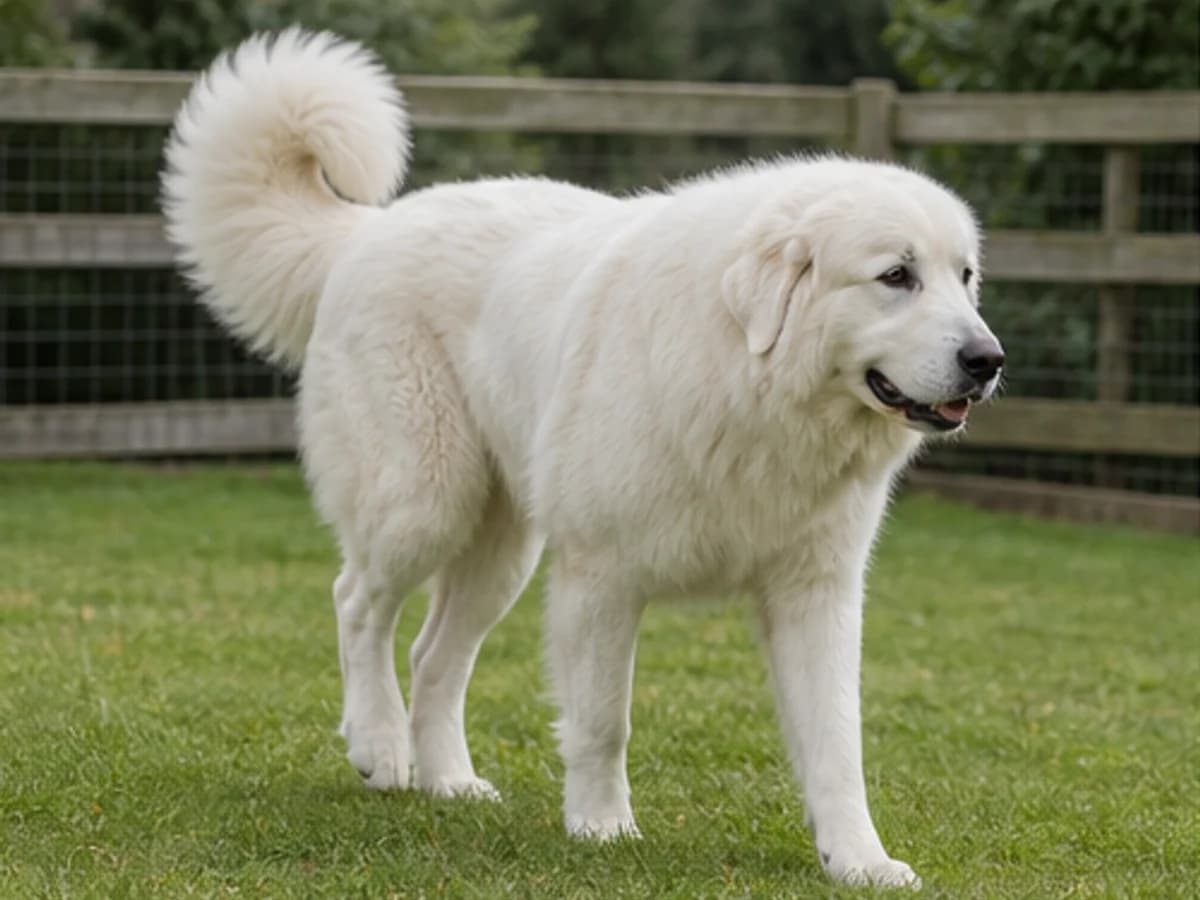
Great Pyrenees are not typically built for endless repetitive fetching or forced distance running. Most benefit from steady walks, sniffing, exploration, short training sessions, and access to a securely fenced area. Puppies need developmentally appropriate activity, while seniors and dogs with orthopedic conditions need veterinary guidance.
A fence should be evaluated as a system: height, gate latches, gaps, soil at the base, climbable objects, and human habits all matter. Electronic boundaries do not stop wildlife, loose dogs, or people from entering, and a motivated guardian may cross a discomfort threshold. Do not build a safety plan around recall alone.
Enrichment can use the breed's natural strengths. Scatter part of a meal in grass, hide safe objects for scent searches, practice stationing at a mat while someone opens the door, or take a slow decompression walk. The goal is not to exhaust the dog. It is to provide appropriate choices and teach recovery after excitement.
Training an independent guardian
Great Pyrenees training improves when the handler makes the right action worthwhile and prevents unwanted behavior from becoming a habit. Use short sessions, clear cues, valuable rewards, and gradual distraction. Skills with direct safety value include coming indoors, moving away from a gate, trading an object, settling behind a barrier, accepting grooming, and walking near the handler.
Independence is not a license to abandon training, and it is not evidence of dominance. If the dog does not respond, ask whether it understands the cue in that setting, whether the reward competes with the environment, whether discomfort is present, and whether the behavior has been practiced enough. Repeating a cue more loudly rarely answers those questions.
A correctly sized safe area helps prevent rehearsal while a dog learns household routines. The Frisco XL collapsible wire crate is one tracked option to compare with the dog's standing height, nose-to-rump length, turning space, chewing habits, and crate experience. Some adult Pyrs need a room or sturdy gate rather than a wire crate.
Confinement as temporary management
Crate training should be gradual and positive. Feed near the open door, reward brief voluntary entry, and increase duration only while the dog remains comfortable. Never use confinement to suppress panic. Before choosing the Frisco XL wire crate, verify current dimensions and construction; "XL" is a retail label, not proof that one particular giant dog will fit.
Coat, shedding and routine grooming
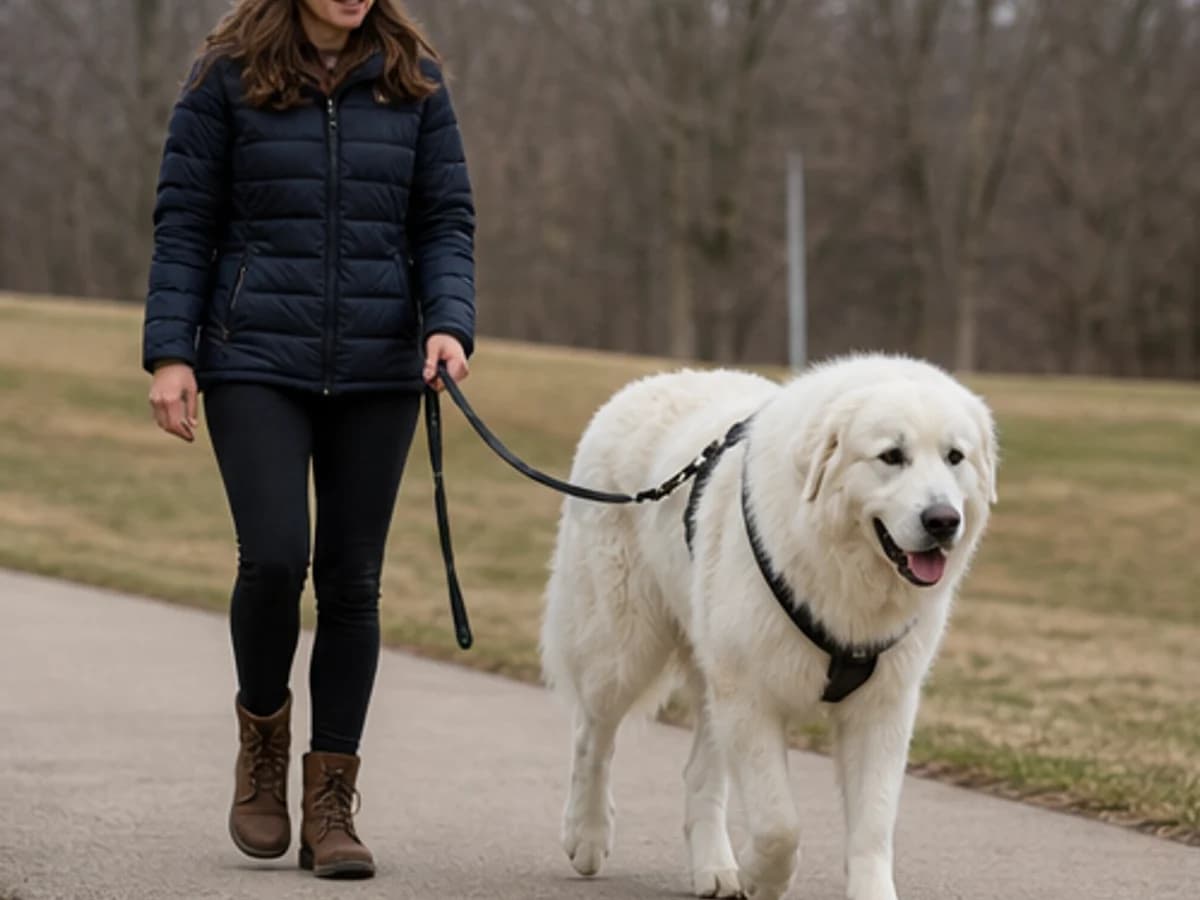
The weather-resistant double coat sheds throughout the year and often releases much more undercoat seasonally. Regular brushing helps remove loose hair, locate mats, and notice skin changes. It does not make the breed low-shedding. Petful's Great Pyrenees grooming and shedding guide covers line brushing, coat blow, bathing, drying, nails, and shave questions in depth.
The aumuca self-cleaning slicker brush is one tracked option for surface coat work. Use light pressure, small sections, and frequent checks of the skin. A slicker does not replace fingers and a comb for finding deeper tangles, and it should not be dragged repeatedly through a mat.
Compare the pin length and head size of the aumuca slicker brush with the individual coat. Stop if the dog flinches, the skin reddens, or the tool catches. Painful mats, odor, sores, moisture trapped at the skin, or sudden hair loss deserves professional grooming or veterinary assessment.
Why shaving is not a shedding shortcut
Routine shaving is generally inappropriate for a healthy double coat and does not solve the underlying shedding cycle. Medical clipping may sometimes be necessary under veterinary direction. Keep nails, ears, teeth, paws, and rear feathering in the care routine rather than focusing only on the visible white coat.
- For the grooming task in this section, compare the aumuca self-cleaning slicker brush with coat depth, skin condition, nail thickness or the exact cleaning need. Use light pressure, good visibility and short sessions, and stop if the dog shows pain, panic or skin irritation.

Petful may earn a commission when you click through to Chewy, at no extra cost to you.
- If the aumuca self-cleaning slicker brush remains appropriate, inspect the result with your hands rather than assuming one pass completed the job. A grooming product cannot treat infection, persistent itching, painful mats or an injured nail; those signs need professional care.
Feeding, body condition and rest
Feed the individual dog, not a generic breed number. Calorie needs change with age, body condition, activity, neuter status, environment, and the food's energy density. Measure meals, count substantial treats, and track weight plus body condition with the veterinary team. Growing puppies require an appropriate large-breed growth diet; do not add calcium or growth supplements unless directed.
Provide a quiet resting place where family members leave the dog alone. The FurHaven NAP jumbo orthopedic bed is one tracked option to compare by measured sleeping posture, step-on height, temperature preference, cover care, and chewing behavior. A bed can improve comfort, but it does not diagnose or treat arthritis.
If the dog circles, struggles to lie down, changes sleeping position, or becomes stiff after rest, speak with a veterinarian. When comparing the FurHaven NAP jumbo bed, confirm that the usable sleep surface accommodates the dog fully; the product's outside dimensions may include bolsters that reduce flat space.
Choosing food for a Great Pyrenees
There is no single best dog food for every Great Pyrenees. Choose a complete diet appropriate to the dog's life stage, then base the portion on calorie density, current weight, activity and body condition. Puppies need food formulated for growth of large-size dogs; adult and senior needs change with health, muscle, mobility and appetite.
Compare labels and feeding guides, but use them as starting points rather than promises. Record the food, measured daily amount, treats, body-condition score and weight trend. Persistent diarrhea, vomiting, poor growth, unexplained weight change or suspected food reaction needs veterinary assessment instead of repeated brand switching. For recipe and portion comparisons, see our guide to the best dog food for Great Pyrenees.
Transport and emergency handling
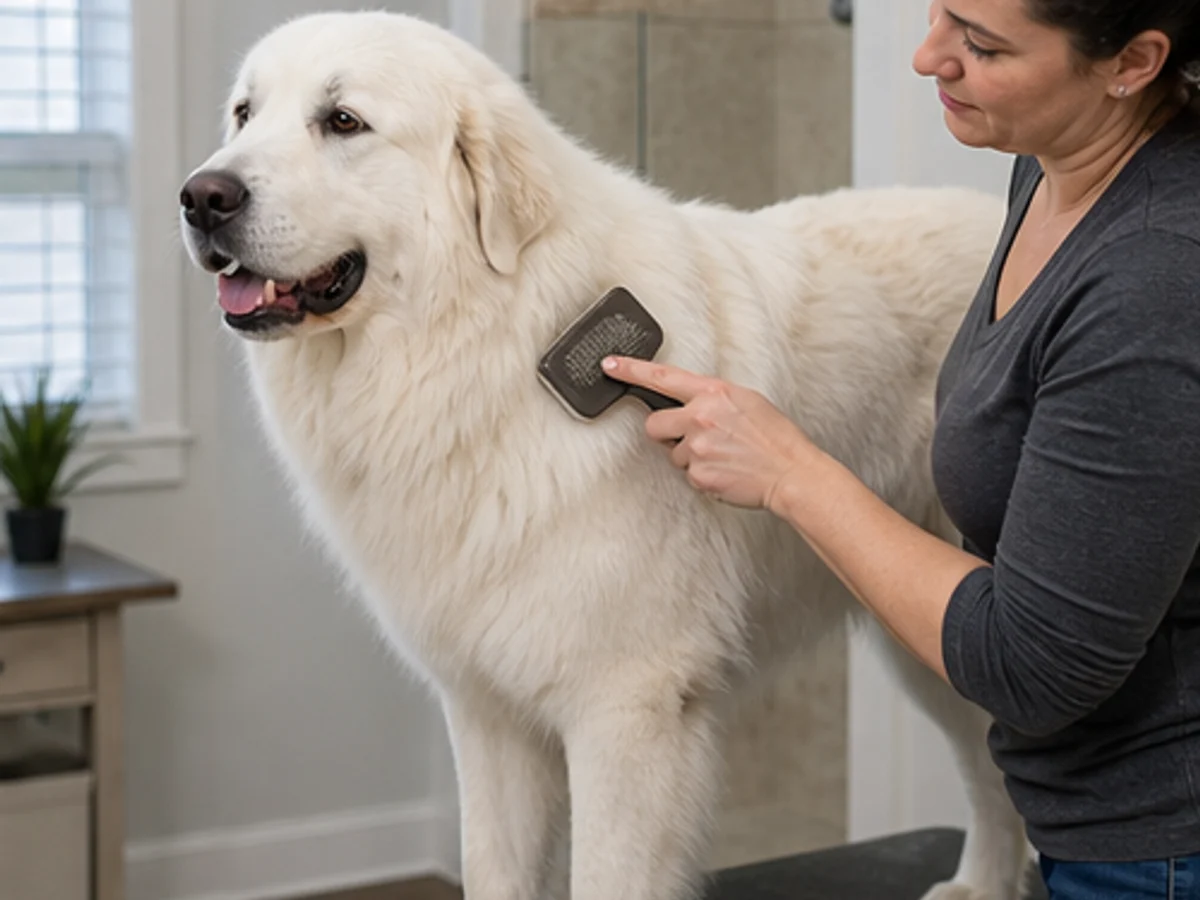
A giant dog's care plan should include movement when the dog cannot jump into a vehicle or walk unaided. Measure the cargo opening and interior height, teach calm ramp or step use before it is medically necessary, and keep the route free of slippery surfaces. One caregiver may not be able to lift an injured adult safely.
Write down the regular clinic, nearest emergency hospital, route, phone numbers, medication list, and who can assist after hours. Conditioning the dog to accept a towel under the abdomen, a muzzle introduced positively, and brief examination positions can reduce stress, but equipment should never be improvised during breathing distress or suspected spinal injury. Ask the veterinary team which handling skills are appropriate.
Great Pyrenees health and lifespan in brief
Great Pyrenees commonly live around a decade, although individuals vary. Giant-dog health planning should include orthopedic screening, healthy weight, gastric-dilatation-volvulus awareness, routine dental and preventive care, and attention to breed-relevant conditions documented by current veterinary sources. Petful's veterinarian-authored Great Pyrenees health problems and lifespan guide provides the clinical detail.
Ask a breeder for the actual health-test results attached to the parents' registered identities. A statement that the parents were "vet checked" is not the same as documented screening. For a rescue dog, request available veterinary records and schedule an examination that establishes a baseline.
Know emergency signs. An enlarged abdomen, repeated unproductive retching, severe restlessness, collapse, breathing difficulty, sudden weakness, or uncontrolled bleeding warrants urgent veterinary contact. Do not wait for a breed article to confirm an emergency.
- Size the FurHaven NAP jumbo orthopedic bed for the Pyr's normal sleep posture and the usable flat surface, not the outside dimensions. Also check step-on height, floor grip and whether the cover can handle a heavily shedding coat.
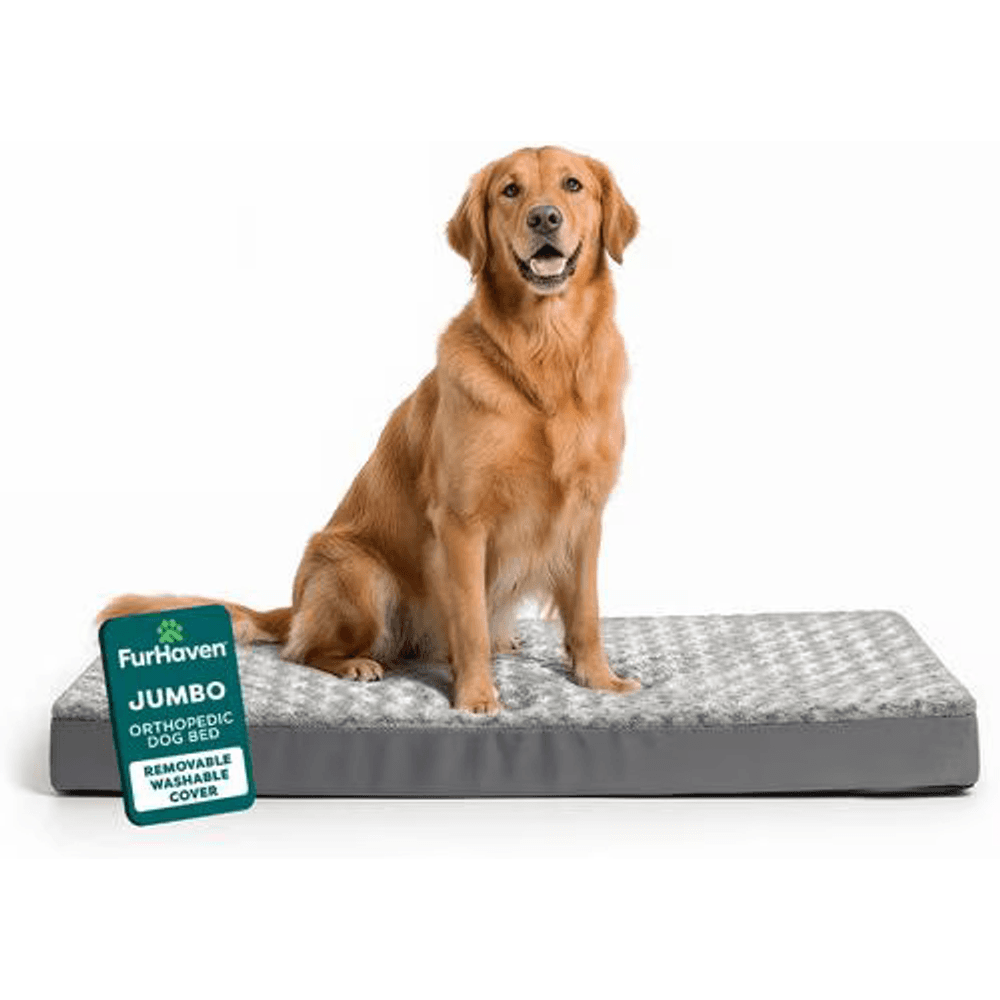
A plush orthopedic foam mattress that cushions aging joints and pressure points, giving a stiff or trembling senior dog warm, supportive rest.
Petful may earn a commission when you click through to Chewy, at no extra cost to you.
- Watch how the dog uses the FurHaven NAP jumbo orthopedic bed: easy turns, full-body support and a comfortable rise matter more than the word orthopedic. New stiffness or reluctance to settle still requires veterinary assessment.
Adoption, breeders and household fit
Puppies, adoption and buying safely includes great pyrenees puppies, great pyrenees puppies breeders, and Adoption, breeder screening and household-fit decision. These are related but distinct reader decisions, best resolved by checking identity, health records, written terms, observed behavior and payment protections before committing. The dedicated Petful guide owns the full analysis; this section supplies the context needed to choose the right next step without duplicating the owner page. Before acting, record the source, date and individual-dog evidence behind the conclusion. That prevents a broad breed tendency, seller label or isolated number from becoming a promise about one dog and keeps the decision practical, traceable and useful. Revisit the conclusion when the dog's age, health, environment or household capacity changes, because the same label can lead to a different decision as the evidence changes.
Why do so many Great Pyrenees end up in shelters?
The short answer is that many Great Pyrenees enter shelters after owners underestimate adult size, barking, roaming, shedding, fencing needs and adolescent independence. Housing restrictions and livestock conflict can also force surrender. Adoption is not a lesser option, and an adult foster history may answer questions a puppy cannot. Ask about indoor life, handling, escape attempts, other animals, children, resource guarding, medical needs and time alone.
If buying a puppy, verify the breeder's identity, location, parent dogs, health records, contract, veterinary care, and willingness to remain responsible for the dog. Avoid sellers who rush payment, refuse live contact, offer implausible shipping, use copied photographs, or market color and size as proof of quality. Petful's Great Pyrenees puppy guide covers the sourcing decision, while the Great Pyrenees price guide separates acquisition cost from the lifetime budget.
A realistic fit checklist
- A calm white giant in a photograph does not show nighttime barking, boundary habits, coat maintenance, transport needs, prey response, veterinary handling, or the cost of giant-dog equipment. Verify the individual dog and rehearse the household routine before committing.
Answer these questions in writing:
- Can the property contain a determined giant dog without relying on invisible boundaries?
- Can the household manage barking before it becomes a neighbor conflict?
- Who handles daily walks, training, grooming, cleanup and appointments?
- How will visitors, children, dogs, cats or livestock be introduced and separated?
- Is there space for a giant dog to rest without blocking every pathway?
- Can the vehicle and caregivers move the dog during illness or emergency?
- Is the budget ready for food, fencing, grooming, training and veterinary care?
- What is the plan if the dog's actual temperament differs from expectations?
Run a seven-day household simulation before adopting
A household-fit framework is more useful when it is tested against the actual week. Before committing, assign the feeding, walking, training, coat care and nighttime responsibilities to named people. Mark the hours when the dog would be alone, when neighbors need quiet, and when gates or doors are opened most often.
Use a simple seven-day worksheet:
- Morning: toilet access, feeding, medication if applicable and a calm walk.
- Work or school hours: secure indoor rest, temperature control and a realistic break schedule.
- Afternoon: exercise, training, coat checks and supervised family activity.
- Evening: visitor, delivery and fence-line routines before neighborhood activity increases.
- Night: indoor sleeping location, alert-barking response and an emergency exit plan.
Then stress-test the plan with the difficult versions of ordinary life. Who manages a muddy coat before work? What happens when one caregiver is ill? Can the dog be separated from a visiting child without blocking the only hallway? Is there a vehicle and a second adult available if a 100-pound dog cannot walk?
This exercise does not predict one dog's temperament. It exposes whether the home can support common guardian history, household fit and giant-dog logistics before an individual dog adds its own needs. If the schedule works only when nothing goes wrong, the plan is not ready.
Verify the individual dog against the breed profile
A breed guide should create better questions, not substitute for meeting the dog. For an adult, ask a caregiver to demonstrate ordinary transitions: coming indoors, passing a gate, settling after a visitor, accepting coat handling and walking away from another animal. Note what triggers alerting, how quickly the dog recovers and whether the behavior changes when the familiar handler steps away.
For a puppy, the unknowns are larger. Observe the mother when possible, review health and veterinary records, ask how the litter has been raised and avoid a seller who guarantees a quiet temperament, exact adult weight or effortless livestock ability. Early behavior can be informative, but it does not fix the adult outcome.
Write down which traits are directly observed, which come from records and which remain assumptions. Then compare the unknowns with the household's least flexible limits, such as noise rules, resident animals, fence height, physical handling or access to giant-dog veterinary care. A realistic match can tolerate uncertainty without pretending it is evidence.
More Great Pyrenees guides from Petful
- Great Pyrenees Puppies: What to Expect in Year One
- 10 Popular Great Pyrenees Mixes (With Pictures)
- Great Pyrenees Price: Puppy Cost and Lifetime Budget
- Great Pyrenees Lifespan and Health Problems
- Great Pyrenees Size, Weight and Growth Guide
- Great Pyrenees Temperament, Guardian Behavior and Training
- Great Pyrenees Grooming and Shedding: Double-Coat Care
Frequently asked questions
The short answer is yes: a Great Pyrenees can be a good house dog when the home accepts guardian behavior and manages it humanely. A yard is useful, but it must be securely enclosed and does not replace walks, training, companionship or indoor rest. Apartment life is possible for an unusually quiet, well-managed individual, yet shared walls, elevator encounters, limited outdoor space and nighttime barking make it a difficult default recommendation.
The short answer is that many Great Pyrenees enter shelters after owners underestimate adult size, barking, roaming, shedding, fencing needs and adolescent independence. Housing restrictions and livestock conflict can also force surrender. Adoption is not a lesser option, and an adult foster history may answer questions a puppy cannot. Ask about indoor life, handling, escape attempts, other animals, children, resource guarding, medical needs and time alone.
The short answer is that owning a Great Pyrenees has clear pros and cons. The pros include a calm presence, loyalty, patience and natural watchfulness. The cons include alert barking, roaming risk, heavy shedding, independent training and giant-dog costs. Those tradeoffs are manageable in a prepared household with secure boundaries, but they make the breed a poor match for anyone seeking a quiet, low-maintenance or reliably off-leash companion.
Many Great Pyrenees are affectionate, patient family dogs when the individual dog's history and the household are a good match. Their giant size means adults should supervise children, protect the dog's food and resting areas, and prevent climbing, hugging or cornering. Visitor introductions also need management because guardian behavior may increase with maturity. A calm adult with a documented home history may be easier to assess than an unknown puppy.
Yes, alert barking is common and often increases after dark because the breed was developed to detect and deter threats. Bringing the dog indoors at night, blocking repeated visual triggers, rewarding a trained settle response and preventing fence-line rehearsal can reduce unnecessary barking. Management will not turn every Pyr into a quiet dog, so households with close neighbors or strict noise rules should consider that limitation before adoption.
Some calm adult Great Pyrenees can live in an apartment, but shared walls, elevators, stairs, limited floor space and nighttime barking make the arrangement difficult. Success depends on the specific dog's noise level, mobility, comfort around close encounters and ability to settle indoors. The household also needs reliable toilet and exercise routines, landlord approval and a practical plan for moving an injured giant dog.
A secure physical fence is strongly recommended because many Great Pyrenees patrol, roam and make independent decisions about a boundary. Inspect gates, latches and places where the dog could dig or climb, and do not rely on an electronic boundary to keep other animals or people out. A fenced yard is management, not enrichment by itself; the dog still needs walks, indoor companionship and supervised activity.
Great Pyrenees are generally described as confident, watchful guardians, not indiscriminately aggressive dogs. However, any individual can develop fear, territorial behavior, resource guarding or unsafe responses, especially when pain, poor socialization or repeated trigger exposure is involved. Evaluate the actual dog around household members and visitors. Escalating growling, lunging, snapping or biting warrants veterinary assessment and qualified behavior help rather than punishment.
Many Great Pyrenees live successfully with other dogs, but compatibility depends on sex, maturity, history, play style, resources and the individuals involved. Use neutral, gradual introductions and keep separate feeding, resting and decompression areas available. Do not assume two dogs will remain compatible simply because one is a puppy; guardian and same-sex dynamics can change as a Pyr reaches social maturity.
Most healthy adult Great Pyrenees need moderate, steady daily activity rather than forced endurance work. A practical routine combines walks, sniffing, secure outdoor time, short training sessions and ample rest, with duration adjusted to the dog's condition and weather. Puppies should avoid repetitive high-impact exercise while growing, and seniors or dogs with orthopedic disease need a veterinarian-guided plan.
The bottom line
A Great Pyrenees is most successful when the household respects the dog as an independent guardian and plans around that reality. The right home offers secure boundaries, patient training, controlled introductions, routine grooming, comfortable indoor rest, and the resources to care for a giant dog. The wrong home expects a silent, low-maintenance pet who obeys instantly and can roam off leash.
Meet the individual dog more than once, review the records, observe ordinary behavior, and ask specific questions. If the answers still fit your actual weekdays, not just an ideal weekend, the breed's calm presence and loyal watchfulness can be deeply rewarding.

Kristine Lacoste has been researching dog and cat breeds for nearly a decade and has observed the animals up close at dog shows in both the United States and the United Kingdom. She is the author of the book One Unforgettable Journey, which was named as a finalist for a Maxwell Award from the Dog Writers Association of America, and was host of a weekly pet news segment on the National K-9 Academy Radio Show. In addition, she was the New Orleans coordinator for Dogs on Deployment, a nonprofit that helps military members and their pets, for 3 years. Kristine has researched and written about pet behaviors and care for many years. She holds a bachelor’s degree in psychology, another bachelor’s degree in English and a Master of Business Administration degree.
Sign up for expert-backed reviews and safety alerts all in one place.