How to Potty Train a Puppy: The Schedule-First Guide
Learn how to potty train a puppy the schedule-first way: the exact daily routine, crate and cleanup tips, warning signs to watch, and how to fix accidents without punishment.
Petful is reader supported. As an affiliate of platforms like Amazon and Chewy, we may earn a commission when you buy through links on this page. There is no extra cost to you.
Learning how to potty train a puppy comes down to one thing most guides bury near the bottom: a schedule. Puppies do not have the bladder control or the memory to figure out bathroom rules on their own, so the fastest, least frustrating path is to build their day around predictable potty breaks and then reward the right behavior every single time. Get the timing right and everything else, from crate use to accident cleanup, falls into place.
This guide walks you through the exact schedule to run, the supplies that actually help, how to read your puppy's warning signs, and how to fix the setbacks that trip up almost every new owner. It is built around routine first because routine is what works.
- 1A predictable feeding and potty schedule is the single biggest driver of house-training success.
- 2Take your puppy out every 30 to 60 minutes when awake, plus after every meal, nap, drink, and play session.
- 3Reward outdoor potties within 3 seconds and never punish accidents. Full reliability usually takes 4 to 6 months.

Sign up for expert-backed reviews and safety alerts all in one place.
Why a Schedule Beats Everything Else
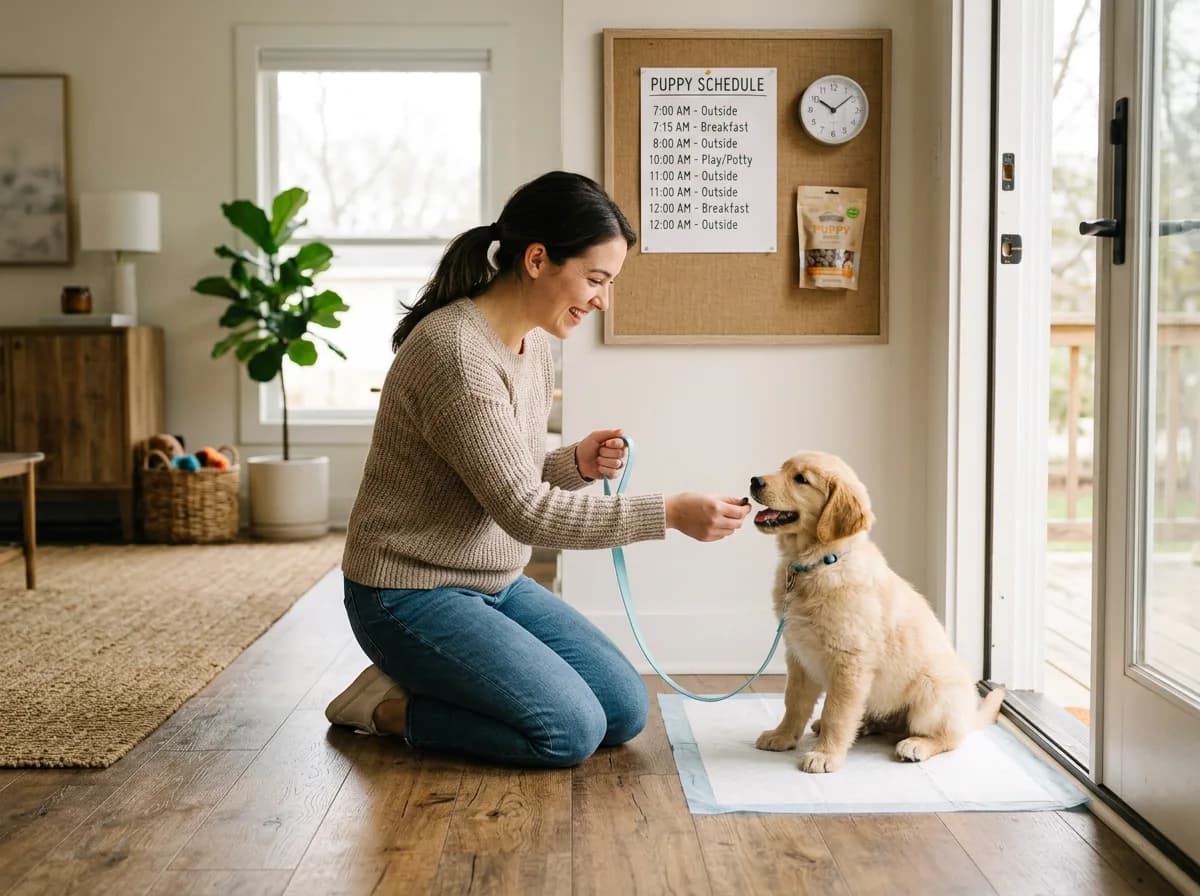
Puppies learn where to go by repetition, not by reasoning. Every time your puppy relieves itself outside and gets rewarded, the "outside equals good things" connection gets a little stronger. Every accident indoors that you miss teaches the opposite. A schedule stacks the odds in your favor by making sure your puppy is outside at the exact moments its body is most likely to go.
There is also a physical reason a schedule works. A puppy can hold its bladder for roughly one hour per month of age, up to about six hours by six months. A 2-month-old puppy simply cannot wait four hours, no matter how well-behaved it is. When you plan potty breaks around what the bladder can actually do, you stop setting your puppy up to fail. The schedule is not a suggestion, it is the framework the whole process hangs on.
Petful may earn a commission when you click through to Chewy, at no extra cost to you.
Feeding on a fixed schedule matters just as much as the potty breaks themselves. What goes in on a predictable timetable comes out on a predictable timetable. Free-feeding (leaving food down all day) makes elimination random and house-training much harder. Two to three measured meals at set times gives you a digestive clock you can plan around.
- Keep a simple note of every potty break and every accident for the first 14 days: the time, and whether it was pee, poop, or a miss. Patterns jump out fast, and you will learn your own puppy's natural rhythm faster than any generic chart can teach you.
The Core Potty Training Schedule
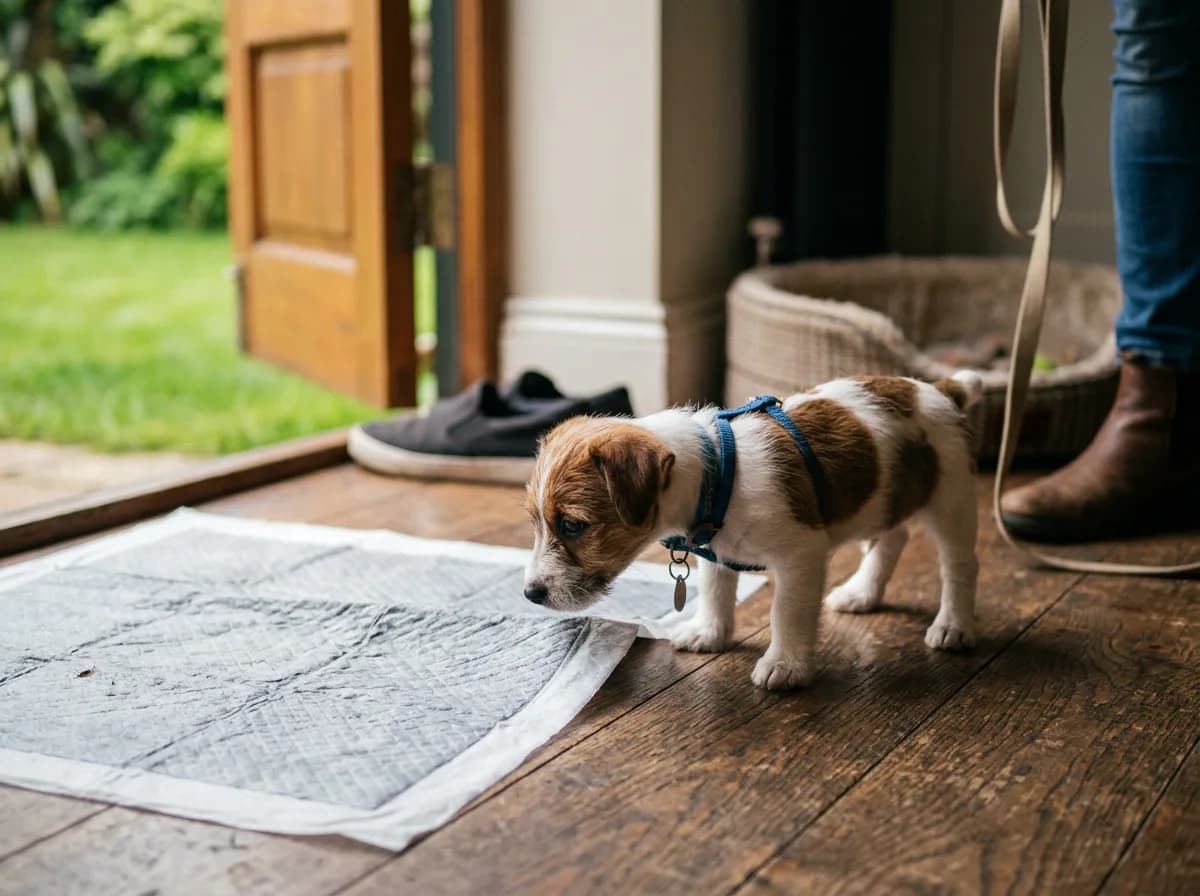
Here is the routine to run from day one. The goal is to be outside, in the same spot, at every moment your puppy is likely to need to go. Take your puppy out on a leash to a consistent potty area, wait, and reward the instant it finishes.
Take your puppy outside:
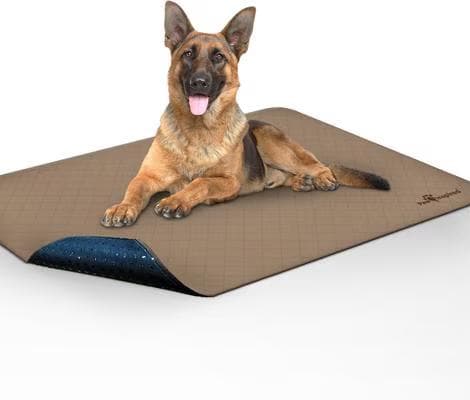
Petful may earn a commission when you click through to Chewy, at no extra cost to you.
- First thing in the morning, the moment it wakes up
- After every meal, usually within 5 to 30 minutes
- After every nap
- After every play session or bout of excitement
- After drinking a lot of water
- Every 30 to 60 minutes of awake time in the early weeks
- Right before bed, as the last thing you do at night
- Overnight, if your puppy is young enough to need it (many 8-to-12-week-old puppies need one middle-of-the-night trip)
That frequency feels like a lot because it is. The upside is that it front-loads the work: the more clean, rewarded outdoor potties your puppy racks up early, the faster the habit locks in and the sooner you can stretch the intervals.
| Time | Activity | Potty Break |
|---|---|---|
| 7:00 AM | Wake up | Yes, immediately |
| 7:30 AM | Breakfast | Yes, 15 to 30 min after |
| 9:00 AM | Play then nap | Yes, before and after |
| 12:00 PM | Lunch | Yes, 15 to 30 min after |
| 3:00 PM | Afternoon play | Yes, after |
| 5:30 PM | Dinner | Yes, 15 to 30 min after |
| 9:00 PM | Wind down | Yes |
| 10:30 PM | Bedtime | Yes, last call |
| 3:00 AM | Overnight | Yes, if needed |
Pick One Potty Spot and Use a Cue
Always walk your puppy to the same patch of ground. The lingering scent tells your puppy this is the bathroom, which speeds things up. As your puppy starts to go, say a short cue in a calm voice, something like "go potty," every time. Within a few weeks most puppies begin to associate the phrase with the act, and you gain the handy ability to prompt a potty on command before a car ride or bedtime.
Reward Within Three Seconds
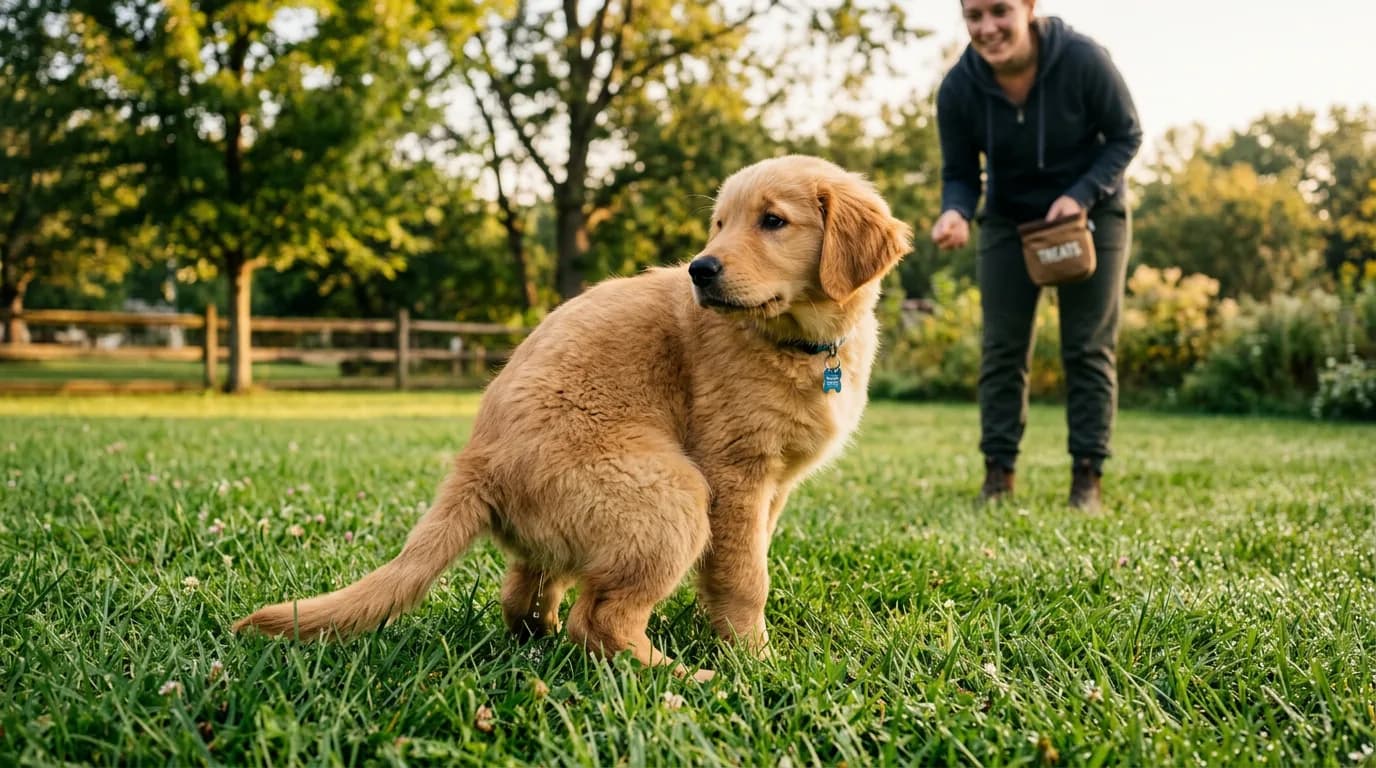
Timing on the reward is everything. Praise warmly and hand over a small, high-value treat the instant your puppy finishes outside, not after you walk back inside. Dogs connect rewards to whatever they did in the last couple of seconds. Reward too late and you are praising the walk back to the door, not the potty. Keep treats in your pocket or a pouch so you are never fumbling at the key moment.
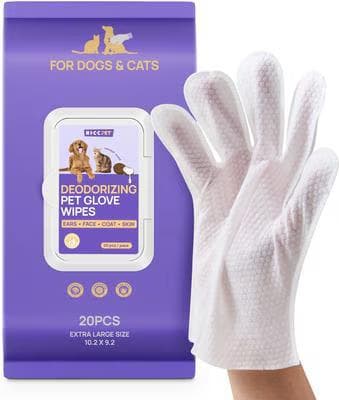
Petful may earn a commission when you click through to Chewy, at no extra cost to you.
- Physically go outside with your puppy for every scheduled break, even when it is cold or you are busy. If you just open the door and let the puppy out alone, you cannot reward the moment it goes, and you will not know whether it actually finished. Supervised breaks are how the lesson gets taught.
Supplies That Make House-Training Easier
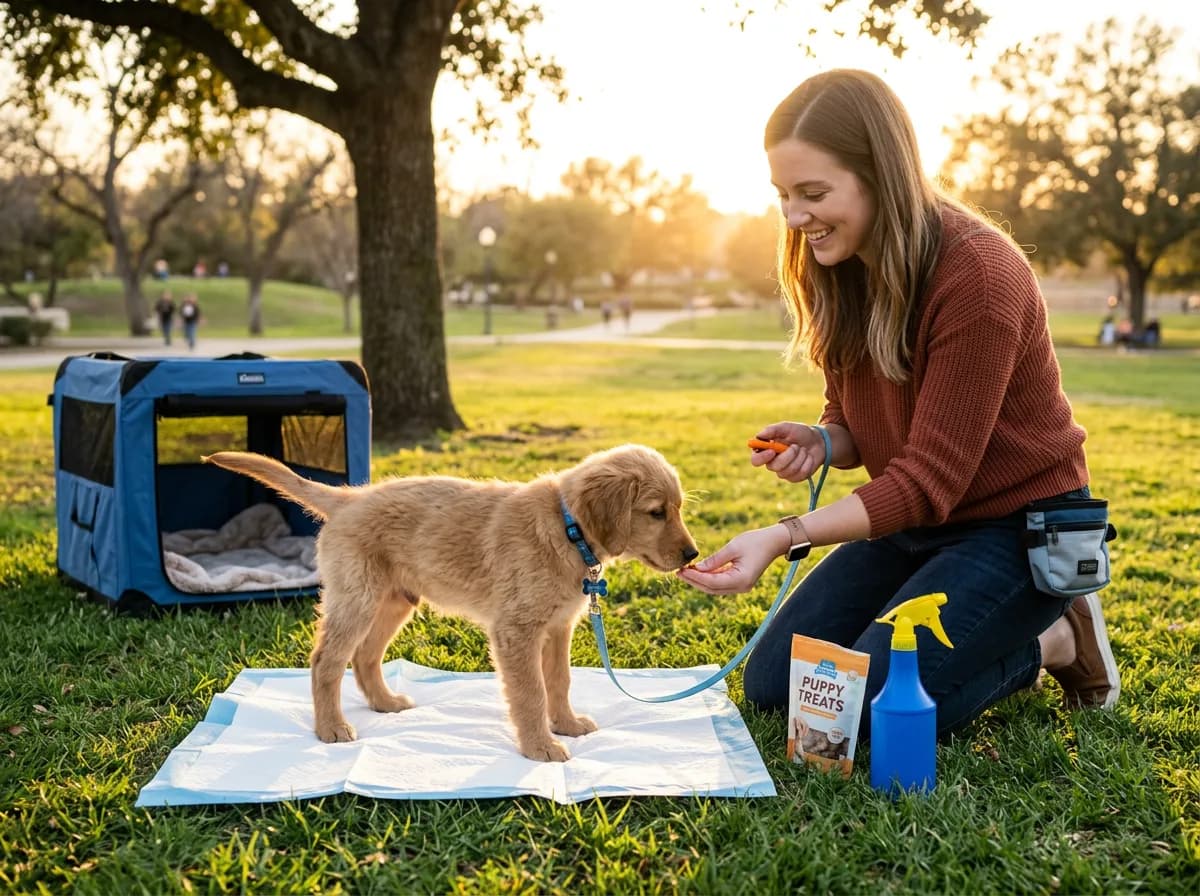
You do not need much, but a few tools genuinely move the needle. Crates and pens give you management when you cannot supervise. An enzymatic cleaner erases the scent that draws a puppy back to the same spot. Treats and a treat pouch make rewarding instant. Puppy pads can bridge the gap for apartment dwellers or overnight, though they are optional and can slow full outdoor training if overused.
Crate Training Is Your Best Friend
Dogs have a natural instinct not to soil the space where they sleep. A properly sized crate uses that instinct to your advantage. When you cannot actively watch your puppy, the crate keeps it from wandering off to a corner and having an accident, and it strengthens the puppy's ability to hold on until the next scheduled break.
Size matters: the crate should be just big enough for your puppy to stand, turn around, and lie down. Too large and the puppy will pee in one end and sleep in the other, which defeats the purpose. Many crates come with a divider so you can expand the space as your puppy grows. Never use the crate as punishment. It should be a calm, safe den, and crate time works hand in hand with your potty schedule, not as a substitute for it. Our full guide to setting up night-time routines covers the crying that often comes with the first few crate nights in what to do when your puppy keeps crying at night.
- A crate is a management tool, not a storage unit. A puppy left crated longer than it can physically hold its bladder will be forced to soil the crate, which breaks the clean-den instinct you are counting on and can set training back weeks. Match crate time to the one-hour-per-month bladder rule and give frequent breaks.
Clean Accidents the Right Way
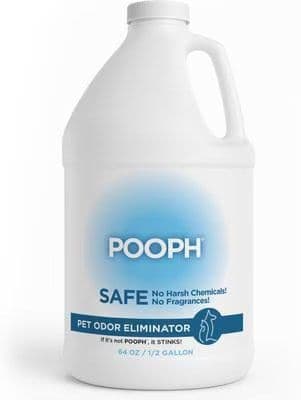
When an accident happens, and it will, how you clean it decides whether it happens again in the same spot. Regular household cleaners often leave behind odor compounds that a dog's nose reads as a bathroom marker, even when the floor looks and smells clean to you. An enzymatic cleaner breaks those compounds down completely. Reach for one every time, and blot rather than rub. Skip ammonia-based products entirely, because ammonia smells like urine to a dog and can actually invite a repeat.
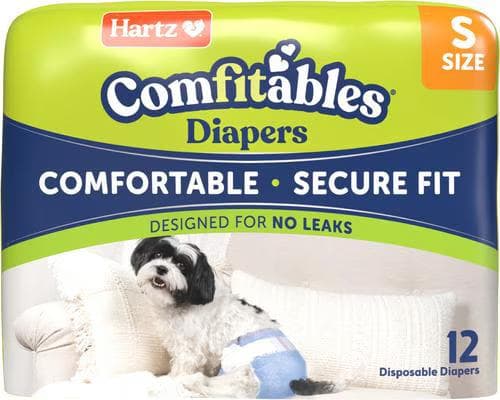
Petful may earn a commission when you click through to Chewy, at no extra cost to you.
Read Your Puppy's Warning Signs
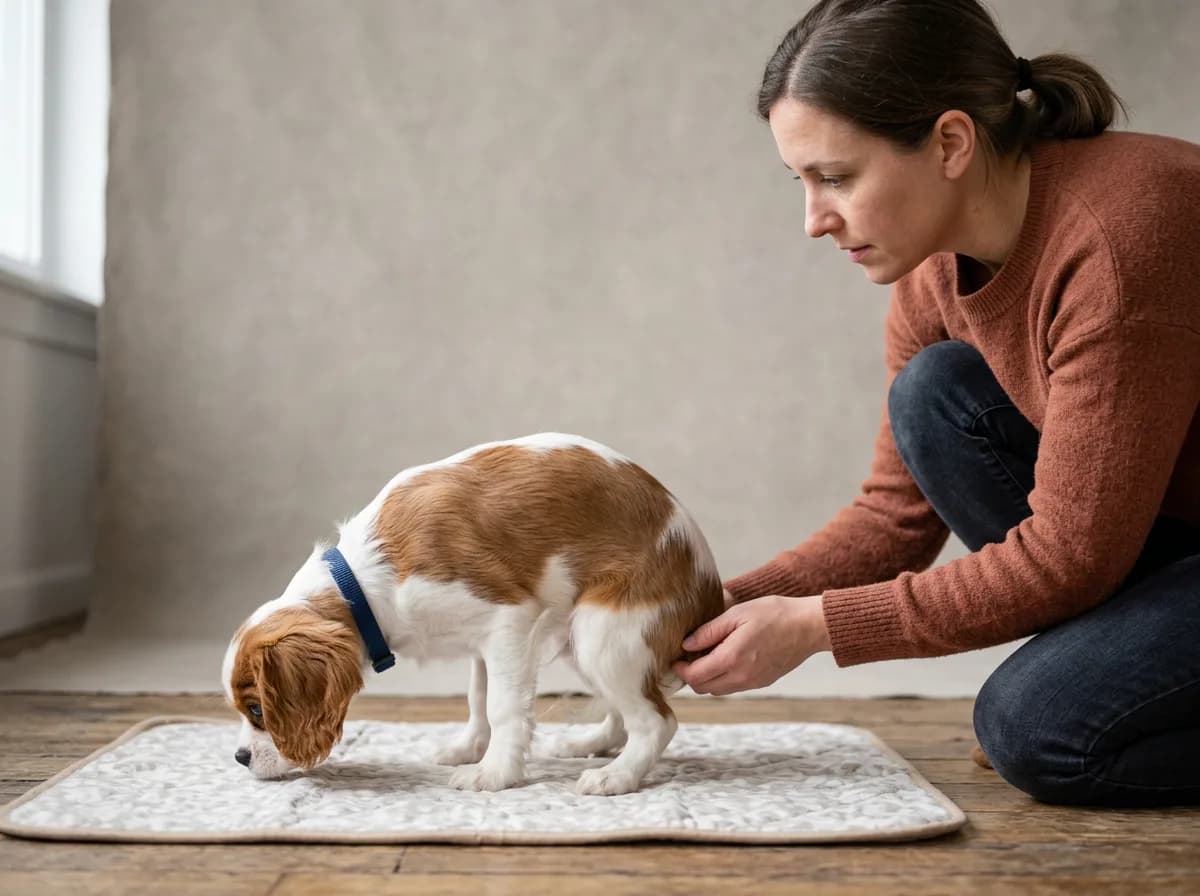
A huge part of how to potty train a puppy is catching the "I need to go" moment before it becomes a puddle. Puppies telegraph their intentions if you know what to watch for. Common pre-potty signals include:

Petful may earn a commission when you click through to Chewy, at no extra cost to you.
- Sudden sniffing of the floor, often in a circling pattern
- Walking in tight circles or restless pacing
- Whining, scratching at the door, or sitting by the exit
- Abruptly stopping play and wandering toward a quiet corner
- Squatting posture starting to form
The instant you see any of these, calmly and quickly get your puppy outside to the potty spot. Scoop up a young puppy if you have to. If you catch your puppy mid-accident indoors, make a gentle interrupting sound (a soft clap or an "oops"), then carry or lead it straight outside to finish, and reward the outdoor finish. The goal is to redirect, never to frighten.
Never Punish Accidents
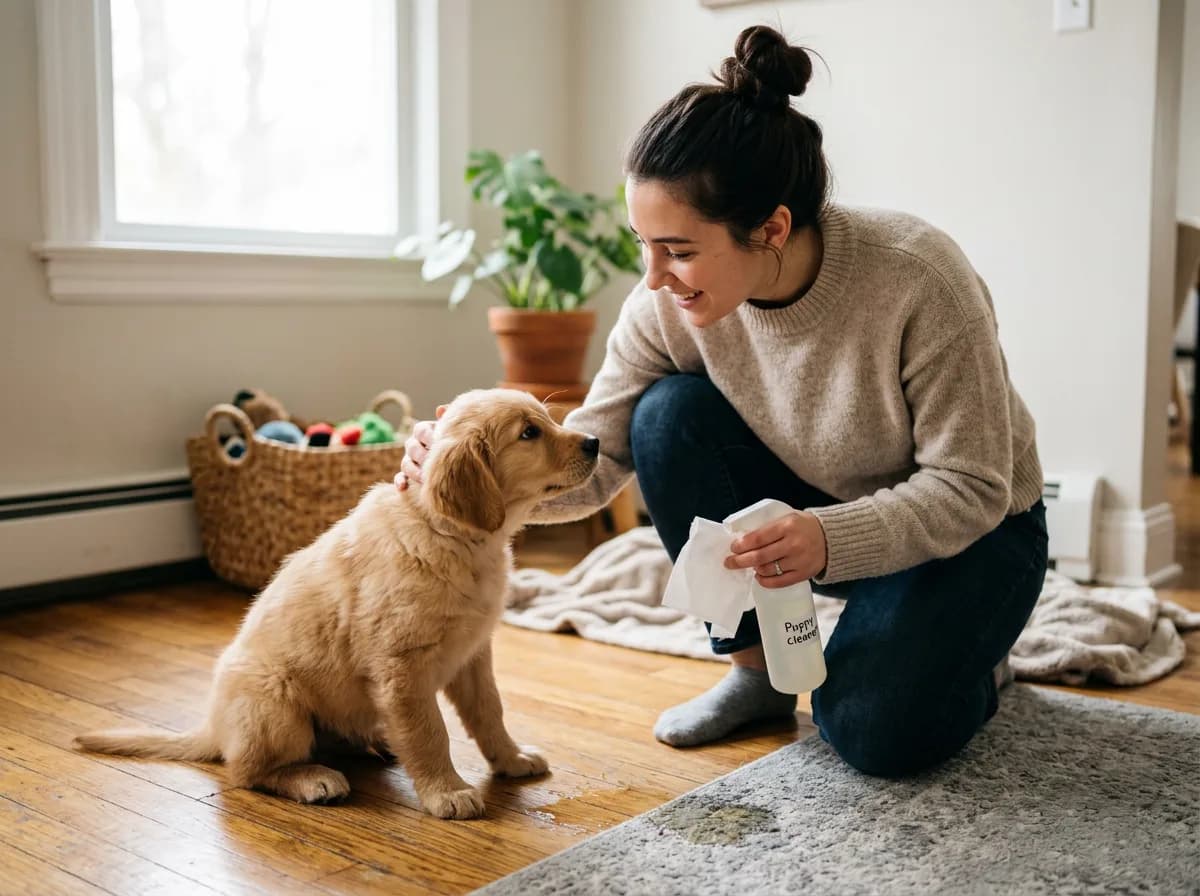
This is the rule that trips up the most well-meaning owners. Do not scold, rub a puppy's nose in a mess, or punish it after the fact. Puppies cannot connect a punishment to something they did even a minute ago. All punishment teaches is that going to the bathroom in front of you is dangerous, which pushes the puppy to hide and pee behind the couch instead. That is the opposite of what you want.
If you did not catch the accident as it happened, the only correct response is to clean it up with an enzymatic cleaner and quietly resolve to supervise more closely. An accident is information, not a crime. It usually means the puppy had too much freedom, missed a scheduled break, or gave a signal you did not catch. Adjust the schedule, tighten supervision, and move on.
- Giving a puppy too much unsupervised freedom too early is the number one reason house-training stalls. A puppy that can slip into another room can have an accident you never see, and unseen accidents cannot be corrected or redirected. Keep your puppy in the same room as you, tethered or gated, until the clean streak is long and steady.
Handling Nights and Time Away
Overnight and workday hours are where schedules get tested. For nights, take away the water bowl a couple of hours before bed, do a final potty break right before lights out, and place the crate close enough that you hear your puppy stir. A young puppy that wakes and fusses at 3 a.m. usually needs to go, so take it out calmly, no play, straight back to the crate. That one boring trip prevents an accident and keeps the crate clean.
For time away, a puppy cannot be left longer than it can hold its bladder. If your workday outlasts that window, arrange a midday visit from a dog walker, neighbor, or family member, or set up a puppy-proof pen with a pad in one corner as a backup. Long-term crating past the bladder limit is not a fair or effective option.
Getting your puppy's routine on paper from day one pays off in more ways than potty training. The same early habit of tracking, saving a digital copy of the vaccination schedule, microchip number, and training milestones in a service like MyPetID alongside the potty log, means you have every record in one place the first time a vet, boarding facility, or new sitter asks for it.
How Long Does Potty Training Take?
Most puppies take about 4 to 6 months to become fully reliable, and some, especially small breeds with small bladders, can take up to a year. You should see real progress within the first couple of weeks of consistent scheduling, with accidents becoming less frequent as the weeks go on. Expect a few plateaus and the occasional backslide, particularly around 4 to 5 months when adolescence and boundary-testing kick in.
Consistency is what shortens the timeline. A puppy trained by one person on a strict schedule usually house-trains faster than one getting mixed messages from a busy household. Get everyone who handles the puppy on the same routine, using the same cue word and the same potty spot, and the whole thing moves faster.
When to Call Your Vet
Occasionally, what looks like a training problem is a medical one. If your fully house-trained puppy suddenly regresses, or if you notice frequent squatting with little urine, straining, blood in the urine, or excessive drinking, book a vet visit. Urinary tract infections and other conditions can cause accidents that no amount of scheduling will fix. Ruling out a health issue is always worth a phone call before you assume it is behavioral.
For puppies you adopt at an older age, or dogs that were never trained young, the same schedule-first method still works, it just may take a little patience. Our companion guide on how to potty train an older dog walks through the adjustments for senior and adult dogs.
Set the Foundation Early
House-training is one piece of a much bigger first few months. If you are still gathering supplies and building routines, our ultimate new puppy checklist covers everything from crate sizing to vet-visit timing so nothing slips through the cracks. And if you are choosing a breed or just curious how coat and coloring vary, our breed guides like the one on Rhodesian Ridgeback colors show how much dogs of the same breed can differ.
Stick to the schedule, reward every win within three seconds, supervise relentlessly in the early weeks, and treat accidents as information rather than failures. Do that, and a house-trained dog is a matter of when, not if.
Frequently Asked Questions
Related on Petful
- The Puppy Potty Training Schedule (Printable by Age)
- Pee Pads vs Outside: Puppy Pad Training Guide
- Crate Training a Puppy: A Day-by-Day Plan
- Puppy Training 101: A Week-by-Week Guide
The quickest way is a strict schedule paired with constant supervision and instant rewards. Take your puppy out every 30 to 60 minutes and after every meal, nap, drink, and play session, reward outdoor potties within 3 seconds, and use a crate or pen whenever you cannot watch closely. Frequency and consistency, not any single trick, are what speed things up, though full reliability still takes several months.
Take your dog outside far more often, reward the instant it goes outside, and supervise or confine it indoors so accidents cannot happen unseen. Clean every past accident spot thoroughly with an enzymatic cleaner to remove the scent that draws the dog back, and rule out a medical cause with your vet if a previously trained dog suddenly starts having accidents.
Many owners find the first month home the hardest for potty training because the puppy has almost no bladder control and needs breaks around the clock. Behaviorally, the 4-to-5-month adolescent stretch is often toughest, when puppies test boundaries and previously solid house-training can briefly backslide. Staying consistent through both stretches is what carries you past them.
The 10-10-10 rule is a simple potty-break routine: spend about 10 minutes outside at the potty spot, reward the potty, then allow roughly 10 minutes of supervised freedom indoors before the next break, adjusting the numbers to your puppy's age and bladder. It is a memory aid for staying on a tight, predictable schedule rather than a strict formula.
Feed on a fixed schedule so bowel movements become predictable, then take your puppy out 15 to 30 minutes after every meal and reward pooping outside immediately. Supervise closely, learn the pre-poop signs like circling and sniffing, and clean any indoor accidents with an enzymatic cleaner so lingering scent does not invite a repeat in the same spot.
Dogs tend to dislike strong citrus and vinegar smells, and some owners use pet-safe citrus or vinegar solutions to discourage repeat use of an indoor spot. Avoid ammonia-based cleaners, which smell like urine to a dog and can actually attract more accidents. The most reliable deterrent is still an enzymatic cleaner that removes the scent marker entirely, paired with better supervision.

Melissa Smith has been researching and writing about pet behaviors for several years. Her work has been recognized with Certificates of Excellence from both the Dog Writers Association of America and the Cat Writers’ Association. A longtime animal lover, Melissa is a professional pet sitter on Cape Cod through her company, Fresh Start Services.
Sign up for expert-backed reviews and safety alerts all in one place.
You Might Also Like
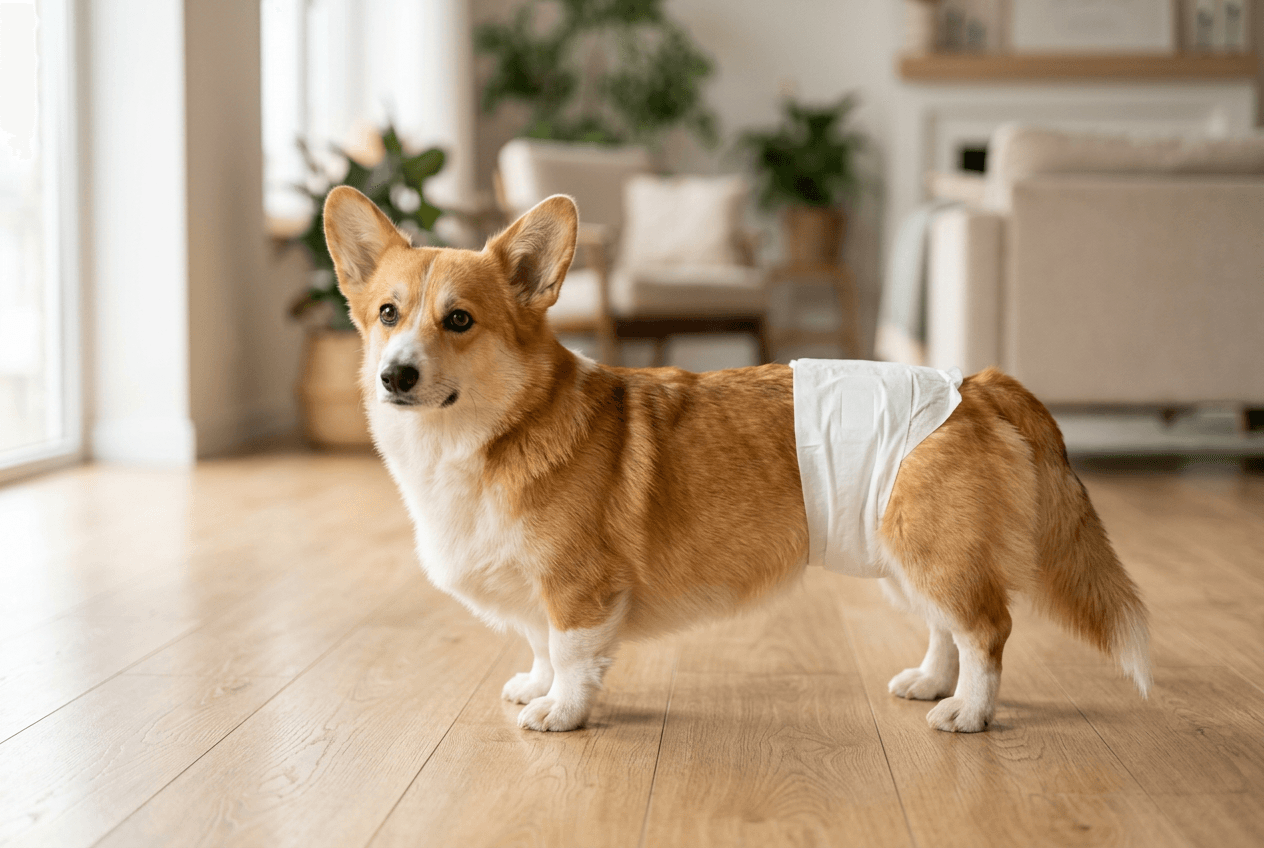
The Best Dog Diapers: Vet-Reviewed Picks for Every Need
Jun 17, 2026
The Benefits of Interactive Cat Toys for Mental Stimulation and Health
Oct 3, 2024