Pee Pads vs Outside: Puppy Pad Training Guide
Torn between indoor pads and the backyard? This guide breaks down the honest trade-off between puppy pad training and outdoor training, shows you how to run pads correctly, and gives a step-by-step plan to wean your dog off pads when you are ready.
Petful is reader supported. As an affiliate of platforms like Amazon and Chewy, we may earn a commission when you buy through links on this page. There is no extra cost to you.
Deciding between indoor pads and the backyard is one of the first real housetraining forks every new dog owner hits, and getting it right early saves months of scrubbing. Done well, puppy pad training gives you a clean, reliable indoor toilet for the weeks before vaccines are complete, for apartment dwellers on high floors, and for tiny or senior dogs who cannot hold it through a long workday. Done poorly, it teaches your dog that peeing indoors is fine and quietly sabotages your eventual goal of an outside-only dog. This guide lays out the honest trade-off between pads and outdoors, the exact steps to run pads correctly, and a proven plan to wean off pads when you are ready.
- 1Pads win for apartments, pre-vaccine puppies, and small or senior dogs who cannot wait
- 2Outdoor training builds one clear rule and usually finishes faster for full-access homes
- 3You can run both at once, then wean pads by shrinking and shifting them toward the door

Sign up for expert-backed reviews and safety alerts all in one place.
Pads vs Outside: Which Should You Choose?
There is no universal right answer here. The best choice depends on your home, your schedule, and your dog. Below is the straight comparison most guides dance around.
Choose pads when you live in an apartment or high-rise where a bathroom trip means an elevator and a lobby, when your puppy has not finished its core vaccine series and your vet has advised keeping it off shared ground, when you work hours longer than your puppy's bladder can span, or when you own a toy breed or a senior dog whose small or aging bladder simply cannot make it outside every time.
Choose outside-only when you have a fenced yard or easy ground-floor access, a schedule that allows frequent trips in the first weeks, and a clear end goal of a dog that never eliminates indoors. Skipping the indoor step removes one confusing rule and, for many owners, shortens the whole process.
The genuine tension is this: pads teach your dog that eliminating indoors is sometimes acceptable, and later you have to un-teach that. Outdoor training teaches one rule from day one but demands more of your time and access up front. Neither is wrong. Pick the path that fits your real life, not the ideal one.
Be honest about your own week, too. Many owners start with pads not because they prefer them but because their first few weeks with a puppy are genuinely chaotic, and a pad buys breathing room. That is fine. The mistake is drifting into pads with no plan to leave them, then feeling stuck at eight or nine months. Choose the path on purpose, and if that path is pads, treat the weaning stage as part of the plan rather than an afterthought.
Petful may earn a commission when you click through to Chewy, at no extra cost to you.
- Until your puppy has completed its core vaccination series, most veterinarians recommend limiting contact with ground that unknown dogs use. Indoor pads are a legitimate bridge during this window, not a failure of willpower. Confirm the timeline with your own vet.
The Case for Pads
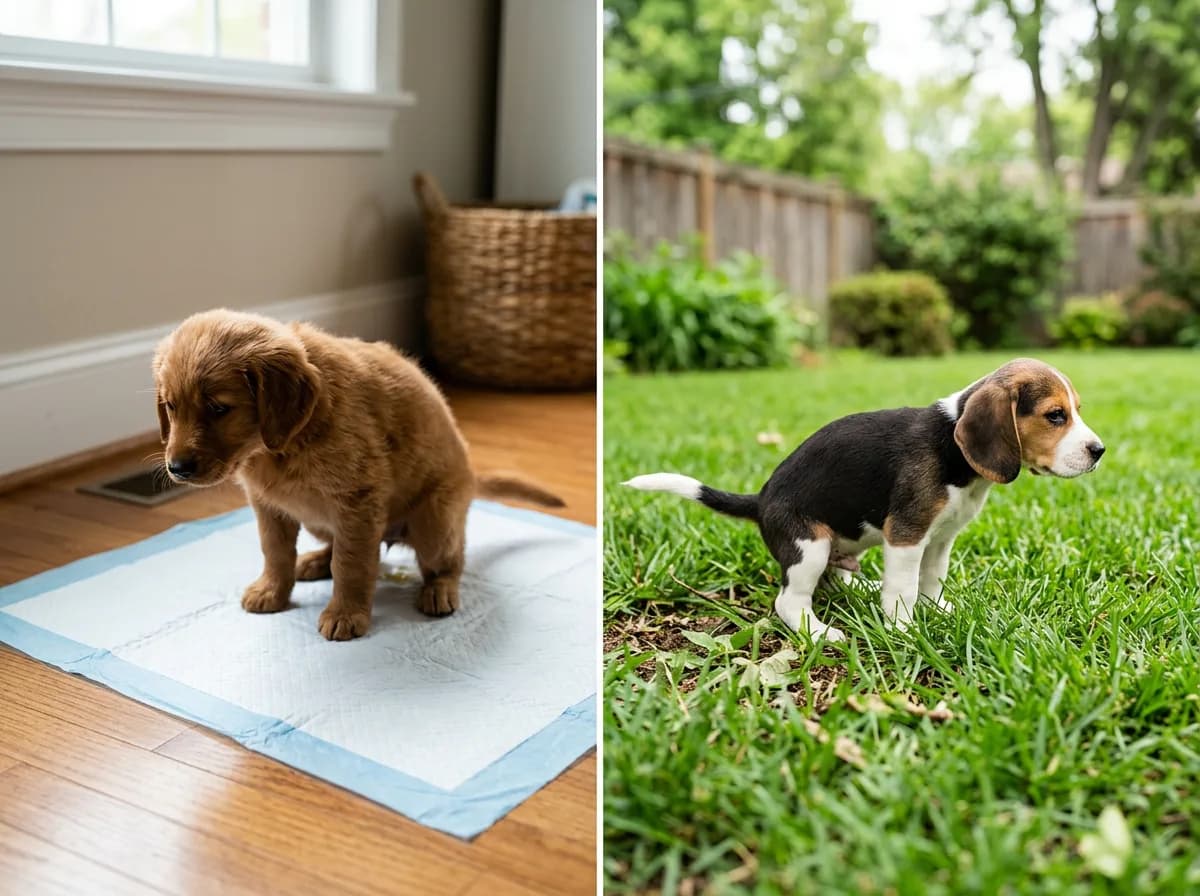
Pads are not a shortcut for lazy owners. They solve real problems.
- Weather and access proofing. A blizzard, a broken elevator, or a fifth-floor walk-up should not force an accident. A pad station is always available.
- The vaccine gap. Puppies typically are not fully protected until around 16 weeks, and unnecessary exposure to contaminated ground carries real risk. Pads keep the potty routine going safely indoors.
- Small and senior bladders. Toy breeds and older dogs often physically cannot hold urine for a standard workday. A pad is a humane middle ground.
- Overnight and long-shift coverage. For owners who cannot get home midday, a pad prevents the puppy from being forced to soil its crate, which undoes crate training.
The trade-off is honest: every pad success is one small vote in your dog's head for "indoors is okay." That is manageable, but only if you plan the wean from the start rather than discovering the habit is set at ten months old.
Petful may earn a commission when you click through to Chewy, at no extra cost to you.
The Case for Outdoor Training
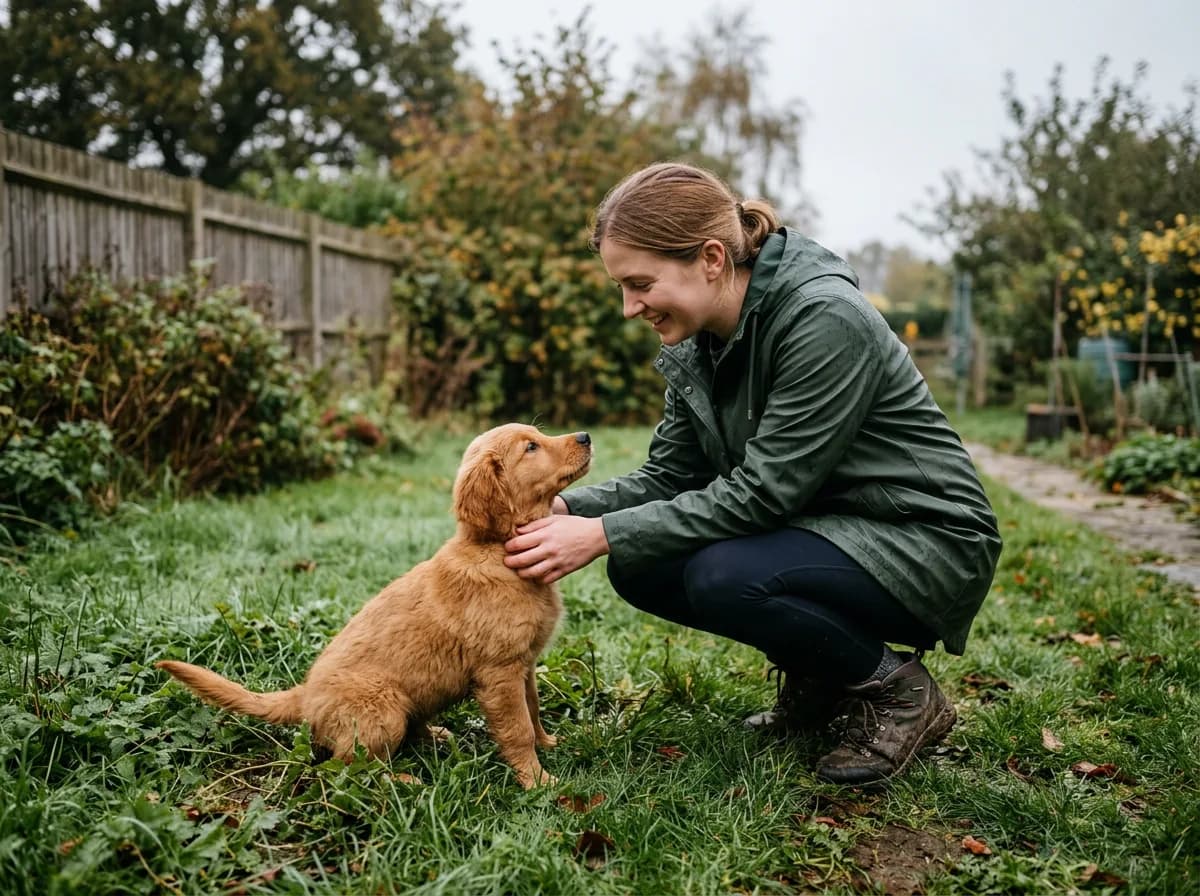
Outdoor-only training has one enormous advantage: clarity. Your dog learns a single, unambiguous rule, which is that the bathroom is grass, not carpet.
- One rule, no contradiction. You never have to reverse an "indoors is fine" lesson because you never taught it.
- Usually faster to a finished dog. Skipping the indoor phase removes the entire weaning stage.
- Stronger signal habits. Dogs trained outside from the start tend to develop clear door-scratching or bell-ringing cues sooner, because the destination never changes.
The cost is your calendar. Outdoor training in the first weeks means trips every one to two hours during the day, plus at least one overnight trip for a young puppy. If your access or schedule cannot support that, pads are the sane bridge, not a compromise on your dog's intelligence.
| Factor | Indoor Pads | Outdoor Training |
|---|---|---|
| Best home | Apartment, high floor, no yard | House with yard or ground-floor access |
| Time demand early on | Lower, refresh pads a few times a day | Higher, trips every 1 to 2 hours |
| Vaccine safety | Safe before full vaccination | Limit until vaccines complete |
| Long-term goal | Requires a weaning stage | Finished once reliable |
| Main risk | Teaches "indoors is sometimes okay" | Accidents if you miss a trip |
How to Do Puppy Pad Training the Right Way
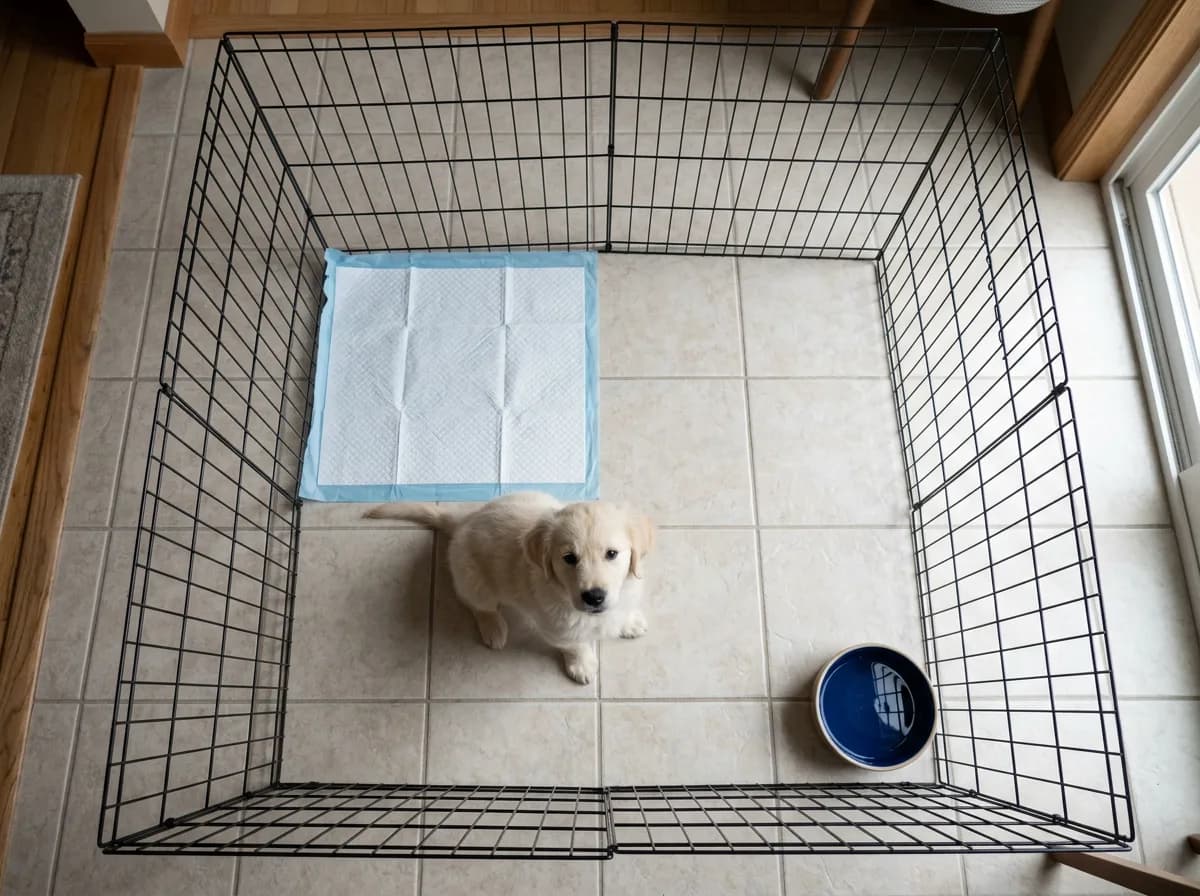
Most pad failures are not the dog's fault. They come from too much freedom too soon and inconsistent placement. Run it like this.
Step 1: Confine the space
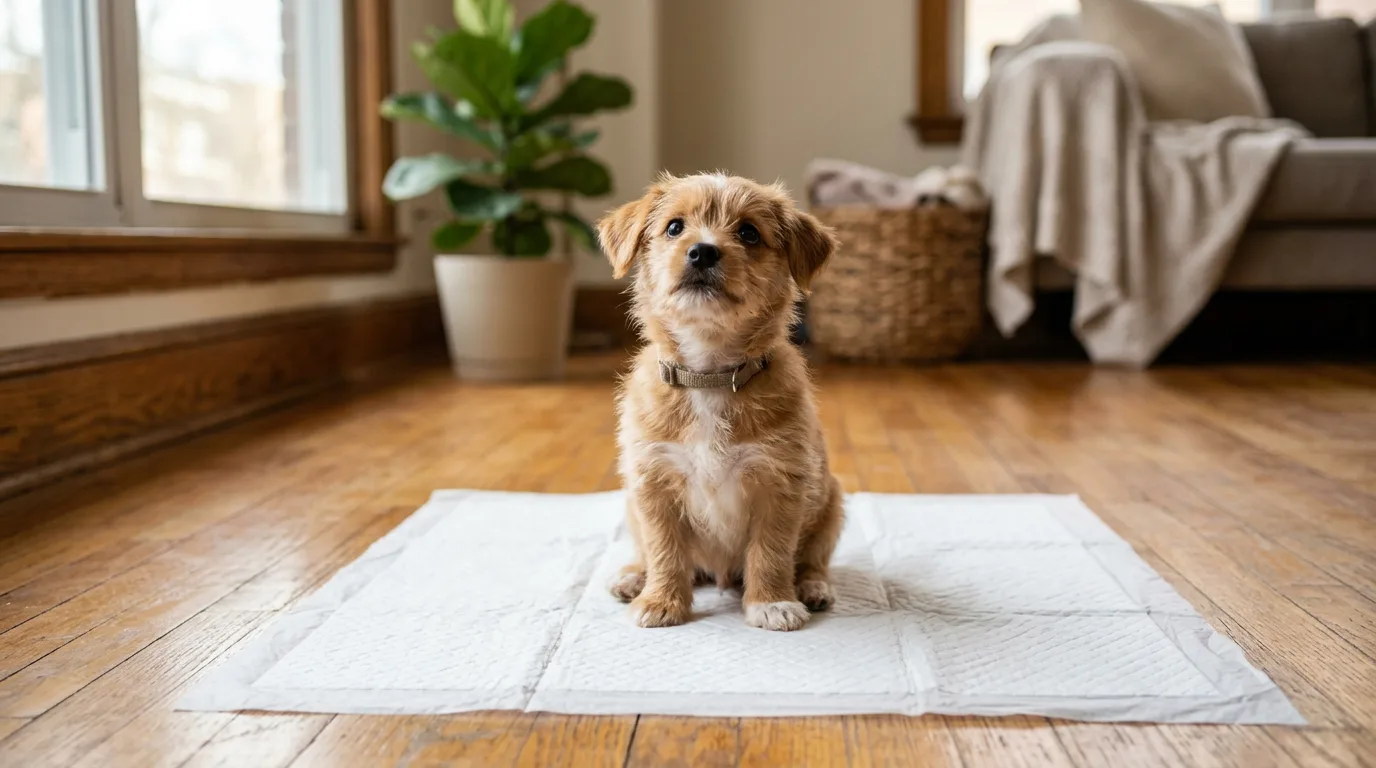
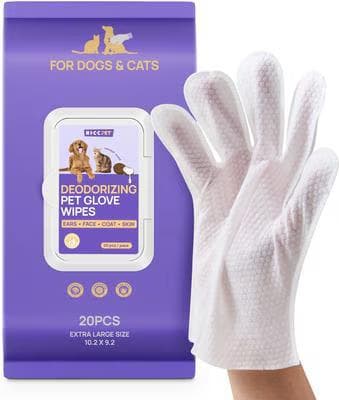
Give your puppy a small, defined area, a playpen or a gated section of one room, not the run of the house. A puppy that can wander will find a private corner you did not choose. In the early days, cover much of that small area with pads so a miss still lands on a pad.
Petful may earn a commission when you click through to Chewy, at no extra cost to you.
Step 2: Pick and hold one pad spot
Choose a permanent pad location away from food, water, and the sleeping bed, since dogs instinctively avoid soiling near those. Keep the spot consistent. Moving the pad around each day is the single most common way owners confuse a puppy.
Step 3: Time the trips
Take your puppy to the pad on a schedule the bladder can actually keep: right after waking, within a few minutes of eating or drinking, after play, and roughly every hour for a very young puppy. Success is a numbers game, so you want to be standing on the pad when nature calls.
Step 4: Add a cue and reward instantly
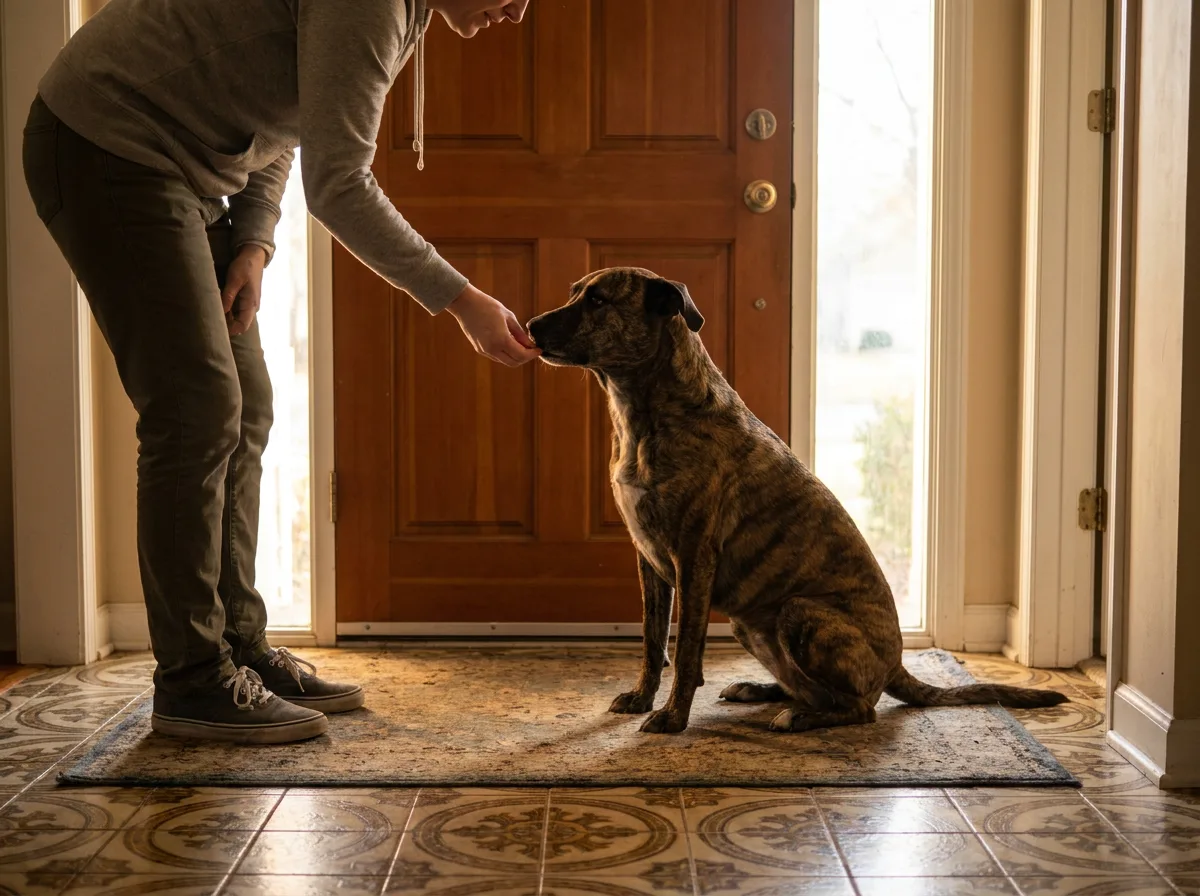
Say a short, consistent cue such as "go potty" as your puppy begins. The instant it finishes on the pad, reward with a treat and calm praise, right there on the pad, within two seconds. Late rewards teach nothing. This pairing is what turns a lucky landing into a trained behavior.
Step 5: Manage accidents without drama
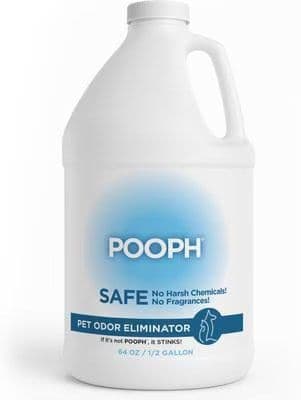
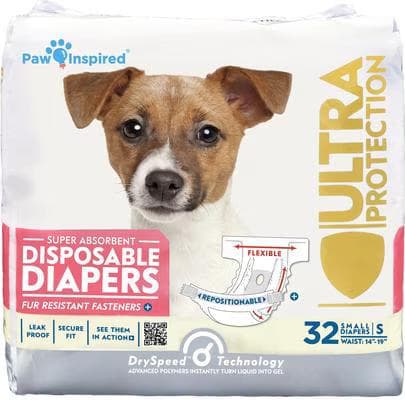
When you catch an accident mid-stream, interrupt gently with a neutral sound and carry or guide the puppy to the pad to finish, then reward. Never punish or rub a dog's nose in it, that teaches fear and hiding, not location. Clean every accident with an enzymatic cleaner, because ordinary cleaners leave scent markers that pull the dog back to the same spot.
Petful may earn a commission when you click through to Chewy, at no extra cost to you.
- A brand-new pad has no scent cue telling a puppy "this is the toilet." Leaving one very lightly soiled pad in the rotation, or using a pad-attractant spray, gives the target a smell your puppy recognizes. This is why an all-fresh station can stall a puppy that was doing fine.
Setting Up a Pad Station That Works
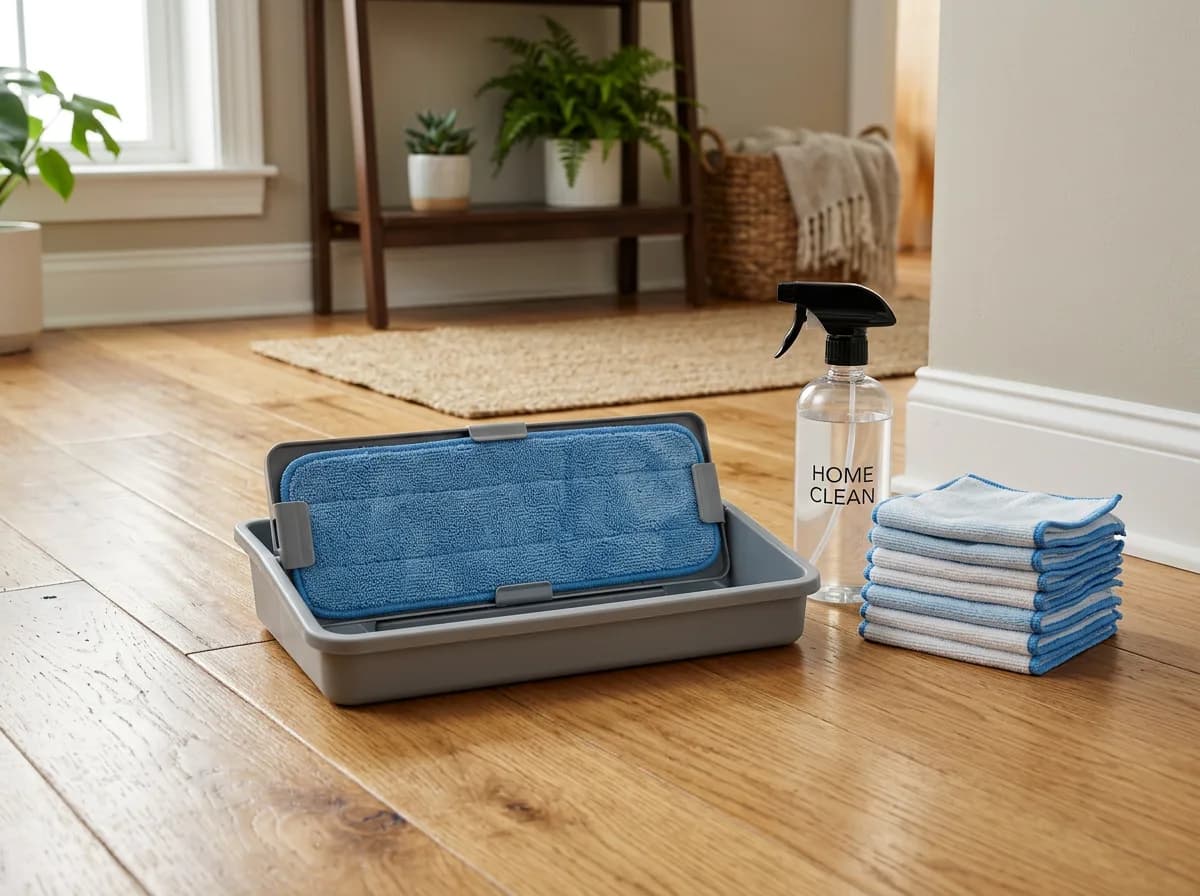
A little gear removes most of the friction.
- A holder or tray keeps the pad flat and stops corner-lifting and shredding, the two things that turn a tidy station into a mess.
- Enough pads to change often. A soaked, overfull pad discourages use and can push a puppy to go beside it instead. Plan to refresh more than you think.
- An enzymatic cleaner for the inevitable misses, so old accident spots stop broadcasting "go here."
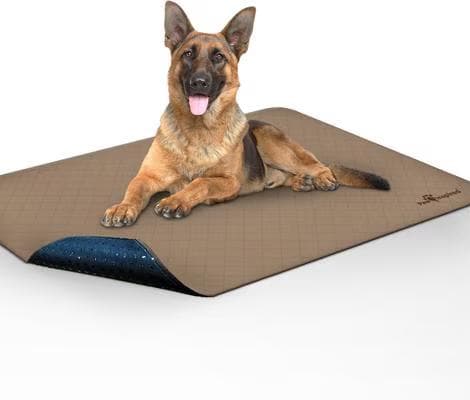
- A washable or grass-style option if disposables pile up faster than you like. Some owners prefer a reusable pad or a real-grass patch, especially long term.
| Item | Why it matters | Look for |
|---|---|---|
| Pad holder or tray | Stops shredding and corner-lifting | Non-slip base, sized to your pad |
| Training pads | The core surface | Leak-proof backing, quick-dry top |
| Attractant spray | Draws the puppy to the target | Pheromone or scent based |
| Enzymatic cleaner | Removes scent that causes repeats | Labeled for pet urine |
How to Wean Your Dog Off Pads
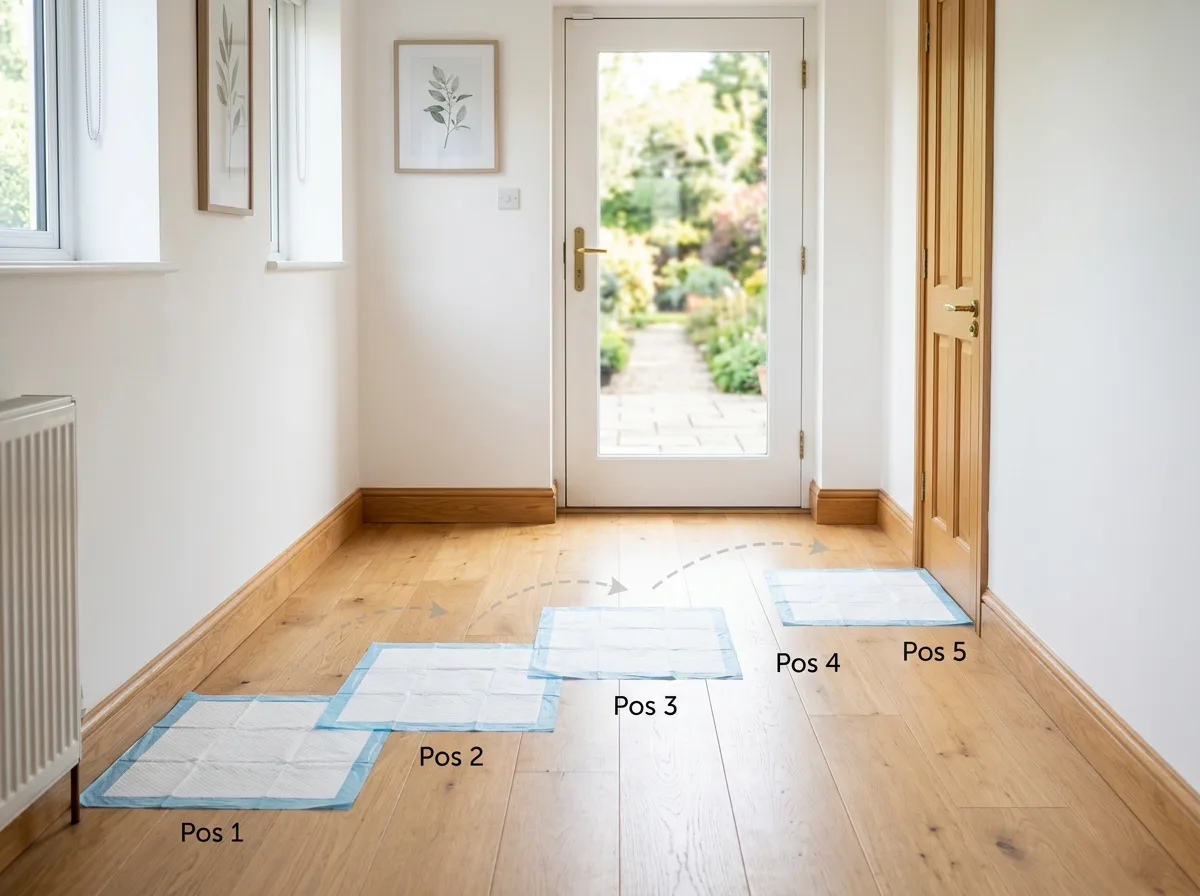
Weaning is where most owners stall, and it is the whole reason to plan pads carefully at the start. The principle is simple: make the pad progressively less convenient indoors and progressively more available outdoors, in small steps your dog barely notices.
Petful may earn a commission when you click through to Chewy, at no extra cost to you.
1. Confirm reliability first. Do not start weaning until your dog uses the pad consistently with almost no misses. A shaky base gets worse under change.
2. Shrink the coverage. If the puppy learned on several pads, reduce to one. A dog aiming at one clear target is easier to redirect than one used to a wide indoor zone.
3. Migrate toward the exit. Move that single pad a few inches per day toward the door you use to go outside. Slow is the point, jumping it across the room resets the confusion.
4. Cross the threshold. Once the pad reaches the door, place it just outside on a porch or patio, then on the grass, so the dog follows its familiar target outdoors. A real-grass patch or an outdoor-rated reusable pad can make this porch-to-yard handoff cleaner, because the surface your dog already trusts moves outside with it.
5. Fade the pad. Outdoors, shrink the pad and let real ground take over the scent job. Reward every outdoor success heavily during this stage so the yard becomes the new default.
6. Keep the routine, drop the pad. Maintain your same cue word and trip schedule while the physical pad disappears. The habit carries; the object does not.
Expect regressions. A move, a schedule change, or a growth stage can bring a lapse. Step back one level, rebuild, and continue. Patience beats pressure every time.
- 1Only wean once pad use is near-perfect
- 2Move a single pad a few inches per day toward and then through the door
- 3Keep the cue word and schedule identical so the habit survives the pad disappearing
Common Pad Mistakes That Stall Progress
- Too much space too soon. Freedom before reliability creates private accident corners.
- Moving the pad constantly. Inconsistent placement is confusion, not training.
- Delayed or missing rewards. A treat thirty seconds later teaches nothing about location.
- Punishing accidents. Fear-based responses teach hiding, not aim.
- Ordinary cleaners on misses. Residual scent re-summons the dog to the exact wrong spot.
- All-fresh pads with no scent cue. A puppy needs a target it can smell, especially at the start.
Does the Dog's Breed and Age Change the Plan?
Somewhat. Very small breeds and certain independent-minded dogs are famously slower to housetrain, and that is a physical and temperamental reality, not stubbornness you can drill away. Toy breeds have tiny bladders and often benefit from keeping a pad option longer. Some intelligent but willful breeds test the rules more, so they reward extra consistency. If you are choosing a dog partly around trainability and living situation, our dog breed profiles walk through temperament and care needs breed by breed, and color-and-coat guides like our Rhodesian Ridgeback colors breakdown show how much variety sits inside a single breed. For the health side of a new puppy's routine, our pet health library covers vaccine timelines and more.
Age matters too. A very young puppy simply cannot hold urine long, so early "accidents" are often just biology outrunning training. As bladder control matures over the first several months, the same puppy that seemed hopeless at eight weeks becomes reliable, provided your routine stayed consistent.
- Sudden accidents in a previously trained dog, straining, frequent tiny urinations, blood in the urine, or excessive drinking can signal a urinary tract infection or other medical issue, not a training lapse. A housetraining regression that appears overnight deserves a vet check before you assume behavior.
Frequently Asked Questions
Troubleshooting Common Pad Problems
Even a solid routine hits snags. Match the symptom to the specific fix instead of scrapping the whole plan and starting over.
- Peeing right beside the pad. The pad is usually too small or too soiled. Scale up to a larger pad or a two-pad target, and swap it the moment it is wet enough to put the dog off standing on it.
- Shredding or chewing the pad. Lock the pad into a covered tray with a grate top so there is nothing to grab, and hand the puppy a chew toy for that energy. Most shredding is boredom, not defiance.
- Holding it, then going on the carpet the second it is loose. This means freedom came too early. Shrink the confined space back down for a week and rebuild reliability before widening it again.
- Refusing the pad in a new room. The scent target did not travel with the pad. Carry one lightly used pad to seed the new location so the smell cue moves with it.
Coordinating Pads With Crate Training
Never place a pad inside the sleeping crate. Dogs instinctively avoid soiling their bed, and a pad in the crate quietly erases that useful hold. Instead, attach an exercise pen or gate off a small bathroom so the puppy can step off the bed to reach the pad overnight without being trapped next to it. A puppy under roughly 12 weeks often cannot last a full night, so expect one overnight reset in the early going. As bladder control matures over the following months, move the pad steadily farther from the sleeping area until a single morning trip replaces it.
What Pads Cost Over the Long Run
Disposable pads add up faster than most owners expect, since a young dog can work through several a day. If an indoor toilet is part of your long-term plan (a high-rise apartment, a toy breed, a senior dog), a washable reusable pad or a real-grass patch usually costs less across several months and creates far less waste. The grass option carries a bonus: its texture already matches a yard, so a future move outdoors feels familiar underfoot. Disposables still earn their place for the messy first weeks and for travel, where a fresh, no-laundry surface is worth the running cost.
Related on Petful
- How to Potty Train a Puppy: The Schedule-First Guide
- The Puppy Potty Training Schedule (Printable by Age)
- Crate Training a Puppy: A Day-by-Day Plan
- Puppy Training 101: A Week-by-Week Guide
Put the pad in one consistent, quiet spot away from food and bed, take the puppy there right after waking, eating, drinking, and play, and reward on the pad within two seconds of success. A pad-attractant spray or one lightly scented pad gives a smell cue that draws the puppy to the target, which is often the missing piece when a fresh station stalls.
Yes, when run correctly. Pads reliably create an indoor toilet for apartment dogs, pre-vaccine puppies, and small or senior dogs who cannot get outside on time. The catch is that they also teach that indoors is sometimes acceptable, so plan a weaning stage from the start if your end goal is an outside-only dog.
Most puppies grasp the pad location in a few days to a couple of weeks, but truly reliable use often takes 4 to 6 months as bladder control matures. Consistency in placement, timing, and rewards shortens it; moving the pad and skipping trips lengthens it.
The 7-7-7 rule is a socialization guideline suggesting that by 7 weeks of age a puppy should have experienced 7 different surfaces, 7 different objects, 7 different locations, and so on, to build confidence. It is about broad early exposure, not housetraining directly, but a well-socialized puppy tends to handle training routines more calmly.
Small and toy breeds such as Dachshunds, Chihuahuas, Yorkshire Terriers, and some Bichons are widely considered the hardest to housetrain, largely because tiny bladders and, in some cases, an independent streak slow the process. Consistency and a longer pad option help more than pressure.
Dogs are drawn to the scent of their own urine and to ammonia-like odors, which is exactly why leftover accident spots keep getting reused and why enzymatic cleaners matter. Commercial pad-attractant sprays use pheromone or grass-mimicking scents to steer that instinct onto the pad.
The same small and toy breeds top the list, Dachshunds, Chihuahuas, Yorkshire Terriers, and similar tiny dogs, because of small bladders and often willful temperaments. None are untrainable; they simply reward extra patience and a steadier routine.
Not always, but change it promptly once it is soaked or soiled enough to discourage use, and always keep it clean enough that the puppy will still stand on it. Early on, deliberately leaving one lightly used pad can provide a helpful scent cue, but a fully saturated pad pushes puppies to go beside it instead.
The Bottom Line
Pads and outdoor training are not a right-versus-wrong choice; they are a fit-to-your-life choice. If your home, schedule, and dog point to indoors, run pads deliberately: confine the space, hold one spot, time the trips, reward instantly, and plan the wean before the habit hardens. If your access and calendar allow it, outdoor-only training gives your dog one clean rule and usually finishes sooner. Either way, consistency is the engine. Pick the path, run it patiently, and your puppy gets there.

Coreen Saito is a pet writer and longtime shelter volunteer with more than a decade in animal rescue. She covers cat behavior, breed care, and the small, ordinary science of sharing a life with companion animals, with a particular focus on honest takes about the products and decisions that actually matter. At home in Arizona, she's outranked by Mac (a dog with the loudest opinion in the house), Rebel (a cat who governs by quiet authority), and Meri (an orange tabby who runs the late shift and the laundry basket). She writes about all three, plus the rescues that keep coming through her life, at LifeWithMinty.com.
Sign up for expert-backed reviews and safety alerts all in one place.