Best Dog Food Toppers: Vet-Informed Picks to Upgrade Any Bowl
Compare The Honest Kitchen dog food toppers by texture, ingredients, and feeding role, with practical tips for portions, calorie swaps, and storage.

BVMS, MRCVS
Petful is reader supported. As an affiliate of platforms like Amazon and Chewy, we may earn a commission when you buy through links on this page. There is no extra cost to you.
This article is sponsored by The Honest Kitchen. Petful maintains editorial control and uses current product information plus independent pet-nutrition guidance.
Dog food toppers can add gravy, aroma, moisture, protein variety, or crunch to a familiar meal, but the best choice is the one that solves a defined mealtime problem without unbalancing the dog's complete diet. Start by separating complete food used in a smaller amount from products labeled as toppers, snacks, or supplemental feeding. Then match the format to the goal, check ingredients and calories, and reduce the main food when the added energy is meaningful.
- 1Choose the topper's job before choosing the product
- 2Keep complete-and-balanced food as the nutritional base when the topper is supplemental
- 3Check calories, portions, ingredients, refrigeration, and feeding status on the current label
- 4Reduce the primary food when a topper adds meaningful calories
- 5Ask a veterinarian before changing prescription, weight-loss, pancreatitis, kidney, or allergy diets

Sign up for expert-backed reviews and safety alerts all in one place.
What a Dog Food Topper Can Add to the Bowl
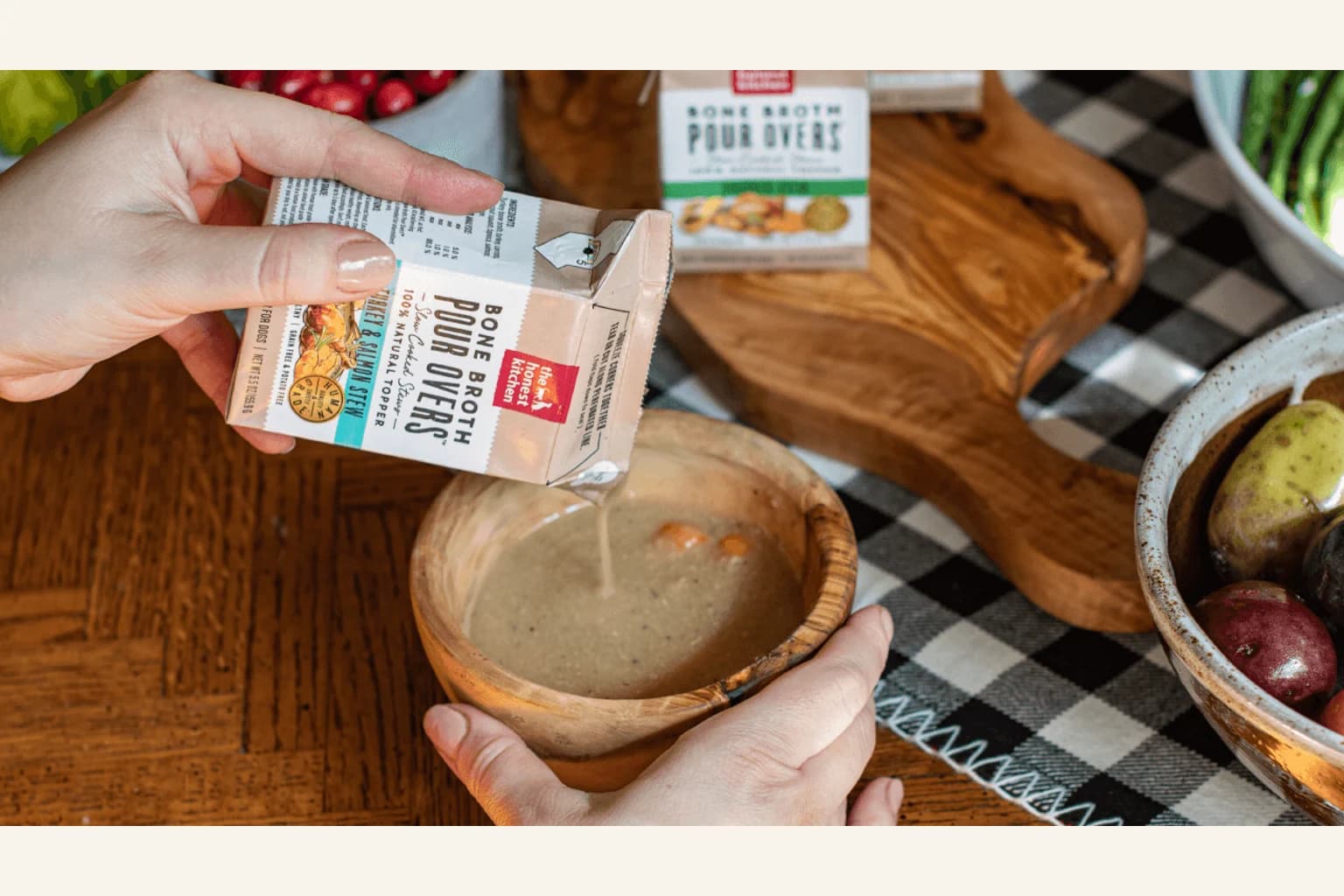
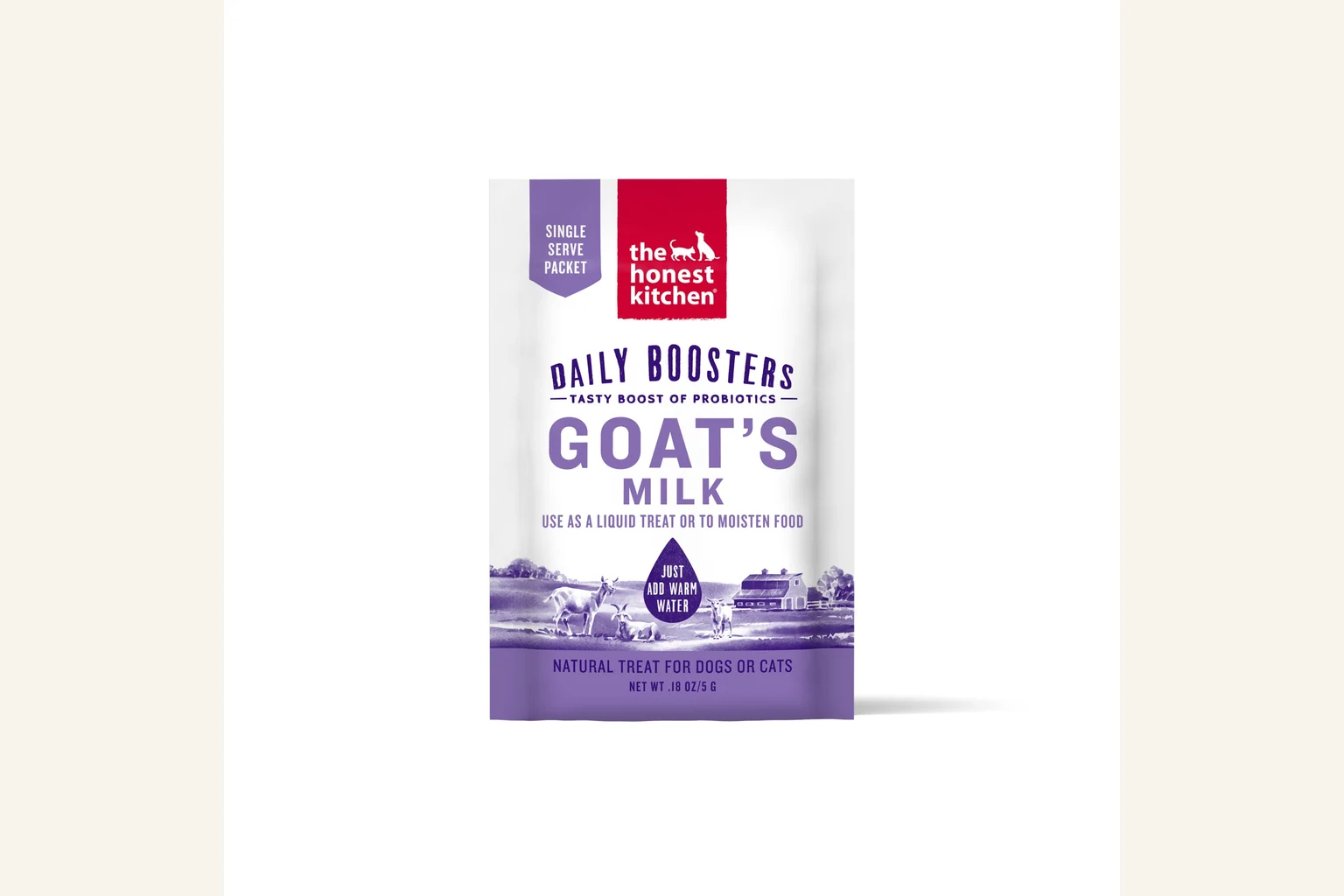
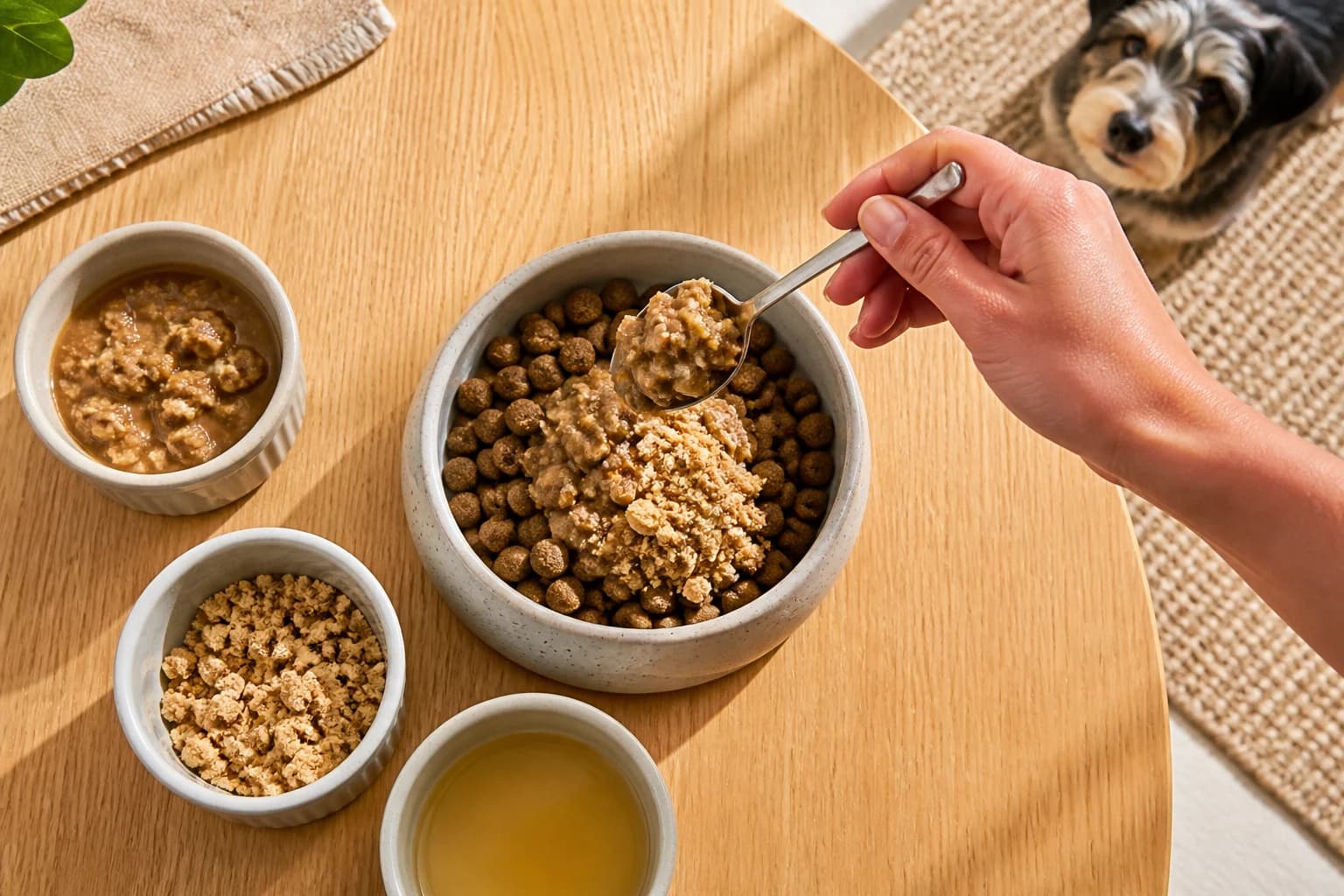
A topper is a measured addition to the dog's regular food. It can make a meal smell different, change texture, carry water, introduce a protein, or provide a special serving ritual. Those are observable functions. A topper does not automatically improve digestion, immune function, joints, the heart, skin, or coat. Claims beyond flavor, texture, moisture, and label facts need product-specific evidence.
The category includes products with very different nutritional roles:
- Complete-and-balanced food served in a smaller amount.
- Pourable stews or gravies labeled as toppers or snacks.
- High-meat meal boosters labeled for supplemental feeding.
- Dry pieces used for crunch.
- Broths and hydration products.
- Crumbled treats.
The bowl may look similar after any of these are added, but the label consequences are not similar. A complete food contributes balanced nutrients when used appropriately. A supplemental topper contributes calories and selected ingredients without being designed to replace the whole meal.
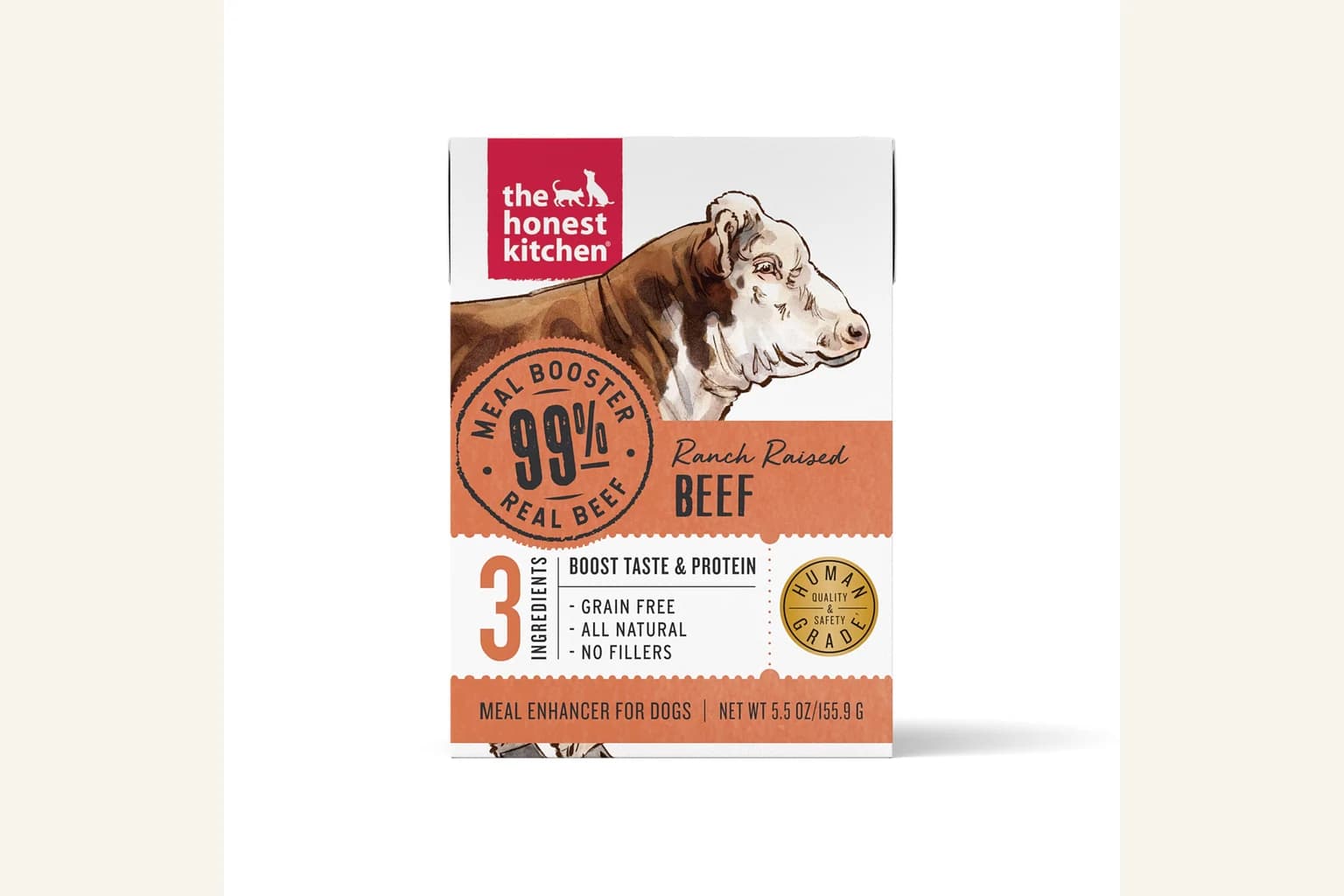
This guide uses The Honest Kitchen's varied topper range as the worked example. Pour Overs provide a gravy-style format. The 99% Chicken and 99% Beef Meal Boosters offer meat-forward supplemental options. Complete THK foods can also be used in a smaller measured amount when their labels support that use.
Choose the Goal Before the Product
The word upgrade is useful only when it names a goal. Ask what you want to change about the meal.
Add gravy-style moisture
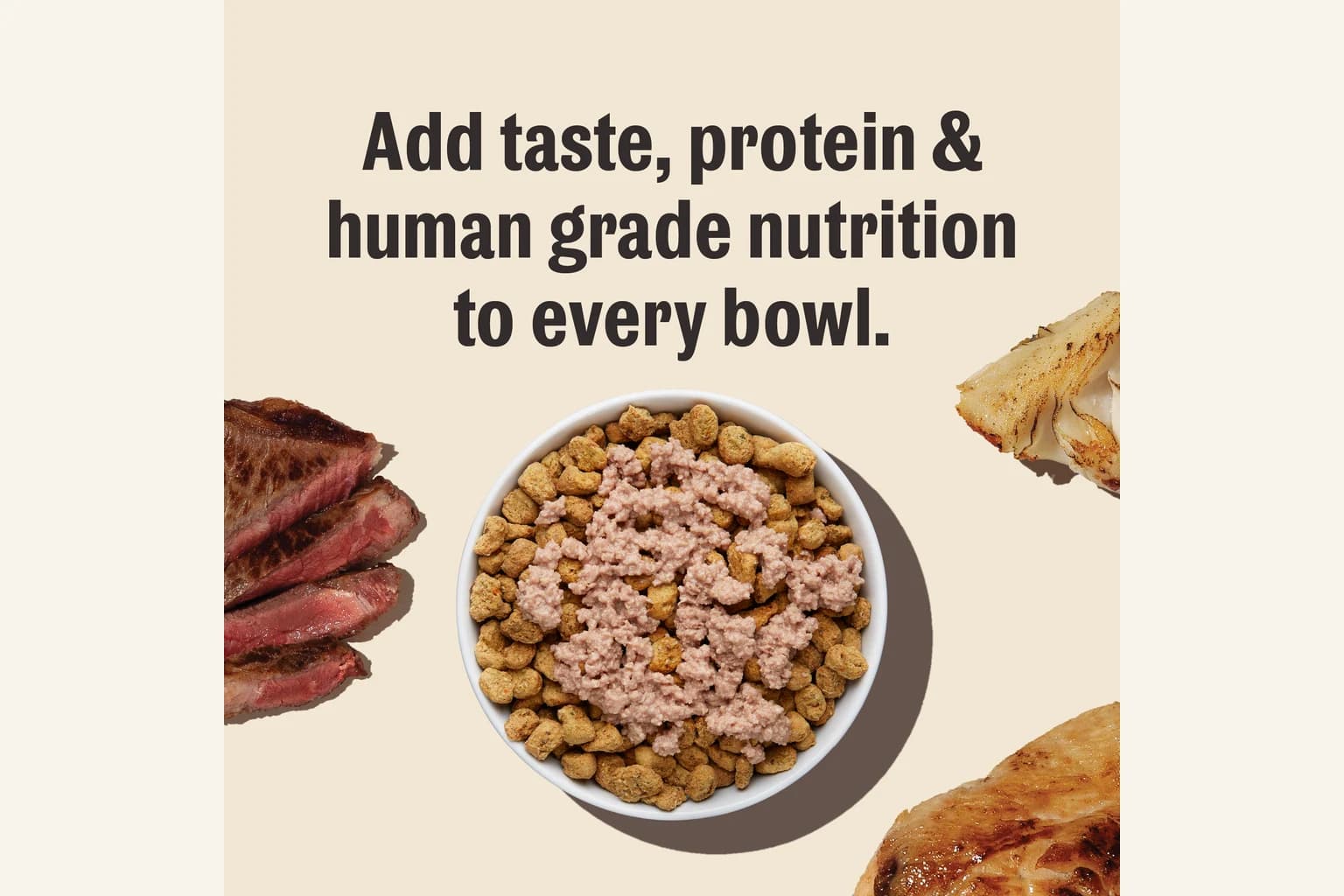
A pourable topper can coat dry pieces and add aroma plus liquid. This may be appealing when the dog enjoys a stew-like texture or the owner wants a measured moisture addition. It is not a treatment for dehydration. A dog with signs of dehydration, repeated vomiting, diarrhea, weakness, or refusal to drink needs veterinary care.
Add a concentrated meat flavor
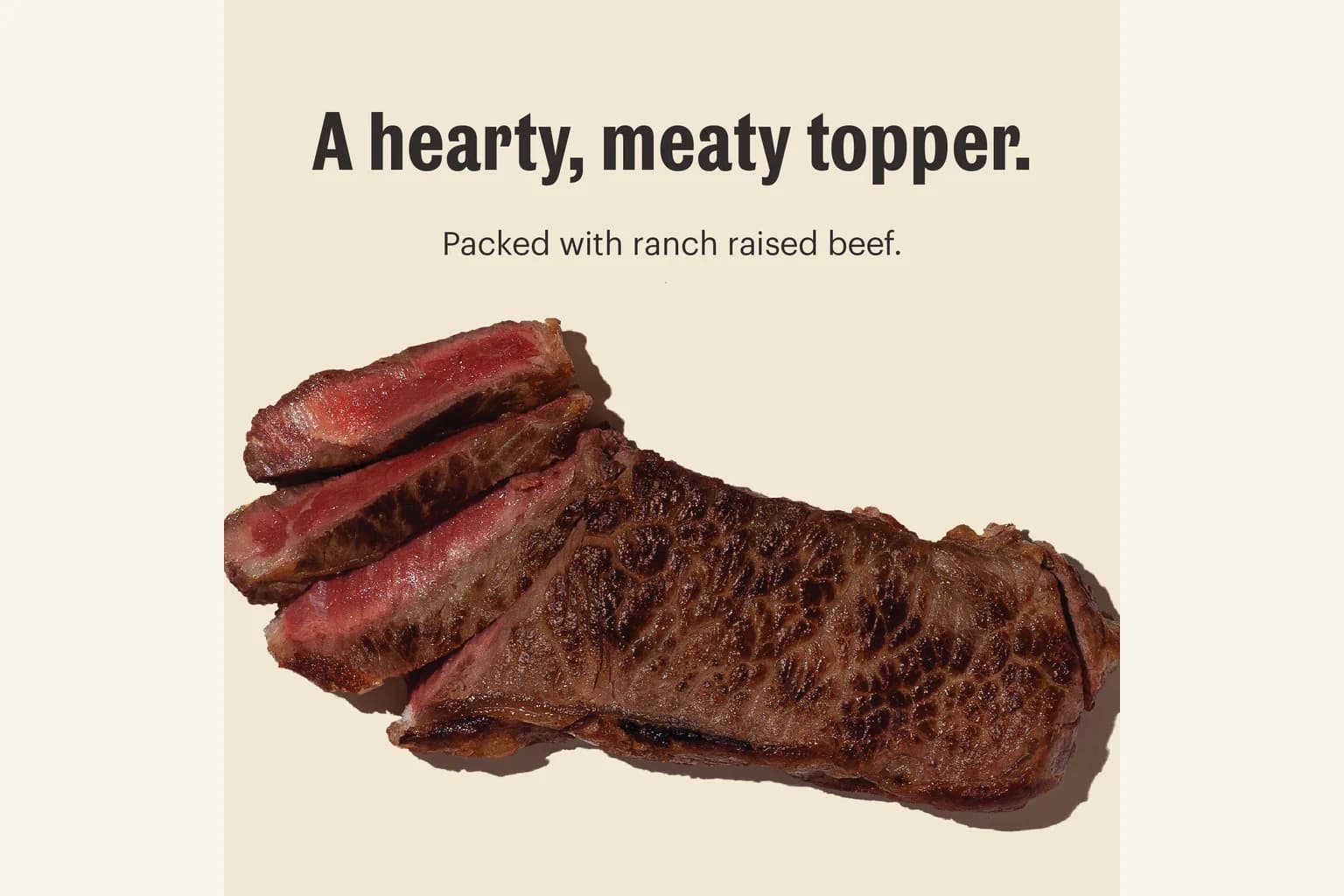
A meat-forward booster may work when a small amount of chicken or beef aroma is the goal. The amount should still be measured. Strong flavor can encourage a dog to wait for the extra, and protein choice matters for allergies and therapeutic diets.
Add crunch
A measured amount of complete dry food or another label-appropriate crunchy product can change texture. Count the calories. A handful of dry pieces can be more energy dense than it looks.
Make a familiar meal more interesting
Rotation can be positive when it is planned. Introduce one product at a time so you can observe appetite, stool, vomiting, itching, and comfort. Adding several new foods at once makes a reaction difficult to interpret.
Support training or enrichment
A compatible topper can be spread in a food toy, frozen when the label and food-safety directions allow, or divided across rewards. All of those uses draw from the same daily calorie total.
| Goal | Format to consider | Main label question | Main safety boundary |
|---|---|---|---|
| Gravy and moisture | Pourable topper or compatible wet complete food | Is it complete or supplemental, and how is it stored after opening? | Moisture is not medical treatment |
| Concentrated meat flavor | Measured meal booster | Which proteins and other ingredients are listed? | Avoid known triggers and prescription-diet conflicts |
| Crunch | Measured complete dry food used as a topper | How many calories are in the portion? | Reduce the base meal when needed |
| Enrichment | Label-compatible soft or pourable food | Can it be used and stored safely in the toy? | Count all toy food in the daily total |
| Variety | One new measured topper at a time | What is the intended feeding role? | Do not let extras displace complete nutrition |
Petful may earn a commission when you click through to The Honest Kitchen, at no extra cost to you.
Complete Food Used as a Topper vs. Supplemental Toppers
The nutritional adequacy statement is the first dividing line. The FDA's complete-and-balanced food guide explains that an adequacy statement identifies whether a food meets a recognized nutrient profile and the life stage for which it is intended.
If a product is complete and balanced for the dog's life stage, a measured smaller amount can contribute balanced nutrition alongside another appropriate complete food. The total calories still matter, and combining foods can make precise nutrient control more complicated for dogs with medical needs.
If a product says it is for intermittent or supplemental feeding, it should be treated as an extra. That label does not make it bad. It defines its job. The complete diet remains the nutritional base, and the extra occupies a limited calorie and ingredient space.
- Do not decide by appearance. A stew with visible meat and vegetables may be supplemental. A dry piece may be complete. A broth can look light but still add sodium or calories. Read the statement every time.
- A complete food and a supplemental topper may look equally wholesome. Only the current label tells you whether the product can supply balanced nutrition for a stated life stage.
Where the 10% guideline fits
The WSAVA guide to feeding treats recommends keeping treats and extras under 10% of daily calories for most dogs. The complete diet should supply at least the other 90%. Supplemental toppers belong in that discretionary pool unless a veterinarian has designed a different plan.
Complete food used as a topper is not a treat in the same nutritional sense, but its calories still count in the total. If the complete topper is added on top of the full base-food portion every day, weight gain can follow even though both foods are balanced.
How We Evaluated The Honest Kitchen Topper Formats
The picks in this guide are not ranked by a universal health score. They are organized by format and use case. For each product, the useful questions are:
- Is the item complete and balanced or supplemental?
- What proteins and other ingredients are listed?
- What texture does it add?
- What calories and serving directions appear on the current label?
- How must it be refrigerated or stored after opening?
- Does the product fit the dog's medical and calorie plan?
Product pages can change, so current package information should be checked immediately before serving. We do not substitute a collection headline for a recipe label, and we do not call a product single ingredient when its label lists processing water or agar-agar.
The Honest Kitchen Toppers to Consider
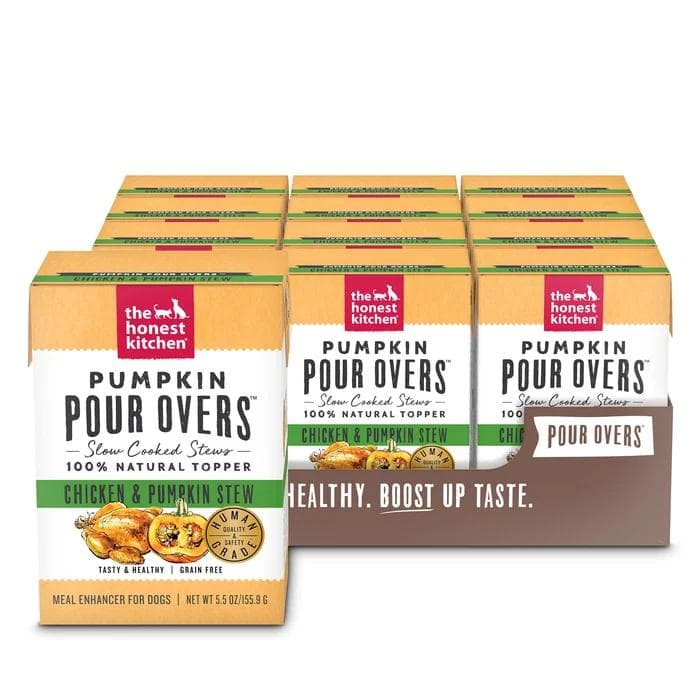
Pumpkin Pour Overs Chicken: A gravy-style choice
Pumpkin Pour Overs Chicken is presented as a topper or snack rather than a complete meal. Its pourable texture can coat dry food and introduce a stew-like experience without replacing the entire bowl. The package directions tell owners to reduce the primary food to account for the added calories.
This format may fit a dog that enjoys gravy, an owner who wants a portionable liquid-style addition, or a household using a topper occasionally for variety. Use the current label for the exact serving amount, calories, ingredients, and after-opening refrigeration.
Pumpkin in the product name should not become a promised digestive outcome. A dog with persistent diarrhea, constipation, vomiting, pain, appetite loss, or blood in the stool needs veterinary evaluation rather than repeated topper experiments.
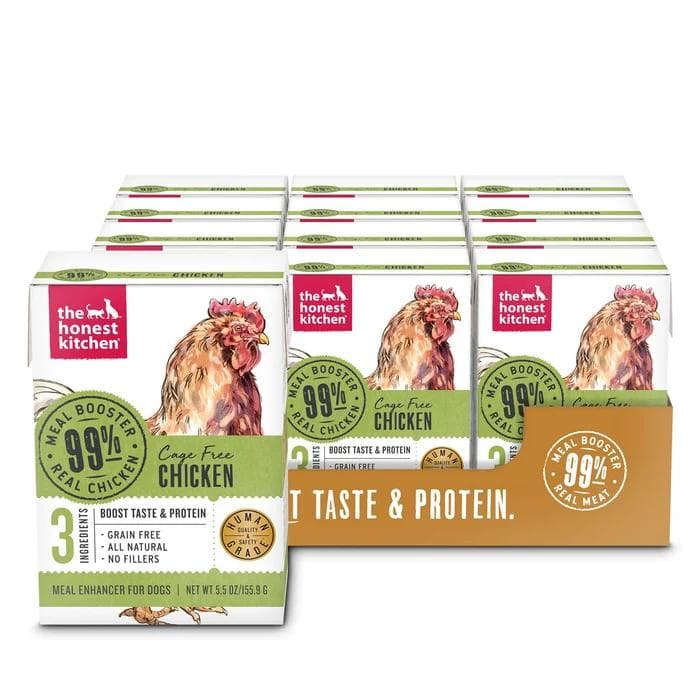
99% Chicken Meal Booster: A chicken-forward option
The 99% Chicken Meal Booster currently lists chicken, water sufficient for processing, and agar-agar. That exact label matters. The product is meat forward, but it is not literally one ingredient. It is a topper or supplemental product, so the complete base meal stays central.
Chicken is a familiar protein and a strong aroma can make a small measured amount appealing. It is not appropriate for a dog with a confirmed chicken reaction, and it may be incompatible with a diagnostic food trial or prescription diet. Ask before adding it in those situations.
Use a clean utensil, follow the current portion guidance, refrigerate after opening as directed, and discard food left out beyond safe package instructions. Do not estimate calories from the percentage in the product name.
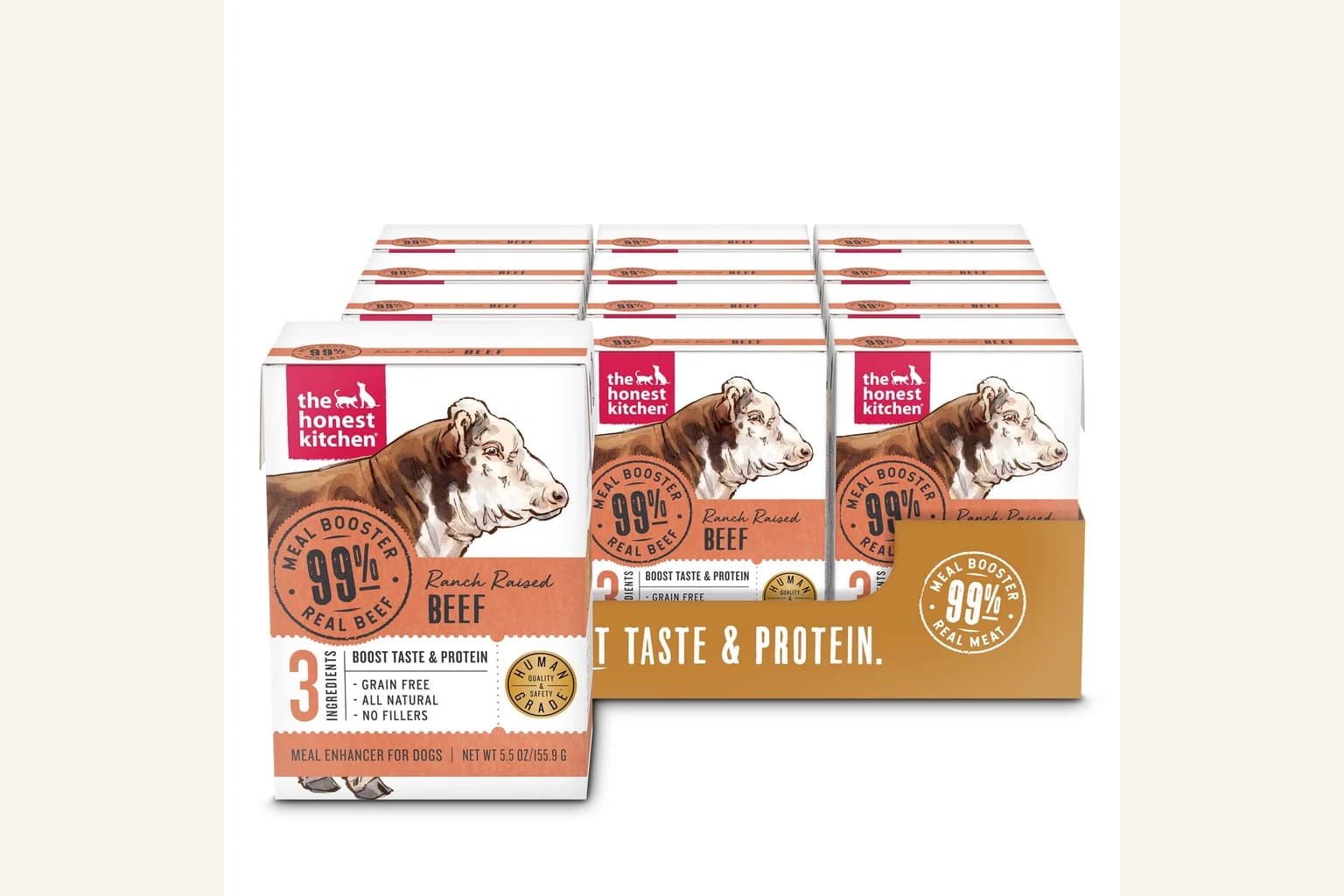
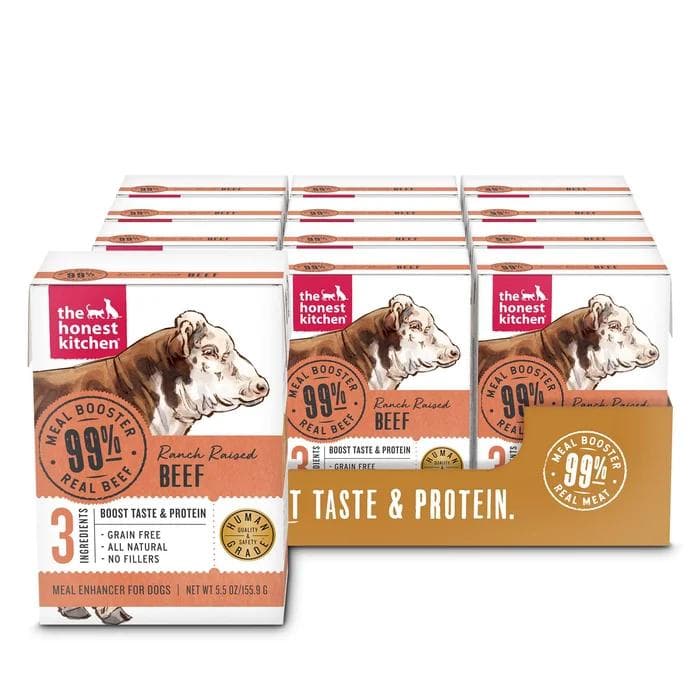
99% Beef Meal Booster: A beef-forward option
The 99% Beef Meal Booster currently lists beef, water sufficient for processing, and agar-agar. Like the chicken version, it is not a single-ingredient food and should be used according to its supplemental role.
The beef option provides a different protein choice for ordinary rotation, but it should not be used to self-diagnose a food reaction. A dog can react to beef. Dogs with pancreatitis risk, fat restrictions, kidney disease, or another medical plan need the veterinarian to evaluate the finished product and portion, not only the headline protein.
This may be a useful choice when beef is already known to fit the dog and a rich meat-forward flavor is the goal. Keep the portion measured and adjust the base food for calories.
Complete THK foods used in smaller amounts
The Honest Kitchen also presents some complete foods as suitable for meal or topper use. A measured amount of Wholemade dehydrated food can add a soft hydrated texture, while Whole Food Clusters can add crunch. Confirm the exact current recipe's adequacy and life-stage statement before using it.
This approach can simplify variety for owners already feeding within the THK range. It also makes the nutritional distinction easier: the complete recipe contributes balanced nutrition, while Pour Overs and Meal Boosters remain extras. Petful's whole food dog food guide explains the format and label differences in more depth, and our The Honest Kitchen Spotlight follows dehydrated food in a real household.
| Format | Example | Label role | Texture goal | Verify before serving |
|---|---|---|---|---|
| Pourable topper | Pumpkin Pour Overs Chicken | Topper or snack | Gravy and moisture | Current ingredients, calories, portion, refrigeration |
| Chicken meal booster | 99% Chicken | Supplemental topper | Concentrated chicken flavor | Chicken fit, full ingredient list, calories, storage |
| Beef meal booster | 99% Beef | Supplemental topper | Concentrated beef flavor | Beef fit, full ingredient list, calories, storage |
| Complete dehydrated food | Exact Wholemade recipe | Recipe dependent, check adequacy | Soft hydrated texture | Life stage, water ratio, dry calories, leftover storage |
| Complete dry food | Exact Whole Food Clusters recipe | Recipe dependent, check adequacy | Crunch | Life stage, cup calories, measured portion |
Petful may earn a commission when you click through to The Honest Kitchen, at no extra cost to you.
The Calorie Swap Method
The practical way to add a topper is to swap calories, not stack them. This method avoids inventing a universal tablespoon recommendation:
- Confirm the dog's planned daily calories.
- Measure the calories in the topper portion from the current label.
- Identify the calories per cup, can, or gram in the base food.
- Reduce the base-food amount by roughly the added topper calories.
- Recheck body weight and body condition over time.
For example, if a topper portion contributes 40 calories, reduce the base diet by about 40 calories rather than adding it to the full day. The volume removed depends on the base food's calorie density. Do not assume that one tablespoon of every dry food has the same energy.
The 10% discretionary limit still applies when the topper is supplemental. A 400-calorie daily plan generally leaves no more than about 40 calories for all extras combined. That includes topper, training treats, dental chews, table food, and enrichment ingredients. A veterinarian may recommend less.
Count rewards alongside toppers when planning that allowance. Our single-ingredient dog treats guide covers ingredient labels, portioning, and texture choices for treats from The Honest Kitchen.
- Calculate the topper calories first, then reduce the base meal by a similar energy amount. The exact volume removed depends on the base food's calorie density.
Why small dogs need special attention
A product portion that looks modest to a person can be a large share of a small dog's day. Use a scale or measuring spoon when the label supports it. Do not round up because the bowl looks sparse after calories are adjusted. Water and a low-calorie serving presentation can increase volume without pretending calories disappeared.
Why active dogs still need measurement
High activity can increase calorie needs, but it does not make unrestricted extras nutritionally balanced. A working or sporting dog's diet should be planned around the total energy and nutrient demand. The topper can fit inside that plan without becoming the plan.
Portions, Refrigeration, and Food Safety
Wet or pourable toppers are perishable after opening. Read the package before the first serving so you know whether leftovers need refrigeration, how long they can be kept, and whether the container can be resealed. Use clean utensils rather than letting a dog lick the package and returning it to the refrigerator.
At mealtime:
- Measure the base food.
- Measure the topper separately.
- Mix only the amount the dog will eat promptly.
- Refrigerate the unused product immediately as directed.
- Discard food that has sat out too long or smells, looks, or feels changed.
- Wash the bowl and utensils.
Dry complete food used as a topper needs different storage. Keep the bag sealed and dry, preserve the lot and best-by information, and measure rather than grabbing a handful. Dehydrated food becomes perishable after water is added, so prepare an amount that fits the current refrigerator window.
Never rely on smell alone to prove safety. Some meat and fish products naturally smell strong. The package directions and time-temperature handling are the better controls.
Can Toppers Help a Picky Eater?
A compatible aroma or texture may encourage a dog to begin eating, but picky behavior has several possible causes. A healthy dog that has learned to wait for something richer is different from a dog with nausea, dental pain, gastrointestinal disease, fever, medication effects, or stress.
Do not cover a persistent appetite change with increasingly rich toppers. Call the veterinarian if reduced appetite is new, lasts, accompanies vomiting or diarrhea, causes weight loss, or occurs with pain, lethargy, drinking changes, or other illness.
For ordinary preference, use the smallest amount that works. Place a measured topper consistently rather than negotiating with multiple additions. If the dog eats only coated pieces and leaves the base food, reduce the topper and reassess the diet. The goal is a complete meal, not a bowl-sorting game.
- Warm water can sometimes increase aroma without adding calories, if the base food's manufacturer permits it. A small amount of a compatible complete wet food can change texture while contributing balanced nutrition. The best strategy depends on why the dog hesitates.
Senior Dogs and Texture Changes
Senior dogs may appreciate soft or aromatic additions, but age alone does not justify extra calories or a rich product. Dental pain, kidney disease, cognitive change, nausea, and loss of smell can alter eating. A new preference for soft food deserves a mouth and health check rather than an assumption that the dog is simply fussy.
Pourable toppers and hydrated complete foods may soften a meal. Verify sodium, phosphorus, fat, protein, and calories when a veterinarian has set medical targets. Senior status is not a single nutritional diagnosis, and a topper that fits one older dog may conflict with another's therapeutic diet.
Use body condition and muscle condition, not age stereotypes, to guide calorie decisions. An overweight senior generally needs controlled energy. A senior losing weight needs a veterinary workup before the bowl is repeatedly enriched.
Allergies, Prescription Diets, and Medical Conditions
- Dogs on prescription, elimination, kidney, pancreatitis, or calorie-restricted plans need the veterinarian to approve the exact product and portion. Even a small topper can undermine a tightly controlled diet.
Food allergy and elimination trials
Chicken and beef are distinct proteins, and a dog can react to either. The 99% name does not make a Meal Booster appropriate for a dog avoiding that protein. Diagnostic elimination trials require strict control of every edible exposure, including treats, flavored medication, chews, and toppers. Ask the treating veterinarian before adding anything.
Pancreatitis and fat restriction
Rich meat products may be unsuitable for a dog with pancreatitis history or prescribed fat restriction. The headline ingredient is not enough to assess the finished product. The veterinarian needs the current guaranteed analysis, calorie content, and serving amount.
Kidney and heart disease
Kidney and heart plans can involve protein, phosphorus, sodium, calorie, or fluid considerations. Broth, gravy, and meat boosters should not be assumed safe because they add moisture. Therapeutic balance matters.
Weight loss
Weight-loss plans often have little discretionary calorie room. A measured low-calorie texture change may be possible, but stacking topper on the full base ration defeats the energy target. Use the calorie swap method and veterinary guidance.
Gastrointestinal disease
New ingredients can change stool or trigger signs in a sensitive dog. Introduce one product at a time in a small amount. Stop for significant vomiting, diarrhea, pain, lethargy, or appetite loss and contact the veterinarian.
Petful's guide to choosing dog food provides broader label context. Our healthy dog food guide explains why a finished diet is evaluated as a whole rather than by one attractive ingredient.
How to Introduce a New Topper
Start with a small measured amount. Keep the base food and other extras stable for several days so you can observe the response. If the dog tolerates and enjoys it, move toward the intended portion while adjusting base-food calories.
A simple sequence is:
- Day 1: Offer a taste separately or on a small edge of the meal.
- Days 2 to 3: Mix a small measured amount into part of the bowl.
- Days 4 onward: Use the intended measured portion if stool, appetite, and comfort remain normal.
This is not a mandatory timeline. Sensitive dogs may need longer. A topper does not need to become daily. Occasional planned use may meet the goal while preserving a stable diet.
When using several products in rotation, introduce each separately before alternating. Label the refrigerator container with the opening date. Make sure everyone in the home knows the portion so the dog does not receive multiple full servings.
Pros and Tradeoffs of Dog Food Toppers
Potential advantages include:
- More texture and aroma options.
- A measured way to add moisture.
- Easier enrichment and food-toy use with compatible products.
- Protein and format variety.
- A bridge when transitioning between compatible foods.
Tradeoffs include:
- Extra calories and potential weight gain.
- Diet imbalance when supplemental products crowd out complete food.
- More refrigeration, measuring, and bowl cleanup.
- Increased cost per meal.
- Possible protein or ingredient conflicts.
- Learned meal refusal when the dog waits for richer additions.
Petful may earn a commission when you click through to The Honest Kitchen, at no extra cost to you.
The right topper makes a defined task easier. It should not create a more complicated feeding system than the household can follow consistently.
For homes with cats as well as dogs, use our separate cat food toppers guide to compare options intended for a cat’s bowl. Check the species-specific label instead of assuming the same product or serving fits both pets.
A Before-You-Buy Checklist
Before choosing a product, confirm:
- The exact label role: complete food, topper, snack, treat, or supplemental product.
- The full ingredient list, not only the front-label percentage.
- The protein fits known restrictions.
- The current calories fit the daily plan.
- The package serving size can be measured accurately.
- Refrigeration and use-after-opening directions fit the household.
- The format matches the goal.
- A veterinarian has approved it when a medical diet is involved.
Then buy a modest amount until you know the dog accepts it. Keep the original package for lot, expiration, label, and manufacturer contact information.
A practical topper trial from day one to day fourteen
The cleanest trial begins before the package is opened. Record the dog's current food, daily portion, treats, medications, weight or body condition, appetite, stool pattern, and the reason for adding a topper. That baseline prevents a vague “seems better” impression from replacing useful observation.
On days one through three, serve a very small measured amount at one meal. Keep the base food, bowl, feeding location, and schedule stable. For a Pour Over, measure the liquid instead of pouring by eye. For a 99% meat Meal Booster, measure a repeatable portion with a clean spoon before adding it to the bowl. For a complete THK food used as a topper, calculate its calories and reduce the base diet appropriately.
On days four through seven, continue only if appetite, stool, comfort, and behavior are normal. Increase toward the planned amount gradually rather than responding to the dog's enthusiasm. The goal is the smallest amount that solves the identified purpose, not the largest amount the dog will accept.
- During the second week, check whether the topper is still doing the intended job. Did a gravy-style product make a dry meal easier to eat? Did a fish or meat crumble add enough aroma? Did a complete food add the desired texture while keeping calories controlled? If the answer is no, do not automatically layer a second and third product. Reconsider the goal.
Stop the trial and contact a veterinarian for persistent vomiting or diarrhea, facial swelling, breathing trouble, marked lethargy, pain, refusal of food, or another concerning change. A sudden appetite problem should not be managed as a product-selection exercise.
A format-by-format comparison
Gravy-style liquid topper: This format spreads over the bowl and can change aroma and texture with a small volume. The Honest Kitchen Pumpkin Pour Overs Chicken is an example. It is especially easy to overpour, so use a measuring spoon or divide the carton into planned servings according to the current label. Refrigerate after opening and follow the use window.
Moist meat topper: THK's 99% Chicken and 99% Beef Meal Boosters come ready to serve in cartons. Spoon or pour a measured amount over a complete meal, count its calories, and refrigerate the remainder according to the package directions. “99%” describes the meat content; the ingredient lists also include processing water and agar-agar.
Complete dehydrated food: A prepared complete recipe can add soft texture and aroma. Measure the dry portion before adding water, then subtract its calories from the base diet when necessary. This is also a way to test the serving experience of a complete THK food before considering a broader diet change, but the two uses should not be confused.
- Complete wet food: A spoonful of complete wet food can function as a topper while contributing complete-food calories. Cover and refrigerate the unused portion as directed. If a dog dislikes cold leftovers, warm the food only to a safe serving temperature without leaving it out for extended periods.
Dry complete food or Clusters: A few pieces of a different complete dry food can add crunch. This approach is simple to portion by weight or calories and avoids perishable leftovers, but it does not add moisture. Check piece size for small dogs and dogs with dental difficulty.
Broth or hydration product: A dog-labeled product can change aroma and liquid content. Review sodium, calories, ingredients, directions, and nutritional role. A broth is not interchangeable with plain water for a medically restricted dog and should not be credited with treating dehydration or disease.
Treat crumble: A treat can provide a strong flavor in a tiny amount, but it remains a treat. Count it within the daily extra-calorie budget. Crumbling the product does not turn it into a balanced meal component.
The complete-food calorie swap in four steps
First, find the calories per cup, ounce, piece, carton, or other unit for both the base food and topper. Second, choose the topper amount and calculate its calories. Third, calculate how much base food supplies approximately that number of calories. Fourth, remove that amount from the base portion.
For example, if the planned topper supplies 30 calories, reduce the base food by the amount that supplies about 30 calories. Do not remove “one spoonful” of base food unless you know its caloric value. The same volume can contain very different calories across foods.
This method protects against gradual weight gain and keeps the total meal closer to the established target. It is most appropriate when both foods are complete and balanced for the dog. When the topper is supplemental, also keep the total contribution of treats and extras below the agreed limit so the complete diet remains nutritionally central.
- Calorie swaps are not exact nutrient-equivalence calculations. A veterinarian may set a different method for puppies, working dogs, weight-loss plans, or medical diets. Use professional guidance when the margin for error is small.
A measuring guide for different dog sizes
Small dogs have the least room for casual extras. A tablespoon that seems trivial to a person may represent a large share of a small dog's daily calories. Begin with a teaspoon or a few weighed pieces when that fits the label, then calculate rather than guessing.
Petful may earn a commission when you click through to The Honest Kitchen, at no extra cost to you.
Medium and large dogs can accommodate more calories in absolute terms, but larger bowls create their own visual trap. A generous pour can disappear across the surface and look insignificant. Measure before spreading it. For a multi-dog home, prepare each bowl separately so the smallest dog's portion does not mirror the largest dog's.
Use the same tool each day. A marked spoon, gram scale, or pre-portioned container is more reliable than an unmarked squeeze, handful, or shake. If the product cannot be measured using the package information, request calorie and serving details from the manufacturer.
Picky eating: define the pattern before responding
A dog who occasionally waits for a preferred addition is different from a dog with a sudden loss of appetite. Ask when the change began, whether the dog eats treats, whether there is vomiting or diarrhea, whether chewing appears painful, whether medications changed, and whether another household member already fed the dog.
For a healthy dog who has learned to wait for upgrades, consistency matters. Offer the planned meal with a fixed small topper, avoid rapidly replacing it with richer options, and follow the veterinarian's guidance about meal timing. Do not keep increasing the topper whenever the dog pauses.
For a dog with a genuine texture preference, match the format. A senior dog with comfortable but reduced chewing ability may respond to a soft prepared food or gravy-style product. A dog who enjoys crunch may prefer a small amount of Clusters. Texture fit is more actionable than calling a product universally “best.”
- For a dog who appears unwell, stop experimenting. Appetite is a clinical sign, and masking it can delay care.
Senior-dog use without overpromising
Toppers can make a familiar meal smell stronger or feel softer, which may help some older dogs engage with the bowl. They do not treat cognitive decline, dental disease, kidney disease, arthritis, or age-related weight loss. Those conditions require veterinary evaluation.
Check whether the dog can chew the topper comfortably and whether the added nutrient profile fits existing disease management. Broths and gravy-style products require review for sodium and other restricted nutrients when relevant. Meat-forward boosters may not fit every protein, phosphorus, or fat target. A complete wet or hydrated food may be easier to serve, but its recipe still needs approval when a medical plan is in place.
Monitor an older dog's weight more frequently. Small unplanned changes can matter, and an appealing topper may either add calories or reveal that the base diet is being left behind. Record how much of the entire bowl is consumed, not just whether the topper disappears.
Puppies and growing dogs
Growth is not the time to assume that any wholesome-looking food can share a large part of the bowl. The primary diet should carry an adequacy statement suitable for the puppy's growth needs, with special attention to large-size dog growth where applicable.
If a complete food is used as a topper, confirm that its life-stage designation fits the puppy. If a supplemental topper or treat is used, keep the amount small and account for it within the extra-calorie plan. Excess calories can accelerate growth and affect body condition even when the ingredients seem appealing.
Training often creates the largest source of extras for puppies. Reserve part of the complete daily food for rewards, or break topper pieces into very small portions. Every repetition does not need a full-size treat.
Working and highly active dogs
Active dogs may need more calories than sedentary pets, but that does not make portions unlimited. Performance timing, gastrointestinal comfort, hydration, and the nutritional density of the complete diet matter. A topper can add palatability or serving variety without being the primary performance nutrition strategy.
Avoid introducing an unfamiliar rich product immediately before a long run, competition, or travel day. Test it during ordinary training when the dog's response can be observed. For endurance, working, pregnant, nursing, or otherwise high-demand dogs, build the feeding plan with a veterinarian familiar with the dog's workload.
Allergies and elimination trials
An ingredient list helps identify a known protein or component, but a “limited ingredient” or 99% meat label does not diagnose an allergy. True food-allergy evaluation usually requires a veterinarian-directed elimination trial with strict control over treats, flavored medications, supplements, and scavenged food.
During that trial, an unapproved topper can invalidate weeks of work. Even a product whose front label names a permitted protein should be checked for every ingredient, current manufacturing information, and cross-contact considerations. Do not use a new THK booster until the veterinarian confirms it fits the protocol.
Outside a formal trial, introduce one new topper at a time. If itching or gastrointestinal signs occur, stop, record the product and amount, and contact the veterinarian. The reaction is information to investigate, not proof that a brand or processing method is universally unsuitable.
Pancreatitis, kidney disease, heart disease, and diabetes
Dogs with pancreatitis or prescribed fat restriction need more than an ingredient impression. Obtain the relevant nutrient information for the exact product and compare it with the veterinarian's target. A meat-forward topper can be appealing yet inappropriate for an individual fat limit.
Kidney and some urinary plans can require attention to phosphorus, protein, sodium, moisture, and other factors. Heart disease may involve sodium targets. Diabetes management can depend on calorie consistency, meal timing, carbohydrate profile, medications, and the complete diet. No topper format is automatically suitable across those conditions.
The positive option is collaboration: bring the current package, product page, calorie statement, ingredient list, and detailed nutrient information to the veterinary team. If the selected THK product fits the plan, use the prescribed portion consistently. If it does not, choose another role or format rather than forcing the product into the bowl.
Weight-loss plans
A topper can make a calorie-controlled meal more enjoyable, but only if its calories are included. Liquid volume and visible bowl coverage do not indicate calorie content. A few dense pieces may supply more energy than a larger amount of a lower-calorie product.
Use a complete-food swap when appropriate or take supplemental topper calories from the daily treat allowance. Weigh the dog at planned intervals and use a body-condition system with the veterinarian. If weight loss stalls, audit every extra, including chews, dental products, food used for medication, and bites supplied by other people.
Plain warm water can change aroma and texture without adding calories and may be a useful first test for a dog who likes a moister meal. It is not a substitute for veterinary care when appetite or hydration is abnormal.
Multi-dog household controls
Assign each dog a measured base portion and topper portion. Assemble bowls separately, feed with enough distance to prevent switching, and pick up leftovers. A fast eater should not finish another dog's therapeutic or calorie-controlled meal.
Use labeled daily containers when several people feed the dogs. Put the complete day's permitted topper amount in each container. Every serving comes from it. This preserves the calorie plan and makes it clear when someone else has already fed or rewarded the dog.
For food-motivated dogs, store cartons, bags, and Meal Boosters securely. A dog opening a package can consume a large calorie load and may swallow packaging. Contact a veterinarian if an unsafe amount or foreign material may have been eaten.
Food-safety details that affect product experience
Wash hands before and after handling pet food, use clean utensils, and avoid returning a used spoon to the package. Perishable Pour Overs, wet food, prepared dehydrated food, and broths should be refrigerated after opening or hydration according to current directions. Label the date if the product will be used across several meals.
Serve small portions rather than leaving a perishable topper on a grazing bowl for hours. Discard food that has sat out too long, smells abnormal, or shows package damage. Keep dry foods sealed and protected from humidity. Retain the lot code and best-by date until the product is finished.
When traveling, carry the dry or unopened product in a protected container and bring safe water and clean utensils. Do not rely on a cooler without confirming that it stays at a safe temperature.
A manufacturer-question checklist
If the label does not answer the decision, ask the manufacturer for calories in a measurable serving, the product's complete or supplemental status, the intended species and life stage, storage after opening, use window, and relevant nutrient details. For medical use, ask for the nutrient values the veterinarian requests in an appropriate calorie or dry-matter basis.
Also ask whether the formula or feeding directions recently changed. A saved product page or old review should not outrank the current package. The Honest Kitchen's official product pages are the appropriate first stop for current identity and directions, while the veterinary team interprets medical fit.
Four realistic household scenarios
The healthy adult dog bored with dry texture: Start with a measured spoonful of Pumpkin Pour Overs or a small amount of prepared complete THK food. Track calories and response. The objective is a modest texture change, not covering every piece.
The small dog receiving frequent training rewards: Use tiny crumbles from a pre-weighed daily amount, or reserve complete food for rewards. Avoid full-size portions at each repetition.
The senior dog leaving crunchy pieces: Arrange a dental and medical check. If a softer meal is appropriate, consider prepared dehydrated or wet complete food as a measured addition rather than assuming a flavor problem.
- The dog on a prescription diet: Ask the veterinarian before adding any topper. Product quality does not make a general retail topper compatible with a therapeutic nutrient target.
These examples show why “best” is a fit decision. The Honest Kitchen's format range supplies useful options, but the dog, purpose, portion, and label choose among them.
A weekly bowl audit
Once a week, look beyond whether the dog seems excited. Add the calories from every topper serving, including the spoon used for medication, the crumble added by another caregiver, and the extra portion offered after a slow meal. Compare that total with the planned daily allowance and the amount removed from the base food.
Inspect storage at the same time. Check the opened-on date, refrigerator temperature, package seal, lot code, and best-by date. Discard a perishable product that exceeded its current use window. Wash the measuring tool and confirm everyone is using the same serving unit.
Review the dog's trend: body weight, body condition, appetite for the entire bowl, stool, vomiting, itching, and energy. A topper that initially increased interest but now leads the dog to lick only the surface may no longer be helping. A topper that fits the calories but produces waste may not be economical.
- This audit keeps a positive feeding tool from drifting into an unmeasured habit. It also gives the veterinarian clear information when a health or weight question arises.
How to read marketing language on topper labels
Words such as natural, whole food, human grade, high protein, limited ingredient, and gently processed can describe real product attributes, but none determines the topper's nutritional role. Start with the intended-use statement and adequacy language. Then locate calories, ingredients, guaranteed analysis, and directions.
“High protein” does not mean suitable for kidney disease. “Limited ingredient” does not establish that a dog has an allergy or that cross-contact is impossible. “Human grade” concerns substantiated sourcing, handling, processing, and transport standards; it is not proof of medical superiority. “Grain free” is not a universal recommendation.
The Honest Kitchen can present appealing ingredient and process information while owners still make recipe-level decisions. That combination is more credible than asking one front-label phrase to carry the entire recommendation.
Managing leftovers without creating pressure to overfeed
An opened carton or prepared portion can tempt owners to serve extra merely to avoid waste. The better approach is to plan the serving count before opening. Use the package's refrigeration and use-after-opening directions, divide the product into measured portions, and label the date.
If the dog needs only a small daily amount, choose a format and package size that the household can finish safely. Freezing may be an option only when current product guidance supports it. Do not extend the refrigerator window because the product still looks normal.
Waste is a purchasing signal. It may mean a smaller package, dry booster, complete dry food, or fresh single-meal preparation fits better than a larger perishable format.
The final “best topper” test
The best topper for a particular dog passes six tests. It has a clear nutritional role. Its ingredients and nutrient profile fit the dog. Its portion can be measured. Its calories fit the daily plan. Its storage and handling fit the household. It accomplishes the chosen texture, flavor, moisture, or enrichment goal with the smallest useful amount.
THK's Pumpkin Pour Overs and 99% Meal Boosters are strong examples of distinct topper formats, while the brand's complete dehydrated, wet, and Cluster foods can serve in measured smaller amounts when their labels and calories fit. The winner is not one product for every bowl. It is the product-role match the owner can sustain responsibly.
A two-minute check before each meal
Confirm the correct dog's bowl, measure the base food, measure the topper, and make the planned calorie swap. Check that a perishable product is within its refrigerated window and that a dry product remained sealed and clean. Serve only the amount intended for that meal.
Afterward, record how much of the full bowl was eaten. A dog licking off the topper and leaving the complete food has not completed the meal, even if the bowl looks disturbed. Pick up perishable leftovers and wash the bowl.
This short routine is especially valuable when toppers are used every day. It prevents portion creep and supplies evidence about whether the format is improving the meal or only moving calories from one package to another. A compatible topper can be used regularly, including at daily meals, if its measured calories fit the feeding plan and the dog tolerates it. Daily use does not mean an unlimited portion or a new product every day. Keep a complete-and-balanced food as the base, count other treats in the same allowance, and follow the exact product’s storage directions. Dogs on prescribed or calorie-restricted diets need the veterinarian’s product and portion guidance.
When variety is the goal
Variety can mean rotating among small measured formats, but it should remain planned. Introduce each new product separately and avoid presenting several unfamiliar ingredients in one bowl. Keep the complete base diet stable enough to evaluate tolerance.
The Honest Kitchen lineup supports variety through gravy-style Pour Overs, meat-forward Meal Boosters, complete dehydrated foods, wet options, and Clusters. Owners can change texture while keeping each product's role clear. Rotation is not required for health, and more variety is not automatically better.
For a dog with a sensitive stomach, diagnosed food response, or prescription plan, consistency may matter more than novelty. Ask the veterinarian before rotating. For a healthy dog, record products and portions so any later reaction can be traced.
What a good product page should tell you
A useful product page names the exact recipe, species, ingredients, calories, guaranteed analysis, nutritional role, serving directions, and storage requirements. The package remains the final reference in the home, but the official THK page can help owners compare formats before purchase.
If a product is described as a topper, do not infer that it is complete. If a complete food is pictured over another meal, do not infer that unlimited amounts can be added. Product photography illustrates use; the label controls nutrition and portion decisions.
Frequently Asked Questions
Some complete dog foods can be served in smaller measured amounts as toppers, but many Pour Overs, Meal Boosters, broths, treats, and snacks are supplemental. Check the exact nutritional adequacy or feeding statement.
Use the current product directions, package calories, and the dog's daily calorie plan. Start small, count the added energy, and reduce the base food when needed rather than relying on a universal spoonful.
A compatible aroma or texture may increase interest, but persistent or new appetite loss can signal illness or pain. Use the smallest measured amount that works and seek veterinary care for concerning changes.
Usually yes when the topper contributes meaningful calories. Calculate the topper calories and remove a similar energy amount from the base food so the daily total stays on plan.
Only when the exact ingredients and portion fit the veterinarian's plan. Toppers can disrupt elimination trials, therapeutic nutrient targets, pancreatitis restrictions, kidney diets, and weight-loss programs.
Sources
BVMS, MRCVS
Dr. Pippa Elliott, BVMS, MRCVS, is a veterinarian with nearly 30 years of experience in companion animal practice. Dr. Elliott earned her Bachelor of Veterinary Medicine and Surgery from the University of Glasgow. She was also designated a Member of the Royal College of Veterinary Surgeons. Married with 2 grown-up kids, Dr. Elliott has a naughty Puggle named Poggle, 3 cats and a bearded dragon.
Sign up for expert-backed reviews and safety alerts all in one place.


A Final Word (Disclaimer)
At Petful, our review integrity is paramount; we never exchange special treatment in our reviews for monetary or material rewards.
Nonetheless, when our readers click through to online merchants (including Chewy or Amazon), we receive a referral commission. This supports the running of our free blog, and we appreciate your backing.