Dehydrated Dog Treats: Benefits and the Best Picks for Your Dog
Compare The Honest Kitchen dehydrated fish treats by ingredient, texture, and size, with practical guidance on portions, supervision, and safe storage.

BVMS, MRCVS
Petful is reader supported. As an affiliate of platforms like Amazon and Chewy, we may earn a commission when you buy through links on this page. There is no extra cost to you.
This article is sponsored by The Honest Kitchen. Petful maintains editorial control and uses current product information plus independent pet-nutrition guidance.
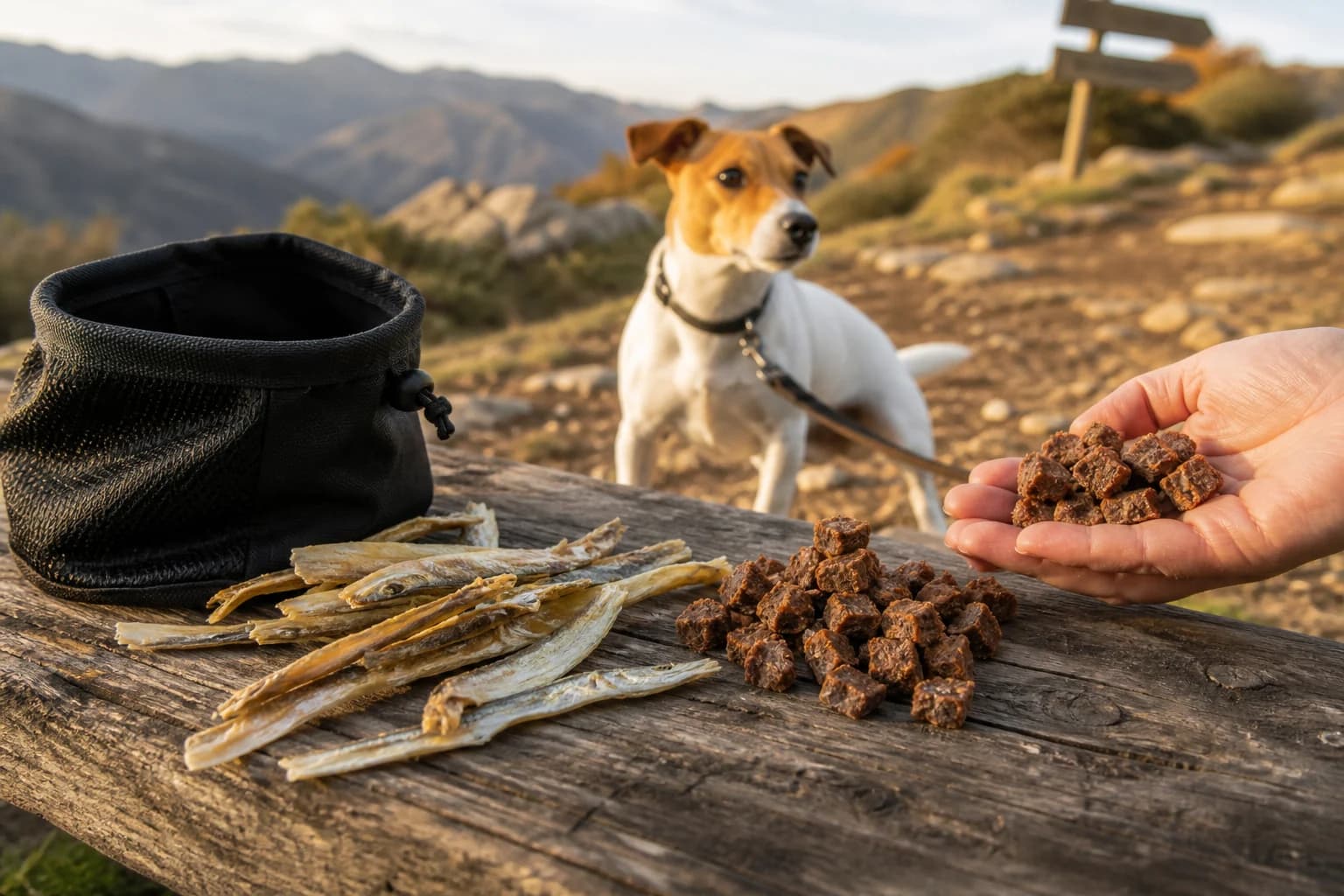
Dehydrated dog treats can offer a short ingredient list, shelf-stable convenience, and textures ranging from breakable filets to longer-lasting fish-skin chews. Those practical benefits make the category appealing, but dehydration alone does not prove that a treat is healthier, more digestible, safer for allergies, or able to clean teeth. A good pick is one whose ingredient, calories, size, hardness, and feeding directions fit your dog.
- 1Dehydrated describes the processing method, not a guaranteed health advantage
- 2Read the exact ingredient list, guaranteed analysis, calories, and feeding statement
- 3Choose a size and texture your dog can chew safely
- 4Supervise every chew and keep all treats within the daily calorie budget

Sign up for expert-backed reviews and safety alerts all in one place.
What Dehydrated Dog Treats Are
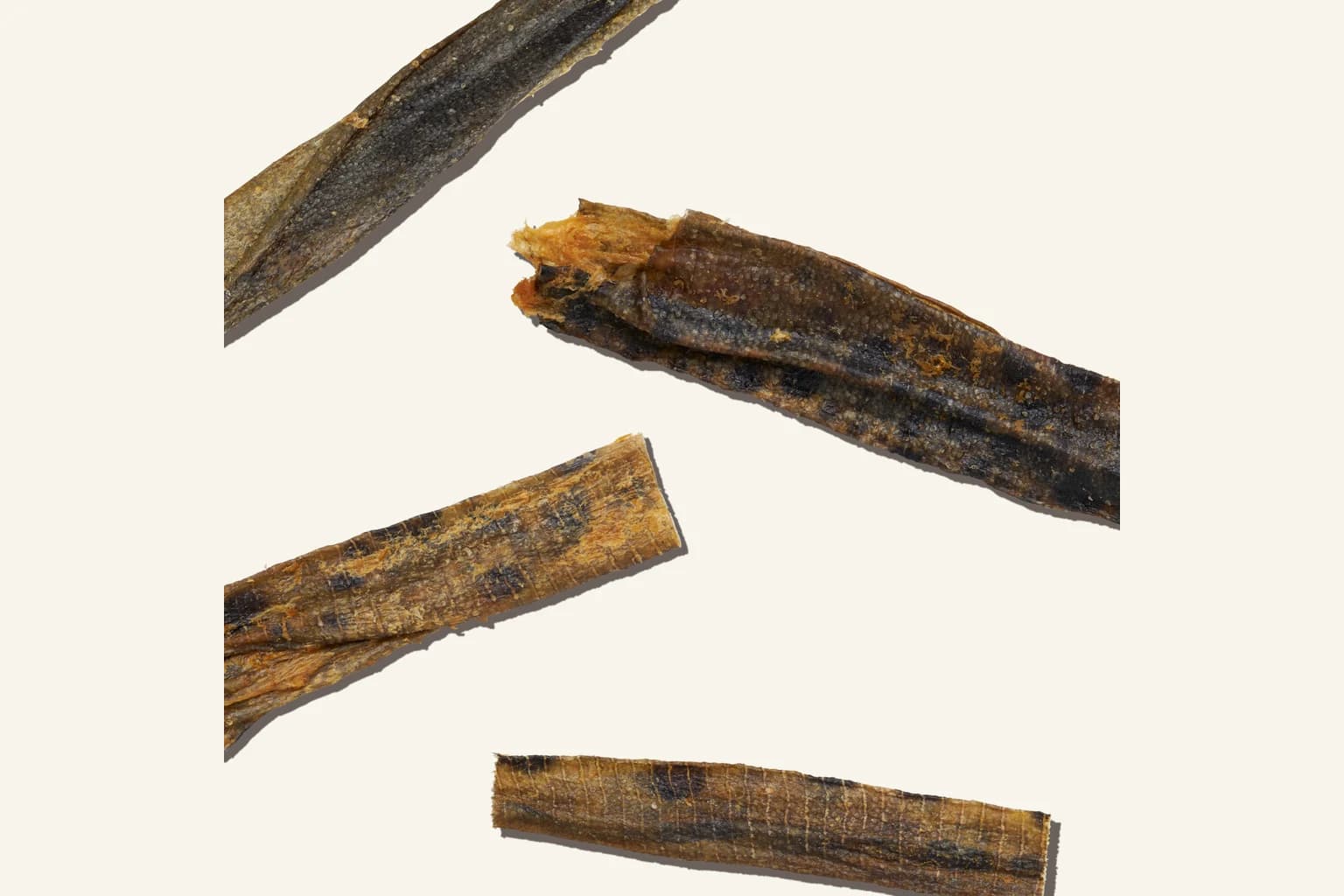
Dehydration removes moisture from an ingredient or finished product. The result is usually lighter, drier, and more shelf stable than the starting food. In the treat aisle, that can mean pieces of meat or fish, strips, filets, organ treats, small training bites, or chewy skins. The method is different from freezing a raw product, baking a biscuit, or extruding a complete dry food.
The process does not tell you everything else you need to know. Two dehydrated treats can differ substantially in ingredient quality, calories, thickness, hardness, and intended use. One may crumble into tiny training rewards. Another may behave like a substantial chew. One may contain a single fish ingredient. Another may include several meats, starches, flavorings, or binders.

Petful may earn a commission when you click through to The Honest Kitchen, at no extra cost to you.
Start with the label. The ingredient statement tells you what is included. The guaranteed analysis provides minimum or maximum nutrient figures required for the product. The calorie statement supports portion planning. The feeding statement tells you whether the item is intended only for intermittent or supplemental feeding. AAFCO's treats and chews guidance explains why treats generally should not displace complete-and-balanced food.
Dehydrated treats can use fish, chicken, liver, or sweet potato; the ingredient and the drying method are separate choices. A chicken strip, liver piece, vegetable slice, and fish-skin chew can differ in calories, firmness, and how easily the dog breaks them apart. No ingredient makes a treat universally healthiest. This guide focuses on The Honest Kitchen fish options below, with the same checks for ingredient compatibility, suitable size, supervised chewing, and the package calorie statement.
Realistic Benefits and Important Limits
The most defensible benefits are practical. A short ingredient list can be easy to screen. Dry treats can travel without the mess of an open wet product. Some filets and strips can be broken into smaller rewards. Fish skins provide a distinctive chewy texture that many dogs enjoy. A strong aroma can make a small portion feel rewarding.
Those advantages should not be stretched into promises. Dehydration is not proof that more nutrients are retained than with every other process. It does not make a treat nutritionally complete. It does not establish dental-cleaning performance, and a hard chew can create dental risk rather than prevent it. It does not make a product hypoallergenic, since a dog can react to the protein itself. It also does not guarantee better digestion.
- Convenience, label simplicity, aroma, and texture are useful reasons to consider a dehydrated treat. Dental cleaning, hypoallergenicity, improved digestion, and superior nutrient retention require separate product-specific evidence.
Think of a treat as an extra with a job. A tiny piece may reinforce training. A breakable filet may provide a high-value reward. A fish-skin chew may occupy a calm supervised moment. Define the job first, then choose the ingredient and physical form that perform it safely.
Petful may earn a commission when you click through to The Honest Kitchen, at no extra cost to you.
How to Choose Size, Texture, Ingredients, and Calories
Before the first serving, run this checklist:
- Ingredient fit: Confirm the protein and any additional ingredients against known sensitivities and diet restrictions.
- Calorie fit: Use the current package figure, not an estimate based on appearance.
- Size fit: A piece should not invite the dog to swallow it whole.
- Texture fit: Avoid a product that is painfully hard, sharp, splintering, or difficult for the dog to manage.
- Behavior fit: A determined gulper needs a different format and closer handling than a slow, careful chewer.
- Dental fit: Dogs with broken teeth, painful mouths, or prior dental work may need a softer option approved by their veterinarian.
- Storage fit: Follow package directions after opening, and keep dry products away from moisture.
The WSAVA treat guide recommends appropriate size and shape, supervision, and avoidance of items that are excessively hard or sharp. The guide also places treats below 10% of daily calories for most dogs. The other 90% or more should come from a complete-and-balanced diet unless a veterinarian has designed a different plan.
| Decision | Check before serving | Stop condition |
|---|---|---|
| Protein | Ingredient matches the dog's diet plan | Known reaction or an unapproved prescription-diet extra |
| Calories | Package calories fit the day's treat allowance | The portion would push extras above the planned budget |
| Size | Piece is too large to gulp whole | Dog repeatedly tries to swallow a large piece |
| Texture | Treat bends, breaks, or chews in a manageable way | Sharp edges, painful effort, or tooth concern |
| Supervision | An adult can watch the entire session | Treat must be left with the dog unattended |
The Honest Kitchen Dehydrated Treats to Consider
The Honest Kitchen options below are fish based and use one listed dehydrated fish ingredient apiece. Their different physical forms show why every dehydrated treat should not be handled the same way. Check current packages for calories and guaranteed analysis before serving, because those details can change.
Purely One 100% White Fish Filets
Purely One 100% White Fish Filets list dehydrated white fish as the sole ingredient and are labeled for intermittent or supplemental feeding. The filet format is visually recognizable and can be divided into smaller pieces when the package directions permit. THK specifically instructs supervision and recommends smaller pieces for smaller dogs.
This is a flexible choice for owners who want to control reward size. A portion of a filet can work as a high-value training reward or a special snack. The calorie statement still matters. Breaking a piece changes its size, not its total energy, so repeated fragments can add up to the same calories as the whole filet.
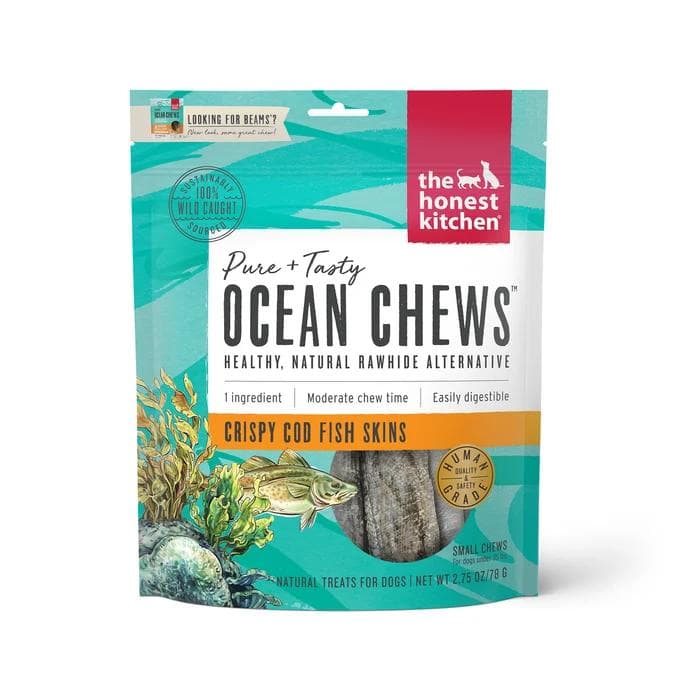
Ocean Chews Crispy Cod Fish Skins
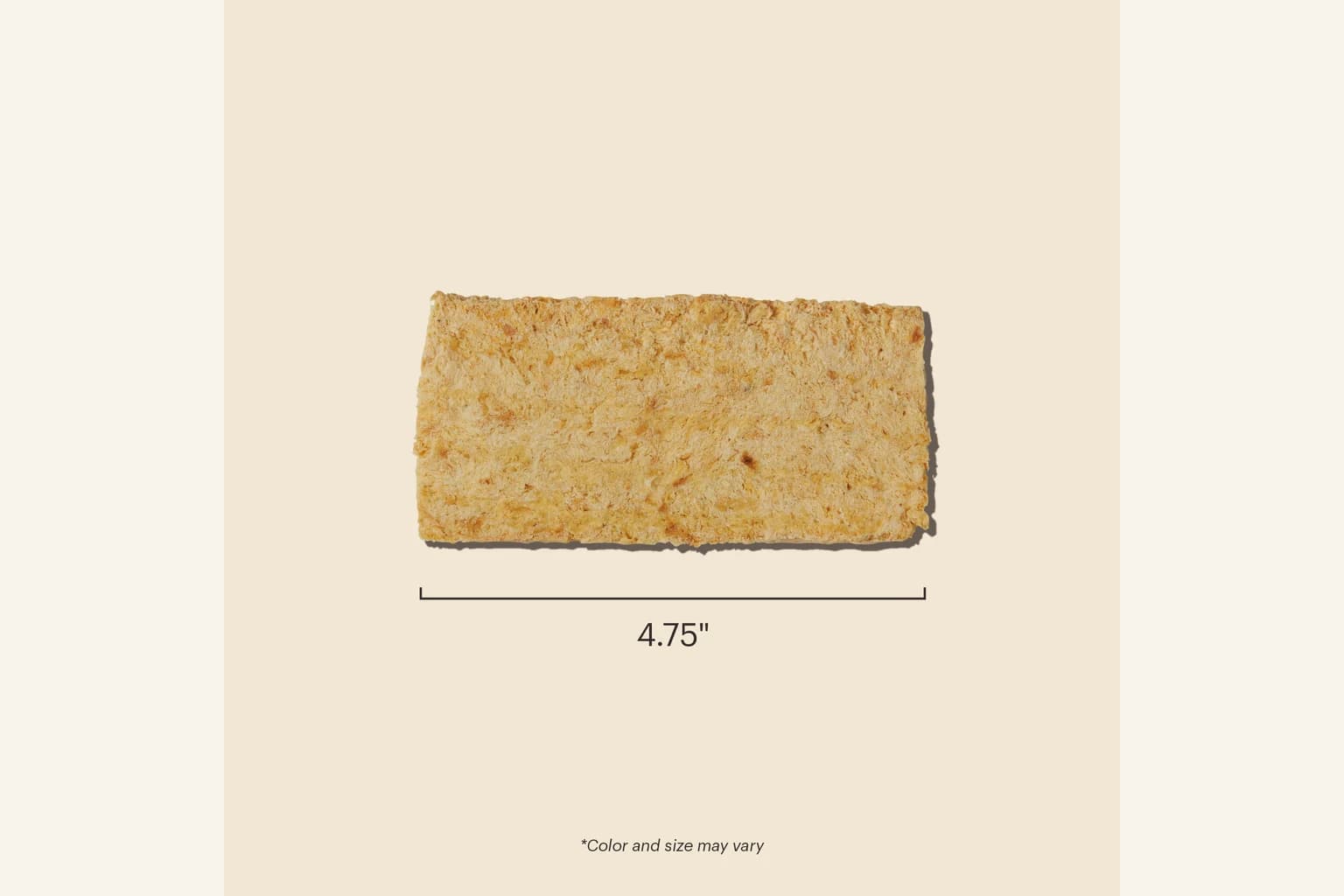
Ocean Chews Crispy Cod Fish Skins list dehydrated codfish skin as the sole ingredient. Fish skin creates a different experience from a filet: it is shaped more like a chew and may occupy the dog longer. That does not remove the need to count calories or supervise.
Choose a current package size that fits the dog rather than assuming every cod skin is interchangeable. Observe the chew as it softens and shortens. Remove an end piece if it becomes small enough to gulp. If the dog tries to swallow rather than chew, choose a different format.
Petful may earn a commission when you click through to The Honest Kitchen, at no extra cost to you.
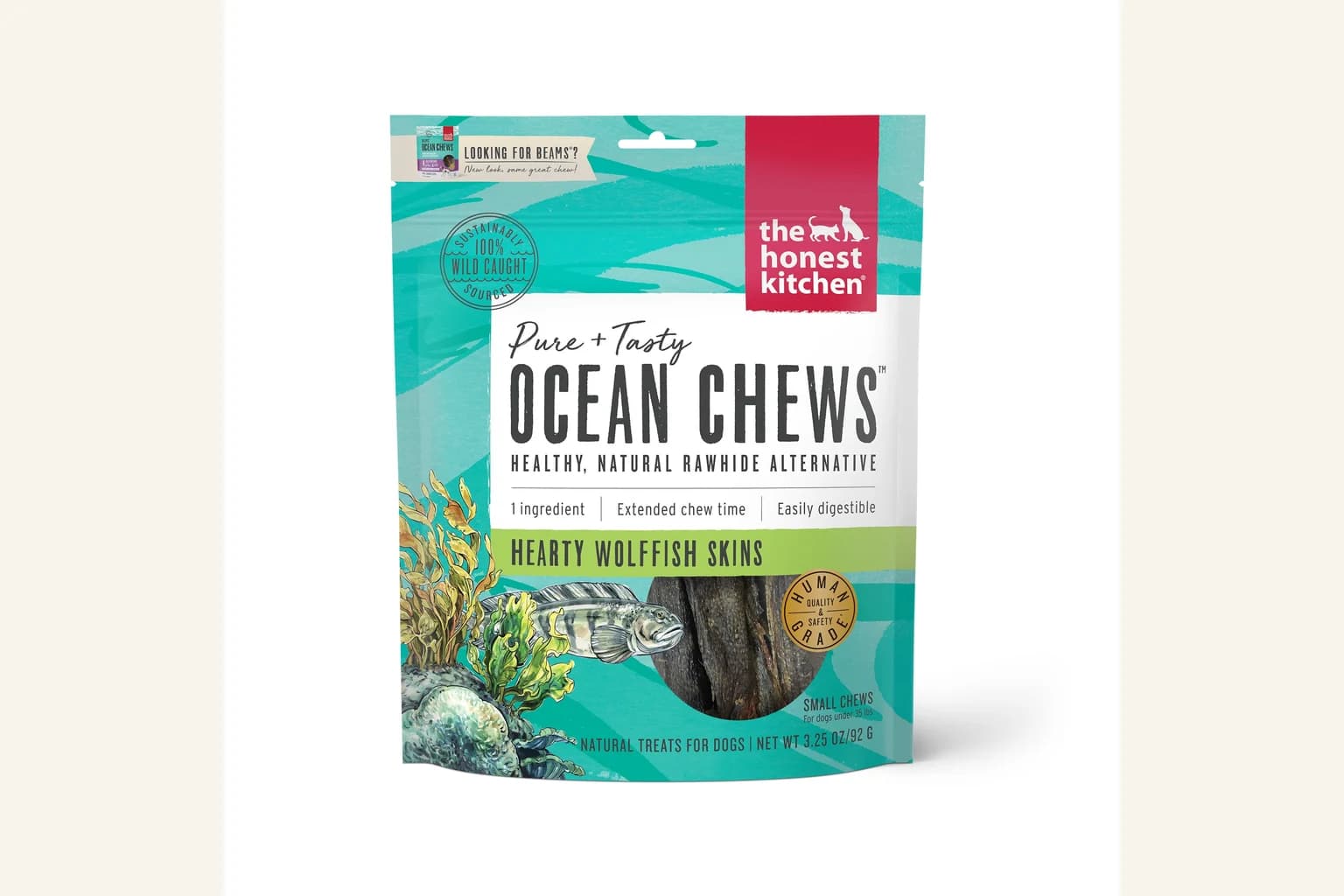
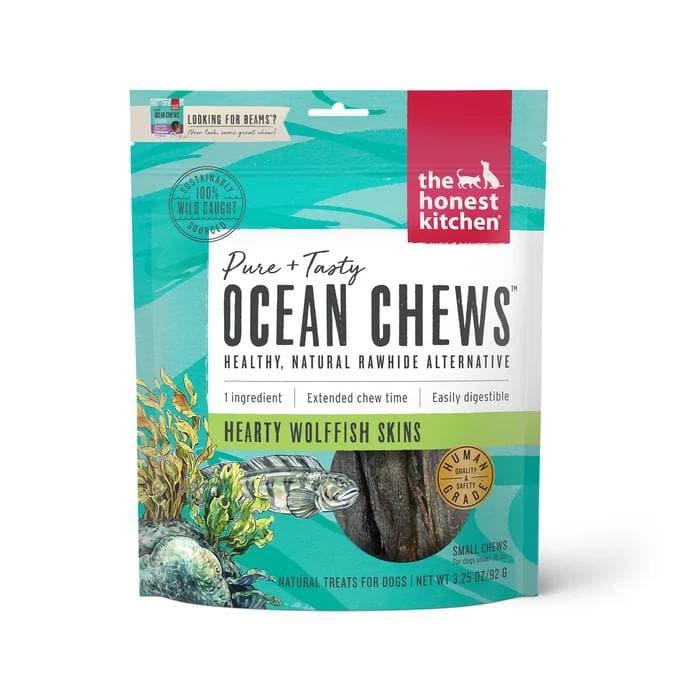
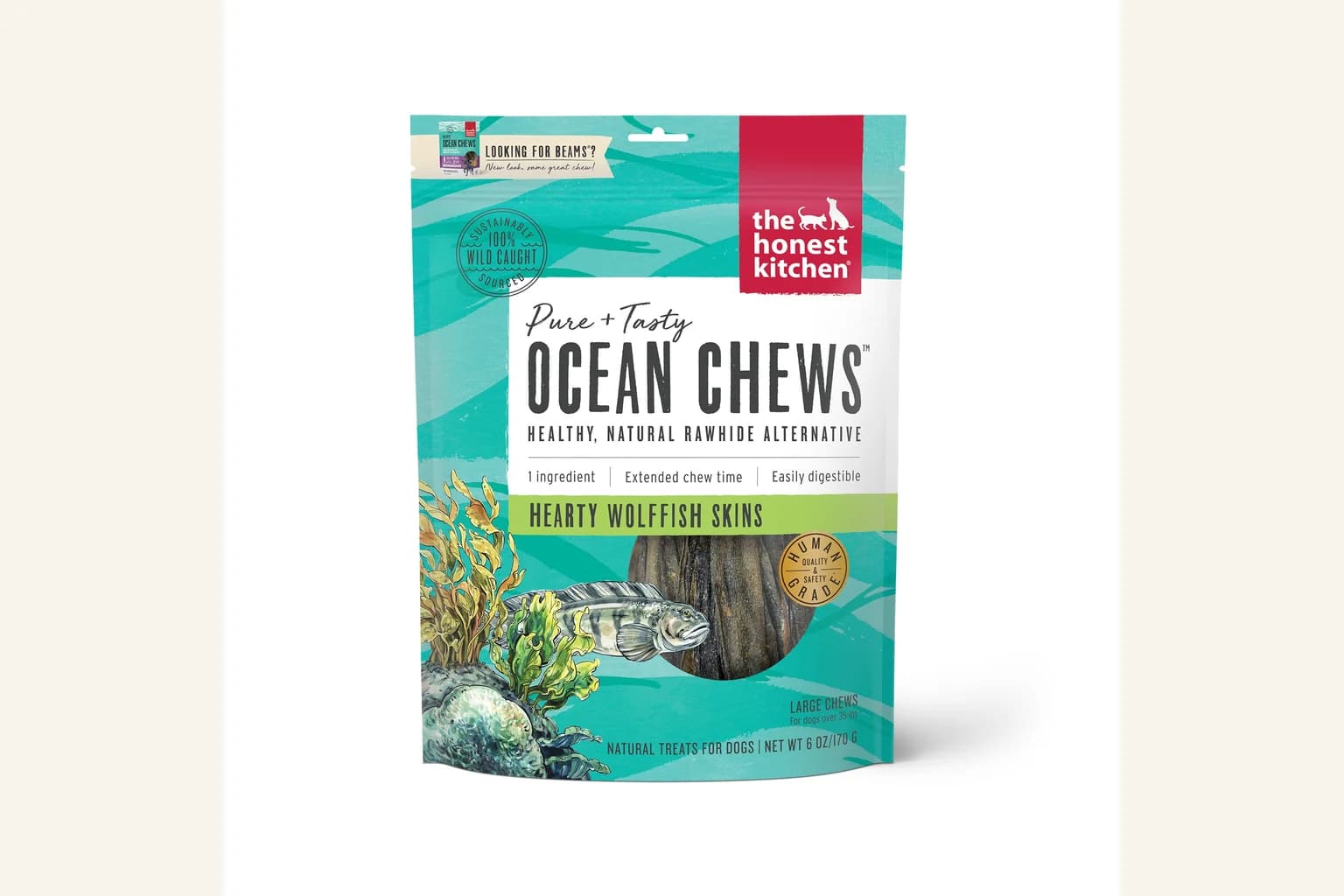
Ocean Chews Hearty Wolffish Skins
Ocean Chews Hearty Wolffish Skins list dehydrated wolffish skin as the sole ingredient. The hearty format may suit owners seeking a more substantial supervised chewing experience, but the same fit checks apply: protein, current calories, size, hardness, and the dog's behavior.
Do not generalize the cod product's calories or dimensions to wolffish. Use the exact product page and package in hand. A large dog can still gulp a poorly matched piece, and a small dog can still enjoy an appropriate portion if the label supports dividing it safely.
| Product | Sole listed ingredient | Physical format | Label role | Practical fit question |
|---|---|---|---|---|
| Purely One 100% White Fish Filets | Dehydrated white fish | Breakable filet | Intermittent or supplemental treat | Can the portion be sized safely for this dog? |
| Ocean Chews Crispy Cod Fish Skins | Dehydrated codfish skin | Crispy fish-skin chew | Intermittent or supplemental chew | Will this dog chew rather than gulp the piece? |
| Ocean Chews Hearty Wolffish Skins | Dehydrated wolffish skin | Hearty fish-skin chew | Intermittent or supplemental chew | Does the current size and hardness fit this dog? |
Supervision, Portions, and the 10% Calorie Guardrail
How many treats a dog can have is a calorie question, not a category question. Find the dog's daily calorie target, calculate the discretionary allowance, then use the package calorie statement to choose a portion. For many dogs, WSAVA's under-10-percent guideline is a practical ceiling. A veterinarian may set a lower allowance for weight loss, pancreatitis risk, kidney disease, gastrointestinal disease, or another therapeutic plan. Include meal additions in the same daily plan. Our dog food toppers guide explains how to account for supplemental toppers alongside treats and the main food.
Count every extra. Training treats, dental products, table scraps, lick-mat ingredients, chews, and toppers all draw from the same discretionary pool. A large fish chew can consume much of that pool by itself. If the treat is used for enrichment, reduce or omit other extras that day.
A simple method is:
- Confirm the dog's planned daily calories.
- Multiply by 0.10 to find the usual maximum for all extras.
- Read the current package calories per treat or measurable portion.
- Choose a piece that stays within the allowance after counting every other extra.
- Reduce the portion further if the veterinarian recommends a stricter target.
Petful may earn a commission when you click through to The Honest Kitchen, at no extra cost to you.
- A small-looking dehydrated treat can be calorie dense because much of its water has been removed. Use the current package calorie statement and count every extra served that day.
Supervision begins before the dog bites. Inspect the treat for damage or sharp edges. Offer it in a calm location. Watch the dog chew and track how the piece changes. Take it away if it becomes small enough to swallow whole. Stop if the dog coughs, gags, paws at the mouth, shows pain, or tries to guard and gulp the treat.
No chew is risk free. A product that worked well last month can behave differently when package size, moisture exposure, or the dog's chewing style changes. Treat each serving as a new safety check.
When Fish Treats or Hard Chews Are Not a Fit
Fish is not appropriate for a dog with a known fish reaction. A single fish ingredient can make the exclusion obvious, but it cannot make the protein safe. Dogs on prescription diets also need veterinarian approval before receiving any extra, including a seemingly simple treat.
Dental condition matters just as much. Dogs with cracked teeth, severe periodontal disease, painful mouths, or recent oral surgery may need a softer reward. Owners who are unsure can ask their veterinarian to evaluate the product's hardness relative to the dog. A common practical rule is that a chew should not be so hard that it cannot be dented or flexed at all, though package and veterinary guidance should lead.
Fish treats also have a distinctive aroma. Some households appreciate that it increases reward value; others may prefer to serve the treat outdoors or store it in a sealed container. Odor is not a quality defect by itself. A rancid, unusually changed, damp, or moldy smell is different and warrants discarding the product and contacting the manufacturer.
- For a closer look at label simplicity, see Petful's guide to single ingredient dog treats. For bowl add-ins rather than chews, our best dog food toppers guide separates complete foods from supplemental extras.
Buying and Storage Checklist
Before checkout, confirm the package is intact, the product name matches the intended fish source, and the best-by information is readable. Recheck calories and the feeding statement even if you have bought the product before. Formulas and directions can change, and different sizes within a line may not have the same practical use.
At home, close the package as directed and protect it from moisture, heat, and pests. Wash hands after handling pet treats and clean any surface that touches them. Do not serve a piece that has become damp, dirty, or damaged. Keep the bag where children and pets cannot help themselves.
If several people reward the dog, use a daily treat container. Place the entire day's allowed extras inside each morning. When it is empty, the treat budget is finished. That simple household system prevents each person from unknowingly serving a full daily allowance.
A five-point check before every chew session
Even a familiar product deserves a quick check before it reaches the dog. First, inspect the piece for unexpected moisture, damage, or contamination. Second, compare its size with the dog's mouth and chewing style. Third, arrange close supervision for the entire chew session. Fourth, know how many calories the portion adds to that day's extras. Fifth, remove any remaining piece once it becomes small enough to swallow whole.
The same treat may behave differently with two dogs. One dog may slowly soften a fish skin, while another may try to gulp it after a few bites. Breed and body weight alone do not predict that behavior. Observe the individual dog and choose the size and texture around what the dog actually does.
Treats can also be divided by purpose. Reserve tiny pieces for repeated training rewards, a larger supervised piece for a quiet chew session, and no extra piece simply because the dog already received the other form. The daily calorie total includes all of them.
When to stop and reassess
Stop the session if the dog tries to swallow an unsafe piece, coughs, gags, becomes frantic, guards the item, damages a tooth, or develops mouth bleeding. Seek veterinary help promptly for breathing trouble, suspected choking, repeated vomiting, abdominal pain, marked lethargy, or a missing piece that may have been swallowed.
Digestive upset after a new treat does not prove that dehydration caused the problem. The ingredient, amount, novelty, chewing behavior, contamination, or an unrelated illness may be involved. Discontinue the new item, document what and how much was given, and ask the veterinarian what follow-up is appropriate.
Frequently Asked Questions
Not automatically. Dehydration is a processing method. A treat's fit depends on its ingredient list, calories, size, hardness, feeding statement, and the individual dog.
Use the package calories and your dog's daily calorie target rather than a universal piece count. For most dogs, all treats combined should remain below 10% of daily calories unless a veterinarian directs otherwise.
They can be suitable when the protein, size, texture, and calories fit the dog and an adult supervises the entire chew. Remove small or sharp pieces and avoid the product if the dog gulps it or has fish restrictions.
Some can, but the current product size and package directions must support a safely sized portion. A filet that can be broken may be easier to adapt than a large chew, and supervision remains necessary.
Only if the exact ingredient is acceptable for that dog. Fish-based treats are not hypoallergenic, and dogs on diagnostic elimination or prescription diets need veterinary approval before receiving any commercial extra.
Sources
BVMS, MRCVS
Dr. Pippa Elliott, BVMS, MRCVS, is a veterinarian with nearly 30 years of experience in companion animal practice. Dr. Elliott earned her Bachelor of Veterinary Medicine and Surgery from the University of Glasgow. She was also designated a Member of the Royal College of Veterinary Surgeons. Married with 2 grown-up kids, Dr. Elliott has a naughty Puggle named Poggle, 3 cats and a bearded dragon.
Sign up for expert-backed reviews and safety alerts all in one place.

A Final Word (Disclaimer)
At Petful, our review integrity is paramount; we never exchange special treatment in our reviews for monetary or material rewards.
Nonetheless, when our readers click through to online merchants (including Chewy or Amazon), we receive a referral commission. This supports the running of our free blog, and we appreciate your backing.