Single Ingredient Dog Treats: Why Simple Is Better (and What to Buy)
Single ingredient dog treats make labels easier to read. Compare fish treats, check calories and texture, and choose portions that fit your dog.

BVMS, MRCVS

Petful is reader supported. As an affiliate of platforms like Amazon and Chewy, we may earn a commission when you buy through links on this page. There is no extra cost to you.
This article is sponsored by The Honest Kitchen. Petful maintains editorial control and uses current product information plus independent pet-nutrition guidance.
Single ingredient dog treats make one part of the buying decision refreshingly clear: the ingredient list tells you exactly which food your dog is getting. That simplicity is useful when you want an easy-to-read label, a familiar protein, or a treat that fits a carefully planned rotation. It does not automatically make the treat healthier, hypoallergenic, complete, or appropriate for every dog. The best choice still depends on the ingredient, calories, texture, size, and your dog's medical and dietary needs.
- 1One ingredient makes the included food easy to identify
- 2A simple label does not guarantee allergy safety or complete nutrition
- 3Confirm the package calories and supplemental-feeding statement
- 4Match the chew's size and hardness to your dog and supervise every session

Sign up for expert-backed reviews and safety alerts all in one place.
What Counts as a Single-Ingredient Dog Treat
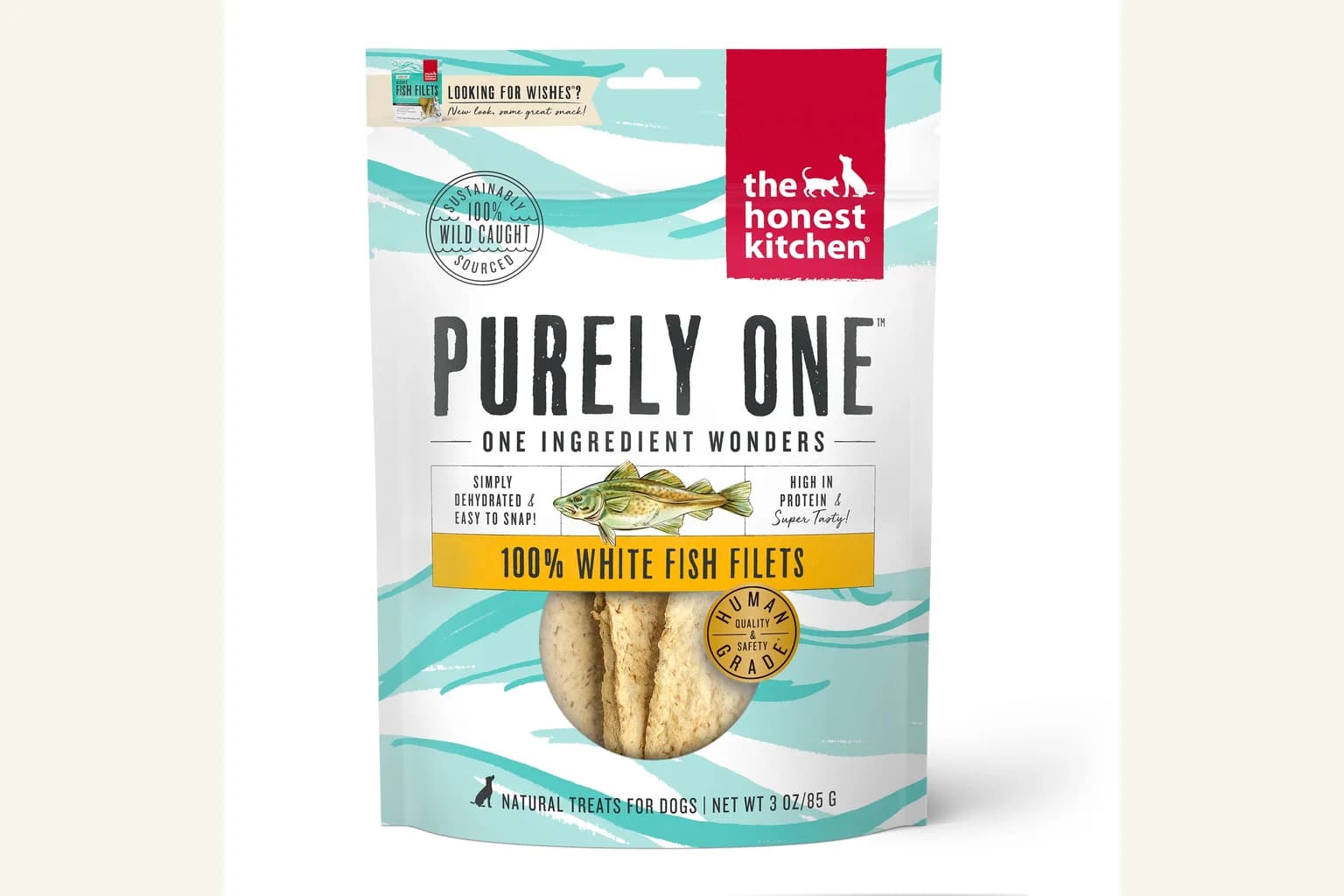
A true single-ingredient treat has one item in its ingredient statement. A package may describe a product as simple, limited ingredient, or made with a short list, but those phrases are not interchangeable with one ingredient. Turn the bag over and read the statement. If it lists fish plus salt, a binder, a preservative, or another processing ingredient, it is not a one-ingredient product even if the front of the package emphasizes the main protein.
Petful may earn a commission when you click through to The Honest Kitchen, at no extra cost to you.
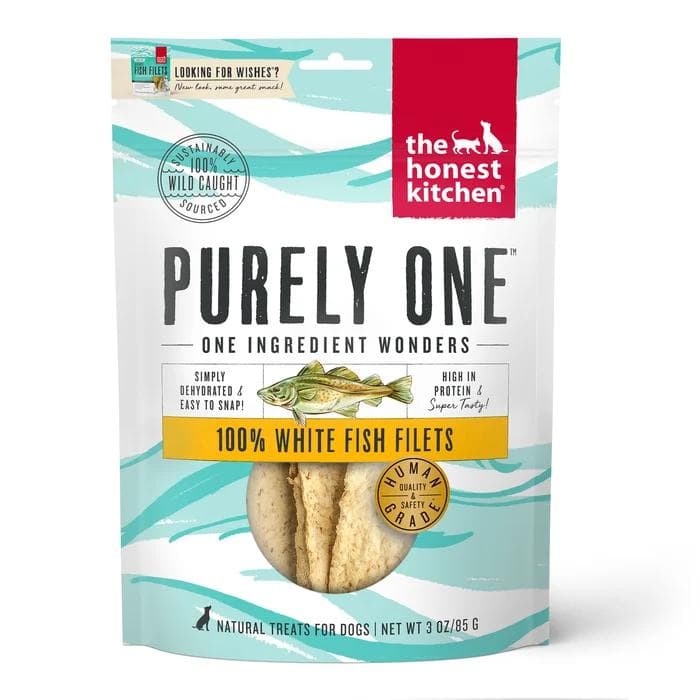
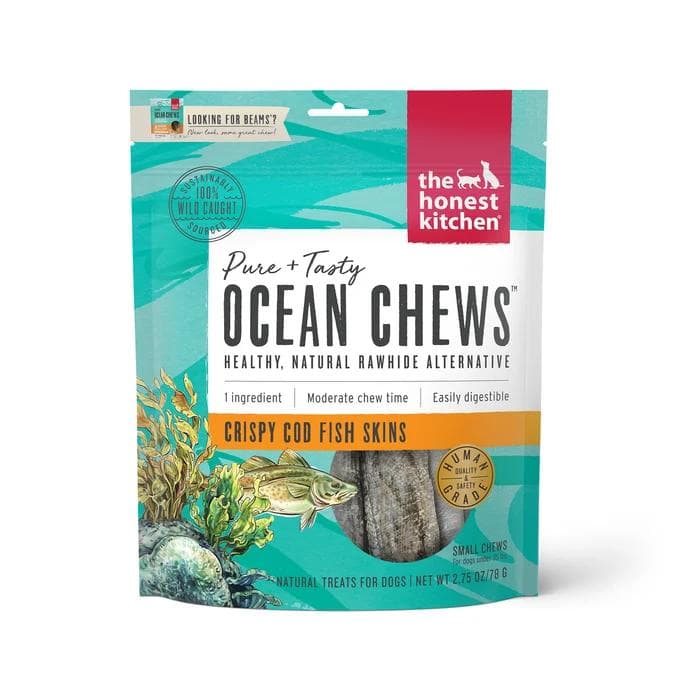
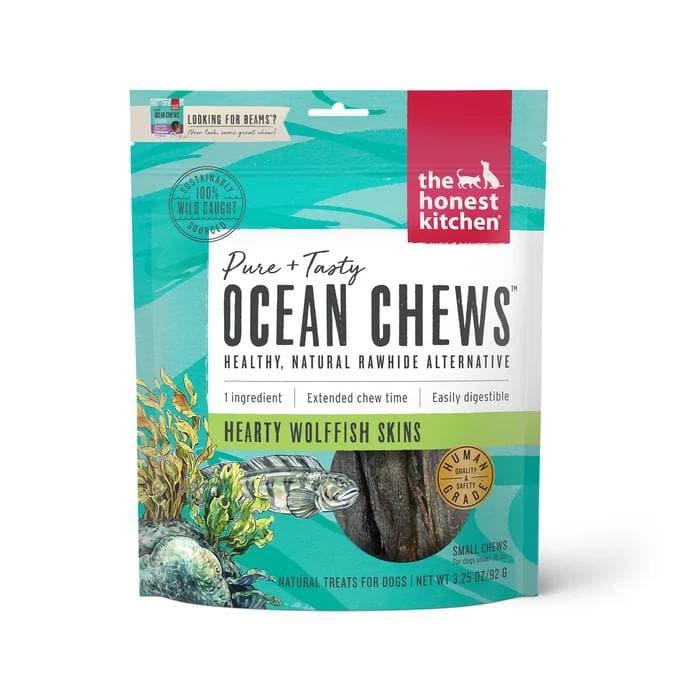
The ingredient statement helps you distinguish a single-ingredient treat from other short-list products. The Honest Kitchen's single-ingredient options include fish treats and chews. Purely One 100% White Fish Filets list dehydrated white fish as the sole ingredient. Ocean Chews Crispy Cod Fish Skins list dehydrated codfish skin. Ocean Chews Hearty Wolffish Skins list dehydrated wolffish skin. Each is a treat or chew for intermittent or supplemental feeding, not a complete meal.
That last phrase is just as important as the ingredient count. The nutritional adequacy statement tells you whether a food can supply a complete diet for a named life stage. Treats generally are not intended to do that. The AAFCO pet food label guide explains why the ingredient statement and adequacy statement answer different questions.
Why a Simpler Label Can Be Useful
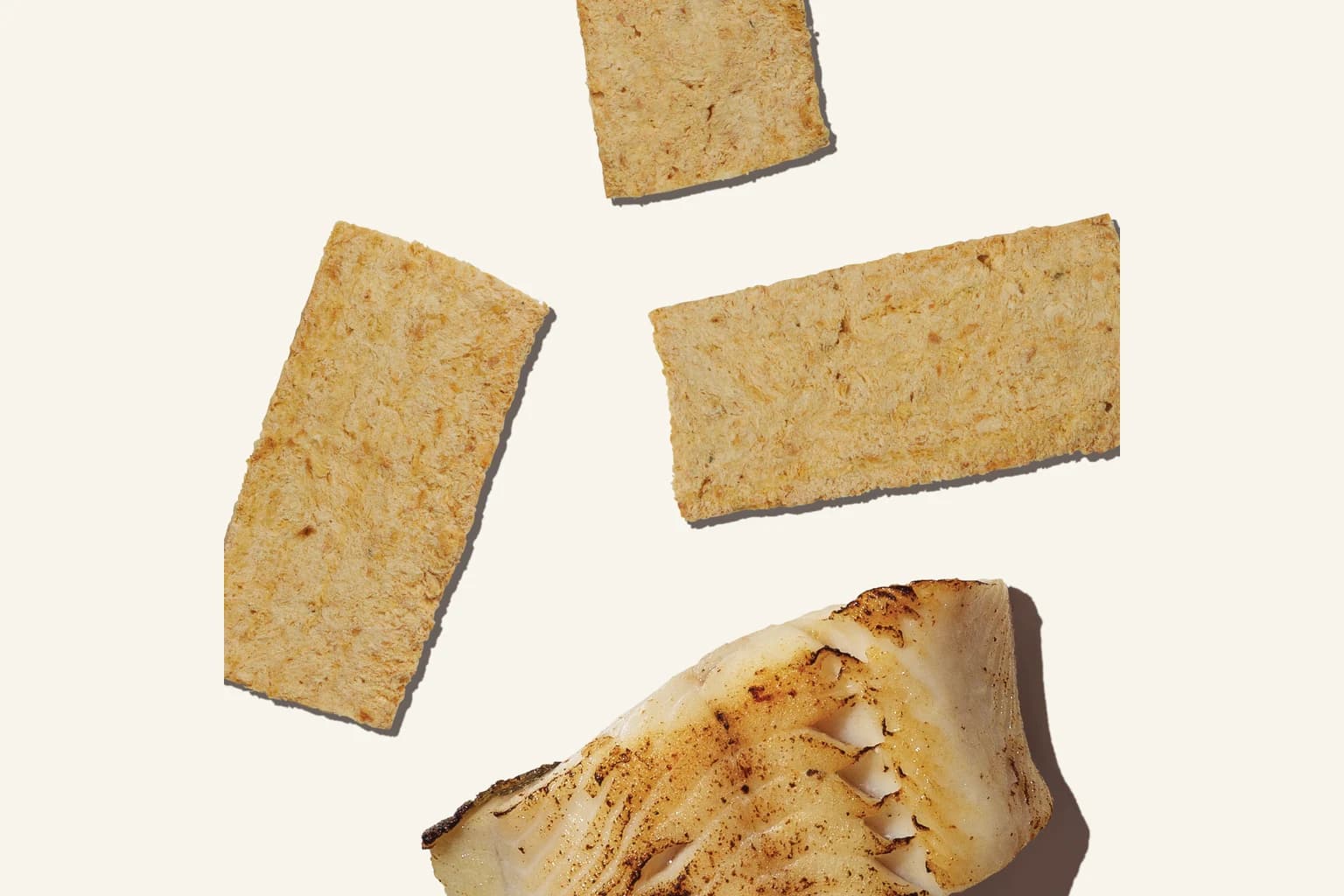
Simple is better when it makes a decision easier. If you want a fish treat, a one-ingredient label lets you confirm that fish is the only listed ingredient. If you are tracking which extras your dog receives, there are fewer listed foods to record. If your veterinarian has asked you to avoid a known ingredient in ordinary daily feeding, a short label is faster to screen.
Simplicity can also make portion planning more deliberate. Instead of assuming a natural-looking chew is nutritionally invisible, you can look for the current calories on the package, decide how much of the day's discretionary allowance it uses, and break the product into a suitable portion when the label permits. That is a meaningful benefit because treats can quietly add up, especially in small dogs.
Simple does not mean unprocessed. These THK treats are dehydrated, which is a specific processing method. Nor does simple mean nutritionally complete. Fish skin and fish filet treats contribute calories and nutrients, but the package's supplemental-feeding statement means the dog's complete-and-balanced main food should remain the foundation.
Petful may earn a commission when you click through to The Honest Kitchen, at no extra cost to you.
- A one-ingredient label clearly identifies the included ingredient. It does not establish medical superiority, complete nutrition, cross-contact control, or suitability for a dog that reacts to that ingredient.
What One Ingredient Does Not Prove
One ingredient does not prove that a treat is universally healthier. It does not tell you whether the texture is suitable for your dog's teeth, whether the calories fit the day, or whether a fish protein agrees with the individual dog. Those are separate checks.
It also does not make a product hypoallergenic. Dogs develop adverse reactions to proteins, and fish is still a protein. A dog that reacts to fish should not receive a white fish, cod, or wolffish treat simply because the label contains one item. Dogs on prescription diets may need every extra cleared by the veterinarian, since even a small treat can undermine the purpose of a controlled diet.
Finally, a commercial single-ingredient treat is not automatically appropriate for a diagnostic food trial. Veterinary elimination diets depend on a carefully selected novel or hydrolyzed protein, strict control of every food and flavored medication, and attention to cross-contact. A product can list one ingredient while being made in an environment that handles other proteins. That may be perfectly acceptable for ordinary use, but it can be too uncertain for a formal trial.
Elimination diets need veterinary control: Do not add a commercial treat to a diagnostic food trial because its front label says one ingredient. The treating veterinarian must approve the protein, manufacturing fit, portion, and every other edible exposure.
How to Choose Protein, Size, Texture, and Calories
Use a five-step check before buying:
- Identify the ingredient. Read the full ingredient statement rather than relying on a flavor name.
- Check restrictions. Rule out known adverse reactions and confirm compatibility with any prescription diet.
- Confirm feeding status. Look for intermittent or supplemental feeding language so you know the product is an extra, not a meal.
- Find the calories. Use the current package figure and decide how much fits your dog's daily plan.
- Assess the physical treat. Match the size, hardness, and breakability to your dog's mouth, chewing style, and dental health.
The WSAVA treat guide recommends keeping treats below 10% of daily calories for most dogs, with the complete diet supplying the other 90% or more. That is a ceiling, not a serving instruction. A very small dog may use the allowance with a fraction of a chew. A large, active dog may have more room, but package calories still matter.
Petful may earn a commission when you click through to The Honest Kitchen, at no extra cost to you.
| Check | What to verify | Why it matters |
|---|---|---|
| Ingredient | The single listed food and protein source | Confirms what is included |
| Feeding statement | Intermittent or supplemental feeding | Keeps the complete diet central |
| Calories | Current package calories per piece or portion | Prevents accidental overfeeding |
| Physical form | Filet, strip, or skin chew | Helps match size and chewing style |
| Restrictions | Allergies, prescription diet, dental concerns | Determines individual fit |
The Honest Kitchen Single-Ingredient Treats to Consider
The Honest Kitchen's fish-based options make the label differences easy to understand while offering several textures. Product availability and package details can change, so use the current page and package for calories, guaranteed analysis, and directions at the time of purchase.
Purely One White Fish Filets
Purely One uses dehydrated white fish as the sole ingredient. The filet format can appeal to owners who want a recognizable fish piece rather than a formulated biscuit. The product page directs owners to supervise and to break the filet into smaller pieces for smaller dogs. That flexibility can make it easier to use as a brief reward instead of handing over an entire piece.
The key fit question is not whether white fish sounds wholesome. It is whether white fish agrees with your dog, the portion fits the treat budget, and the piece can be offered safely. For a dog on a restricted protein plan, ask the veterinarian before introducing it.
Ocean Chews Cod and Wolffish Skins
Ocean Chews Crispy Cod Fish Skins and Hearty Wolffish Skins each list one dehydrated fish-skin ingredient. They provide a longer chewing format than a small training treat, and the two products may differ in size, texture, and current calories. Check the exact package rather than transferring directions from one Ocean Chews product to another.
Petful may earn a commission when you click through to The Honest Kitchen, at no extra cost to you.
Fish-skin chews should be actively supervised. Watch how the product softens, tears, and changes size. Remove a small end piece that could be swallowed whole. Stop if the chew develops a sharp edge, your dog tries to gulp it, or the texture appears too hard for comfortable chewing.
For bulk purchases, compare the total package amount, storage instructions, best-by date, and calories before ordering. Buy a larger quantity only after your dog tolerates the exact treat and can chew it safely. Keep portions measured even when buying a multipack, and retain the original packaging and lot details. Check The Honest Kitchen’s current listing for available sizes rather than assuming that every fish treat comes in a bulk format.
| Product | Sole listed ingredient | Format | Label role | Best selection question |
|---|---|---|---|---|
| Purely One White Fish Filets | Dehydrated white fish | Filet that may be broken into smaller pieces | Intermittent or supplemental treat | Is the portion and piece size right for this dog? |
| Ocean Chews Crispy Cod Fish Skins | Dehydrated codfish skin | Crispy skin chew | Intermittent or supplemental chew | Can this dog chew it without gulping or sharp fragments? |
| Ocean Chews Hearty Wolffish Skins | Dehydrated wolffish skin | Hearty skin chew | Intermittent or supplemental chew | Does the current package size and hardness fit this dog? |
Allergies, Elimination Diets, and Cross-Contact
For routine label screening, a one-ingredient treat is convenient. For medical diagnosis, it is only one piece of a much stricter plan. If your dog has a confirmed chicken reaction and your veterinarian says ordinary fish treats are acceptable, a clearly labeled fish product may be easier to assess than a mixed-meat biscuit. If your dog is in an elimination trial, however, the answer depends on the exact prescribed protein strategy and manufacturing controls.
Cross-contact is not visible in the ingredient list. Owners who need that level of certainty should ask the manufacturer and veterinarian rather than infer it. A dog with itching, recurring ear disease, vomiting, diarrhea, or another suspected food reaction also needs a proper diagnostic plan. Treat switching alone cannot identify the cause.
Petful's guide to dog food allergies explains the larger veterinary picture. For everyday shoppers comparing a short ingredient list with a broader limited-ingredient formula, the limited-ingredient dog food guide provides additional label context.
Portions and Supervised Chewing
There is no universal number of single-ingredient treats a dog should receive. Count calories, not pieces. Find the dog's daily calorie target from the veterinarian or a reliable feeding plan, calculate 10% of that amount as the usual upper limit for all treats combined, then check the package calories. Training rewards, dental chews, table scraps, and food used in toys all belong in the same discretionary total.
Supervision is equally individual. A polite nibbler and a determined gulper should not receive the same size or shape simply because they weigh the same. Stay close, offer the product in a calm setting, and take it away if your dog attempts to swallow a large piece. Dogs with broken teeth, painful mouths, prior choking, gastrointestinal restrictions, or aggressive gulping may need a softer or smaller alternative. When choosing a single-ingredient treat for a puppy, verify the product’s age guidance and choose a portion and texture that the puppy can manage. Training treats should be small enough for repeated rewards without exceeding the day’s calorie allowance. Ask your veterinarian before offering a fish-skin chew to a puppy with uncertain chewing skills, and supervise every serving.
If dehydration as a process is your main interest, Petful's guide to dehydrated dog treats compares the wider category. If you want extras for flavor or texture rather than chews, see our guide to dog food toppers.
Frequently Asked Questions
No. One ingredient makes the label easier to read, but health fit still depends on the ingredient, calories, texture, portion, and the individual dog. The treat is also supplemental unless the label explicitly states otherwise.
Yes. A dog can react to the one protein in the treat, including fish. Avoid known triggers and ask your veterinarian about new extras if your dog has suspected food allergy signs.
Only with the treating veterinarian's approval. A diagnostic trial requires strict protein selection and cross-contact control, which a one-ingredient front label does not establish by itself.
Use package calories and your dog's daily calorie target rather than a universal piece count. For most dogs, all treats combined should remain under 10% of daily calories unless a veterinarian sets a different plan.
Check the fish protein against dietary restrictions, confirm current calories, select an appropriate size and hardness, supervise actively, and remove any small or sharp piece that could be swallowed.
Sources
BVMS, MRCVS
Dr. Pippa Elliott, BVMS, MRCVS, is a veterinarian with nearly 30 years of experience in companion animal practice. Dr. Elliott earned her Bachelor of Veterinary Medicine and Surgery from the University of Glasgow. She was also designated a Member of the Royal College of Veterinary Surgeons. Married with 2 grown-up kids, Dr. Elliott has a naughty Puggle named Poggle, 3 cats and a bearded dragon.
Sign up for expert-backed reviews and safety alerts all in one place.


A Final Word (Disclaimer)
At Petful, our review integrity is paramount; we never exchange special treatment in our reviews for monetary or material rewards.
Nonetheless, when our readers click through to online merchants (including Chewy or Amazon), we receive a referral commission. This supports the running of our free blog, and we appreciate your backing.