Whole Food Dog Food: What It Means and How to Feed It
Learn what whole food dog food means, how to read recipe labels, and how The Honest Kitchen formats compare for preparation, portions, and storage.

BVMS, MRCVS
Petful is reader supported. As an affiliate of platforms like Amazon and Chewy, we may earn a commission when you buy through links on this page. There is no extra cost to you.
This article is sponsored by The Honest Kitchen. Petful maintains editorial control and uses current product information plus independent pet-nutrition guidance.
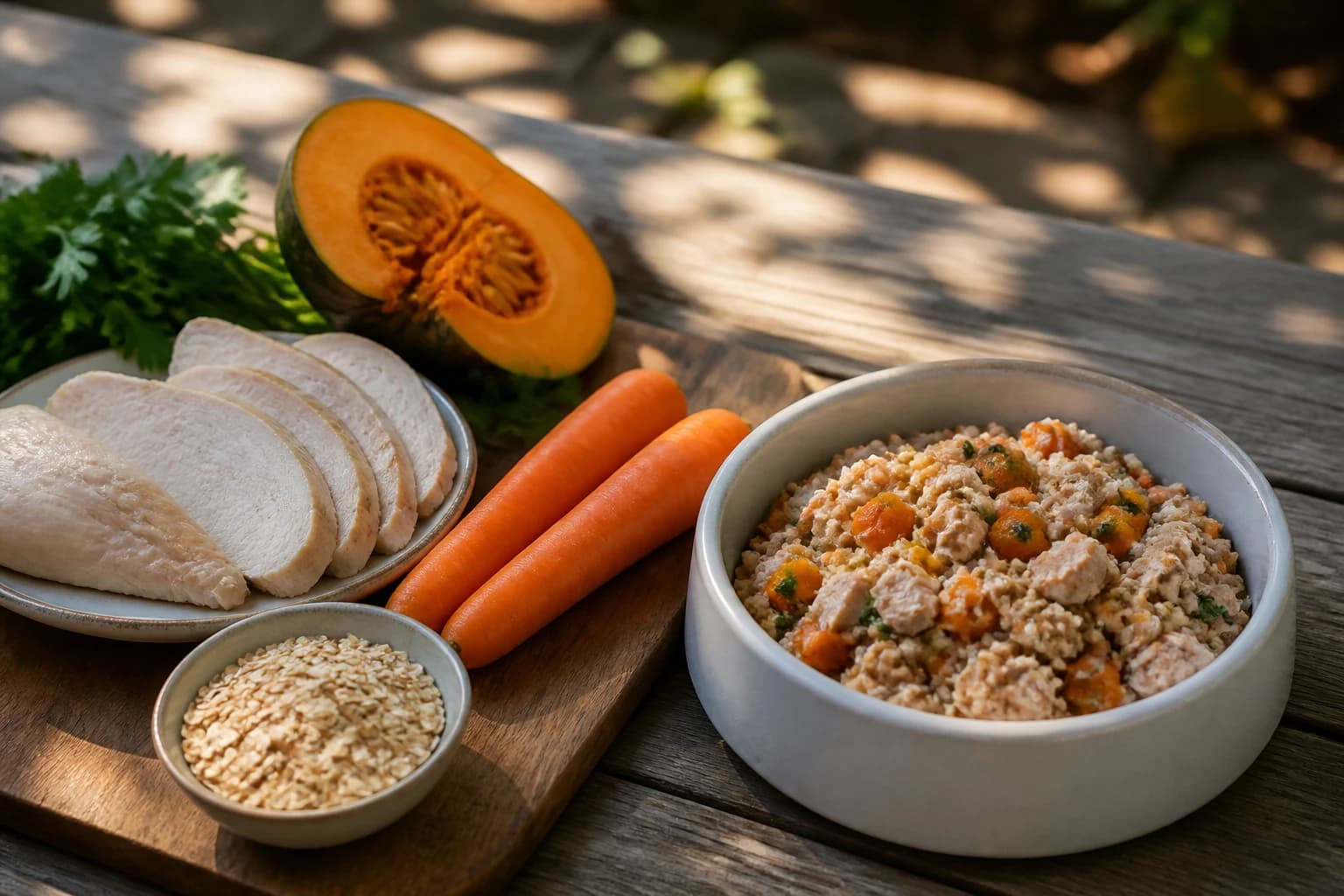
Whole food dog food usually describes recipes made with recognizable food ingredients and processing methods that a brand wants owners to understand. It is useful plain language, but it is not a regulated nutritional-adequacy category and does not prove that a diet is complete, balanced, human grade, safer, or healthier than another food. The best choice begins with the exact recipe's adequacy statement and life stage, then moves to ingredients, calories, feeding directions, preparation, storage, budget, and your dog's individual needs.
- 1Whole food is a descriptive phrase, not a nutritional guarantee
- 2Human grade and complete and balanced answer different label questions
- 3Check life stage, calories, ingredients, feeding directions, and adequacy on the exact recipe
- 4Dehydrated and Cluster formats offer different preparation and storage routines
- 5Homemade food is not interchangeable with a formulated complete commercial diet

Sign up for expert-backed reviews and safety alerts all in one place.
What Whole Food Dog Food Means
There is no single official formula called whole food dog food. In ordinary shopping language, the phrase points toward visible or recognizable foods, a shorter distance between ingredient names and familiar groceries, and a process the brand describes as relatively gentle or transparent. A recipe may feature named meats, vegetables, fruits, grains, seeds, or other foods while still including vitamins and minerals needed to complete the nutrient profile.
That final point matters. A commercial diet does not become less authentic because it contains a nutrient premix. Dogs require specific nutrients in appropriate amounts and relationships. A formulated food may need added vitamins and minerals to meet those requirements consistently. The ingredient list tells you what goes into the recipe, while the nutritional adequacy statement tells you whether the finished product is intended to provide a complete diet for a stated life stage.
Whole food is therefore best used as the beginning of a label conversation. It can help you identify the kind of ingredients and format you prefer. It cannot finish the nutritional evaluation by itself.
What the Term Does Not Guarantee
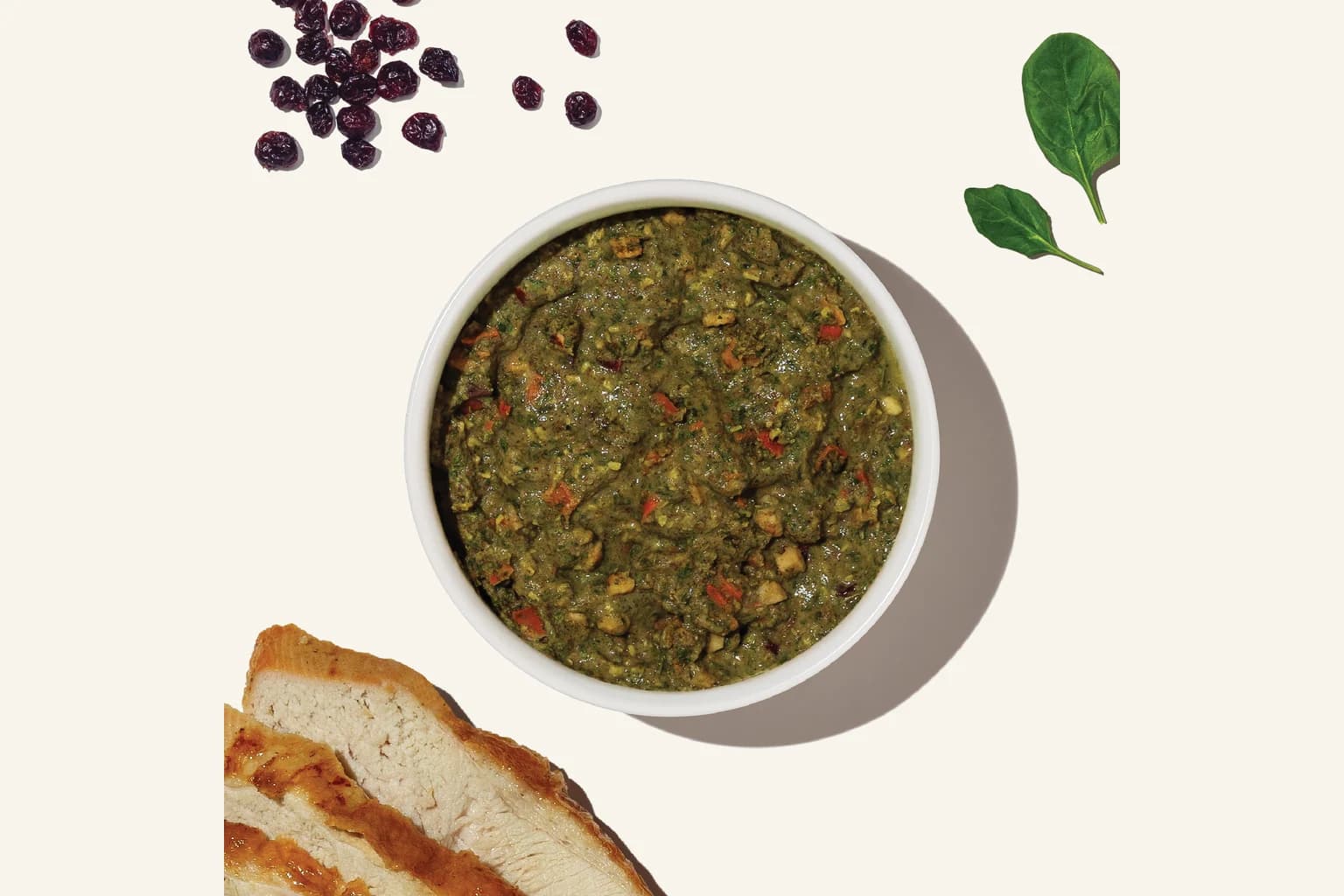
Whole food does not guarantee complete-and-balanced nutrition. A topper made from recognizable meat and vegetables can still be labeled only for intermittent or supplemental feeding. A base mix may require the owner to add a specific protein in a specific amount. A treat can have one familiar ingredient and still be inappropriate as a meal.
Petful may earn a commission when you click through to The Honest Kitchen, at no extra cost to you.
The phrase also does not establish that a food is human grade. AAFCO treats human grade as a substantiated claim about ingredients and the handling, processing, and transport of the product. It is not a synonym for recognizable ingredients. A product can look like ordinary food without meeting the full human-grade standard, and a substantiated human-grade food still needs an adequacy statement if it is to serve as a complete diet.
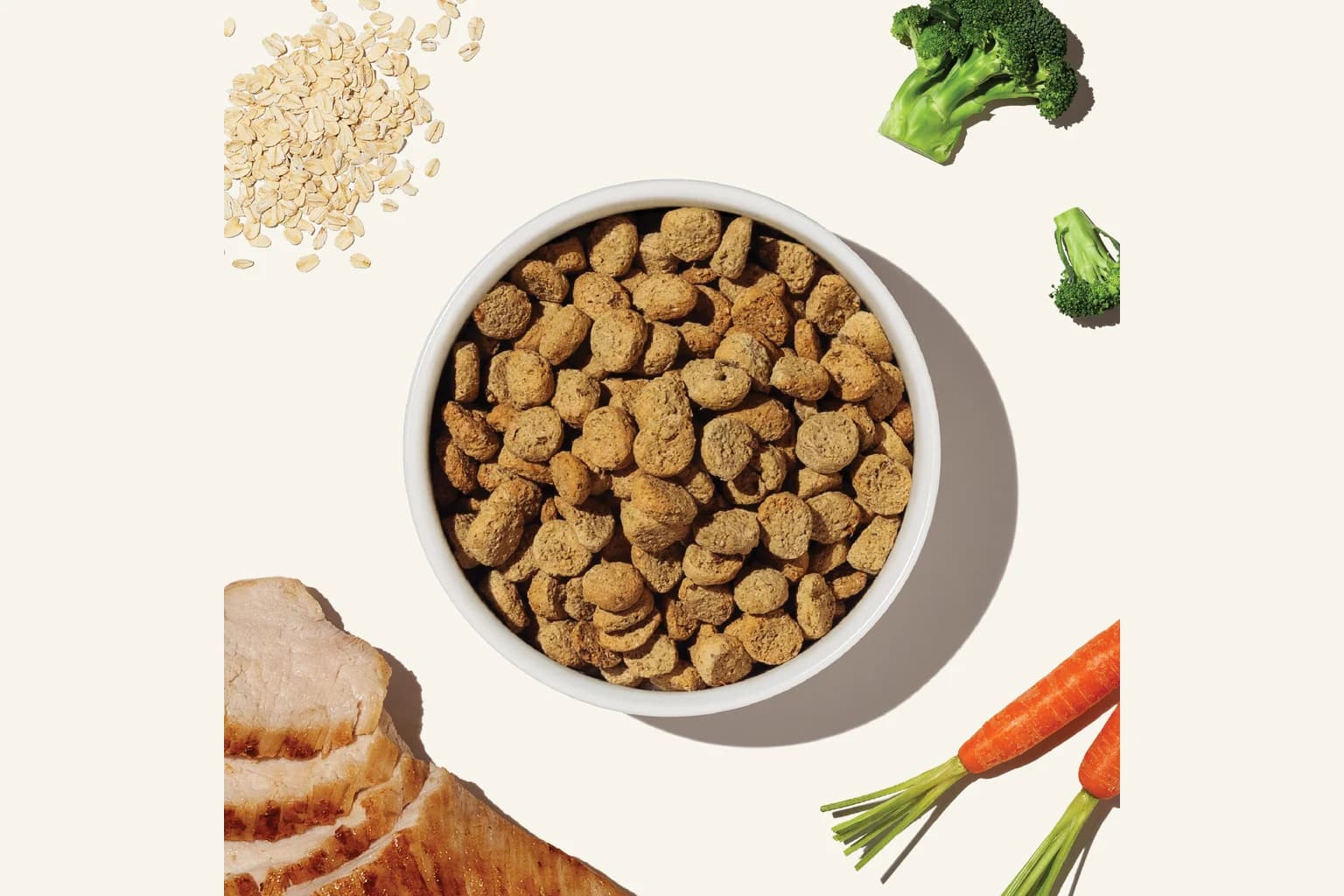
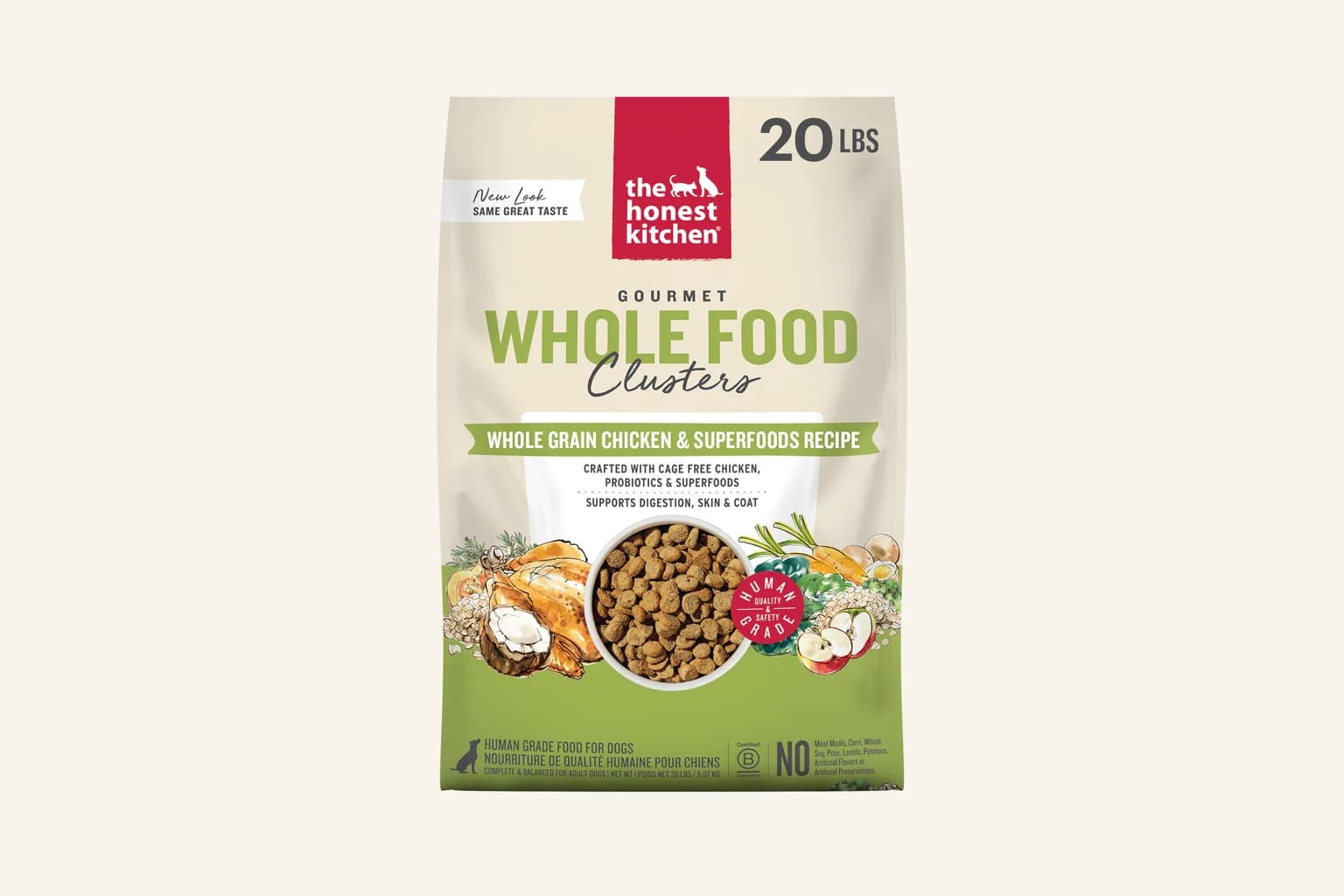
Nor does whole food mean raw. The Honest Kitchen states that its Wholemade dehydrated foods are gently cooked before dehydration. THK describes its Whole Food Clusters as cold pressed, roasted, and dehydrated. Those are cooked, brand-specific processes, not raw feeding.
- Whole food describes an ingredient and process idea. Human grade is a substantiated production claim. Complete and balanced addresses nutritional adequacy. Grain-free identifies a recipe choice. Supplemental tells you the product should not replace the complete diet.
It is also unhelpful to define whole food by attacking kibble. Dry extruded food varies in formulation, testing, quality control, digestibility, and nutrient profile, just as foods in other formats vary. A well-formulated complete dry food can be an appropriate diet. The practical comparison is between specific finished recipes, not a moral ranking of shapes.
The Label Checks That Matter More Than Marketing Language
Use the package in this order:
- Species and product identity: Confirm that it is dog food and identify whether it is a food, base mix, topper, treat, or supplement.
- Nutritional adequacy statement: Look for complete-and-balanced language and the applicable life stage, or for intermittent or supplemental feeding language.
- Life stage: Growth, adult maintenance, and all-life-stages products are not interchangeable for every dog. Large-breed growth deserves particular attention.
- Ingredient statement: Identify protein sources, grains or pulses, added nutrients, and any known restrictions.
- Calories: Compare calories per cup, dry measure, package, or prepared serving. Water changes volume and texture, not the calories already present in the dry food.
- Feeding directions: Use the chart as a starting point, then adjust for body condition, activity, neuter status, environment, and veterinary guidance.
- Preparation and storage: Follow water ratios, wait times, refrigeration windows, and package closure directions.
The AAFCO label guide explains the role of the ingredient statement and adequacy language. The FDA complete-and-balanced guide provides a useful second reference for interpreting the statement.
| Term | What it can tell you | What it does not prove | Reader action |
|---|---|---|---|
| Whole food | The brand emphasizes recognizable foods or a described process | Complete nutrition or superior health | Continue to adequacy, life stage, calories, and directions |
| Human grade | The claim is substantiated across ingredients and production handling | That the food is complete and balanced | Check the adequacy statement separately |
| Complete and balanced | The finished food meets a recognized nutrient profile for the named life stage | That every dog will thrive on it | Match life stage and individual needs |
| Grain-free | The recipe excludes grains | Allergy safety or protection from disease | Choose only for a reason supported by the dog and veterinarian |
| Supplemental feeding | The item is not intended to supply the entire diet | A safe unlimited serving | Keep the complete diet central and count calories |
Petful may earn a commission when you click through to The Honest Kitchen, at no extra cost to you.
Whole ingredients and whole grains answer different questions. Dog food with whole grains can still be a whole-food-style recipe, and a grain-free recipe does not automatically offer better nutrition. Check the exact ingredient list and complete-and-balanced statement rather than treating the grain choice as a quality score. For a dog with a suspected food reaction or a prescribed diet, ask the veterinarian which ingredients and nutrient limits actually matter before changing recipes.
Dehydrated, Dry Cluster, Wet, and Homemade Formats
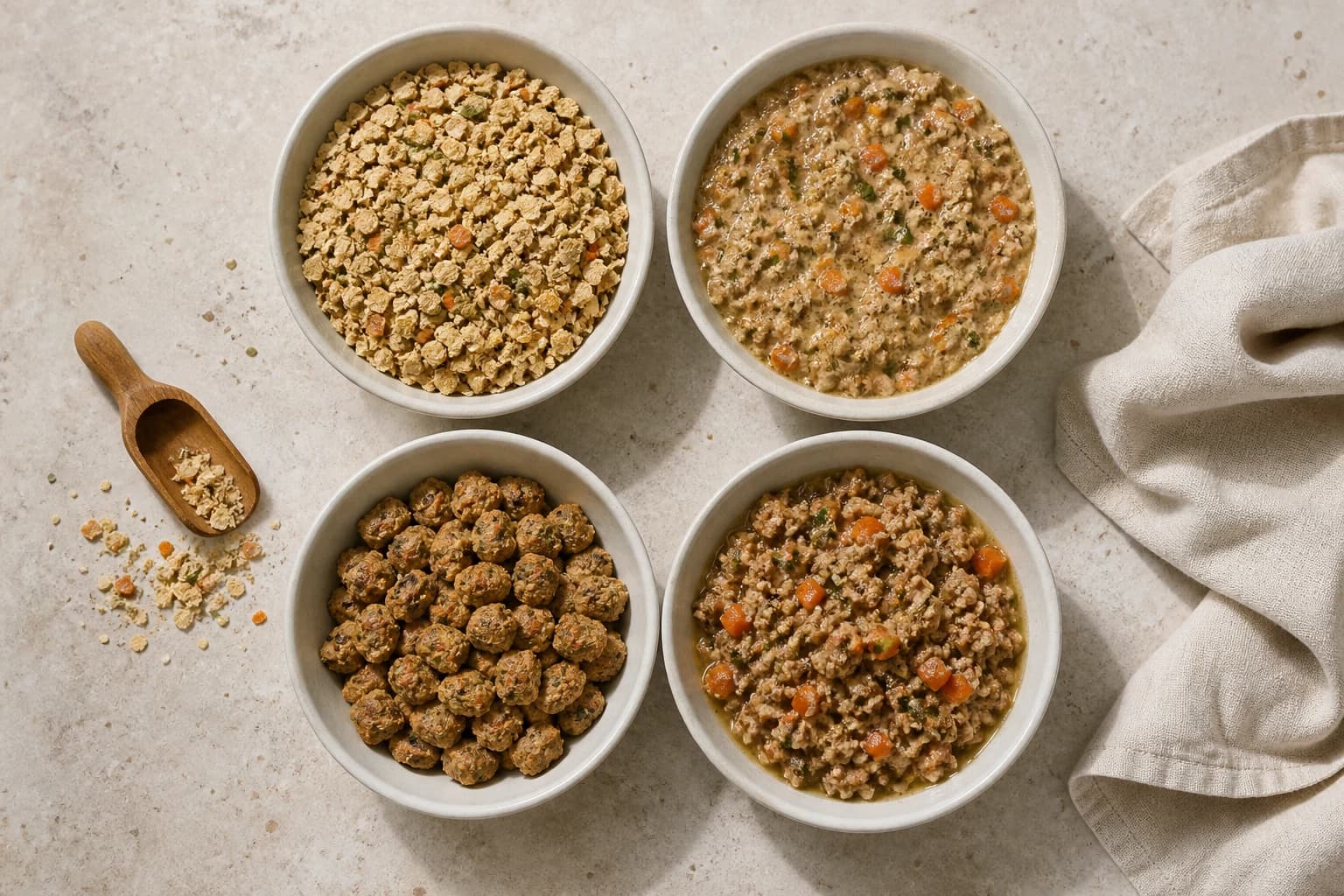
Format shapes the owner's routine and the dog's eating experience. It does not replace label evaluation.
Dehydrated commercial food
Dehydrated food begins as a dry mix and is prepared with water. The Honest Kitchen's Wholemade recipes use warm water, stirring, and a short wait before serving. The dry box is shelf stable, which can simplify storage and travel. Once water is added, the prepared food becomes perishable and must be refrigerated according to current directions.
The format can be appealing to owners who want a soft, warm meal without cooking from scratch. It requires accurate measurement and a few minutes of preparation. A dog that dislikes soft textures may need a slow introduction.
Ready-to-scoop dry pieces
Whole Food Clusters offer dry-food convenience. THK says the ingredients are cold pressed into pieces, roasted, and dehydrated. Owners can scoop the finished food without adding water. The calorie density and portion may differ from the owner's previous food, so cup-for-cup substitution is not appropriate without checking the chart.
Wet food
Wet foods provide moisture in the package and require after-opening refrigeration. They may suit dogs that prefer soft food or owners who want ready-to-serve moisture. The exact recipe still determines adequacy, calories, life stage, and medical fit.
Homemade food
Home-cooked ingredients may look like the clearest expression of whole food, but appearance is not formulation. Meat, rice, and vegetables do not automatically deliver the required balance of calcium, phosphorus, trace minerals, vitamins, essential fats, and amino acids. Owners who want a homemade diet should use a recipe formulated for their dog by a board-certified veterinary nutritionist and follow it precisely.
Homemade is not automatically complete: A bowl of recognizable ingredients can still be nutritionally deficient or imbalanced. Do not replace a formulated complete commercial food with an improvised home recipe.
The Honest Kitchen as a Convenient Whole-Food-Style Example
The Honest Kitchen illustrates how one brand can deliver the whole-food-style idea in more than one routine. The Wholemade dehydrated range is designed for add-water preparation. The Whole Food Clusters range provides ready-to-scoop pieces.
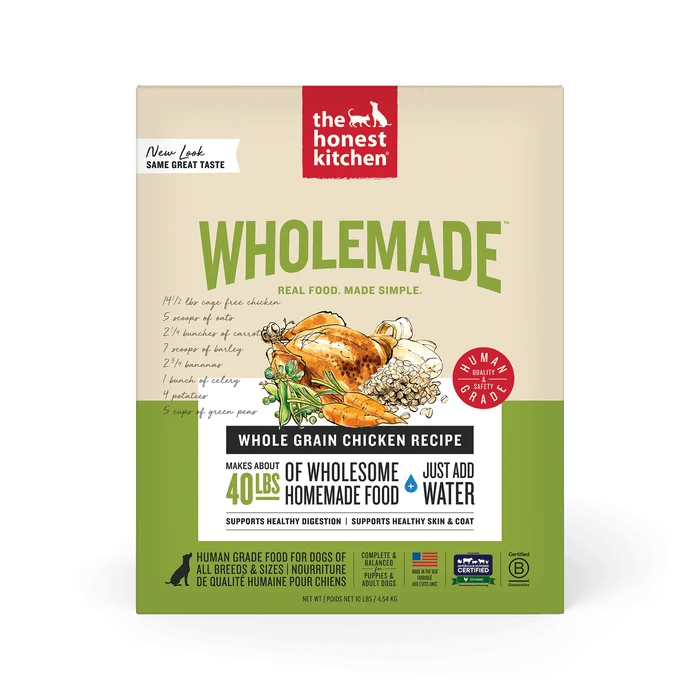
Wholemade Grain Free Chicken is a useful example of the dehydrated format. THK directs owners to add warm water, stir, wait about 3 minutes, and serve. The product page states that the food is gently cooked before dehydration and is not raw. Whole Grain Chicken Whole Food Clusters provide a grain-inclusive dry format made through THK's described Cluster process.
These products should be compared by what the owner and dog need:
- Choose Wholemade when warm-water preparation, a soft texture, and compact dry storage are appealing.
- Consider Clusters when quick scooping and crunch are more important.
- Choose the exact recipe only after checking adequacy, life stage, calories, ingredients, and the dog's restrictions.
THK's human-grade positioning is another positive point for owners who value a substantiated production standard. It should remain in its correct lane. Human grade describes the ingredient and process standard, while the adequacy statement describes nutritional use.
For an experience-led look at preparation and household use, Petful's Spotlight on The Honest Kitchen follows the dehydrated format in a real home.
| Decision | Wholemade dehydrated food | Whole Food Clusters |
|---|---|---|
| Preparation | Add recipe-directed warm water, stir, wait about 3 minutes | Scoop and serve according to the recipe chart |
| Texture | Soft hydrated meal | Crunchy dry pieces |
| Storage | Compact dry box, then refrigerate hydrated leftovers | Resealable dry-food storage |
| Travel | Compact before hydration, with water and a bowl needed | Ready to portion without water mixing |
| Required label check | Adequacy, life stage, dry calories, water ratio, prepared storage | Adequacy, life stage, calories per cup, feeding chart |
How to Prepare and Portion a Complete Recipe
Preparation should preserve the recipe's intended nutrient and calorie delivery. With dehydrated food, measure the dry mix first. Add the amount of warm water directed for that recipe and portion. Stir thoroughly, wait for hydration, then assess temperature before serving. Adding more water may change texture and water intake, but it does not reduce the calories in the measured dry food.
Petful may earn a commission when you click through to The Honest Kitchen, at no extra cost to you.
Do not borrow a ratio from a different box. Recipes can vary in density and directions. The feeding chart is a starting point, not a guarantee that every dog of the same weight needs the same amount. Monitor body condition and weight over time. A veterinarian can help set a calorie target when the dog is growing, very active, sedentary, underweight, overweight, pregnant, nursing, or managing disease.
With Clusters, measure the portion instead of free-pouring. A familiar-looking scoop can contain more or fewer calories than the same volume of another dry food. If you use a complete food as a topper, count those calories and reduce the base meal if necessary.
Meal versus topper
A complete-and-balanced recipe can often be fed as the full meal or in a smaller measured amount alongside another complete food. A supplemental topper, broth, base mix, or treat cannot be treated the same way. Read the current label. Base mixes may require a directed addition of protein to create the intended meal, and using the wrong amount changes the nutritional result.
Water does not erase calories: The calories come from the measured dry food. Adding water changes moisture and volume, so portion the dry mix from the current feeding chart before hydrating it.
Transition, Storage, and Cost Planning
Most dogs do better with a gradual transition. THK currently recommends about 7 to 10 days for many pets. Begin with mostly the familiar food and a small amount of the new recipe, then increase the new portion in steps. Slow down if stool softens or the dog hesitates. Significant vomiting, diarrhea, lethargy, pain, or appetite loss warrants veterinary advice.
A sample transition is:
- Days 1 to 3: about 25% new food and 75% familiar food.
- Days 4 to 6: about half new and half familiar.
- Days 7 to 9: about 75% new and 25% familiar.
- Day 10 onward: the intended new-food portion if well tolerated.
This is a framework, not a prescription. Dogs with gastrointestinal disease, a history of pancreatitis, food allergy concerns, or a therapeutic diet need a veterinarian-directed transition.
Storage should be planned before buying a large package. Dry Wholemade is shelf stable until prepared, but hydrated leftovers require refrigeration. THK's older support guidance gives a conservative 2 to 3 day window, while newer FAQ language has sometimes said 3 to 4 days. Follow the current package, and use the conservative 2 to 3 day limit when directions conflict unless the current package gives different directions. Store Clusters sealed and dry.
Compare cost per day, not package price alone. Dehydrated food expands with water, so the dry box size can mislead. Use the feeding chart for your dog's weight and calorie needs, calculate servings per package, and include toppers or shipping only if they are part of the real plan. A premium format may be worthwhile for preparation preferences and ingredient standards, but it must fit the household budget consistently.
How to Decide Whether the Format Fits Your Dog
Ask the questions in this order:
- Does the exact recipe meet the dog's nutritional life-stage need? If not, stop.
- Does it fit medical restrictions? Confirm with the veterinarian when disease or a prescription plan is involved.
- Will the dog eat the texture? A nutritionally appropriate food is useful only when accepted in an adequate amount.
- Can the household prepare and store it safely every day? Include travel, work schedules, refrigeration, and multi-dog feeding.
- Do the calories and feeding chart support body-condition goals? Plan by energy, not bowl volume alone.
- Is the cost sustainable? Consistency matters more than an ambitious plan that lasts one month.
Petful may earn a commission when you click through to The Honest Kitchen, at no extra cost to you.
There is no single healthiest food brand for every dog. Veterinary nutrition works through the fit between a finished food and an individual animal. A dog can do well on an appropriate Wholemade recipe, Clusters, wet food, or another well-formulated diet. The Honest Kitchen's advantage is that owners can choose among several convenient formats while staying within a clearly positioned brand range.
Owners who want to add smaller extras rather than change the complete meal can use Petful's dog food topper guide to separate complete foods from supplemental products.
Questions to Ask Your Veterinarian
Bring the exact package or product-page label, not only the brand name. Ask:
- Does this adequacy statement fit my dog's life stage?
- Is the calorie density appropriate for the body-condition goal?
- Do any ingredients conflict with a diagnosed disease or diet trial?
- Is grain-free feeding indicated for this dog, or is a grain-inclusive recipe reasonable?
- How should treats and toppers be counted?
- How quickly should we transition?
- What weight or stool changes should trigger an adjustment?
That conversation keeps marketing language in perspective. The veterinarian does not need to approve a brand slogan. They need enough label information to evaluate the finished recipe for your dog.
A seven-step package review
Begin with the product name and intended species. Next, find the nutritional adequacy statement and confirm that it names the dog's life stage. Third, locate calories in the same unit you will use for portions. Fourth, read the ingredient list for known restrictions without treating ingredient order as a complete nutritional score. Fifth, review the guaranteed analysis and obtain a more detailed nutrient profile when a medical comparison requires it. Sixth, read preparation and storage directions. Seventh, record the lot, best-by date, and manufacturer contact information.
This review works for Wholemade, Whole Food Clusters, canned food, and other complete commercial options. It also reveals why a base mix, topper, or homemade recipe should not be treated as complete merely because it contains appealing whole ingredients.
Converting a feeding chart into a household plan
The feeding chart is a starting estimate. Determine the suggested daily amount for the dog's weight and life stage, then compare it with the recipe's calories. Decide how many meals will divide that daily portion. Subtract calories allocated to treats, toppers, dental products, and enrichment food.
Measure consistently for two to four weeks while monitoring body weight and body condition, unless the veterinarian recommends another interval. A large cup packed differently each morning makes trend interpretation difficult. A kitchen scale can improve consistency, but the exact calories and units must still come from the current label.
Water added to dehydrated food changes the served weight and texture, not the calories in the dry portion. This is one reason a prepared bowl may look much larger than a scoop of Clusters while supplying a similar number of calories. Compare formats on dry-food calories and daily cost, not visual bowl volume alone.
A controlled transition log
Write the date, percentage of new food, measured portion, appetite, stool, vomiting, itching, and unusual behavior. Increase the new food gradually when the dog is doing well. Hold or step back if mild gastrointestinal changes appear, and contact the veterinarian for persistent or concerning signs.
Only introduce one new food system at a time. Adding a new complete diet, several treats, a broth, and supplements in the same week makes it difficult to identify what the dog tolerates. A clear log protects both the pet and the product evaluation.
For a dog undergoing a veterinary elimination trial, follow that protocol exactly. A “whole food” treat or topper can still invalidate the trial if it introduces an excluded protein or other ingredient.
How to compare daily cost across formats
Calculate the calories the dog needs, the calories supplied by a cup, ounce, carton, can, or dry measure, and the price of that amount. Include waste and storage. A large wet package can be economical only if the dog finishes it safely. Dehydrated food can be prepared in smaller amounts, while dry Clusters may reduce preparation time.
Then include the owner's priorities. Warm-water preparation may be an enjoyable part of the routine, or it may be a daily burden. Pantry space may matter in a small home. Refrigeration matters after hydration or opening. Travel can favor a compact dry format, but safe water and clean utensils are still required.
The Honest Kitchen's several formats let owners solve these practical constraints within one brand ecosystem. That flexibility is a genuine benefit, provided each exact recipe independently passes the label and fit checks.
Whole-food-style feeding in a multi-dog home
Two dogs of the same weight may need different calories. Separate bowls and measured portions prevent a faster eater from distorting the plan. If one dog needs a prescription diet, shared toppers and unattended bowls can create a medical problem despite good intentions.
Keep each dog's package, scoop, feeding chart, and daily extras clearly assigned. Observe meals long enough to confirm intake. If a hydrated food is prepared in one batch, calculate and divide the dry portions before water is added or use a method that preserves each dog's measured share.
Claims worth translating into questions
When a label says “minimally processed,” ask what process was used and what practical difference the manufacturer documents. When it says “whole food,” ask which ingredients and finished-food standards support the description. When it says “human grade,” ask whether the substantiation covers every ingredient and the finished product under applicable guidance.
Then return to the nutrition questions: Is it complete and balanced? For what life stage? How many calories? What is the feeding amount? Does it meet the dog's individual needs? Translating claims this way allows attractive brand qualities to remain positive without turning them into unsupported guarantees.
Safe handling still applies to familiar ingredients
Chicken, beef, vegetables, broth, and grains may look like ordinary kitchen foods, but finished dog food should be handled according to its label. Wash hands and bowls, keep dry food protected from moisture and pests, refrigerate opened wet food or hydrated leftovers promptly, and discard food left out too long. Retain lot information until the package is finished.
Homemade cooking creates additional responsibility. Avoid toxic ingredients such as onion and garlic, prevent cross-contamination, and do not assume that a mixture is balanced because each ingredient is wholesome on its own. A veterinary nutritionist can formulate and update a recipe as the dog's needs change.
What success looks like after the switch
A successful food fits more than an ingredient philosophy. The dog eats an appropriate amount, maintains a healthy body condition, produces a manageable stool pattern, and has no concerning new symptoms. The owner can obtain, afford, prepare, measure, and store the food consistently. Veterinary monitoring supports the plan when age or disease requires it.
Judge those outcomes over time rather than expecting a dramatic transformation from a marketing category. A coat, energy level, or stool change can have many causes. Record trends and discuss meaningful changes with the veterinarian. Whole-food-style commercial diets can be a positive practical choice, and their strongest case is the complete, recipe-specific evidence plus a routine the household can sustain.
Keep the review recipe specific
When reporting how the dog responds, record the full recipe and format rather than saying only “whole food.” A favorable result with a Wholemade chicken recipe does not establish the same response to a beef Cluster or a homemade formula. Recipe-specific notes protect the dog's history and make future veterinary decisions more useful.
Record preparation and portion as well. The same recipe can produce a different experience when it is measured inconsistently, transitioned rapidly, stored poorly, or combined with several extras. Specificity allows the owner to repeat what worked and change only what did not.
Frequently Asked Questions
No. Whole food is a plain-language ingredient and processing description. Human grade is a substantiated claim covering ingredients and production handling. Neither term alone establishes complete-and-balanced nutrition.
It can be, but the phrase does not prove it. Read the nutritional adequacy statement on the exact recipe and confirm the stated life stage. Toppers, treats, and some base products may be supplemental.
Not necessarily. The Honest Kitchen states that Wholemade is gently cooked before dehydration and is not raw. Check each brand's process rather than treating all dehydrated foods alike.
A complete food can be used in a smaller measured amount when calories are counted. A supplemental product should remain limited and should not displace the balanced base diet.
Many dogs can transition over about 7 to 10 days, beginning with a small new-food portion and increasing gradually. Slow down for digestive changes and use veterinary guidance for medical diets or significant symptoms.
Sources
BVMS, MRCVS
Dr. Pippa Elliott, BVMS, MRCVS, is a veterinarian with nearly 30 years of experience in companion animal practice. Dr. Elliott earned her Bachelor of Veterinary Medicine and Surgery from the University of Glasgow. She was also designated a Member of the Royal College of Veterinary Surgeons. Married with 2 grown-up kids, Dr. Elliott has a naughty Puggle named Poggle, 3 cats and a bearded dragon.
Sign up for expert-backed reviews and safety alerts all in one place.



A Final Word (Disclaimer)
At Petful, our review integrity is paramount; we never exchange special treatment in our reviews for monetary or material rewards.
Nonetheless, when our readers click through to online merchants (including Chewy or Amazon), we receive a referral commission. This supports the running of our free blog, and we appreciate your backing.