Spotlight on The Honest Kitchen Dehydrated Dog Food
See how The Honest Kitchen dehydrated dog food worked for Penny and Stola, with practical preparation, portion, transition, and storage guidance.
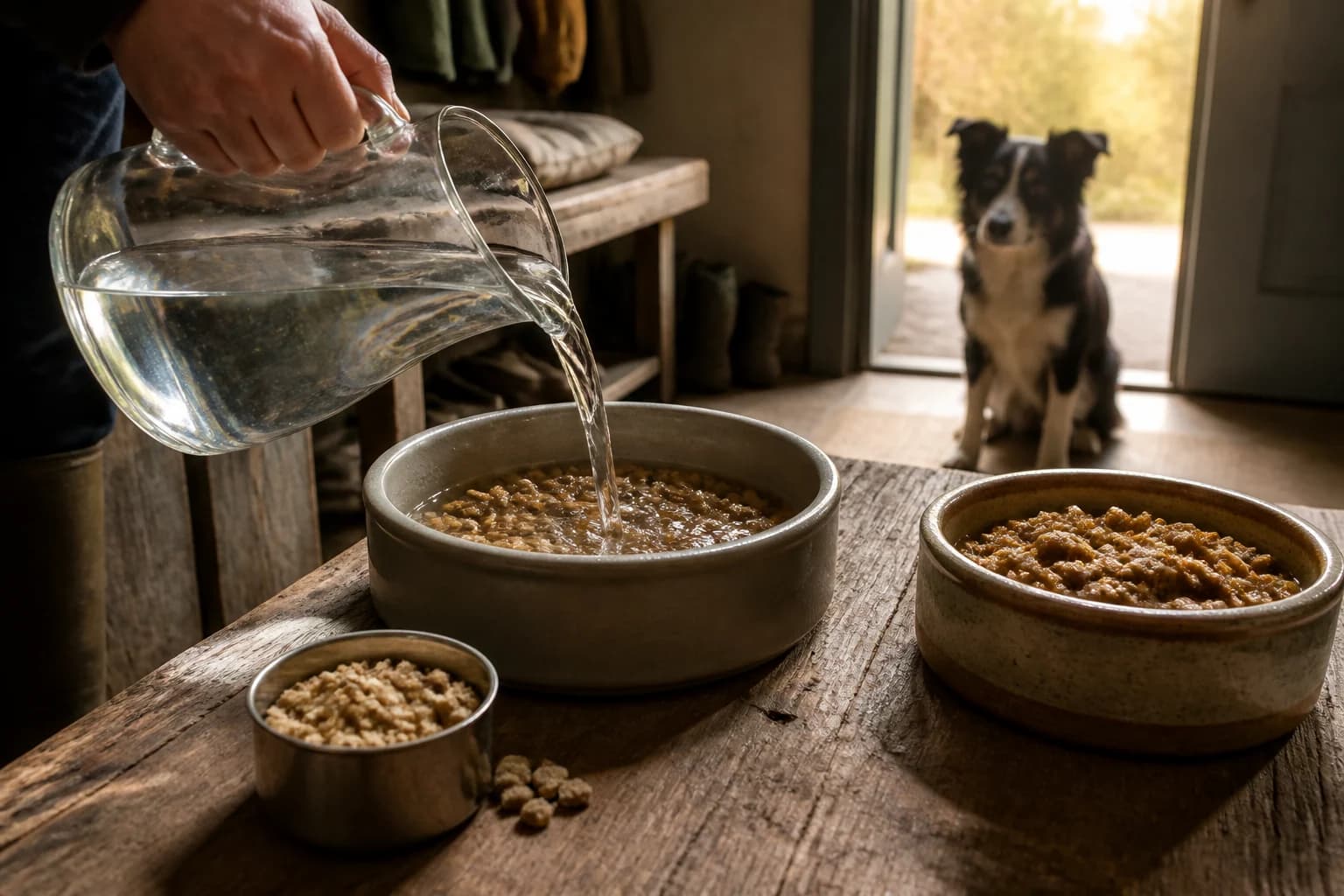
Petful is reader supported. As an affiliate of platforms like Amazon and Chewy, we may earn a commission when you buy through links on this page. There is no extra cost to you.
This article is sponsored by The Honest Kitchen. Petful maintains editorial control and uses current product information plus independent pet-nutrition guidance.
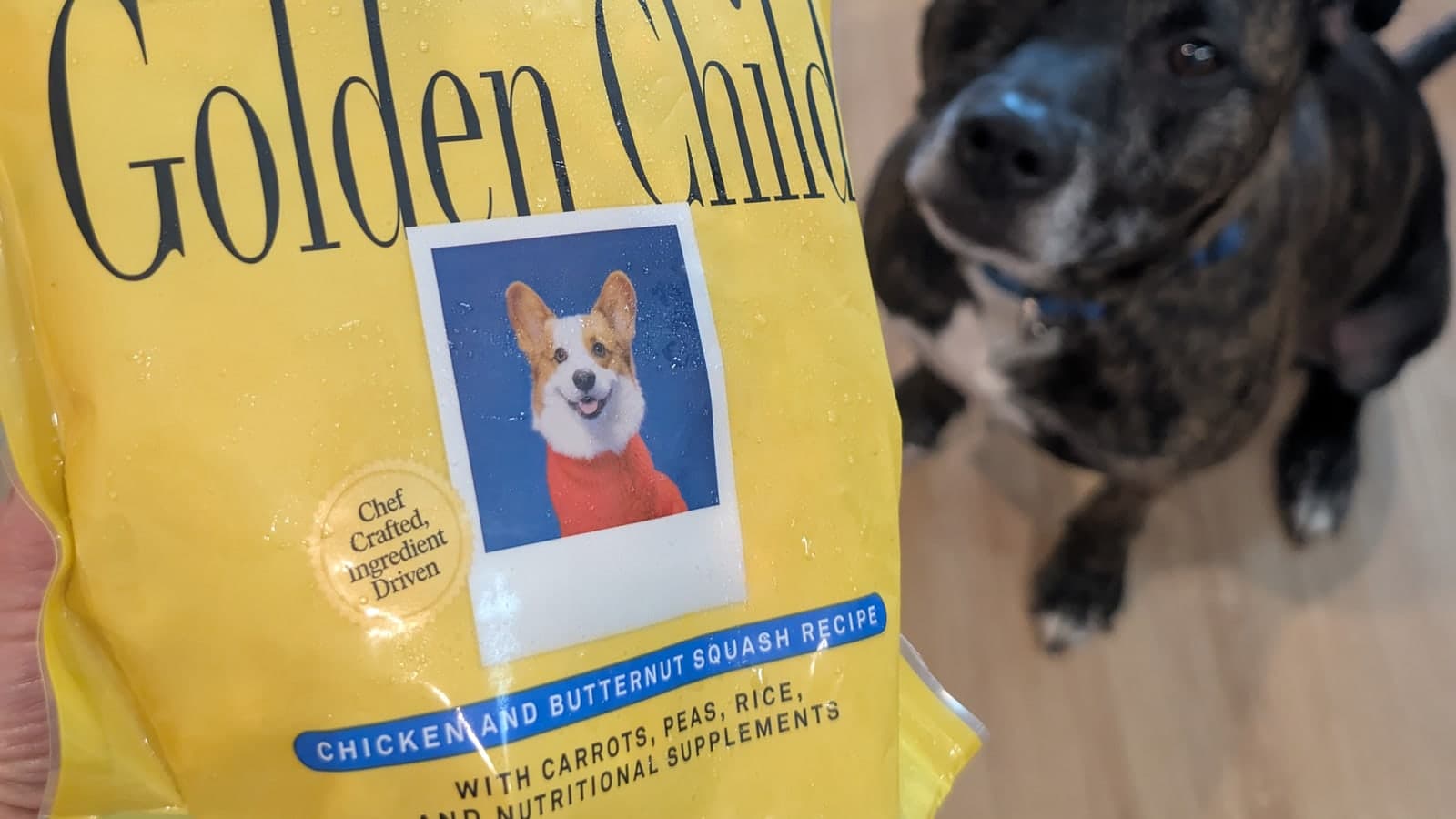
The first thing I noticed about The Honest Kitchen dehydrated dog food was how an ordinary-looking box changed into a warm, soft meal with water and a quick stir. The second was how differently my dogs, Penny and Stola, approached it. Penny was ready to eat. Stola considered the bowl more cautiously, then joined in. Those household details matter in a Spotlight because they show what the format is actually like to prepare and serve. They are not a promise that every dog will react the same way.
The Honest Kitchen provided products for our original hands-on trial. This updated article preserves what I observed while adding current preparation, label, transition, storage, and selection guidance. The practical takeaway is simple: Wholemade dehydrated food can be an appealing, compact, flexible format, but the right recipe still depends on the label, the dog's life stage, calorie needs, health, and preferences. For a broader comparison of the brand’s formats and feeding options, read The Honest Kitchen complete buyer’s guide.
- 1Wholemade is a gently cooked dehydrated food that is rehydrated with warm water and is not raw
- 2Preparation is measure, add warm water, stir, wait about 3 minutes, and serve
- 3Check the exact recipe's adequacy statement, life stage, calories, and feeding chart
- 4Transition gradually over about 7 to 10 days when appropriate
- 5Refrigerate hydrated leftovers promptly and use a conservative 2 to 3 day window unless the current label says otherwise

Sign up for expert-backed reviews and safety alerts all in one place.
The Honest Kitchen Dehydrated Dog Food at a Glance
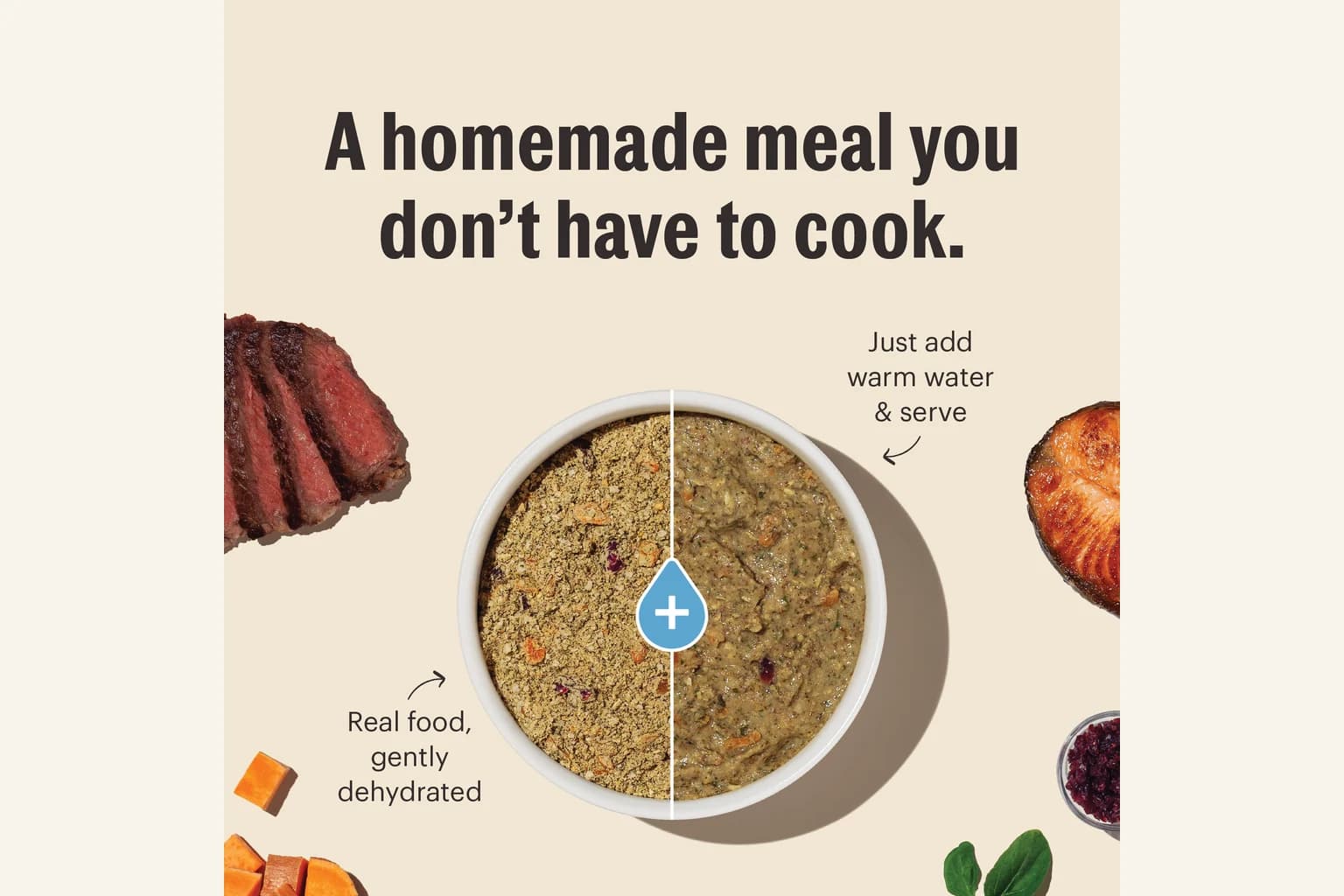
The Honest Kitchen's Wholemade dehydrated range starts as a dry, shelf-stable mix. You add warm water before serving, so the food takes up less pantry space than its prepared volume suggests. THK says the recipes are gently cooked before dehydration. That point is important because dehydrated does not mean raw.
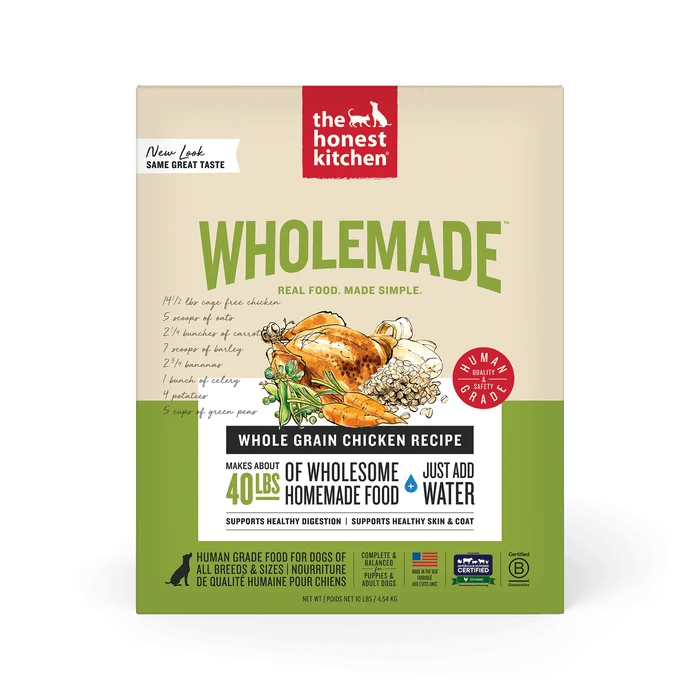
Wholemade includes grain-inclusive and grain-free recipes, and the catalog can change over time. Two useful examples are Wholemade Whole Grain Chicken and Wholemade Grain Free Chicken. The name at the front of the box helps narrow the choice, but the current product label remains the authority for the nutritional adequacy statement, intended life stage, calories, preparation ratio, and feeding quantities.
This distinction prevents a common mistake: treating an entire product family as if every item has identical nutritional use. A complete and balanced recipe may be fed as the primary diet for the life stage named in its adequacy statement. A base mix or supplemental product has a different role and may require additional ingredients or a complete main diet. The AAFCO label-reading guide explains why that small adequacy statement carries more decision value than broad front-of-package language.
| Question | What to check | Why it matters |
|---|---|---|
| Is it a complete meal? | Nutritional adequacy statement on the exact recipe | Confirms whether and how the food can serve as the main diet |
| Is it right for this life stage? | Adult maintenance, growth, or all-life-stages language | Puppies and adult dogs can have different nutrient requirements |
| How much should I feed? | Calories and recipe-specific feeding chart | Portions cannot be safely generalized across the whole line |
| How is it prepared? | Current water ratio and directions | Texture and finished volume depend on correct rehydration |
| Does it fit this dog? | Ingredients, medical restrictions, preferences, and veterinary advice | A favorable format is not automatically appropriate for every dog |
What “human grade” contributes to the decision
The Honest Kitchen is closely associated with human-grade pet food. In regulatory use, the phrase concerns substantiated sourcing, handling, processing, and transport conditions. It does not mean the food is intended for people to eat, and it does not prove that one product is nutritionally superior to every feed-grade alternative. AAFCO's human-grade guidance is helpful context for understanding the claim without stretching it into a health guarantee.
Petful may earn a commission when you click through to The Honest Kitchen, at no extra cost to you.
For me, the more useful household questions were concrete. Could I prepare the food consistently? Would both dogs eat it? Did the hydrated texture work in a bowl and in enrichment toys? Could I store the dry box and travel with measured servings? Those are areas where this format has a clear identity.
What the format asks of the owner
Wholemade is not a scoop-and-walk-away food in its standard prepared form. It adds a short routine: measure food, measure water, stir, wait, and clean the bowl or toy after use. That routine felt easy in our household, especially once I knew the proportions, but owners who prize maximum speed should account for it honestly.
Warm water and a short standing period turn the dry mix into a soft meal. The aroma and temperature may be appealing to some dogs, but preference is individual. You can adjust texture only within the directions for the specific recipe and your dog's needs. More water can change consistency and meal volume, yet it does not change the calories in the measured dry portion.
How Wholemade Dehydrated Food Is Prepared
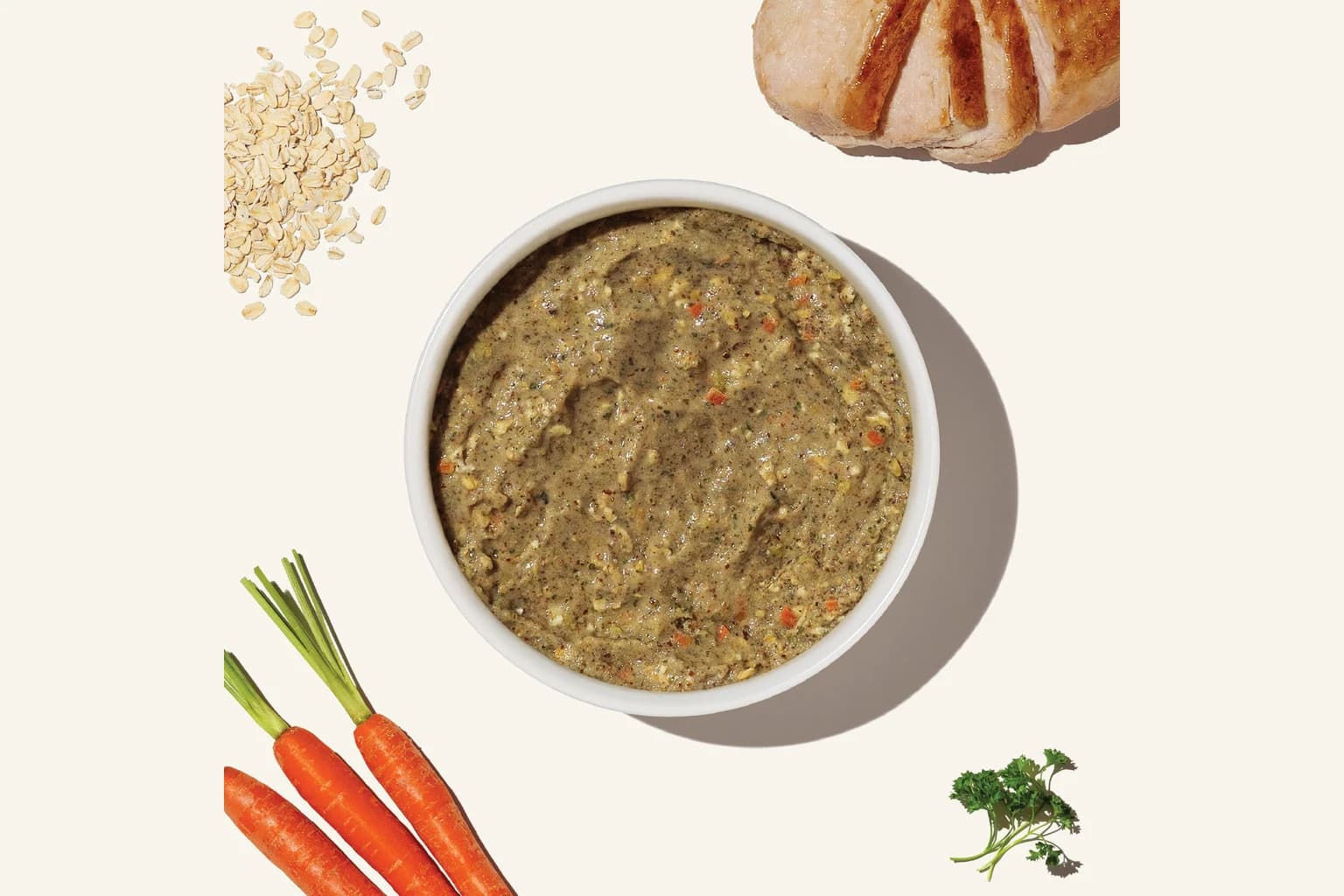
The current THK preparation sequence is straightforward: measure the dry food, add the directed amount of warm water, stir, wait about 3 minutes, and serve. The exact food-to-water ratio belongs to the package or product page because recipes and serving sizes can differ. THK also maintains a preparation guide for its dehydrated foods.
Here is the routine that keeps preparation consistent:
- Read the current directions for the exact recipe and locate the feeding chart.
- Measure the dry food with the same dry measuring cup or scale each time.
- Add the listed amount of warm, not scalding, water.
- Stir thoroughly so dry pockets at the bottom and edges are incorporated.
- Let the mixture stand for about 3 minutes so it can hydrate.
- Check the temperature before placing the bowl down.
- Serve the portion and refrigerate or discard leftovers promptly.
The waiting period is short, but it changes the meal. If I serve too soon, the mixture has not reached its expected consistency. If I leave it unattended for a long time at room temperature, I am treating a hydrated animal food too casually. A simple timer makes both issues easy to avoid.
- Measure the dry calories first, then add the recipe-directed water. Water changes moisture and texture, not the calorie count of the dry portion. Wait about 3 minutes and check the food temperature before serving.
A practical three-minute workflow
Before filling the bowl, I set out the box, measuring cup, water, spoon, and the clean feeding dish. That small bit of organization keeps the process from feeling fussy. I measure the food while dry because that is the portion carrying the calories. Then I add water and stir all the way to the corners. The texture becomes softer as it sits.
For a multi-dog home, prepare and portion each dog's food separately when their calorie allotments differ. It is easy to lose track if a large mixed batch is divided by eye. Separate bowls also help you see who finished, who left food, and whether one dog is trying to switch places.
For enrichment toys, I prepare the food first rather than estimating dry mix and water inside a narrow opening. Once hydrated, the mixture is easier to portion and spread. The toy should be appropriate for the dog and washed after use. A stuffed toy is still part of the dog's daily food allowance, not a calorie-free activity.
Why warm rather than very hot water
Warm water supports the intended quick preparation and produces a meal that is comfortable to serve. Very hot water creates a burn risk and can leave the center warmer than the surface suggests. I stir well and check before feeding, just as I would with any warmed pet food.
Temperature can affect aroma and interest, but it is not a treatment for a poor appetite. A sudden refusal to eat, especially with vomiting, diarrhea, lethargy, pain, or other symptoms, deserves veterinary attention. The product experience belongs in one lane; medical assessment belongs in another.
Dehydrated is not the same as raw
THK states that Wholemade is gently cooked before dehydration. That makes “raw” an inaccurate shorthand for this line. Dehydration describes water removal; it does not by itself describe whether ingredients were cooked. This difference matters for buyers specifically trying to include or avoid raw diets.
The process can create a convenient shelf-stable dry format that becomes a moist meal after water is added. It should not be used to guarantee better nutrient retention, digestibility, allergy relief, or medical outcomes. Those conclusions require evidence beyond the word “dehydrated.”
What Maggie Observed With Penny and Stola
Penny and Stola gave me two useful versions of the same trial. Penny approached the prepared food with immediate interest. Stola was more hesitant at first, which is in character for a dog evaluating a new texture and smell. She did eat it. That contrast is worth preserving because “my dogs liked it” can hide the normal variation between individual animals.
The warm-water routine was easy to work into our schedule. The food mixed quickly, and the hydrated texture worked in regular bowls. It also gave me another way to use part of a measured meal in puzzle toys. Both uses relied on the same basic rule: count the food once. If part of breakfast went into enrichment, it came out of the breakfast portion rather than becoming an unmeasured extra.
At home, I tried the Whole Grain Beef recipe in the original trial. For a camping use, I selected a chicken recipe. The dry format was convenient to pack because I could portion it before the trip and add water at mealtime. Portability was a practical strength for us, not evidence that the food is ideal for every trip or dog. I still needed clean water, a clean container, a way to measure, and appropriate handling for leftovers.
Petful may earn a commission when you click through to The Honest Kitchen, at no extra cost to you.
| Household use | What I observed | Boundary to keep |
|---|---|---|
| Regular bowl | Penny ate readily; Stola hesitated and then ate | Palatability varies by dog and day |
| Puzzle toy | Hydrated texture could be portioned into enrichment | Count it within the meal and clean the toy |
| Rotation | The format offered another planned meal option | Introduce changes gradually and preserve nutritional balance |
| Camping | Dry portions were compact and easy to pack | Bring safe water and do not keep hydrated leftovers unrefrigerated |
| Pantry storage | The unopened dry format was practical to store | Follow package dates and storage directions |
Palatability observations are not health claims
Penny's enthusiasm told me that Penny liked that meal in that setting. Stola's eventual participation told me she accepted it after taking more time. Neither response tells us that the food is more digestible, prevents allergies, improves stool quality, treats a disease, or will be accepted by another dog.
Owners can make their own observation more useful by changing one thing at a time. Keep the feeding location, bowl, meal timing, and measured portion familiar while introducing the new food gradually. Note what the dog actually does: approaches, sniffs, eats some, eats all, walks away, or returns later. If you add several toppers at once, it becomes difficult to know which part changed the response.
The puzzle-toy use case
Hydrated food can turn a portion of a meal into a longer activity. I liked having that option, especially when I wanted to add engagement without automatically adding treats. The same use requires sensible safeguards. Choose a toy sized for the dog, supervise as appropriate, discard food that has sat out too long, and clean the toy's grooves thoroughly.
Freezing a prepared toy can change its difficulty and eating time, but owners should confirm storage guidance and consider the dog's teeth, chewing style, and tolerance for cold food. A dog with dental pain or a history of breaking teeth needs individual veterinary guidance rather than a harder challenge.
Rotation with a purpose
Rotational feeding can mean different things. In our household, it meant having another carefully portioned option, not changing recipes randomly at every meal. For a dog who handles diet changes well, planned rotation may provide practical variety. For a dog with a sensitive gastrointestinal tract, food allergy evaluation, pancreatitis history, or prescription diet, frequent changes may be counterproductive.
The best rotation plan preserves enough consistency to notice problems. Record the recipe, portion, date, appetite, stool, and any symptoms. If a reaction occurs, a clear record is more useful to a veterinarian than a long list of ingredients served together.
Whole Grain, Grain-Free, and Related Format Choices
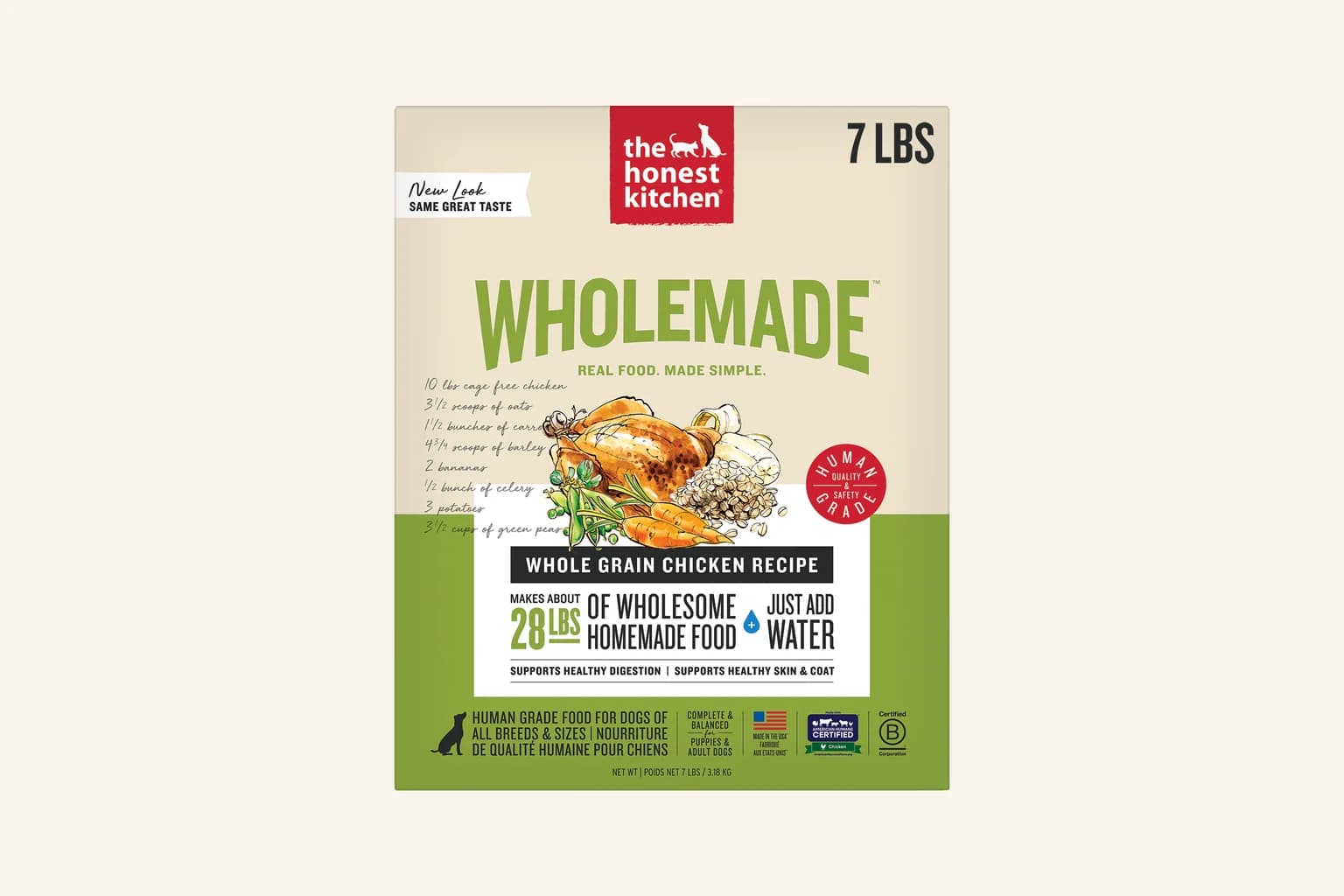
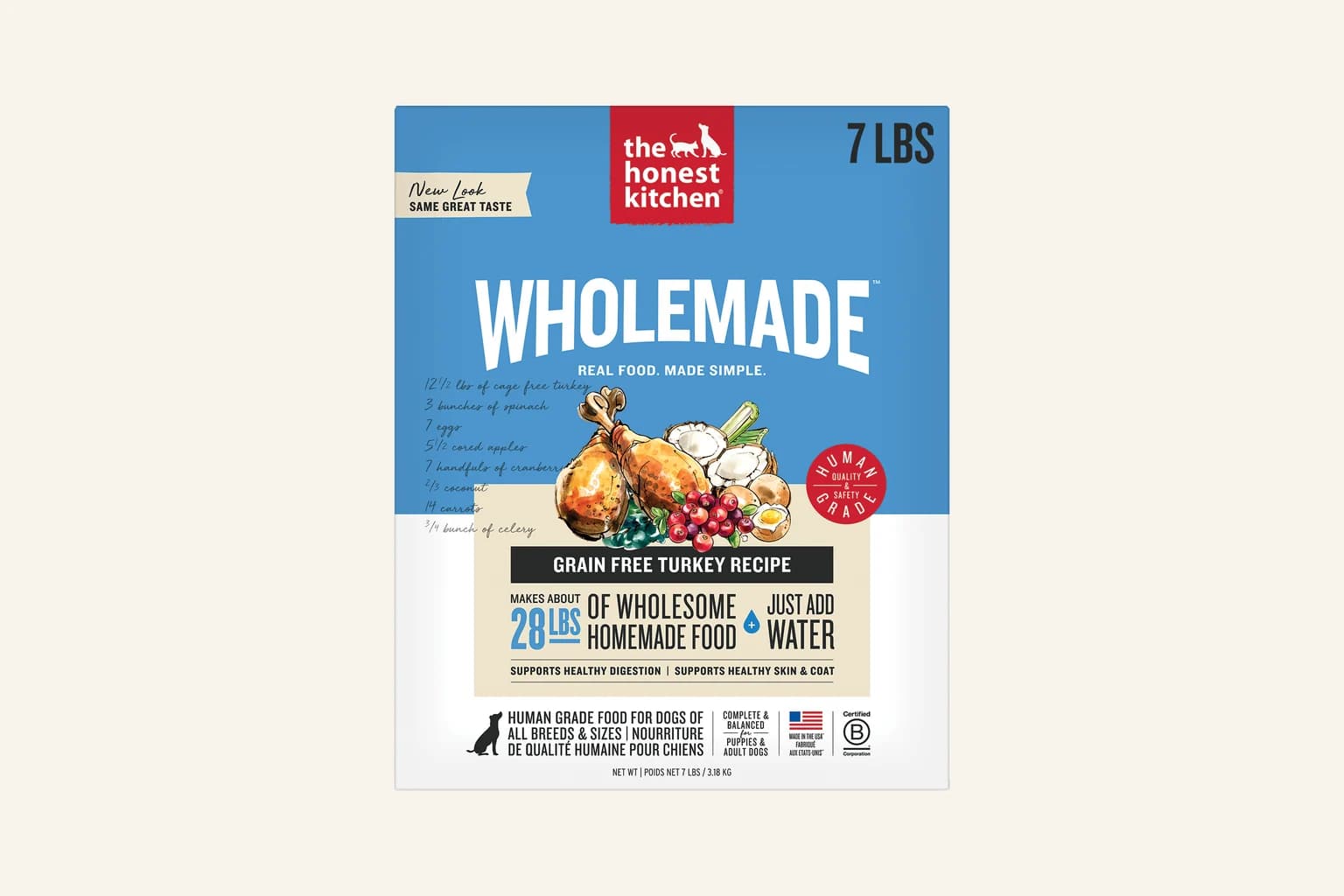
The Wholemade range gives owners grain-inclusive and grain-free recipe choices. The decision should begin with the dog, not with a universal ranking of the two labels. Many dogs can eat grains. Grain-free is not automatically healthier, and the presence of peas or another pulse ingredient does not by itself prove that a food will cause non-hereditary dilated cardiomyopathy. The FDA describes that question as complex and multifactorial in its DCM update.
If a veterinarian has not prescribed a dietary restriction, compare the recipes using the complete label: adequacy statement, life stage, calories, ingredient list, guaranteed analysis, and feeding chart. If a dog has a diagnosed medical need, use the veterinarian's nutrient and ingredient targets. “Grain free” is too broad to substitute for those targets.
Whole Food Clusters are a related THK option for owners who like the brand's approach but want a ready-to-scoop dry format. The Clusters range consists of dry pieces rather than an add-water mix. That can be useful when preparation time or bowl texture is the deciding issue. Our whole food dog food guide explains how to compare ingredient descriptions, nutritional adequacy, and preparation routines across these formats.
A recipe-label checkpoint
Before buying, I would run each exact recipe through five questions:
- Does the adequacy statement match this dog's life stage?
- What are the calories per cup or dry measure, and what portion does the chart suggest?
- Are there ingredients the dog must avoid for a diagnosed reason?
- Does the preparation method fit the household every day?
- Can the owner store both dry product and hydrated leftovers safely?
If one answer is unclear, stop at the label rather than guessing from the collection name. Product formulas and directions can change, so the current package has priority over an older article, review, or screenshot.
There is no universal “number one” food
Search results often invite shoppers to find the single healthiest brand or the food most recommended by veterinarians. Pet nutrition is not that tidy. A suitable food provides complete and balanced nutrition for the dog's life stage, fits individual health needs, can be fed in the right amount, is tolerated by the dog, and is realistic for the owner to purchase and handle consistently.
The Honest Kitchen can meet that practical standard for many households when the selected recipe and format fit. Another dog may need a therapeutic diet, a different calorie density, a different texture, or a food supported by a different body of feeding data. A Spotlight can describe why this product worked well in our routine without claiming that every other choice is inferior.
Serving It as a Meal, Topper, or Enrichment Option
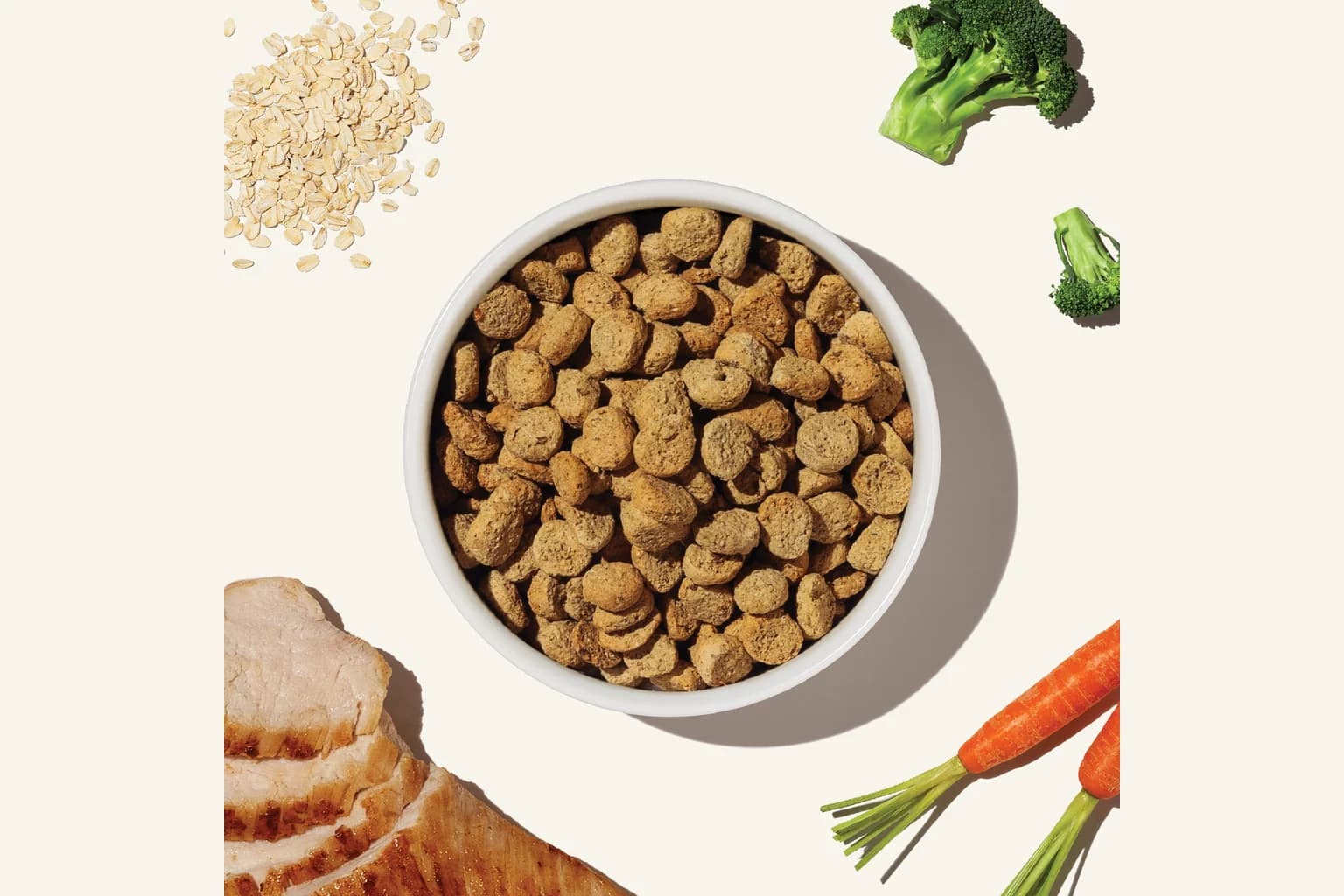
A complete and balanced Wholemade recipe can be served as the primary meal according to its label. It can also be used in a smaller measured amount over another complete food or inside an enrichment toy. The nutritional role changes with the use.
When I use a complete food as a topper, I still account for its calories. The bowl does not know that one food was called the base and another the topper. The dog's body receives the combined calories and nutrients. A useful method is to calculate the calories being added, then remove an approximately equivalent number of calories from the main food unless a veterinarian has set a different plan. For more ways to use a measured addition to the bowl, see our dog food toppers guide, including the difference between complete foods used as toppers and supplemental products.
For an occasional supplemental topper or treat, the World Small Animal Veterinary Association recommends keeping treats below 10% of daily calories so the complete diet remains central. Its treat guidance for dogs also reminds owners that extras can add up quickly.
Regular bowl meal
For a standard meal, prepare the measured portion according to the exact directions. Use the feeding chart as a starting point, then adjust with professional guidance based on body condition, weight trend, activity, neuter status, age, and health. The chart cannot see the individual dog.
Weighing the dry portion can improve consistency, especially for small dogs or calorie-dense recipes. Cups are convenient but can vary with how food settles and how the cup is filled. Whatever tool you choose, use it the same way and monitor the dog's body condition over time.
Topper
As a topper, hydrated Wholemade adds a soft, aromatic layer. Start with a small amount so the dog can experience the new texture without a sudden large diet change. If the dog begins refusing the base food unless the amount of topper keeps increasing, pause and reset the routine rather than escalating indefinitely.
Toppers should not be used to conceal a sudden or persistent loss of appetite. If a dog who normally eats stops eating, the cause may be medical, dental, behavioral, or environmental. The new flavor is not a diagnostic tool.
Enrichment
For enrichment, reserve part of the measured daily food. Spread or stuff the prepared food in an appropriate feeder, supervise where needed, and wash the item promptly. This can make the same calories take longer to consume, which was one of the format's most useful features in my home.
Petful may earn a commission when you click through to The Honest Kitchen, at no extra cost to you.
Travel and camping
The dry mix is compact, but dehydrated food still needs a complete travel plan. Portion each meal, retain the label or a photo of it, pack extra food for delays, bring safe water, use clean utensils, and have a way to refrigerate prepared leftovers or discard them. A resealable container can protect the dry food from moisture, pests, and accidental spills.
Transition and Portion Planning
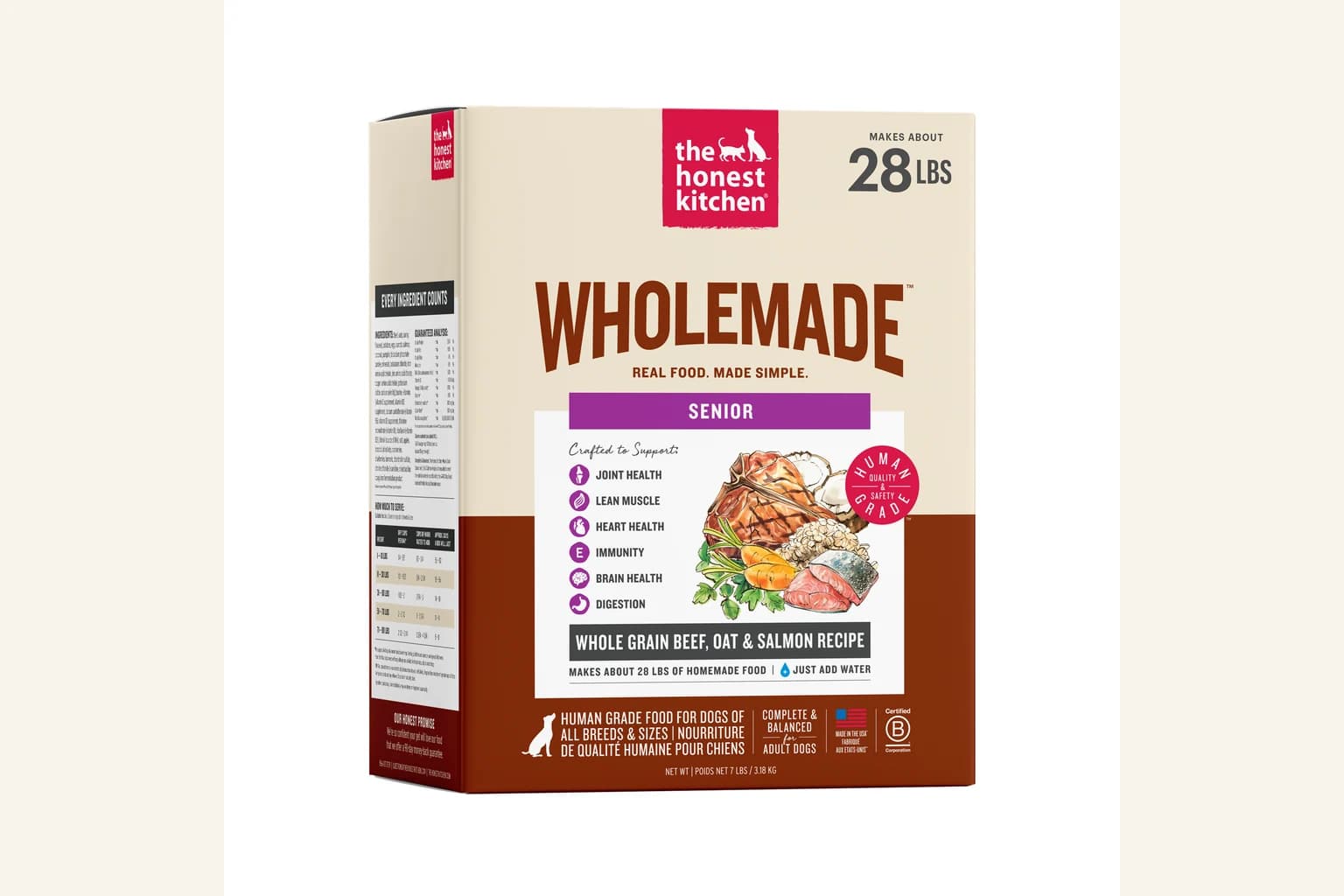
THK recommends a gradual transition to its dehydrated recipes. A common schedule takes about 7 to 10 days, but the dog's current diet, gastrointestinal history, and response can justify a slower pace. The brand's transition guide should be read alongside the exact product label.
A simple 10-day pattern might look like this:
- Days 1 to 3: mostly current food with a small amount of the new prepared food.
- Days 4 to 6: increase the new food while reducing the old food.
- Days 7 to 9: serve mostly new food if the dog is doing well.
- Day 10 onward: complete the transition if appetite, stool, and comfort remain normal.
That is a planning example, not a prescription. Some dogs transition faster without trouble. Others need smaller steps. A dog with a history of diet-responsive disease, a therapeutic diet, significant gastrointestinal symptoms, or a veterinarian-directed feeding plan should follow individualized advice.
Track the dry calories, not the hydrated volume
Hydration makes the bowl look larger because water adds weight and volume. It does not add food calories. Portion decisions should be based on the measured dry amount, the recipe's calorie statement, the dog's total daily needs, and everything else the dog receives.
If the daily allotment is split between bowls, toppers, training rewards, and puzzle toys, write it down before the day begins. A container holding the day's measured dry food can be a helpful visual control. Each use comes from that container. At the end of the day, there is less room for accidental double feeding.
Watch trends, not one isolated bowl
An individual meal can be affected by heat, exercise, stress, schedule, treats, and preference. Evaluate a new food with a short log rather than a single enthusiastic or hesitant response. Record the measured amount, how much was eaten, stool changes, vomiting, itching, energy, and body weight when appropriate.
Contact a veterinarian if symptoms are persistent, severe, or concerning. Repeated vomiting, marked diarrhea, blood, abdominal pain, weakness, dehydration, facial swelling, trouble breathing, or refusal of food can require prompt care. The transition schedule is not a reason to wait through serious signs.
Puppies, adults, and individual calorie needs
Do not assume that every Wholemade recipe is intended for every life stage. Growth, including growth of large-size dogs, has specific nutrient considerations. The adequacy statement identifies the intended use of the exact food. The feeding chart then provides a starting amount, not a permanent guarantee.
Adult dogs with the same body weight can need different calories. Activity, age, body condition, coat, environment, reproductive status, and health all matter. Monitor weight and body condition and adjust deliberately rather than changing portions in response to one hungry look.
Storage at Home and on the Go
Before water is added, Wholemade offers the pantry convenience that first drew my attention. Keep the dry product sealed, cool, dry, and protected from pests according to the current package directions. Retain the original package or at least the lot code, best-by date, and product name. Those details matter if there is ever a quality question or recall inquiry.
After hydration, treat the food as perishable. Serve promptly, refrigerate leftovers in a clean covered container, and use a conservative 2 to 3 day window unless the current label provides a different instruction. THK's hydrated-food storage guidance is the source to recheck because guidance can change.
Do not leave a hydrated bowl out all day for grazing. Room temperature, time, contamination from the dog's mouth, and household conditions all affect food safety. If the dog does not finish within a reasonable mealtime window, remove the bowl and follow current storage advice. When in doubt about how long food has been out, discard it.
A dry-to-hydrated storage timeline
Unopened dry box: Store as directed and check the best-by date and package condition before use.
Opened dry box: Reseal after each use, keep dry, and prevent scoops or wet hands from introducing moisture.
Immediately after preparation: Serve the measured portion once it has hydrated and is at a safe temperature.
- After the meal: Refrigerate usable untouched leftovers promptly in a covered clean container. Discard food that has been contaminated or left out too long.
Within the refrigerated window: Use a conservative 2 to 3 days unless current product instructions say otherwise. Label the container with the preparation date if multiple people feed the dog.
Batch preparation
Preparing more than one meal at a time may save effort, but it moves more food into the perishable category. Make only the amount you can refrigerate safely and use within current guidance. Use clean tools, shallow covered containers when appropriate, and clear labels. If portions are frozen, follow the brand's current directions for freezing and thawing rather than improvising repeated freeze-thaw cycles.
Small households may find it easier to prepare each meal fresh. The 3-minute wait is short, and fresh preparation avoids tracking multiple containers. The right system is the one the household can execute reliably.
Travel handling
For travel, premeasure dry servings into labeled food-safe containers or bags while keeping the original label information available. Carry more safe water than the meal calculation alone requires. Clean bowls and mixing utensils matter, especially over several days. If refrigeration is uncertain, prepare only what the dog will eat and discard the rest.
Never assume lake, stream, campsite, or hotel tap water is suitable without checking. The food's convenience does not remove the need for a safe water source. It simply lets you carry the caloric portion dry until mealtime.
Petful may earn a commission when you click through to The Honest Kitchen, at no extra cost to you.
Who May Appreciate the Format
Wholemade may appeal to owners who like preparing a warm, moist meal, want a compact pantry format, or value the ability to use the same measured food in a bowl and in enrichment. It may also fit households that prefer a grain-inclusive or grain-free choice within the same format and are comfortable reading recipe-specific labels.
Dogs who enjoy soft textures and aromatic meals may respond well, as Penny did. More cautious dogs may need a gradual introduction, as Stola's initial hesitation illustrated. Neither reaction is a quality verdict. Palatability is personal, and a food that one dog loves can leave another unmoved.
The format may be less convenient for someone who cannot reliably measure water, wait, refrigerate leftovers, or clean food-filled toys. It may also be a poor fit when a veterinarian has prescribed nutrient targets the selected recipe does not meet.
Households that value flexible uses
One box can support several routines: a complete bowl meal when the recipe is labeled for that use, a calorie-counted topper, a measured puzzle-toy filling, or a portable dry meal for travel. That flexibility was the standout advantage for me. It reduced the need to keep unrelated extras just to change the serving experience.
Flexibility does not mean nutritional interchangeability. If you move between Wholemade recipes, Whole Food Clusters, toppers, and treats, verify each item's role. A complete food can anchor the diet. A supplemental product complements that anchor. A treat is an extra. The packaging tells you which is which.
Selective eaters
Warm water, aroma, and a soft texture may increase interest for some dogs. Start small and keep the presentation low-pressure. Avoid building a cycle in which the dog learns that declining the bowl produces a growing sequence of richer additions.
A selective eater who maintains a healthy weight and otherwise acts normally may simply have preferences. A sudden change in appetite is different. Dental pain, nausea, medication effects, illness, stress, and other causes should be considered with a veterinarian.
Dogs with medical or diet restrictions
This article cannot decide whether Wholemade fits kidney disease, pancreatitis, diabetes, heart disease, food allergy, gastrointestinal disease, urinary concerns, or another condition. Those decisions require the exact recipe's nutrient profile and the dog's clinical needs. A veterinarian or veterinary nutrition specialist can compare them.
For a formal elimination diet, adding a new recipe or topper can undermine the trial even when the ingredient list looks simple. For fat-restricted, sodium-restricted, phosphorus-managed, or other targeted diets, broad descriptors such as whole food, human grade, or grain free do not replace the relevant nutrient data.
Owners comparing it with other brands
The fairest comparison is format and recipe against format and recipe. Compare adequacy, life stage, calorie density, ingredient suitability, manufacturer information, preparation, storage, cost per day, and how the dog does on the food. Purina Pro Plan and The Honest Kitchen, for example, represent different portfolios and product experiences; one cannot be declared universally better from brand names alone.
Veterinarians may recommend foods based on the individual patient, nutritional formulation, research, quality-control information, availability, and owner constraints. There is no single food that every veterinarian recommends for every dog. Ask what outcome the recommendation is meant to support and which exact recipe meets it.
My bottom line after living with the format
The Honest Kitchen dehydrated food earned a favorable place in our household because it was simple to prepare, easy to store, useful in more than one feeding context, and accepted by both Penny and Stola after their individual introductions. I especially appreciated the warm-water transformation and the ability to turn part of a planned meal into enrichment.
I would still buy recipe by recipe. I would read the current adequacy statement, calories, feeding chart, ingredients, and directions; select grain-inclusive or grain-free based on the dog's needs rather than a trend; and involve a veterinarian when a medical diet is part of the picture. That is not a limitation unique to THK. It is what responsible selection looks like for any pet food.
A day-in-the-life preparation plan
For breakfast, I would begin with the day's full dry allotment already measured. That makes the calorie plan visible before any portion goes into a bowl, puzzle toy, or topper use. I would move the breakfast share to a clean bowl, add the package-directed amount of warm water, stir, and start a 3-minute timer.
While the food hydrates, I can refill water bowls and prepare any medications that the veterinarian has approved for meal use. Before serving, I stir again and check temperature. If Penny and Stola have different portions, each bowl remains separate from the first measurement onward.
For an enrichment session, I use food reserved from that same day's allotment. I hydrate it before filling the toy, supervise as appropriate, and clean the toy once the session ends. The activity changes how the meal is delivered, not how many calories are available.
- For dinner, I repeat the fresh preparation or use a planned refrigerated portion that remains within current guidance. I do not leave the hydrated food out all afternoon. If food was prepared in advance, the container is dated so nobody has to guess.
This routine shows why Wholemade can be easy without being instant. The hands-on time is brief, and the repeated sequence makes it predictable.
Troubleshooting texture without losing portion control
If the food seems too thin or thick, first confirm that the dry food and water were measured using the current recipe directions. A heaped scoop, inconsistent cup, or forgotten portion can change texture. Stir all the way to the bottom and wait the full preparation time before deciding.
If the dog prefers a softer texture, ask whether the current directions allow an adjustment and keep the dry calorie portion fixed. Added plain water can change consistency without changing calories, but owners should not dilute a medically managed diet or change feeding volume substantially without guidance.
If the dog prefers more texture, do not skip hydration when the recipe calls for it. Consider whether Whole Food Clusters are a better everyday format, or reserve an appropriate crunchy complete food as a measured addition. The Honest Kitchen's wider lineup is useful precisely because owners do not have to force one format to act like another.
- Texture changes after refrigeration are normal for many hydrated foods. Stir a refrigerated portion and bring it only to a safe serving temperature. Never use very hot water or serve a hot center. Discard food outside the safe window rather than trying to restore it.
Calculating true cost per day
The box price does not show what the food costs for one dog. Use the current calorie statement, the dog's planned daily calories, and the amount of dry product supplying those calories. Then divide the package price by the number of full feeding days.
Include waste. Wholemade can be prepared in small portions, which may reduce discarded leftovers. Include treats and toppers only if they are genuinely part of the plan. A complete food used in enrichment does not cost extra when it comes from the same daily allotment.
Compare formats fairly. Prepared Wholemade contains added water, so price per prepared pound is not the same calculation as price per dry pound. Clusters and conventional dry foods are compared by calories per dollar and daily feeding cost. Wet foods include substantial moisture and should also be compared by daily calories, not package weight alone.
- The cheapest food is not always the best household value if the dog will not eat it or the owner cannot manage it. The most expensive is not automatically better. Value includes nutritional fit, acceptance, preparation, storage, waste, and consistency.
Questions I would ask before buying a new recipe
First, is the exact recipe complete and balanced for my dog's life stage? Second, how many calories are in the dry measure I will use? Third, what preparation ratio and feeding amount apply? Fourth, does the ingredient list fit any veterinary restriction? Fifth, how long can hydrated leftovers be refrigerated?
I would also ask whether I want a grain-inclusive or grain-free recipe for a documented reason, whether a base mix requires an addition, and whether another THK format better suits the household. If the dog has a medical condition, I would ask the veterinarian which nutrient data are needed before purchase.
Those questions keep the decision positive and concrete. They do not challenge the product's appealing qualities. They make sure the selected version can deliver them in the right context.
What to record during the first month
Record the recipe name, lot code, daily dry portion, water ratio, transition percentage, appetite, stool, vomiting, itching, body weight when appropriate, and any extras. Note whether the food was served in a bowl, toy, or topper role. Separate Penny's response from Stola's rather than combining them into one household rating.
At the end of each week, ask whether preparation remained easy on busy days, whether the dogs ate the complete portions, whether storage created waste, and whether the budget matched the estimate. This creates a balanced real-world review.
A new symptom should be discussed with the veterinarian based on severity and duration. Do not credit or blame the dehydration process automatically. The process describes the format; it does not diagnose the cause of a clinical change.
Vet-informed questions for special situations
For a puppy, confirm growth adequacy and large-size dog language where applicable. For a senior dog, review calories, chewing comfort, and any disease-specific targets. For pancreatitis, ask about fat. For kidney or heart disease, ask which phosphorus, protein, sodium, or other values matter. For diabetes, confirm calorie consistency and meal timing. For a suspected food allergy, ask whether an elimination trial is needed and what foods must be excluded.
Bring the exact Wholemade product information to the appointment. A veterinarian cannot evaluate “dehydrated food” as a category with the precision available from a recipe label and full nutrient profile.
If the food fits, the warm, flexible format can remain one of its strongest practical advantages. If a recipe does not fit, another THK format or recipe may be considered, but medical targets should not be negotiated away for brand consistency.
Feeding when someone else is in charge
Pet sitters need an exact instruction, not “make the usual.” Premeasure dry servings or mark the measuring cup, provide the water amount, explain the 3-minute wait, identify refrigerator rules, and state how much food may go into puzzle toys. Leave the product package and veterinary contact information available.
Ask the caregiver to record whether each dog ate and whether food was discarded. In a multi-dog home, feed separately enough to prevent swapping. This preserves both calorie control and the first-person observations that matter when I return.
Why the original observations still belong here
This article began with a real trial, not a generic product summary. Penny's immediate interest, Stola's hesitation and eventual eating, the puzzle-toy use, rotation, and camping portability define what the product contributed to our household.
The preparation was easy for me, the dogs accepted it, the food traveled well in dry portions, and the format supported enrichment. Those observations do not show that dehydration automatically preserves more nutrients, improves digestion, fixes allergies, or suits every medical condition.
Our experience and the current product directions can help another owner decide whether this format fits their own routine.
A quick Wholemade readiness test
Before choosing the format, answer yes or no to eight questions. Can I measure dry portions consistently? Do I have safe warm water at each meal? Can I wait about 3 minutes? Will I clean bowls and enrichment toys promptly? Can I refrigerate leftovers? Does the exact recipe match the dog's life stage? Do the calories and cost fit the plan? Has a veterinarian reviewed it if a medical restriction applies?
Mostly yes answers suggest the format can fit the household. A no answer may point to a solvable routine issue or to another THK format. For example, an owner who likes the brand but cannot manage water preparation during a rushed morning may prefer Whole Food Clusters. Someone who values a soft warm bowl may find the short preparation worthwhile.
Keeping the experience positive during transition
Serve the new food without pressure. Use a familiar location and clean bowl, prepare it consistently, and let the dog investigate. Praise calm engagement, but do not repeatedly replace the meal with richer options after a pause. Penny's quick interest and Stola's slower acceptance were both normal household observations.
Advance the transition only while the dog is doing well. A mild temporary change may justify holding the current ratio, while persistent or significant symptoms deserve veterinary guidance. Owners should not push through illness simply to complete a schedule.
Keep other new treats and foods limited during the transition. This makes both a positive response and a problem easier to interpret. When the new food becomes the main diet, continue tracking the portion rather than assuming enthusiasm equals the correct amount.
Comparing warm-meal convenience fairly
Wholemade requires more preparation than scooping dry pieces and less hands-on work than cooking a balanced homemade diet. The routine is measured in minutes, but it also requires dependable water and cleanup. Compare it with what the owner will realistically do every day, not with an idealized weekend routine. For a side-by-side look at Wholemade against another shelf-stable add water food, see our comparison of The Honest Kitchen vs. The Farmer’s Dog Instant Fresh.
The dry box can be easier to store than equivalent prepared wet volume. For travel, dry portions are light and compact, but water and food safety still belong in the packing plan. At home, preparing only the needed serving can limit opened-container waste.
That middle ground is the format's practical appeal. It offers a freshly hydrated serving experience without asking the owner to formulate the diet. The exact complete recipe and its directions do the nutritional work.
A final note on individual results
Penny and Stola helped me evaluate palatability, preparation, puzzle-toy use, rotation, and portability. They could not evaluate every recipe, life stage, or medical need. Their experience is a useful example, not a statistical guarantee.
Owners should watch their own dog with the same specificity. Note the recipe, amount, transition, meal use, and response. When the observations stay separate from medical claims, a positive review becomes more trustworthy and more useful.
Frequently Asked Questions
Use the food-to-water ratio on the current package or exact product page because recipes and portions can differ. Measure the dry food first, add the directed amount of warm water, and stir thoroughly.
The current preparation sequence says to let the mixed food sit for about 3 minutes. Stir well and check that the temperature is safe before offering it to the dog.
No. The Honest Kitchen states that Wholemade is gently cooked before dehydration. Dehydrated describes the water-removal format and should not be treated as a synonym for raw.
Refrigerate hydrated leftovers promptly in a clean covered container. Use a conservative 2 to 3 day window unless the current package or current THK guidance states otherwise. Discard food left out too long.
Introduce the prepared food gradually over about 7 to 10 days when appropriate, increasing the new food as the old food decreases. Slow down for a dog who needs more time and follow veterinary guidance for medical diets or significant symptoms.
Sources
- The Honest Kitchen: Wholemade dehydrated dog food
- The Honest Kitchen: Wholemade Grain Free Chicken
- The Honest Kitchen: Wholemade Whole Grain Chicken
- The Honest Kitchen: How to prepare dehydrated recipes
- The Honest Kitchen: Transitioning to dehydrated recipes
- The Honest Kitchen: Hydrated food storage
- AAFCO: Reading pet food labels
- AAFCO: Human-grade guidance
- FDA: Questions and answers on non-hereditary DCM
- WSAVA: Feeding treats to your dog

Maggie Marton writes about dogs, cats, kids, and more on her amazing blog, OhMyDogBlog. She is a digital media pro, author, pet lifestyle expert, mama, reader, dog-obsessed cat lady, pit bull advocate, eco-friendly and cancer thriver.
Sign up for expert-backed reviews and safety alerts all in one place.
A Final Word (Disclaimer)
At Petful, our review integrity is paramount; we never exchange special treatment in our reviews for monetary or material rewards.
Nonetheless, when our readers click through to online merchants (including Chewy or Amazon), we receive a referral commission. This supports the running of our free blog, and we appreciate your backing.