The Honest Kitchen Pet Food Review: Complete Buyer's Guide
Explore The Honest Kitchen dog and cat food formats, label checks, preparation, costs, and recall history to choose a recipe that fits your pet.

BVMS, MRCVS
Petful is reader supported. As an affiliate of platforms like Amazon and Chewy, we may earn a commission when you buy through links on this page. There is no extra cost to you.
This article is sponsored by The Honest Kitchen. Petful maintains editorial control and uses current product information plus independent pet-nutrition guidance.
Honest Kitchen dog food reviews are most useful when they separate the brand's appealing human-grade positioning from the recipe-level questions every buyer still needs to answer. The Honest Kitchen offers dog and cat foods across dehydrated, dry Cluster, and wet formats, plus toppers, treats, hydration products, and base mixes. The range gives households real flexibility, while the best choice remains the specific product whose adequacy statement, life stage, calories, ingredients, preparation, storage, and price fit the pet.
- 1The Honest Kitchen offers complete foods and supplemental products in several dog and cat formats
- 2Human grade is a substantiated production claim, not proof that every recipe is nutritionally superior
- 3Check the exact nutritional adequacy statement and life stage before choosing a meal
- 4Match preparation, texture, storage, calories, and budget to the household
- 5The 2013 voluntary recall involved specific lots; check current FDA and brand notices against your package details.

Sign up for expert-backed reviews and safety alerts all in one place.
The Honest Kitchen at a Glance
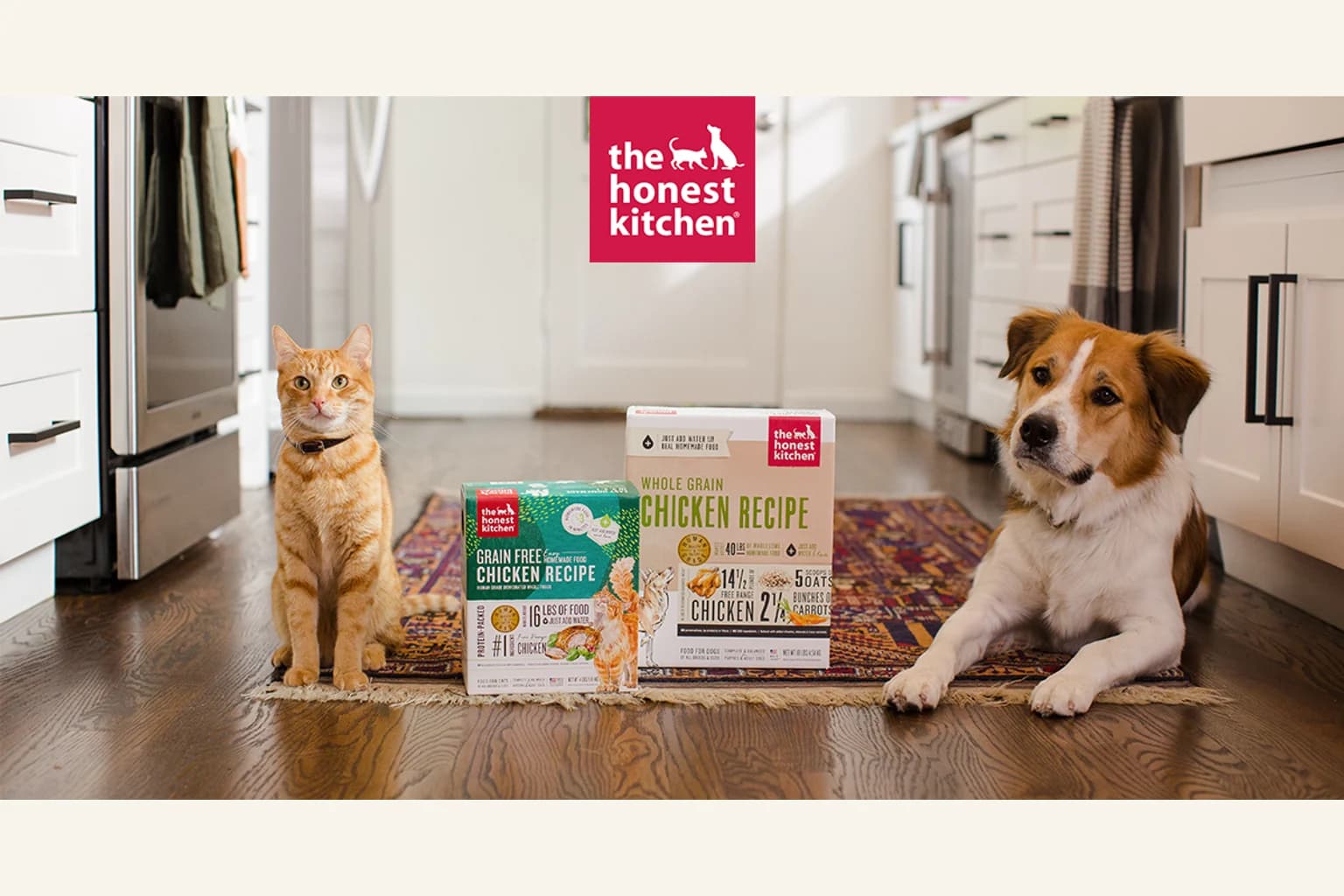
The Honest Kitchen says it was founded in 2002 and has built its identity around human-grade pet food. The current catalog spans foods for dogs and cats, with formats that range from add-water dehydrated meals to ready-to-scoop Whole Food Clusters and ready-to-serve wet recipes. Supplemental toppers, treats, broths, and related products broaden the ways owners can use the brand.
That breadth is a meaningful advantage. A dog household can choose warm hydrated food or crunchy Clusters without leaving the brand. A cat household can compare dehydrated food, dry Clusters, and several wet textures. Owners who only want an occasional addition can look at Pour Overs, Meal Boosters, treats, or hydration products rather than replacing the complete meal.
It also makes label reading essential. The brand name does not tell you whether a specific box, bag, carton, treat, broth, or base mix is complete and balanced. The exact package does.
What The Honest Kitchen Makes Today
The dog catalog and cat catalog include several food, topper, and treat formats. Check the current product pages for available recipes and package sizes.
Wholemade dehydrated dog food
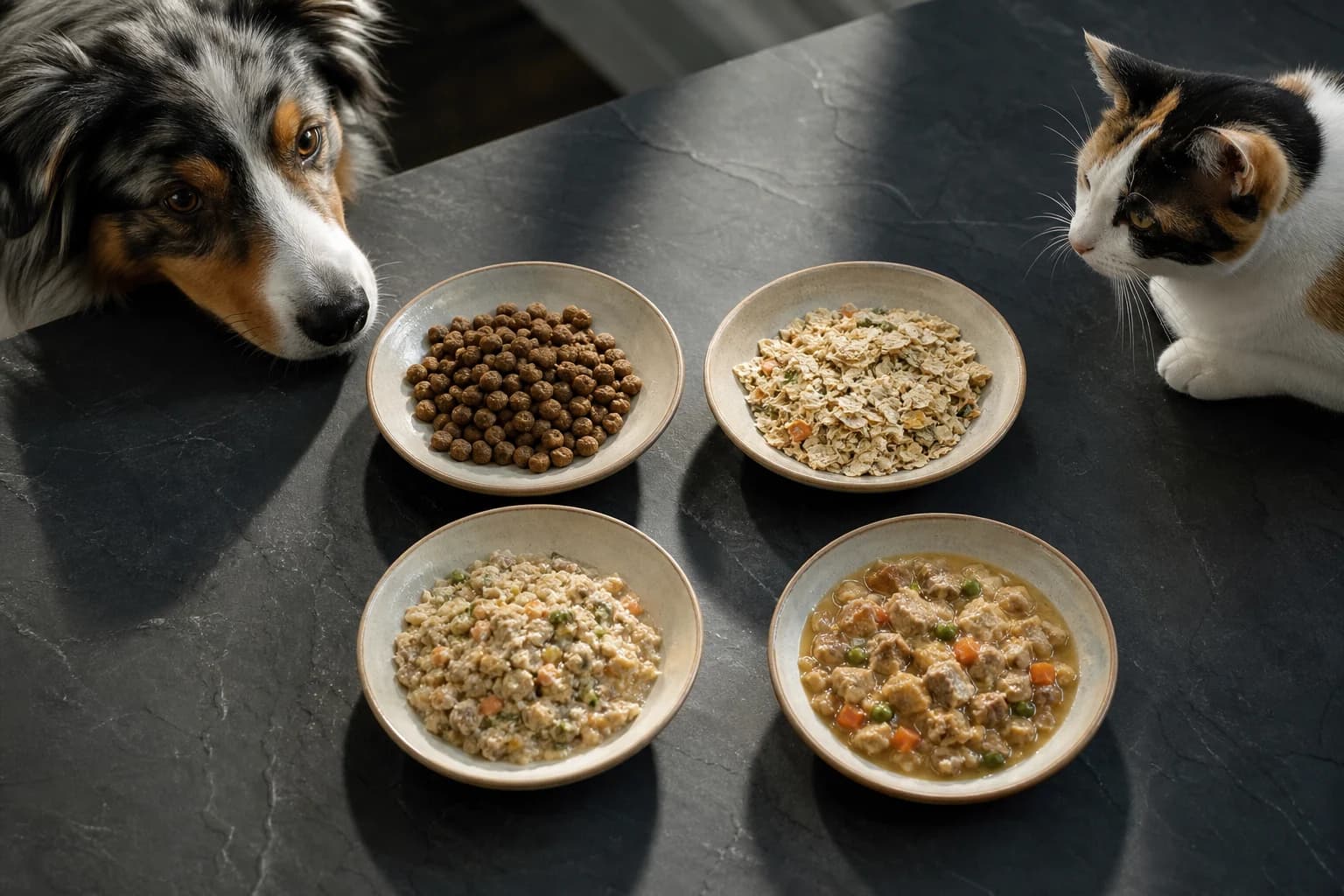
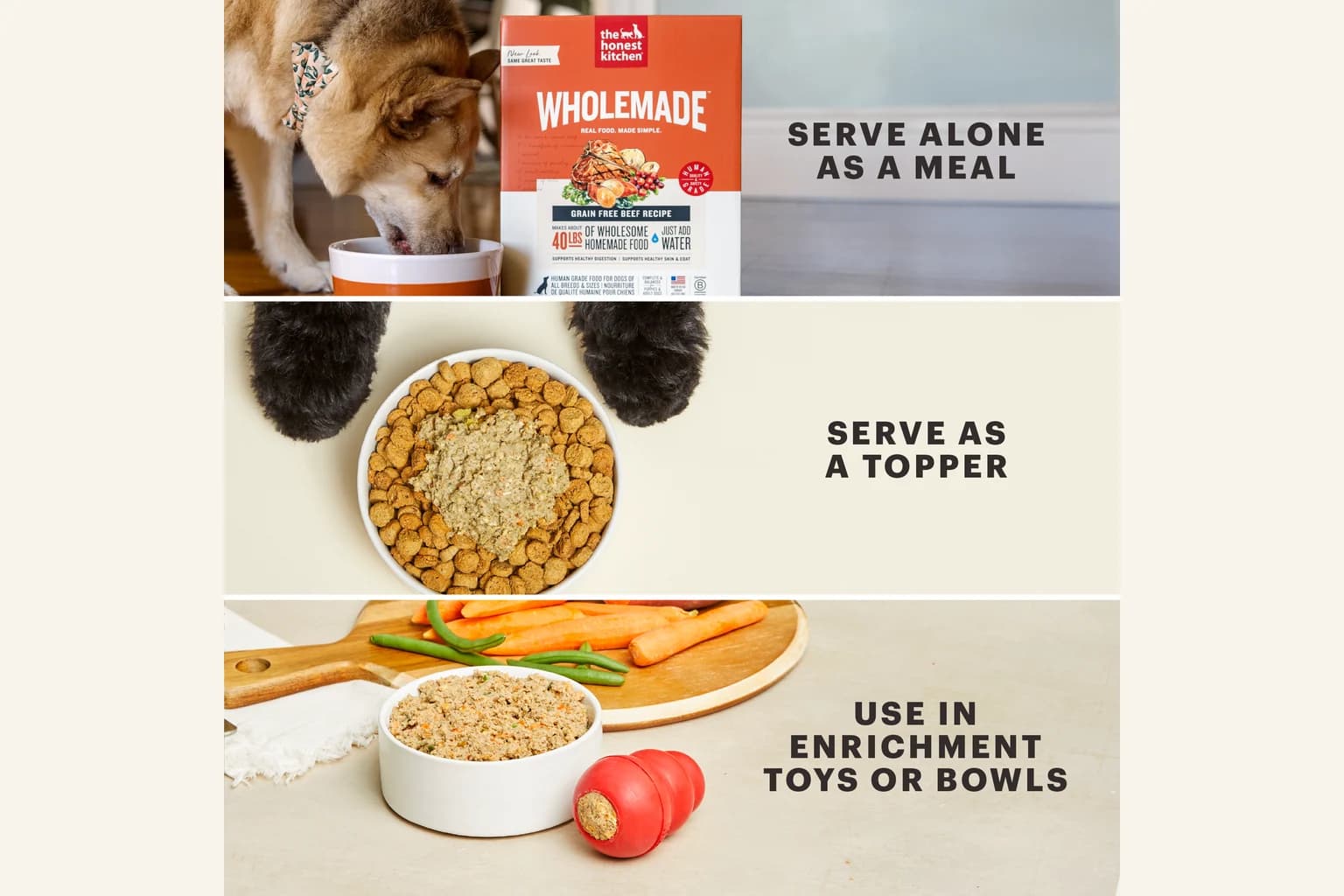
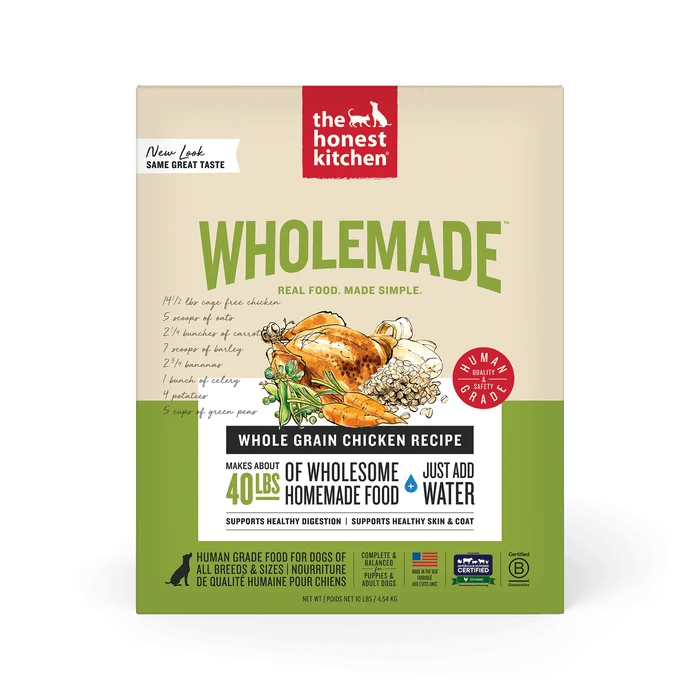
Wholemade is the add-water range. Owners measure the dry mix, add warm water according to the recipe directions, stir, wait about 3 minutes, and serve. THK states that these foods are gently cooked before dehydration and are not raw. The dry product is compact and shelf stable, while hydrated leftovers become perishable.
The range includes grain-inclusive and grain-free choices. Some products are complete foods, while base mixes require a label-directed protein addition. Do not treat every dehydrated box as interchangeable.
Whole Food Clusters for dogs
Whole Food Clusters are ready-to-scoop dry pieces. THK describes the process as cold pressing ingredients into pieces, roasting, and dehydrating them. The format offers dry-food convenience for owners who do not want to mix water at every meal.
Clusters should be evaluated like any finished diet: adequacy, life stage, calories per cup, ingredient fit, and feeding chart. Their production process differs from conventional extruded kibble, but that difference alone does not establish nutritional superiority.
Dog wet food, toppers, treats, and hydration products
The broader dog range includes pourable toppers, meat-forward Meal Boosters, treats, chews, and hydration-style products. Many are labeled only for intermittent or supplemental feeding. Their role is to add flavor, texture, moisture, or variety without displacing a complete diet.
Dehydrated cat food
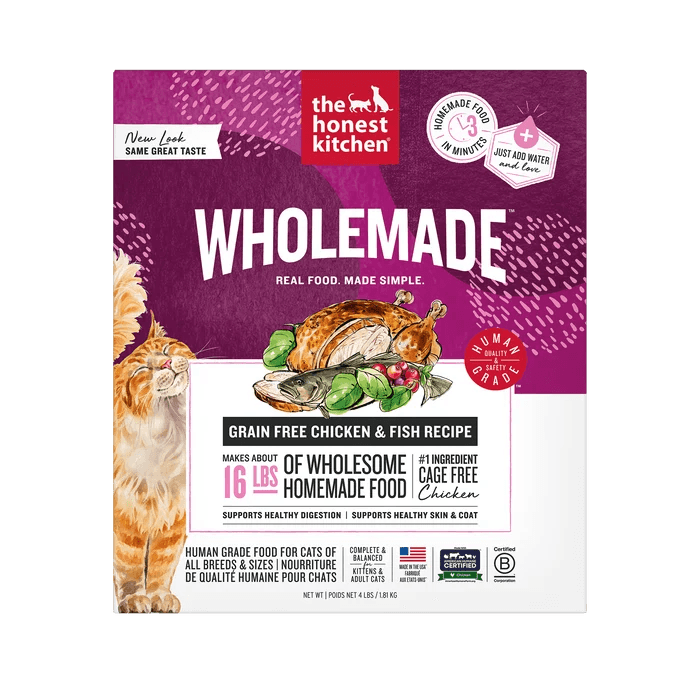
THK's dehydrated cat recipes use warm-water preparation and a 3-minute wait. The soft hydrated texture creates a different feline experience from dry food and adds water to the meal. Cat-specific introduction guidance is slower than a typical dog transition, often 10 to 14 days beginning with pea-size tastes.
Cat Whole Food Clusters
Feline Clusters provide a crunchy ready-to-scoop format. Representative current recipes include chicken-and-whitefish and turkey-and-chicken combinations. Product availability can change, so the current recipe page and package should lead.
Petful may earn a commission when you click through to The Honest Kitchen, at no extra cost to you.
Wet cat food
The wet range includes textures such as minced food in gravy and smooth Câté. Moisture and mouthfeel can be valuable selection points for cats, but wet format does not establish suitability for kidney, urinary, allergy, kitten, or senior needs.
| Format | Preparation | Moisture and texture | Can it be a complete meal? | Critical label check |
|---|---|---|---|---|
| Wholemade dehydrated dog food | Add recipe-directed warm water, stir, wait about 3 minutes | Soft hydrated meal | Recipe dependent | Adequacy, life stage, dry calories, water ratio, leftover storage |
| Dog Whole Food Clusters | Scoop and serve | Crunchy dry pieces | Recipe dependent | Adequacy, life stage, calories per cup, feeding chart |
| Dog toppers and treats | Pour, spoon, crumble, or chew as directed | Gravy, meat, crunch, or chew | Often supplemental | Feeding statement, calories, ingredients, storage |
| Dehydrated cat food | Add recipe-directed warm water and wait | Soft hydrated feline meal | Recipe dependent | Cat adequacy, life stage, transition, water ratio |
| Cat Whole Food Clusters | Scoop and serve | Crunchy dry pieces | Recipe dependent | Cat adequacy, life stage, calories, portion |
| Wet cat food | Open and serve | Minced, gravy, or Câté | Recipe dependent | Adequacy, life stage, calories, after-opening storage |
What Human Grade Means on a Pet Food Label
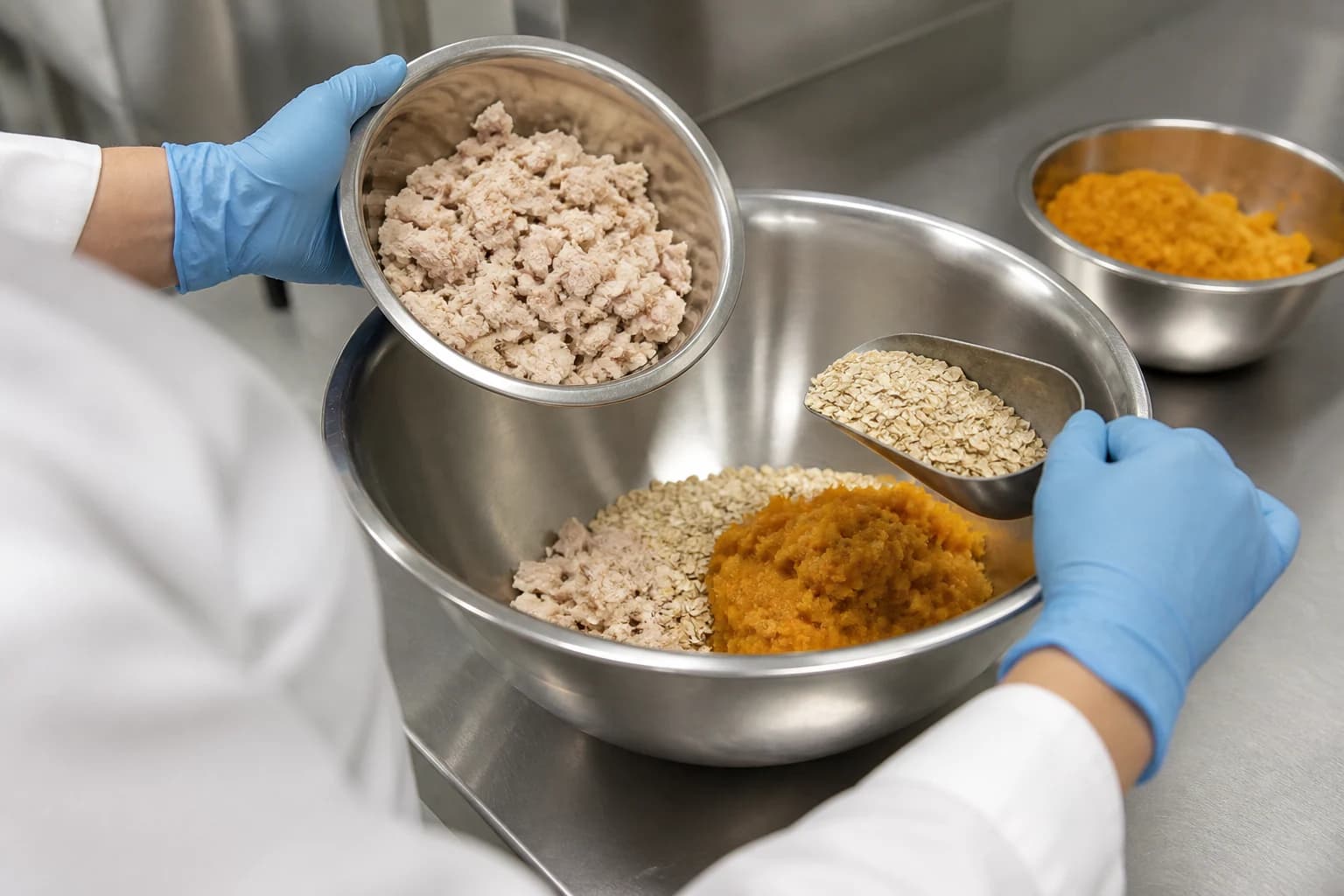
Human grade is one of The Honest Kitchen's defining claims. It deserves a precise explanation because shoppers often interpret it as a complete nutritional endorsement.
Under AAFCO's human-grade guidance, the claim applies to every ingredient and to the handling, processing, and transport of the finished product. A company must substantiate that standard. It is a production and ingredient-status claim, not a statement that the food is intended for people to eat.
Human grade does not answer whether the product is complete and balanced. It does not name the life stage. It does not prove that every dog or cat will digest the recipe well. It does not make a grain-free recipe medically necessary or a treat suitable as a meal. Those questions require the adequacy statement, ingredient list, calorie statement, feeding directions, and the individual pet's needs.
- The claim addresses ingredients and production handling across the finished product. It does not replace the nutritional adequacy statement or guarantee superior health, digestibility, allergy safety, or life-stage fit.
The distinction is positive rather than dismissive. Owners who value a substantiated production standard can reasonably see human grade as part of THK's appeal. They should pair that preference with a complete recipe evaluation.
Dehydrated Food, Clusters, Wet Food, Toppers, and Treats Compared
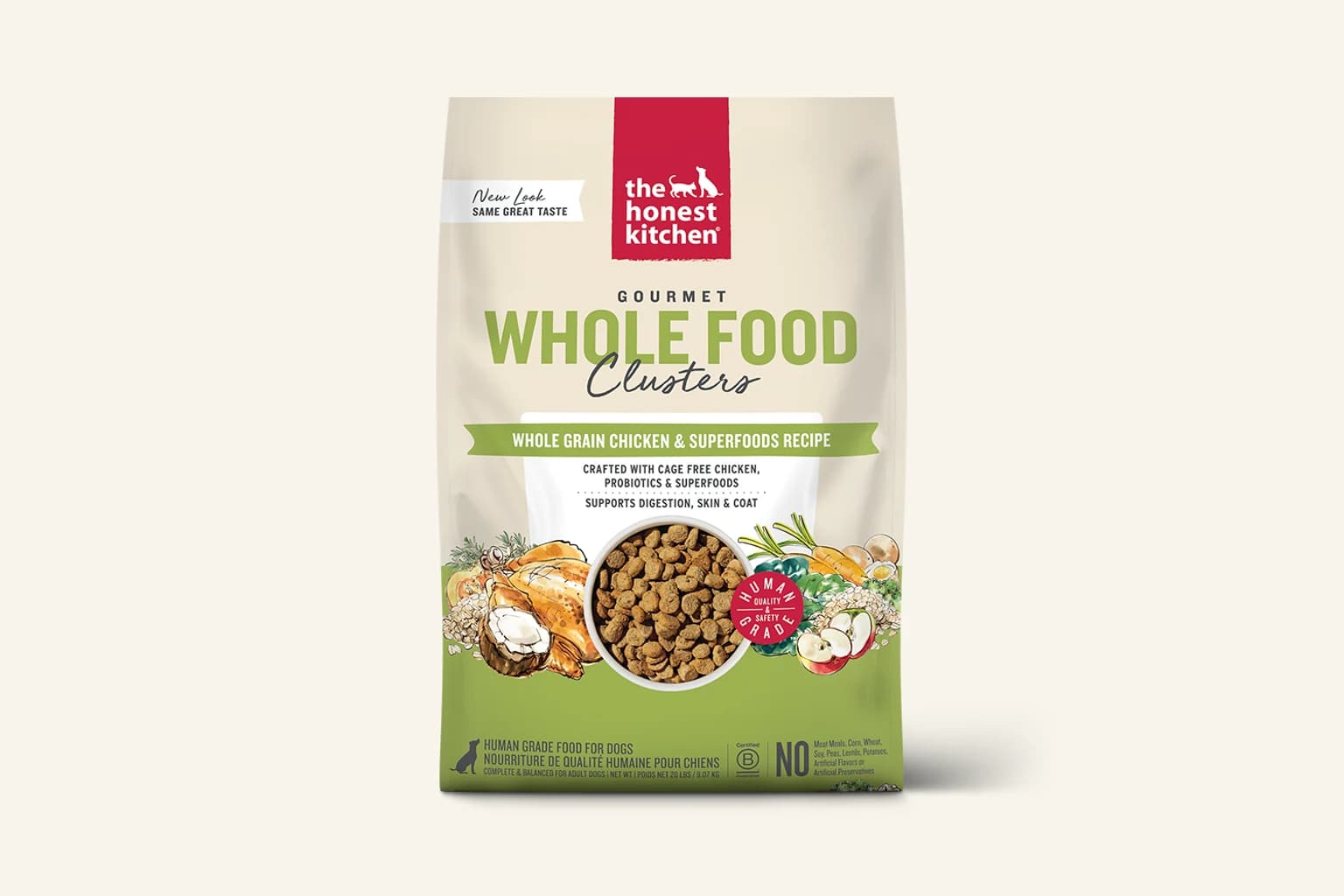
Preparation time
Wholemade asks for measuring, warm water, stirring, and a short wait. Clusters require scooping. Wet food requires opening and after-opening storage. Toppers may be easy to pour but add a second product to measure and store. The best routine is the one a household can follow consistently.
Moisture
Hydrated and wet foods carry water into the meal. Clusters and dry treats do not unless the owner separately offers or adds water appropriately. Moisture can influence preference and water intake, especially for cats, but it is not a substitute for medical hydration care.
Storage
Dry dehydrated mix and Clusters are shelf stable when stored as directed. Hydrated food and opened wet products need refrigeration. Treats and chews require sealed dry storage. Travel can favor compact dry mix or ready-to-scoop pieces, but the owner still needs clean water, bowls, and food-safety planning.
Texture
Wholemade becomes soft. Clusters stay crunchy. Wet foods vary from gravy and mince to smooth Câté. Pour Overs coat a meal. Fish skins behave like chews. Texture can determine acceptance as strongly as ingredients.
Nutritional role
This is the most important difference. Some foods are complete and balanced for a named life stage. Base mixes need directed additions. Toppers, treats, broths, and hydration products are often supplemental. Check every label.
How to Read Each Recipe's Ingredients and Adequacy Statement
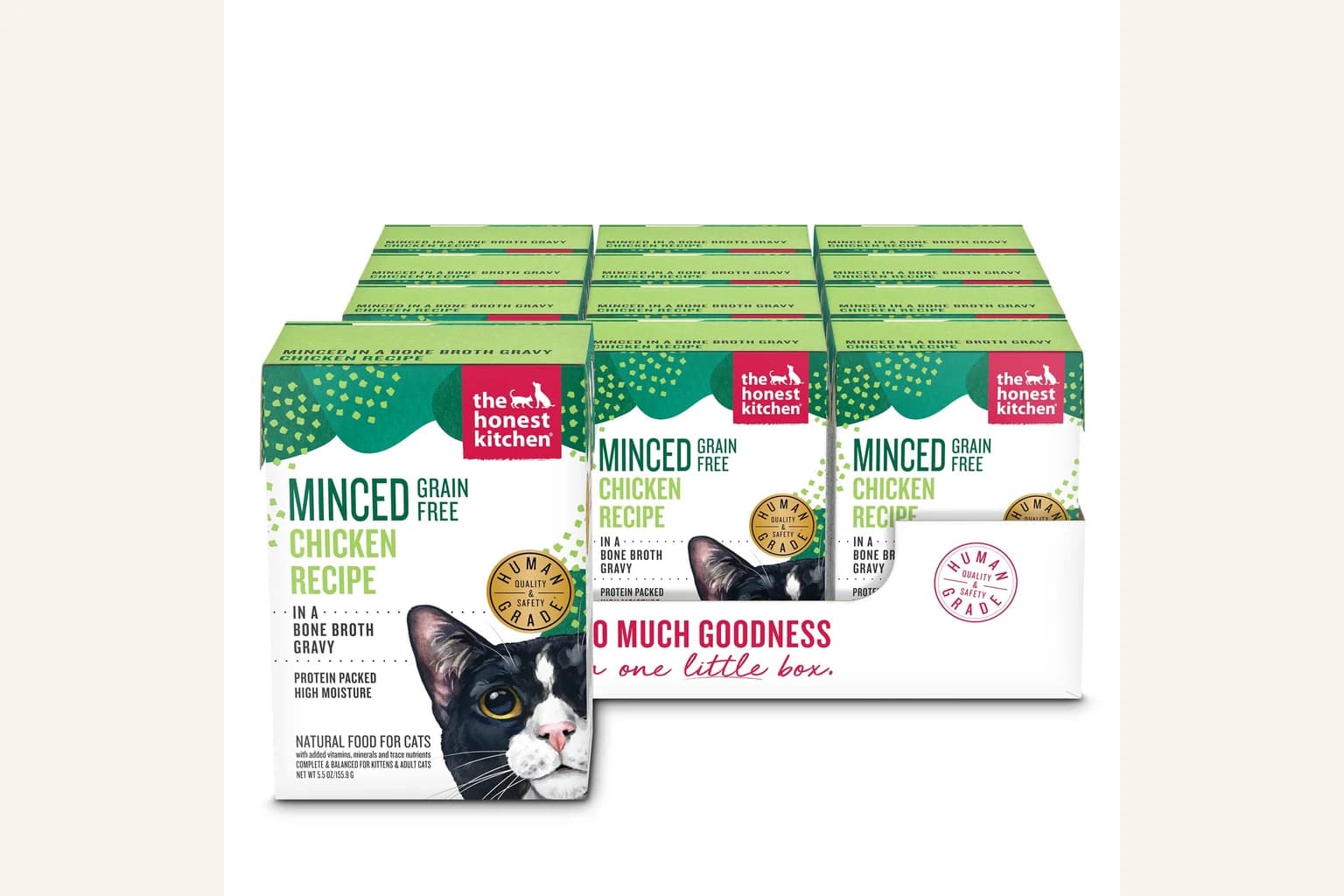
Use a repeatable order instead of searching for one magic ingredient.
- Product role: Is this a complete food, base mix, topper, treat, or supplement?
- Nutritional adequacy: Does it state complete-and-balanced nutrition, and for which life stage?
- Species: Is it formulated and directed for dogs or cats?
- Calories: How much energy is in the dry measure, cup, can, carton, or treat?
- Ingredients: Which animal proteins, grains, pulses, fats, fibers, vitamins, and minerals are included?
- Guaranteed analysis: What minimums and maximums does the package provide?
- Feeding directions: What dry amount, water ratio, portion, or added protein is required?
- Storage: What changes after water is added or the package is opened?
The AAFCO reading-labels guide and FDA complete-and-balanced explainer provide the independent framework.
| Question | Where to look | Why it matters |
|---|---|---|
| Is it a meal or an extra? | Adequacy or feeding statement | Prevents supplemental products from replacing complete food |
| Which life stage? | Nutritional adequacy statement | Matches growth or adult needs |
| How much energy? | Calorie statement and feeding chart | Supports portions and body condition |
| Which proteins and carbohydrates? | Ingredient list | Screens known restrictions and preferences |
| How is it prepared? | Package directions | Preserves intended serving and food safety |
| How is it stored? | Package and support directions | Protects dry food and perishable leftovers |
Grain-inclusive and grain-free choices
THK offers both. Grain-free is a recipe attribute, not a general quality grade. Many dogs can eat grains. Food allergy is usually evaluated through a controlled veterinary process, not by assuming grains are the problem.
The FDA says the investigation of non-hereditary canine dilated cardiomyopathy has been complex and multifactorial. Pulse ingredients such as peas are not inherently dangerous, and their presence alone does not establish a recipe-level DCM risk.
Petful may earn a commission when you click through to The Honest Kitchen, at no extra cost to you.
Sodium selenite and added nutrients
Selenium is an essential nutrient, and a chemical-sounding source name is not proof of toxicity at the amount used in a properly formulated diet. Ingredient evaluation requires dose, finished formulation, and regulatory context.
Puppy and growth suitability
Do not infer puppy suitability from a product line or ingredient quality. Read the exact adequacy statement. Large-breed puppy growth has particular nutritional requirements, and owners should confirm that the recipe fits the dog's growth category.
Which Dogs and Cats May Fit Each Format
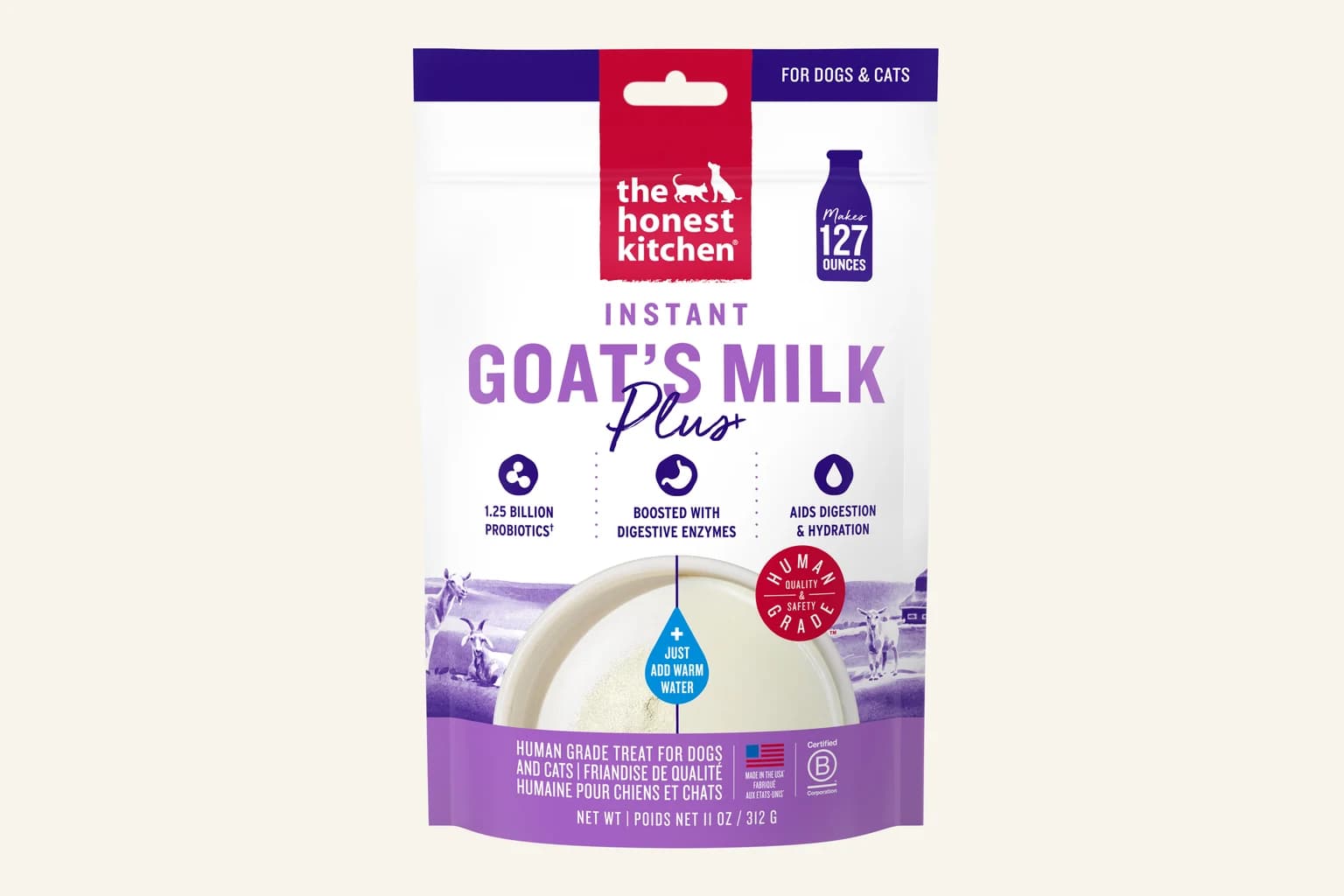
Wholemade may fit households that value
- Warm-water meal preparation.
- A soft hydrated texture.
- Compact dry storage before preparation.
- A format that can work in bowls or compatible enrichment toys.
- Several recipe choices within one brand.
It may be less convenient for owners who cannot measure and wait at each meal, have limited refrigeration for leftovers, or have a pet that rejects soft texture.
Clusters may fit households that value
- Ready-to-scoop convenience.
- Crunchy texture.
- A dry format for travel or automatic-feeding routines, when the device and food directions permit.
- THK's described Cluster production process.
They may be less appealing when a pet needs or strongly prefers a soft food, and their calorie density still requires accurate portions.
Wet food may fit households that value
- Ready-to-serve moisture.
- Minced, gravy, or pâté-like textures.
- Portionable packages.
It requires refrigeration after opening and should not be assumed to satisfy a therapeutic disease need without a veterinarian.
Toppers and treats may fit households that want
- Measured flavor or texture variety.
- Training or enrichment rewards.
- Occasional additions without replacing the main food.
They are not a substitute for complete nutrition. The WSAVA dog treat guide and cat treat guide recommend keeping treats below 10% of daily calories for most pets.
Medical fit is individual
Dogs and cats with kidney disease, urinary disease, pancreatitis, diabetes, heart disease, food allergy, obesity, or another condition need a veterinarian-directed recipe choice. Human grade, grain-free, limited ingredient, wet, and dehydrated are not diagnoses or therapies.
For a close look at the feline options, Petful's The Honest Kitchen cat food guide compares textures and transition needs. Our Spotlight on The Honest Kitchen follows dehydrated dog food in a real home.
Preparation, Transition, Storage, and Cost Considerations
Preparing dehydrated food
Use the exact recipe's dry measure and warm-water ratio. Stir, wait about 3 minutes, and check serving temperature. Adding water changes texture and moisture, not the calories in the measured dry mix.
Transitioning dogs
THK currently recommends a gradual 7 to 10 day transition for many dogs. Begin with a smaller proportion of the new food and increase in stages. Dogs with sensitive gastrointestinal histories or therapeutic diets may need a different plan.
Transitioning cats
Cats often need 10 to 14 days. THK's support guidance begins with pea-size hydrated tastes. Do not force acceptance by withholding familiar food. Cats that stop eating need prompt veterinary guidance.
Storing leftovers
Dry mix is shelf stable when sealed and kept dry. Once hydrated, refrigerate leftovers. THK sources have differed between 2 to 3 days and 3 to 4 days; use the conservative 2 to 3 day window unless the current package gives different directions. Follow current package directions for opened wet food and toppers.
Comparing cost
Compare cost per day from the feeding chart, not package price or package weight alone. Dehydrated food expands with water. Dry Clusters may have a different calorie density than another food. Include toppers only if they are part of the real routine. The premium price may be justified for households that value THK's production positioning and format choice, but it should be sustainable.
Do Vets Recommend The Honest Kitchen?
Veterinarians do not all issue a single brand recommendation. A vet evaluates the exact recipe, adequacy statement, life stage, calorie density, quality-control information, pet's health, and owner's ability to feed it consistently. Some veterinarians may recommend an appropriate THK recipe for a particular pet. That is different from saying the whole line is vet approved.
The useful question to bring to the clinic is: "Does this exact product fit my pet?" Bring the current label. Ask about life stage, body condition, disease restrictions, and how extras fit. A veterinarian can make a far more useful assessment from that information than from the phrase human grade alone.
Is The Honest Kitchen High Quality?
The brand presents several quality signals that many owners value: a long-standing human-grade focus, recognizable ingredient positioning, several meal formats, clear preparation directions, and dog and cat options. Those features support a positive evaluation of the brand's overall proposition.
Quality still belongs to the finished recipe and the household fit. A high-quality product for one adult dog may be wrong for a growing puppy, a cat with urinary disease, or a pet in a diagnostic diet trial. The most responsible positive review helps owners use the brand well rather than promising universal success.
Pros, Tradeoffs, and Common Complaints
Pros
- Multiple dog and cat formats within one brand.
- Substantiated human-grade positioning.
- Dehydrated food that is compact before preparation.
- Clusters for ready-to-scoop convenience.
- Wet, topper, treat, and hydration options for texture variety.
- Grain-inclusive and grain-free recipe choices.
- Clear product-specific preparation directions.
Tradeoffs
- Premium pricing compared with many conventional dry foods.
- Wholemade requires water, measuring, mixing, and a short wait.
- Hydrated and opened wet products require refrigeration.
- Texture changes can require a gradual introduction.
- The large catalog requires careful separation of complete foods, base mixes, and supplemental products.
- Not every recipe fits every life stage or medical plan.
These tradeoffs are not a controversy. They are buying considerations. The strongest fit is an owner who values THK's production standard and formats, reads recipe labels carefully, and can support the preparation and budget.
Is The Honest Kitchen Better Than Purina Pro Plan or Comparable Foods?
There is no responsible brand-wide winner. The Honest Kitchen and Purina Pro Plan represent different product portfolios, processing approaches, price points, and research or formulation ecosystems. The comparison should be between exact recipes for an exact pet.
THK may appeal more to an owner prioritizing human-grade positioning, add-water meals, recognizable-food presentation, or Cluster texture. Another food may appeal because of a specific veterinary therapeutic line, feeding-trial evidence, price, availability, or the pet's proven response. Better means better fit, not a universal rank.
Comparable formats can include other dehydrated, gently cooked, fresh, wet, or premium dry foods, but comparison shopping should use adequacy, life stage, calories, ingredients, preparation, storage, evidence, and cost per day. Avoid comparing THK Wholemade with a supplemental topper as if both were complete meals.
- Put two exact labels side by side. Match life stage, adequacy, calories, ingredients, preparation, storage, evidence, and daily cost before deciding which better fits the pet.
Recall History and Brand Transparency
The known recall occurred in 2013. The Honest Kitchen voluntarily recalled five lots of Verve, Zeal, and Thrive after learning that parsley supplied by an outside company might be contaminated with Salmonella. THK's contemporaneous recall announcement is the clearest surviving primary source for the event.
A historical recall applies to the products and lots named in that notice. Check the current FDA recalls and withdrawals feed and The Honest Kitchen's notices for any later action affecting a product you own.
- The known event was a 2013 voluntary recall involving five lots and a parsley supplier concern. Check current FDA and brand notices against your package name, size, lot code, and date.
A Buyer Checklist
Before buying, answer these questions:
- Is the product for a dog or cat?
- Is it a complete food, base mix, topper, treat, or supplement?
- Does the adequacy statement match the pet's life stage?
- Which proteins, grains, pulses, and other ingredients are present?
- How many calories are in the real serving?
- What preparation is required?
- How long can the opened or hydrated product be stored?
- Will the pet accept the texture?
- Does a medical condition require veterinary approval?
- What is the true cost per day?
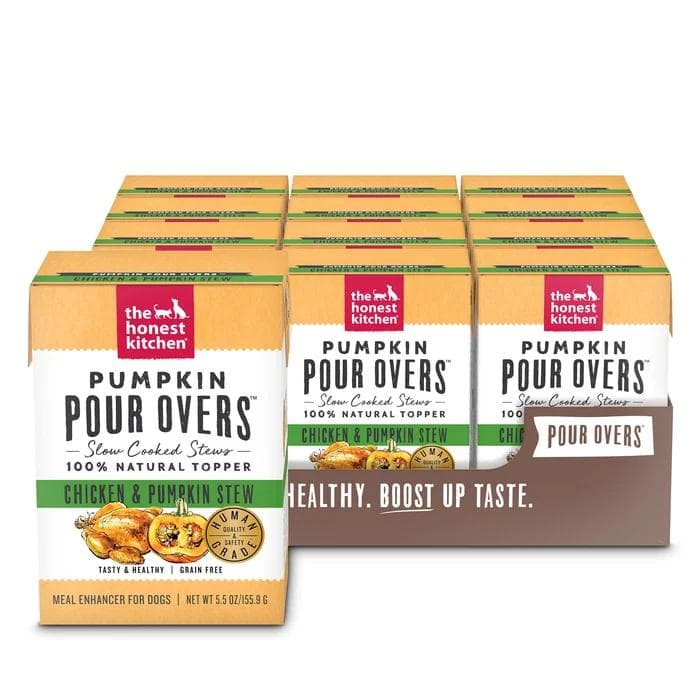
Petful may earn a commission when you click through to The Honest Kitchen, at no extra cost to you.
Buy a manageable amount until the pet accepts the food. Preserve the package for lot and label information. Transition gradually, and monitor body weight, stool, appetite, skin, and overall comfort without turning ordinary observation into a clinical claim.
Our Bottom Line
The Honest Kitchen offers a thoughtful and unusually varied format range for owners who value human-grade positioning and recognizable-food presentation. Wholemade makes warm hydrated meals practical. Whole Food Clusters keep dry-food convenience. Wet foods, toppers, treats, and hydration products add flexibility across dog and cat households.
The brand is best approached with the same discipline that improves any pet-food decision: choose the exact product role, confirm adequacy and life stage, check calories and ingredients, follow preparation and storage directions, and involve a veterinarian for medical needs. That process supports a positive recommendation without relying on claims the label cannot prove.
A recipe-level scorecard that avoids brand-wide assumptions
A useful buyer scorecard begins with the exact product, not the brand reputation. Write down its full name, animal species, format, package size, and current formula date. Then record the nutritional adequacy statement exactly. Is it complete and balanced, and for which life stage? If it is a topper, treat, broth, supplement, or base mix, what does the label say the owner must do with it?
Next, record calories in the unit used for feeding. For Wholemade, measure the dry food because water changes the prepared volume but not the dry calories. For Clusters, note calories per cup and, if available, per piece or gram. For wet food, record calories per carton, can, pouch, or ounce. For treats and toppers, calculate the intended serving's contribution to the daily total.
Add the preparation and storage obligations. Wholemade requires water, mixing, a short wait, and perishable-food handling after hydration. Clusters are ready to scoop and must remain dry. Wet foods are ready to serve but need after-opening refrigeration. Pour Overs and broths require an opened-package use plan. Treats and chews require portioning, safe storage, and supervision appropriate to their size and texture.
- Finally, compare the ingredients and nutrient details with the individual pet's restrictions. Ingredient-list appeal is not enough for kidney disease, pancreatitis, diabetes, heart disease, urinary disease, growth, or another targeted need. Ask the veterinarian which nutrient values matter, then obtain those values for the exact recipe.
This scorecard tends to reveal a format fit rather than one universal winner. A compact add-water food may score highly for travel and serving experience. Clusters may win on speed. Wet food may fit a cat's texture preference. A Meal Booster may solve a small flavor goal while remaining unsuitable as the nutritional center of the bowl.
Choosing among Wholemade recipes
Start with complete food versus base mix. A complete Wholemade recipe includes a nutritional adequacy statement for its intended life stage. A base mix has a label-directed preparation method that can require an added protein and should not be improvised. Similar boxes can therefore have different nutritional jobs.
Next, compare life-stage designation and calories. Do not assume every chicken, beef, turkey, or fish recipe serves puppies and adults in the same way. Growth, especially large-size dog growth, deserves an exact label match. Adult dogs also vary widely in calorie needs.
Then consider grain-inclusive and grain-free choices. Grain-free is not a default upgrade, and a grain-inclusive diet is not automatically lower quality. If no medical restriction exists, use the veterinarian's guidance, the complete formula, the dog's tolerance, and household preference. FDA reporting on non-hereditary DCM does not support reducing the issue to one ingredient or front-label category.
- Preparation remains part of the choice. Measure, add the listed warm-water amount, stir, let it hydrate for about 3 minutes, and serve at a safe temperature. Owners who enjoy that routine may find it a positive daily ritual. Owners who routinely rush the step may be happier with Clusters or wet food.
Choosing Whole Food Clusters
Whole Food Clusters offer a ready-to-scoop dry experience. THK describes a production process in which ingredients are cold pressed into pieces, roasted, and dehydrated. The result is distinct from the brand's add-water food and convenient for bowls, measured hand-feeding, or some enrichment uses.
Compare piece size and hardness with the pet. A dog with dental pain or a cat who avoids crunchy textures needs more than a brand-level recommendation. Confirm the current adequacy statement, life stage, calories, and feeding chart, then observe comfortable chewing and actual intake.
Dry convenience does not remove food-safety basics. Keep the bag sealed, cool, dry, and protected from pests. Use a clean, dry scoop. Retain the original package, lot code, and best-by date. Do not top off a storage bin indefinitely while old crumbs and oils remain at the bottom.
- Clusters may be the best THK format for an owner who values a ready-to-serve bowl. That statement concerns routine fit, not a guarantee that dry pieces are nutritionally superior to the brand's other complete recipes.
Choosing wet food for dogs or cats
Wet recipes provide ready-to-serve moisture and several textures. Texture may be the primary decision for a cat, while a dog owner may value a soft meal or a measured topper. Read the exact product role because a stew, pâté, minced recipe, topper, and supplement can look similarly meal-like without sharing complete-food status.
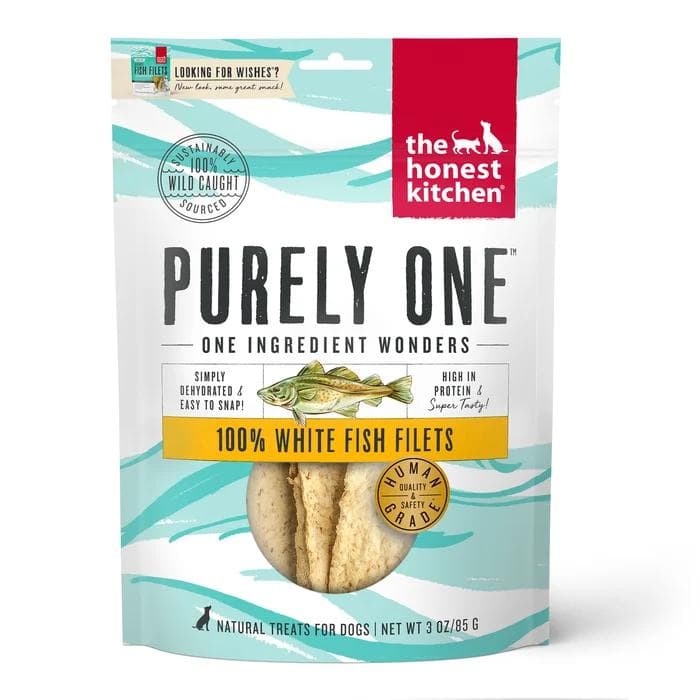
Petful may earn a commission when you click through to The Honest Kitchen, at no extra cost to you.
Calculate cost using the calories the pet needs rather than price per package alone. A small cat may use an opened package across meals, so refrigeration and the use window become part of value. A dog using wet food as a topper may need only a measured spoonful, but that spoonful still carries calories.
Serve clean portions and refrigerate the remainder promptly according to the label. If the pet dislikes cold food, warm only the serving gently and check temperature. Do not leave perishable food available for hours to encourage grazing.
- The Honest Kitchen's wet range can make the lineup especially flexible. Owners can choose a complete wet meal where labeled, or select a supplemental product for a narrower goal, without pretending those are the same nutritional use.
Dog and cat needs should not be blended
The brand serves both species, but dog food is not a routine substitute for cat food and cat food is not designed as a general dog diet. Cats have species-specific nutrient requirements and should eat a food complete and balanced for cats at the appropriate life stage.
This matters when the packaging and ingredient descriptions look appealing across both aisles. Check the species statement before the flavor name. In a mixed-pet home, store and serve products separately, observe meals, and prevent one animal from finishing another's bowl.
Treats and toppers are also species specific unless the label clearly states otherwise. A product sold in a dog collection should not be assumed suitable for a cat because the named ingredient sounds familiar.
Human grade without a nutrition halo
The Honest Kitchen's human-grade positioning is a meaningful production and handling distinction when substantiated under applicable guidance. AAFCO explains that the claim applies to every ingredient and the finished product through relevant handling, processing, and transport requirements.
It should not be translated into “people can eat this,” “this prevents disease,” or “this is the healthiest food.” Nutritional adequacy still depends on the finished formula. Medical suitability still depends on the individual animal. Digestibility and feeding performance require their own evidence.
Buyers can value the human-grade standard while checking the exact recipe's nutritional adequacy, life stage, and feeding directions.
What “quality” can reasonably include
Quality has several dimensions: formulation for the intended use, ingredient and supplier controls, manufacturing oversight, food-safety systems, nutrient consistency, traceability, transparent labeling, complaint handling, and the ability to provide useful nutrient information. Packaging, aroma, texture, and ease of preparation are product-experience dimensions as well.
A single ingredient list cannot answer all of those questions. Nor can a single recall event settle them forever. Ask what the company does now, what the current product promises, and whether the evidence matches the intended use.
For a pet with ordinary needs, the adequacy statement, calorie information, directions, ingredient fit, and consistent household results may be enough for a practical decision. For a medically complex pet, the veterinary team may request a detailed nutrient analysis and manufacturer information before recommending a recipe.
Questions to ask The Honest Kitchen
If the product page and package leave a gap, ask for the exact recipe's current caloric content, adequacy and life-stage basis, typical nutrient analysis, preparation ratio, storage window, and formula-change date. For growth, confirm whether the food's statement addresses the puppy's expected adult size where relevant.
For a therapeutic comparison, ask for the nutrients the veterinarian identifies on a suitable basis, often per 1,000 kilocalories or dry matter. Do not ask the brand to diagnose the pet or select a treatment. Ask it to supply product data so the veterinarian can compare the food with the clinical target.
For an unexpected product issue, preserve the package, lot code, best-by date, receipt when available, photos, and a sample if the veterinarian or manufacturer advises. Clear details help the company investigate.
Transitioning a dog to a new THK food
Use a gradual transition when appropriate, often over about 7 to 10 days. Begin with a small proportion of the new prepared food and reduce the former food as the new proportion increases. Dogs with a sensitive history may need more time.
Measure the new food according to its own calories and directions rather than exchanging cups one for one. A cup of Clusters, a dry measure of Wholemade, and a carton of wet food can supply very different calories.
Keep a log of amount served, amount eaten, stool, vomiting, itching, and energy. A single soft stool does not identify a cause, but a trend helps the veterinarian and owner decide whether to slow the transition, stop, or investigate another issue.
Transitioning a cat to a new THK food
Cats often need a slower, more controlled introduction. Offer a small amount while preserving adequate intake of the accepted complete diet. Texture, temperature, bowl shape, location, and freshness can all affect acceptance.
Do not force a cat to go hungry in a battle over the new food. Cats that stop eating or eat substantially less can become medically unwell. Contact a veterinarian promptly for persistent refusal, weight loss, vomiting, lethargy, or another concerning sign.
Test one format at a time. If the cat rejects Clusters, that does not prove the same cat will reject a minced wet recipe or properly prepared dehydrated food. The lineup's multiple textures are a genuine advantage when used patiently.
Portion control across the product family
Choose a daily calorie target with veterinary guidance, then divide it among complete meals and extras. For a complete THK food used as a topper over another complete food, swap calories rather than simply adding them. For supplemental toppers and treats, keep the complete diet central and follow the veterinary or WSAVA extra-calorie guardrail.
Small dogs and cats need particular precision because one spoonful or a few pieces can represent a large share of their day. A gram scale or marked spoon can make the routine repeatable. In a multi-pet household, use labeled daily containers so each caregiver can see what remains.
Monitor body weight and body condition. Feeding charts provide starting points, while the animal's trend shows whether an adjustment is needed.
Storage from pantry to refrigerator
Dry Wholemade and Clusters should remain sealed and protected from moisture, heat, and pests. Once Wholemade is hydrated, it becomes perishable. Refrigerate promptly in a clean covered container and use current brand guidance, with a conservative 2 to 3 day window unless the package says otherwise.
Wet foods, Pour Overs, broths, and other opened perishable products also require refrigeration and a defined use window. Mark the opening date. Serve small portions so less food sits at room temperature. Wash hands, bowls, spoons, and food-filled toys.
Keep every original package or its identifying information until the food is finished. Lot and date details make a quality report actionable and allow an owner to check an FDA notice accurately.
Travel planning by format
Wholemade can be compact for trips because the caloric portion travels dry. Premeasure servings, bring safe water, retain the directions, and prepare only what the pet will eat when refrigeration is unavailable. Clusters provide the simplest ready-to-scoop option. Wet food may be convenient in individual unopened packages but creates leftover handling questions once opened.
Bring more food than the itinerary strictly requires in case of delays. Sudden substitution at a remote destination is harder on a pet who needs a gradual transition. Pack medications and prescription diets separately and do not assume a retail store will stock the exact recipe.
A medically restricted pet checklist
For kidney, heart, urinary, pancreatic, diabetic, gastrointestinal, dermatologic, or other medical needs, ask the veterinarian for the target before evaluating the product. That target may include calories, protein, fat, phosphorus, sodium, fiber, carbohydrate characteristics, ingredients, texture, or feeding timing.
Provide the exact THK recipe information. “Human grade,” “grain free,” “whole food,” and “dehydrated” are not nutrient targets. If the selected product meets the plan, the brand's format flexibility can still be a positive advantage. If it does not, do not use a topper or treat to work around the prescription without approval.
During a formal elimination diet, all flavored foods, treats, supplements, and medication vehicles can matter. Clear every addition with the veterinary team.
How to use recall information responsibly
The 2013 voluntary recall involved five lots of Verve, Zeal, and Thrive because parsley from a supplier might have been contaminated with Salmonella. It concerned the lots named in the notice, not every current product.
Check the current FDA recalls and withdrawals feed and the brand's notices when reviewing a package. Match the product, lot code, and dates with any notice rather than relying on a brand name alone.
If a food may be affected, stop feeding it, preserve the package and lot information, follow the official notice, and contact the veterinarian if the pet is ill. Do not decide from a product name alone when the notice identifies particular lots, sizes, or dates.
Common complaints translated into fit questions
“It takes too long” means compare the 3-minute Wholemade routine with ready-to-scoop Clusters or wet food. “My pet disliked the texture” means try an appropriate different format gradually rather than assuming every recipe tastes the same. “It costs more” means calculate cost per day using calories and waste. “The box makes less than expected” means compare dry measure, prepared volume, and feeding chart carefully.
“My pet had loose stool” means document the transition speed, portions, other foods, and symptoms, then contact the veterinarian when the change persists or concerns you. It does not automatically identify a single ingredient or process as the cause.
These translations make the review useful. They preserve criticism without turning one household's experience into a universal verdict.
A 30-day evaluation plan
Days one through ten focus on gradual transition and tolerance. Days eleven through twenty focus on consistent measurement, appetite, stool, storage routine, and whether the format works on ordinary busy days. Days twenty-one through thirty focus on body-weight trend, cost per day, waste, and whether the pet still eats the food without an escalating set of extras.
At the end, answer four questions: Does the exact recipe meet the pet's nutritional needs? Does the pet eat and tolerate it? Can the household prepare, store, and afford it consistently? Does the veterinarian support the plan when medical or life-stage factors require review?
A yes to those questions is stronger than a generalized brand score. It shows the product works where pet food ultimately has to work: in the bowl, in the pet, and in the household routine.
Reading online reviews with the right filters
User reviews can reveal practical themes such as package usability, texture, aroma, preparation time, pet acceptance, and delivery damage. They cannot establish that a recipe treats disease, prevents allergies, or is nutritionally superior. One animal's response may reflect transition speed, portion, health, other foods, or individual preference.
Give more weight to reviews that identify the exact recipe, format, pet species, life stage, feeding method, and duration. A review that says “the brand worked” provides less usable evidence than one that explains how a named product was prepared and what changed in the household routine.
Separate product experience from medical causation. If a reviewer reports vomiting, diarrhea, itching, or appetite loss, treat that as an individual event worth veterinary assessment, not proof of a universal outcome. The same caution applies to dramatic benefit claims.
A household handoff sheet
For pet sitters or family members, write the exact product name, dry or ready-to-serve amount, water ratio where applicable, meal times, topper limit, storage location, refrigerator discard date, and what to do if the pet refuses food. Include veterinary and owner contact information.
For Wholemade, specify that the portion is measured dry before water is added and must sit about 3 minutes. For Clusters, identify the correct scoop. For wet food, mark the opened package. This prevents well-intended double portions and preserves the routine the pet knows.
Final recommendation framework
Choose Wholemade when warm-water preparation, compact storage, soft texture, and flexible serving uses are priorities. Choose Clusters when ready-to-scoop convenience and dry texture lead. Choose wet food when a ready-to-serve moist format fits. Choose a Pour Over, Meal Booster, treat, broth, or hydration product for a defined supplemental role, not as an assumed replacement for complete food.
Within that format, choose the exact recipe whose adequacy statement, life stage, calories, ingredients, directions, and cost fit the animal. That is the most durable way to interpret positive Honest Kitchen reviews: the brand offers a useful range, and careful recipe selection turns that range into a good household match.
What to Recheck Before Buying
Product catalogs evolve. Before buying, confirm the exact recipe's availability, ingredients, adequacy statement, life stage, calories, preparation, and storage guidance on its current product page and package.
Check current FDA and THK notices for the product you plan to buy. Keep the package details after purchase so you can compare its lot code and date with any future notice.
Terms such as “gently cooked,” “human grade,” “whole food,” and “dehydrated” describe product attributes. They do not by themselves guarantee digestibility, allergy safety, superior nutrient retention, disease prevention, or medical suitability.
The clearest pros and tradeoffs by format
Wholemade's advantages are compact dry storage, a warm hydrated serving experience, and flexible use in bowls or enrichment. Its tradeoffs are measuring water, waiting about 3 minutes, and handling hydrated leftovers as perishable.
Clusters offer dry convenience and no routine rehydration. Their tradeoffs include a crunchy texture that every pet may not prefer and the absence of the added meal water that defines Wholemade.
Wet foods offer ready-to-serve moisture and texture variety. Their tradeoffs include opened-package refrigeration, shorter use windows, and cost calculations that should be based on daily calories rather than package size.
- Toppers, treats, broths, and hydration products broaden the experience. Their tradeoff is that supplemental calories and nutritional role must be controlled. These are not negatives about the brand; they are the practical differences that help a buyer choose successfully.
Frequently Asked Questions
Some current recipes are complete and balanced for stated life stages, while base mixes, toppers, treats, broths, and supplements may require additions or be labeled only for supplemental feeding. Check the exact product's adequacy statement.
The Honest Kitchen states that Wholemade dehydrated dog food is gently cooked before dehydration and is not raw. Check each product family rather than assuming every dehydrated food uses the same process.
It is a substantiated claim about all ingredients and the handling, processing, and transport of the finished product. It does not itself prove complete nutrition, superior health, or universal suitability.
Yes, the current catalog includes both. Choose the exact recipe by adequacy, life stage, calories, ingredients, and individual fit rather than treating grain-free as a universal quality grade.
Yes. In 2013, THK voluntarily recalled five lots of Verve, Zeal, and Thrive because parsley from a supplier might have been contaminated with Salmonella. Check current FDA and brand notices against your package details for any later action.
Sources
BVMS, MRCVS
Dr. Pippa Elliott, BVMS, MRCVS, is a veterinarian with nearly 30 years of experience in companion animal practice. Dr. Elliott earned her Bachelor of Veterinary Medicine and Surgery from the University of Glasgow. She was also designated a Member of the Royal College of Veterinary Surgeons. Married with 2 grown-up kids, Dr. Elliott has a naughty Puggle named Poggle, 3 cats and a bearded dragon.
Sign up for expert-backed reviews and safety alerts all in one place.
A Final Word (Disclaimer)
At Petful, our review integrity is paramount; we never exchange special treatment in our reviews for monetary or material rewards.
Nonetheless, when our readers click through to online merchants (including Chewy or Amazon), we receive a referral commission. This supports the running of our free blog, and we appreciate your backing.