The Honest Kitchen Cat Food: A Complete Guide to the Feline Lineup
Explore The Honest Kitchen cat food lineup, from dehydrated meals to dry Clusters and wet food, with practical guidance on labels, preparation, and transition.
Petful is reader supported. As an affiliate of platforms like Amazon and Chewy, we may earn a commission when you buy through links on this page. There is no extra cost to you.
This article is sponsored by The Honest Kitchen. Petful maintains editorial control and uses current product information plus independent pet-nutrition guidance.
The Honest Kitchen cat food lineup gives cat households three distinct ways to serve the brand: add-water dehydrated recipes, ready-to-scoop Whole Food Clusters, and wet foods in minced or pâté-style textures. That variety is the strongest reason to explore the range. The right choice still comes down to the specific recipe's nutritional adequacy statement, life-stage designation, calories, ingredients, feeding directions, and your cat's willingness to accept the texture.
- 1The feline range includes dehydrated, dry Cluster, and wet formats
- 2Check nutritional adequacy and life stage on the exact recipe
- 3Dehydrated recipes use warm water and a 3-minute wait
- 4Introduce new textures slowly, often over 10 to 14 days
- 5Added food moisture can increase water intake but is not treatment for urinary or kidney disease

Sign up for expert-backed reviews and safety alerts all in one place.
The Honest Kitchen Cat Food at a Glance
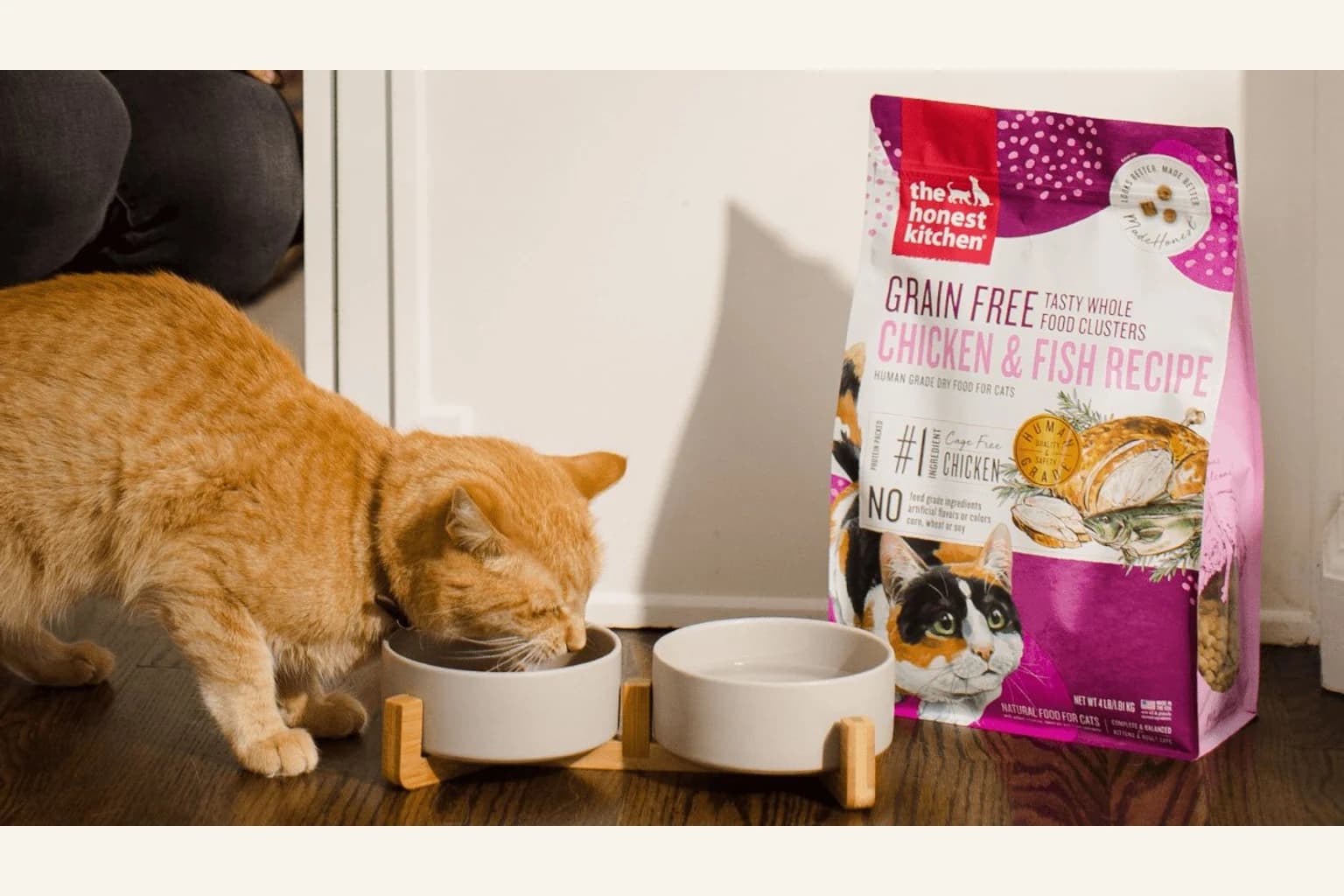
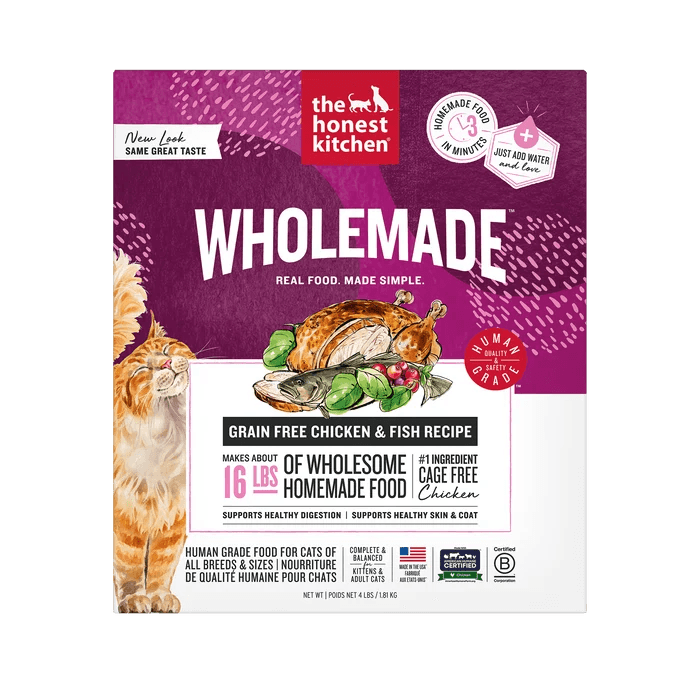
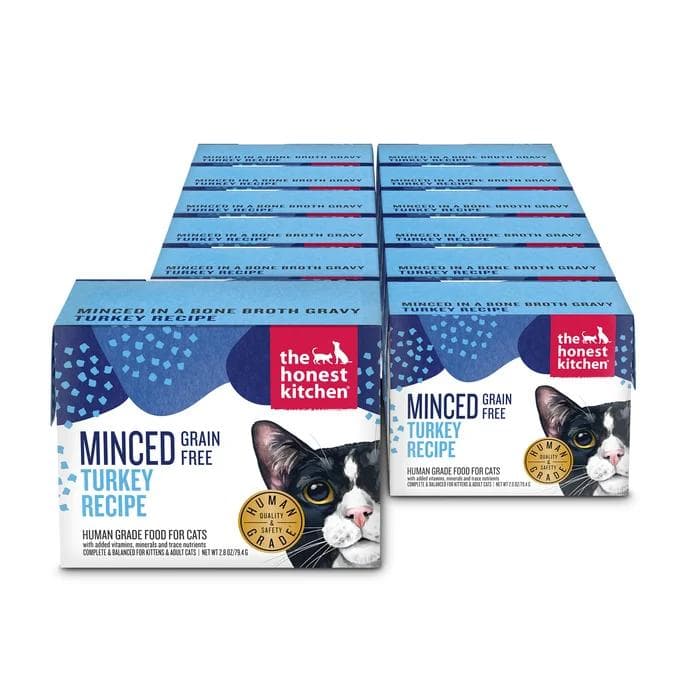
The Honest Kitchen offers complete-food candidates across several feline textures, along with treats and supplemental products elsewhere in its catalog. Within the food lineup, representative options include Grain Free Chicken Dehydrated Cat Food, Dehydrated Grain Free Chicken and Fish, chicken-and-whitefish or turkey-and-chicken Whole Food Clusters, Minced Turkey in Bone Broth Gravy, and Grain Free Salmon and Cod Câté.
That list is a guide to formats, not a promise that every recipe is always in stock. Cat food inventories and labels can change. Before buying, open the current product page or inspect the package for the exact ingredient statement, guaranteed analysis, calorie content, nutritional adequacy statement, feeding chart, and life-stage language.
The Honest Kitchen can be a useful choice for a cat that accepts one of its complete recipes and whose life-stage and calorie needs match the label. The range offers several textures and preparation routines. Judge the exact recipe rather than treating the brand name, human-grade claim, or format as proof of suitability for every cat, especially when a prescription diet is involved.
Petful may earn a commission when you click through to The Honest Kitchen, at no extra cost to you.
The phrase human grade is part of THK's brand positioning. Under AAFCO's human-grade guidance, the claim applies to ingredients and handling across the product's process and requires substantiation. It does not by itself tell you that a recipe is complete and balanced or ideal for your individual cat. Those decisions stay recipe specific.
How the Feline Lineup Is Organized
It helps to sort the range by the work the owner does at mealtime and the texture the cat experiences:
- Dehydrated food: Measure the dry mix, add warm water, stir, wait, and serve a soft hydrated meal.
- Whole Food Clusters: Scoop dry pieces directly from the bag. They can also provide crunchy texture in a measured portion.
- Wet food: Open and serve a moist recipe, with options such as minced pieces in gravy and smoother pâté-style food.
None of these formats is automatically better for every cat. A cat that loves crunchy food may accept Clusters easily but resist a hydrated mash. Another cat may strongly prefer gravy. An owner who values a shelf-stable dry box and warm-water preparation may enjoy dehydrated food, while another needs the speed of ready-to-serve wet food.
| Format | Mealtime texture | Owner preparation | Moisture approach | Label check | Storage after preparation or opening |
|---|---|---|---|---|---|
| Dehydrated cat food | Soft hydrated mash | Add warm water, stir, wait 3 minutes | Water is added at serving | Confirm adequacy, life stage, calories, and dry-to-water directions | Keep dry mix sealed; refrigerate hydrated leftovers as directed |
| Whole Food Clusters | Crunchy dry pieces | Scoop and serve | Dry unless water is separately offered or added as directed | Confirm adequacy, life stage, calories, and portion | Keep the bag sealed and dry |
| Wet cat food | Minced or pâté-style food | Open and serve | Moisture is part of the food | Confirm adequacy, life stage, calories, and storage after opening | Refrigerate opened food as directed |
Dehydrated Cat Food
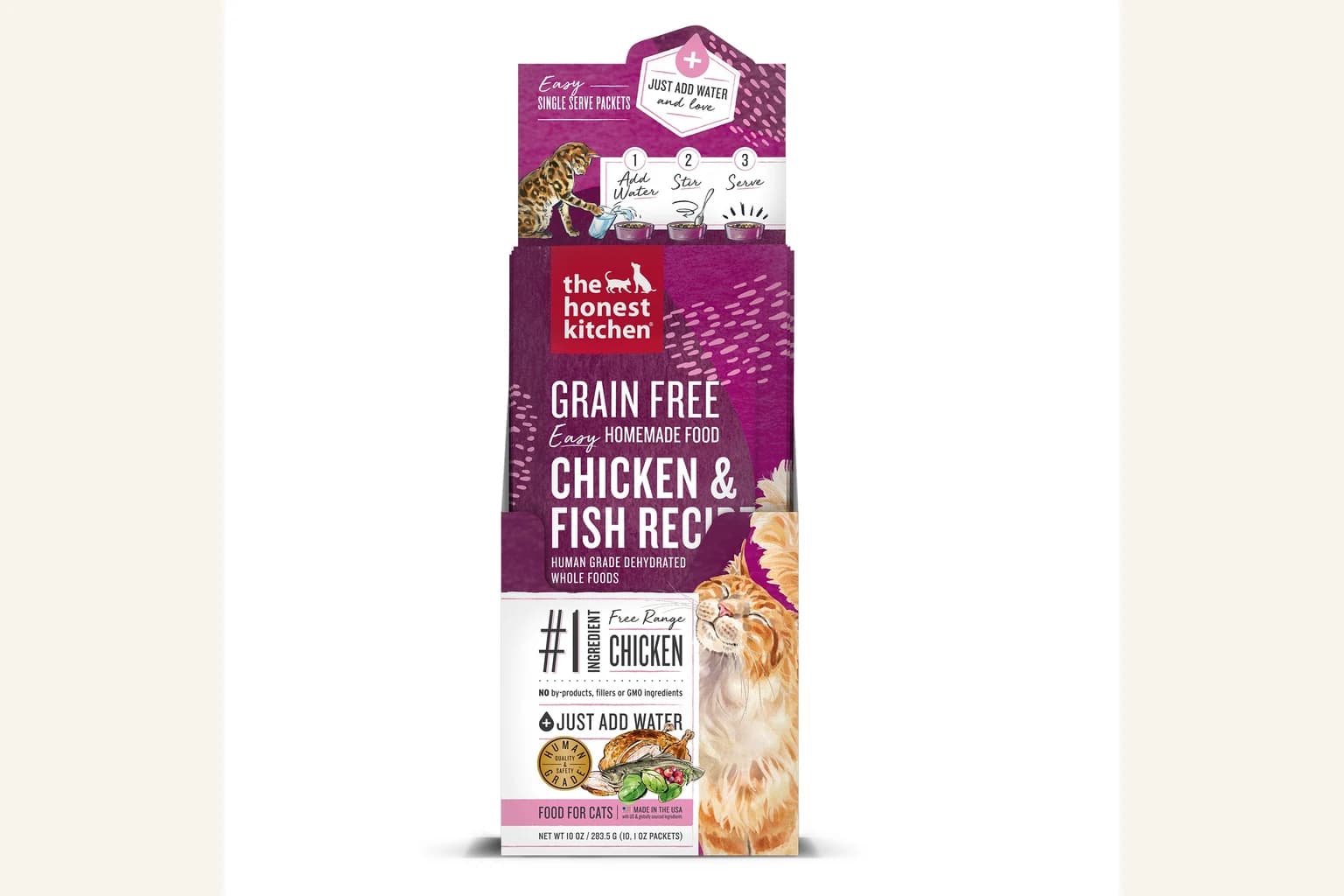
The current dehydrated cat food collection includes Grain Free Chicken and Dehydrated Grain Free Chicken and Fish. These recipes are designed to be mixed with warm water. THK directs owners to stir and wait about 3 minutes before serving, allowing the dry food to hydrate and soften.
The add-water ritual is a practical feature, not a medical claim. It creates a soft texture and adds water to the bowl. It also asks the owner to measure accurately and build a few minutes into the routine. Follow the exact package ratio because water and dry-food amounts can differ by recipe or serving need.
Dehydrated food can be especially interesting for a cat that likes warm aromas or soft meals, but acceptance is individual. Some cats are suspicious of a sudden texture change. THK's support guidance suggests starting with a pea-size amount of hydrated food, which respects the cat's preference for gradual familiarity.
Petful may earn a commission when you click through to The Honest Kitchen, at no extra cost to you.
- For a selective cat, a pea-size amount beside familiar food can be more productive than replacing the whole bowl. Let the cat investigate without pressure, then increase gradually if the food is accepted.
Whole Food Clusters for Cats
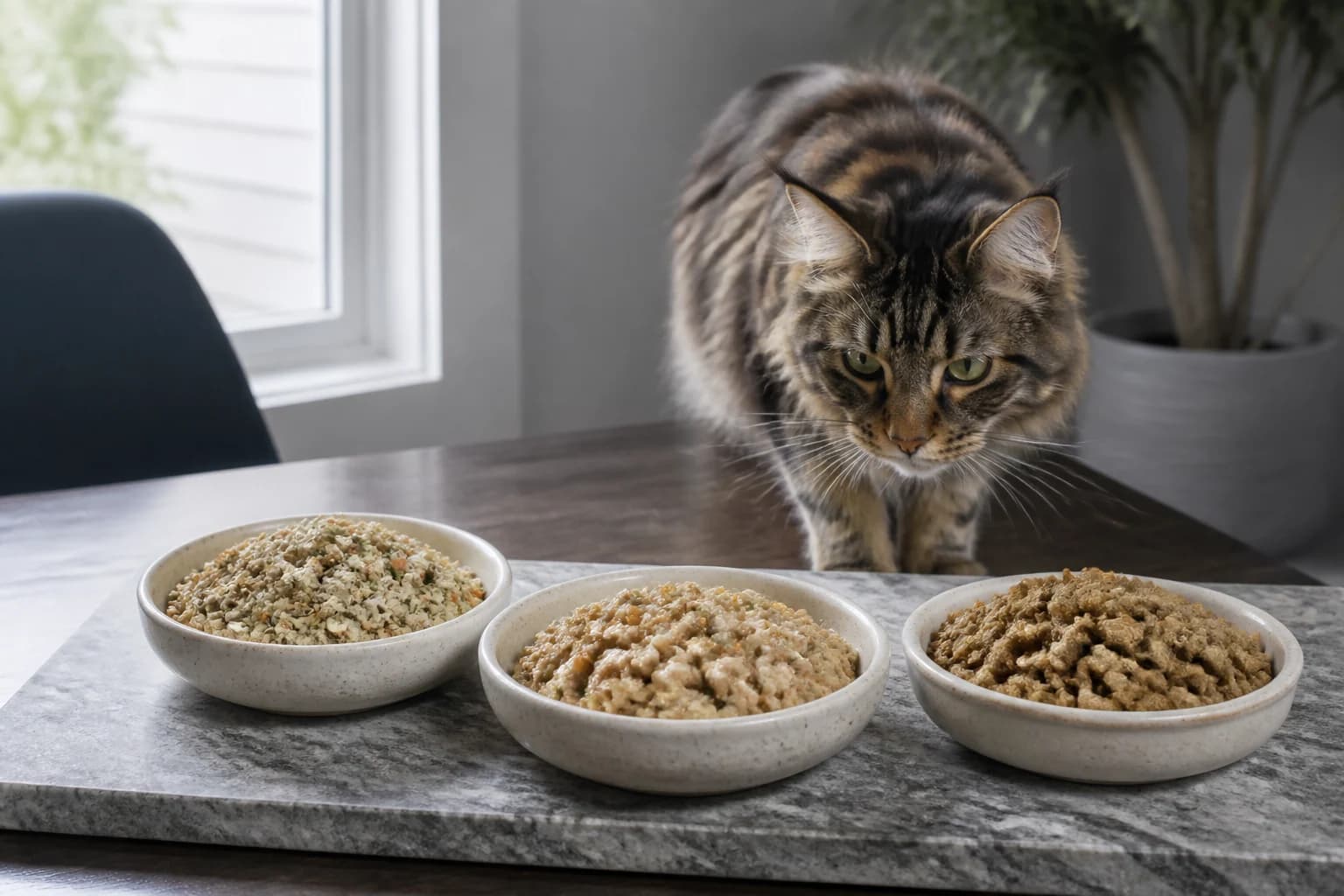
The dry cat Clusters collection offers a ready-to-scoop option. Representative recipes include Grain Free Chicken and Whitefish Whole Food Clusters and Grain Free Turkey and Chicken Whole Food Clusters. The pieces provide a crunchy experience without the water-mixing step required by dehydrated food.
Clusters may fit households that want dry-food convenience or cats that strongly prefer crunch. They can be served according to the recipe's feeding directions, and a measured amount may also supply a texture accent when the label and total diet support that use. Do not assume that a cup of Clusters equals a cup of another dry food. Calorie density and serving charts differ.
THK describes its Cluster process as cold pressing, roasting, and dehydrating. Treat that as a brand-supported process description. It does not remove the need to check the finished recipe's adequacy statement, life stage, and calories. Nor does it make wet or dehydrated food inferior. The formats simply solve different mealtime problems.
Wet Cat Food Textures and Recipes
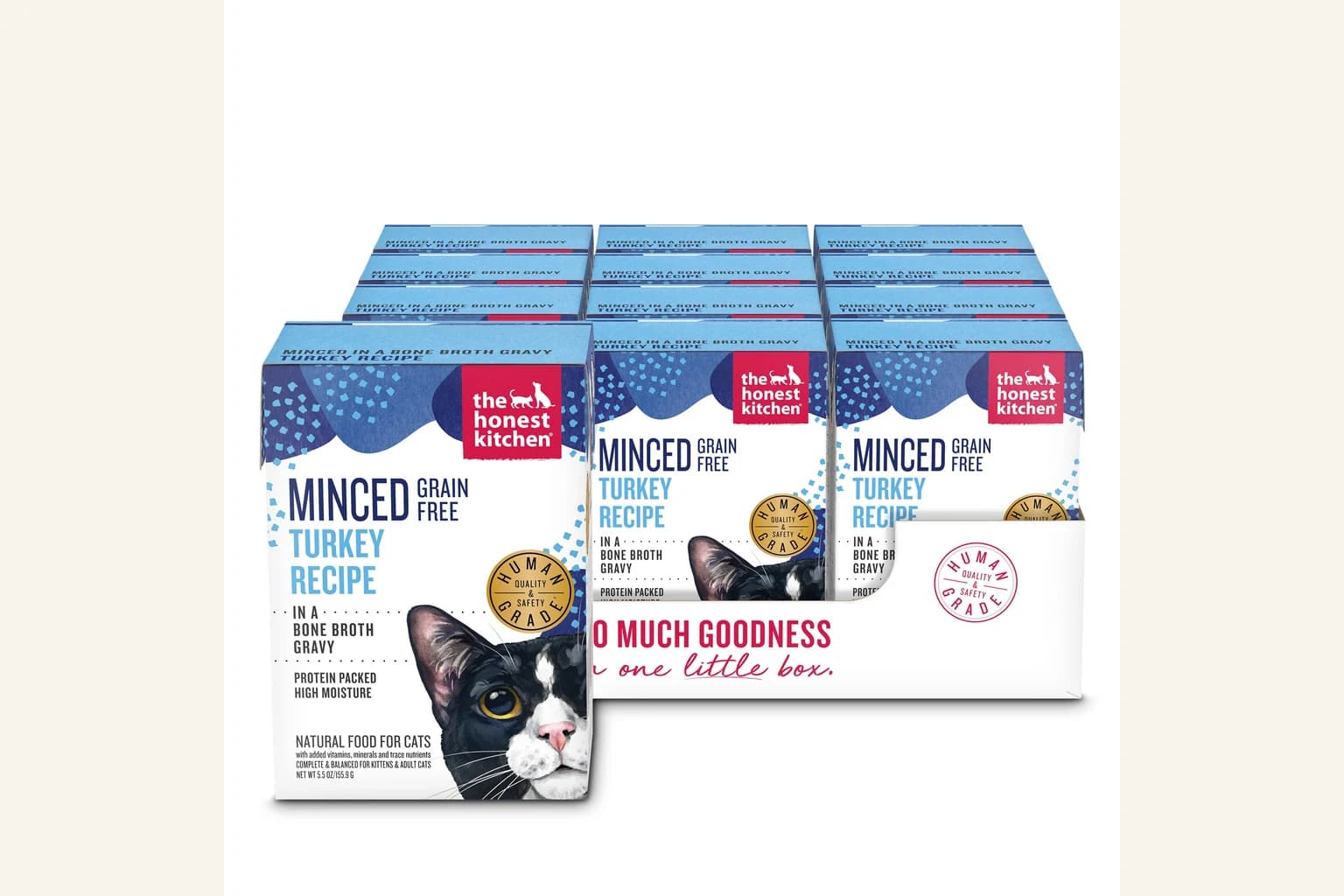
THK's wet cat food collection broadens the texture options. Minced Turkey in Bone Broth Gravy offers small pieces and gravy, while Grain Free Salmon and Cod Câté provides a smoother pâté-style presentation. These examples matter because cats can be highly specific about mouthfeel even when they like the same protein family.
Wet food brings water as part of the meal and can be useful for owners working to increase food moisture. It also has an after-opening storage window. Refrigerate leftovers according to the current package, use clean utensils, and discard food that has sat out beyond safe directions. If a cat dislikes food straight from the refrigerator, ask your veterinarian about safe serving-temperature practices rather than leaving it out for an extended period.
Wet format does not establish medical suitability. A cat with kidney disease, urinary disease, food allergy, diabetes, or another condition needs a veterinarian-directed recipe decision. Moisture can be helpful in a feeding plan while the nutrient profile remains the decisive clinical issue.
How to Check Life Stage and Nutritional Adequacy
The most important line on a cat food package is often not the marketing headline. It is the nutritional adequacy statement. The FDA explains that complete-and-balanced foods are formulated or tested to meet recognized nutrient profiles for the life stage named on the label.
Read in this order:
- Nutritional adequacy: Is the recipe complete and balanced, or intended only for intermittent or supplemental feeding?
- Life stage: Does the statement name growth, adult maintenance, all life stages, or another applicable category?
- Species: Confirm that the product is a cat food, not a dog product appearing in a shared collection.
- Calories: Compare energy per can, carton, cup, or dry measure so the portion fits your cat.
- Ingredient statement: Check protein sources and any ingredients your veterinarian has told you to avoid.
- Feeding chart: Use it as a starting point and adjust with body condition and veterinary advice.
- Dehydrated, dry, or wet texture cannot establish suitability for kittens, seniors, kidney disease, urinary disease, diabetes, or food allergy. Use the exact recipe label and your veterinarian's plan.
Do not use a dog recipe because the format looks similar. Cats have species-specific nutritional needs, and dog feeding charts are not interchangeable. The same caution applies to products that appear in a cat collection but have dog-oriented package directions. Verify the product itself.
A veterinarian’s recommendation for The Honest Kitchen cat food depends on the exact recipe and the individual cat. Bring the ingredient statement, nutritional adequacy statement, calorie content, and feeding instructions to the discussion. Cats with kidney, urinary, diabetic, allergy, or other medical needs may require a specifically selected diet. A brand-wide recommendation cannot replace that recipe-level assessment.
Petful may earn a commission when you click through to The Honest Kitchen, at no extra cost to you.
Preparation, Transition, and Storage
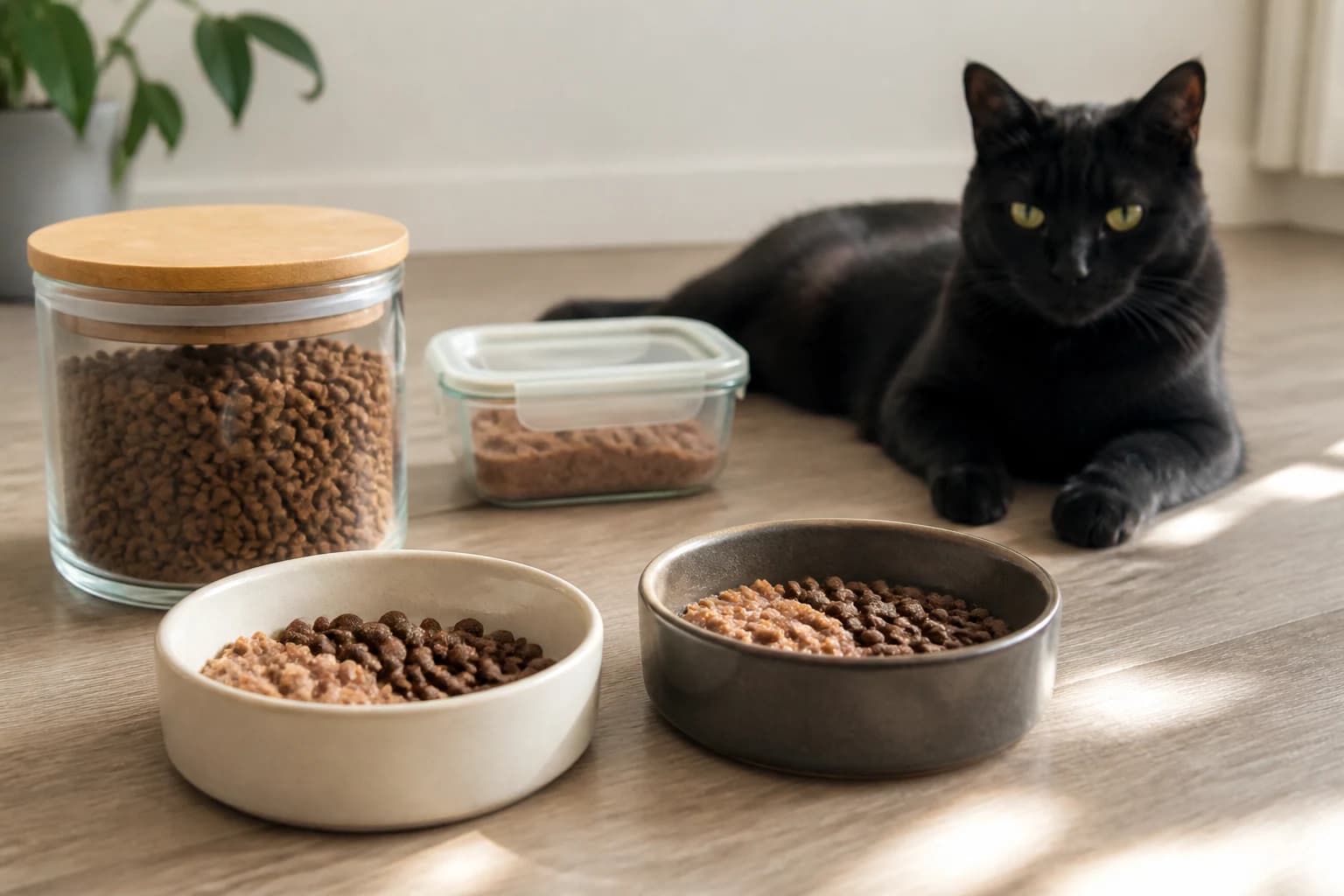
Cats often respond better to a deliberate transition than a sudden switch. THK's cat-specific support guidance recommends a 10 to 14 day introduction for dehydrated recipes and begins with tiny hydrated tastes. The exact pace should follow the individual cat's acceptance and digestive response.
| Stage | New food amount | What to observe | Next step |
|---|---|---|---|
| Introduction | Pea-size hydrated taste beside familiar food | Will the cat sniff or taste without refusing the meal? | Repeat until the new aroma and texture are familiar |
| Early mix | Small measured amount with mostly familiar food | Appetite, stool, vomiting, comfort | Increase slowly only when well tolerated |
| Mid-transition | More new food while familiar food remains | Continued meal completion and normal behavior | Hold the ratio longer if the cat hesitates |
| Late transition | Mostly new food | Stable appetite and digestive response | Move toward the intended portion |
| Complete transition | Full measured recipe portion | Body condition, intake, hydration routine | Adjust calories with veterinary guidance |
Do not starve a cat into accepting a new food. Cats that stop eating can become ill, and a cat refusing food needs prompt veterinary advice. If the cat eats around the new item, reduce the amount and return to a familiar stage. If vomiting, diarrhea, marked lethargy, or appetite loss occurs, pause and call the veterinarian.
Preparation and storage vary by format:
- Measure dehydrated dry mix and water from the recipe's current chart, then wait 3 minutes.
- Keep unused dry mix sealed and dry.
- Scoop Clusters with a clean, dry utensil and reseal the bag.
- Refrigerate opened wet food and hydrated leftovers as directed on the current package.
- Wash bowls and preparation utensils regularly.
Hydration, Texture Preferences, and Household Fit
The Cornell Feline Health Center notes that wet food and water added to food can increase a cat's water intake. That gives dehydrated and wet formats a practical moisture advantage over food served dry. It does not mean either format treats dehydration, urinary disease, or kidney disease.
Choose format by combining the cat's preference with household reality:
- Hydrated mash: Best considered when the cat accepts soft food and the owner can measure and wait a few minutes.
- Clusters: Useful for crunchy-food preference and quick scooping, with water offered separately.
- Minced gravy: A fit for cats that like pieces and sauce.
- Câté: A smoother option for cats that prefer a uniform pâté-like texture.
A multi-cat home may need separate bowls and monitoring. One cat can otherwise consume another's portion, making calorie and medical-diet control unreliable. Feed in separate locations if cats have different nutritional needs or eating speeds.
The most useful question is not, "Which format is healthiest?" It is, "Which complete recipe meets this cat's life-stage needs, fits the calorie plan, and will be eaten consistently in this household?" The Honest Kitchen's range gives owners several ways to answer that question without leaving the brand.
Petful may earn a commission when you click through to The Honest Kitchen, at no extra cost to you.
For the full brand context across both species, see Petful's The Honest Kitchen pet food review. For measured extras rather than full meals, our guide to cat food toppers separates complete foods from supplemental treats and broths.
A Practical Before-You-Buy Checklist
Before selecting a recipe, confirm:
- The package is specifically labeled for cats.
- The nutritional adequacy statement matches the intended use and life stage.
- The protein ingredients fit known restrictions.
- The calories and feeding chart fit the cat's body condition plan.
- The texture matches what the cat is likely to accept.
- The owner can manage the preparation and after-opening storage.
- A veterinarian has reviewed the choice when disease or a prescription diet is involved.
Then buy enough for a gradual transition rather than stocking months of a new food before the cat accepts it. Keep the original package until the food is finished so lot, label, and contact information remain available.
To decide where to buy The Honest Kitchen cat food, use the current brand product pages linked in this guide and check the exact recipe, package size, availability, and feeding information. Begin with a manageable amount while your cat transitions. A suitable choice for your cat is the complete recipe that meets its life-stage and medical needs and is eaten consistently, rather than a format chosen by reputation alone.
Build a seven-day acceptance plan
A new cat food is easier to evaluate when the household follows a consistent plan. Before day one, photograph the package, adequacy statement, calorie declaration, and feeding directions. Weigh or measure the portions the same way each time. Keep the feeding location and bowl familiar unless one of those is the suspected problem.
Offer a small amount of the new food alongside or gradually mixed with the familiar food according to an appropriate transition plan. For a dehydrated recipe, prepare it exactly as directed before judging texture or aroma. For wet food, offer a clean portion at a comfortable serving temperature. For Clusters, note whether the piece size and crunch appear comfortable.
Write down what the cat actually does. Sniffing and walking away is different from taking several bites and stopping. Eating the gravy while leaving the pieces suggests a texture preference. Eating from a flat plate but not a deep bowl points to presentation. Returning once the food warms slightly can point to aroma. These are observations, not diagnoses, but they help the owner make a more focused next decision.
- Avoid changing the food, bowl, location, topper, and schedule all at once. If five variables move together, an improvement or refusal teaches very little. Make one controlled adjustment, observe, and preserve the cat's overall calorie intake.
Know when a food trial has become a medical question
Cats should not be allowed to go without adequate food while owners wait for them to accept a preferred brand or format. A sudden loss of appetite, repeated vomiting, diarrhea, marked lethargy, dehydration, pain, or other concerning change warrants veterinary advice. Kittens, senior cats, cats with chronic disease, and cats already eating poorly may need especially prompt attention.
A topper is not the answer to every refusal. Dental pain can make crunchy pieces difficult. Nausea can make a cat approach a bowl and then turn away. Stress, medication effects, nasal congestion, and illness can change appetite. An appealing aroma may encourage a few bites without addressing the cause.
For a healthy cat transitioning normally, progress may be gradual. If the cat continues eating an adequate amount and has no concerning signs, small exposures can be more productive than pressure. The objective is a sustainable complete diet, not winning a contest over one bowl.
Compare cost by calories and usable food
Package price alone does not show what a format costs to feed. Compare the price of the amount that supplies the cat's daily calories, using the current calorie declaration and the veterinarian's or feeding plan's target. A dehydrated box expands with water, so its dry package weight should not be compared directly with the prepared weight of canned food. Added water has value for texture and moisture, but it does not add calories.
Waste also changes the real cost. A large wet package may look economical, yet be a poor buy if the cat rejects refrigerated leftovers. A smaller package may cost more per ounce but lead to less discarded food. Dehydrated food can be prepared in small amounts, which may help households that prefer fresh individual portions. Clusters are simple to measure and store, but the cat must accept the dry texture.
A useful one-week calculation includes food served, food eaten, food discarded, and any extras used to secure acceptance. It should also include the owner's time and storage realities. The least expensive option on paper is not economical if the cat will not eat it reliably.
Multi-cat household planning
Different cats can need different calories, textures, and medical diets. Feeding them from one shared bowl makes it hard to know who ate what and can let one cat consume another's portion. Separate feeding areas, measured bowls, and a short observation period create better information.
If one cat eats quickly and another grazes, consider timed access or microchip-controlled feeders. Refrigerate perishable food rather than leaving it out to solve scheduling. When a cat requires a prescription diet, keep supplemental foods and toppers out of reach unless the veterinarian has approved them.
Introduce new THK formats to each cat individually. One cat's acceptance of a minced wet recipe does not predict another's response to dehydrated food or Clusters. This individual approach supports the most positive brand experience because it matches the format to the cat instead of asking every cat to adapt to the same bowl.
Keep a package record
Retain the original package while it is in use. The product name, lot code, best-by date, feeding directions, calorie statement, and manufacturer contact information are hard to reconstruct after food has been poured into an unlabeled bin. If you use a storage container, keep the food in its inner bag when practical or label the container without discarding the source details.
This record also keeps product comparisons accurate. A cat's response belongs to an exact recipe and lot used in a particular way, not automatically to every food in the brand's feline lineup.
Note the format and preparation too. “The cat liked THK” is less useful than recording that the cat ate a named minced wet recipe or a correctly hydrated dehydrated recipe over several meals.
Frequently Asked Questions
Some recipes are presented as complete foods, but you must check the nutritional adequacy statement on the exact current product for its intended use and life stage. Treats and supplements elsewhere in the catalog are not interchangeable with complete meals.
Follow the recipe's current dry-food and warm-water ratio, stir, wait about 3 minutes, and serve. Use clean utensils and store hydrated leftovers according to the package.
THK's cat-specific guidance suggests a 10 to 14 day transition beginning with pea-size hydrated tastes. Slow down if the cat hesitates, and contact a veterinarian if appetite loss or illness develops.
Yes. The current feline range includes dehydrated food, dry Whole Food Clusters, and wet food in textures such as minced gravy and Câté. Availability and recipe labels can change.
Adding water to food can increase water intake, as can wet food. It is not a treatment for dehydration, kidney disease, or urinary disease, so cats with those concerns need veterinary care and diet guidance.
Sources
- The Honest Kitchen cat food and treats catalog
- The Honest Kitchen dehydrated cat food collection
- The Honest Kitchen dry cat Clusters collection
- The Honest Kitchen wet cat food collection
- THK support: Introducing a Cat to Dehydrated Recipes
- Cornell Feline Health Center: Hydration
- Cornell Feline Health Center: Feeding Your Cat

Coreen Saito is a pet writer and longtime shelter volunteer with more than a decade in animal rescue. She covers cat behavior, breed care, and the small, ordinary science of sharing a life with companion animals, with a particular focus on honest takes about the products and decisions that actually matter. At home in Arizona, she's outranked by Mac (a dog with the loudest opinion in the house), Rebel (a cat who governs by quiet authority), and Meri (an orange tabby who runs the late shift and the laundry basket). She writes about all three, plus the rescues that keep coming through her life, at LifeWithMinty.com.
Sign up for expert-backed reviews and safety alerts all in one place.
A Final Word (Disclaimer)
At Petful, our review integrity is paramount; we never exchange special treatment in our reviews for monetary or material rewards.
Nonetheless, when our readers click through to online merchants (including Chewy or Amazon), we receive a referral commission. This supports the running of our free blog, and we appreciate your backing.