Kitten Scratching Posts and First Cat Trees
Build a kitten's first scratching setup with reachable surfaces, steady support, and a manageable climbing route. Compare starter products, encourage voluntary use, and adjust the fit as your kitten grows.
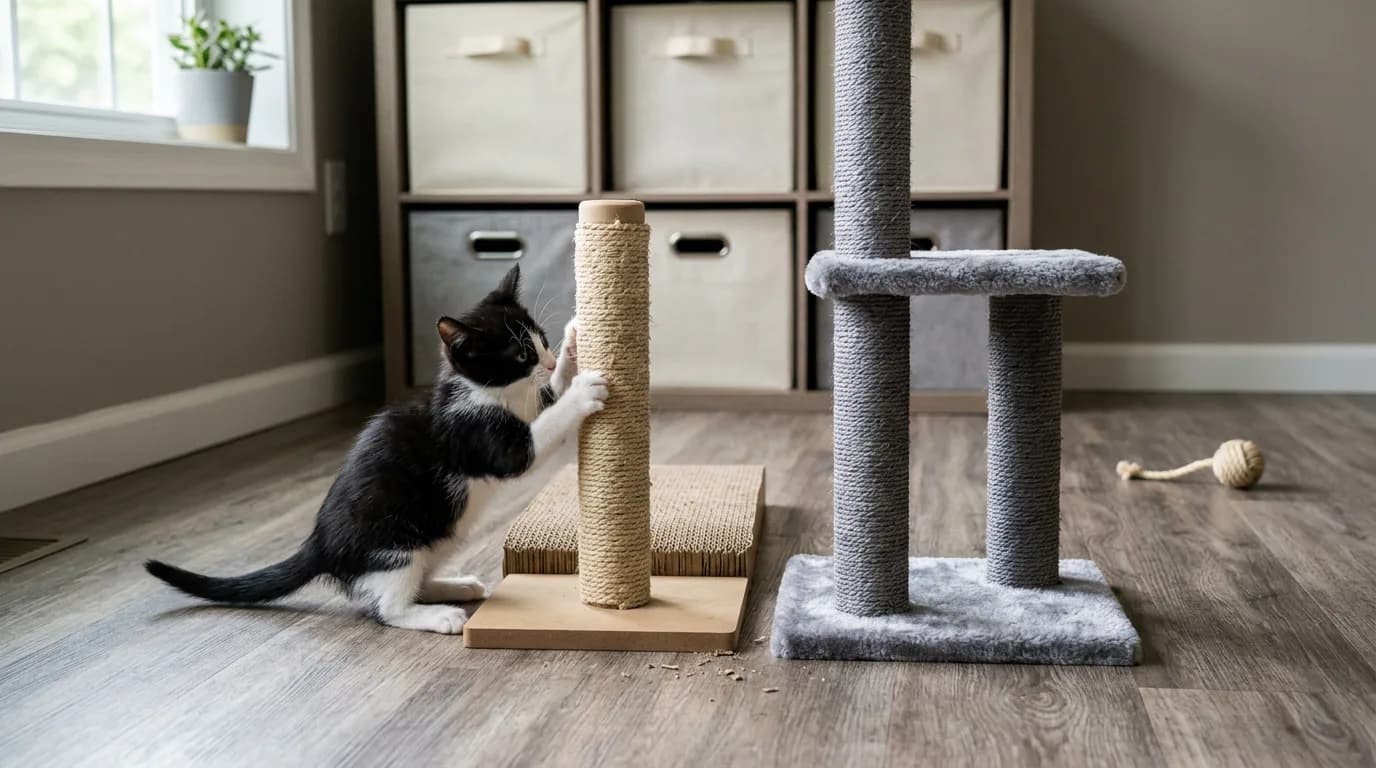
Give your kitten accessible scratching surfaces and check the stability and climbing route separately.
Petful is reader supported. As an affiliate of platforms like Amazon and Chewy, we may earn a commission when you buy through links on this page. There is no extra cost to you.
Choose kitten scratching posts by the surface your kitten can reach and use now. A stable upright post and an accessible floor pad offer different scratching positions. A first cat tree adds climbing and resting spaces, but its route needs a separate check.
You do not need a larger setup simply because it is labeled for kittens. Start with usable scratching surfaces, observe voluntary use, and compare any climbing furniture with the kitten's current reach, balance, and ability to return to the floor. Adjust specific features as those needs change.

Sign up for expert-backed reviews and safety alerts all in one place.
Start With a Simple Scratching Setup
A useful starting arrangement is a stable post plus an accessible horizontal option. It gives the kitten a choice of scratching positions without requiring a climb. Keep the setup simple enough that you can see which surface, location, and stance the kitten actually uses.
- 1Offer a stable scratching option within reach before making climbing part of the setup.
- 2Choose a first tree by individual ability and the complete route back down.
- 3Let voluntary use guide adjustments rather than relying on a product age label.
Do scratching posts help cats? They provide an appropriate place for natural scratching and stretching when the size, surface, and position fit. For a kitten, that begins with access. An attractive post hidden behind furniture or a pad the kitten cannot comfortably approach may not serve the intended purpose.
| Starter item | Function it adds | First fit check |
|---|---|---|
| Scratching post | Upright scratching surface | Usable reach and steady support |
| Floor pad | Horizontal scratching surface | Easy approach and enough standing space |
| First tree | Climbing and resting options | A manageable route up and down |
| Additional station | Another location or scratching position | A distinct need shown by observed use |
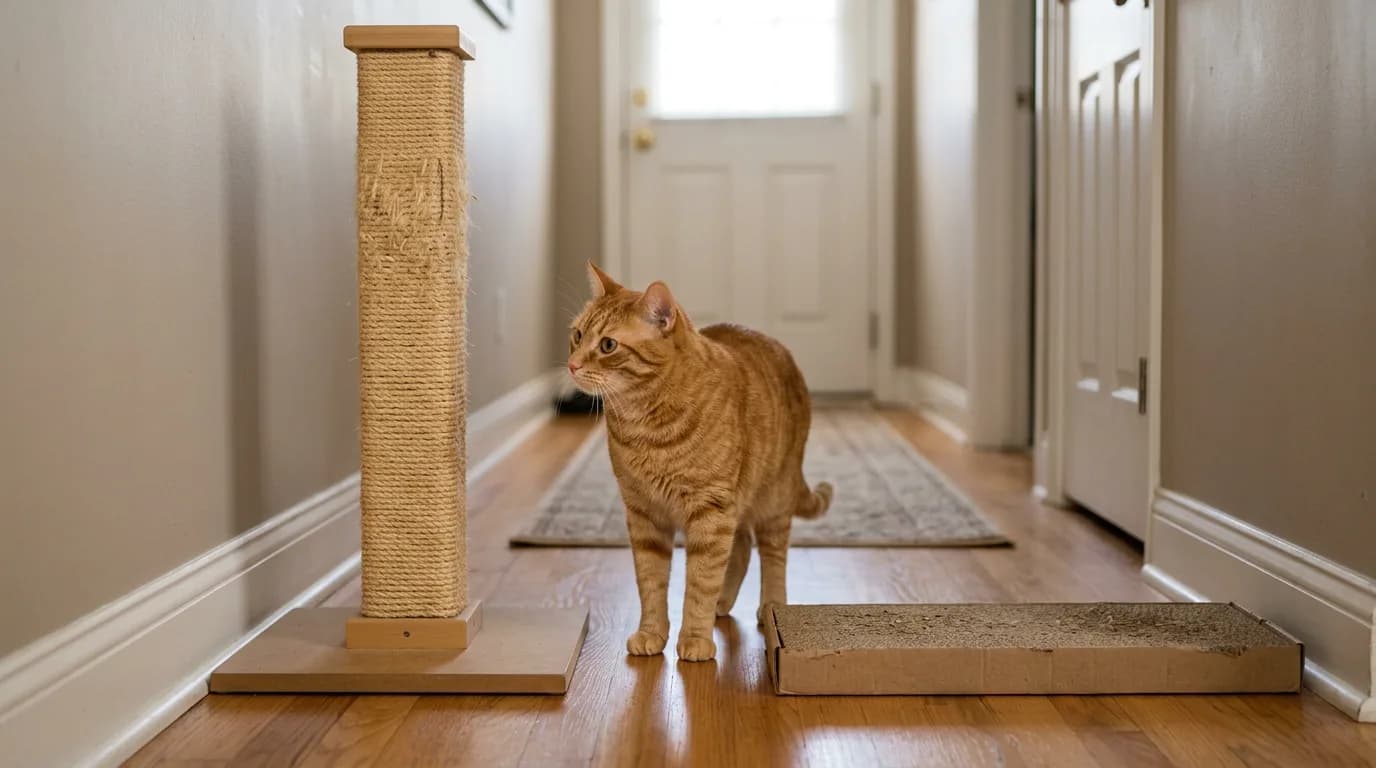
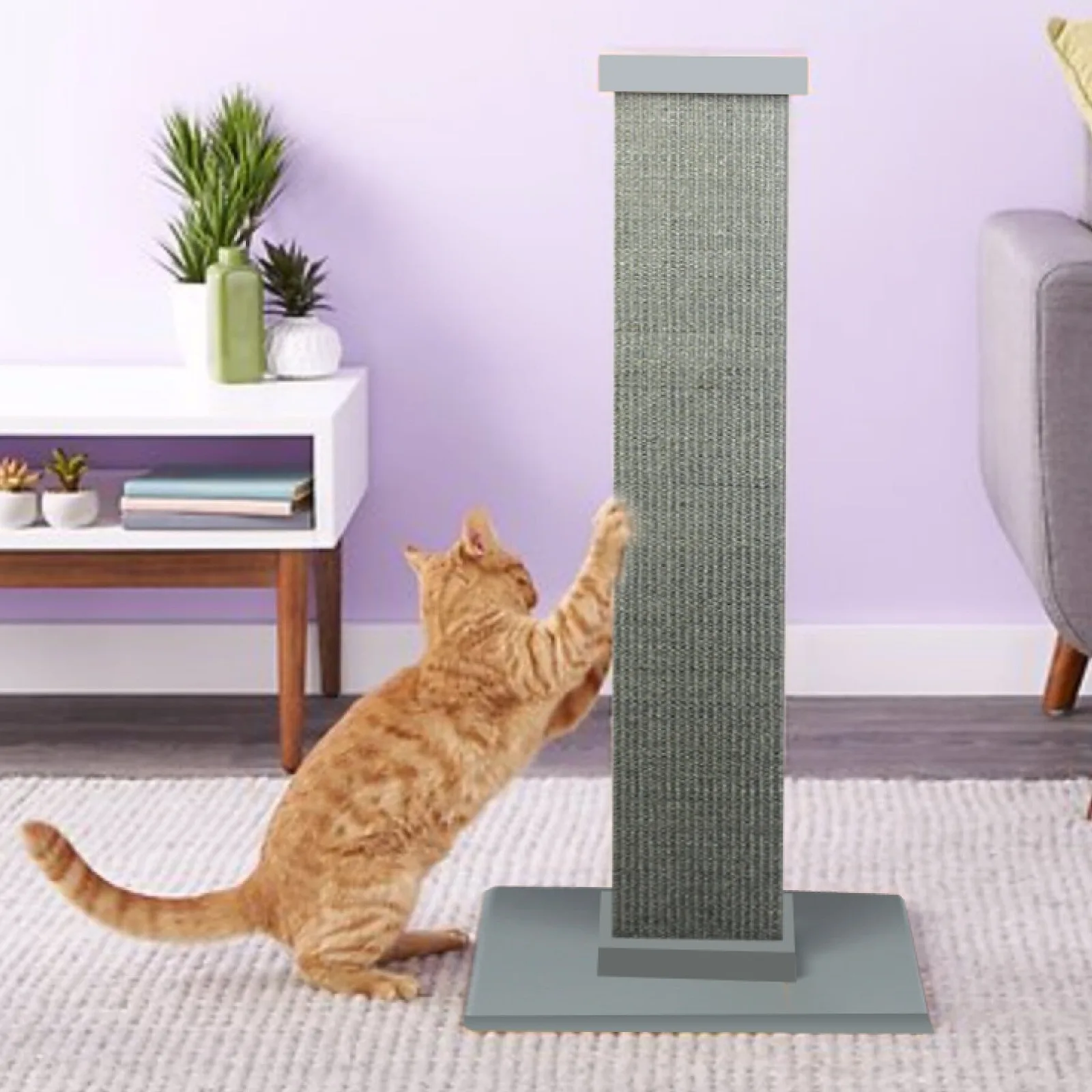
A simple upright post can supply the first of those functions without extra platforms. Compare its usable face with your kitten's reach and check its assembly and base, rather than assuming that a smaller product is automatically the right size.
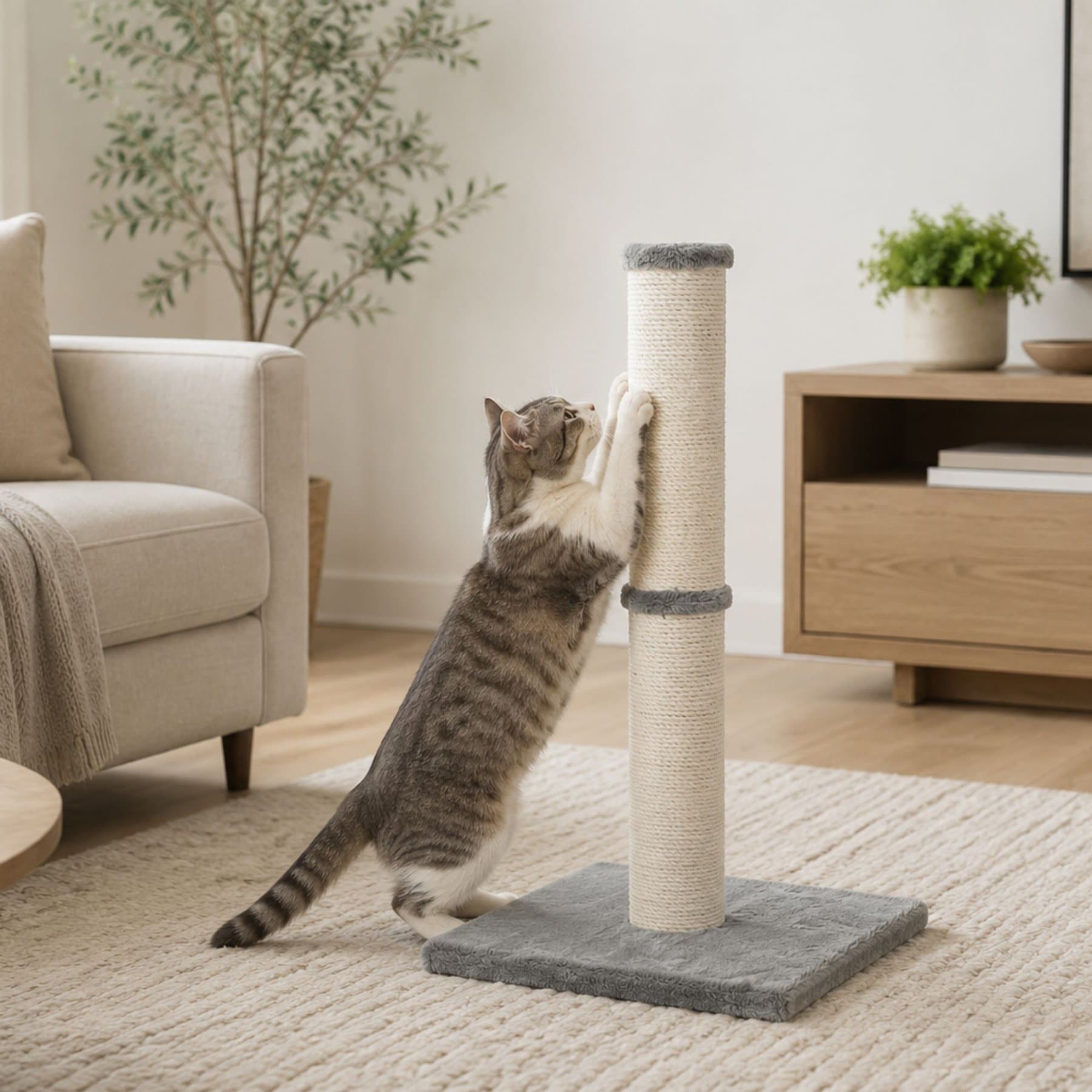
A 24.4-inch jute-wrapped post on a plush-covered base. A simple scratching station when you do not need elevated beds or platforms.
Petful may earn a commission when you click through to Chewy, at no extra cost to you.
Keep the scratching and climbing decisions separate. A kitten may use a post confidently while still needing a simpler route than a particular tree provides. Conversely, a kitten exploring a low platform may prefer a separate floor pad for scratching.
Once the basic options are available, watch before adding more. The next purchase should solve a visible gap, such as an ignored texture, cramped scratching space, or a missing resting place. It does not need to replace every part of a setup that is already working.
Choose a Post and Pad Your Kitten Can Use
Use the photographs to compare usable scratching reach and climbing access before selecting or adjusting a starter setup. For an upright kitten scratching post, compare your kitten with the actual scratching surface. Overall height includes parts that may not be scratchable, such as a cap or base. On a tree, platforms can interrupt the wrapped support even when the complete unit is tall.
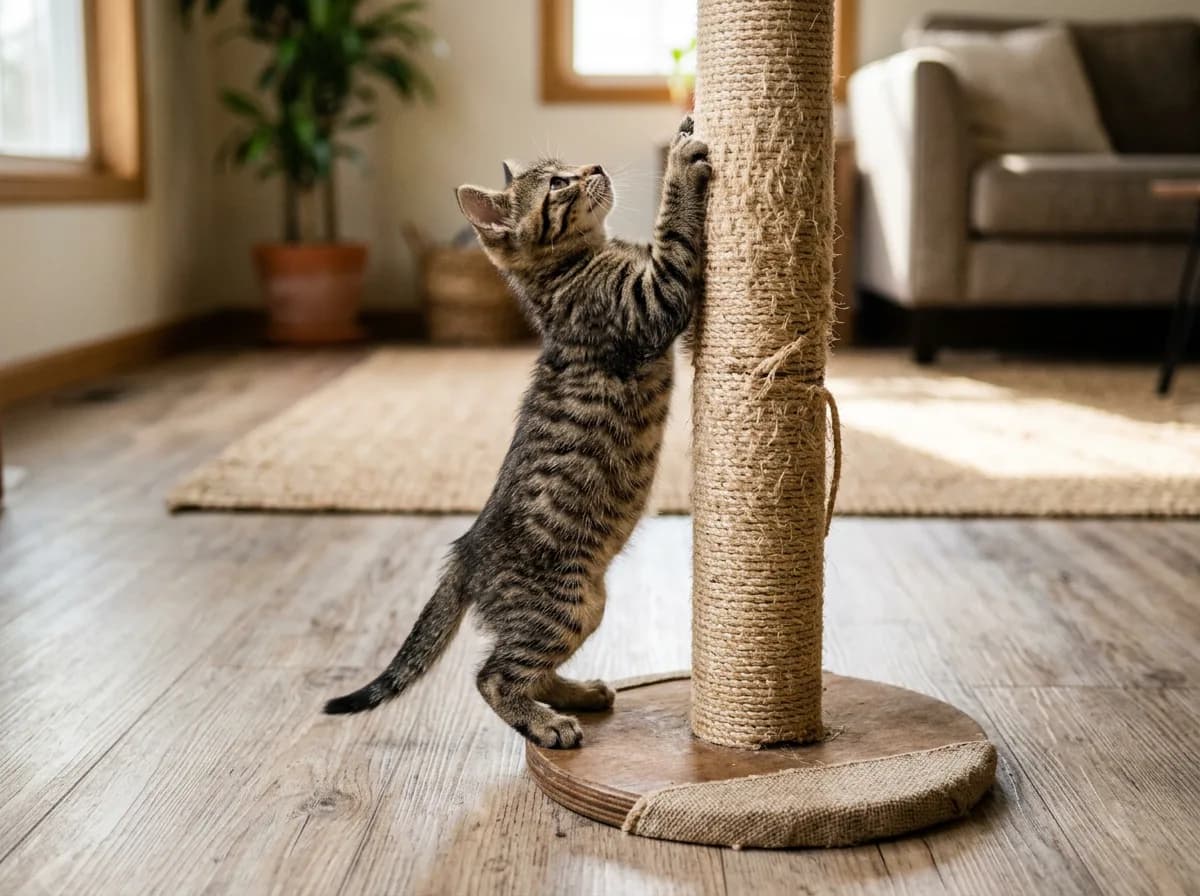
Check condition alongside fit. Loose rope, lifting fabric, exposed fittings, or a moving connection needs attention before continued use. A kitten reaching the surface does not establish that the surface or supporting structure is in suitable condition.
For a horizontal pad, look at how the kitten gets onto or beside it. Check any raised edges and the space available for the front and hind paws. A cardboard floor lounge is one option, provided the kitten can reach the scratching area and use it without the pad sliding.
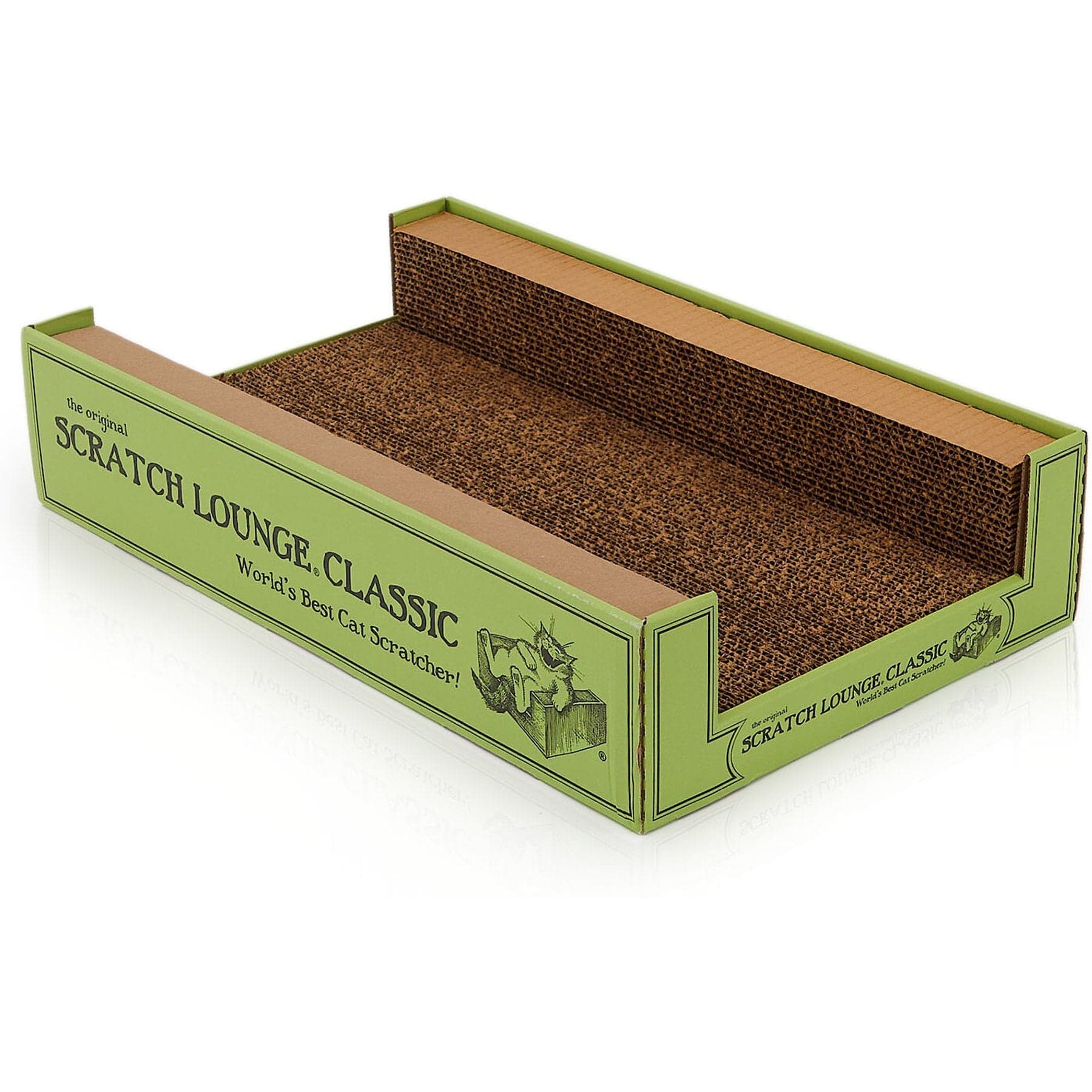
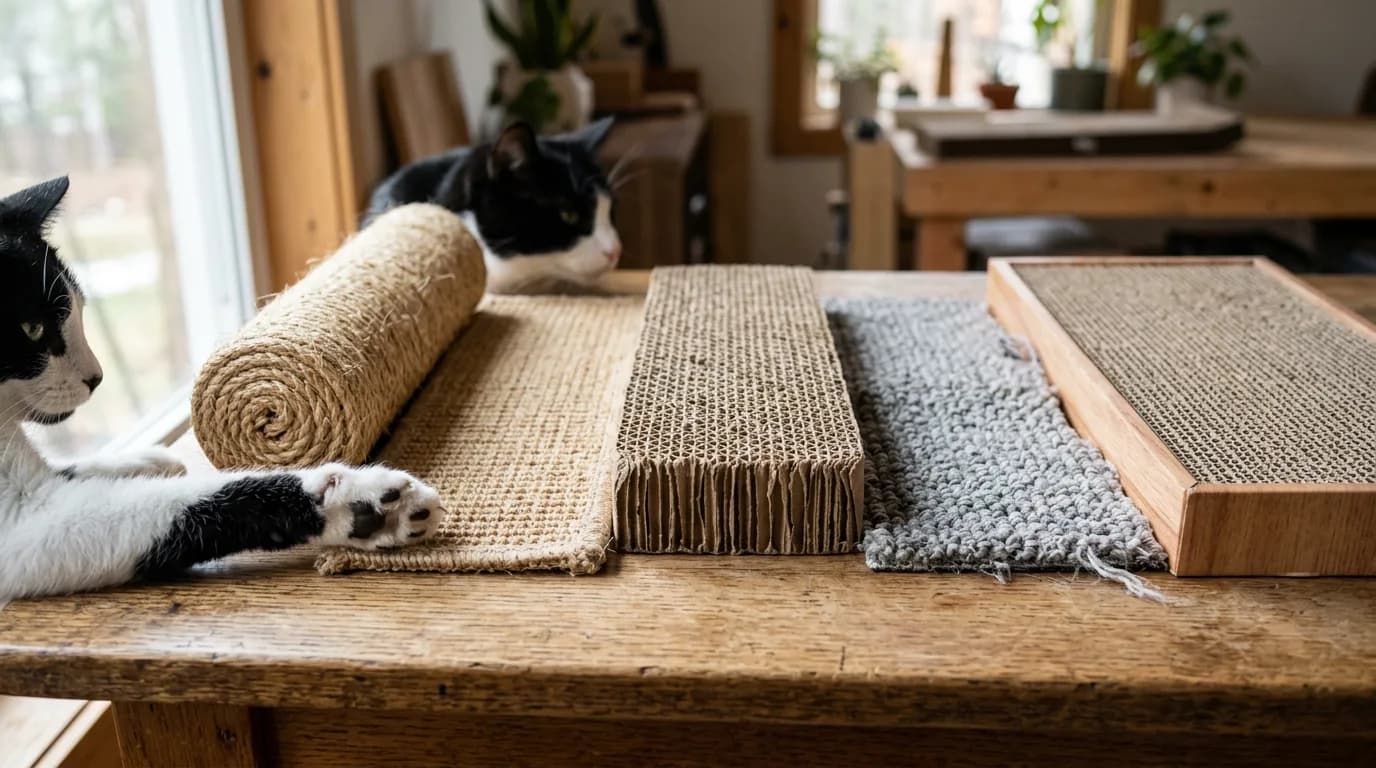
A horizontal cardboard lounge with reversible pads and available floor refills. An option for cats that scratch while standing on a flat surface.
Petful may earn a commission when you click through to Chewy, at no extra cost to you.
- Leave a clear approach to the scratching face.
- Check space for a natural stretch or floor-level stance.
- Observe whether the post rocks or the pad slides.
- Inspect edges, wrapping, and attachments.
- Recheck the fit as the kitten's reach changes.
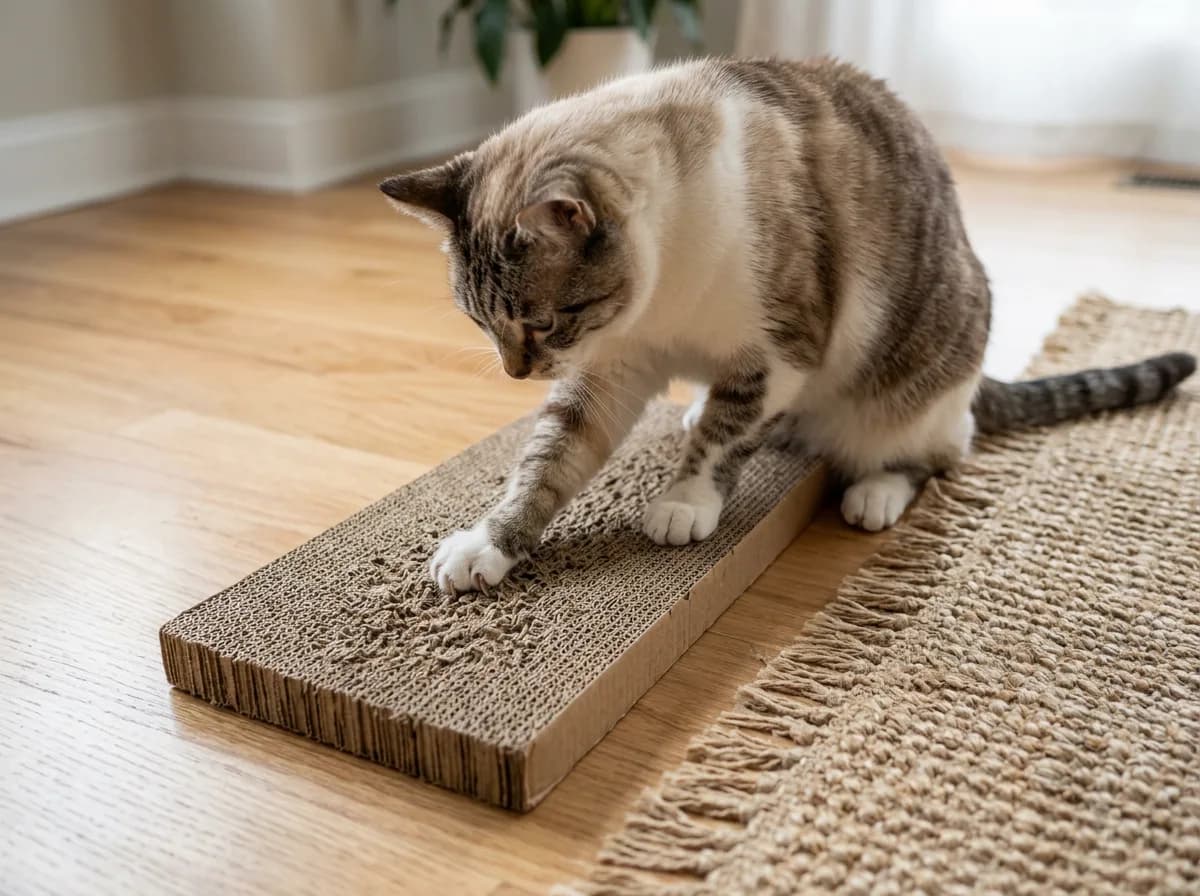
The floor-position example shows the kind of stance to assess. For your kitten, check its own reach and standing space rather than assuming the pictured cat's fit applies. A holder that works for a larger cat may still have an edge that changes a smaller kitten's approach.
Choose scratching surfaces by material suitability and individual preference. Woven sisal, sisal rope, jute, and cardboard have different constructions. Inspect the covering and its attachment, then observe which accessible surface your kitten uses; the material name alone does not establish fit or preference. Our scratching post materials comparison covers those differences, including sisal versus jute, visible wear, and replacement options. Use it to choose a surface without assuming that one fiber is every kitten's favorite.
When to Add a First Cat Tree
Consider a first cat tree when you can identify a useful climbing or resting function and a route that fits the individual kitten. Scratching access does not have to wait for that purchase. A sound post and floor pad can remain useful while you compare climbing arrangements.
Look for voluntary climbing and ordinary movement around low surfaces. Evaluate the descent and landing route as well as whether your kitten can reach the top. Compare the tree's first step, transitions, turning space, and return to the floor with what you observe. A reachable upper perch still needs a manageable way down.
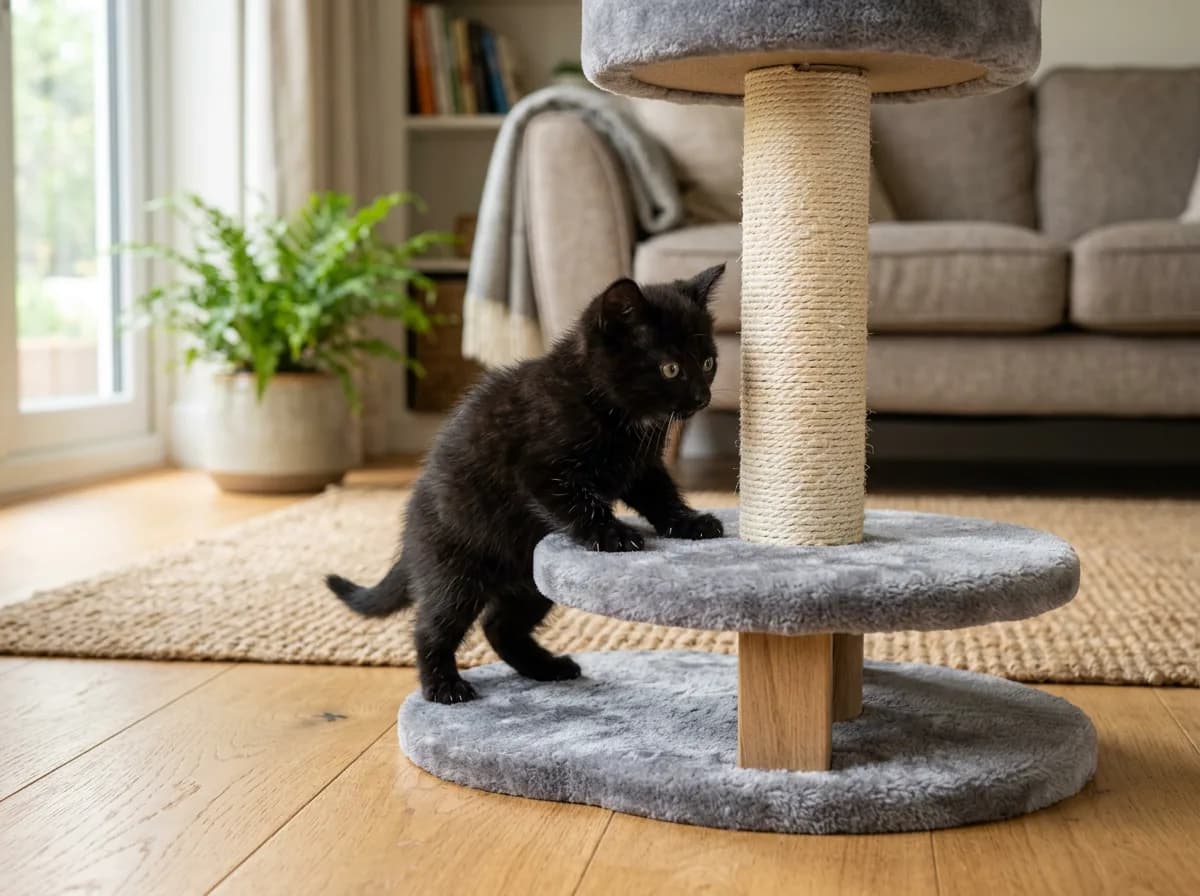
Product names such as “Junior” are not evidence of an appropriate age or safe height for an individual kitten. The name identifies a model; assess its actual route and your kitten’s ability separately. Overall height also tells you little about the distance between the first platform and the floor.
Before adding a tree, identify what it would provide:
- A reachable resting place that the current setup lacks.
- A sequence of usable platforms.
- An unobstructed descent route.
- Enough room around the base for landing and turning.
A first tree can supplement the scratching station rather than replace it. If the kitten likes a bed but ignores the tree's wrapped supports, keep the separate scratcher. If only the lower parts are being used, that observation matters more than whether the kitten has reached the highest platform.
Do not place the kitten on a high level to test readiness. Let it investigate accessible parts voluntarily, and reconsider a route that leads to repeated scrambling, hesitation, or difficulty returning. There is no need to set a climbing deadline based on a birthday or a product's marketing category.
Check the Climbing Route, Landing Space, and Base
Trace the entire route before treating a tree as a suitable first climbing setup. Start where the kitten would approach from the floor. Look at each usable landing area, the space for turning, the surface grip, and the path back down.
| Route check | What to inspect | Why it matters |
|---|---|---|
| Ascent route | Reachable first step and transitions | A tall overall structure can still have a difficult first step |
| Descent route | A practical return from each used level | Reaching a perch does not establish an easy way down |
| Landing space | Clear areas between levels and at the floor | The kitten needs space to land and move away |
| Stable base | Sound assembly and correct placement | An accessible route still needs steady support |
| Surrounding room | Nearby furniture, cords, windows, and doors | The tree can create routes beyond its own platforms |
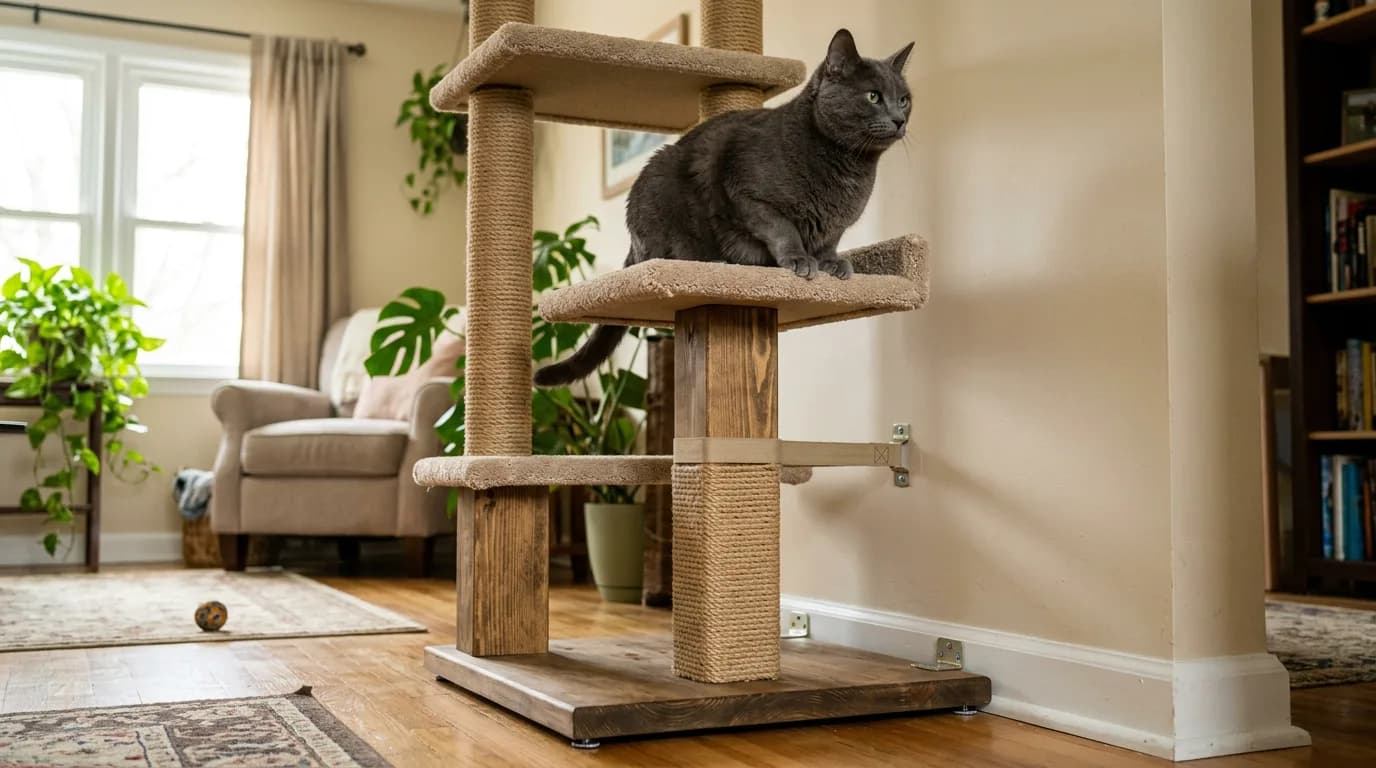
Before buying, compare the listed platform dimensions with the space the kitten needs to land, turn, and settle. A plush edge or supporting post may reduce the clear area. Trace both directions on the product diagram, and check where the kitten would go if another cat occupied a platform. The highest bed is only one part of the arrangement.
For placement, mark the base footprint on the floor and leave the approach and landing areas clear around it. Check doors and nearby furniture in their everyday positions. A tree can fit its allotted corner while still leaving an awkward route to the first step.
Before allowing access:
- Follow the exact assembly instructions.
- Inspect the connections and base with the tree empty.
- Correct missing or incorrectly fitted parts before use.
A hand check may reveal movement, but it does not establish a load rating or certify an installation.
If the climbing route is not yet useful, you can still add another scratching position without adding a tree. A woven-sisal board designed for floor use or secure wall mounting is one way to compare those positions while keeping the same surface material.
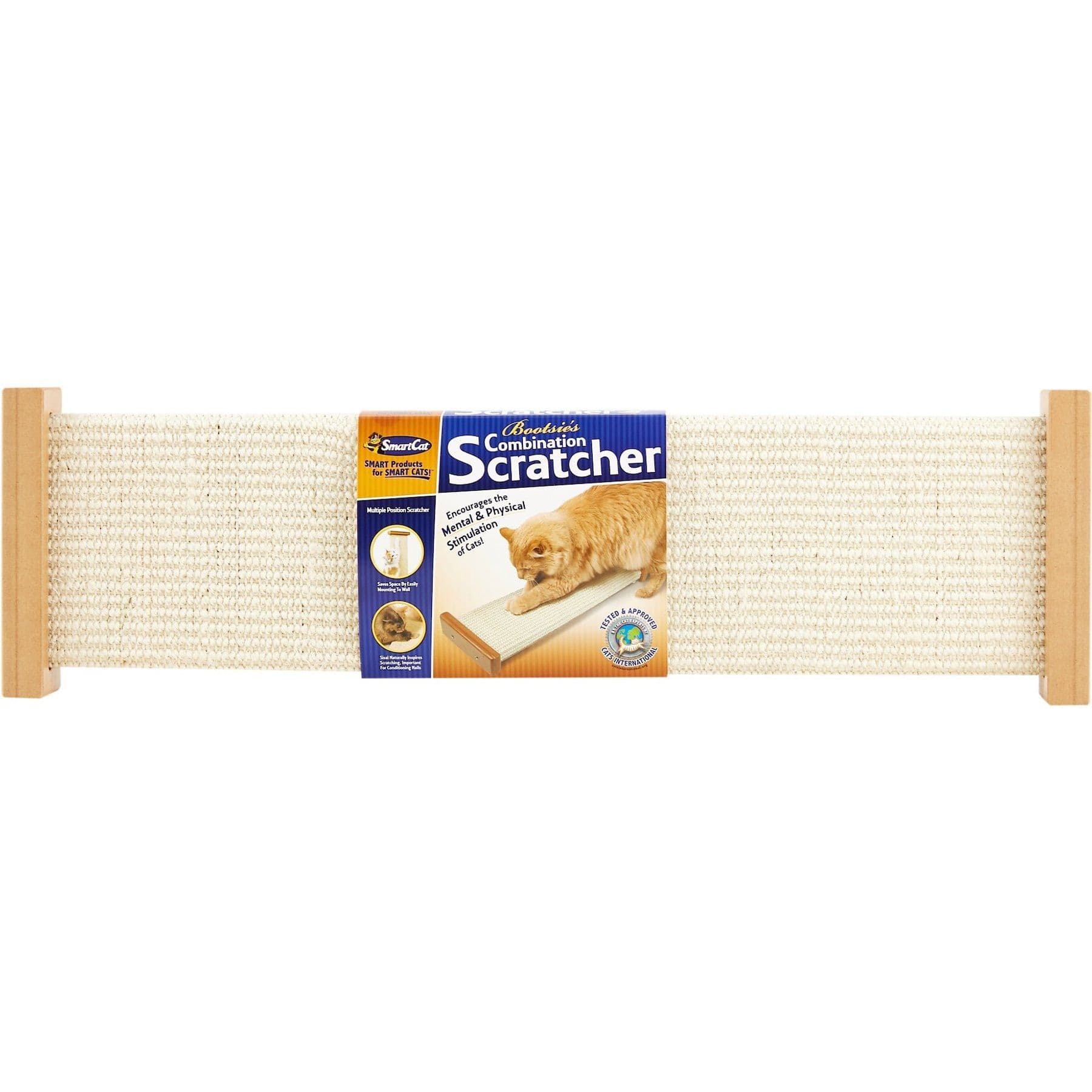
A woven-sisal board for floor or securely mounted wall use. A way to try another scratching angle without a full cat tree.
Petful may earn a commission when you click through to Chewy, at no extra cost to you.
For how to secure a cat tree, including mounting surfaces, specified attachments, and damaged components, use our cat tree safety guide. Keep that installation check separate from the kitten's route check. A wall attachment cannot make an unsuitable step easier to reach, and an easy route cannot compensate for a damaged support.
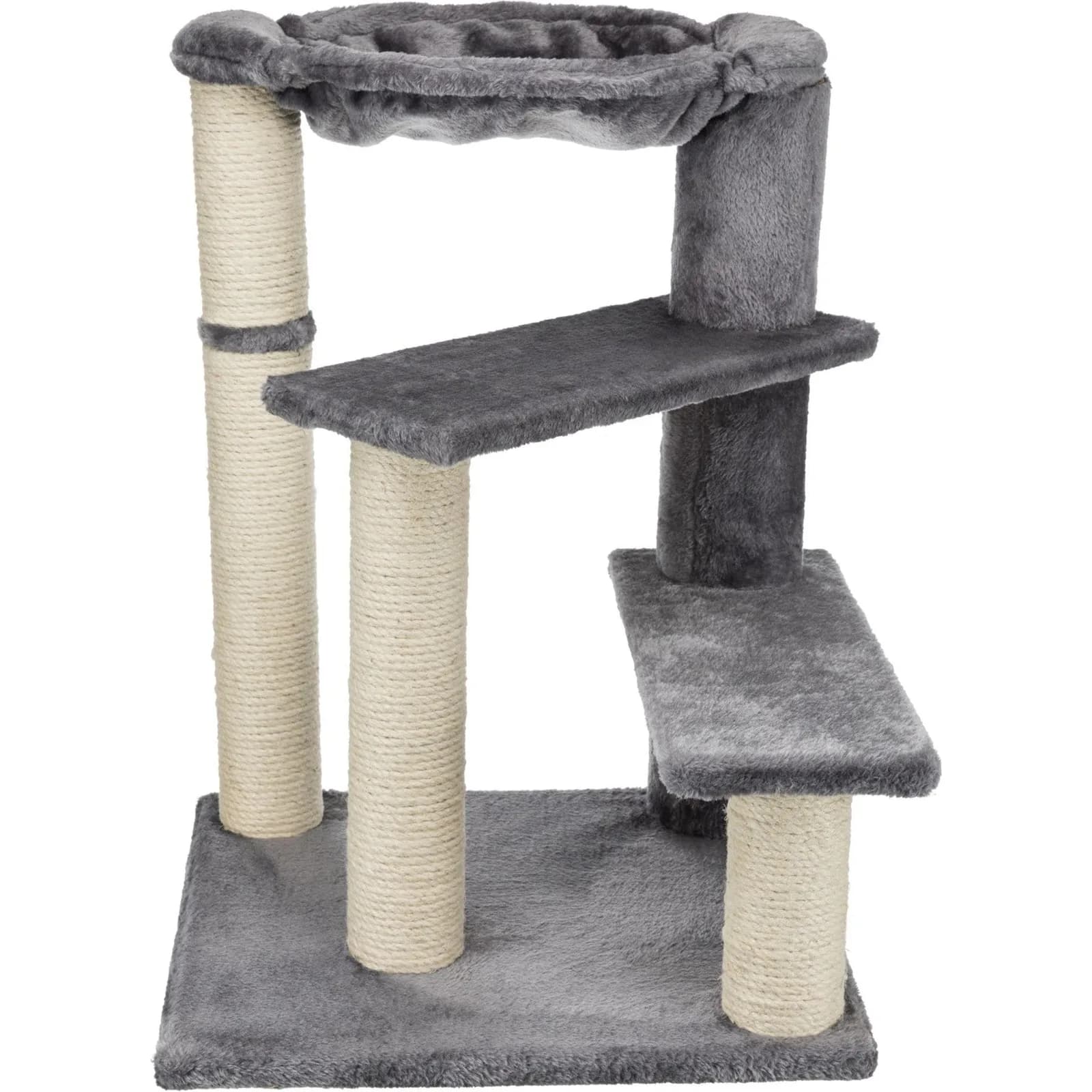
The staggered platforms in this example make the route visible, but the photograph does not demonstrate kitten use. Compare the actual step distances and landing areas with your kitten. A stepped layout can still be a poor fit if a transition is awkward or an exit is blocked.
Compare Starter Products
These examples cover a simple scratching post, a cardboard floor lounge, a woven-sisal board, and a compact climbing tree. Choose by the function your kitten needs and the fit you can verify.
On October 18, 2026, prices were $19.98 for Parla, $39.95 for Scratch Lounge, $29.99 for Bootsie's, and $60.03 for Baza Junior. A separate post or board may answer the immediate scratching need, while a tree adds another purchase decision about climbing access and resting space.
TRIXIE Parla 24.4-in Jute Cat Scratching Post, Platinum Gray
The TRIXIE Parla is a 24.4-inch upright post with a 15.7-inch square base. The scratching wrap is jute, and the base covering is polyester plush.
Compare it as a simple scratching station. Check usable reach and steady support for the individual kitten. Its smaller format does not make it a kitten-specific product, and the jute surface should not be described as sisal.
Scratch Lounge The Original Scratch Lounge Cat Toy with Catnip
The Scratch Lounge Original provides a horizontal cardboard format with reversible pads. The manufacturer offers floor and side refills, which gives you a replacement option for those surfaces.
Check the kitten's approach and standing space inside the lounge. The product includes catnip, but a response to it is not required to assess whether the scratching area is accessible. Do not use a lack of interest in catnip as the sole reason to reject the format.
SmartCat Bootsie's Combination Scratcher
SmartCat Bootsie's Combination Scratcher uses woven sisal on a board designed for floor use or wall mounting. Select the supported position that fits the kitten's reach and follow the installation instructions.
If you are choosing a wall-mounted cat scratching post or board, our vertical versus horizontal scratcher comparison explains the stance and support differences. A floor board can provide an accessible option without a climb; a mounted surface needs an appropriate height and clear approach. Bootsie's is not established here as a freestanding angled scratcher.
TRIXIE Baza Junior 38.6-in Plush Cat Scratching Post
The TRIXIE Baza Junior is a compact tree with jute-wrapped posts and resting areas. Compare its actual climbing route with your kitten's reach and balance before choosing it as a first tree.
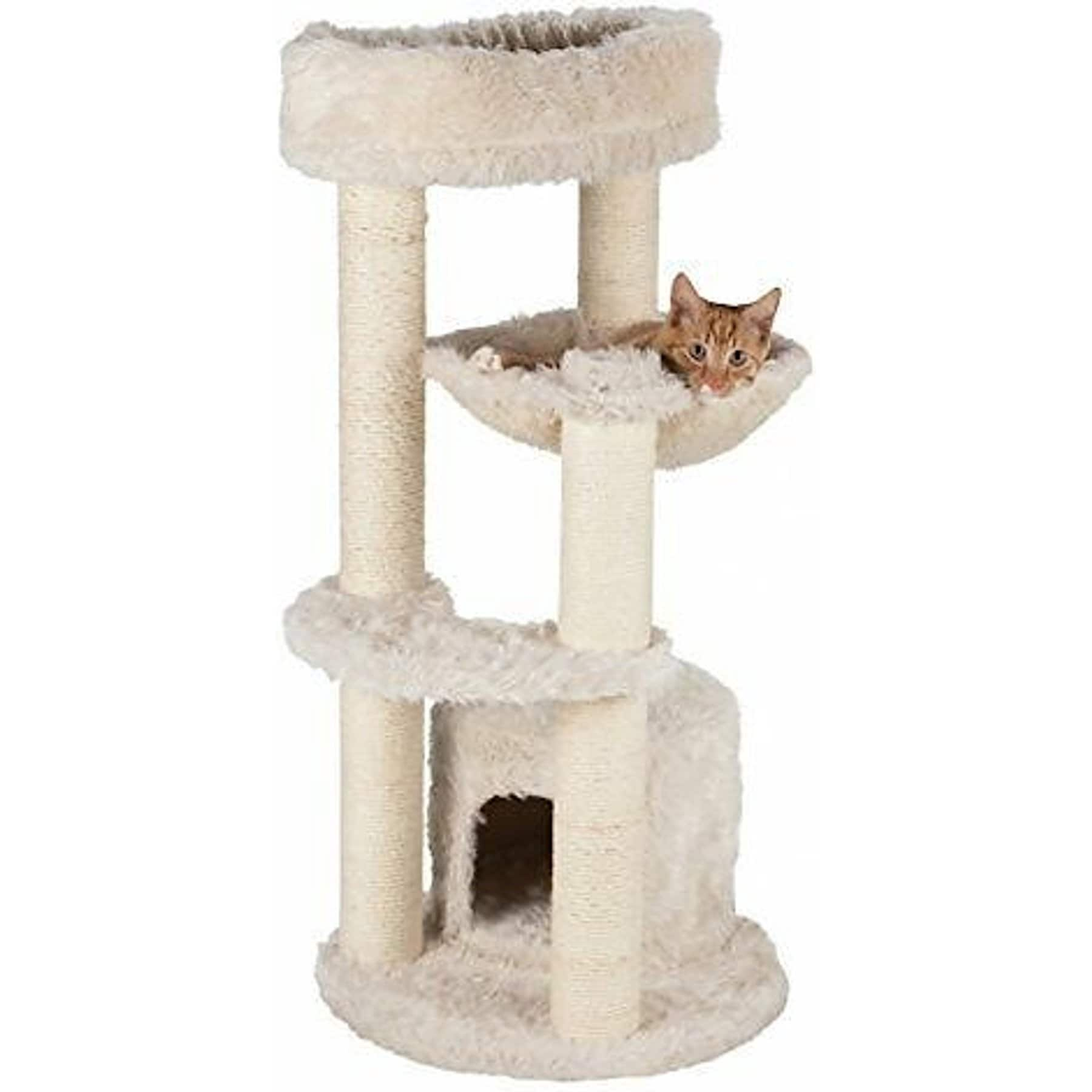
A 38.6-inch compact cat tree with jute-wrapped posts. Compare its climbing route and resting spaces with your cat’s reach and balance.
Petful may earn a commission when you click through to Chewy, at no extra cost to you.
“Junior” is the model name, not a safe-age determination. Check the transitions, return route, resting-space dimensions, assembly, and placement. Its listed overall height is different from the uninterrupted scratching height available on an individual support.
For maintenance, TRIXIE identifies the Baza Junior's top bed as removable and gives hand-wash care for its reversible cushion. Follow the model's component-specific care information; that does not mean the assembled tree is washable. Removable and replaceable components can be useful features when comparing a first tree, provided you confirm the exact parts and care method.
Place the Setup and Encourage Voluntary Use
Place the scratching options near activity the kitten already chooses, with an easy approach. A pad near a usual scratching spot or an upright surface beside a targeted furniture edge can be more useful than an identical item hidden in an unused corner.
Why is my cat scratching the wall? The wall may provide an upright surface in a location the cat wants to scratch. Watch the stance, texture, and repeated location before drawing a conclusion. Offer an accessible alternative nearby rather than assuming that a tree elsewhere in the room answers the same need.
The San Francisco SPCA's scratching-post guidance recommends sturdy, usable scratching surfaces and rewarding their use. Let your kitten investigate without holding its paws against the material or placing it on a high tree platform.
- Keep the approach clear.
- Allow sniffing and voluntary investigation.
- Reward scratching when it happens.
- Watch which surface and position are used again.
- Change one feature if the setup is being ignored.
Keep a familiar, sound scratching option available while introducing another. Removing it immediately makes it harder to tell whether the kitten accepts the replacement. There is no fixed number of days in which every kitten should learn a new setup.
A resting area is another location to consider. The San Francisco SPCA notes that cats may scratch after waking. Observe whether that pattern appears in your kitten's routine, then place a suitable surface within an easy approach. This gives you a concrete placement adjustment to try before replacing an otherwise usable scratcher.
If you offer several stations, give them distinct purposes or locations. Two scratchers beside each other may still leave another room without an accessible alternative. In a shared home, watch whether another cat blocks the approach or occupies the only resting place.
Adjust the Setup as Your Kitten Grows
Review the setup when you notice changed reach, cramped standing space, different route use, or wear. Growth does not automatically make every starter item obsolete. A floor pad that remains accessible and useful may stay in the arrangement while a taller scratching face is added.
For a tree, revisit the manufacturer's size or load information as well as the visible fit. A kitten can grow heavier without an obvious change in which platform it uses. Do not infer capacity from a product photo or transfer a rating from another model. Keep the assembly information available so later checks use the same product details.
| Change you notice | Check | Next adjustment |
|---|---|---|
| Changed reach | Uninterrupted scratching height | Add a suitable longer face if the current one restricts the stretch |
| Cramped standing space | Usable pad area and approach | Compare a roomier floor format |
| Route difficulty | Steps, traction, turning room, and descent | Choose a more accessible arrangement |
| Surface wear | Covering, attachment, and replacement options | Renew a compatible surface on a sound structure |
| Structural damage | Base, supports, and joints | Stop using the affected structure until properly replaced |
Use your growing cat's own reach for the comparison. The catalog example shows an upright scratching position, not a growth timetable or proof that a particular post suits every adult cat.
Separate surface wear from structural condition. A replaceable pad may be all that is needed when its holder remains sound. Fresh rope or fabric does not restore a cracked support or failing connection. Check compatible replacement parts before assuming that a worn item can be renewed.
For a larger cat scratching post or a broader adult setup, see our cat trees and scratching posts comparison. It compares usable height, body space, household access, and the functions each piece adds. Preserve the parts your cat still uses, and add or replace the feature that no longer fits rather than replacing everything on an arbitrary schedule.
Frequently Asked Questions
Kittens need an accessible scratching surface with stable support. A post can provide upright scratching, while a floor pad offers another position. Assess kitten fit and observed use rather than assuming that every kitten needs the same product or must begin with a climbing tree.
Choose by usable reach, a stable base, appropriate surface condition, and individual preference. The scratching face should be accessible without an awkward approach. A small product label alone does not establish fit, and a useful floor option can complement an upright post.
Compare the tree with the kitten's individual ability and its complete descent route. A suitable first tree adds reachable climbing or resting space the kitten can use voluntarily. There is no universal age that makes every climbing route appropriate; scratching surfaces can be provided separately.
Overall height alone cannot answer that. Check the route between levels, landing space, stable assembly, and the kitten's ability to return to the floor. A taller tree can contain difficult transitions, and a lower tree still requires a sound structure and suitable placement.
Consider the rooms used and whether an accessible station is available near relevant scratching activity. Use observed use to decide whether another position or location would help. A fixed quota does not account for the home's layout, shared access, or the cat's preferences.
Scratching is natural, but a new object may need time and suitable scratcher placement to become familiar. Allow voluntary investigation and reward voluntary use. Do not move the cat's paws across the surface, and do not assume that an ignored post means the kitten cannot learn to use one.

Coreen Saito is a pet writer and longtime shelter volunteer with more than a decade in animal rescue. She covers cat behavior, breed care, and the small, ordinary science of sharing a life with companion animals, with a particular focus on honest takes about the products and decisions that actually matter. At home in Arizona, she's outranked by Mac (a dog with the loudest opinion in the house), Rebel (a cat who governs by quiet authority), and Meri (an orange tabby who runs the late shift and the laundry basket). She writes about all three, plus the rescues that keep coming through her life, at LifeWithMinty.com.
Sign up for expert-backed reviews and safety alerts all in one place.