Scratching Post Materials Compared: Sisal, Cardboard, Carpet, Wood
Compare woven sisal, sisal rope, jute, cardboard, carpet, and wood by your cat's scratching habits, visible wear, cleanup, and the options for replacing a surface or repairing a sound component.
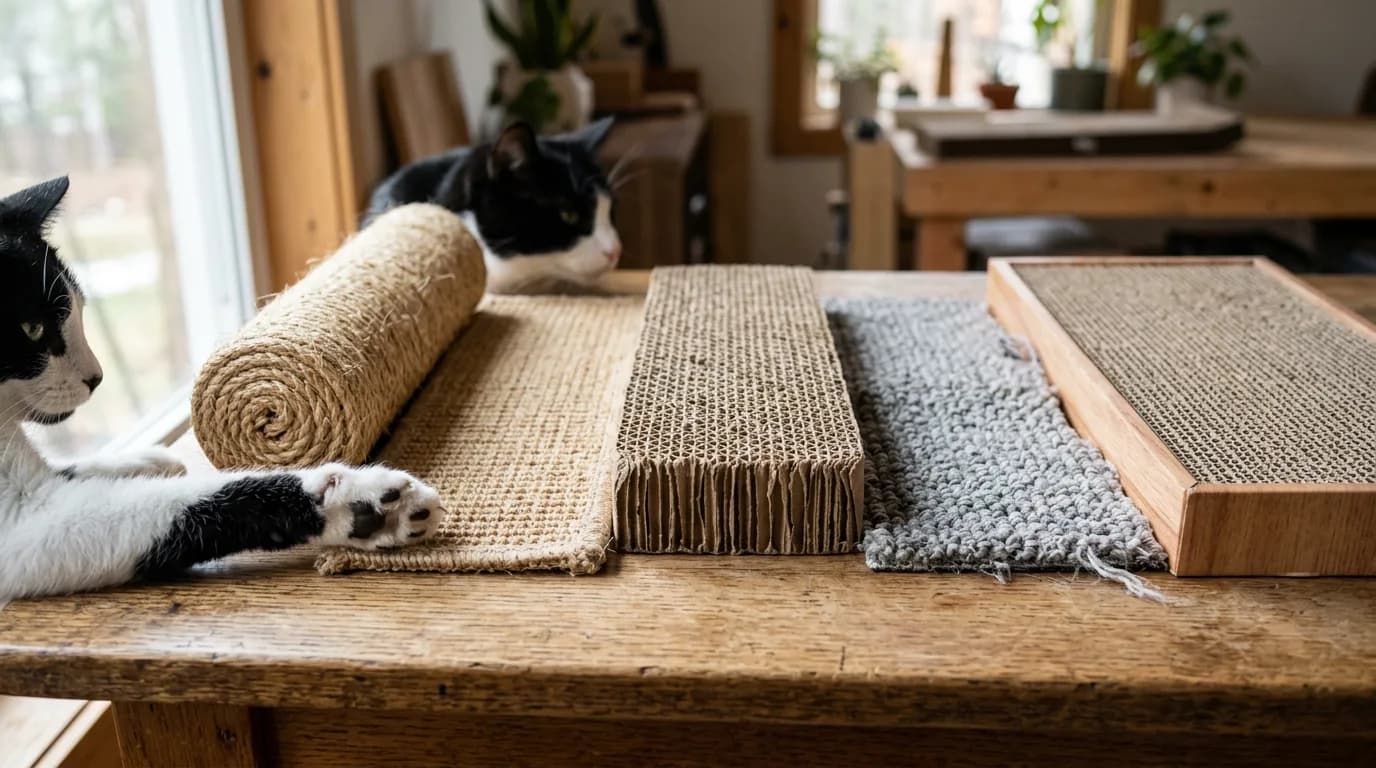
Compare surface texture separately from the shape and support of the scratcher.
Petful is reader supported. As an affiliate of platforms like Amazon and Chewy, we may earn a commission when you buy through links on this page. There is no extra cost to you.
Choose scratching post materials by looking at the surface your cat uses, the way that surface is supported, and what you will replace when it wears out. Woven sisal, sisal rope, jute, cardboard, carpet, and wood can appear on very different products. A material name alone does not tell you whether a post, pad, or board will fit your cat's habits.
The most useful starting point is a familiar scratching setup. Note the texture, angle, location, and movement during use. Then change the feature that needs improvement. You might need a compatible refill, a different surface on a stable format, or a new structure because the old base is damaged.

Sign up for expert-backed reviews and safety alerts all in one place.
Compare Scratching Materials at a Glance
Compare the scratching material separately from the furniture format. A rope-covered tree support, a woven board, and a cardboard floor pad differ in both surface construction and how the cat stands to use them. If you switch all of those features together, you cannot tell which difference made the new option more appealing.
- 1Compare scratching material and scratching orientation as separate choices.
- 2Individual preference matters more than a universal ranking of surfaces.
- 3Inspect the supporting structure before deciding whether to replace a surface, a component, or the whole piece.
| Scratching surface | Construction to identify | Cleanup and wear check | Replacement question |
|---|---|---|---|
| Woven sisal | A woven surface attached to a board or post | Loose edges, pulled fibers, attachment condition | Is a compatible replacement surface or component offered? |
| Sisal rope | Rope wrapped around a support | Loose strands, gaps, exposed support | Is rewrapping supported for this component? |
| Jute surface | Jute wrapping or another stated jute construction | Loose wrapping and attachment condition | Does the replacement match the original component? |
| Cardboard surface | Corrugated or honeycomb cardboard pad | Loose pieces, worn areas, crushed sections | Is the pad reversible, and is a compatible refill available? |
| Carpet surface | Carpet attached to a board or support | Loose edges, pulled loops, debris | Can the covering be replaced securely? |
| Wood surface | Wood intended to serve as the scratching area | Splinters, cracks, finish, attachment | Is the surface still suitable, or does the component need replacement? |
What can I use instead of a scratching post? A floor pad, scratching board, or securely mounted board can provide a surface without a freestanding post. Choose the material and position together, then check that the product stays in place during scratching. A pad is not a smaller version of a climbing tree; it performs a different job.
If you are deciding whether to buy a tree, a post, or separate pieces, start with our cat trees and scratching posts comparison. It separates scratching from climbing and resting needs. That helps avoid paying for a large structure when a surface change would solve the problem, or buying another scratcher when the actual missing feature is a usable perch.
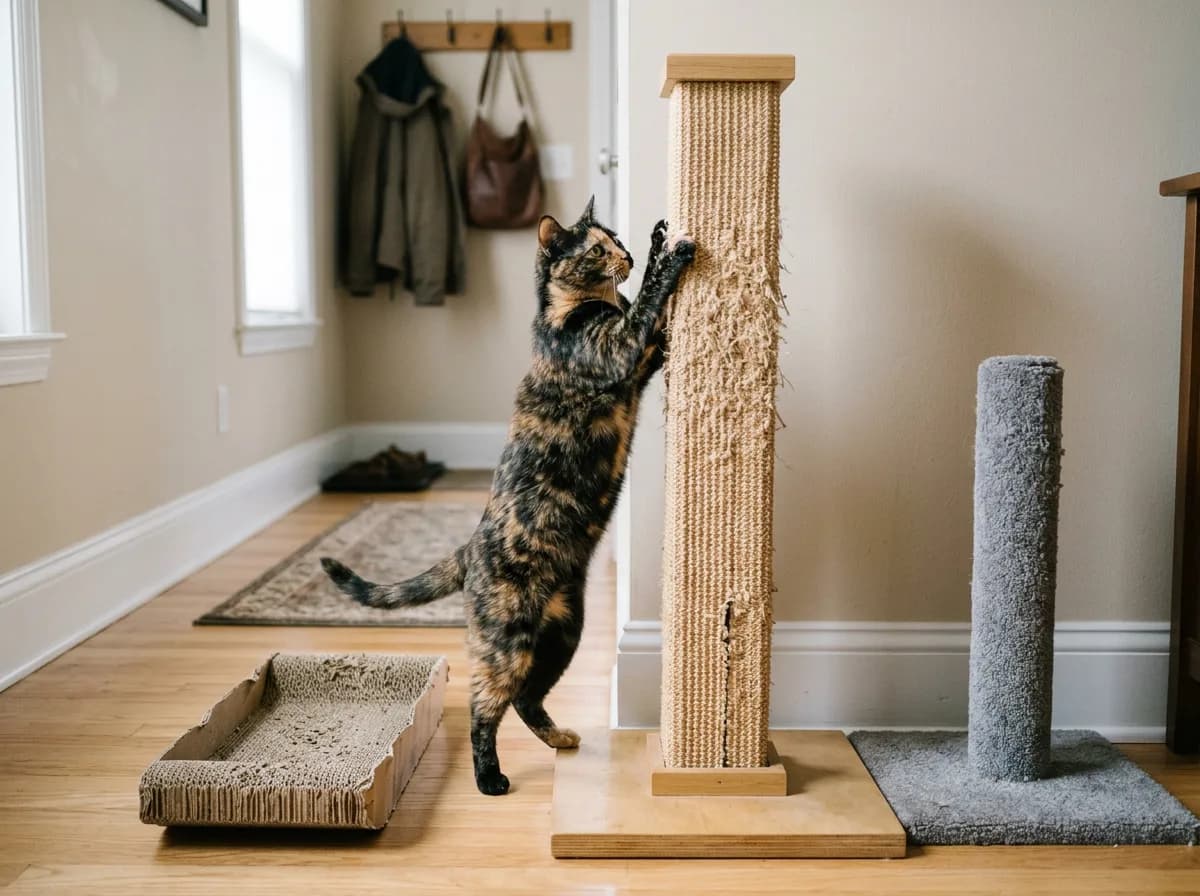
Sisal Rope, Woven Sisal, and Jute
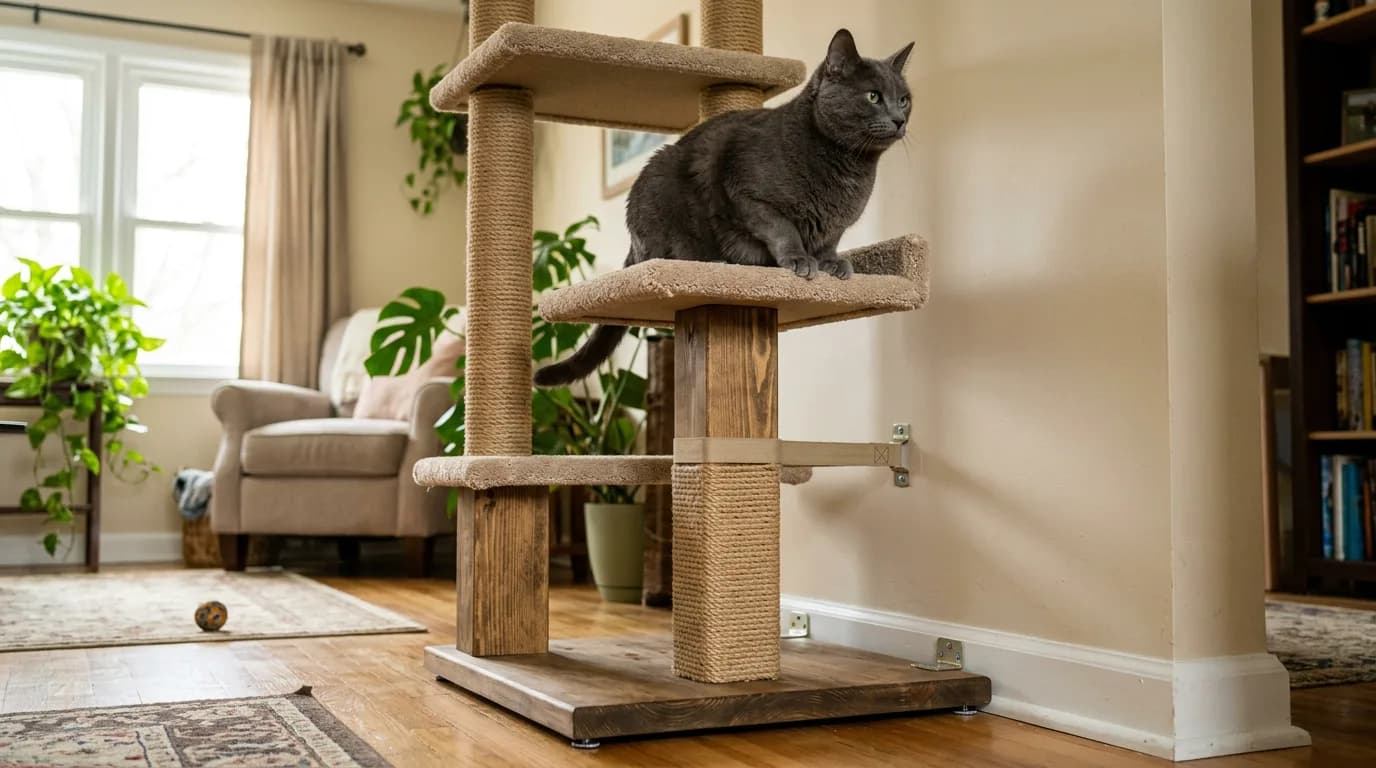
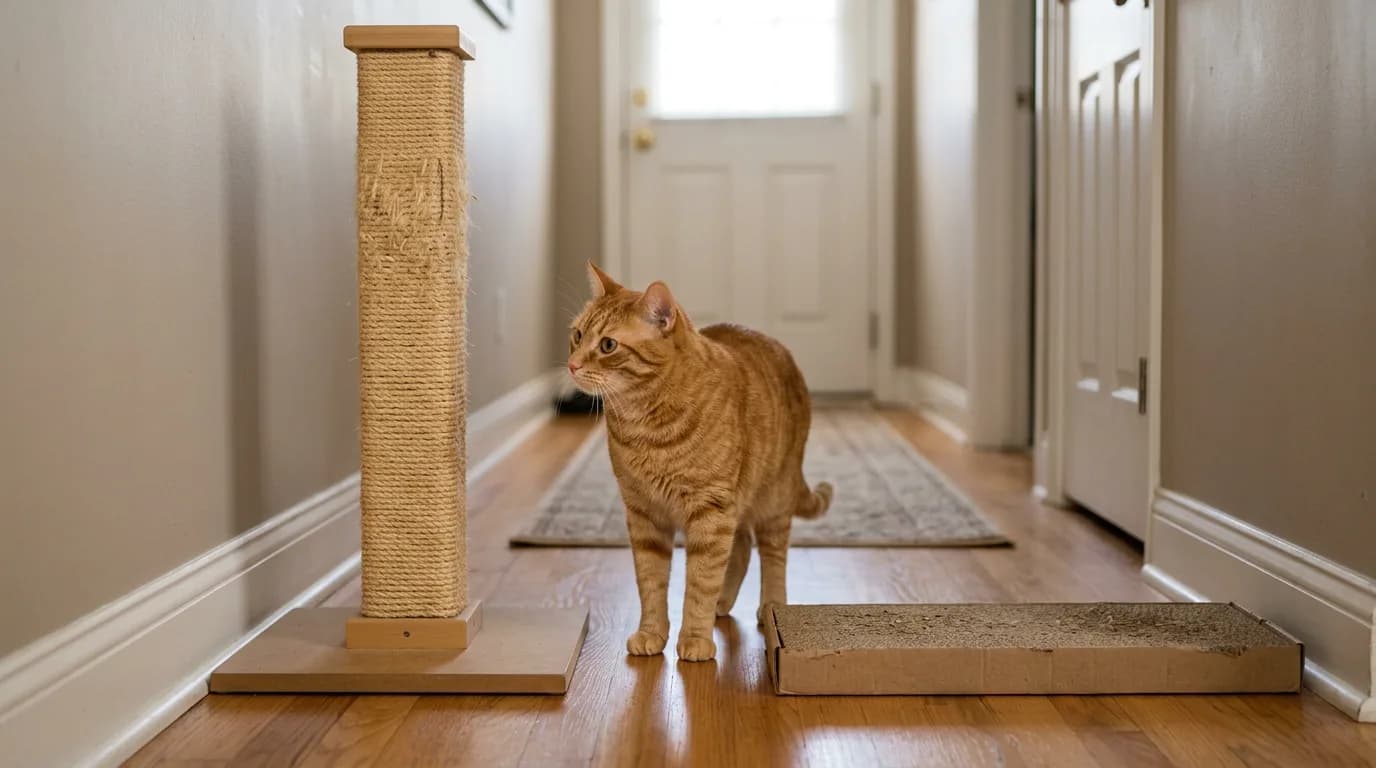
Woven sisal is relevant when comparing a dedicated upright post with a board covered in the same general material. The SmartCat Ultimate, for example, uses woven sisal on a 32-inch post. Its 16-inch square base and upright format are separate characteristics from its surface. Compare both with the space and scratching reach you need.
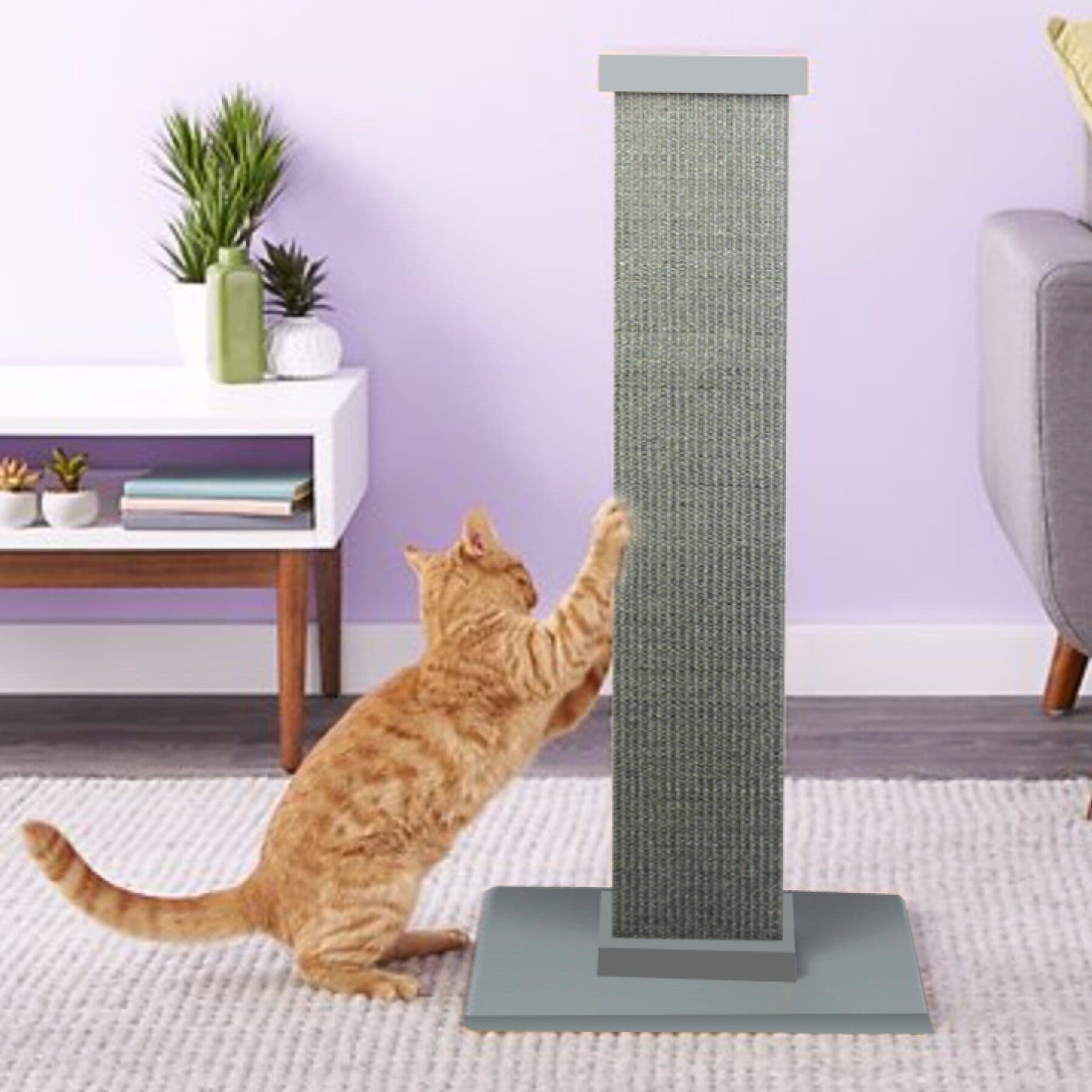
A 32-inch woven-sisal scratching post with a 16-inch square base. Compare its height with your cat’s full scratching stretch.
Petful may earn a commission when you click through to Chewy, at no extra cost to you.
Sisal rope and woven sisal use different constructions. Rope makes a wrapped surface around the support. Woven sisal forms a fabric-like surface attached to the furniture. Listings sometimes use broad terms such as “sisal post” without making that distinction clear, so examine the stated material and close-up photographs before choosing.
| Description | What it tells you | What to inspect |
|---|---|---|
| Sisal rope | The surface is constructed from wrapped rope | Wrap condition, gaps, and surface attachment |
| Woven sisal | The surface uses a woven construction | Edges, attachment, and usable scratching area |
| Jute surface | The stated fiber is jute | Whether it is wrapped or woven and how it is attached |
| “Natural rope” or “twine” | An incomplete material description | Exact fiber, intended use, treatments, and construction |
Do not assume jute is another name for sisal. The TRIXIE Parla's manufacturer identifies its wrapped scratching surface as jute. Its plush-covered base is a separate material. This distinction matters when comparing a replacement with a surface your cat already uses: a similarly colored rope does not establish the same fiber or construction.
For a tall sisal scratching post, usable scratching height matters alongside the material. A shelf, cap, or change in covering can interrupt the surface. For a sisal-covered board, consider the length of the usable face and the supported installation position. Neither “tall” nor “sisal” answers all of those questions.
- Look for the exact surface description, not just the product title.
- Distinguish the scratching face from the base covering.
- Check how the surface meets edges, seams, and attachments.
- Confirm whether a worn component can be replaced before assuming it can be rewrapped.
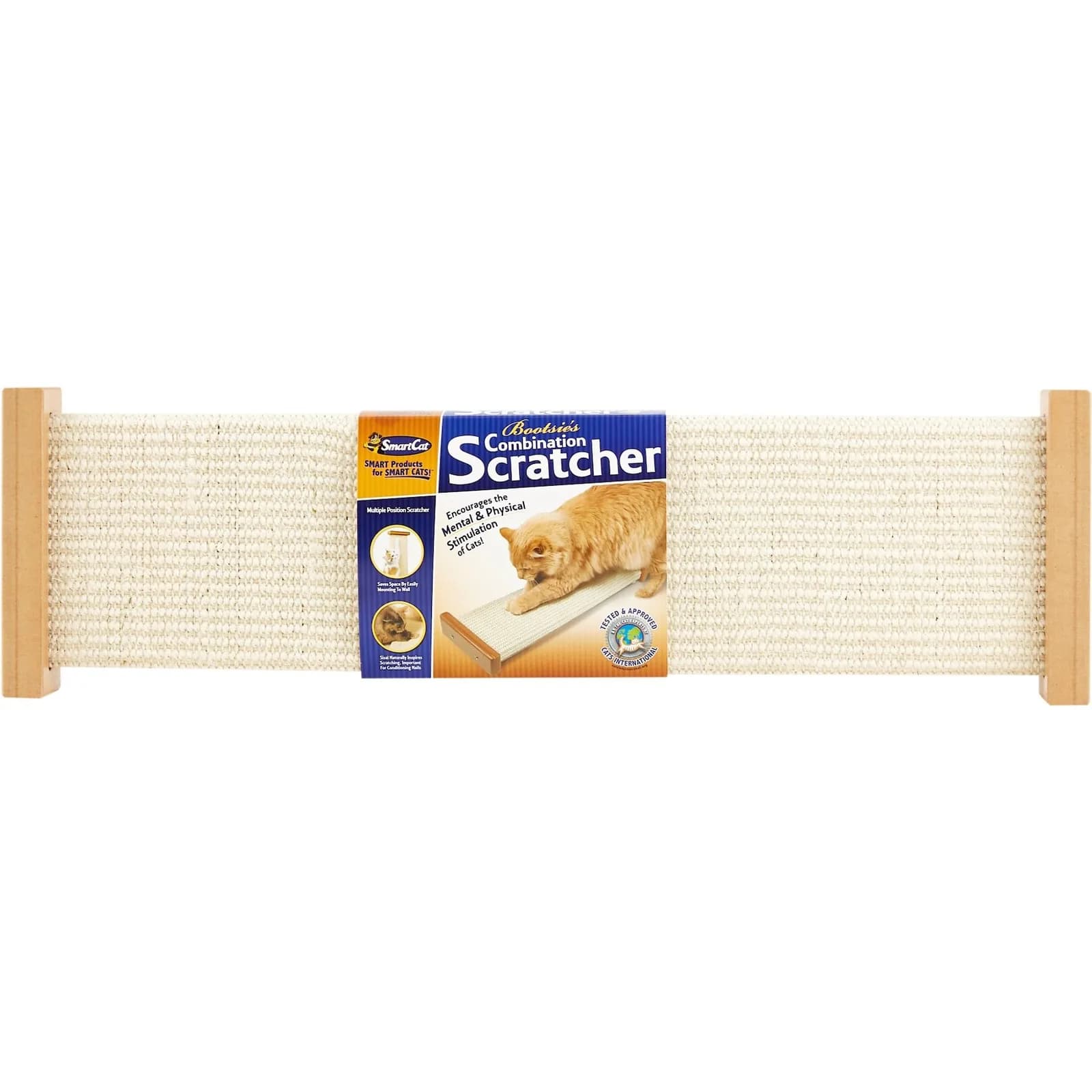
A woven-sisal board also shows why material and format should stay separate in the comparison. Bootsie's supports floor use or wall mounting according to its instructions. That gives the same product two supported positions without requiring a different fiber. It does not mean every sisal board can be mounted or used in any position.
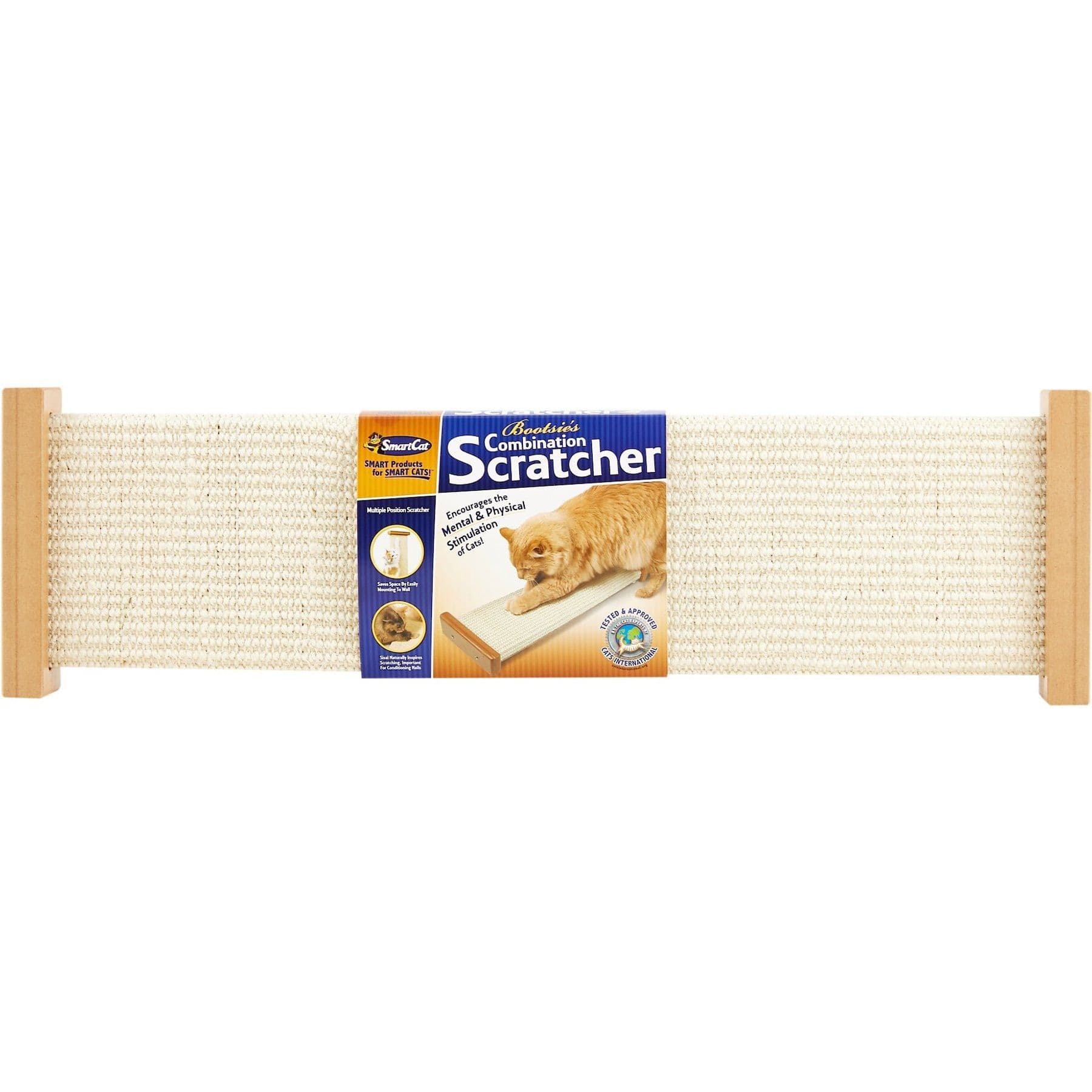
A woven-sisal board for floor or securely mounted wall use. A way to try another scratching angle without a full cat tree.
Petful may earn a commission when you click through to Chewy, at no extra cost to you.
Avoid choosing replacement rope by color, price, or a claim that it is natural. A craft twine listing may leave its intended use or treatments unclear. For an existing post, look first for manufacturer replacement guidance. If that guidance is unavailable, a compatible replacement component or a complete scratcher may be the more practical comparison.
Cardboard Scratchers and Replacement Pads
Cardboard scratchers come as flat pads, loungers, shaped inserts, and parts of larger cardboard houses. The surrounding shape may affect where the cat stands or rests, but the usable scratching surface still needs checking. A cardboard house does not necessarily provide more scratchable area than a simple pad.
Read whether the pad is reversible and whether it comes out of its holder. A second usable face can extend the current pad's use if the product is designed to be turned over and the pad remains sound. A permanently attached pad creates a different replacement decision from a removable insert.
- Match a refill to the exact model and stated dimensions.
- Check the shape and thickness, not only the outside length.
- Confirm how the insert is retained during use.
- Keep the holder only if it remains sound and holds the refill properly.
Cardboard produces visible debris as it is scratched. Consider where those pieces collect and how easily you can clean around the holder. Follow the product's cleaning directions rather than assuming a cardboard pad can be washed like a plastic tray.
The Scratch Lounge manufacturer describes reversible honeycomb cardboard pads and offers floor and side refills. That is a concrete replacement route to compare with a disposable one-piece scratcher. It does not establish a universal lifespan or show that one lounge will outlast another in your home.
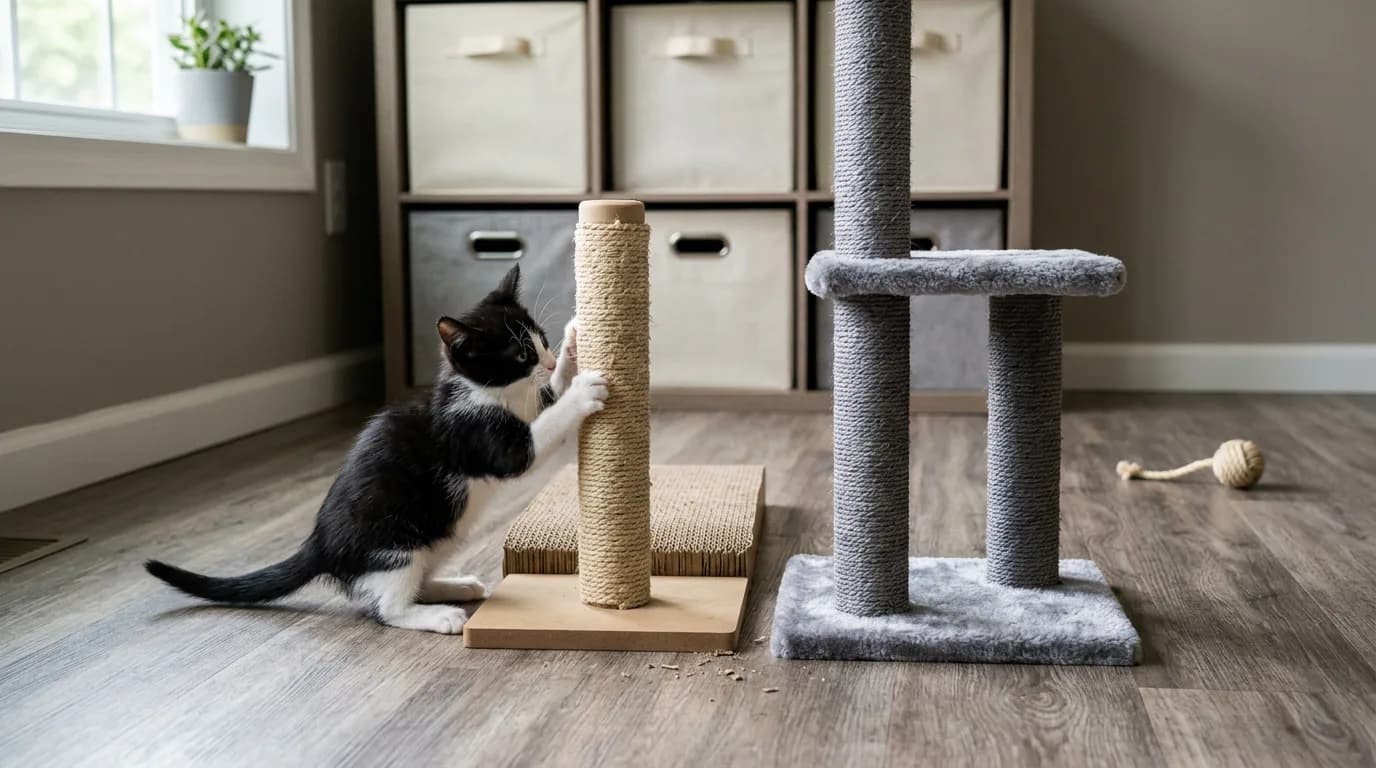
When comparing sisal with cardboard, keep the stance in mind. Replacing an upright sisal post with a flat cardboard pad changes both texture and orientation. A cat choosing the new pad may be responding to either feature. Use that choice as a clue, then make the next comparison more controlled.
Carpet and Wood: When They Fit
A carpet-covered scratching post is a reasonable option to evaluate when your cat already uses a similar surface willingly. Check the usable scratching area and how the covering is attached. A soft carpeted bed on a tree is not automatically the intended scratching face, even when the same broad material appears elsewhere on the unit.
Look closely at edges and any pulled loops. A covering that lifts away from its support can change how the surface behaves under the cat's paws. If carpet is being replaced, the new covering needs a secure attachment suitable for that component. Laying loose carpet over damage does not restore the structure beneath it.
A tall carpeted post also needs the same usable-height check as other upright scratchers. An appealing fabric label does not tell you whether your cat can stretch without reaching a platform or top cap.
- For carpet, inspect the scratching face, edges, and attachment separately.
- For wood, distinguish a wooden support from wood intended for scratching.
- For both, check the base and connections before evaluating the surface.
- Choose a product with a clear intended use rather than guessing from appearance.
“Wooden cat scratching post” can describe a wood-supported post wrapped in another material. It can also describe a product where wood itself is the scratching surface. Read which meaning applies. The material that supports the furniture may never contact the cat's claws during normal use.
For an exposed wood surface, check its condition, intended use, and any stated finish. Splinters, cracks, or uncertainty about treatments are reasons to reconsider that particular component. A purpose-made wood scratcher and an unidentified piece of treated lumber are different choices. There is no need to improvise with an unknown material simply to offer a wood texture.
Use Your Cat's Current Scratching to Choose a Surface
Look at the scratching your cat chooses without prompting. Record the surface, stance, location, and whether the object moves. A short description such as “upright woven surface beside the sofa” is more useful than “likes sisal,” because it preserves the context.
A horizontal cardboard lounge may fit a cat that stands over the scratching area. Its replaceable pads can also make future surface changes more straightforward. Compare those features with the current setup before deciding whether the texture alone is what you want to change.
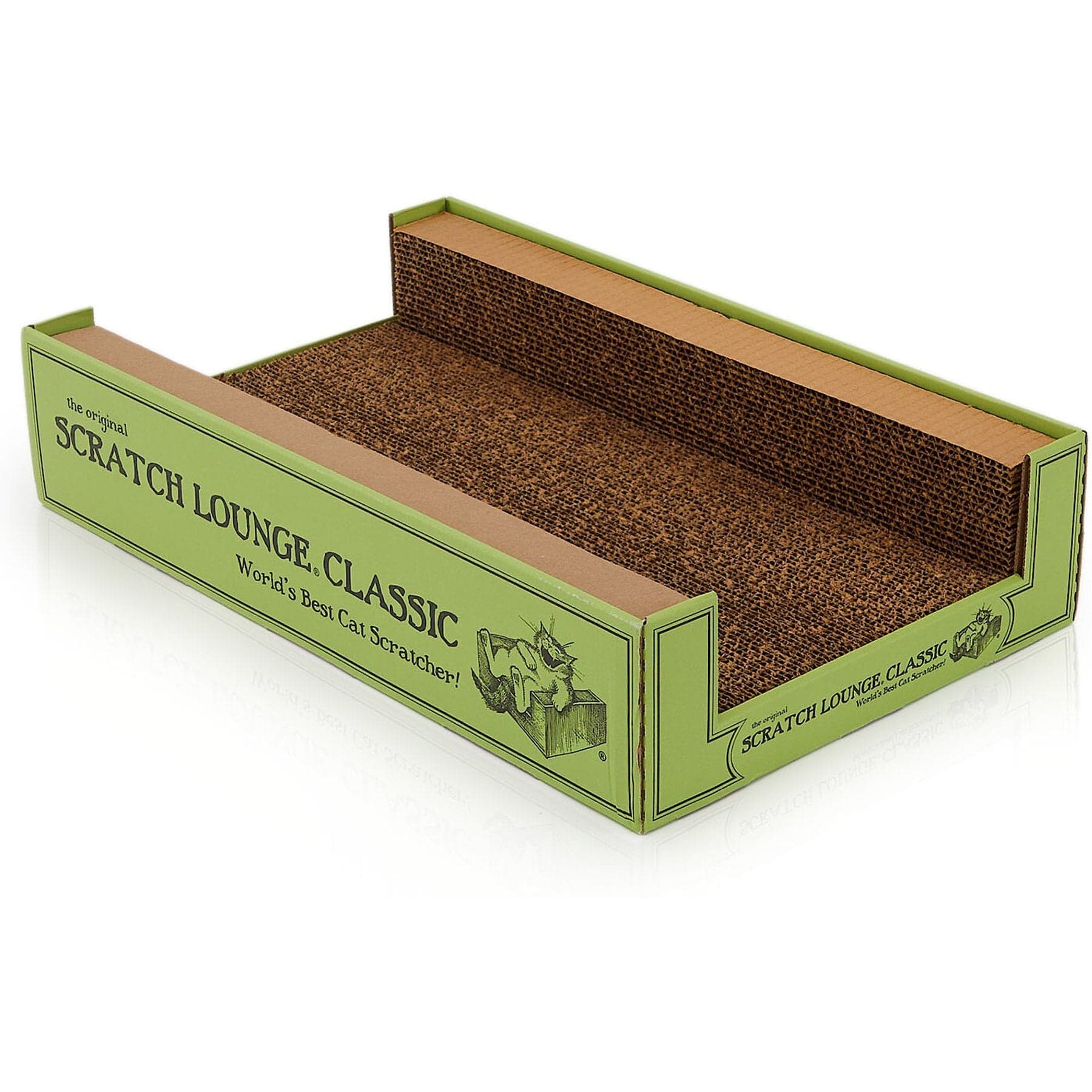
A horizontal cardboard lounge with reversible pads and available floor refills. An option for cats that scratch while standing on a flat surface.
Petful may earn a commission when you click through to Chewy, at no extra cost to you.
If your cat uses two materials in different places, that is useful too. You do not need to select a single household winner. One surface may serve the living room while another works beside a resting spot. Keep each successful option in the decision rather than replacing it merely to standardize the furniture.
For the stance question, see our vertical versus horizontal cat scratcher comparison. A vertical cat scratching post and a horizontal cat scratcher let the cat use different positions. Before concluding that a new material failed, check whether you also changed that position, moved the scratcher, or reduced the room available to approach it.
Use observations you can describe plainly:
- The cat scratches the surface voluntarily.
- The cat can stand or stretch without an obstruction.
- The surface remains in its intended position.
- The cat returns to it on later occasions.
- A particular edge or section gets most of the use.
These details help distinguish a surface preference from an access problem. A cat rubbing against a post or sleeping beside it has investigated the object, but that alone does not show that the scratching surface works.
Compare Wear, Cleanup, and Replacement Cost
Surface wear and structural damage call for different purchases. A worn cardboard insert in a sound holder may need only a compatible refill. A worn rope surface on a sound supporting structure may lead you to check repair guidance. A damaged base or failing connection requires attention to the structure, regardless of how fresh the covering looks.
Inspect the whole piece before ordering replacement material. Otherwise, you may spend time and money renewing a surface on furniture that still cannot provide steady support.
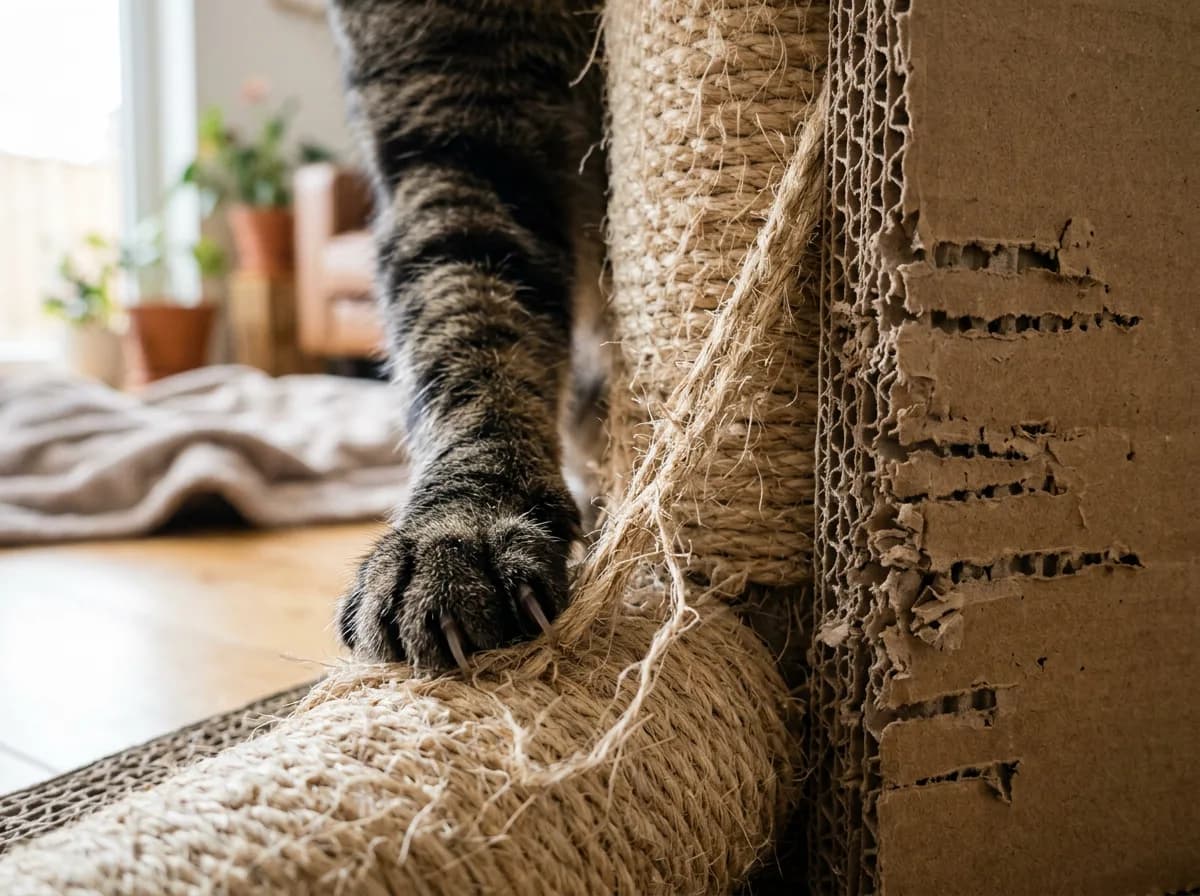
Cleanup also differs by construction. Cardboard pieces can gather around a pad. Rope or woven surfaces can develop loose fibers. Carpet can collect debris in its pile. The useful question is whether you can keep the area clean and inspect the surface easily, rather than expecting one material to remain unchanged.
When comparing cost, write down the current purchase price and what the next likely purchase would be. A replaceable pad, complete post, and replacement tree support are not equivalent expenses.
- Include the price of the exact compatible refill or component.
- Include shipping when it changes the comparison.
- Check whether replacement parts are actually available.
- Count repair supplies only when there is a supported repair method.
- Avoid annual-cost estimates without knowing your own replacement frequency.
The four product examples below had recorded prices of $19.98, $29.99, $39.95, and $79.99 on October 18, 2026. Those are dated purchase prices for specific products, not a material price ranking. The least expensive example is also shorter and built differently from the most expensive one.
A simple jute-wrapped post, such as the Parla, is worth comparing when you need an upright scratching station without platforms or beds. Its purchase price should be weighed alongside its dimensions and fit, rather than used to conclude that jute is always the cheaper surface.
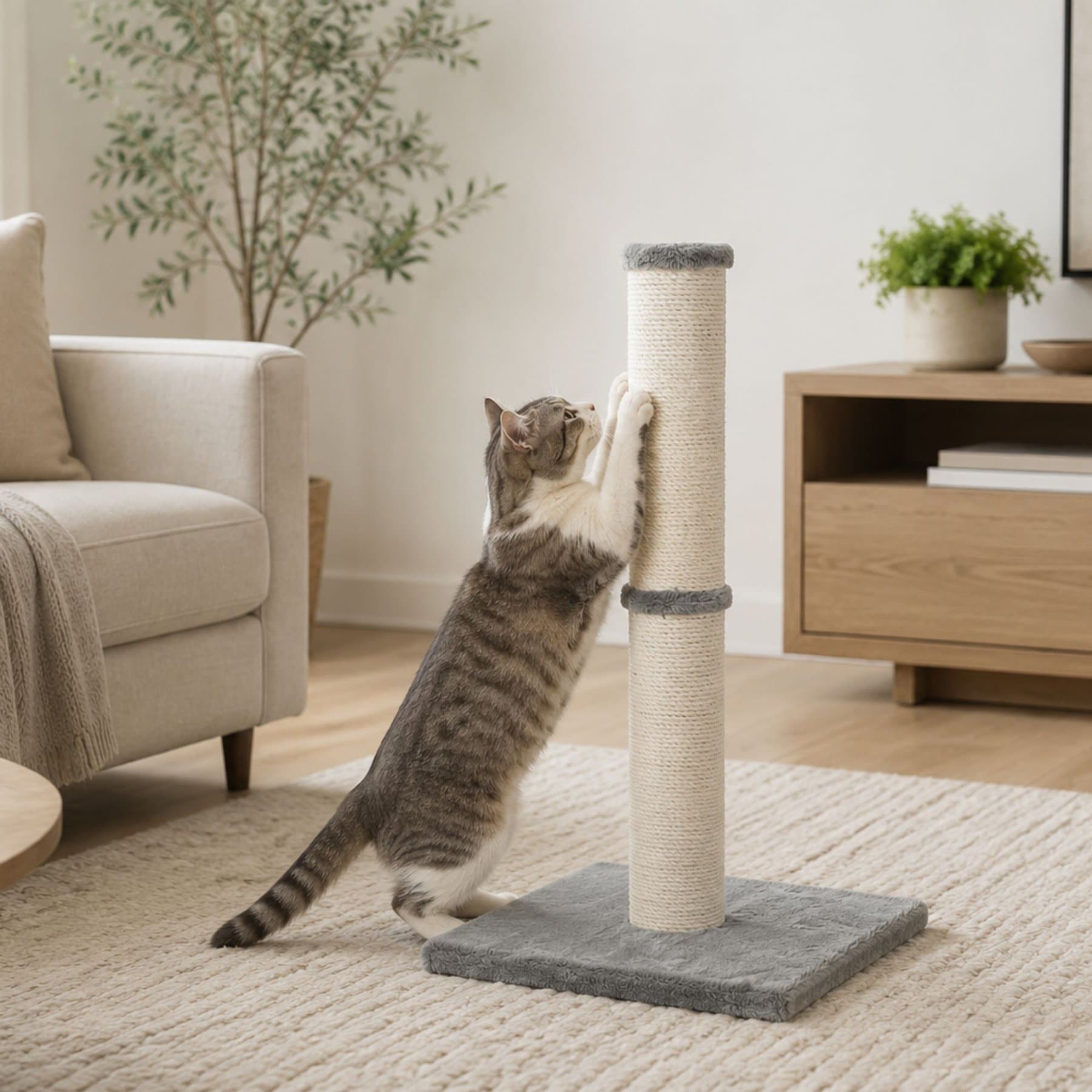
A 24.4-inch jute-wrapped post on a plush-covered base. A simple scratching station when you do not need elevated beds or platforms.
Petful may earn a commission when you click through to Chewy, at no extra cost to you.
Do not divide a purchase price by an advertised lifespan to predict your costs. Use the product's documented replacement options, then update the comparison with your cat's actual wear. Refills are useful only when they fit a holder you can continue to use.
Repair, Rewrap, or Replace?
Start by separating the scratching surface from the parts that carry and stabilize the furniture. Cosmetic wear may be compatible with continued use, but loose material, exposed fasteners, a damaged base, or failing connections need a closer decision. A new wrap should not conceal a problem that remains underneath it.
| What you find | What to check next | Practical next action |
|---|---|---|
| Worn cardboard pad in a sound holder | Reversible faces and exact refill fit | Turn only as designed, or install a compatible replacement |
| Loose strands or unwinding rope | Underlying support and manufacturer repair guidance | Repair only by a suitable method, or replace the component |
| Woven surface pulling away | Attachment and replacement availability | Restore by supported instructions or replace the affected part |
| Exposed fasteners | Why the covering or connection failed | Remove access until the problem is resolved |
| Damaged base or unstable support | Structural condition and available replacement parts | Replace the damaged structure or the complete unit |
| Sound surface on a loose component | Assembly and connection condition | Correct the connection rather than buying new covering |
For rewrapping a cat scratching post, first confirm that the component can be repaired and that the underlying support is sound. Record the original material and construction before removing anything. Replacement rope needs to suit the intended scratching use and the component's repair method; a similar-looking coil is not enough.
Do not prescribe one glue, staple pattern, or rope size for every post. Attachment methods depend on the support and design. Follow the manufacturer's repair instructions where available, including any required curing or reassembly steps. Keep the component out of use until the repair is complete and its attachment has been checked.
For a replacement scratching post on a cat tree, match the exact part rather than only its height. Connection style, fittings, and position in the tree matter. A post that appears similar can still be the wrong component.
How do I make my own scratching post for my cat?
Begin with a documented plan intended for a freestanding cat scratching post, such as the Cats International scratching-post build. Choose the base, support, scratching covering, and attachment method as a complete design. Building a simple scratcher is a different task from modifying a load-bearing tree or adding a bed.
- Decide whether the cat needs an upright surface or a floor-level board.
- Choose a plan that specifies the supporting structure and attachment method.
- Obtain materials with a clear identity and suitability for the intended use.
- Assemble and attach the surface according to that plan.
- Check edges, fasteners, connections, and movement before offering it.
- Continue inspecting both the covering and the structure during use.
If the goal is simply to refresh worn cardboard, a compatible refill may be more straightforward than a homemade insert. For a DIY post with a bed, use a design that addresses the bed's support rather than adding one to a basic scratching-post plan.
Compare Products by Their Actual Scratching Material
These examples illustrate different combinations of material, format, and replacement options. They are useful comparisons, not evidence that one surface will win every cat's preference.
SmartCat The Ultimate 32-in Sisal Cat Scratching Post, Gray
The SmartCat Ultimate combines a woven-sisal surface with a 32-inch upright post and a 16-inch square base. Its recorded price was $79.99 on October 18, 2026.
Compare it when you want a dedicated upright woven surface. Check the space needed for the base and your cat's full scratching reach. The material description does not establish that the post can be rewrapped with loose rope later.
SmartCat Bootsie's Combination Scratcher
SmartCat Bootsie's Combination Scratcher provides woven sisal on a board designed for floor use or wall mounting. Its recorded price was $29.99 on October 18, 2026.
Compare it with the Ultimate to see how the same broad surface material can come in a different format and price. For wall use, follow the mounting instructions. For a material trial, choose the supported position that most closely matches the scratcher your cat already uses.
Scratch Lounge The Original Scratch Lounge Cat Toy with Catnip
The Scratch Lounge Original uses reversible honeycomb cardboard pads, with floor and side refills offered by the manufacturer. Its recorded price was $39.95 on October 18, 2026.
The replacement route is a useful distinction when comparing complete scratchers. Check current refill compatibility and price separately. The lounge format also changes how the cat stands over the surface, so a preference for it cannot automatically be attributed to cardboard alone.
TRIXIE Parla 24.4-in Jute Cat Scratching Post, Platinum Gray
The TRIXIE Parla is a 24.4-inch post with a 15.7-inch square base and a jute-wrapped scratching surface. The base covering is polyester plush. Its recorded price was $19.98 on October 18, 2026.
The manufacturer's Parla specifications identify jute, so compare it as a jute product rather than a shorter sisal post. Check whether its usable height fits your cat's stretch. Price and overall height alone cannot establish the better purchase.
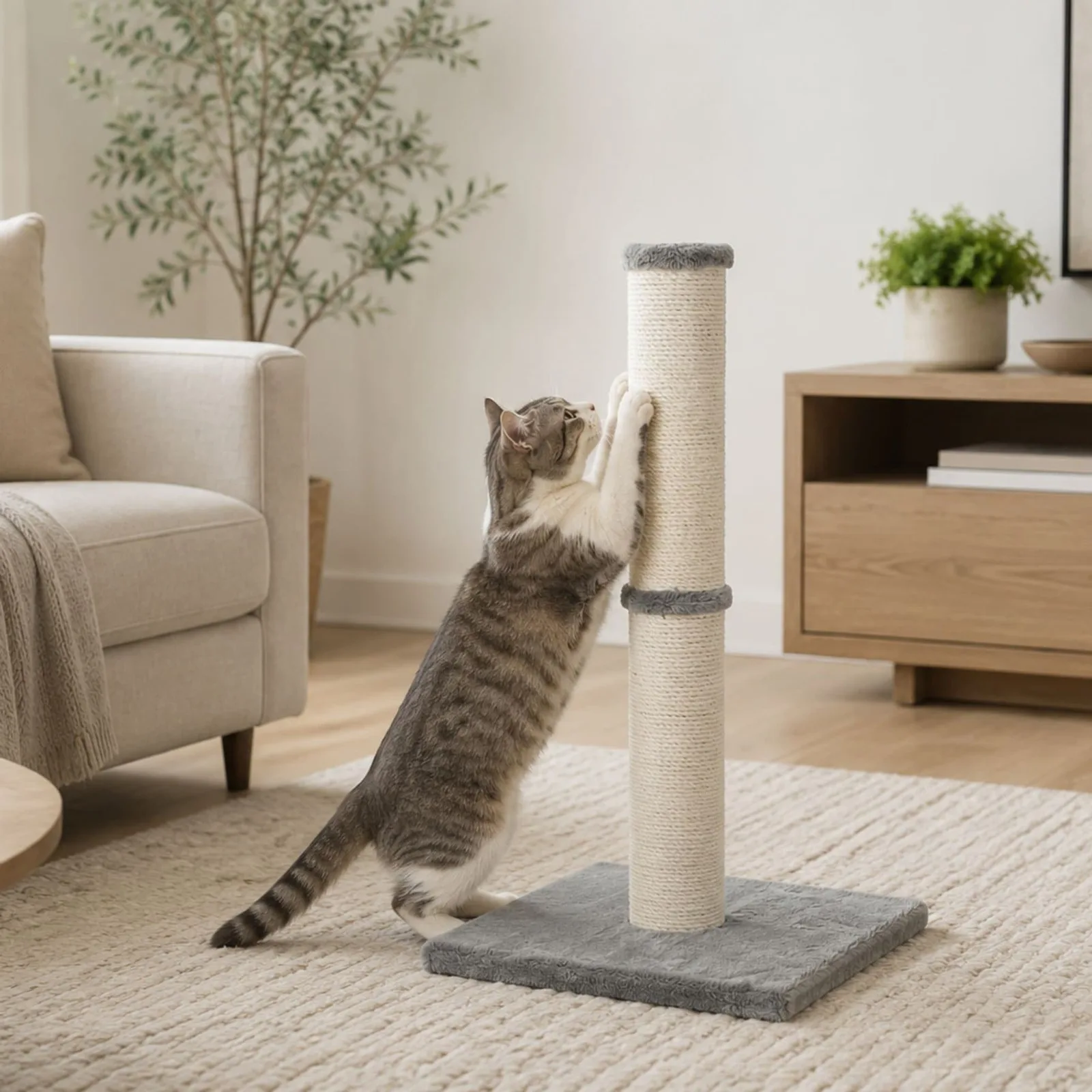
Try a Material Change Without Changing Everything
To learn something useful from a new surface, change one feature while keeping the rest of the setup as familiar as practical. Use the same location and same orientation, with a clear approach. If the new product necessarily changes the format too, note that difference instead of treating the result as a pure material comparison.
Keep the existing scratcher available if it remains suitable. A cat choosing between two accessible options gives you different information from a cat whose familiar option has disappeared.
| Part of the trial | Keep or record | What it helps you decide |
|---|---|---|
| Same location | Similar access to the usual scratching area | Whether moving the object explains a change in use |
| Same orientation | Upright compared with upright, or flat with flat | Whether stance explains the preference |
| Voluntary use | Actual scratching without handling the cat's paws | Whether the surface is being used as intended |
| Condition | Movement, wear, loose edges, and debris | Whether maintenance or support needs attention |
| Next change | One feature chosen from the observations | What to adjust without replacing everything |
There is no need to assign a score or set a rigid deadline. Watch for repeated voluntary scratching across ordinary opportunities. Note whether the cat uses the whole surface, a particular edge, or only one of the two options.
If both surfaces are used, keeping both may be a useful result. If neither is used, check access, stability, and location before buying a third material. If the new surface works only after a location change, keep that context in mind when choosing the next scratcher.
The aim is a setup your cat actually uses and you can maintain. A successful material choice can be ordinary and inexpensive; what matters is the fit between surface, position, support, and observed behavior.
Frequently Asked Questions
Sisal rope is a recommended scratching surface in feline-veterinary guidance, but that does not establish that every rope or treatment is nontoxic. Scratching a suitable post is different from swallowing loose rope: the ASPCA warns that swallowed rope or string can become trapped in the digestive tract. Choose material intended for cat scratching, check any stated treatments, and remove access to loose strands. Contact your veterinarian if your cat swallows rope.
Start with the scratcher's manufacturer or the exact product listing. Match the model and dimensions, including the insert shape and thickness where specified. A compatible refill should fit the holder as intended. Similar outside measurements or a familiar brand name alone do not establish compatibility.
Individual preference and a stable format are the useful starting points. Compare the material your cat already uses, the available scratching area, and how you will maintain it. A sisal surface, cardboard pad, carpeted surface, or suitable wood product may fit different cats and arrangements; there is no single material that resolves every part of the choice.
Among the four specific examples in this article, the dated price range on October 18, 2026, was $19.98 to $79.99. That is not a market-wide range. Compare the current purchase price with the replacement cost for compatible pads or parts, and check current pricing before ordering.
Compare the sisal construction with the actual jute surface, then consider your cat's observed use. Woven sisal and wrapped sisal rope differ, so fiber names alone are not a complete comparison. Choose by usable surface, support, maintenance, and preference rather than an unsupported promise that one fiber always lasts longer.
Individual preference varies, and the format can influence the result. Compare options in the same orientation and a similar location when practical. A cat choosing a flat cardboard lounge over an upright sisal post may prefer the stance, texture, location, or a combination, so observe before changing another feature.

Coreen Saito is a pet writer and longtime shelter volunteer with more than a decade in animal rescue. She covers cat behavior, breed care, and the small, ordinary science of sharing a life with companion animals, with a particular focus on honest takes about the products and decisions that actually matter. At home in Arizona, she's outranked by Mac (a dog with the loudest opinion in the house), Rebel (a cat who governs by quiet authority), and Meri (an orange tabby who runs the late shift and the laundry basket). She writes about all three, plus the rescues that keep coming through her life, at LifeWithMinty.com.
Sign up for expert-backed reviews and safety alerts all in one place.