Dog Harness vs Collar: Which Is Safer and When to Use Both
Dog harness vs collar comes down to neck safety, pulling and ID tags. See which fits puppies, pullers, flat-faced breeds and seniors, and how to use both at once.
Petful is reader supported. As an affiliate of platforms like Amazon and Chewy, we may earn a commission when you buy through links on this page. There is no extra cost to you.
Dog harness vs collar is not a contest with one winner. Neither is better for every dog: a flat or martingale collar is best for carrying ID tags and for calm, trained walkers, while a harness (front-clip for pullers) is safer for dogs that pull, have breathing or neck problems, or are small and fragile, and many dogs wear both.
The right setup depends on your dog's size, face shape, age and walking habits. Below you will find a side-by-side comparison, a situation-by-situation guide, and a simple way to wear both at once without tangles or rubbing.

Sign up for expert-backed reviews and safety alerts all in one place.
Compare dog harness vs collar
A harness spreads pressure across the chest and shoulders, while a collar carries ID tags and sits at the neck. That one difference drives most of the decision, so the table compares the two on the points that matter on a real walk.
| Neck and trachea safety | Pulling control | Escape risk | ID tag carrying | Training use | Ease of putting on | Best for |
|---|---|---|---|---|---|---|
| Flat collar: pressure lands on the neck when the dog lunges | Low; a strong puller strains against the throat | Narrow-headed dogs can back out | Excellent; tags and license stay on all day | Good for calm dogs and basic leash manners | Very easy; one buckle or clip | Trained walkers and everyday ID |
| Martingale collar: tightens only to a set limit, still at the neck | Moderate; gives a gentle cue | Low when fitted correctly | Good | Useful for dogs that slip collars | Easy; slips over the head | Sighthounds and slip-prone dogs |
| Back-clip harness: keeps pressure off the neck | Low; can encourage pulling | Low to moderate, depends on fit | Possible, but tags are lost when it comes off | Fine for dogs that already walk nicely | Moderate; straps and buckles | Small dogs, flat-faced breeds, car travel |
| Front-clip harness: keeps pressure off the neck | High; turns the dog sideways | Low to moderate, depends on fit | Possible, but not ideal | Strong choice for loose-leash training | Moderate | Dogs that pull |
Put simply, a harness wins on neck and trachea safety and pulling control, and a collar wins on ID tags, speed and simplicity. A plain everyday collar such as the Sassy Dog Wear Reflective Dog Collar, Orange, Medium shows the collar's job well. It is a flat nylon-webbing collar with a full-length reflective strip, sized medium (other sizes sold), and about $14.60 at Chewy at the time of writing, so under $20 for a collar that holds tags and a license.
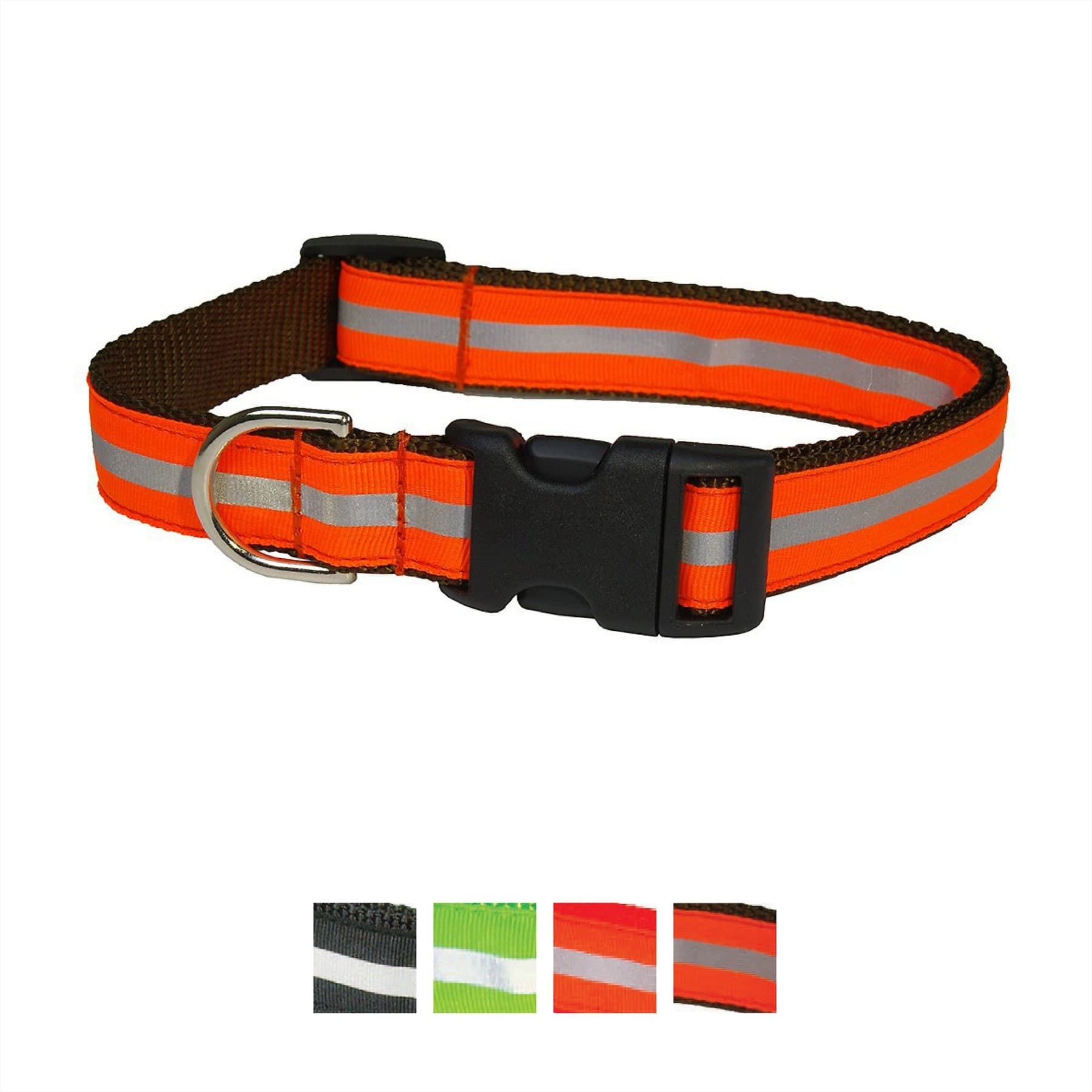
Listed as durable nylon webbing with a reflective strip along its length, a plain flat collar of the kind that holds tags and a license.
Petful may earn a commission when you click through to Chewy, at no extra cost to you.
- 1Neither is better for every dog: a flat or martingale collar is best for ID tags and calm, trained walkers, while a harness (front-clip for pullers) is safer for dogs that pull, have breathing or neck problems, or are small and fragile.
- 2The first choice for a puller, a flat-faced breed or a senior with neck issues is a harness.
- 3Many dogs wear both at once: the tags stay on the collar and the leash clips to the harness.
Is it better for a dog to wear a collar or harness?
For walks, a harness is better for most dogs that pull, toy breeds and flat-faced breeds, because it keeps leash pressure off the neck. For daily wear, a collar is better, because it carries ID tags and is easy to live in. Most owners end up using the collar for identification and the harness for walking, so the honest answer is often both, each matched to its job.
Neck safety and pulling control: harness vs collar
The biggest reason people switch from collar to harness is neck strain. When a dog hits the end of a leash on a collar, the force lands on the throat, right over the trachea. For a calm dog on a loose leash that rarely matters; for a dog that lunges at squirrels, the repeated pressure is the problem.
- If your dog has tracheal collapse, coughs when pulling, has a flat face, or is a senior with neck or spine issues, walk on a harness rather than a collar. Small breeds and brachycephalic breeds are the dogs most often affected by airway trouble. Ask your vet to check any honking cough or noisy breathing before you choose gear.
The Merck Veterinary Manual describes tracheal collapse and airway disease as most common in small and toy breeds, and brachycephalic breeds already work harder to breathe. That is why the harness vs collar question for dogs that pull usually tips toward the harness. A front-clip harness attaches the leash at the chest, so when the dog leans forward it gets turned sideways instead of choking itself, which gives real pulling control with no pressure on the neck.
The Embark Harness Co. Adventure No Pull Dog Harness, Green, Medium is a typical dog training harness of this style. It is ripstop nylon with reinforced double stitching, soft padding and front and back reinforced D rings, listed from X-Small to X-Large, and about $34.99 at Chewy at the time of writing (the $20-50 band). For more options, see our guide to the best harness for dogs that pull.
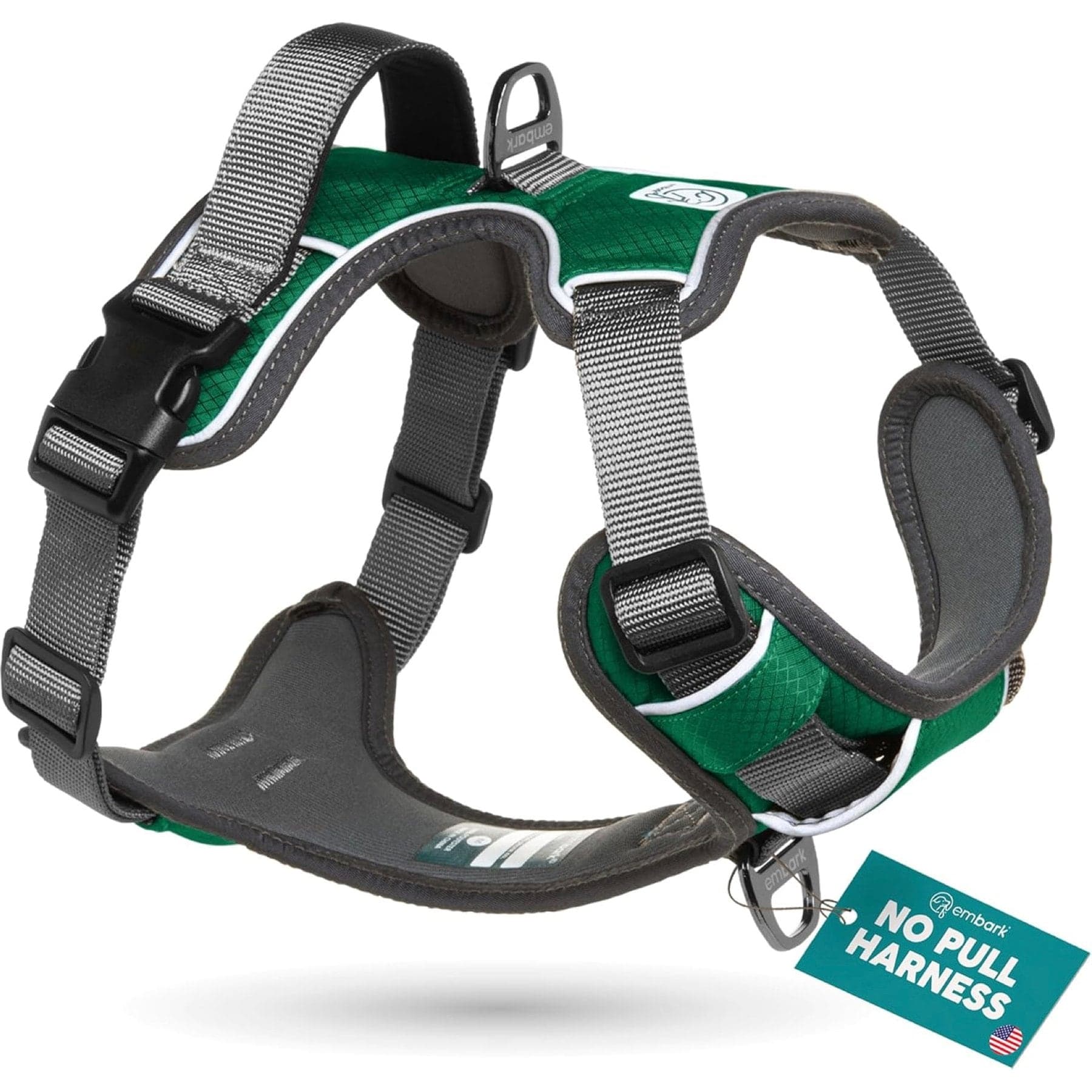
Includes front and back reinforced D rings and padding to prevent chafing, so the leash can clip at the chest to turn a pulling dog sideways instead of tightening on the neck.
Petful may earn a commission when you click through to Chewy, at no extra cost to you.
So are dog harnesses better than collars for dog walking? For pullers and fragile necks, yes. For a dog that already walks on a loose leash, a collar works fine and is simpler.
Do vets recommend collars or harnesses?
Most vets recommend a harness for walking dogs that pull, toy breeds, flat-faced breeds and dogs with tracheal or neck problems, because it keeps leash pressure off the airway. They still recommend a collar with ID tags for everyday identification, alongside a microchip. In practice, common veterinary advice is a collar for ID and a harness for the leash whenever neck safety is a concern.
Why do dog trainers not recommend harnesses?
Some trainers avoid back-clip harnesses because they can make pulling easier: the dog leans into the chest strap like a sled dog, with no cue to slow down. A collar gives clearer feedback on a dog that already walks well. Most trainers are comfortable with a front-clip harness, which redirects pulling, so the objection is really to the wrong harness style rather than to harnesses in general.
Which to use when: harness vs collar by dog and situation
This is the decision most owners actually face. Find your dog's situation below for the first choice, the reason, and what to add. The pattern is consistent: when the tags stay on the collar and the leash goes to the harness, almost every dog is covered.
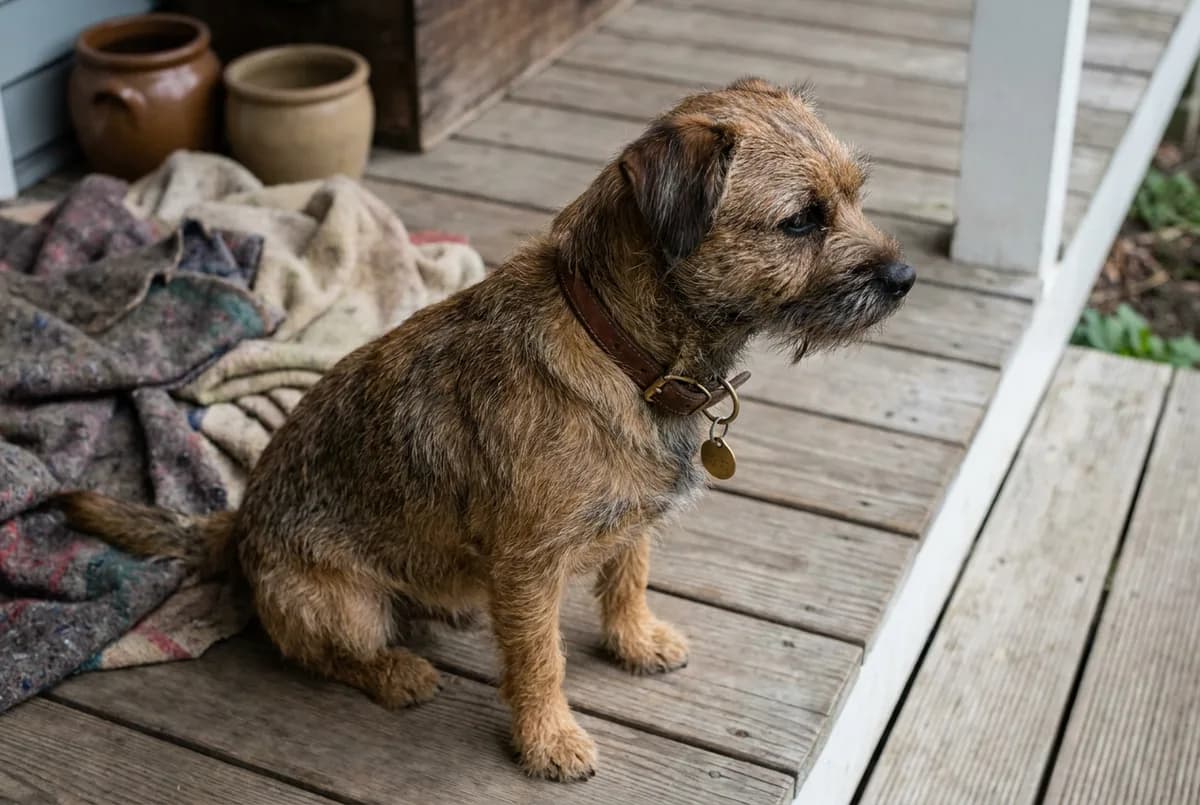
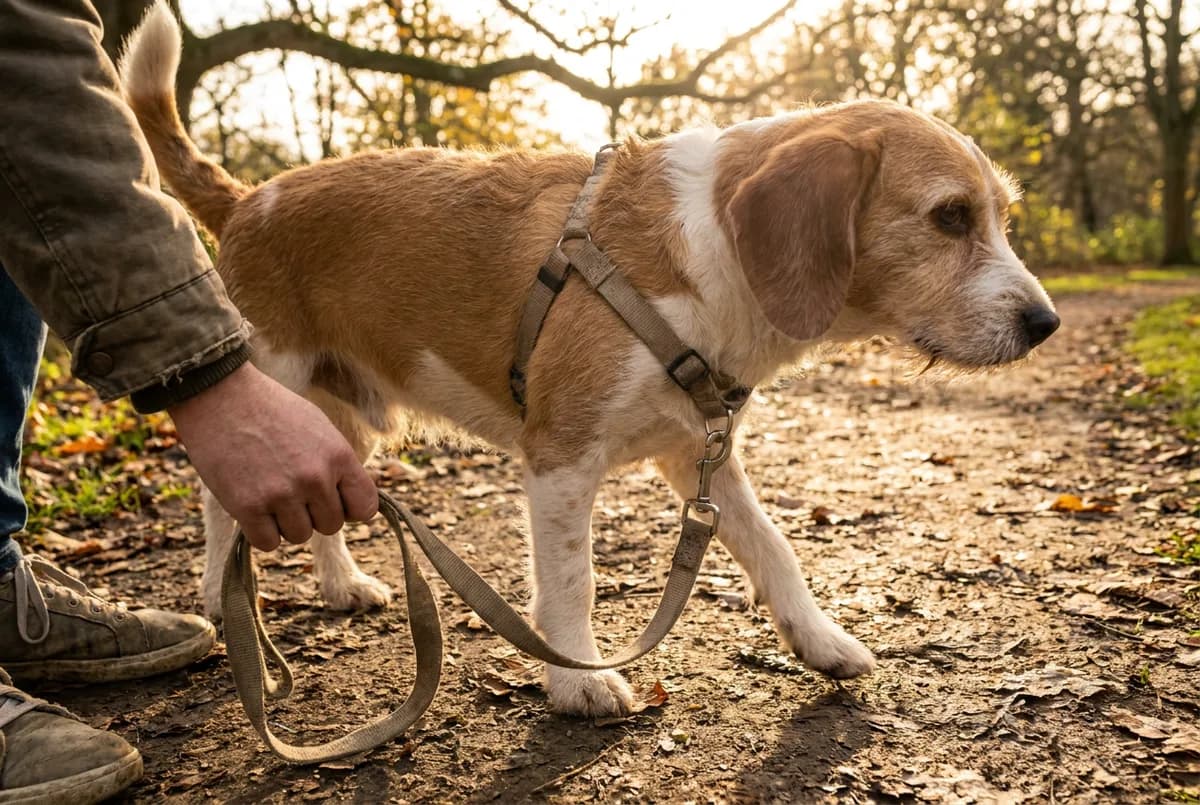
- Puppy in leash training: first choice is a lightweight flat collar for tags plus a soft harness for walks. Why: puppy necks are delicate and puppies pull. The American Kennel Club notes a standard collar works for leash-training many puppies; a harness is kinder for small or excitable ones.
- Strong puller or large, big dogs: first choice is a front-clip harness. Why: it turns the dog sideways rather than loading the neck. Add a flat collar for tags.
- Small dogs and toy breeds: first choice is a back-clip or step-in harness. Why: small dogs are prone to tracheal collapse. Add a lightweight collar for ID.
- French Bulldog, Pug or other brachycephalic breeds: first choice is a harness. Why: flat-faced breeds already have narrow airways, so a bulldog should wear a harness for walks and a loose collar only for tags.
- Senior with neck or spine issues: first choice is a padded harness. Why: no pressure on a sore neck. Add a vet check if the dog coughs or stiffens.
- Narrow-headed sighthound: first choice is a martingale collar or a well-fitted harness. Why: they slip flat collars. Keep the tags on the martingale.
- Car travel: first choice is a seat belt harness. Why: a seat belt tether should never clip to a collar.
- Off-leash play or the dog park: first choice is a flat collar with ID tags. Why: harness straps can snag during rough play.
- Calm, trained walker: first choice is a flat collar. Why: it is simple, light and carries ID.
For dogs that back out of a flat collar, a limited-slip martingale such as the Mighty Paw Leather Martingale Dog Collar, Medium (about $14.39 at Chewy at the time of writing) tightens just enough to stay on without choking; the next section covers ID tag placement and escape risk in detail.
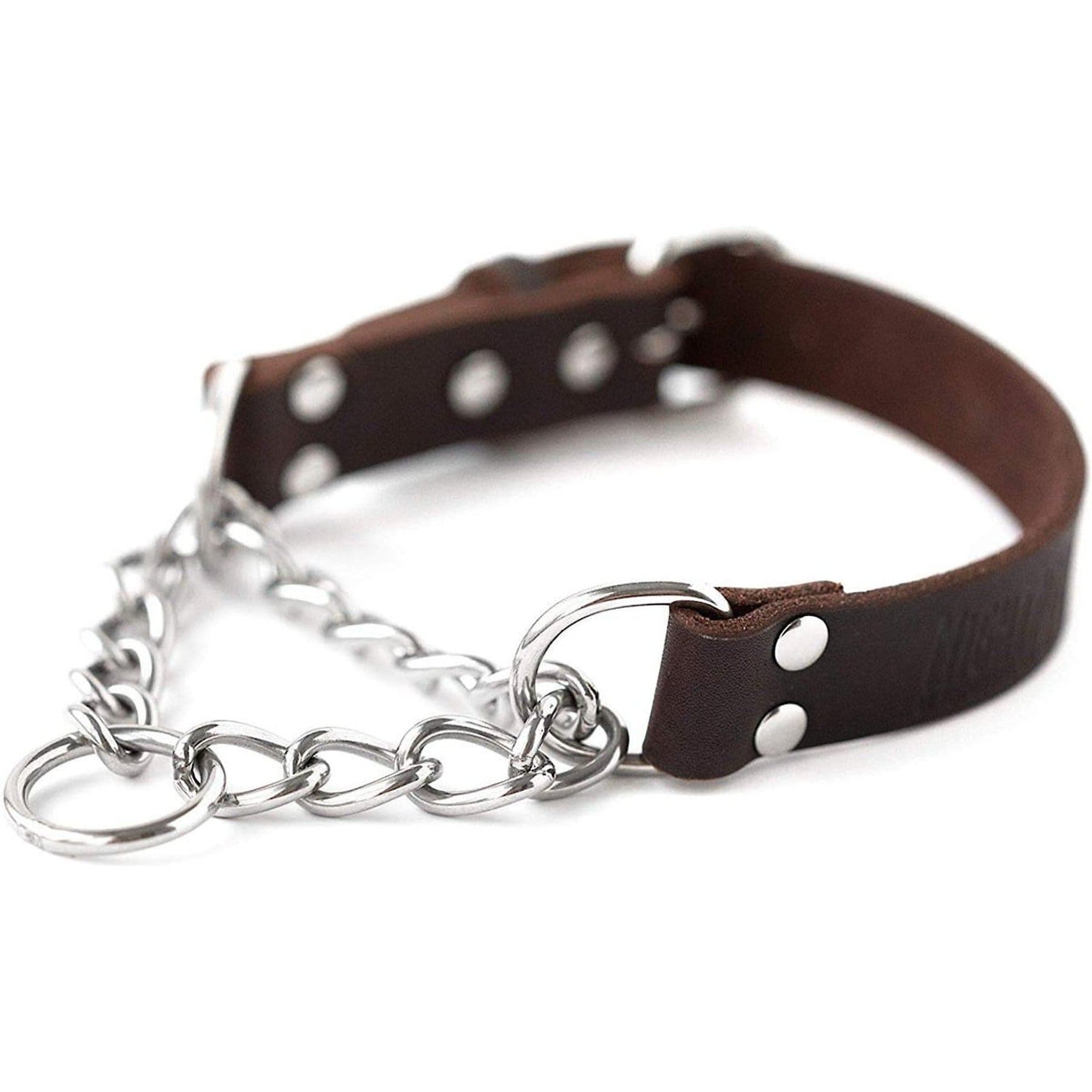
Described as tightening slightly under tension for a controlled training cue; the limited-slip design is the collar-side answer to narrow-headed dogs that back out of a flat collar.
Petful may earn a commission when you click through to Chewy, at no extra cost to you.
Do dogs really need a harness?
Not every dog needs a harness. A calm adult dog that walks on a loose leash and has a healthy neck can do well on a collar alone. A harness becomes the safer choice for pullers, toy and small breeds, flat-faced breeds, seniors with neck issues and car travel. If none of those apply, a well-fitted collar is enough.
Martingale collars, escape risk and ID tags
Escape risk is where collars and harnesses both fail if the fit is wrong. Dogs with heads narrower than their necks, such as Greyhounds and Whippets, can back straight out of a flat collar, and a loose harness lets a determined dog wriggle free too. A dog that escapes both collar and harness usually needs a tighter fit, a martingale, or both worn together.
A martingale dog collar vs harness comparison comes down to where you want the control. A martingale has a second loop that tightens only to a set limit when the dog pulls back, so it closes around the head without choking. The Mighty Paw Leather Martingale Dog Collar, Medium is a premium leather collar with a stainless-steel chain loop, listed in Small, Medium and Large, about $14.39 at Chewy at the time of writing (under $20).
- Two-finger check: with the loop pulled snug, two fingers fit under the collar and no more
- Rings never meet: if the two D-rings touch when tightened, the collar is too big to stop a slip
- Walks only: take a martingale off at home, because the loop can catch on crate bars or furniture
Martingales are not the same as aversive collars. On the question of a dog harness vs choke collar, a dog harness vs prong collar, or a dog harness vs pinch collar, the harness is the safer tool: choke, prong and pinch collars work by applying pressure or discomfort to the neck, which is exactly what you want to avoid with fragile airways.
Should dog tags go on a collar or harness? Tags belong on the collar. A harness comes off after every walk, so tags on a harness spend most of the day in a drawer. The AVMA advises a microchip plus visible ID, and a collar is what keeps that ID tag on the dog around the clock. WebVet explains how to choose the right dog collar by type and size, and our roundup of the best dog collars compares everyday options.
Are dogs happier without a collar?
Some dogs seem more relaxed without a collar indoors, especially at home where tags jingle or a collar rubs. A well-fitted, lightweight collar does not bother most dogs, though. If you remove it in the house, put it back on before any door opens, because an indoor dog that slips outside without ID is much harder to return.
Harness fit, step-in styles and small dogs
Fit decides whether a harness helps or hurts. A dog harness vest vs collar choice is often about small dogs: a padded vest or step-in harness spreads pressure across a wider area, which suits toy breeds whose tracheas are easily irritated. Our guide to the best dog harnesses covers more fits and styles.
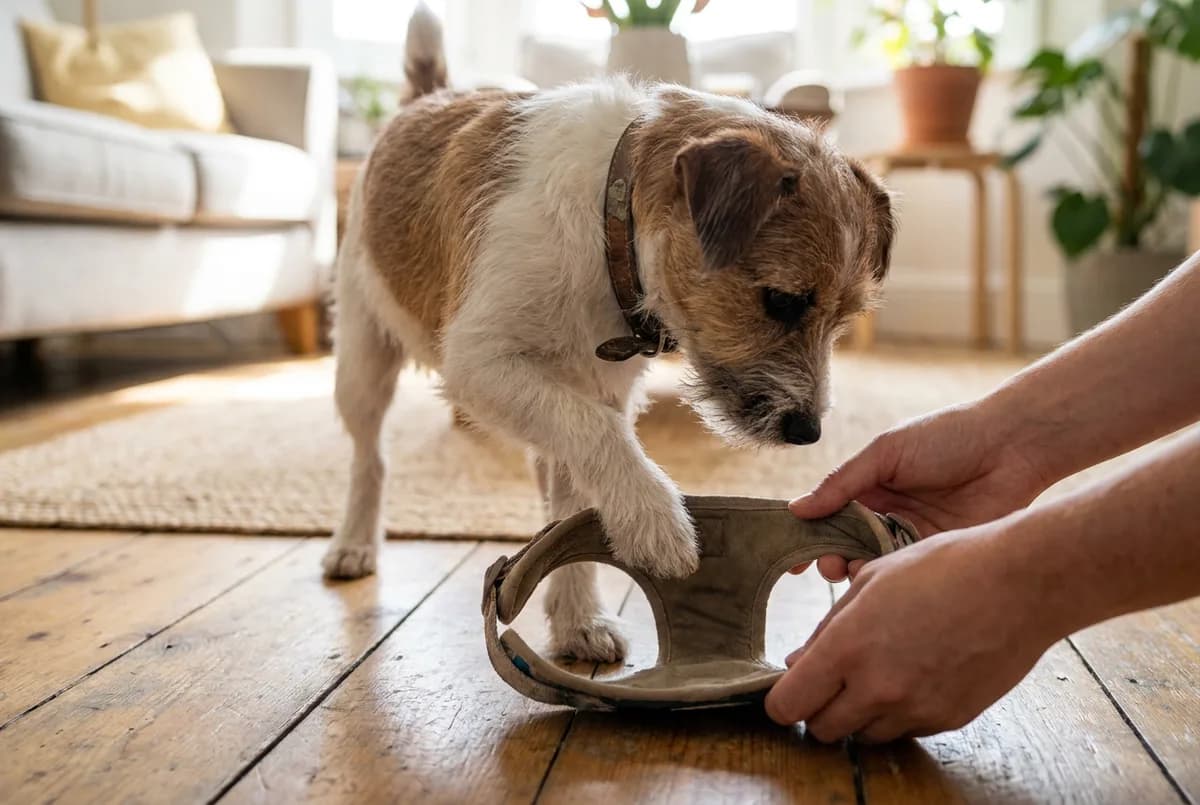
A step-in harness lets the dog walk into two leg loops before the straps clip over the back, so nothing goes over the head. The Sassy Dog Wear Paws & Bones Dog Harness, Medium is that style: soft, durable nylon webbing, hand sewn in the USA, with other sizes in the Sassy harness line, about $18.15 at Chewy at the time of writing (under $20).
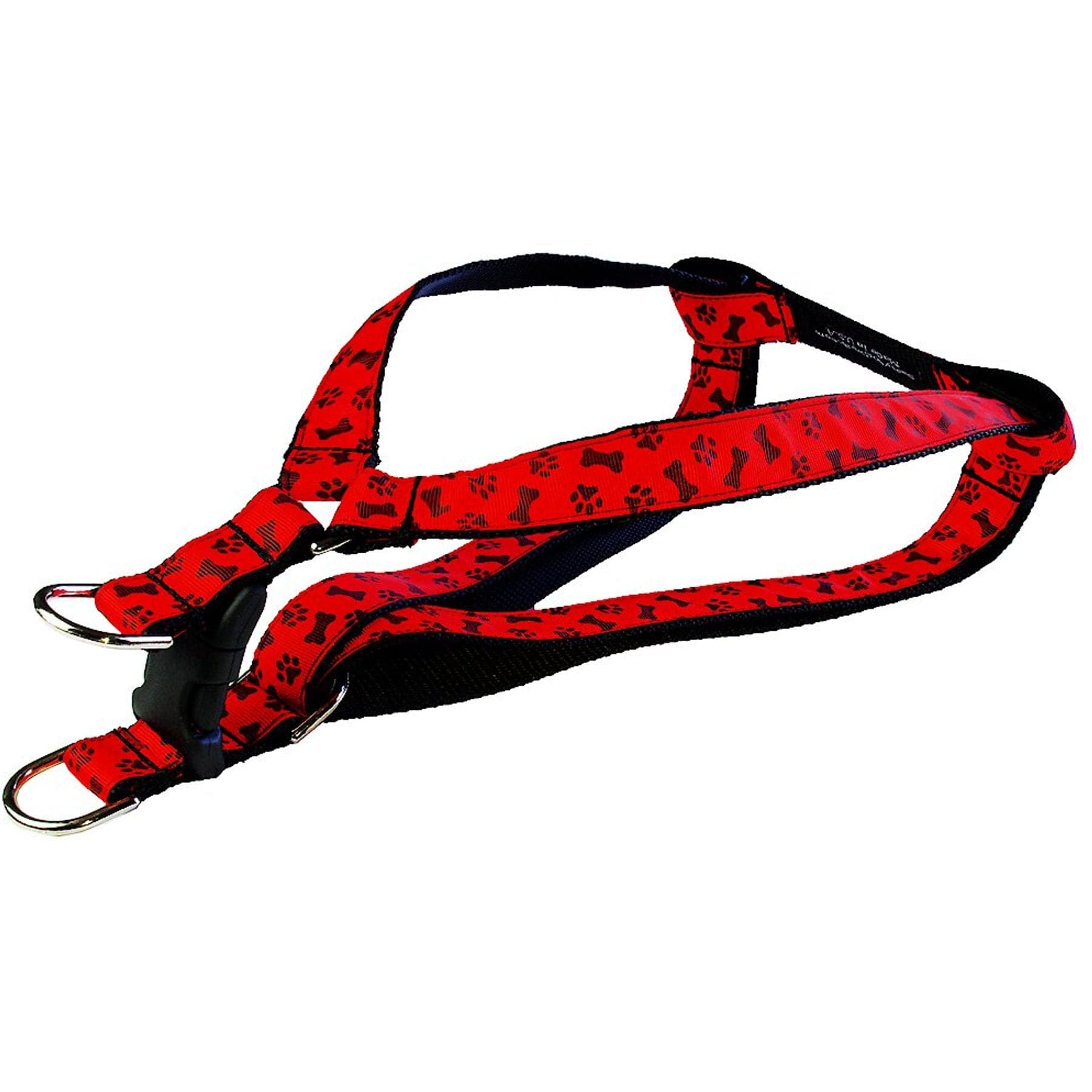
Step-in design lets a dog get dressed in seconds, which suits small dogs and anyone whose dog dislikes a harness lifted over the head.
Petful may earn a commission when you click through to Chewy, at no extra cost to you.
If your dog hates the collar and harness alike, or simply doesn't like a harness or collar at all, go slowly. Pair the gear with treats, let the dog sniff it, and put it on for a few seconds at a time. A dog that prefers a collar to a harness is often reacting to a harness pulled over the head, which a step-in style avoids.
What are the disadvantages of a dog harness?
A harness takes longer to put on, can rub under the legs if it fits poorly, and a back-clip style can make pulling easier. It also cannot carry ID full time, because it comes off after walks. Thick harnesses can feel warm in summer. Most of these are fit and style problems, so a well-chosen harness avoids them.
What dog harness to avoid?
Avoid harnesses that tighten around the chest or legs when the dog pulls, because they work by discomfort. Also skip any harness with a strap that sits across the front of the shoulders and restricts the stride, thin unpadded straps on a heavy puller, and any harness you cannot adjust to a snug two-finger fit.
Why don't dogs like harnesses?
Many dogs dislike harnesses because of how they go on: something lifted over the head, straps fiddled under the legs, and a new feeling across the chest. Poor fit that pinches or rubs makes it worse. Slow, treat-based introductions and a step-in style usually fix the problem within a few sessions.
Wearing both: the collar and harness setup
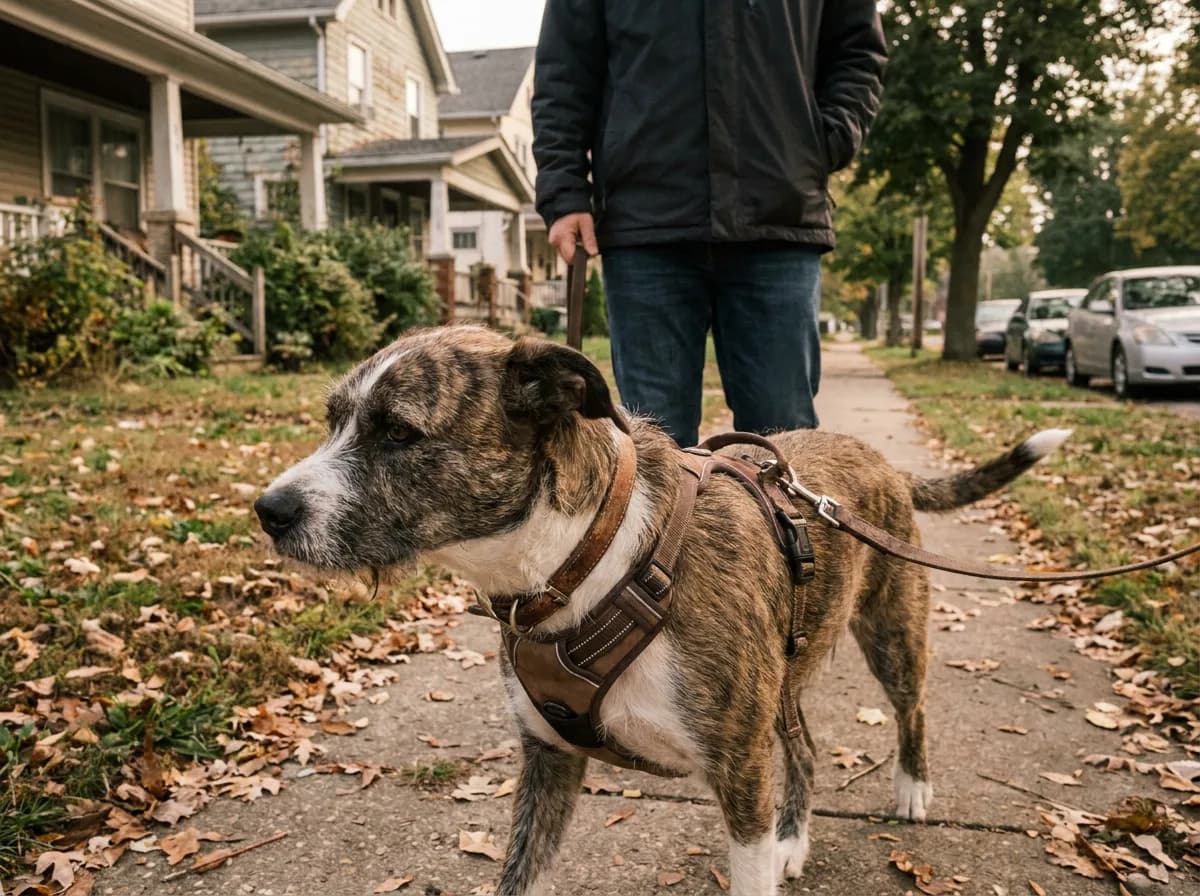
Do dogs wear collars with harnesses? Many do, and it is often the best setup. The collar carries ID tags full time, and the harness goes on for walks with the leash clipped to it. A dog wearing a collar and harness at the same time gets constant identification plus neck-safe walking.
To set up a dog harness and collar combination safely:
- Fit the collar first so it sits high and flat, then put the harness on so its neck strap does not rest on top of the collar.
- Clip the leash to the harness only, never to both at once.
- Consider a dog collar to harness safety link, a short safety clip that joins the two, if your dog is an escape artist; if one piece slips, the other still holds.
- If you use a double-ended lead to attach to harness and collar, keep it for trained dogs and short outings, since it can twist.
- For car rides, use a seat belt harness rather than any ready-made harness and collar combo.
- You should be able to slide two fingers under the collar and every harness strap. Puppies grow and coats change, so recheck both pieces often. Look for rubbing or bare patches under the legs and behind the ears, and loosen or replace gear that leaves marks.
WebVet's guide to preventing dog collar accidents covers fit and irritation signs, and our best dog leashes roundup helps you pair the right lead with the harness.
Should a dog wear a harness all day?
No. A harness is walking gear, and most dogs should take it off at home. Wearing one all day can cause rubbing, matted fur and skin irritation under the legs, and straps can snag on crates or furniture. Leave the collar on for ID and put the harness on only for walks, training and car trips.
Where to go next: best collars, harnesses and leashes
Once you know which setup suits your dog, the next step is choosing specific gear. Each guide below compares options in more depth:
- For pullers: the best harness for dogs that pull, with front-clip styles for strong walkers.
- For everyday ID: the best dog collars, covering flat and martingale designs.
- For general walking: the best dog harnesses by size and fit.
- For the other end of the setup: the best dog leashes.
Dog harness vs collar questions
These quick answers cover the questions owners ask most once they have picked a setup.
Yes, a dog can wear a harness instead of a collar on walks, and for pullers, small breeds and flat-faced dogs it is the safer leash point. Most dogs still need a collar for tags, though, because a harness comes off at home. Use the harness for the leash and keep a light, well-fitted collar on for identification.
Most dogs benefit from both. A collar for identification stays on all the time and carries tags and a license, while a harness for walking protects the neck and gives better control. A calm, trained dog with a healthy neck can manage with a collar alone, but pullers and fragile breeds do better with both.
Yes, it is safe to wear both at once as long as each fits well and the leash on the harness is the only attachment point. Check that the harness neck strap does not press on the collar, and use the two-finger test on both. Take the harness off at home and leave the collar on.
For puppy training, use both: a lightweight flat collar for tags and early leash practice, and a soft, adjustable harness for walks once the puppy starts pulling. Puppy necks are delicate and puppies grow quickly, so recheck fit every week or two and size up as needed.
A harness is better for a French Bulldog. Flat-faced breeds have narrow airways, so any airway pressure from a collar on the leash can make breathing harder. Clip the leash to a well-fitted harness and use a loose collar only for tags.
Put tags on collar, not harness. The harness comes off after walks, so tags attached to it are not on your dog most of the day. Keep a flat or martingale collar on with an ID tag, and pair it with a registered microchip as a backup.

Coreen Saito is a pet writer and longtime shelter volunteer with more than a decade in animal rescue. She covers cat behavior, breed care, and the small, ordinary science of sharing a life with companion animals, with a particular focus on honest takes about the products and decisions that actually matter. At home in Arizona, she's outranked by Mac (a dog with the loudest opinion in the house), Rebel (a cat who governs by quiet authority), and Meri (an orange tabby who runs the late shift and the laundry basket). She writes about all three, plus the rescues that keep coming through her life, at LifeWithMinty.com.
Sign up for expert-backed reviews and safety alerts all in one place.