Best Dog Harness: 6 Picks for Walks, Hikes and Car Rides
The best dog harness depends on the walk. Compare six Chewy picks for everyday use, hiking, step-in ease and car rides, plus how to fit one and when to use our no-pull and small-dog guides.
Petful is reader supported. As an affiliate of platforms like Amazon and Chewy, we may earn a commission when you buy through links on this page. There is no extra cost to you.
The best dog harness is the one that matches how you actually use it, because a padded everyday harness, a trail harness with a lift handle and a car-rated harness are three different tools. A well-fitted padded body harness covers daily walks, a front-clip harness with a handle suits hiking, and only a harness sold as crash-tested and paired with a tether belongs in the car.
This guide compares six harnesses sold at Chewy, using documented features, listed sizes and catalog details rather than hands-on trials. Two common problems, dogs that pull and very small frames, are handed to dedicated Petful guides below. This page is for dogs; for cats, WebVet covers the best cat harness in its own roundup.

Sign up for expert-backed reviews and safety alerts all in one place.
Compare the dog harnesses
Short version: the Frisco Comfort Padded Dog Harness ($19.99) is the best for everyday walks, the Ruffwear Flagline Front-Clip Dog Harness ($69.99) is the best for hiking, with a lift handle, and the Kurgo Tru-Fit Smart Harness Reflective ($39.95) is the only one of the six that its maker describes as crash-tested. The table puts all six side by side with leash attachment, closure style and Chewy catalog price at the time of writing.
A comfortable harness fits correctly first and feels soft second. The straps should stay off the throat and out of the armpits, and price tells you little about fit: the least expensive pick here is $15.99 and the most expensive is $69.99. Whichever model you shortlist, three details decide the match: where the leash clips, how the harness closes, and what the chest panel covers.
| Exact model and variant | Best for | Leash attachment | Closure style | Catalog price | Who should skip it |
|---|---|---|---|---|---|
| Frisco Comfort Padded Dog Harness, Jet Black, Medium | Best for everyday walks | Not stated in the listing (a control handle is included) | Not detailed in the listing | $19.99 | Dogs that pull hard or need a car restraint |
| Frisco Padded Step-In Harness, Turquoise, X-Large | Best for quick on and off | Not stated in the listing | Step-in with one back buckle | $15.99 | Dogs that wriggle out of loose gear, or anyone who cannot find their size in stock |
| Ruffwear Flagline Front-Clip Dog Harness, Lichen Green, Medium: 27 to 32-in chest | Best for hiking | Front clip | Simple on and off design | $69.99 | Casual walkers on a budget, or anyone who needs a car restraint |
| Kurgo Journey Air Polyester Reflective No Pull Dog Harness, Coral, Medium | Best for running and warm-weather walks | Front and back | Four quick-release buttons | $37.49 | Anyone who needs a crash-tested car harness |
| Kurgo Tru-Fit Smart Harness Reflective Dog Harness, Black, Small: 16 to 22-in chest | Best for car rides | Front and back | All-steel nesting buckle system | $39.95 | Owners who only need a basic harness for short walks |
| Gooby Escape Free Sport Dog Harness, Pink, Large: 16 to 24.25-in chest | Best for small dogs that back out | Not stated in the listing | Step-in neoprene design | $21.79 | Dogs over 35 lb, or strong pullers |
Prices belong to the exact size and color named in the first column, so a different size can cost more or less. Size ranges also vary by model, which is why the fit section later in this guide matters as much as the pick itself.
- 1Use the three-question screen before you buy: where the leash clips, how the harness closes, and what the chest panel covers.
- 2Fit decides safety, so measure the chest and run the two-finger check before you trust any buckle.
- 3Dogs that pull hard or have a very small frame are better served by the dedicated no-pull and small-dog guides linked below.
Our dog harness picks
The six picks run from a $15.99 step-in to a $69.99 trail harness, and each one earns its place for a specific kind of outing. Padding is the main comfort feature: the Frisco Comfort pairs EVA padding with neoprene, and the Frisco step-in adds padding inside the body. Three of the six list reflective trim or stitching, which helps on dusk walks, and three have a handle for control or lifting.
Weight matters on long outings. The listing for the Ruffwear Flagline Front-Clip Dog Harness calls it lightweight, while the Kurgo Journey Air Dog Harness listing describes breathable material for active dogs without giving a weight. Neither listing uses the word mesh, so if airflow is your priority, read the exact material on the Chewy page before ordering.
Best everyday harness: Frisco Comfort Padded Dog Harness
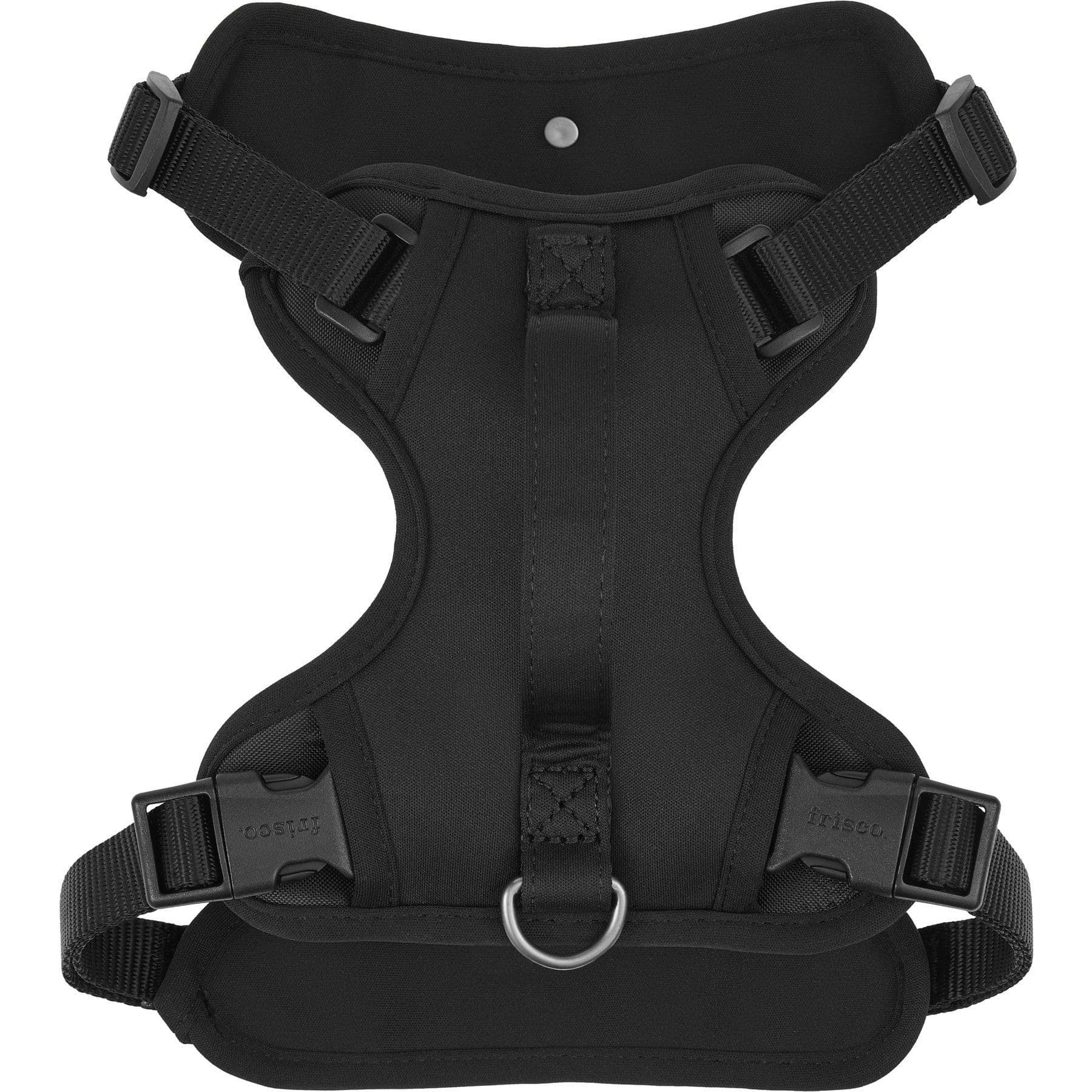
Chewy lists an EVA-padded body in a monochrome style, sold in small through large sizes at under $20, which suits a dog that wears a harness for daily walks.
Petful may earn a commission when you click through to Chewy, at no extra cost to you.
The Frisco Comfort Padded Dog Harness is the pick for ordinary daily walks. Chewy describes a layer of EVA padding sandwiched between two neoprene layers on the front and back, with jersey fabric and polyester webbing and a handle for control. It is sold in small through large sizes, and the Medium in Jet Black is about $19.99 at Chewy at the time of writing.
- Padding: EVA foam between neoprene layers, with jersey fabric against the body
- Handle: a handle for control, useful near traffic or on stairs
- Hardware: metal hardware, plus an inside label where you can write your contact details
- Price: about $19.99 at Chewy for the Medium in Jet Black
The limitation is detail. The listing does not spell out where the leash clips or how the buckles release, so confirm both on the Chewy page before ordering. Dogs that lean hard into the leash, or that need protection in the car, should look at the picks further down.
Best step-in harness: Frisco Padded Step-In Harness
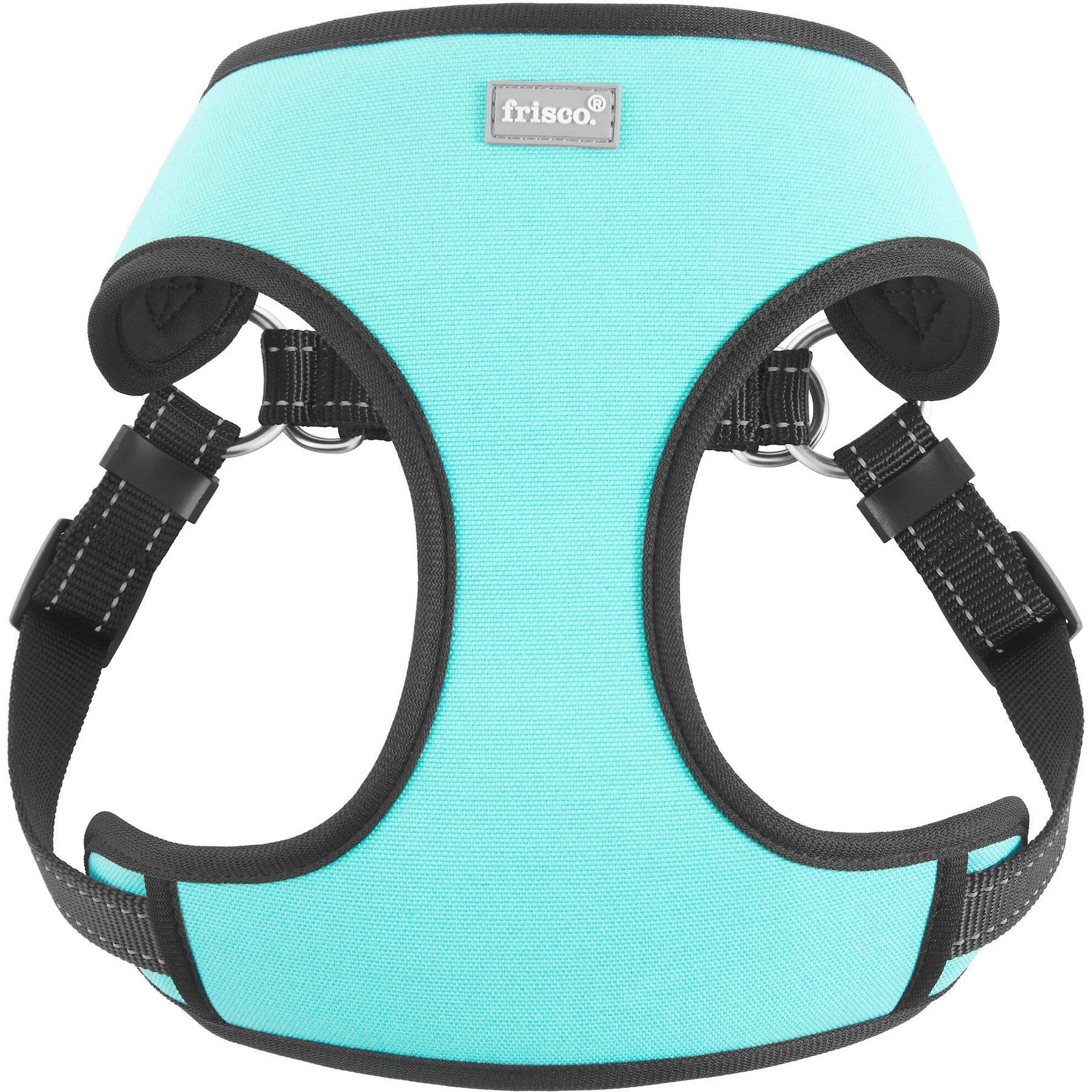
Single back buckle, padded interior and reflective stitching per the listing. Current in-stock variants in the catalog snapshot are X-Large, so confirm your dog's size on Chewy.
Petful may earn a commission when you click through to Chewy, at no extra cost to you.
The Frisco Padded Step-In Harness is built around speed. Your dog steps into the openings and you close a single buckle on the back, which Chewy says makes it quick to get a dog ready for a short walk or a longer trail. The body combines tough nylon webbing and oxford fabric with padding on the inside, plus reflective stitching around the edges for low light.
- Closure: step-in design with one buckle on the back
- Fit: adjustable girth, so the snugness is up to you
- Visibility: reflective stitching around the edges
- Price: about $15.99 at Chewy for the X-Large in Turquoise
Because there is only one buckle, the fit depends on getting the girth snug. At the time of writing the in-stock variants were X-Large, so confirm your dog's size on Chewy first. A dog that wriggles out of loose gear may do better with the escape-focused pick at the end of this list.
Best for hiking: Ruffwear Flagline Front-Clip Dog Harness
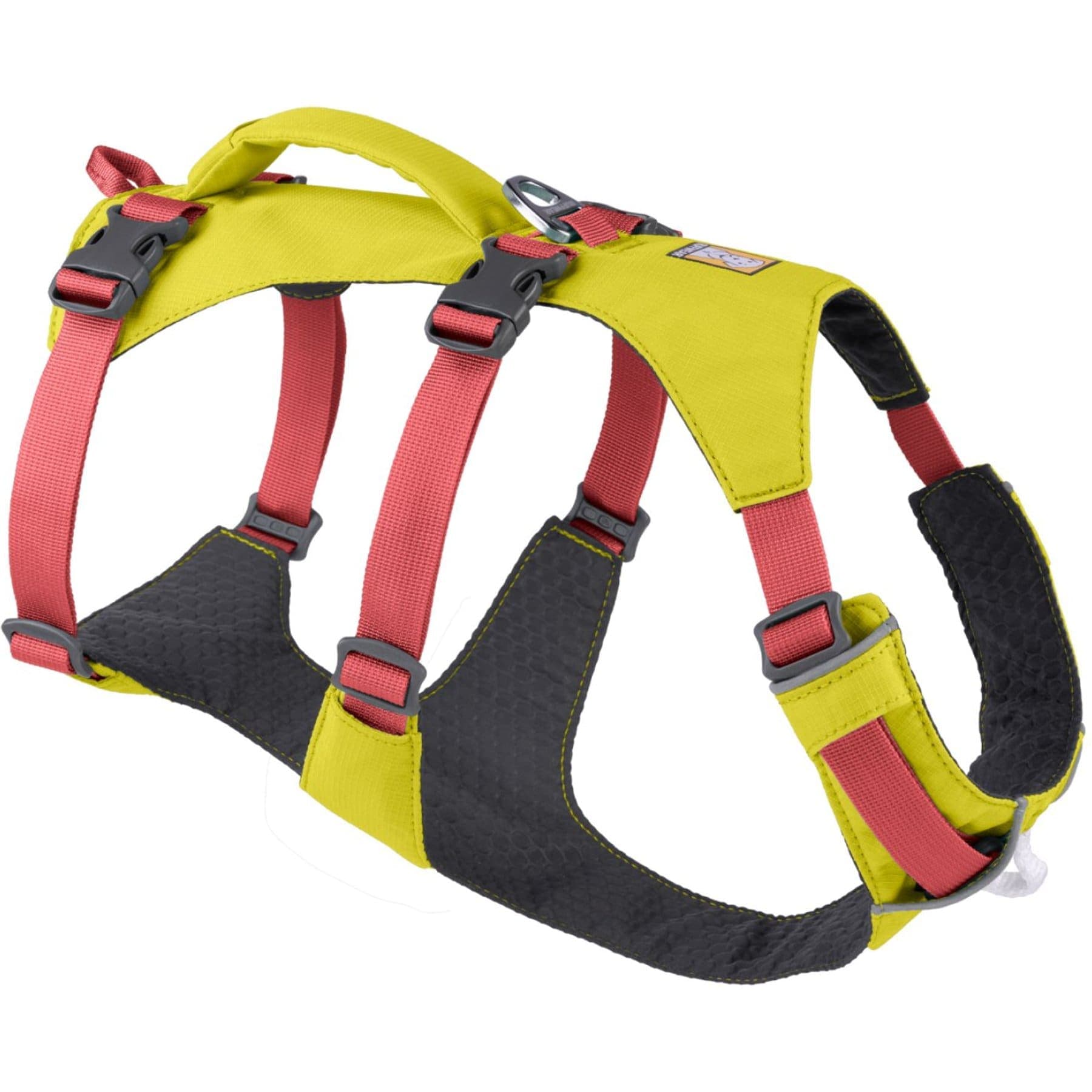
Lightweight body harness with a padded lift handle, load-dispersing chest and belly panel, debris-resistant liner and a front clip, per the listing.
Petful may earn a commission when you click through to Chewy, at no extra cost to you.
The Ruffwear Flagline Front-Clip Dog Harness is the premium trail option for dogs that hike, scramble and occasionally need a lift. Chewy lists a lightweight body harness with a padded handle, a load-dispersing chest and belly panel, a debris-resistant liner that helps keep dirt and fur away, and a front clip. The listing calls it simple to put on and highly adjustable.
- Lift handle: padded, for helping a dog over rocks or up a step
- Chest and belly panel: spreads load across the body
- Attachment: a front clip, named in the product title
- Price: about $69.99 at Chewy for the Medium (27 to 32-in chest) in Lichen Green
It is the most expensive pick by a wide margin, and nothing in the listing describes it as built or tested for car travel. Casual walkers on a budget can spend far less with the two Frisco picks above.
Best lightweight harness for running: Kurgo Journey Air Dog Harness
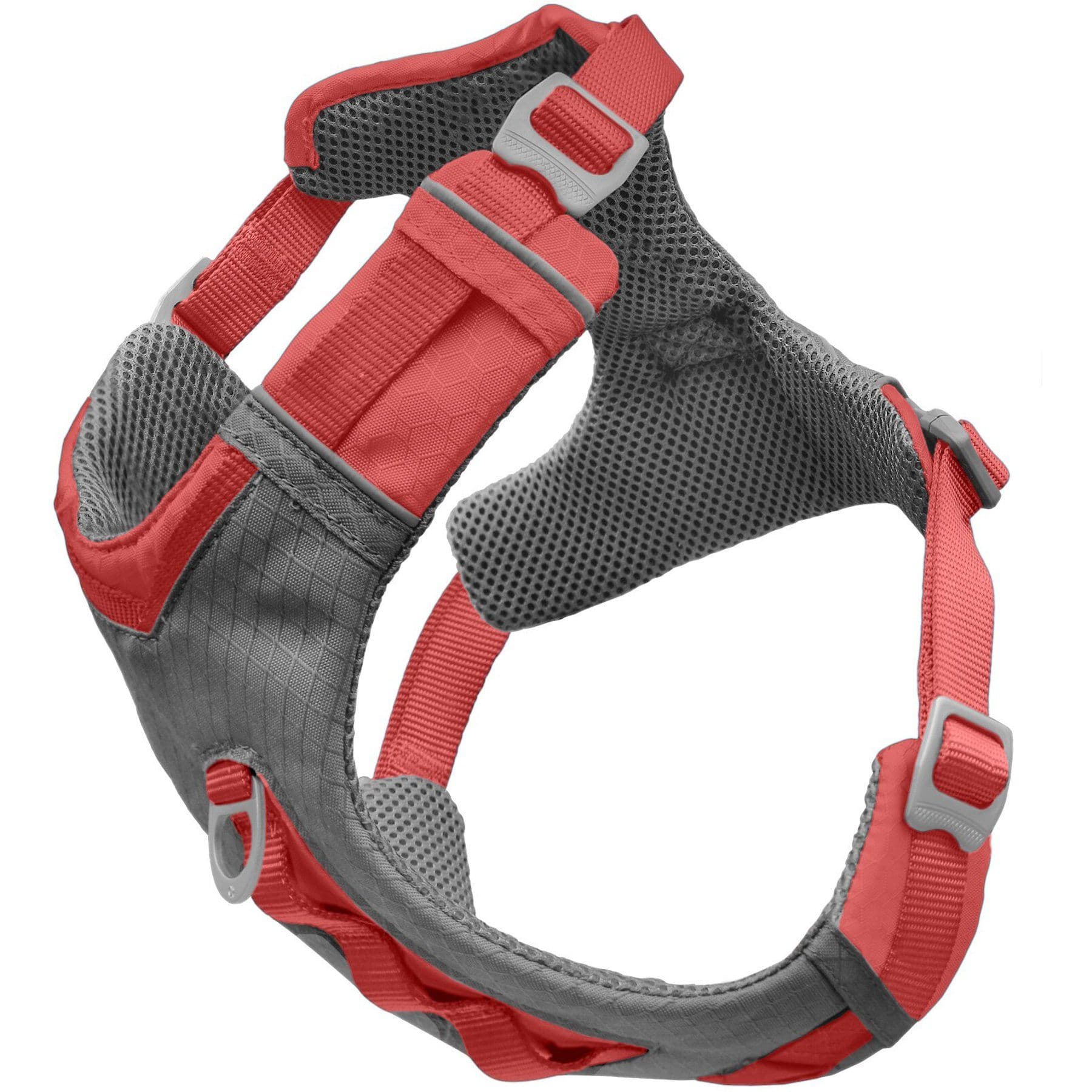
Breathable material, deep V-neck with padded chest plate, back handle, four adjustment points, reflective trim and front and back leash attachments, per the listing.
Petful may earn a commission when you click through to Chewy, at no extra cost to you.
The Kurgo Journey Air Dog Harness is an active-day harness with leash attachments at both the front and the back. Chewy describes breathable material for active dogs, a deep V-neck with a padded chest plate to reduce strain on the neck, and a back handle for more control. The listing calls it ideal for running, hiking and walking.
- Adjustment: four adjustment points
- Closure: four quick-release buttons for easy on and off
- Visibility: reflective trim for low light
- Price: about $37.49 at Chewy for the Medium in Coral
The limitation is purpose. This is an active-day harness, and nothing in the listing describes it as crash-tested, so do not treat it as a car restraint. Runners who also travel with their dog should read the car section below.
Best for car rides: Kurgo Tru-Fit Smart Harness Reflective
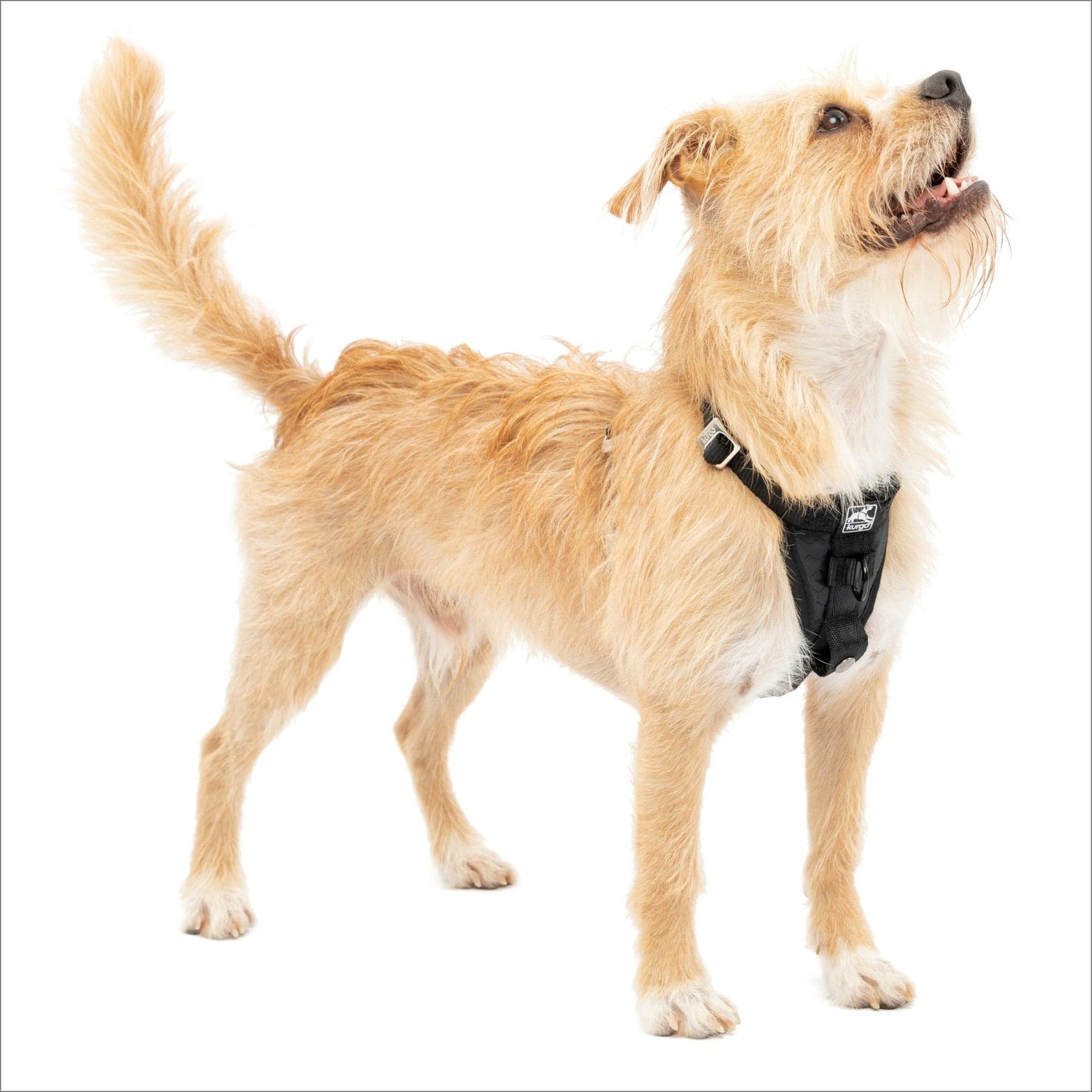
Kurgo describes it as crash-tested with an all-steel nesting buckle system, five adjustment points and a padded chest plate, plus front and back leash attachments for everyday use.
Petful may earn a commission when you click through to Chewy, at no extra cost to you.
The Kurgo Tru-Fit Smart Harness Reflective is the pick for riding in the car that also works for everyday walks. Kurgo describes it as crash-tested, with an all-steel nesting buckle system and a padded chest plate that helps disperse energy in an impact. Five adjustment points let you tune the fit to different proportions, and leash attachments at the front and back make it usable on regular outings.
- Hardware: all-steel nesting buckle system
- Fit: five adjustment points; the Small listed here fits a 16 to 22-in chest
- Attachments: one leash point in front and one in back
- Price: about $39.95 at Chewy for the Small in Black
Crash-test claims vary by maker, so read the testing details and weight limits before relying on any harness as a restraint. Dogs outside the 16 to 22-in chest range need a different size, and the fit section below explains how to measure.
Best escape-resistant harness: Gooby Escape Free Sport Dog Harness
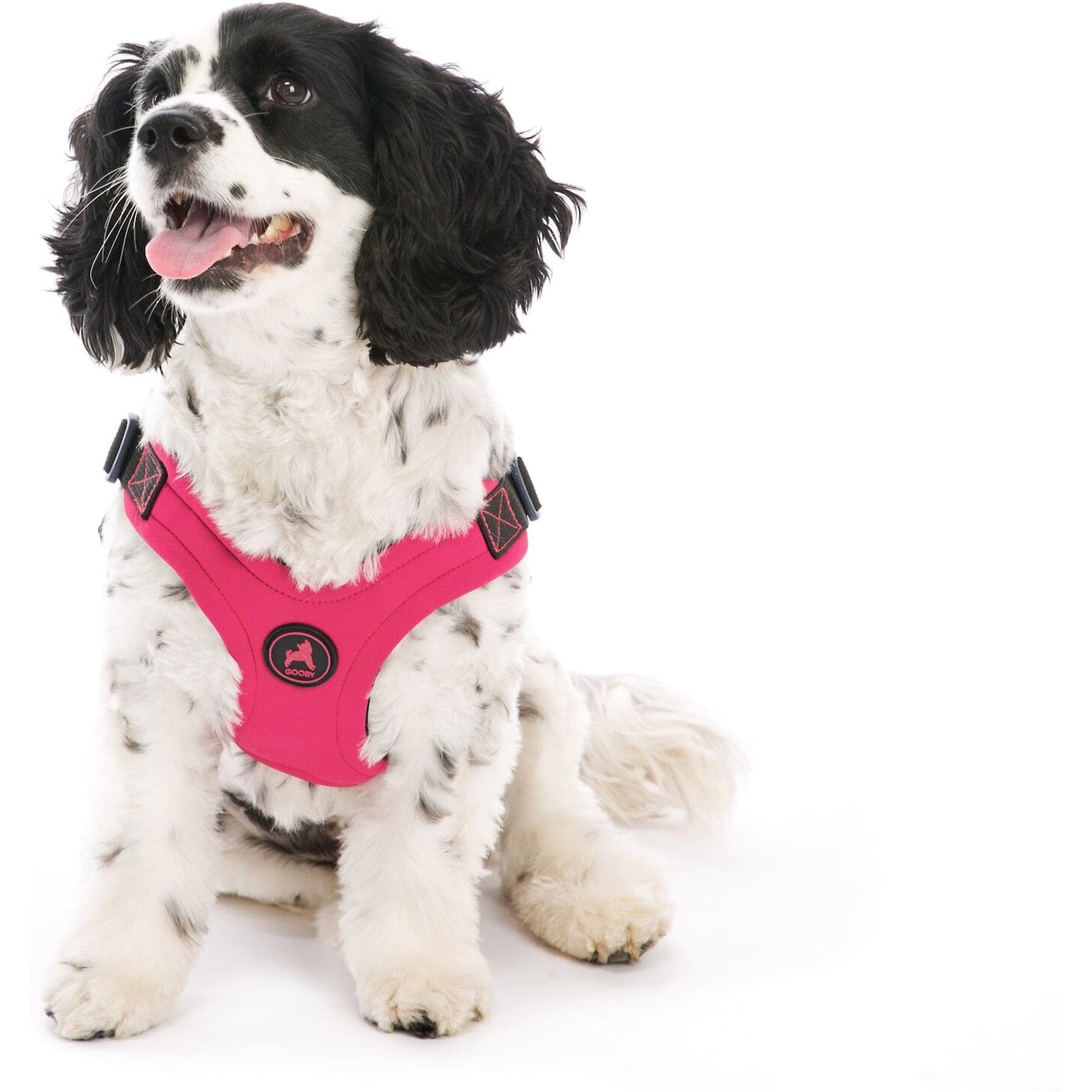
Neoprene step-in harness whose design reduces space around the back so a small dog cannot easily back out; four adjustment points (two neck, two chest); the largest size fits dogs up to 35 lb.
Petful may earn a commission when you click through to Chewy, at no extra cost to you.
The Gooby Escape Free Sport Dog Harness targets one problem: small dogs that back out of their harness. Chewy says the design reduces the space around the back, making it difficult for a small dog to escape by backing away, and it uses lightweight neoprene with polyester webbing straps. The largest size fits dogs up to 35 lb, and four adjustment points (two at the neck, two on the chest) fine-tune the fit.
- Escape design: less space around the back so a dog cannot easily back out
- Adjustment: four points, two on the neck and two on the chest
- Material: lightweight, soft neoprene with polyester webbing
- Price: about $21.79 at Chewy for the Large (16 to 24.25-in chest) in Pink
The listing stresses sizing: check for gaps around the back when the harness is pulled snug, because a wrong size is what lets dogs escape. Chewy positions it for small breeds, so large dogs need a different design, and a strong puller may be better served by a front-clip model.
Best harness for dogs that pull
A front leash attachment is the feature to look for in a dog that pulls, because a clip on the chest turns the dog sideways when it lunges instead of letting it drive forward. That is the idea behind a no-pull harness, and it works best alongside loose-leash training rather than in place of it. Of the six picks above, the Ruffwear Flagline Front-Clip Dog Harness and the Kurgo Journey Air Dog Harness both list front leash attachments. Pulling is a training and fit issue as much as a gear one, so our guide to the best harness for dogs that pull compares purpose-built designs in depth.
Best harness for small dogs
Small dogs have narrow chests and thin necks, and they back out of a loose harness more easily, so sizing matters more than any single feature. Match the chest measurement to the size chart rather than relying on the weight range alone, and look for adjustment at both the neck and the chest. The Gooby Escape Free Sport Dog Harness above is the small-breed pick here. For a full comparison of designs sized for small frames, see our guide to the best no-pull harnesses for small dogs.
Best harness for hiking and running
A trail harness should be adjustable, comfortable over a long day and equipped with a handle, and the Ruffwear Flagline Front-Clip Dog Harness is the pick here built around that checklist. The handle is what separates a trail harness from an everyday one: it lets you steady a dog on a slippery ledge, lift it over a log or take weight off a tired dog on the descent. Look for a padded handle attached to the harness body so the load spreads across the chest and belly instead of pulling on the neck.
For runners, the priorities shift to weight, airflow and a harness that does not shift with every stride. The lightest harness that still fits snugly is usually the right call, and the Kurgo Journey Air Dog Harness is the running pick because its listing describes breathable material, a padded chest plate under a deep V-neck and four adjustment points. Its reflective trim and four quick-release buttons, both listed by Chewy, make early or late runs and post-run removal easier.
What to check before a trail or a run:
- A padded handle stitched into the harness body, not just clipped on
- A chest and belly panel that spreads load across the torso
- Reflective trim for dawn and dusk miles
- Quick-release buckles for fast removal
- A snug fit with no rubbing behind the front legs
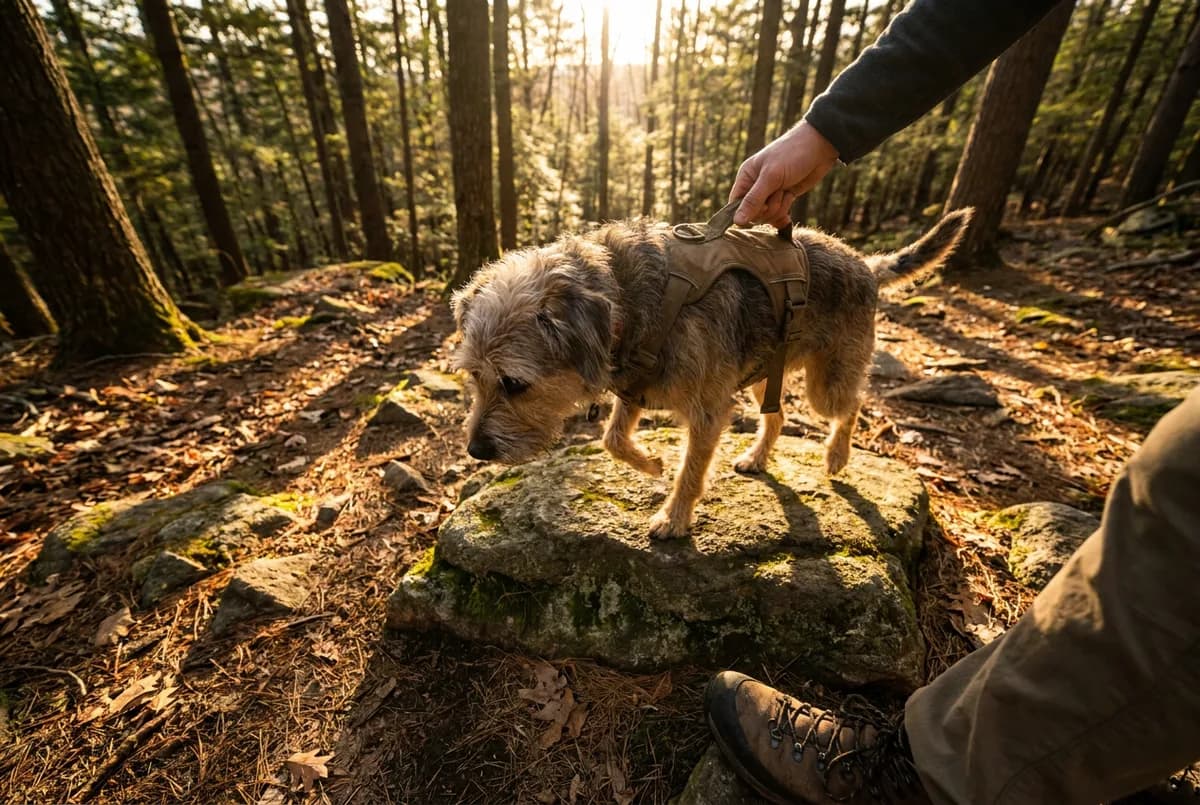
For packing lists, water and paw protection beyond the harness, see our guide to dog hiking gear. Build up distance gradually, and stop if your dog lags, pants heavily or shows sore spots where the straps sit.
Escape-resistant, step-in and car harnesses
Three situations call for a harness chosen with security in mind: dogs that back out, step-in styles that rely on a single buckle, and car travel where the harness may act as a safety device. Each has a clear way to judge whether a harness is secure.
How do you stop a dog backing out of a harness?
Start with a snug fit and a design that leaves little slack behind the shoulders, then adjust the neck and chest straps until you can slide two fingers under each but no more. A dog backs out when there is slack around the neck and shoulders and the leash pulls from behind, so removing slack matters more than any label on the box.
Escape resistance is a mix of fit and design:
- Tighten the neck strap first, then the chest strap, and recheck after your dog sits
- Choose a harness with several adjustment points, such as the four on the Gooby Escape Free Sport Dog Harness or the five on the Kurgo Tru-Fit Smart Harness Reflective
- Keep the leash short and steady near traffic or other dogs, because backing away against a taut line is when a loose harness comes off
- Practice in a quiet place before a busy sidewalk
Labels like no escape, heavy-duty and chew-proof describe goals more than guarantees. The Gooby design reduces space around the back, but it still has to be sized carefully, and no harness is truly chew-proof, so retire any harness with chewed webbing. Heavy-duty construction is mainly about metal hardware and stitching for large, strong dogs. Among these picks only the Kurgo Tru-Fit Smart Harness Reflective lists all-steel buckles, and the Small listed here covers just a 16 to 22-in chest.
Are step-in harnesses secure?
Step-in harnesses can be secure when they match the dog's chest and the back buckle is fastened snugly, but some have only one buckle and few adjustment points, so security depends heavily on fit. A loose step-in can slide to one side or let a small dog back out of the openings.
The Frisco Padded Step-In Harness uses a single back buckle, while the Gooby Escape Free Sport Dog Harness is a step-in harness that adds four adjustment points and a design aimed at backing out. The same fit checks apply to any brand's step-in style.
- Fasten the back buckle until two fingers fit under the straps
- Make sure the side straps lie flat and are not twisted
- Recheck the fit after a few minutes of walking, when new straps often settle
What is the best dog harness for the car?
The best dog harness for the car is one sold with crash testing, steel hardware and a way to connect to the vehicle. Among these six, only the Kurgo Tru-Fit Smart Harness Reflective comes close: Kurgo describes it as crash-tested with an all-steel nesting buckle system, but the listing does not explain how it connects to the seat, so check Kurgo's instructions first. Most walking harnesses were never designed to hold a dog in a collision, so a harness is not crash-rated unless the maker says so in the listing or instructions.
Follow the maker's instructions for connecting to the seat, whether that is a loop on the back of the harness or a seat belt tether, and keep the connection short enough that your dog can sit or lie down but cannot reach the front seats. What to look for in a car harness:
- A crash-testing claim from the maker, ideally with test details and weight limits
- Steel hardware, not plastic, at the load-bearing points
- A padded chest plate that spreads force across the chest
- A seat belt loop or tether point
- The correct size, since a loose harness can slip in an impact
For more restraint options, including seatbelt harness styles, see our guide to dog seat belts. Whichever setup you choose, test it in a parked car before the first trip.
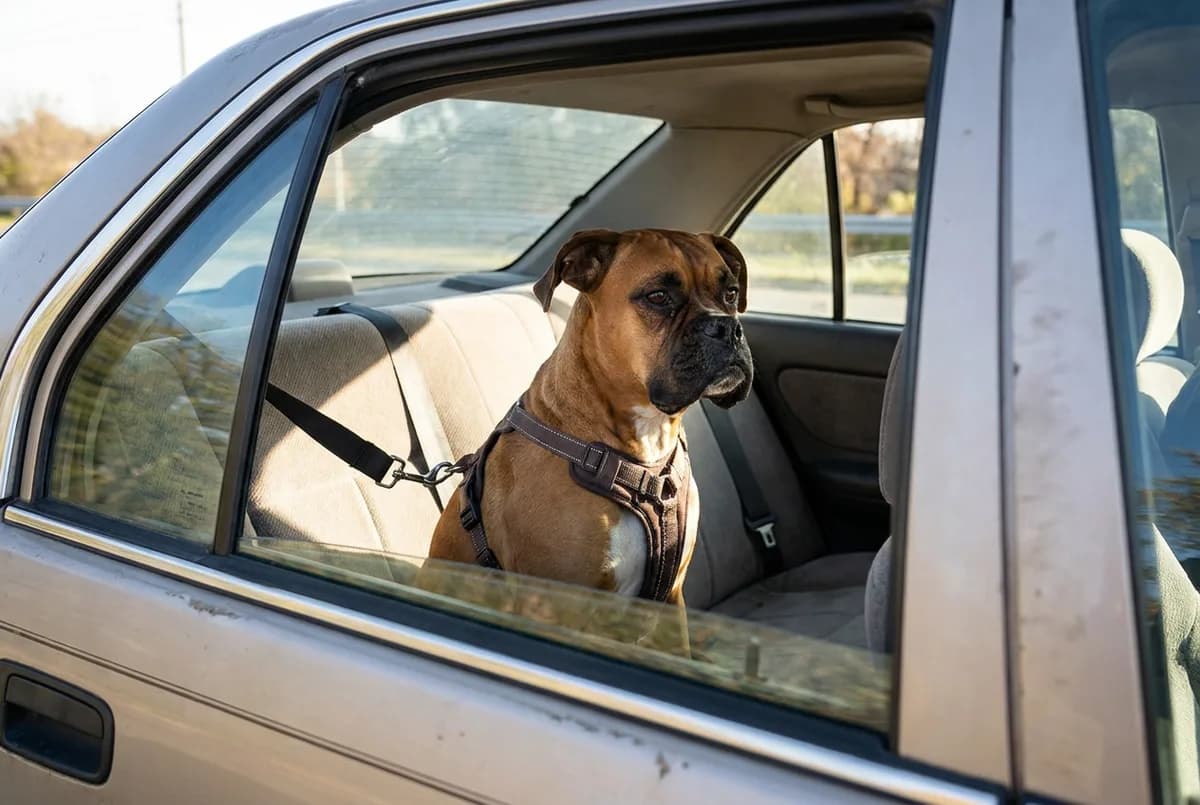
- An ordinary walking harness is not built to hold a dog in a collision, and its buckles and stitching may fail under crash forces. Use a harness that its maker says has been crash-tested, follow the connection instructions exactly, and keep your dog in the back seat. If a listing does not mention crash testing, assume it was not designed for the car.
How to choose and fit a dog harness
The simplest rule is to match the harness to the walk. A three-question screen turns the six picks and the two specialist guides above into one decision:
- Question 1, where the leash clips: a back clip suits calm walkers, a front clip suits dogs that lean into the leash, and dual-clip designs offer both
- Question 2, how the harness closes: step-in styles and quick-release buckles are fast, while more adjustment points suit dogs that wriggle or back out
- Question 3, what the chest panel covers: a padded panel that sits on the breastbone spreads pressure, while a narrow strap does not
Answer all three and the choice usually narrows to one or two harnesses. Puppies are still learning leash manners, so pair any harness with the basics in our guide to leash training a puppy.
What type of harness is best for a dog?
For most dogs, a well-fitted padded harness with a Y-shaped chest panel and a leash ring on the back is the best everyday choice, with a front clip added for dogs that pull. Harness types differ in where the leash attaches and how the body is cut, so match the type to your dog's behavior and your usual walk rather than to a trend.
- Back clip harnesses: the ring sits between the shoulder blades, which is comfortable and easy, but a strong puller can lean into it
- Front clip harnesses: the ring sits on the chest and steers the dog back toward you when it pulls
- Dual-clip harnesses: front and back rings in one harness, so you can switch depending on the walk
- Step-in harnesses: the dog steps into two openings and you close the back, which is quick for dogs that dislike things pulled over the head
- Vest-style harnesses: a vest covers more of the torso, which can feel soft and secure on small and flat-faced dogs but may run warm
The front clip versus back clip choice is the one that changes behavior most. A front clip redirects pulling, a back clip keeps the line behind the dog and is the simpler option for a dog that already walks politely. The Y-shaped chest panel matters because it leaves the shoulders free and keeps straps off the throat.
Are leashes or harnesses better for dogs?
Leashes and harnesses do different jobs, since the leash is the line and the harness is what it attaches to, but for walking a harness spreads pressure across the chest and shoulders instead of concentrating it on the neck. Keep a flat collar for ID tags, and clip the leash to the harness.
A collar alone can work for a dog that walks calmly on a loose leash. A dog that pulls, has a delicate neck or has a flat face is usually more comfortable in a harness. The AKC and the ASPCA both publish general dog care and safety guidance if you want a second opinion.
How you hold the leash matters nearly as much as the gear, and our guide to holding the leash the right way covers grip, slack and distance. Good gear and calm, consistent handling work together.
What is the best harness for a French bulldog?
The best harness for a French Bulldog is a soft, padded harness with a wide chest panel that keeps pressure off the throat, fits a broad chest and does not squeeze the shoulders. French Bulldogs are brachycephalic breeds with short, flat faces and narrow airways, so avoid anything that tightens around the neck and choose a style that is easy to adjust.
Among the six picks, the Frisco Comfort Padded Dog Harness is the closest to that description on padding, since Chewy lists EVA padding and neoprene, though the listing does not describe the chest panel width. The Kurgo Tru-Fit Smart Harness Reflective offers five adjustment points for a deep chest, but the Small listed here covers only a 16 to 22-in chest, so measure before assuming it fits. The same priorities apply to other flat-faced breeds such as English Bulldogs and Pugs, and a harness that fits properly matters more than the brand name.
What flat-faced breeds need from a harness:
- A wide, padded chest panel that sits on the breastbone
- No tight band around the neck
- An adjustable chest strap, because broad chests often fall between sizes
- Light, breathable material, since flat-faced dogs overheat easily
Should a French Bulldog wear a collar or harness?
A French Bulldog should wear a harness for walks and a lightweight collar for ID tags only, because pressure on the neck can make breathing harder for a flat-faced dog. If your dog coughs, gags or snorts loudly when the leash tightens, switch to a harness with a chest panel and mention it to your veterinarian. In warm weather keep walks short and cool, and choose a harness that opens wide so you are not tugging it over a flat face.
How should a dog harness fit?
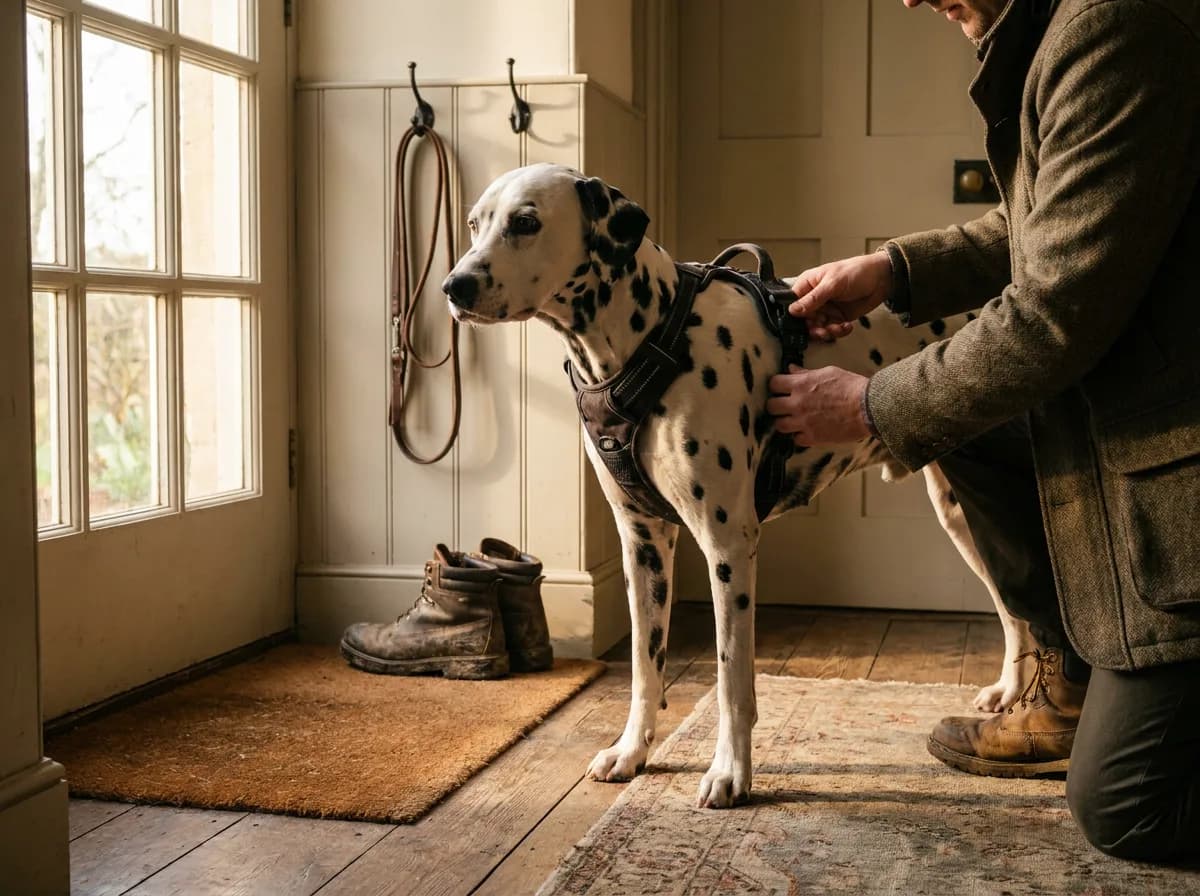
A dog harness should fit snugly enough that it does not rotate or slip over the shoulders, but loosely enough that two fingers slide under any strap. The neck opening should not choke, the chest panel should sit on the breastbone, and nothing should rub behind the front legs.
Dog harness sizes differ from brand to brand, so check chest girth before ordering and keep the chart next to you. Measure around the widest part of the ribcage, then compare the number with the maker's range rather than relying on weight alone. Keep the chest panel off the throat when you put it on, and watch for bunching at the neck.
How to put on a dog harness:
- Lay the harness flat so no strap is twisted
- Slip it over the head or have your dog step in, depending on the style
- Close the chest and belly straps, using the quick-release buckles where fitted
- Tighten gradually, then do the two-finger fit check
- Walk a few steps and recheck, since new straps settle
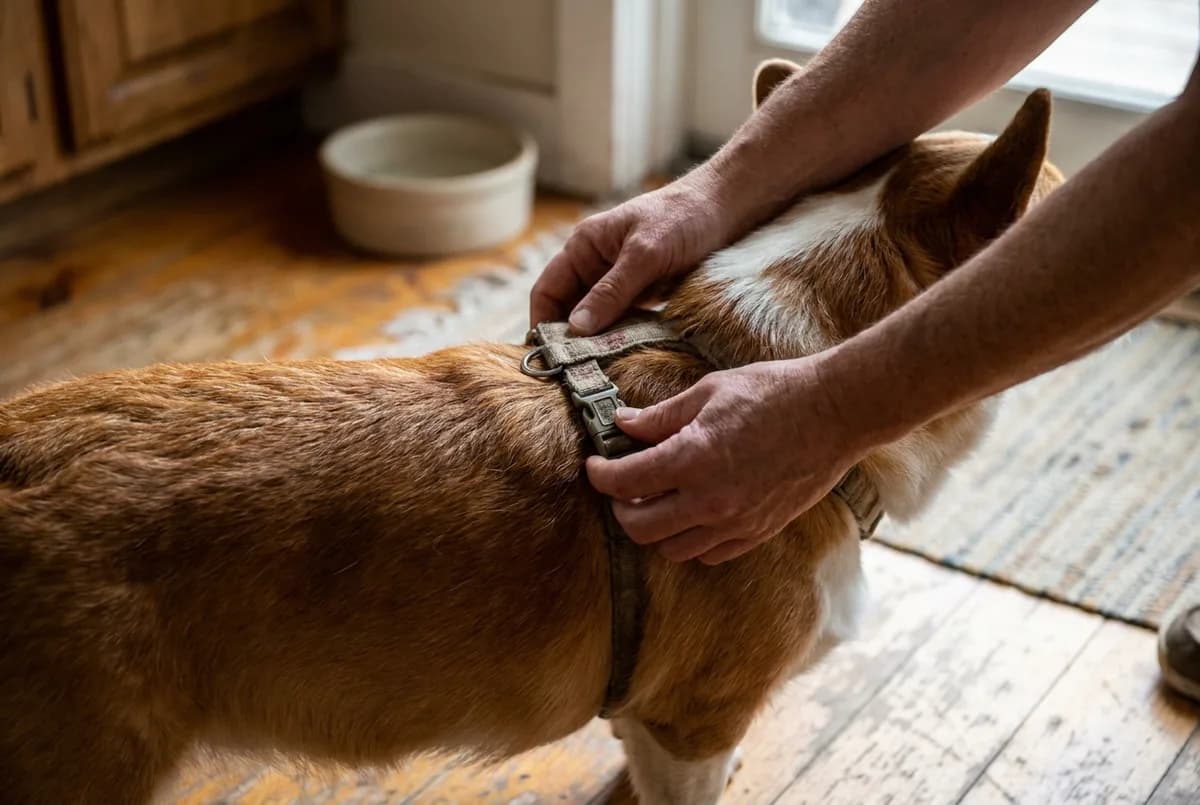
- Slide two flat fingers between each strap and your dog's body. If they slip in easily but a third finger will not fit, the harness is snug enough. If a third finger fits, tighten the strap, and if two fingers will not fit, loosen it. Check around the neck, behind the front legs and across the chest.
Dog harness questions
Still deciding where to go next? Start with the three-question screen above. If your dog pulls, move on to our guide to the best harness for dogs that pull, and if your dog is small, see the best no-pull harnesses for small dogs. The questions below cover the rest.
Use a soft tape to measure the chest at its widest point, just behind the front legs, and compare that number with the maker's size chart, because weight ranges are only a rough guide. The chest panel should sit flat between the front legs, so check the neck measurement too if the chart lists one. If your dog falls between sizes, choose the larger adjustable size and tighten it, rather than a size that is already snug.
It is better not to. A well-fitted harness is fine for a walk, a hike or a car trip, but wearing one around the clock can cause rubbing under the armpits, matted fur and skin irritation, especially with damp straps. Plan to take it off indoors, check the skin behind the front legs after each outing and let the harness dry before the next use.
There is no fixed schedule, so replace a harness when it shows wear rather than by date. Look for frayed webbing, a cracked buckle, stretched stitching, rust on metal parts or straps that no longer hold their adjustment. Harnesses used for hiking, car travel or by strong dogs wear faster, and any harness a dog has chewed through should be retired.
Yes, a harness is a gentle way to start leash practice. A growing puppy can outgrow a harness in weeks, so choose one with adjustable straps and recheck the fit every week or two. Keep early sessions short, reward calm walking and pair the harness with basic leash training. Ask your veterinarian if you are unsure about sizing for a large breed that will grow quickly.

Coreen Saito is a pet writer and longtime shelter volunteer with more than a decade in animal rescue. She covers cat behavior, breed care, and the small, ordinary science of sharing a life with companion animals, with a particular focus on honest takes about the products and decisions that actually matter. At home in Arizona, she's outranked by Mac (a dog with the loudest opinion in the house), Rebel (a cat who governs by quiet authority), and Meri (an orange tabby who runs the late shift and the laundry basket). She writes about all three, plus the rescues that keep coming through her life, at LifeWithMinty.com.
Sign up for expert-backed reviews and safety alerts all in one place.