Best Dog Collars: 6 Picks for Everyday Wear and Safety
The best dog collar is the one that fits your dog and your routine. Compare six Chewy picks for everyday wear, narrow heads, mud, night walks and safety, plus what vets recommend and which collars to skip.
Petful is reader supported. As an affiliate of platforms like Amazon and Chewy, we may earn a commission when you buy through links on this page. There is no extra cost to you.
The best dog collar is the one that fits your dog's neck, suits the way you walk, and holds an ID tag that stays readable. There is no single winner, because a whippet that backs out of a flat buckle, a Lab that lives in creek water, and a puppy that outgrows a size every few weeks each need something different.
This guide compares six collars stocked at Chewy, one for each job: everyday flat nylon, martingale, waterproof biothane, reflective, leather and breakaway. It is a research-based comparison of catalog details and documented features, followed by fit and safety guidance, a short decision framework, and an honest list of the collars we left out.

Sign up for expert-backed reviews and safety alerts all in one place.
Compare the dog collars
The best collar for a dog starts with the job the collar has to do. The table below lists the exact Chewy variant, collar type and catalog price for each pick. If you are unsure where to start, a flat nylon collar with an ID tag suits most dogs; the other five rows cover special cases:
- Narrow heads that slip a flat collar
- Mud and water
- Walks on dark roads
- A dressier look
- Snag risk around crates and play
| Exact model and variant | Collar type | Best for | Material | Neck sizes listed | Catalog price |
|---|---|---|---|---|---|
| Blueberry Pet Classic Solid Nylon Dog Collar, Emerald, Small: 12 to 16-in neck, 5/8-in wide | Flat nylon collar | Everyday wear and ID tags on small dogs and puppies | Nylon webbing, nickel-coated D-ring, recycled-plastic buckle | Small: 12 to 16 in neck, 5/8 in wide | $12.99 |
| CollarDirect Reflective Martingale Nylon Dog Collar, Orange, Medium | Martingale (limited slip) | Narrow-headed breeds that slip a flat collar | Nylon with reflective stitching and metal hardware | Medium listed; confirm neck range on the size chart | $12.99 |
| PawFurEver's Waterproof & Odorless Dog Collar, Pink, Small | Waterproof biothane collar | Mud, creeks and swimming | Biothane | Small listed; confirm neck range on the size chart | $19.99 |
| Frisco Nylon Reflective Dog Collar, Limeade, Medium | Reflective flat collar | Dusk and night walks on a budget | Webbed nylon designed to reflect ambient light | Medium listed; confirm neck range on the size chart | $10.99 |
| Blueberry Pet Classic Leather Striped Dog Collar, Navy, White & Red, Medium | Leather collar | A classic, dressier look for everyday wear | High-grade leather over polyester webbing | Medium listed; three sizes offered | $28.99 |
| PetSafe Keep Safe Nylon Breakaway Dog Collar, Black, Medium: 14 to 20-in neck, 1-in wide | Breakaway collar | ID wear and crate or play snag risk; for walks use both D-rings or a harness | Nylon strap, fabric fastener, metal hardware | Medium: 14 to 20 in neck, 1 in wide | $14.99 |
- 1A plain flat collar with an ID tag is the sensible everyday default for most dogs.
- 2Choose a martingale for narrow-headed breeds, and add a harness for pullers instead of tightening a collar.
- 3Pick a breakaway collar when snag risk is high, and skip choke, prong and shock collars entirely.
Our dog collar picks
Each pick below links to the exact variant in the table. Colors and sizes vary by listing, so match the neck range to a soft tape measure before you order.
Best everyday flat collar: Blueberry Pet Classic Solid Nylon Dog Collar
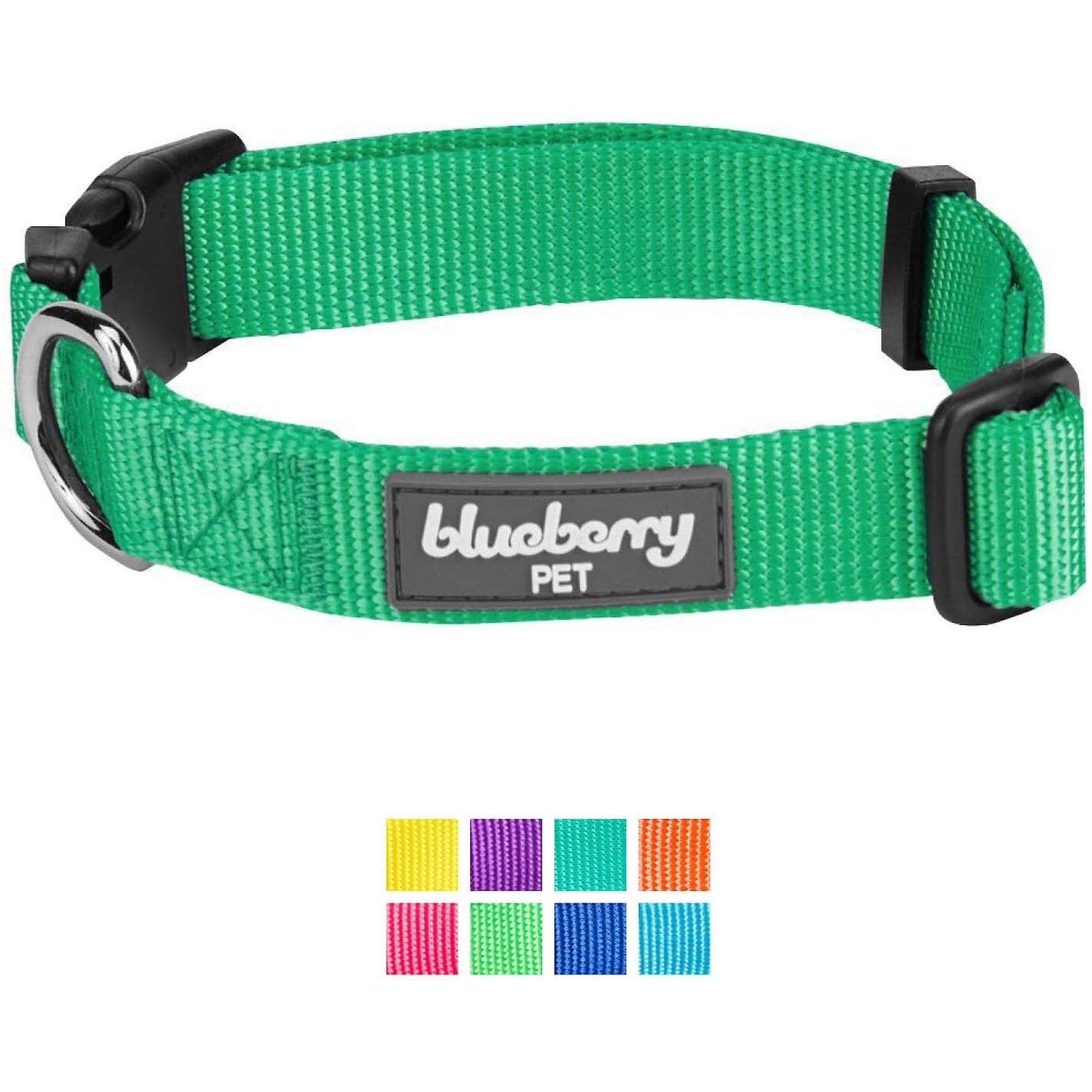
Plain nylon webbing with a nickel-coated D-ring, buckles made from recycled plastic bottles, and machine-washable, which suits daily ID-tag wear.
Petful may earn a commission when you click through to Chewy, at no extra cost to you.
For most dogs, a plain flat collar is the right everyday choice, and the Blueberry Pet Classic Solid Nylon Dog Collar is the simplest version on this list. The catalog describes a nylon dog collar made from high-density webbing, with a nickel-coated D-ring for the leash and ID tag, and buckles repurposed from recycled plastic bottles. At about $12.99 at Chewy at the time of writing, it is a low-cost way to carry an ID tag every day.
The catalog calls it a durable nylon collar with a classic design that is easy to put on and remove, and says the Blueberry Pet Classic Solid line is machine washable, which helps when your dog rolls in the yard or the park. The variant listed is the Small in Emerald, with a 12 to 16 inch neck range and a 5/8 inch width, so it suits small dogs and growing puppies. Bigger dogs need a bigger size, so check the size chart on the listing. Nylon edges can fray with age, so look over the strap whenever you wash it.
- Collar type: flat, adjustable nylon
- Hardware: nickel-coated D-ring, recycled-plastic buckle
- Care: machine washable, per the catalog
- Honest limitation: a flat collar gives no extra security to a dog with a narrow head, and it is not the right tool for a dog that pulls
Best martingale collar: CollarDirect Reflective Martingale Nylon Dog Collar
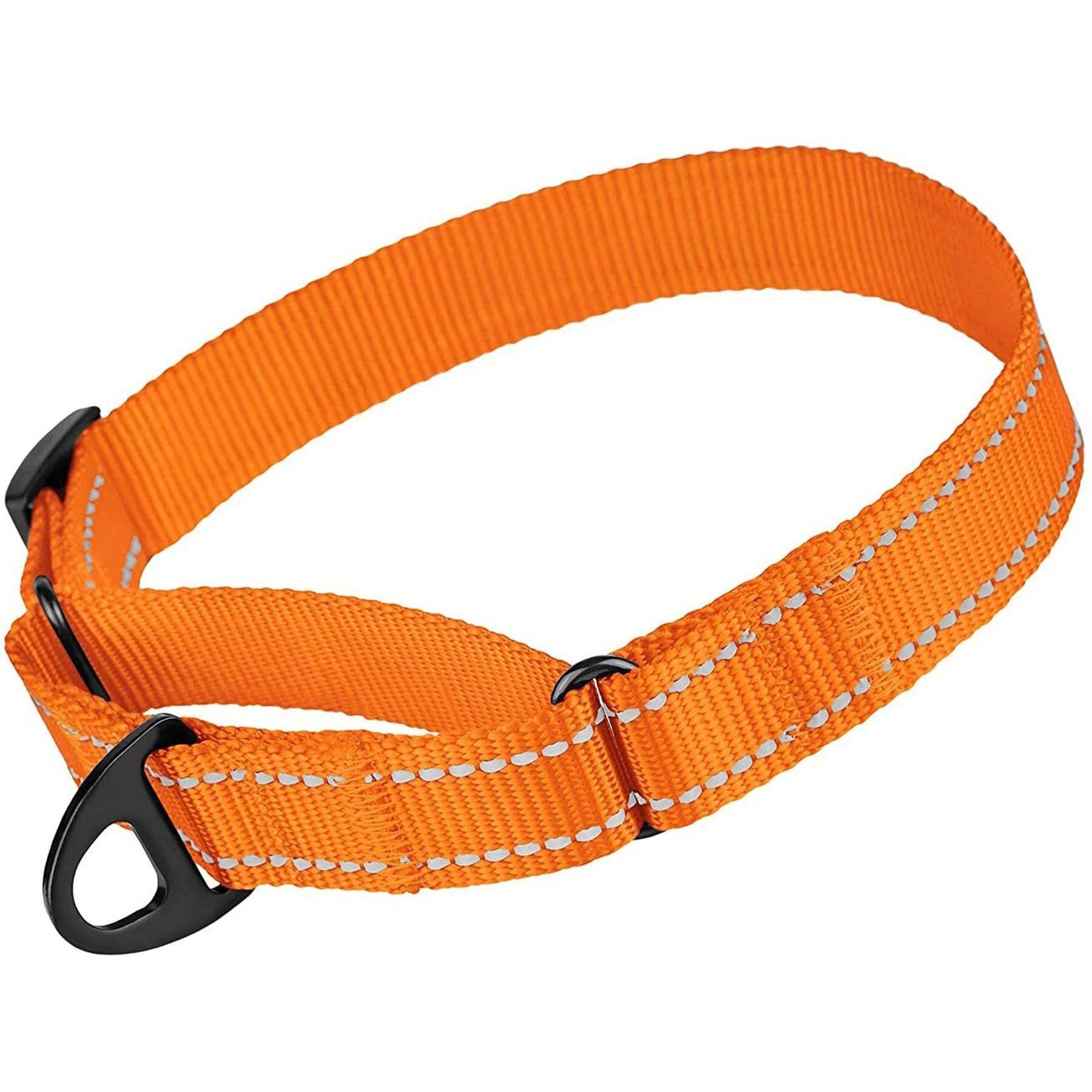
Nylon limited-slip design with reflective stitching and metal hardware, aimed at leash walking for narrow-headed dogs that slip a flat collar.
Petful may earn a commission when you click through to Chewy, at no extra cost to you.
A martingale is a limited slip collar: a short loop tightens when the dog pulls back, but only to a set point, so the collar resists backing out without closing down the way a chain does when it is sized correctly. The CollarDirect Reflective Martingale Nylon Dog Collar is the pick for this style. The catalog describes nylon webbing, reflective stitching and durable metal hardware, and the Medium in Orange is listed at about $12.99 at Chewy at the time of writing, the same price as the Blueberry Pet flat collar.
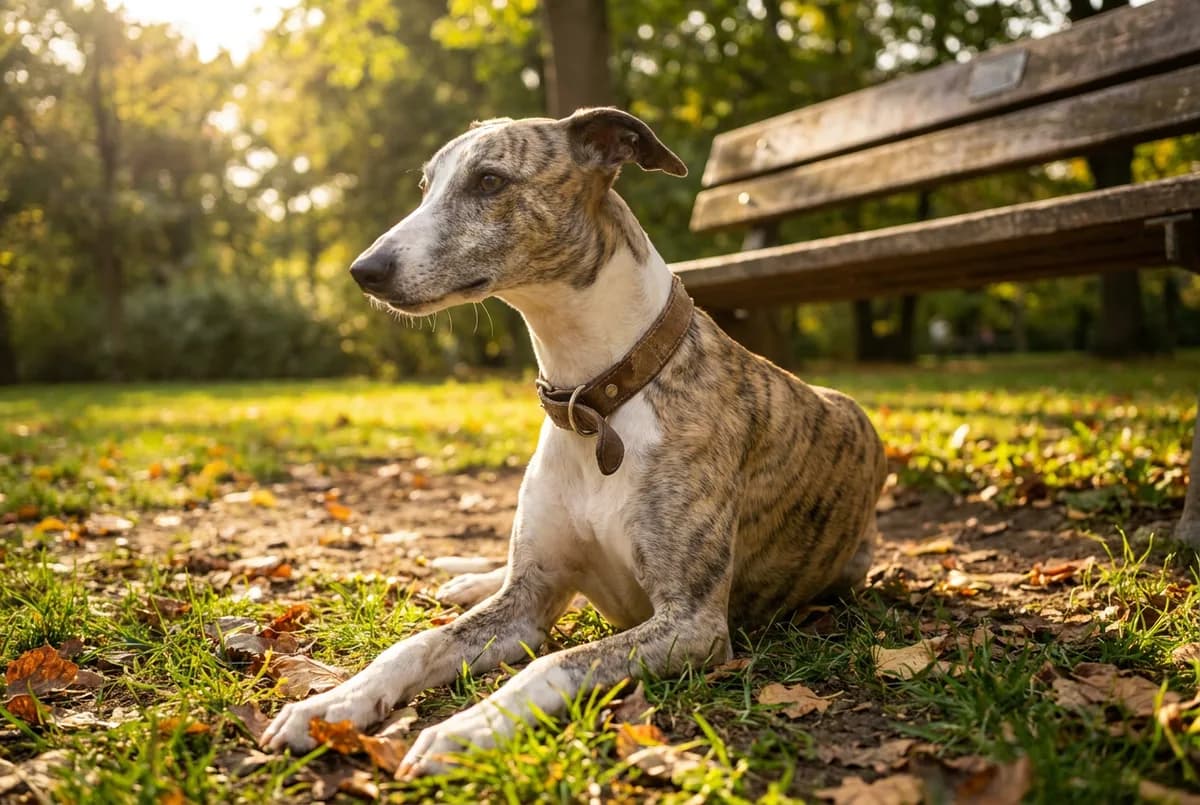
Greyhounds, whippets and other narrow-headed breeds are the usual martingale candidates, because their heads are barely wider than their necks and a flat collar can slide forward over the ears. That makes this the best martingale dog collar on this slate for sighthound-type shapes. A nervous rescue that tends to back out of a leash may also need a no-slip fit.
The catalog says the martingale style gives added control during leash training. It does not stop a dog from pulling, though, and it is not a correction tool. Size it so the loop stops short of closing completely when the dog pulls, and re-check the fit after a grooming or a coat change.
- Collar type: nylon martingale, adjustable
- Variant listed: Medium in Orange, with the neck range to be confirmed on the size chart
- Material: nylon with reflective stitching and metal hardware
- Honest limitation: wear it for supervised leash walks only and take it off at home, because the loop can catch on a crate or a branch
Best waterproof collar: PawFurEver Waterproof and Odorless Dog Collar
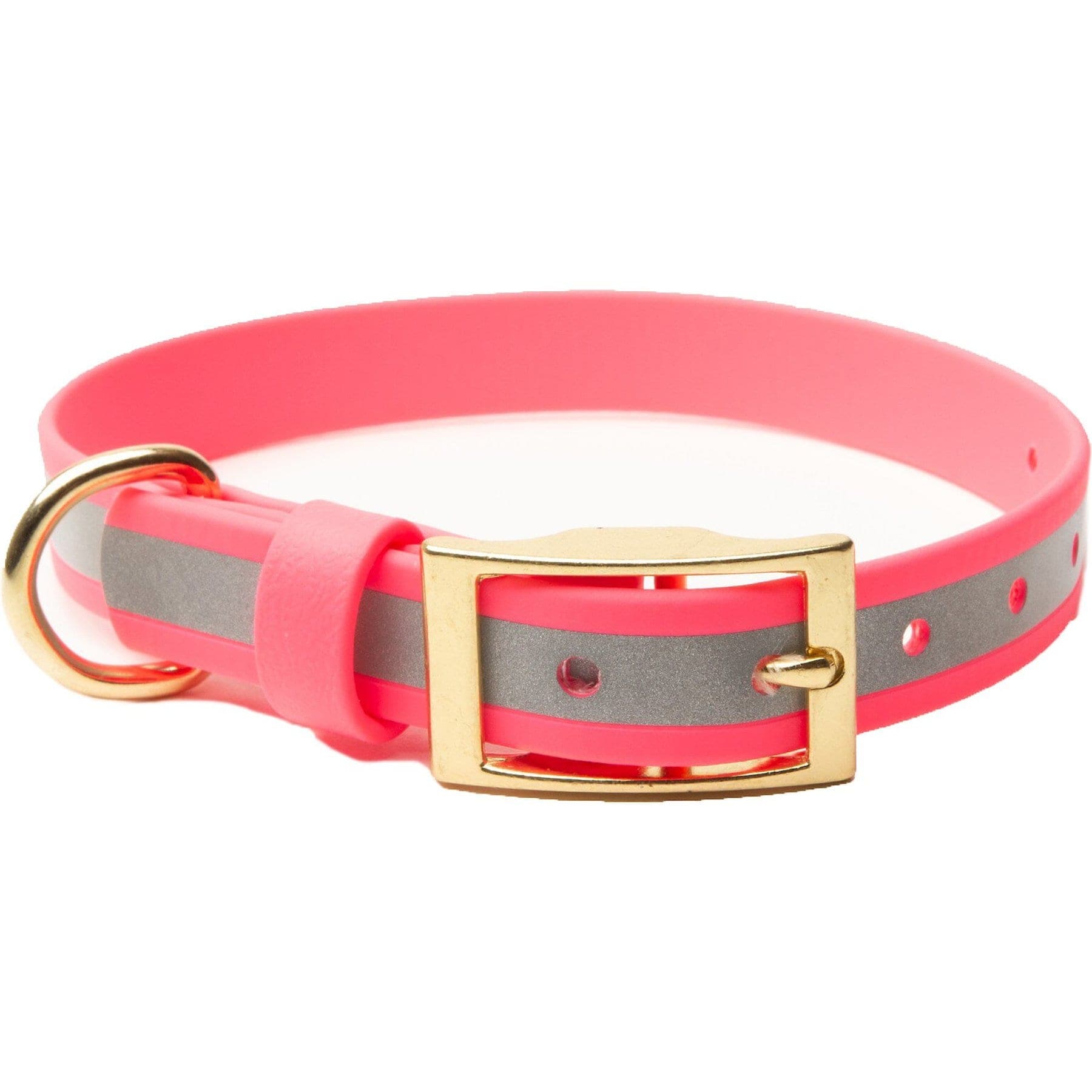
Biothane construction wipes clean after mud and swimming and does not hold odor, per the manufacturer description.
Petful may earn a commission when you click through to Chewy, at no extra cost to you.
Biothane is a coated webbing that sheds water and mud, which makes the PawFurEver Waterproof and Odorless Dog Collar the best waterproof dog collar on this list for dogs that swim, hike or play in mud. The catalog calls it a Biothane collar that is easy to wipe clean and does not retain odors, and the Small in Pink is listed at about $19.99 at Chewy at the time of writing.
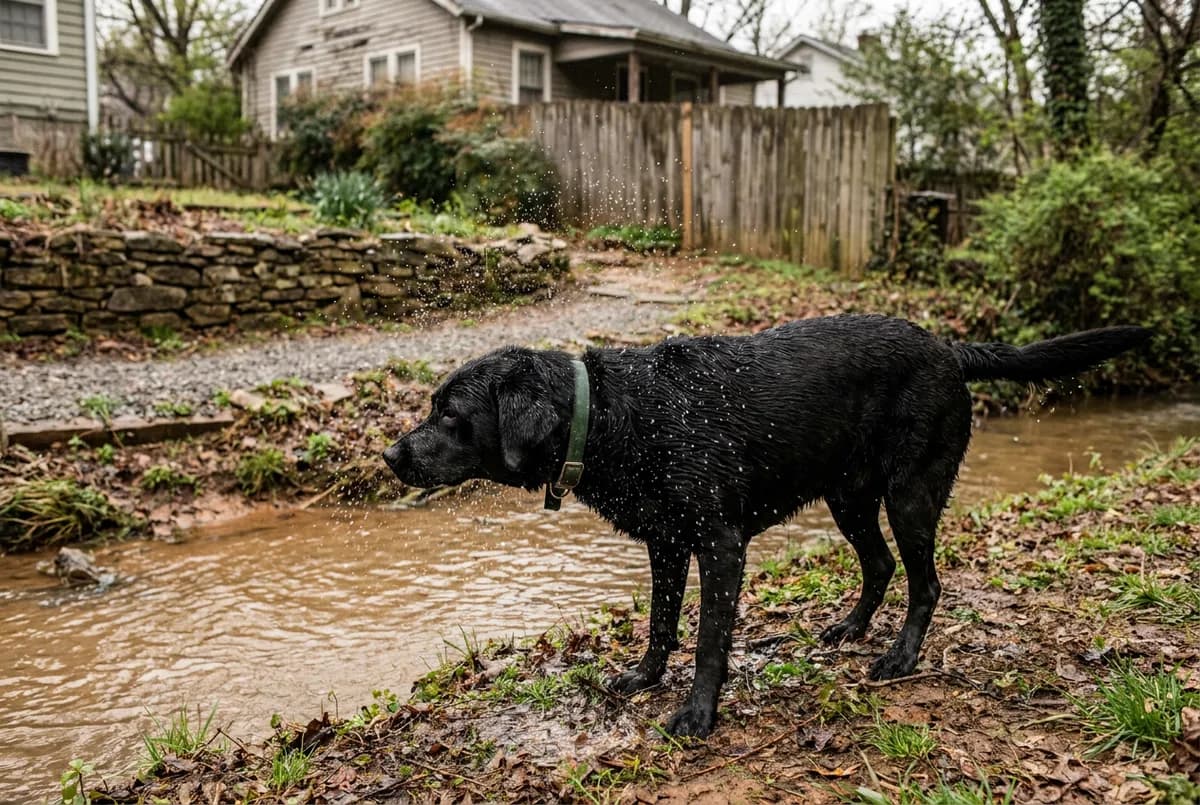
Nylon soaks up creek water and can hold the smell afterward, so a biothane dog collar is the better fit for a dog that is in and out of ponds. It is the only biothane collar on this slate, so the real question is whether your dog's water habits justify the higher price. Biothane can feel firmer than soft webbing, and even a waterproof collar needs a quick rinse and a check of the skin underneath after a long wet day.
- Collar type: waterproof biothane flat collar
- Variant listed: Small in Pink, with the neck range to be confirmed on the size chart
- Care: wipe clean, per the manufacturer description
- Honest limitation: it costs more than the nylon picks, and the catalog gives few construction details beyond the material
Best reflective collar: Frisco Nylon Reflective Dog Collar
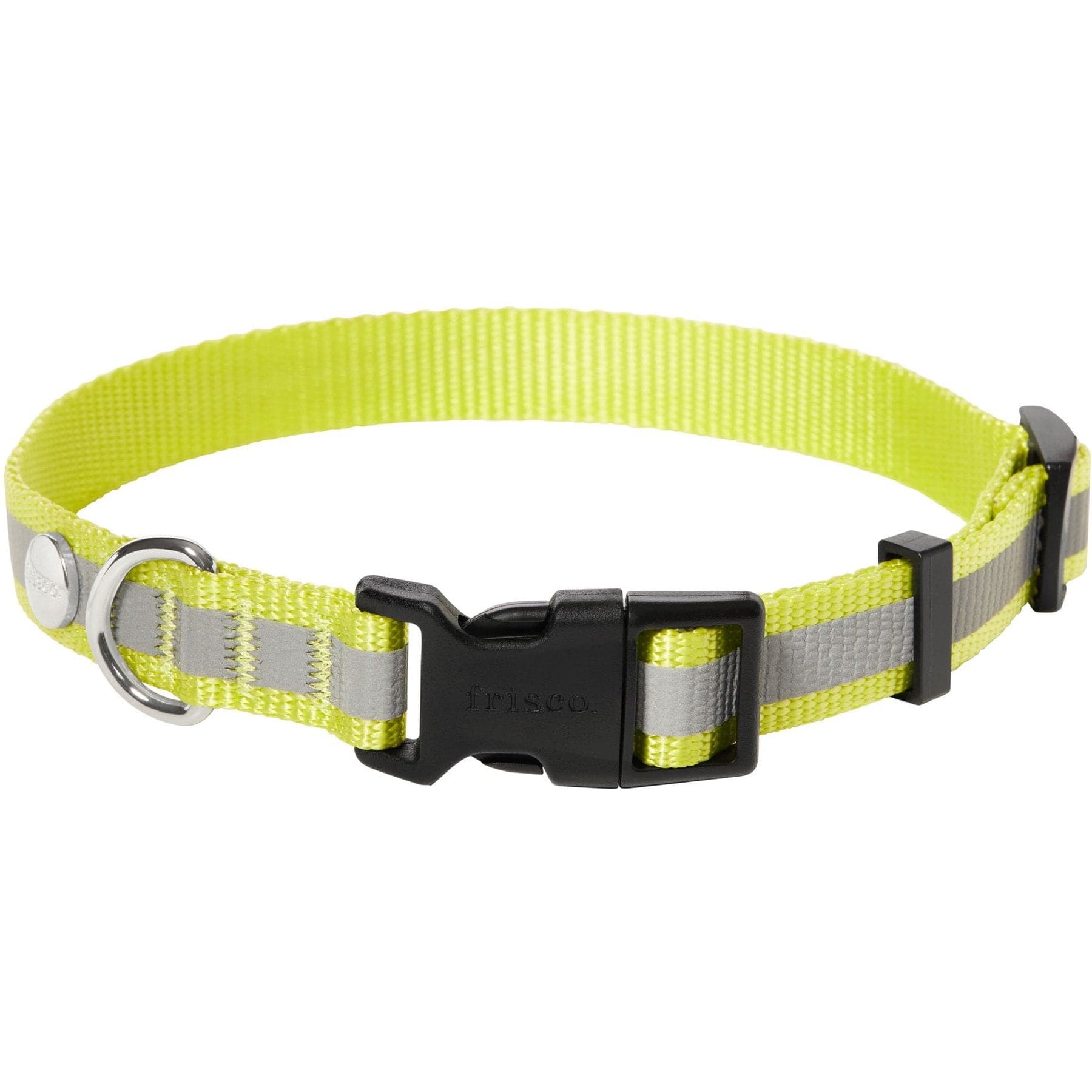
Lightweight webbed nylon designed to reflect ambient light for low-light visibility at a budget price.
Petful may earn a commission when you click through to Chewy, at no extra cost to you.
A reflective collar helps drivers and cyclists spot your dog at dusk, which is why it earns a place in a night-walk routine. The Frisco Nylon Reflective Dog Collar is the budget pick and the best reflective dog collar here for the money: the catalog describes lightweight webbed nylon designed to reflect ambient light, and the Medium in Limeade is listed at about $10.99 at Chewy at the time of writing, the lowest price on this list. Frisco is Chewy's house brand.
How much a reflective collar helps depends on how dark your route is. Reflective material only lights up when a headlight or flashlight hits it, so think of it as a safety dog collar for dusk rather than a light source, and add a clip-on light and a bright leash on unlit roads. If your night walker also slips a flat collar, the CollarDirect martingale above adds reflective stitching to a limited-slip design.
- Collar type: reflective flat nylon collar
- Variant listed: Medium in Limeade, with the neck range to be confirmed on the size chart
- Material: lightweight webbed nylon
- Honest limitation: reflectivity depends on a light source, and the catalog does not describe the hardware
Best leather collar: Blueberry Pet Classic Leather Striped Dog Collar
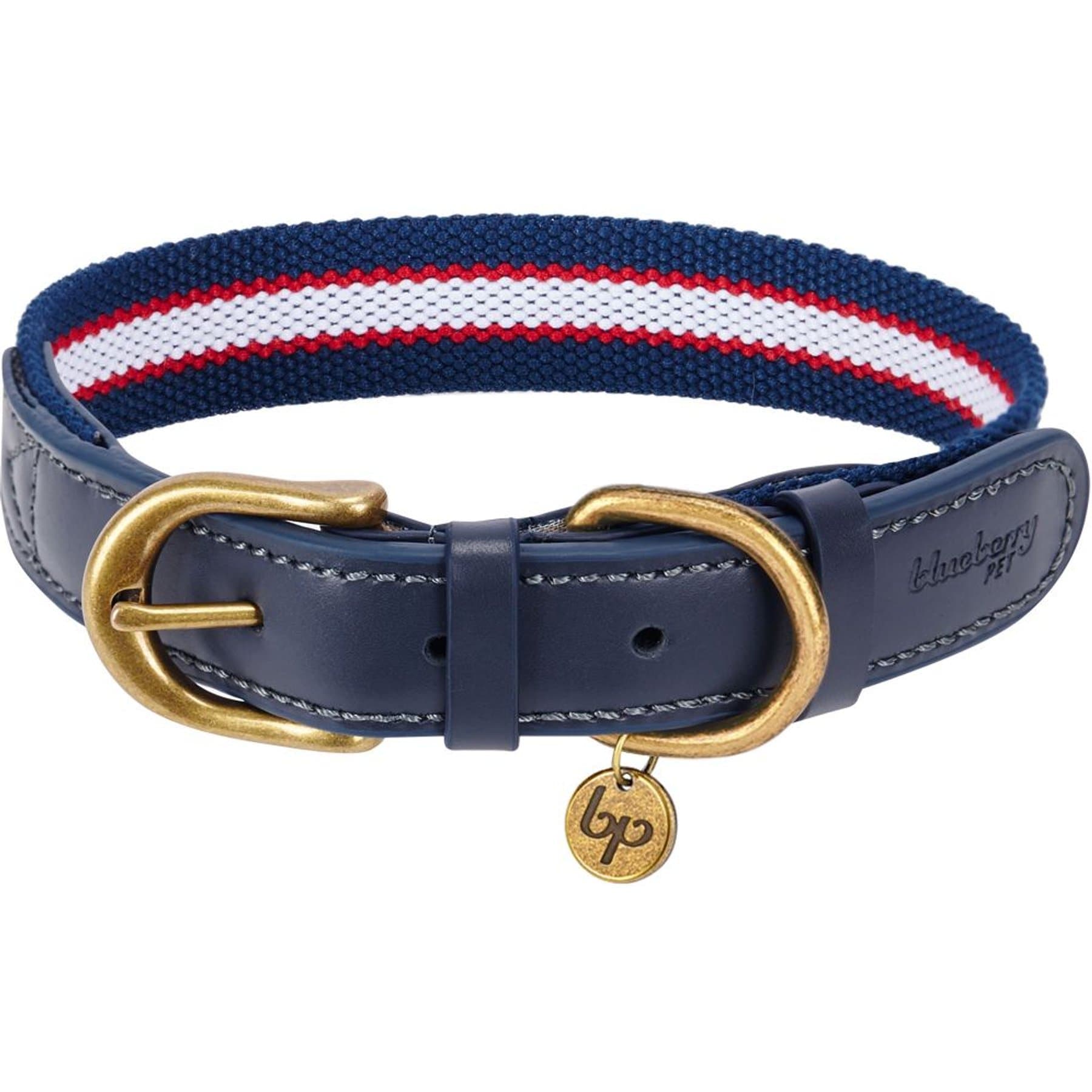
High-grade leather over heavy-duty polyester webbing with an open-ended adjustable style, in three sizes.
Petful may earn a commission when you click through to Chewy, at no extra cost to you.
Leather softens with wear and has a classic look, which is why the Blueberry Pet Classic Leather Striped Dog Collar is the best leather dog collar on this list. The catalog describes high-grade leather over heavy-duty polyester webbing, with an open-ended adjustable style, two color schemes and three sizes. The Medium in Navy, White and Red is listed at about $28.99 at Chewy at the time of writing, the highest price here.
In leather, full-grain is the grade to look for, because it keeps the strongest outer layer of the hide. This listing says high-grade leather without naming the grade, so treat it as a style choice rather than a promise of heirloom durability. Leather also dislikes soaking, so keep it away from the creek and let it dry naturally if it gets wet.
- Collar type: leather over polyester webbing, open-ended and adjustable
- Variant listed: Medium in Navy, White and Red
- Care: the catalog does not give washing directions, so wipe it with a damp cloth and let it air dry
- Honest limitation: it is the priciest pick, and it is the wrong choice for dogs that swim
Best breakaway collar: PetSafe Keep Safe Nylon Breakaway Dog Collar
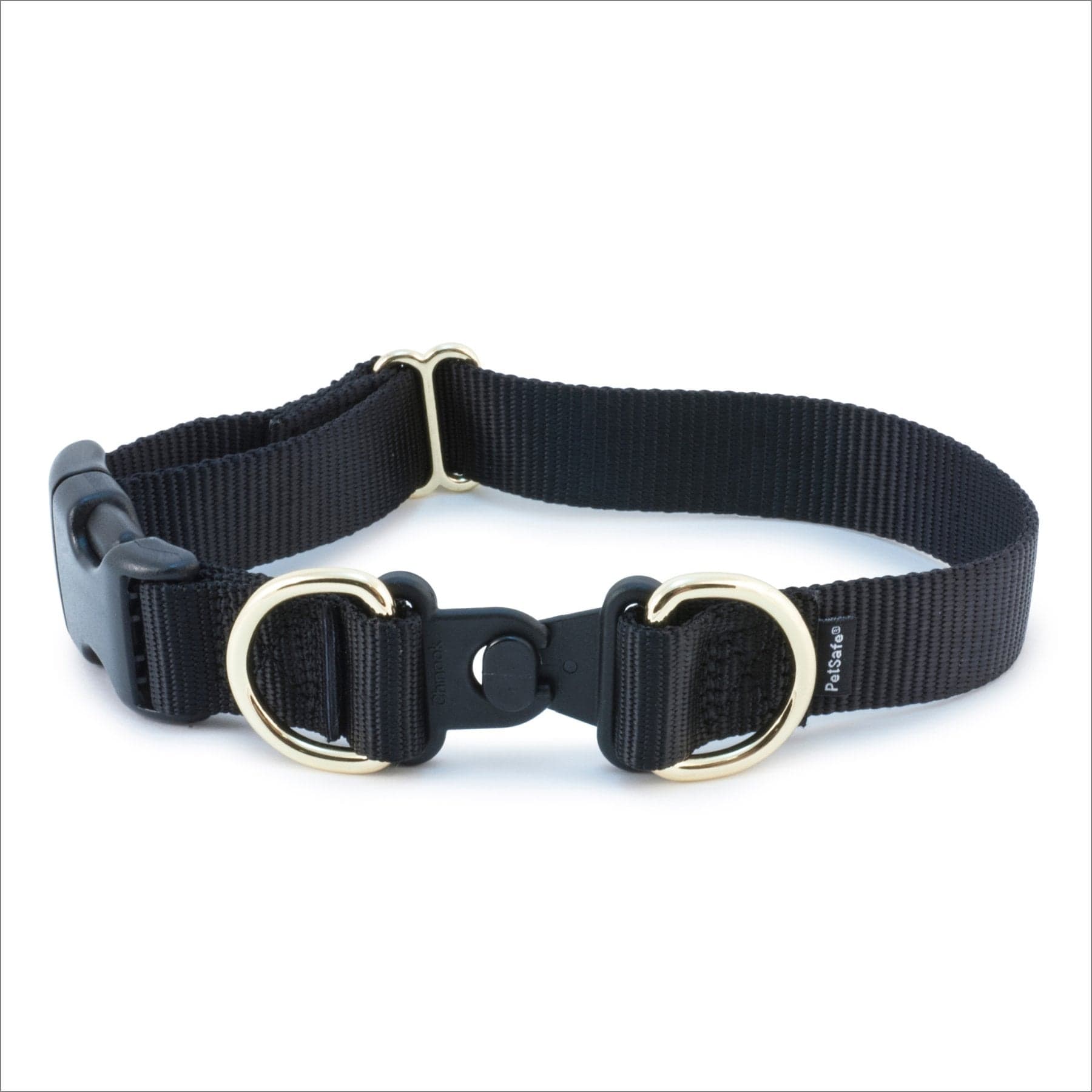
Patented break-away buckle releases under pressure to reduce strangulation risk when a collar snags on crates, fences or other dogs; two D-rings allow leash use.
Petful may earn a commission when you click through to Chewy, at no extra cost to you.
A breakaway collar has a safety release buckle that opens when enough pressure hits it, so a collar caught on a crate wire, a fence or another dog's teeth lets go instead of tightening. The PetSafe Keep Safe Nylon Breakaway Dog Collar is the best breakaway dog collar here. The catalog describes a patented break-away safety buckle with a nylon strap, a fabric fastener and metal hardware, and the Medium in Black (14 to 20 inch neck, 1 inch wide) is listed at about $14.99 at Chewy at the time of writing. For the hazards a breakaway buckle is designed around, see WebVet's advice on preventing dog collar accidents.
Use it for what it is built for: wearing ID and keeping a dog safe where snag risk is high, such as a dog that sleeps in a crate or wrestles with a housemate. For walks, the listing says to clip the leash to both D-rings at once, which takes the load off the buckle; clipping to only one ring is the mistake that lets the buckle release. We still prefer a harness for walks and keep this collar as the ID collar. Our guide to dog collar safety covers collar accidents and prevention in more depth.
- Collar type: breakaway collar with a breakaway buckle
- Variant listed: Medium in Black, 14 to 20 inch neck, 1 inch wide
- Hardware: two D-rings, per the catalog
- Honest limitation: clip the leash to both D-rings or the buckle can release; we prefer a harness for walks, and it is not escape-proof
Whichever collar you choose, plan on a harness for any dog that pulls and a clip-on light for dark walks. On every pick here the collar's job is ID and fit, and none of the six replaces loose-leash practice.

What collar do vets and trainers recommend?
So what is the best dog collar? It depends on the problem you are solving. For daily wear and ID, a plain flat collar. For dogs that pull, a harness. For narrow-headed breeds that back out of a flat collar, a martingale. None of those problems calls for a choke, prong or shock collar.
What collars do vets recommend?
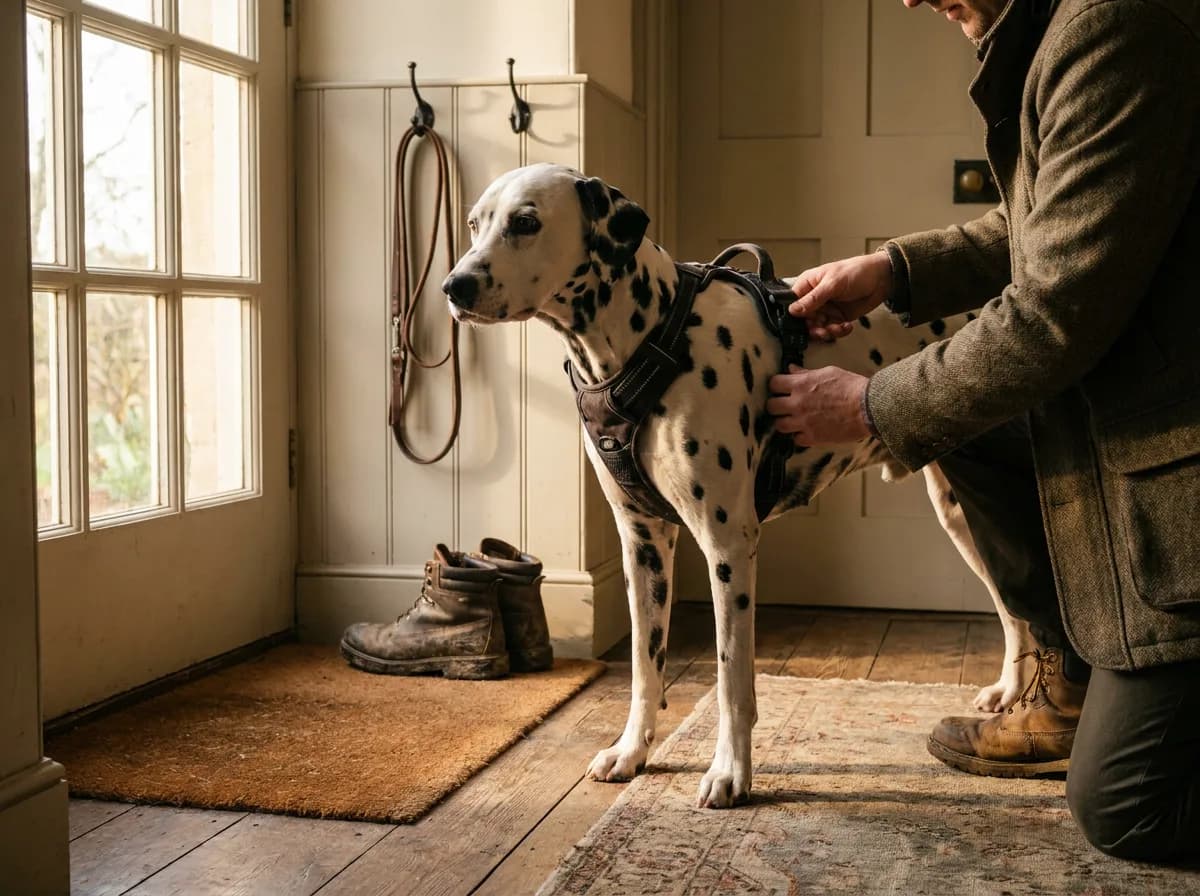
Our vet-recommended stance follows common veterinary and trainer guidance, which points to a plain, well-fitted flat collar for carrying an ID tag, and a harness for dogs that pull. A martingale is the usual addition for narrow-headed breeds that slip a flat collar.
The reasoning is about the neck. A flat collar does the one job a harness cannot, which is carrying the tag where a stranger can see it. A harness spreads leash pressure across the chest and shoulders instead of the throat, which is why it is the standard advice for dogs that pull. This is a summary of widely shared guidance rather than a quote from any single clinic or trainer, so ask your vet if your dog has a neck, throat or breathing problem. For general owner education, the VCA Animal Hospitals owner library is a good place to read further.
Trainers generally add that no collar replaces loose-leash practice. Equipment sets the dog up to succeed, but teaching a calm walk is what changes the behavior.
- Keep a flat collar on your dog for the ID tag, and use a harness on walks if your dog pulls. Add a martingale for narrow-headed breeds that slip a flat collar. Choose a breakaway buckle when the dog wears the collar around crates or rough play.
What about dogs that pull?
Collars for dogs that pull are rarely the answer, because a collar concentrates every tug on the neck. A front-clip or back-clip harness is the better tool, and our guide to the best harness for dogs that pull walks through the options. WebVet compares the two directly in dog harness vs collar.
A collar plus harness setup is common and sensible: the harness takes the leash, and the collar keeps the ID tag on the dog. For general training and equipment guidance, the AKC training library is a useful starting point.
How to choose a dog collar
Six factors decide most collar purchases, and each gets its own short section below:
- Material and how it holds up
- Comfort and skin sensitivity
- Brand and construction
- Age and size
- Measuring and fit
- Identification
Which material is best for a dog collar?
For most dogs, nylon is the best material for a dog collar: it is light, strong, inexpensive and easy to wash. Biothane suits wet and muddy dogs, and leather suits owners who want a dressier look that lasts. Whatever the material, pair it with a harness for pullers rather than asking a collar to take leash pressure. Here is how the materials compare:
- Nylon: lightweight, affordable, machine washable in many listings and available in many colors. It can fray at the edges over time.
- Leather: softens with wear and looks classic. Look for full-grain leather if durability matters, keep it dry, and expect to wipe it rather than wash it.
- Biothane: coated webbing that wipes clean and sheds mud and water, but it feels firmer than soft nylon.
- Neoprene or padded lining: cushions the neck and helps dogs that rub, but it holds water and takes longer to dry.
Material cannot fix pulling, so a harness is still the answer there. The right material is the one that matches your dog's coat, its water habits and how much cleaning you are willing to do.
Which collar is most comfortable for dogs?
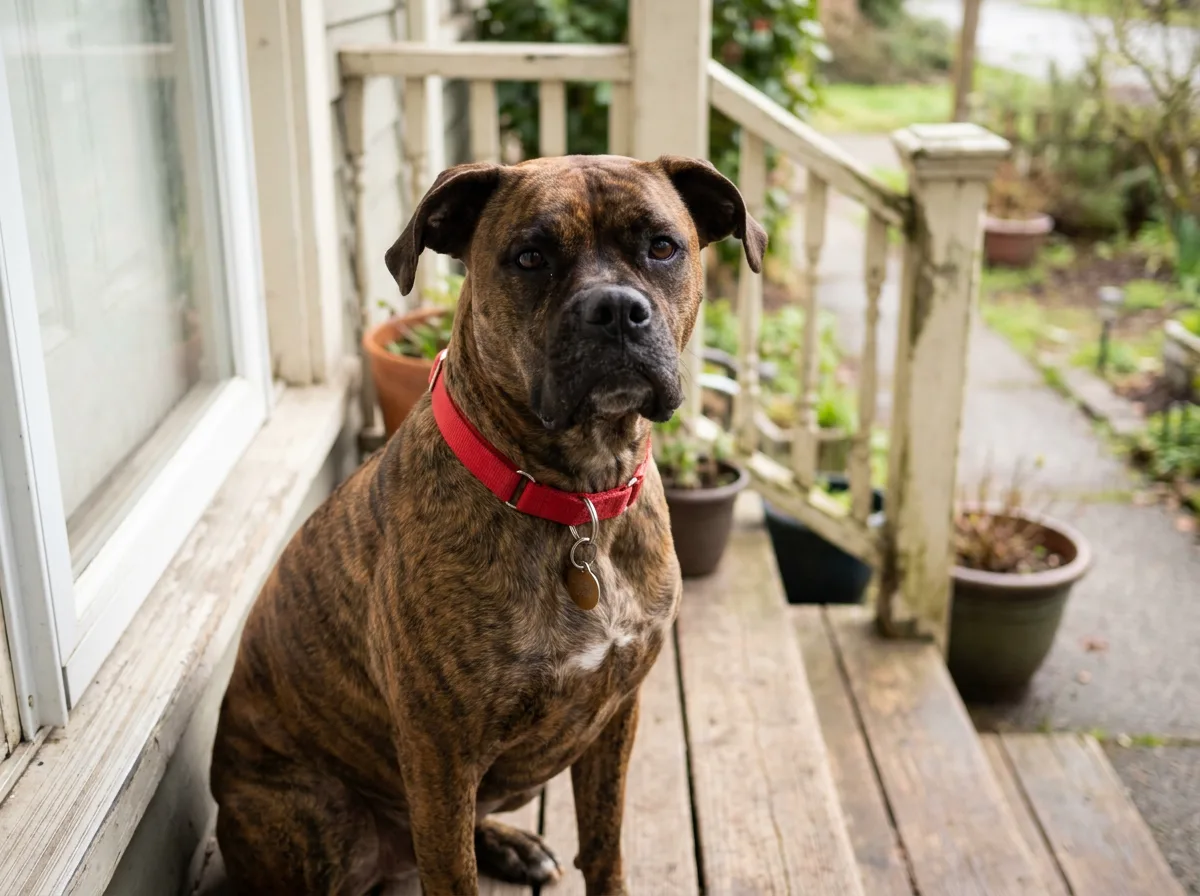
The most comfortable dog collar is a lightweight flat collar with smooth edges, sized with room for two fingers underneath. Comfort comes from fit and weight first, and material second. A collar that is too tight rubs and one that is too loose spins and chafes, so measure before you buy.
For sensitive skin, padded dog collars with a soft lining are one option, and a wipe-clean biothane strap is another because dirt does not sit against the skin. None of the six picks here is padded, so if your dog's neck is irritated, talk to your vet before shopping. Dogs that wear a collar all day also benefit from a quick daily check of the neck, especially under the buckle and D-ring, where hair mats and skin can redden.
What are some famous dog collar brands?
Familiar names in everyday dog collars include PetSafe, which makes the KeepSafe breakaway collar on this list, Blueberry Pet, which sells collars in nylon and leather across several sizes, and Frisco, which is Chewy's house brand. CollarDirect and PawFurEver round out the slate with martingale and biothane options.
Brand matters less than construction. Before you buy any collar, check for:
- Even stitching with no loose threads along the edges
- A hardware finish that is smooth and does not flake
- A buckle that closes with a clear click, or a breakaway buckle if snag risk is high
- A size chart that lists the neck range, so you can match it to a tape measure
- A D-ring that is welded or solid rather than a split ring that can pry open
Puppy, small dog and large dog collars
Size and age change the best collar more than any other factor, so match the collar to the dog's current neck, not its adult size:
- Puppies: The best dog collar for puppies is lightweight and adjustable, because they outgrow collars quickly. Check the fit every week or two. The Small Blueberry Pet nylon collar lists a 12 to 16 inch neck range and a 5/8 inch width, which suits many small puppies. If a puppy has to wear a collar in the crate, a breakaway collar is the safer option, and many owners simply remove it there.
- Small dogs: Collars for small dogs should be light and narrow so they do not weigh on the neck. For most small dogs the best choice is a flat collar for the ID tag, with a harness on walks, because a tug on a toy-breed neck is a lot of pressure for a small area.
- Large dogs: Big dog collars should have a wider strap, because width spreads pressure over more of the neck. The PetSafe breakaway collar lists a 1 inch width in the Medium (14 to 20 inch neck). Check the size chart on any listing for larger neck ranges before you order.
Whatever the size, confirm fit with a tape measure and the two-finger check below.
How to measure and fit a dog collar
Measure around the middle of the neck where a flat collar sits, and add room for two fingers. Martingale and slip-style collars sit higher, just behind the ears. Our guide to how tight a dog collar should be covers the full fit rules, and the short version is below. WebVet's guide on how to choose the right dog collar covers sizing by breed in more detail.
- Use a soft tape measure, or a piece of string you then lay against a ruler
- Compare the number with the neck range on the listing, not with the dog's weight
- Fasten the collar, then slide two fingers flat between the strap and the neck
- Re-check after a growth spurt, a haircut or any weight change
- Slide two fingers flat under the collar when it is fastened. If they slide in with light resistance, the fit is right. If two fingers will not fit, the collar is too tight, and if you can fit more than two, it is too loose and can slip over the head. Re-check as puppies grow or coats change.
The two-finger rule suits flat collars. A martingale is fitted slightly differently, because the loop should stop before it closes fully on the neck, so follow the maker's sizing guide for that style.
ID tags and name plates on a collar
A collar is where a dog's ID lives, so the tag has to be readable and secure. A tag that jingles on a D-ring is the classic option, and there are several other ways to carry a name:
- Slide-on tag: it threads onto the webbing, sits flat and does not jingle. Check that the slot matches the strap width.
- Name plate: a small plate fixed to the strap keeps a name and phone number legible without hanging anything.
- Embroidered or printed text: the text sits in the fabric, so it cannot fall off, but it is harder to update when a phone number changes.
- D-ring tag: the traditional round tag hangs from the D-ring, which is easy to replace but can catch on things.
Collars can come off, so pair the tag with a microchip registered with current contact details. Veterinary and animal welfare groups commonly recommend carrying both. For general ID and care basics, the ASPCA dog care guidance is a sensible reference. The ID tag is the job a flat collar does best, which is why the framework below starts there.
Which collar fits your dog? A quick decision framework
Different collars solve different problems, so match the dog before the product. Each line below maps a common situation to one of the six collar types on this page:
- Everyday collar for ID: the Blueberry Pet flat nylon collar, with the tag on the D-ring
- Head shape, narrow-headed breeds: the CollarDirect martingale, sized so the loop stops before it closes
- Mud and water: the PawFurEver biothane collar, which wipes clean after a swim
- Night walks: the Frisco reflective collar, or the CollarDirect martingale if reflective stitching and a limited slip fit are both needed
- Crate or play snag risk: the PetSafe breakaway collar, kept for ID wear; for walks use both D-rings or, better, a harness
- Pulling: a harness for pullers, with a flat collar worn alongside for the ID tag
- A dressier everyday look: the Blueberry Pet leather collar, kept out of the water
The short version: a flat collar for ID, a harness for pullers, a martingale for narrow-headed breeds, and a breakaway collar for ID wear when snag risk is high.
Whatever you pick, confirm the fit with the two-finger rule before the first walk.
Collars we left out and why
This page picks collars meant for everyday wear, ID and safety. Anything built to correct a dog through pressure, pain or shock is left off the slate, and smart collars get a short pointer instead of a pick.
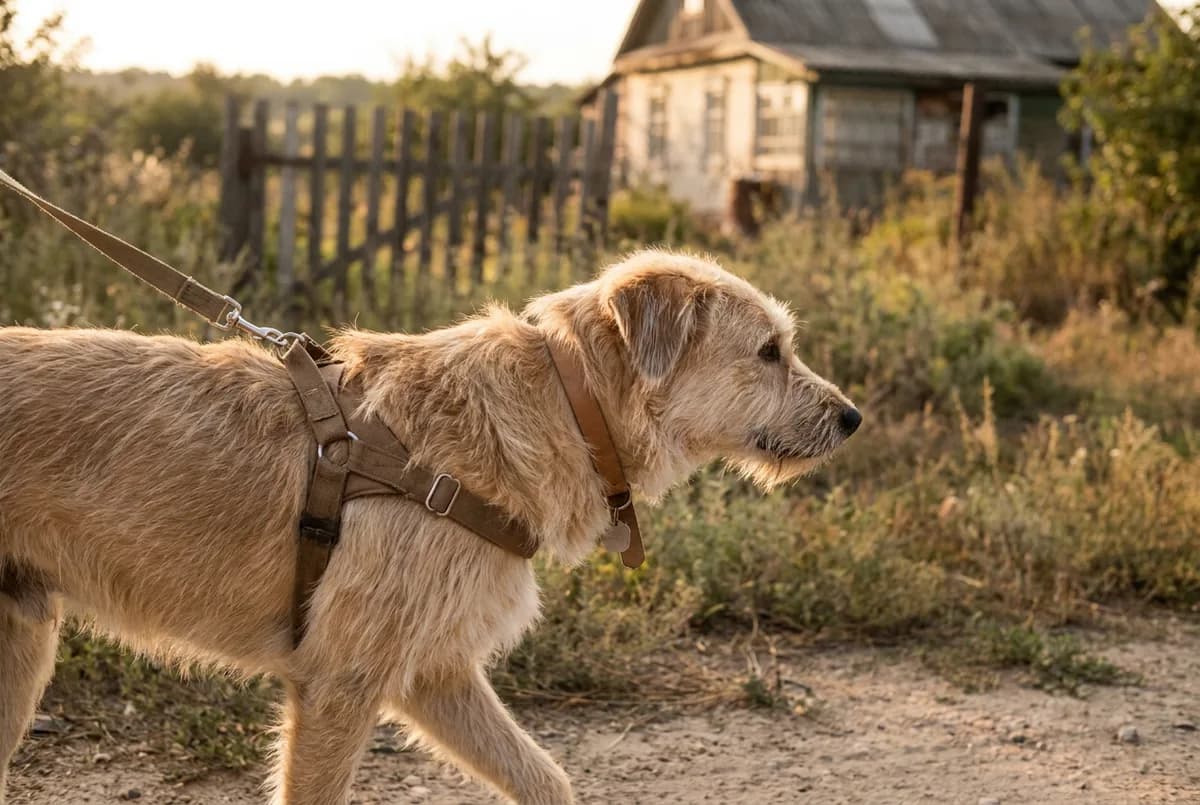
- Choke chains, prong collars and shock or e-collars work through discomfort or pain, and many veterinary and behavior professionals advise against them. A flat collar for ID plus a harness for pullers covers everyday needs without that risk.
Choke, prong, shock and e-collars
A choke chain tightens around the neck with no stopping point. A pinch collar, also called a prong collar, presses metal points against the neck. Shock and e-collar products, like every other correction collar, work through discomfort or pain. That is why we skip them:
- A chain can tighten past a safe point, and a pinch collar presses into the skin
- Pain-based tools can raise fear and stress, and they do not teach what to do instead
- A harness and loose-leash practice solve pulling without those risks
None of these tools earns a pick on this page. Our article on why choke collars can cause real damage lays out the risks. If your dog needs behavior help, ask your vet for a referral to a certified trainer or a veterinary behaviorist.
Smart, GPS and flea collars
Smart, GPS and flea collars solve different problems from a plain everyday collar, so they are not picks here, but these Petful guides cover them:
- AirTag dog collar options for holders that attach a tracker to a collar
- Tracker versus GPS collar for what each can and cannot tell you about location
- Our Halo Collar 5 review for a GPS-based smart-fence collar
- The best flea collar for dogs for parasite control
Dog collar questions
These quick questions did not need a full section of their own.
Most dogs can wear a collar all day if it fits with two fingers of room and the skin underneath stays healthy. Check the neck daily for redness or matted hair, and consider a breakaway buckle if the dog sleeps in a crate or plays roughly with other dogs. Some owners remove the collar overnight or in the crate, which is reasonable when the dog is supervised and a microchip backs up the ID.
There is no fixed schedule. You should replace a dog collar when it frays, when the stitching loosens, when the buckle no longer clicks shut, or when a cracked D-ring, rust or bent hardware shows up. Leather that has dried out and split should go too. Growing puppies need a new size every few months, and an adult dog's collar deserves a quick hardware check about once a month.
Check the material and the care label first. A machine washable nylon collar can go in a mesh bag on a gentle cycle and then air dry. Biothane and similar coated straps wipe clean with a damp cloth and mild soap. Leather needs a damp cloth, air drying and an occasional conditioner, and it should never be soaked. Rinse soap off every collar so it does not irritate the skin.
Yes, for most dogs wearing a collar and harness together works well. The harness takes the leash and spreads pressure across the chest, while the flat collar carries the ID. Keep the ID tag on the collar, since that is what a stranger sees first, and check that neither piece is tight enough to restrict movement or rubs the same spot, which matters most on small dogs.

Coreen Saito is a pet writer and longtime shelter volunteer with more than a decade in animal rescue. She covers cat behavior, breed care, and the small, ordinary science of sharing a life with companion animals, with a particular focus on honest takes about the products and decisions that actually matter. At home in Arizona, she's outranked by Mac (a dog with the loudest opinion in the house), Rebel (a cat who governs by quiet authority), and Meri (an orange tabby who runs the late shift and the laundry basket). She writes about all three, plus the rescues that keep coming through her life, at LifeWithMinty.com.
Sign up for expert-backed reviews and safety alerts all in one place.