Pet Health Tracker vs GPS Dog Collar: What Each Can and Cannot Tell You
GPS dog collars focus on location and escape alerts, while health trackers focus on longitudinal body and behavior trends. Some devices overlap, and some dogs may benefit from both.

Location and health monitoring solve different owner decisions.
Petful is reader supported. As an affiliate of platforms like Amazon and Chewy, we may earn a commission when you buy through links on this page. There is no extra cost to you.
The pet health tracker vs gps dog collar decision starts with a simple question: are you trying to find your dog, understand a change in daily health patterns, or do both? A GPS collar is primarily a location and escape-recovery tool. A health tracker is primarily a longitudinal activity, rest, sleep, and body-trend tool.
Marketing labels such as “smart collar” can blur those categories. Some devices combine location and wellness features, while others do only one job. Compare the exact data, update conditions, fit, battery, connectivity, subscription, and alert behavior before assuming two collars are interchangeable.

Sign up for expert-backed reviews and safety alerts all in one place.
Pet health tracker versus GPS dog collar at a glance
| Decision factor | Pet health tracker | GPS dog collar |
|---|---|---|
| Main question | Has my dog's activity, sleep, rest, or measured health pattern changed? | Where is my dog, and did my dog leave a defined area? |
| Typical data | Longitudinal activity, rest, sleep, behavior, or body-signal trends, depending on the device | Location history, current position estimates, safe-zone or escape alerts, depending on coverage |
| Connectivity | Often syncs through Wi-Fi or Bluetooth; some systems use a home base | Usually uses satellite positioning plus cellular or another network to report location |
| Best fit | Baseline monitoring, senior-dog observation, behavior changes, or veterinary trend sharing | Escape-prone dogs, off-leash activities, travel, large properties, or active recovery after a loss |
| Important limit | A trend does not diagnose a disease or explain why a value changed | A location point does not describe health, and recovery still depends on signal, network, battery, and response |
The right category is the one that changes a real decision. If the feared outcome is losing a dog near roads or unfamiliar terrain, location is central. If the concern is a gradual change in sleep, activity, or resting physiology, repeated health observations are central.
The pet health tracker vs gps dog collar comparison is therefore a comparison of location versus longitudinal health data, not simply two versions of a smart dog collar. Define categories by decisions rather than marketing labels, and show where hybrid devices overlap without implying all smart collars are equivalent. A hybrid can offer features from both columns, but each feature still has its own sensor, connection, update conditions, and practical limit.
Compare the current product specification, not the category name printed on a box or sales page.

A collar-mounted sensor and app for activity, rest, sleep, respiratory rate, heart-rate trends, itch behaviors, and more.
- Builds a personalized baseline over time
- Tracks trends between veterinary visits
- Generates a month-long shareable report
Health monitoring for dogs and cats
Petful may earn a commission when you click through to Maven Pet, at no extra cost to you.
What a GPS dog collar can tell you
A GPS device receives location information from navigation satellites. A collar usually needs a second connection, commonly cellular service, to send that location to the owner's app. That is why many true GPS trackers have a subscription.
Is AirTag or GPS better for dogs? A true pet GPS is built to report a dog's location through its stated network and may provide escape alerts or live modes. An AirTag is a personal item finder that depends on nearby compatible devices and has different update behavior. For an escape-prone dog, choose the purpose-built location system whose coverage, attachment, battery, and item finder limitations you understand; identification and secure containment still matter.
Useful location functions may include:
- A current or recently reported location
- Safe-zone or virtual-fence alerts
- Location history
- Live or high-frequency tracking modes
- Sharing access with another caregiver
- Device battery and connectivity status
The precise refresh interval, map accuracy, service area, and behavior when coverage disappears vary by product. “GPS” does not guarantee an instant, exact point in every environment.
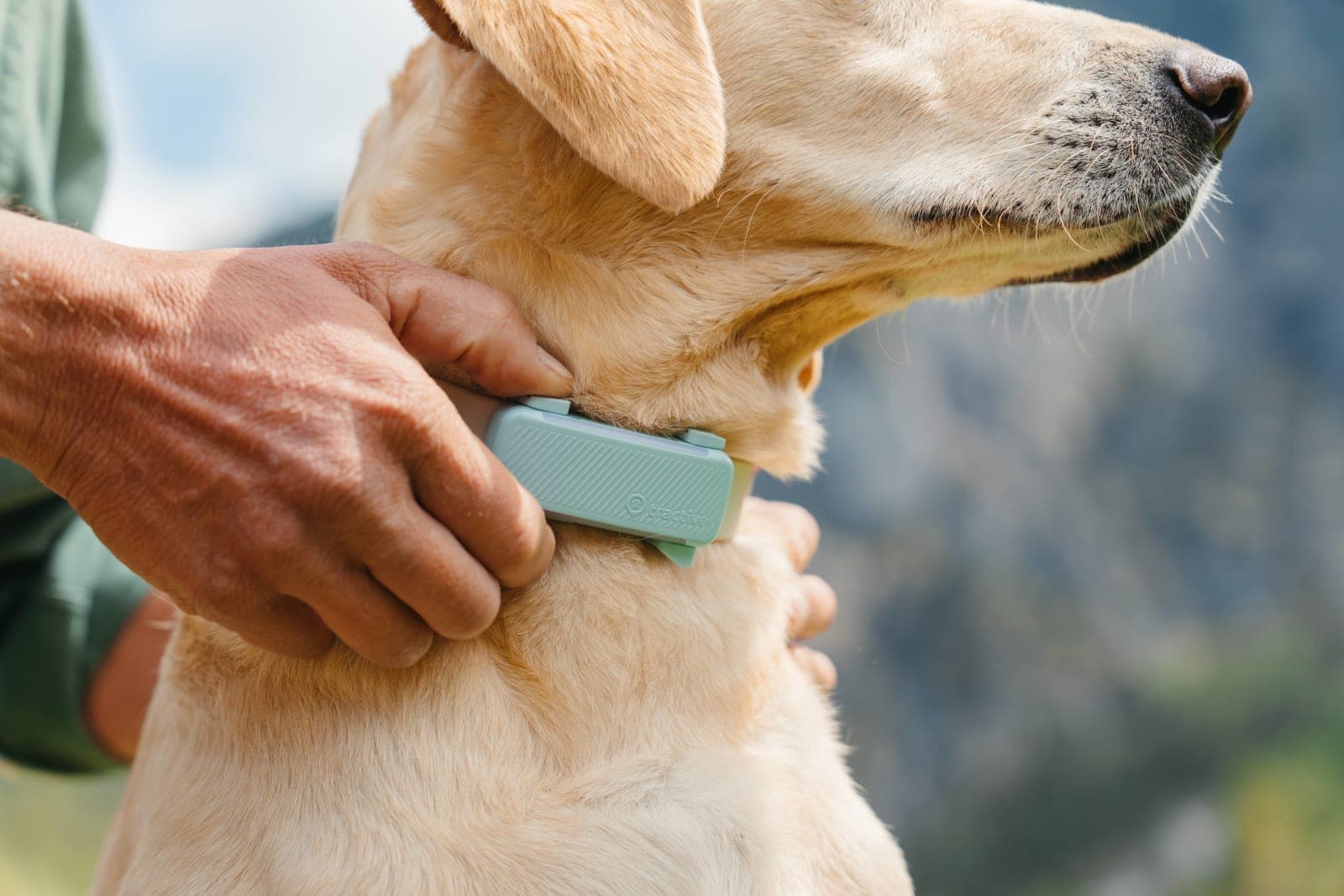
Escape risk makes location the priority
Choose location first when your dog slips gates, bolts after wildlife, hikes off leash, travels frequently, lives on a large property, or is newly adopted and not yet reliable in the home. A microchip remains important permanent identification, but it cannot show a live location.
Is a GPS dog collar worth it? It can be when escape risk is realistic and location updates would materially improve the search plan. The benefit is smaller when network coverage is poor, the collar is not charged, the device cannot remain securely attached, or caregivers will not respond to alerts. Compare the service in the places your dog actually goes, then keep gates, tags, microchip details, and recall training current.
A GPS alert is not a physical fence. The owner still needs secure doors, gates, identification, training, and an emergency search plan. Network gaps, low battery, a detached collar, or delayed notification can affect recovery.
Item finders are not the same as pet GPS
Bluetooth item finders can help locate belongings through nearby phones in their network. They do not usually provide the same independent location reporting, purpose-built escape alerts, rugged attachment, or pet-focused support as a true GPS dog tracker.
Apple describes AirTag as a way to keep track of personal items, not as a dedicated pet safety service. An item finder may show a useful last-seen location in a populated area, but owners should not assume it behaves like live pet GPS in a rural area, during rapid movement, or when no compatible phone is nearby.
Why a purpose-built tracker is different
The direct answer to “Is AirTag or GPS better for dogs?” is that a true pet GPS system is designed for the location job. An AirTag is an item finder with different assumptions and limitations.
Why does Apple say not to put AirTag on dogs? The more precise point is that Apple presents AirTag as a personal item finder, not dedicated pet GPS. That positioning does not make every use physically impossible, but it means owners should not treat the product as a purpose-built recovery service with pet-specific escape alerts, independent live tracking, or guaranteed coverage. A dog-safety plan needs a tool designed and supported for the actual location job.
A collar-mounted sensor and app for activity, rest, sleep, respiratory rate, heart-rate trends, itch behaviors, and more.
- Builds a personalized baseline over time
- Tracks trends between veterinary visits
- Generates a month-long shareable report
Health monitoring for dogs and cats
Petful may earn a commission when you click through to Maven Pet, at no extra cost to you.
What a pet health tracker can tell you
A dog health tracker looks for patterns over time. Depending on the device, it may measure movement, rest, sleep, scratching, heart-rate trends, respiratory trends, or another sensor-derived signal. Smart dog collar health features vary by model, so verify the exact measure, validation evidence, sampling conditions, and data-export method rather than assuming every wearable produces the same veterinary context.
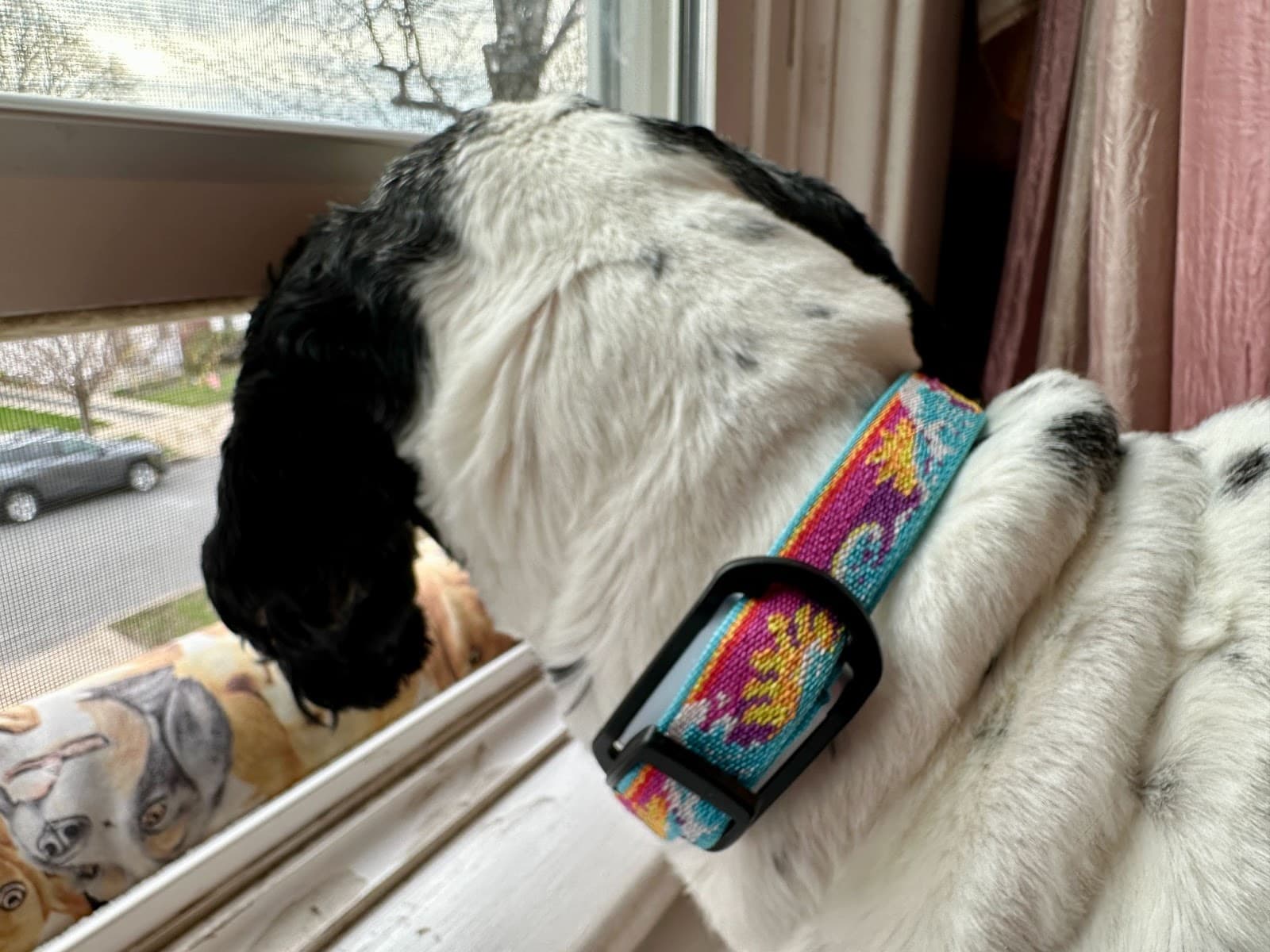
That history can help answer questions such as:
- Is daily activity declining gradually?
- Did sleep or rest change after a medication or routine change?
- Is a measured resting trend different from the dog's usual baseline?
- Does an intermittent concern occur on particular days or under particular conditions?
- Is there a concise pattern worth sharing with a veterinarian?
Veterinary wearables are most useful when the data is repeatable, the measurement conditions are understood, and the owner connects the trend with observable behavior. A 2025 review of companion-animal wearables noted their growing role in monitoring while also emphasizing validation, interpretation, and clinical-integration challenges.
Longitudinal data is the advantage
An owner may not notice a 10 percent change in activity from one day to the next. A tracker can make that pattern easier to see across weeks. The value is not that every change means disease; it is that a sustained change can prompt a better observation or a more informed veterinary conversation.
Context still matters. Vacation, weather, boarding, a new family schedule, a sore paw, medication, and a change in walking route can all alter activity or sleep without the device identifying the cause.
Health monitoring priority for senior or changing dogs
What is the best health tracker for dogs? The best fit is the one that measures the pattern tied to a real health monitoring priority, can be worn consistently, and produces a clear summary for veterinary trend sharing. For a senior dog, that may mean activity, rest, sleep, or a veterinarian-directed home measure. No tracker can diagnose the cause of a change, so choose transparent measurements and a practical response plan over the longest feature list.
A collar-mounted sensor and app for activity, rest, sleep, respiratory rate, heart-rate trends, itch behaviors, and more.
- Builds a personalized baseline over time
- Tracks trends between veterinary visits
- Generates a month-long shareable report
Health monitoring for dogs and cats
Petful may earn a commission when you click through to Maven Pet, at no extra cost to you.
What neither category can tell you
- Neither a health trend nor a map point can determine a disease, prescribe treatment, guarantee recovery, or replace a veterinary examination. Act on visible distress even when an app has not produced an alert.
A health tracker can report a change without explaining it. A GPS collar can report location without proving that a dog is safe, uninjured, or reachable. Both depend on correct fit, adequate battery, a secure attachment, working sensors, and the connection required to deliver data.
False reassurance is the larger risk than an imperfect chart. If a dog is struggling to breathe, collapses, has abnormal gum color, or shows another emergency sign, seek veterinary care. Do not wait for a device to confirm what you can see.
Fit, battery, connectivity, and subscriptions
The most capable device has little value if the dog cannot wear it comfortably or the owner cannot keep it charged and connected.

Before buying, check:
- The dog's neck size and the device's total weight
- Whether the unit sits safely with an everyday collar, harness, or second wearable
- Water and dust protection for the dog's real activities
- Typical battery life under the mode you expect to use
- Charging time and whether alerts report a low battery
- Cellular coverage, Wi-Fi, Bluetooth, or base-station requirements
- Subscription cost, contract terms, and what stops working without service
- Data export, caregiver sharing, and account privacy controls
Many GPS trackers charge for network service because location must be sent from the collar. Some no-subscription products rely on a different radio, a separate receiver, or more limited functionality. Compare the whole system rather than filtering only by the monthly price.
GPS trackers without monthly fees
What is the best GPS tracker for pets without a monthly fee? There is no universal winner because removing recurring network service changes how a location reaches the owner. A device may use a different radio or receiver, require nearby compatible phones, offer a shorter range, or update less often. Compare coverage at home and on trips, battery behavior, attachment, and recovery workflow before deciding that the absence of a fee meets your actual escape-risk need.
No-subscription dog tracker tradeoffs
What is the best dog tracker without a subscription? Start with the job, not the billing label. A smart dog collar no subscription plan or gps dog collar no subscription design may exchange cellular reporting for local radio, crowdsourced location, a separate receiver, or limited features. Those coverage tradeoffs can be acceptable on a contained property and inadequate during travel. Confirm what still works beyond phone or Wi-Fi range, how often location updates, and who will respond.
When a monthly fee is absent
Is there a pet GPS tracker without a monthly fee? Yes, but a monthly fee absent from the purchase does not mean the product has the same connection or live-reporting behavior as a cellular pet GPS service. Some systems work through limited connectivity, another user's nearby device, or owner-carried hardware. Read the current service terms and test the device where the dog actually goes before relying on it for recovery.
How to choose for your dog
- 1Choose GPS first for escape and recovery risk.
- 2Choose health monitoring first for longitudinal activity sleep or measured body trends.
- 3Consider both only when the dog has both location risk and a meaningful monitoring need, and can wear both safely.
A collar-mounted sensor and app for activity, rest, sleep, respiratory rate, heart-rate trends, itch behaviors, and more.
- Builds a personalized baseline over time
- Tracks trends between veterinary visits
- Generates a month-long shareable report
Health monitoring for dogs and cats
Petful may earn a commission when you click through to Maven Pet, at no extra cost to you.
Use a need-first decision:
- Name the consequence you most need to prevent or understand.
- Identify the data required to change your response.
- Check how the device gets and sends that data.
- Test whether fit, charging, and subscription behavior are sustainable.
- Decide what you will do when an alert appears.
A GPS dog collar is worth it when location information materially improves the search plan for a dog with realistic escape or off-leash risk. It is less valuable when coverage is poor, the collar is rarely charged, or secure containment already makes loss risk very low.
A health tracker may be more useful for a senior dog, a dog under a veterinarian's monitoring plan, or an owner trying to document a gradual activity or sleep change. Choose one with transparent measures, clear limitations, an understandable baseline, and a practical way to share a summary. That is the health monitoring priority question; the feature is useful only when veterinary trend sharing or a defined home response turns the signal into an action.
Match alerts to an action
Run the same test for every feature: name the alert, decide who receives it, and write down the action it should trigger. A feature that never changes an owner decision may add complexity without adding useful protection.
When using both devices makes sense
A dog can have two independent needs. An older dog may need longitudinal observation and also wander through an unsecured gate. A working or hiking dog may need location recovery outdoors and recovery or activity trends at home.
This is when wearing both may make sense: the dog has a meaningful escape risk and a separate longitudinal monitoring need, each device changes a different decision, and both can be worn safely. Combined coverage can answer more questions, but it also adds wearability burden, charging, subscriptions, and alerts. If one device creates pressure, trapped moisture, leash interference, or confusion about who responds, the theoretical feature coverage is not worth the practical risk.

- Location and health coverage solve different problems
- Separate systems let the owner choose the strongest tool for each job
- More weight and hardware around the neck
- More charging subscription and alert-management burden
Before combining devices, ask a veterinarian about wearability for a very small dog, a dog with neck pain, a skin condition, or a medical device. Check that units do not strike each other, create pressure points, trap moisture, or interfere with tags and leash attachment.
Two devices also create two alert systems. Decide which caregiver responds, which alert is urgent, and how data will be summarized. More notifications do not automatically produce better decisions.
Review the setup after the first week. Check skin and coat, collar movement, charging routine, signal behavior in the places the dog actually visits, and whether caregivers understand each notification.
Where Maven fits
Maven's current product information states that it does not include GPS. A Maven dog health tracker or Maven Pet smart collar uses Wi-Fi sync and focuses on activity and rest, sleep, resting respiratory rate, heart-rate trends, itch behavior, and dog water-intake patterns. Maven does not provide GPS location, so its current feature set addresses longitudinal health context rather than active escape recovery.
That makes Maven a health-monitoring system, not an escape-recovery tool. An owner who needs live location would need a separate GPS solution. An owner focused on longitudinal health patterns should still confirm current fit, supported measures, service terms, and how the data will be used with a veterinarian.
Keep the product review separate
Use current first-party Maven facts and route product details to the existing review, because plan terms, supported measures, and service conditions can change. For the product itself, including setup and current limitations, use the established Maven Pet Smart Collar review rather than treating this category comparison as a second review. This page owns the category decision; the review owns product-evaluation intent.
Frequently asked questions
Does a pet health tracker show your dog's location? Not necessarily. A health tracker can focus on activity, sleep, rest, or body trends without including GPS location data or health trend data tied to a map. Check the exact product for an explicit GPS receiver, a way to transmit location, update conditions, and escape alerts. Maven's current system does not include GPS. A map icon or the phrase smart collar does not prove live tracking, so compare location versus longitudinal health data feature by feature.
Can a dog wear a GPS collar and a health tracker together? Sometimes, if both fit safely without pressure, collision, trapped moisture, or interference with tags and leash attachment. Consider the dog's size, neck health, combined device fit, total weight, charging routine, and subscription burden. Check the skin and coat after use, and ask a veterinarian about two wearables for a very small dog, a dog with neck pain, or a dog with a skin or medical condition.
Which tracker is better for a senior dog? A health tracker may be more useful when the goal is establishing a senior dog baseline and monitoring changes in activity, sleep, rest, or veterinarian-directed trends. Choose a measure that supports veterinary trend sharing and a defined response. Add GPS when wandering or escape risk is also meaningful. Neither category diagnoses disease, so changes in breathing, mobility, appetite, pain, or behavior still need direct observation and veterinary advice.
Which tracker is better for an escape-prone or off-leash dog? A true GPS pet tracker is usually the priority because it is designed to report location and may provide live location updates or escape alerts. Confirm network coverage, battery life, attachment, and update behavior in the places the dog actually travels. Secure containment, current identification, microchip registration, recall training, and a search plan remain essential because a location device cannot prevent escape or guarantee recovery.
What health data can a smart collar share with a veterinarian? Depending on the device, a concise summary may include activity and sleep trends, rest, scratching, resting respiratory trend, heart-rate trends, or another validated measure. Include the date range, measurement conditions, symptoms, medication or routine changes, missing data, and the device's limitations. Lead with the clinical question and the change from baseline, then keep the raw export available if the veterinary team wants more detail.
Do pet trackers replace veterinary care? No. A tracker may flag a trend, provide context, or help find a lost dog, but it cannot diagnose the cause, prescribe treatment, complete a veterinary examination, or rule out an emergency. These wellness signal limits matter because a map point cannot prove safety and a health chart can be wrong or delayed. Visible symptoms, breathing difficulty, collapse, severe pain, or rapid worsening take priority over any app status and require veterinary advice or urgent care.

Coreen Saito is a pet writer and longtime shelter volunteer with more than a decade in animal rescue. She covers cat behavior, breed care, and the small, ordinary science of sharing a life with companion animals, with a particular focus on honest takes about the products and decisions that actually matter. At home in Arizona, she's outranked by Mac (a dog with the loudest opinion in the house), Rebel (a cat who governs by quiet authority), and Meri (an orange tabby who runs the late shift and the laundry basket). She writes about all three, plus the rescues that keep coming through her life, at LifeWithMinty.com.
Sign up for expert-backed reviews and safety alerts all in one place.



A Final Word (Disclaimer)
At Petful, our review integrity is paramount; we never exchange special treatment in our reviews for monetary or material rewards.
Nonetheless, when our readers click through to online merchants (including Chewy or Amazon), we receive a referral commission. This supports the running of our free blog, and we appreciate your backing.