Why Shouldn't I Pick Up a Stray Cat?
Should you pick up a stray cat? Learn safer ways to help, check for an owner, arrange rescue or veterinary care, and respond promptly to bites or scratches.

Petful is reader supported. As an affiliate of platforms like Amazon and Chewy, we may earn a commission when you buy through links on this page. There is no extra cost to you.
This pet health content was written by a veterinarian, Dr. Debora Lichtenberg, VMD. It was last reviewed July 25, 2018.
If you have questions or concerns, call your vet, who is best equipped to ensure the health and well-being of your pet. This article is for informational purposes only and is not a substitute for professional medical advice, diagnosis or treatment. See additional information.

Sign up for expert-backed reviews and safety alerts all in one place.
Help an Unfamiliar Cat Safely
Someone once asked me if it’s OK to pick up a stray cat. My answer: do not scoop up an unfamiliar cat on impulse. A frightened cat can bite or scratch, and an outdoor cat may already have a home. You can still help by observing, checking for an owner and arranging safe veterinary or rescue assistance.
Even a cat who rubs against your legs may panic when lifted. Let the cat choose whether to approach; do not chase, corner or grab them. If the cat appears injured or in immediate danger, call a veterinarian, local animal control or a rescue group for a handling plan.
There are safe ways to proceed if you are concerned about the welfare of a cat you see outside. But never run over and try to pick up a stray cat.
- 1Do not grab an unfamiliar cat, even if they seem friendly.
- 2Check for an owner before assuming the cat is homeless.
- 3Call ahead for veterinary, shelter or rescue help and safe transport advice.
- 4Keep an unfamiliar cat separate from resident pets.
- 5Wash bites or scratches immediately and obtain medical advice when needed.
Why Shouldn't I Pick Up a Stray Cat?

Cats Can Hurt People Badly
Is it safe to touch a stray cat? There is no guarantee. Street cats may be friendly, but petting an unfamiliar cat still carries a risk of a bite or scratch. Let the cat approach, avoid restraint and stop if they move away. If you already touched a cat, wash your hands; seek medical advice for an injury or concerning exposure.
Expert veterinarians, animal health technicians and animal inspectors still suffer a bad cat bite or scratch on occasion, even when all precautions have been taken.
My clients get hurt by their own cats when the cat feels trapped or scared, such as when they are forced into a cat carrier.

Choose a secure, well-ventilated carrier large enough for the cat to stand, turn and lie comfortably. Check the door and fasteners before use. A familiar carrier you already own or one loaned by a rescue may be all you need; a travel carrier is an option when replacing unsuitable equipment.
Petful may earn a commission when you click through to Chewy, at no extra cost to you.
Friendly Contact Is Different From Restraint
The risky moment is often the change from a relaxed encounter to restraint. Petting is not permission to lift. The cat may suddenly struggle when your hands close around their body, a door shuts or another animal appears. A good intention does not make an unfamiliar cat predictable.
Keep children and dogs away while you assess the situation. Do not reach under a parked car, into a hiding place or through the bars of a trap. If the cat retreats, give them space. Trying harder to make contact can turn an encounter that was manageable into an injury.
Unfamiliar Cats Have Unknown Health Histories
You could be exposed to zoonotic diseases (diseases spread from animals to humans), or you could expose your cats at home to feline diseases when you pick up a stray cat or handle any cat with an unknown background.
That does not mean every outdoor cat is sick or dangerous. It means appearance cannot answer all the important questions. According to the CDC’s cat guidance, healthy-looking cats can carry germs. Wash your hands after contact and before handling your own pets or their food.
Fleas, skin disease and infections are reasons to ask for a veterinary assessment, not reasons to reject a cat that needs help. Avoid handling unknown animals with bare hands simply to inspect their skin, mouth or paws. A clinic can decide which precautions, tests and treatments fit the individual cat.
Is That Really a Stray Cat?
Only the cat knows for sure, and they are often incommunicative on that subject!
A neighbor could become very upset if you bring their cat into your home and they are outside looking for the cat, posting signs, etc.
A cat outdoors may be an owned pet, a lost pet, an abandoned cat or a community cat cared for by local people. A collar is useful evidence, but a missing collar proves little. Cats can lose collars, and some wear none. A cat accepting a meal also does not prove they are homeless.

Provide fresh water in a clean, stable bowl where appropriate. Use separate equipment from your own pets and wash your hands afterward. A simple bowl is enough; a collapsible travel bowl can be useful when helping away from home. Remove leftover food and keep the area clean rather than attracting other animals.
Petful may earn a commission when you click through to Chewy, at no extra cost to you.
| Situation | Useful next step | Avoid |
|---|---|---|
| Friendly cat repeatedly visiting, without obvious injury | Check neighbors and lost-pet notices; call ahead to arrange a microchip scan | Assuming friendliness, hunger or a missing collar establishes ownership |
| Fearful cat who avoids contact | Ask a local rescue or TNR group about assessment and humane trapping | Chasing, grabbing or trying to force the cat into a carrier |
| Injured, very weak or distressed cat | Call a veterinarian or animal-control service with the location and visible signs | Waiting to complete an owner search before requesting urgent help |
| Cat already safely contained | Confirm the receiving clinic or shelter can help; keep the cat secure and separate from pets | Opening the carrier outdoors or arriving without checking intake arrangements |
Stray and Feral Are Not the Same Thing
Can a feral cat become a house pet? Alley Cat Allies explains that most adult feral cats are unlikely to enjoy close human contact or indoor life; trying to grab or confine one to make them tame is not a suitable first step. Young kittens can sometimes be socialized, while a frightened stray may already know people. Ask an experienced rescue to assess age, socialization and the mother’s whereabouts before deciding on capture, fostering or TNR.
A stray cat has generally been socialized to people but is now away from a home or caregiver. A feral cat is not comfortable with close human contact. These are descriptions of socialization and experience, not diagnoses. A frightened lost pet may hide or hiss, so one brief encounter cannot reliably settle the question.
Alley Cat Allies uses community cat as a broader term for outdoor cats, which can include both stray and feral cats. Its Trap-Neuter-Return programs use humane box traps so cats can receive veterinary sterilization and vaccination before appropriate return. A local group can help assess the situation. An eartip, a cleanly removed tip of one ear, commonly identifies a cat who has been sterilized through a community-cat program. There may be a caregiver nearby. It is a clue to investigate, not proof that the cat currently needs no help. Learn more about what a feral cat is before making a plan based on a label.
Check for an Owner Without Grabbing the Cat
Ask nearby residents whether they recognize the cat. Take a clear photograph from a comfortable distance and note where and when you saw them. Check local lost-pet listings and contact the relevant shelter or animal-control office to ask how to submit a found-cat report. Describe distinctive markings and whether the cat is safely contained.
A veterinarian or shelter can scan for a microchip. The American Veterinary Medical Association explains that a microchip can identify a cat whose collar is missing. It is not a GPS device, and its usefulness depends on a readable chip and a registration record that leads to the owner. A negative scan alone does not prove the cat has no home.
Ask the organization helping you how to document an owner search and follow the local found-animal process. Do not promise the cat to a new adopter while ownership is unresolved. If someone claims the cat, use the shelter or rescue’s guidance for checking identifying information and arranging a safe reunion.
Don't Pick Up a Stray Cat: Do This Instead
If you find a stray cat in your backyard or one keeps hanging around your house, start with the owner search and a call for advice. Taking in a stray cat can be safe with suitable containment, separate temporary housing and veterinary guidance. Bringing a cat inside without that plan can put the cat, you and resident pets at risk. If you cannot keep the cat, say so when contacting the shelter or rescue. It is okay to take in a stray cat when the owner search, safe containment and veterinary plan are in place; it is a bad idea to skip those steps and immediately mix the cat with your pets.
First, what's your motive?
Many people see a cat outside and assume they have no home when they may actually live a quarter-mile away and have only recently decided to “visit” you. Here are some things to think about:
Does this cat look sick, and are you concerned about their welfare? Do they need urgent medical care? Can they enter a carrier without a struggle? Are you able to provide temporary separation and pay for an examination, or do you need a rescue partner? Answering those questions helps you make a workable plan.
1. Observe and Describe the Problem
Watch from a distance. A cat resting under a shrub needs a different response from one unable to stand or having obvious trouble breathing. Call promptly for severe injury, collapse, uncontrolled bleeding or visible breathing difficulty. Describe what you can actually see rather than trying to diagnose an illness over the phone.
Give the exact location, whether the cat is moving freely and whether you can safely remain nearby. If the cat leaves, note the direction rather than pursuing them into traffic or onto someone else’s property. When practical, send the receiving organization a photograph and a contact number.
2. Call the Right Local Service
- 1Give the exact location and describe visible injury or distress.
- 2Say whether the cat is loose, in a carrier or in a humane trap.
- 3Ask about intake, transport help, likely fees and where the cat will go afterward.
Who picks up stray cats depends on where you live and the cat’s condition. Start with the local animal-control service or municipal shelter for their found-cat procedure. A rescue or TNR group may offer advice, trap loans or volunteers. A veterinarian can assess medical urgency and tell you whether the clinic can receive an unfamiliar cat.

A conventional litter tray and plain litter keep the setup simple and let you notice urine and stool. Follow veterinary advice if the cat has wounds or a procedure that changes the litter choice. Paper litter is one option; ask about an age-appropriate choice for kittens. You do not need a self-cleaning machine for temporary care.
Petful may earn a commission when you click through to Chewy, at no extra cost to you.
Do not assume that every shelter collects healthy free-roaming cats, or that a rescue has a space immediately. Ask specifically: Can you accept this cat? Is an appointment required? Can anyone assist with humane trapping or transport? What should I do while waiting? If that service cannot help, ask for the appropriate local contact.
I appreciate a client or potential adopter who calls and gives me a heads-up about bringing in a stray. Calling ahead lets the clinic prepare and gives you a chance to explain what you can and cannot safely do.
3. Use a Carrier or Experienced Trapping Help
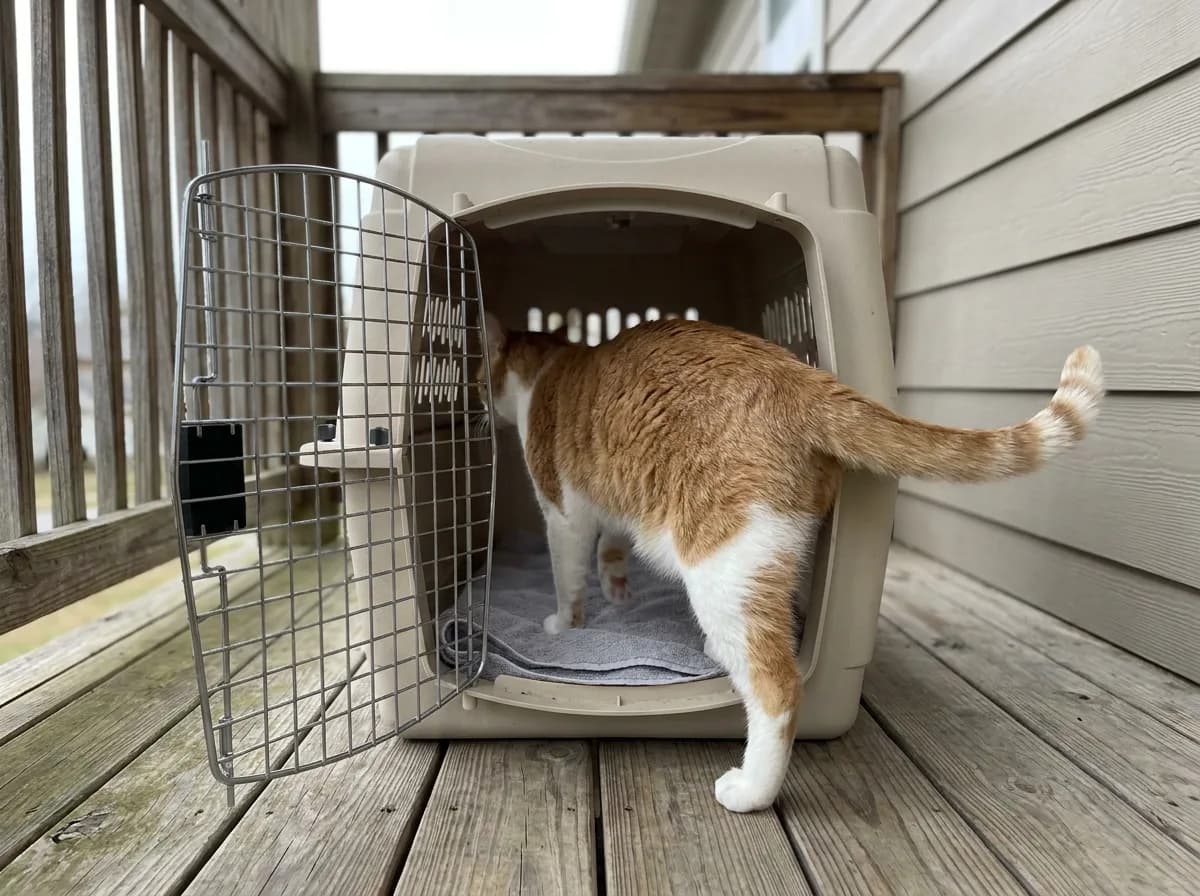
A friendly cat may walk into an open carrier voluntarily. If a professional suggests this approach, place the carrier in a quiet location and allow the cat to enter without crowding them. Stop if the cat becomes alarmed. Do not improvise a wrestling match because the appointment is approaching.
Choose a secure, well-ventilated carrier large enough for the cat to stand, turn and lie comfortably. Check the door and fasteners before use. A familiar carrier you already own or one loaned by a rescue may be all you need; a travel carrier is an option when replacing unsuitable equipment.
When a Humane Trap Is Needed
A carrier and a humane trap serve different purposes. A fearful cat who cannot be guided into a carrier may need experienced trapping assistance. Ask the rescue to teach you its procedure, monitoring and transport requirements. Never leave a set trap unattended or transfer a trapped cat with bare hands. Tell the clinic in advance that the cat is arriving in a trap.
Keep the closed carrier stable during transport and follow its securing instructions. Do not travel with a loose cat in the car or open the door beside the road. On arrival, tell staff you have an unfamiliar cat and let them direct unloading. If the cat escapes containment, avoid grabbing; ask the staff for help.
4. Offer Practical Help While You Wait
If a healthy-looking cat has been visiting for a while, you can observe at a distance while checking for a caregiver. Ask the rescue about a feeding plan if one is needed. Leaving food should not replace the owner search, and it should not become a way to lure the cat into being grabbed.
Provide fresh water in a clean, stable bowl where appropriate. Use separate equipment from your own pets and wash your hands afterward. A simple bowl is enough; a collapsible travel bowl can be useful when helping away from home. Remove leftover food and keep the area clean rather than attracting other animals.
Kittens need a different assessment from an adult visitor. A mother cat may be nearby even when you cannot see her. Contact a rescue for advice before separating a healthy litter; request urgent help for injured, cold or clearly distressed kittens. Do not assume every unattended kitten is abandoned or start feeding an unsuitable milk formula.
What Happens When You Take a Stray Cat to the Vet
The first steps depend on the cat’s condition and the clinic’s intake arrangements. An emergency patient needs stabilization; a comfortable found cat may start with identification and an examination. Read more about bringing a stray cat to a veterinarian when planning that visit.
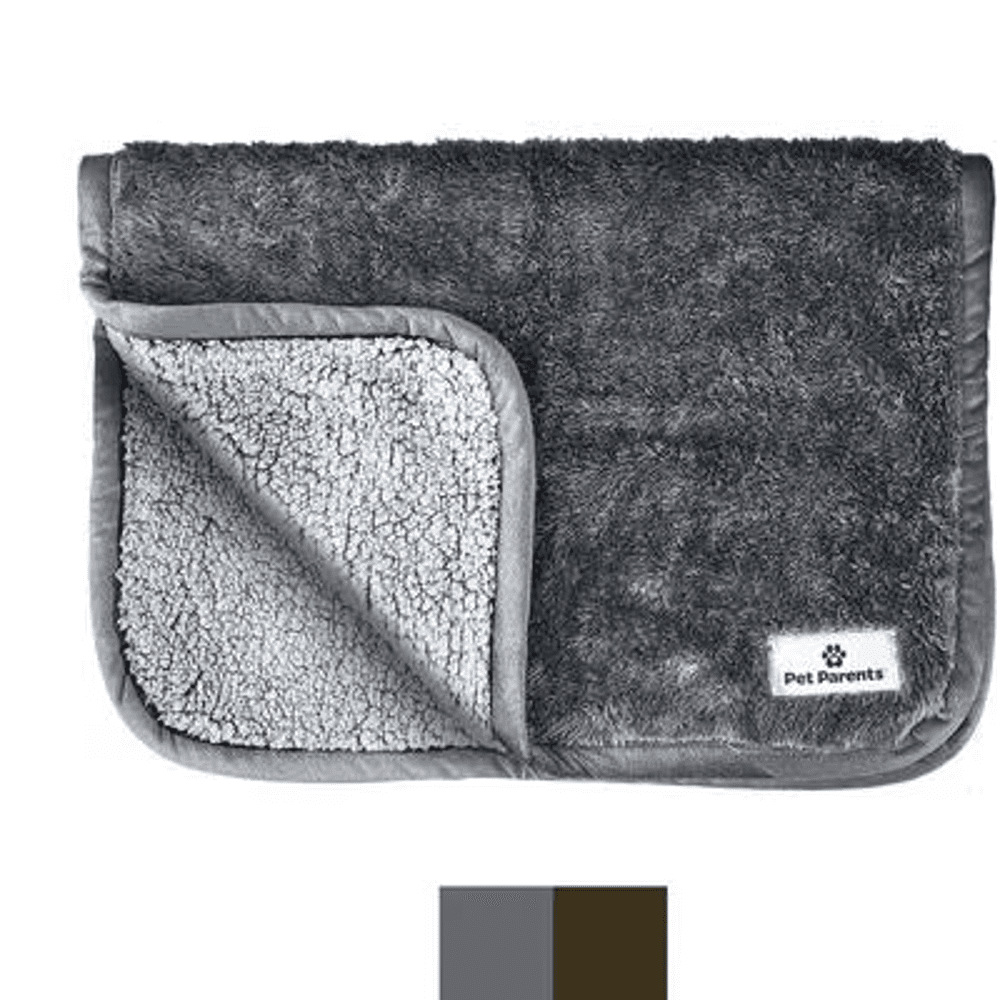
Use washable bedding and change it when soiled. An existing towel can work; a washable waterproof pet blanket can protect the resting surface. Keep it separate from your pets’ bedding until the veterinarian advises otherwise, and wash hands after cleaning the room.
Petful may earn a commission when you click through to Chewy, at no extra cost to you.
When someone brings me a “stray,” checking for a microchip is on my list. Our clinic offered this scan for free. Ask your clinic or shelter about its policy: a chip scan does not necessarily include an examination, tests, medication or boarding.
- I also discuss how to check whether the cat already has a home, using shelters, found-pet reports and local notices.
- Keep the cat separate from your own cats until the veterinarian has assessed the risks and advised on the next steps.
- The veterinarian examines the cat, estimates age when possible and checks for injuries, poor body condition, fleas, ear problems and other signs of illness. Tell the staff what the cat has eaten, whether you have seen urine or stool and any medications already given. Do not use a product from your own pet’s cabinet before asking.
- FeLV/FIV testing, a fecal parasite check and other tests may be recommended according to the cat’s history, examination and future housing. Some results may need follow-up or repeat testing. Ask what a result means before treating it as a complete guarantee about the cat’s health.
- The vet will advise on vaccination, parasite control and sterilization after assessing the individual cat. Products and doses depend on factors such as species, age, weight and health. An adult cat product is not automatically safe for a small kitten; a dog flea treatment can be dangerous for a cat.
Agree on Costs and the Next Destination
Ask who is authorizing and paying for care before non-emergency treatment begins. Be clear if you found the cat but cannot adopt, foster or fund ongoing treatment. Request an estimate, ask what is urgent and explain any financial limit. The practice may know local assistance options, but do not assume a clinic or rescue can absorb every cost.
Confirm where the cat will go afterward. A clinic appointment is not the same as surrendering the cat to a shelter, and an examination does not reserve a boarding space. Having the receiving rescue, temporary carer or owner-reunion plan agreed in advance avoids a crisis at pickup.
What to Feed a Found Cat
If a vet or rescue advises feeding a found cat, offer a complete and balanced commercial cat food appropriate to the cat’s life stage. Cornell’s feeding guide explains how to check the nutritional-adequacy statement: adult maintenance for adults, or a food suitable for growth for kittens eating solid food. Wet or dry food can work; there is no single best brand for every stray. Coordinate with any existing caregiver and ask for individual advice if the cat is ill, very thin or not eating.
Dog food is not a complete diet for cats, as VCA’s feeding guidance explains. A few accidental bites are different from using it as the cat’s regular food. Avoid cow’s milk; many cats cannot tolerate it. A kitten too young for solid food needs prompt rescue or veterinary guidance on appropriate kitten milk replacer and safe feeding. Do not improvise a bottle-feeding plan or force-feed a cold, weak or distressed kitten.
Taking in a stray kitten also brings risks from unknown health status, bites, parasites and inappropriate foods or medicines. Ask for age-specific veterinary guidance and keep the kitten apart from resident pets.
Keep Temporary Care Separate From Your Pets
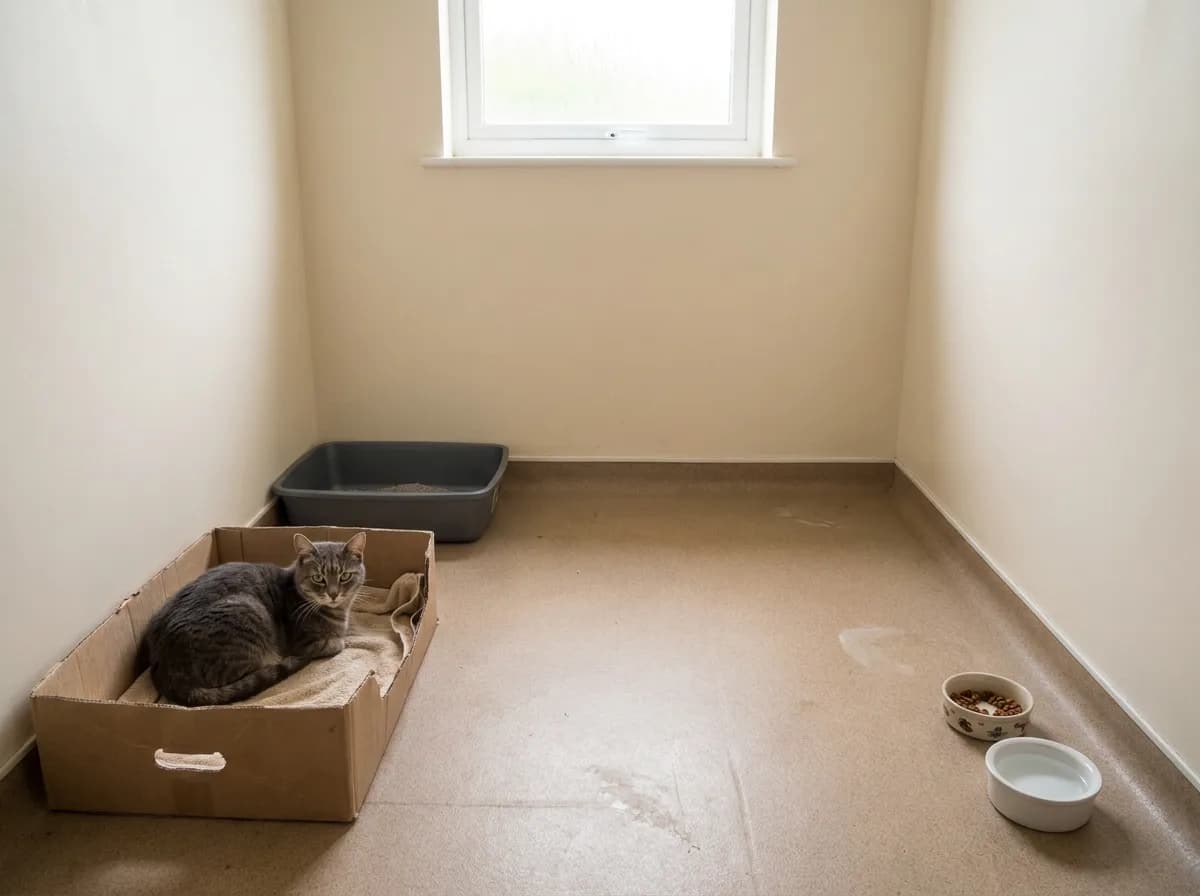
If the vet or rescue recommends temporary indoor care and you can provide it safely, prepare a quiet, secure room before arrival. Keep doors and windows closed and give the cat a place to hide. Use separate food and water dishes and a litter tray. Do not introduce the newcomer to resident cats or dogs simply because the first examination went well.
A conventional litter tray and plain litter keep the setup simple and let you notice urine and stool. Follow veterinary advice if the cat has wounds or a procedure that changes the litter choice. Paper litter is one option; ask about an age-appropriate choice for kittens. You do not need a self-cleaning machine for temporary care.
Settling Into Temporary Care
Give the cat time to settle. Sit quietly if they tolerate your presence, but let them choose whether to approach. Hiding after transport does not prove the cat is feral, and seeking affection does not mean they are ready to meet your pets. Keep a simple note of appetite, water intake and litter-box use to share with the veterinarian.
Use washable bedding and change it when soiled. An existing towel can work; a washable waterproof pet blanket can protect the resting surface. Keep it separate from your pets’ bedding until the veterinarian advises otherwise, and wash hands after cleaning the room.
Temporary care is a commitment, but it does not require deciding immediately to adopt. Continue the owner search and work with the rescue on the next step. If you cannot safely isolate the cat, say so at the start so an alternative can be planned.
If a Stray Cat Bites or Scratches You
If a stray cat scratched you and drew blood, wash the wound immediately and ask a clinician about care, especially if the injury is deep, becomes inflamed or your immune system is weakened. Petting a stray cat is not risk-free; handling should stop before fear escalates, and after an injury the priority is medical advice rather than another attempt to pet or catch the cat. Street cats are not automatically dangerous, but uncertain health and fear make cautious handling important.
Wash the wound immediately with soap and running water. Contact a medical professional promptly about a bite, a serious scratch or possible infection. Mention that the cat’s vaccination history is unknown and say when your last tetanus vaccination was. Seek urgent care for a serious wound, spreading redness, swelling, increasing pain or feeling unwell.

The CDC advises medical assessment when a cat’s rabies vaccination is unknown or other risk factors apply. Local public-health officials or animal control can advise on the cat’s identification and any required observation or testing. Do not release a safely confined biting cat before asking, and do not risk another bite trying to catch one.
The response is not automatically the same in every place or every case. Under CDC veterinary guidance, a healthy biting cat may be observed in coordination with public-health authorities; suspected rabies requires a different response. Let the medical and public-health professionals decide what is needed.
If fever or tender, swollen lymph nodes develop after a scratch, tell your clinician about the cat contact. Cat scratch disease is one possible concern. For more on why a small puncture deserves attention, see our explanation of serious cat bites.
Final Thoughts on Why You Shouldn't Pick Up a Stray Cat
Cats rule their own universe. They rule their world and tolerate us only when we fit into their feline sphere.
So is it OK to pick up a stray cat? Never on impulse. You can be compassionate without taking an avoidable bite or removing someone’s pet. Observe, check for an owner, call for advice and choose a safe way to get the right help. Safe handling starts with checking for an owner, calling ahead about clinic costs and intake, and arranging a microchip scan. After a bite, wash the wound and seek medical advice.
Patience and a plan give the cat a better chance than a sudden grab. If you cannot keep the cat, useful help can still mean making calls, supplying a photograph, arranging a chip scan or connecting an experienced rescuer with the location.
Frequently Asked Questions (FAQ)
If you find a stray cat and can't keep it, call ahead to local animal control, a municipal shelter or a local rescue. Explain whether the cat is injured, friendly, safely contained or still outdoors, and ask about intake, foster help or humane trapping. You can assist with a found-pet report and owner search without agreeing to permanent adoption.
Check the shelter’s intake policy first. Some require an appointment, serve a defined area or handle healthy community cats through other programs. Ask about a microchip scan, a found-pet report and what to do if the shelter cannot accept the cat. Do not leave a cat outside a closed facility.
The cat may find food or shelter there, have a caregiver nearby or be lost. Staying nearby does not prove abandonment or establish that the cat is yours. Check for an owner and ask a local rescue for advice if the cat appears distressed or needs ongoing help.

VMD
Dr. Debora Lichtenberg, VMD, is a small animal and exotics veterinarian who has been practicing medicine for over 30 years. A graduate of the University of Pennsylvania School of Veterinary Medicine, Dr. Lichtenberg also trained at the Philadelphia Zoo. She now practices in the New York City area and lives in the West Village with her husband and her rescued pets, Cocoa and OG. Dr. Lichtenberg has been writing for Petful for many years, and she has been recognized with Certificates of Excellence from both the Dog Writers Association of America and the Cat Writers Association of America.
Sign up for expert-backed reviews and safety alerts all in one place.