Why Is My Dog Eating Poop? 6 Reasons and How to Stop It
Why is my dog eating poop? Learn the 6 most common causes, from diet gaps to parasites, plus vet-reviewed strategies to stop it.

Veterinarian

Veterinarian · BVMS, MRCVS

This pet health content "Why is My Dog Eating Poop" was reviewed for accuracy by a veterinarian, Dr. Pippa Elliott, BVMS, MRCVS. It was last reviewed and updated on March 12, 2026
If you are asking why is my dog eating poop, you are not alone. Coprophagia is one of the most common behaviors dog owners report, and it is almost always manageable once you identify the cause.
Some triggers are medical. Others are behavioral. A few are completely instinctual.
- 1Coprophagia is common and usually has an identifiable cause, either medical or behavioral.
- 2Diet and parasites are the most common medical reasons. Both are treatable with veterinary guidance.
- 3Stress, boredom, and learned behavior are the most common behavioral causes.
- 4Management strategies like prompt cleanup, dietary adjustments, and enrichment are effective for most dogs.
- 5Puppies frequently outgrow the behavior. Adult dogs with persistent coprophagia should see a vet.

Sign up for expert-backed reviews and safety alerts all in one place.
What Is Coprophagia in Dogs?
Coprophagia is the technical term for eating feces, whether a dog’s own or that of another animal. It sounds alarming, but it is a recognized behavior that veterinarians and animal behaviorists encounter regularly. According to research by Dr. Benjamin Hart at the University of California, Davis, presented at the American Veterinary Society of Animal Behavior annual conference, roughly one in six dogs engages in the behavior frequently, and around one in four has done it at least once.
It is more common in puppies and young dogs, and many dogs grow out of it on their own. But for others, the behavior persists into adulthood and becomes a genuine management challenge. In most of those cases, there is a specific underlying reason that, once identified, points directly to the solution. A few things worth knowing upfront:
- Coprophagia is rarely dangerous to the dog: though it can expose them to parasites and bacteria, particularly if they are eating the feces of other animals
- It is almost never done out of spite: dogs do not think that way. There is always a reason rooted in instinct, need, or learned behavior
- Punishment alone does not work: shouting at a dog for eating poop without addressing the underlying cause almost never resolves it and can increase stress, which may make the behavior worse
- Most cases are manageable: once you identify the cause, the path to stopping it is usually straightforward
 Sponsored
Want a vet's help with your dog's anxiety or behavior?
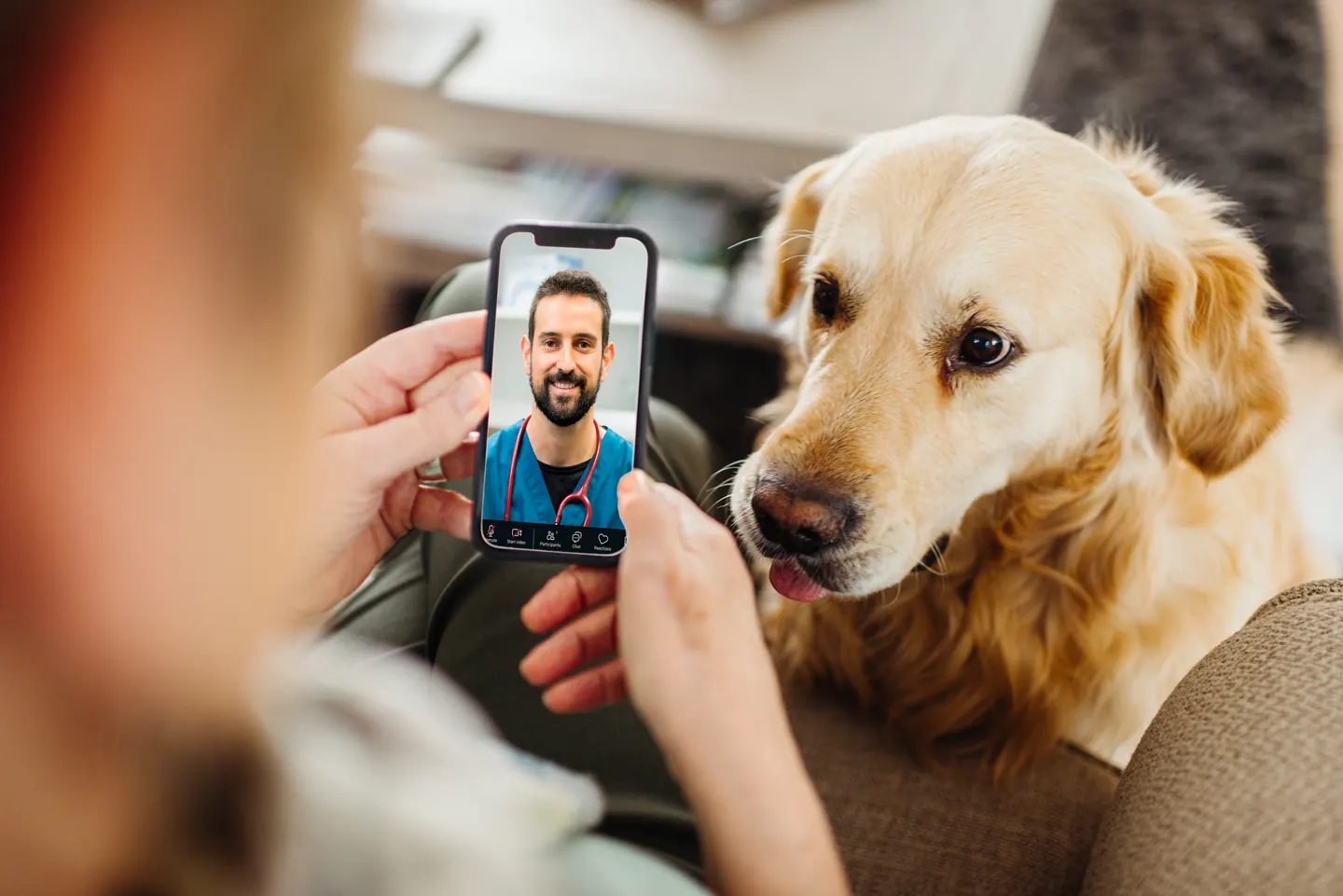
Talk to a licensed vet at Dutch over video, often the same day. They can recommend treatment and prescribe it when it's appropriate.
Use code Pets60
Plans start at $12/month · covers up to 5 pets
- Licensed vets in most states
- Rx for 150+ conditions
- 4.7 on Trustpilot
6 Reasons Your Dog Is Eating Poop
1. Poor Diet or Nutritional Deficiency
One of the most common medical explanations for coprophagia is that a dog is not getting adequate nutrition from their food. When a dog's diet is missing key nutrients, their body registers the deficiency and, driven by instinct, the dog may seek to compensate by consuming feces, which can contain partially digested nutrients.
This is particularly relevant if the behavior started suddenly or if you have recently changed your dog's food. Dogs at different life stages have significantly different nutritional requirements. A puppy fed adult food, a senior dog still on a standard adult formula, or any dog on a low-quality diet may be at higher risk. Signs this may be the cause: The behavior started after a food change Your dog seems hungry shortly after eating
- Your dog is eating the poop of other animals rather than their own, which may indicate they are seeking specific nutrients
- Your dog's coat, energy levels, or weight seem off
How to stop it: Talk to your vet about whether your dog’s current food is meeting their nutritional needs for their age, size, and health status. Switching to a higher-quality food or adding a veterinarian-recommended supplement is often enough to resolve the behavior. Our guide to choosing the best dog food walks through what to look for when evaluating your dog's diet
Two specific medical conditions are worth knowing about here. Exocrine pancreatic insufficiency (EPI)is a condition in which the pancreas does not produce enough digestive enzymes, meaning a dog cannot properly absorb the nutrients in their food even when eating a good diet. Dogs with EPI are often ravenously hungry despite eating normal or large portions, and coprophagia is a recognized symptom. Similarly, a broader digestive enzyme deficiency can impair nutrient absorption without a full EPI diagnosis. If your dog seems perpetually hungry, is losing weight despite eating well, or has chronic loose stools alongside poop eating, ask your vet specifically about EPI and enzyme absorption. Both conditions are diagnosable with bloodwork and highly manageable once identified.
2. Intestinal Parasites
Parasites such as tapeworms, hookworms, and whipworms leach nutrients directly from your dog's gut. A dog with a heavy parasite burden may eat feces instinctively in an attempt to replace what is being taken from him.
This is worth considering if your dog has not been recently dewormed, has spent time in kennels or dog parks, or has been around other dogs of unknown health status. Signs this may be the cause:
- Weight loss despite a normal or increased appetite.
- Visible worm segments or rice-like pieces near the tail or in feces.
- Scooting, diarrhea, or a pot-bellied appearance in puppies.
How to stop it: Ask your vet for a fecal exam. If parasites are confirmed, treatment is straightforward. It is important not to leave parasites untreated. See our overview of heartworm prevention and symptoms in dogs for more on why keeping up with parasite prevention matters.
In this video, Dr. Stephen Brammeier of Kingsbury Animal Hospital offers some additional explanations and solutions:
3. Stress, Boredom, or Anxiety
Dogs are social animals that need daily interaction, exercise, and mental stimulation. When those needs are not being met, they find outlets. Some dogs bark. Some chew furniture. Some develop the habit of eating poop.
This is particularly common in dogs that spend long stretches of time alone, dogs kept primarily outdoors without adequate company, and dogs whose exercise and enrichment needs are not being met. It can also develop in dogs experiencing anxiety related to changes in the household, like a new baby, a move, or the loss of a companion animal.
There is also a fear-related variant worth knowing about. Dogs that have been harshly punished for indoor accidents sometimes learn to eat their feces to hide the evidence and avoid punishment. If this pattern is driving the behavior, increasing punishment will make it worse, not better. The solution is to remove the fear association entirely by responding to accidents calmly, cleaning up without drama, and reinforcing outdoor elimination positively. Signs this may be the cause:
- The behavior is worse on days with less exercise or activity
- Your dog spends significant time alone each day
- The behavior started around a major household change
- Your dog also shows other signs of boredom or anxiety, like excessive barking, destructive chewing, or restlessness
How to stop it: Increase your dog's daily exercise, structured play, and mental enrichment. Even small changes, like an extra walk, a puzzle feeder at mealtimes, or a training session, can reduce the underlying anxiety that drives the behavior. Our guide to calming an energetic dog covers practical strategies for dogs who need more structured outlets for their energy.
4. Learned or Attention-Seeking Behavior
Dogs that have been scolded or strongly reacted to when eating poop sometimes repeat the behavior because of the response it generates. From the dog's perspective, negative attention is still attention.
This is especially common in dogs who are otherwise understimulated and have figured out that certain behaviors produce an immediate reaction from their owner. Signs this may be the cause: Your dog watches you while doing it.
- The behavior is more frequent when you are present than when you are away.
- Your dog has a pattern of performing "naughty" behaviors to get a reaction.
How to stop it: React as calmly and neutrally as possible. Call your dog to you in a cheerful tone, redirect him to a different activity, and reward the alternative behavior. Yelling or chasing tends to reinforce the pattern rather than break it.
 Sponsored
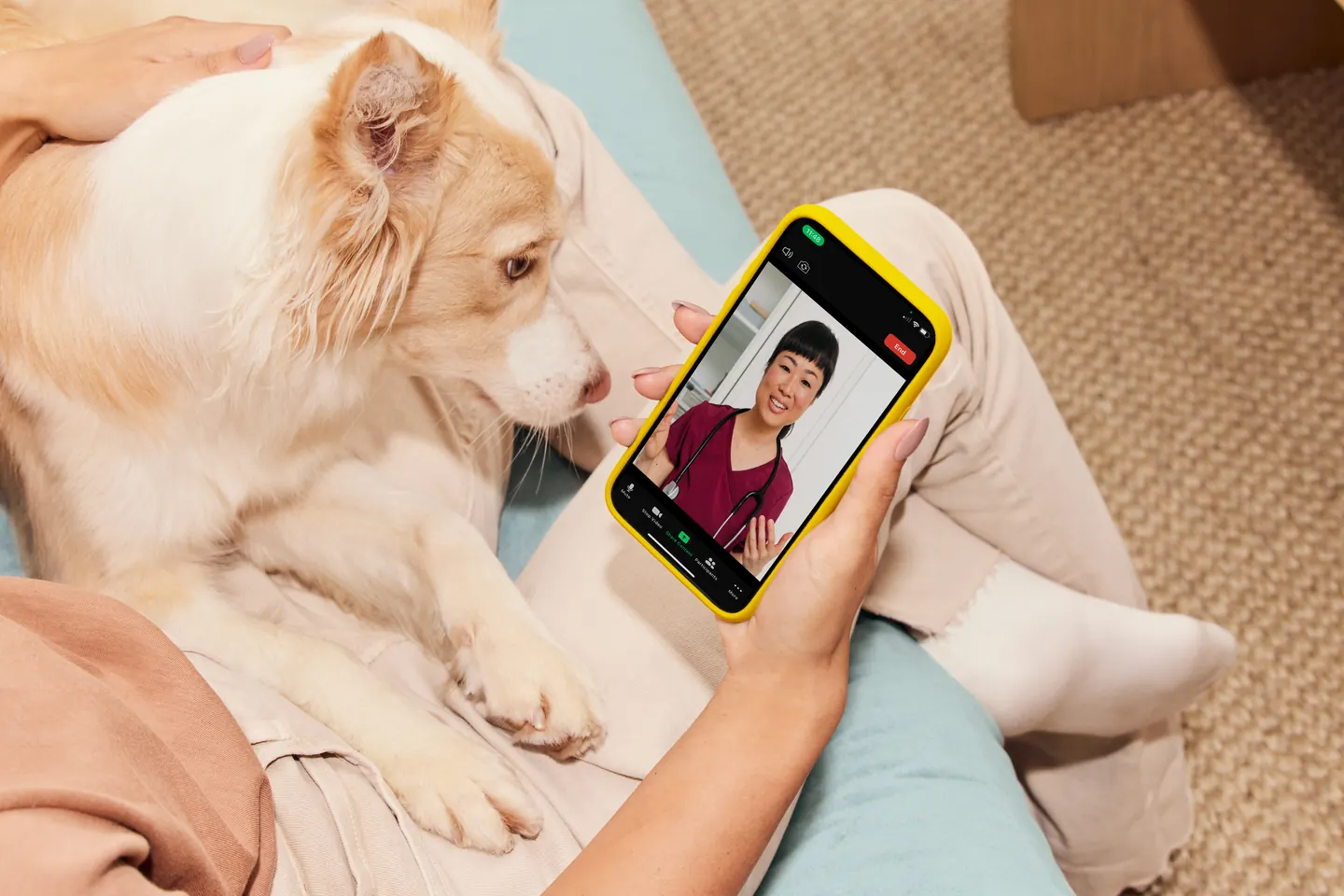
Vet care that's always there
Unlimited video calls and messaging with licensed vets for less than a typical vet visit. One membership covers up to five pets.
Use code Pets60
Plans start at $12/month · covers up to 5 pets
- Licensed vets in most states
- Rx for 150+ conditions
- 4.7 on Trustpilot
5. Mothering Instinct
Mother dogs routinely eat the feces of their newborn puppies. This is entirely normal instinctual behavior.
In the wild, eliminating waste near the den attracts predators. Eating it removes the scent. Your living room is not a wolf den, but the instinct does not know that.
This behavior is largely self-limiting and typically fades as puppies grow older and become more mobile.
How to stop it: Keep the whelping area clean by removing feces promptly and frequently. This reduces the stimulus without requiring you to fight the instinct directly. Punishing a nursing mother for this behavior is counterproductive and stressful for both her and the puppies.
6. Scavenging Opportunity
Some dogs eat poop simply because it is there and accessible. Cat feces in particular is highly attractive. It is protein-rich and has a strong smell that many dogs find appealing. A litter box left in an accessible location is essentially an open invitation.
A yard that is not cleaned frequently provides the same problem. Dogs that are food-motivated or naturally prone to scavenging will take every opportunity. How to stop it:
- Clean the yard daily or as frequently as possible.
- Move the litter box somewhere your dog cannot access it.
- Options include behind a baby gate, inside a room with a cat door, or on an elevated surface.
Supervision and management are more effective for this cause than correction after the fact.
When Should You Call the Vet?
- The behavior started suddenly in an adult dog that has never done it before
- It is accompanied by weight loss, lethargy, diarrhea, or changes in appetite
- You can see worms or unusual material in your dog's stool
- Your dog is eating the feces of unknown animals, which increases parasite and disease exposure risk
- Your dog is on or has recently started a medication that increases appetite, such as corticosteroids like prednisone. These drugs can significantly heighten food-seeking behavior and may trigger coprophagia in dogs that never showed it before
- The behavior is happening very frequently and is not responding to management strategies
- Your dog is a puppy and the behavior is severe or persistent beyond four to five months of age
- A vet visit will typically include a physical exam and a fecal test to rule out parasites and assess digestive health. If a medical cause is identified and treated, coprophagia often resolves without any additional intervention.
Quick Summary: 6 Reasons Dogs Eat Poop
- Poor diet or nutritional gaps: Upgrade food quality. Consult your vet.
- Intestinal parasites: Fecal exam and deworming treatment.
- Stress, boredom, or anxiety: More exercise, enrichment, and consistent routine.
- Learned attention-seeking: Calm redirection. Stop reinforcing with reactions.
- Mothering instinct: Keep whelping area clean. Behavior self-resolves.
- Scavenging opportunity: Remove access to litter boxes. Clean the yard regularly.
The Truth About Coprophagia: It Gets Better
Coprophagia is frustrating, but it is rarely a permanent problem. If you have been wondering why is my dog eating poop, identifying the cause points directly to the fix. That might mean a better diet, a vet visit for parasites, more daily exercise, or simply cleaning up the yard more often.
If the behavior is new, persistent, or paired with any physical symptoms, do not wait it out. A single vet appointment can rule out the medical causes and give you a clear path forward.
The most important thing is to address the root cause rather than just reacting to the behavior. Your dog is not doing this to be gross. He is doing it for a reason, and that reason is solvable.
Frequently Asked Questions (FAQ)
Not always, but it is worth identifying the cause. Occasional poop eating in puppies or nursing mothers is generally normal. Frequent or sudden-onset coprophagia in an adult dog warrants a vet visit to rule out parasites, nutritional deficiencies, or other medical causes.
Yes. Eating feces from an infected animal is one of the primary ways intestinal parasites spread between dogs. Roundworms, hookworms, whipworms, and tapeworms can all be transmitted this way, which is why addressing the behavior promptly matters.
Sudden-onset coprophagia in a dog that has never shown the behavior before is the scenario most likely to have a medical cause. Intestinal parasites, enzyme deficiencies, malabsorption conditions, and changes in diet are common triggers. A vet visit with a fecal exam is the most efficient way to find out what changed and address it.
Often yes. Puppies explore the world with their mouths, and many try eating feces out of curiosity. Most outgrow the behavior naturally between 4 and 9 months with consistent management. If it persists beyond that window or is very frequent, it is worth investigating rather than waiting it out.
Cat feces is especially attractive to dogs because cats have a high-protein diet, and their waste retains dense protein and fat residue. To a dog's nose, it registers more as food than as waste. The simplest fix is blocking access. A baby gate, a cat door on the litter box room, or placing the box on an elevated surface the dog cannot reach are all effective options.
There are products marketed for this purpose, some based on enzymes and others on deterrent ingredients like yucca or monosodium glutamate. The evidence for their effectiveness is limited and inconsistent. They occasionally work for specific dogs but are not a reliable standalone solution. Addressing the root cause tends to produce better and more lasting results than supplements alone
The risk is low for most healthy adults but not zero. Bacteria and parasites in feces can transfer through contact with a dog's mouth. Washing your hands after handling your dog and treating any confirmed parasite infection promptly are the most practical precautions.
A dog eating their own feces carries relatively low immediate risk. The bigger concern is feces from other animals, particularly unknown dogs, wildlife, or cats, which increases exposure to parasites and bacteria like Salmonella or E. coli. If your dog eats feces from an unknown source, watch for vomiting, diarrhea, or lethargy and contact your vet if symptoms appear.
This often points to a digestive issue rather than a behavioral one. Dogs with conditions like EPI or enzyme deficiencies may not be absorbing nutrients from their food properly, making feces more appealing as a nutrient source. A vet visit to rule out digestive disorders is the right first step.
Prompt cleanup is the most reliable strategy regardless of cause. Pineapple and meat tenderizer are commonly suggested dietary deterrents but results are inconsistent. For stress or boredom-related cases, more exercise and mental enrichment address the root cause more effectively than any additive.
This often has a fear component. Dogs punished harshly for indoor accidents may eat the feces to hide the evidence, and more punishment makes it worse. Clean up accidents calmly, reinforce outdoor elimination positively, and the behavior typically fades. In puppies it is often simple curiosity that resolves with consistent house training.
References
- VCA Hospitals. "Dog Behavior Problems: Coprophagia." https://vcahospitals.com/know-your-pet/dog-behavior-problems-coprophagia
- Merck Veterinary Manual — Behavior Problems (Professional) Merck Veterinary Manual. "Behavior Problems of Dogs." https://www.merckvetmanual.com/behavior/behavior-of-dogs/behavior-problems-of-dogs
- Hart, B.L., Hart, L.A., Thigpen, A.P., Tran, A., & Bain, M.J. (2018). "The paradox of canine conspecific coprophagy." Veterinary Medicine and Science, 4(2), 106–114. https://pubmed.ncbi.nlm.nih.gov/29851313/
Veterinarian
Over the past 10 years, the Petful® veterinary team of writers has included a number of experts, such as veterinarians Dr. Pippa Elliott, BVMS, MRCVS; Dr. Debora Lichtenberg, VMD; Dr. Phil Zeltzman, DVM, DACVS, CVJJ; and Dr. Judy Morgan, DVM, CVA, CVCP, CVFT; among others. Providing accurate, trustworthy information is our utmost concern, so all of our pet health content is regularly reviewed, updated and edited by veterinary professionals. Learn more about Petful.
Veterinarian · BVMS, MRCVS
Dr. Pippa Elliott, BVMS, MRCVS, is a veterinarian with nearly 30 years of experience in companion animal practice. Dr. Elliott earned her Bachelor of Veterinary Medicine and Surgery from the University of Glasgow. She was also designated a Member of the Royal College of Veterinary Surgeons. Married with 2 grown-up kids, Dr. Elliott has a naughty Puggle named Poggle, 3 cats and a bearded dragon.
Sign up for expert-backed reviews and safety alerts all in one place.