Staffordshire Bull Terrier Breed Profile: Essential Facts
Explore Staffordshire Bull Terrier size, temperament, family fit, training, exercise, health screening, costs, colors, and responsible adoption or breeder checks.

Petful is reader supported. As an affiliate of platforms like Amazon and Chewy, we may earn a commission when you buy through links on this page. There is no extra cost to you.
The Staffordshire Bull Terrier is a compact, muscular, people-oriented terrier that combines strength with agility. A good match needs daily exercise, reward-based training, careful social management, routine preventive care, and an honest plan for health screening, costs, housing, and other dogs.
This profile focuses on the Staffordshire Bull Terrier recognized as its own breed. It explains temperament without stereotypes, distinguishes the breed from similarly named dogs, and gives a U.S.-oriented checklist for adoption or responsible sourcing.

Sign up for expert-backed reviews and safety alerts all in one place.
Staffordshire Bull Terrier at a Glance
- 1The Staffordshire Bull Terrier is a compact muscular terrier, not the larger American Staffordshire Terrier.
- 2The U.S. standard calls for 14 to 16 inches at the shoulder, with sex-specific weight ranges.
- 3Family fit depends on the individual dog, supervision, training, and management.
- 4Parent-club health screening should be verified by named dog and result, not accepted as a vague “health tested” claim.
The American Kennel Club's official Staffordshire Bull Terrier standard describes a smooth-coated dog of great strength for its size that remains active and agile. The standard gives a height of 14 to 16 inches. It lists 28 to 38 pounds for males and 24 to 34 pounds for females, with height and weight kept in proportion.

Staffordshire Bull Terrier size and Staffordshire Bull Terrier lifespan are planning facts, not guarantees. The breed has a short, close coat, a broad head, pronounced cheek muscles, and a powerful but balanced outline. Staffordshire Bull Terrier life expectancy varies by population and individual health, so use any range for planning rather than as a promise. A prospective guardian should be ready for a decade or more of food, veterinary care, training, exercise, housing, and contingency costs.
Staffords often form close relationships with people and can be enthusiastic, persistent learners. Those traits do not guarantee instant obedience or universal sociability. Early training should build calm handling, recall, loose-leash walking, settling, trade cues, and comfort behind a gate or in a separate room.
Petful may earn a commission when you click through to Chewy, at no extra cost to you.
Quick fit questions
- Can the household provide active daily walks, play, training, and recovery time?
- Can adults supervise every dog-child interaction and prevent rough or cornering contact?
- Is there a safe plan for introductions and separation from unfamiliar dogs?
- Can the budget cover current health screening, ordinary care, and emergencies?
- Do housing and insurance rules permit the exact dog, not just the breed name on paper?
Size, Build, Coat Colors, and Markings
An adult Stafford should look powerful without losing athletic function. The back is short and level, the chest is broad and deep, and the hindquarters are well muscled. More bulk is not automatically better. Exaggerated width, excessive weight, and poor movement work against the active, agile outline in the standard.
Recognized U.S. colors are red, fawn, white, black, or blue, including those colors with white, plus brindle or brindle with white. The current AKC standard disqualifies black-and-tan, liver, and merle. A seller's “rare color” label is not evidence of breed quality, good health, or ethical breeding.
Blue is a diluted black pigment, not a separate Staffordshire Bull Terrier type. Color dilution alopecia can occur in dilute-coated dogs, but a blue coat does not diagnose one dog. Patchy hair loss, scaling, recurrent skin infection, itching, or inflamed skin needs veterinary assessment. Petful’s guide to blue nose pitbulls covers the coat genetics, health, and price.
Appearance cannot prove ancestry
A short-coated muscular dog may be labeled a Staffy, Pit Bull, AmStaff, bully mix, or terrier mix based on appearance. Visual identification alone cannot establish pedigree, genetic ancestry, adult behavior, or legal classification. Registration records, known parentage, shelter history, and local definitions provide different kinds of evidence.
Never crop ears to make a dog look tougher or more typical. The standard describes rose or half-pricked ears and an undocked tail. Choose health, sound movement, and stable behavior over cosmetic exaggeration.
Staffordshire Bull Terrier vs. Pit Bull, AmStaff, and XL Bully
Similar names cause real confusion. “Pit bull” can mean the American Pit Bull Terrier, a broad visual category, a local legal label, or several related breeds. The American Staffordshire Terrier is a distinct, generally larger AKC breed. The Bull Terrier has a different egg-shaped head and standard. XL Bully is another term with its own registry and legal contexts.
The comparison below handles Staffordshire Bull Terrier vs. Pitbull, American Staffordshire Terrier vs. Staffordshire Bull Terrier, Staffordshire Bull Terrier vs. Bull Terrier, and Staffordshire Bull Terrier vs. XL Bully as identity questions. These Pit Bull and AmStaff distinctions should not be used as temperament predictions. Registry records, legal wording, and the individual dog's observed behavior answer different questions, so one label should never substitute for the other evidence.
| Name | Official identity | Practical distinction |
|---|---|---|
| Staffordshire Bull Terrier | A distinct AKC and Royal Kennel Club breed | Compact standard at 14 to 16 inches, with its own pedigree and health context |
| American Staffordshire Terrier | A separate AKC breed | Generally larger, with a separate breed standard and registry history |
| American Pit Bull Terrier | A breed recognized by some registries, but not AKC | The words “pit bull” are also used more broadly, so clarify the source |
| Bull Terrier | A separate breed | Different head shape, outline, and standard despite the shared terrier ancestry |
| XL Bully | A bully-type designation with registry and legal variation | Size, definition, and legal treatment depend on jurisdiction |
| Mixed or unknown dog | An individual whose ancestry may be partly or wholly unknown | Appearance cannot prove ancestry or predict temperament |
Use the exact official name when discussing a registered dog and quote the controlling definition when discussing housing or law. A DNA ancestry estimate may add information, but it does not override a jurisdiction's legal definition, a landlord's contract, or the dog's observed behavior.
Petful's guide to adopting a Pit Bull owns the broader adoption, housing, stigma, and placement discussion. The article on Pit Bull breed myths adds context on judging individual dogs rather than using a label as destiny.
Is a Staffordshire Bull Terrier a Pit Bull?
Is a Staffordshire Bull Terrier a Pit Bull? It is a distinct registered breed, but some people and laws use “pit bull” as an umbrella label that can include Staffordshire Bull Terriers. The correct answer therefore depends on whether the question is about breed identity, everyday language, housing policy, or a legal definition.
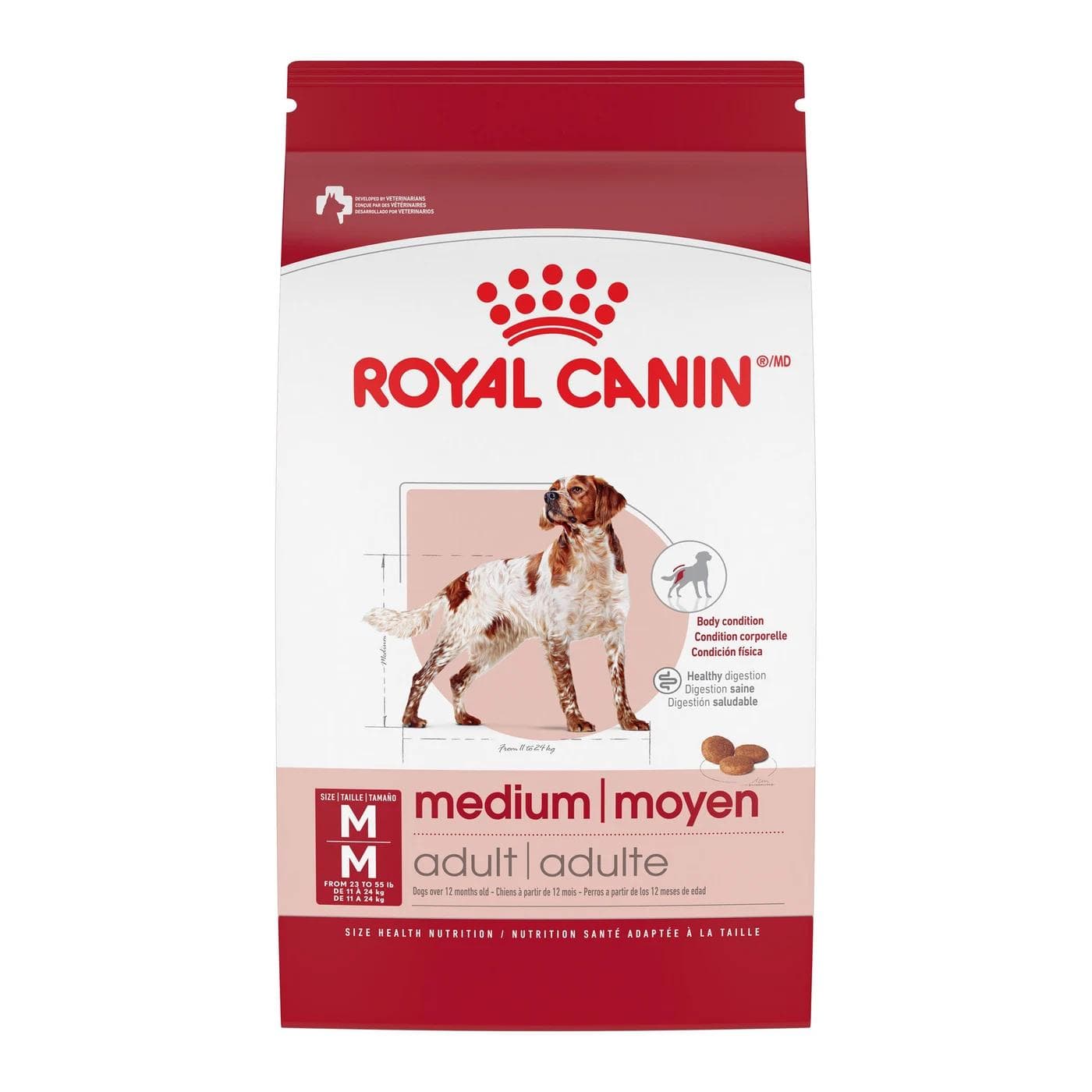
Precision nutrition for 23-55 lb dogs from the most science-heavy brand in the aisle. Vets recommend it; ingredient-readers wince at the deck. Both are reacting to the same food.
Petful may earn a commission when you click through to Chewy, at no extra cost to you.
For veterinary and pedigree records, use the documented breed. For a lease, insurer, or law, ask for the exact written definition and decision process. Do not assume that showing an AKC standard automatically resolves a restriction.
This distinction is descriptive, not a temperament shortcut. Neither a precise label nor a broad label tells you how one dog responds to children, visitors, dogs, handling, pain, or novelty.
Is an English Staffy a Pit Bull?
Is an English Staffy a Pit Bull? “English Staffy” is usually an informal name for the Staffordshire Bull Terrier, a breed developed in Britain. It is still not the same official breed as the American Staffordshire Terrier or American Pit Bull Terrier.
Ask which registry, pedigree, or shelter assessment supports the label. Informal names can conceal uncertainty, especially in countries where “Staffy” is used for several bully-type dogs or mixes.
If the question concerns a legal or housing rule, the informal name is not enough. Obtain the rule in writing and ask the decision-maker how it applies to the individual dog.
Staffordshire Bull Terrier vs. XL Bully
Is a Staffy an XL Bully? No. The Staffordshire Bull Terrier is a separate, much smaller established breed with its own standard. An XL Bully designation describes a different bully type and can carry jurisdiction-specific legal definitions.
Do not use size alone to identify ancestry, and do not assume that calling an unknown dog a Staffy avoids a rule. Accurate records and the controlling legal wording matter. When restrictions affect housing or ownership, obtain qualified local advice.
The better behavior question is not which label sounds safer. It is whether the individual dog has a known history, manageable arousal, suitable dog-to-dog skills, recoverable responses, and a household prepared to train and manage safely.
Temperament, Family Fit, and Other Dogs
Staffordshire Bull Terrier temperament is often described as affectionate, courageous, intelligent, persistent, and people-focused. Breed tendencies can guide questions, but they do not predict individual dog behavior or one dog's complete personality. Are Staffordshire Bull Terriers aggressive? A breed label cannot answer that for one dog. Staffordshire Bull Terrier temperament with other dogs varies with the individual, history, context, and management, so family-dog fit requires observed behavior rather than a stereotype. Child supervision remains essential regardless of breed reputation or prior experience.
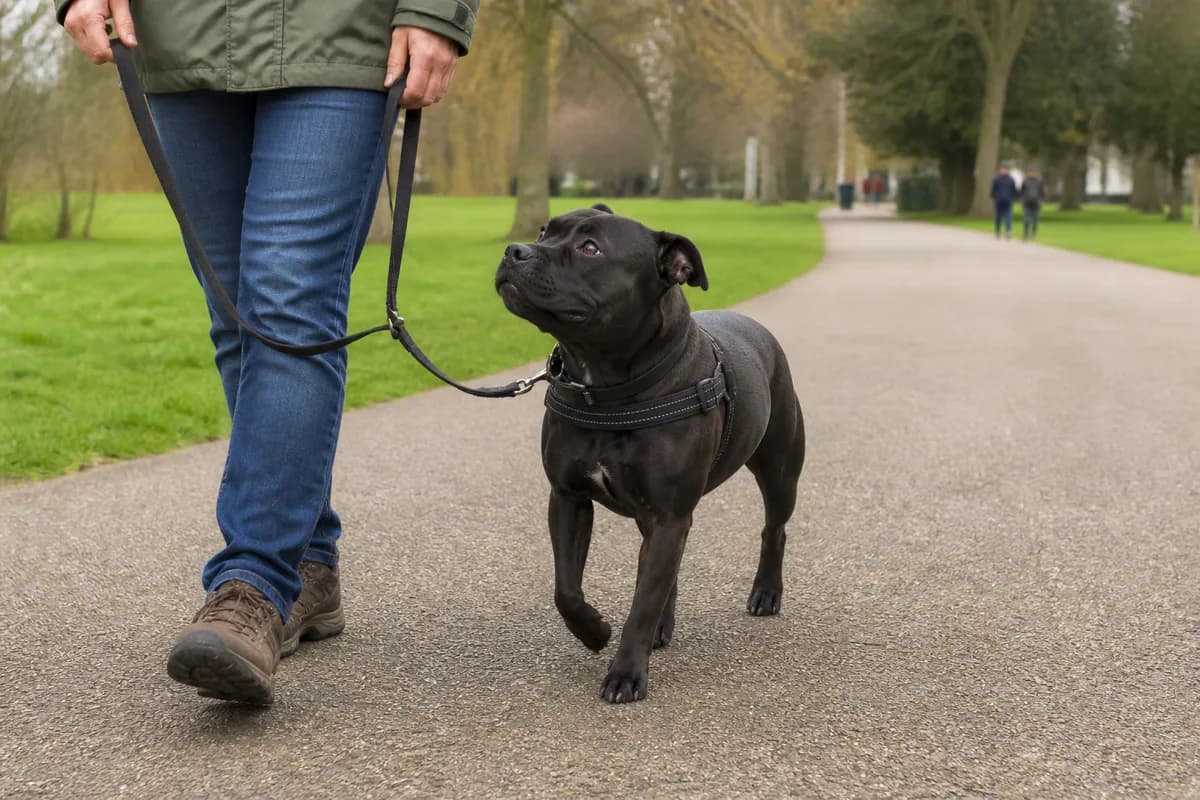
A suitable home uses gates, leashes, separate rest areas, and controlled introductions as ordinary tools. Some Staffords live successfully with compatible dogs; others are selective or need separation. Dog-to-dog behavior can change with maturity, pain, conflict, or repeated bad experiences.
The Frisco padded no-pull harness can be one management option if the shape fits the individual without rubbing, restricting shoulders, or allowing escape. A harness does not teach loose-leash walking by itself. Pair fitted equipment with reward-based training and stop if gait, skin, breathing, or comfort changes.
Family affection still needs boundaries
Close attachment can be delightful, but no dog should be expected to tolerate hugging, climbing, food interference, or disturbance while sleeping. Provide an adult-controlled quiet zone and teach children to invite contact, pet briefly, and let the dog walk away.

A durable rubber dog toy that can be stuffed with treats and selected by the manufacturer's size guide; supervise use and retire it when damaged.
Petful may earn a commission when you click through to Chewy, at no extra cost to you.
Never repeat the “nanny dog” label as a safety guarantee. Adults supervise, separate when supervision is unavailable, and respond to stiffening, freezing, turning away, lip licking, hard staring, guarding, or avoidance before a bite occurs.
Staffordshire Bull Terriers as Family Dogs
Is a Staffordshire Bull Terrier a good family dog? Many individual Staffords thrive in prepared families, but breed identity alone cannot guarantee fit. The household must match the dog's exercise, training, handling, dog-to-dog, prey, health, and supervision needs.
Meet an adult dog more than once when possible. Ask the rescue or breeder for specific observations around visitors, children, handling, food, toys, dogs, cats, alone time, and recovery after excitement. “Friendly” is less useful than a description of context and behavior.
Families should plan separate spaces before the dog arrives. A gate, closed door, crate used positively, or other secure area lets the dog rest and prevents contact during meals, deliveries, parties, and children's high-energy play.
Aggression: Staffy vs. Pit Bull Myths
Are Staffies as aggressive as Pit Bulls? That comparison cannot reliably predict individual behavior. “Pit Bull” may itself cover multiple breeds or mixes, and aggression is not one fixed trait measured by a simple breed ranking.
Ask what behavior occurred, toward whom, in what context, at what intensity, and with what warning or recovery. Fear, pain, guarding, frustration, predatory behavior, dog conflict, and defensive biting need different responses. Breed stereotypes blur those distinctions.
Choose prevention over proving a point. Use secure leashes and barriers, avoid forced greetings, supervise children, and consult a credentialed reward-based professional for escalating behavior. Sudden aggression or touch sensitivity needs a veterinary exam.
Staffy Barking and Vocalization
Do Staffies bark a lot? Some are relatively quiet, while others bark with excitement, frustration, visitors, noises, isolation, or unmet needs. The breed does not come with one guaranteed barking level.
Track when barking occurs. Meet exercise and bathroom needs, reduce repeated window or fence rehearsal, reward calm observation, and teach a settle behavior. Do not use pain or fear to suppress the warning without addressing its cause.
A sudden vocal change can reflect discomfort, cognitive change, hearing loss, fear, or an environmental change. Record a short video when safe and discuss new persistent behavior with the veterinarian.
Why Staffies Cry or Whine
Why do Staffies cry so much? Whining can communicate anticipation, frustration, social contact, fear, pain, bathroom need, or learned attention-seeking. The sound alone does not identify the cause.
Check urgent needs first, then note timing, body language, triggers, duration, and what makes the behavior stop. Reward calm alternatives and build independence gradually rather than scolding communication.
Panting at rest, pacing, inability to settle, appetite loss, limping, guarding, or sudden nighttime vocalization may point to pain or illness. Seek veterinary advice rather than treating every whine as stubbornness.
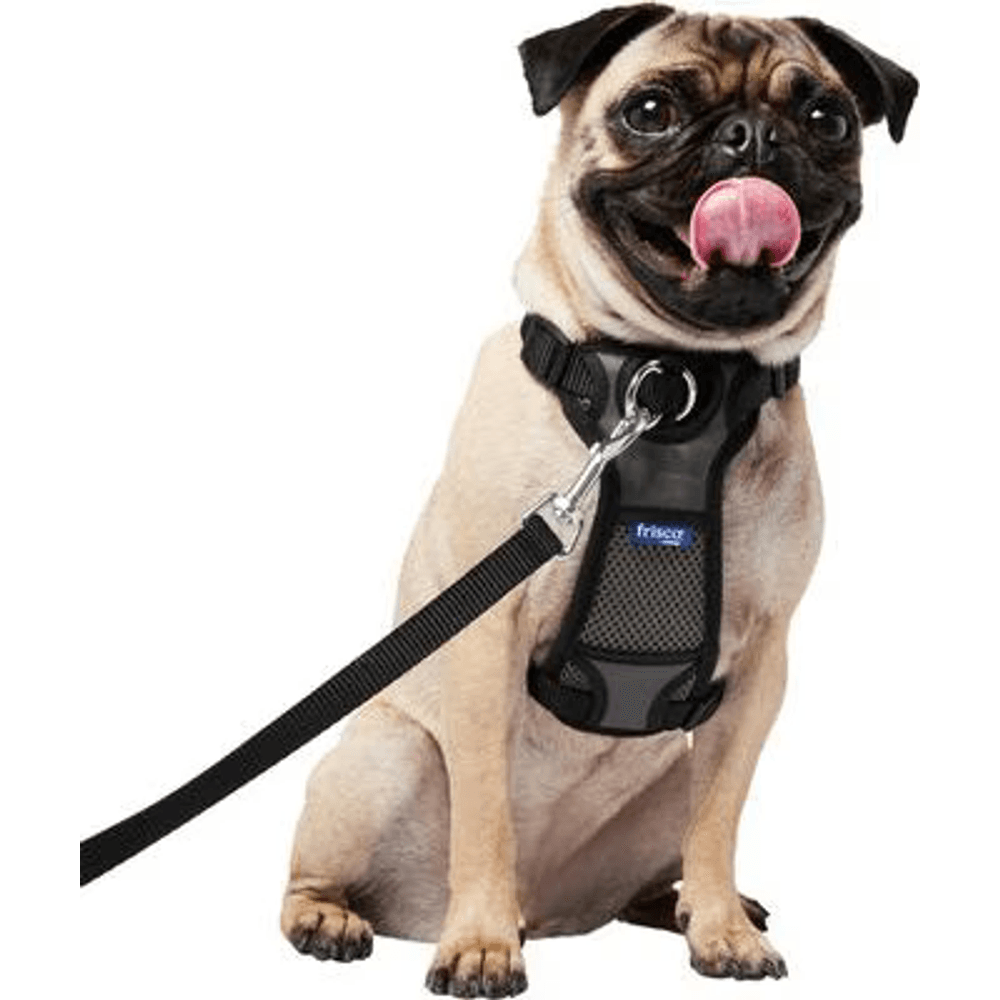
A budget-friendly padded no-pull harness that keeps leash pressure off a coughing dog's neck and windpipe by distributing it across the chest. A simple, affordable way to protect an irritated airway or a collapsing trachea on every walk.
Petful may earn a commission when you click through to Chewy, at no extra cost to you.
Training, Exercise, Grooming, and Health
Use short reward-based training sessions and clear management. Teach name response, recall, loose-leash walking, settle, leave it, drop, cooperative handling, and calm separation. Start in easy settings and increase distraction gradually. Exercise should combine walks, sniffing, play, training, and rest. Increase duration and intensity with age, fitness, temperature, and veterinary guidance, and adjust the plan for heat and cold. Avoid hard repetitive impact for growing puppies and intense activity in warm conditions.
- Ask for the L-2-HGA DNA result and hereditary cataract result for each parent, plus hip, elbow, and current ophthalmologist records. A CHIC number means the required tests were completed and publicly disclosed, not that every result was normal or that the dog is guaranteed healthy.
Build a realistic daily routine
An adult routine might include a morning bathroom trip and sniff walk, a measured meal delivered partly through enrichment, a quiet rest period, one or two brief training sessions, another active outing, and calm family time. The exact duration depends on the dog. Quality matters: ten minutes of focused sniffing or cooperative training may tire a dog differently from ten minutes of frantic ball chasing.
Puppies need more frequent bathroom opportunities, protected sleep, and carefully dosed social exposure. Socialization does not mean forcing the puppy to greet every person and dog. It means building safe, positive experience with surfaces, sounds, handling, travel, visitors, veterinary care, and the ability to observe without rushing forward.
Practice alone time in very small steps even if someone usually works from home. Start after needs are met, use a safe resting area, and return before distress escalates. Repeated barking, drooling, destruction near exits, escape attempts, or refusal to eat can signal separation-related distress and deserves veterinary or qualified behavior support.
Balance activity with recovery
Staffords can be intense players, so teach pauses and toy exchanges before arousal becomes chaotic. Use tug, retrieve, scent games, and food puzzles within the individual dog's physical and behavioral limits. Avoid dog parks as a default exercise plan when the dog is selective, easily overwhelmed, or prone to rough play.
Short coats offer little insulation. Adjust outings for heat, cold, wind, and hot pavement. Carry water on longer walks, choose cooler hours in warm weather, and stop for heavy panting, weakness, disorientation, vomiting, or poor coordination. In cold conditions, watch for shivering, lifting paws, slowing, or seeking shelter.
Food portions should follow calories and body condition rather than the bowl's appearance. Weigh meals, count training rewards, and reassess ribs, waist, muscle, stool, energy, and veterinary findings. A compact muscular outline can hide excess fat, and extra weight increases strain without improving strength.
Grooming and health monitoring
The short coat is relatively simple to maintain, but Staffordshire Bull Terrier shedding still occurs and the breed is not reliably hypoallergenic. Brush as needed, trim nails, clean bedding, check skin and ears, and work toward daily toothbrushing. Lumps on Staffordshire Bull Terriers, persistent odor, redness, hair loss, discharge, itching, or pain need veterinary assessment rather than a breed-based assumption. Photograph and measure a new lump only if the veterinarian recommends monitoring it.
The Staffordshire Bull Terrier Club of America OFA CHIC page lists five required screens for its program: hip evaluation, eye examination by a boarded ophthalmologist, L-2-hydroxyglutaric aciduria DNA testing, hereditary cataract DNA testing, and elbow evaluation. It lists patellar and cardiac evaluations as optional. Programs change, so verify the current parent-club and OFA requirements at the time of the litter.
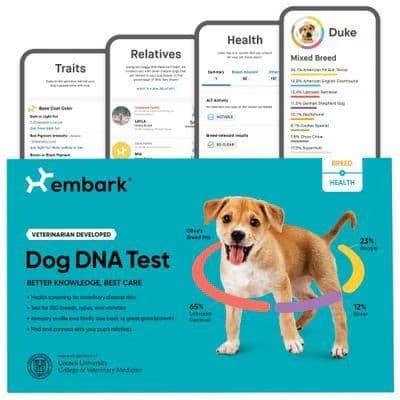
The Embark Breed & Health DNA Test can provide consumer genetic information, but it does not replace named parent records, an OFA or PennHIP hip evaluation, elbow imaging, an ophthalmologist exam, clinical care, or the parent club's current screening plan. Confirm what the exact panel tests and interpret results with the veterinarian.
Health testing is not a health guarantee
The Royal Kennel Club Health Standard distinguishes screening from being healthy and advises breeders to check current breed requirements. Results reduce uncertainty for particular risks; they cannot test every disease, environment, injury, or future outcome.
Maintain preventive exams and seek prompt care for seizures, altered coordination, vision changes, collapse, breathing difficulty, severe pain, eye injury, or acute weakness. Do not dismiss a symptom as normal for the breed.
Costs, Adoption, and Responsible Breeders
U.S. ownership costs include adoption or purchase, veterinary care, food, training, identification, licenses, housing deposits, insurance or savings, equipment, boarding, and emergencies. Staffordshire Bull Terrier price varies by region, source, records, and year. Staffordshire Bull Terrier adoption or a Staffordshire Bull Terrier rescue may use a different fee structure, but every route still requires a complete budget and verified health results before commitment.
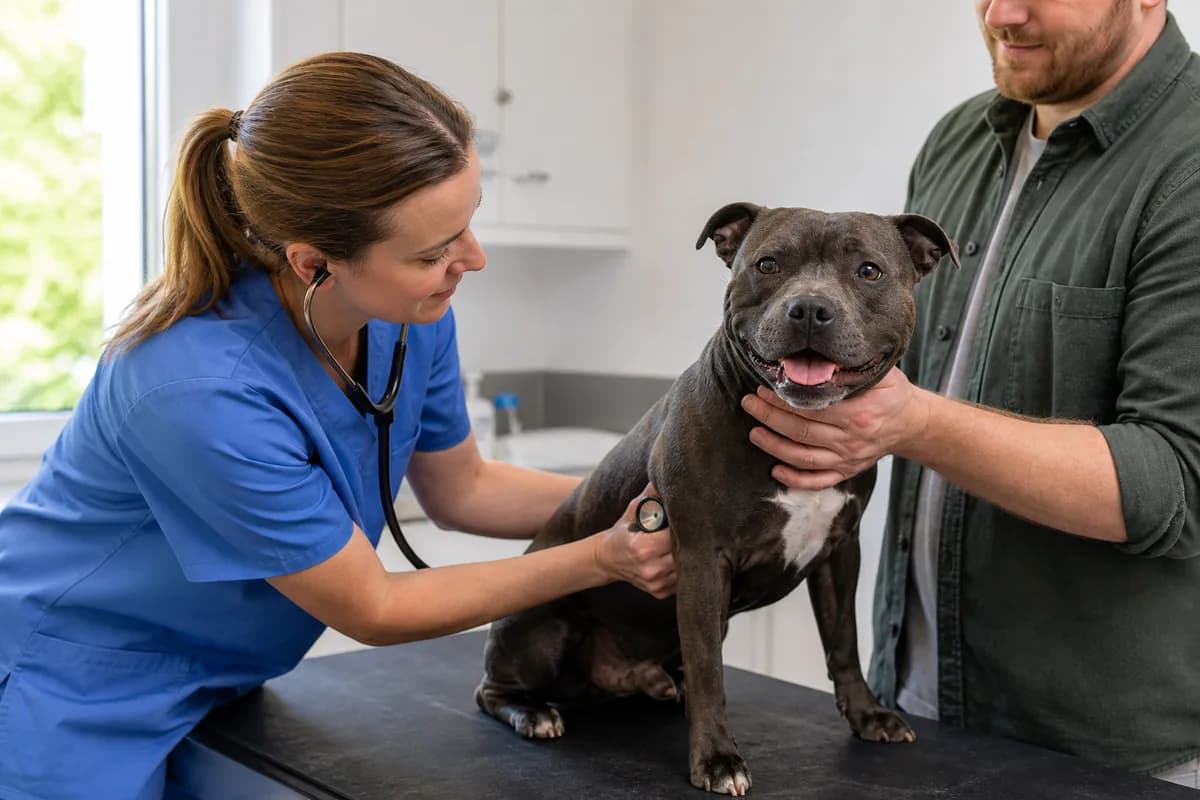
Adoption can provide valuable adult behavior information, but ask how observations were made and what remains unknown. A responsible rescue discusses medical records, handling, other dogs, children, cats, home-alone behavior, support, and return policy.
When considering Staffordshire Bull Terrier puppies, verify registered identities and results for both parents, meet the dam when appropriate, see where puppies are raised, review the contract, and avoid pressure based on color, rarity, shipping, or immediate payment. Petful's questions to ask a dog breeder provides the deeper interview checklist.
Plan for housing, travel, and insurance
Check lease, homeowners or renters insurance, local rules, and boarding options before committing. Policies may use broad labels that differ from formal breed identity. Obtain the exact wording and a written decision for the individual dog rather than relying on a phone assurance or hoping an informal name will avoid review.
Travel also needs advance work. Confirm that a sitter, boarding facility, or family member can safely manage the dog's leash skills, separation plan, medication, feeding, and dog-to-dog boundaries. A facility that accepts “dogs” generally may still decline a bully-type label or a dog with particular handling needs.
Keep identification current and build an emergency contact sheet with the veterinarian, poison-control resource, insurer, trusted caregiver, and an authorized decision-maker. Include feeding, medication, trigger, handling, and separation instructions. This preparation matters if an owner is hospitalized, evacuated, or delayed away from home.
Read the financial contract, not just the price
An emergency fund or insurance plan should account for exclusions, waiting periods, reimbursement rules, deductibles, and breed-related policy language. No plan covers every cost, so maintain a separate amount for immediate payment and routine care. Compare the contract itself rather than choosing by a monthly premium alone.
Food and enrichment should fit the dog
Royal Canin Medium Adult is one commercial food option for some adult dogs, but breed size is not enough to select a diet. Confirm complete-and-balanced life-stage suitability, calorie density, body condition, health needs, and feeding amount with the veterinarian.
A KONG Classic can support food-based enrichment when correctly sized and inspected, but choose a size and fill that cannot be swallowed and fits the dog's chewing behavior and diet. Supervise until the individual's use is predictable and replace damaged rubber.
What a Staffy Puppy Costs
How much do Staffy puppies cost? Prices vary by region, source, records, and year, so a current local range is more honest than one timeless national figure. The cheaper puppy can become the more expensive choice if health evidence, socialization, veterinary care, or return support is missing.
Build an itemized first-year budget before paying a deposit. Include acquisition, exam, vaccines, parasite prevention, microchip, food, training, gates, fitted walking equipment, license, boarding, emergency savings, and any housing cost.
Ask what the price includes in writing. A high price is not proof of health, and a CHIC number is not a perfect-score certificate. Verify each result in the relevant database.
Frequently Asked Questions About Staffordshire Bull Terriers
Girl and boy Staffies are not inherently better than one another. Individual temperament, health, learning history, socialization, and household fit matter more than a male-or-female shortcut. Meet the dog, review specific behavior, and plan training and socialization for that individual. Discuss sex-related medical decisions with the veterinarian rather than using stereotypes as a selection test.
The Staffordshire Bull Terrier is a distinct registered breed, but "pit bull" is also used as an umbrella label in everyday speech, housing policies, and some laws. The answer therefore depends on whether someone means official breed identity or a broader local definition. Registration records, known ancestry, and the controlling legal language matter more than visual guesses. Never use the label alone to predict an individual dog's behavior.
A Staffordshire Bull Terrier can be a good family dog when the individual dog and household are a sound match. Many Staffords can thrive in a prepared family, but breed identity does not guarantee fit. Consider the dog's observed behavior around children, handling, food, toys, visitors, other animals, and recovery after excitement. Adults must supervise interactions, provide separate rest space, use reward-based training, and prevent rough or forced contact. Match the actual dog's needs to the household's capacity.
A healthy adult Staffy usually needs daily physical activity plus training, sniffing, play, and rest, but there is no safe one-size-fits-all minute quota. Age, conditioning, orthopedic health, weather, and individual arousal change the plan. Increase activity gradually, avoid hard repetitive impact for growing puppies, use caution in heat, and ask the veterinarian to modify exercise for pain or disease.
Responsible breeders should provide verifiable results for both parents, not simply say the dogs were "health checked." Current Staffordshire Bull Terrier programs may include hip and elbow evaluation, an eye examination, and DNA testing for L-2-hydroxyglutaric aciduria and hereditary cataracts. Requirements change, so confirm the current parent-club and OFA guidance and review exact database records before committing to a puppy.
A large confident female may be a harder fit than a smaller easygoing male, or the reverse. Sex myths and individual behavior should not be conflated. Sex does not answer whether the dog can settle, recover from excitement, share space with another dog, or tolerate handling.
The best Staffordshire Bull Terrier match is the dog whose real needs fit the household's real capacity. Choose evidence over labels, build skills with rewards, verify health records, and use management without apology.

Kristine Lacoste has been researching dog and cat breeds for nearly a decade and has observed the animals up close at dog shows in both the United States and the United Kingdom. She is the author of the book One Unforgettable Journey, which was named as a finalist for a Maxwell Award from the Dog Writers Association of America, and was host of a weekly pet news segment on the National K-9 Academy Radio Show. In addition, she was the New Orleans coordinator for Dogs on Deployment, a nonprofit that helps military members and their pets, for 3 years. Kristine has researched and written about pet behaviors and care for many years. She holds a bachelor’s degree in psychology, another bachelor’s degree in English and a Master of Business Administration degree.
Sign up for expert-backed reviews and safety alerts all in one place.