Puppy Vaccination Schedule: A Vet's Week-by-Week Guide
A veterinarian's complete puppy vaccination schedule: core vs non-core vaccines, the 6, 8, 12, and 16-week timeline with a printable by-age chart, why boosters matter, costs, and exactly when your puppy is fully protected.

BVMS, MRCVS
Petful is reader supported. As an affiliate of platforms like Amazon and Chewy, we may earn a commission when you buy through links on this page. There is no extra cost to you.
Bringing home a new puppy means falling in love and, almost immediately, booking that first veterinary visit. Following a proper puppy vaccination schedule is the single most important thing you can do to protect your dog from deadly diseases like parvovirus, distemper, and rabies during the vulnerable first few months of life. This vet-written guide walks you through core versus non-core vaccines, the exact week-by-week timeline at 6, 8, 12, and 16 weeks, a printable by-age chart, why booster shots matter, and when your puppy is finally safe to meet the wider world.
Puppies are born with some immunity passed on through their mother's milk, but that protection fades between 6 and 16 weeks of age. Vaccines fill the gap, training the immune system to fight off infections that can kill an unprotected puppy within days. Get the timing right and you give your dog the strongest possible start.
- 1Puppies need a series of core vaccines (DHPP plus rabies) starting at 6 to 8 weeks and finishing around 16 to 20 weeks of age.
- 2Full immunity is not reached until 1 to 2 weeks after the final round of shots, so avoid high-risk public spaces until then.
- 3Boosters are not optional. The first-year and adult boosters are what keep that early protection from wearing off.

Sign up for expert-backed reviews and safety alerts all in one place.
Core vs Non-Core Puppy Vaccines: Which Ones Are Absolutely Necessary?
The vaccines that are absolutely necessary for every puppy are the core vaccines: distemper, adenovirus (hepatitis), parvovirus, and rabies. These protect against diseases that are widespread, often fatal, and in the case of rabies, transmissible to humans. Every major veterinary body, including the American Animal Hospital Association (aaha.org) and the American Veterinary Medical Association (avma.org), agrees that no puppy should skip them.
Veterinarians sort puppy vaccines into two groups. Understanding the difference helps you have a smarter conversation with your vet about what your individual dog actually needs.
Core vaccines (every puppy, no exceptions)
Core vaccines defend against diseases that are either deadly, easily spread, or a threat to public health. Most are bundled into a single combination shot commonly labeled DHPP or DAP.
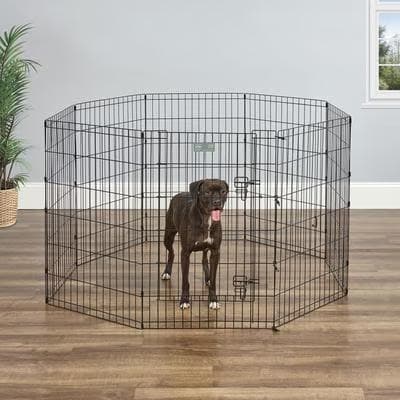
Petful may earn a commission when you click through to Chewy, at no extra cost to you.
- Distemper: A viral disease that attacks the nervous, respiratory, and digestive systems and is frequently fatal. Learn more in our guide to distemper in dogs.
- Adenovirus (hepatitis): Causes infectious canine hepatitis, which damages the liver, kidneys, and eyes.
- Parvovirus: A brutal, highly contagious gut infection that kills unvaccinated puppies quickly through dehydration and sepsis. Parvo is the number one reason the schedule below must be finished on time.
- Parainfluenza: A respiratory virus usually included in the same combination shot.
- Rabies: Legally required in nearly every US state. It is universally fatal once symptoms appear and can spread to people. See the warning signs in our overview of rabies symptoms in dogs.
The combination distemper shot is often written on your paperwork as DHPP or DHLPP. Our detailed explainer on the DHPP and DHLPP vaccine for dogs breaks down exactly what each letter covers.
Non-core (lifestyle) vaccines
Non-core vaccines are recommended based on where you live, where your dog goes, and the specific diseases in your region. Your vet will help you decide, but common lifestyle vaccines include:
- Leptospirosis: A bacterial disease spread through contaminated water and wildlife urine that can also infect humans. It is now recommended for most dogs in many areas. Read our full guide to leptospirosis in dogs.
- Bordetella (kennel cough): Often required for boarding, grooming, daycare, and training classes. Details in our Bordetella vaccine for dogs article.
- Lyme disease: Important in tick-heavy regions. See our Lyme vaccine for dogs explainer.
- Canine influenza (dog flu): Recommended for social dogs that frequent daycare, shows, or boarding facilities.
- Core vaccines protect against diseases that are deadly or contagious to people, so every healthy puppy should receive them. Non-core vaccines are matched to your dog's lifestyle and local risk, which is a decision to make with your veterinarian rather than skip by default.
Puppy Vaccination Schedule by Age: The Week-by-Week Timeline
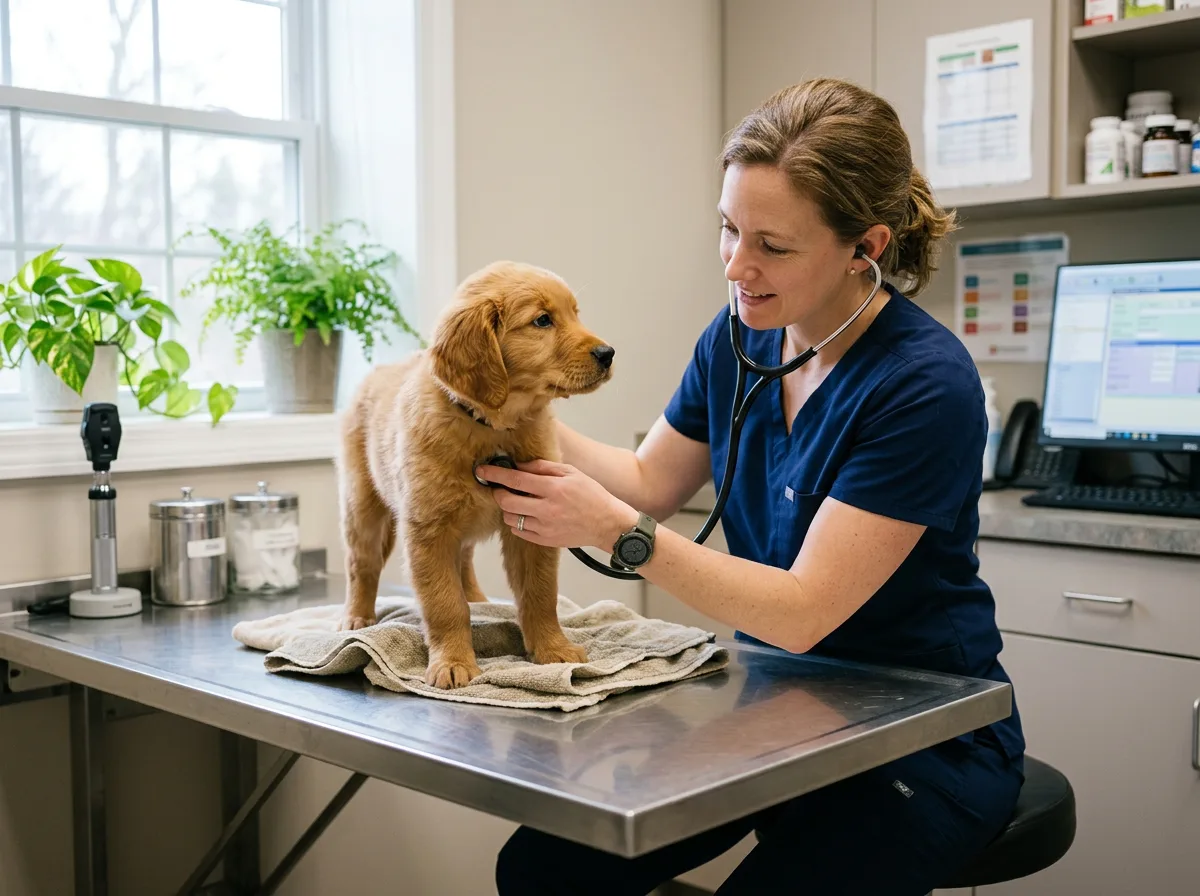
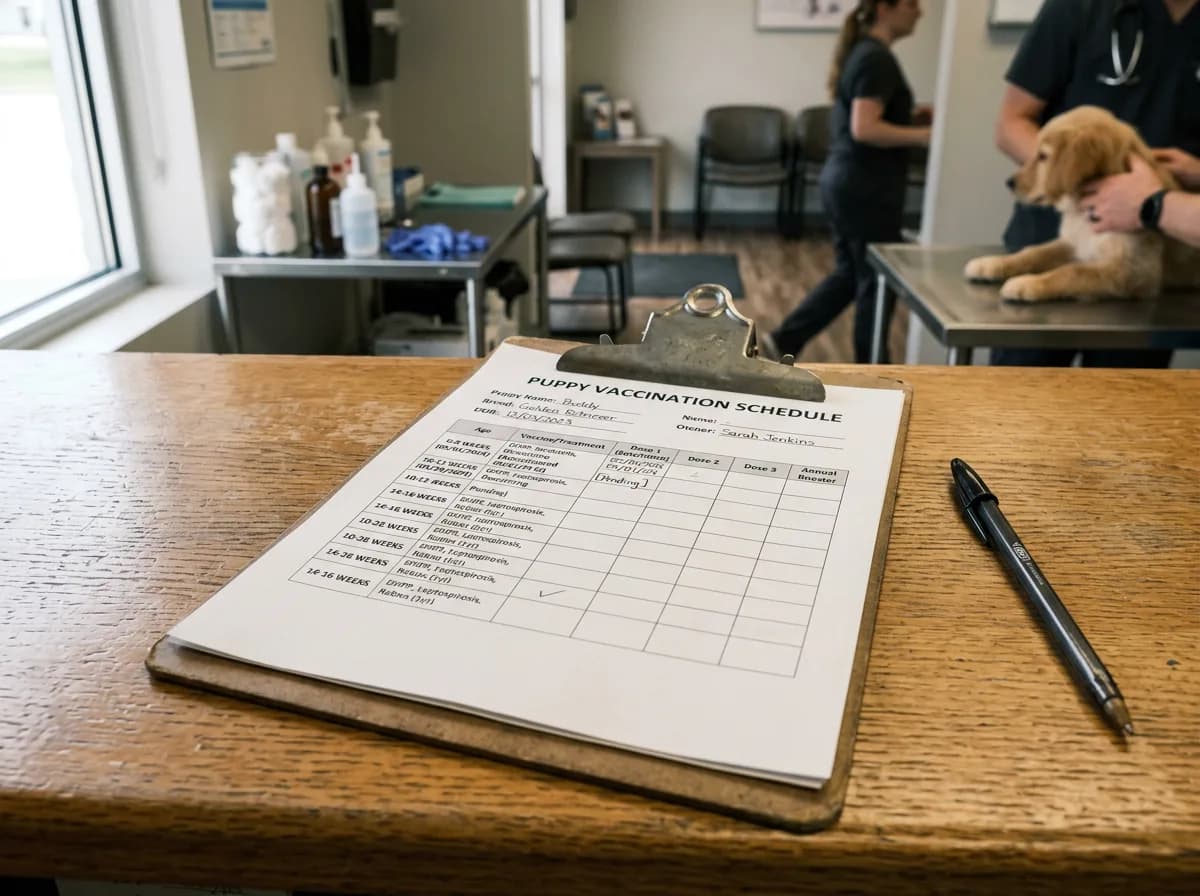
The core puppy vaccination schedule runs from roughly 6 weeks to 16 weeks of age, with the combination DHPP shot repeated every 2 to 4 weeks until the immune system can respond on its own. Rabies is given once between 12 and 16 weeks. The AAHA canine vaccination guidelines (aaha.org) now recommend that the final DHPP dose land at 16 weeks of age or later, ideally closer to 18 to 20 weeks, because leftover antibodies from mom can block an earlier dose.
Here is the printable by-age chart. Save it or screenshot it for your fridge, then confirm the exact dates with your own veterinarian, since regional disease risk can shift the plan.
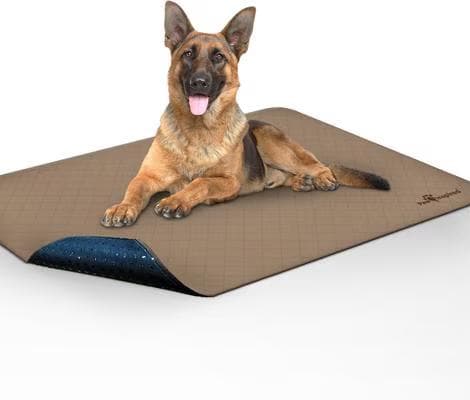
Petful may earn a commission when you click through to Chewy, at no extra cost to you.
| Puppy Age | Core Vaccines Due | Optional Lifestyle Vaccines |
|---|---|---|
| 6–8 weeks | DHPP dose 1 | None typically |
| 10–12 weeks | DHPP dose 2 | Leptospirosis, Bordetella, Lyme, canine influenza (dose 1) |
| 14–16 weeks | DHPP dose 3 plus Rabies | Leptospirosis, Lyme, canine influenza (dose 2) |
| 16–20 weeks | DHPP final dose | None |
| 12 months | DHPP booster plus Rabies booster | Lifestyle boosters as advised |
6 to 8 weeks: the first shots
Most puppies get their first DHPP shot between 6 and 8 weeks, often before they leave the breeder or shelter. If you adopted your puppy, ask for written proof of any vaccines already given so your vet can pick up the schedule correctly rather than restarting it.
10 to 12 weeks: the second round
The second DHPP dose comes 2 to 4 weeks after the first. This is also the typical window to start non-core vaccines such as leptospirosis, Lyme, and canine influenza if your vet recommends them for your area and lifestyle.
14 to 16 weeks: the critical dose plus rabies
The third DHPP dose is arguably the most important, because by now the mother's antibodies have faded enough for the vaccine to fully take hold. Rabies is usually given at this visit too. This is the round that gets your puppy most of the way to real protection.
16 to 20 weeks: finishing the series

Current AAHA guidance favors a final DHPP dose at or after 16 weeks to close any immunity gap. Once this dose is on board and about 1 to 2 weeks have passed, your puppy is considered fully vaccinated against the core diseases.
- If a booster is a week or two late, your vet will usually just continue the series rather than start over. Missing doses entirely is the real risk, not minor scheduling wobble. Call your clinic instead of guessing.
Vaccines are only one piece of new-puppy health care. Pair this timeline with our puppy deworming schedule and the full new puppy checklist so nothing slips through the cracks.
How Many Shots Before a Puppy Is Fully Vaccinated?
A puppy is considered fully vaccinated after completing 3 to 4 rounds of the core DHPP combination shot, given every 2 to 4 weeks between 6 and 16 weeks of age, plus a single rabies vaccine. That usually adds up to three or four vet visits during the first four months, not a single shot.
The reason for multiple doses is not that one shot is weak. It is that maternal antibodies, the temporary immunity passed from the mother, can neutralize a vaccine before it teaches the puppy's own immune system to respond. Nobody can predict the exact week those borrowed antibodies fade, so the series repeats until the puppy is old enough that the final dose is guaranteed to work. This is exactly why you cannot shortcut the schedule, even if your puppy seems perfectly healthy.
Every vaccine visit is also a wellness check. Your veterinarian weighs the puppy, listens to its heart and lungs, checks for parasites, and looks for early signs of illness before giving any shot. A sick or feverish puppy may have its vaccine postponed a few days, which is normal and safe. Treat these appointments as full health milestones rather than quick injections, and use them to ask questions about diet, deworming, and behavior while you have your vet's attention.

A durable rubber dog toy that can be stuffed with treats and selected by the manufacturer's size guide; supervise use and retire it when damaged.
Petful may earn a commission when you click through to Chewy, at no extra cost to you.
Why Boosters Matter (and What Happens If You Skip Them)
Boosters matter because the protection from the puppy series is not permanent. A DHPP booster at 12 months locks in the early immunity, and after that, core boosters are typically given every 1 to 3 years depending on the vaccine and your vet's protocol. Rabies boosters are set by state law, usually 1 or 3 years apart.
Skipping boosters lets immunity quietly fade, leaving an adult dog exposed to the same diseases the puppy series worked so hard to prevent. Boarding facilities, groomers, daycares, and many apartment complexes also require proof of current vaccines, so lapsed boosters can suddenly limit where your dog can go. Our broader guide to pet vaccination covers the adult schedule in more depth.
- In most US states, keeping your dog current on rabies is not optional, it is the law. An unvaccinated dog involved in a bite incident can face mandatory quarantine or worse. Always keep the rabies certificate and tag where you can find them.
When Is a Puppy Fully Protected? Going Outside Safely
Your puppy is fully protected against the core diseases about 1 to 2 weeks after the final round of shots, which usually falls around 16 to 20 weeks of age. Until then, immunity is only partial, and parvovirus in particular can lurk on sidewalks, in parks, and anywhere unvaccinated dogs have been.
That does not mean your puppy should be locked indoors for four months. The trick is balancing disease safety against the equally important need for early socialization, which has its own hard deadline.
How long after the 2nd vaccination can they go out?
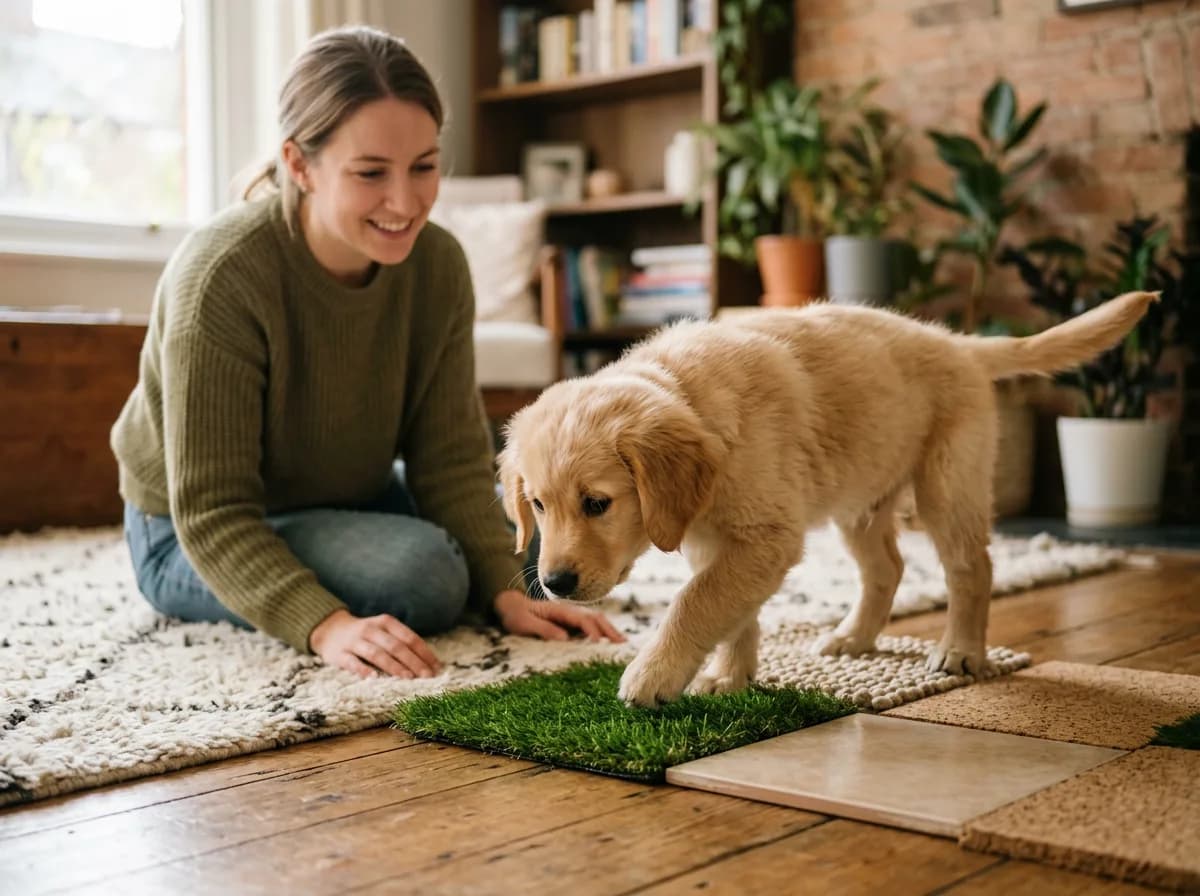
Many puppies can begin walking in low-risk areas roughly 1 to 2 weeks after their second vaccination, but full immunity is not complete until 1 to 2 weeks after the final dose around 16 weeks. In the meantime, stick to clean, controlled spaces and avoid dog parks, pet-store floors, and communal grassy areas where unknown dogs toilet. When in doubt, ask your vet what is safe in your specific region, because parvo prevalence varies a lot by location.
Can I let my 8 week old puppy walk outside?
An 8 week old puppy can go outside in safe, controlled environments such as your own yard (as long as no unvaccinated dogs visit it) or while carried in your arms. Avoid public sidewalks, parks, and any area used by unknown dogs until the vaccine series is further along. The goal is exposure to the world without exposure to disease. Our guide on when puppies can go outside walks through this window in detail.
Do Indoor Puppies Need All Their Shots?
Yes, indoor puppies still need all their core vaccines. Diseases like parvovirus are extraordinarily hardy and can be tracked inside on your shoes, clothing, or another pet, and rabies is legally required regardless of where your dog lives. An indoor lifestyle may let you and your vet skip certain non-core vaccines, such as Lyme or canine influenza, but the core series is non-negotiable even for a dog that rarely leaves the apartment.
There is one more reason indoor puppies need to be current: paperwork. If you ever move, board your dog, travel, or need a service dog, up-to-date records are essential. Under the Americans with Disabilities Act (ada.gov), service dogs are not legally required to carry vaccination proof to access public spaces, but responsible handlers keep them fully vaccinated, and many training programs demand it. If you are curious how working dogs are classified, see our overview of the types of service dogs.

Petful may earn a commission when you click through to Chewy, at no extra cost to you.
What Not to Do After a Puppy Vaccine
After a puppy vaccine, do not bathe your puppy, push it into strenuous exercise, or take it to high-traffic dog areas for a day or two, and do not ignore anything beyond mild, short-lived side effects. Most puppies feel a little tired or sore, which is normal. What you are watching for is the rare reaction that needs a vet.
- Do not overexert: Let your puppy rest. A quiet day helps the immune system focus on building protection.
- Do not bathe right away: Wait 24 to 48 hours so you are not adding stress or chilling a sleepy puppy.
- Do not skip monitoring: Mild lethargy, a small firm lump at the injection site, or a slightly reduced appetite for a day is expected.
- Do not wait on warning signs: Facial swelling, hives, repeated vomiting, difficulty breathing, or collapse can signal a true allergic reaction. Call your vet or an emergency clinic immediately.
- Serious vaccine reactions are rare but real. Swelling of the face or muzzle, hives, persistent vomiting, or trouble breathing within hours of a shot is a veterinary emergency. Do not wait to see if it passes.
What Is the 10-10-10 Rule for Puppies?
The 10-10-10 rule is a popular puppy socialization guideline, not a medical vaccination protocol. It encourages owners to introduce a young puppy to 10 different people, 10 different places or surfaces, and 10 different sounds or experiences during the critical socialization window, which runs from roughly 3 to 14 weeks of age.
The reason it matters here is timing. That socialization window closes right in the middle of the vaccine series, so you cannot simply wait until your puppy is fully vaccinated to start. The American Veterinary Society of Animal Behavior supports early, careful socialization, and the American Kennel Club (akc.org) echoes this. The safe way to hit your 10-10-10 goals before full immunity is:
- Carry your puppy through new environments rather than letting it walk on shared ground.
- Invite healthy, fully vaccinated adult dogs to your home for controlled play.
- Use clean, private spaces and puppy classes that require proof of vaccination.
- Introduce new surfaces, sounds, and gentle handling indoors where the disease risk is low.
Done this way, socialization and vaccination work together instead of forcing you to choose between a well-adjusted puppy and a healthy one.
How Much Does the Puppy Vaccination Schedule Cost?
The full puppy vaccine series typically costs somewhere between $75 and $200 for the core shots, with non-core vaccines adding to the total. Prices vary widely by clinic, region, and whether you use a full-service veterinary hospital, a low-cost vaccine clinic, or a shelter program. Here is a rough guide to typical US costs per dose.
| Vaccine | Typical Cost Per Dose | Doses in Puppy Series |
|---|---|---|
| DHPP (core combo) | $20–$40 | 3–4 |
| Rabies (core) | $15–$25 | 1 |
| Leptospirosis | $20–$30 | 2 |
| Bordetella (kennel cough) | $20–$45 | 1–2 |
| Lyme disease | $30–$50 | 2 |
| Canine influenza | $25–$50 | 2 |
These figures are estimates, and your first few vet visits will usually include an exam fee, deworming, and a fecal test on top of the vaccines. For a full breakdown of what to budget, see our dedicated guide to puppy shots cost.
Keeping Your Puppy's Vaccination Records Organized
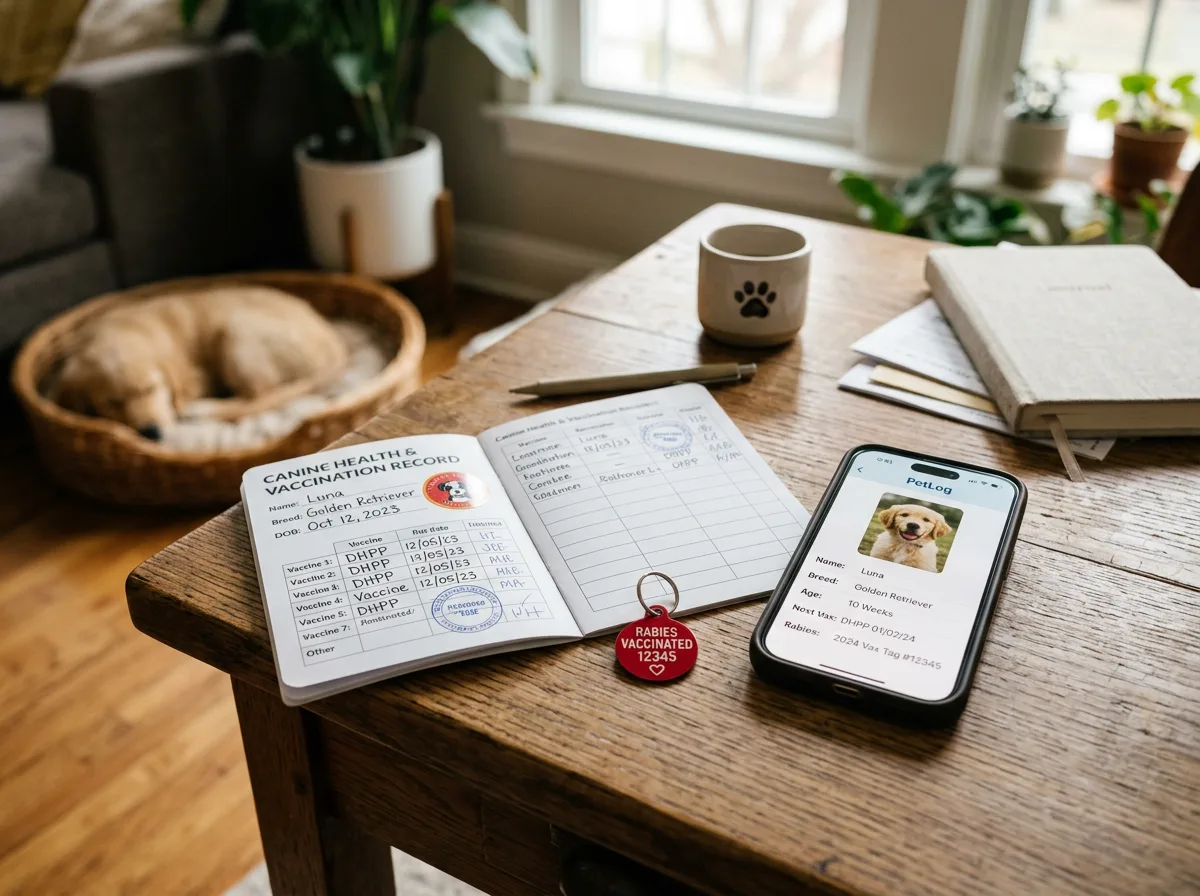
The single most overlooked part of a puppy vaccination schedule is the paperwork. Vaccine certificates, rabies tags, deworming dates, and microchip numbers all pile up fast, and you will need them for boarding, travel, licensing, training classes, and any future vet who is not your regular clinic. A lost rabies certificate at the wrong moment can mean repeating a shot or being turned away from a facility.
Rather than stuffing receipts in a drawer, keep a single digital record you can pull up from your phone. A tool like MyPetID lets you store your puppy's vaccination history, medical records, and paperwork in one place, so the next booster date and the proof of the last one are always a tap away.
- Snap a photo of each vaccine certificate and rabies tag before you leave the clinic. Digital copies are impossible to lose and easy to share with a boarding facility, groomer, or new vet on short notice.
Puppy Vaccination Schedule FAQ
How to Socialize a Puppy Safely Before the Series Is Done
Waiting until every booster is finished (around 16 weeks) means missing the prime socialization window, which closes near 12 to 14 weeks. The American Veterinary Society of Animal Behavior recommends starting socialization before the vaccine series is complete, because behavior problems, not infectious disease, are the leading reason young dogs are surrendered or euthanized. The goal is balancing two real risks, not choosing one over the other.
You can expose your puppy to the world without exposing them to parvo or distemper hotspots:
- Carry your puppy through busy places (hardware stores, outdoor cafes, a friend's porch) so they see, hear, and smell novelty from your arms.
- Invite healthy, fully vaccinated adult dogs to your home for supervised play on your own clean floors and yard.
- Enroll in a reputable puppy class that requires proof of first vaccines and deworming and disinfects its floors.
- Avoid dog parks, pet-store floors, rest stops, and any spot where unvaccinated dogs of unknown status gather, until about two weeks after the final booster.
- Many trainers aim for 100 positive new sights, sounds, surfaces, and gentle handling experiences before 16 weeks. Keep each one calm and rewarded so novelty stays a good thing, never overwhelming.
Recognizing a Vaccine Reaction and When to Call the Vet
Most puppies feel fine after shots. Mild, expected effects show up within a day and fade on their own: brief tiredness, a slightly reduced appetite, mild tenderness or a small firm lump at the injection site, and a low-grade fever. These are normal signs the immune system is responding, and they typically resolve within 24 to 48 hours.
Serious allergic reactions are uncommon but need fast action. Call your veterinarian or an emergency clinic right away if you see facial or muzzle swelling, hives, repeated vomiting or diarrhea, difficulty breathing, weakness, or collapse. True anaphylaxis usually appears within minutes to a few hours of the shot, which is one reason many vets suggest scheduling appointments earlier in the day. Also have any injection-site lump checked if it lasts more than a few weeks or keeps growing.
What to Do If You Miss a Booster or Adopt a Puppy With No Records
Life happens and a booster gets missed. If the gap is short, your vet usually continues the series rather than starting over. If a dose is very overdue, or if you adopted a puppy whose vaccine history is unknown or unreliable, your veterinarian may restart the puppy series to be safe, since a single early shot may not have created lasting immunity. Bring any paperwork you do have, and let the vet make the call rather than guessing at home.
How Puppy Deworming Fits Into the Vaccination Schedule
Deworming runs alongside the vaccination schedule, not instead of it, and the two are usually handled at the same vet visits. Because puppies are commonly born with intestinal worms or pick them up from their mother's milk, most follow a deworming plan that starts earlier and repeats more often than the shots do.
A typical combined plan looks like this:
- Deworming every 2 weeks from about 2 weeks of age until 12 weeks, then monthly until 6 months, following Companion Animal Parasite Council guidance.
- Core DHPP vaccines at roughly 6–8, 10–12, 14–16, and 16–20 weeks, with rabies at 14–16 weeks.
- A fecal test at the first few visits so treatment targets the specific parasites present.
- Monthly broad-spectrum parasite prevention, including heartworm, once your vet advises it.
Because the two timelines overlap, your veterinarian will often deworm, run a fecal check, and give the next vaccine in a single appointment.
- Deworming starts younger and repeats more often than vaccines, so ask your vet to write both timelines on one sheet. That way the more frequent worming doses do not get lost between shot appointments.
Does the Puppy Vaccination Schedule Change by Breed or Size?
No. The core puppy vaccination schedule is the same for every breed and size, from a Yorkie or Shih Tzu to a Labrador, German Shepherd, or Rottweiler. Every puppy needs the DHPP series plus rabies on the same 6- to 20-week timeline, because the schedule is driven by when the mother's antibodies fade, not by the dog's body weight.
One common myth is worth clearing up: vaccines are not dosed by weight the way many medications are. A 3-pound toy puppy and a 30-pound giant-breed puppy receive the same full dose, because a vaccine works by teaching the immune system to respond rather than by acting on body mass.
Breed and size do shape the conversation in a few small ways, though:
- Toy and small breeds may have a slightly higher rate of mild vaccine reactions, so some vets prefer to space doses rather than stack several on one visit.
- Large and giant breeds follow the identical core timeline, with lifestyle vaccines matched to how active and social they are.
- Your region and your puppy's exposure, not its breed, decide which non-core vaccines get added.
Can You Give Puppy Shots at Home?
You can legally buy and give some puppy vaccines yourself in many states, but rabies is the key exception, and doing the entire series at home is rarely the better choice. Farm and feed stores such as Tractor Supply sell combination DHPP vaccines under brands like Spectra or Duramune, and low-cost clinics such as Vetco offer the same shots for less than a full-service hospital charges.
A few things to weigh before going the do-it-yourself route:
- Rabies almost always must be given by a licensed veterinarian to count legally, no matter where you buy the vaccine. A home-administered rabies shot may not be accepted for licensing, boarding, or a bite investigation.
- Vaccines are fragile. They must stay refrigerated, be mixed correctly, and be injected properly, or they can quietly fail to protect.
- Home shots skip the wellness exam, where your vet weighs the puppy, catches early illness, and confirms it is healthy enough to vaccinate that day.
Low-cost vaccine clinics are a sensible middle ground: professional handling and valid records at a lower price than a standard office visit.
What About Titer Testing or a Minimal (Holistic) Vaccine Schedule?
Titer testing and reduced or holistic schedules are real options for certain adult boosters, but they are not a way to skip the core puppy series. A titer test measures the antibodies already in a dog's blood, which can help you and your vet decide whether an adult booster is genuinely needed yet. In a young puppy, titers are unreliable because leftover maternal antibodies cloud the result, so the initial DHPP series and rabies still need to be finished on schedule.
Reduced-frequency protocols, including the well-known Dr. Jean Dodds schedule, focus on avoiding unnecessary repeat boosters in adulthood, not on withholding a puppy's first shots. If a lighter approach appeals to you:
- Complete the full core puppy series first, since that early protection is exactly what a titer later confirms.
- Ask your vet about titer testing for the non-rabies core vaccines at adult booster time.
- Remember that rabies boosters are set by state law and cannot be replaced by a titer.
Discuss any modified plan with your own veterinarian rather than following a generic online chart on your own.
Puppies can usually start walking in low-risk, clean areas about 1 to 2 weeks after their second vaccination, but they are not fully protected until 1 to 2 weeks after the final dose around 16 weeks. Until then, avoid dog parks, pet-store floors, and places unknown dogs frequent.
A puppy needs 3 to 4 rounds of the core DHPP combination vaccine given every 2 to 4 weeks between 6 and 16 weeks of age, plus a single rabies shot. That typically means three or four vet visits before the core series is complete.
The core vaccines are absolutely necessary for every puppy: distemper, adenovirus (hepatitis), parvovirus, and rabies. These are usually combined into the DHPP shot plus a separate rabies vaccine. Non-core vaccines like Lyme or Bordetella are optional and based on lifestyle and location.
You can begin short walks in safe, clean areas roughly 1 to 2 weeks after the second vaccination, but keep away from high-traffic dog spots until the series is finished. Carrying your puppy is the safest way to explore before full immunity around 16 to 20 weeks.
An 8 week old puppy can go outside in controlled spaces such as your own yard (if no unvaccinated dogs visit) or carried in your arms, but should avoid public sidewalks, parks, and areas used by unknown dogs until the vaccine series is further along.
Do not bathe your puppy, do not force strenuous exercise, and do not visit busy dog areas for a day or two. Mild tiredness or a small lump is normal, but facial swelling, hives, repeated vomiting, or trouble breathing needs an immediate vet visit.
The 10-10-10 rule is a socialization guideline, not a vaccination protocol. It suggests introducing your puppy to 10 different people, 10 different places or surfaces, and 10 different experiences during the critical window of roughly 3 to 14 weeks, done safely through carrying, clean spaces, and vaccinated playmates.
Yes. Indoor puppies still need all core vaccines because diseases like parvovirus can be carried inside on shoes and clothing, and rabies is legally required. Your vet may skip some non-core vaccines for a strictly indoor dog, but never the core series.
BVMS, MRCVS
Dr. Pippa Elliott, BVMS, MRCVS, is a veterinarian with nearly 30 years of experience in companion animal practice. Dr. Elliott earned her Bachelor of Veterinary Medicine and Surgery from the University of Glasgow. She was also designated a Member of the Royal College of Veterinary Surgeons. Married with 2 grown-up kids, Dr. Elliott has a naughty Puggle named Poggle, 3 cats and a bearded dragon.
Sign up for expert-backed reviews and safety alerts all in one place.