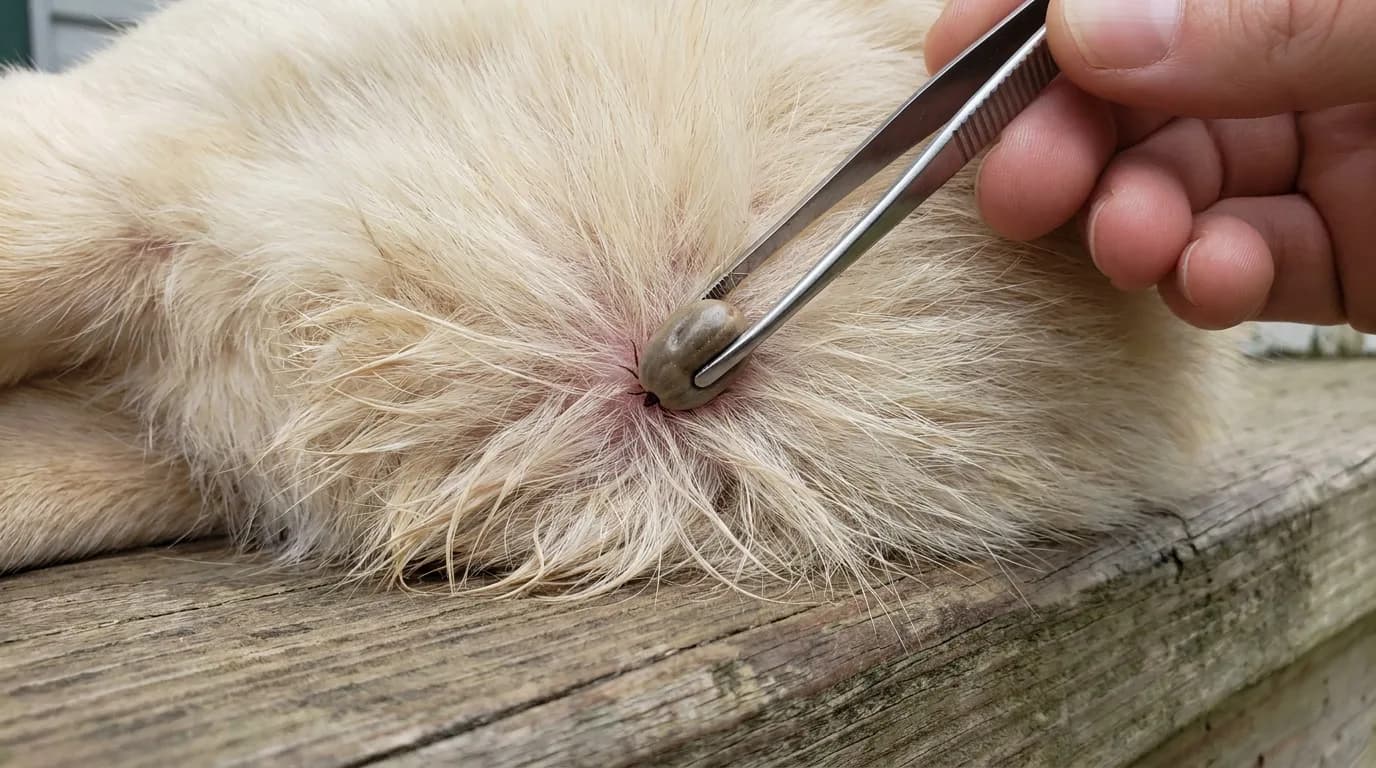
Puppy Deworming Schedule: When and How Often
Almost every puppy is born with worms, so deworming starts at 2 weeks and repeats often. Here is the vet-approved by-age puppy deworming schedule, the common worms, the dewormers that work, and how it lines up with your puppy's vaccinations.

BVMS, MRCVS
Petful is reader supported. As an affiliate of platforms like Amazon and Chewy, we may earn a commission when you buy through links on this page. There is no extra cost to you.
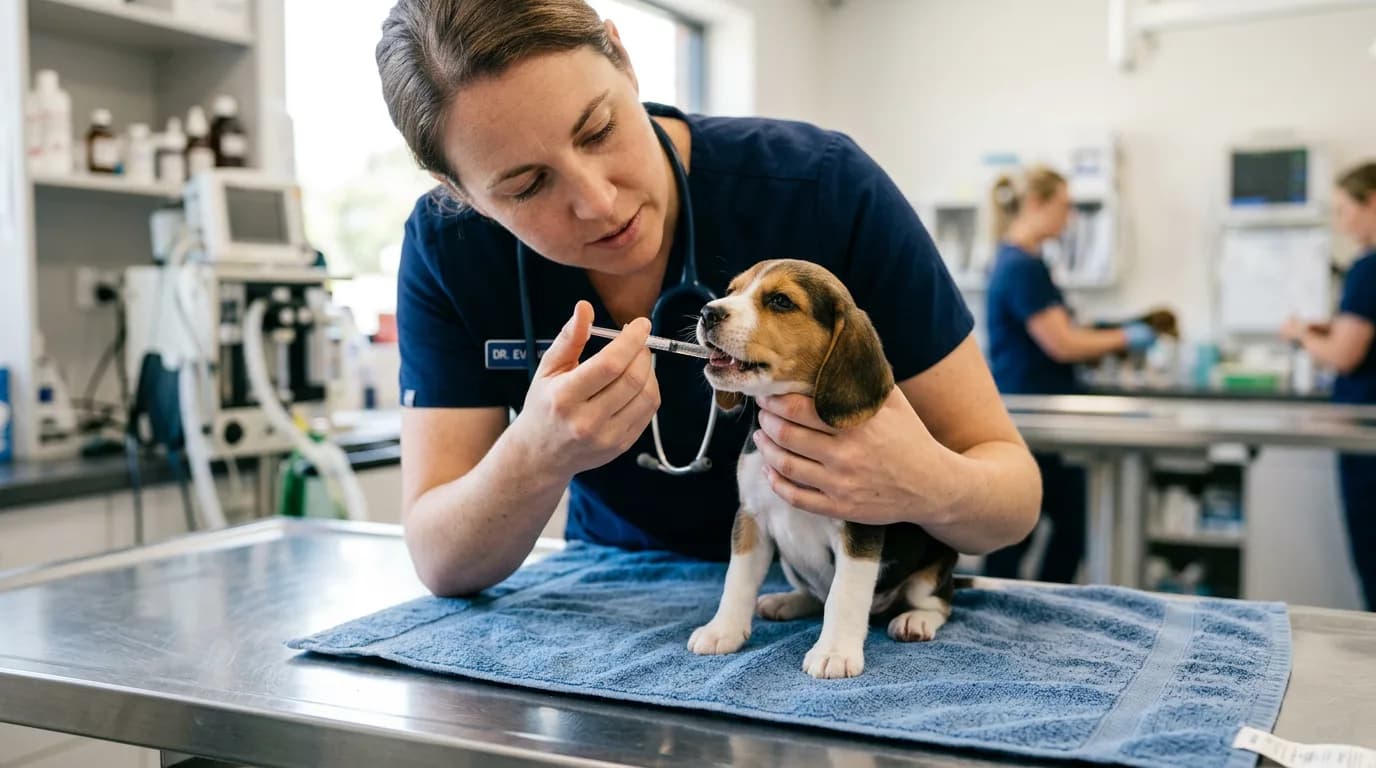
A puppy deworming schedule starts earlier than most new owners expect. The first dose is given at just 2 weeks of age, then repeated at 4, 6, and 8 weeks, followed by monthly deworming until your puppy is about 6 months old. The reason is simple and a little unpleasant: almost every puppy is born already carrying worms, passed from its mother before birth or through her milk. Frequent, repeated treatment is the only reliable way to stay ahead of a parasite that is essentially built into puppyhood.
This guide lays out the full by-age deworming timeline vets actually follow, the common worms puppies pick up, the dewormer types that work, and how deworming lines up with your puppy's core vaccinations so you can handle both at the same wellness visits.
- 1Deworm your puppy at 2, 4, 6, and 8 weeks of age, then monthly until 6 months, because most puppies are born with worms
- 2The core targets are roundworms and hookworms, both of which can also infect people, especially young children
- 3Deworming happens at the same wellness visits as core vaccines but is a separate treatment with its own schedule
The schedule below aligns with the deworming guidelines published by the Companion Animal Parasite Council (capcvet.org) and the American Animal Hospital Association (aaha.org). It is a general framework. Your veterinarian may adjust the timing based on your puppy's fecal test results, region, and lifestyle.

Sign up for expert-backed reviews and safety alerts all in one place.
Why Puppies Need Deworming So Early and So Often

Deworming a two-week-old puppy sounds aggressive until you understand how puppies get worms in the first place. Unlike adult dogs, which usually pick up parasites from the environment over time, most puppies are infected before they ever take a breath.
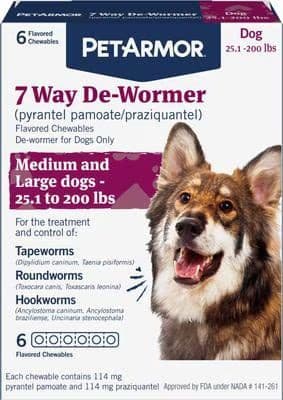
A broad-spectrum 7-way chewable dewormer that treats hookworms, roundworms, and tapeworms in medium and large dogs.
Petful may earn a commission when you click through to Chewy, at no extra cost to you.
Roundworm larvae (specifically Toxocara canis) lie dormant in the tissues of an adult female dog. When she becomes pregnant, hormonal changes reactivate those larvae, which then migrate across the placenta and into the unborn puppies. This is called transplacental transmission, and it means puppies can be born with an active roundworm infection already developing in their intestines. Hookworms take a slightly different route, passing to nursing puppies through the mother's milk in what is known as transmammary transmission.
Because the infection is already inside the puppy at birth, a single dewormer given once is never enough. Dewormers kill the adult worms living in the gut, but they do not kill immature larvae still migrating through the puppy's body. Those larvae mature into egg-laying adults over the following weeks. That is exactly why the schedule repeats every two weeks: each dose clears the worms that have just matured since the last treatment, steadily breaking the cycle before the puppy can shed large numbers of infectious eggs into your home and yard.
Do All Puppies Have Worms?
For practical purposes, yes. Veterinary parasitologists treat every newborn puppy as if it is infected, because the vast majority are. The Companion Animal Parasite Council recommends deworming all puppies on a set schedule regardless of whether worms have been seen, precisely because roundworms and hookworms are so reliably passed from mother to litter. A clean-looking stool does not mean a worm-free puppy. Worms can be present and shedding microscopic eggs long before you ever see a worm with the naked eye.
This is also why deworming the mother during pregnancy and lactation, and testing her stool, is part of good puppy care. You cannot fully prevent transmission, but you can reduce how heavy the puppies' worm burden is at birth.

 Sponsored
Need flea, tick, or parasite care for your pet?
A licensed vet at Dutch can recommend the right preventive and prescribe it when it's appropriate. Annual members get 20% off their first flea and tick order.
Use code Pets60
Plans start at $12/month · covers up to 5 pets
- Licensed vets in most states
- Rx for 150+ conditions
- 4.7 on Trustpilot
The Puppy Deworming Schedule by Age
Here is the printable-style timeline. The early doses target the two worms puppies almost always carry, roundworms and hookworms. From around 12 weeks, most puppies transition onto a monthly broad-spectrum parasite preventive that keeps covering intestinal worms while also protecting against heartworm.
| Puppy Age | Deworming Action | Worms Targeted | Why This Timing |
|---|---|---|---|
| 2 weeks | First deworming dose | Roundworms, hookworms | Clears worms passed from the mother before they mature and start shedding eggs |
| 4 weeks | Repeat dose | Roundworms, hookworms | Kills larvae that were too immature to be affected by the first dose |
| 6 weeks | Repeat dose | Roundworms, hookworms | Continues breaking the egg-shedding cycle as more larvae mature |
| 8 weeks | Repeat dose | Roundworms, hookworms | Final treatment of the every-2-weeks phase, often paired with the first vet visit |
| 12 weeks to 6 months | Monthly deworming | Roundworms, hookworms, whipworms | Covers the high-exploration puppy phase with a monthly broad-spectrum preventive |
| 6 months and older | Year-round monthly prevention | Intestinal worms plus heartworm | Lifelong monthly product keeps parasites controlled into adulthood |
A few notes on reading this schedule. Between 2 and 8 weeks, breeders and shelters often give the first doses because the puppies have not yet gone home. If you adopt a puppy at 8 weeks, ask for the deworming record so your vet knows which doses were already given and can pick up the schedule without gaps. If no record exists, your vet will simply restart the every-two-weeks approach to be safe.
The single most common mistake owners make is stopping after one or two doses because the puppy looks healthy. A puppy can look bright, round, and playful while still shedding thousands of worm eggs a day. Finish the full series.
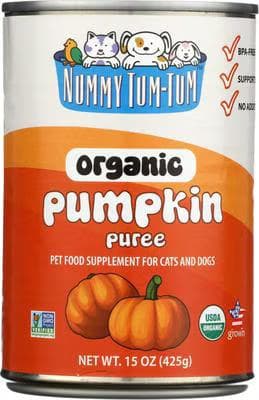
Pure USDA-organic pumpkin puree, no fillers or additives. Adds gentle soluble fiber to firm up loose stool and settle a mildly upset stomach. A simple vet-favorite topper.
Petful may earn a commission when you click through to Chewy, at no extra cost to you.
- Take a pea-sized, fresh fecal sample to each puppy wellness visit. A fecal test tells your vet exactly which worms are present, including ones a routine dewormer may miss, such as whipworms, giardia, or coccidia.
The Common Worms Puppies Get
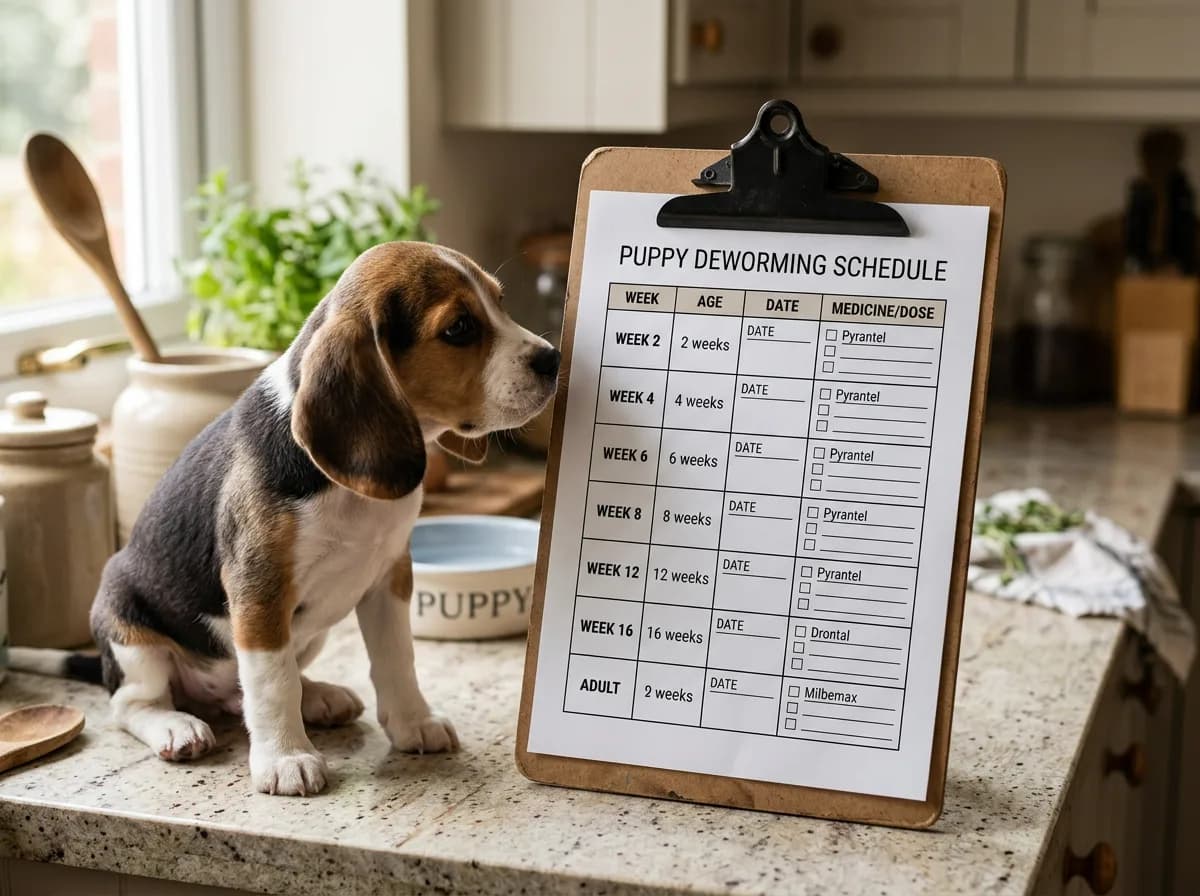
Deworming is not one-size-fits-all because puppies can carry several different parasites, and not every product kills all of them. Knowing the main players helps you understand why your vet may switch products or run a fecal test.
- Roundworms (Toxocara canis). The most common puppy worm. Long, spaghetti-like worms that live in the intestine and can cause a pot-bellied look, poor growth, vomiting, and diarrhea. Passed before birth and through milk. Roundworms are also zoonotic, meaning they can infect humans.
- Hookworms (Ancylostoma caninum). Small worms that bite onto the intestinal wall and feed on blood. In young puppies a heavy hookworm burden can cause dangerous anemia, pale gums, weakness, and, in severe cases, death. Passed mainly through the mother's milk and also picked up from contaminated soil.
- Whipworms (Trichuris vulpis). Picked up from a contaminated environment rather than from the mother, so they show up in slightly older puppies. They can cause chronic large-bowel diarrhea, sometimes with blood, and their eggs are notoriously tough and long-lived in soil.
- Tapeworms (Dipylidium caninum). Usually acquired when a puppy swallows an infected flea during grooming. You may notice rice-like segments around the puppy's rear or in the stool. Standard roundworm and hookworm dewormers do not kill tapeworms, so these need a specific product.
Two more organisms often get lumped in with worms even though they are not: giardia and coccidia. These are single-celled protozoan parasites, not worms, and they cause diarrhea in puppies. Ordinary dewormers do not treat them, which is another reason a fecal test matters. If your dewormed puppy still has loose stool, one of these may be the cause.
- Roundworms and hookworms are zoonotic, meaning they can infect humans, most often young children who play where puppies toilet. Wash hands after handling puppies, pick up stool promptly, and keep deworming on schedule to protect the whole family.
The zoonotic risk is not just theoretical. The CDC (cdc.gov) tracks human cases of roundworm and hookworm infection every year, including larva migrans, where larvae migrate through a person's body or under the skin. Children are most at risk because they play in soil and are less careful about handwashing. Staying on the deworming schedule protects your family as much as your puppy.
Puppy Dewormer Types: What Actually Kills Worms
Dewormers are grouped by the active ingredient, and each ingredient covers a specific set of parasites. This is why your vet chooses a product based on what your puppy actually has, rather than grabbing whatever says wormer on the box.

Pumpkin-flavored probiotic soft chews that support healthy gut flora and digestion in dogs.
Petful may earn a commission when you click through to Chewy, at no extra cost to you.
- Pyrantel pamoate. The classic first puppy dewormer. It is gentle enough to use from 2 weeks of age and treats roundworms and hookworms, which makes it perfect for the early every-two-weeks doses. It comes as a liquid or tablet and is available over the counter, though vets and breeders usually supply it.
- Fenbendazole (often sold as Panacur). A broader dewormer given as a course over several days. It treats roundworms, hookworms, whipworms, one common tapeworm (Taenia), and is also used against giardia. Its wide coverage makes it a go-to when a fecal test shows more than one parasite.
- Praziquantel. The tapeworm specialist. Because pyrantel and fenbendazole miss the flea tapeworm (Dipylidium), praziquantel is added when tapeworm segments are found. It is often combined with other ingredients in a single tablet.
- Monthly preventives (milbemycin oxime, moxidectin, and similar). These are the products that take over from around 12 weeks onward. Given as a monthly chew or topical, they prevent heartworm and, at the same time, control common intestinal worms, which is how deworming quietly becomes a lifelong routine rather than a puppy-only chore.
- Puppy dewormers are dosed by body weight, and a fast-growing puppy can outgrow a dose within a week or two. Underdosing lets worms survive, and using a product made for cats, livestock, or adult dogs can seriously harm a young puppy. Confirm the exact product and dose with your veterinarian before every round.
How to Deworm a Puppy at Home (Safely)
You can deworm a puppy at home using a veterinary-recommended, weight-appropriate dewormer such as pyrantel pamoate, given orally on the schedule above and repeated as directed. That is the short answer. The safer, complete answer includes a few guardrails.
First, weigh your puppy right before dosing, because dosing is based on current weight and puppies gain fast. Second, use a product that names dogs and puppies on the label and states the minimum age or weight it is approved for. Never split an adult-dog or large-animal dewormer to estimate a puppy dose. Third, follow the repeat interval exactly. A single at-home dose kills the adult worms present today but not the larvae that will mature next week, so skipping the follow-up dose is the most common way home deworming fails.
Finally, treat at-home deworming as a supplement to veterinary care, not a replacement for it. A fecal test is the only way to know whether your puppy has whipworms, tapeworms, giardia, or coccidia, none of which a basic over-the-counter roundworm-and-hookworm product will clear. If your puppy has diarrhea, a pot belly, visible worms, pale gums, or is not gaining weight, see your vet rather than reaching for another home dose.
What Happens If You Don't Deworm a Puppy?
Skipping deworming lets the worm burden build unchecked, and in a young puppy that carries real consequences. Roundworms compete for nutrients and can cause stunted growth, a swollen belly, vomiting, and diarrhea. In heavy infections they can physically obstruct the intestine, which is a surgical emergency.
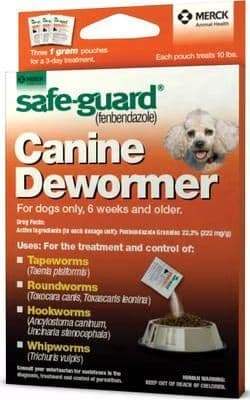
A 3-day fenbendazole dewormer covering hookworms, roundworms, tapeworms, and whipworms for small dogs.
Petful may earn a commission when you click through to Chewy, at no extra cost to you.
Hookworms are the more immediately dangerous parasite. Because they feed on blood, a large hookworm burden can cause severe anemia in a puppy whose blood supply is small to begin with. Signs include pale gums, weakness, and lethargy, and in the youngest puppies untreated hookworm anemia can be fatal. This is one of the reasons the schedule starts so early and repeats so often.
There is a household cost too. An undewormed puppy sheds enormous numbers of eggs into your yard and home, seeding the environment for reinfection and raising the zoonotic risk to the people in the house, particularly children. In short, not deworming does not just risk the puppy's health, it risks everyone who shares its space.
How Deworming Fits With the Puppy Vaccination Schedule
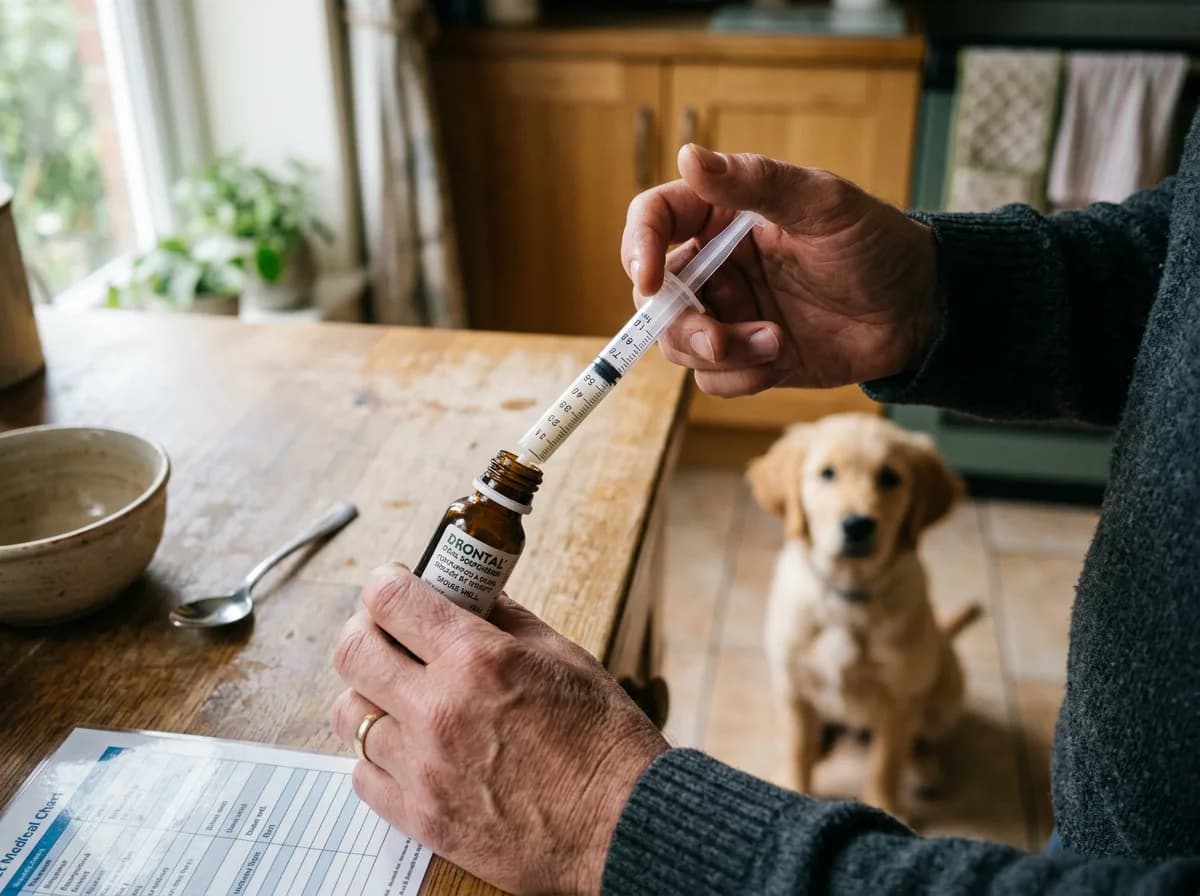
Deworming and vaccinating run on parallel tracks through the same first months of life, and they are usually handled at the same wellness visits, but they are not the same thing. Vaccines train the immune system against viruses and bacteria. Dewormers physically kill parasites. One does not substitute for the other, and there is no combined shot that handles both.
The convenience is that the timing overlaps neatly. Your puppy's monthly deworming or preventive doses fall around the same visits as the core vaccine series, so a single appointment often covers both. Here is how the two schedules line up at a typical set of puppy visits.
| Puppy Age | Deworming | Core Vaccines Typically Due |
|---|---|---|
| 2 weeks | First dewormer for roundworms and hookworms | None yet |
| 6 to 8 weeks | Deworm and begin monthly preventive | First DHPP (distemper, hepatitis, parvovirus, parainfluenza) |
| 10 to 12 weeks | Monthly dewormer or preventive | Second DHPP, plus leptospirosis if recommended |
| 14 to 16 weeks | Monthly dewormer or preventive | Third DHPP and rabies |
| 6 months | Transition to year-round parasite prevention | Booster planning and spay or neuter discussion |
Vaccine timing here follows the core canine guidelines from the American Animal Hospital Association (aaha.org) and the AVMA (avma.org). If you want the full shot-by-shot breakdown, see our companion guides to the puppy vaccination schedule and how much puppy shots cost. It is also worth understanding the core vaccine itself, the DHPP (or DHLPP) vaccine for dogs, and the specific diseases it prevents, including distemper in dogs, leptospirosis in dogs, and rabies. For the bigger picture on why this early protection matters so much, our overview of pet vaccination ties it together.
- Once the puppy series is done, most dogs stay protected with a single monthly chew or topical that covers heartworm and common intestinal worms at the same time. One product, once a month, year-round, and the puppy-era deworming schedule quietly turns into a simple adult routine.
Staying on schedule for both deworming and vaccines during these first six months is the foundation of a healthy start. It is also the window when a puppy is building the immunity and parasite control that will carry into adulthood, which is part of why structured early care matters even for dogs headed into working roles. If you are raising a puppy for a specific job, our guide to the types of service dogs shows how that early health foundation supports later training.
 Sponsored
Vet care that's always there
Unlimited video calls and messaging with licensed vets for less than a typical vet visit. One membership covers up to five pets.
Use code Pets60
Plans start at $12/month · covers up to 5 pets
- Licensed vets in most states
- Rx for 150+ conditions
- 4.7 on Trustpilot
Signs Your Puppy May Have Worms
Because the schedule assumes every puppy starts out infected, you deworm on a calendar rather than waiting for symptoms. Still, it helps to recognize the signs of a heavier worm burden, because they tell you to move faster and get a vet fecal test rather than wait for the next scheduled dose. Watch for:
- A swollen, pot-bellied appearance, especially just behind the ribs
- Visible worms in the stool or vomit, or rice-like segments near the tail (tapeworm)
- Diarrhea, sometimes with mucus or blood, or ongoing soft stool
- Vomiting, poor appetite, or failure to gain weight despite eating well
- A dull, dry coat instead of the soft shine of a healthy puppy
- Pale gums, weakness, or lethargy, which can signal hookworm-related anemia and needs same-day veterinary care
None of these signs replace routine deworming, and their absence does not mean your puppy is worm-free. They are a prompt to act sooner, not a substitute for the schedule.
Is It Normal to See Worms After Deworming?
Yes, and it can be alarming the first time. After a dose takes effect, you may see whole worms or worm fragments in your puppy's stool, sometimes still moving, for a day or two. This is simply the dewormer working: the medication paralyzes or kills the worms, and the puppy's body then passes them out. It is a sign the treatment did its job, not a sign that something went wrong.
A little soft stool in the day after deworming is also common and usually mild. What is not expected is repeated vomiting, sustained diarrhea, extreme lethargy, or a puppy that seems genuinely unwell after a dose. If you see those, or if you are still finding worms well beyond a few days after treatment, call your vet, because it may mean a heavier infection that needs a different product or a repeat course sooner than scheduled. Pick up and dispose of any passed worms promptly, and wash your hands, since the eggs remain a zoonotic risk even after they leave the puppy.
Frequently Asked Questions
Below are quick answers to the questions new puppy owners ask most often about deworming and the surrounding first-months care.
When Is the Best Time of Day to Deworm a Puppy?
Answer first: the time of day you deworm a puppy does not change how well the medicine works. Morning or night, a proven dewormer like pyrantel pamoate kills the same worms either way. What actually matters is giving every dose on schedule and matching it to your puppy's current weight, not the hour on the clock.
That said, a couple of practical habits make dosing easier:
- Give it in the morning if you can, so you can watch your puppy through the day for the harmless passing of worms or any rare reaction, rather than discovering it overnight.
- Pair the dose with a small amount of food. Pyrantel can be given with or without food, but a little food often settles a sensitive stomach. Fenbendazole (Panacur) is actually absorbed better when given with a meal, so food helps that product do its job.
- Keep the interval consistent. The every-2-weeks rhythm from 2 to 8 weeks matters far more than whether you dose at 8 a.m. or 8 p.m.
If your puppy vomits the dose back up within about an hour, call your vet about whether to repeat it. Consistency beats timing every time.
Do Natural Puppy Dewormers Actually Work?
Answer first: no home or natural remedy has been proven to reliably clear the roundworms and hookworms that puppies are born with. Pumpkin seeds, turmeric, apple cider vinegar, and food-grade diatomaceous earth circulate widely online, but none of them dependably kill these worms, and leaning on them can let a dangerous infection grow while you wait for results that never come.
This matters more in puppies than in adult dogs. A heavy hookworm burden can cause life-threatening anemia in a small puppy within days, so an unproven remedy is a genuine risk, not just a wasted effort. Veterinary parasitologists and the Companion Animal Parasite Council recommend a tested dewormer such as pyrantel pamoate precisely because the stakes are high.
A few specific cautions:
- Garlic is sometimes suggested as a natural wormer, but it is toxic to dogs and should never be given.
- Diatomaceous earth can irritate the lungs if inhaled and has no proven effect on worms living inside the intestine.
- Plain canned pumpkin is safe and adds gentle fiber, but fiber supports the gut, it does not deworm.
Use natural foods to support a healthy puppy, and use a real dewormer to actually remove the worms.
How Much Dewormer Does a Puppy Need?
Answer first: puppy dewormer is measured by current body weight, not by age, so the correct amount changes almost week to week as your puppy grows. That is why vets weigh a puppy at every visit before dosing, and why an amount that was right two weeks ago can be too small today.
Because products differ in strength, the exact dose comes from the specific label, not a one-size number. To get it right:
- Weigh your puppy right before each dose, using a kitchen or baby scale for the smallest pups.
- Read the label's weight bands or use the product's dosing chart, which tells you the amount for your puppy's exact weight.
- Never split an adult-dog, cat, or livestock dewormer to estimate a puppy portion. The concentrations differ and the math is easy to get dangerously wrong.
A one-month-old puppy, for example, is simply getting the 4-week dose in the standard 2, 4, 6, and 8-week series, sized to its small weight. When in doubt, have your veterinarian confirm both the product and the exact dose. Underdosing lets worms survive, and overdosing risks avoidable side effects.
What Is the Best Over-the-Counter Puppy Dewormer?
Answer first: the most widely used over-the-counter puppy dewormer is pyrantel pamoate, sold as a liquid or a tablet and safe to use from 2 weeks of age. It targets roundworms and hookworms, the two parasites nearly every puppy carries, which is exactly why it is the standard choice for the early every-2-weeks doses.
Where an over-the-counter product reaches its limit is coverage. Pyrantel does not kill whipworms, tapeworms, or the protozoa giardia and coccidia, so if a fecal test finds one of those, your puppy needs a vet-selected product instead.
A few buying notes for young puppies:
- For a puppy under 12 weeks or under 5 pounds, pyrantel is appropriate because it is dosed by weight and gentle enough for newborns.
- Most monthly heartworm-and-worm preventives are prescription only and are labeled to start around 6 to 8 weeks of age, so they cover the later months, not the newborn phase.
- Buying a dewormer off the shelf does not replace a fecal test. It is the cheapest insurance that you are treating the right worms.
Confirm the product and dose with your veterinarian before the first round, especially for a very young or very small puppy.
Start a single record of your dog’s health paperwork from the very first visit. A digital pet profile like MyPetID keeps vaccination dates, deworming, the microchip number, and vet records in one place, so you always have proof of what your puppy has had and what is due next, whether it is for boarding, travel, grooming, or a new vet.
For practical purposes, yes. Nearly all puppies are born with roundworms passed from the mother before birth and pick up hookworms through her milk, which is why vets deworm every puppy on a set schedule whether or not worms have been seen.
The worm burden builds unchecked, causing poor growth, a pot belly, vomiting, and diarrhea from roundworms, and dangerous, sometimes fatal anemia from blood-feeding hookworms. It also raises the risk that the worms spread to people in the home.
Give a veterinary-recommended, weight-appropriate dewormer such as pyrantel pamoate by mouth on the 2, 4, 6, and 8-week schedule, then repeat as directed. Weigh the puppy first, never use an adult-dog or livestock product, and pair home dosing with a vet fecal test.
It is a training and routine guideline, not a deworming one. It means rotating roughly 10 minutes of training, 10 minutes of play, and 10 minutes of rest to match a puppy's short attention span. Some owners also use a potty version: 10 minutes in a 10-foot potty spot, then 10 minutes of supervision indoors.
Many owners find the teething stretch around 3 to 4 months the hardest, when intense chewing and biting peak. A second tough phase is adolescence, which can begin around 8 months and last into the second year. Neither changes the deworming schedule.
Also called the Rule of Seven, it is a socialization guideline that encourages exposing a young puppy to seven different surfaces, seven objects, seven locations, and seven types of people early in life to build confidence. It is about behavior, separate from the medical deworming and vaccine schedules.
Deworming is one of the simplest, highest-impact things you can do for a new puppy. Start at 2 weeks, repeat every two weeks through 8 weeks, move to monthly until 6 months, and then keep a year-round preventive going for life. Pair it with the core vaccine series at the same visits, run a fecal test whenever there is any doubt, and you will have handled the single most reliable health threat of early puppyhood before it ever becomes a problem.
BVMS, MRCVS
Dr. Pippa Elliott, BVMS, MRCVS, is a veterinarian with nearly 30 years of experience in companion animal practice. Dr. Elliott earned her Bachelor of Veterinary Medicine and Surgery from the University of Glasgow. She was also designated a Member of the Royal College of Veterinary Surgeons. Married with 2 grown-up kids, Dr. Elliott has a naughty Puggle named Poggle, 3 cats and a bearded dragon.
Sign up for expert-backed reviews and safety alerts all in one place.