Lyme Vaccine for Dogs: Who Needs It and When
The Lyme vaccine protects dogs against a tick-borne disease, but not every dog needs it. Here is how the vaccine works, which dogs and regions benefit most, the puppy and adult schedule, typical cost, and the side effects to watch for.

BVMS, MRCVS
Petful is reader supported. As an affiliate of platforms like Amazon and Chewy, we may earn a commission when you buy through links on this page. There is no extra cost to you.
The Lyme vaccine for dogs is a non-core, risk-based shot that helps protect against Lyme disease, a bacterial infection spread by the bite of an infected black-legged (deer) tick. It is not a vaccine every dog needs. Whether it belongs on your dog's chart depends on where you live, where you travel, and how much time your dog spends in tick country. This vet-written guide explains how the vaccine works, which dogs and regions benefit most, the puppy and adult schedule, how it fits alongside monthly tick prevention, what it costs, where to get it, and the side effects worth watching for.
- 1The Lyme vaccine is a non-core (lifestyle) vaccine, recommended for dogs with real tick exposure rather than for every dog nationwide
- 2Most Lyme vaccines work by triggering antibodies that kill the bacteria inside the tick before infection can reach your dog
- 3The initial series is two doses given 2 to 4 weeks apart, starting as early as 8 to 9 weeks of age, followed by a booster every 12 months
- 4The vaccine does not replace year-round flea and tick prevention, and it does not cover other tick-borne diseases
- 5Ask your veterinarian whether your dog's region and lifestyle put it in the "should vaccinate" group

Sign up for expert-backed reviews and safety alerts all in one place.
What Is the Lyme Vaccine for Dogs?

Lyme disease in dogs is caused by a corkscrew-shaped bacterium called *Borrelia burgdorferi*. Dogs pick it up when an infected black-legged tick (also called a deer tick) attaches and feeds, usually for a day or more, and passes the bacteria into the bloodstream. Once infected, some dogs develop fever, swollen joints, lameness that shifts from leg to leg, swollen lymph nodes, and loss of appetite. A smaller number develop a serious kidney complication called Lyme nephritis, which is uncommon but frequently fatal once it takes hold, and it is a large part of why veterinarians take Lyme prevention seriously in endemic regions. It is also worth knowing that many infected dogs show no obvious signs at all, so a bite can do quiet damage long before an owner ever notices a problem.
The Lyme vaccine is designed to stop that chain of events before it starts. It is what veterinarians call a "non-core" or lifestyle vaccine. According to the vaccination guidelines published by the American Animal Hospital Association (AAHA), core vaccines (distemper, parvovirus, adenovirus, and rabies) are recommended for essentially every dog, while non-core vaccines like Lyme are recommended based on a dog's individual risk of exposure.
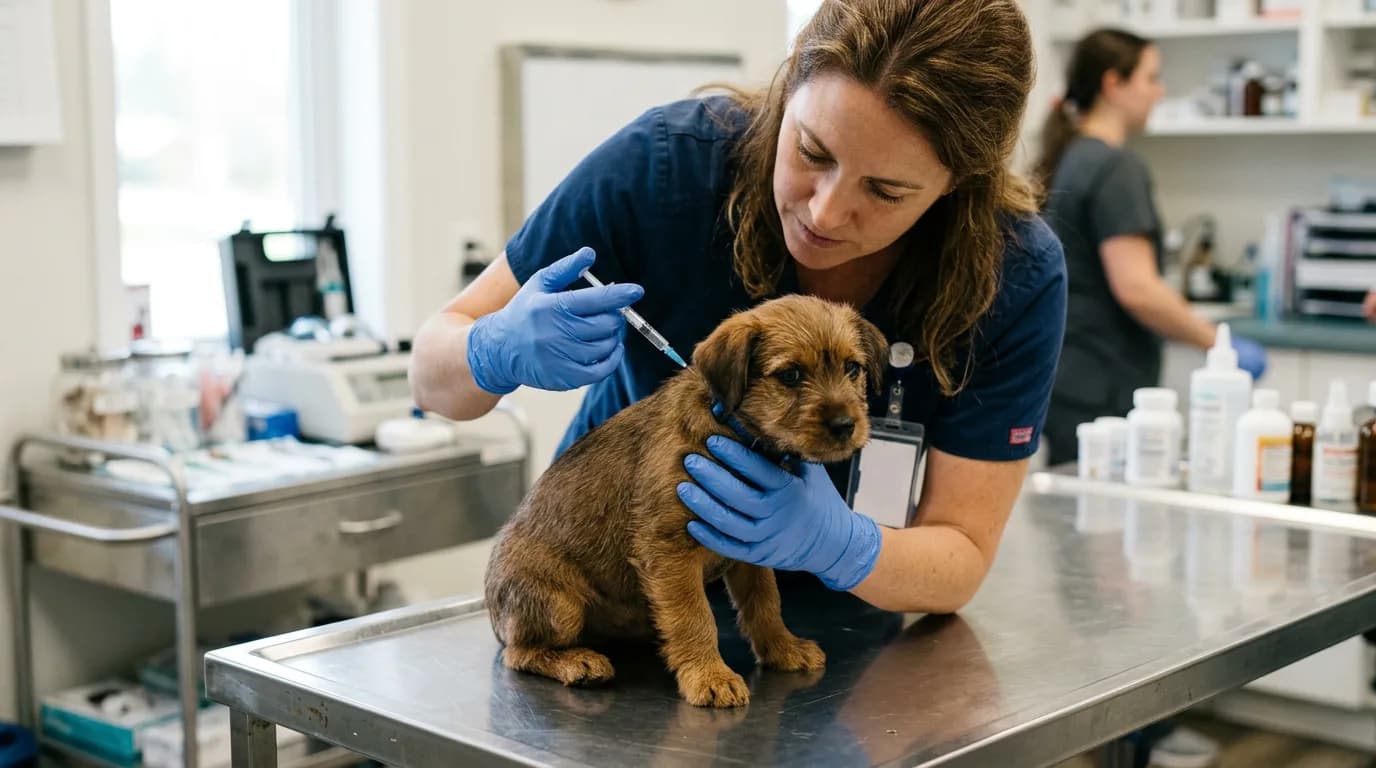
Several USDA-licensed Lyme vaccines are on the market, sold under brand names such as Nobivac, Vanguard, Recombitek, and Duramune. They fall into two broad types: killed whole-bacteria vaccines (bacterins) and recombinant subunit vaccines that use a single purified bacterial protein. Some newer products combine both approaches to widen the range of bacterial strains covered. Your veterinarian chooses the product, and from your side of the exam table the practical experience is the same: a small injection under the skin, usually between the shoulder blades.
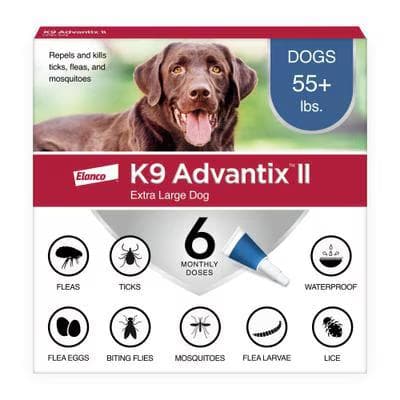
A monthly topical for dogs over 55 lbs that repels and kills ticks, fleas, and mosquitoes. Repelling ticks before they bite is a useful layer during heavy tick season.
Petful may earn a commission when you click through to Chewy, at no extra cost to you.
How the Lyme Vaccine Works
Most canine Lyme vaccines target a bacterial protein called outer surface protein A, or OspA. This is where the vaccine's clever design shows. *Borrelia burgdorferi* displays OspA on its surface while it lives inside the gut of the tick, before it ever reaches your dog. The vaccine teaches your dog's immune system to make antibodies against that protein.
Here is the key part. When a vaccinated dog is bitten, the tick draws up a blood meal that is now rich in the dog's anti-OspA antibodies. Those antibodies travel back into the tick's gut and attack the bacteria there, neutralizing them before they can migrate to the tick's mouthparts and cross into the dog. In effect, a current Lyme vaccine can shut down the infection at its source, inside the tick, rather than after the bacteria have already entered your dog's body.
That mechanism explains two things owners often ask about. First, it is why the vaccine has to be kept current: the protective antibody level in the blood needs to be high at the moment a tick bites, and those levels fade over the year. Second, it is why timing the series ahead of tick season matters. A dog whose antibodies have waned going into spring is less protected than one whose booster is fresh.
No vaccine is perfect, and the Lyme vaccine is no exception. Studies of OspA-based vaccines show they prevent infection in the large majority of dogs when boosters stay on schedule, but a small percentage of vaccinated dogs can still become infected. Newer combination vaccines were developed partly to widen the range of *Borrelia* strains covered, since not every regional strain looks identical to the immune system. All of this is one of several reasons the vaccine is treated as one layer of protection rather than a stand-alone solution.
Is the Lyme Vaccine for Dogs Necessary?
Not for every dog. The Lyme vaccine is a lifestyle vaccine, which means the honest answer to "is it necessary" is "it depends on your dog's risk." A city dog that rarely leaves paved sidewalks in a low-Lyme region has a very different risk profile from a hunting dog that spends weekends in tall grass in the Northeast.
Both the AAHA guidelines and the American Veterinary Medical Association (AVMA) frame the decision the same way: vaccinate dogs that have a genuine, ongoing chance of tick exposure in areas where Lyme disease is present, and skip it for dogs whose exposure risk is negligible. The American Kennel Club (AKC) echoes this risk-based approach in its owner guidance. The point of the conversation with your veterinarian is to place your specific dog into one of those two buckets.
Factors that push a dog toward "yes, vaccinate" include living in or traveling to a Lyme-endemic region, spending time in wooded or grassy areas, hiking, camping, hunting, or living with a lifestyle that brings regular contact with tick habitat. Working and outdoor dogs, including some service dogs that spend long stretches outdoors, tend to fall into the higher-risk group. Factors that point toward "not needed" include living in a region where Lyme is rare and a mostly indoor, low-exposure routine.
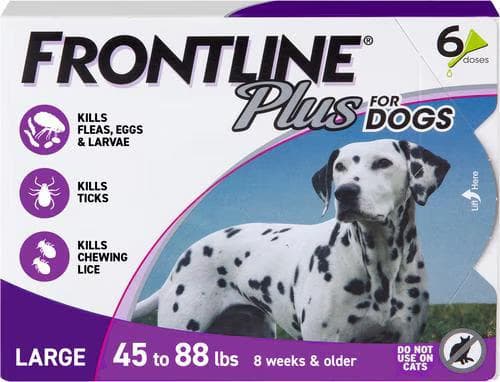
A monthly topical spot-on for large dogs 45 to 88 lbs that kills fleas, ticks, and chewing lice. A waterproof pick for dogs who do better with a topical than an oral chew.
Petful may earn a commission when you click through to Chewy, at no extra cost to you.
- Ticks can transmit several illnesses, including anaplasmosis, ehrlichiosis, babesiosis, and Rocky Mountain spotted fever. The Lyme vaccine protects only against Lyme disease. It does nothing against those other infections, which is a major reason tick prevention still matters even for a vaccinated dog.
Which Dogs and Regions Need the Lyme Vaccine
Geography is the single biggest factor. In the United States, Lyme disease is concentrated in the Northeast, the mid-Atlantic, and the upper Midwest (especially Wisconsin and Minnesota), with a separate pocket of risk along parts of the West Coast carried by a different black-legged tick species. Maps published by parasite-tracking organizations show these hot zones expanding year over year as tick populations spread into new counties.
If you live in one of these endemic areas, the case for vaccinating a dog with any meaningful outdoor time is strong. If you live in a low-risk region but travel with your dog into tick country (a summer trip to a lake house in New England, for example), your veterinarian may still recommend the vaccine, timed so the dog is protected before the trip.
Puppies and young dogs in endemic areas are often started on the Lyme vaccine as part of their broader puppy series, right alongside their core shots. Older dogs that move into an endemic area, or whose lifestyle changes to include more outdoor exposure, can begin the series at any age. There is no upper age cutoff for starting the vaccine; the decision is always about exposure risk, not the calendar.
Your veterinarian may also lean on in-clinic testing to gauge local risk. Many practices in tick country run a yearly blood screen (often the same SNAP-style test used at the annual checkup) that flags whether a dog has been exposed to Lyme, anaplasmosis, and ehrlichiosis. When a clinic is regularly seeing positive Lyme exposure across its patient population, that local prevalence data is a meaningful nudge toward vaccinating dogs with outdoor lifestyles.
The one group that clearly does not need it: dogs with no realistic tick exposure in regions where Lyme disease is not established. For those dogs, adding the vaccine offers little benefit. This is exactly the individualized judgment the non-core label is meant to prompt, so bring your dog's real routine to the appointment rather than asking for "all the shots."
The Lyme Vaccine Schedule for Puppies and Adults
The Lyme vaccine follows a two-dose primer plus an annual booster pattern. Per the AAHA guidelines, a puppy or previously unvaccinated dog gets an initial dose, a second dose 2 to 4 weeks later to complete the series, and then a booster every 12 months to keep protection current. Puppies can begin as early as 8 to 9 weeks of age, depending on the specific product label, which is why the Lyme vaccine often slots neatly into the standard puppy visit schedule.
A dog is not considered protected after only the first dose. Both doses of the initial series are needed before the immune response is strong enough to rely on, and that full protection takes a few weeks to develop after the second shot. This is why veterinarians stress timing the series so it finishes before, not during, peak tick season.
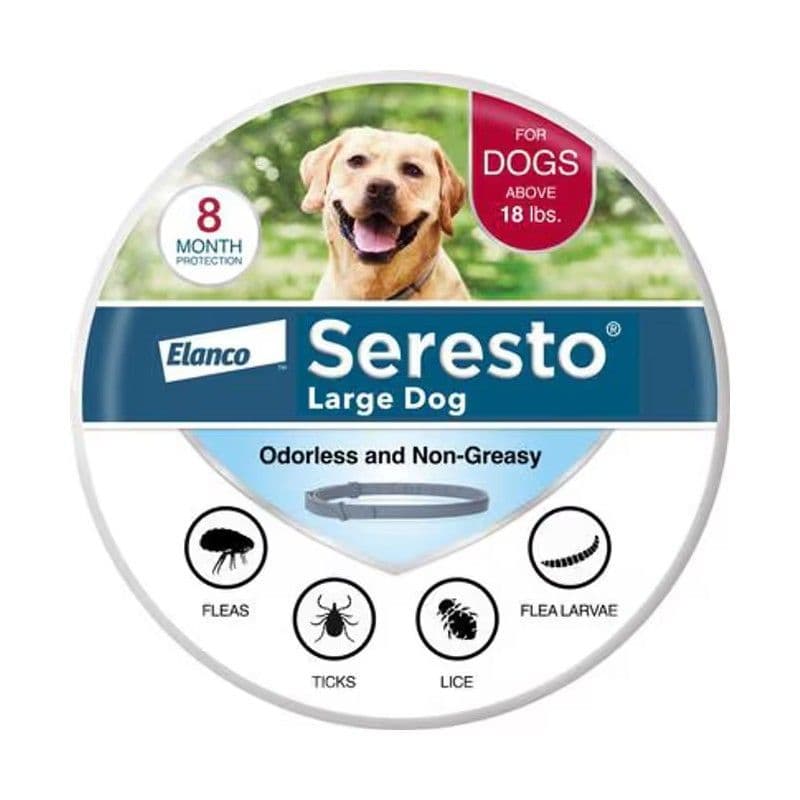
Odorless, non-greasy 8-month flea and tick collar for dogs over 18 lbs that kills and repels fleas and ticks and also kills lice and flea larvae.
Petful may earn a commission when you click through to Chewy, at no extra cost to you.
| Stage | Dog's Age or Timing | What Happens |
|---|---|---|
| First dose | As early as 8 to 9 weeks or older | Primes the immune system |
| Second dose | 2 to 4 weeks after the first dose | Completes the initial two-dose series |
| First annual booster | About 1 year after the initial series | Renews protection for the next year |
| Ongoing boosters | Every 12 months | Keeps antibody levels high through tick season |
If your dog misses a booster and the vaccine lapses for a long stretch, your veterinarian may restart the two-dose series rather than giving a single booster, because a badly lapsed dog can no longer be assumed to hold protective antibody levels. Keeping the annual appointment on the calendar avoids that extra step.
How Long Does the Lyme Vaccine Last in Dogs?
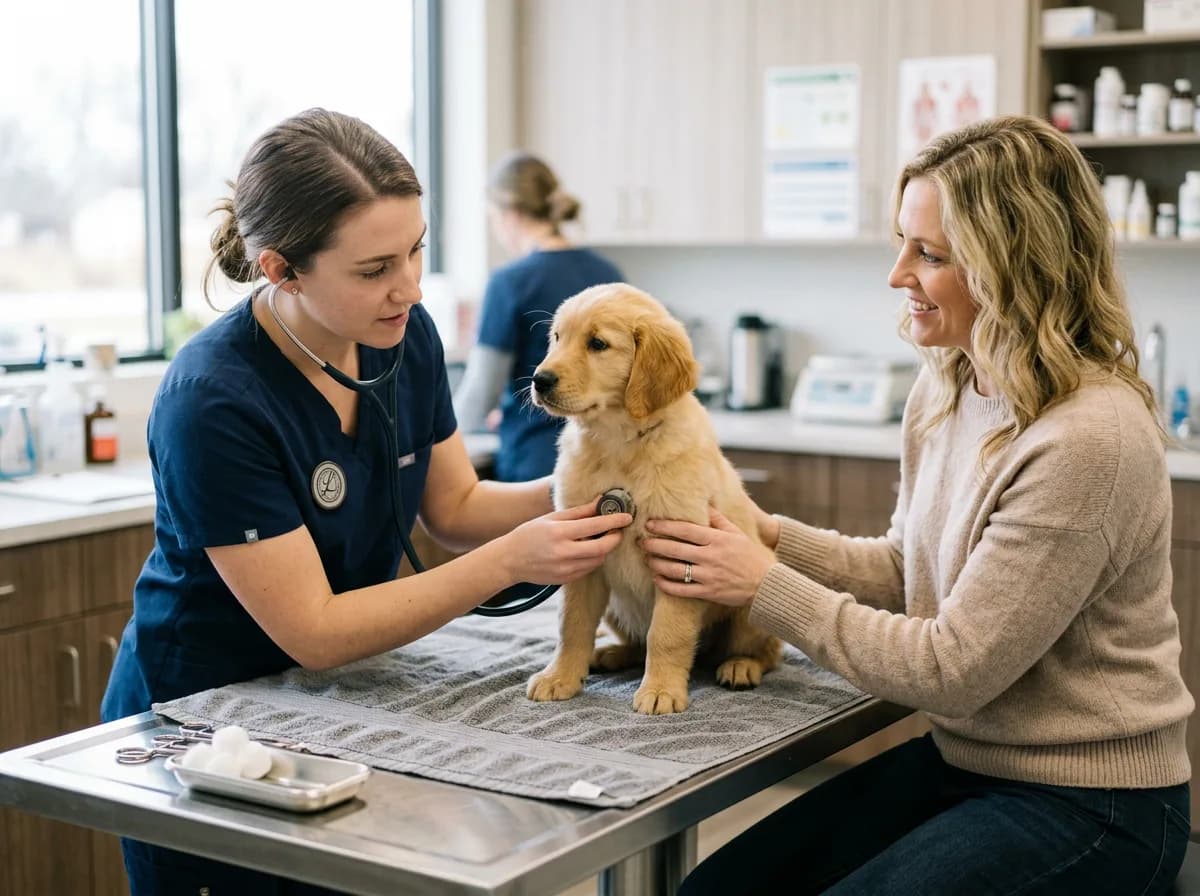
About one year. The protective immunity from the canine Lyme vaccine lasts roughly 12 months, which is why annual revaccination is the standard recommendation in the AAHA guidelines. Antibody levels rise after each booster and then gradually decline over the following months, so a yearly shot resets that protection before it drops too low.
That one-year duration is a practical reason to schedule the annual booster strategically. In much of the country, tick activity peaks in spring and again in fall, so many veterinarians aim to have a dog's booster fall shortly before the spring surge. A booster given at the right time of year means your dog carries its highest antibody levels through the months when tick bites are most likely.
Because the protection is not permanent, a dog that was vaccinated as a puppy but never boosted as an adult should not be considered protected. Immunity does not carry over from a single puppy series years earlier. If your dog's Lyme vaccine has lapsed, treat it as unprotected until the series is brought current, and lean on tick prevention in the meantime.
- Because Lyme immunity lasts about a year and fades toward the end of that window, ask your veterinarian to schedule the annual booster shortly before your area's spring tick surge. A well-timed booster keeps antibody levels high exactly when tick bites are most likely.
The Vaccine Is Not a Substitute for Tick Prevention
This is the point veterinarians repeat most, because it is the one owners most often get wrong. Vaccinating your dog against Lyme disease does not mean you can stop using flea and tick preventives. The two tools do different jobs, and dropping one because you use the other leaves a real gap.
The vaccine narrows its focus to a single disease, Lyme, and even then it is not 100 percent effective. Tick preventives, by contrast, work against the tick itself. A good year-round preventive (an oral chew, a topical, or a long-acting collar) kills or repels ticks before they can transmit any pathogen, which protects your dog against the whole menu of tick-borne diseases, not just Lyme. Used together, the vaccine and a preventive form overlapping layers: the preventive reduces how many ticks ever attach, and the vaccine backs you up if one slips through.
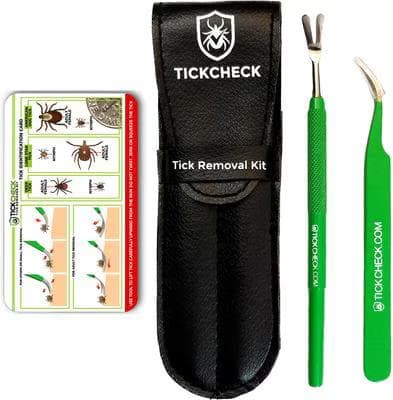
A vet-style tick removal kit with fine-tip tools that grip the tick right at the skin for a clean, straight pull, plus a tick ID card. Easy to keep in your dog-walking bag.
Petful may earn a commission when you click through to Chewy, at no extra cost to you.
There is also the matter of the diseases the vaccine cannot touch. Anaplasmosis, ehrlichiosis, babesiosis, and Rocky Mountain spotted fever are all carried by ticks and all fall entirely outside the Lyme vaccine's coverage. Only a tick preventive addresses those.
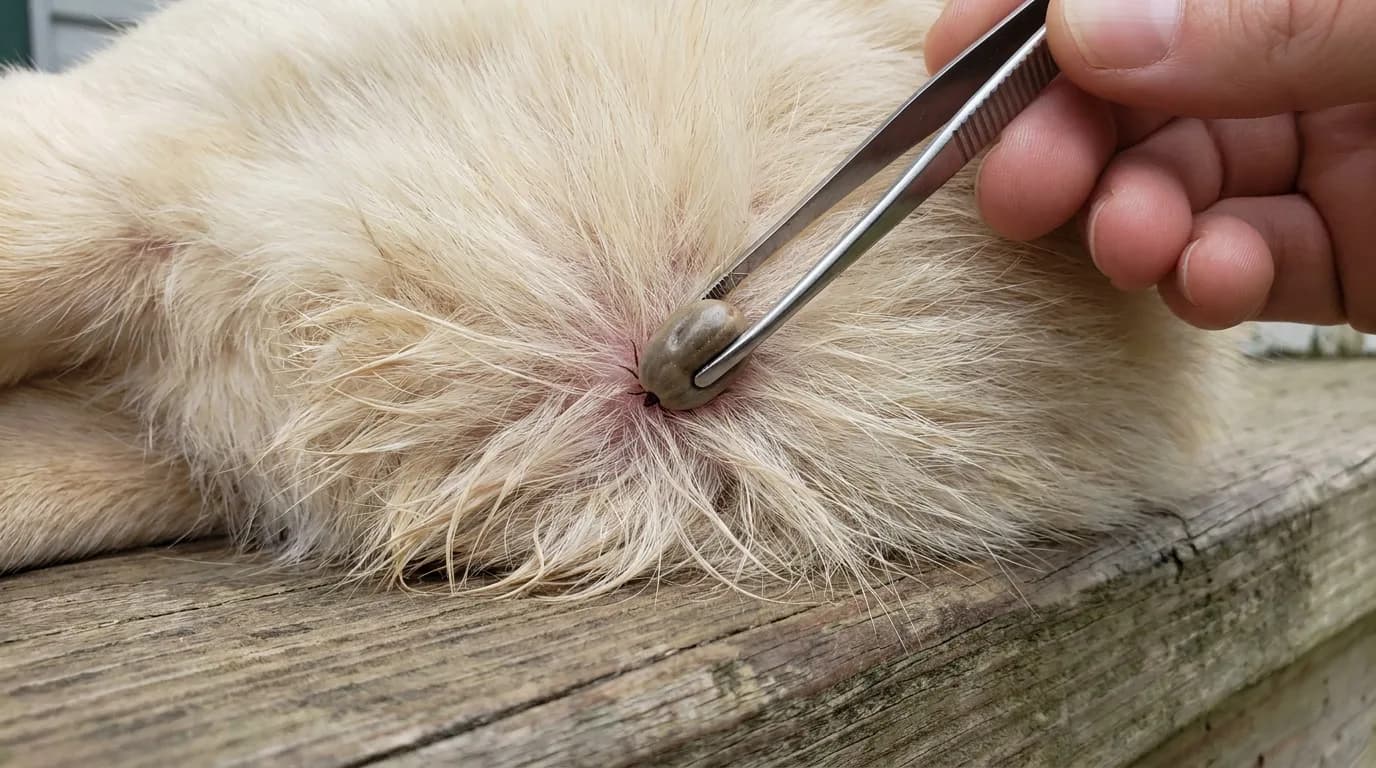
Practical tick control rounds out the plan. Check your dog for ticks after every outing in grass or woods, running your hands slowly over the ears, neck, armpits, groin, and between the toes. Remove any attached tick promptly with fine-tipped tweezers, grasping close to the skin and pulling straight out, since an infected tick generally has to stay attached and feeding for roughly 24 to 48 hours before it passes the Lyme bacterium into your dog. Finding and pulling a tick within that window can stop an infection before it ever starts, which is exactly why a daily tick check during tick season is worth the two minutes it takes. Keeping grass trimmed and clearing leaf litter around the yard reduces tick habitat close to home. For a broader look at how the Lyme shot sits among your dog's other immunizations, see our overview of pet vaccination.
- The Lyme vaccine reduces risk, it does not eliminate it. Keep your dog on a year-round tick preventive, check for ticks after outdoor time, and watch for signs like shifting-leg lameness, fever, or reluctance to move. If those appear, call your veterinarian even if the vaccine is current.
Lyme Vaccine Side Effects in Dogs
The Lyme vaccine has a strong safety record, and the vast majority of dogs experience nothing worse than mild, short-lived reactions. The most common side effects are the same ones seen with many vaccines: a little soreness or a small firm lump at the injection site, mild lethargy, a slightly reduced appetite, and a low-grade fever for a day or two. These typically resolve on their own within 24 to 48 hours and rarely need any treatment beyond rest.
A small firm swelling under the skin where the shot was given is normal and usually shrinks over one to two weeks. If it keeps growing, stays past a few weeks, or becomes hot and painful, have your veterinarian check it.
Serious reactions are uncommon but possible, as with any vaccine. A true allergic (anaphylactic) reaction usually shows up within minutes to a few hours of the shot. Warning signs include facial or muzzle swelling, hives, intense itching, vomiting or diarrhea, weakness or collapse, and difficulty breathing. This is an emergency: get your dog to a veterinarian immediately. Because these reactions come on fast, many clinics suggest keeping your dog under observation for a short time after the first Lyme vaccine, especially in a small-breed puppy.
If your dog has had a vaccine reaction in the past, tell your veterinarian before any future vaccination. They may pre-treat your dog, space out vaccines so only one is given at a time, or reassess whether a given non-core vaccine is worth continuing. That risk-versus-benefit conversation is exactly what the lifestyle-vaccine label is meant to invite.
How Much Does the Lyme Vaccine for Dogs Cost?
Expect roughly $20 to $45 per dose. The Lyme vaccine itself is one of the more affordable line items on a dog's care plan, though the total you pay depends on your region, your clinic's pricing, and whether an office exam fee is bundled in. Because the initial protection requires two doses, the first year costs more than the years that follow, when a single annual booster is all that is needed.
The table below gives realistic planning ranges. Treat them as estimates: a low-cost vaccine clinic or a shelter event will sit at the bottom of each range or below it, while a full-service veterinary hospital in a high-cost metro area will sit toward the top. Always confirm current pricing with your own clinic.
| Item | Typical Cost Range | Notes |
|---|---|---|
| Single Lyme vaccine dose | $20 to $45 | Varies by clinic and region |
| Initial two-dose series | $40 to $90 | Two visits a few weeks apart |
| Annual booster | $20 to $45 | One dose every 12 months |
| Office exam fee (if separate) | $50 to $70 | Often required, especially for a first visit |
When you weigh that cost, put it next to what treating Lyme disease can involve: a course of antibiotics, follow-up testing, and, in the uncommon cases that progress to kidney involvement, far more intensive and expensive care. For a dog with genuine tick exposure, the vaccine is inexpensive insurance. For a dog with little to no exposure, spending the money adds little, which loops right back to the risk-based decision.
Where to Get the Lyme Vaccine (and Does Tractor Supply Sell It?)
No, Tractor Supply does not sell the Lyme vaccine for dogs. Farm-and-ranch retailers like Tractor Supply do carry some over-the-counter dog vaccines on their shelves, such as combination distemper-parvo (DHPP-type) shots and, in some stores, kennel cough vaccine. The Lyme vaccine is not among them. It is handled as a veterinary-administered vaccine, so the reliable place to get it is a licensed veterinarian.
There are good reasons the Lyme vaccine is kept in professional hands. It requires the risk assessment described above to decide whether your individual dog even needs it, it is given as a timed two-dose series with an annual booster, and the person giving it should be prepared to manage a rare allergic reaction on the spot. A veterinarian also records the vaccine on your dog's official chart, which matters for boarding, travel, and proof-of-vaccination requirements.
If cost is the concern that is steering you toward a farm store, ask about lower-cost options through the veterinary channel instead. Many areas host low-cost vaccine clinics, mobile clinics, and shelter-run vaccination days where a veterinarian administers the Lyme vaccine at a reduced price. Your regular clinic can often point you to one, and some run their own discounted vaccine days seasonally. That gets you the affordability you want without giving up the professional oversight the vaccine is meant to have.
Skip the temptation to source and inject a Lyme vaccine yourself from an online supplier. Beyond the handling and storage requirements that a home fridge cannot guarantee, you lose the exposure-risk assessment, the reaction monitoring, and the official record that make the vaccine worth giving in the first place.
How the Lyme Vaccine Fits Your Dog's Full Vaccination Record
The Lyme vaccine does not stand alone. It sits alongside your dog's core vaccines and its other lifestyle shots, and keeping the whole picture organized is part of responsible ownership. Every dog needs the core series regardless of tick exposure: the combination DHPP or DHLPP vaccine that guards against distemper and other serious viruses, plus the legally required rabies vaccine. Lyme is layered on top of those for the dogs whose risk warrants it.
It is worth untangling one common source of confusion. Lyme disease and leptospirosis are both bacterial, both linked to the outdoors, and both sometimes lumped together in owners' minds, but they are different diseases with different vaccines. The leptospirosis vaccine protects against a bacterium spread mainly through the urine of wildlife and contaminated water, not ticks. Many at-risk dogs receive both, but getting one does not cover you for the other.
For puppies, the Lyme vaccine usually joins the broader immunization timeline rather than being a separate errand. Our puppy vaccination schedule lays out how the core shots, rabies, and lifestyle vaccines like Lyme and the Bordetella (kennel cough) vaccine space out across those first several months, so nothing gets missed and no dose is given too early.
Finally, keep the paperwork current. Whenever your dog gets any vaccine, including the Lyme booster, make sure it is written on the vaccination record your veterinarian maintains and, ideally, on a copy you keep at home. Boarding facilities, groomers, daycares, trainers, and travel checkpoints routinely ask for proof of vaccination, and a booster that was given but never logged is a headache waiting to happen the next time you need to show the record. A quick photo of the updated certificate after each visit is an easy habit that saves you scrambling later.
Start a single record of your dog’s health paperwork from the very first visit. A digital pet profile like MyPetID keeps vaccination dates, deworming, the microchip number, and vet records in one place, so you always have proof of what your puppy has had and what is due next, whether it is for boarding, travel, grooming, or a new vet.
Which Lyme Vaccine Brands Are Available for Dogs?
Most U.S. clinics stock one of four canine Lyme vaccines, and they fall into two technology types. Whole-cell bacterin vaccines such as Nobivac Lyme (Merck Animal Health) and Duramune Lyme (Elanco) use killed whole Borrelia bacteria to trigger a broad antibody response. Recombinant vaccines such as Recombitek Lyme (Boehringer Ingelheim) and Vanguard crLyme (Zoetis) use only targeted surface proteins rather than the whole organism.
The key protein in every version is OspA. Antibodies to OspA work inside the tick's gut, neutralizing the bacteria before they can pass into your dog. Vanguard crLyme adds a second target, OspC, for broader coverage of circulating strains.
As an owner you usually don't choose the brand. Your veterinarian carries whichever product fits their protocol, and protection across the licensed options is broadly comparable. What matters more than brand is completing the two-dose primary series and staying current on annual boosters.
- Nobivac Lyme and Duramune Lyme: whole-cell bacterins
- Recombitek Lyme: recombinant OspA
- Vanguard crLyme: recombinant OspA plus OspC
How Effective Is the Lyme Vaccine for Dogs?
The Lyme vaccine is highly protective but not absolute. It significantly lowers the odds that a bitten dog becomes infected, yet no Lyme vaccine claims 100 percent prevention, and breakthrough infections can still happen in heavily exposed dogs.
Effectiveness hinges on how the vaccine works. Because OspA antibodies act inside the feeding tick rather than in your dog's bloodstream, protection depends on having strong, current antibody levels at the moment of the bite. That is why two things drive real-world results: finishing the initial two-dose series so immunity fully develops, and keeping up annual boosters so antibody levels never lapse during tick season. A dog that misses a booster is meaningfully less protected than one that stays on schedule.
Two limits are worth knowing. The vaccine does not treat or clear an infection a dog already has, and it does not defend against other tick-borne diseases like anaplasmosis or ehrlichiosis. For those reasons, veterinarians treat vaccination as one layer that works alongside year-round tick preventives, not as a standalone shield.
Is the Lyme Vaccine Safe, and Which Dogs Should Not Get It?
For most dogs the Lyme vaccine is safe, and serious reactions are uncommon. The usual response is mild and short-lived: a day or two of tenderness at the injection site, lower energy, reduced appetite, or a slight fever. These typically resolve on their own within 24 to 48 hours.
Some dogs are better evaluated case by case before vaccinating. Talk with your veterinarian first if your dog has:
- A history of a significant reaction to any prior vaccine
- A known autoimmune condition
- Current illness or a compromised immune system
- Very small body size, which can raise the odds of a transient reaction
Because Lyme is a non-core vaccine, the decision is always a risk-versus-benefit call based on your dog's real tick exposure, not an automatic yes for every dog. In low-risk regions or for a dog that rarely leaves paved areas, your vet may reasonably advise skipping it.
- Contact your veterinarian promptly if you notice facial swelling, hives, repeated vomiting, or trouble breathing after any vaccine. These signs of a severe allergic reaction are rare but need same-day care.
Can Dogs Get the Lyme and Lepto Vaccines Together?
Yes. The Lyme and leptospirosis (lepto) vaccines are frequently given at the same appointment, and doing so is routine and generally well tolerated. Both are non-core, lifestyle-based vaccines aimed at dogs with outdoor and environmental exposure, so the same at-risk dog often needs both.
They are separate injections rather than one combined shot, usually placed at different sites so your vet can track any local reaction to each. Giving more than one vaccine in a visit can slightly increase the chance of transient, mild soreness or lethargy, but it does not make either vaccine less effective.
For small-breed or reaction-prone dogs, some veterinarians prefer to space vaccines a couple of weeks apart as a precaution. That is a judgment call your vet makes based on your dog's size and history, not a fixed rule.
Both require an initial two-dose series a few weeks apart, then annual boosters, so they often line up neatly on the same yearly visit.
For healthy dogs of typical size, no. Vets routinely co-administer non-core vaccines; small or previously reactive dogs may have them spaced out instead.
Not for every dog. The Lyme vaccine is a non-core, lifestyle vaccine, meaning it is recommended based on your dog's risk of tick exposure rather than given to all dogs. Dogs that live in or travel to Lyme-endemic regions (the Northeast, mid-Atlantic, upper Midwest, and parts of the West Coast) or that spend time in wooded and grassy areas are the best candidates. Dogs with little to no tick exposure in low-risk areas generally do not need it. Your veterinarian makes the call based on where you live and how your dog lives.
About one year. Protective immunity from the canine Lyme vaccine lasts roughly 12 months, which is why an annual booster is standard. Antibody levels rise after each dose and then gradually decline, so a yearly shot keeps protection high. A dog vaccinated only as a puppy and never boosted as an adult should not be considered protected. Many veterinarians time the annual booster to fall just before the spring tick surge.
No. Tractor Supply and similar farm-supply stores carry some over-the-counter dog vaccines, such as combination distemper-parvo shots and sometimes kennel cough vaccine, but the Lyme vaccine is not sold over the counter there. It is a veterinarian-administered vaccine, so you get it through a licensed vet. If cost is the concern, ask about low-cost or mobile vaccine clinics rather than a farm store.
Roughly $20 to $45 per dose. Because the initial protection requires two doses, the first year runs about $40 to $90 for the series, plus an office exam fee (often $50 to $70) if it is billed separately. After that, a single annual booster costs about $20 to $45. Low-cost and shelter vaccine clinics sit at the lower end, while full-service hospitals in high-cost areas sit at the top. Confirm current pricing with your own clinic.
BVMS, MRCVS
Dr. Pippa Elliott, BVMS, MRCVS, is a veterinarian with nearly 30 years of experience in companion animal practice. Dr. Elliott earned her Bachelor of Veterinary Medicine and Surgery from the University of Glasgow. She was also designated a Member of the Royal College of Veterinary Surgeons. Married with 2 grown-up kids, Dr. Elliott has a naughty Puggle named Poggle, 3 cats and a bearded dragon.
Sign up for expert-backed reviews and safety alerts all in one place.