When Can Puppies Go Outside? Safety and Socialization
A veterinarian explains when puppies can safely go outside: what is safe before full vaccination, which places are risky, the by-age vaccine schedule, and how to protect the socialization window without exposing your puppy to parvo.

BVMS, MRCVS
Petful is reader supported. As an affiliate of platforms like Amazon and Chewy, we may earn a commission when you buy through links on this page. There is no extra cost to you.
Bringing home a new puppy comes with one urgent question: when can puppies go outside without risking a serious, preventable illness? The honest answer has two halves. Your puppy can step into your own clean, fenced backyard almost right away, but crowded public spaces like dog parks, pavements, and pet stores should wait until roughly 1 to 2 weeks after the final round of puppy vaccines, usually given at 16 weeks of age. That gap matters because the very weeks when a puppy is most vulnerable to deadly viruses are also the weeks when their brain is wired to learn what is safe in the world.
As a veterinarian, I want you to get both halves right. Wait too long to expose your puppy to new people, sounds, and surfaces and you risk a fearful, poorly socialized adult dog. Rush into public spaces too soon and you gamble with parvovirus, a virus that kills far too many puppies every year. This guide walks you through the safe timeline, the real disease risks, a printable by-age vaccination schedule, and exactly how to socialize your puppy safely before the final shots.
- 1Your puppy can use a clean, fenced private yard from day one, but should wait for busy public areas until about 1 to 2 weeks after the final vaccine at 16 weeks.
- 2The prime socialization window closes near 12 to 16 weeks, so socialize now using carried outings and playdates with fully vaccinated adult dogs.
- 3Parvovirus and distemper are the main threats before full protection, so learning safe-versus-risky places is what keeps a puppy alive.

Sign up for expert-backed reviews and safety alerts all in one place.
So, When Can Puppies Go Outside Safely?
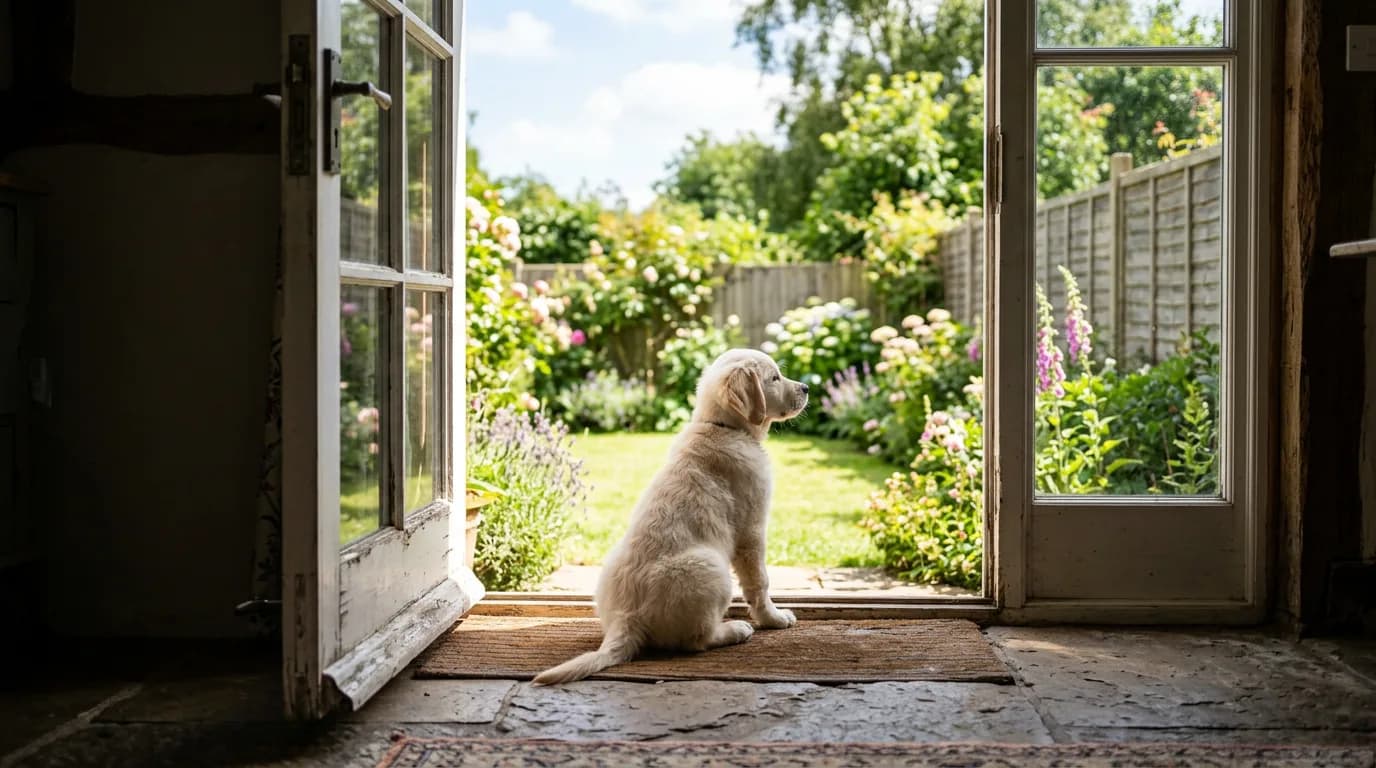
Here is the short, answer-first version. A puppy can go into your own secure, clean garden as soon as they come home, typically around 8 weeks of age, as long as no unvaccinated or unknown dogs use that space. What a young puppy should not do before full vaccination is walk on shared public ground: sidewalks, parks, pet-store floors, roadside verges, and anywhere strange dogs toilet.
Full protection is not instant. The puppy vaccine series finishes with a dose at 16 weeks or older, and immunity from that final dose takes roughly 1 to 2 weeks to mature. That is why most veterinarians clear puppies for public walks at around 16 to 18 weeks, or about 4 months old. Before that milestone, the goal is maximum safe exposure to the world without letting your puppy touch high-risk surfaces.
Can you take an 8 week old puppy outside at all? Yes, but with limits. At 8 weeks your puppy has usually had only their first vaccine, so their immune protection is partial. Keep them in your own yard or carry them in your arms, and skip any place where the vaccination status of other dogs is unknown. The American Kennel Club and most vets agree that carried, controlled outings at this age are ideal because they build confidence without disease risk.
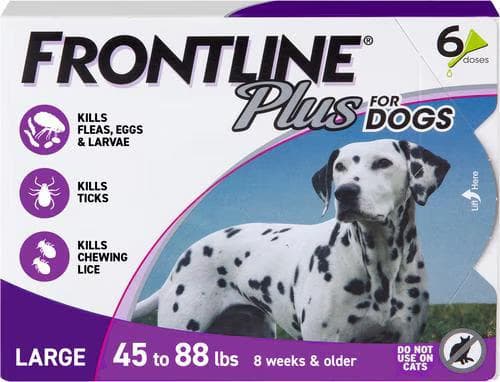
A monthly topical spot-on for large dogs 45 to 88 lbs that kills fleas, ticks, and chewing lice. A waterproof pick for dogs who do better with a topical than an oral chew.
Petful may earn a commission when you click through to Chewy, at no extra cost to you.
Why Timing Is a Balancing Act: Disease Risk vs. the Socialization Window
The reason this question feels stressful is that two clocks are ticking at once, and they pull in opposite directions.
The first clock is immunity. Newborn puppies get temporary antibodies from their mother's milk, but that maternal protection fades sometime between 6 and 16 weeks, and it fades at an unpredictable time for each individual puppy. There is a window where maternal antibodies are too low to protect but can still block a vaccine from taking full effect. This is exactly why the vaccine series is repeated every 2 to 4 weeks rather than given just once, and why the final dose lands at 16 weeks or later. Skipping or shortening the series leaves a real, dangerous gap.
The second clock is behavioral. A puppy's prime socialization window runs from roughly 3 weeks to 12 to 16 weeks of age. Experiences during this period shape how a dog reacts to people, other animals, noises, and new places for the rest of their life. Under-socialized puppies are more likely to grow into fearful or reactive adults, and behavior problems, not disease, are a leading reason dogs are surrendered to shelters. So you cannot simply lock your puppy indoors until 16 weeks and call it safe. You have to socialize cleverly.
The Diseases That Make Waiting Worth It
Understanding what you are protecting against makes the rules easier to follow. Vaccination protects your puppy against several serious illnesses (see our overview of pet vaccination):
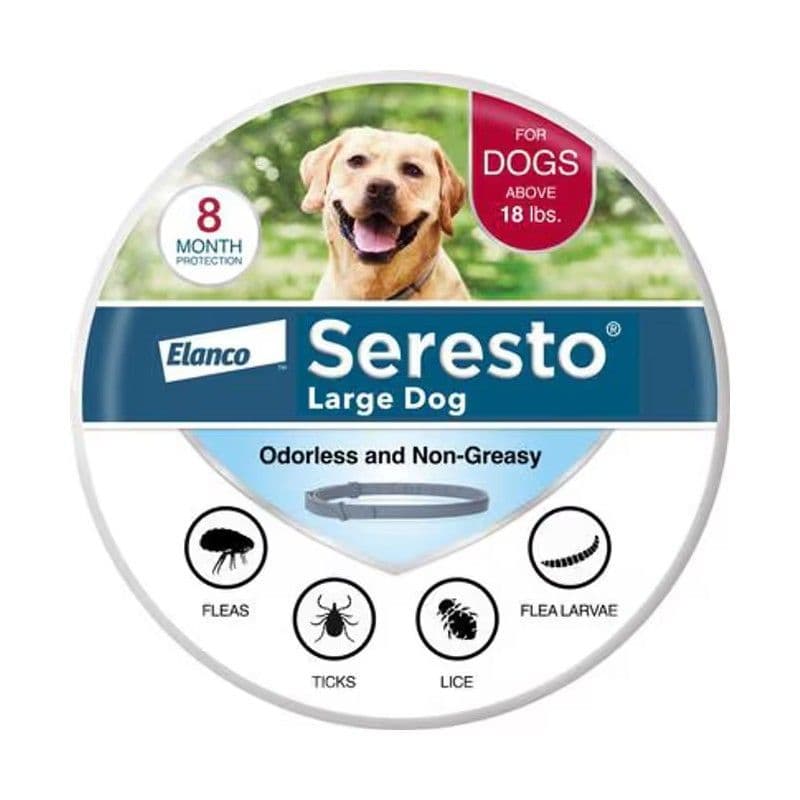
Odorless, non-greasy 8-month flea and tick collar for dogs over 18 lbs that kills and repels fleas and ticks and also kills lice and flea larvae.
Petful may earn a commission when you click through to Chewy, at no extra cost to you.
- Parvovirus. The single biggest reason to be careful. Parvo attacks the gut and immune system, causes severe bloody diarrhea and vomiting, and is frequently fatal in young puppies. The virus is shed in feces and can survive in soil and on surfaces for months, resisting many household cleaners.
- [Distemper](https://www.petful.com/pet-health/distemper-in-dogs/). A virus that attacks the respiratory, gastrointestinal, and nervous systems. Distemper can cause lifelong neurological damage and is often deadly.
- [Leptospirosis](https://www.petful.com/pet-health/leptospirosis-in-dogs/). A bacterial infection spread through the urine of wildlife and rodents and through contaminated water and soil. It can damage the kidneys and liver, and it can spread to people.
- [Rabies](https://www.petful.com/pet-health/rabies-symptoms-in-dogs/). Nearly always fatal once symptoms appear, and a legal requirement to vaccinate against in most places.
- Parvovirus can survive in soil and on surfaces for months and is the leading vaccine-preventable killer of young puppies. Dog parks, pet-store floors, public sidewalks, roadside grass, and highway rest stops are the highest-risk places before your puppy has finished the vaccine series.
The Puppy Vaccination Schedule, Week by Week
Your puppy's freedom to explore is tied directly to their vaccines, so it helps to see the whole timeline at once. The schedule below follows core recommendations from the American Animal Hospital Association (AAHA) canine vaccination guidelines and the American Veterinary Medical Association (AVMA). Your own vet may adjust it based on your region, your puppy's risk, and local law. For the full detail, see our companion puppy vaccination schedule.
| Puppy Age | Core Vaccines (DHPP/DAP) | Lifestyle Vaccines | Where They Can Go |
|---|---|---|---|
| 6 to 8 weeks | First DHPP dose | None due yet | Own clean yard and carried in arms only |
| 10 to 12 weeks | Second DHPP dose | Leptospirosis first dose, Bordetella optional | Carried outings, plus visits from vaccinated adult dogs at home |
| 14 to 16 weeks | Third DHPP dose, Rabies | Leptospirosis second dose | Quiet low-traffic areas, still avoid dog parks and busy trails |
| 16 weeks and older | Final DHPP booster | Boosters as advised by your vet | Full walks and public spaces about 1 to 2 weeks after the final dose |
The core combination shot is often written as DHPP or DAPP, and sometimes DHLPP when leptospirosis is included. It covers distemper, hepatitis (adenovirus), parvovirus, and parainfluenza. You can read what each letter means in our guide to the DHPP (DHLPP) vaccine for dogs. If your puppy will attend daycare, boarding, grooming, or training classes, your vet will likely add the Bordetella vaccine for kennel cough, which can be given early in the series.
When Is a Puppy Fully Protected?
A puppy is considered fully protected roughly 1 to 2 weeks after the last dose of the core series, which is given at 16 weeks of age or older. A common and costly mistake is counting from an earlier dose. A puppy who had a shot at 12 weeks is not cleared for the dog park; the 16-week dose is the one that closes the maternal-antibody gap for most puppies. When in doubt, ask your vet for a specific date rather than guessing.
- Full protection develops about 1 to 2 weeks after the final puppy vaccine given at 16 weeks or older. That lag is exactly why veterinarians green-light public walks then, rather than after an earlier dose in the series.
Keep your vaccination record card somewhere easy to find. Daycares, groomers, boarding facilities, and training classes will ask to see it, and it is your proof of which doses your puppy has actually received and when the next one is due.
Petful may earn a commission when you click through to Chewy, at no extra cost to you.
Safe Places vs. Risky Places Before Full Vaccination
Once you know the timeline, safe outings come down to controlling two things: the ground your puppy touches and the dogs they meet. Here is how the common options sort out.
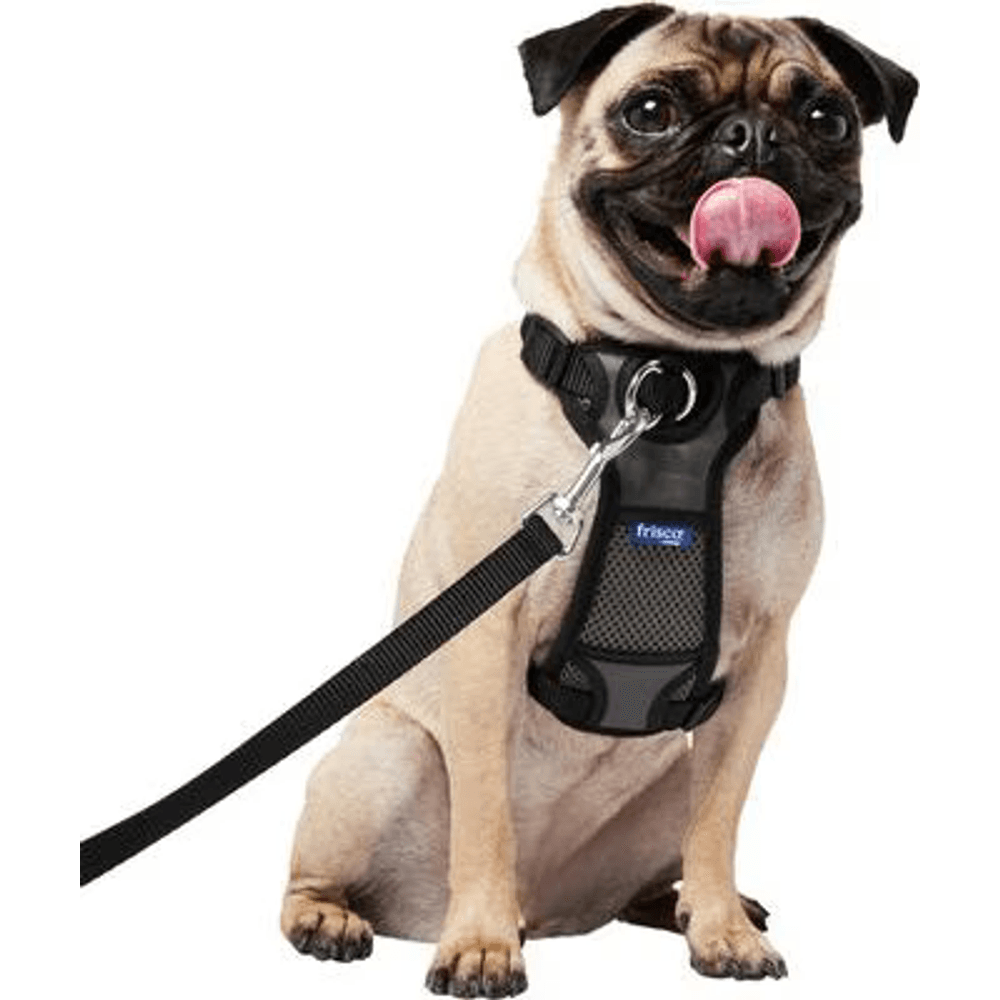
A budget-friendly padded no-pull harness that keeps leash pressure off a coughing dog's neck and windpipe by distributing it across the chest. A simple, affordable way to protect an irritated airway or a collapsing trachea on every walk.
Petful may earn a commission when you click through to Chewy, at no extra cost to you.
Lower-Risk Places and Activities
- Your own fenced, clean yard, as long as no unvaccinated or unknown dogs use it.
- Being carried through the neighborhood, a garden center, or a quiet outdoor cafe so your puppy sees and hears the world from your arms.
- A clean blanket, mat, or stroller you bring and control, set down on a surface you trust rather than on public grass.
- The homes of friends whose adult dogs are fully vaccinated and healthy, which is one of the best ways to teach dog-to-dog manners safely.
- Your own car for short, positive rides that build confidence and prevent motion-related anxiety later.
Higher-Risk Places to Avoid Until Fully Vaccinated
- Dog parks and off-leash areas, where the vaccination status of every dog is unknown and shared ground is heavily soiled.
- Public sidewalks, pavements, and roadside grass, especially in busy areas with lots of dog traffic.
- Pet-store floors and the areas just outside store entrances.
- Rest stops, campgrounds, and popular hiking trails, which draw dogs from many regions.
- Any place you have seen stray or clearly unwell dogs.
How to Socialize Your Puppy Safely Before the Final Shots
This is where good owners shine. The American Veterinary Society of Animal Behavior takes the position that the benefits of early socialization outweigh the disease risk, provided it is done sensibly, because behavior problems are the number one cause of death for dogs under three years old, far outranking infectious disease. So the plan is not to wait. The plan is to socialize with the brakes on.
Practical ways to fill the socialization window safely:
- Host a steady stream of visitors of different ages, sizes, and appearances so your puppy learns that new people are normal and good.
- Enroll in a well-run puppy class that requires proof of age-appropriate vaccination and cleans its floors between sessions. Ask before you sign up.
- Play recordings of thunderstorms, fireworks, doorbells, and traffic at low volume paired with treats, building calm associations early.
- Introduce handling by gently touching paws, ears, and mouth so vet visits and nail trims are easier for life.
- Expose your puppy to varied safe surfaces you control at home: tile, carpet, grass in your own yard, a wobble cushion, and a metal tray.
Can I Take My 12 Week Old Puppy for a Walk?
Not on public ground yet, in most cases. A 12 week old puppy has usually had two of three or four core doses, so they are partway protected but not fully covered. You can absolutely take a 12-week-old on an outing, but keep them off shared public surfaces: carry them, use a stroller, or stick to your own yard. Save true leash walks on the sidewalk for about 1 to 2 weeks after the 16-week dose. You can, and should, practice leash skills indoors and in your own yard in the meantime.
A Note on Service and Working Puppies
Puppies raised for assistance work are a special case. Under the Americans with Disabilities Act (ADA), fully trained service dogs have broad public-access rights, and puppies in formal training programs are socialized to public spaces under careful supervision and a vaccination protocol set by their program. If you are raising a future working dog, follow your program's guidance rather than general pet advice. You can learn more about the different types of service dogs and the roles they fill.
The Puppy "Rules" Everyone Talks About, Explained
Search for puppy advice and you will meet a wall of numbered "rules." Most come from trainers and rescues rather than from veterinary medicine, but they are useful shorthand. Here is what each one actually means.
The 3-3-3 Rule
The 3-3-3 rule describes how a newly adopted dog settles into a home: about 3 days to decompress and feel overwhelmed, about 3 weeks to learn your routine and start to relax, and about 3 months to feel fully at home and bonded. It is a reminder to be patient. A quiet or nervous puppy in week one is normal, not a sign something is wrong.
The 10-10-10 Rule
The 10-10-10 rule is a socialization shorthand some trainers use during the critical window: aim to introduce your puppy to at least 10 new people, 10 new places or environments, and 10 new surfaces or situations, always in a calm, positive, reward-based way. The exact numbers matter less than the habit of seeking out safe, varied, happy experiences while your puppy is young enough to accept them easily.
The Rule of 7s, or "777 Rule"
The rule of 7s, sometimes nicknamed the 777 rule, is a breeder and early-socialization checklist. The classic version says that by about 7 weeks of age, a puppy should ideally have walked on 7 different surfaces, played with 7 different types of objects, been in 7 different locations, met 7 new people, faced 7 small challenges, eaten from 7 different containers, and eaten in 7 different locations. It is a memorable way to make sure early experiences are varied rather than repetitive.
The Hardest Month and Settling In at Night
Owners often ask which stage is toughest. Many trainers point to the stretch around 4 to 5 months, when teething, boundary-testing, and potty-training setbacks tend to pile up, followed by a second challenging phase during adolescence at roughly 8 to 10 months. Sleep is its own hurdle. A 9 week old puppy who cries in the crate at night is usually telling you something real, most often that they need to toilet or feel anxious after leaving their littermates. The kind approach is to rule out a bathroom need with a calm, boring trip outside and to keep the crate close by at first, while avoiding turning night-time crying into play or treats.
Frequently Asked Questions
When Can Puppies Go Outside to Pee and Start Potty Training?
Answer first: you do not have to wait for the full vaccine series to start potty training. Take your puppy out to a private, clean toilet spot in your own fenced yard from the day they come home. House-training works best when it begins around 8 weeks, and a yard that no unvaccinated or unknown dogs use carries very little parvovirus risk.
The key is where, not whether. Pick one patch of your own grass, gravel, or paving as the bathroom, carry a very young or nervous puppy straight to it, and skip public verges, sidewalks, and any grass strip that other dogs use. Take your puppy out to that spot:
- First thing in the morning and last thing at night.
- Within a few minutes of waking from any nap.
- Shortly after every meal and every drink.
- After a burst of play or excitement.
- Roughly every 1 to 2 hours in between while they are very young.
Praise and a small treat the instant they finish outdoors teaches the habit faster than any correction.
- If carrying your puppy across a shared lobby or elevator several times a night feels risky, a balcony pee pad or an indoor grass tray covers toileting until public walks are cleared about 1 to 2 weeks after the 16-week vaccine.
When Can Newborn Puppies Go Outside With Their Mom?
Answer first: newborn puppies belong indoors in a warm, clean whelping area for the first few weeks of life, not outside. They cannot regulate their own body temperature until about 3 to 4 weeks of age, so cold ground and drafts are a real danger before then.
A litter can start brief, supervised trips into a private, clean yard at around 3 to 4 weeks, once their eyes and ears are open, they can walk steadily, and they can hold their body temperature. Keep those first outings short, warm, and dry, and only in a space that no outside or unvaccinated dogs use. The mother should be present and healthy, because she is still their main source of warmth, food, and protective antibodies.
The same disease rules that apply to a single puppy apply to a whole litter, only more so, because none of them has had a vaccine yet. That means no public ground, no strange dogs, and no visitors who have handled unknown dogs without washing up first. Once the litter reaches 6 to 8 weeks and begins its own vaccine series, follow the by-age timeline above for anything beyond your home yard.
Start a single record of your dog’s health paperwork from the very first visit. A digital pet profile like MyPetID keeps vaccination dates, deworming, the microchip number, and vet records in one place, so you always have proof of what your puppy has had and what is due next, whether it is for boarding, travel, grooming, or a new vet.
Yes, but only into your own clean, fenced yard or carried in your arms. At 8 weeks a puppy has usually had just the first vaccine, so avoid public sidewalks, parks, and pet-store floors where unknown dogs toilet until the series is complete.
It is a socialization shorthand some trainers use: during the critical window, aim to introduce your puppy to about 10 new people, 10 new places, and 10 new surfaces or situations, always calmly and with rewards.
Not on public ground yet in most cases. A 12-week-old is only partway through the vaccine series, so carry them or use a stroller for outings and save sidewalk walks for about 1 to 2 weeks after the 16-week dose.
It describes how a newly adopted dog adjusts: about 3 days to decompress, 3 weeks to learn the routine, and 3 months to feel fully at home and bonded. It is a reminder to be patient during the settling-in period.
Not entirely. A 9-week-old usually cries because they need to toilet or feel anxious after leaving their litter. Rule out a bathroom need with a calm, quiet trip outside and keep the crate near you at first, but avoid rewarding the crying with play or treats.
The 3-3-3 rule is the adoption adjustment timeline: roughly 3 days to decompress, 3 weeks to settle into your routine, and 3 months to feel at home and build full trust.
Many trainers point to around 4 to 5 months, when teething, testing boundaries, and potty-training regressions often overlap, with a second tough stretch during adolescence at roughly 8 to 10 months.
It is another name for the rule of 7s, an early-socialization checklist: by about 7 weeks, a puppy should ideally have experienced 7 surfaces, 7 objects, 7 locations, 7 people, 7 challenges, 7 feeding containers, and 7 feeding locations.
Getting your puppy outside is not about a single magic date. It is about matching each outing to where your puppy is in the vaccine series, protecting them from parvo and distemper while still filling the socialization window that shapes the rest of their life. Follow the schedule, use carried outings and vaccinated playdates before 16 weeks, and check in with your own veterinarian for the green light on public walks. Do both halves well and you raise a dog who is healthy and confident.
BVMS, MRCVS
Dr. Pippa Elliott, BVMS, MRCVS, is a veterinarian with nearly 30 years of experience in companion animal practice. Dr. Elliott earned her Bachelor of Veterinary Medicine and Surgery from the University of Glasgow. She was also designated a Member of the Royal College of Veterinary Surgeons. Married with 2 grown-up kids, Dr. Elliott has a naughty Puggle named Poggle, 3 cats and a bearded dragon.
Sign up for expert-backed reviews and safety alerts all in one place.