Mercury in Cat Food: Fish-Based Diets and the 18x Finding
Fish-based cat foods carried about 18x the mercury of other recipes in the 2026 Clean Label Project study. A vet explains the real risk, which fish to limit, a tuna treat budget, the signs of mercury poisoning in cats, and what to feed instead.

BVMS, MRCVS
Petful is reader supported. As an affiliate of platforms like Amazon and Chewy, we may earn a commission when you buy through links on this page. There is no extra cost to you.
If you have seen the headline that fish-based cat foods carried about 18 times the mercury of other recipes, you probably want a straight answer from a veterinarian: is mercury in cat food something to worry about, how much tuna is too much, and what does mercury poisoning actually look like in a cat?
Here is the short version. Fish-based recipes had higher mercury on average in the study, but a food's flavor does not establish an individual cat's risk. This guide explains the findings, compares FDA fish measurements, distinguishes plain tuna from complete tuna cat food, and describes signs that need veterinary assessment. The treat-calorie allowance concerns nutritional balance, not a mercury-safe dose.

Sign up for expert-backed reviews and safety alerts all in one place.
Mercury in cat food: what the 2026 study and earlier research found
Veterinarian's summary: in the 2026 Clean Label Project cat food study, fish-based recipes carried about 18x the mercury of other recipes. Exposure depends on concentration, amount, chemical form and duration. Plain tuna is not a complete diet, while a formulated tuna cat food may be. Choose a suitable complete food and seek veterinary assessment for tremors, wobbling, vision loss or unexplained weight loss.
- 1Fish-based cat foods carried about 18x the mercury and about 2.5x the cadmium of other recipes in the 2026 Clean Label Project study
- 2Mercury exposure depends on concentration, amount, chemical form and duration; a recipe name alone cannot establish risk
- 3Plain tuna is not a complete diet; the treat-calorie allowance addresses nutritional balance, not mercury safety
- 4Choose a suitable complete diet first; if feeding fish exclusively, compare other suitable proteins and exact-product evidence
- 5Tremors, incoordination, blindness, behavior change or weight loss need a veterinary visit, not a diet change at home
The study behind the headline was published on October 2, 2026, by the Clean Label Project, a nonprofit that sends consumer products to an accredited ISO 17025 laboratory and tests them for more than 122 contaminants. It covered 100 cat food products from 62 brands: 31 dry foods, 40 wet, canned or pouch foods, and 29 air-dried or freeze-dried foods. Our full explainer of the Clean Label Project cat food study walks through every category; this page focuses on the mercury result.
The mercury findings were specific and consistent:
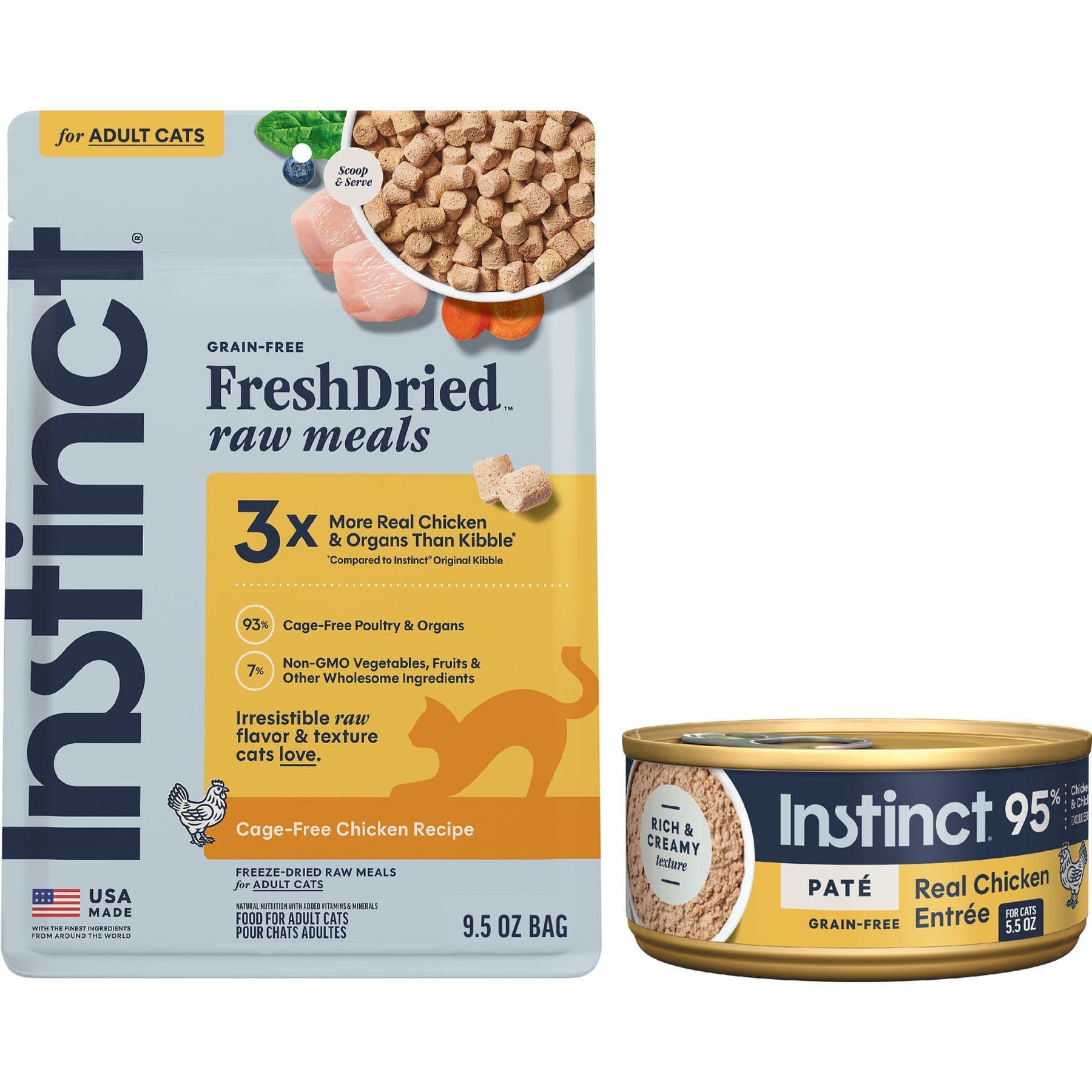
A bundle containing Instinct Original Chicken Pate cans and a separate freeze-dried chicken product. The article distinguishes the ranked pate from the other bundled food.
Petful may earn a commission when you click through to Chewy, at no extra cost to you.
- Fish-based recipes carried about 18x the mercury of other recipes and about 2.5x the cadmium.
- Only 25.7 percent of fish and seafood products met the study's standard, versus 84.8 percent of poultry products.
- Mercury was present across the category at some level, which is expected for any animal protein, but fish drove the high end.
- Dry foods carried about 3x the lead of wet or air-dried foods, a separate finding that has nothing to do with fish.
Two things the study did not do matter just as much. It named no failing brands, and its own disclaimer states that absence from its Clean Sixteen list is not an indicator that a product's contaminant levels exceed federal or state regulations. This was a contaminant survey, not an FDA recall. If you are here because you think a specific food has been pulled from shelves, check the brand's page in our pet food recall listings instead.
Earlier research also found higher mercury in foods containing fish. Luippold and Gustin's 2016 study measured total mercury in 47 cat foods and 54 dog foods. It did not measure methylmercury directly, and its comparisons with other-species advisories did not establish a feline safety threshold. The authors called for further work on health implications.
So can cats get mercury poisoning from cat food? In principle, yes: methylmercury is the form found in fish muscle, it is absorbed well from the gut, it distributes to the nervous system, and it is eliminated slowly over weeks to months. Fish-based commercial diets have been associated with chronic mercury toxicosis in cats, but that does not establish the risk from every fish recipe. Concentration and the actual exposure history matter; a chronic association does not rule out other forms or patterns of poisoning.
Should you worry about mercury in cat food?
Fish-based foods had higher mercury on average in the study, but the result does not classify an individual cat's diet as high or low risk. If your cat eats fish exclusively, consider other suitable complete foods and ask about testing for the exact recipes.
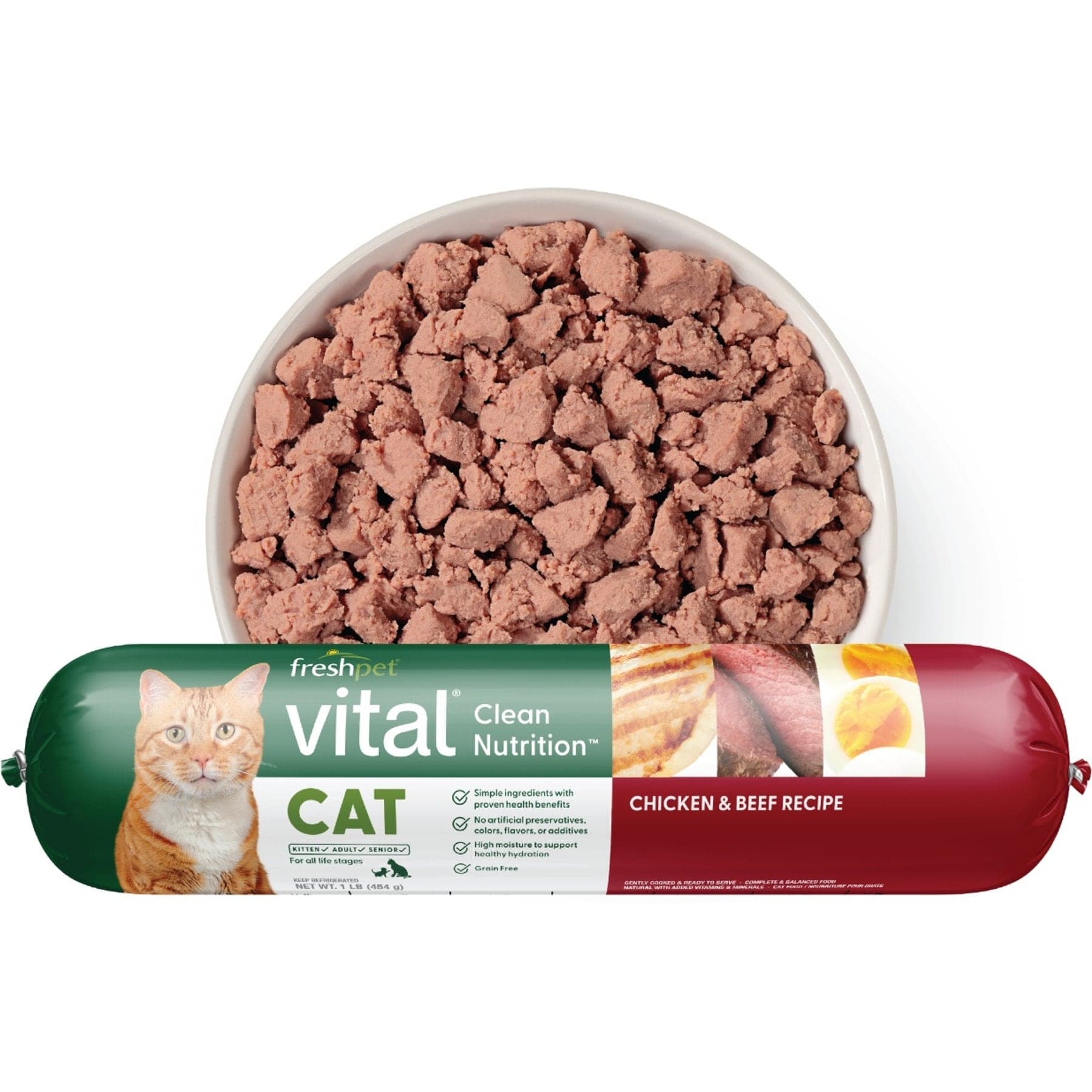
Freshpet Vital Chicken & Beef in eight 1-pound rolls. Compare this exact recipe and package with the certification evidence discussed in the article.
Petful may earn a commission when you click through to Chewy, at no extra cost to you.
The missing information is the actual mercury concentration and form in the food, together with how much the cat eats and for how long. Neither a tuna flavor nor compliance with a treat-calorie allowance supplies those measurements. For a cat with a medical condition, preserve the prescribed diet's nutritional purpose when considering alternatives.
There is also a nutrition reason to limit fish that has nothing to do with mercury. Fish-only feeding, especially raw or home-prepared fish, can lead to thiamine deficiency and vitamin E deficiency in cats. The National Research Council publishes the nutrient requirements and maximum tolerable levels that nutritionists and testing labs use as reference points, and the practical takeaway is to distinguish unbalanced plain-fish feeding from a formulated complete cat food. A fish-based complete food is not nutritionally equivalent to a bowl of plain fish. If you want the lowest-effort way to act on this today:
- Look at the first five ingredients on your cat's current food.
- If fish leads the ingredient list, ask about the exact recipe's testing. Its position alone does not determine a safe feeding frequency.
- Pick a poultry-first complete and balanced food for the daily bowl; the section on how to lower mercury in your cat's diet below gives the full plan.
Which fish carry the most mercury (and which cat foods use them)
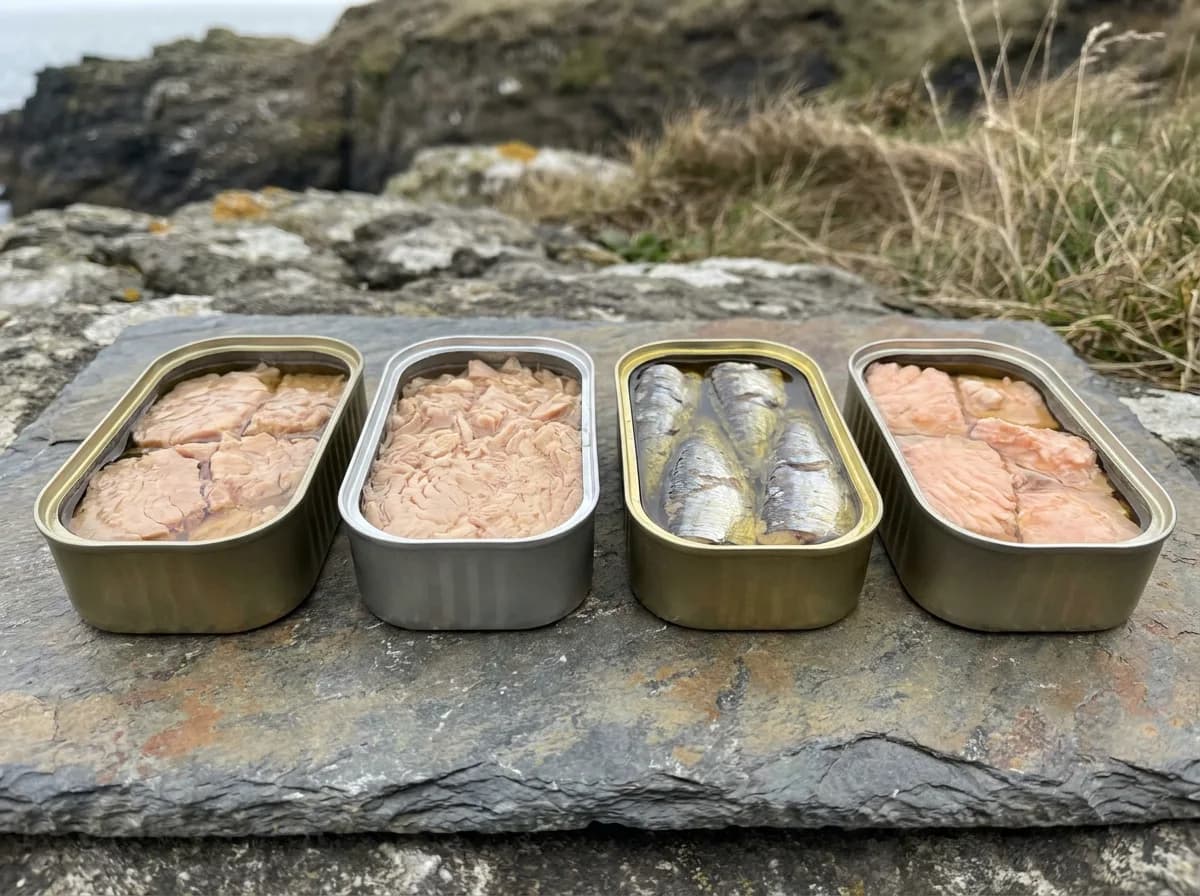
FDA's commercial-fish data provide context about species and sample variation. They measure fish sold for people, not finished cat-food recipes, and do not establish a safe feline serving size or feeding schedule. In the table, ND means below the study's detection level.
FDA lists canned light tuna at a mean of 0.126 ppm and fresh or frozen skipjack separately at 0.144 ppm. Canned albacore averages 0.350 ppm. These are distinct sampled categories, not interchangeable names or measurements of a particular cat food.
| FDA sample category | Mean mercury (ppm) | Minimum measured (ppm) | Maximum measured (ppm) |
|---|---|---|---|
| Swordfish | 0.995 | ND | 3.22 |
| King mackerel | 0.73 | 0.23 | 1.67 |
| Bigeye tuna, fresh/frozen | 0.689 | 0.128 | 1.816 |
| Albacore tuna, canned | 0.35 | ND | 0.853 |
| Light tuna, canned | 0.126 | ND | 0.889 |
| Whitefish | 0.089 | ND | 0.317 |
| Atlantic mackerel | 0.05 | 0.02 | 0.16 |
| Salmon, fresh/frozen | 0.022 | ND | 0.19 |
| Sardines | 0.013 | ND | 0.083 |
Values are rounded from the FDA's published mean mercury concentrations in commercial fish and shellfish. They describe the fish as sold for people; the table does not measure finished cat-food recipes. Ask the maker what testing it publishes for the exact food under consideration.
The mapping to cat food matters because the label does not always tell you the species:
- If a recipe lists only "tuna," ask the maker which species it uses and whether it tests the finished food. Do not assume an unspecified recipe matches FDA's canned-light sample category.
- "Ocean fish," "ocean whitefish" and "fish meal" are blends, and fish meal in particular can turn up in the first five ingredients of a chicken-flavored dry food.
- Salmon and sardine fish samples had lower means in FDA's table. That does not establish the concentration or relative safety of finished salmon and sardine cat-food recipes.
- Ask the same question when a label says only "mackerel"; the name alone does not identify the species or the food's mercury concentration.
If you want a poultry option to put in the rotation while you work out what your cat's fish food actually contains, Stella & Chewy's Tummy Ticklin' Turkey Freeze-Dried Cat Food is a turkey recipe that appeared on the study's Clean Sixteen list, and it works as either a meal or a topper. For a mercury-tested tuna food, ask what the testing covers and check its nutritional adequacy statement. A complete cat food and an unbalanced tuna treat have different feeding roles.
Can cats get mercury poisoning from tuna?
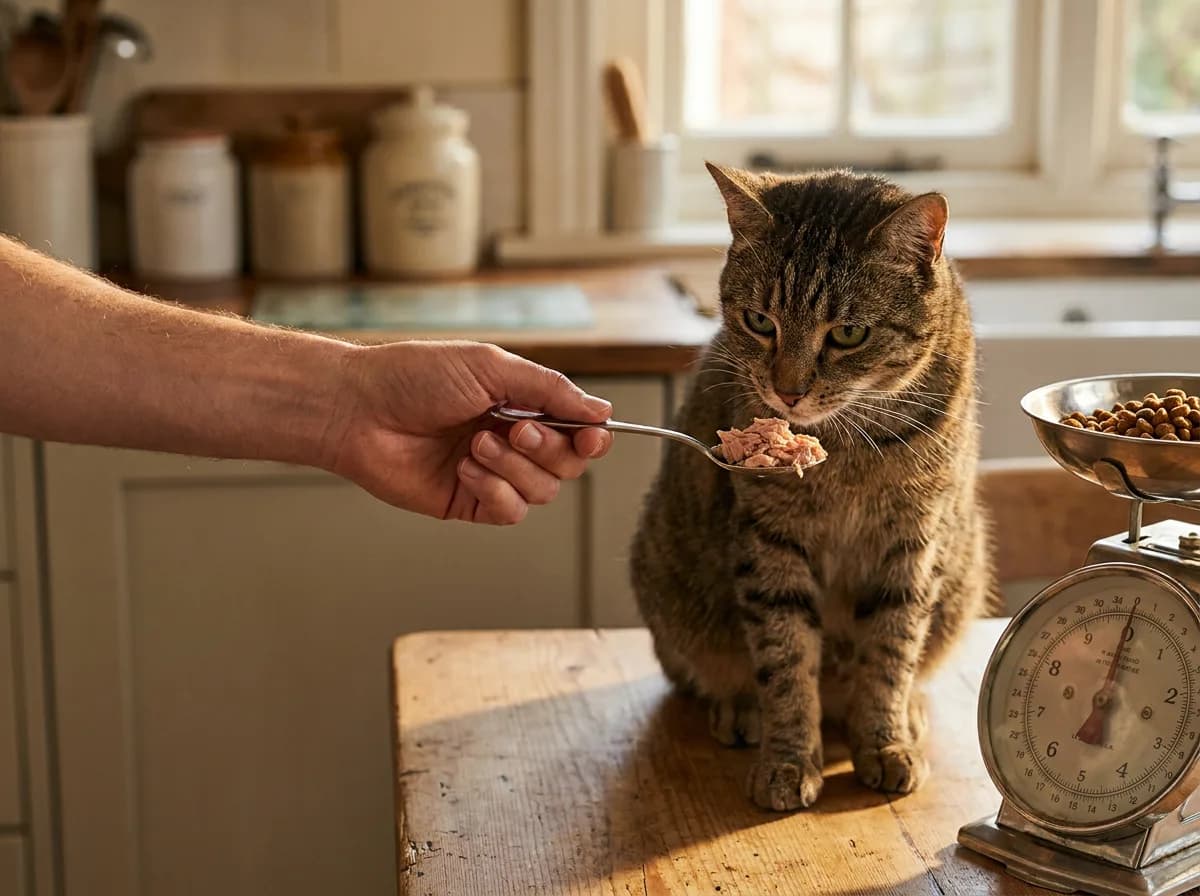
Mercury toxicity depends on the concentration, amount eaten, chemical form and exposure duration. These sources do not establish a universally safe tuna serving or guarantee that one serving cannot cause harm. Plain human tuna is also different from a formulated, complete tuna cat food: the former cannot replace a balanced diet.
WSAVA advises keeping treats below 10 percent of daily calories to protect dietary balance. This is not a mercury-safety limit and does not establish a safe tablespoon serving. Distinguish the foods below by their nutritional role:
- Plain tuna: an extra, not a replacement for a complete cat food.
- Complete tuna cat food: judge its intended feeding role from its nutritional adequacy statement, not the tuna name alone.
- Plain sardines: an extra whose calories count alongside all other treats.
- Plain cooked salmon: also an extra, with calories counted in the treat allowance.
- Any fish treat: there is little reason to add one if your cat's main food is already a fish recipe.
Count every extra in the same calorie allowance, including freeze-dried bites and toppers. How much allowance remains depends on the calories actually fed.
Replacing a complete cat food with plain tuna creates nutritional problems separate from mercury:
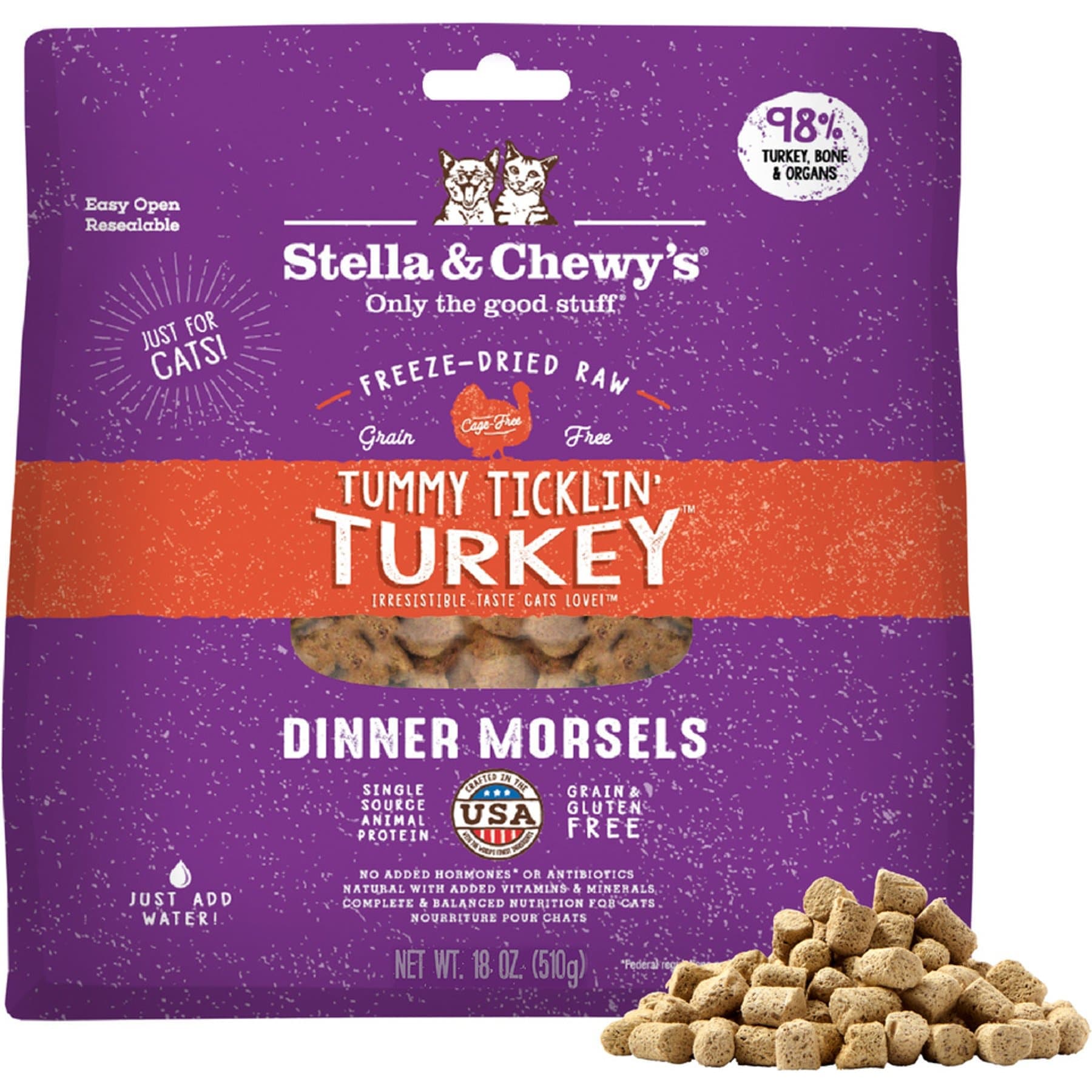
Stella & Chewy’s Tummy Ticklin’ Turkey freeze-dried cat food in an 18-ounce bag. Compare the named recipe, feeding directions and suitability for your cat.
Petful may earn a commission when you click through to Chewy, at no extra cost to you.
- Canned tuna for people is not a complete and balanced cat food; it lacks the taurine, calcium, vitamin E and other nutrients a cat needs.
- Fish-heavy diets have been associated with thiamine deficiency, which is worse with raw fish because raw fish contains thiaminase.
- Tuna-heavy feeding has been linked to vitamin E deficiency, which can cause steatitis, a painful inflammation of the body fat.
- A cat that fills up on tuna eats less of its complete food, so every other nutrient slides at the same time.
Can FDA's fish table tell you whether a salmon cat food is safer than a tuna cat food? No. Comparing finished recipes requires their own measurements. Plain tuna is not a complete diet, but a formulated tuna cat food may be complete and balanced; check the exact product's nutritional adequacy statement.
If the real problem is that your cat has learned to expect a fishy treat every evening, one option is a poultry topper your cat enjoys. BIXBI RAWBBLE Turkey Recipe Grain-Free Freeze-Dried Cat Food has Purity Award certification and a Clean Sixteen listing. If you use it as an extra, count the portion alongside the cat's other treats and toppers.
How to lower mercury in your cat's diet
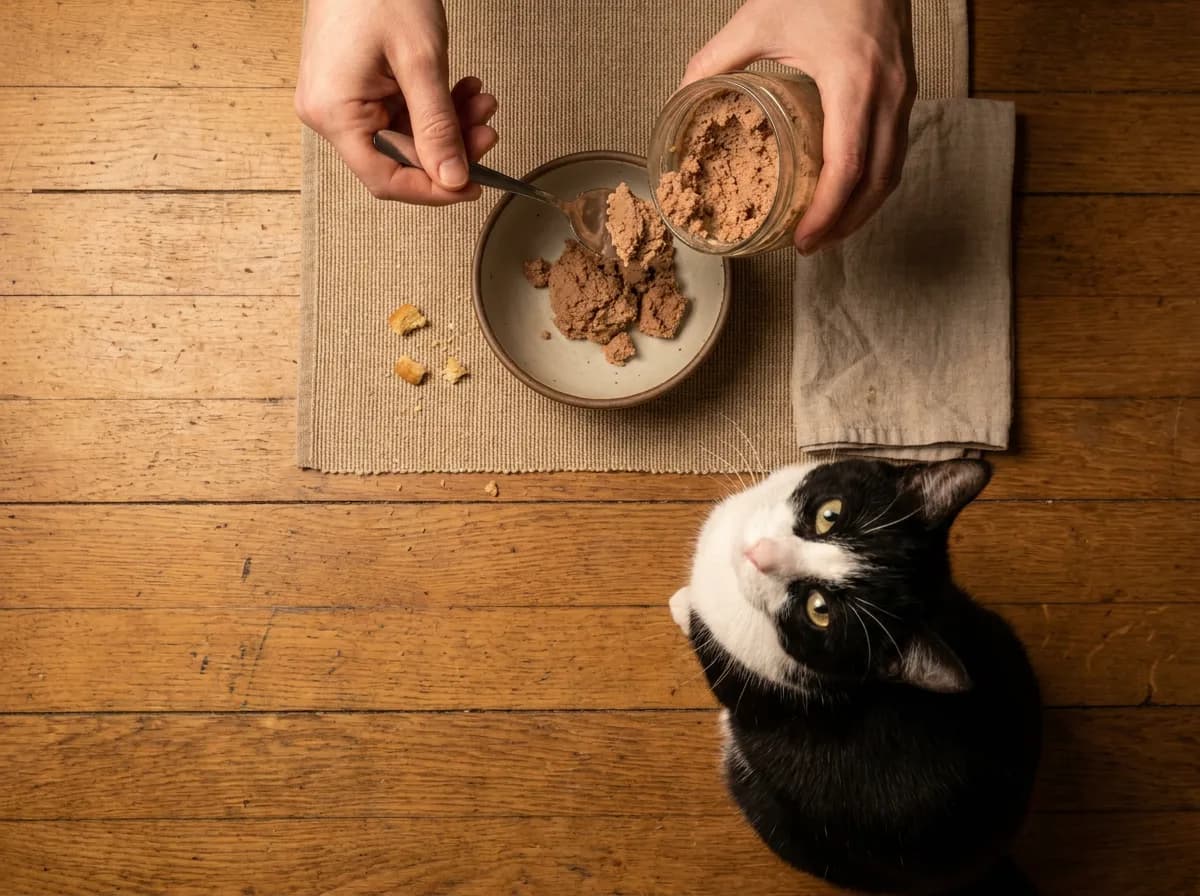
What food should cats eat daily? Choose a complete and balanced food appropriate for the cat's life stage and medical needs. Poultry recipes performed better on average in this study, but a leading ingredient cannot establish a finished food's mercury concentration or remove the need for product-specific evidence.
The lower-mercury feeding plan in practice:
- Daily bowl: a poultry-first complete and balanced wet, fresh or dry food. Chicken, turkey and duck recipes all qualify.
- Compare suitable complete foods: if your cat eats fish exclusively, other proteins may be options, but the study does not establish a safe number of fish meals per week.
- Separate plain tuna from complete cat food: an unbalanced extra cannot replace the main diet, while a complete recipe should be assessed for its intended life stage and the cat's needs.
- Read the full ingredient panel: fish meal, tuna, ocean fish and fish oil show up in chicken and turkey flavors, often in the first ten ingredients. Ingredient order identifies ingredients but does not reveal their combined amounts or the finished food's mercury concentration.
- For cats with kidney disease, preserve the diet's medical purpose and discuss changes with the treating veterinarian; the study does not establish a fish-meal frequency for them.
- Consider suitable alternatives if feeding fish exclusively, but do not assume rotation itself produces a measured reduction in mercury.
The 2026 study offers a starting shortlist through its Clean Sixteen rankings and highlighted certified examples. Certification is separate from ranking, and the current directory contains more than three cat foods. Freshpet's Chicken & Beef recipe is certified, although CLP's current wet-list sources name different Freshpet recipes. Our safest cat food picks page compares selected options; the choices below offer different formats to consider for a suitable poultry-based diet.
Freshpet Vital Chicken & Beef Recipe Fresh Cat Food is a certified refrigerated chicken-and-beef recipe. Its certification is documented, while its Clean Sixteen rank is unresolved because CLP's current sources name different Freshpet recipes. For cats that prefer a classic canned texture, Instinct Original Grain-Free Pate Real Chicken Recipe is a chicken pate; Instinct's Original Grain Free Pate appeared on the Clean Sixteen list. If you feed dry, Hill's Science Diet Adult Chicken Recipe Dry Cat Food is a chicken-first kibble; Hill's Science Diet Adult 1-6 Chicken Recipe was marked Clean Sixteen, while Hill's salmon recipe was tested but not ranked.
Two cautions on using the list:
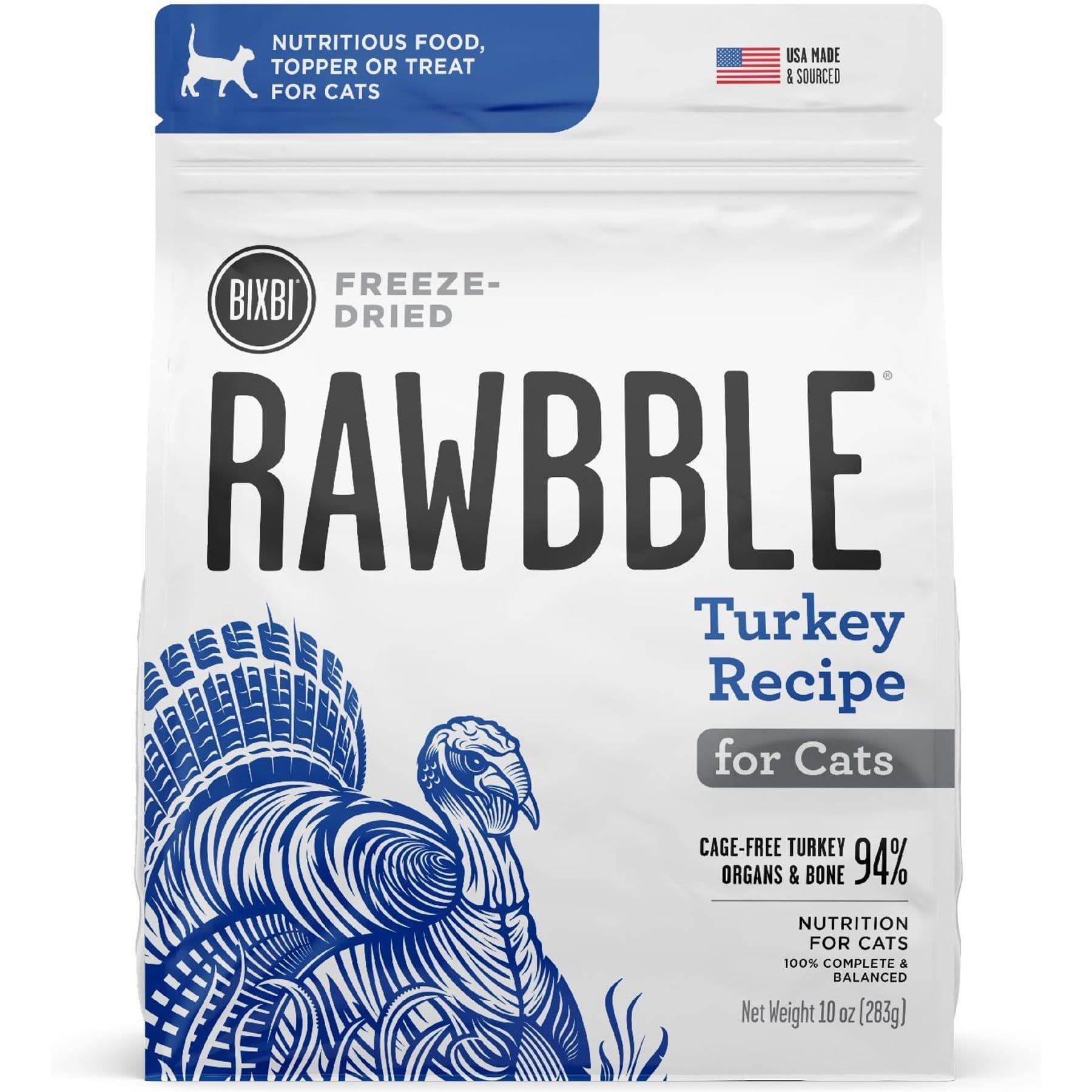
BIXBI RAWBBLE Turkey freeze-dried cat food in a 3.5-ounce bag. A turkey option to compare with the exact-recipe certification and ranking evidence.
Petful may earn a commission when you click through to Chewy, at no extra cost to you.
- Tested but not ranked is not failed: A product that was tested but not ranked, and there are many well-known ones, is not a failed product; the study did not fail anyone, and the not-an-indicator caveat applies to every one of them.
- Brands to avoid is a different question: If your question is really "which brands should I avoid," that is a different decision than "which fish should I limit," and our guide to cat food brands to avoid explains how to judge risk from recalls, transparency and formulation rather than from any one list.
Make any switch gradually, over seven to ten days, mixing increasing amounts of the new food into the old. Cats that go off their food for more than a day or two can develop hepatic lipidosis, so a slow transition matters more than a fast one.
Signs of mercury poisoning in cats
Mercury poisoning is illness from harmful mercury exposure; its effects depend on the chemical form and dose. A fish-based recipe or detectable mercury in food does not diagnose poisoning. The CLP study did not examine cats or estimate how often poisoning occurs. If your cat develops new neurologic signs, seek veterinary care and bring its diet and exposure history.
The signs of mercury poisoning in a cat are mostly neurological, because methylmercury targets the brain and the cerebellum in particular. What are the signs of mercury poisoning in cats to watch for?
- Incoordination: a wobbly, drunken gait, misjudged jumps, splayed legs or falling over.
- Tremors: fine shivering of the head or body, progressing to more obvious shaking.
- Blindness or vision changes: bumping into furniture, failing to track movement, dilated pupils that do not respond normally.
- Behavior change: unusual aggression, hiding, confusion or loss of house training.
- Weight loss and poor appetite that do not fit any other diagnosis.
- Kidney signs: increased thirst and urination, vomiting, dull coat, as mercury damages the kidney tubules.
- In advanced cases, seizures, paralysis and death.
The historic picture of mercury poisoning symptoms comes from Minamata, Japan, in the 1950s, where industrial methylmercury in fish caused what came to be called Minamata disease. Cats in the fishing villages were affected before people were, because they ate the same contaminated fish in larger proportion to their body weight. Their convulsions and staggering, "dancing cat disease," were the warning sign that the human cases confirmed. Minamata mercury poisoning is the extreme end of the same exposure pathway, which is why cat mercury poisoning symptoms are so heavily neurological.
If your cat shows any of the signs above, do not try to diagnose or manage it at home. Many of these signs overlap with conditions that are far more common than mercury, including vestibular disease, toxoplasmosis, hypertension-related blindness, diabetes and chronic kidney disease, and some of those are emergencies in their own right. Our guide to cat poisoning symptoms covers the acute poisonings that look different from this slow picture, such as lilies, antifreeze and human medications, and when sudden illness means you should not wait.
Diagnosis, treatment and recovery
- Call your veterinarian or an emergency clinic immediately for new tremors, a wobbly or drunken gait, sudden blindness, a seizure, or inability to stand. Follow their instructions for urgent assessment. Bring the cat's food, its label and a written feeding history covering the last few months, including treats and table food. Do not attempt any home remedy, supplement or chelation product while arranging care.
Diagnosing mercury poisoning in a cat starts with the feeding history, which is why the callout asks you to write it down. The history should cover the exact foods and amounts fed as well as possible household or environmental sources. Diet variety alone cannot rule mercury exposure in or out. From there, a veterinarian will typically run bloodwork and a urinalysis to assess the kidneys and rule out the more common causes, and may send blood, urine or in some cases a hair or tissue sample to a reference laboratory for mercury measurement. There is no single bedside test, and the interpretation of mercury results in cats relies on toxicology references, including the National Research Council's published tolerance data, rather than on a universal "safe number."
How to treat mercury poisoning in cats depends on how far it has progressed. A veterinarian must identify and stop the actual exposure source, which may be dietary or environmental. For confirmed cases, a veterinarian may use chelation therapy, prescription drugs that bind mercury so the body can excrete it, alongside fluids and supportive care to protect the kidneys. Chelation is a hospital treatment with its own risks and is never something to attempt with over-the-counter products at home. If your veterinarian wants toxicology support, the pet poison hotline services can consult on a case, and it is worth asking whether a referral to a veterinary neurologist or internal medicine specialist makes sense.
Can cats recover from mercury poisoning? Recovery depends on the mercury form, dose and extent of injury. Removing the exposure source is essential, but mercury-related kidney and nervous-system damage is often irreversible, and treatment may not restore lost function. Your veterinarian can assess the recovery picture from the exposure history and repeat examinations. Advanced poisoning can be fatal, particularly with severe neurological or kidney injury. Follow-up focuses on the cat's neurological signs, kidney health and ability to eat:
- Every symptom, from a slight wobble to a change in thirst, is routed to your veterinarian rather than managed at home, because each one needs to be measured against the last visit.
- Recovery is judged with repeat bloodwork, urinalysis and neurological exams over the following weeks and months, not by appetite alone.
- Your veterinarian, not a website or supplement seller, decides whether chelation is needed; nobody should be suggesting home chelation products for a cat.
Lead, cadmium and arsenic: the other metals in the study
Mercury was the fish story, but the 2026 study's broader finding was that lead was detected in 99 percent of products, cadmium in 96 percent and arsenic in 94 percent, with dry foods carrying about 3x the lead of wet foods and fish foods carrying about 2.5x the cadmium. These metals originate in the environment and enter food through plant and animal ingredients. In CLP's analysis, marine ingredients were associated with arsenic and cadmium as well as mercury; lead showed a different format pattern. That raises a different set of questions: what the symptoms of heavy metal toxicity look like in a cat, how cadmium poisoning differs from mercury, and whether chronic low-level heavy metal poisoning from food is a realistic concern at the levels found.
Those questions are answered in depth in our companion guide to heavy metals in cat food, which also tackles the "silent killer of cats" question that the study prompted. The short version for this page: none of the four metals is good news, mercury is the one that fish-based feeding controls most directly, and the practical response to all of them is the same complete, varied, poultry-led diet described above.
Frequently asked questions about mercury in cat food
A tuna recipe's name and ingredient order do not reveal its mercury concentration. Ask the maker which species it uses and what its finished-food testing shows. Separately, check whether the product is a complete diet or a supplemental food; neither its broth content nor its name establishes a safe feeding frequency.
Kittens need a complete diet with a suitable growth or all-life-stages nutritional adequacy statement. Plain tuna cannot replace that diet. A formulated tuna cat food is a different product, so check its exact life-stage statement rather than treating every tuna recipe as an occasional extra.
No. Methylmercury binds to muscle protein in the fish, so cooking does not remove it, and canning, draining, rinsing or freezing do not either. A quantified reduction in exposure requires knowing the mercury concentration and amount fed; species averages alone do not establish the result for a particular diet.
FDA's human-market fish averages cannot establish that a particular salmon cat food is safer than a particular tuna cat food. Compare finished-product results and nutritional suitability. A complete tuna recipe does not become a treat simply because tuna is its main flavor.
The study does not establish a clearance time for an individual cat. With confirmed poisoning, a veterinarian must identify and address the actual exposure source and direct follow-up; a general instruction to stop all fish for a fixed period is not a treatment plan.
BVMS, MRCVS
Dr. Pippa Elliott, BVMS, MRCVS, is a veterinarian with nearly 30 years of experience in companion animal practice. Dr. Elliott earned her Bachelor of Veterinary Medicine and Surgery from the University of Glasgow. She was also designated a Member of the Royal College of Veterinary Surgeons. Married with 2 grown-up kids, Dr. Elliott has a naughty Puggle named Poggle, 3 cats and a bearded dragon.
Sign up for expert-backed reviews and safety alerts all in one place.