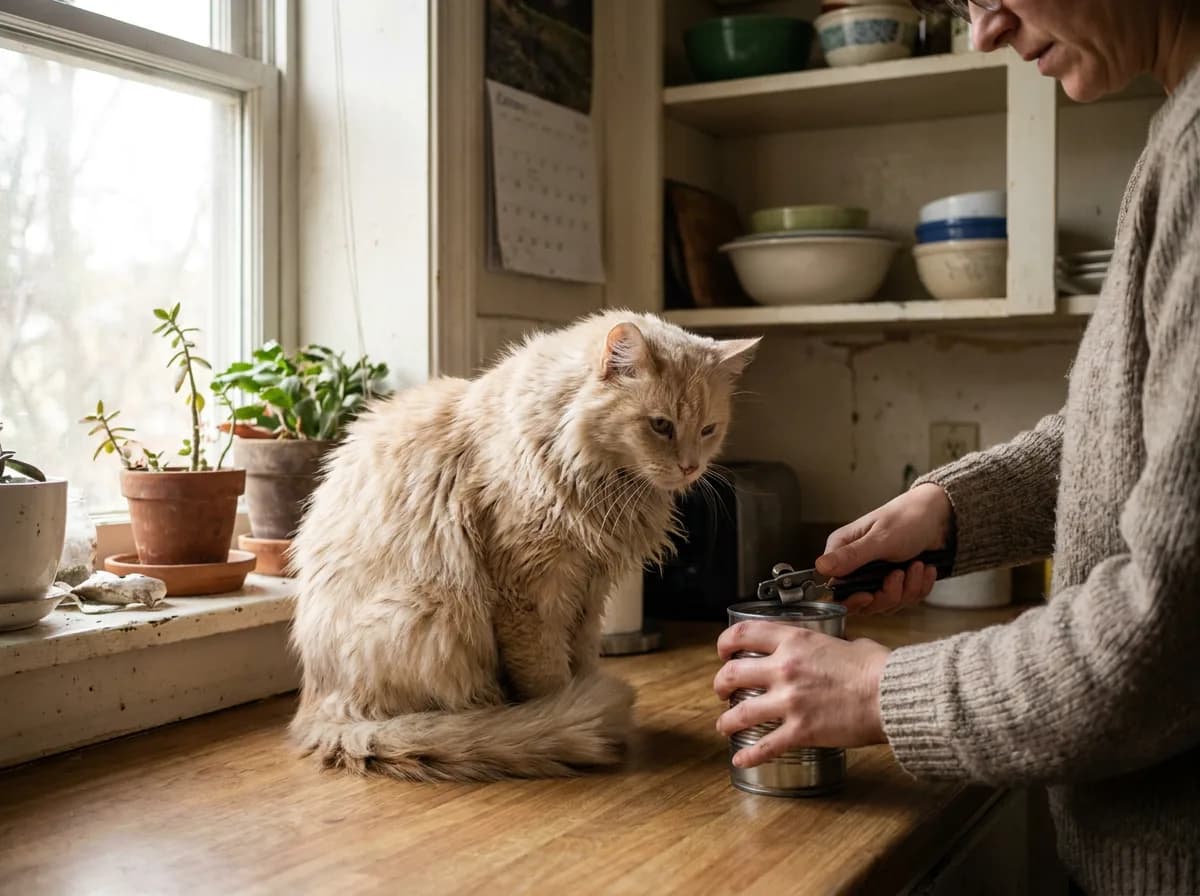
Heavy Metals in Cat Food: What the 2026 Study Means for Your Cat
A veterinarian reads the 2026 Clean Label Project cat food study: lead in 99 percent of products, why detection is not violation, the signs of heavy metal poisoning in cats, and a lower-exposure feeding plan.

BVMS, MRCVS
Petful is reader supported. As an affiliate of platforms like Amazon and Chewy, we may earn a commission when you buy through links on this page. There is no extra cost to you.
If you read the headline that lead was found in 99 percent of tested cat foods, you probably want a straight answer from a veterinarian rather than another rewrite of the press release. Here it is: the 2026 Clean Label Project study detected heavy metals in cat food almost everywhere it looked, but a detection is a measurement, not a verdict. The questions that matter for your cat are what the study actually measured, what it did not measure, and whether anything about your cat's food or health should change.
This guide works through the study's findings on heavy metals in cat food one metal at a time, explains where lead, cadmium, arsenic and mercury enter the supply chain, describes the signs of heavy metal poisoning a veterinarian actually looks for, and finishes with a practical lower-exposure feeding plan. It is written for an owner who wants to act sensibly, not panic-switch foods tonight.

Sign up for expert-backed reviews and safety alerts all in one place.
What the 2026 study found about heavy metals in cat food
In brief: the study found lead in 99 percent of 100 cat foods, cadmium in 96 percent and arsenic in 94 percent, with dry food carrying about three times the lead of wet food and fish-based recipes carrying far more mercury. Detection is not violation: the study reported detections and relative levels per 1,000 kcal, did not compare them with tolerable limits, named no brand as failing, and the category associations do not identify the concentration in every individual recipe. That is the whole picture in 60 words, and the rest of this page shows the working.
- 1The study detected lead in 99 percent of 100 cat foods from 62 brands, cadmium in 96 percent and arsenic in 94 percent
- 2Detection is not violation: the study reported relative levels per 1,000 kcal, not doses against a safety limit, and named no brand as failing or unsafe
- 3Dry foods carried about three times the lead of wet foods, and fish-based foods carried about 18 times the mercury and 2.5 times the cadmium of other recipes
- 4Vomiting, poor appetite, weight loss, wobbliness or increased thirst need a veterinarian, not a home remedy
- 5Compare nutritionally suitable recipes using product-specific evidence; protein and format averages do not quantify the effect of rotation
The Clean Label Project published its cat food study on October 2, 2026. The nonprofit bought 100 products from 62 brands at retail, split roughly into 31 dry foods, 40 wet foods in cans or pouches, and 29 air-dried or freeze-dried foods, and sent them to an ISO 17025 accredited laboratory to screen for more than 122 contaminants. Our Clean Label Project cat food study explainer covers the full methodology and the complete Clean Sixteen list; this page concentrates on what the cat food heavy metals numbers mean clinically.
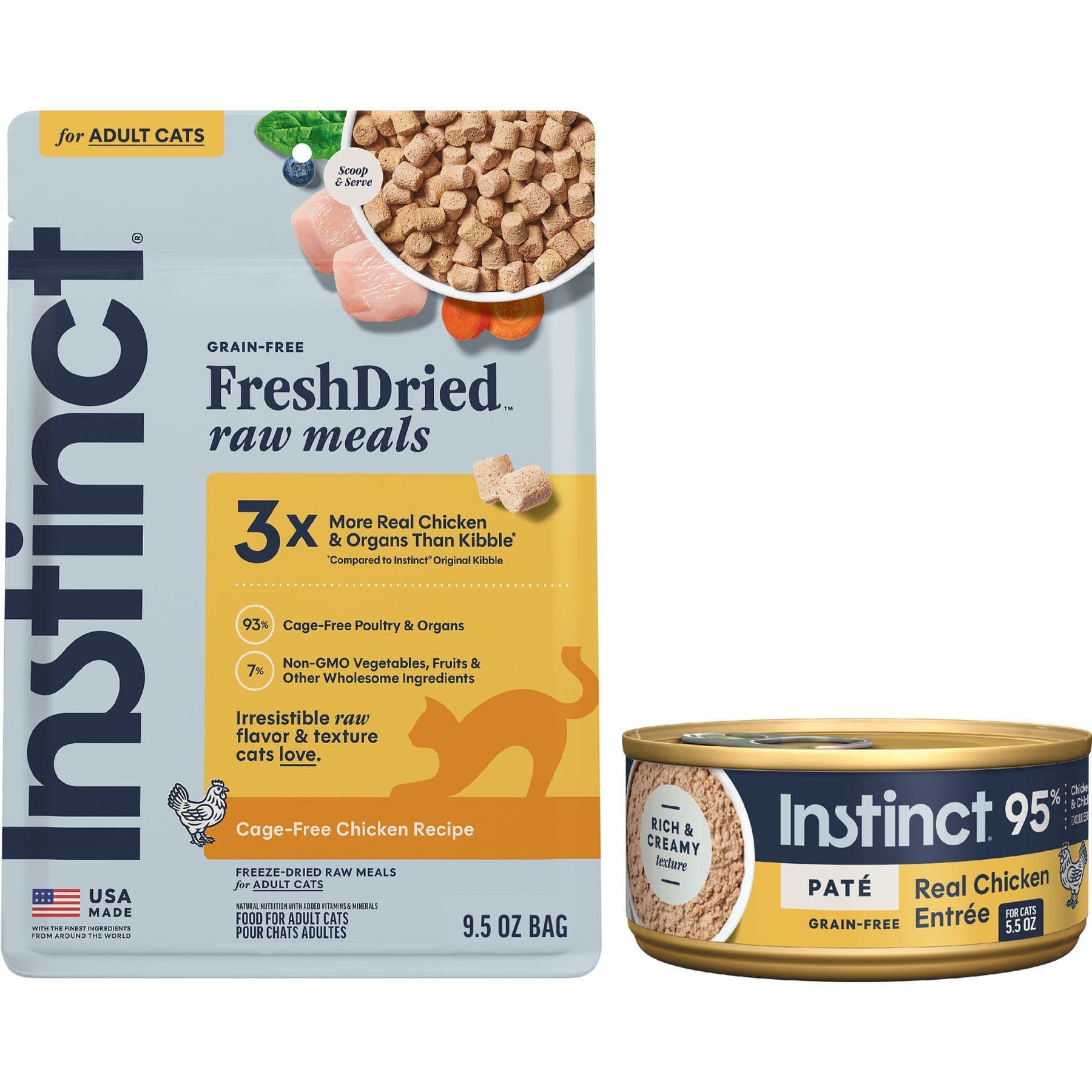
A bundle containing Instinct Original Chicken Pate cans and a separate freeze-dried chicken product. The article distinguishes the ranked pate from the other bundled food.
Petful may earn a commission when you click through to Chewy, at no extra cost to you.
The headline results for the four heavy metals were:
- Lead: detected in 99 percent of the 100 products, with dry food averaging about three times the lead of wet or air-dried food.
- Cadmium: detected in 96 percent, with fish-based foods carrying about 2.5 times the cadmium of other recipes.
- Arsenic: detected in 94 percent of products across every format.
- Mercury: present across the category, with fish-based foods carrying about 18 times the mercury of non-fish recipes.
- By protein: 84.8 percent of poultry products met the project's standard, compared with 25.7 percent of fish and seafood products.
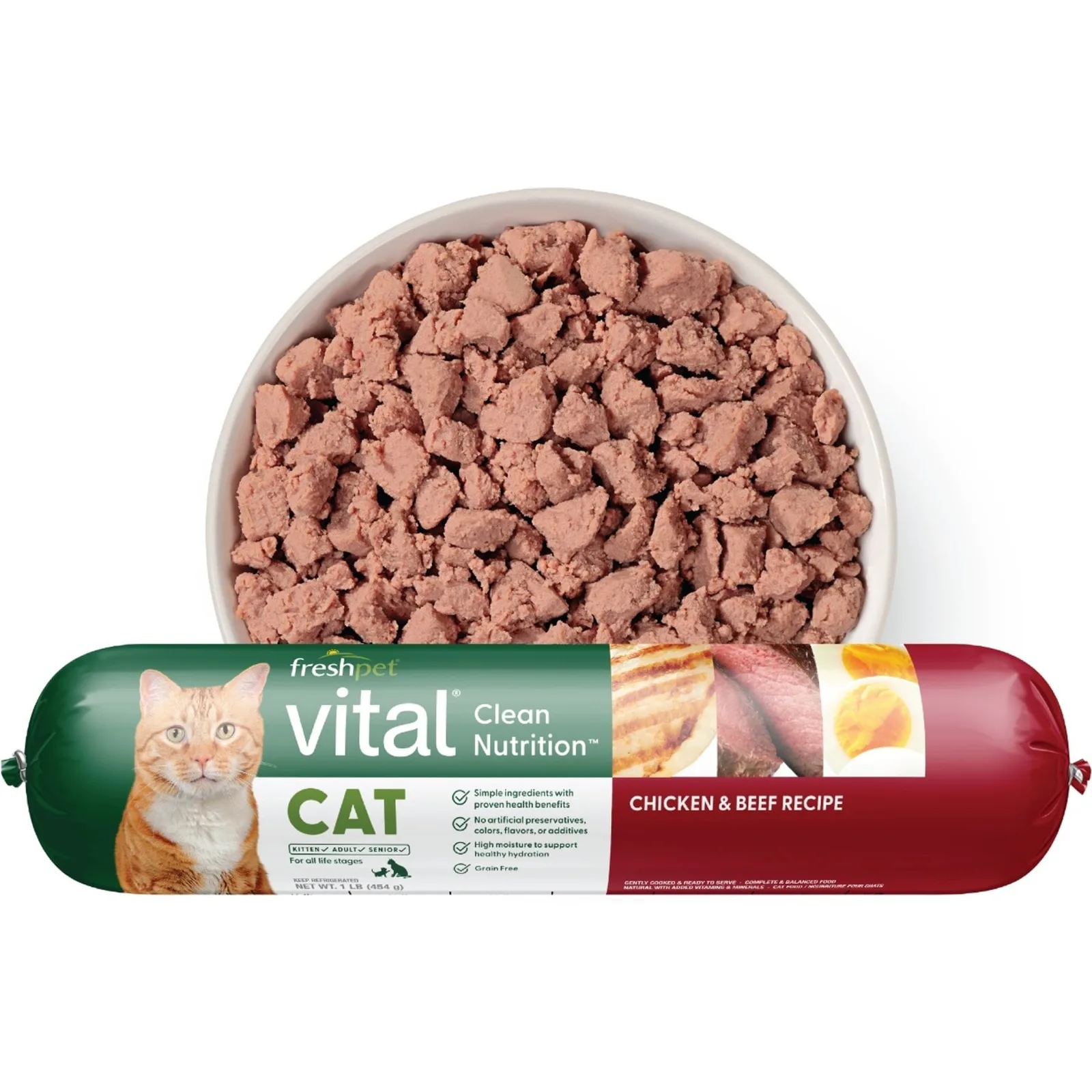
Certified examples highlighted by CLP include Bixbi Rawbble Turkey Recipe (freeze-dried), Freshpet's Chicken & Beef recipe, and Smalls Smooth Bird Chicken Recipe. These examples do not exhaust the certification directory. Freshpet's Clean Sixteen listing also needs a qualification: CLP's tested-products page names Chicken & Beef Pate, but its current wet-list PDF names Tender Chicken & Garden Vegetable Recipe. Absence from a Clean Sixteen list does not establish that a product exceeds federal or state regulations.
That last point deserves repeating because it is the one the news rewrites drop. The study named no failing brands, published no list of products to avoid, and is not an FDA recall. If your cat's food is not on the Clean Sixteen, the only thing you know is that it was either not tested or did not rank highest in its category.
Where lead, cadmium and arsenic in cat food come from

Heavy metals in food are not usually added by anyone. Lead, cadmium and arsenic occur naturally in soil, rock and water, and every crop and animal that grows on that soil takes up small amounts of them. The near-universal detection rate in the study is what you would expect from an ingredient list built from grains, vegetables, fish, meat meals and mineral supplements, which is exactly why the dry-versus-wet and fish-versus-poultry patterns make sense once you follow the ingredients back to their source.
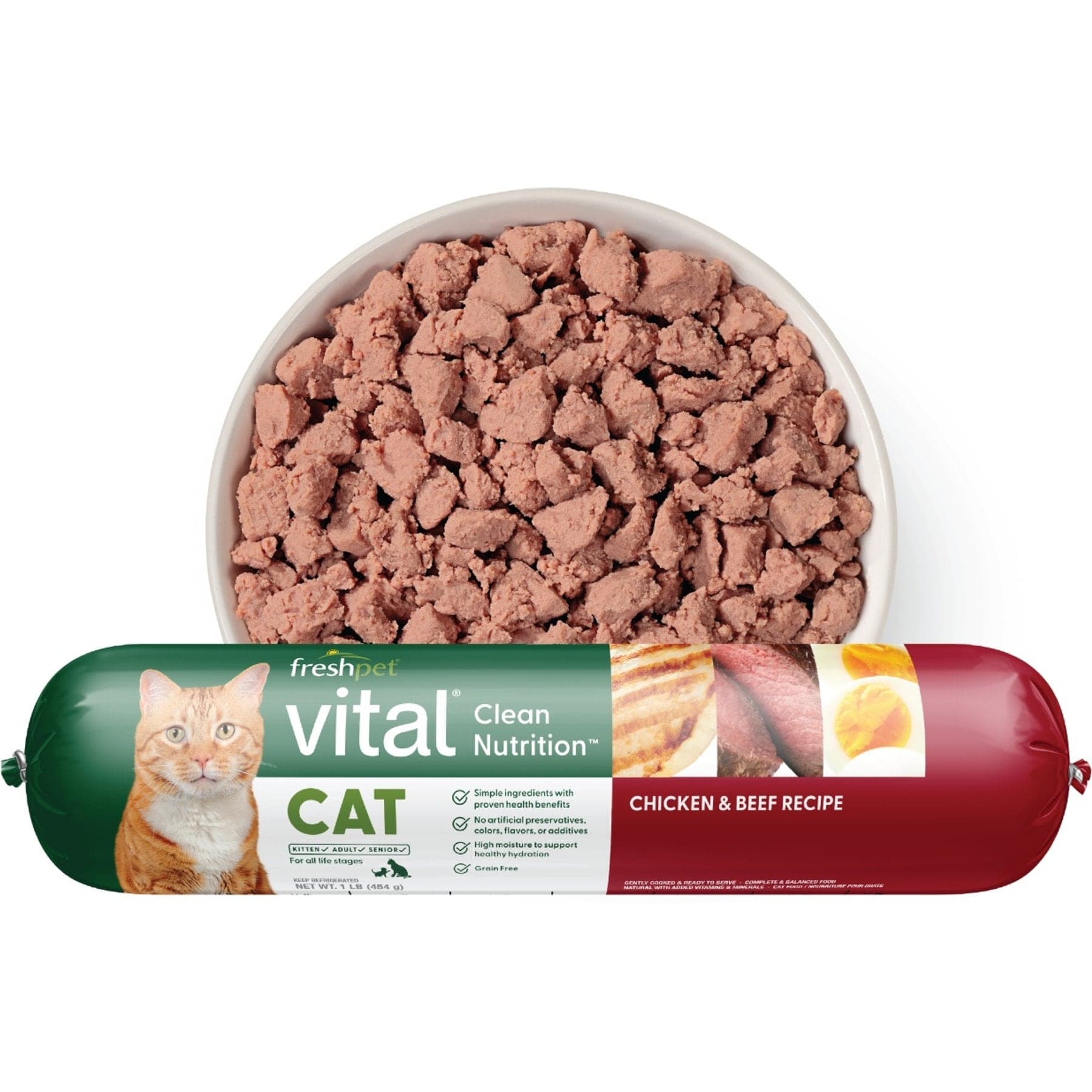
Freshpet Vital Chicken & Beef in eight 1-pound rolls. Compare this exact recipe and package with the certification evidence discussed in the article.
Petful may earn a commission when you click through to Chewy, at no extra cost to you.
The main entry points for heavy metals in cat food are:
- Plant ingredients: environmental contaminants can enter food through ingredients, but the CLP study did not identify grain or legume content as the cause of its dry-food lead finding. An ingredient list cannot supply the concentration measured in the finished food.
- Fish and seafood: mercury in food concentrates up the aquatic food chain, so larger and longer-lived fish carry more. Fish meal and whole fish also bring cadmium, which accumulates in shellfish and fish organs. This is the pattern behind the 18x mercury and 2.5x cadmium findings, and our guide to mercury in cat food covers the tuna question in clinical depth.
- Bone and organ meals: naming these ingredients does not establish how much lead or cadmium a finished recipe contains. Compare actual testing rather than assuming one ingredient class always carries more contamination.
- Mineral premixes: the zinc, iron, copper and calcium sources added to balance a diet are mined or refined products, and small amounts of lead and cadmium travel with them unless the supplier screens for purity.
- Processing and packaging: water, food-contact equipment and packaging are potential contamination routes to investigate. The CLP category findings do not establish how much any particular route contributed to an individual food. Its packaging association for DEHP, a non-metal contaminant, should not be treated as proof of the source of lead, cadmium or arsenic.
None of this is unique to pet food. The FDA's own monitoring of the human food supply finds the same metals in rice, juice, root vegetables and seafood for the same reasons, and the agency regulates them with action levels and case-by-case enforcement rather than a single number for everything. What changes for a cat is that she eats one product, every day, for years, so the ingredient pattern of that one product is her whole exposure.
Environmental, ingredient and processing routes explain how contaminants can enter a food supply chain; they do not identify the cause of each CLP result. Use ingredient names to frame questions for the manufacturer, not to calculate a finished food's concentration or assign the contamination to one ingredient. That assessment requires testing and information about the exact product and its supply chain.
How much is too much: detection versus the limits that matter
A detection rate tells you how many products had any measurable amount. It tells you nothing about whether the amount matters. Modern laboratories are sensitive enough that nearly any food grown in soil will register. This study reported each contaminant relative to calories, per 1,000 kcal, and ranked products against each other; it did not compare any product with a tolerable or legal limit. Detection is not violation, and a 99 percent detection rate is not a 99 percent failure rate, but the study also does not show that the levels it found are low enough to ignore. What a parts-per-billion detection means against a tolerable level is a separate question: many laboratory reports express metals in parts per billion, while tolerable levels are published in milligrams per kilogram of diet, and this study used neither scale, so its 99 percent figure means 99 percent detected, not 99 percent unsafe and not 99 percent safe.
FDA's 2019 animal-food report describes case-by-case enforcement informed by NRC and AAFCO references. Its reference values differ and depend on scope, including animal species and mercury form. They are not a single current table of legal safety limits for every cat food. For historical context, the report reproduces NRC/AAFCO complete-feed references of 10/30 ppm for lead, 10/0.5 ppm for cadmium and 30/50 ppm for arsenic. For mercury, it distinguishes NRC references of 0.2 ppm inorganic and 1 ppm organic mercury; the AAFCO reference is 2 ppm. The report draws on most-sensitive-species references. These values cannot be compared directly with CLP's detection percentages or calorie-adjusted results.
The study's public summary reports detection rates and relative patterns per 1,000 kcal, not a comparison with any limit, so no one reading the summary can line a specific food up against a specific maximum tolerable level. That is the honest limit of what the headline can tell you. Interpreting a laboratory report requires its units, measurement basis, chemical form, feeding amount and an applicable reference, not just the metal's name.
| Metal | Study detection rate | Where it concentrated | Interpretation requirement | What the finding does not establish |
|---|---|---|---|---|
| Lead | 99 percent of 100 products | Dry food, about three times the lead of wet or air-dried food | Measured concentration and applicable reference basis | Which ingredients caused the result, or whether an individual food harms cats |
| Cadmium | 96 percent of products | Fish-based recipes, about 2.5 times other foods | Measured concentration, feeding amount and relevant reference | A diagnosis of kidney injury or a safe feeding duration |
| Arsenic | 94 percent of products | Detected across the tested sample | Whether testing measured total arsenic or specific forms | The chemical form in an individual recipe from its ingredient names |
| Mercury | Present across the category | Fish-based recipes, about 18 times non-fish recipes | Total mercury versus methylmercury and the applicable reference | How much a particular diet change would reduce exposure |
Read detection and category comparisons separately. Finding a metal tells you it was measurable; the category averages identify patterns worth investigating. Neither shows that a particular food caused kidney disease. When comparing alternatives, start with foods that meet your cat's nutritional needs, then consider exact-product results and the study's category findings.
Two cautions keep this honest:
- A maximum tolerable level is a reference dietary concentration intended not to impair health over a defined feeding period.
- Your cat's total load includes water, treats, toppers and anything she hunts, so one food's report is only part of the picture.
Glyphosate and DEHP: the non-metal findings
The study screened for more than metals, and two of the non-metal findings are worth understanding because they follow different rules. Glyphosate in food comes from the fields; phthalates in food come from the factory.
Glyphosate, the active ingredient in common broad-spectrum herbicides, was detected in 37 percent of the 100 products. It reaches cat food through grain and legume ingredients, including crops that are sprayed shortly before harvest to dry them down. The U.S. Environmental Protection Agency sets tolerances for glyphosate residues on each crop, and the detections reported by the study are residues carried into a finished product, not evidence that any product exceeded a tolerance. A grain-free or fresh label alone does not reveal the ingredients, their residue levels or the result for a finished recipe.
DEHP, a phthalate plasticizer, was detected in 48 of the 100 products, at levels about five times higher in cans and pouches than in bags. That pattern fits what is known about phthalates in food in general: they migrate from flexible plastics, gaskets, liners and processing equipment rather than from ingredients. The FDA regulates phthalates as indirect food additives in food-contact materials, and the health concerns around the DEHP phthalate in laboratory animals centre on the endocrine and reproductive systems with long-term exposure. BPA and BPS, the two other packaging chemicals people ask about, were rarely detected, turning up in only 3 products. The practical reading for a cat owner is a trade-off rather than a verdict:
- Wet food in cans and pouches carried less lead but more DEHP.
- Dry food in bags carried less DEHP but more lead and more glyphosate.
- Freeze-dried and air-dried foods shared the lower lead of wet food, and bagged foods carried less DEHP than cans and pouches, so those formats avoided the higher result on both of those findings.
- Rotation changes the mix of foods, but its effect on exposure depends on the concentrations and portions of the foods actually fed.
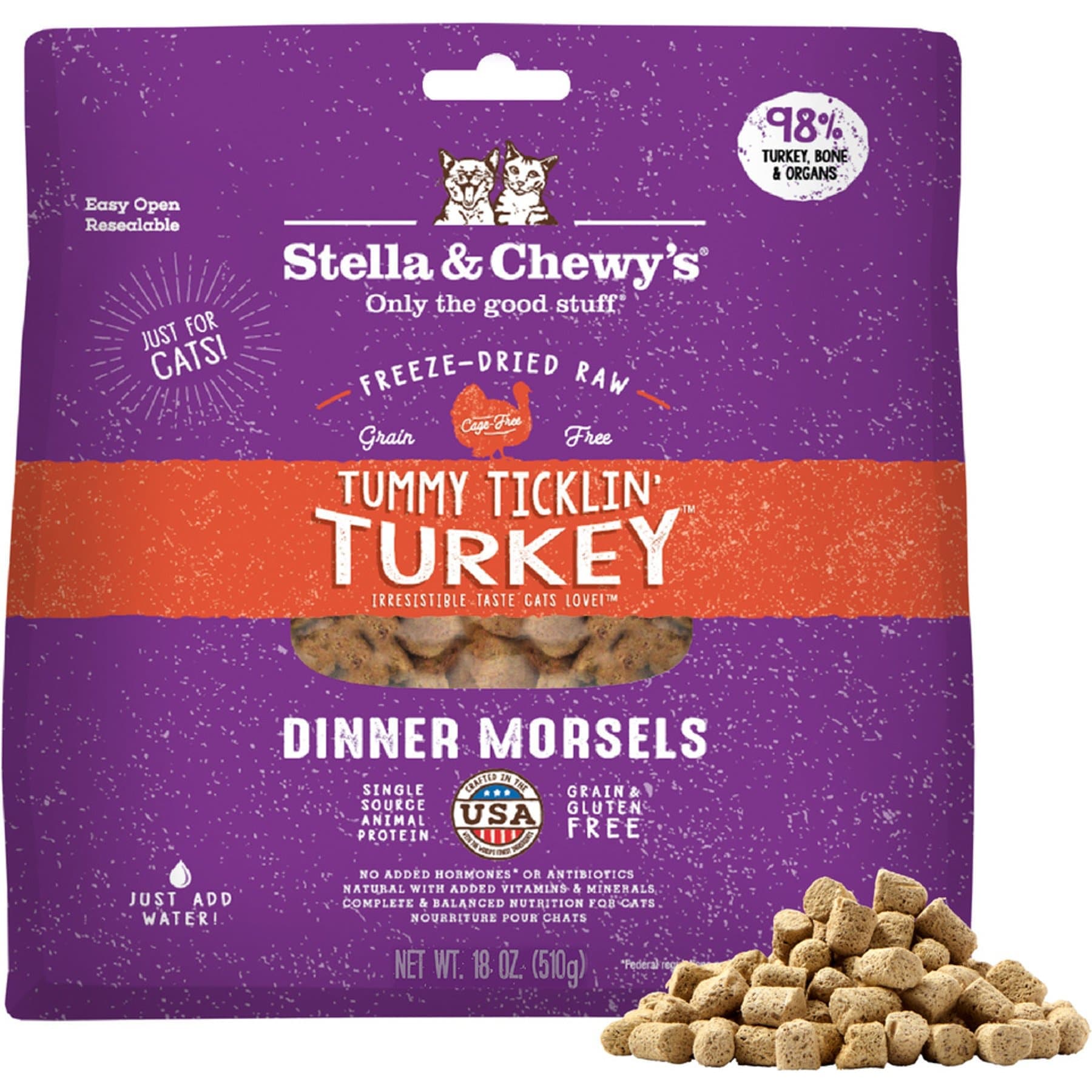
Stella & Chewy’s Tummy Ticklin’ Turkey freeze-dried cat food in an 18-ounce bag. Compare the named recipe, feeding directions and suitability for your cat.
Petful may earn a commission when you click through to Chewy, at no extra cost to you.
How to lower your cat's exposure
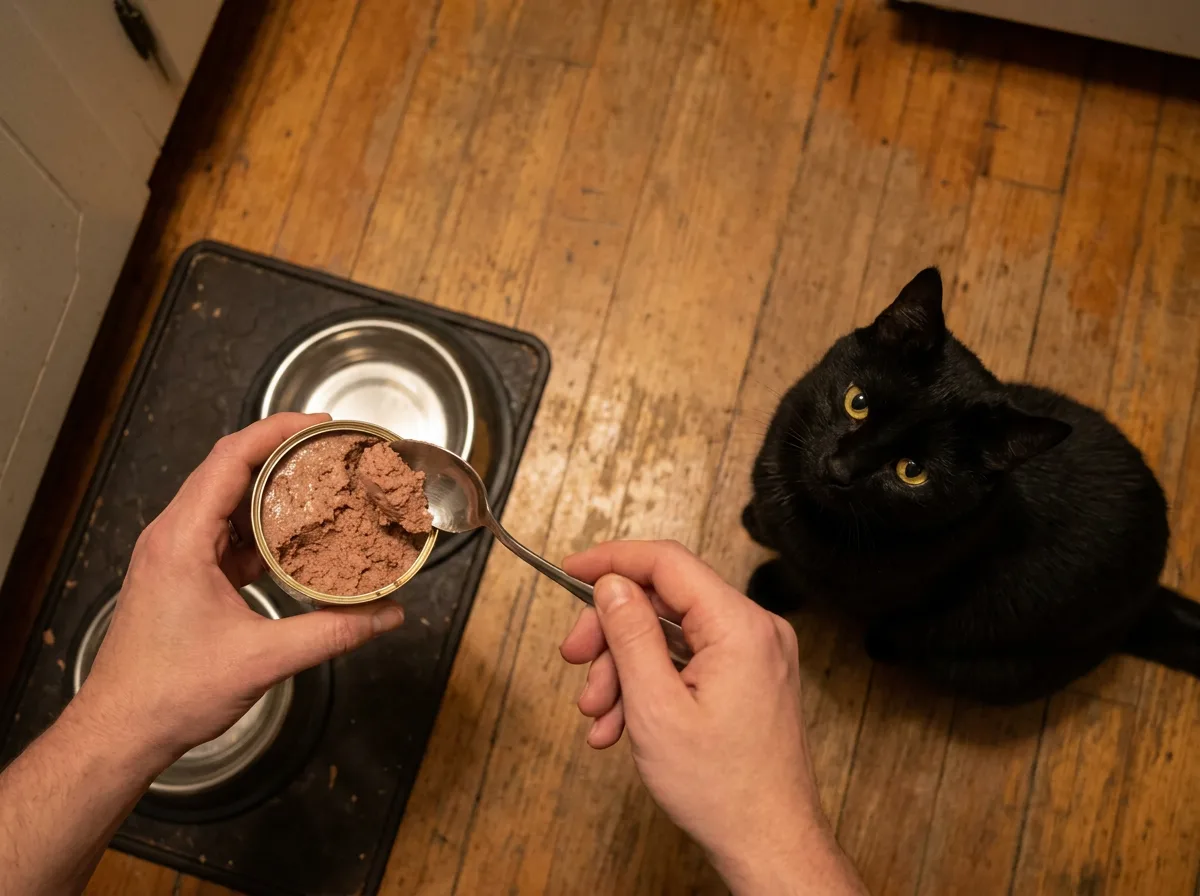
You do not need to change anything tonight. If your cat is well, eating a complete and balanced diet, and your veterinarian has no concerns, nothing in this study is an emergency. What the data does support is a set of sensible preferences you can apply the next time you buy food, and they all point the same way.
Begin with foods that meet your cat's nutritional, life-stage and medical needs. Record the exact recipes and amounts eaten, including treats and toppers, before comparing alternatives. Ask each manufacturer for finished-food testing relevant to that recipe or lot, including the measured concentration, units, measurement basis and contaminant form where relevant. Use those results alongside the study's poultry, fish and format associations. Refrigerated fresh food was not a separate measured category, and neither a format change nor rotation alone establishes a lower dose. The steps below help organize that comparison; the later veterinary-testing section explains when a blood or urine test may be appropriate.
- Choose poultry over fish as the everyday protein. Fish recipes carried about 18 times the mercury and 2.5 times the cadmium, and 84.8 percent of poultry products met the project's standard against 25.7 percent of fish and seafood products. This category association does not turn every complete fish-based cat food into a treat or establish its feeding frequency.
- Use the lead finding as one comparison point. Dry food averaged about three times the lead of wet or air-dried food in this sample, but the result does not rank every individual recipe. Certified options include fresh and freeze-dried products; match the exact recipe's evidence with your cat's nutritional needs.
- Compare the exact foods before changing formats or proteins. The study found different category patterns for lead, glyphosate and DEHP, but alternating foods does not by itself establish a lower dose.
- Keep treats and toppers in the same pattern. Include treats and toppers when assessing the actual foods and amounts eaten.
- Read the label for what the recipe is actually built on. Our guide to reading a cat food label explains ingredient splitting, which the study found in 35 of the 100 products, where the first-listed ingredient was outnumbered by similar ingredients further down the list.
If you want named options, these certified examples are a useful starting point. Freshpet Vital Chicken & Beef Recipe Fresh Cat Food is a certified chicken-and-beef recipe sold as a refrigerated roll. CLP's current wet PDF and tested-products page name different Freshpet recipes, so we do not assign this roll an unqualified Clean Sixteen rank. BIXBI RAWBBLE Turkey Recipe Freeze-Dried Cat Food is the certified freeze-dried turkey recipe and works as a complete diet or a topper. Smalls Smooth Bird Chicken Recipe, another certified option, is sold by subscription from the brand.
Among the Clean Sixteen poultry products, Instinct Original Grain-Free Pate Real Chicken Recipe is a wet chicken pate that matches both the poultry-first and wet-format preferences; the study listed Instinct's Original Grain Free Pate, and the Chewy case pairs it with a freeze-dried chicken bag. For a cat who refuses to leave crunchy food, Stella & Chewy's Tummy Ticklin' Turkey Freeze-Dried Cat Food was marked Clean Sixteen in the dry and freeze-dried category and gives a poultry option with the texture of kibble. Our roundup of the safest cat food brands ranks the certified and Clean Sixteen products with sizes and prices, and our guide to cat food brands to avoid explains how to spot risk on any label, since the study itself named no brand to avoid.
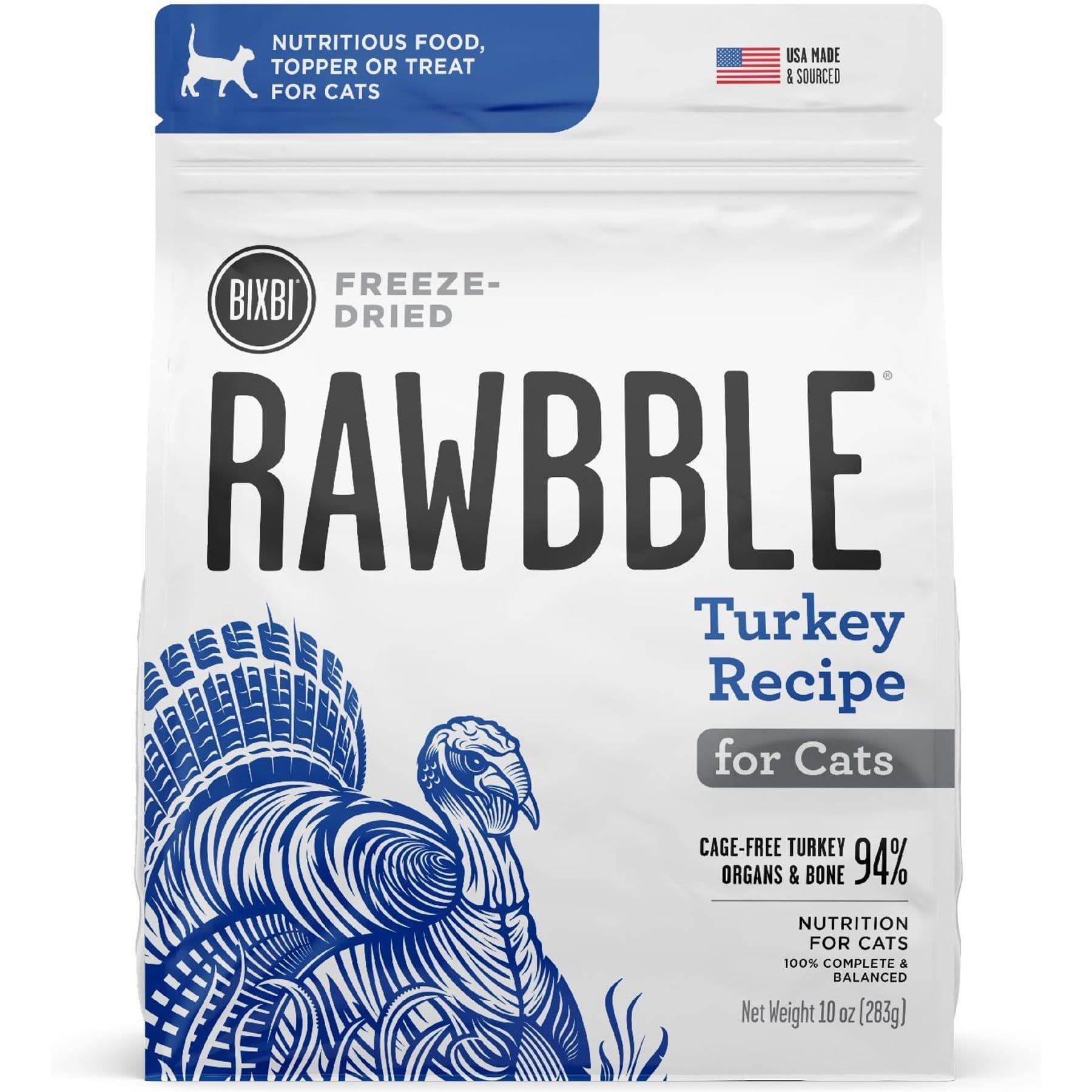
BIXBI RAWBBLE Turkey freeze-dried cat food in a 3.5-ounce bag. A turkey option to compare with the exact-recipe certification and ranking evidence.
Petful may earn a commission when you click through to Chewy, at no extra cost to you.
Two things this plan is not. It is not a reason to feed a homemade or raw diet without veterinary nutrition guidance, because an unbalanced diet is a far more certain harm to a cat than the metal levels reported in a balanced one. And it is not a recall response: nothing in the study triggered a recall, and if you want to know whether your cat's food has ever actually been pulled from shelves, our pet food recalls hub tracks every FDA and manufacturer notice by brand.
Signs of heavy metal poisoning in cats

Heavy metal poisoning can follow different sources and exposure patterns. Examples of concentrated sources include lead paint dust during a renovation, old lead weights or ammunition, contaminated well water, a zinc-coated object swallowed, or a pesticide. The symptoms of heavy metal toxicity still matter to know, partly so you can recognise them and partly so you can stop worrying about the ones your cat does not have.
According to the Merck Veterinary Manual, the signs of lead toxicosis in small animals are mostly gastrointestinal and neurological, and that pattern holds broadly for the other heavy metals in body tissues as well. The signs a veterinarian looks for include:
- Vomiting, diarrhea, drooling or abdominal pain, often the first signs of lead or arsenic exposure.
- Loss of appetite and weight loss over days to weeks.
- Lethargy, hiding, or a cat who stops grooming.
- Neurological signs: wobbliness, tremors, unusual behavior, apparent blindness, or seizures, which are the signs most associated with lead and mercury.
- Increased thirst and urination, which can point to kidney damage from cadmium, arsenic or inorganic mercury.
- Pale gums, which can reflect the anemia that chronic lead exposure causes.
These symptoms are not specific to heavy metal poisoning. Every item on that list has a dozen more common causes in cats, from hairballs to hyperthyroidism, which is why a veterinarian starts with a full examination and routine blood work rather than a metals test. Heavy metals in body tissues are confirmed with a blood lead level or a laboratory heavy metal panel on blood or urine, and your veterinarian will order that only when the history points to an exposure source.
Call your veterinarian or an emergency clinic immediately for a seizure, new staggering or inability to stand, or sudden blindness. Seek prompt veterinary advice for repeated vomiting as well. Our guide to lead poisoning in pets explains how acute lead exposure is diagnosed and treated once a veterinarian is involved. Treatment for a confirmed heavy metal poisoning is a veterinary job: it involves removing the source, supportive care, and in some cases chelation medication prescribed and monitored by a veterinarian. There is no home remedy or detox product for cats that is safe to try first.
Other poisoning signs that look similar
Most of what an owner would call cat poisoning symptoms has nothing to do with heavy metals. Lilies, antifreeze, permethrin flea products meant for dogs, human medications, onions and garlic, and spoiled or contaminated food account for the overwhelming majority of poisoning visits, and the signs overlap heavily with the list above: vomiting, drooling, lethargy, wobbliness and seizures.
Spoiled or contaminated food can cause illness, but timing and symptoms alone cannot identify whether the cause is microbial, chemical or unrelated to the meal. Dietary mercury exposure can be chronic, while other forms and doses can cause acute illness. A veterinarian needs the exposure history and examination rather than a slow-versus-sudden rule.
Our full guide to cat poisoning symptoms covers the acute poisons by source, what each one does, and what to do in the first hour. Use it for a cat who is suddenly unwell; use this page for the slow, dietary question the study raised.
What chronic low-dose exposure can do to a cat
When people ask what the silent killer of cats is, the answer in veterinary medicine is chronic kidney disease, which develops slowly, hides until much of the kidney is lost, and affects a large share of cats over the age of ten. Cadmium and the kidneys are the reason this study's cadmium finding deserves a closer look than the lead headline: the kidney is where cadmium accumulates over years, and the study did not prove, or claim to prove, that any food caused kidney harm.
Here is what chronic low-dose exposure means, metal by metal, drawing on the National Research Council's toxicology summaries:
- Cadmium: the CLP study found higher average levels in fish-based recipes, but did not assess cats' kidney function or establish a cause of feline chronic kidney disease. A particular cat's exposure cannot be calculated from the recipe category alone.
- Lead: stored in bone and released slowly. Chronic exposure in animals is associated with anemia, reduced appetite and subtle behavior change long before overt neurological signs. The study did not assess health outcomes in cats, so it cannot say what the lead levels it reported mean for disease risk.
- Arsenic: the inorganic form is the one associated with long-term harm to the skin, blood vessels and kidneys in laboratory animals and people; the organic arsenic in seafood is excreted readily. Which form a product carried is not reported in the study summary.
- Mercury: methylmercury from fish accumulates in the nervous system, and chronic exposure is associated with coordination and vision problems. Cats were the sentinel species in the historic Minamata Bay outbreak, which involved a fish diet far higher in mercury than any commercial food.
So, honestly, is cadmium in cat food a silent killer? This study did not assess disease outcomes in cats. The honest summary is this: the study documented exposure, not disease. Chronic kidney disease in cats has many contributors, including age, genetics, dental disease, high blood pressure and dehydration, and this study did not assess health outcomes in cats, so it cannot show whether dietary metals in commercial cat food contribute to it. Reducing exposure requires identifying its sources and considering the actual foods and amounts fed; this study does not establish the reduction from a specific switch or rotation. Regular blood and urine screening on a schedule agreed with your veterinarian can help detect kidney changes, whatever their cause.
When to call your veterinarian
Most readers of this page have a healthy cat and a worrying headline, and the right response is a note for the next routine visit, not an emergency call. Ask your veterinarian whether your cat's diet pattern is worth changing, whether her age or kidney values make lower cadmium exposure a priority, and whether a blood or urine heavy metal test makes any sense in her case. For a well cat on a commercial diet, the answer to that last question is almost always no.
- Call your veterinarian or an emergency clinic immediately for a seizure, new tremors or staggering, inability to stand, or sudden blindness. Follow their instructions for urgent assessment. Repeated vomiting, refusal to eat for more than a day, or sudden marked lethargy also need prompt veterinary advice. If you suspect exposure to paint dust, fishing weights, a coated object or a pesticide, say so when you call. Bring the food label and lot number for anything your cat has eaten recently, plus a photo of any suspected source, so the clinic can check recall notices and target the right tests.
For an acute exposure outside clinic hours, call a pet poison hotline first; the toxicologists there can tell you whether the exposure is serious and what the emergency clinic needs to know when you arrive. Do not induce vomiting at home or give any human detox or chelation product. Both can do more harm than the exposure.
Frequently asked questions about heavy metals in cat food
Very nearly. Lead was detected in 99 percent of the 100 cat foods the Clean Label Project tested in 2026, because lead occurs naturally in soil and water and is taken up by grains, vegetables, fish and bone. A detection means the metal was measurable. The study reported relative levels per 1,000 kcal and did not compare them with a tolerable level, so it neither shows a food exceeded a limit nor shows the levels are negligible. The study named no brand as failing. Its category patterns can inform a comparison of nutritionally suitable foods, but do not quantify the effect of a particular switch.
In this study, dry food carried about three times the lead of wet or air-dried food, so wet food was lower for the metal that drew the headline. The trade-off is that cans and pouches carried about five times the DEHP phthalate of bagged food, an association that does not establish the source or concentration in a particular recipe. Poultry recipes met the standard far more often than fish recipes, dry food carried more lead than wet or air-dried food, but rotating formats does not by itself establish a reduction in exposure.
Yes. A blood lead level is a routine send-out test, and veterinary diagnostic laboratories can run a broader heavy metal panel as a blood or urine test. For a healthy cat eating a commercial diet, testing is rarely indicated, because a blood or urine panel is most useful when the history points to a concentrated source. Your veterinarian will order it when the history points to a concentrated source, such as renovation dust, old paint, contaminated water or a swallowed object, or when unexplained signs fit a metal.
FDA describes case-by-case enforcement informed by NRC and AAFCO references. Those references are not one universal cat-food limit: species, chemical form and measurement basis matter when interpreting a specific result.
Yes, by a wide margin in this study. Fish-based foods carried about 18x the mercury and 2.5x the cadmium of other recipes, and only 25.7 percent of fish and seafood products met the project's standard compared with 84.8 percent of poultry products. Mercury concentrates up the aquatic food chain and cadmium accumulates in fish organs and shellfish, so the pattern is expected. If your cat eats fish exclusively, consider other suitable complete foods; the study does not set a universal fish-treat schedule.
BVMS, MRCVS
Dr. Pippa Elliott, BVMS, MRCVS, is a veterinarian with nearly 30 years of experience in companion animal practice. Dr. Elliott earned her Bachelor of Veterinary Medicine and Surgery from the University of Glasgow. She was also designated a Member of the Royal College of Veterinary Surgeons. Married with 2 grown-up kids, Dr. Elliott has a naughty Puggle named Poggle, 3 cats and a bearded dragon.
Sign up for expert-backed reviews and safety alerts all in one place.