Clean Label Project Cat Food Study: What It Found and What to Feed
The Clean Label Project tested 100 cat foods from 62 brands and found lead in 99 percent, but named no failing brands. Here is what it measured, the Clean Sixteen decoded, and what to feed.
Petful is reader supported. As an affiliate of platforms like Amazon and Chewy, we may earn a commission when you buy through links on this page. There is no extra cost to you.
If a headline about heavy metals in cat food sent you to the pantry to check your cat's bag, here is the short version of the Clean Label Project cat food study. The nonprofit bought 100 cat foods from 62 brands, had an independent lab test them for more than 122 contaminants, and found lead in 99 percent of them. It did not name a single failing brand, and it is not a recall.
That gap between the scary number and the missing villain is why so many owners are confused. This guide walks through what the Clean Label Project cat food study actually measured, which products it ranked in its Clean Sixteen, which certified examples the study highlights, and how to turn the protein and format findings into a feeding decision you can make tonight.

Sign up for expert-backed reviews and safety alerts all in one place.
What the Clean Label Project cat food study tested
The Clean Label Project published its cat food study on October 2, 2026. It purchased 100 products from 62 brands, split across 31 dry foods, 40 wet foods in cans and pouches, and 29 air-dried or freeze-dried foods, and tested each for heavy metals, pesticides, plasticizers, bisphenols and acrylamide. Lead turned up in 99 percent of products, cadmium in 96 percent and arsenic in 94 percent. The study named no failing brands, published no fail list, and is not a government action of any kind.
- 1100 products from 62 brands were tested for more than 122 contaminants at an ISO 17025 accredited lab
- 2Lead was detected in 99 percent of products, cadmium in 96 percent, arsenic in 94 percent, glyphosate in 37 percent and DEHP in 48 of 100
- 3Fish-based foods carried about 18x the mercury and dry foods about 3x the lead of wet or air-dried foods
- 4The study named no failing brands, and it is not an FDA recall
- 5Compare nutritionally suitable recipes using exact-product evidence; poultry performed better on average in this sample
The Clean Label Project, or CLP, is the nonprofit behind the study. Its full write-up, methodology and downloadable report live on the Clean Label Project cat food study page, and the product-by-product results live on the tested products page. Those two pages are the primary sources for every number in this article.
Two things about the method matter before you read any number:
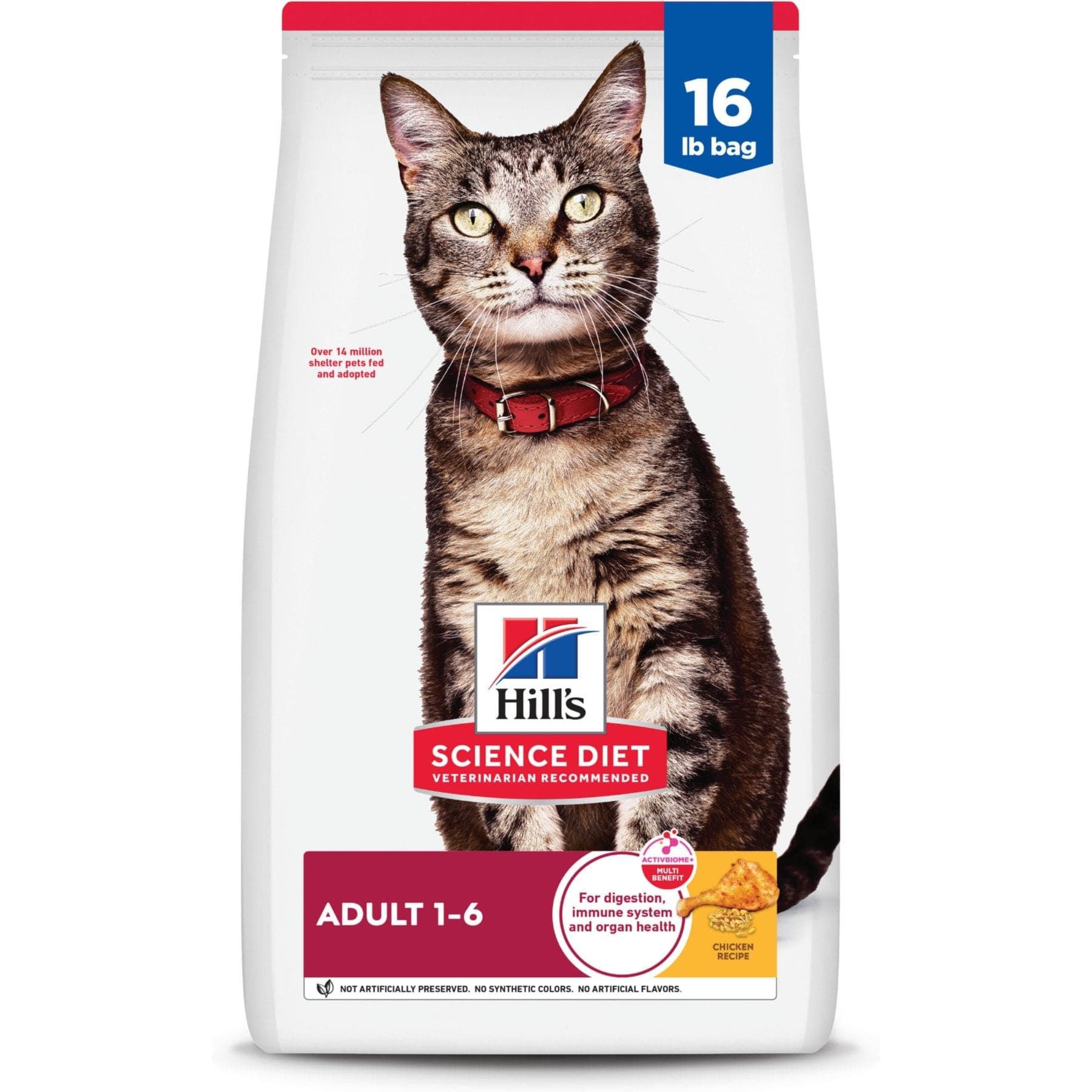
Hill’s Science Diet Adult Chicken dry cat food in a 32-pound bundle. An adult dry-food option to compare for nutritional suitability and the named study recipe.
Petful may earn a commission when you click through to Chewy, at no extra cost to you.
- Results are reported per 1,000 kilocalories, not per kilogram. Wet food is about three quarters water, so measuring per kilogram would make wet food look several times cleaner than it is. Ranking by calories compares what a cat actually eats.
- Products were ranked against each other, not against a legal limit. The Clean Sixteen lists are the 16 lowest-contaminant products in each format group. A product outside those lists did not fail anything; it simply did not rank in the top 16.
The lab work used inductively coupled plasma mass spectrometry for arsenic, cadmium, lead and mercury, and liquid chromatography tandem mass spectrometry for glyphosate, its breakdown product AMPA, bisphenols, acrylamide and the pesticide and phthalate panels. Results below the detection limit were reported as non-detect, and results between detection and quantification were reported as trace. That is the clean label cat food testing framework the headlines are summarizing, and it is more careful than most of the coverage suggests.
What the study found: lead, cadmium, arsenic, mercury, glyphosate and DEHP
The headline number is lead in 99 of 100 products, but the more useful findings are the patterns behind each contaminant. The Clean Label Project study report ties mercury and cadmium to marine ingredients, lead to dry format, glyphosate to plant ingredients, and DEHP to packaging. Heavy metals were the most common contaminant class by far, and DEHP, a phthalate plasticizer, was the second most common.
| Contaminant | Detection rate | Pattern the study reported |
|---|---|---|
| Lead | lead 99 percent of products | Dry food carried about 3x the lead of wet or air-dried food after adjusting for calories; not tied to any one protein |
| Cadmium | 96 percent | Fish-based products had about 2.5x the cadmium of other products, consistent with shellfish and other marine ingredients |
| Arsenic | 94 percent | Present across the category; grouped with mercury and cadmium as the metals most linked to marine ingredients |
| Mercury | Present across the category | Fish or seafood products carried about 18x the mercury of other products; 48.6 percent of fish products ranked among the highest for mercury and no poultry product did |
| Glyphosate | glyphosate 37 percent of products (AMPA in 12 percent) | Each additional plant ingredient in the first ten raised glyphosate about 40 percent on average |
| DEHP phthalate | DEHP 48 of 100 products | Detected at similar rates in dry and wet, but cans and pouches carried about 5x the DEHP of bags |
| BPA and BPS | 3 products total (BPA in 2, BPS in 1) | Bisphenols are now rarely found, reflecting packaging changes across the industry |
| Acrylamide | Measurable in 4 of 100, trace in 24 more | A high-heat cooking byproduct, found at low levels |
A few numbers deserve plain-language context, because the Clean Label Project heavy metals findings are being quoted without it:
- Lead in 99 percent means lead was detectable in 99 products. It does not mean 99 products exceeded a legal limit. The study measured relative levels and reported that the worst products carried about 3.5x the lead of a typical product.
- Protein source predicted a lot more than format. 84.8 percent of poultry products met the study's standard versus 25.7 percent of fish and seafood products, a 59.1 point gap. Dry and wet were within one percentage point of each other on meeting the standard.
- Ingredient splitting was common. In 35 of 100 products, the first-listed ingredient was outnumbered within the first ten by ingredients from another category, usually plants. Those products tended to carry more lead.
- Earlier Clean Label Project pet food work is folded in. Combining this study with its earlier cat food testing, the organization now has 541 samples across 87 brands and found herring meal, tuna and fish broth most strongly associated with contamination, with turmeric fourth.
What any of these metals does inside a cat is a clinical question, and our companion guide on heavy metals in cat food covers exposure, symptoms and when to call your veterinarian. This page stays on what the study measured.
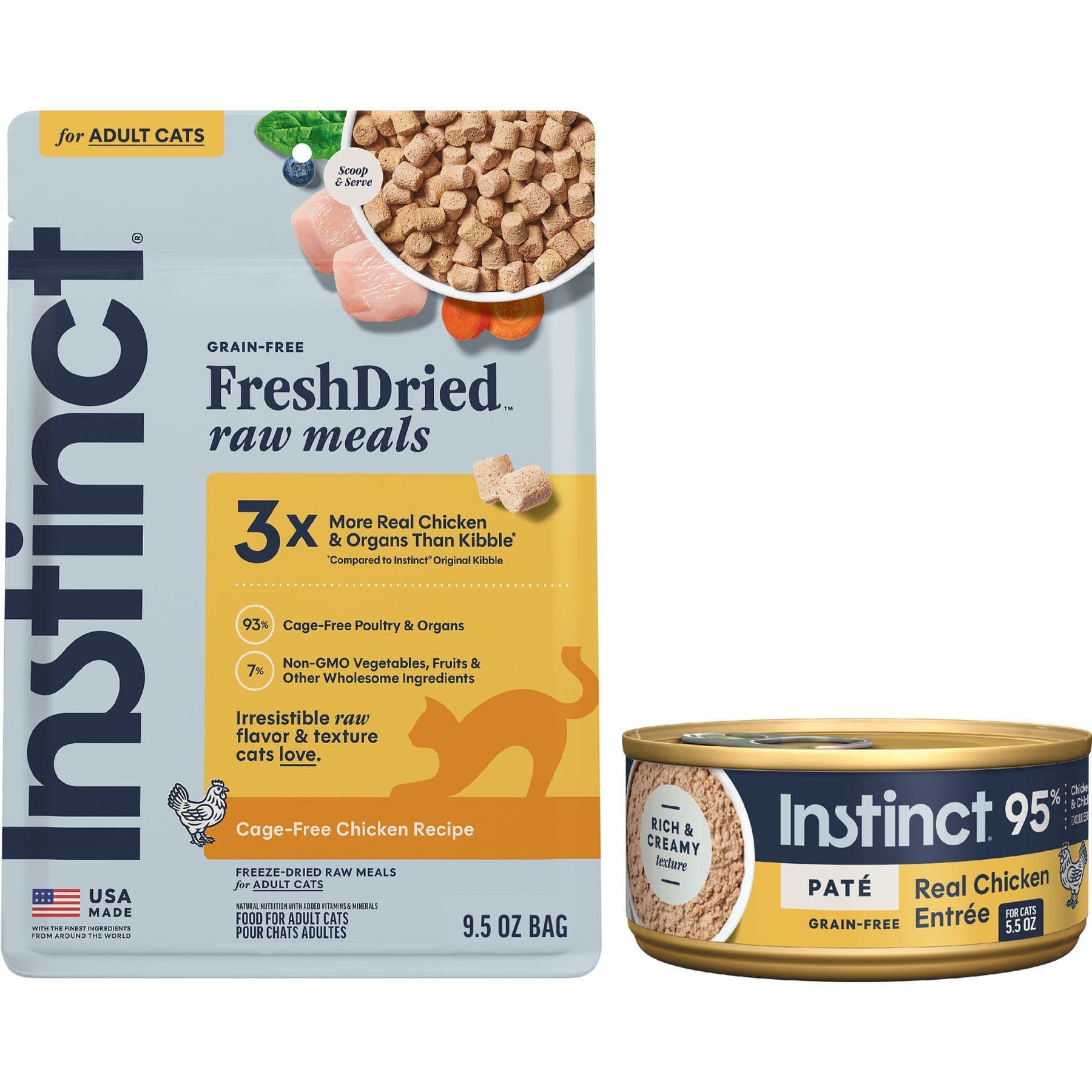
A bundle containing Instinct Original Chicken Pate cans and a separate freeze-dried chicken product. The article distinguishes the ranked pate from the other bundled food.
Petful may earn a commission when you click through to Chewy, at no extra cost to you.
Dry, wet, fish or poultry: where the contaminants concentrated
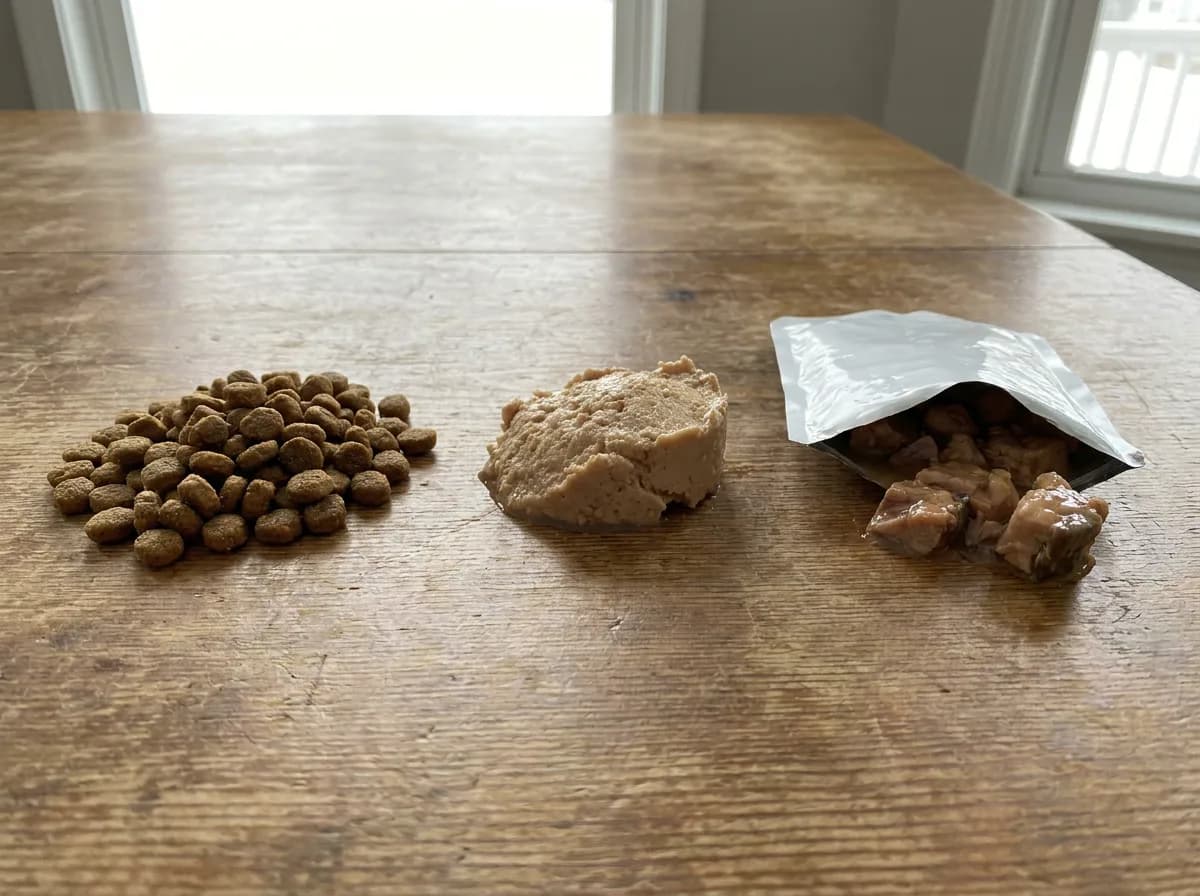
The study's most practical result is that the contaminants did not all point the same direction. Each format and protein carried its own pattern, which is why no single food type wins across the board and why the protein on the front of the bag matters more than whether the bag is a bag.
- Fish and seafood recipes: about 18x the mercury and about 2.5x the cadmium of other recipes. Among wet foods only, fish-based products carried about 28x the mercury of wet foods made with other proteins. Products with a marine ingredient but no fish in the name still ran higher than products with no marine ingredients at all.
- Dry kibble: about 3x the lead of wet or air-dried food after adjusting for calories, and the gap held after accounting for protein. Lead was not linked to any single ingredient the study examined, so format itself appears to play a role.
- Cans and pouches: DEHP showed up in roughly half of products in every format, but where it was found, canned and pouched products carried about 5x as much as bagged products, which the study attributes to contact with flexible packaging.
- Plant-heavy recipes: more plant ingredients near the top of the label meant more glyphosate, and recipes where plants outnumbered the named meat tended to carry more lead.
- Poultry recipes: 84.8 percent met the standard, and no poultry-based product ranked among the highest for mercury.
The study's category findings give you questions to ask about a suitable food: poultry recipes performed better on average, while the lead and DEHP patterns differed by format. Those averages do not establish the contaminant concentration in a particular recipe or package. If your cat eats fish exclusively, consider other nutritionally suitable complete foods alongside exact-product testing information. Our guide to mercury in fish-based cat food goes deeper on the 18x finding and the tuna questions readers keep asking.
A widely sold kibble can still rank well. Hill's Science Diet Adult Chicken Recipe dry cat food is the mainstream example: the study listed Hill's Science Diet Adult 1-6 Chicken Recipe in its dry and freeze-dried Clean Sixteen despite the dry-food lead pattern, while the Hill's salmon and brown rice recipe was tested but not ranked. That contrast inside one brand is the whole study in miniature: protein first, then format.
Is this a recall? What the study did and did not say
Which brands of cat food are contaminated, according to the study? None by name: the study named no failing brands, and it did not identify any product as unsafe or in violation of a legal limit. Lead was detected in 99 percent of products, but detection is not a violation; the study ranked products against each other, not against federal or state limits.
- The Clean Label Project cat food study is a private contaminant ranking, not a recall. No brand was named as failing, no product was pulled from shelves, and the FDA took no action because of it. In the organization's own words, absence from the Clean Sixteen is not necessarily an indicator that a product's contaminant levels exceed federal or state regulations, only that it did not rank in the top 16. Treat the tested-products list as a list of what was tested, never as a blacklist.
A recall is a different process entirely. Recalls in the United States run through the manufacturer and the FDA's pet food program, are tied to a specific lot or date code, and come with a public notice. The Clean Label Project has no regulatory authority and did not request a recall of any product. If you want to know whether your cat's brand has ever been recalled, that history lives on Petful's recall hub and brand pages, not in this study:
- Petful's pet food recall hub tracks current and past recalls across brands, including the 2026 notices. To check your own brand, open the hub, find the brand's recall page, and compare the lot or date code on your bag against any notice listed; no notice for your lot means no recall.
- Hill's Science Diet recall history covers the brand whose chicken kibble made the dry Clean Sixteen.
- Freshpet recall history and Smalls recall history cover two of the three certified brands.
- Nulo recall history covers a brand with three Clean Sixteen products, and Orijen recall history covers a brand that was tested but not ranked.
The practical rule: a recall tells you a specific lot had a confirmed problem and should not be fed. This study tells you how 100 products compared to each other on contaminants in one round of testing. Those are different questions with different answers, and a brand can sit in either column, both, or neither.
The Clean Sixteen and the three certified brands
The Clean Label Project list most readers are searching for is actually two lists of sixteen. The tested-products page splits the 100 foods into a dry and freeze-dried group of 60 and a wet group of 40, then marks the 16 lowest-contaminant products in each group as the Clean Sixteen (you will also see it written clean 16). Everything else on the page is tested but not ranked, and the page says in its own legend that this is not an indicator the product exceeds any regulation.
The CLP Purity Award is a separate certification program. The study highlights certified products from Bixbi, Freshpet and Smalls, but those examples are not a complete count of certified cat foods. Check the exact recipe in CLP's certified-products directory. A Clean Sixteen ranking by itself does not confer Purity Award certification.
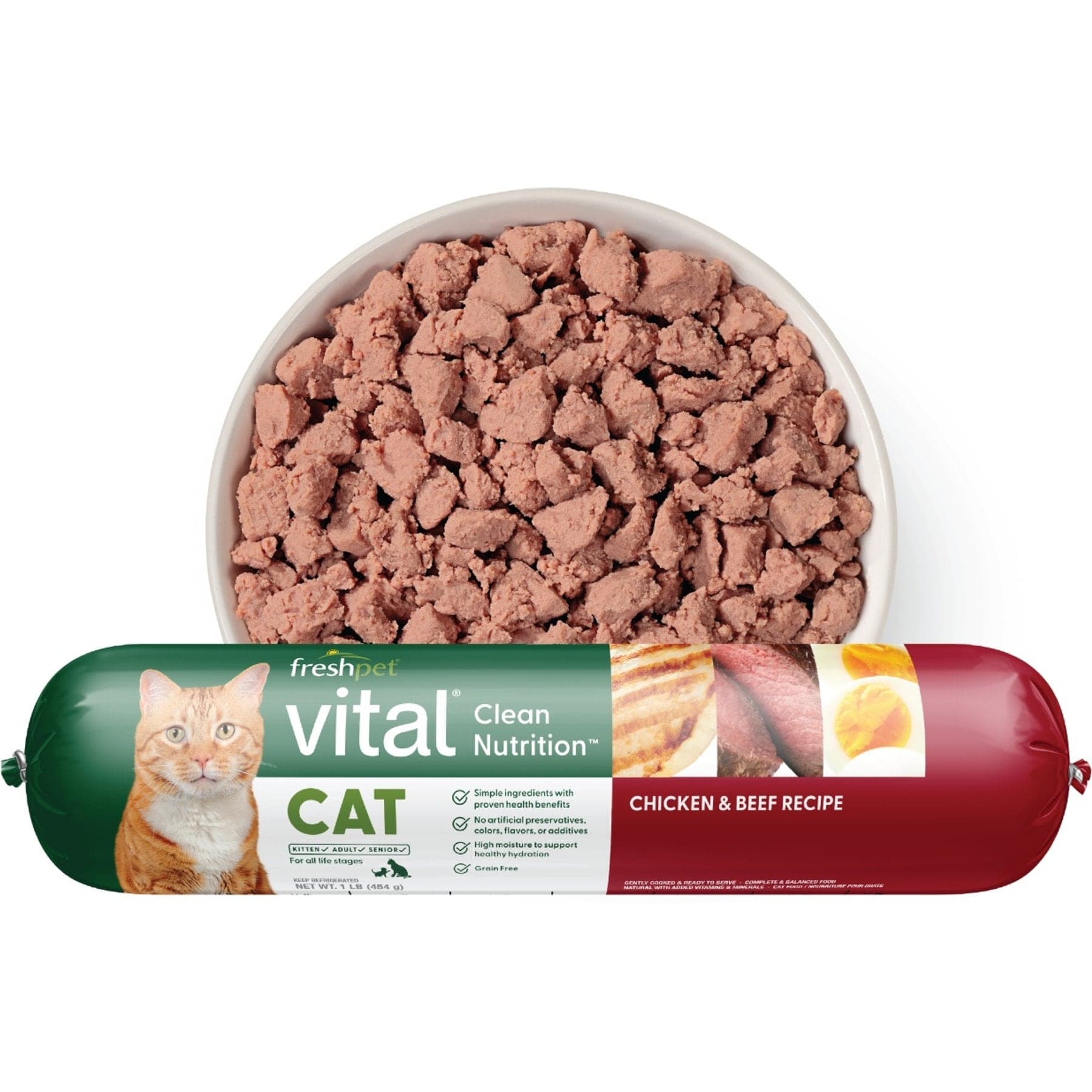
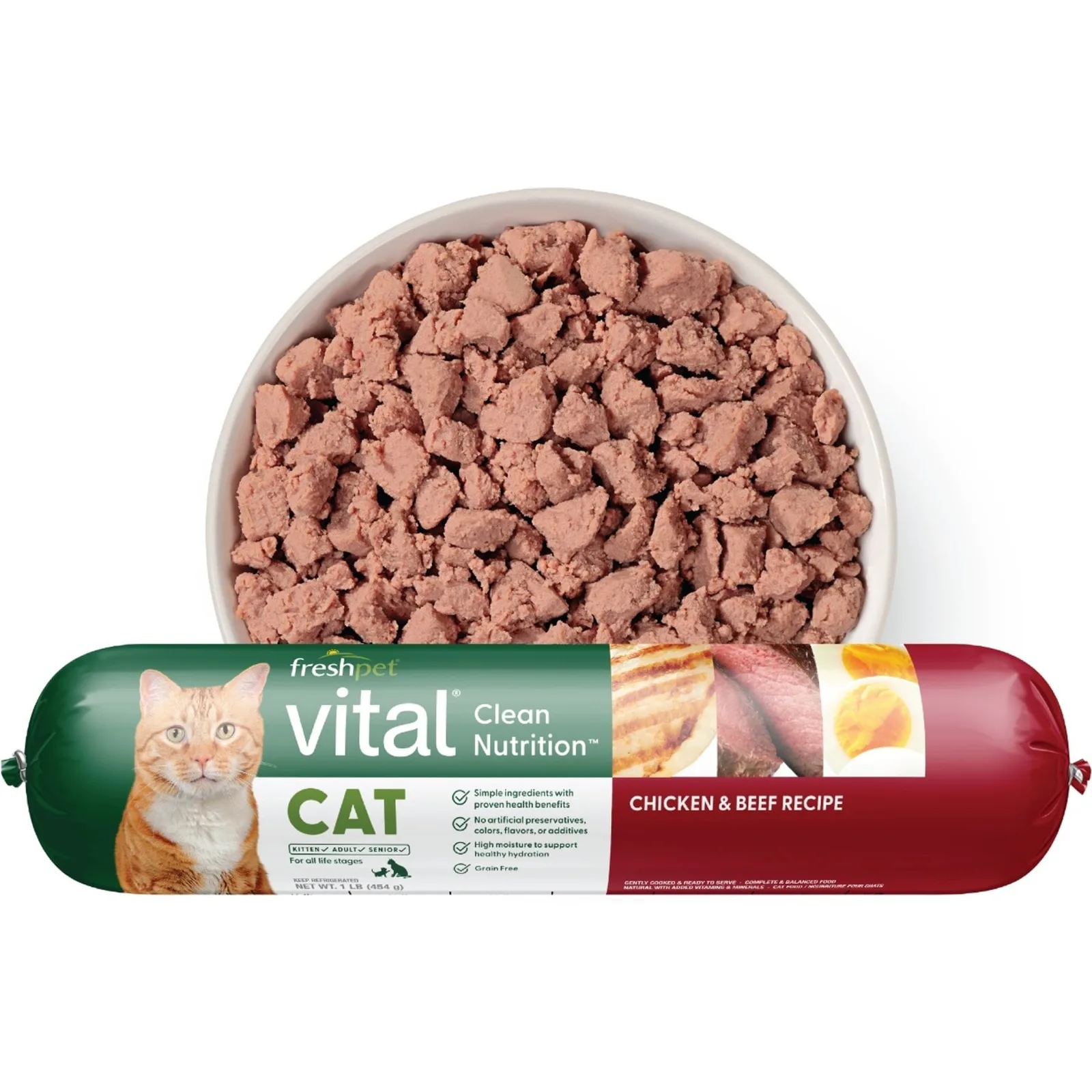
Freshpet Vital Chicken & Beef in eight 1-pound rolls. Compare this exact recipe and package with the certification evidence discussed in the article.
Petful may earn a commission when you click through to Chewy, at no extra cost to you.
| Product | Format group | Protein | Status |
|---|---|---|---|
| Bixbi Rawbble Turkey Recipe (freeze dried) | Clean Sixteen dry and freeze-dried | Turkey | Purity Award certified and Clean Sixteen |
| Hill's Science Diet Adult 1-6 Chicken Recipe | Clean Sixteen dry and freeze-dried | Chicken | Clean Sixteen |
| Kirkland Signature Chicken & Rice | Clean Sixteen dry and freeze-dried | Chicken | Clean Sixteen |
| Smallbatch Cat Freeze Dried Meal Bites Turkey | Clean Sixteen dry and freeze-dried | Turkey | Clean Sixteen |
| Whole Life Nature's Remedy Recover Stomach Distress | Clean Sixteen dry and freeze-dried | Poultry | Clean Sixteen |
| Stella & Chewy's Duck Duck Goose | Clean Sixteen dry and freeze-dried | Duck and goose | Clean Sixteen |
| Stella & Chewy's Tummy Ticklin' Turkey | Clean Sixteen dry and freeze-dried | Turkey | Clean Sixteen |
| Purpose Pet Food Carnivore Duck | Clean Sixteen dry and freeze-dried | Duck | Clean Sixteen |
| Nulo Freestyle Chicken & Salmon | Clean Sixteen dry and freeze-dried | Chicken and salmon | Clean Sixteen |
| Natural Pet Food Group New Zealand Chicken Feast | Clean Sixteen dry and freeze-dried | Chicken | Clean Sixteen |
| Green Juju Duck & Sardine | Clean Sixteen dry and freeze-dried | Duck and sardine | Clean Sixteen |
| Weruva Paw Lickin' Chicken | Clean Sixteen dry and freeze-dried | Chicken | Clean Sixteen |
| Fresh is Best Freeze Dried Chicken | Clean Sixteen dry and freeze-dried | Chicken | Clean Sixteen |
| Vital Essentials Rabbit Entree | Clean Sixteen dry and freeze-dried | Rabbit | Clean Sixteen |
| McLovin's Purrfect Poultry | Clean Sixteen dry and freeze-dried | Poultry | Clean Sixteen |
| Boss Cat Boss Pork | Clean Sixteen dry and freeze-dried | Pork | Clean Sixteen |
| Freshpet Tender Chicken & Garden Vegetable Recipe | Clean Sixteen wet | Chicken | Purity Award certified; named in the current Clean Sixteen wet PDF |
| Smalls Smooth Bird Chicken Recipe | Clean Sixteen wet | Chicken | Purity Award certified and Clean Sixteen |
| Instinct Original Grain Free Pate | Clean Sixteen wet | Chicken | Clean Sixteen |
| Nulo Medal Series Chicken, Duck & Pumpkin in Broth | Clean Sixteen wet | Chicken and duck | Clean Sixteen |
| Nulo Medal Series Chicken & Chicken Liver in Broth | Clean Sixteen wet | Chicken | Clean Sixteen |
| Purina Pro Plan White Meat Chicken & Vegetables Entree | Clean Sixteen wet | Chicken | Clean Sixteen |
| Friskies Salmon Dinner Pate | Clean Sixteen wet | Salmon | Clean Sixteen |
| Applaws Chicken Breast & Duck in Broth | Clean Sixteen wet | Chicken and duck | Clean Sixteen |
| Sheba Cuts in Gravy Roasted Chicken Entree | Clean Sixteen wet | Chicken | Clean Sixteen |
| Purina Fancy Feast Grilled Turkey Feast in Gravy | Clean Sixteen wet | Turkey | Clean Sixteen |
| Tiki Cat Chicken & Pumpkin in Broth | Clean Sixteen wet | Chicken | Clean Sixteen |
| Tiki Cat Chicken, Pumpkin & Duck in Broth | Clean Sixteen wet | Chicken and duck | Clean Sixteen |
| Tiki Cat Chicken, Pumpkin & Lamb in Broth | Clean Sixteen wet | Chicken and lamb | Clean Sixteen |
| Tiki Cat Chicken, Pumpkin & Tuna in Broth | Clean Sixteen wet | Chicken and tuna | Clean Sixteen |
| Reveal Grain-Free Tuna Fillet in Broth | Clean Sixteen wet | Tuna | Clean Sixteen |
| Reveal Grain-Free Chicken Breast in Broth | Clean Sixteen wet | Chicken | Clean Sixteen |
Read the table and the protein pattern jumps out: of the 32 ranked products, the large majority are chicken, turkey, duck or another poultry recipe, and the handful of fish recipes that made it (Friskies Salmon Dinner Pate, the Reveal tuna fillet, the Tiki Cat chicken and tuna blend) are the exception the study itself points to as proof that fish can be done cleanly. There is no Clean Label Project top 5 inside the lists; products are shown alphabetically, not scored against each other, so nothing in the list is ranked first.
A certified refrigerated option is Freshpet Vital Chicken & Beef Recipe fresh cat food. Freshpet confirms its Chicken & Beef recipe's Purity Award certification. Its Clean Sixteen status is less clear: CLP's tested-products page names Chicken & Beef Pate, while the current wet-list PDF names the different Tender Chicken & Garden Vegetable recipe. We therefore recommend this roll on its documented certification, without assigning it the other recipe's ranking or inferring its DEHP level from its package.
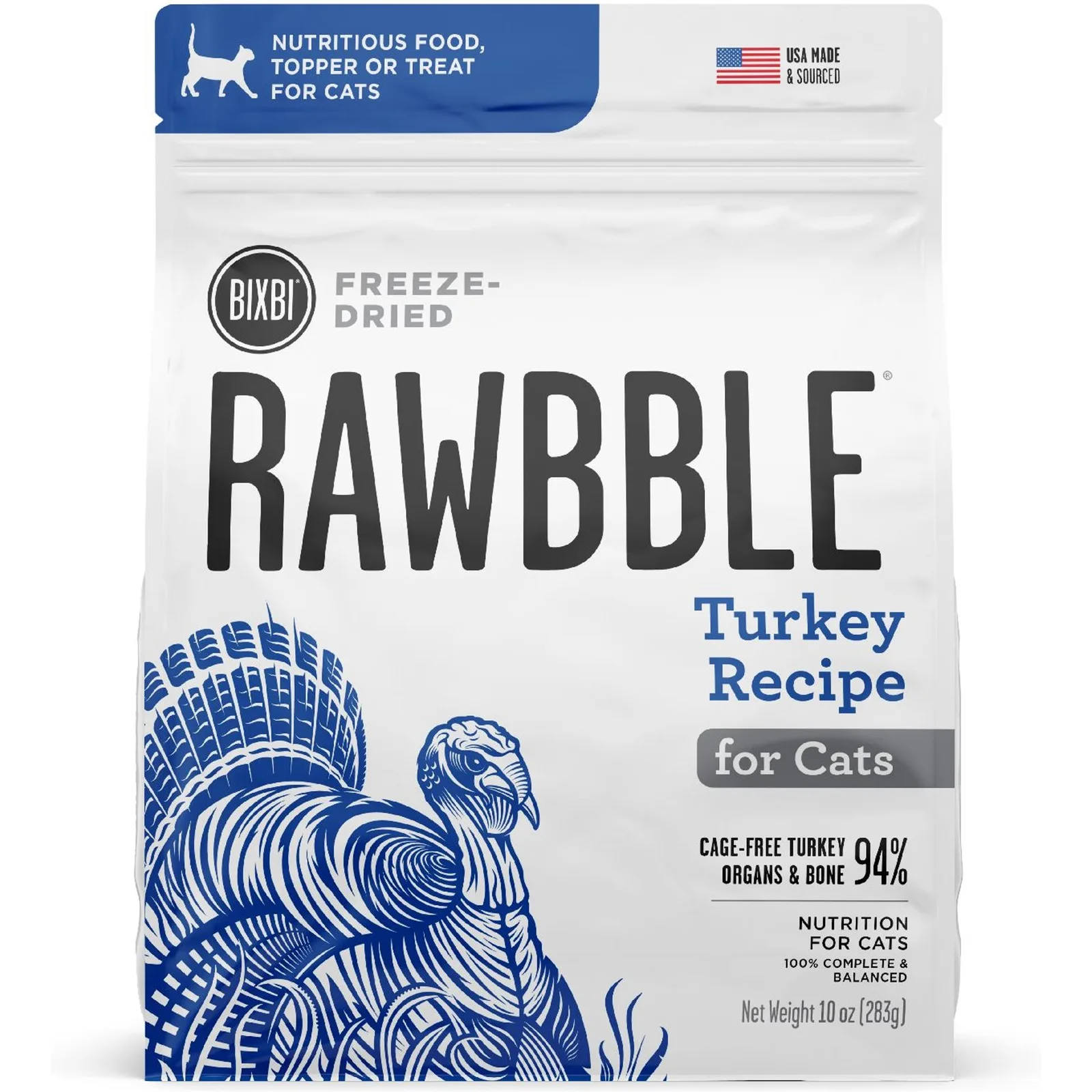
Bixbi Rawbble Turkey Recipe freeze-dried cat food is a certified recipe that also appears on the dry and freeze-dried Clean Sixteen list. Those documented results are stronger grounds for considering it than assuming any bagged turkey food will reproduce the study's category averages.
Smalls: certified and already reviewed on Petful
Smalls Smooth Bird Chicken Recipe is another certified example, available through the brand's subscription service. It is a fresh, gently cooked chicken recipe shipped frozen, and Petful has already reviewed it in depth in our Smalls cat food review, which covers pricing, the subscription model and how cats took to it. If Smalls already suits your cat's nutritional needs, its certification is useful additional evidence; if you are considering it, the review is the place to weigh the cost against a shelf-stable certified option like Bixbi.
Orijen and other tested brands that did not rank
Orijen in the Clean Label Project study is a question we are seeing a lot, mostly from owners who assume a premium price should guarantee a Clean Sixteen spot. The study tested one Orijen product, the Beef & Tuna Entree in bone broth, and it was tested but not ranked. That is not a failure: the recipe is a fish-and-beef blend, and fish recipes across every price tier ranked lower on mercury and cadmium. Our full Orijen pet food review evaluates the brand's cat and dog lines on their own terms, which is the right place for the brand question.
The same tested-but-not-ranked status applies to a long list of well-known names, including Acana, Fromm Gold, Tiki Cat Born Carnivore, Open Farm, The Honest Kitchen, Primal, Ziwi Peak, Merrick, Wellness Core+ and Signature Selects, American Journey, the Weruva Lamb Burger, and the Hill's salmon and brown rice kibble. For every one of them the study's own caveat applies: not ranking in the top 16 is not an indicator that the product exceeds federal or state regulations or that it would fail certification. Many of these brands simply had a fish-based recipe in the sample.
Which brands had products in the study
Readers searching for a specific brand, whether Purina cat food, Royal Canin cat food, Hill's Science Diet cat food or Smalls cat food, mostly want to know whether that brand was in the study and whether it ranked. Most of the biggest sellers were tested, and several mainstream products made the Clean Sixteen. The split below is what the tested-products page shows, not a Petful ranking.
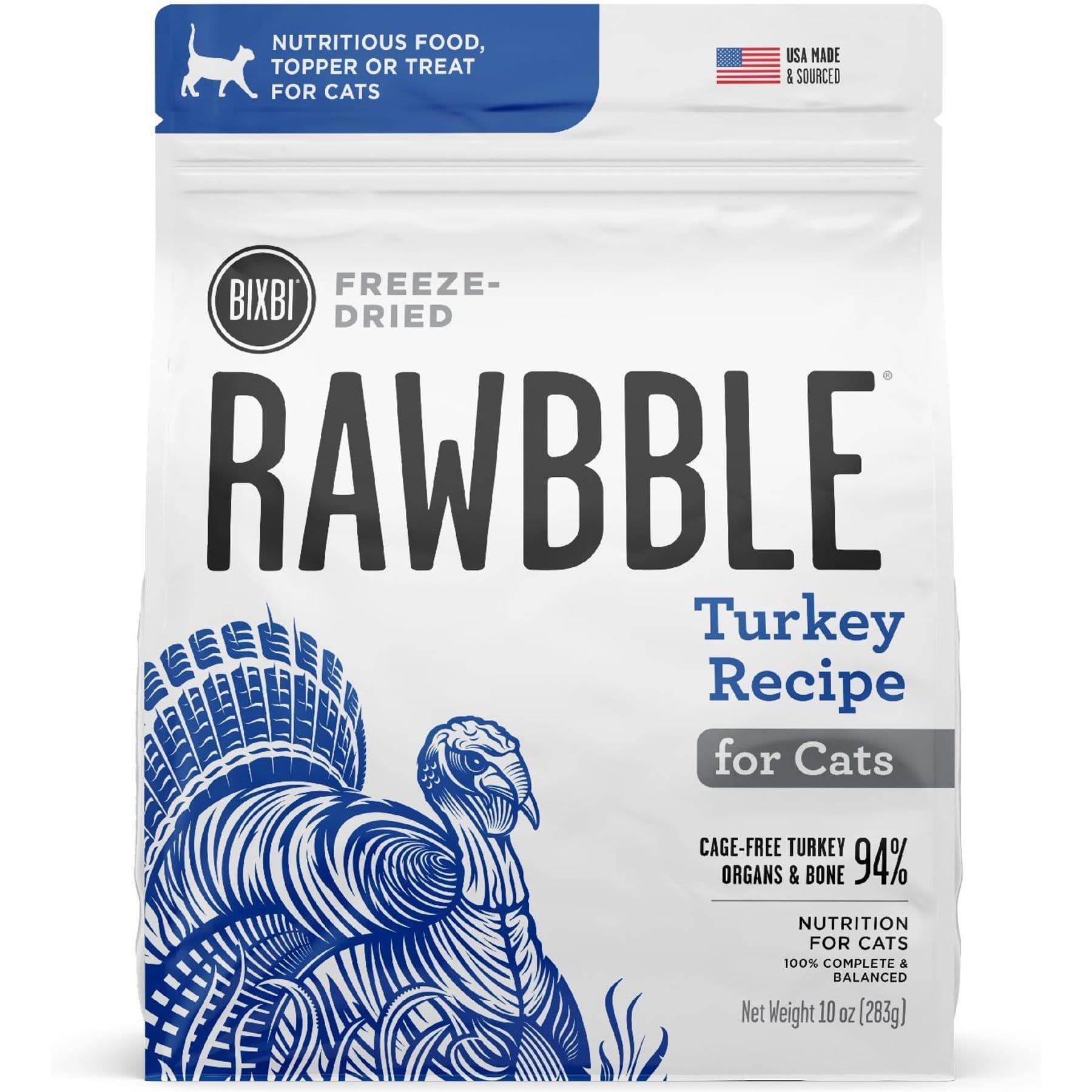
BIXBI RAWBBLE Turkey freeze-dried cat food in a 3.5-ounce bag. A turkey option to compare with the exact-recipe certification and ranking evidence.
Petful may earn a commission when you click through to Chewy, at no extra cost to you.
- Ranked in a Clean Sixteen: Hill's Science Diet (Adult 1-6 Chicken Recipe), Purina Pro Plan cat food (White Meat Chicken & Vegetables Entree), Friskies cat food (Salmon Dinner Pate), Purina Fancy Feast (Grilled Turkey Feast in Gravy), Sheba cat food (Cuts in Gravy Roasted Chicken), Kirkland Signature, Nulo, Instinct, Tiki Cat, Weruva, Applaws, Reveal, Stella & Chewy's and the three certified brands.
- Tested but not ranked: Meow Mix, Purina Cat Chow, Purina One cat food (Tender Selects Salmon), Iams cat food (both Proactive Health recipes), Blue Buffalo cat food (Tastefuls and Wilderness), Royal Canin (Adult Instinctive Loaf), Nutrish, Orijen, Acana, Fromm, Merrick, Wellness, Open Farm, Honest Kitchen, Primal and Ziwi Peak, among others.
- Both columns for the same brand: Hill's, Purina Pro Plan, Friskies, Fancy Feast, Sheba, Tiki Cat and Weruva each had at least one recipe ranked or tested alongside another that was not, which is why a brand-level verdict from this study is not possible.
If you want a ranked shortlist rather than a decoder, that is the job of our guide to the safest cat food brands, which picks products with purchase links and explains the reasoning. This page stays with what the study did and did not say about each brand.
Is the Clean Label Project legit? Funding, controversy and limits
The Clean Label Project is a real nonprofit that commissions laboratory testing. Its results can help readers compare contaminants, but the organization uses its own benchmark and operates a separate certification program. It is not a government regulator, so assessing its work means looking at the laboratory methods, funding and limits of the published results.
Here is what can be said with confidence from the organization's own pages and the study itself:
- Who runs it: the Clean Label Project is a U.S. nonprofit organization; its leadership page lists Molly Hamilton as executive director, and it publishes a certification-process page on its website.
- How it is funded: it runs a certification program brands apply to, and critics ask whether that creates a conflict. The certification is a separate program from the study, the study testing ran through an ISO 17025 accredited lab, and the Clean Sixteen is the organization's own relative ranking rather than a legal standard.
- The lab basis: testing was done by an independent analytical chemistry laboratory with ISO 17025 accreditation for the methods used, which is the standard accreditation for testing labs. That part is not in dispute.
- The standard: the pass threshold and the Clean Sixteen cutoffs are the organization's own, built from relative ranking within the category rather than from FDA or state limits. The report is not a peer-reviewed journal article.
The limits follow from that. A single result reflects one purchased batch, so a product's rank could change on a different lot. The study reports relative levels, so a high-ranking product still contains heavy metals, and a non-ranking product may be well within every regulatory limit. The Clean Label Project is best understood as an advocacy nonprofit publishing its own benchmark. None of that makes the testing wrong; it means the Clean Sixteen is one useful input, not a verdict, and the organization itself says lower contaminant levels are its guiding principle rather than any legal line.
How to choose a lower-contaminant cat food
Start with a complete and balanced food that suits your cat's life stage and medical needs and that your cat will reliably eat. Among suitable foods, compare the exact recipe's certification and study results, then use the protein and format findings as context. This sequence works whether the food was ranked, tested but not ranked, or absent from the study; category averages do not predict its concentration or the effect of switching.
- Compare protein sources among suitable foods. Chicken, turkey and duck recipes met the standard 84.8 percent of the time versus 25.7 percent for fish and seafood, and no poultry recipe ranked among the highest for mercury. If your cat eats fish exclusively, compare other complete foods that fit its nutritional and medical needs. Rotation alone does not establish a lower contaminant dose.
- Then compare format findings with exact-product evidence. Wet and air-dried or freeze-dried foods averaged less lead than dry kibble; refrigerated fresh food was not a separate study category. Bagged dry and freeze-dried formats carried about a fifth of the DEHP of cans and pouches. These are category averages, not measurements of every fresh roll or freeze-dried bag.
- Then look for a certified or Clean Sixteen product in that lane. The study highlights certified products from three brands and ranks 32 products across its two Clean Sixteen lists. Certification is a separate program, so confirm the exact recipe's current status.
- Read past the first ingredient. In 35 of 100 products the first ingredient was outnumbered by plant ingredients within the first ten, and those recipes carried more lead and more glyphosate. Our guide to reading a cat food label shows how to count those ingredients.
- Remember that detection is not the same as a violation. Nearly every product contained some lead; the goal is lower, not zero, and a switch is only worth it if the new food meets the same complete-and-balanced standard.
A wet poultry pate is the simplest version of that sequence. Instinct Original Grain-Free Pate Real Chicken Recipe is the Clean Sixteen wet product the study listed as Instinct Original Grain Free Pate, a chicken recipe in a can, so its exact-recipe ranking is useful alongside the broader format findings; the Chewy bundle pairs the pate case with a freeze-dried chicken bag, which is a separate product from the one the study listed. For a bagged alternative with its own exact-recipe ranking, Stella & Chewy's Tummy Ticklin' Turkey freeze-dried cat food is a turkey recipe from the dry and freeze-dried Clean Sixteen.
Two cautions belong here. Do not switch a cat with kidney disease, diabetes, urinary history or a prescription diet without talking to your veterinarian, because the therapeutic diet is doing a job this study does not measure. And transition any new food over a week or so; a cat that stops eating because the bowl changed overnight faces a more immediate risk than any contaminant in this report.
Choosing the safest cat food after the study
The study does not crown a best cat food, and it cannot, because it measured contaminants and nothing else. A high quality cat food still has to be complete and balanced for the cat's life stage, which is why a high quality kitten food and an adult maintenance food are different products even from the same brand. Price did not predict purity either: premium cat food brands appear in both the ranked and the tested-but-not-ranked columns, and so do grocery brands.
Use the study after confirming nutritional, life-stage and medical suitability. Compare exact-recipe certification and ranking, then use the protein and format findings as context rather than predictions for an individual package. From there, the usual questions about texture, calories, price and whether the best wet cat food for your cat is a pate or a broth are the ones our safest cat food brands guide answers with specific picks. If you are more worried about spotting risk than finding a winner, our guide to cat food brands to avoid explains the warning signs that actually matter, and why a list of five foods to avoid is the wrong way to read this study.
Frequently asked questions about the Clean Label Project cat food study
No. There were no failing brands named anywhere in the study or on its tested-products page. The study ranked 100 products from 62 brands and marked the 16 lowest-contaminant products in each format group as the Clean Sixteen; every other product is simply listed as tested. The organization states that absence from the Clean Sixteen is not an indicator of exceeding regulations, so a brand missing from the list has not failed anything.
No. The Purity Award is a private nonprofit certification based on the organization's own contaminant benchmark and its lab testing of a purchased sample. The FDA does not approve pet foods before sale and had no role in the study; it regulates pet food through labeling rules, ingredient standards and recalls. A certified product has met the Clean Label Project's standard, which is a different thing from a government safety approval.
Not automatically. If your cat eats a fish-based food every day, the study found lower average mercury and cadmium in non-fish recipes, but it did not quantify the effect of your particular switch, so rotating in a chicken or turkey recipe is a reasonable change. If your cat is on a prescription diet or has kidney, urinary or digestive disease, talk to your veterinarian before changing anything, and transition any new food gradually.
The Clean Sixteen is a ranking: the top 16 products with the lowest contaminant levels in each format group, dry and freeze-dried in one list and wet in the other, shown alphabetically with no scores. The Purity Award certification is a separate program a brand applies for, and a certified product carries the Clean Label Project logo. The study highlights certified examples from Bixbi, Freshpet and Smalls, while CLP's current directory includes additional cat recipes. Its current Freshpet wet-list sources name different recipes, so certification and ranking must be checked separately.
Yes, in a separate dog food study with its own Clean Sixteen lists. The cat food results do not carry over to dog food, even for brands that make both, because the dog food study used a different product list and dog recipes have their own protein and format patterns. Check the dog food lists on the Clean Label Project site rather than assuming a cat food result applies.
No. Lead occurs naturally in soil and water and shows up at low levels in most foods, so detection is not a violation of any limit. The study also reported results per 1,000 kilocalories rather than in parts per billion by weight, so the numbers cannot be compared directly to the limits you may have seen for human food. The useful reading is relative: dry kibble carried about 3x the lead of wet food, and the worst products carried about 3.5x the lead of a typical one.

Coreen Saito is a pet writer and longtime shelter volunteer with more than a decade in animal rescue. She covers cat behavior, breed care, and the small, ordinary science of sharing a life with companion animals, with a particular focus on honest takes about the products and decisions that actually matter. At home in Arizona, she's outranked by Mac (a dog with the loudest opinion in the house), Rebel (a cat who governs by quiet authority), and Meri (an orange tabby who runs the late shift and the laundry basket). She writes about all three, plus the rescues that keep coming through her life, at LifeWithMinty.com.
Sign up for expert-backed reviews and safety alerts all in one place.