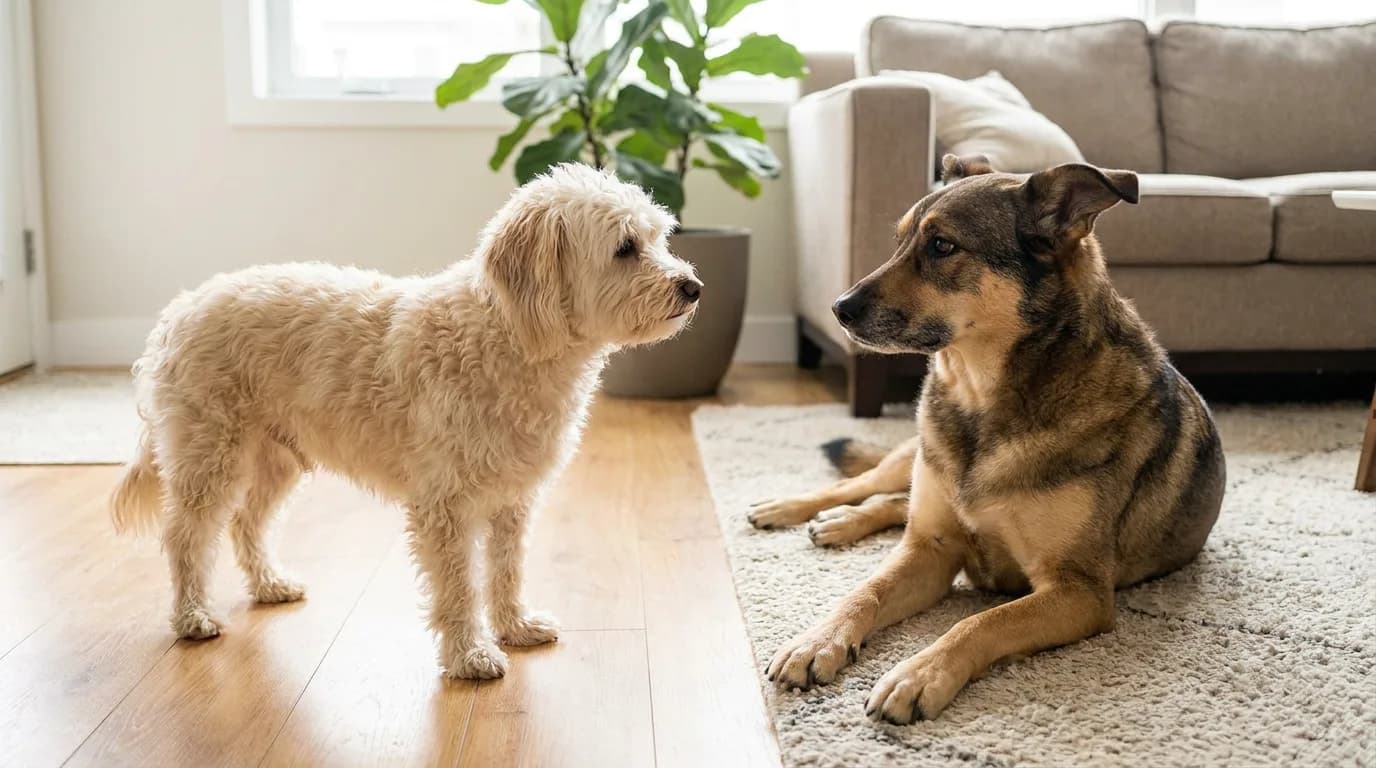
Teacup Maltese: Size Labels and Practical Care
A teacup Maltese is a seller’s size label, not a breed: the AKC Maltese standard is under 7 pounds, with 4 to 6 preferred. Learn how to check size claims and plan handling, feeding, grooming and care.

A Maltese's care should follow the individual dog, including its age, condition and current measurements.
Petful is reader supported. As an affiliate of platforms like Amazon and Chewy, we may earn a commission when you buy through links on this page. There is no extra cost to you.
A teacup Maltese is a Maltese described with an informal size label, not a separate recognized breed. The useful questions are how old the dog is, what it currently weighs, how it is growing and what care it needs. Those answers are more reliable than a promise that a puppy will always stay tiny.

Sign up for expert-backed reviews and safety alerts all in one place.
What Is a Teacup Maltese?
“Teacup,” “mini Maltese” and “micro teacup Maltese” are descriptions you may encounter in advertisements. They do not identify separate Maltese breeds with consistent size standards. The Maltese is already a toy breed, so “toy Maltese” does not establish an additional, smaller variety.
The American Kennel Club's Maltese breed standard specifies a weight under seven pounds, with four to six pounds preferred. That is a breed-standard description, not an instruction to make an individual dog weigh a particular amount. Your veterinarian can assess appropriate weight together with body condition and development.
- 1Treat teacup as a size label, not a separate Maltese breed.
- 2Evaluate the individual dog using its age, records and actual measurements.
- 3Choose care and equipment for the dog you have, rather than an advertised future size.
When reading a listing, separate what you can check from what you cannot:
- A dated measurement describes the dog at that time.
- A growth estimate is a prediction, even when informed by family history.
- A photograph shows an appearance, not a reliable weight or age.
- A descriptive name does not establish health or suitability for your household.
- Registration papers record identity and parentage, not a guaranteed adult size.
Pictures of a Maltese in a teacup are particularly unhelpful for judging mature size. Camera perspective and the container's dimensions can change the impression. Ask for actual measurements and information about the dog outside a posed photograph.
How Big Will an Adult Teacup Maltese Be?
An adult teacup Maltese is still a Maltese: the AKC standard calls for under 7 pounds, with 4 to 6 pounds preferred, and no teacup weight range is recognized. Small Maltese dogs vary, and a tiny Maltese puppy still has growing to do. To assess an adult teacup Maltese claim, start with the puppy’s verified age and dated growth records rather than a size category chosen by a seller. That dated record, not the label, is also what decides equipment: the Travel Safety Dog & Cat Carrier, Medium is one option to compare with those measurements, and its name alone does not establish a suitable fit, airline acceptance or crash protection.
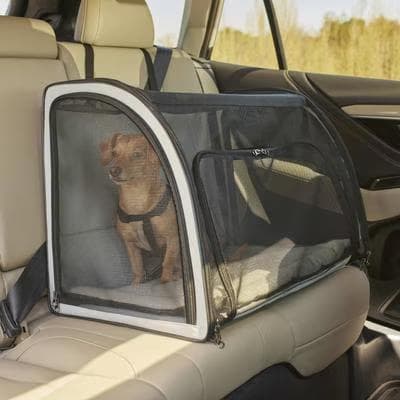
A soft-sided dog and cat carrier with mesh panels. Check the usable interior and weight limit against your dog before choosing this size.
Petful may earn a commission when you click through to Chewy, at no extra cost to you.
The AKC's guidance on puppy growth explains that development varies. Information about the parents can help inform expectations, but it does not turn a prediction into a guarantee. An adult dog offers a clearer view of present size than a young puppy, although its weight and body condition still deserve attention.
Keep a simple record that can travel with the dog to appointments. Record the age at measurement and current weight together. A number without a date is difficult to interpret, particularly when comparing a recent veterinary visit with an older advertisement.
Sellers do attach names to sizes. Texas Teacups, for example, sells “micro tiny teacup,” “tiny teacup,” “teacup” and “toy” Maltese defined by adult weight, and prices its micro tiny and tiny teacups at $8,975 and up (checked October 29, 2026). Treat each label as that seller’s claim and check it against what you can verify:
| Label | What a listing is claiming | What you can verify |
|---|---|---|
| Micro teacup or micro tiny teacup | A predicted adult well below typical Maltese size; Texas Teacups offers these by waiting list at $8,975 and up | No recognized category; ask for the weight the term means, the puppy’s dated weights and a veterinary body-condition review |
| Teacup or tiny teacup | A predicted adult smaller than most Maltese | The AKC standard (under 7 lb, 4–6 lb preferred) plus the individual’s dated growth record |
| Mini Maltese | An informal smaller-size description | Ask for the defined weight in writing and the evidence behind the prediction |
| Toy Maltese | A small Maltese | The Maltese is already in the AKC Toy Group, so “toy” describes the whole breed, not a smaller variety |
| Record | What to enter | Why it helps |
|---|---|---|
| Date | Date the measurement or assessment was taken | Separates current information from an older listing |
| Age at measurement | Age based on the dog's available records | Gives context to a puppy's changing size |
| Current weight | Measured weight and the units used | Allows the veterinarian to assess the pattern over time |
| Body-condition review | Date and advice from the veterinary team | Keeps appropriate condition separate from a desired tiny size |
| Equipment fit | Carrier space, harness adjustment and any changes needed | Connects measurements to equipment the dog uses now |
Bring questions about a change in weight to your veterinary team rather than interpreting the record as a do-it-yourself growth chart. The purpose is to make the history clearer, not to decide that every small puppy must follow the same curve. Never restrict nutrition to keep a dog within an advertised size.
Fit Equipment to Current Measurements
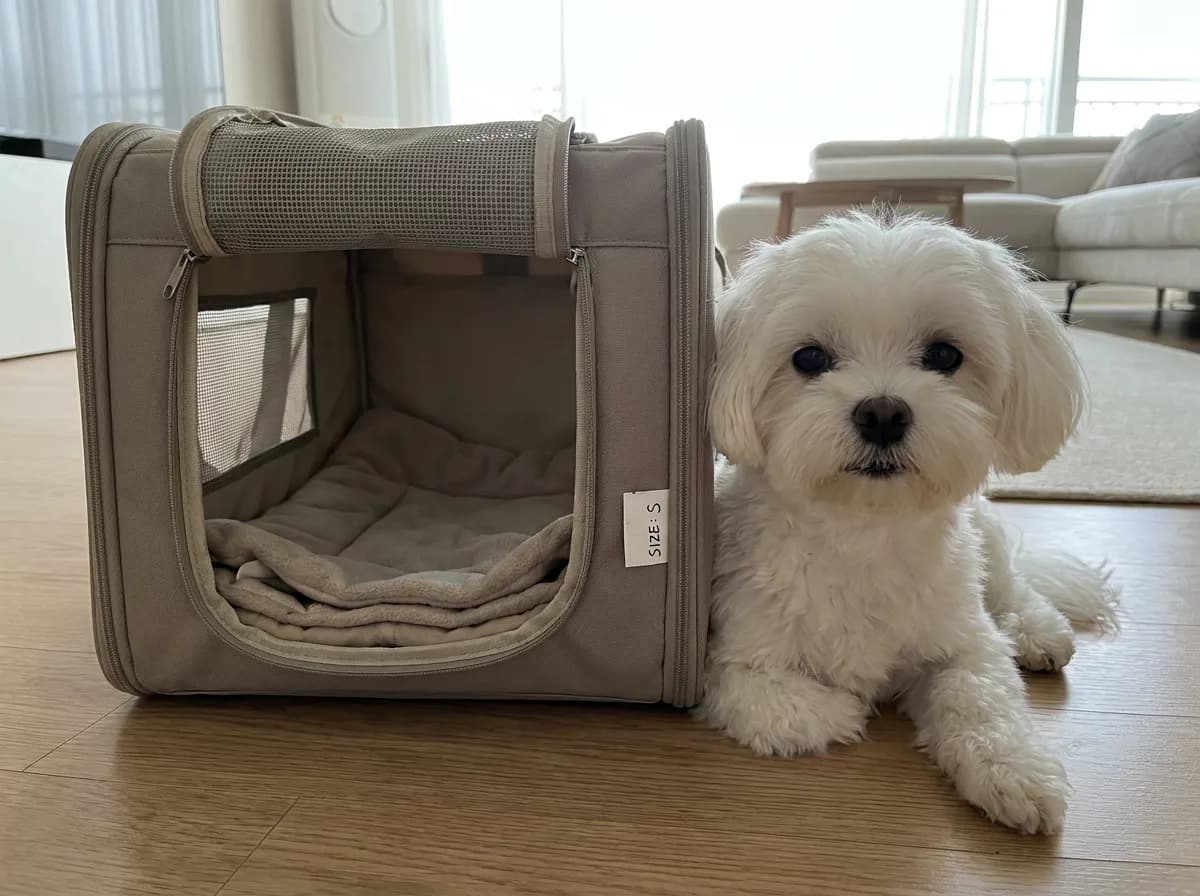
Choose a carrier by usable interior space and the individual dog's measurements. “Small,” “medium” and “toy” can mean different things across products. Check whether the dog can stand naturally, turn and lie down comfortably, and account for bedding that reduces the available room.
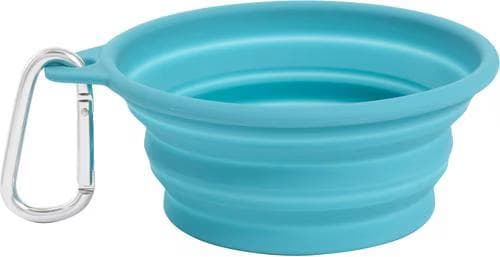
Collapsible silicone travel bowl with a carabiner that clips to a leash or bag, so your dog always has fresh water on walks, hikes, and car trips.
Petful may earn a commission when you click through to Chewy, at no extra cost to you.
Use the same practical approach for other equipment:
- Measure the body area specified by the harness manufacturer.
- Check that the selected adjustment range includes the dog's actual measurements.
- Recheck fit as a puppy grows or its coat changes.
- Inspect fastenings and watch how the dog moves while wearing the item.
Introduce equipment calmly at home before depending on it during an outing. An open carrier can first become a familiar place to investigate and rest. Carrying equipment is most useful when the dog is comfortable using it, not simply small enough to be placed inside. Pack outing gear the same way: a collapsible silicone travel bowl that clips to a bag lets you offer water away from home, and its 1.5-cup capacity describes the container, not the dog’s daily water allowance.
Prepare Your Home for a Very Small Dog
Look at your home from floor level before the dog arrives. A low resting area, predictable doorway routines and calm handling can make everyday life easier. You do not need to remove all normal activity; you need arrangements that let the dog move without being overlooked.
Set up an accessible water station where the dog can reach it without climbing or competing with another pet.
Walk through the rooms at the times they are busiest. A quiet kitchen at noon may become crowded when everyone leaves for school. Notice doorway traffic, chairs being moved, bags dropped on the floor and places where a small dog could be hidden from view.
| Area | Practical arrangement | When to reassess |
|---|---|---|
| Resting area | Provide floor-level rest away from busy walking routes | The dog is repeatedly disturbed or must climb to reach its bed |
| Sofa and bed | Decide how access will be managed and provide an alternative resting place | The dog attempts awkward jumps or cannot use the arrangement comfortably |
| Doors and hallways | Manage doorway traffic and check where the dog is before opening or closing doors | People regularly lose sight of the dog during arrivals and departures |
| Barriers and gaps | Check openings against the individual dog's size | The puppy grows, squeezes through or gets caught at an opening |
| Children and visitors | Begin with calm, supervised interaction near the floor | Handling becomes hurried or the dog cannot move away |
| Other pets | Provide separate resting space and manage introductions | Play becomes overwhelming or one animal cannot disengage |
| Outdoor area | Stay present and inspect the area before use | Access, fencing or the dog's behavior changes |
For handling, ask your veterinary team to demonstrate how to support your dog's body comfortably. Lower yourself before inviting interaction, and avoid handing the dog from one standing person to another. Children can first learn to sit quietly while an adult manages contact.
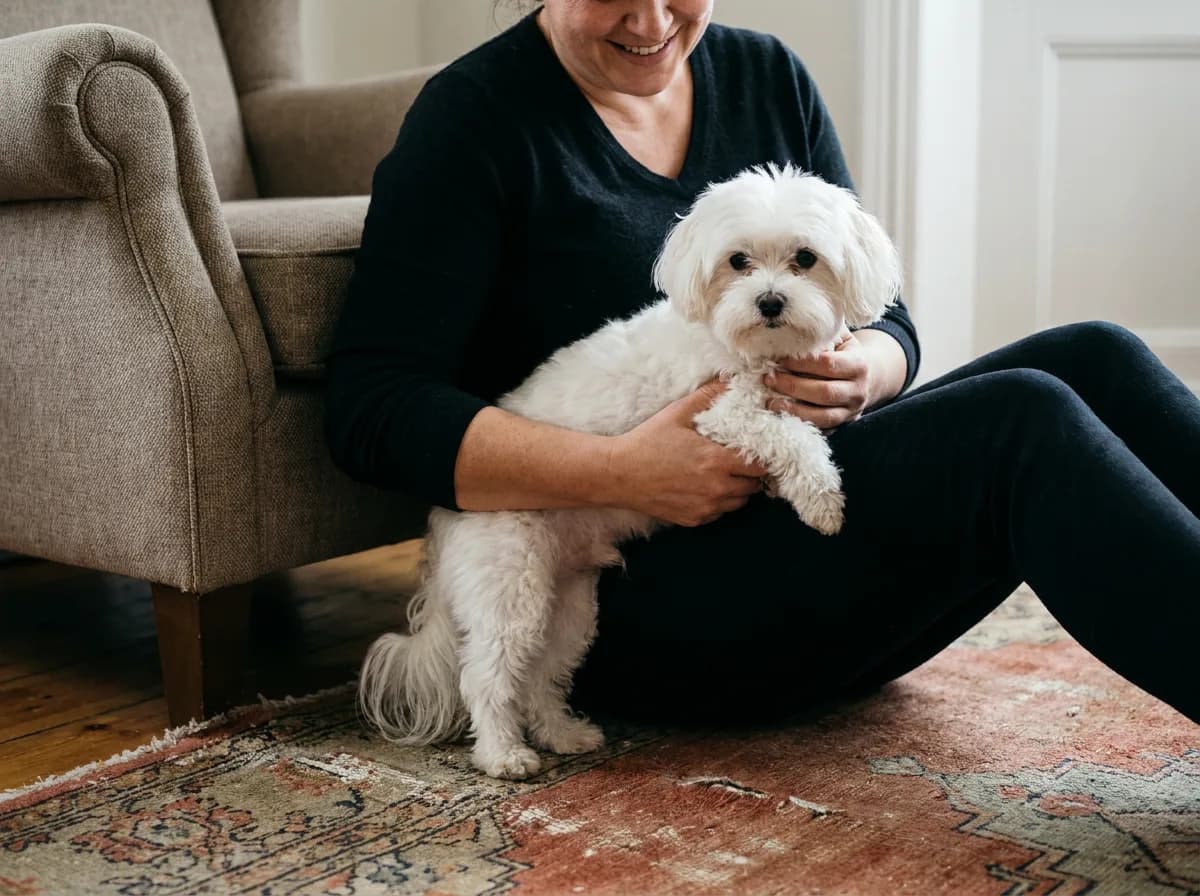
Give everyone the same household rules:
- Let the dog approach rather than chasing it to pick it up.
- Keep a resting place where the dog can settle undisturbed.
- Supervise interactions with children and larger animals.
- Check the dog's location before moving furniture or opening doors.
Review the arrangement after observing the dog for a few days. A barrier that looked adequate may have an overlooked gap, or a bed may sit directly in the route to the kitchen. Adjust the environment to what actually happens rather than assuming that a small home automatically suits a small dog.
Build a Feeding Routine Around the Individual Dog
Maintain an individualized feeding routine based on the dog's age, current diet, body condition and veterinary advice. There is no universal ration for every dog advertised as a teacup Maltese. Ask for the exact food name, the amount currently offered and the meal schedule before bringing the dog home. “A little dry food” is too vague to reproduce reliably.
Measure portions consistently and record meaningful changes in appetite. Make feeding responsibilities clear: if more than one person feeds the dog, use a shared note so nobody assumes a meal has already happened. Include food used for training or supervised activities when discussing the total daily plan with your veterinarian. If you use a food-search mat such as the Frisco Snuffle Mat, Grey, take those pieces out of the measured daily portion rather than adding extra food.
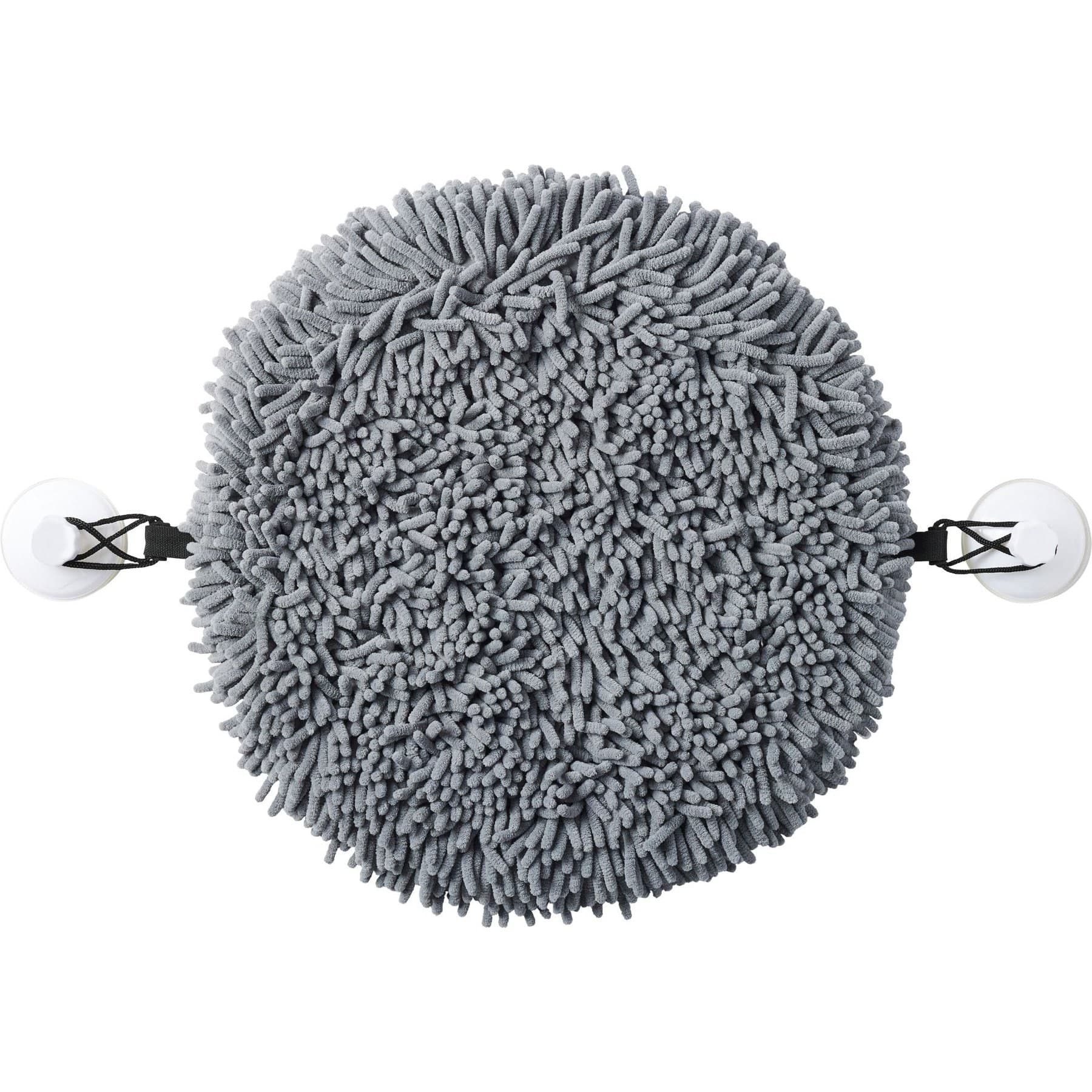
Machine-washable shaggy mat with attachable suction cups for smooth floors.
Petful may earn a commission when you click through to Chewy, at no extra cost to you.
Useful questions for the first appointment include:
- Is the current food appropriate for this dog's life stage?
- How should the daily amount be measured and divided?
- What should we do if the dog refuses a meal?
- Which changes in appetite or behavior require a call?
- How should any planned food change be handled?
Very young or very small puppies can develop low blood sugar. VCA Animal Hospitals lists inadequate nutrition in toy-breed puppies among the causes, with signs that include weakness, collapse, disorientation, tremors and sometimes seizures. That supports having an individual feeding plan agreed with your veterinarian, not applying one feeding interval to every Maltese.
- Get prompt veterinary advice if missed food accompanies unusual weakness or trembling. Collapse or seizures require emergency veterinary attention. These signs can have different causes, so do not assume they establish low blood sugar or wait for an online diagnosis.
Build the routine around the hours your household can actually cover. If a puppy needs care while you are at work, arrange a caregiver who can follow the agreed instructions. A larger bowl or extra food left behind does not replace checking whether that puppy eats and behaves normally.
Keep the feeding equipment straightforward and accessible. A bowl should be usable by the individual dog, easy for you to clean and placed where eating is not repeatedly interrupted. If another animal takes the food, separate their feeding spaces so you can tell what the Maltese has eaten.
Grooming a Small Maltese Without Skipping Care
A smaller body does not remove the work involved in maintaining a Maltese coat. The American Maltese Association's grooming guidance emphasizes regular coat care. Plan for comfortable brushing and combing between appointments, with the technique matched to the coat you are keeping.
Ask a groomer to demonstrate the routine on your dog. Seeing how they support the coat and respond when a tool catches is more useful than buying several brushes and guessing. Work in manageable sessions, especially while the dog is learning to accept handling.
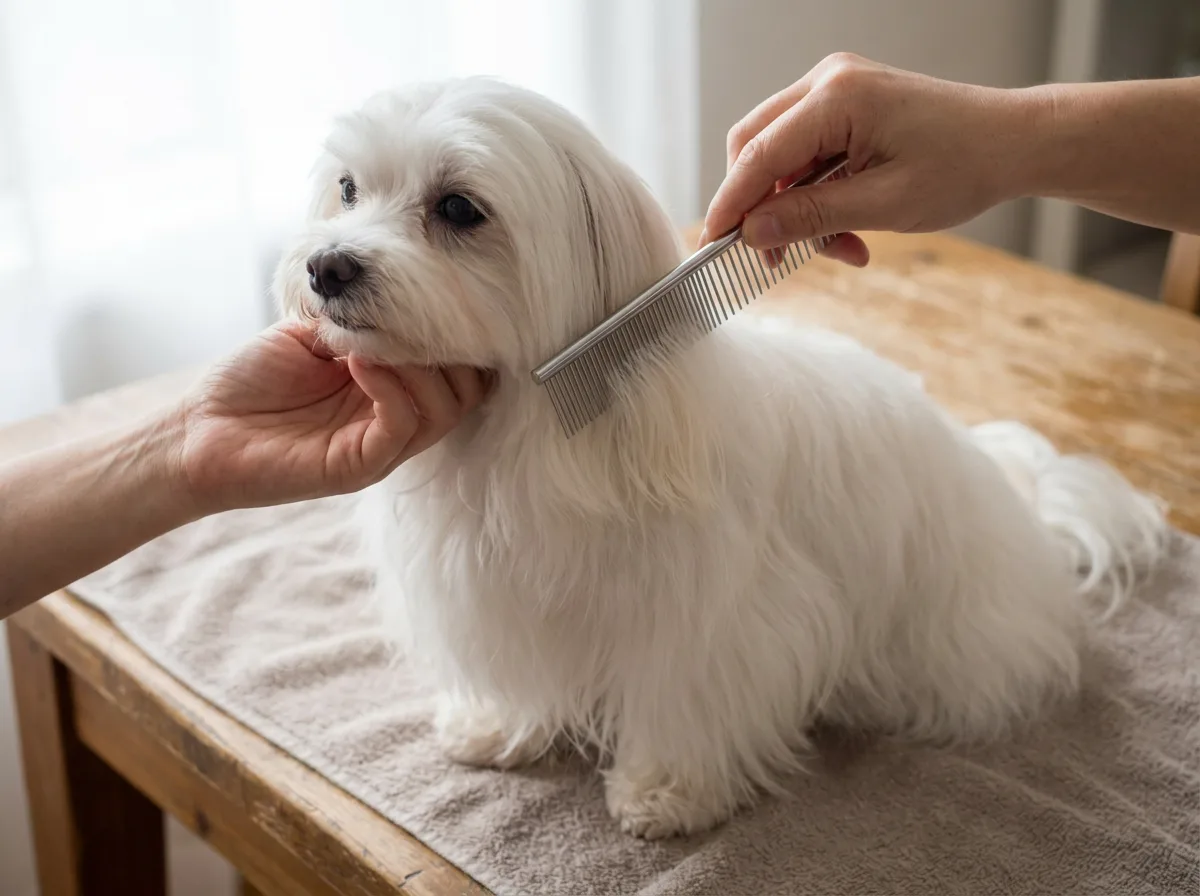
The aumuca Stainless Steel Dog & Cat Grooming Comb is an optional tool to discuss during that demonstration. A comb is not a promise of painless dematting. Stop when an area resists or the dog becomes uncomfortable, and ask for help rather than repeatedly pulling through it.
Make each session specific and achievable:
- Choose a stable, comfortable place where the dog is supported.
- Start with an area the dog already accepts having touched.
- Follow the demonstrated technique rather than increasing pressure.
- Note sensitive or tangled areas for the groomer.
- Finish before handling turns into a prolonged struggle.
Notice what changes between appointments. If a particular area repeatedly tangles, tell the groomer where it happens and what maintenance you can manage. The answer may involve a different routine or an adjusted trim, rather than a more forceful tool.
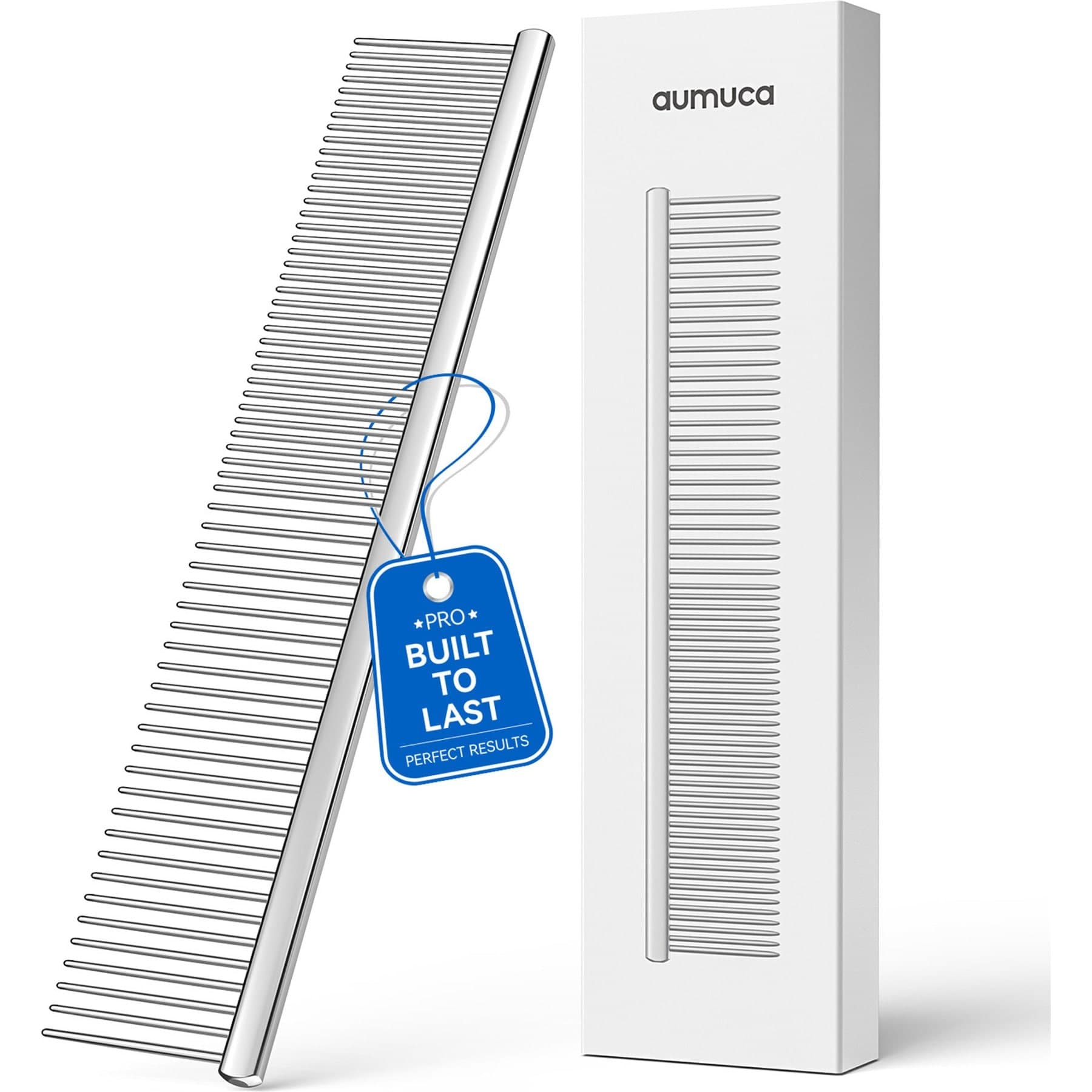
A stainless steel dog and cat grooming comb for gentle coat checks. Work in small sections and stop at tight tangles or discomfort.
Petful may earn a commission when you click through to Chewy, at no extra cost to you.
Choose a Manageable Maltese Haircut
A shorter pet trim may make everyday coat care more manageable, but it still needs maintenance. A Maltese teddy bear cut describes an intended rounded appearance rather than a universal body length. Agree separately on the body, face and areas that tend to tangle.
Our guide to Maltese haircut and maintenance choices helps you compare finishes and prepare a groomer request. Choose the style around your dog's coat condition and your available grooming time. A photograph can explain the look you like, while the groomer can explain what achieving and maintaining it would involve.
Build Confidence With Ground-Level Activity
Being easy to carry does not remove a Maltese's need to move, investigate and learn. Offer comfortable opportunities for walking and play, with rest between them. The appropriate amount depends on the dog's age, condition and response, not on a fixed exercise allowance attached to “teacup.”
Start unfamiliar activities where the dog can keep some choice about approaching and retreating. A quieter location may be easier to explore than a crowded route. If an outing becomes overwhelming, change the setting or shorten the experience instead of assuming the dog needs to be carried everywhere.
Simple activities can include:
- Exploring a quiet walking route at a comfortable pace.
- Learning a name response or another simple cue with rewards.
- Searching for a few pieces of planned food in an easy setup.
- Playing with an appropriate toy under supervision.
- Settling nearby while ordinary household activity continues.
For a food-search activity, the Frisco Snuffle Mat, Grey is one optional setup. Use suitable food from the dog's existing plan, make the first searches easy and remain present. Remove the mat if the dog tears it or tries to swallow material.
Watch what the dog does with the activity. Searching comfortably, leaving when finished and returning willingly are more useful observations than whether the session lasted a particular number of minutes. If food is scattered too deeply or the setup is frustrating, simplify it. A puzzle should not interfere with knowing whether a young puppy has eaten its planned meal.
Keep learning separate from testing how much the dog will tolerate. Reward small steps, allow pauses and build familiarity gradually. If you are struggling with fear or handling, seek qualified help suited to the individual dog rather than relying on the assumption that a tiny dog will naturally adapt to everything.
Choose the Individual Dog and Its Records
Whether you are considering a breeder, rescue or rehoming arrangement, ask to understand the individual dog. An appealing photograph and a small projected adult weight do not tell you how that dog eats, moves, rests or responds to ordinary handling.
Request records early enough to review them before making a commitment. The American Maltese Association's health information can help you identify topics to discuss, while your veterinarian can interpret records in the context of the dog. A broad assurance that “everything is healthy” is less useful than information you can examine.
Ask for:
- The dog's identifying details and recorded date of birth or estimated age.
- Dated weights and any available growth history.
- Veterinary examination records and known ongoing needs.
- The current feeding and daily-care routine.
- Parent-health information and relevant testing records, when available.
- Written terms describing support, responsibilities and what happens if a problem arises.
Ask follow-up questions when something is unclear. A rescue may not know a dog's parents or complete early history; that is different from claiming that missing records prove there were no problems. Establish what is known, what remains uncertain and how that uncertainty affects your plans.
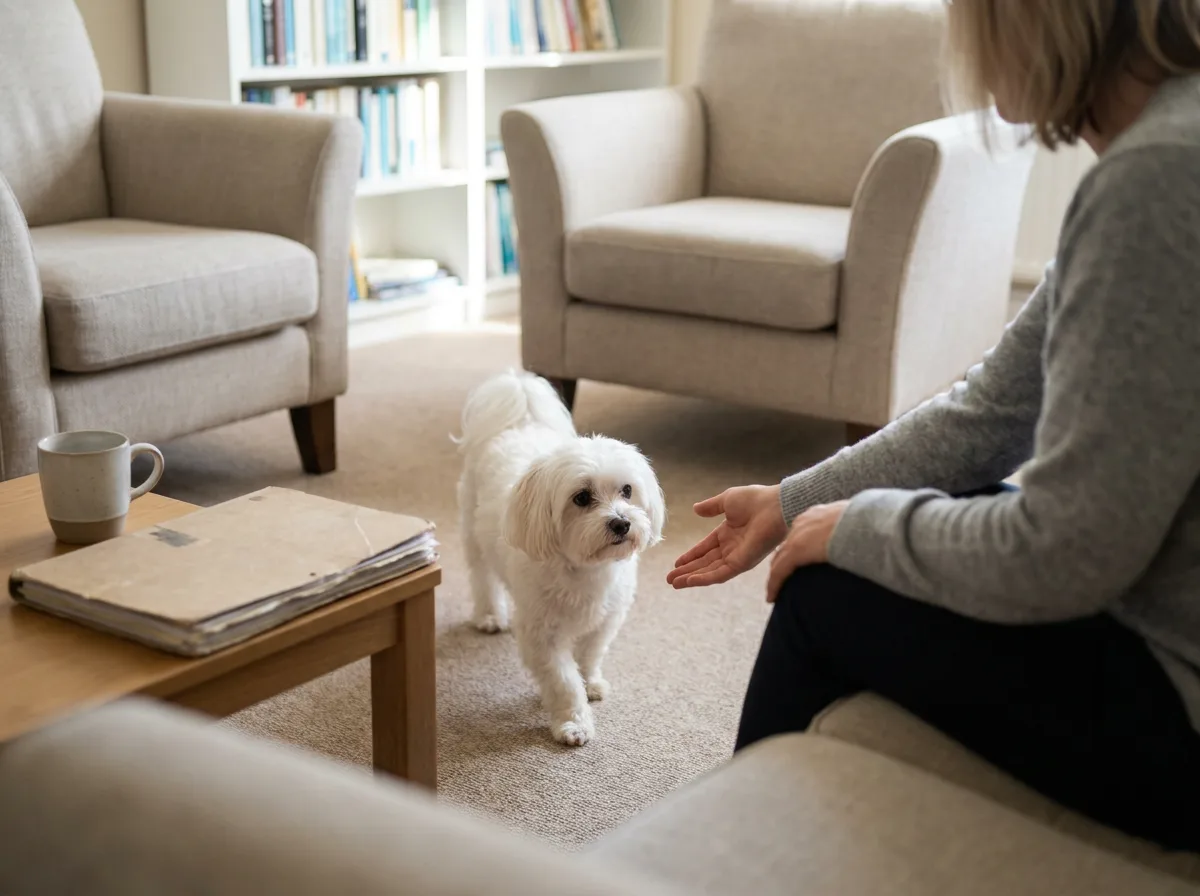
During a meeting, ask the current caregiver to show an ordinary part of the routine. You might observe how the dog approaches its resting area, accepts a familiar person's handling or responds to an offered activity. One meeting cannot establish long-term temperament, but it can prompt useful questions about everyday care.
Use our questions to ask a dog breeder to organize a breeder conversation. Ask what evidence supports a size estimate and how health and comfortable function influence breeding decisions. Prioritizing an ever-smaller advertised size should not replace those discussions.
A naturally small Maltese is not automatically unhealthy, and the word “teacup” does not reveal how every dog was bred. Assess the actual records and dog rather than making either assumption. Arrange a veterinary examination and clarify the timing and terms before the handover, especially when ongoing care has already been identified.
How Long Do Teacup Maltese Dogs Live?
Plan for about 12 to 15 years: that is the general Maltese life expectancy listed by both the AKC and VCA’s Maltese profile. No separate lifespan has been measured for dogs sold as teacups, so the label cannot shorten or lengthen that estimate, and neither figure predicts how long a particular dog will live.
The more useful conversation concerns the dog's individual health history and future care. Ask what the available records show, what needs monitoring and whether there are ongoing responsibilities your household must be prepared to meet.
Discuss these points with the veterinary team:
- Findings from the current examination.
- Any established condition or previous treatment.
- Recommended follow-up and routine care.
- Changes in appetite, movement or behavior that should prompt contact.
Avoid using the longest advertised lifespan as a reason to choose one puppy over another. A reassuring number does not answer those practical questions. Equally, a small size label alone does not justify assuming a short life. Plan for a long-term commitment while keeping decisions grounded in the individual dog's needs.
What Does the Teacup Label Mean for Price?
The label does not establish a standard price premium or predict future expenses. A toy Maltese price or teacup Maltese price is only useful when you know which dog it describes, what the payment includes and what responsibilities remain after the handover.
Separate the initial payment from continuing care. Your budget should account for:
- Food and routine supplies.
- Grooming and maintenance between appointments.
- Veterinary care and a plan for unexpected expenses.
- Transport equipment that fits.
- Caregiver help when you cannot provide the required routine.
A smaller dog does not necessarily mean proportionally smaller bills. An appointment, caregiver visit or grooming service involves work beyond the amount of food or shampoo used. Compare actual inclusions and local quotes rather than treating body weight as a budget formula.
Our Maltese price and ownership costs guide covers acquisition examples and the separate expenses to consider. Use it to build a budget for the dog and services you are evaluating.
Decide Whether the Maltese Fits Your Household
A good match depends on whether your household can provide companionship, suitable handling and consistent care. Before deciding, picture an ordinary busy weekday rather than a quiet first weekend with a new dog. Consider who will be present, which tasks need covering and how the dog will move through the home.
Make the responsibilities concrete:
- Name the person who will manage meals and check that the dog eats.
- Set aside time for coat care and grooming appointments.
- Establish how children and visitors will interact with the dog.
- Arrange coverage for workdays, travel and unexpected absences.
- Decide where the dog can rest away from household traffic.
Then consider the individual Maltese dog's temperament. Ask about behavior during separation, grooming, travel and everyday noise rather than assuming that a small companion will suit every routine. A household that enjoys close companionship may still need help providing daytime care or gradual training.
The full Maltese temperament and everyday care guide covers the broader breed decision. This size label should be one small part of that conversation. A dog whose needs fit your home is a more useful choice than the smallest puppy in a photograph.
If the plan only works when nothing interrupts your schedule, strengthen the care arrangements before committing. Having a backup caregiver and clear instructions is practical preparation for any dog, and especially helpful when feeding or handling requires close attention.
Teacup Maltese Questions
Six US breeders published Maltese puppy prices from $1,150 to $5,000 when we checked on October 29, 2026, and a seller that markets teacup sizes, Texas Teacups, lists $8,975 and up for its smallest categories. The teacup label raises the price, not the breed standard. Our Maltese price guide lists each provider and what its fee includes.
Not a young or very small puppy: VCA lists inadequate nutrition in toy-breed puppies as a cause of low blood sugar, so a missed midday meal matters. Arrange a caregiver or midday visit with written feeding and handling instructions, and build an adult’s time alone gradually. Our Maltese temperament and care guide covers alone time in full.
Very little. The AKC describes the Maltese as low-shedding, and the breed standard calls for a single coat without undercoat. Low shedding still means daily brushing and combing to prevent mats, and the AAAAI’s pet-allergy guidance explains why it does not make any dog reliably hypoallergenic.

Coreen Saito is a pet writer and longtime shelter volunteer with more than a decade in animal rescue. She covers cat behavior, breed care, and the small, ordinary science of sharing a life with companion animals, with a particular focus on honest takes about the products and decisions that actually matter. At home in Arizona, she's outranked by Mac (a dog with the loudest opinion in the house), Rebel (a cat who governs by quiet authority), and Meri (an orange tabby who runs the late shift and the laundry basket). She writes about all three, plus the rescues that keep coming through her life, at LifeWithMinty.com.
Sign up for expert-backed reviews and safety alerts all in one place.