Maltese Haircuts: Photo Guide and Groomer Brief
Compare Maltese body trims, rounded faces, bob ears and topknots. See which features fit your routine, then use a practical groomer brief to explain the finish you want.
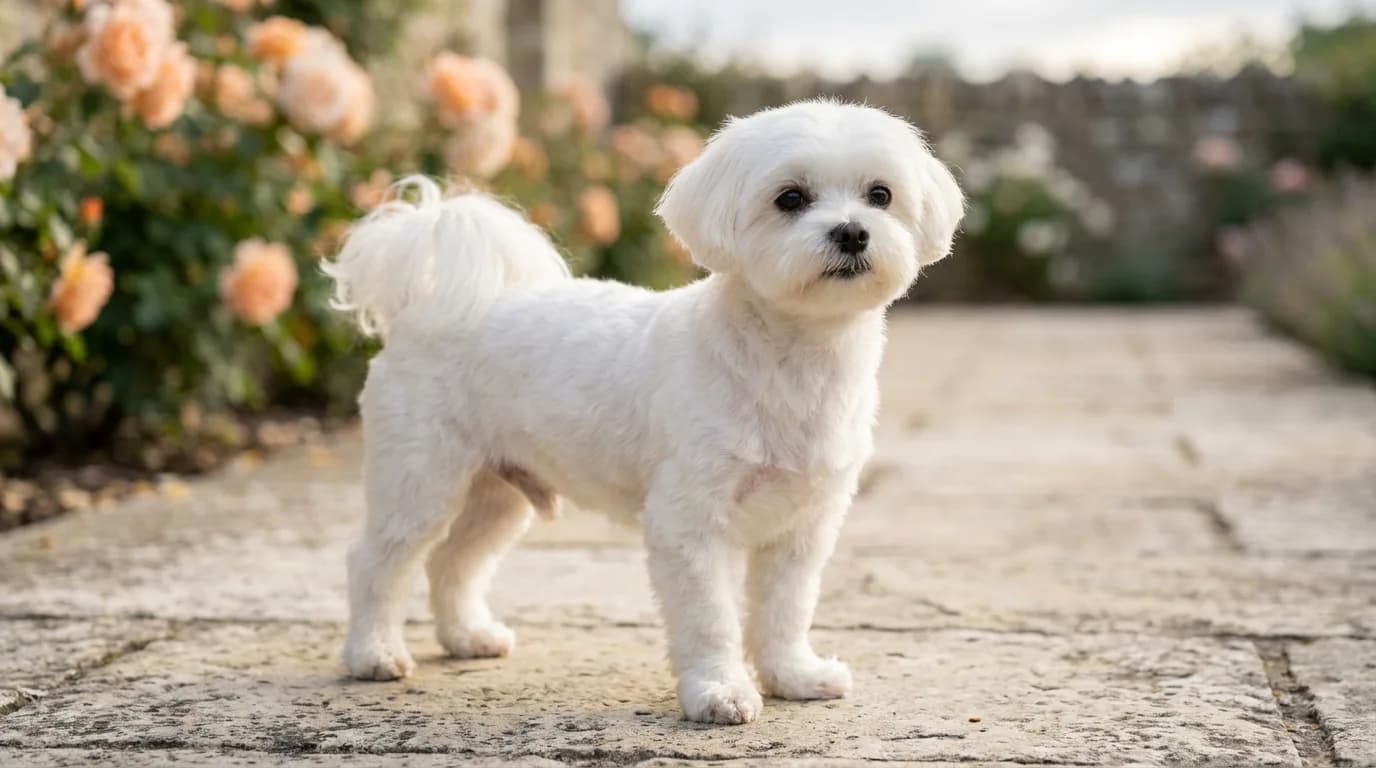
Choose the body length and facial finish together when planning a Maltese haircut.
Petful is reader supported. As an affiliate of platforms like Amazon and Chewy, we may earn a commission when you buy through links on this page. There is no extra cost to you.
Maltese haircuts work best when you choose the body length, face shape and upkeep together. A short body can make daily care more manageable, while a rounded teddy bear face, longer ears or a topknot changes the look without requiring a long coat everywhere.
The useful question is what you can comfortably maintain between appointments. Start there, compare the finished shapes below, and take a specific request to your groomer. You can combine features you like instead of trying to find one haircut name that describes everything.

Sign up for expert-backed reviews and safety alerts all in one place.
Choose the haircut your routine can support
The best haircut for a Maltese is a finish that suits the dog's coat condition, comfort and your everyday routine. If long hair repeatedly becomes difficult to comb, choosing a shorter body is a practical adjustment. If you enjoy careful coat care, you have more room to keep longer legs, ears or a flowing outline.
Haircut names are useful starting points, but they leave important details unanswered. One salon's puppy cut may look different from another's. A teddy bear request may describe the face more than the body. Agree on the actual length and shape rather than assuming the label is a complete instruction.
- 1Choose body length first, then specify the face and ears separately.
- 2Longer ears, legs, beard and tail still need care even when the body is short.
- 3Show the groomer which features you like in a reference photo and ask what is achievable on your dog.
When looking through Maltese haircut pictures, pay attention to where the hair has been left, not just whether the dog looks fluffy. A front portrait can hide a long body. A side photograph can conceal how much hair remains around the muzzle. Save a view that shows the body length and another that shows the face shape you want.
These choices concern the haircut rather than everything about living with the breed. The Maltese breed profile covers the wider needs of this small companion dog. Here, use your own Maltese's current coat and response to grooming as the starting point. A finish that works for another dog may require more daily attention than your household can give.
| Choice | Visible result | Hair retained | Upkeep needs |
|---|---|---|---|
| Puppy-style trim | Even everyday outline | Modest body and leg length | Regular brushing and comb checks |
| Short pet trim | Compact silhouette | Shorter body and legs | Less length to manage; continued coat care |
| Medium pet trim | Fuller outline above the floor | More body and leg hair | More attention to friction areas |
| Lamb-style finish | Short body with fuller legs | Longer leg furnishings | Careful leg and foot combing |
| Long coat | Flowing, parted silhouette | Long body coat and furnishings | Consistent detailed coat care |
| Korean-inspired combination | Shaped face and selected contrasts | Depends on the requested combination | Discuss each retained area separately |
Before deciding, think about the care you actually do on a normal weekday:
- Can you gently check the coat regularly, including the areas hidden beneath the ears and legs?
- Does your dog accept having the face, feet and tail handled?
- Which areas become tangled first between appointments?
- Do you want to maintain a topknot, or would a trimmed crown be easier?
- Can you return for a tidy before the chosen shape becomes difficult to manage?
A useful compromise often keeps one feature you love and simplifies the rest. For example, you might choose a rounded face with short ears, or a medium body without a topknot. Choosing fewer long areas does not make the result unfinished. It gives the groomer a clearer set of priorities.
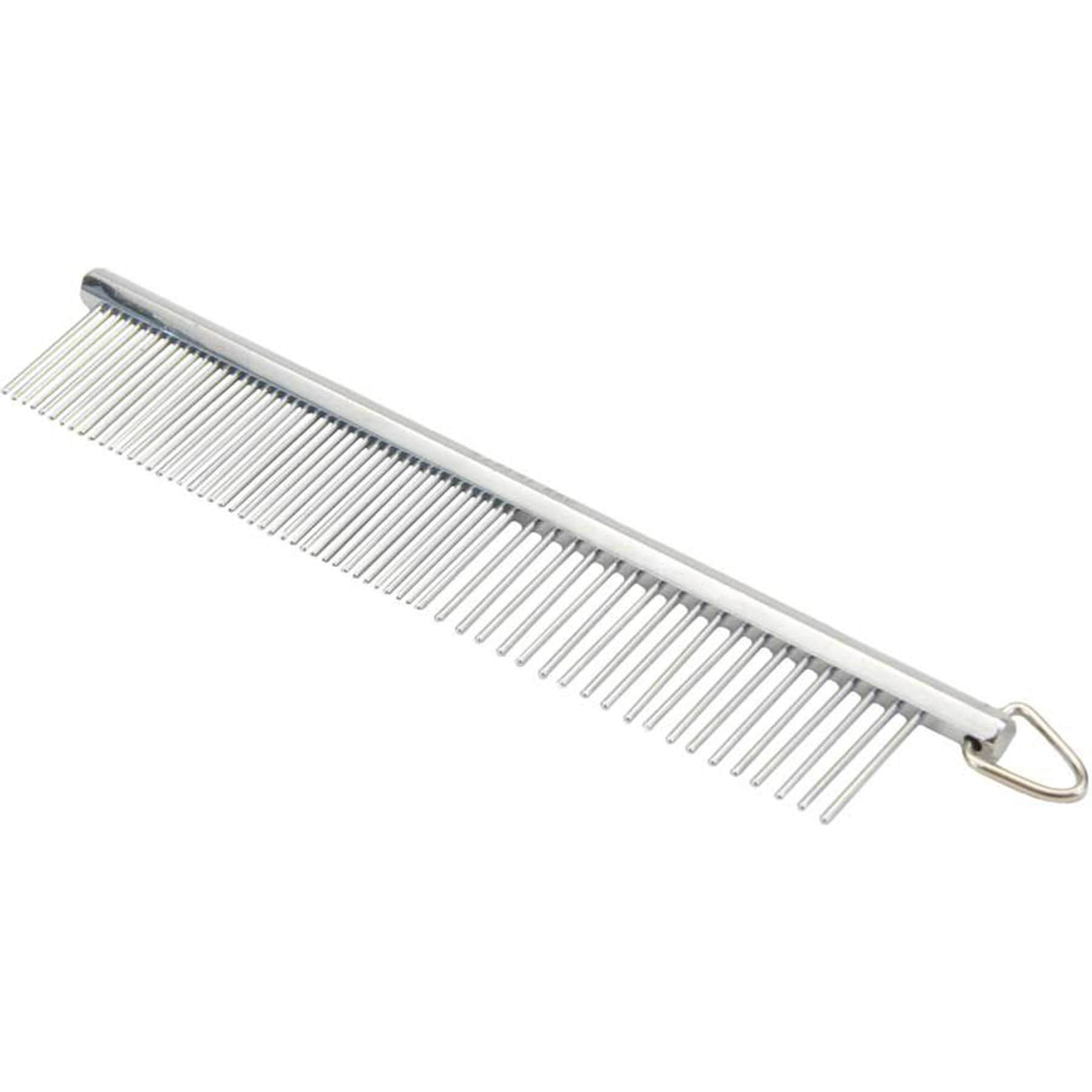
A fine-coat comb for checking through brushed hair. Work gently in small sections and stop at tight mats or discomfort.
Petful may earn a commission when you click through to Chewy, at no extra cost to you.
A metal comb is useful for checking through hair after brushing, provided you do not pull it through resistance. The Safari Fine Comb for Dogs, Medium is one existing option. Ask your groomer to show you a gentle technique for your dog's coat rather than using the comb to force apart a tight mat.
Maltese puppy cut vs. teddy bear cut
The clearest way to compare a Maltese puppy cut with a teddy bear cut is to separate the body outline from the facial finish. A puppy-style request commonly means an even, manageable pet trim. A teddy bear request emphasizes a rounded muzzle and head. Those features can overlap on the same dog.
You do not have to choose a long body to get a teddy bear face. Short Maltese haircuts can retain that rounded head, while a puppy-style body can have a shorter, more practical face. What matters is describing both parts of the appointment rather than leaving the groomer to guess.
Ask the salon how it uses those names. Then settle these details:
- How much length should remain over the back and sides?
- Should the legs match the body or look fuller?
- How round should the muzzle and cheeks appear?
- Should the ears blend into the head or have a distinct edge?
- Which areas should be shorter for easier daily care?
Puppy cut: an even everyday outline
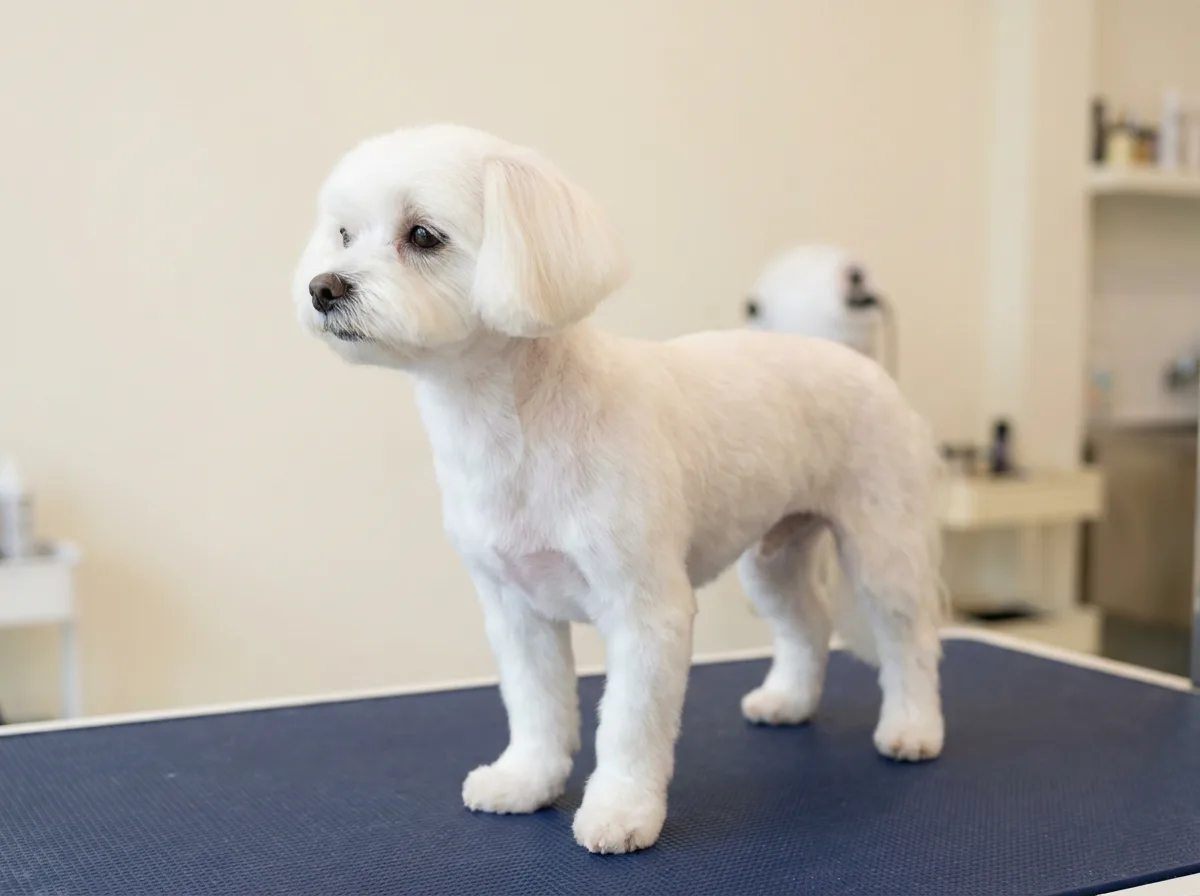
An even puppy-style trim gives the Maltese a balanced outline without the floor-length hair of a full coat. The legs generally look tidy rather than dramatically flared, and the head can be softened to match. It is a style worn by adult dogs too; the name does not mean the dog must be a puppy.
Look at the transition from shoulder to front leg and from body to hind leg. If you like a smooth, continuous outline, point that out. If you prefer a little more fullness at the feet, mention it separately. Small changes there can make two similarly short bodies look quite different.
This is a useful starting point when you want to discover which features are manageable at home. You can begin with an uncomplicated outline, see which areas need extra care, and adjust one feature at the next visit. That is easier to evaluate than changing body length, ears, face and topknot all at once.
- “I would like an even pet trim, with the legs close to the body length.”
- “Keep the head softly shaped, but show me how much hair you plan to leave around the mouth.”
- “Please tidy the feet and tell me if any area needs to be shorter because of its condition.”
The tradeoff is that an even trim still needs upkeep as it grows. Hair can catch and tangle around moving or rubbing areas even when the overall silhouette looks neat, so plan regular gentle brushing; the aumuca Self Cleaning Slicker Brush is one option to try on a puppy cut's shorter coat. Judge the cut by whether you can comfortably maintain it between visits.
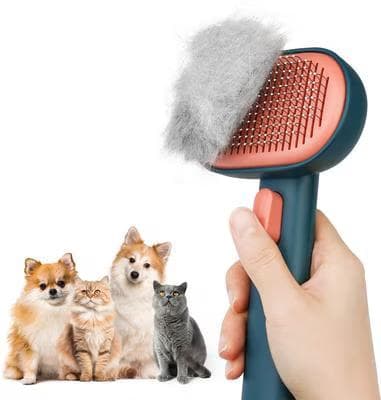
Petful may earn a commission when you click through to Chewy, at no extra cost to you.
Teddy bear styling: the rounded face
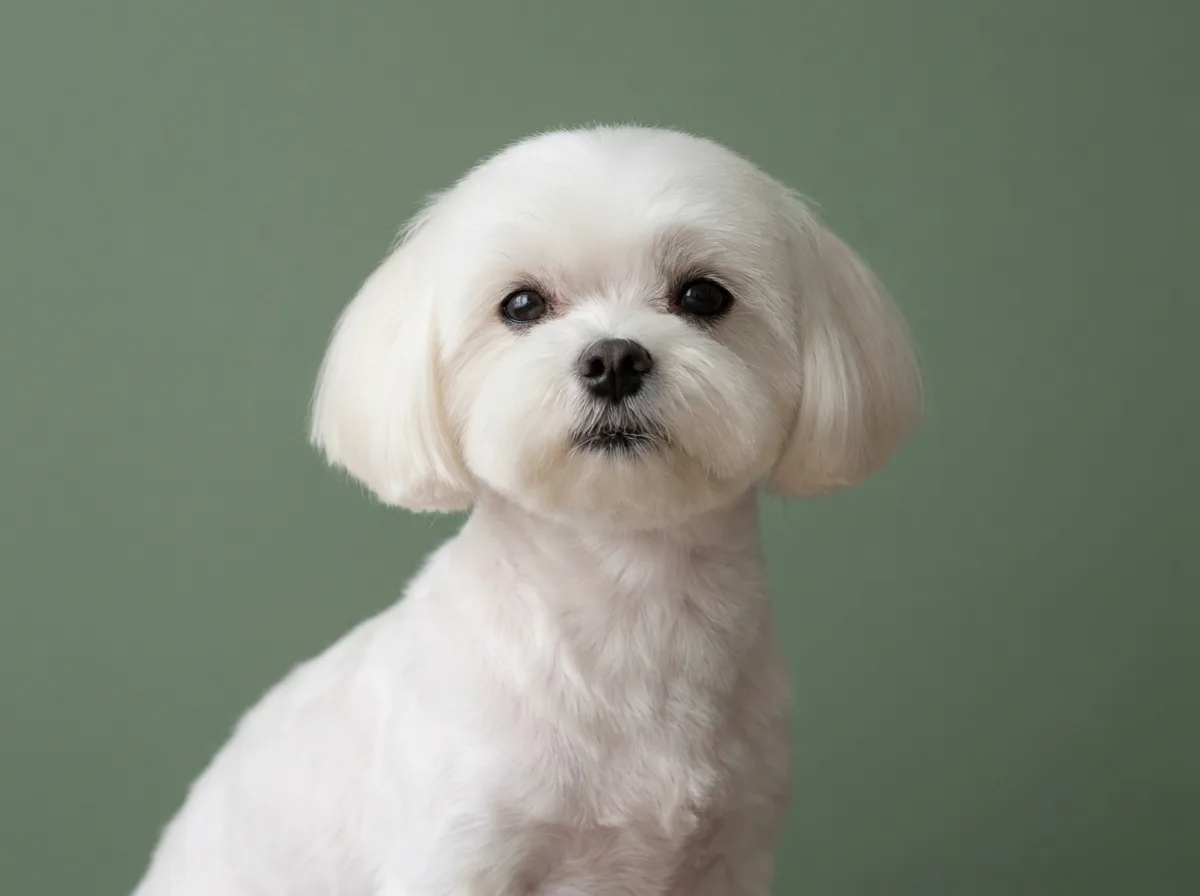
The appeal of a Maltese teddy bear cut is the soft, rounded face. Hair around the muzzle, cheeks and head contributes to that shape, while the ears may be blended to support the outline. The exact finish depends on what hair is available and what the groomer can comfortably achieve.
When choosing a reference, decide whether you like the roundness of the head, the fullness around the mouth, or both. A photograph with a very full muzzle may ask more of your daily cleanup routine than one with a rounded head and a neater mouth area. “Round” is a shape preference, not a single length.
A teddy bear face also needs to work when the dog eats, drinks and goes outside. Tell the groomer which facial areas are awkward to maintain. You may be able to preserve the rounded impression while reducing length in the places that cause the most difficulty. Discuss these details before the trim:
- Whether the muzzle should look full or more closely shaped.
- How the ear hair should connect to the rounded head.
- Whether you want a trimmed crown or enough length for a future topknot.
- Which body length will accompany the face.
For example: “Keep a rounded head and muzzle, with the eyes unobstructed, but use a short pet trim on the body and legs.” That gives the salon much more to work with than “teddy bear” alone. It also makes it easier to identify what you want changed at a later appointment.
Choose the body length and leg shape
A Maltese with short hair and a Maltese with long hair can have equally recognizable faces. Body length changes the outline and the amount of coat you need to manage; it does not decide every other feature. Choose it before adding details such as longer ears or a topknot.
The American Maltese Association's grooming guidance recognizes a shorter pet cut as an alternative for owners who cannot maintain a long coat. It also stresses regular coat care. Keeping less length can simplify that work, but it does not remove the need to check the dog between grooming visits.
Use three observations to compare the following options:
- How far the body coat hangs below the chest and belly.
- Whether the legs match the body or retain extra fullness.
- How much hair remains in areas you already find difficult to maintain.
A good conversation includes what happens between appointments. Ask the groomer which part of a proposed finish will need the most attention and how you can recognize that it is becoming difficult to comb. That answer is more useful than a blanket description such as “easy care.”
Short or summer trim
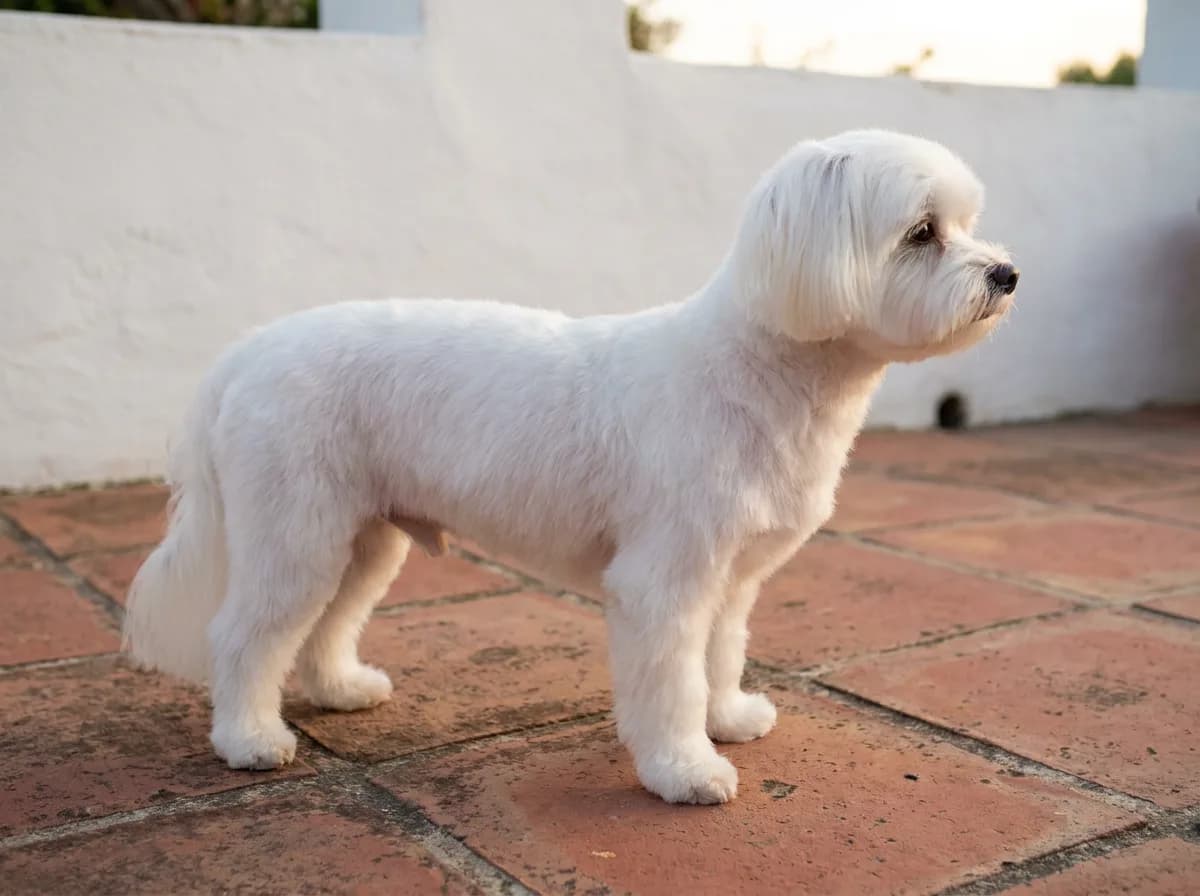
A short pet trim reduces the length over the body and usually keeps the legs compact too. Some salons call it a summer cut, but the useful instruction is how much hair to leave and which areas to retain. The season alone does not define a safe or suitable finishing length.
This option makes sense when a fuller body coat is repeatedly more work than you can manage. It can also create a simple base for a rounded face or longer ears. Just remember that those retained features become the parts that need more attention, even when the back and sides are easy to check.
A short haircut should not be presented as a substitute for ordinary warm-weather care. The goal is a manageable coat, not a promise that the dog can tolerate heat because the hair is shorter. Discuss the finished appearance with the groomer rather than requesting the closest possible clip.
- A short body with visible coat coverage.
- Legs close to the body length, or slightly fuller if you prefer.
- The amount of tail fringe to retain.
- Whether the face should stay rounded or be shorter too.
If matting limits the available choices, ask the groomer to explain that before treating a very short result as a style disagreement. An elective short trim and a coat-condition adjustment are different situations. In the second, the immediate priority is a comfortable practical plan, followed by changes to the routine that allowed tangles to build.
Medium-length pet trim
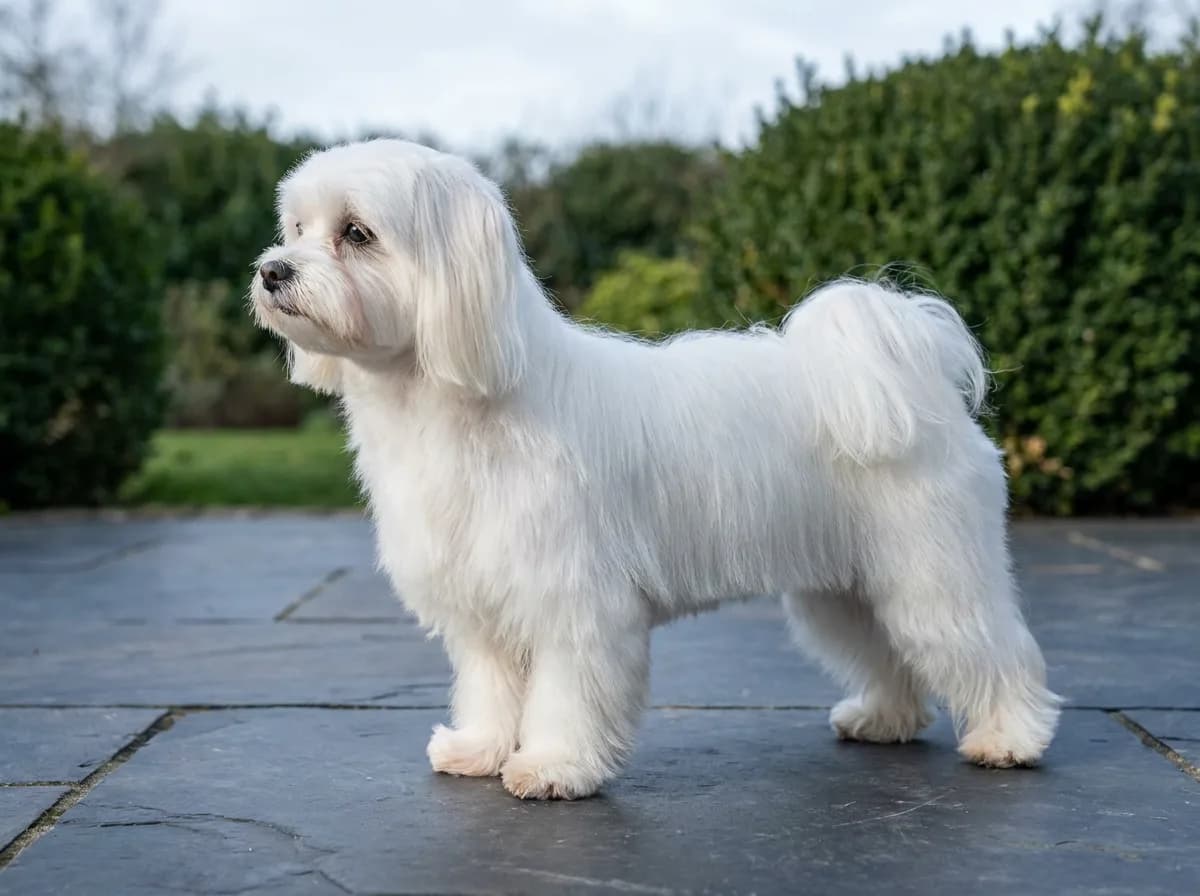
A medium-length trim keeps more of the Maltese's soft outline while leaving the coat clearly above the floor. It is a middle ground visually, but not automatically a middle ground in every part of the routine. A moderate body with long ears and full legs can still leave several demanding areas.
This choice works best when you like a little movement in the coat and can check through it consistently. Pay attention to the underside rather than judging only the top of the back. Hair around the chest, armpits and inside legs may require more careful attention than the surface that is easiest to brush.
Ask the groomer to show you where the finished length will sit when the dog is standing. A body coat can appear shorter when the dog is sitting or when a photograph is taken from above. A standing side view helps you agree on the result more clearly.
- “Leave a fuller pet outline, but keep the belly hair clearly off the floor.”
- “Keep the legs balanced with the body rather than creating very full feet.”
- “Retain some tail fringe, provided I can maintain it comfortably.”
A medium trim also lets you simplify selectively. You might shorten the ear fringe while leaving more body length, or keep a neat face instead of a fuller beard. If one area repeatedly becomes difficult, change that part first instead of assuming the only alternatives are a floor-length coat or a very short cut.
Lamb-style legs with a shorter body
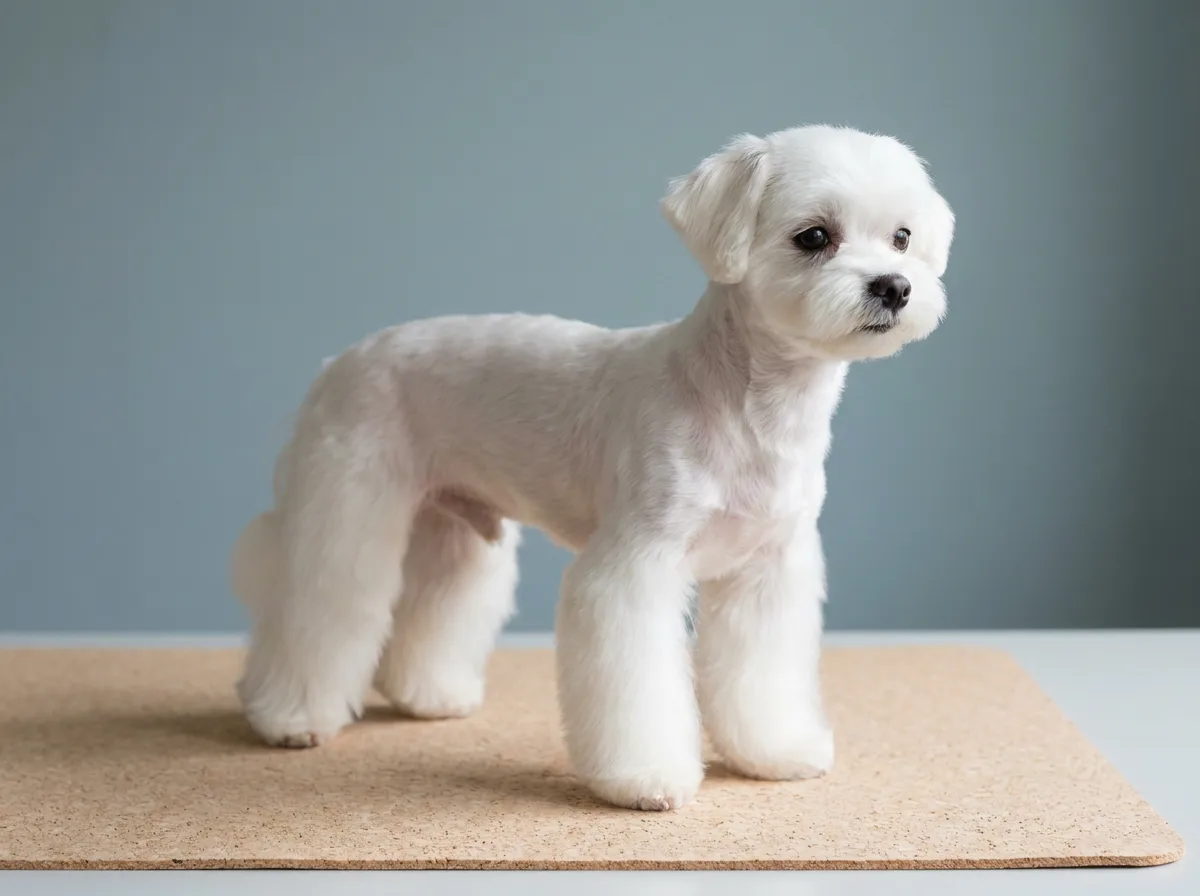
A lamb-style finish creates contrast: the body is shorter, while the legs retain a fuller, shaped appearance. On a Maltese, think of it as a request about silhouette rather than an instruction to make the coat look like another breed's texture.
The legs are the important part of the reference. Decide whether you prefer a subtle increase in fullness or a pronounced rounded outline. Also look at where the legs meet the shorter body. A blended transition can look quite different from a strong contrast, even when the same amount of leg hair remains.
The maintenance tradeoff is easy to miss in a photograph. Shortening the torso does not shorten the furnishings left on the legs. You still need to check those areas, including the inside surfaces that are less visible when the dog is standing normally.
- Does my dog's current leg hair support the shape in the reference?
- Can the fullness be reduced while preserving the overall idea?
- What should I check around the feet and inside legs?
- Would a tidy between full appointments help preserve the outline?
A useful request is: “Keep the body shorter, blend into fuller legs, and make the feet neat rather than oversized.” If the dog dislikes leg handling, discuss that before selecting a finish that places most of its visual emphasis there. The haircut should work with the care you can give, not make every home session a struggle.
Long coat and show-style finish
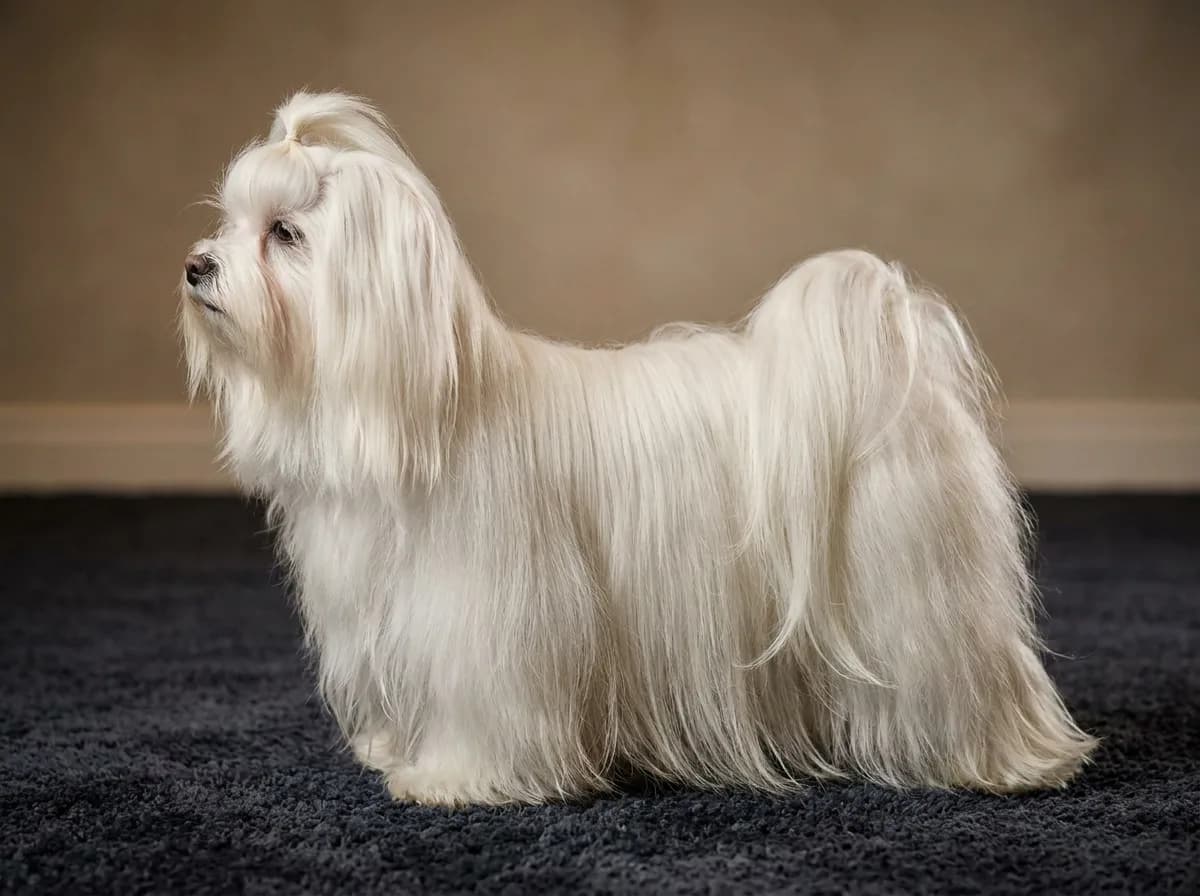
The long coat gives the Maltese its familiar flowing silhouette. A center part helps the hair fall to either side, and the body coat reaches toward the floor. Keeping this appearance asks for consistent attention to the whole coat, including areas that disappear beneath the visible outer layer.
For a pet, you can admire that outline without copying every detail of show preparation. Explain whether you want true floor length or a long-looking finish with more clearance. That distinction affects what collects on the ends and how much of the underside needs attention after everyday activity.
A long coat also changes the consequences of missed care. A quick brush over the surface may leave tangles below. Before committing to this finish, ask the groomer to demonstrate how to divide the coat into manageable sections and check through the areas you tend to overlook.
- The amount of clearance you want beneath the chest and belly.
- How the crown hair will be kept away from the eyes.
- Whether the tail and ears should remain fully long.
- Which areas should receive a discreet tidy for everyday cleanliness.
Treat a long coat as a routine you choose, not a test of whether you are caring for the dog correctly. If the upkeep is no longer workable, reducing length is a sensible option. It is better to choose a finish you can maintain comfortably than preserve an outline that repeatedly requires difficult detangling.

Petful may earn a commission when you click through to Chewy, at no extra cost to you.
For ordinary bathing, use a dog shampoo according to its label. Burt's Bees Oatmeal with Colloidal Oat Flour & Honey Dog Shampoo is one option in a routine-care kit. Its inclusion here is not a claim that it treats a skin problem or produces a particular haircut finish.
Korean-inspired styling: specify the combination
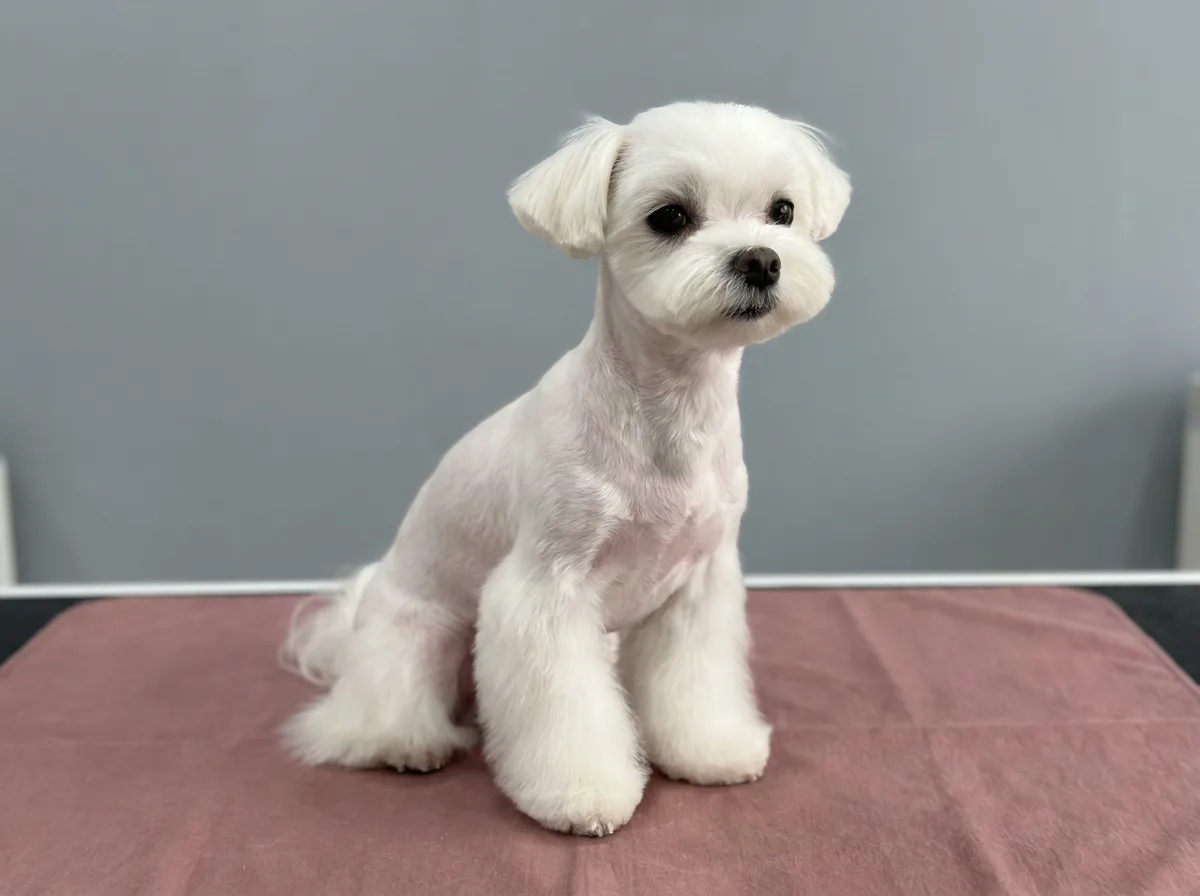
Korean-inspired Maltese styling is best approached through a specific photograph and a discussion of its parts. The label covers different combinations rather than one standardized cut. A compact body, shaped muzzle and fuller lower legs may be part of the look you like, but another reference may emphasize different features.
Start by identifying the feature that caught your attention. It might be the head silhouette, the contrast between body and legs, or the way the ear hair frames the face. If you only want one of those elements, say so. You do not need to reproduce the entire reference to borrow its most useful idea.
This is also a good place to distinguish shape from volume. A pronounced outline may depend on enough hair being available in that area, and asking for a shape does not guarantee your dog's existing coat can support the same fullness immediately. Bring a short list of priorities:
- The body should be compact, medium or relatively full.
- The muzzle should have the specific shape shown in your reference.
- The lower legs should be slightly fuller or distinctly shaped.
- The ears should be blended, bobbed or kept longer.
- The finish should remain within the care you can manage at home.
Then ask the groomer which features are compatible with the current coat and the time available for the appointment. A practical adaptation may preserve the overall impression while reducing the most demanding furnishings. That is a useful discussion to have before the haircut, especially if the reference includes much more leg or facial hair than your dog currently has.
Choose the face, ears and topknot
Once you have settled the body, choose the face and ears independently. These details can change the appearance more than a small adjustment to the length on the back. They also create different everyday tasks, so consider how your dog eats, drinks and responds to facial handling.
You can mix the following options with several body trims. The important point is to avoid a contradictory brief, such as asking to keep all crown hair long while also removing the hair that would be needed for a topknot. Let the groomer explain the tradeoffs before the work begins.
Bob ears
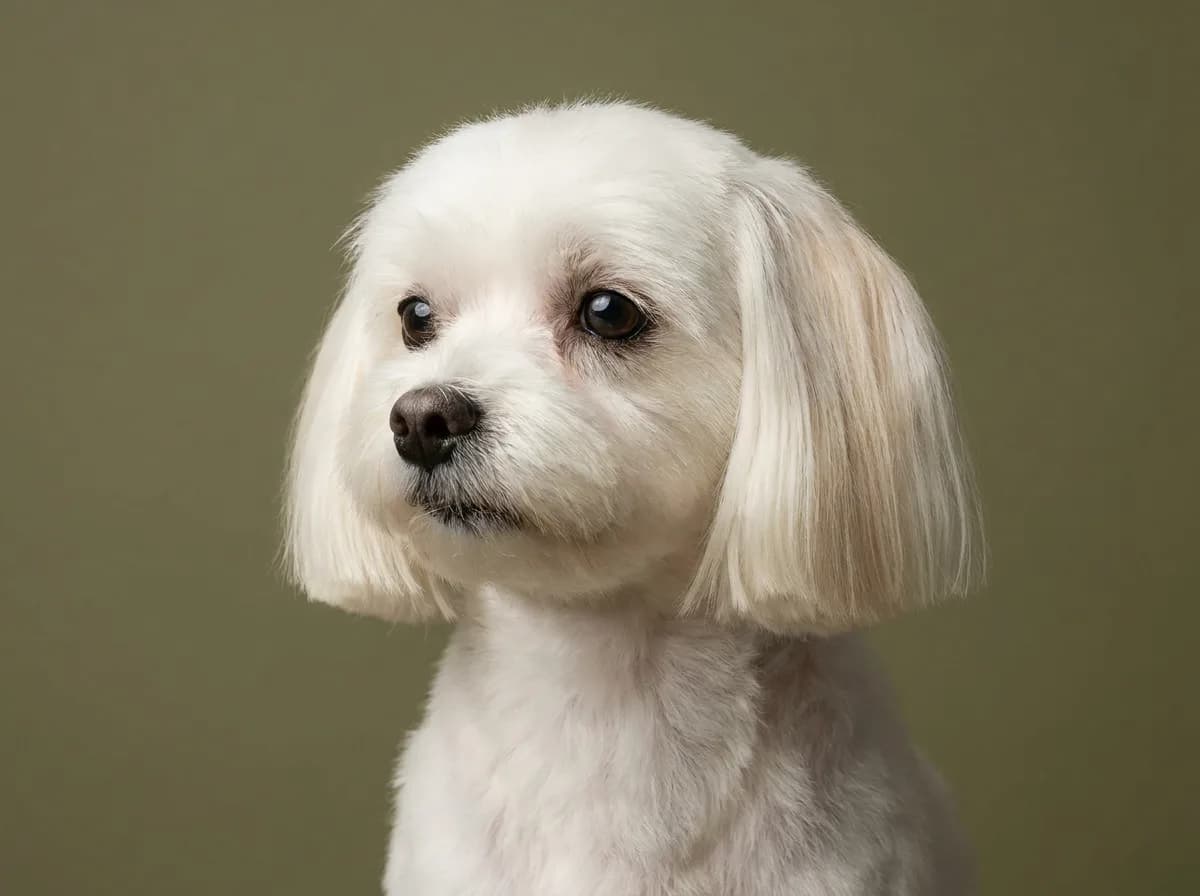
A bob focuses on the edge of the ear fringe. The hair forms a more defined outline around the face, rather than hanging as a long curtain or disappearing into a rounded head. It can accompany a short body, a medium trim or another combination you prefer.
Look carefully at the bottom edge in your chosen photograph. Do you want it level, softly rounded or blended toward the jaw? Those differences affect the framing of the face. Tell the groomer which edge you like instead of relying on the word “bob” alone.
Questions that make the request clearer include:
- Where should the ear fringe end relative to the jaw?
- Should the edge look defined or softly blended?
- How much fullness should remain at the sides of the head?
Shortening the visible fringe may simplify some care, but hair still remains around and behind the ears. Keep those areas in the home-care conversation. If you like the bob shape but prefer a less pronounced result, ask for a softer version rather than changing the whole body cut.
Long ears with a shorter body
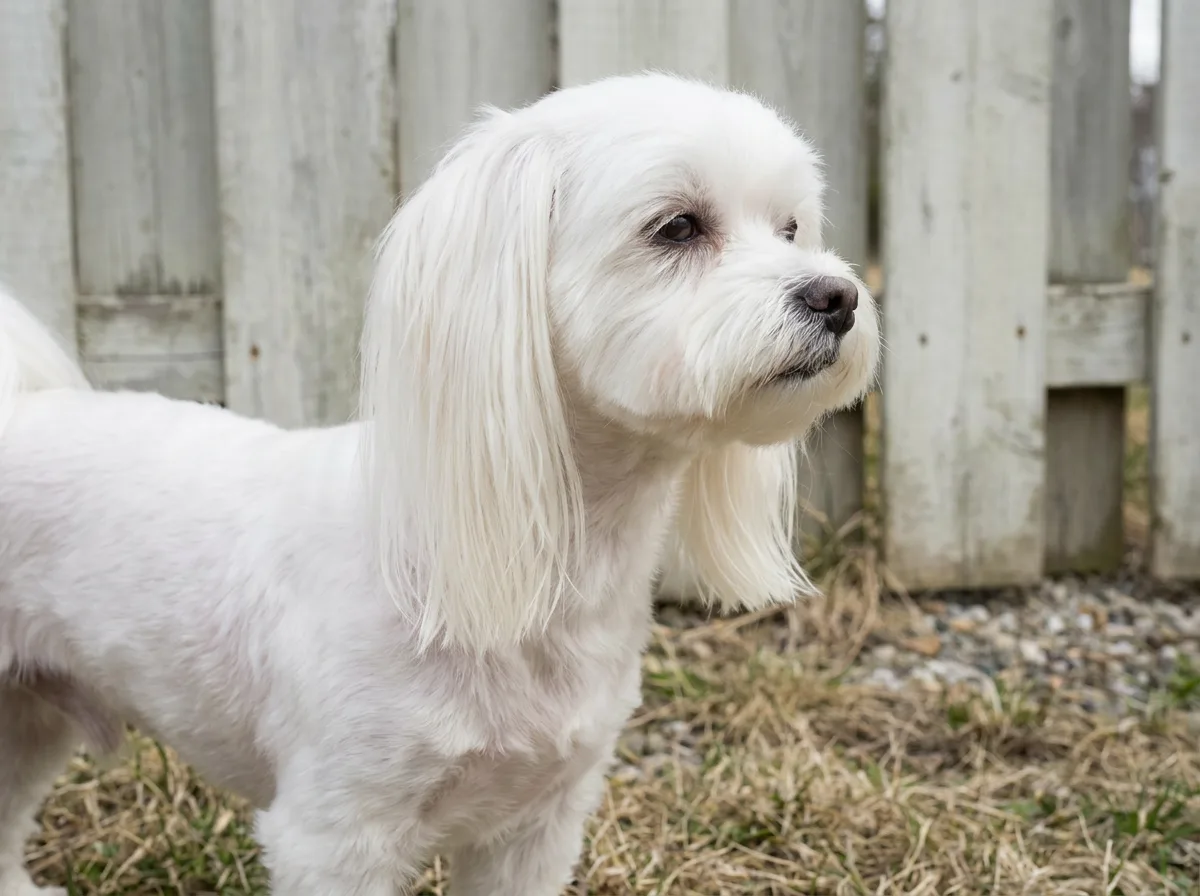
Long ears preserve a flowing detail while the body stays more manageable. The contrast can be attractive because the head retains movement and softness without carrying the same length down the chest, sides and legs.
Be specific about the amount you want to keep. “Do not touch the ears” can leave the groomer uncertain about whether a small tidy is allowed. If your goal is to preserve length while removing untidy ends, describe that. Ask what can be retained comfortably in the coat's current condition.
Consider these choices:
- Keep the existing length and tidy only the outline.
- Shorten the fringe enough to make daily care easier.
- Blend the ear hair into the face, or keep the two shapes distinct.
The longer fringe needs attention even after the body has been shortened. Notice whether the ends repeatedly get wet or collect debris, and discuss a practical adjustment at the next visit. A shorter body with long ears is a deliberate combination, not a promise of low maintenance everywhere.
A shorter practical face

A shorter face reduces some of the hair around the muzzle while leaving a neat, recognizable Maltese expression. It is a useful preference when a fuller beard is difficult to keep tidy after meals, or when you simply like a more open facial outline. Keep cleanup products matched to the area: Earth Rated Unscented Dog Grooming Wipes are sold for paws and body, so use a damp cloth around the mouth and keep wipes away from the eyes.

Petful may earn a commission when you click through to Chewy, at no extra cost to you.
Show the groomer exactly which area you want shorter. The hair around the mouth, the cheeks, the brow and the crown are separate choices. You might want a neater muzzle while retaining softness on the cheeks, rather than a uniformly short face.
- “Keep the muzzle neater than in a full teddy bear style.”
- “Leave the cheeks softly shaped.”
- “Keep the eyes unobstructed and explain how you will handle the crown.”
This is a finished-style decision, not an invitation to trim close to the eyes at home. Facial work requires controlled handling, and a moving dog can make it difficult. Leave the actual shaping to a professional groomer if you cannot perform it comfortably and safely. Between visits, focus on the routine the groomer has demonstrated rather than repeatedly trying to correct the outline yourself.
Topknot or trimmed crown
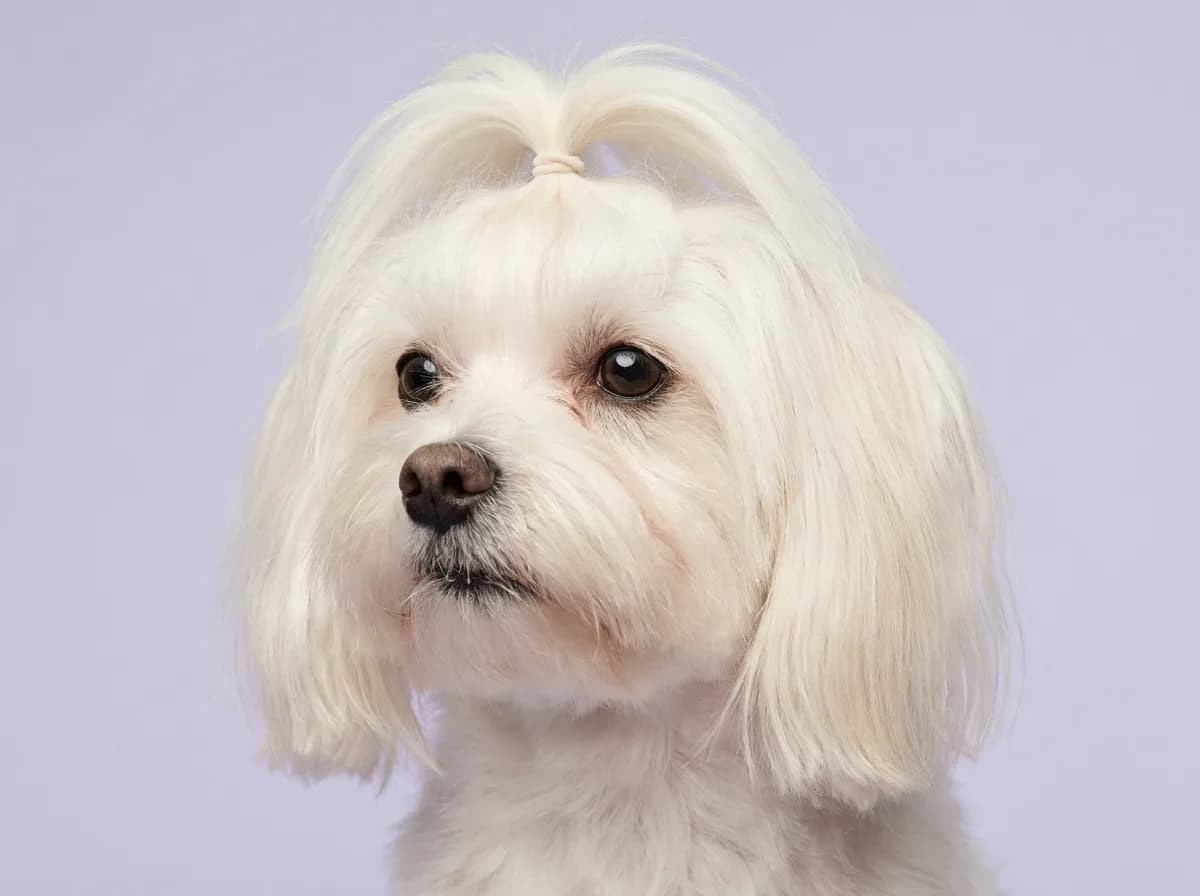
A topknot keeps crown hair long enough to gather above the face. It can accompany a flowing coat, a medium pet trim or a shorter body. The body does not need to remain long simply because you like this head detail.
The choice comes with a small but regular task: maintaining the arrangement and checking the hair beneath it. A bow can look tidy while concealing hair that needs attention. Ask the groomer to demonstrate a comfortable arrangement and how to remove it without pulling.
Decide which of these outcomes you want:
- Keep sufficient crown length for a simple topknot.
- Maintain a topknot now but reduce other facial fullness.
- Trim the crown so no tied arrangement is needed.
Avoid asking for both a substantially shorter crown and an immediate full topknot. Those goals may not be compatible with the available length. If you are unsure, ask the groomer to show you the minimum hair that would need to remain before deciding whether the daily task is worthwhile for your household.
Keep the haircut manageable between appointments
Learning to groom a Maltese between salon visits begins with maintaining the chosen coat, not reproducing the entire haircut at home. You need a routine you can perform gently and consistently, plus a clear point at which to stop and ask for help.
Your Maltese grooming supplies should match those tasks. A brush, a metal comb and an appropriate bathing product have different jobs. Buying more tools does not solve a mismatch between a demanding finish and the care the dog will accept.
- Include retained furnishings in a gentle comb check: ear fringe, leg hair, beard and tail. Work through small areas without pulling. Stop at a tight tangle, discomfort or resistance you cannot resolve gently, and ask your groomer what to do next.
Check the coat in small sections
Choose a stable, comfortable place and work through manageable areas rather than racing across the whole dog. Looking only at the back is an easy way to miss the hair that rubs or folds when the dog moves. The purpose is to notice changes before an area becomes difficult to handle.
The American Maltese Association recommends daily attention with an appropriate brush or comb. You can use that as a reminder to examine the coat regularly, while asking your groomer to demonstrate the method and tools suited to the length you have chosen.
Include these areas in the discussion:
- Hair behind and beneath the ears.
- The chest and areas where the front legs meet the body.
- The inside surfaces of the legs.
- Longer hair around the feet.
- Tail fringe and other retained furnishings.
Do not treat resistance as something to overcome with a harder pull. Separate the hair only as gently as you have been shown. If a tight area will not release comfortably, stop. Keeping scissors away from a mat you cannot clearly separate from the skin is a sensible boundary for home care.
Match brushes and combs to the task
A brush works over and through the coat; a comb can help you check whether the area you just brushed is actually clear. The two are not interchangeable merely because both have teeth or pins. Ask the groomer to show you the pressure, direction and section size that work for your dog.
If you are choosing a slicker brush for a Maltese, consider the dog's coat and tolerance rather than assuming that a breed label guarantees fit. The aumuca Self Cleaning Slicker Brush, Green is one option to discuss. Its cleaning feature does not change the need for gentle use, and it should not be treated as a tool for forcing out mats.
The best dog brush for your Maltese is the one appropriate to the task and comfortable in use. Before adding another tool, identify what is going wrong:
- Is the brush only passing over the outer layer?
- Is the area difficult because of length, tangling or handling discomfort?
- Would a simpler haircut reduce the problem?
- Do you need a demonstration rather than a different purchase?
Keep brushes, combs and other grooming supplies clean and in good condition. Check them before use for damaged teeth or pins. A tool that catches or scratches should not stay in the routine just because it worked well when it was new.
Keep bathing and cleanup practical
Plan bathing around the dog's needs and the routine agreed with the groomer. Use a product intended for dogs, follow its directions, and avoid assuming a shampoo will correct a skin concern. A haircut guide cannot establish that a particular formula is appropriate for every dog.
For cleanup away from the eyes, Earth Rated Unscented Dog Grooming Wipes are an optional paw-and-body product. Follow the label and keep them out of the eye area. They are not a tear-stain treatment or a substitute for dealing with a tangled coat.
Before bathing, check whether the coat has areas you cannot comfortably work through. Ask the groomer for help with significant tangling rather than hoping washing will make the problem disappear. Afterward, handle the wet coat gently and follow the drying method demonstrated for your chosen finish.
- Bathing: Cleaning the coat with a suitable dog shampoo and thorough rinsing.
- Spot cleanup: Addressing limited dirt on paws or body using an appropriate product as directed.
- Brushing and combing: Maintaining the hair and noticing tangles.
- Haircut maintenance: Keeping the chosen outline manageable through planned grooming visits.
Ordinary body wipes should not migrate into eye care simply because the package mentions grooming. Keep facial and eye-area concerns separate from paw cleanup. Likewise, a scented or fresh-looking coat does not tell you whether the hair underneath has been checked.
Plan the next appointment
Ask about the next appointment before leaving the salon, but treat the recommendation as a plan for your dog rather than a universal timetable. A detailed face, fuller legs or a particular outline may need attention sooner than a simpler finish.
Watch what happens between visits. If you repeatedly struggle with the same area, mention it instead of waiting until the whole haircut looks overgrown. The useful adjustment may be a shorter ear fringe, less leg volume or a different face finish rather than a complete change of style.
Bring back observations such as:
- Which area was easiest to maintain.
- Where tangles or cleanup problems appeared first.
- Whether your dog tolerated the home routine.
- Which part of the appearance you want to preserve.
- Whether a small tidy between full grooms would be practical.
This makes the haircut a workable ongoing choice. You are not trying to keep every hair exactly where it sat on grooming day. You are aiming for a comfortable dog, a coat you can maintain and an appointment plan that fits everyday life.
Take this brief to your groomer
A good groomer request describes what should stay as clearly as what should be shortened. Bring one or two useful references, identify the features you like, and allow time to discuss coat condition. The aim is an agreed plan rather than a photograph handed over at the last moment.
Start with your practical priorities. Perhaps you want less hair around the mouth, easier leg care or a body that stays above the ground. Then add appearance preferences. This order helps the groomer understand which parts matter most if the current coat cannot support every detail.
Use these prompts to build your request:
- Body: Describe the outline and the amount of length you want retained.
- Legs and feet: Say whether they should match the body, remain fuller or receive a compact tidy.
- Face: Specify a rounded muzzle, a shorter mouth area or another visible feature.
- Ears: Choose the fringe length and whether the edge should be defined or blended.
- Crown: State whether to retain a topknot or trim the area.
- Tail: Explain how much fringe you want to preserve.
- Comfort: Describe areas your dog finds difficult to have handled.
- Changes: Agree on when the groomer should contact you before departing from the plan.
- I would like a manageable pet trim with a shorter body and tidy legs. Keep a softly rounded face, shorten the mouth area enough for easier cleanup, and leave the ears at the length we agree on together. Please trim the crown rather than keeping a topknot. Retain some tail fringe if it is comfortable to maintain. My priorities are easy daily coat care and my dog's comfort. Please contact me before making a substantial change to this plan.
That example is a starting point, not the best cut for every Maltese. Change the fields to match your choices. If you want lamb-style legs, replace “tidy legs” with a description of the fullness you prefer. If you want long ears, explain whether a small edge tidy is acceptable.
Ask the groomer to check the coat before finalizing the request. Hair can look full on the surface while being difficult to work through underneath. A discussion before the appointment proceeds gives you a chance to understand any limitation and agree on an achievable alternative.
Afterward, save a clear photograph of your own dog's finished trim. Note the parts you liked and anything that became awkward as it grew. At the next visit, a specific adjustment such as “slightly shorter around the mouth, same body” is easier to explain than changing style names. Your own appointment history can become the most useful reference.
Choosing a haircut for a Maltipoo
A Maltese Poodle haircut needs its own discussion because the coat you are working with may differ from the silky Maltese coats pictured here. Do not assume that a familiar style name or a Maltese reference will produce the same texture and outline on a crossbred dog.
Use the Maltipoo haircuts guide for that decision. The same communication principle remains useful: choose the body length and facial features separately, then ask what the individual coat can support. Plan grooming for a Maltese and Poodle cross around the dog's actual hair and handling comfort, rather than the appearance suggested by the name alone.
Maltese haircut questions
No. Male and female Maltese have the same style options, so photos labeled as female or male styles show the same bobs, rounded faces and topknots. Choose by coat condition, the finish you like and the routine you can maintain, and discuss any practical tidying of the underside with your groomer.
Ask for a short introductory visit focused on comfort and gentle handling rather than a full adult-style haircut. Tell the salon about the puppy's previous experience and ask what records it needs. Before you leave, ask what you can practice at home ahead of the next visit.
Choose a finish the dog can stand for and maintain comfortably, which often means less leg fullness, a neater face or fewer long furnishings. Tell the groomer what has changed since earlier appointments and which areas are now hard to manage at home. The individual dog's comfort, not age alone, should set the cut.
Describe what you have seen, such as trouble with prolonged standing, foot handling, noise or face work, and agree on priorities before booking. Shorter sessions, a simpler finish or a different order of tasks may help. Agree on when the groomer should stop and call you rather than forcing a cosmetic plan.
Yes, a short trim can grow out, but there is no fixed timetable for matching a long-coat photo. Tell the groomer which areas you are growing and which should keep interim trims, such as the mouth, feet or ear edges. Keep combing through the transition so tangles do not build while the coat lengthens.
Trimming can remove some stained hair, but it does not treat the cause. VCA's guide to eye discharge in dogs explains that staining comes from excess tears or poor drainage and advises a veterinary check before using any stain product. Ask the groomer for a neat face and the veterinarian about the tears.

Coreen Saito is a pet writer and longtime shelter volunteer with more than a decade in animal rescue. She covers cat behavior, breed care, and the small, ordinary science of sharing a life with companion animals, with a particular focus on honest takes about the products and decisions that actually matter. At home in Arizona, she's outranked by Mac (a dog with the loudest opinion in the house), Rebel (a cat who governs by quiet authority), and Meri (an orange tabby who runs the late shift and the laundry basket). She writes about all three, plus the rescues that keep coming through her life, at LifeWithMinty.com.
Sign up for expert-backed reviews and safety alerts all in one place.