Leonberger Dog Breed: Size, Temperament, Cost and Care
The Leonberger dog breed is a gentle giant with major space, grooming and budget needs. Learn about temperament, size, cost, training, health and care.
Petful is reader supported. As an affiliate of platforms like Amazon and Chewy, we may earn a commission when you buy through links on this page. There is no extra cost to you.
The Leonberger dog breed is a true gentle giant: enormous, affectionate, watchful and often happiest when included in family life. A Leo can be a magnificent companion, but the size comes with real costs in food, grooming, training, space and veterinary care.
This refresh expands the breed profile with the questions owners ask before committing: how big Leonbergers get, what they cost, what their temperament is like, which health risks to screen for and how much coat care is realistic.
- 1Leonbergers are giant working dogs, not oversized golden retrievers.
- 2They are often gentle with family, but early training matters because adult size is powerful.
- 3Budget for high food costs, grooming time, orthopedic care and large-dog equipment.
- 4Responsible breeders screen hips, elbows, eyes and inherited conditions.
- AKC Group: Working
- Weight: 130 lbs.
- Height: 27–30 in.
- Life Span: 8 years

Sign up for expert-backed reviews and safety alerts all in one place.
Leonberger: A Gentle Giant Among Working Dog Breeds
The Leonberger, often called “Leo,” is a striking representative of the working group and one of the most impressive giant breeds.
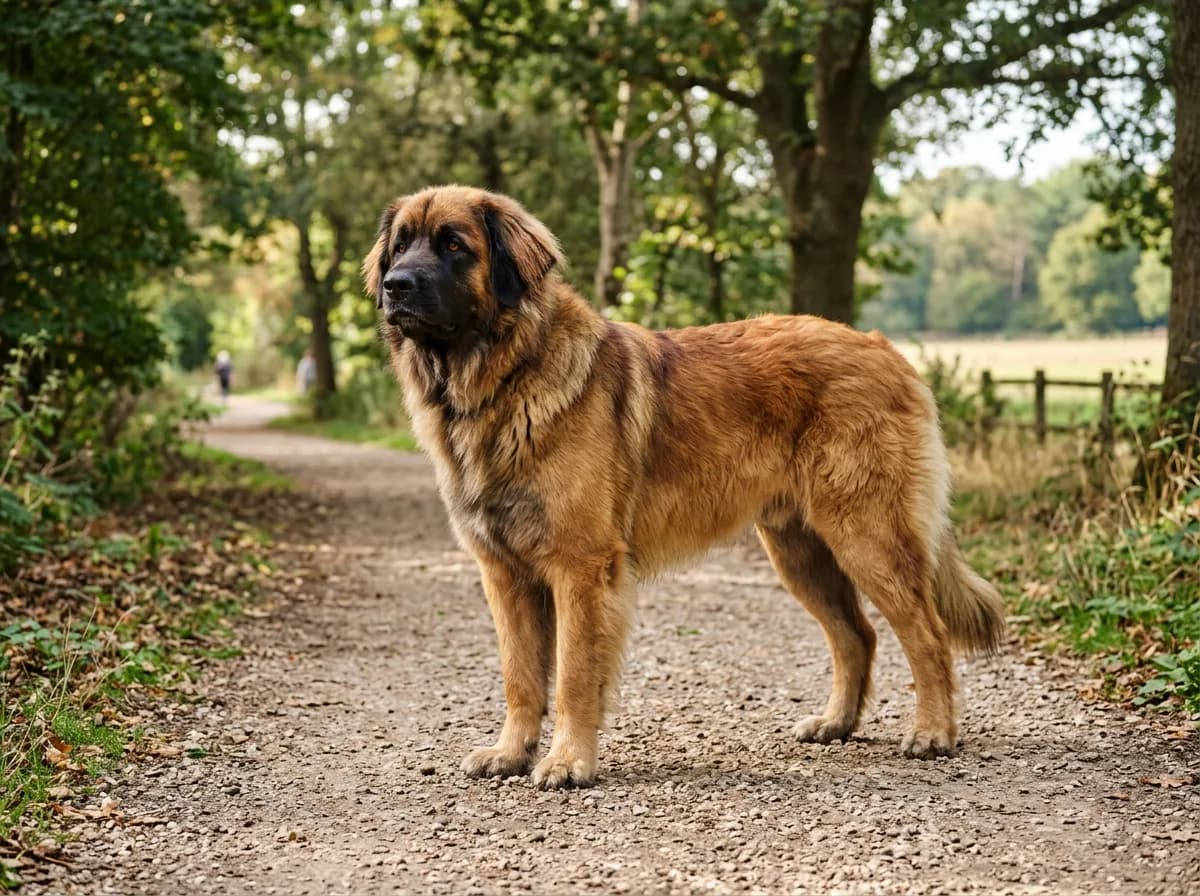
- Appearance: Leonbergers are large, muscular dogs with a signature dark facial mask. Males often have a longhaired chest resembling a lion’s mane, contributing to their majestic, lion-like appearance.
- Size: Males typically stand about 30 inches tall; females, around 27 inches. These gentle giants usually weigh about 130 pounds.
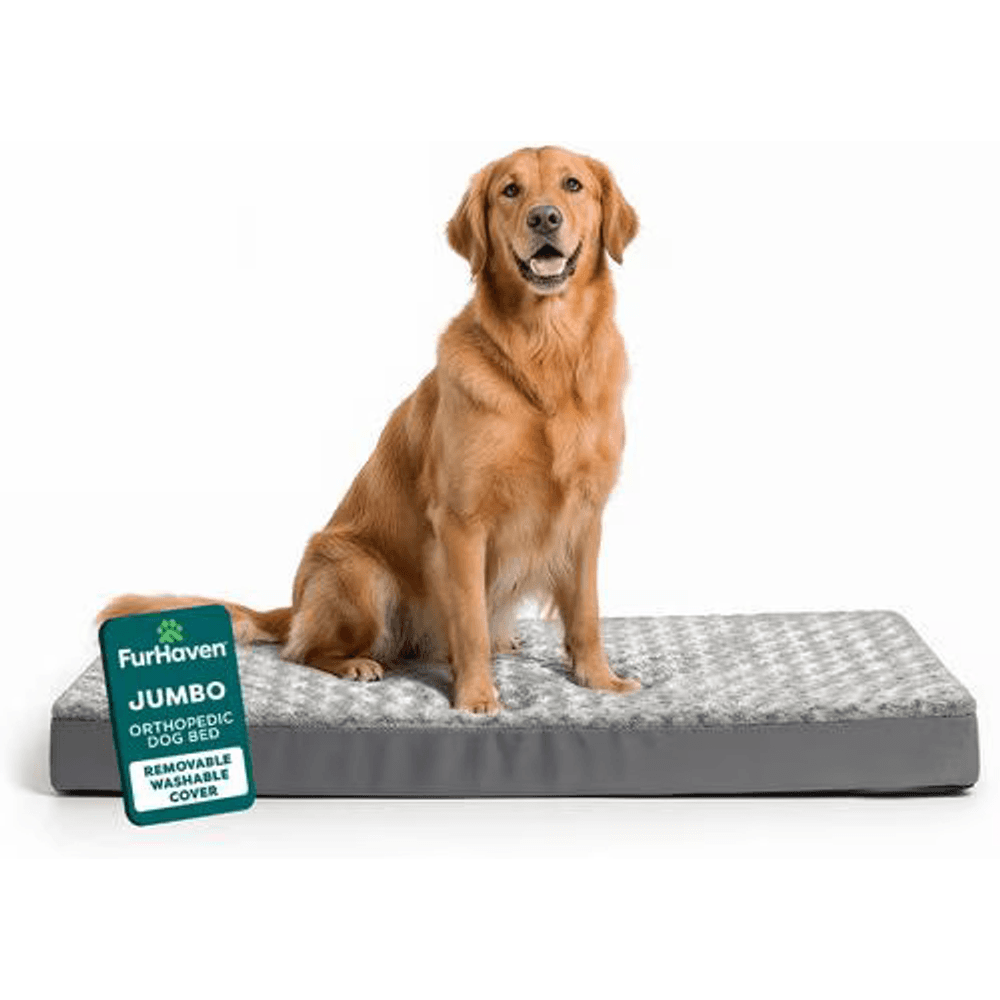
A jumbo orthopedic bed gives a giant dog a supportive place to rest.
Petful may earn a commission when you click through to Chewy, at no extra cost to you.
- Coat Colors: Red, reddish brown, sandy, and yellow brown are common colors.
Despite their intimidating size, Leonbergers are known for their calm and affectionate nature. Their average lifespan is eight years, though some live longer.
For more on giant breeds, check out this helpful guide on the 10 biggest dog breeds in the world.
The Origin and History of the Leonberger
The Leonberger originated in Leonberg, Germany, in the 1800s and was initially bred as a family, farm, and draft dog. Over time, this impressive breed even appeared on stamps and official correspondence throughout Germany.
- Ancestry: The Leonberger is believed to be the result of crossing a St. Bernard, Newfoundland, and Pyrenean Mountain Dog, with later crossings again involving the St. Bernard. However, modern geneticists suggest that additional breeds likely contributed, as the original breeding theory doesn’t fully align with genetic evidence.
- Milestones:
For more background, explore the Newfoundland dog profile and learn more from the American Kennel Club’s Leonberger page.
The Purpose and Versatility of the Leonberger
The Leonberger is a true multipurpose working dog, valued for both its strength and gentle nature.
- Family Companion: Leos make excellent family dogs, known for their calm and affectionate temperament.
- Working Roles: They excel in therapy work, providing comfort and support in hospitals and care facilities.
- Rescue Abilities: With their webbed feet, Leonbergers are particularly skilled in water rescues, making them valuable in lifesaving operations.
Leonberger Temperament and Personality
The Leonberger is often described as a gentle giant, known for its playful, reliable nature and strong desire to please.

Slow meals can support calmer eating routines for deep-chested breeds.
Petful may earn a commission when you click through to Chewy, at no extra cost to you.
- Family-Friendly: Leonbergers love children and make excellent family companions.
- Non-Aggressive Nature: While they are not aggressive, their large size and deep bark can be intimidating.
- Social and Even-Tempered: They typically get along well with other animals and display a consistent temperament.
- Intelligence and Needs: As intelligent dogs, Leonbergers can become bored or destructive if left alone too long, so they are not suited to life as outside-only pets.
Is the Leonberger the Right Dog for You?
The Leonberger is a large, affectionate dog that thrives on being part of the family - but it’s not the right fit for every household.
- Size and Shedding: Leonbergers are big dogs that shed daily, so they’re not ideal for people with meticulous homes.
- Living Space Needs: They require plenty of space and aren’t recommended for small apartments unless you have access to a park or path for daily exercise.
- Temperament and Training: Known for being gentle and non-aggressive, Leonbergers respond well to positive reinforcement and are generally easy to train.
If you have the space and don’t mind some fur, a Leonberger could make a wonderful and loyal companion.
Leonberger Exercise Needs
HIGH: The Leonberger has a high energy drive and needs daily exercise to stay healthy and happy.
- Activity Requirements: Regular walks, playtime, and swimming are great ways to meet their exercise needs.
- Natural Swimmers: Thanks to their webbed feet, Leonbergers are excellent swimmers and often enjoy water activities.

A curry brush or grooming glove helps with routine coat maintenance.
Petful may earn a commission when you click through to Chewy, at no extra cost to you.
- Health Precautions: Like all large breeds, it’s important not to exercise them right before or after eating or drinking to help reduce the risk of bloat in dogs, a potentially fatal condition.
Leonberger Grooming Requirements
HIGH: The Leonberger has a water-resistant double coat that requires consistent care to keep it healthy and clean.
- Brushing Needs: Daily brushing is essential, as their medium to long fur sheds regularly and goes through a heavy shed, or “coat blow,” twice a year.
- Mess Factor: Leonbergers love digging, swimming, and rolling in dirt, making them a challenging choice for those who prefer spotless homes.
- Other Grooming Tasks: Routine care should include trimming nails, cleaning teeth and ears as needed, and checking the undercarriage and feet for dirt and debris.
Common Health Problems in Leonbergers
MEDIUM: The Leonberger is generally a hardy breed but is prone to several health issues that owners should watch for.
- Major Concerns: Bloat, hip dysplasia, and nerve disorders are among the most common problems in Leonbergers.
- Drug Sensitivities: Leos can also have allergies or sensitivities to certain drugs, including tranquilizers, anesthetics, and sulfur-based medications.
- Additional Info: Learn more about allergies in pets to help keep your Leo safe and healthy.
Adopt, Don’t Buy
If you consider getting a Leonberger for your next pet, check adoption resources first. Even purebred animals can end up in shelters. Try Petful’s adoption center.

Large-breed nail clippers help keep big paws comfortable.
Petful may earn a commission when you click through to Chewy, at no extra cost to you.
Related Dog Breed Profiles You May Like
- Lowchen Dog Breed Profile: Essential Facts
- Otterhound Dog Breed Profile: Essential Facts
- Portuguese Podengo Pequeno Dog Breed Profile: Essential Facts
- Pumi Dog Breed Profile: Essential Facts
- Staffordshire Bull Terrier Dog Breed Profile: Essential Facts
Additional Resources
- Leonberger Club of America: Additional information on the breed
- Leonberger Rescue: Application to adopt

What two breeds make a Leonberger?
The Leonberger was developed in Germany with influence from giant mountain and working dogs, commonly described through Saint Bernard, Newfoundland and Great Pyrenees ancestry. The result is a large, powerful dog with a thick coat, dark mask and steady family-oriented temperament when bred and raised well.
Breed-origin stories can be simplified online, but the practical takeaway is clear: this is a giant working companion. The Leo needs socialization, manners and exercise that match a dog who can outweigh many adults.
Leonberger temperament and family life
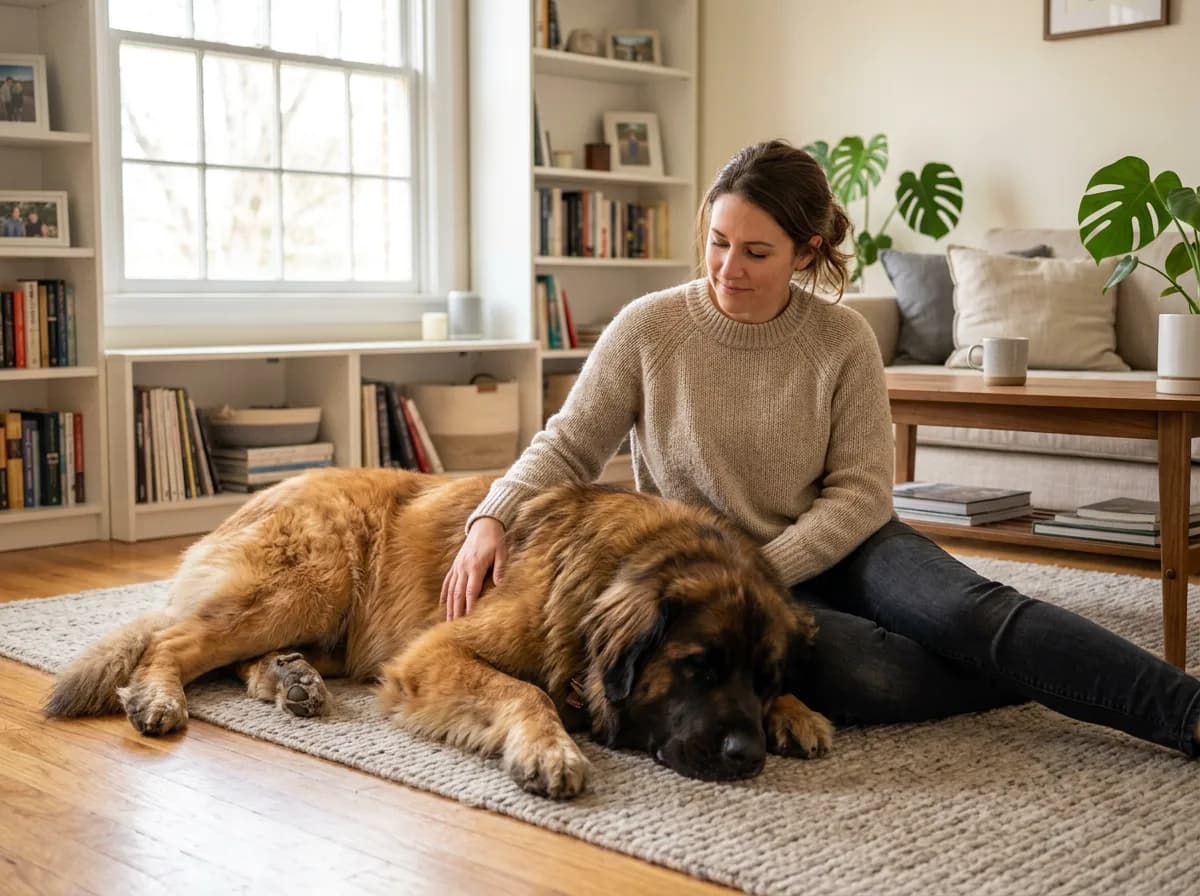
A well-bred Leonberger is typically affectionate, people-focused and gentle, but gentle does not mean low-maintenance. Puppies grow fast, jump hard and can accidentally knock people over. Calm greetings, leash manners, settle cues and polite door behavior should start early.
Because a Leo takes up real floor space, plan a supportive resting area. A jumbo orthopedic dog bed can help protect joints and give the dog a clear place to settle.
Cost, food and space realities
Leonbergers are expensive because everything scales up: food, preventive care, anesthesia, crates, beds, grooming tools and vehicles. Puppies from responsible breeders may also cost more because health testing and careful breeding are expensive. A cheap puppy can become the most expensive option if health or temperament support is missing.
Before bringing one home, picture the boring logistics: where a wet 140-pound dog will dry off, which doorways and stairs are easiest to navigate, whether your car can safely transport the dog and whether every adult can handle leash walks. Those details matter as much as affection because a giant dog is safest when the home is built around predictable routines.
Ask your veterinarian about bloat risk, feeding schedules and emergency signs. A slow feeder bowl may help a fast eater slow down, but owners still need to know when bloat is an emergency.
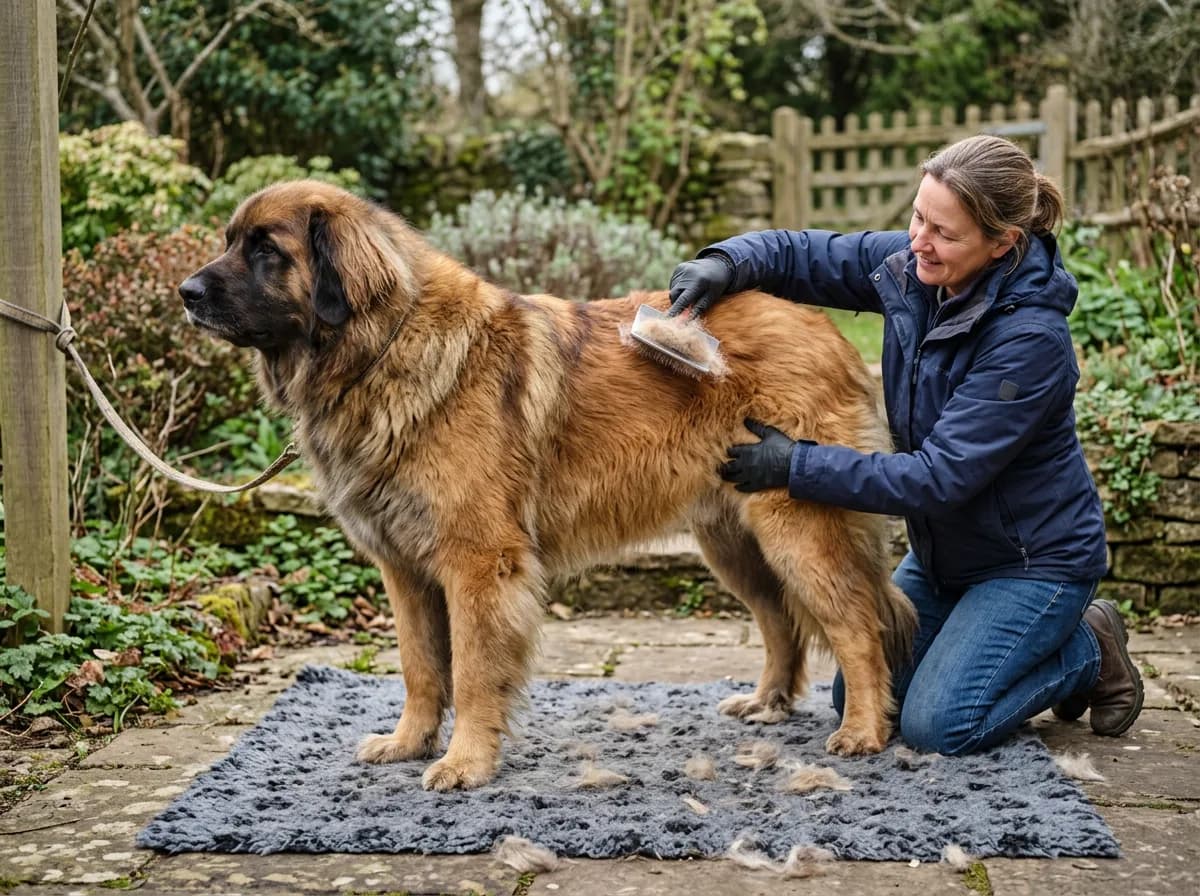
Grooming and health screening
The Leonberger coat sheds, mats and carries outdoor debris. Brush several times a week, more during coat blow, and check behind ears, under the collar, behind the legs and around the tail. Nail trims, ear checks and dental care should be routine rather than emergency projects.
A dog grooming glove and curry brush can make maintenance brushing easier, while sturdy large-breed nail clippers help keep big paws from splaying or slipping.
Health screening matters because giant breeds can hide expensive problems behind a beautiful puppy photo. Ask for hip and elbow results, eye exam information, thyroid history when relevant and any breed-specific genetic testing recommended by the parent club. Also ask about age and cause of death in relatives, not just the parents.
Training, heat and daily routine
Leonbergers are often sensitive, so harsh training can backfire. Reward calm behavior, teach polite greetings, practice leash manners and make grooming part of puppy life. The goal is not military obedience. The goal is a giant dog who can move through a home, vet office and neighborhood without dragging people or overwhelming guests.
Heat is another daily-life issue. A heavy coat and giant frame mean summer exercise should happen early or late, with shade, water and rest. Avoid long pavement walks in high heat. If a Leo pants hard, slows down, drools excessively or seems disoriented, treat overheating as urgent.
A practical routine mixes moderate exercise, training games, grooming, rest and family time. Leonbergers are not usually happy as yard ornaments. They want to be near their people, which is lovely when the dog has manners and difficult when the dog is under-stimulated.
Adoption and breeder questions
Ask breeders about hip and elbow screening, eye exams, polyneuropathy testing where relevant, lifespan in the line, temperament, puppy socialization and lifetime return policies. If adopting, ask the rescue about leash manners, separation behavior, other pets, grooming tolerance and any orthopedic history.
If rescue is your route, be honest about your physical ability, vehicle, stairs, fencing and budget. A mature Leonberger can be easier than a puppy in some ways, but you still need the strength and setup to manage a giant dog safely.
How big do Leonbergers get?
Leonbergers are giant dogs, and giant is the point that changes everything else. Adults commonly weigh well over 100 pounds, with males often larger than females. The size affects food, transportation, grooming, training, veterinary costs, stairs, flooring, fencing and whether every adult in the home can safely handle the leash.
A Leonberger puppy can look like a plush family dream, but the growth curve is fast. If you are comparing giant dogs, also study similar owner realities in breeds such as the Great Pyrenees and Bernese Mountain Dog. Jumping, pulling, counter-surfing and door rushing are cute for a moment and dangerous later. Teach polite greetings, leash skills, wait at doors and settle cues while the dog is still small enough to guide easily.
Space matters, but a huge yard is not a substitute for manners. Many Leos want to be near their people. They need room to stretch out, a cool resting place, safe footing and routines that keep them involved without letting their size run the household.
Are Leonbergers good family dogs?
A well-bred Leonberger is often affectionate, steady and people-focused, which is why the breed attracts families. They can be wonderful with children, but no giant dog should be treated as a living toy. Even a gentle Leo can knock over a toddler, sweep a table with a tail or step on small feet.
The best family homes teach both sides of the relationship. Children learn not to climb, pull, wake, chase or bother the dog during meals. The dog learns calm greetings, mat settling, leash manners and how to move around people politely. Supervision is still required, especially with visiting children who do not know the rules.
Leonbergers often do best when included in ordinary family life rather than left outside alone. A lonely Leo can bark, dig, chew or become difficult to manage. The breed is large, social and sensitive, so emotional fit matters as much as square footage.
Leonberger temperament and training
Leonbergers are usually described as gentle giants, but gentle does not mean self-training. They are powerful, intelligent and often sensitive. Reward-based training works well because it builds cooperation without making a soft dog defensive or worried.
Start with practical behaviors: walk on a loose leash, greet without jumping, wait at doors, trade objects, settle during meals, allow grooming and ride calmly in the car. These are safety skills for a dog who may outweigh many adults.
Socialization should be calm and thoughtful. A Leo puppy does not need chaotic dog-park exposure to become confident. They need positive experiences with surfaces, sounds, people, handling, vet-style exams, grooming tools, cars and controlled dog interactions.
Leonberger cost: purchase price, food and care
Leonbergers are expensive because every category scales up. Food, preventives, medication, anesthesia, boarding, grooming, beds, crates and vehicles all cost more for a giant dog. Responsible puppies may also cost more because the breeder invests in health testing, careful pairings, puppy raising and lifetime support.
The cheapest puppy is not always the cheapest dog. Poor structure, weak temperament support or missing health testing can turn into major medical or behavior expenses. Ask breeders about hip and elbow results, eye exams, polyneuropathy testing where relevant, thyroid history, lifespan in the line and what support they provide after placement.
If adopting, ask about orthopedic history, leash strength, grooming tolerance, separation behavior, other pets, children, stairs and any bite or guarding history. A mature Leonberger can be easier than a puppy in some ways, but you still need the physical setup and budget for a giant dog.
Leonberger grooming and shedding reality
The Leonberger coat is beautiful and demanding. Expect regular shedding, seasonal coat blow, mud, water, burrs and hair in places you did not know hair could travel. Brushing several times a week is a baseline for many Leos, with more during heavy shedding.
Focus on mat-prone areas: behind the ears, under the collar, behind the legs, around the tail, under the belly and between the toes. Grooming is also a health check. You may find hot spots, ticks, ear odor, broken nails, sore pads or lumps before they become bigger problems.
Because the dog is so large, cooperative care is not optional. Teach the Leo to stand, lie on a side, offer paws and accept brushing in short sessions. A dog who trusts grooming is safer for the owner, groomer and veterinarian.
Leonberger health risks and screening questions
Leonbergers can be prone to bloat, hip and elbow dysplasia, eye issues, thyroid disease, heart concerns, certain cancers and inherited neurological disease such as Leonberger polyneuropathy. Petful's guide to health concerns in giant breed dogs gives useful context for the size-related risks. Not every Leo will face these problems, but buyers and adopters should know what to ask.
Health screening is more than seeing the parents. Ask for documented results and learn what the breed club recommends. Ask how long relatives lived and what they died from. Ask whether the breeder has produced orthopedic, neurologic, temperament or bloat issues, and listen for honesty rather than perfection.
Owners should also know bloat warning signs: restlessness, retching without producing vomit, drooling, abdominal swelling, pale gums or sudden distress. Bloat is an emergency, and Petful's dog bloat timeline explains how quickly it can escalate. Discuss feeding routines, exercise timing and preventive options with your veterinarian.
Exercise, swimming and heat safety
Leonbergers need daily exercise, but they are not built for punishing heat or repetitive high-impact workouts. Moderate walks, training games, controlled hikes, swimming and family activities are usually better than forced running. Growing puppies especially need joint-conscious activity.
Many Leos enjoy water, but swimming still requires supervision. Teach safe entries and exits, avoid strong currents and dry the coat and ears afterward. A wet Leonberger is a lot of dog, so plan towels, flooring and car protection before pretending the mess will be minor.
Heat safety is serious. Exercise early or late, choose shade, bring water and avoid hot pavement. If you are unsure where to draw the line, review Petful's guidance on how hot is too hot for dogs. Heavy panting, slowing down, confusion, excessive drooling or collapse should be treated as urgent.
Is a Leonberger right for you?
A Leonberger is right for someone who wants a huge, affectionate working companion and is ready for the unromantic parts: fur, cost, training, slobber, mud, logistics, health screening and a shorter average lifespan than many smaller breeds. The reward is a deeply attached dog with presence, warmth and a strong family orientation.
A Leo is not ideal for people who want a low-shedding dog, a small-space dog, a cheap dog, a guard dog with sharp suspicion or a pet who can be left alone outside. The breed's best traits show up when people invest in structure, social time, grooming and kind training.
Before committing, meet adult Leonbergers. Puppies sell the dream; adults show the reality. If you still love the size, coat, temperament and work after meeting grown Leos, you are much closer to making a sound choice.
Frequently Asked Questions
Leonbergers are commonly described as having Saint Bernard, Newfoundland and Great Pyrenees influence in their history. Modern Leonbergers are their own established breed, so choose by breeder quality and health testing, not origin myth alone.
Leonbergers can be excellent pets for homes with space, time and a budget for a giant dog. They are less ideal for owners who cannot manage shedding, training, drool, heat sensitivity or large veterinary expenses.
Costs vary, but a well-bred Leonberger puppy is often expensive, and lifetime costs are high because food, medication, grooming, beds, crates and veterinary care are all giant-dog sized.
Responsible Leonberger breeding requires health testing, careful puppy raising and support for a giant breed with a limited population. Daily care is also expensive because the dog is so large.

Coreen Saito is a pet writer and longtime shelter volunteer with more than a decade in animal rescue. She covers cat behavior, breed care, and the small, ordinary science of sharing a life with companion animals, with a particular focus on honest takes about the products and decisions that actually matter. At home in Arizona, she's outranked by Mac (a dog with the loudest opinion in the house), Rebel (a cat who governs by quiet authority), and Meri (an orange tabby who runs the late shift and the laundry basket). She writes about all three, plus the rescues that keep coming through her life, at LifeWithMinty.com.
Sign up for expert-backed reviews and safety alerts all in one place.