Japanese Dog Breeds: Photos, Origins, Traits
Meet the Japanese dog breeds, from the popular Shiba Inu and loyal Akita to rare native dogs like the Kai Ken, Kishu Ken, Shikoku, and Hokkaido, plus gentle companions like the Japanese Spitz and Japanese Chin, with photos, origins, and traits.
Petful is reader supported. As an affiliate of platforms like Amazon and Chewy, we may earn a commission when you buy through links on this page. There is no extra cost to you.
Japanese dog breeds are some of the oldest, most striking, and most misunderstood dogs in the world, from the fox-faced Shiba Inu to the bear-sized Akita and a handful of rare mountain hunters most people outside Japan have never seen. Six of these dogs are so culturally important that the Japanese government protects them as living "natural monuments," while others like the powder-white Japanese Spitz and the doll-faced Japanese Chin round out a family of dogs bred over centuries for hunting, guarding, and companionship.
This guide walks through every major Japanese breed with photos, real origins, and honest temperament notes, so you can tell a Kai Ken from a Kishu, understand why a Shiba acts more like a cat than a Labrador, and decide whether one of these ancient dogs actually fits your home. We built it against the vets and breed authorities we trust, and we flag the health and safety facts that matter before you fall in love with a face.
- 1Six breeds (Akita, Shiba, Kai, Kishu, Shikoku, Hokkaido) are Japan's protected native "Nihon Ken"
- 2Most Japanese breeds are primitive, independent, high-shedding spitz-type dogs, not easy first-time pets
- 3The Shiba Inu is the most popular, while the Tosa Inu is the largest and is restricted or banned in several countries

Sign up for expert-backed reviews and safety alerts all in one place.
What Makes a Dog Breed "Japanese"?
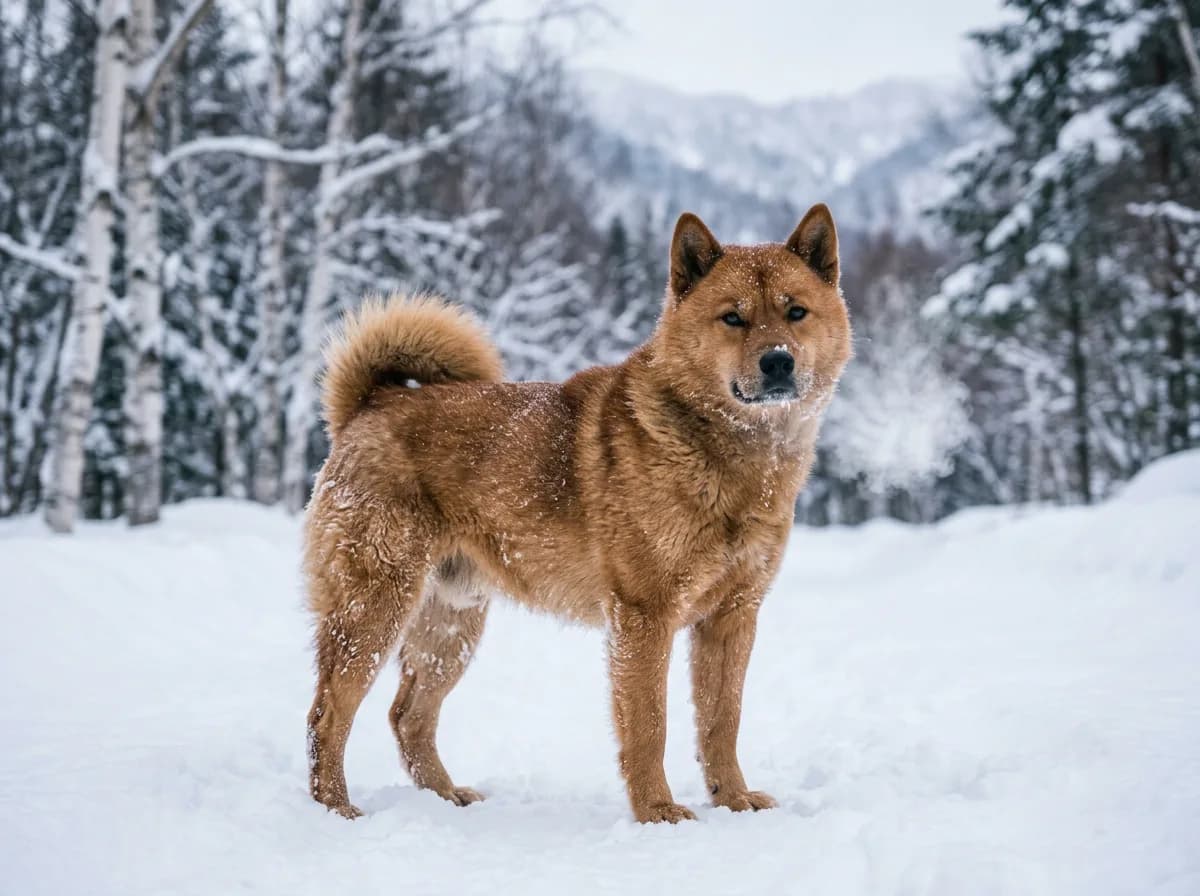
When people say "Japanese dog breeds," they usually mean the Nihon Ken: the native spitz-type dogs developed on the Japanese archipelago over thousands of years. Archaeological evidence puts spitz-type dogs in Japan for well over 9,000 years, and modern DNA studies consistently place these breeds among the most genetically ancient dogs on Earth, sitting close to the wolf on the canine family tree.
Six of them are formally recognized as native breeds and designated natural monuments by the Japanese government, protected and preserved by the Nihon Ken Hozonkai (the Association for the Preservation of the Japanese Dog), founded in 1928. Those six are the Akita, Shiba Inu, Kai Ken, Kishu Ken, Shikoku Ken, and Hokkaido.
But Japan's canine story is bigger than the six. The country also produced the fighting Tosa Inu, the fluffy Japanese Spitz, the aristocratic Japanese Chin, and the wiry little Japanese Terrier, plus regional dogs like the Ryukyu of Okinawa. Below, we cover the native six first, then the other notable Japanese breeds.

Petful may earn a commission when you click through to Chewy, at no extra cost to you.
- You will see the same breed written two ways, like "Shiba Inu" and "Kai Ken." Both "inu" and "ken" are Japanese words for dog. The difference is pronunciation and convention, not a different animal. Shiba Inu and Shiba Ken are the same breed.
The Six Native Japanese Breeds (Nihon Ken)
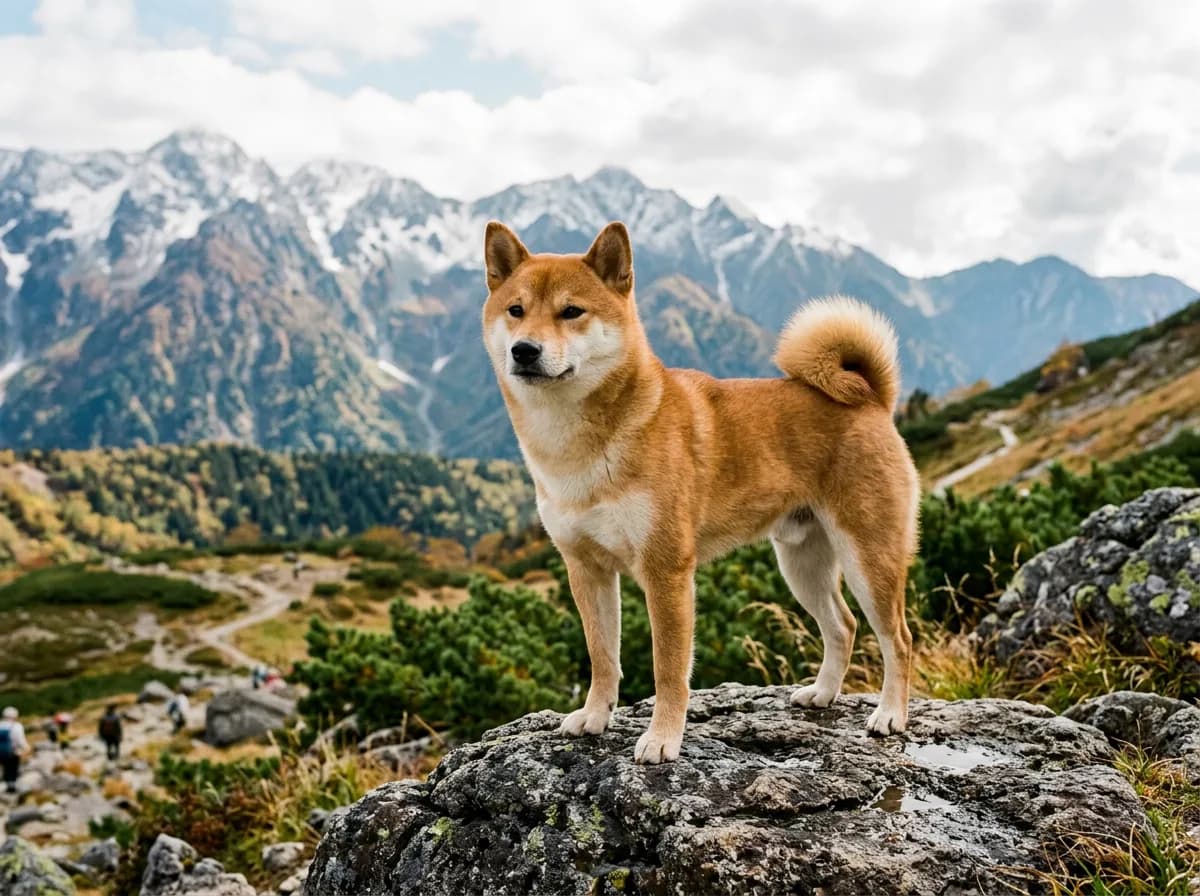
These are the protected six. They share a look (pricked ears, curled tail, thick double coat, wedge-shaped fox-like head) and a temperament (bold, independent, deeply loyal to their person, and reserved with strangers). They are working and hunting dogs at heart, not lapdogs.
Shiba Inu
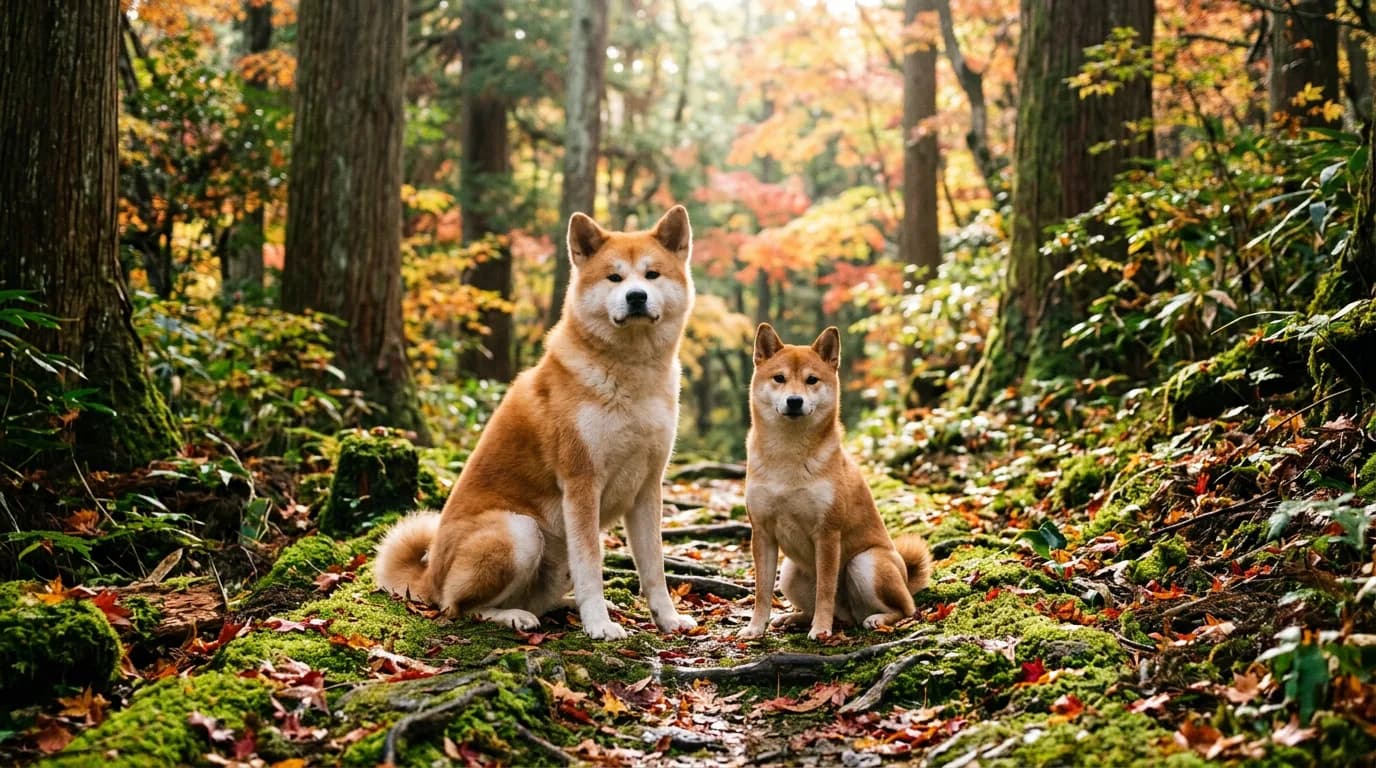
The Shiba Inu is Japan's smallest native breed and, by a wide margin, its most popular dog worldwide. Originally bred to flush birds and small game through the dense underbrush of Japan's mountains, the Shiba is compact, agile, and famously self-possessed. Owners often compare Shibas to cats: they groom themselves fastidiously, tolerate affection on their own terms, and rarely do anything just because you asked.
That independence is the whole personality. A Shiba is brave, alert, and clean, but also stubborn, prey-driven, and prone to the theatrical "Shiba scream" when displeased. They shed their thick double coat heavily twice a year. Expect a dog that will love you fiercely and ignore you completely, sometimes in the same hour.
- Size: 13.5 to 16.5 inches, 17 to 23 pounds
- Coat: thick double coat in red, black and tan, sesame, or cream
- Best for: experienced owners who respect an independent dog and can secure a yard against a determined escape artist
Akita
The Akita is the largest of the native six and the most famous Japanese dog in the world, thanks in large part to Hachiko, the Akita who waited at Tokyo's Shibuya Station every day for nine years after his owner's death. Bred in the mountains of northern Japan to hunt large game including boar and bear, the Akita is powerful, dignified, and intensely loyal to its family.
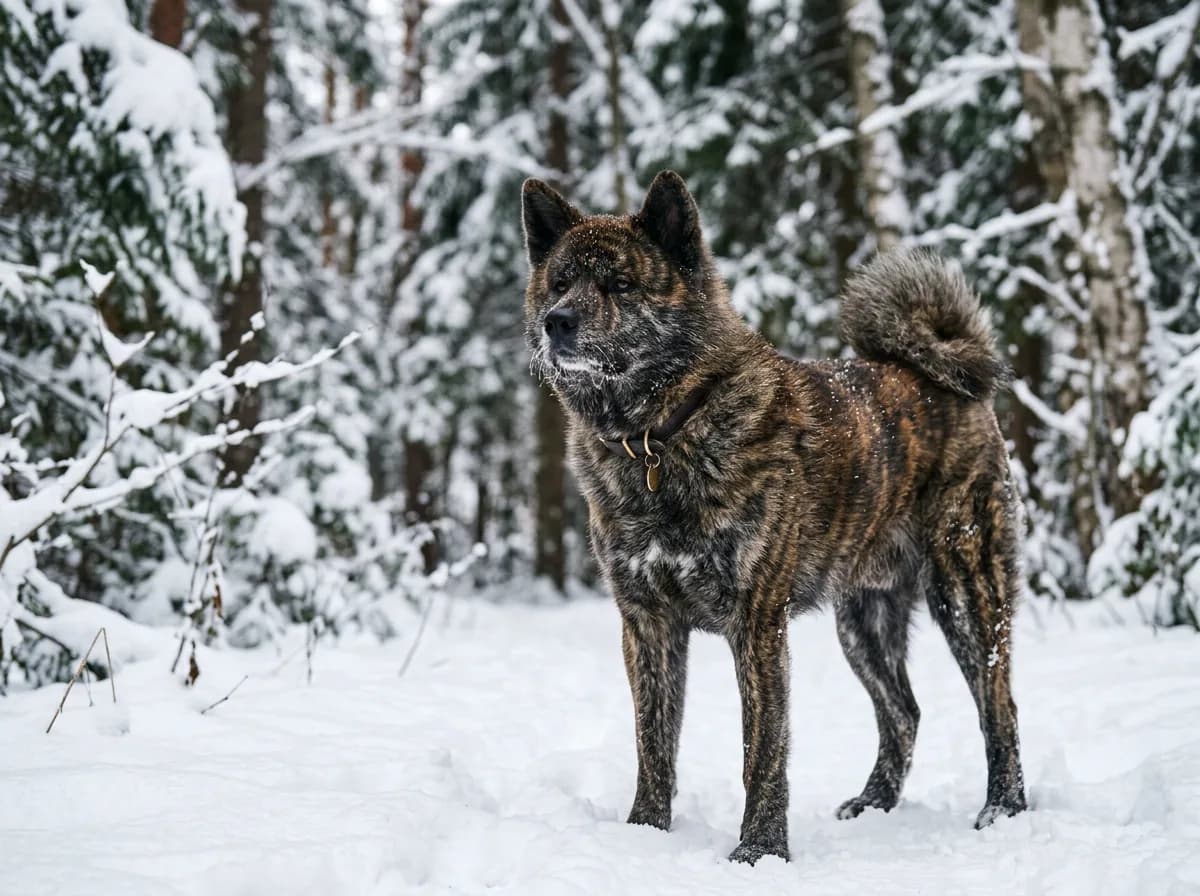
There are two types worth knowing. The Japanese Akita Inu is leaner, more fox-like, and comes in a restricted palette (red, brindle, white, and sesame). The American Akita is larger, more bear-like, and accepts nearly any color, including the black masks the Japanese standard forbids. Both are guardians to the core: aloof with strangers, often dog-aggressive, and not a breed for a passive owner.
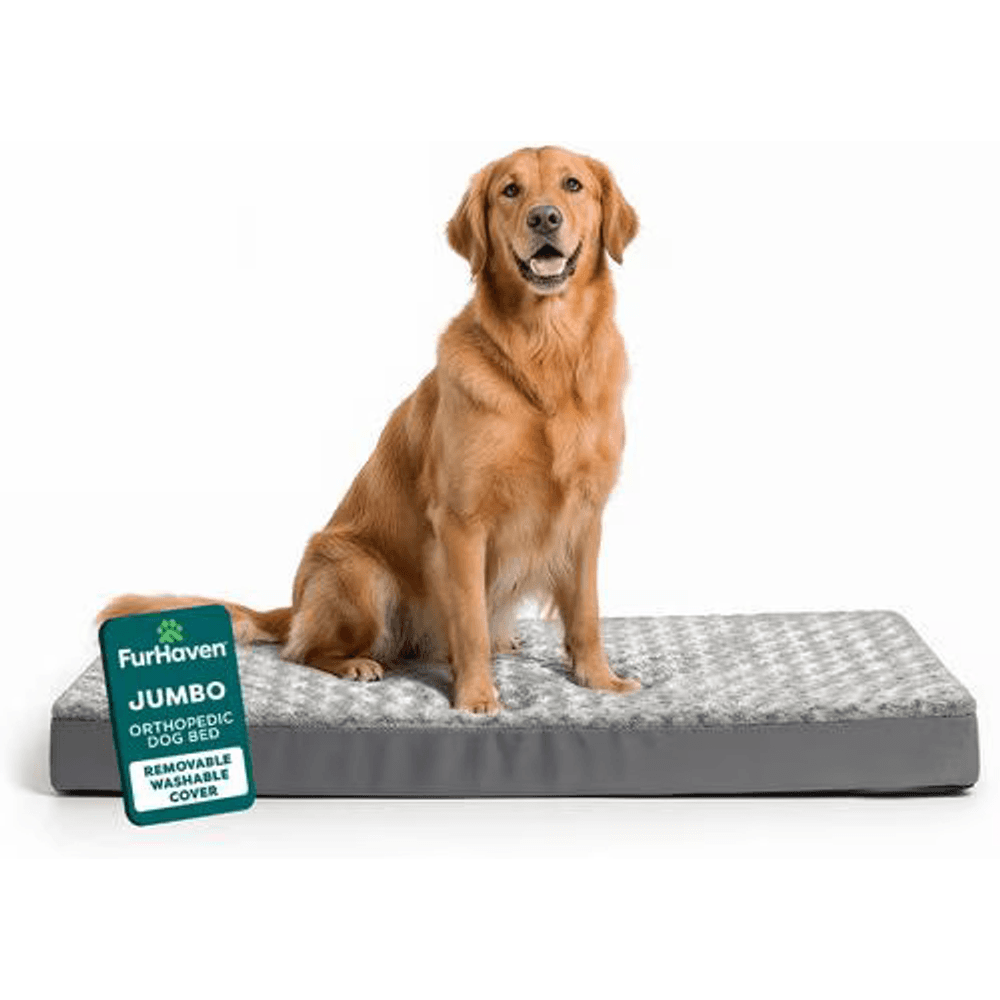
A plush orthopedic foam mattress that cushions aging joints and pressure points, giving a stiff or trembling senior dog warm, supportive rest.
Petful may earn a commission when you click through to Chewy, at no extra cost to you.
Kai Ken
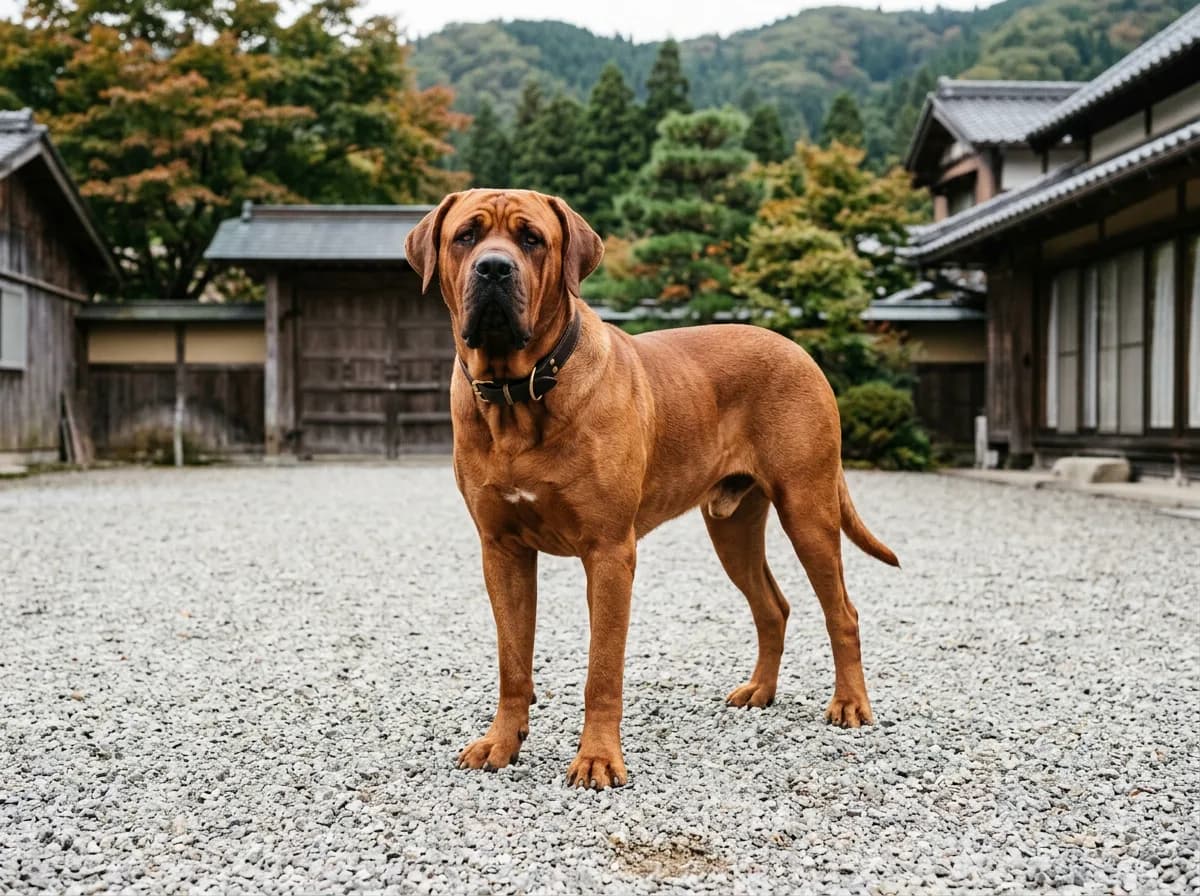
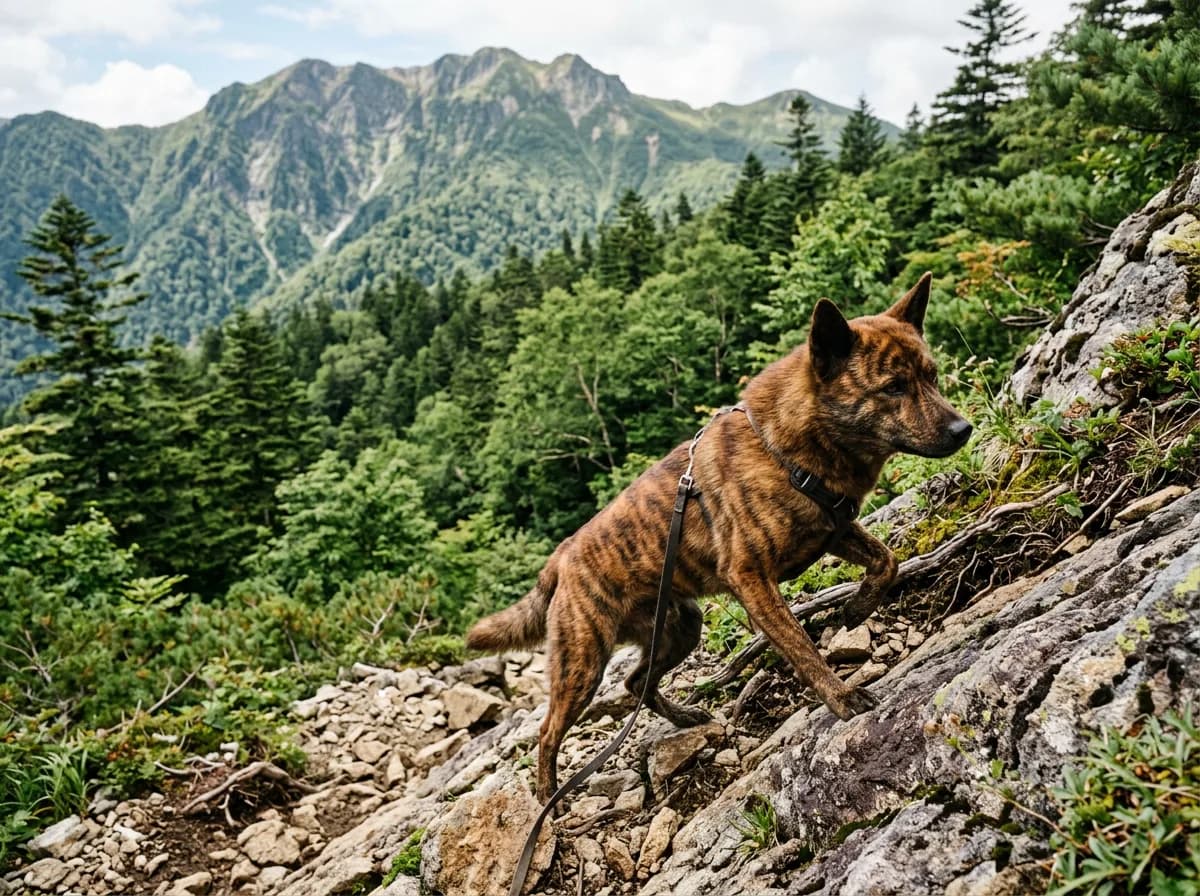
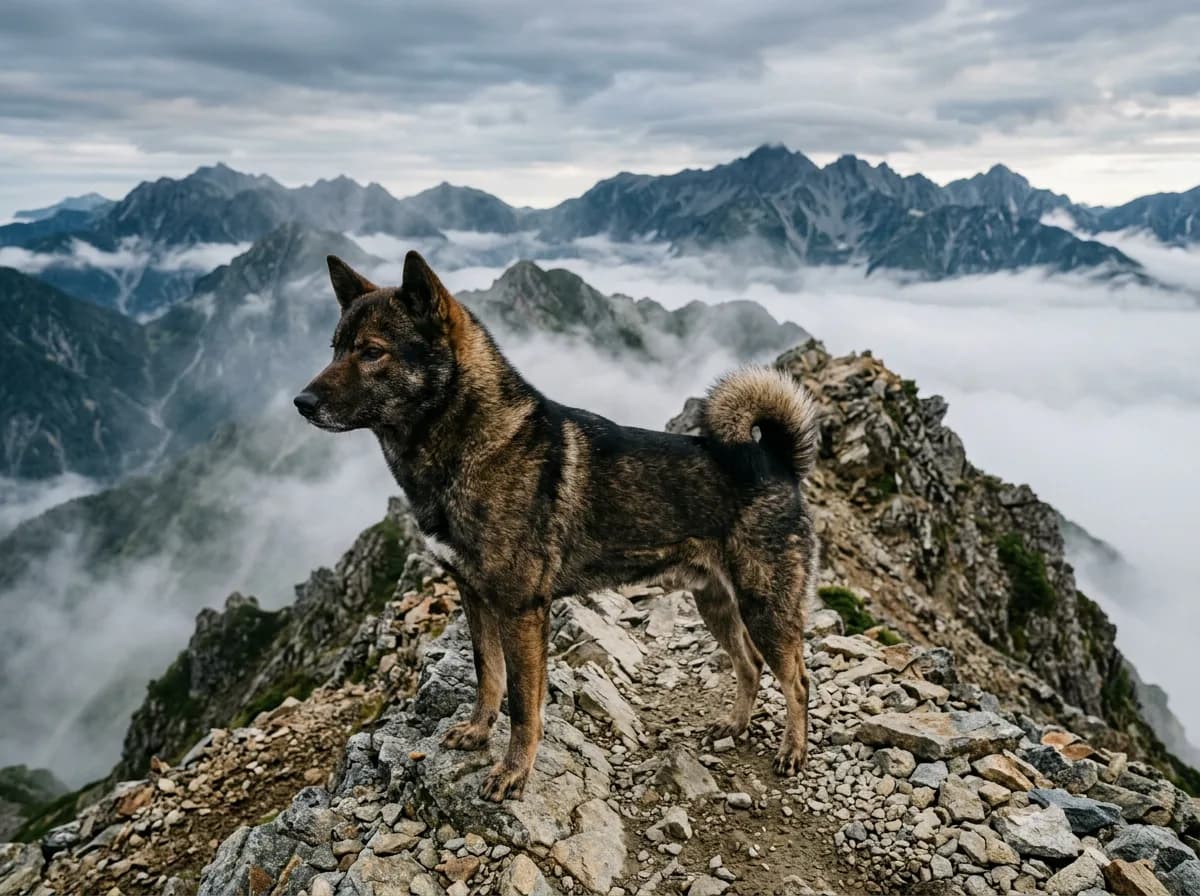
The Kai Ken is one of the rarest of the six, instantly recognizable by its brindle "tiger-stripe" coat that ranges from black-brindle (kuro-tora) to red-brindle (aka-tora). Developed in the isolated, mountainous Kai region (modern Yamanashi Prefecture), the Kai is a superb big-game hunter and an unusually agile climber, capable of scrambling up trees and rocky faces after quarry.
Temperament-wise, the Kai is devoted, intelligent, and less aggressive than some of its cousins, with a reputation for bonding hard to one family. Because the region's terrain kept the breed isolated for so long, the Kai stayed remarkably pure and remains genuinely rare, even inside Japan.
- Size: 17 to 22 inches, 25 to 55 pounds
- Coat: brindle, always; puppies are often born solid and develop stripes with age
- Best for: active owners who want a rare, loyal hunting dog and can meet its exercise needs
Kishu Ken
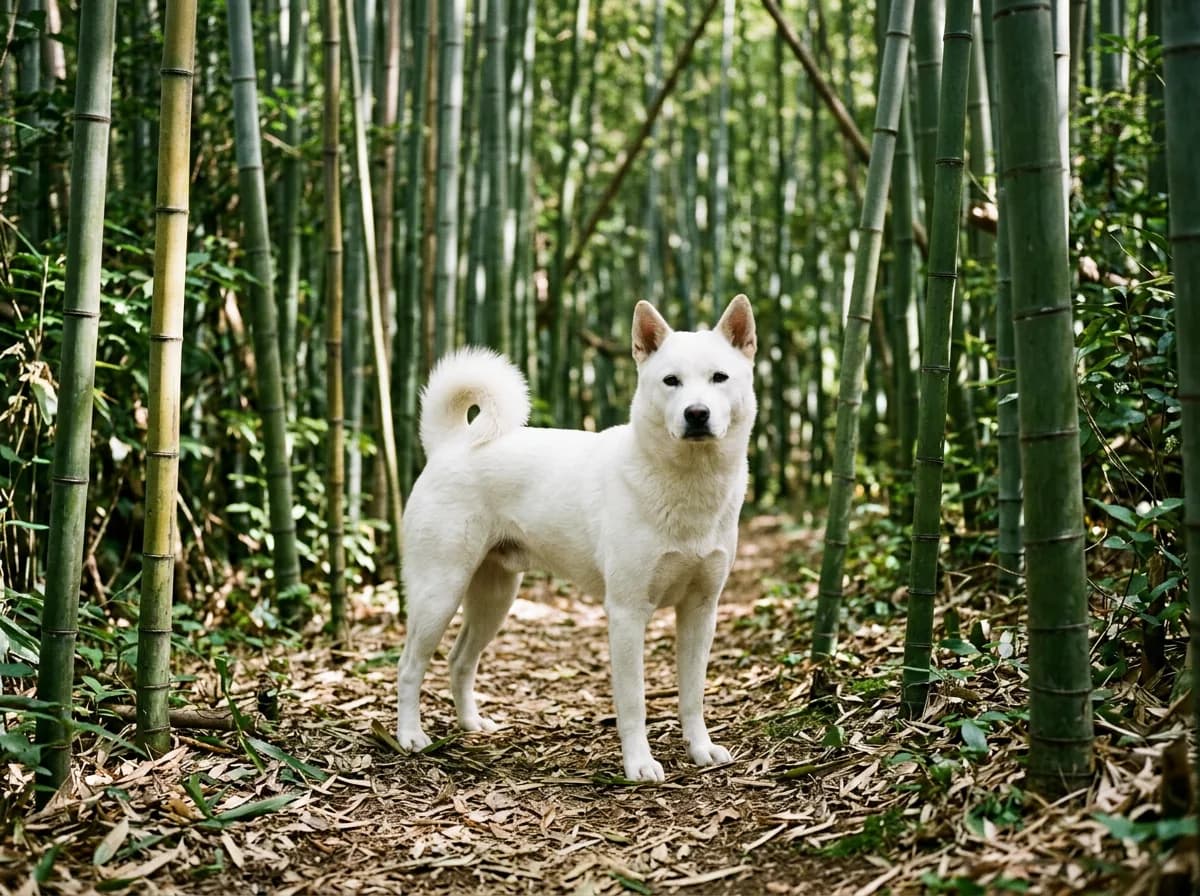
The Kishu Ken is a strong, spirited hunting dog from the mountainous Kishu region (modern Wakayama and Mie prefectures), historically used to hunt boar and deer. Most modern Kishu are a clean, solid white, though the breed also appears in red and sesame. That white coat was favored by hunters because it stood out clearly against the forest.
The Kishu is quieter and more reserved than a Shiba, known for a patient, almost stealthy hunting style: it will silently stalk and hold game rather than bark. With family it is affectionate and deeply loyal; with strangers and other animals it retains a strong prey drive. It is another native monument breed and, like the Kai, quite rare outside Japan.
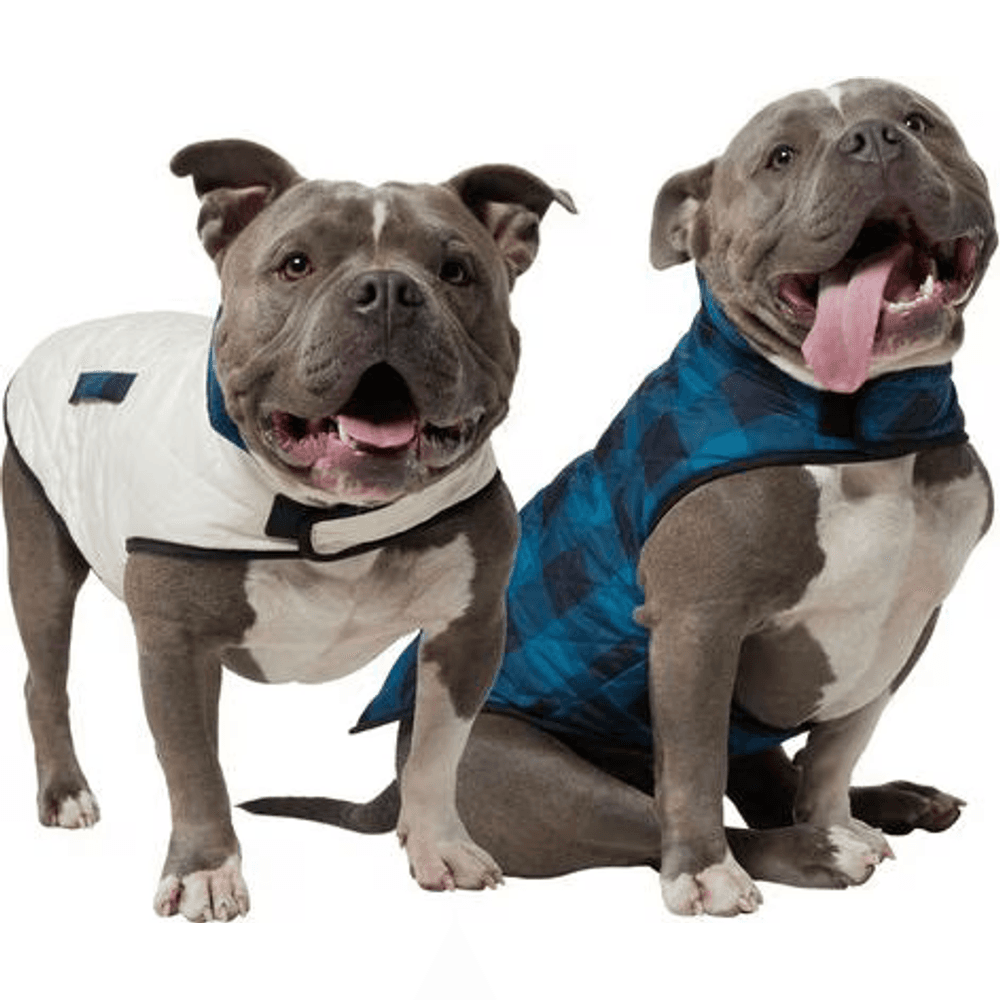
A lightweight, water-resistant insulated jacket that adds a warm layer for a dog that shivers in cold or wet weather. Reversible for two looks, with a leash opening and hook-and-loop closure for a quick, snug fit.
Petful may earn a commission when you click through to Chewy, at no extra cost to you.
Shikoku Ken
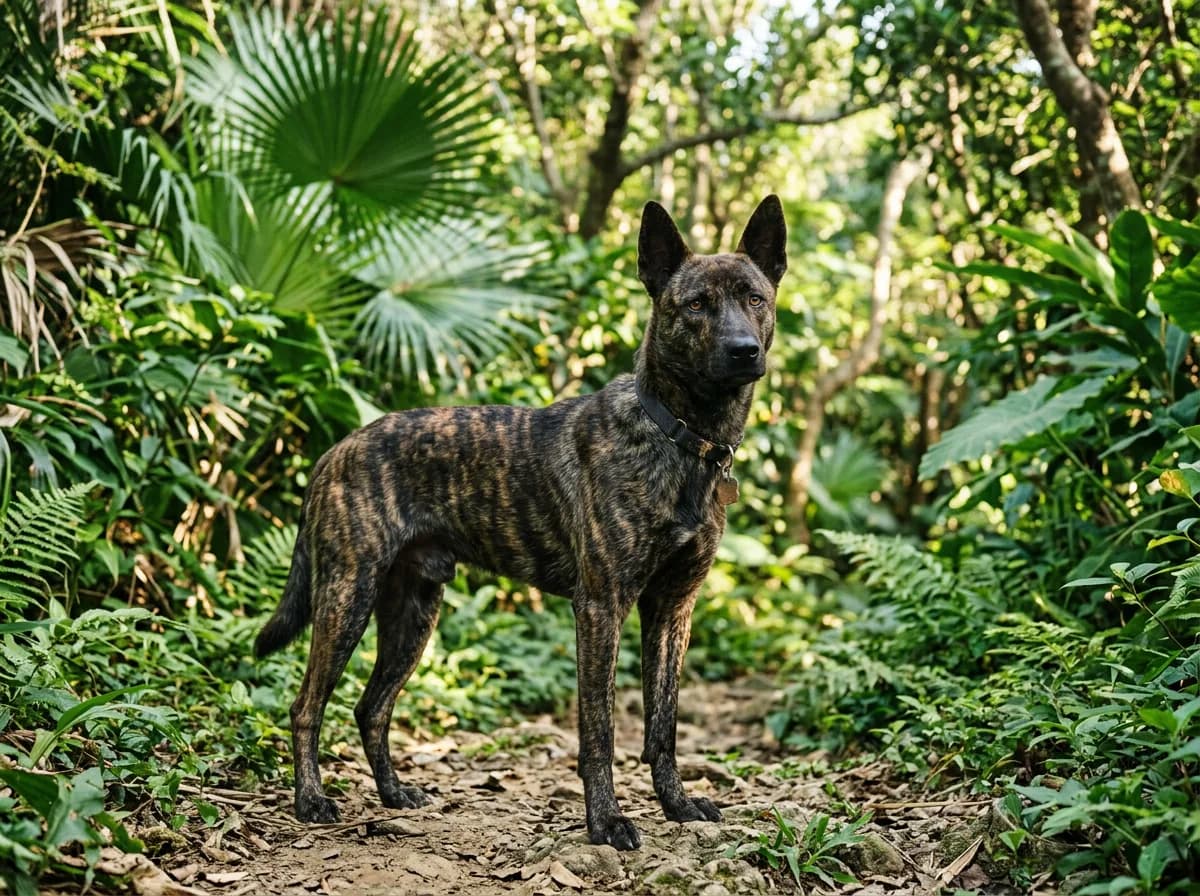
The Shikoku Ken (sometimes called the Kochi-ken) hails from the rugged mountains of Shikoku Island, where it was bred to hunt boar across steep, difficult terrain. Of all the native breeds, the Shikoku looks the most wolf-like: lean, hard-muscled, with a sesame coat and an intense, focused expression.
The Shikoku is prized for its endurance, courage, and trainability, and it tends to be a touch more biddable than the average Shiba while keeping the classic Nihon Ken independence. It bonds closely with its family and is energetic enough to need a real job or serious daily exercise. Like the others, it is rare and government-protected.
Hokkaido
The Hokkaido (also called the Ainu-ken or Ainu dog) is the breed of Japan's northernmost island, developed by the indigenous Ainu people as a working and big-game hunting dog capable of taking on bears. Bred for one of Japan's harshest climates, the Hokkaido has an especially dense double coat, small triangular ears set to shed heat and cold, and remarkable stamina.
Beyond toughness, the Hokkaido is known for intelligence and problem-solving, plus an almost legendary sense of direction. It is devoted, brave, and alert, an outstanding guardian that stays deeply attached to its family. Some Hokkaido also carry a spotted tongue, a trait shared with a few other ancient breeds.
| Breed | Size | Coat / Color |
|---|---|---|
| Shiba Inu | Small, 17 to 23 lb | Red, black and tan, sesame, cream |
| Akita | Large, 70 to 130 lb | Red, brindle, white, sesame |
| Kai Ken | Medium, 25 to 55 lb | Brindle (tiger-stripe) |
| Kishu Ken | Medium, 30 to 60 lb | Usually solid white |
| Shikoku Ken | Medium, 35 to 55 lb | Sesame, red, black and tan |
| Hokkaido | Medium, 45 to 65 lb | White, red, brindle, sesame, black |
Other Notable Japanese Dog Breeds
Beyond the protected six, Japan produced several other distinctive breeds. Some are ancient; others were refined more recently by crossing Japanese and imported dogs. If you are exploring how coat and color vary within a single breed, our guide to Rhodesian Ridgeback colors shows how much variation one breed can hold, and the same principle applies across the Japanese group.
Japanese Spitz
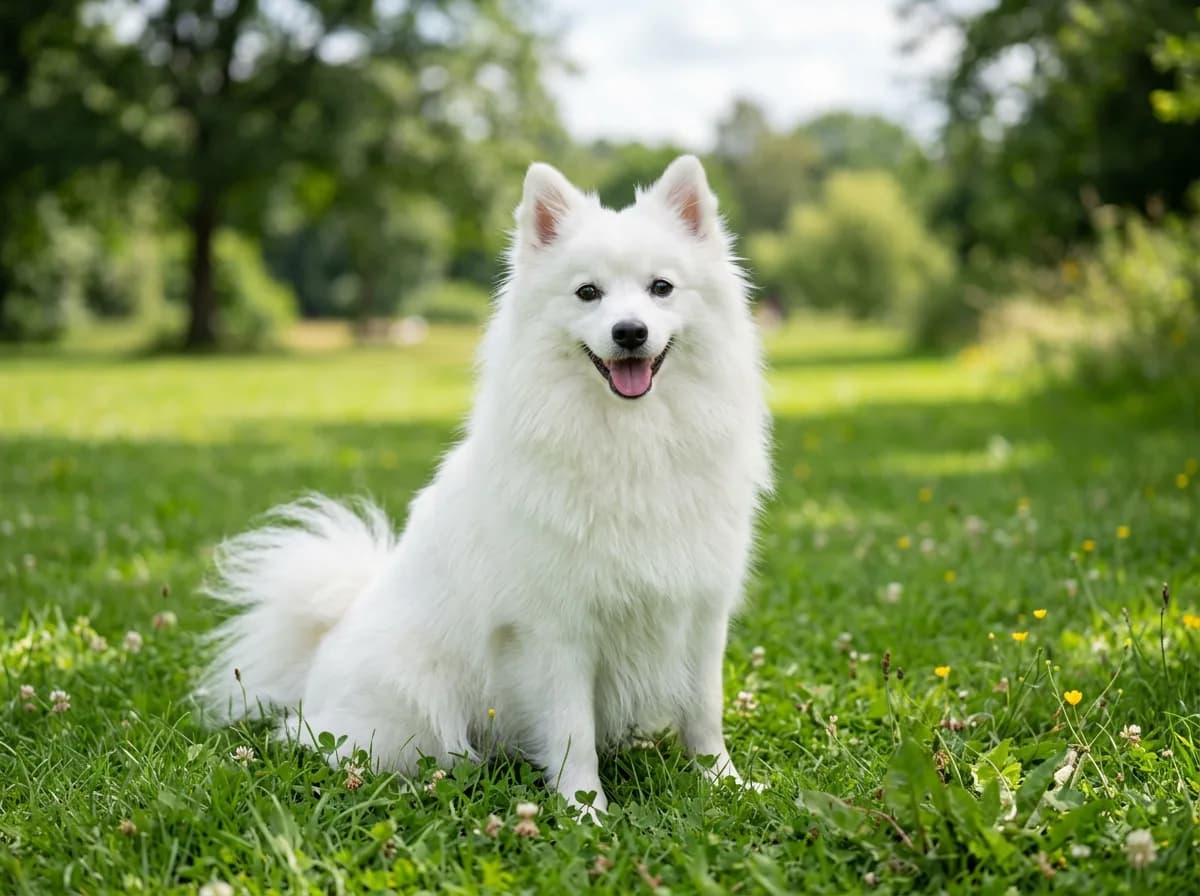
The Japanese Spitz is the cloud-white charmer of the group: a small companion dog with a brilliant white coat, a plumed tail curled over the back, and a permanently cheerful expression. Developed in Japan in the early-to-mid 20th century from various imported white spitz dogs, it was recognized by the Japan Kennel Club in 1948.
Unlike the aloof Nihon Ken, the Japanese Spitz is an affectionate, people-focused family dog. It is bright, playful, and loyal, generally good with children, and surprisingly low-odor for such a fluffy dog. That gorgeous coat, despite its volume, is fairly easy to maintain because dirt tends to fall away as it dries.

Petful may earn a commission when you click through to Chewy, at no extra cost to you.
Japanese Chin
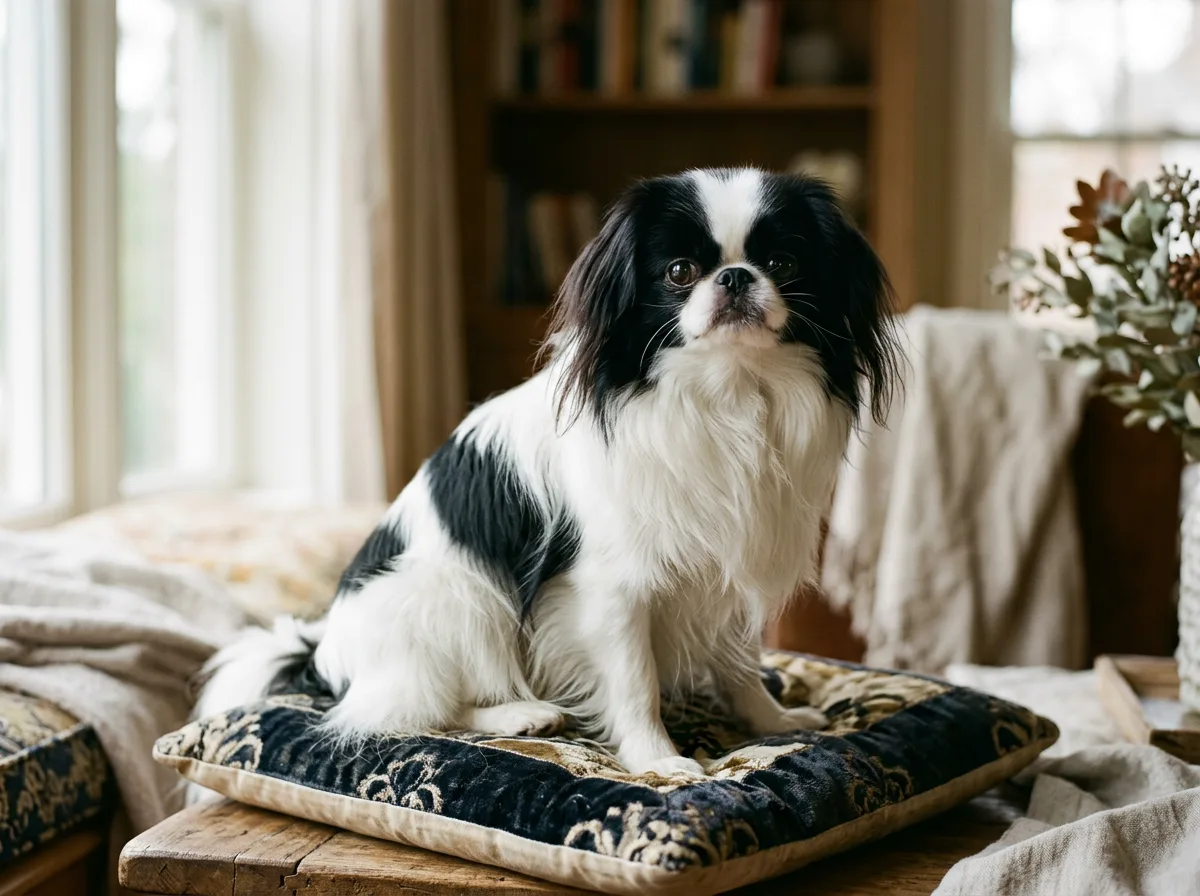
The Japanese Chin is the aristocrat: a tiny, silky-coated toy breed that spent centuries as the companion of Japanese nobility and royalty. Elegant and cat-like, the Chin is known for grooming with its paws, perching on the backs of furniture, and moving with a light, dainty gait.
Affectionate, sensitive, and charming, the Chin thrives as a lap and companion dog and adapts beautifully to apartment life. Its big personality comes in a small, low-exercise package. One important note: the Chin is a brachycephalic (flat-faced) breed, so it can struggle in heat and with breathing, a health consideration we cover below.
Tosa Inu
The Tosa Inu is Japan's giant: a mastiff-type dog developed in the Tosa region (modern Kochi Prefecture) in the 19th century by crossing native Shikoku dogs with imported Western breeds like the Mastiff, Great Dane, Bulldog, and St. Bernard. It was bred for the Japanese tradition of dog sumo (a ritualized, rule-bound form of dog fighting), where a good Tosa was expected to fight in near silence.
Today's Tosa is often a calm, dignified, and devoted family guardian. But its history and power mean the breed is legally restricted or banned outright in several countries and jurisdictions, including the United Kingdom and Australia. If you are drawn to a Tosa, check your local laws first: ownership may be illegal or heavily regulated where you live.
- Because of its fighting-dog history and size, the Tosa is prohibited or subject to special controls in the UK, Australia, and other countries and regions. Never acquire one without confirming it is legal to own where you live, and expect insurance and housing complications even where it is allowed.
Japanese Terrier
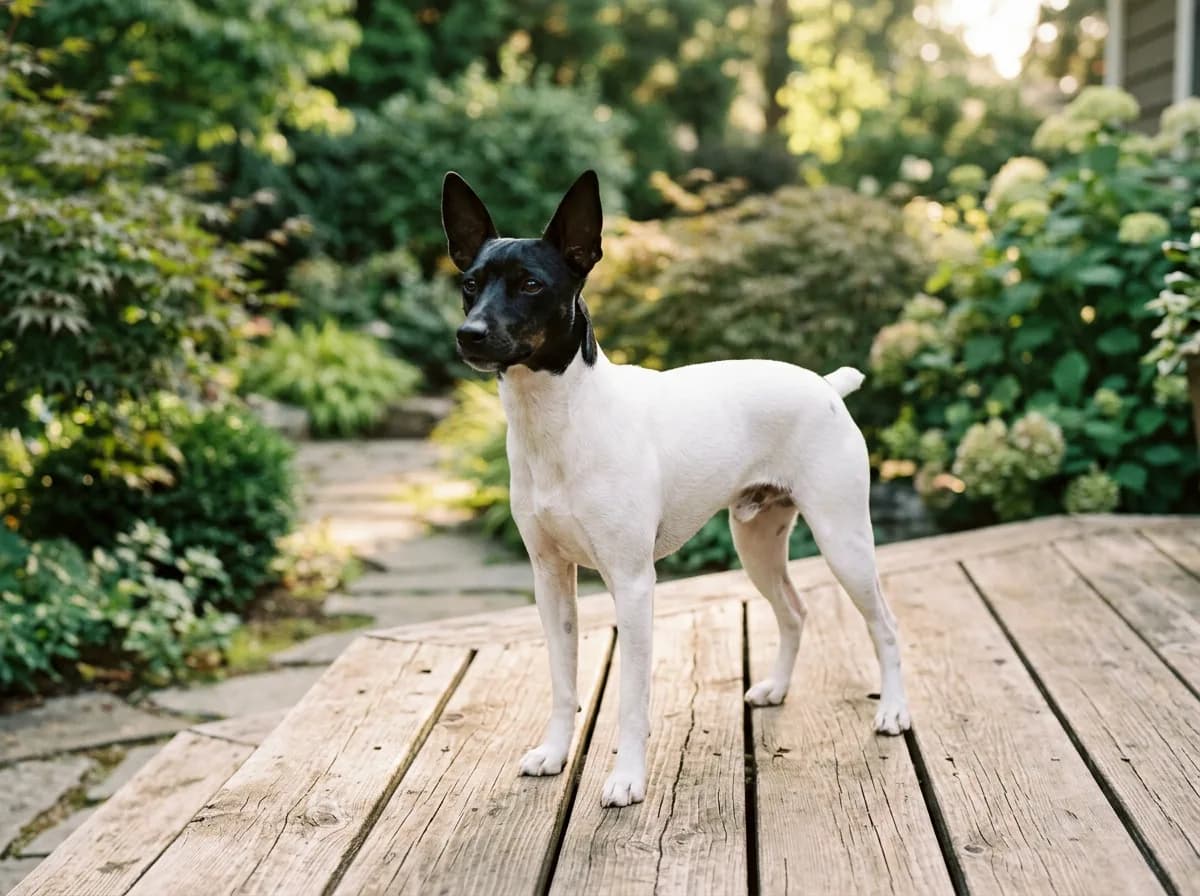
The Japanese Terrier (Nihon Teria) is a rare small breed, thought to descend from smooth fox terriers brought to Nagasaki by Dutch traders, later refined in Japan. It sports a distinctive tricolor pattern, most often a black or tan head over a smooth white body, and a fine, short coat.
Lively, affectionate, and intelligent, the Japanese Terrier makes a spirited companion. It is one of the country's few non-spitz native breeds and remains genuinely uncommon, even in Japan.

Petful may earn a commission when you click through to Chewy, at no extra cost to you.
Ryukyu Inu
The Ryukyu Inu is a critically rare breed native to Okinawa (the Ryukyu Islands), historically used to hunt wild boar in the islands' subtropical forests. Lean and athletic, often brindle, and sometimes carrying a rear dewclaw, the Ryukyu is not one of the protected six but is an important part of Japan's canine heritage. Only a few hundred are thought to remain, and dedicated efforts are underway to preserve the breed.
Choosing a Japanese Dog Breed: What to Know First
Japanese breeds are stunning, but most of them are primitive, independent, high-shedding working dogs, not easy starter pets. Before you commit, weigh a few realities honestly.
Independence is the norm. With the exception of the companion breeds (Japanese Spitz, Japanese Chin), these dogs think for themselves. Training rewards patience and consistency far more than repetition, and recall is often unreliable off-leash because the prey drive is real.
Coats shed. The double-coated spitz breeds "blow" their undercoat heavily, usually twice a year, and shed year-round. Plan on regular brushing and a good vacuum.
Exercise and stimulation matter. Hunting breeds like the Kai, Shikoku, Kishu, and Hokkaido need real daily exercise and mental work. A bored Nihon Ken finds its own entertainment, and you will not like the results.
Rarity is a hurdle. Several of these breeds are hard to find outside Japan, with long waitlists and import logistics. Always work with an ethical, health-testing breeder or a breed-specific rescue.
- 1Companion breeds (Japanese Spitz, Japanese Chin) suit first-time and apartment owners best
- 2The native six and the Tosa are strong-willed working dogs that need experienced handling
- 3Double coats shed heavily, so budget time for grooming and a good vacuum
Health and Safety Notes for Japanese Breeds
A few health topics come up repeatedly with Japanese dogs and deserve straight talk before you choose one.
Brachycephalic breathing (Japanese Chin). The Chin's flat face makes it a brachycephalic breed, a group that can suffer from Brachycephalic Obstructive Airway Syndrome (BOAS): narrowed nostrils and airways that cause noisy breathing, exercise and heat intolerance, and in serious cases collapse. The American College of Veterinary Surgeons notes that BOAS is a progressive, potentially life-limiting condition in flat-faced dogs, so keep a Chin cool, lean, and never over-exercised in heat, and see a vet promptly for labored or noisy breathing.
Coat-color genetics and merle. Unlike some Western breeds, the traditional Japanese breeds do not carry the merle coat pattern, which is the good news, because the merle gene is linked to serious problems. When two merle dogs are bred together, the resulting "double merle" puppies have a high risk of deafness and blindness, a well-documented outcome the veterinary literature and organizations like the AKC warn about. If a seller offers a "merle Shiba" or "merle Akita," treat it as a major red flag for crossbreeding or worse.
Dilution and skin. Some Japanese breeds appear in "blue" (diluted) shades. Color dilution alopecia is a genetic skin condition tied to the dilute (d) gene that can cause hair thinning, loss, and recurrent skin issues in diluted-color dogs. It is not a reason to avoid a well-bred dog, but it is a reason to buy from a breeder who understands their lines rather than one marketing an unusual color for a premium.
Hip and eye screening. Like most medium and large breeds, several Japanese dogs benefit from hip evaluation and eye screening. Ask any breeder for documented health testing on the parents.
- Breed-average health notes are a starting point, not a diagnosis. For anything specific to your dog, especially breathing, skin, or mobility concerns, your own veterinarian who has examined the animal is the right source.
For more dog-care guides across breeds, browse our dog breeds library and the wider dogs section on Petful.
Frequently Asked Questions About Japanese Dog Breeds
Grooming and Coat Care for Japanese Breeds
Most Japanese breeds wear a true double coat: a soft, insulating undercoat beneath a harsher, weather-resistant layer of guard hairs. That coat regulates temperature in both heat and cold, which leads to the single most important grooming rule for these dogs.
- Shaving a Shiba, Akita, or other double-coated breed strips its natural insulation and can cause patchy, textured regrowth that never fully recovers. Brush the coat out instead of cutting it, even in summer, and let it do the temperature regulation it evolved for.
During the twice-yearly "coat blow," the undercoat sheds in clumps, and daily brushing with an undercoat rake or slicker keeps it under control. The rest of the year, a weekly brush-out is usually enough. A light mist of water or leave-in spray before brushing helps protect the coat from breakage during heavy sheds. Bathe only every couple of months, because over-bathing strips the coat's protective oils. White-coated breeds like the Kishu Ken and Japanese Spitz stay surprisingly clean, since dirt tends to fall away as the coat dries. Round out the routine with regular nail trims, ear checks, and tooth brushing. The flat-faced Japanese Chin needs a gentler approach: wipe the face and around the eyes often, and keep any skin folds clean and dry.
Training an Independent Japanese Dog
The fastest way to fail with a Nihon Ken is to train it like a retriever. These dogs were bred to hunt and think for themselves, so drilling the same command over and over bores them, and harsh corrections tend to backfire on a proud, sensitive dog by eroding the trust you need most.
What works is short, upbeat sessions with high-value rewards, taught before the dog decides it has better things to do. Front-load socialization during the critical window of roughly 3 to 16 weeks, exposing the puppy to people, dogs, sounds, and handling while its brain is most open. Build a strong recall early, but never fully trust it off-leash near wildlife, because the prey drive is real and can override any cue. Channel that drive into games like a flirt pole or scent work instead of fighting it. Crate training and a securely fenced yard are not optional either, since a determined Japanese breed will exploit a gap in either one.
Know when to call a professional. Early same-sex dog aggression in an Akita, serious resource guarding, or reactivity that is escalating are all reasons to bring in a qualified trainer or veterinary behaviorist sooner rather than later. And when a Shiba throws a dramatic "scream" to avoid a nail trim or a bath, stay calm and follow through, because giving in simply teaches the dog that the tantrum works.
Rare and Lesser-Known Japanese Dogs
A few Japanese dogs sit outside the familiar lineup and are worth knowing. The Sakhalin Husky, known in Japan as the Karafuto-Ken, is a powerful spitz-type sled dog once used across the cold northern islands. It earned a permanent place in Japanese history in 1958, when a research team was evacuated from an Antarctic base and two of the dogs left behind, Taro and Jiro, were found alive nearly a year later. Despite that fame, the breed is now critically rare and close to vanishing.
It is also worth clearing up a common point of confusion: the American Akita and the Japanese Akita Inu are increasingly treated as separate types rather than one breed, differing in size, head shape, and permitted colors. Preservation efforts, from the Nihon Ken Hozonkai to dedicated regional clubs, are what keep the rarest of these dogs (the Sakhalin Husky, the Ryukyu Inu, and the purest native bloodlines) from being lost entirely. They may never be common outside Japan, but they round out the full picture of the country's remarkable canine heritage.
Related on Petful
- The 7 Types of Dogs: Breed Groups Explained
- Siberian Husky: Full Breed Profile and Care Guide
- The Best Medium Sized Dog Breeds by Weight
- Hound Dog Breeds: The Complete List With Photos
The six native Japanese dog breeds, collectively called the Nihon Ken and protected by the Japanese government as natural monuments, are the Akita, Shiba Inu, Kai Ken, Kishu Ken, Shikoku Ken, and Hokkaido. All six are ancient spitz-type dogs with curled tails, pricked ears, and thick double coats, historically bred for hunting and guarding.
By popularity, the five most sought-after Japanese breeds are the Shiba Inu (the most popular by far), the Akita, the fluffy white Japanese Spitz, the aristocratic Japanese Chin, and the tiger-striped Kai Ken. The Shiba and Akita dominate outside Japan, while the Spitz and Chin appeal to owners wanting a smaller companion dog.
Among Japanese breeds, the Akita is the classic symbol of devotion. Hachiko, an Akita, famously waited at a Tokyo train station every day for nine years after his owner died. Shiba Inu, Hokkaido, and Kai Ken also bond intensely with their families, though most Japanese breeds show loyalty through steady presence and guarding rather than constant cuddling. No single breed loves more than another, but Japanese dogs are known for deep, lifelong attachment to their person.
Among Japanese breeds, the best fits for an older adult are the smaller companion dogs: the Japanese Spitz and the Japanese Chin. Both are affectionate, adapt well to apartments, and need only modest exercise. The high-energy hunting breeds like the Kai, Shikoku, and Akita are generally too strong, strong-willed, and demanding for a calmer household. Always match the individual dog's energy to the owner's lifestyle.
The Shiba Inu is the most popular Japanese dog both in Japan and worldwide. Its fox-like face, compact size, manageable exercise needs, and internet fame (it is the face of the "doge" meme) have made it the breed most people picture when they think of a Japanese dog. The Akita is a close second in name recognition thanks to the Hachiko story.
Among Japanese breeds, the rare native dogs command the highest prices. A well-bred Japanese Akita Inu imported from Japan, or a rare Kai Ken, Kishu Ken, or Shikoku Ken from a reputable breeder, can run into the thousands and, with import and pedigree costs, approach or exceed $10,000. Rarity, import logistics, and health-tested bloodlines are what push the price that high, not the breed being inherently "worth" more as a pet.
Final Thoughts on Japanese Dog Breeds
Japan's dogs are living history: ancient, dignified, and shaped by centuries of purpose. The six native Nihon Ken (Akita, Shiba, Kai, Kishu, Shikoku, and Hokkaido) reward owners who respect an independent, working temperament, while the Japanese Spitz and Japanese Chin offer the same striking beauty in a gentler companion package. Whichever face captures you, choose an ethical breeder or rescue, learn the breed's real needs, and go in clear-eyed about the shedding, the stubbornness, and the deep, loyal bond that makes these dogs worth every bit of the effort.

Coreen Saito is a pet writer and longtime shelter volunteer with more than a decade in animal rescue. She covers cat behavior, breed care, and the small, ordinary science of sharing a life with companion animals, with a particular focus on honest takes about the products and decisions that actually matter. At home in Arizona, she's outranked by Mac (a dog with the loudest opinion in the house), Rebel (a cat who governs by quiet authority), and Meri (an orange tabby who runs the late shift and the laundry basket). She writes about all three, plus the rescues that keep coming through her life, at LifeWithMinty.com.
Sign up for expert-backed reviews and safety alerts all in one place.