Dalmatian Puppies: Care, Costs, Hearing Tests and Training
Before bringing home a Dalmatian puppy, check hearing records, compare breeder or rescue information, and plan meals, toilet breaks, training and an active dog's daily care.
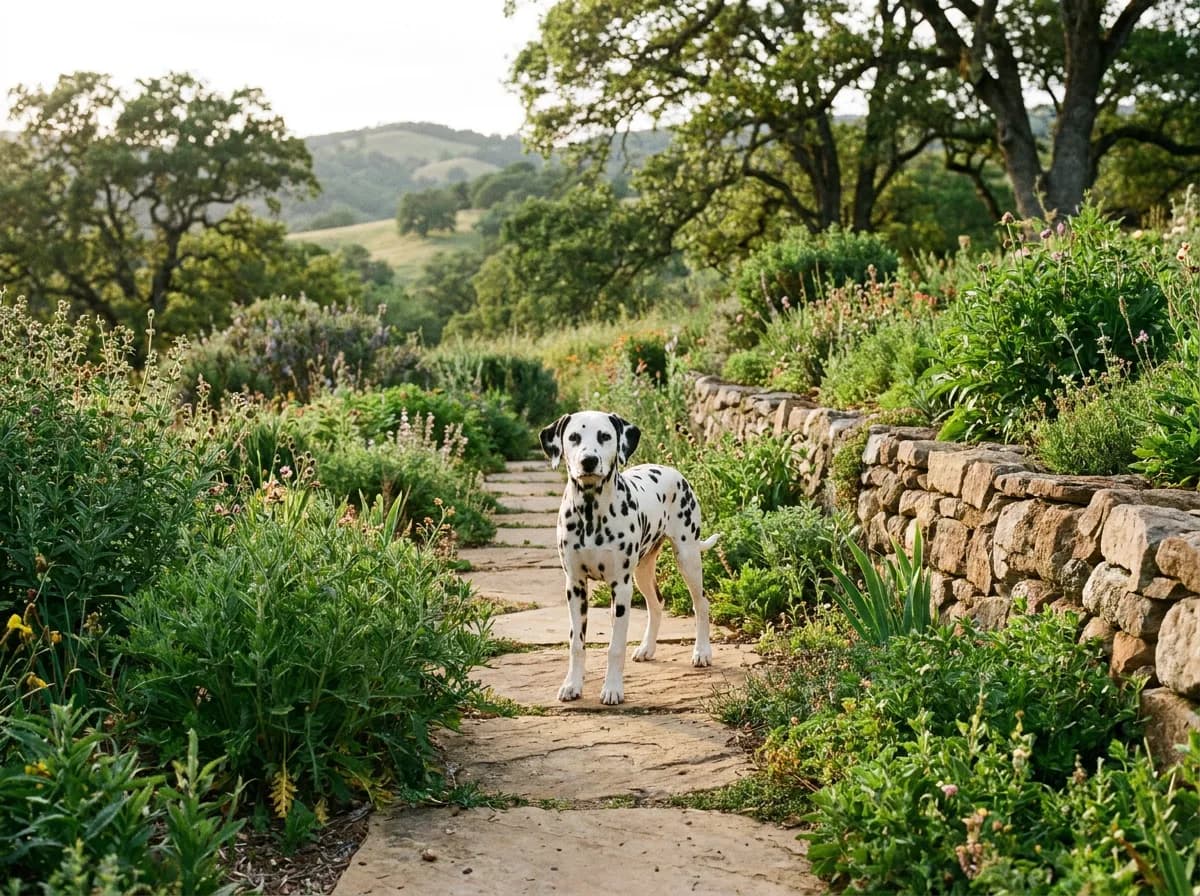
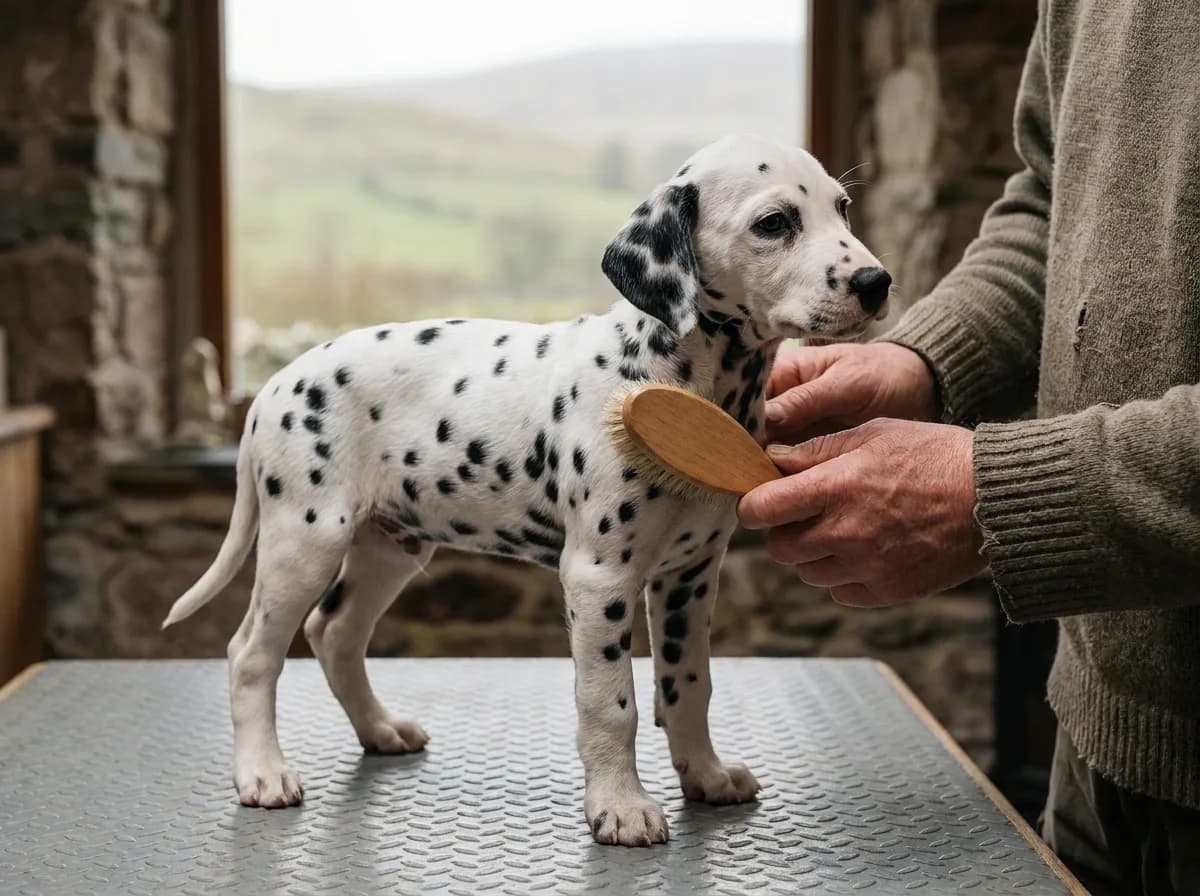
The puppy's short white coat and developing spotted appearance are visible in the full-body view.
Petful is reader supported. As an affiliate of platforms like Amazon and Chewy, we may earn a commission when you buy through links on this page. There is no extra cost to you.
Dalmatian puppies need more than an owner who loves their spots. Before bringing one home, ask for the individual puppy's documented hearing result, review the parents' health screening, and plan for frequent toilet breaks, patient training and an energetic adult dog. A friendly puppy responding to your voice can still have hearing loss in one ear.
The most useful preparation is practical: know which records should come with your puppy, who will provide daytime care, and how you will handle meals, rest and exercise. Here is how to make those decisions without letting an attractive photograph or a promise of a rare coat do the choosing for you.

Sign up for expert-backed reviews and safety alerts all in one place.
Before you bring home a Dalmatian puppy
A Dalmatian puppy can suit a household that enjoys active dogs and has time to teach one how to live indoors. The breed's adult stamina does not mean a puppy should be exercised until exhausted. Early care depends on a balance of short activities, undisturbed sleep and repeated chances to succeed at simple routines.
- 1Request the individual puppy's BAER hearing result for each ear.
- 2Look up actual parent screening results, not only a CHIC number.
- 3Arrange a daytime care routine before choosing a collection date.
- 4Choose growth-appropriate food with veterinary guidance on Dalmatian urinary risk.
Think through an ordinary workday before contacting a breeder. Who will notice that the puppy has woken and needs to go outside? Where can it rest while someone cooks or joins a meeting? How will you give an older pet space? Agree on those details with everyone in the home so the puppy does not encounter different rules from each person.
- Select a quiet sleeping area and an easy route to the toilet spot.
- Put medicines, cleaners, shoes, cables and small objects out of reach.
- Arrange a veterinary appointment and save the clinic's urgent-care instructions.
- Identify a suitable puppy class or qualified reward-based trainer.
- Keep the first few days relatively quiet instead of inviting everyone to meet the puppy at once.
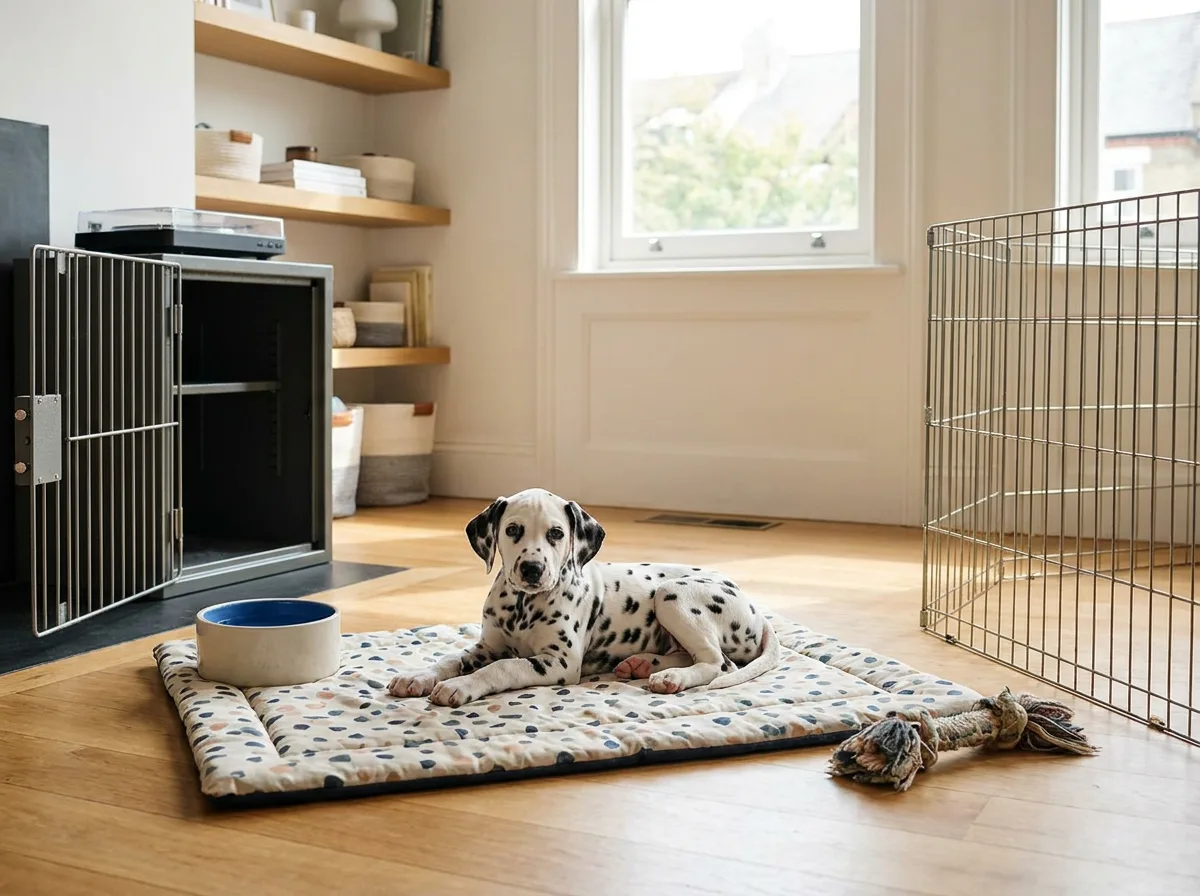
A secure pen can help manage the space while you supervise nearby. A MidWest exercise pen is one option, but check the selected height, spacing and stability against your individual puppy. A pen that an athletic puppy can climb, move or catch itself on is not a safe containment solution. It also does not replace toilet breaks or human company.

Petful may earn a commission when you click through to Chewy, at no extra cost to you.
What newborn Dalmatian puppies look like
Dalmatian puppies usually begin life with white coats and develop their familiar spots afterward. Solid patches can be present at birth, so an entirely white newborn is not the only possible appearance. As the AKC's explanation of Dalmatian spots describes, patches and the individual spots that develop later are different markings.

Photographs taken at different ages can therefore look surprisingly different. Ask for dated pictures or a video if you are following a puppy's development. Spot placement is useful for recognizing an individual, but it does not tell you whether the puppy hears normally, has had appropriate social experiences or will suit your household.
The standard recognizes black spots and liver, or brown, spots. Coat color, coat length and ancestry are separate matters. Cute puppy pictures labeled blue, lemon, miniature or especially rare should prompt questions about the actual dog and its records, rather than an assumption that a marketing label describes a separate recognized breed.
Finding Dalmatian puppies through a breeder or rescue
Start with the Dalmatian Club of America's breeder and rescue resources. A club listing is a place to begin checking a source, rather than a guarantee about a particular puppy. Ask about the dogs, see the environment or a meaningful live video visit, and read the contract before sending a deposit.
A responsible conversation should include your household and schedule as well as the puppy's appearance. Ask why the pairing was chosen, how the litter is being socialized, how temperament is assessed, and what support or return arrangement exists if the placement fails. A seller who will discuss only color, price and shipping has left the important questions unanswered.
Request these items before committing:
- Registered names or other reliable identities for both parents, so screening results can be checked.
- The puppy's own hearing report, veterinary records and identifying information.
- A written description of vaccinations, parasite care and any known health or behavioral concerns.
- The current food, feeding schedule and toilet routine.
- The purchase or adoption terms, including what happens if a problem emerges.
For a rescue puppy, some family history may be unavailable. That uncertainty should be stated plainly. Ask what the rescue has observed in foster care, which tests were performed, and which follow-up checks remain your responsibility. An adult or adolescent in a foster home may also be worth considering if your schedule cannot support the demands of a young puppy.

Petful may earn a commission when you click through to Chewy, at no extra cost to you.
How much does a Dalmatian puppy cost?
There is no single national price that tells you what a Dalmatian puppy should cost. Published breeder examples provide a reference, not a valuation: Meadow Brook Dalmatians lists its usual puppy price as $2,000, while Countryside Dalmatians lists $2,500. Those are individual advertised prices checked in September 2026; they do not establish current litter availability or an average for the breed.
Compare what each quote includes. Hearing testing, parent screening, early veterinary care, identification and ongoing support are different from an attractive pedigree presentation. A higher price does not prove better health, and a low purchase price does not tell you the eventual cost of care. Adoption fees also vary by organization and by the support provided.
Build your budget around three separate amounts:
- The purchase or adoption fee and any travel required to bring the puppy home.
- Initial veterinary visits, essential equipment, training and any care needed while you work.
- Recurring food and preventive care, plus an emergency fund or insurance you have reviewed for coverage and exclusions.
Ask local providers for real quotes before finalizing that budget. Daytime care and training can matter more to a working household than buying premium accessories. If a seller asks a premium for long hair, a particular spot color or a claim of rarity, request the same health and temperament evidence you would require for any other Dalmatian.
Ask for the puppy's BAER hearing result
Some Dalmatians struggle with hearing loss or urinary problems, which is why documented screening deserves particular attention when choosing a puppy. A BAER hearing test measures the auditory system's response to sound and records each ear separately. It is more informative than clapping, calling or watching whether a puppy wakes: a puppy hearing in one ear may respond readily during those informal checks.
The Dalmatian Club of America's BAER guidance explains the test and links to testing resources. Its testing primer advises against testing before five weeks, with many breeders waiting until six weeks. Request the written result tied to the individual puppy, including the test date and findings for each ear. Have the testing clinician explain an uncertain result or the need for a repeat test.
| Document | What to check | What it cannot guarantee |
|---|---|---|
| Puppy BAER report | Identity of the individual puppy, date and result for each ear | Perfect hearing throughout life |
| Parent screening records | Actual hip, hearing and other recorded results | A puppy free of every inherited problem |
| CHIC number | Which results are publicly recorded | That all screening results were normal |
| Urinary-risk DNA report | Tested dog's identity and reported genotype | That urinary symptoms have been diagnosed |
| Care history | Current food, veterinary care and daily care routine | An automatic fit with every household |
The DCA's CHIC requirements include hip evaluation, BAER testing and an elective thyroid or eye evaluation. Look up the actual results through the Orthopedic Foundation for Animals, or OFA. A CHIC number indicates that required tests were completed and made public; it does not require all results to be normal. Use the document checklist to assemble a handover record, not as a health guarantee.
For urinary risk, ask what is known about the puppy and its parents, including the report behind any LUA, or low-uric-acid, claim. UC Davis describes hyperuricosuria as elevated uric acid in the urine associated with an inherited SLC2A9 variant. Affected dogs are predisposed to urate stones, but a genetic result does not diagnose a current stone. Hearing results, urinary-risk genetics and a general veterinary examination answer different questions.
Petful may earn a commission when you click through to Chewy, at no extra cost to you.
Food, water and toilet breaks
Bring home enough of the puppy's current food to avoid an abrupt, unnecessary change during an already busy transition. Record the exact formula, amount and meal schedule. At the first veterinary visit, review whether that food is appropriate for growth and how the puppy's urinary-risk history affects the feeding plan.
A bag carrying a Dalmatian breed name is not automatically suitable for a growing puppy. For example, Royal Canin Dalmatian Adult dog food is labeled for Dalmatians over 15 months old. Check the exact formula and life-stage statement instead of choosing by the breed name alone. A therapeutic diet, adult-maintenance food or homemade recipe should not be selected solely because Dalmatians can develop urate stones; growth and medical needs must be considered together.
Make the routine easy to follow:
- Offer fresh water and clean the bowl regularly.
- Feed measured meals according to the individual plan you agree with the veterinarian.
- Take the puppy to its toilet area after waking, meals and active play, as well as whenever its behavior suggests a need.
- Reward toileting in the chosen place immediately and quietly.
- Clean accidents without frightening or punishing the puppy.
Do not restrict water to reduce accidents. Frequent outings are part of raising a puppy, and holding urine for long periods is not a training goal. Straining to urinate, repeated attempts that produce little urine, blood or obvious discomfort need veterinary attention. An inability to pass urine is urgent; a home test kit cannot safely resolve that situation.
A first-week routine for your Dalmatian puppy
The journey home and first night
Prepare the trip before collecting the puppy. Use a suitable, secured carrier or travel restraint rather than holding the puppy loose in a passenger's arms. Bring water, cleanup supplies and a familiar blanket if the source can provide one. Discuss a long journey with the breeder or rescue so toilet stops and the puppy's usual meals are planned instead of improvised in an unfamiliar place.
At home, show the puppy its toilet area first, then offer a quiet opportunity to explore the prepared room. Keep the sleeping area close enough that you can notice when it wakes and needs help. A newly separated puppy may find the first nights unsettling; respond calmly and distinguish a toilet need from an invitation to start a game.
- Keep lights and interaction low during overnight toilet trips.
- Return to the sleeping area after the puppy has had a chance to go.
- Note recurring wake times so the household can share care consistently.
- Adjust the arrangement if the puppy is persistently distressed or appears unwell.
The aim is a predictable, reassuring transition. Sleeping through the night is not a test a new puppy must pass immediately, and one difficult night does not tell you how it will cope as an adult.

A dual-ended toothbrush with a large and a small head to fit different mouth sizes and reach the back molars where plaque hides. Soft bristles angled for the gumline.
Petful may earn a commission when you click through to Chewy, at no extra cost to you.
Repeat a manageable daytime sequence
Use a repeating sequence rather than trying to fill every hour with activities: wake, toilet, a meal when scheduled, a little interaction, another toilet opportunity, then rest. Watch the puppy and adjust. A puppy that begins biting more, racing around or struggling to settle may need a quieter setting instead of another game.
Keep introductions short and give the puppy a choice to step away. Let it explore one prepared area before opening the whole house. Show children how to sit quietly, offer space and leave sleeping or eating dogs alone. Resident pets should have their own secure resting areas and supervised introductions suited to their individual temperaments.
A useful handover note for anyone sharing care includes:
- When the puppy last ate, drank and went to the toilet.
- Any medication or veterinary instruction, copied accurately.
- The cues and rewards you are currently using.
- The puppy's normal sleeping place and signs it needs a break.
- Anything unusual to pass on to the primary caregiver or veterinarian.
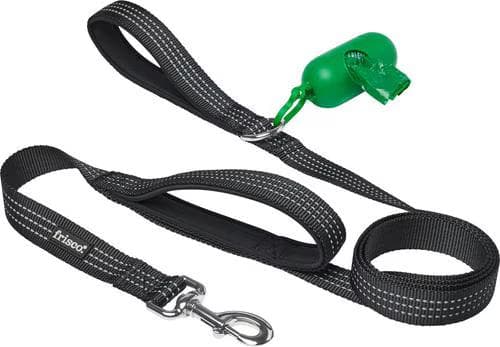
Keep lead practice brief and supervised. A Frisco leash with padded handles can be useful for ordinary walks when its clip and weight suit the puppy. Hold the lead while teaching the puppy to follow you; do not leave it attached where it could snag in a pen or during unsupervised rest.
Training, socialization and alone time
A Dalmatian can be hard to care for when the household cannot provide frequent breaks, patient training and daily activity. Those practical demands matter more than whether a puppy seems easy during a short visit. Use positive reinforcement to teach useful skills: responding to a cue, coming toward you, accepting gentle handling, settling on a mat and exchanging an object for a reward.
Practice in short sessions and make the desired choice easy. Repeatedly shouting a command while the puppy is distracted teaches little; reduce the distraction and reward a response the puppy can manage.
Socialization means building comfortable experiences, not forcing greetings. Let the puppy observe different people, surfaces and ordinary sounds at a distance it can handle. Coordinate safe exposure with your veterinarian's advice about vaccination and local disease risk. For a puppy with hearing loss, work with a qualified trainer on visual cues and safe management adapted to that dog.
- Begin with short absences that the puppy can manage calmly. Return before distress builds and increase difficulty gradually. Persistent distress needs an adjusted plan, not a longer test of endurance.
Can a Dalmatian be left alone? Eventually, many can learn to spend appropriate periods alone, but a young puppy needs frequent care and practice. Arrange help when your schedule exceeds what the puppy can manage. A fixed age at which all Dalmatians calm down does not exist; maturity, daily activity, learned settling skills and individual temperament all matter.
Puppy biting is another common training issue. Offer an appropriate toy, pause an interaction that has become too rough and protect time for rest. WebVet's guide to helping a puppy stop biting explains that specific problem. If biting is accompanied by fear, guarding or injuries, seek individualized help rather than dismissing it as a breed trait.
Exercise as your puppy grows
Growth-appropriate exercise gives a Dalmatian puppy short, varied opportunities to explore and play, with rest between them. Enthusiasm can exceed judgment, so let the puppy choose pauses and discuss suitable activity with your veterinarian as it grows. Adult running mileage is not a puppy goal, and a rigid age-based exercise formula is not a medical rule.
Mix physical activity with easy thinking tasks:
- Scatter a portion of the planned meal in a clean, safe area for supervised searching.
- Practice a few steps of loose-lead walking before changing direction.
- Invite the puppy onto ordinary safe surfaces at its own pace.
- Reward quiet watching and settling as well as active play.
Avoid forced distance running, repetitive high-impact jumps and activities that leave the puppy sore or reluctant to move. Heat, slippery footing and an uncontrolled larger playmate can change the risk even during a short outing. A puppy that stops, limps or seems unusually tired needs the activity stopped and its condition assessed.
Coat care, handling and useful supplies
The usual short Dalmatian coat still sheds. Begin with a soft brush or grooming mitt and very brief sessions, rewarding relaxed behavior. Touch a paw, lift a lip gently, then stop before the puppy becomes worried. These small experiences make later care more manageable than waiting until a full bath or nail trim is unavoidable.
For routine bathing, Earthbath's fragrance-free oatmeal and aloe shampoo is one available dog shampoo. Check the current label's age restrictions and directions before using it on a puppy, rinse thoroughly and avoid eyes and ears. It is a grooming product, not a treatment for unexplained itching, infection or coat loss.
Introduce dental care gently, starting with comfortable handling around the mouth. A Virbac C.E.T. dual-ended toothbrush offers two head sizes; choose the end that fits comfortably and use dog toothpaste as advised by your veterinarian. Do not force a sore mouth open or assume a product purchase means the puppy will immediately accept brushing.
Adult breed temperament and size
You are choosing an adult companion as well as a puppy. A full-grown Dalmatian is a substantial dog: the AKC lists a general adult range of 45–70 pounds and an average lifespan reference of 11–13 years. Those are breed guides, not predictions for a particular puppy. Activity, strength and training needs should fit your household.
The Dalmatian breed guide covers adult temperament, the firefighter connection and everyday ownership tradeoffs. An affectionate puppy may still find a crowded home or insufficient exercise difficult. No source can promise that a dog will protect you safely or never develop a behavior problem; use the adult guide to assess the long-term commitment.
Long-haired puppies and adult breed fit
A long-haired Dalmatian puppy, sometimes described as fluffy, still needs hearing records, suitable nutrition and training. The longer coat changes grooming requirements. Developing feathering does not establish purebred ancestry or low-uric-acid status, so ask for the evidence behind each claim separately.
Our long-haired Dalmatian guide compares the visible coats and explains the relevant genetic distinction. Choose that variation only if the individual dog and its care needs suit you, with the same sourcing standards you would apply to a short-coated puppy.
Dalmatian puppy questions
Ask your veterinarian about vaccination and local disease risk before taking a young puppy to busy shared dog areas. Choose controlled, positive encounters suited to the puppy instead of using a crowded dog park as its first social experience. An overwhelming encounter is not useful socialization.
Plan for each puppy to need individual training, separate outings, independent rest practice and one-to-one attention. Two puppies do not replace human care for one another. If your household cannot consistently provide those separate experiences, raising one puppy first is usually the more manageable choice.
Pause the decision and ask specifically which records are missing, why they are unavailable and when you can inspect them. A broad assurance is not the same as a report tied to the puppy. If you cannot verify a claim that matters to the placement, do not commit on the assumption that it will be resolved later.

Coreen Saito is a pet writer and longtime shelter volunteer with more than a decade in animal rescue. She covers cat behavior, breed care, and the small, ordinary science of sharing a life with companion animals, with a particular focus on honest takes about the products and decisions that actually matter. At home in Arizona, she's outranked by Mac (a dog with the loudest opinion in the house), Rebel (a cat who governs by quiet authority), and Meri (an orange tabby who runs the late shift and the laundry basket). She writes about all three, plus the rescues that keep coming through her life, at LifeWithMinty.com.
Sign up for expert-backed reviews and safety alerts all in one place.