Dalmatian: Temperament, Size, Health, Cost and Breed Guide
Meet the Dalmatian beyond its spots: compare adult size, temperament, exercise, hearing and urinary-health needs, and the records to review when choosing a puppy or rescue dog.
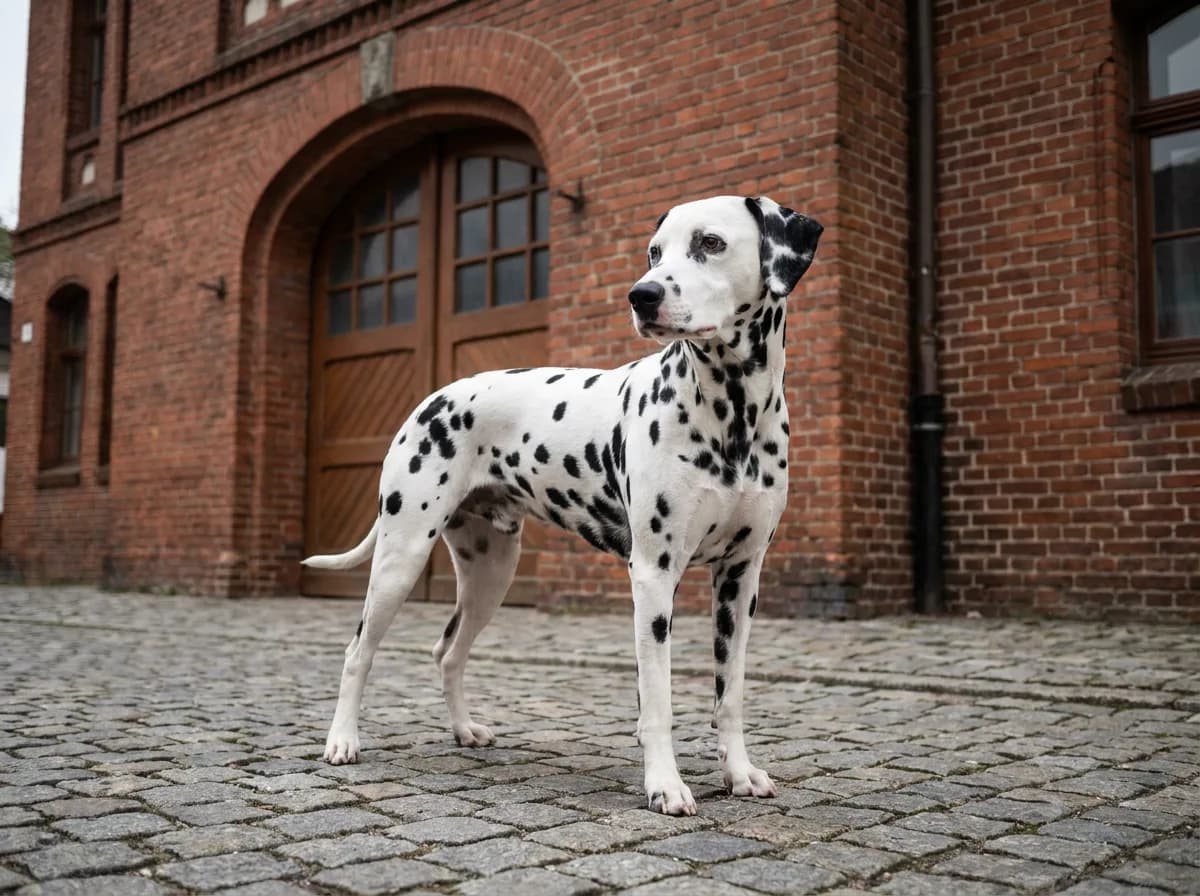
The smooth white coat, black spots and full body outline are clearly visible.
Petful is reader supported. As an affiliate of platforms like Amazon and Chewy, we may earn a commission when you buy through links on this page. There is no extra cost to you.
The Dalmatian is an athletic, spotted dog with a long association with horses, carriages and firehouses. This breed can be an affectionate companion for an active household, but the ownership decision involves more than liking its distinctive coat. Daily exercise, consistent training, hearing-test records and an informed approach to urinary health all deserve attention.
A good match depends on the individual dog and the routine you can provide. Use this guide to compare adult size, temperament, care needs and sourcing options, then look closely at the records and behavior of any Dalmatian you are considering.

Sign up for expert-backed reviews and safety alerts all in one place.
What is a Dalmatian?
The Dalmatian is a medium-to-large, muscular dog best known for black or liver-colored spots on a white coat. Dalmatians are not hounds: the American Kennel Club places the breed in the Non-Sporting Group. That group name should not be mistaken for a low activity level. The breed's history as a coach dog helps explain its reputation for stamina and alertness.
- 1The Dalmatian is a spotted coach dog in the AKC Non-Sporting Group.
- 2Expect an athletic companion that needs activity and training.
- 3Request actual hearing and health-screening results when choosing a dog.
- 4Short hair still sheds and needs routine care.
- 5Individual temperament matters more than a familiar movie image.
This is a dog to include in everyday life. Walks, training and quiet time with the household should form a predictable routine. A yard can provide useful space, but access to a yard alone does not teach a dog to walk politely, cope with visitors or settle indoors.
Before committing, consider who will provide exercise on busy days and who can handle a strong adolescent on a lead. It is easier to choose a dog whose needs fit the household than to rely on a future lifestyle change after the dog arrives.
Dalmatian history: coach dog to firehouse dog
The breed's name is associated with Dalmatia, on the Adriatic coast of modern-day Croatia, but where Dalmatians first developed is not a simple, fully documented origin story. The Dalmatian Club of America's history discusses the breed's varied past and its best-known role alongside horse-drawn vehicles.
As coach dogs, Dalmatians accompanied carriages and the horses pulling them. That relationship also explains the firehouse connection: firefighting equipment was once drawn by horses. The familiar Dalmatian firefighter mascot reflects that horse-drawn history, remaining a symbol as motor vehicles replaced the older teams.

Petful may earn a commission when you click through to Chewy, at no extra cost to you.
Three distinctions keep that history useful:
- A historical working role explains part of the breed's reputation, not every modern dog's behavior.
- A firehouse association does not mean every Dalmatian is trained to work around emergencies.
- Comfort around horses or other animals must be assessed and taught in the individual dog.
If you want a companion for an equestrian property, introduce that environment gradually and safely. A breed story is not a substitute for controlled exposure, reliable cues and physical management around large animals.
Dalmatian coat colors, spots, and markings
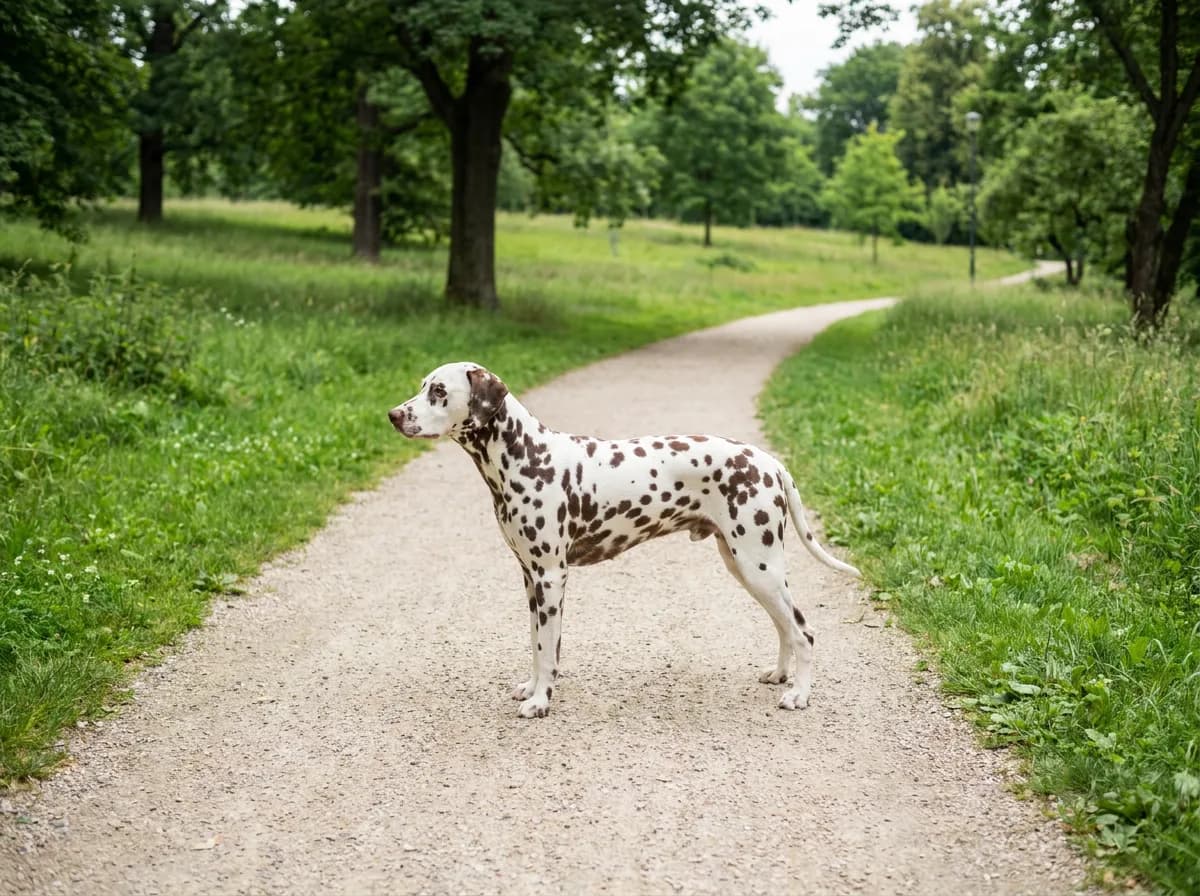
The Dalmatian breed standard describes a white background with black or liver-brown spots. On a black-spotted dog the nose is black; on a liver-spotted dog it is brown. Eyes may be brown, blue or a combination under the standard. Spot patterns vary between individuals and need not look symmetrical.
Dalmatian puppies generally start with white coats and develop their spots afterward. Solid patches can be present at birth. The AKC's explanation of Dalmatian spotting distinguishes those patches from the smaller individual spots that appear as puppies develop.
Useful appearance terms include:
- Liver Dalmatian: brown spots rather than black spots.
- Patch: an area of solid pigmentation that can be present at birth.
- Long coat: longer hair or feathering, a separate trait from spot color.
- Lemon or other nonstandard color labels: descriptions to investigate, not separate recognized Dalmatian breeds.
Photographs help you see those differences, but they cannot establish hearing, ancestry or urinary-risk status. Do not assume that a puppy with especially neat spots is healthier, or that an unusual color justifies a premium without the same records you would request for any dog.
How big do Dalmatians get?
The DCA's standard describes 19 to 23 inches at the shoulder as the desirable size range, with dogs over 24 inches disqualified in conformation. The AKC breed profile lists 19 to 24 inches, 45 to 70 pounds and an 11-to-13-year life expectancy. These figures describe breed type; your veterinarian's assessment of frame and body condition is more useful than trying to make every individual match a single target weight.
| Trait | Practical reference |
|---|---|
| Height | Desirable 19–23 inches in the DCA standard; general profiles may list 19–24 |
| Adult weight | Commonly around 45–70 pounds, with individual variation |
| Life expectancy | Commonly listed around 11–13 years, not an individual prediction |
| Coat | Usually short and close-fitting; black or liver spots |
| Activity | Athletic dog requiring regular exercise and training |
| Purchase cost | Compare documented individual quotes and total care costs |
An adolescent can look leggy before filling out. Do not increase food simply to make it look more substantial, and do not treat a smaller dog as a separate miniature variety. Ask about the parents' sizes when choosing a puppy, while recognizing that a breeder cannot promise an exact adult measurement.
For equipment, measure the actual dog. Check a harness around the chest and at the manufacturer's specified points instead of ordering by breed name. A PetSafe Easy Walk harness can be an ordinary walking aid if the selected size fits properly. This linked offer is a medium/large option, not a claim that every Dalmatian needs that size.
Dalmatian temperament and personality
Dalmatians are often described as alert, energetic and closely involved with their people. Some greet visitors readily; others need time and space. Aggressive behavior requires an individual assessment: the breed name alone cannot establish that a dog is dangerous or safe. Look at the dog's behavior and history rather than assuming every Dalmatian will be outgoing, protective or easy to train.
The question of whether Dalmatians turn on their owners suggests an unpredictable breed-specific switch. That is not a useful way to assess behavior. Fear, pain, guarding, frustration and previous experiences can affect any dog's responses. A sudden change or an escalating problem calls for veterinary assessment and qualified behavior help, not a label that the dog is simply being a Dalmatian.
Watch for what the dog is communicating:
- Does it move toward interaction or try to create distance?
- Can it disengage and settle after excitement?
- Is it comfortable with gentle handling and ordinary household activity?
- What happens around food, resting places or valued objects?
WebVet's guide to dog body language can help you recognize signals in context. Avoid forcing a worried dog to tolerate contact to prove that it is friendly. Give it space, manage the situation and seek help when the behavior affects safety.

Petful may earn a commission when you click through to Chewy, at no extra cost to you.
Is a Dalmatian a good family dog?
A Dalmatian can be a good family dog when its temperament and activity needs fit the home. The main pros and cons are close companionship and shared activity weighed against the time needed for exercise, training and supervision. A strong, excited dog can knock over a small child without intending harm, so adults must teach children how to interact safely.
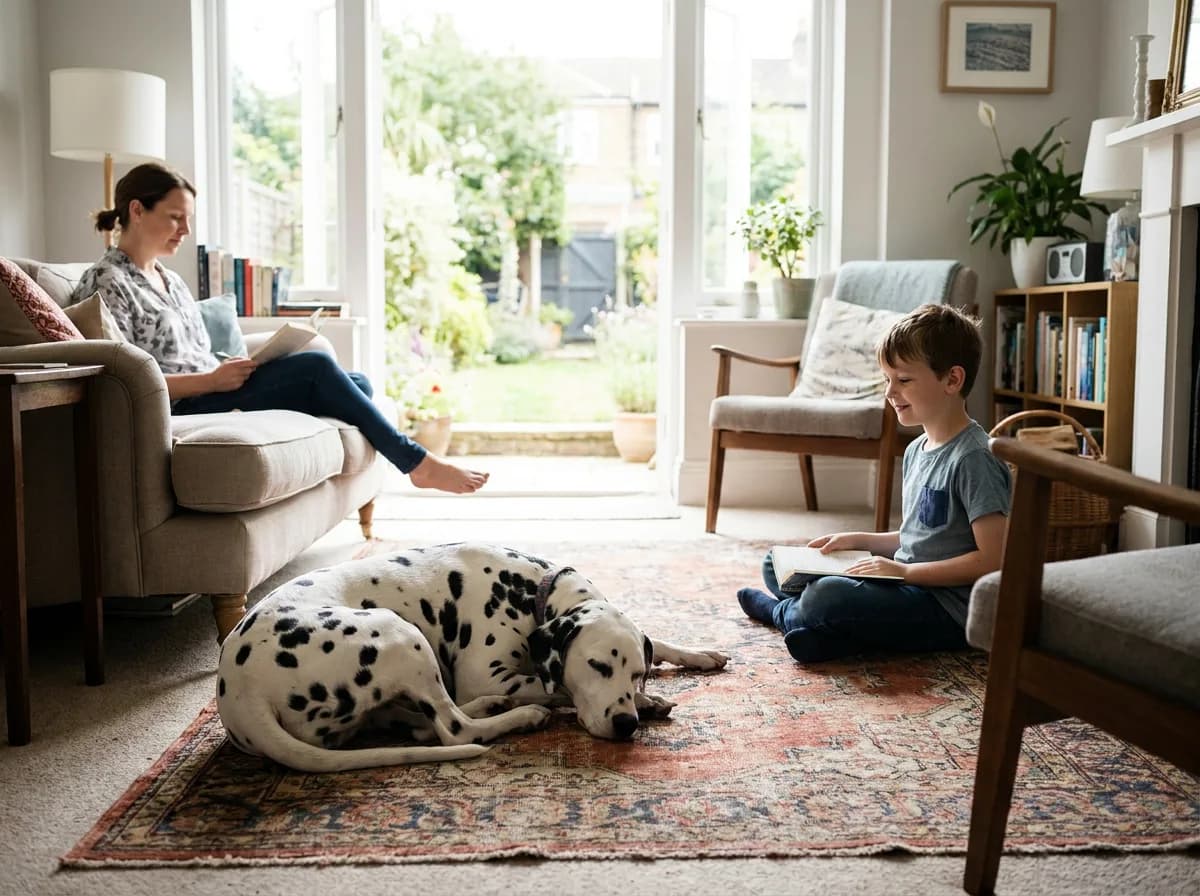
Set up family routines that protect both dog and children:
- Give the dog a resting place where children leave it alone.
- Have an adult supervise interactions and step in before play becomes too rough.
- Keep meals, chews and other valued items in a managed area.
- Teach children to invite contact instead of hugging, climbing on or cornering the dog.
- Let an adult handle the lead until the child's ability and the dog's training make shared involvement safe.
Existing pets matter too. Ask a breeder or rescue what is known about the dog's experience with cats and other dogs, and plan gradual introductions. A general statement that the breed is good with families cannot predict compatibility with a particular resident animal.
Exercise and training needs
Plan regular physical activity and short training opportunities throughout the day. Adult Dalmatians often suit people who enjoy walking and other active pursuits, but exercise should match age, condition, weather and the individual dog's health. A puppy, a fit adult and a senior need different plans.
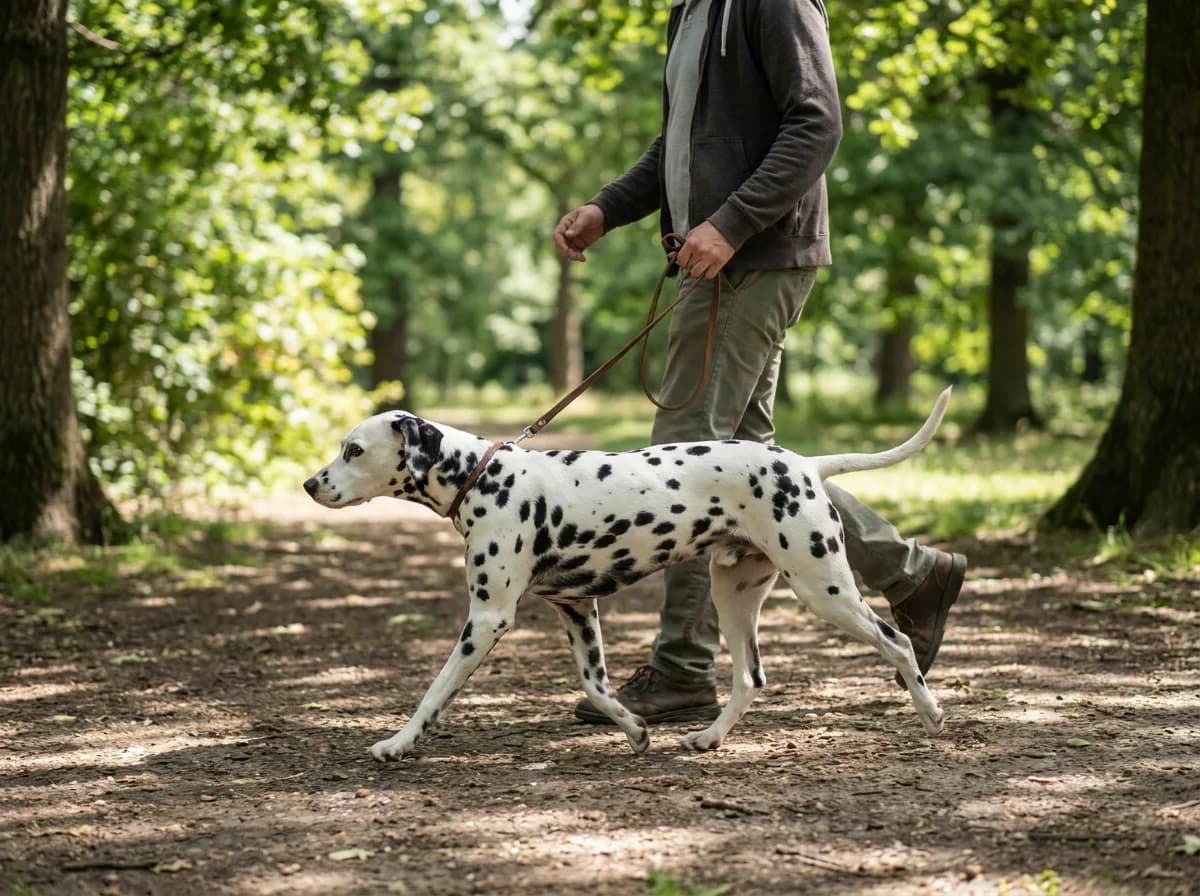
A useful daily mix might include a walk with opportunities to sniff, practice of a few everyday cues, an appropriate game and quiet time afterward. Teach settling as a skill rather than trying to exhaust the dog into resting. If you hope to run with an adult, build conditioning gradually with veterinary guidance instead of starting with your usual distance.
Prioritize skills that make ordinary life easier:
- Coming when called in a safe environment.
- Walking on a loose lead and turning with the handler.
- Waiting at doors and stepping away from distractions.
- Relaxing on a mat while household activity continues.
- Accepting handling for grooming and veterinary care.
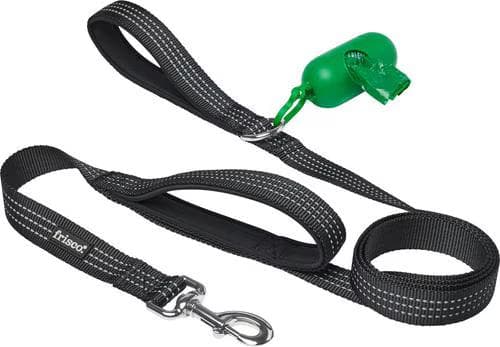
A Frisco traffic leash with padded handles offers an ordinary option for supervised walks. The extra handle can change where you hold the lead, but it cannot replace loose-lead training or make an unsafe greeting appropriate. Check the clip, attachment and lead condition before use.
Petful may earn a commission when you click through to Chewy, at no extra cost to you.
Dalmatian health problems, urate stones, and shedding
Hearing and urinary health are two important breed-specific conversations. They should be discussed through actual test results and veterinary guidance. Neither a normal-looking puppy nor a broad promise of health testing answers all the relevant questions.
Hearing and parent screening. A BAER hearing test records the auditory response for each ear. Ask for the report identifying the individual puppy, including the date and findings. Responding to your voice is not a substitute for that result. The Dalmatian Club of America's hearing resources explain testing; Petful's article on how dogs hear provides broader hearing context.
The DCA's CHIC program requirements identify the parent screening records to inspect:
- Hip evaluation.
- BAER hearing testing.
- An elective thyroid or eye evaluation.
A CHIC number means the required results were recorded publicly; it does not require every result to be normal.
Urinary-risk genetics and symptoms. UC Davis explains hyperuricosuria as elevated uric acid in urine associated with an inherited SLC2A9 variant. Dogs with the affected genotype are predisposed to urate stones. A genetic result helps characterize risk, but it does not diagnose a current stone or rule out other urinary disease.
LUA, or low uric acid, refers to a distinct urinary-risk breeding and testing context. Ask for the relevant result behind that description. Coat color, long hair or an overall DNA-tested label cannot establish LUA status. Your veterinarian can interpret the history and determine whether clinical testing or monitoring is appropriate.
- Ask to see the individual puppy's BAER hearing test, the actual parent results behind any CHIC number, and the relevant urinary-risk DNA records. Discuss what those records mean for urate stones and the dog's care rather than accepting a general health-tested claim.
Contact a veterinarian for straining, blood in the urine, repeated attempts to urinate or obvious discomfort. Inability to pass urine is an emergency. The MSD Veterinary Manual's urolithiasis overview explains why obstruction is urgent. Petful's bladder-stone guide covers the wider problem. Do not try to diagnose or clear an obstruction with a home test or dietary change.
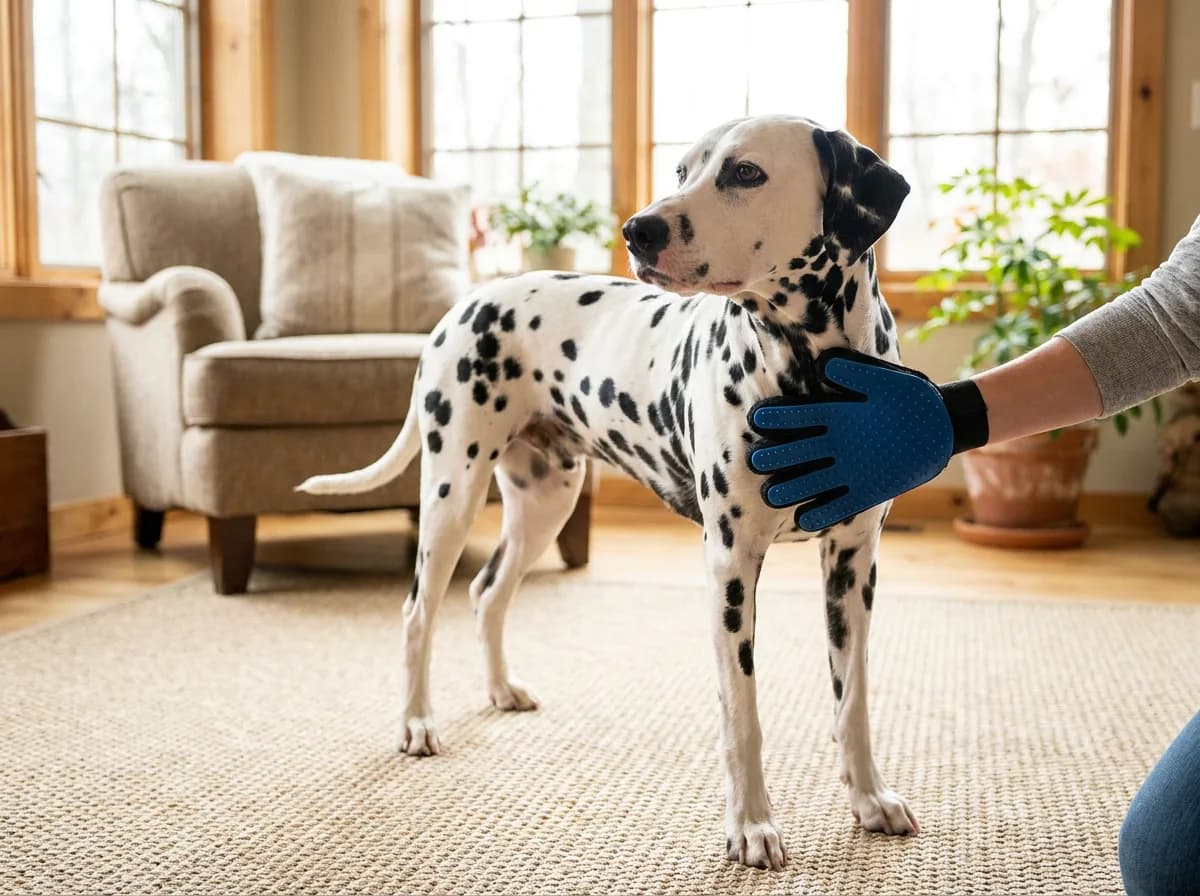
Short-coat grooming. Dalmatians shed even though their usual coat is short. Use a grooming mitt or suitable soft brush to remove loose hair and make coat checks part of the routine. Look for redness, sore areas or a change in hair loss instead of assuming every coat problem is normal shedding.
For ordinary bathing, Earthbath fragrance-free oatmeal and aloe shampoo is one available option. Follow its directions, rinse thoroughly and dry the dog comfortably. Persistent odor or itching needs assessment of the cause, not repeated baths with a product presented as a cure.
Dalmatian lifespan
General breed profiles commonly list a Dalmatian life expectancy of about 11 to 13 years. That range is a planning reference, not a prediction for an individual dog. Genetics, disease, body condition, accidents and access to care all affect how a dog's life unfolds.
Think beyond the active young-adult years when considering the commitment. A senior may need shorter outings, easier footing or a revised toilet routine. A dog that becomes reluctant to climb stairs, sleep comfortably or participate in familiar activities deserves assessment rather than an assumption that it is simply old.
Routine care includes:
- Regular veterinary examinations and preventive care tailored to the dog.
- Attention to comfortable movement, body condition and changing activity tolerance.
- An agreed plan for urinary monitoring when the individual history warrants it.
- Dental care and prompt attention to oral discomfort.
An appropriately sized Virbac C.E.T. dual-ended toothbrush can support a gradual home dental routine. Use dog toothpaste and introduce handling gently. Bleeding, a painful mouth or difficulty eating calls for veterinary attention; brushing is not a substitute for an examination.
Feeding a Dalmatian: purines and individual needs
Choose feeding advice around the individual dog's life stage, urinary-risk status and clinical history. A dog with previous urate stones may need a prescribed dietary and monitoring plan. A growing puppy has nutritional needs that must be met at the same time. The breed name alone is not enough information to select a therapeutic diet.
Purines are compounds in foods and body tissues that contribute to uric-acid production. Low purine and low protein are not interchangeable descriptions. The UC Davis guide to nutritional management of urinary stones discusses low-purine diets for urate stones and identifies organ meats as high-purine foods.
- A low-purine diet must account for treats and extras as well as meals. Organ meats can add substantial purines. Ask your veterinarian to assess the complete feeding plan; do not substitute a low-protein label or an improvised recipe for individualized advice.
Keep fresh water available and provide regular opportunities to urinate. If your veterinarian recommends changes to dietary moisture or a therapeutic food, follow the complete plan and ask how progress will be checked. Do not add supplements or medication simply because they appear in another Dalmatian owner's routine.
Bring practical information to the appointment: the exact food formula, measured amount, all treats and chews, previous laboratory results and any history of urinary signs. That makes the discussion more useful than asking which brand is best for every Dalmatian. It also prevents an ordinary product recommendation from being mistaken for treatment of a medical problem.

A dual-ended toothbrush with a large and a small head to fit different mouth sizes and reach the back molars where plaque hides. Soft bristles angled for the gumline.
Petful may earn a commission when you click through to Chewy, at no extra cost to you.
How much does a Dalmatian cost?
The cost of a Dalmatian depends on the individual source and what the placement includes. Published breeder examples checked in September 2026 include a usual price of $2,000 at Meadow Brook Dalmatians and $2,500 at Countryside Dalmatians. These are examples from named sellers, not a national average, an endorsement or a statement that a puppy is currently available.
Why can a Dalmatian be expensive? A seller's asking price can reflect breeding costs, documented testing, early care, demand and the support included, but there is no standard markup that proves value. Ask for that breakdown. Adoption fees vary by organization, and a rare-color description cannot establish that one dog has better health or is a better household match.
Budget separately for:
- The purchase or adoption fee and collection travel.
- Initial supplies, veterinary care and training.
- Food, preventive care and daytime help when needed.
- Unexpected illness or injury, through savings or insurance you have reviewed.
Get local quotes for services rather than relying on a universal first-year total. A household needing frequent paid daytime care will have a different budget from one with flexible coverage at home. Plan for the adult dog's needs as well as the appealing puppy stage.
Dalmatian puppies
Choosing a puppy is a distinct task from deciding whether you like the adult breed. Ask for the individual hearing report, the parents' screening results and a clear handover history. You will also need a realistic arrangement for meals, toilet breaks, rest, safe social experiences and brief training sessions.
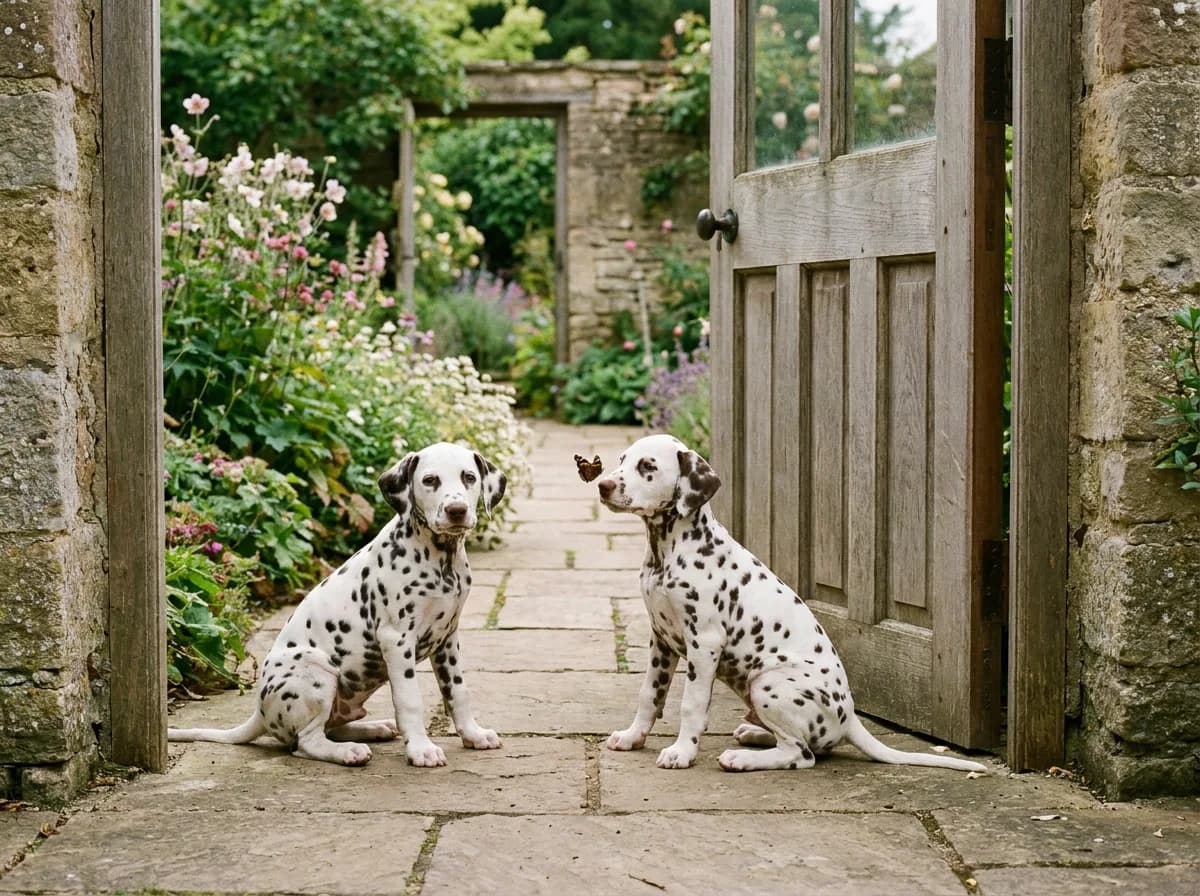
Our Dalmatian puppy guide walks through those records and the first weeks at home. Use it before choosing a collection date so the puppy's care does not depend on everyone improvising after arrival.
What about a long-haired Dalmatian?
A long-haired Dalmatian has visible longer hair or feathering, often around the ears, legs and tail. The standard describes a short coat, while long hair is a coat variation rather than a separate breed name. Appearance alone neither establishes nor disproves the ancestry of an individual dog.
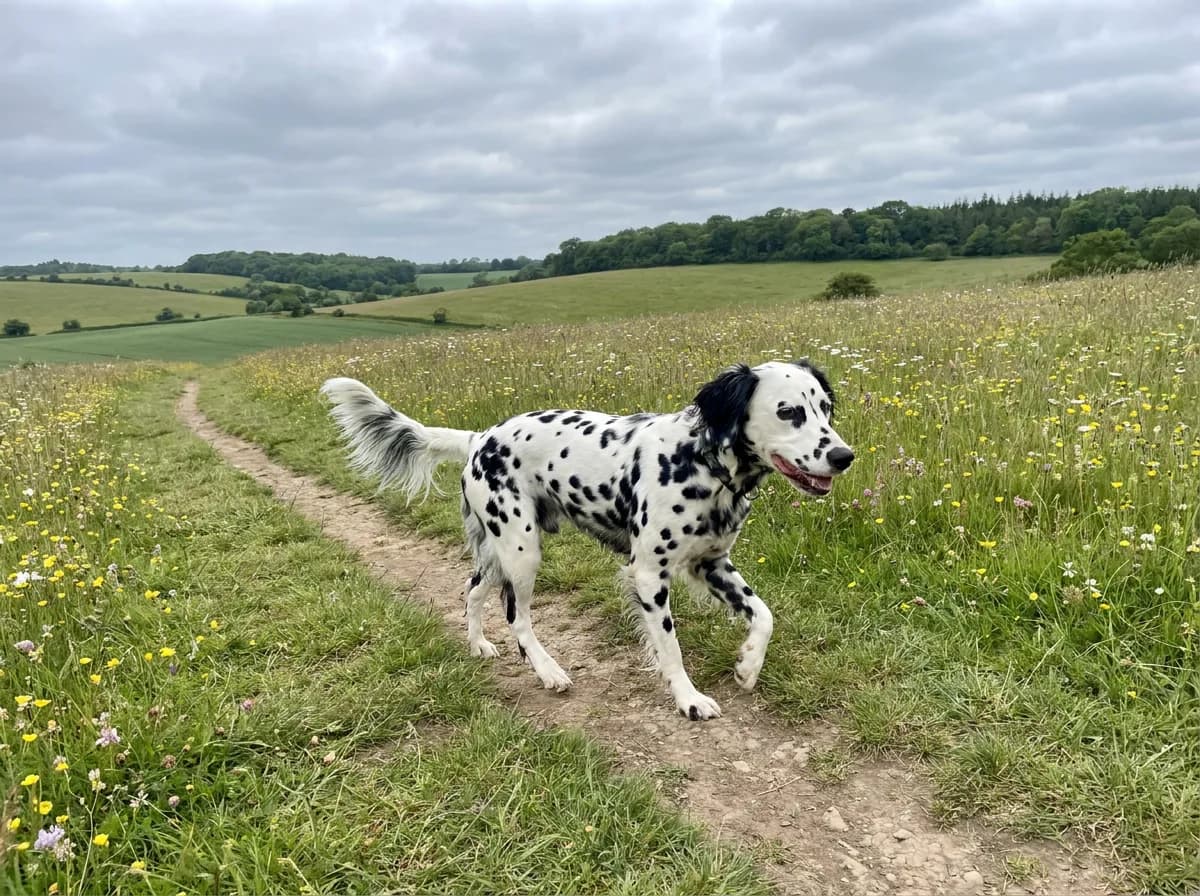
The long-haired Dalmatian guide compares the coats and explains genetics, grooming and buying claims. Coat length does not establish hearing ability, LUA status or a calmer temperament. Apply the same screening and household-fit questions whichever coat you prefer.
Dalmatian mixes
A Dalmatian mix can combine traits from both sides of its ancestry, but there is no fixed recipe for size, energy, coat or temperament. A photograph or a crossbreed label cannot tell you which traits an individual inherited. Assess the dog in front of you and ask what is known about its parents and history.
For a Dalmatian and Golden Retriever mix, ask about the coat and activity needs on both sides rather than assuming the dog will be calmer. For a Dalmatian and Great Dane mix, discuss the possible adult frame and space requirements without accepting a precise size promise. Neither cross has one guaranteed appearance or care profile.
When evaluating a mix, focus on:
- Current behavior and observations from the foster home or caregiver.
- Adult size estimates grounded in available history, with uncertainty stated.
- Relevant screening and veterinary records.
- Handling, exercise and grooming needs already apparent in that dog.
Crossbreeding does not automatically remove inherited risks. If a urinary-risk or hearing issue is suspected, discuss appropriate testing with your veterinarian. A familiar crossbreed name should not be used as proof that a dog is healthier or easier to manage than a purebred.
Why are Dalmatians rarely seen?
Seeing few Dalmatians locally does not establish how rare the breed is overall. Local sightings depend on where you live and which dogs you encounter. A registration rank measures registrations within a particular organization and period; it is not a census of every living Dalmatian or a direct measure of temperament and suitability.
The breed's distinctive history and appearance can draw interest, but popularity stories should not replace a current search for a suitable dog. Availability varies between breeders, rescues and locations. The DCA's find-a-Dalmatian resources provide a practical starting point without promising that a puppy or adult will be available immediately.
If a seller uses scarcity to pressure you into an immediate payment, slow the decision down. You still need time to check records, understand the contract and decide whether you can provide the required care. An uncommon local sight is not a reason to skip those steps.
Do Dalmatians bark a lot?
Dalmatians can engage in alert barking, bark during excitement or vocalize when frustrated. A bored, under-exercised dog may also struggle to settle, but a breed label cannot predict how much one dog will bark in your home. Ask a foster carer or breeder about triggers and the dog's ability to relax. Housing layout, nearby activity and daily routine can all affect the problem.
Identify the trigger before choosing a response. Blocking a repeated window view, rewarding quiet behavior or changing an overwhelming setup may help an individual dog. Persistent barking during absences, sudden changes or signs of distress deserve a more specific assessment rather than a device selected to suppress every sound.
Do Dalmatians smell?
A healthy, appropriately cared-for Dalmatian does not require acceptance of a persistent strong odor as a breed feature. Wet fur and outdoor activity can cause temporary smells. Ongoing odor from the skin, ears, mouth or another area deserves attention to the source.
Check bedding and routine grooming, and contact your veterinarian for persistent odor, redness, discharge or discomfort. Bathing repeatedly can delay finding the cause if an underlying problem is present. A short coat makes some changes easier to notice, but it does not make the dog immune to skin or dental disease.
Are Dalmatians clingy?
Some Dalmatians enjoy staying close to familiar people. Affection or following you between rooms is different from distress when left alone. Observe whether the dog can rest independently and how it behaves during short, manageable absences.
Build independence gradually and arrange care when your schedule exceeds what the dog can comfortably handle. Do not assume that adding a second dog or providing a longer walk will resolve separation-related distress. Persistent panic, escape attempts or inability to settle calls for a tailored plan with qualified help.
Finding a Dalmatian: breeders, rescue, and the parent club
To adopt a Dalmatian, start with a breed rescue or shelter and ask what it knows about the individual dog. The parent club's resources can help you find breed contacts. Adoption and breeder conversations should cover your household, known uncertainties, records and support after placement. Read contracts before making a payment.
Use the breeder screen in the health section to review evidence, then ask about the dog's daily life: handling, activity, visitors, other animals and time alone. For an adult in foster care, those observations may give you a clearer picture of the current routine than a puppy temperament description can provide.
Keep an organized record of the placement:
- Save copies of the documents rather than relying on a conversation you will have to recall later.
- Match identifying details across the contract, test results and veterinary history.
- Ask the source to explain missing information and record the answer.
- If a result is described only as clear, ask which test it refers to and request the original report.
Meet the dog where practical and let introductions proceed at an appropriate pace. Do not choose a dog solely because it approaches first or looks especially striking in a photograph. The more useful question is whether the dog's demonstrated needs and your household's actual capacity align.
Is a Dalmatian right for you?
The main downsides of owning a Dalmatian are the time required for activity and training, persistent shedding, and the need to understand hearing and urinary-health risks. High energy can be enjoyable in an active household and difficult in one hoping for an undemanding dog. The care routine must be feasible during busy weeks, not only weekends and vacations.
- An athletic companion for a household that enjoys regular activity
- A distinctive short coat with a manageable ordinary grooming routine
- Opportunities for shared training and close companionship
- High energy and strength require consistent activity and training
- Hearing and urinary-risk records need informed attention
- Shedding, supervision and a dependable care routine remain everyday commitments
Choose the individual whose temperament, health information and daily needs fit the life you can provide. If the puppy stage is the main obstacle, consider whether a well-assessed adult adoption would be a better match. Waiting for a suitable dog is more useful than treating a coat pattern or an urgent listing as the deciding factor.
Dalmatian FAQs
Yes. A dog with hearing in one ear may respond to voices and everyday sounds. A BAER report records the tested response for each ear, which is why an informal noise test is not enough to establish normal hearing in both ears.
An apartment is not an automatic exclusion, but you need dependable outdoor access, exercise, training and a plan for noise and time alone. Consider stairs, toilet trips and the strength of an adolescent dog as well as floor space. Match the arrangement to the individual dog rather than assuming a yard or a larger home solves the care demands.
Yes, when the individual suits your household. A foster home may be able to describe an adult dog's established routines, handling preferences and behavior around other animals. Ask what has been observed, which records are available and what remains uncertain.

Kristine Lacoste has been researching dog and cat breeds for nearly a decade and has observed the animals up close at dog shows in both the United States and the United Kingdom. She is the author of the book One Unforgettable Journey, which was named as a finalist for a Maxwell Award from the Dog Writers Association of America, and was host of a weekly pet news segment on the National K-9 Academy Radio Show. In addition, she was the New Orleans coordinator for Dogs on Deployment, a nonprofit that helps military members and their pets, for 3 years. Kristine has researched and written about pet behaviors and care for many years. She holds a bachelor’s degree in psychology, another bachelor’s degree in English and a Master of Business Administration degree.
Sign up for expert-backed reviews and safety alerts all in one place.