Scottish Deerhound Breed Profile: Essential Facts
Scottish Deerhounds can't be trusted with non-canine pets, but they get along with other dogs and love children.
- AKC Group: Hound
- Weight: 75–110 lbs.
- Height: 28–32 in.
- Life Span: 8–11 years

Sign up for expert-backed reviews and safety alerts all in one place.
Key Characteristics
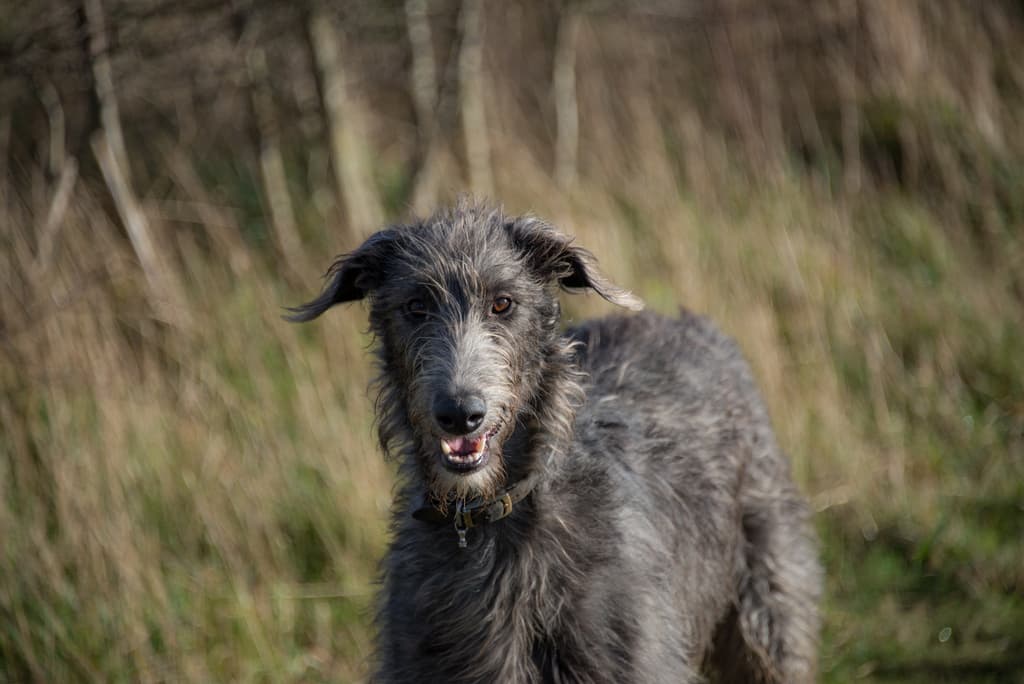
The Scottish Deerhound looks similar to a Greyhound with a coat. These sight hounds are one of the oldest breeds of dog. They are tall, large dogs with big bones.
Their noses can be blue or black, and the eyes are either brown or hazel.
The ears are set high and folded, and the long tail hangs close to the ground. The coat -- which comes in black, brindle, gray, blue gray, sandy red or fawn, with possible white coloring on some areas -- is harsh and wiry with a softer coat on the head, belly and chest.
Where They Came From
According to the American Kennel Club (AKC), historically, breeds were listed according to their purposes as Irish Wolf Dog, Scotch Greyhound, Rough Greyhound and Highland Deerhound.
But the breed was specifically identified in the 16th century, with the term "deerhound" added because the breed excelled at hunting and killing deer.
At one time, the Scottish Deerhound was so treasured that anyone with a rank lower than earl was prohibited from having one. The exclusivity of the breed may have almost cause its extinction. The breed became rare in England and Scotland when the Greyhound gained favor.
Archibald and Duncan McNeill set out to restore the breed and successfully increased the number of Scottish Deerhounds. The breed we see today closely resembles that found in records from the 18th and 19th centuries.
In 2011, a Scottish Deerhound named Foxcliffe Hickory Wind won Best in Show at the Westminster Kennel Club Dog Show — it was the breed's first such win at the famed annual dog show.

How Friendly Are They?
The breed is gentle, affectionate, loving and loyal. The dogs are close to their families and are usually friendly with everyone they meet.
They are great with children and other dogs but should not be around non-canine animals because of their strong hunting instincts. They are quiet dogs who rarely bark.
Is This the Right Dog for You?
Exercise Needs
MEDIUM: Scottish Deerhounds should have a long, daily walk.
These active hunters may enjoy being jogging companions. While outdoors, keep them on a leash or exercise them in an enclosed or secure area because of their hunting instincts.
A yard would be appreciated by these dogs but is not required. As long as their exercise needs are met, they can do well in apartments.
Grooming Needs
MEDIUM: As with all dogs, maintain a regular routine of trimming the nails, brushing the teeth and cleaning the ears.
Remove ear hair as needed, and brush their crisp, wiry hair a few times per week with a steel comb, slicker brush or both (the steel comb would be more comfortable in sensitive areas).
Bathe as needed, but not too frequently because it can significantly soften the coat. For pets, this is fine, but Scottish Deerhounds participating in dog shows are expected to have the breed's standard wiry coat texture.
Health Problems
MEDIUM: Health problems include: Liver shunt
- Tick-borne diseases: Lyme disease, anaplasmosis and Rocky Mountain spotted fever
- Hypothyroidism
- Addison's disease
- Inherited heart defects (rare)
- Dilated cardiomyopathy
- Post-operative bleeding
- Bloat
Keeping regular veterinary appointments and feeding a quality diet complemented with exercise will keep your dog healthy. Watch these Scottish Deerhounds frolic happily:
Where to Adopt One?
Scottish Deerhounds can end up in shelters and rescues. Start your search with our adoptable dog finder or contact local shelters and rescues in your area.
If you decide to contact breeders, ensure they are reputable, get to know them and make sure you don't observe any warning signs indicating your chosen breeder is operating a puppy mill.
Ask about health clearances — tests exist for many of the common health problems in Scottish Deerhounds.
Related Dog Breed Profiles You May Like
- Scottish Terrier Breed Profile: Essential Facts
- Shiba Inu Breed Profile: Essential Facts
- Spinone Italiano Breed Profile: Essential Facts
- Swedish Lapphund Breed Profile: Essential Facts
- Tibetan Mastiff Breed Profile: Essential Facts
Frequently Asked Questions (FAQ)
Yes, Scottish Deerhounds make excellent pets for the right owner. They are gentle, affectionate, and good-natured but need space to run and regular exercise to stay happy.
Irish Wolfhounds are larger, standing up to 35 inches tall and weighing up to 180 pounds, while Scottish Deerhounds are slightly smaller, reaching around 32 inches tall and 110 pounds.
A Scottish Deerhound puppy typically costs between $1,500 and $3,500, depending on the breeder, pedigree, and location.
No, Scottish Deerhounds are not excessive barkers. They tend to be quiet and reserved, barking mainly when necessary or if they sense something unusual.
Additional Resources
- AKC's Scottish Deerhound Page
- Scottish Deerhound Club of America
- The Deerhound Club (UK)

Kristine Lacoste has been researching dog and cat breeds for nearly a decade and has observed the animals up close at dog shows in both the United States and the United Kingdom. She is the author of the book One Unforgettable Journey, which was named as a finalist for a Maxwell Award from the Dog Writers Association of America, and was host of a weekly pet news segment on the National K-9 Academy Radio Show. In addition, she was the New Orleans coordinator for Dogs on Deployment, a nonprofit that helps military members and their pets, for 3 years. Kristine has researched and written about pet behaviors and care for many years. She holds a bachelor’s degree in psychology, another bachelor’s degree in English and a Master of Business Administration degree.
Sign up for expert-backed reviews and safety alerts all in one place.