Pug Breed Guide: Temperament, Size, Health, Cost
Is a Pug a practical fit for your home? Compare temperament, adult size, coat care, lifespan, breathing concerns, and a transparent ownership budget before choosing your dog.
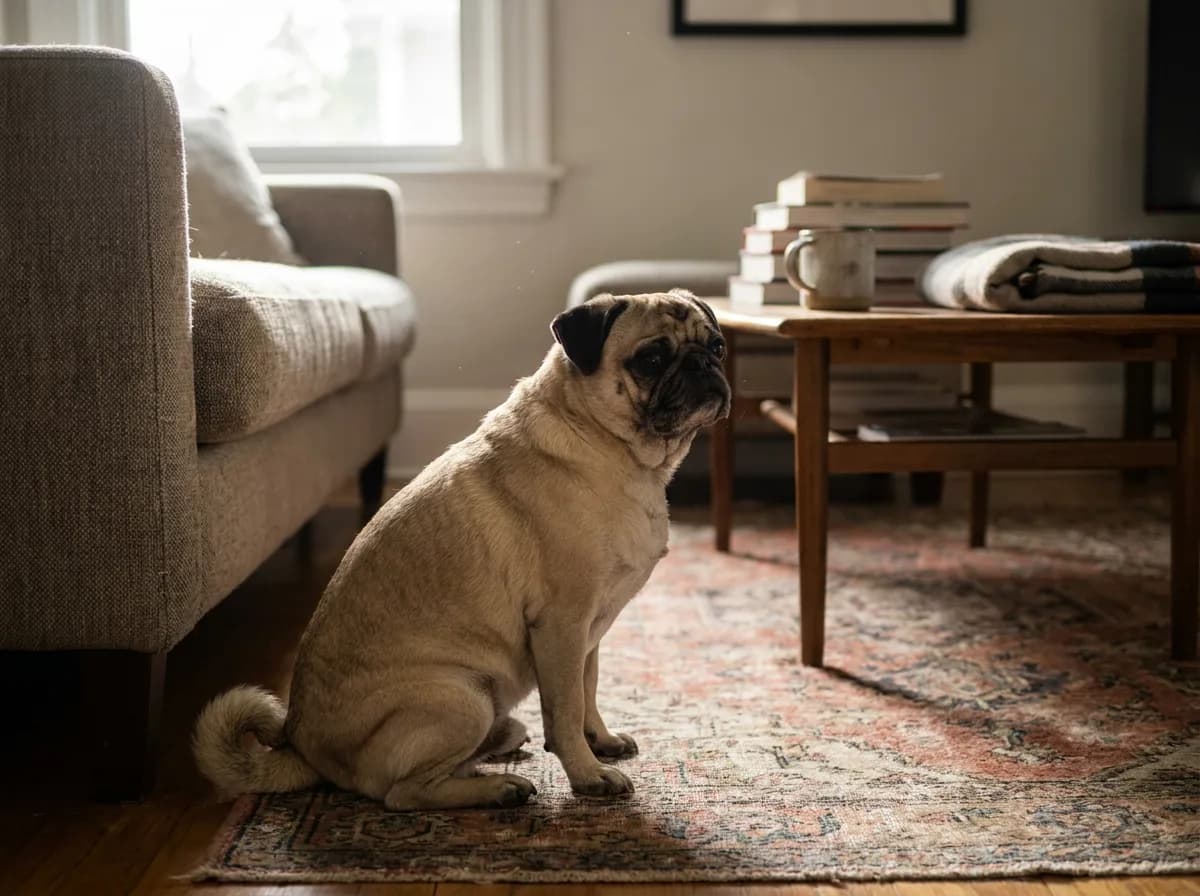
Fawn Pug sitting on a rug beside an armchair.
Petful is reader supported. As an affiliate of platforms like Amazon and Chewy, we may earn a commission when you buy through links on this page. There is no extra cost to you.
A Pug can bring affectionate companionship and playful energy to a home, but choosing one means planning around the breed's breathing and heat vulnerabilities as well as its personality. Small size does not make this a low-responsibility dog. The best starting point is whether you can provide a comfortable indoor environment, reliable daily care, and a realistic veterinary budget.

Sign up for expert-backed reviews and safety alerts all in one place.
Pug at a glance: breed facts and key characteristics
The Pug is a compact companion dog in the American Kennel Club's toy group. A broad head, short muzzle, expressive face, and curled tail form the breed's familiar profile, but appearance tells you little about an individual dog's breathing function or comfort. Pugs are short-snouted dogs, as are Bulldogs and Boston Terriers; our Pug health guide explains why shared flat-faced anatomy raises breathing concerns across these breeds.
The adult weight range in the AKC Pug standard is 14–18 pounds for both sexes. Many individual pets fall outside a show standard; your veterinarian should assess healthy body condition rather than ask you to force a dog toward a number. A Pug is a toy group companion with the same needs for learning, activity, and appropriate boundaries as a larger dog.
- 1Adult Pugs are small, sturdy companions; the breed-standard weight range is 14–18 pounds.
- 2A friendly temperament does not cancel breathing, heat, eye, or skin concerns.
- 3Choose a household care plan before choosing a puppy or a coat color.
Expect to manage practical details: keeping outdoor plans flexible, measuring food, teaching calm handling, and arranging care when you are away. If those routines feel manageable, you can evaluate the individual dog more carefully. If you need a running partner or a pet who can spend the day outdoors, this is a poor match.
Pug size and weight: how big do pugs get?
Pugs are short, solidly built dogs. PDSA's breed guide lists an average height of 25–33 centimeters, approximately 10–13 inches at the shoulder. Their broad chest means a harness sized for another dog of the same weight may not fit.
| Measure | Reference | Buying or care implication |
|---|---|---|
| Adult weight range, male and female | 14–18 pounds in the AKC standard | Assess body condition individually; sex does not create two precise weight categories. |
| Approximate adult height | 10–13 inches at the shoulder | Measure the actual dog when choosing equipment. |
| Growth timing | Follow the individual growth curve through the first year | Becoming taller more slowly does not mean portions should keep increasing. |
| Harness fit | Chest and neck measurements, not weight alone | Check for rubbing, restricted movement and slipping. |
Choose resting equipment by usable space and access. A dog should be able to lie comfortably without climbing over a high edge. The FurHaven Velvet Waves Orthopedic Sofa Bed, Large offers room to stretch if you have the floor space, but that size is optional for a Pug. Compare its dimensions with your dog's sleeping position; a product labeled orthopedic is not a treatment for pain or breathing difficulty.
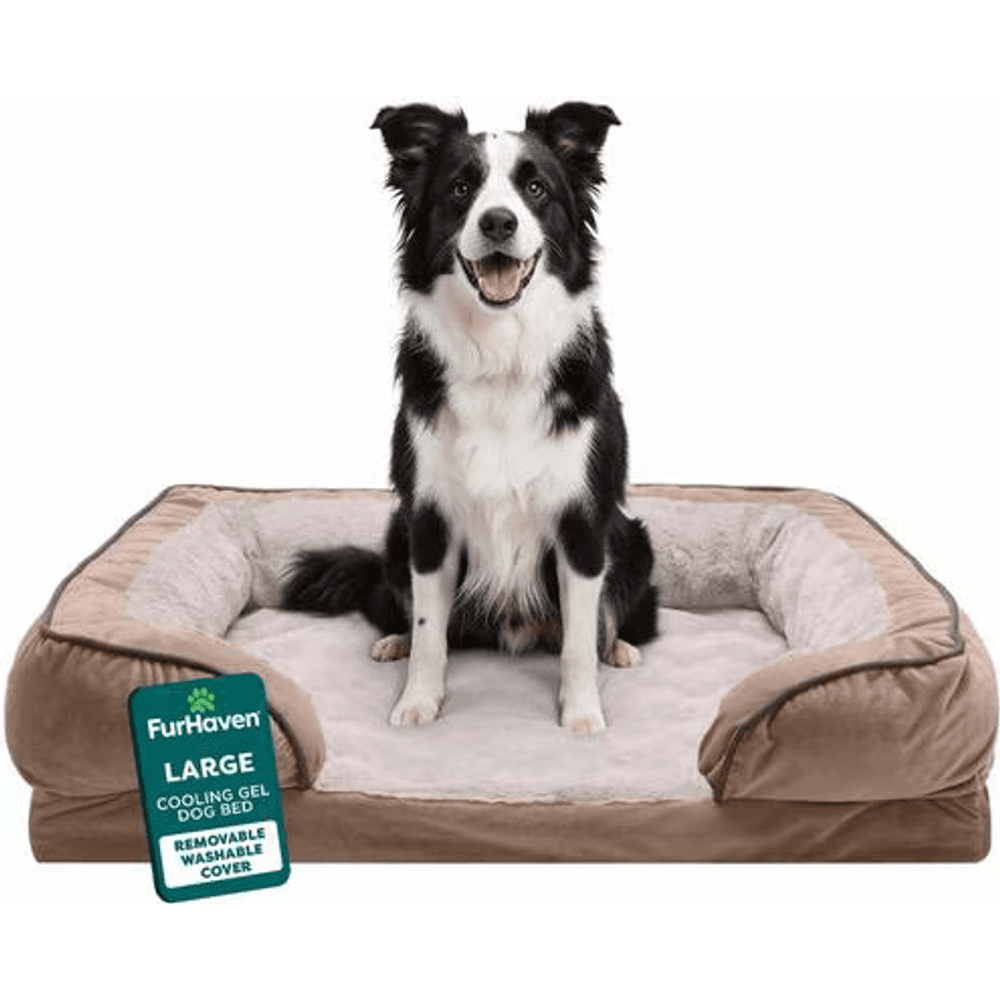
An orthopedic sofa bed with three bolstered sides for dogs who like to rest their head and joints against a cushion. The supportive foam base cradles hips and elbows, a comforting spot for an older or shaky dog to settle.
Petful may earn a commission when you click through to Chewy, at no extra cost to you.
Size labels on puppy advertisements
Mini, miniature, and teacup labels do not identify separate AKC Pug breeds or guarantee a particular adult size. Ask which registered breed the paperwork names, how the parents compare in size, and what growth and health records are available. An unusually small puppy needs an appropriate care assessment; a sales label cannot establish that staying tiny is healthy or desirable.
Are pugs good family dogs?
A Pug can be a good family dog when the household can provide close companionship, considerate handling, and care suited to a flat-faced breed. Use three practical conditions to decide whether your home is ready. This is an ownership checklist, not a validated medical screening test.
- Cooling: A hot climate household needs dependable indoor cooling, flexible walk times, and a backup for outages. A dog expected to remain outdoors in heat is the wrong fit.
- People: A long unattended workday without toilet breaks, monitoring, or help is a poor care plan. Arrange support rather than assuming an affectionate dog will sleep through everything.
- Money: Allow for veterinary assessment and unexpected treatment, including an airway surgery contingency if a veterinarian recommends it. A purchase price that exhausts the available care budget is a warning to wait.
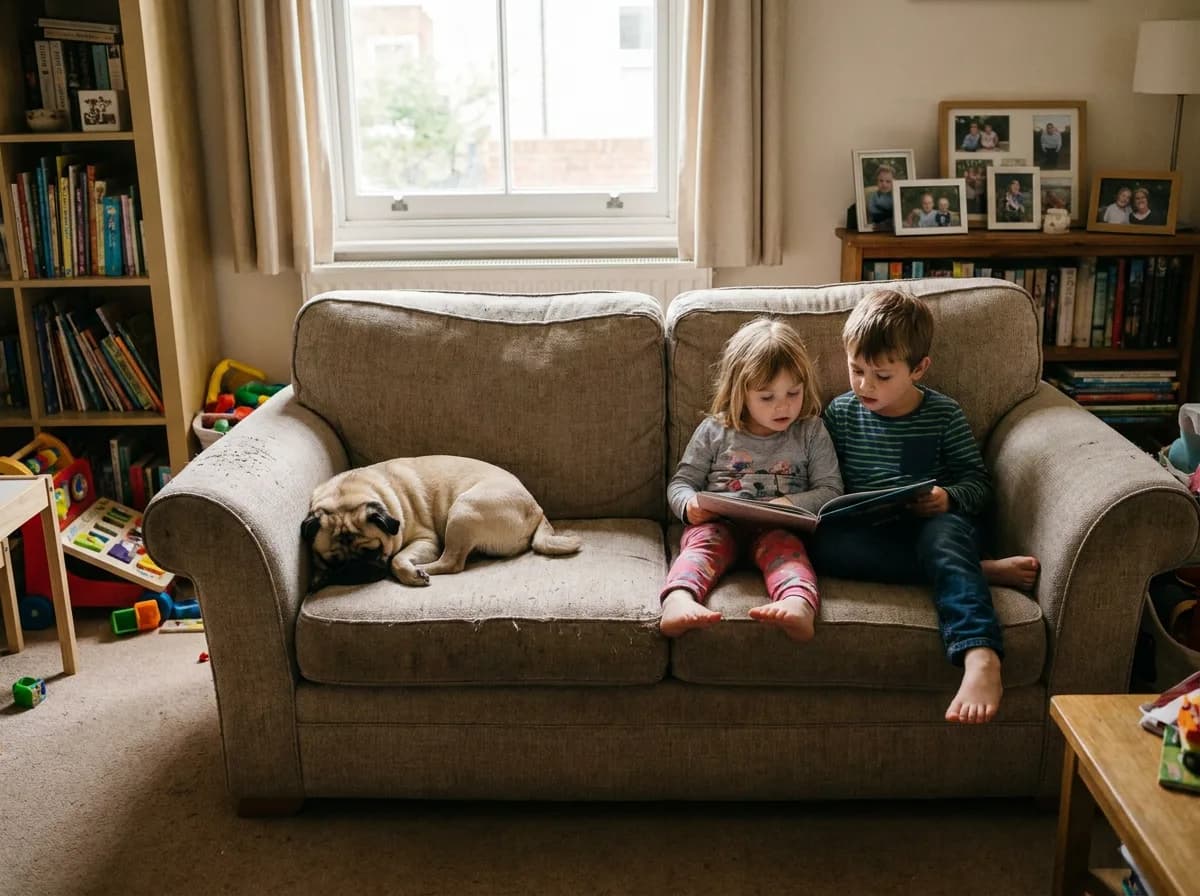
Pugs are often sociable, but a frightened or hurt dog can become dangerous. No breed is automatically safe with children or other pets. Supervise introductions and give the dog a place to retreat. Children should not hug tightly, put faces against the dog's face, or disturb eating and sleeping. Small size does not prevent a bite from causing injury.
For an existing dog or cat, ask about the prospective Pug's experience with other animals. A foster report describing shared meals, rest, play, and separation is more useful than “loves everyone.” Introduce animals gradually with physical barriers and separate resources. If the match is uncertain, ask the rescue about a supported introduction process before committing.
Choosing between individual dogs
Neither male nor female Pugs are automatically better companions. Ask about the individual dog's behavior, handling history, health, and experience with your household's activities. Meeting an adult in a foster home can be more informative than a sex-based prediction about a puppy.
Is it better to have one Pug or two?
One Pug can be a good household choice; a second is not a requirement for companionship. Consider two only when the dogs are compatible and you can provide each with individual attention, care, and a separate veterinary budget. Ask the rescue about introductions, shared-resource concerns, and whether the dogs have already lived comfortably together.
Work out how you would manage separate walks, feeding, rest areas, or medical appointments when necessary. A second dog does not replace workday care or reliably resolve distress when people leave. If those arrangements are difficult for one dog, adding another usually makes the care plan harder to deliver.
Pug temperament and personality
Pugs are widely valued as playful companions who enjoy being near their people. Individual preferences vary: one may greet visitors eagerly while another needs space. The Pug Dog Club of America describes the breed's companion background and sociable character, but a breed description cannot promise your dog's behavior.
A Pug may appear to choose a favorite person, particularly someone associated with pleasant routines. That does not establish a permanent ranking of family members. Share comfortable activities such as feeding, brief training, and quiet walks so the dog can build positive relationships with more than one caregiver.
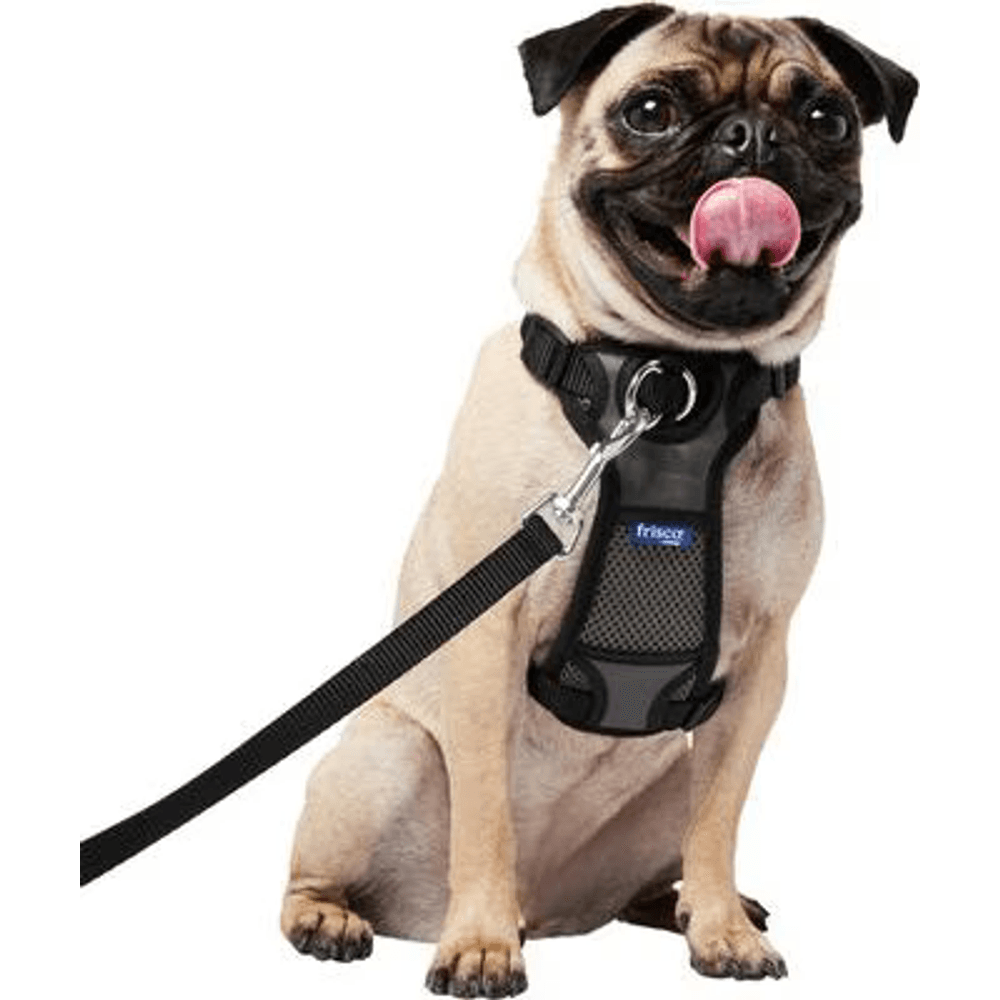
A budget-friendly padded no-pull harness that keeps leash pressure off a coughing dog's neck and windpipe by distributing it across the chest. A simple, affordable way to protect an irritated airway or a collapsing trachea on every walk.
Petful may earn a commission when you click through to Chewy, at no extra cost to you.
What gets called stubbornness can be confusion, distraction, discomfort, or a reward that does not interest the dog. Make the requested behavior easy enough to succeed, reward it clearly, and end before frustration takes over. If a dog suddenly resists an activity they previously enjoyed, investigate the change rather than assuming they need firmer discipline.
- Keep cues consistent between adults in the home.
- Notice whether the dog is comfortable before asking for more repetitions.
- Choose a trainer who explains how to teach and reward a behavior without intimidation.
How a Pug may show affection
Look for voluntary companionship: approaching you, choosing to rest nearby, or returning for an activity you enjoy together. Pause petting and let the dog choose whether to seek more contact. No single gesture proves love, and a dog who prefers sitting beside you to being held can still enjoy your company. Respecting that choice makes shared time more comfortable.
Exercise, training, and enrichment for a pug
Many Pugs love sniffing, gentle play, food-search games, and spending time with their people. Enjoyment does not mean unlimited stamina. Plan short, comfortable activities with easy opportunities to stop, and ask your veterinarian what is appropriate for your individual dog's breathing function and fitness.
Walking equipment should distribute leash pressure across a well-fitted body harness. The Frisco Padded No Pull Dog Harness, Black, Small is one option if its measurement range fits. Check the straps while the dog walks and turns; “small” is not a breed-specific size, and “no pull” is a product name rather than a training result.
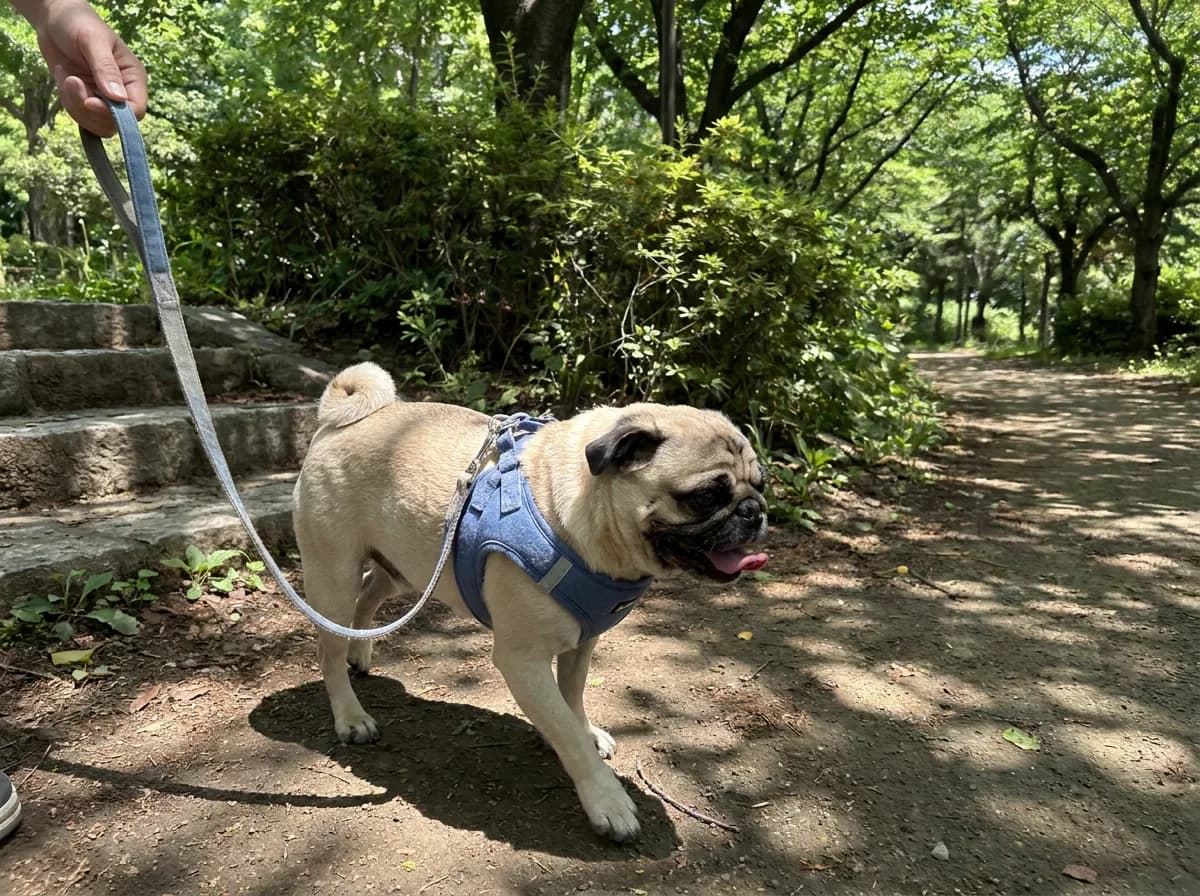
- Pugs have increased heat stroke risk. A front clip harness can reduce leash pressure on the neck but cannot make overheating or breathing difficulty safe. Stop activity when your dog struggles; move to a cooler setting and seek veterinary help for breathing distress or collapse.
Build interest without turning every session into vigorous exercise. Hide a few pieces of the normal meal in an easy indoor search, practice coming when called across a room, or teach a nose target to your hand. Use non-slip footing, supervise toys, and let the dog disengage. A busy dog should still be able to pause comfortably.
The American Veterinary Society of Animal Behavior recommends reward-based training. A useful first goal is cooperative care: briefly touching a paw or bringing a harness near the body, then rewarding relaxed participation. Break tasks into small steps instead of holding the dog still until they stop resisting.
Use WebVet's guide to dog heatstroke signs to prepare your household's emergency plan. Save your veterinarian's number and the route to urgent care before warm weather changes your routine.
Daily routine, sleep, and alone time
Some Pugs like sleeping beside their people, but sharing a human bed is optional. Choose arrangements that let the dog rest comfortably without overheating, falling, or needing to jump repeatedly. A separate bed nearby can provide companionship while giving everyone room to sleep.
There is no single Pug-specific sleep total that decides whether a dog is healthy. Age, activity, household routine, and illness affect sleep. Pay attention to changes from the dog's usual pattern and whether rest looks comfortable. Repeated disturbed sleep or obvious breathing effort deserves a veterinary discussion, not acceptance as a cute breed habit.
A predictable day is easier to plan than a rigid timetable:
- Include meals, toilet opportunities, comfortable activity, quiet rest, and brief practice being apart.
- Start with absences the dog can manage, and increase only while they remain comfortable.
- Use a camera, when helpful, to distinguish sleeping from pacing, vocalizing, or repeated attempts to escape.
For brief lessons, Zuke's Mini Naturals Chicken Recipe treats, 10-oz pouch can be divided into small rewards if chicken suits your dog. Account for them in the food budget. The goal is a few clear successes, not feeding a bag of treats to fill time.

Small, soft chicken-recipe rewards for short adult-dog training sessions. Portion into tiny pieces and include treats in the daily calorie budget.
Petful may earn a commission when you click through to Chewy, at no extra cost to you.
Pug colors, coat, and shedding
Fawn and black are the colors recognized by the American Kennel Club Pug standard. A fawn coat with a black mask and a solid black coat are familiar examples. Labels such as chocolate brown, black-and-white, or brindle require closer questioning; a non-standard brindle pattern is not an AKC-recognized Pug color.
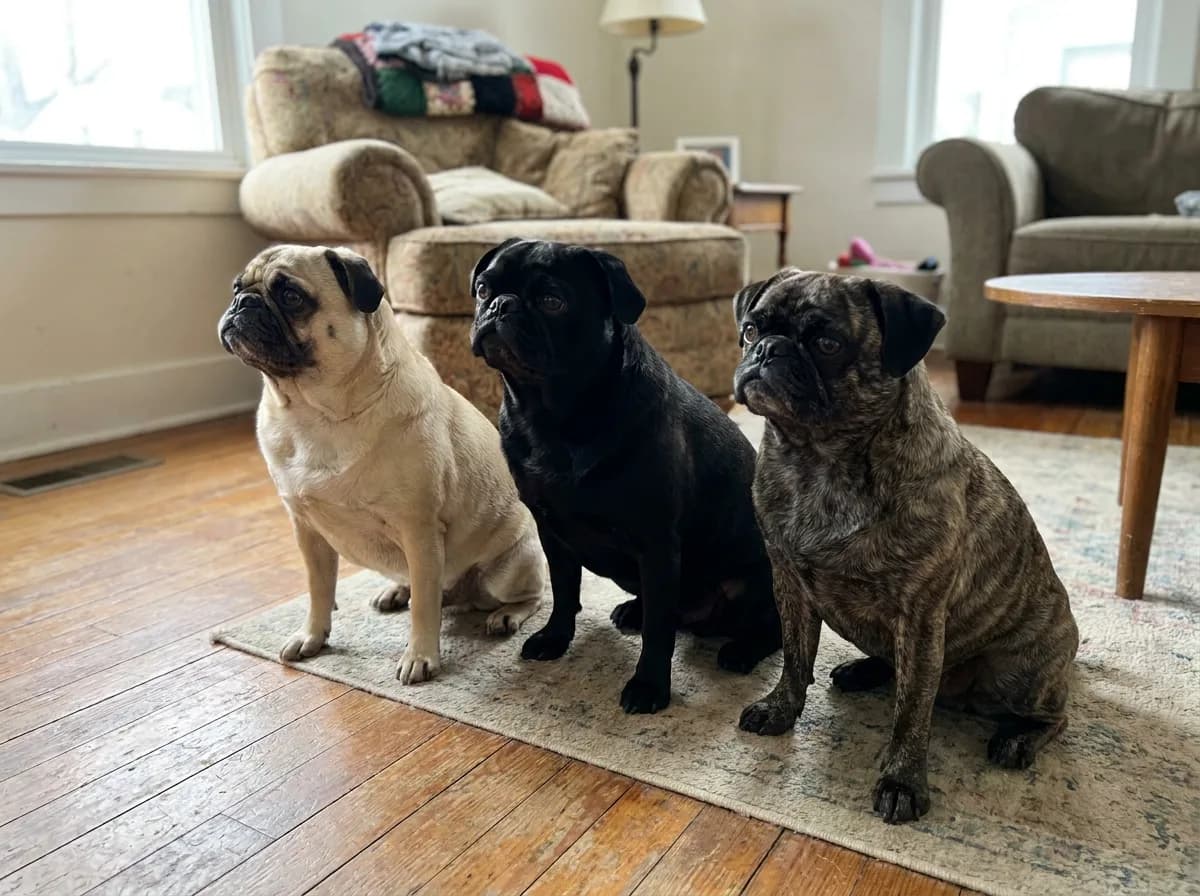
Pictures help compare appearance, but they cannot establish pedigree, genetics, or health. Ask what the seller means by an unusual color name and what documentation supports the dog's identity. An uncommon label does not justify a health claim or prove that a puppy deserves a premium price.
Short fur still requires care. Pugs shed, and brushing helps remove loose hair while letting you inspect the skin. Make grooming a brief, comfortable routine rather than waiting until the dog needs a long session. Ask your veterinarian how to care for your dog's facial folds and tail area; avoid experimenting with perfumed products or leaving damp skin trapped in a fold.
- Look for redness, odor, rubbing, or discomfort during routine handling.
- Keep cleaning products away from the eyes and follow veterinary instructions.
- Include nails, ears, and oral care in the plan rather than judging grooming only by coat length.
For an appropriately sized brush head, consider the Virbac C.E.T. Dual-Ended Dog & Cat Toothbrush. Introduce it gradually with a dog-appropriate toothpaste recommended by your veterinary team. Do not force brushing over a painful mouth; ask for an examination when eating or handling changes.
Black Pugs
A black Pug is a coat-color variation of the same breed, with the same need for careful selection and daily care. Color alone does not make a dog healthier, calmer, or less likely to shed. Our black Pug coat and care guide compares black and fawn appearances, explains misleading rarity claims, and covers the questions to ask before buying or adopting. Judge the dog and its records rather than assigning personality to pigment.
Pug health problems and brachycephalic syndrome
The main weakness to consider when choosing a Pug is its flat-faced anatomy, particularly the potential effect on breathing and heat tolerance. A 2022 Royal Veterinary College VetCompass study found higher odds of several disorders in UK Pugs than non-Pugs. That population finding is not an individual diagnosis.
- Brachycephalic obstructive airway syndrome can affect activity and rest. Do not dismiss breathing difficulty as normal because the dog is a Pug. Arrange veterinary assessment and use the detailed Pug health guide for the evidence and care questions.
Read our veterinarian-authored explanation of Pug health problems for clinical detail. A longer-looking muzzle or a “retro Pug” sales label cannot certify a healthy airway. The Respiratory Function Grading Scheme assesses breathing function from 12 months and recommends repeat assessment every two years; ask what comparable assessment is available locally.
Feeding a pug and keeping weight off
There is no food that every Pug prefers or a favorite flavor that defines the breed. Choose food for nutritional suitability, life stage, tolerance, and portion control. For a puppy, that means complete and balanced food formulated for growth; an adult dog's diet should match their needs and veterinary advice.
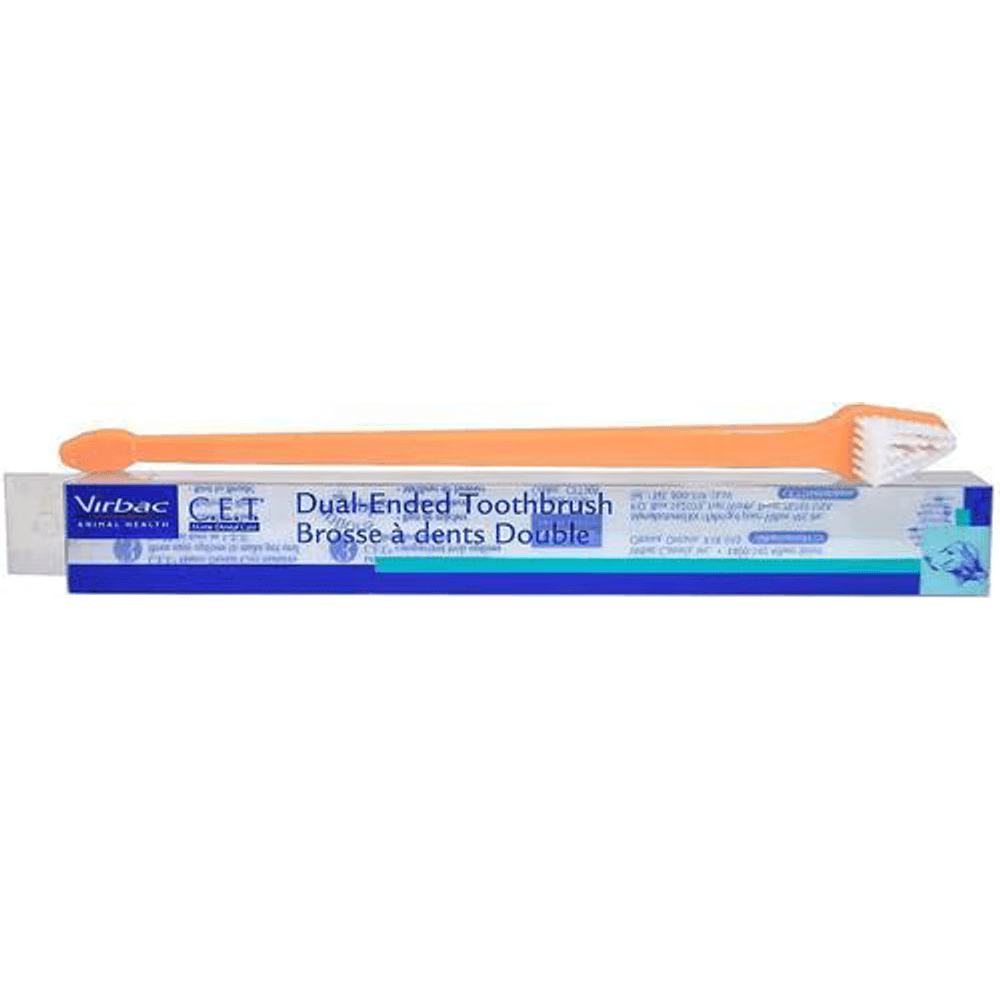
A dual-ended toothbrush with a large and a small head to fit different mouth sizes and reach the back molars where plaque hides. Soft bristles angled for the gumline.
Petful may earn a commission when you click through to Chewy, at no extra cost to you.
Treat food enthusiasm as something to manage, not evidence that the dog is underfed. Measure the daily amount, divide it between meals and training, and record treats given by different family members. One person counting carefully cannot compensate for several people adding extras unnoticed.
Use weight trends and body-condition assessment together. A dog with a broad chest is not automatically overweight, and a round silhouette should not be excused as “just Pug shaped.” Ask your veterinary team to show you how to assess the individual dog and when to adjust portions.
- Photograph or write down the current food label and feeding amount before a visit.
- Include chews, scraps, and flavored supplements when describing intake.
- Make changes deliberately instead of repeatedly switching foods whenever enthusiasm varies.
What a pug costs: purchase price and lifetime budget
Good Dog's Pug buyer guide currently lists a $1,600–$2,500 puppy purchase range. This is a marketplace reference, not an independent national average or a guarantee of price or quality. Rescue fees vary; ask what examinations and treatment are included.
For a transparent US-dollar example, assume $350 for setup and $200 a month for recurring care. Added to the marketplace purchase range, that gives a first-year Pug budget of $4,350–$5,250 and an annual ownership cost of $2,400 afterward. These recurring and setup inputs are illustrative planning assumptions, not surveyed veterinary or insurance prices.
| Budget line | Example input | Replace with |
|---|---|---|
| Purchase price | $1,600–$2,500 marketplace reference | Exact breeder quote or rescue fee and inclusions. |
| First-year setup | $350 assumed | Your equipment, initial supplies and setup costs. |
| Food | $35 per month assumed | Suitable diet and portion cost. |
| Preventives | $25 per month assumed | Your veterinarian's plan and local prices. |
| Routine veterinary reserve | $40 per month assumed | Local examination, vaccine and routine-care estimates. |
| Insurance | $60 per month assumed | An actual quote, deductible, exclusions and coverage terms. |
| Other supplies and care | $40 per month assumed | Grooming, enrichment and any paid care. |
| First-year total | $4,350–$5,250 | Purchase + setup + $200 × 12. |
| Recurring annual total | $2,400 | $200 × 12, before inflation or changes. |
| Airway surgery contingency | Separate, not priced here | Individual assessment, referral estimate and confirmed coverage or savings. |
A lifetime total made by multiplying this example by 12 or 15 would hide too much uncertainty. Insurance premiums, medical needs, and paid care can change substantially. Use the annual worksheet to test affordability now, then revisit it as the dog ages.
The cheapest advertised Pug is not necessarily the least expensive dog to care for. Compare documentation, health history, contract terms, and ongoing support. Keep the airway surgery contingency separate from ordinary spending; treatment decisions and costs require individual veterinary advice. Read insurance exclusions before relying on a policy to pay a particular bill.
Get comparable quotes before paying a deposit
Ask what each quoted amount includes. A veterinary estimate might cover an examination without laboratory work; a paid-care quote may exclude weekends or medication administration. Set those details beside one another before deciding that the lowest headline price meets your needs.
- Ask a local veterinary practice about the expected first-year visits and which services are priced separately.
- Request an insurance illustration showing the deductible and your share of an example claim, while checking what conditions are excluded.
- Price backup care for an actual week when you travel, not only a single short visit.
If the monthly total only works when nothing unexpected happens, the budget is incomplete. Waiting, adopting a dog with clearer known needs, or choosing a different companion may be more practical than reducing routine care after purchase.
Pug puppies: what changes in the first year
A puppy needs more frequent supervision, toilet opportunities, meals, and gradual introductions than an adult. Coat color does not change that workload. Newborn Pugs belong with their mother and appropriate experienced care; an owner choosing a companion should not assume they can take over neonatal care from a short breed guide. Our Pug puppies guide covers bringing a puppy home, early routines, and the first-year questions without turning this adult breed overview into a second puppy manual.
Adopting a pug: rescue and rehoming
An adult rescue Pug may offer a clearer view of size, personality, and daily needs. Begin with an established organization that explains its assessment process and provides available medical records. Ask about observed breathing during sleep and activity, prior procedures, medications, handling, and behavior when alone.
A cheerful meeting is useful, but the daily-care record matters too. Request specifics about toilet habits, stairs, children, other animals, and the support available after placement. Discuss costs you might inherit before adoption rather than assuming completed treatment means future care will be simple.
For a breeder placement, ask to see the parents' actual health results. The Pug Dog Club of America health program lists these CHIC requirements:
- Pug dog encephalitis screening.
- Eye examination results.
- Patella evaluation.
A genetic susceptibility result is not a prediction that a particular puppy will become ill. Ask your veterinarian to interpret the records rather than relying on the words “DNA clear.”
Keep copies with the dog's identification and the dates of examination. Registration papers describe identity and ancestry; they do not replace those health records or a breathing assessment. A responsible discussion should leave you understanding what has been checked, what remains uncertain, and what support is offered if a problem appears.
Petful's report about a couple rescuing homeless Pugs illustrates the work behind rehoming; it is a news story, not a current adoption directory. Check availability and procedures directly with the organization you contact.
- Expect questions about your home and care arrangements.
- Ask for clear return and support terms.
- Prepare a quiet arrival period rather than an immediate round of visitors.
How long do pugs live?
Breed references often give a Pug life expectancy of roughly 12–15 years, including the Continental Kennel Club profile. Treat that as a broad description, not a forecast. Genetics, disease, body condition, and access to suitable care can influence an individual dog's life.
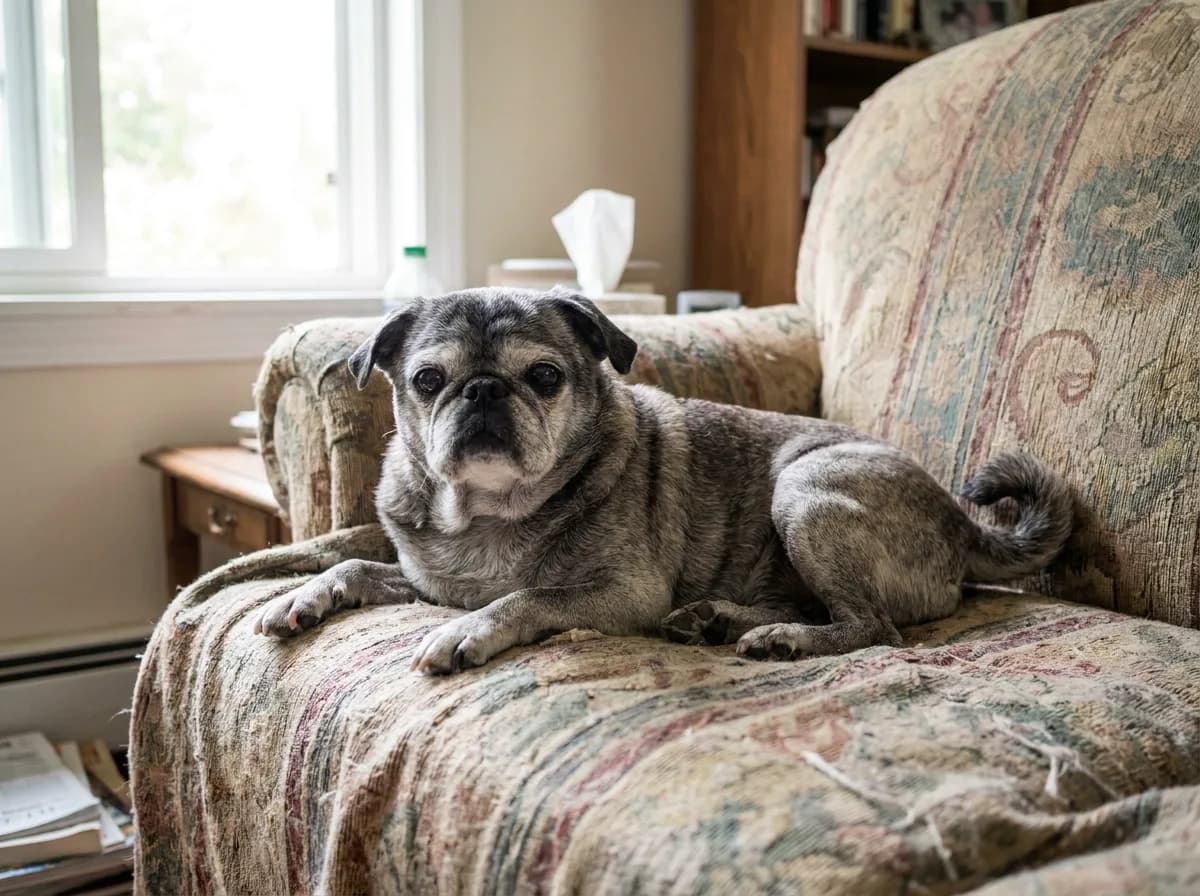
A 7-year-old Pug and a 10-year-old Pug may need different support, but age alone cannot tell you how either feels. Watch changes in walking, sleep, appetite, toileting, and willingness to be handled. Bring those observations to routine visits rather than assuming slowing down is an unavoidable reason to stop investigating discomfort.
Make the home easier to navigate as needs change. Provide non-slip routes, accessible resting areas, and manageable toilet trips. Keep favorite activities available in forms the dog can enjoy. A shorter sniffing outing and comfortable time together may be more suitable than trying to preserve the exact routine of a younger dog.
- Note what your dog can do comfortably today.
- Record changes in frequency or severity, not just a general impression of aging.
- Ask your veterinarian which changes need prompt assessment and which can be monitored.
Where pugs came from: history and origins
Pugs developed as companions in China and later became popular in European households and royal circles. Their long role as companion dogs helps explain why they are associated with close human company rather than a specialized working task. The AKC's history account traces that background and notes uncertainty around parts of the breed's early story.
The name's origin is not settled. One theory connects it with pet marmosets called Pug monkeys; another connects it with the Latin word for fist. Presenting either as a proven translation would be too confident. Likewise, a historical portrait of an “original Pug dog” cannot show breathing function or establish that every earlier dog was healthy.
Use history to understand the breed's role, then judge today's dog through records, observation, and appropriate veterinary assessment. A romantic origin story should never replace those practical checks.
Pug questions pug owners ask
Choose a quiet, comfortably cool place with easy access and suitable bedding. A positively introduced crate beside the bed or a separate dog bed nearby can work. A cool sleeping surface should still be comfortable; avoid heavy covers, overheating, or locations where the dog must repeatedly jump.
Alone time tolerance varies. Arrange toilet breaks and support appropriate to age and health rather than assuming a full shift is manageable. Pacing, repeated vocalization, or escape attempts can be separation distress signs. Seek help and adjust the plan instead of extending absences through obvious distress.
There is no universal safe temperature cutoff. Humidity, exertion, access to cooling, and the individual dog's airway function all affect heat stroke risk. Change the plan before the dog struggles, and use veterinary advice for that dog's limits. Cool-looking weather does not guarantee safe strenuous exercise.
A properly fitted body harness is generally the more suitable way to attach a walking leash because it avoids concentrating pulling force at the neck. A front clip harness is one option if it fits comfortably. Reducing tracheal pressure is useful, but equipment cannot treat an airway problem.
Check the exact airline, route, carrier dimensions, and current brachycephalic policy before booking. Air travel restrictions can differ for cabin and cargo travel, and an airline brachycephalic embargo may rule out a particular option. Acceptance by an airline does not establish medical fitness; discuss the trip with your veterinarian.
No dog breed guarantees freedom from allergic reactions. Pug dander and proteins in saliva can trigger allergies, and coat color does not remove them. For an allergy household, discuss suitability with a qualified health professional before bringing a dog home rather than relying on a non-shedding sales claim.

Kristine Lacoste has been researching dog and cat breeds for nearly a decade and has observed the animals up close at dog shows in both the United States and the United Kingdom. She is the author of the book One Unforgettable Journey, which was named as a finalist for a Maxwell Award from the Dog Writers Association of America, and was host of a weekly pet news segment on the National K-9 Academy Radio Show. In addition, she was the New Orleans coordinator for Dogs on Deployment, a nonprofit that helps military members and their pets, for 3 years. Kristine has researched and written about pet behaviors and care for many years. She holds a bachelor’s degree in psychology, another bachelor’s degree in English and a Master of Business Administration degree.
Sign up for expert-backed reviews and safety alerts all in one place.