Pug Puppies: A Practical Guide to the First Year
Bring your Pug puppy home with a workable first-year plan. Learn how to organize sleep, toilet breaks, feeding, socialization, gentle training, and veterinary care around the puppy in front of you.
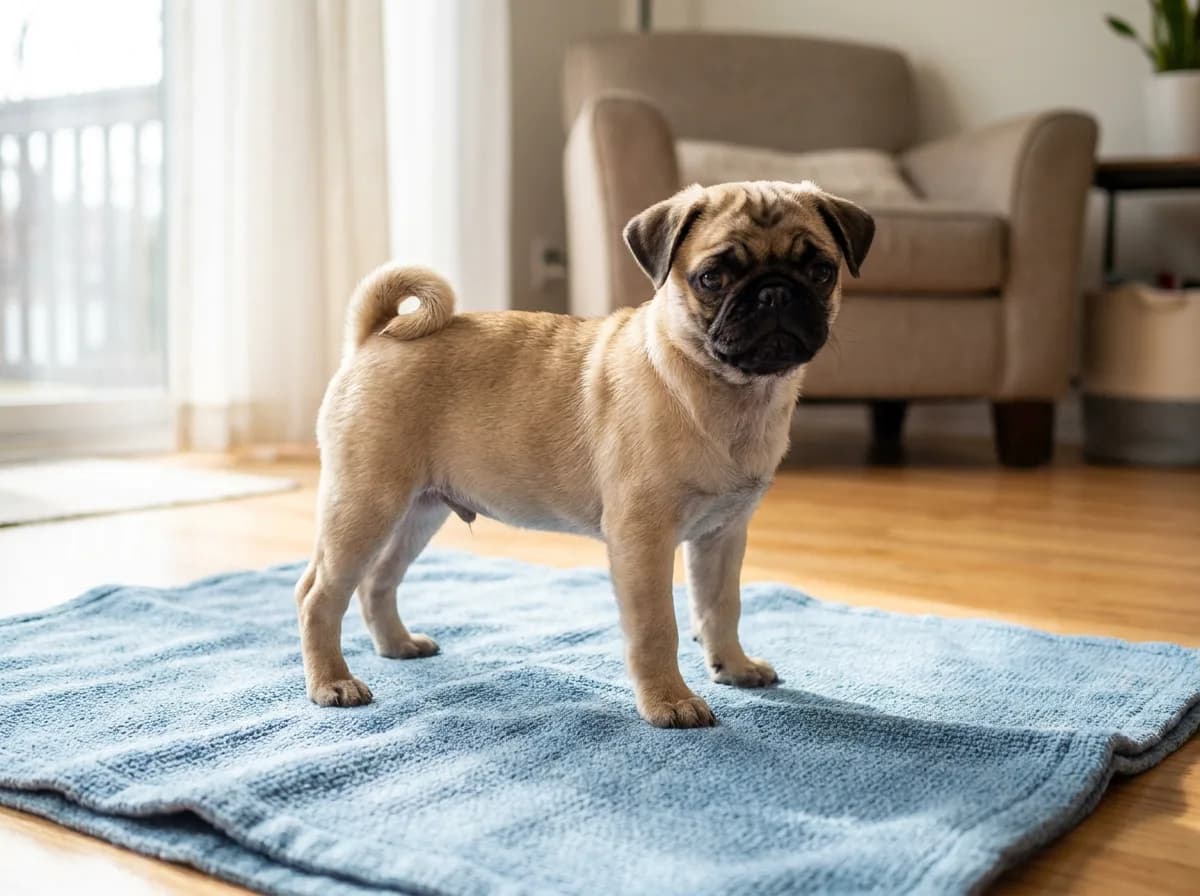
Fawn Pug puppy standing on a blue mat in a bright living room.
Petful is reader supported. As an affiliate of platforms like Amazon and Chewy, we may earn a commission when you buy through links on this page. There is no extra cost to you.
Pug puppies need frequent care, patient teaching, and a home that takes breathing comfort and heat seriously. Start with a simple cycle: a toilet opportunity after waking, food and suitable activity, then a quiet place to rest. Adjust that routine to the puppy you observe rather than expecting an eight-week-old dog to fit an adult schedule.

Sign up for expert-backed reviews and safety alerts all in one place.
What to expect from Pug puppies
Pug puppies can be demanding, even when they are affectionate and eager to interact. Small size does not eliminate nighttime waking, chewing, accidents, or the need to supervise. The difficulty usually lies in providing consistent opportunities to learn while meeting a young dog's physical needs, not in winning a contest over stubbornness.
The AKC's Pug puppy training timeline emphasizes early routines, positive associations with handling, and gradual skill building. Use milestones as prompts for what to practice, not pass-or-fail deadlines. A puppy who understands a cue in the kitchen may still need help responding in a distracting doorway.
- 1Pug puppies learn through clear routines and rewarding small successes.
- 2Coordinate safe socialization with veterinary vaccination advice.
- 3Monitor breathing, comfort and recovery rather than treating every noise as a breed quirk.
Choose a few first-week priorities: feeling safe at home, finding the toilet area, eating reliably, and resting. Visitors, outings, and lessons should fit around those needs. You do not need a full obedience repertoire before the puppy has learned where they live and whom they can trust.
Before your Pug puppy comes home
Prepare one manageable area with non-slip flooring, an accessible resting place, water, and safe barriers. Remove cords, medicines, cleaning products, and small objects the puppy could swallow. Check gaps beneath furniture and gates from the puppy's height; a tidy-looking room can still contain accessible hazards.
An orthopedic sofa bed with three bolstered sides for dogs who like to rest their head and joints against a cushion. The supportive foam base cradles hips and elbows, a comforting spot for an older or shaky dog to settle.
Petful may earn a commission when you click through to Chewy, at no extra cost to you.
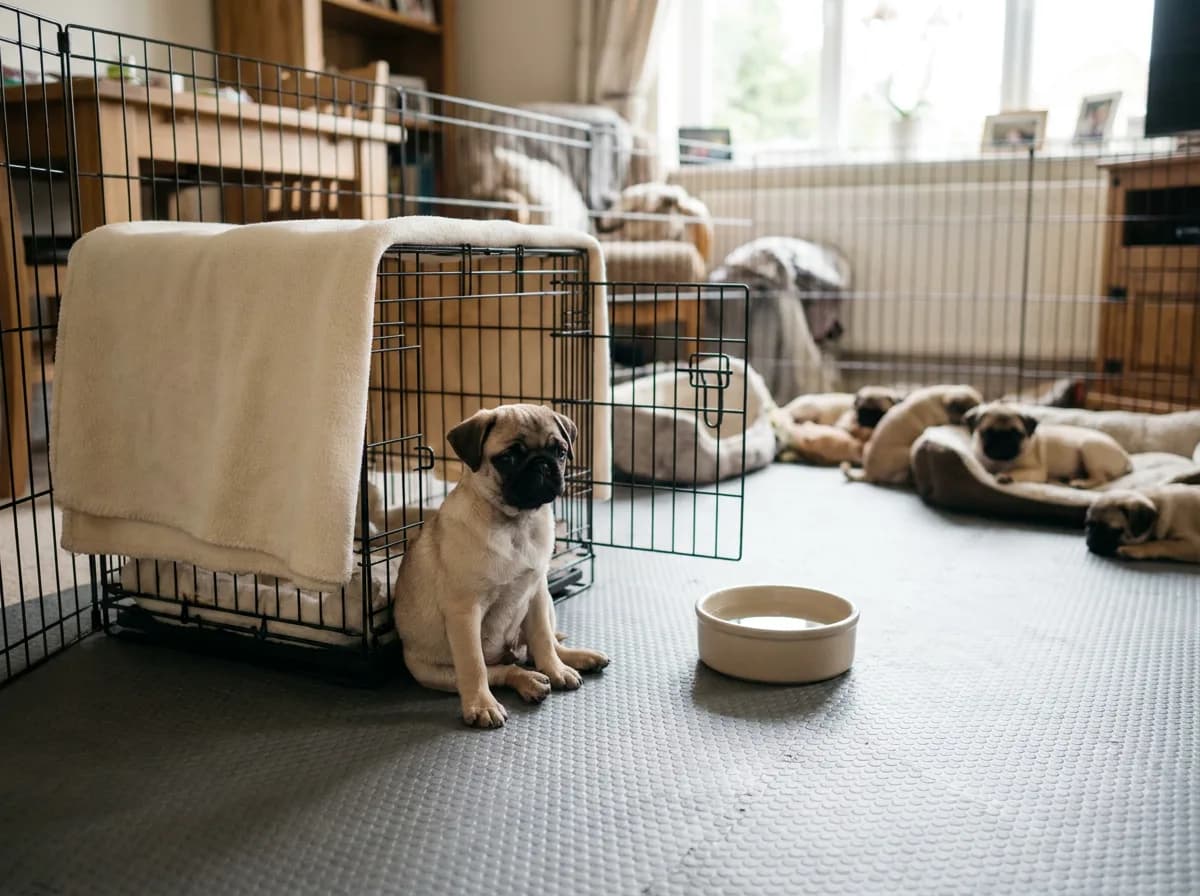
A bed should allow easy entry and comfortable stretching. The FurHaven Velvet Waves Orthopedic Sofa Bed, Large is an optional roomy resting spot if it suits your floor plan. It is not a crate-sizing recommendation or a treatment for discomfort. Supervise a puppy who chews bedding and remove damaged material before it can be swallowed.
Collect the information that makes the transition easier:
- Current food, feeding amounts, meal times, and any recent digestive changes.
- Dated vaccination, parasite-treatment, examination, and identification records.
- The puppy's experience with a pen, crate, toilet surface, handling, and time apart.
- The placing person's contact information and written support or return terms.
Book a veterinary appointment and ask what to bring. Avoid changing food, sleeping arrangements, and every daily cue at once when you can preserve a familiar routine temporarily. Introduce family members calmly and let the puppy approach; a welcome party can wait.
Make the first veterinary visit useful
Write down your questions while preparing the house. Bring the records you received, a photograph of the food label, and any concerns about breathing, sleep, appetite, or movement. A short description of when a problem occurs is more useful than trying to reproduce it in the clinic.
- Ask how to recognize comfortable breathing and which changes require urgent attention.
- Agree on vaccination and parasite prevention, including the next appointments.
- Discuss feeding, growth monitoring, and how to start handling teeth, nails, and folds.
- Confirm which local places and puppy classes are suitable for early socialization.
Record the answers somewhere all caregivers can find them. Keep the practice's ordinary and after-hours contact details with the puppy's records, so nobody has to search for them during a stressful moment.
The first week: build a simple daily routine
Build the day around events you can recognize. Waking, eating, drinking, play, and transitions between rooms tell you more about when to offer a toilet break than a copied timetable does. Keep notes for a few days, then adjust the plan where accidents or unsettled periods repeat.
| What just happened? | Your next step | What to record |
|---|---|---|
| Waking from sleep | Offer a supervised toilet opportunity | Whether the puppy went and how soon after waking. |
| Finishing a meal or active play | Watch closely and offer another toilet opportunity | The timing that works for this puppy. |
| A brief learning session | End on a manageable success and allow rest | Signs of engagement or frustration. |
| Settling in the rest area | Reduce activity and let the puppy sleep | Comfortable sleep versus repeated disruption. |
| An accident | Clean, review supervision and adjust the next opportunity | Location, preceding event and time since the last break. |
| A health or feeding concern | Contact your veterinarian as appropriate | Symptoms, duration and relevant food or care changes. |
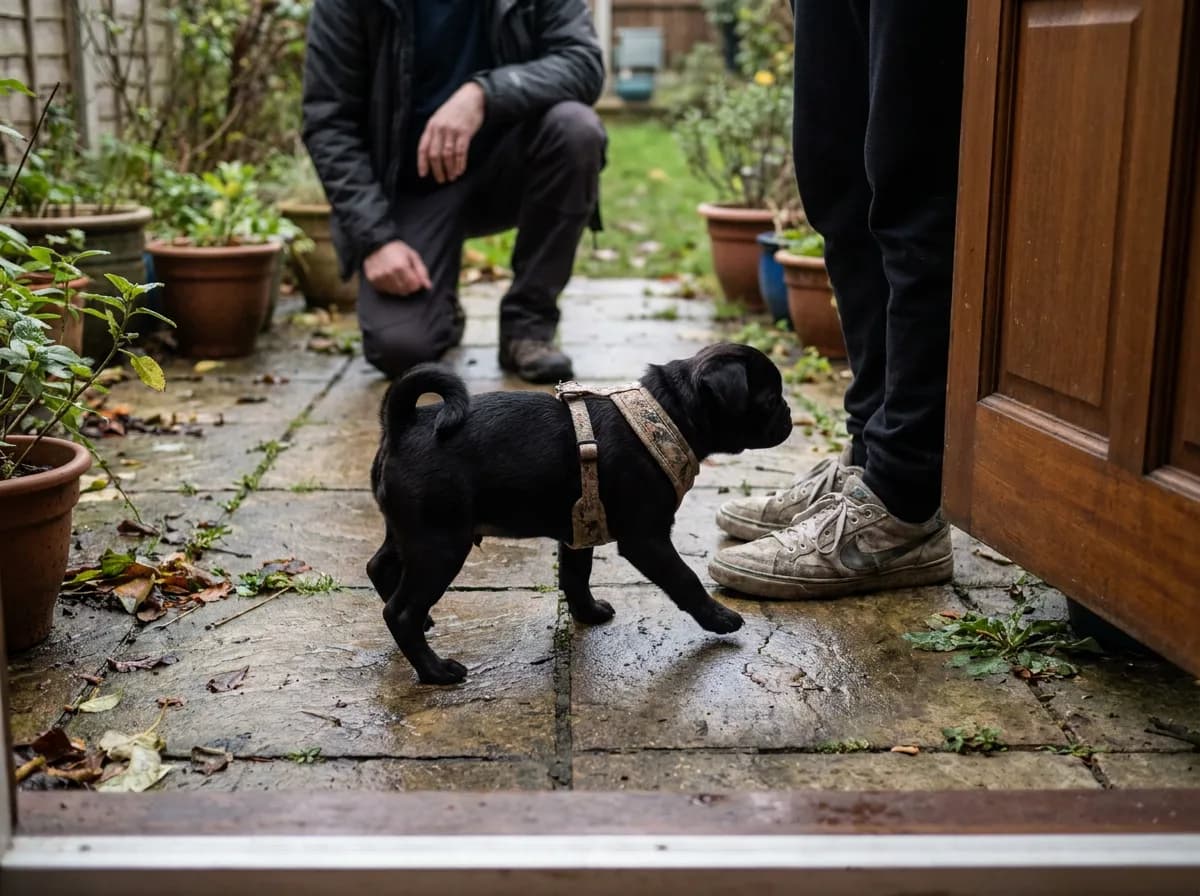
For example, if an accident repeatedly happens immediately after breakfast while you wash dishes, move the next toilet opportunity earlier and keep the puppy supervised. If play repeatedly turns into frantic biting, shorten the session and make room for quiet rest. The record helps identify a change you can make; it should not become a scorecard used to blame the puppy.
When another person takes over, give them a short handover: the last meal, last successful toilet trip, most recent nap, and anything unusual. This prevents two people each assuming the other provided a break. Agree on the same reward and cue rather than changing the rules at every shift. If you must leave, arrange actual supervision and care; a pen changes the space available but does not provide the missing person.
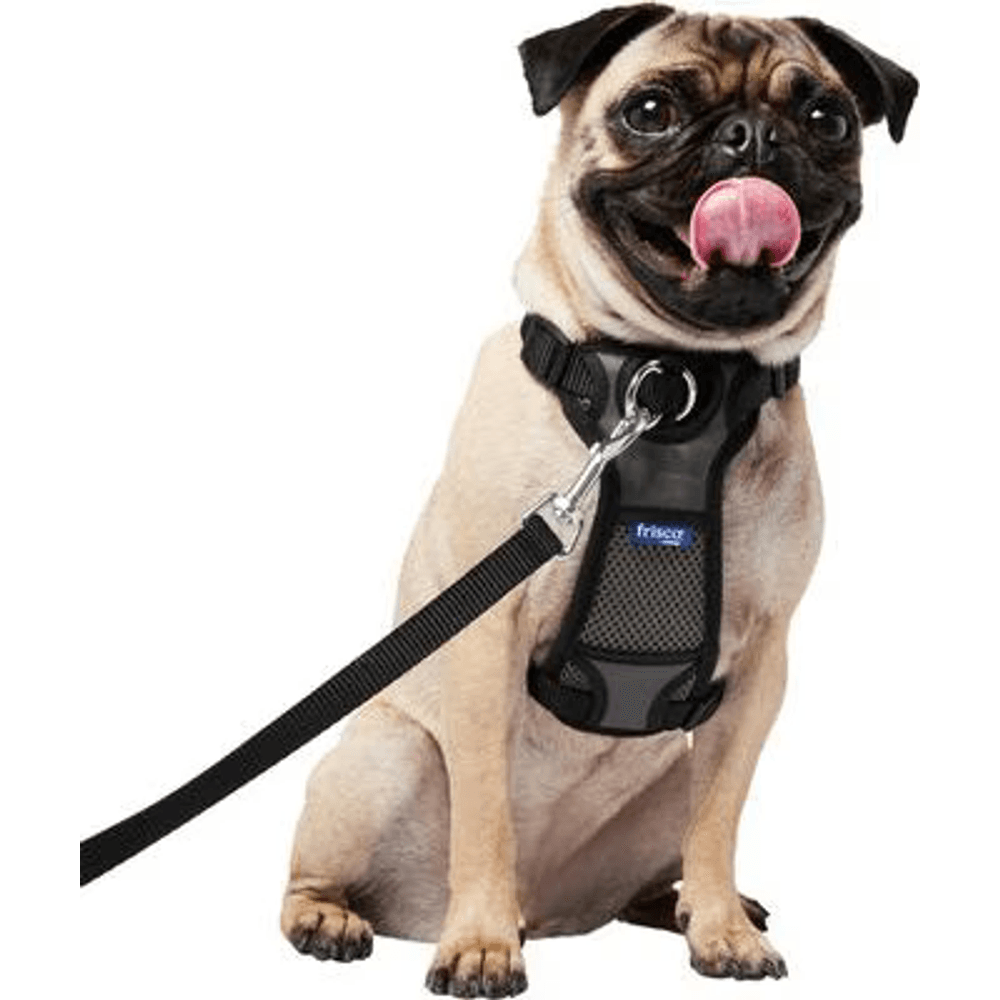
A budget-friendly padded no-pull harness that keeps leash pressure off a coughing dog's neck and windpipe by distributing it across the chest. A simple, affordable way to protect an irritated airway or a collapsing trachea on every walk.
Petful may earn a commission when you click through to Chewy, at no extra cost to you.
For supervised trips to the agreed toilet area, a properly fitted body harness gives you a place to attach the lead. The Frisco Padded No Pull Dog Harness, Black, Small is only suitable if its actual measurement range fits your puppy. Check security and movement before going outside; a tiny puppy may need a different size. Do not leave walking equipment on during unsupervised rest if it could catch on the enclosure.
How to toilet train a Pug puppy
Housebreaking a Pug puppy takes consistent access and supervision, with no promised completion date. Choose an appropriate toilet location with your veterinarian's guidance about local disease risk. Take the puppy there frequently and after likely trigger events, and reward success promptly where it happens.
Use the same route and a simple cue if you want one. Stay calm while waiting; a busy game may distract a puppy from the reason you went outside. If nothing happens, return to close supervision and try again soon rather than giving immediate unsupervised freedom throughout the home.
For an apartment, plan the whole journey: harness fitting, the lift, shared entrances, and the return upstairs. A long trip can make an otherwise sensible routine difficult. Ask your veterinarian about a suitable temporary toilet arrangement when outside access is unsafe or impractical. Keep the chosen surface and location consistent, then plan any transition deliberately. Do not solve accidents by withholding normal access to water or by expecting a young puppy to wait through a full workday.
- Reward successful toileting before moving on to another activity.
- If you discover an accident afterward, clean it without punishing the puppy.
- Review the preceding event and adjust access or supervision next time.
- Seek veterinary advice for pain, straining, unusual frequency, or a sudden loss of previously reliable habits.
Small food rewards can make the successful moment clear. Wellness Soft Puppy Bites Lamb & Salmon, 8-oz pouch are treats for training, not complete meals. Tear them into suitably small pieces, check ingredient tolerance, and include them in daily intake. Part of the normal puppy food allowance may work just as well.
Where should a Pug puppy sleep at night?
A Pug puppy should sleep in a quiet, comfortably cool resting area near enough that you can notice waking and distress. A safely arranged pen or positively introduced crate beside your bed can make early toilet trips easier. Size the enclosure so the puppy can stand, turn, and lie comfortably, and keep the route to the toilet area simple.
Introduce the space during the day with short, pleasant experiences. Let the puppy investigate, reward relaxed entry, and avoid making the first long confinement happen when everyone disappears at bedtime. At night, respond to genuine care needs while keeping toilet trips calm and uneventful.
- Keep loose cords and items that could snag out of reach.
- Choose bedding the puppy can use safely without swallowing pieces.
- Keep the resting area out of direct heat and avoid heavy covers over the dog.
Should a Pug puppy share your bed?
Some Pugs enjoy sleeping close to their owners, but bed-sharing is not necessary to build a bond. For a young puppy, consider falls, gaps, bedding, overheating, and whether you can notice a need to toilet. A separate bed nearby is often easier to manage while those needs are frequent. Pick the arrangement you can maintain safely rather than treating closeness as a requirement.
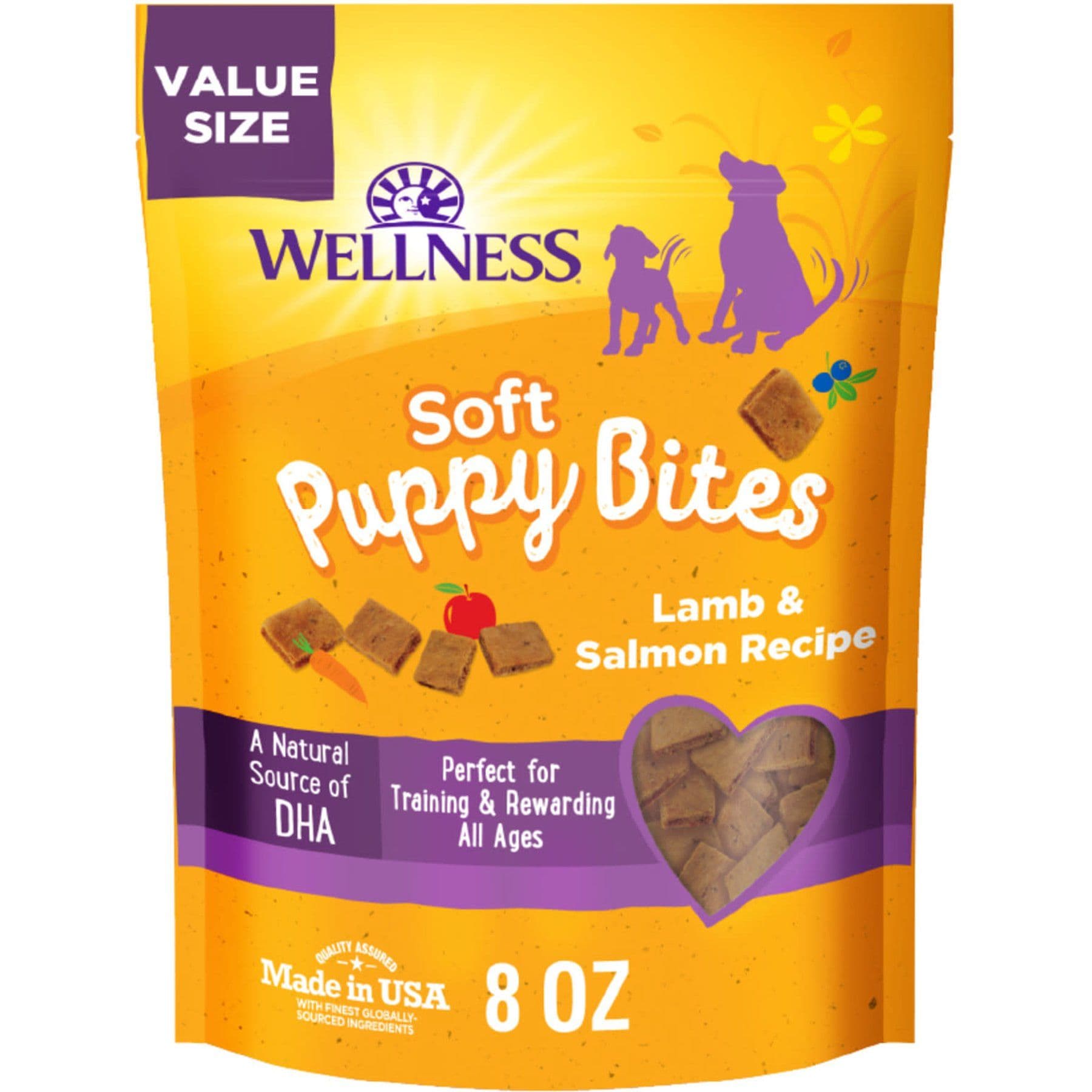
Soft lamb-and-salmon puppy bites formulated for puppies under one year. Tear each bite smaller when rewarding repeated training steps.
Petful may earn a commission when you click through to Chewy, at no extra cost to you.
Feeding and healthy growth
Use a complete and balanced diet suitable for growth, with amounts reviewed for your puppy's size and condition. The FDA explains nutritional adequacy statements: growth and adult maintenance have different nutrient requirements, and treats or supplements are generally not intended as a sole diet. A Pug picture on the bag is not a substitute for the adequacy statement.
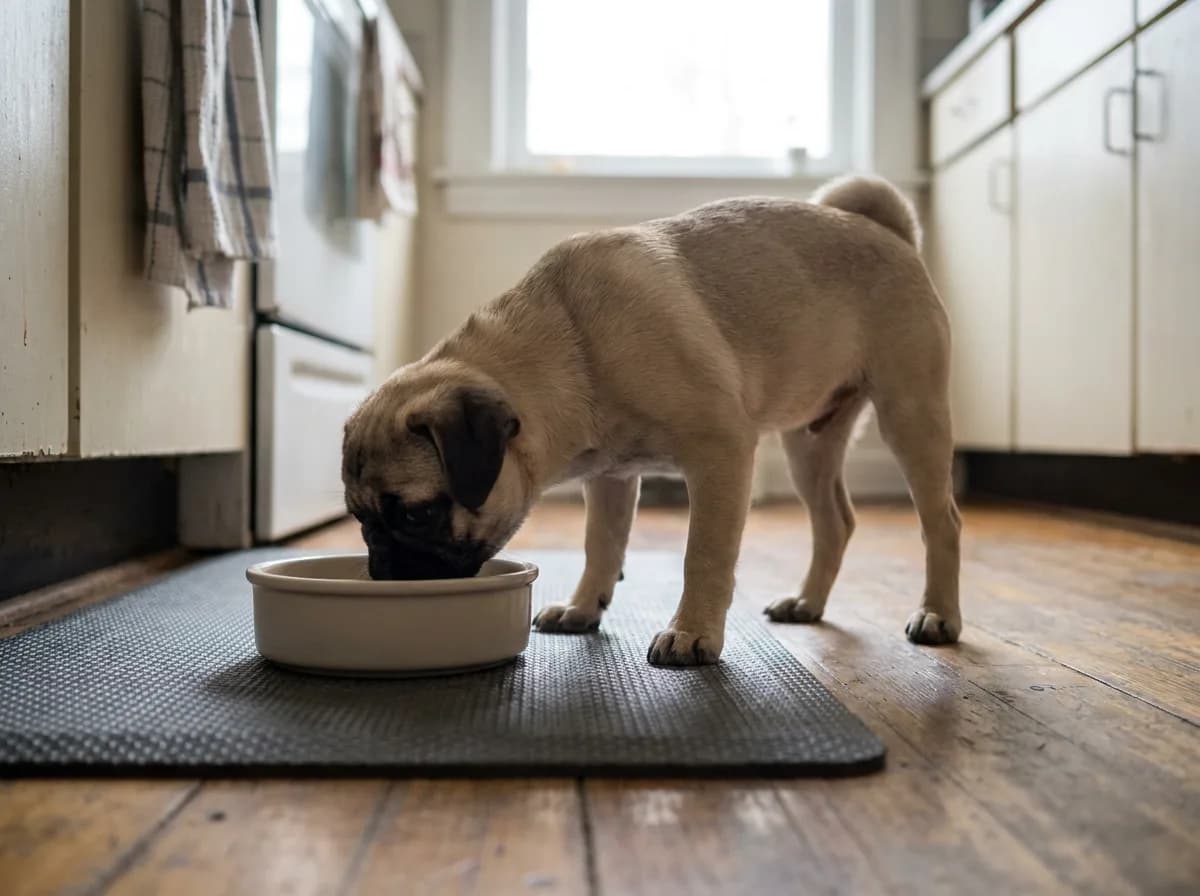
Bring the current food label and feeding record to your veterinary appointment. Ask how to divide the daily amount into age-appropriate meals and when to reassess it. Have the veterinary team demonstrate body-condition assessment and agree on when to record the next weight, so growth is judged from a trend rather than one number. Do not restrict a growing puppy simply to stay under a breed-standard adult weight, and do not keep increasing food because the puppy eagerly accepts it.
Practical consistency helps you notice change:
- Use the same measuring method and record the daily total.
- Count training rewards and extras supplied by other family members.
- Keep clean water available and wash bowls regularly.
- Ask for guidance before a major diet change or adding supplements.
Keep the packaging or a clear photograph showing the exact product and lot details. If the puppy becomes unwell, that is more useful than remembering only the bag color. Contact your veterinarian about concerning appetite changes, repeated vomiting, diarrhea, or weakness rather than repeatedly swapping flavors to tempt the puppy.
Safe socialization and gentle training
Socialization means helping a puppy feel comfortable with ordinary experiences, not arranging as many close encounters as possible. The AVSAB puppy socialization position supports appropriate exposure before the vaccine series is complete. Coordinate the locations and activities with your veterinarian's assessment of local disease risk; neither total isolation nor uncontrolled dog-park exposure is a useful default.
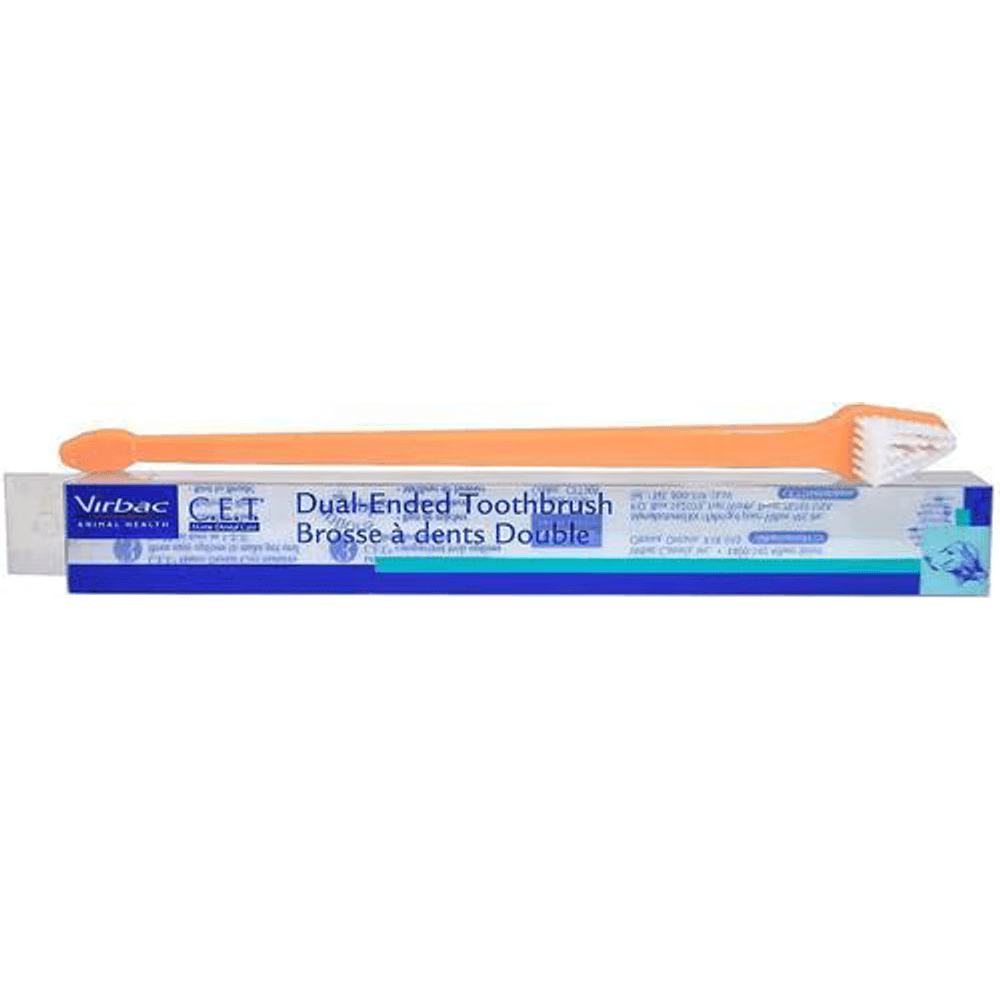
A dual-ended toothbrush with a large and a small head to fit different mouth sizes and reach the back molars where plaque hides. Soft bristles angled for the gumline.
Petful may earn a commission when you click through to Chewy, at no extra cost to you.
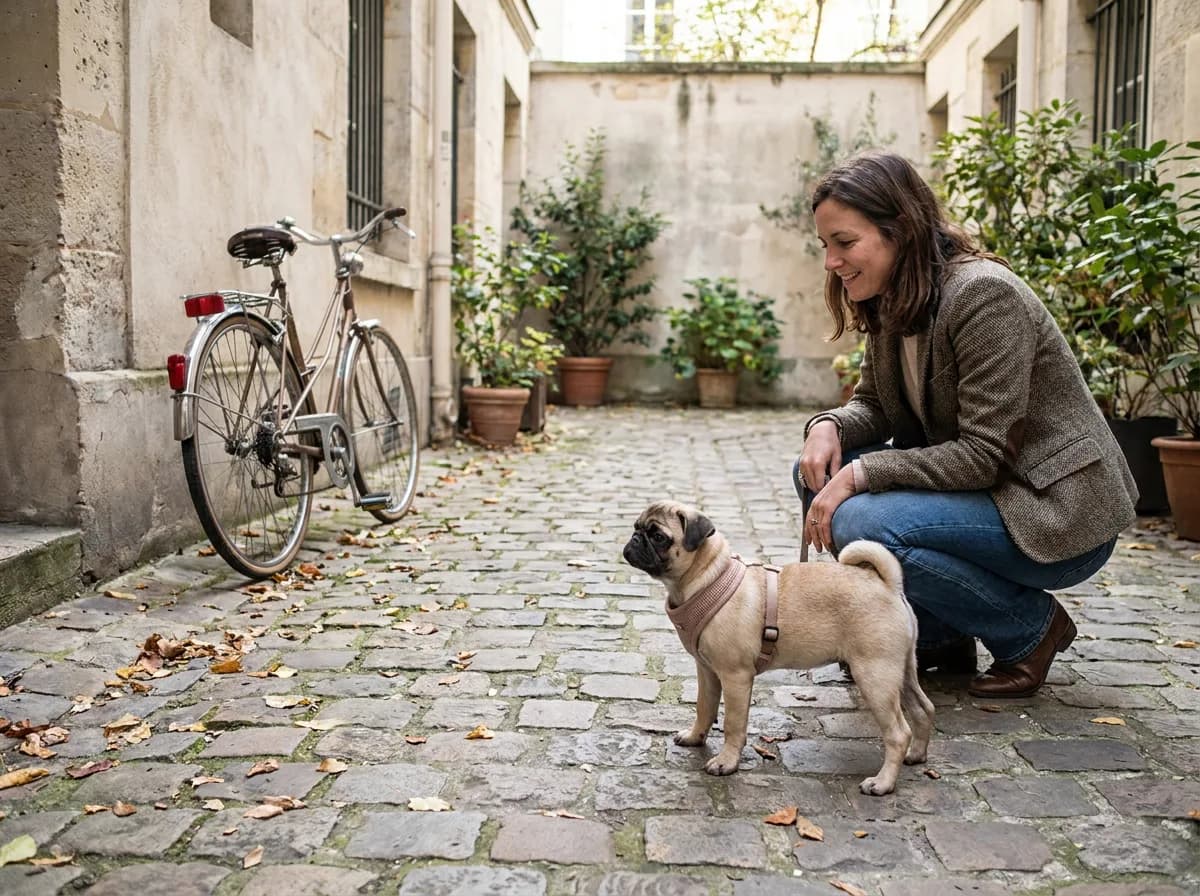
Start with experiences you can control. A puppy can hear a quiet household sound from another room, watch a bicycle at a distance, or meet a calm visitor without being crowded. Give them an easy way to pause. If they freeze, retreat, or become increasingly worried, lower the intensity rather than assuming they need more exposure to the same overwhelming situation.
- At home: Try a different safe surface or a low-volume everyday sound, one change at a time.
- With people: Invite calm interaction and let the puppy approach instead of passing them between visitors.
- Around dogs: Ask your veterinarian which known, healthy dogs and settings are suitable.
- In class: Ask about vaccination requirements, cleaning, group size, rest breaks, and reward-based methods.
Read WebVet's puppy vaccine schedule to organize questions and records for your appointment. The final vaccination plan belongs to your veterinarian and the puppy's circumstances. Socialization is an ongoing process; finishing a course of vaccines does not mean a dog must suddenly greet every stranger or play with every dog.
Introduce oral care as another handling skill. The Virbac C.E.T. Dual-Ended Dog & Cat Toothbrush provides two head sizes to assess with your veterinary team. Start with comfortable mouth-area handling and use an appropriate dog toothpaste when advised. Teething or a painful mouth calls for a gentler plan, not forced brushing.
How long does the Pug puppy stage last?
A Pug's puppy stage covers roughly the first year of physical growth, while training and emotional maturity continue beyond it. The AKC's puppyhood guide places small breeds' adult size at about twelve months. That is an approximate growth reference, not a deadline for every Pug or a promise of settled behavior. Ask your veterinarian when diet and activity should change rather than using a birthday alone to make every decision.
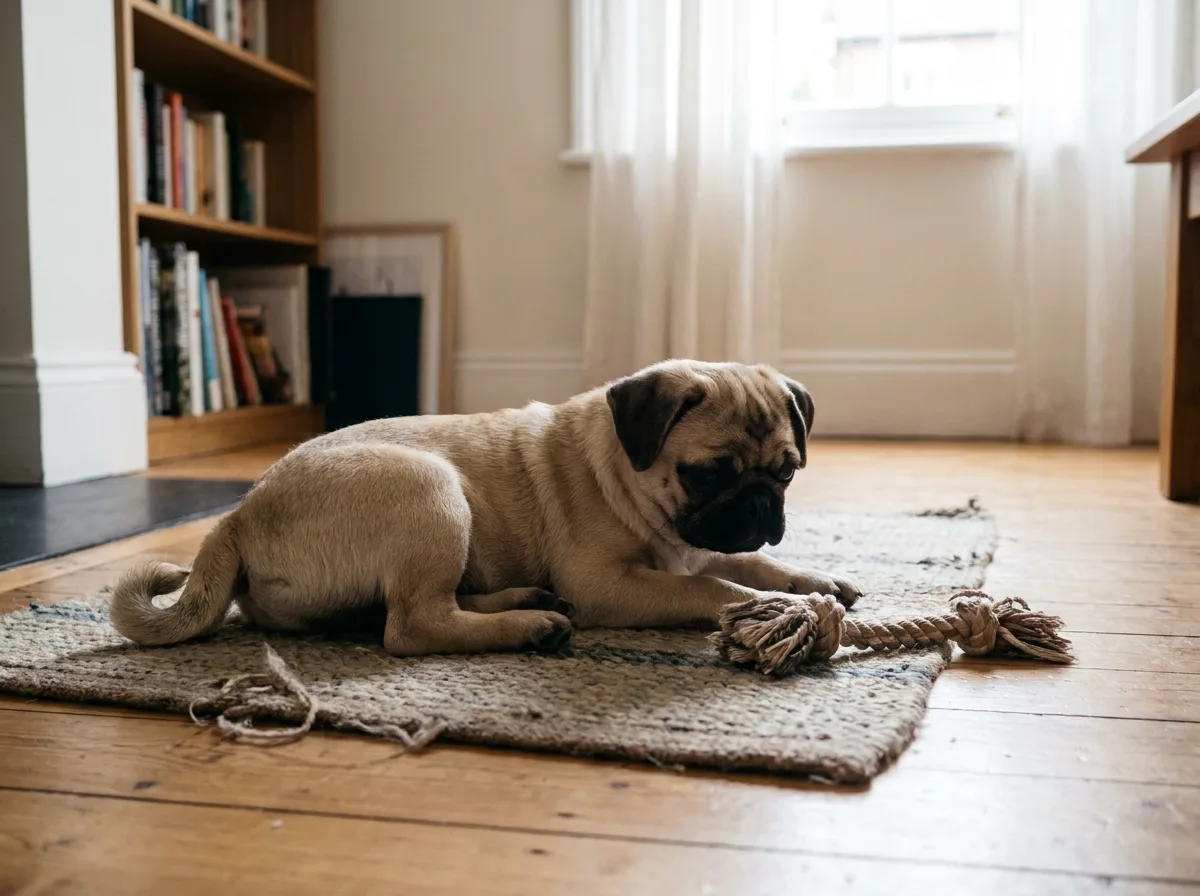
Progress is easier to assess by skill. Can the puppy settle while you make a meal? Are toilet habits becoming more predictable? Can they respond to their name in a slightly more distracting place? Improve one manageable element at a time. Needing more help in a new setting does not erase earlier learning.
As access to the home expands, change only what you can supervise. Test a short period in one additional room before allowing free run of the house. Keep barriers available when you cannot watch closely. Continuing a useful support is better than removing it because another puppy reached a milestone earlier.
Manage chewing without turning it into a chase game
Puppies explore with their mouths, and teething can change what they want to chew. Put tempting valuables away and offer suitable supervised alternatives. If the puppy repeatedly grabs shoes from the doorway, changing access is more effective than repeatedly staging the same argument.
- Keep a few appropriate chew options within your reach and rotate them when interest fades.
- Interrupt rough play calmly and provide an easier activity or a rest opportunity.
- Trade for a suitable reward when you need an ordinary object back, instead of teaching the puppy that your approach always predicts a struggle.
Do not practice taking hazardous items as a training game. If the puppy may have swallowed something dangerous, contact your veterinarian promptly. For ordinary training, success means the environment and lesson were manageable, not that the puppy could resist every object in an unrestricted room. Continue to supervise new toys because a product that lasted yesterday may be damaged today.
Breathing, heat, eyes, and skin: puppy safety
Learn how your puppy looks and sounds when comfortably resting, eating, and moving. Brachycephalic obstructive airway syndrome, or BOAS, is relevant to this breed, but it is not something an owner should diagnose from a video. Breathing distress, collapse, or severe difficulty recovering after activity requires prompt veterinary help.
The Royal Kennel Club respiratory scheme begins formal grading at 12 months. That does not mean a puppy with breathing concerns should wait until that age for an examination. Ask about the parents' records and the appropriate assessment for your puppy now.
Pugs should not be expected to smell strongly as a normal feature of the breed. Persistent odor, especially with redness, discharge, rubbing, or discomfort, is a reason to ask your veterinarian about skin, ears, mouth, or folds. Do not hide a new smell with perfume or apply random cleaners close to the eyes.
- Ask for a demonstration of gentle fold care suited to this puppy.
- Prevent play that exposes the face and eyes to rough contact or sharp objects.
- Plan cooling and transport before outings, and avoid strenuous activity in warm or humid conditions.
For the broader evidence and clinical questions, see Petful's Pug health guide. A comfortable daily routine supports care, but it cannot rule out an underlying problem or replace an examination.
Why is my Pug puppy crying?
Pug puppies may cry to communicate a need for a toilet break, company, food, rest, or relief from discomfort. Check the immediate circumstances before deciding it is attention-seeking. A puppy newly separated from familiar companions may need a more gradual transition, while a puppy who suddenly cries during handling may need medical assessment.
- Respond to the individual puppy and the situation. Sudden, persistent, or unusual crying, especially with weakness, appetite changes or breathing difficulty, deserves veterinary advice. Do not use prolonged distress as a training exercise.
Keep a short note of timing, location, what happened beforehand, and what helped. If crying reliably begins when you move a few steps away, practice shorter comfortable separations and seek qualified support if distress continues. If it follows active play, review whether rest and toilet opportunities were missed. A pattern can guide your next question without becoming a diagnosis.
Will a Pug fit your household as an adult?
The puppy stage is only the beginning. Compare your long-term cooling arrangements, workday care, and veterinary budget in our Pug breed guide, which also covers purchase and ownership costs. A male or female label does not determine an individual dog's fit, and adding a second dog does not replace human care. Think about the adult routine before choosing a puppy because of a brief visit or an attractive photograph.
Black and fawn puppies
Black and fawn puppies need the same thoughtful first-year care. A seller's claim about rarity does not establish a health advantage or predictable temperament. Ask about the puppy's records, handling history, and daily needs before discussing color preference. Our black Pug guide explains coat-specific questions and the limits of judging identity from appearance, while the adult breed guide compares recognized colors more broadly.
Pug puppy FAQs
Only if you can provide separate training, individual socialization, supervision, and care for both. Companionship between puppies does not remove those responsibilities. Work through two complete daily care plans before deciding; bringing home one puppy first may be more manageable.
Choose a relaxed moment, make one brief comfortable touch, and offer a reward. Pause before the puppy needs to struggle away. Build gradually toward the handling you need, and ask a qualified professional for help if touch consistently causes fear or discomfort.
Check fit frequently during growth and whenever movement, rubbing, or slipping changes. Follow the manufacturer's measurement and adjustment instructions. Replace it when it cannot fit safely, is damaged, or restricts comfortable movement; there is no universal number of months that a puppy harness should last.

Kristine Lacoste has been researching dog and cat breeds for nearly a decade and has observed the animals up close at dog shows in both the United States and the United Kingdom. She is the author of the book One Unforgettable Journey, which was named as a finalist for a Maxwell Award from the Dog Writers Association of America, and was host of a weekly pet news segment on the National K-9 Academy Radio Show. In addition, she was the New Orleans coordinator for Dogs on Deployment, a nonprofit that helps military members and their pets, for 3 years. Kristine has researched and written about pet behaviors and care for many years. She holds a bachelor’s degree in psychology, another bachelor’s degree in English and a Master of Business Administration degree.
Sign up for expert-backed reviews and safety alerts all in one place.