Boerboel Breed Profile: The Complete Guide
The Boerboel is a South African mastiff bred to guard the family and farm. This breed profile covers its size, loyal-but-wary temperament, the health issues to screen for, and the training, grooming, and feeding to know before bringing one home.

Petful is reader supported. As an affiliate of platforms like Amazon and Chewy, we may earn a commission when you buy through links on this page. There is no extra cost to you.
The Boerboel is a South African mastiff bred to guard the family, the farmyard, and the livestock against predators and intruders, and everything about the dog follows from that single job. This is a large, short-coated, heavily boned guardian that can top 200 pounds, bond fiercely to one household, and treat strangers with cool suspicion until you say otherwise. If you have met a Cane Corso or an English Mastiff and thought "steadier, more territorial, more dog than most people expect," you are close to picturing a Boerboel.
This profile is a full, honest look at the breed: where it came from, how big it really gets, what it is like to live with, the health problems that shorten too many of these dogs' lives, and the training and containment reality that decides whether ownership goes well or badly. It is written for the person deciding whether this dog belongs in their home, not for the person who has already fallen for the photos.
- 1The Boerboel is a 150 to 200+ pound South African farm guardian: loyal and gentle with its own family, naturally wary of outsiders, and not a beginner's dog.
- 2Its short coat is low-maintenance, but its size, strength, and protective drive demand early socialization, lifelong training, and secure containment.
- 3Bloat (GDV), hip and elbow dysplasia, heart disease, and eyelid defects are the health issues to screen for; typical lifespan is 9 to 11 years.

Sign up for expert-backed reviews and safety alerts all in one place.
Boerboel Breed at a Glance

Before the deep dive, here is the shorthand. The Boerboel is a working guardian breed, which means the traits below are features the breed was selected for, not quirks to train away.

Petful may earn a commission when you click through to Chewy, at no extra cost to you.
| Trait | Detail | What it means for you |
|---|---|---|
| Weight | 150 to 200+ pounds (68 to 91 kg) | A dog that can outweigh an adult; strength must be managed, never overpowered |
| Height | 22 to 27 inches at the shoulder | A tall, imposing dog that takes up real space in a home |
| Coat | Short, dense, single-layered | Minimal grooming, but not hypoallergenic and it does shed |
| Lifespan | 9 to 11 years | Shorter than small breeds, typical for a giant guardian |
| Temperament | Confident, territorial, loyal, calm | Devoted to family, reserved-to-wary with strangers |
| Best owner | Experienced, confident, home with secure yard | Not a first dog; needs a handler the dog respects |
Where the Boerboel Came From

The Boerboel's history begins with Dutch, German, and Huguenot settlers who arrived at the Cape of Good Hope from 1652 onward. The word "boerboel" comes loosely from the Afrikaans "boer" (farmer) and "boel" (a shortening tied to bulldog or mastiff-type dog), which is exactly what these dogs were: the farmer's dog. Settlers brought large mastiff and bulldog-type dogs with them, and over generations those imports crossed with dogs already on the continent to produce a hardy, self-reliant guardian suited to isolated homesteads.
On a remote South African farm, this dog had to do a serious job with no backup. It guarded the house and family, held off leopards, baboons, and other predators, and helped control and protect livestock. A guardian that was too soft got the family hurt; one that was uncontrollable got itself culled. That selection pressure over centuries is why the modern Boerboel is both powerfully protective and, in a well-bred line, stable and biddable rather than reactive.
The breed nearly vanished as South Africa urbanized in the 20th century. A dedicated revival effort beginning in the 1980s, including the founding of breed societies and an appraisal system to score dogs against a standard, pulled it back and standardized the type we recognize today. The Boerboel is recognized by the Kennel Union of Southern Africa and, since 2015, by the American Kennel Club in its Working Group. It is not recognized by the Fédération Cynologique Internationale.
- "Boerboel" is pronounced roughly "boo-r-bull," with the "boer" close to the English word "poor" and the ending like "bull." You will hear regional variation, but that is the version most breeders and judges use.
What a Boerboel Looks Like

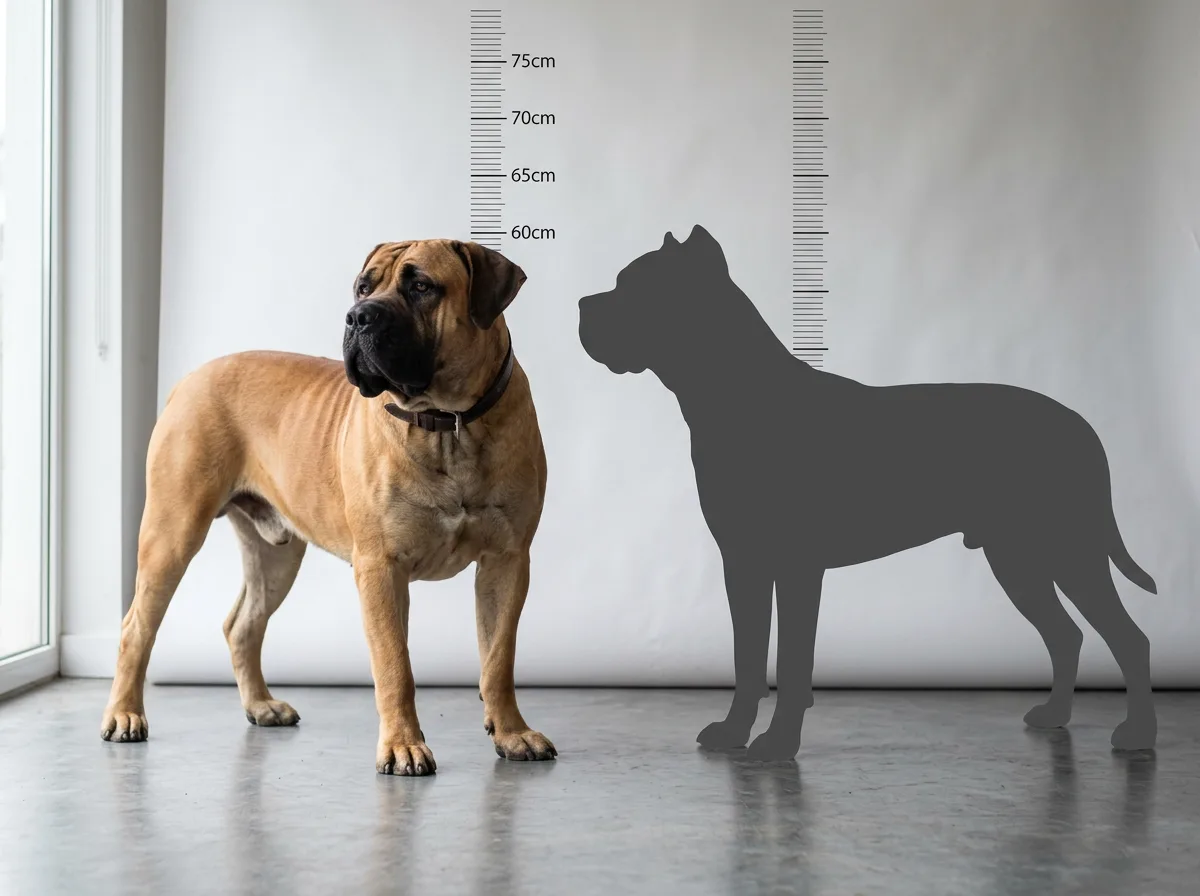
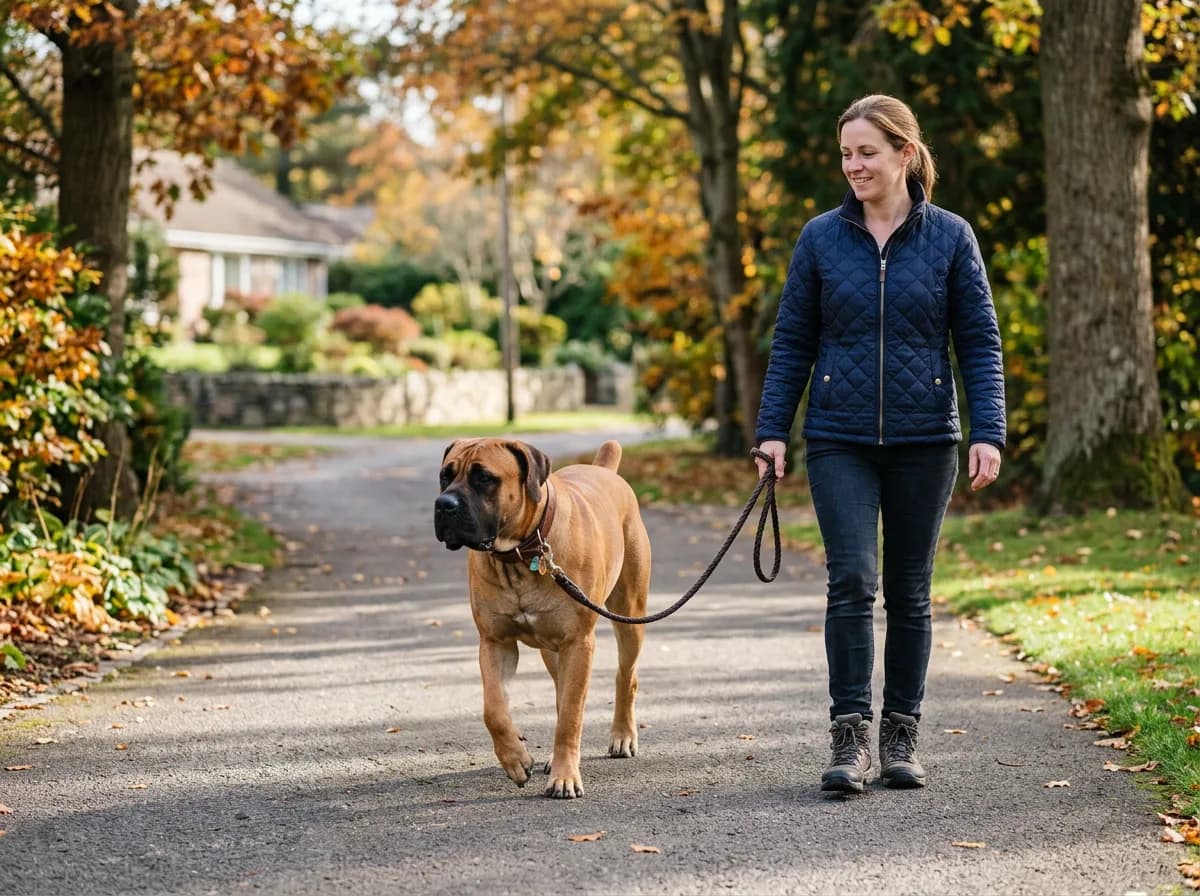
There is no mistaking the silhouette. The Boerboel is a large, blocky, rectangular dog with a broad, deep chest, heavy bone, and a wide, brick-shaped head carried on a thick, muscular neck. The muzzle is short and deep without being extreme, and the whole impression is of controlled power rather than bulk for its own sake.
Coat colors run through fawn, red, brown, brindle, and cream, often with a black mask on the face, plus black and piebald in some lines. The coat itself is short, dense, and smooth, sitting close to the skin.
Petful may earn a commission when you click through to Chewy, at no extra cost to you.
| Feature | Description | Notes |
|---|---|---|
| Head | Broad, blocky, deep | The hallmark of the breed; should look powerful, not exaggerated |
| Coat | Short, dense, smooth | Sheds moderately year-round; sheds more seasonally |
| Common colors | Fawn, red, brown, brindle, cream | Black mask is common and prized in many lines |
| Eyes | Wide-set, forward-facing | Prone to entropion or ectropion in some lines (see Health) |
| Build | Rectangular, heavily muscled | Substance and balance matter more than sheer size |
Boerboel Temperament: Loyal Guardian, Wary Stranger

If you take one idea away from this profile, make it this: a well-bred, well-raised Boerboel is protective, not aggressive, and the difference is everything. Protectiveness is a controlled, discerning response to a genuine threat. Aggression is an indiscriminate, poorly regulated response to normal life. Good breeding and good raising produce the former; bad breeding, no socialization, or a dominant owner-vacuum produce the latter.
With its own family, the Boerboel is famously affectionate, calm, and deeply bonded. These dogs are gentle and patient with the children they are raised alongside, they like to be near their people, and despite the size they often think they are lapdogs. That devotion is the whole appeal of the breed.
With strangers, the default is reserve. A Boerboel watches, assesses, and takes its cue from you. Properly socialized, it accepts guests you welcome and stays neutral in public. Under-socialized, that natural wariness curdles into suspicion of everyone and everything, and on a 180-pound dog that is a serious problem. This is why early, wide, positive socialization is not optional for this breed.
The Boerboel is also intelligent, confident, and, in a word breeders use often, dominant. It will quietly test whether you are actually in charge. It responds beautifully to a calm, consistent handler it respects and poorly to either harshness or a total absence of leadership. That combination of size, brains, and self-assurance is exactly why the breed is repeatedly described as unsuitable for first-time dog owners.
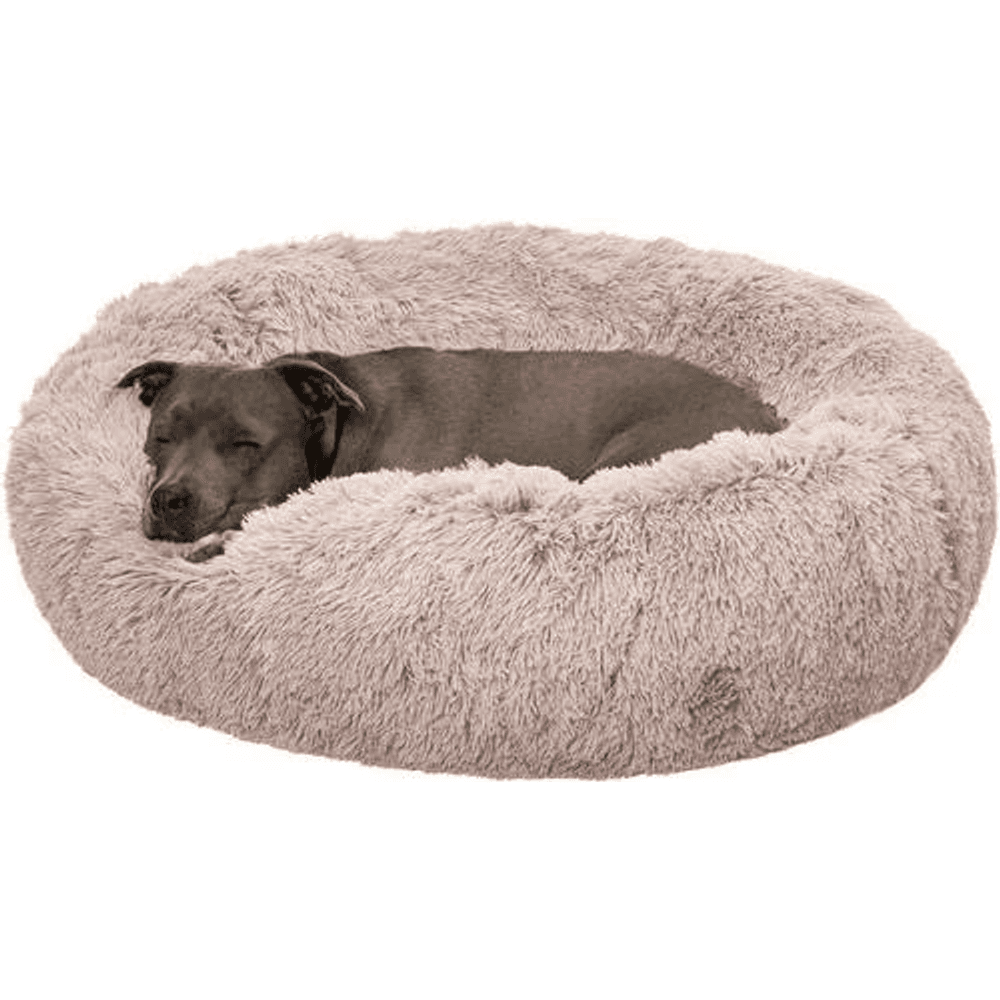
A plush, long-fur donut bolster bed with a raised rim that gives a recovering pet a secure, cushioned place to curl up during the crucial 10 to 14 days after surgery.
Petful may earn a commission when you click through to Chewy, at no extra cost to you.
- A Boerboel's guarding instinct is a feature, not a training accident. That instinct only stays safe when it is paired with heavy early socialization, lifelong training, and an owner the dog respects. Skip those and a naturally protective dog becomes an unpredictable liability, not because the breed is "bad," but because a powerful guardian was left without direction.
Is the Boerboel the Right Dog for You?
This is the honest gut-check section. The Boerboel is a magnificent dog for the right owner and a genuinely dangerous mistake for the wrong one. Be brutally realistic about which you are before a puppy comes home.
You are a good match if you are an experienced, confident dog owner; you are home enough to give the dog company and structure; you have a securely fenced yard; you are prepared to invest in professional training and heavy socialization; and you understand that you are taking on a guardian breed with real liability considerations. You are a poor match if this is your first dog, if you are away most of the day, if you rent or live somewhere with breed restrictions, if you want a dog that loves every stranger, or if you cannot physically and mentally stay ahead of a very large, very smart animal.
Living with a Boerboel is also a legal and logistical question. Some jurisdictions restrict or ban the breed, many home insurers will not cover it, and a dog this size needs space, a strong fence, and a household on the same page about rules. Sort those questions out before you commit, not after.
Exercise Needs
The Boerboel is a moderate-energy dog, not a high-octane one, but "moderate" on a giant guardian still means real daily work. Plan on at least an hour a day of structured activity: brisk leashed walks, secure off-leash time where legal and safe, and games that make the dog think. A bored, under-exercised Boerboel becomes destructive and harder to manage, and the mental side matters as much as the physical: scent games, training drills, and problem-solving toys tire this breed out more efficiently than distance alone.
A note on the joints: because these are heavy, fast-growing dogs, avoid forced running, long jogs, and repetitive jumping while a puppy's growth plates are still open (generally the first 18 to 24 months). Overdoing impact exercise young is a fast track to the joint problems this breed is already prone to.
Grooming Needs
Grooming is the easy part of Boerboel ownership. The short, dense coat needs a weekly once-over with a rubber curry or bristle brush to lift dead hair and spread skin oils, plus more frequent brushing during seasonal sheds. Bathe only when the dog is actually dirty; over-bathing strips the coat.
The rest is routine large-dog maintenance: check and clean the ears, brush the teeth several times a week, and keep the nails short, which on a heavy dog is important for correct foot and joint loading. If your Boerboel has any facial wrinkling, wipe the folds clean and dry to prevent skin infection.
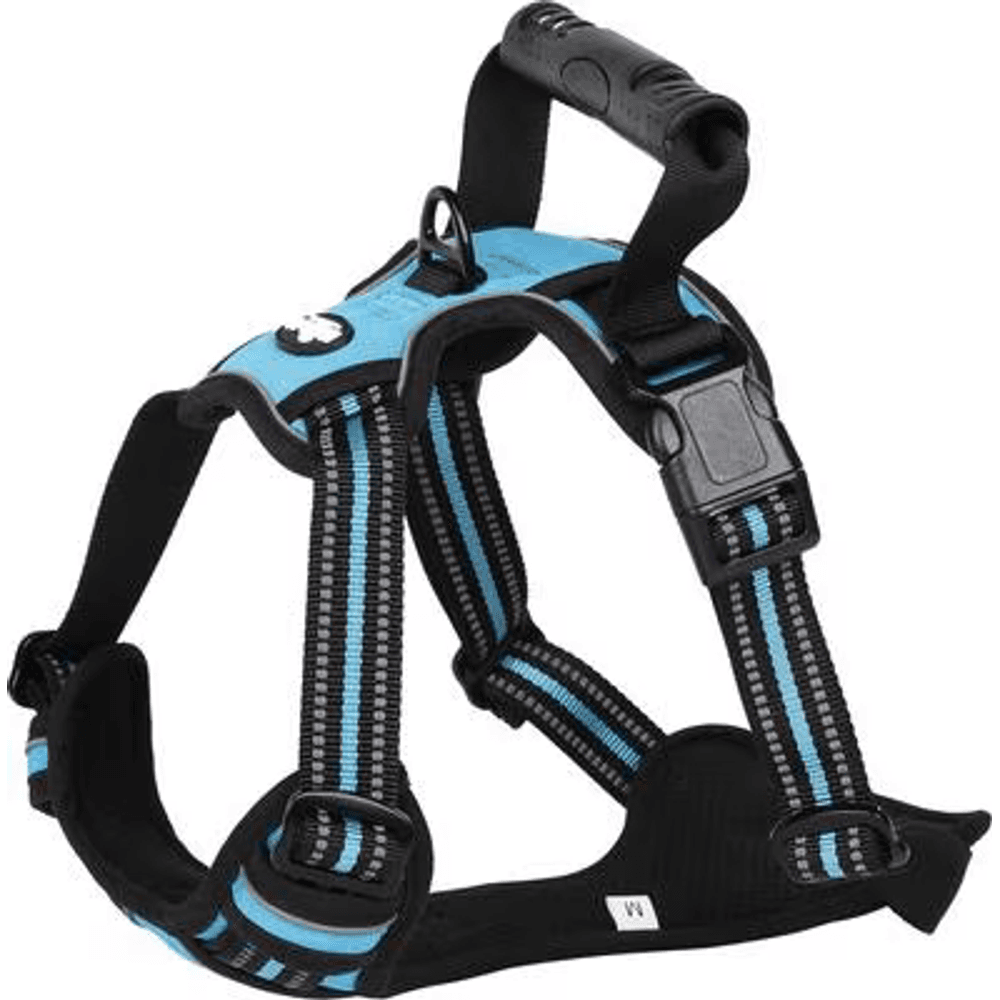
A padded, reflective no-pull harness that spreads leash pressure across the chest instead of the throat, the switch most vets recommend for a dog with a cough, a collapsing trachea, or any airway irritation so the leash never presses on
Petful may earn a commission when you click through to Chewy, at no extra cost to you.
| Task | How often | Why it matters |
|---|---|---|
| Brushing | Weekly (more in shed season) | Removes dead hair, spreads healthy skin oils |
| Bathing | Only when dirty | Over-bathing dries out the coat and skin |
| Nail trims | Every 3 to 4 weeks | Long nails hurt the feet and stress the joints |
| Teeth | 3+ times per week | Dental disease is common and painful in dogs |
| Ears and folds | Weekly check | Prevents moisture-related infections |
Health Problems
This is the section that matters most, because it is where a Boerboel's years are won or lost. The breed's typical lifespan is 9 to 11 years, and responsible breeding plus good preventive care is how you land at the top of that range instead of the bottom. Buy from a breeder who screens their dogs, and the odds shift in your favor.
Bloat, or gastric dilatation-volvulus (GDV), is the emergency every deep-chested giant-breed owner must know cold. The stomach fills with gas and can twist, cutting off blood supply; it is rapidly fatal without emergency surgery. Signs include a distended belly, unproductive retching, restlessness, and collapse. The American College of Veterinary Surgeons notes that large and giant deep-chested breeds are at markedly higher risk and that GDV is a true surgical emergency. Feeding smaller meals, avoiding heavy exercise right around meals, and discussing a preventive gastropexy with your vet are the standard risk-reduction steps.
Hip and elbow dysplasia are the orthopedic issues to screen for. These are heritable malformations of the joint that lead to pain and arthritis, and giant breeds carry elevated risk. Reputable breeders screen breeding stock through programs like the Orthopedic Foundation for Animals, so ask to see hip and elbow clearances on both parents.
Heart disease, particularly dilated cardiomyopathy, appears in the breed and is worth monitoring as the dog ages. Eyelid abnormalities, entropion (the lid rolls inward) and ectropion (it rolls outward), show up in some lines and can irritate or damage the eye; both are correctable with minor surgery when needed. And like all large dogs, Boerboels can develop skin issues in warm, humid conditions or in any facial folds.

The number-one veterinarian-recommended joint supplement brand. Glucosamine, chondroitin, and MSM support cartilage and cushion the joints, easing the stiffness and hind-end weakness that can leave an older or arthritic dog trembling.
Petful may earn a commission when you click through to Chewy, at no extra cost to you.
- The single biggest lever on a Boerboel's health and lifespan is the breeder. Insist on seeing hip and elbow clearances, a cardiac evaluation, and an eye check on the parents. A breeder who screens is selling you years; one who cannot produce paperwork is selling you a gamble. For an emergency you should be able to recognize instantly, read up on the warning signs of bloat before your dog ever needs you to.
Training and Socialization
Training a Boerboel is not optional and it is not a weekend project; it is the central commitment of owning one. The goal is a dog that is confident, calm, and fully under control in every setting, because a guardian breed of this size with poor manners is a danger to itself and everyone around it.
Start socialization the day the puppy comes home and keep it wide and positive: many different people, places, sounds, surfaces, and (carefully) other friendly dogs, all before the fear periods close. A Boerboel that has met the world as a puppy grows into a stable adult that can tell a friend from a threat. One that has not grows into a dog that treats everything unfamiliar as a threat.
Use reward-based, consistent training and enforce the same rules every day. This breed reads inconsistency as an opening and will gently push to see if the rule still holds. Because Boerboels are strong and independent-minded, most owners benefit from a professional trainer experienced with guardian breeds, and group obedience classes double as controlled socialization. Harsh, confrontational methods backfire badly here: they damage the trust this breed extends to its handler and can turn a wary dog into a defensive one.
- 1Socialize early, widely, and positively before the puppy's fear periods close: it is the single best predictor of a stable adult.
- 2Train with calm, reward-based consistency and enforce the same rules daily; this breed tests inconsistent leadership.
- 3Get professional help from a trainer who knows guardian breeds, and never use harsh or confrontational methods.
Feeding a Boerboel
Feed a high-quality large- or giant-breed formula appropriate to the dog's life stage, and get the puppy phase right, because it is where lifelong joint health is set. Large-breed puppy foods are formulated with controlled calcium and calories precisely to slow the explosive early growth that stresses developing joints. Do not free-feed a giant-breed puppy to grow it faster; slower and steadier is healthier.
Split the daily ration into at least two meals rather than one large bowl, both to steady energy and, per common bloat-risk guidance, to reduce the gulping-a-huge-single-meal pattern. Keep an eye on body condition: you should be able to feel the ribs easily under a light layer, and carrying extra weight on this frame is punishing for the joints. Always talk to your veterinarian about the right food, portion, and any supplements for your individual dog.
How Does the Boerboel Compare?

Prospective owners almost always cross-shop the Boerboel against other mastiff-type guardians, so here is the honest positioning. Against the Cane Corso, the Boerboel is generally the heavier, bulkier dog: a Corso is athletic and rangier, a Boerboel is broader and more massive. Against the Bullmastiff, the Boerboel tends to be more agile, more overtly territorial, and more actively "on the job," where a Bullmastiff is often a calmer, more laid-back guardian.
If you are still comparing big guardians and want a side-by-side on a related mastiff, our Bullmastiff breed profile walks through that breed's size and temperament in the same detail. And if coat and color is what draws you to powerful breeds, the way genetics shape appearance in another large dog is laid out in our guide to Rhodesian Ridgeback colors.
Where to Find a Boerboel
Go to a responsible breeder or a breed-specific rescue, and be patient. A responsible breeder health-tests the parents, raises puppies in the home with early socialization, asks you as many questions as you ask them, and will take a dog back at any point in its life. Expect a waiting list and a real conversation, not a same-day sale.
Rescue is a genuine option too. Boerboels and Boerboel mixes turn up in mastiff-specific and giant-breed rescues, often through no fault of their own when owners underestimated the commitment. An adult from rescue can be a wonderful fit for an experienced home, and a good rescue will be honest about each dog's history and needs.
- Whether you go to a breeder or a rescue, ask: "What are you doing to make sure this is the right dog for my specific home?" A source that cares about the match, not just the placement, is the one you want. Walk away from anyone selling on impulse.
Frequently Asked Questions
Boerboels and Other Pets
A Boerboel raised alongside other animals from puppyhood can share a home peacefully, but its guardian wiring shapes how introductions go. Same-sex aggression, meaning friction between two adult dogs of the same sex, is a recognized tendency in mastiff-type guardians, so many experienced owners choose opposite-sex pairings and supervise closely. With cats and small pets, early exposure matters most: a Boerboel that grew up beside the household cat usually accepts it as family, while one meeting small animals for the first time as an adult may read them as prey rather than housemates. Go slowly with any new animal, keep interactions calm and structured, and never leave a dog this powerful loose with a much smaller pet until the relationship is genuinely proven.
- First meetings go best on neutral territory, not inside the Boerboel's home or yard, where its guarding instinct runs strongest. Keep both animals leashed or safely separated, reward calm behavior on both sides, and let the relationship build over days, not minutes.
Related on Petful
- Cane Corso Breed Profile: Complete Owner's Guide
- The 10 Biggest Dog Breeds in the World
- Dogue de Bordeaux: Complete Breed Profile
- Saint Bernard Breed Profile: The Gentle Giant
Yes, for the right owner. A well-bred, well-socialized Boerboel is calm, affectionate, and deeply bonded indoors, and it is loving and gentle with its own family and the children it is raised with. The caveats are real, though: it needs an experienced owner, early and ongoing socialization, consistent training, and space. It is a devoted house dog in an experienced home, not a low-effort one.
In raw size and mass, yes, easily. A Boerboel commonly weighs 150 to 200+ pounds against a pit bull-type dog's roughly 30 to 65 pounds, so it is a far larger and physically more powerful animal. That said, "stronger" is not a useful way to choose or judge a dog, and pitting breeds against each other is both inhumane and beside the point. What matters is temperament, training, and responsible ownership, not which dog would win a fight.
Boerboels are not inherently aggressive toward their families; they are protective, and with proper socialization and training they are stable, confident, and devoted. Bites and unpredictable behavior in any large guardian trace back to poor breeding, missing socialization, fear, pain, or an owner the dog does not respect, rather than to some switch that flips. The way you prevent it is the way you prevent most large-dog problems: buy from a health- and temperament-screening breeder, socialize early, train consistently, and provide calm leadership.
No, the Boerboel is generally the bigger, heavier dog. A Cane Corso typically weighs around 90 to 120 pounds, while a Boerboel commonly runs 150 to 200+ pounds, so the Boerboel outweighs it substantially and has a broader, more massive build. The Corso is the more athletic and rangy of the two; the Boerboel is the bulkier guardian.
There is no reliable, breed-wide "most aggressive" ranking, and reputable authorities caution against them because behavior is driven far more by breeding, socialization, training, and the individual dog than by breed label. Lists that circulate online often name guardian and terrier types, but a dog's temperament comes down to how it was bred and raised. The Boerboel is best understood as protective and territorial rather than aggressive, and that protectiveness is manageable in a responsible home.
The same answer as above, and it is worth repeating because it is the fear people bring to this breed: a properly bred, socialized, and trained Boerboel does not "turn on" the family it is devoted to. Guardian dogs that behave dangerously almost always got there through neglected socialization, harsh handling, fear, pain, or an absence of leadership. Meet those responsibilities and this is one of the most loyal family dogs you can own; ignore them and any powerful breed becomes a risk.
This question comes from the dogfighting-adjacent corner of the internet, and the responsible answer is that no dog should be set against another. Framing dogs as fighters gets animals hurt and killed and tells you nothing about whether a breed is a good pet. If you are drawn to the Boerboel for its size and power, channel that into what the breed was actually built for: guarding a home and being a steady, devoted family companion, under the control of a responsible owner.
The Bottom Line on the Boerboel
The Boerboel is one of the most capable guardian dogs in the world and one of the most demanding pets you can take on. Get the ownership right, an experienced hand, early socialization, lifelong training, secure containment, a health-screening breeder, and you get a calm, devoted, deeply loyal family protector that is worth every ounce of the effort. Get it wrong, and you have a very large, very strong, very smart dog without the direction it needs, which serves neither the dog nor anyone around it. Go in clear-eyed, and this breed will reward you.

Kristine Lacoste has been researching dog and cat breeds for nearly a decade and has observed the animals up close at dog shows in both the United States and the United Kingdom. She is the author of the book One Unforgettable Journey, which was named as a finalist for a Maxwell Award from the Dog Writers Association of America, and was host of a weekly pet news segment on the National K-9 Academy Radio Show. In addition, she was the New Orleans coordinator for Dogs on Deployment, a nonprofit that helps military members and their pets, for 3 years. Kristine has researched and written about pet behaviors and care for many years. She holds a bachelor’s degree in psychology, another bachelor’s degree in English and a Master of Business Administration degree.
Sign up for expert-backed reviews and safety alerts all in one place.