Boston Terrier Lifespan: Health and Senior Care
Learn what Boston Terrier life-expectancy estimates mean, when to discuss senior care, and how a simple observation log can help you protect your dog's comfort and identify changes worth a veterinary call.

BVMS, MRCVS

Gray-muzzled Boston Terrier resting on a dog bed beside a window.
Petful is reader supported. As an affiliate of platforms like Amazon and Chewy, we may earn a commission when you buy through links on this page. There is no extra cost to you.
Boston Terrier lifespan is commonly described as around 11 to 13 years by the Boston Terrier Club of America. Some dogs live beyond that range, while others die younger. For an individual Boston, age alone cannot tell you how much time remains. Knowing your dog's usual behavior, keeping veterinary care current, and responding to new changes are more useful than treating a breed average as a deadline.

Sign up for expert-backed reviews and safety alerts all in one place.
How long do Boston Terriers live?
The Boston Terrier Club of America gives an average life span of approximately 11 to 13 years and notes that healthy Bostons can live into their teens. This is a general breed reference. It does not mean every dog reaches 11, or that a healthy 13-year-old has exhausted its expected lifetime.
- 1Use lifespan as context, not a countdown
- 2The Boston Terrier Club of America gives a general reference of about 11 to 13 years
- 3An individual dog's health and comfort matter more than its place in a breed range
- 4New breathing, mobility, appetite, or behavior changes deserve veterinary attention
- 5Good care supports health and quality of life but cannot guarantee extra years
Male and female Boston Terrier lifespan searches often imply that sex should produce a separate prediction. The breed-club range does not provide a male-versus-female guarantee, and a number from one population should not be used as a personalized forecast. A dog's medical history, current examination, and diagnosed conditions matter when discussing prognosis with the veterinarian.

An orthopedic sofa bed with three bolstered sides for dogs who like to rest their head and joints against a cushion. The supportive foam base cradles hips and elbows, a comforting spot for an older or shaky dog to settle.
Petful may earn a commission when you click through to Chewy, at no extra cost to you.
Make practical long-term preparations while your dog is well. Compare financial protection for future eligible care with the savings you can access. Check eligibility and the actual policy terms for your dog; a quote is not evidence that an existing condition will be covered.

 Sponsored
Have a health question about your pet?
Talk to a licensed vet at Dutch over video or message, including nights and weekends.
Use code Pets30
Plans start at $11/month · covers up to 5 pets
- Licensed vets in most states
- Rx for 150+ conditions
- 4.7 on Trustpilot
When is a Boston Terrier a senior?
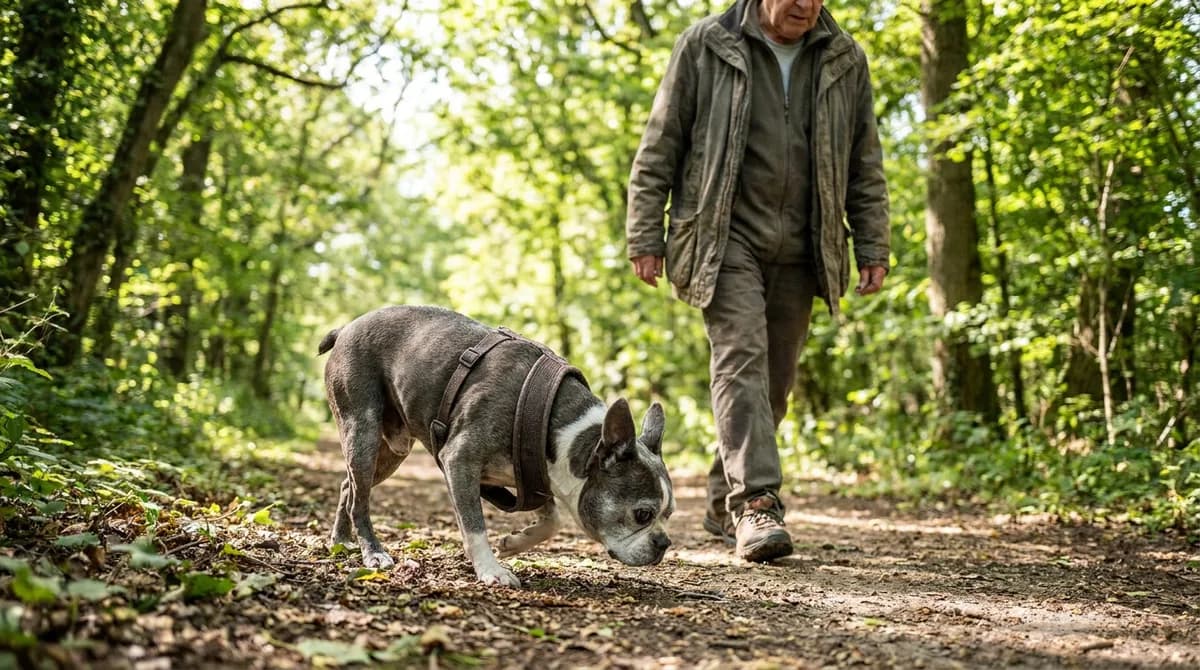
There is no single birthday when every Boston Terrier becomes a senior. AAHA's senior-care guidance uses the last quarter of a dog's estimated lifespan as a framework and emphasizes variation between individuals. Applied to the breed-club range, that suggests discussing senior planning roughly in the eight-to-ten-year period, while letting the veterinary team individualize the timing.
A senior-care discussion is useful before there is a crisis. Bring a medication and supplement list, describe the home environment, and mention changes that seem small. The veterinarian can recommend an examination and testing schedule based on the dog's history rather than a blanket internet schedule.
Ask about these everyday needs:
- Maintaining comfortable movement and a healthy body condition.
- Dental assessment and home care the dog tolerates.
- Changes in sleep, hearing, vision, or social engagement.
- Easy access to water, rest areas, and toileting.
Older age does not automatically mean frailty or loss of interest. Some senior dogs remain lively, and some younger dogs have significant care needs. Use age to start the conversation, then let the individual dog guide the plan.
Can a Boston Terrier live to 20?
An exceptionally old dog is possible, but 20 years is not a realistic promise or a standard planning expectation for a Boston Terrier. Reports about the oldest Boston Terrier are often owner anecdotes without a verified birth record. They can be meaningful personal stories without establishing a breed record or an achievable target for another dog.
When a longevity claim influences a decision, check what is actually known:
- Is the birth date documented or estimated after adoption?
- Does the report describe one dog or a measured population?
- Does it claim that a food, supplement, or routine caused the long life?
- Are the dog's comfort and health described, rather than only its age?
The goal for your own dog is comfortable, engaged living, with treatable problems addressed. Reaching an unusual birthday is not a measure of how well someone cared for a dog, and a shorter life is not proof that an owner did something wrong.

A budget-friendly padded no-pull harness that keeps leash pressure off a coughing dog's neck and windpipe by distributing it across the chest. A simple, affordable way to protect an irritated airway or a collapsing trachea on every walk.
Petful may earn a commission when you click through to Chewy, at no extra cost to you.
What is the most common cause of death?
Cancer was the largest identified disease-process category in one historical hospital study. Fleming and colleagues (2011) examined North American veterinary teaching-hospital records from 1984–2004. Among 473 recorded Boston Terrier deaths, 30.4% were classified as neoplastic, while 36.8% were unclassified. This selected hospital sample does not establish a current U.S.-wide ranking or predict an individual dog's risk. A list of common breed conditions also cannot establish the most frequent cause of death.
For a dog with a diagnosis, ask the veterinarian about that specific condition and the dog's overall health. Useful questions include what tests would change treatment, what improvement to expect, and which changes require urgent contact. A general breed lifespan cannot answer how a particular cancer or another serious illness will progress.
For a healthy dog, this uncertainty does not prevent sensible care. Regular examinations, attention to breathing and eyes, an appropriate body condition, and prompt investigation of changes remain useful. They support the dog's health without promising that every serious illness can be prevented.

The vet-favorite enzymatic toothpaste. Its dual-enzyme system keeps working between brushings to control plaque and freshen breath, and the poultry flavor makes daily brushing easy.
Petful may earn a commission when you click through to Chewy, at no extra cost to you.
Health problems to discuss with your veterinarian
Boston Terriers can develop health problems, including those associated with their short muzzle and prominent eyes. Breed information helps you know what to discuss; it does not diagnose your dog. The BTCA health page also explains its work on screening and directs owners to eye, hearing, patella, and respiratory resources.
Breathing and heat tolerance
The American College of Veterinary Surgeons identifies Boston Terriers among breeds affected by brachycephalic airway problems. Noisy or difficult breathing, poor exercise tolerance, gagging, and collapse can warrant assessment. Do not assume that struggling to breathe is harmless because the dog has always made noise.
Heat and humidity can increase difficulty for a susceptible dog. Plan activity for suitable conditions, allow rest, and discuss any change in breathing with the clinic. Severe breathing distress, blue or gray gums, or collapse needs immediate veterinary help. AAHA's heatstroke guidance explains why flat-faced pets need particular care in warm conditions.
Eyes, knees, and dental comfort
Squinting, rubbing an eye, redness, or a newly cloudy appearance should prompt a veterinary call. These signs have different possible causes, and eye problems can worsen quickly. Do not use a leftover medication or a photograph to decide which treatment is appropriate.
An intermittent skipping step, reluctance to jump, or difficulty rising also deserves attention. A knee problem is one possibility in the breed, but weakness, pain, or a change in gait can have other causes. Describe the pattern and, if safe, bring a short video to the appointment.
For dental care, introduce a soft pet toothbrush slowly and stop if handling is painful. The Virbac C.E.T. Dual-Ended Dog & Cat Toothbrush offers two head sizes to compare with your dog's mouth and tolerance. A veterinary examination comes first when chewing changes, the mouth seems painful, or the dog resists previously comfortable handling.
 Sponsored
Vet care that's always there
Unlimited video calls and messaging with licensed vets for less than a typical vet visit. One membership covers up to five pets.
Use code Pets30
Plans start at $11/month · covers up to 5 pets
- Licensed vets in most states
- Rx for 150+ conditions
- 4.7 on Trustpilot
Everyday care that supports comfort and health
A sustainable routine is more useful than a promise that one product or habit will add a fixed number of years. Keep your Boston at an appropriate body condition, provide suitable activity and rest, and follow the veterinarian's preventive-care plan. Adapt these habits if the dog develops a medical condition or its tolerance changes.
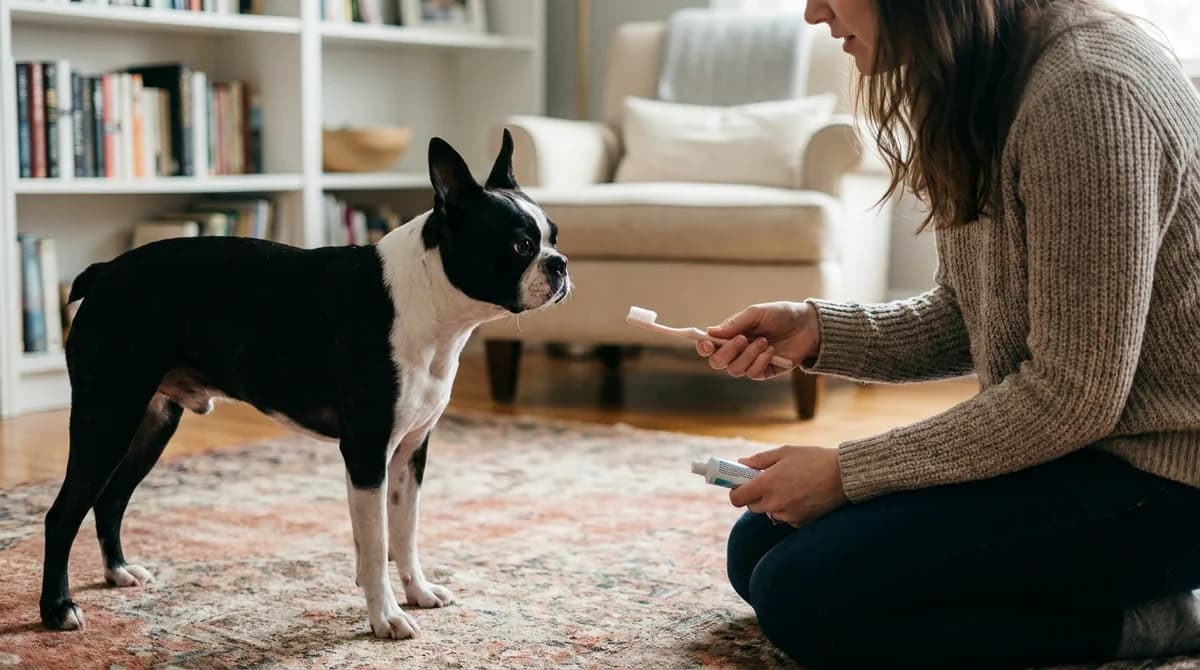
Home dental care is one habit to build gradually. UC Davis's tooth-brushing guidance describes progressive training with a soft brush and pet toothpaste. A product such as Virbac C.E.T. Enzymatic Poultry Flavor Dog & Cat Toothpaste can be considered for that routine after checking suitability. It does not replace an examination, professional treatment, or care for a painful mouth.
Make the home easier to navigate as needed. Keep walking routes clear, use secure nonslip surfaces, and give the dog a rest area it can enter comfortably. A FurHaven Velvet Waves Perfect Comfort Orthopedic Sofa Bed, Large is one style to compare for usable sleeping space, entrance height, and washable-cover practicality. “Orthopedic” in a product name does not establish that it treats arthritis or suits every dog.
Retain enjoyable activities in a form the dog can manage. Short sniffing walks, comfortable social time, and simple familiar games may remain rewarding when a longer outing no longer suits it. Ask the veterinarian how to adapt activity if there is pain, weakness, or breathing difficulty rather than testing the dog's limits yourself. For those walks, a Frisco Padded No Pull Dog Harness, Black, Small is one option to compare against the manufacturer's measurements. Check for rubbing, restricted movement, or difficulty putting it on. A harness supports leash handling; it does not treat an airway or mobility problem.
When slowing down needs a veterinary assessment
Boston Terriers do not all slow down at the same age. A gradual preference for a quieter routine may accompany aging, but a new or pronounced change is not something to dismiss as “just old age.” Pain, illness, sensory changes, and other problems can alter activity or behavior.

A dual-ended toothbrush with a large and a small head to fit different mouth sizes and reach the back molars where plaque hides. Soft bristles angled for the gumline.
Petful may earn a commission when you click through to Chewy, at no extra cost to you.
- Contact your veterinarian when your dog develops unexplained changes in movement, appetite, thirst, sleep, or behavior. Severe breathing difficulty, collapse, or blue or gray gums requires immediate veterinary help.
Call the clinic when you notice patterns such as:
- A dog that previously rose easily now struggles or avoids stairs.
- Reduced interest in meals, a change in chewing, or unexplained weight change.
- New accidents, markedly increased drinking, or a changed toileting pattern.
- Restlessness at night, disorientation, or withdrawal from familiar people.
Describe what changed and when, not only that the dog seems older. WebVet's guide to senior dog breathing and heart rate explains observations you can discuss with your clinic. Monitoring is useful between appointments, but it is not a reason to delay help for a distressed dog.
A simple senior-care observation log
Use a short log to preserve details that are easy to forget during an appointment. It is not a diagnostic score. Record the dog's usual baseline, the new observation, its onset, and any associated change. A pattern is more informative than trying to assign every symptom to aging.
| Area | Usual baseline | New observation and onset | Question for the veterinarian |
|---|---|---|---|
| Movement | Normal route and ease of rising | When hesitation, limping, or reduced tolerance began | Could discomfort or another problem explain this change? |
| Food and water | Usual appetite and drinking pattern | New pattern, date, and any weight change | Does the diet or medical assessment need adjustment? |
| Breathing at rest | Familiar comfortable resting pattern | New noise, effort, or repeated change | What observations are useful for this dog? |
| Sleep and behavior | Normal rest, interactions, and toileting | Onset of restlessness, accidents, or withdrawal | What should be assessed rather than attributed to age? |
| Daily enjoyment | Activities the dog regularly chooses | Activities avoided and anything still enjoyed | How can we protect comfort and quality of life? |

For example, “slower this month” becomes more useful when written as “stopped taking the final stairs on Tuesday, still keen to eat, now sleeps downstairs.” This is an illustrative observation, not a description of a patient or a diagnosis. It gives the clinician a clearer starting point for questions.
Agree on the next step at the appointment: which changes need a same-day call, what to monitor at home, and when to reassess. Update the plan if treatment starts or the dog's condition changes. There is no need to record every movement when a few relevant observations answer the clinical question.
Start healthy habits during puppyhood
Boston Terrier puppies benefit from gradual handling, appropriate feeding, reward-based training, and a veterinarian-directed preventive plan. Those habits make later care easier to maintain, but they cannot remove every inherited or acquired health risk. Ask a breeder or rescue for records, then have your own clinic review what is still needed.
Our Boston Terrier puppy guide covers the first-year routine, socialization, and puppy training in detail. An adult adopted later in life can learn cooperative routines too; progress should reflect its history, comfort, and current abilities.
Budget for ongoing care as needs change
Older dogs may need a different care budget, but there is no single senior-Boston monthly cost. Ask for an estimate when a test or treatment is recommended, discuss the options that fit the dog's needs, and clarify follow-up expenses. Bring financial questions into the care conversation early.
The Boston Terrier price and ownership-cost guide separates acquisition, recurring spending, and emergency reserves. Revisit those categories as the care plan changes. Neither a high purchase price nor a particular monthly spend guarantees a longer life.
What else should a future Boston Terrier owner consider?
If you are choosing a breed, life expectancy is only one part of household fit. Boston Terriers can be affectionate companions that form close relationships, but individual attachment varies; there is no rule that every Boston picks only one person. Time, training, activity needs, and tolerance of your home routine also matter.
Our Boston Terrier breed profile covers personality, temperament, and daily care. Meet the individual dog and discuss its history instead of deciding from a lifespan number or assuming that all small breeds have the same care needs.
Boston Terrier lifespan FAQs
Record the age as an estimate, keep any rescue or veterinary history, and ask your veterinarian how current health and examination findings should guide care. Do not invent an exact birthday to make the dog fit a lifespan chart. The useful plan reflects the individual dog and changes you observe.
Not necessarily. AAHA nutrition guidance says a dog doing well on a complete and balanced adult maintenance diet may continue it unless a medical need prompts a change. Ask your veterinarian to assess body condition, muscle, appetite, and health before choosing a different diet simply because it says senior.
No supplement can guarantee a longer lifespan. Discuss the purpose, evidence, dose, and possible interactions of any supplement with the veterinarian, particularly when your dog takes medication. A product should address a real need rather than an unsupported promise of extra years.
Nutrition source: AAHA guidance on age-specific and breed-specific diets.
BVMS, MRCVS
Dr. Pippa Elliott, BVMS, MRCVS, is a veterinarian with nearly 30 years of experience in companion animal practice. Dr. Elliott earned her Bachelor of Veterinary Medicine and Surgery from the University of Glasgow. She was also designated a Member of the Royal College of Veterinary Surgeons. Married with 2 grown-up kids, Dr. Elliott has a naughty Puggle named Poggle, 3 cats and a bearded dragon.
Sign up for expert-backed reviews and safety alerts all in one place.