Boston Terrier: Size, Temperament, Health, and Cost
A practical Boston Terrier breed guide covering adult size, family fit, training, heat safety, grooming and responsible sourcing, with links to detailed puppy, price and lifespan guides.

Black and white Boston Terrier standing on grass in a garden.
Petful is reader supported. As an affiliate of platforms like Amazon and Chewy, we may earn a commission when you buy through links on this page. There is no extra cost to you.
The Boston Terrier is a small, sociable companion with a short coat and a sturdy build. This breed can suit an apartment or a busy family home when someone can provide company, training, and daily activity. Its short muzzle also makes breathing comfort and heat precautions part of everyday ownership.
The useful question is how a Boston would fit your ordinary Tuesday: who handles bathroom breaks, where the dog rests while you work, and what happens when it is too hot for a normal walk. Start with those arrangements before choosing a puppy by its markings.

Sign up for expert-backed reviews and safety alerts all in one place.
What is a Boston Terrier?
The Boston Terrier is an American companion breed in the American Kennel Club's Non-Sporting Group. Its neat white markings and dark coat explain the nickname “American Gentleman.” Despite the terrier name, it belongs in a different AKC group from working terriers such as the Border Terrier.
The breed developed in the Boston area from bulldog and terrier ancestry. The Boston Terrier Club of America formed in 1891, and AKC recognition followed in 1893, according to the AKC's breed history. AKC traces the breed to Hooper's Judge, a Bulldog–White English Terrier cross, and later matings that produced smaller companion dogs. What were Boston Terriers originally bred for? The Boston developed into a companion breed from those bulldog-and-terrier ancestors; its name does not mean today's dog was selected for the same work as a modern working terrier. Assess the individual dog rather than treating ancestry as a behavior guarantee.
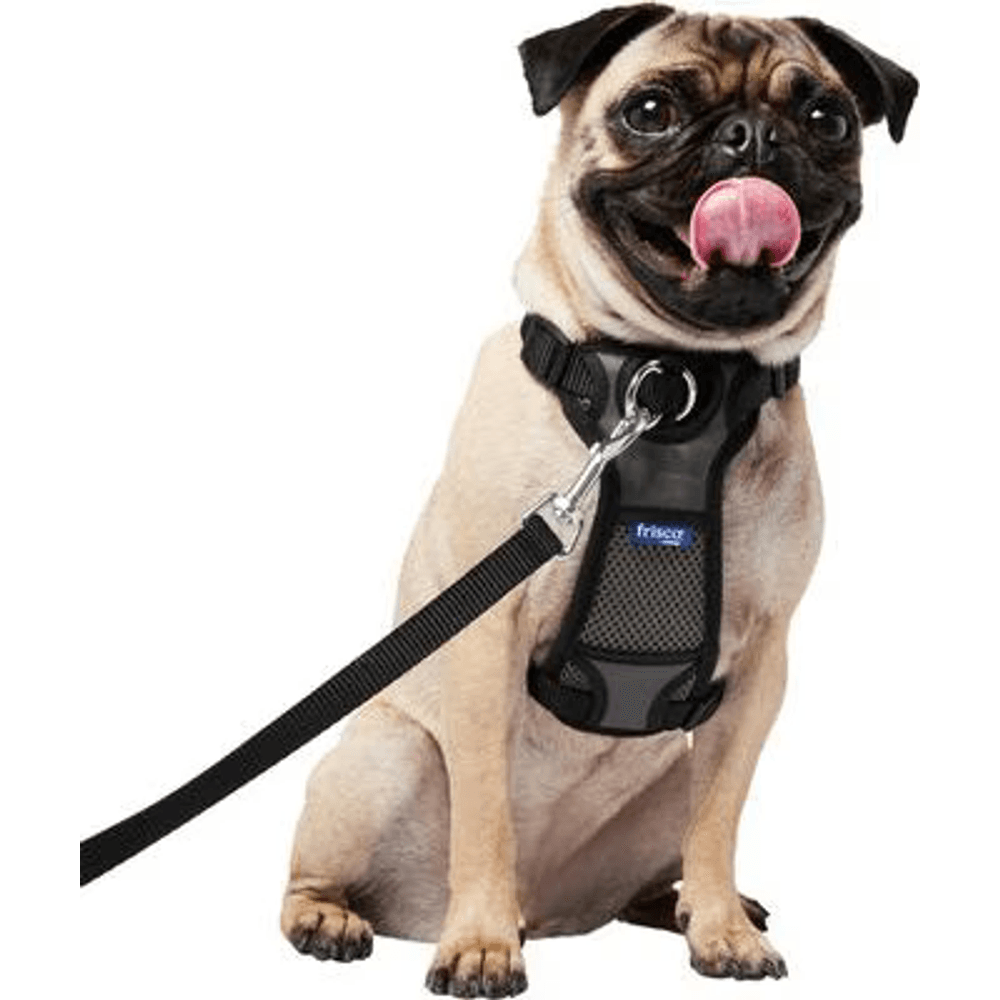
A budget-friendly padded no-pull harness that keeps leash pressure off a coughing dog's neck and windpipe by distributing it across the chest. A simple, affordable way to protect an irritated airway or a collapsing trachea on every walk.
Petful may earn a commission when you click through to Chewy, at no extra cost to you.
- 1Breed group: Non-Sporting Group; developed in the United States.
- 2Build: small and compact, with three standard weight classes up to 25 pounds.
- 3Daily priorities: human company, reward-based learning, comfortable activity, and short-muzzle precautions.
- 4Coat: short and relatively easy to maintain, but it still sheds.
A Boston's alert ears and lively expression can make it seem ready for anything. Enthusiasm is only one part of the picture. Ask how comfortably the dog moves and breathes, whether it can settle after excitement, and how much help it needs when left alone.
Boston Terrier temperament and family fit
Yes, a Boston Terrier can be a good house dog. Many enjoy spending time near their people and can alternate play with quiet companionship. Apartment living is workable when the household can provide toilet access, enrichment, and considerate training around shared hallways and neighbors.
That sociability also deserves a realistic workday plan. A dog that becomes distressed when people leave needs gradual independence training and appropriate professional help. Buying a second dog or leaving more toys does not reliably resolve separation distress.
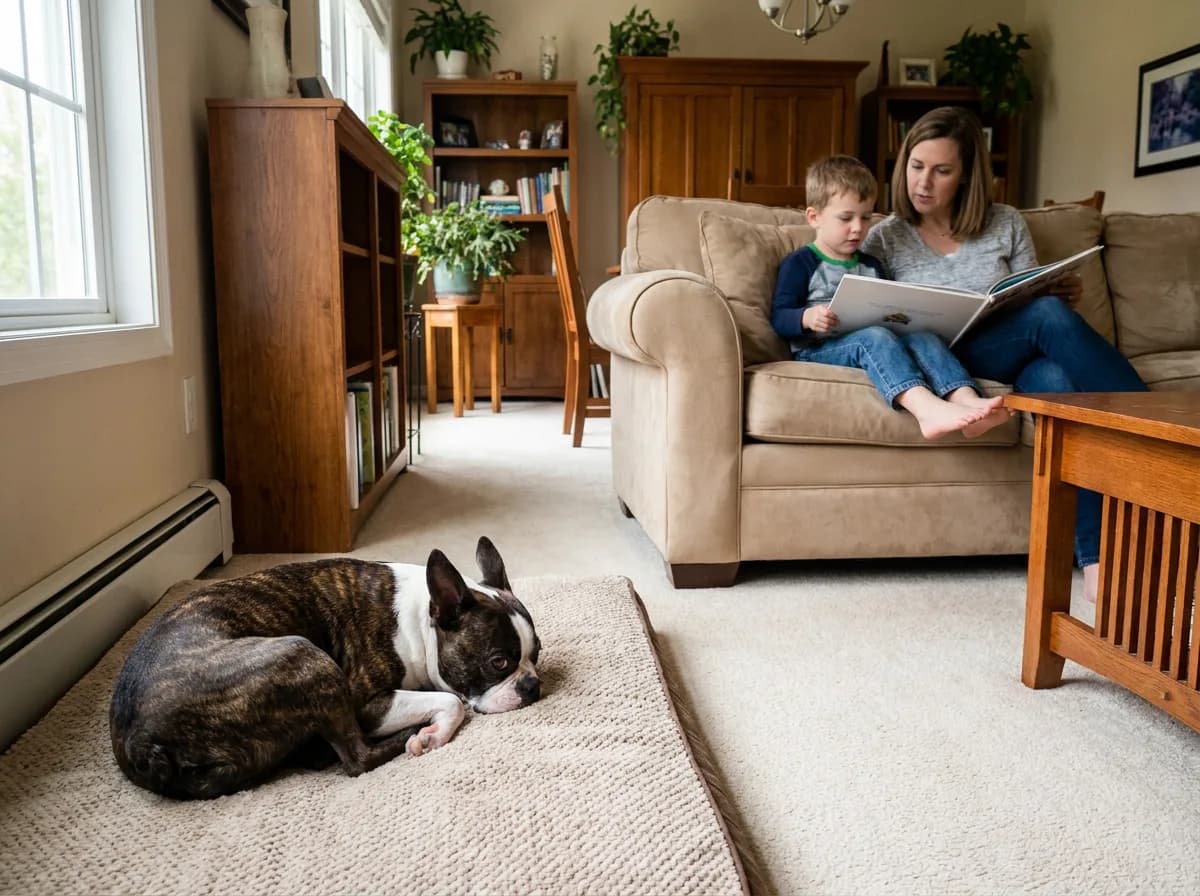
For families with children, arrange a dog bed or gated resting area that children leave alone. Adults should supervise interactions, show children how to invite contact, and end play when either participant gets too excited. Small dogs still need protection from being picked up awkwardly or hugged tightly.
Introductions to another dog should allow space and an easy retreat. Feed separately at first and put away toys that either dog guards. With a resident cat, use a barrier and let the cat control distance; a friendly breed description cannot promise compatibility with that particular cat.
Before committing, write down who covers these ordinary jobs:
- The first and last bathroom trip of the day.
- A midday break when the household is away.
- Short training and play sessions that fit around meals and work.
- Care during holidays, illness, and very hot weather.
An adult fostered Boston may offer useful information about settling, house training, and other pets. Ask for examples from its current home rather than accepting a general “great family dog” label.
Boston Terrier pros and cons: an honest scorecard
The pros and cons of bringing a Boston Terrier into your household center on companionship, size, and everyday care. Advantages include a manageable build, a short coat that needs little elaborate styling, and an often affectionate nature. Disadvantages include short-muzzle breathing concerns, heat restrictions, possible difficulty with time alone, and continuing training and healthcare costs. A short coat does not make the whole dog low maintenance.
- Often an affectionate companion that enjoys participating in family life.
- Compact enough for many smaller homes and everyday travel arrangements.
- Short coat needs brushing and ordinary hygiene rather than routine haircuts.
- Short-muzzle anatomy brings airway risk and limits activity in heat.
- Some individuals need considerable support to cope with time alone.
- Health screening, veterinary care, and emergency funds remain substantial commitments.
- Excitable greetings and rough play need management around children and other pets.
Use the tradeoffs to choose the dog and the setup together. If your only exercise option is a long midday walk in summer, you need an indoor alternative before adopting. If a quiet work call is essential, practice settling behind a barrier rather than assuming the breed will stay silent.
A Boston may suit a first-time owner who is willing to learn and arrange help. Someone seeking a running partner for hot-weather endurance exercise should discuss a different match with a veterinarian or responsible rescue. The right decision depends on the activity you actually want to share.

Freeze-dried chicken training rewards with a compact format for rewarding individual repetitions. Check the label for ingredients and feeding directions.
Petful may earn a commission when you click through to Chewy, at no extra cost to you.
How big do Boston Terriers get?
The AKC gives a typical adult weight range of 12–25 pounds. Its written Boston Terrier breed standard separates show weight into three classes. Those classes describe the standard; they are not a feeding target or a substitute for assessing body condition. The AKC standard does not set a numerical height. VCA Animal Hospitals lists 15–17 inches as a general height reference; measure the individual dog for equipment fit.
| Measure | Reference | How to use it |
|---|---|---|
| Lighter standard class | Under 15 pounds | Compare an adult dog with its own frame and body condition. |
| Middle standard class | 15 to under 20 pounds | The upper boundary is below 20, not inclusive of 20. |
| Heavier standard class | 20 to 25 pounds | A number inside the class does not automatically mean a healthy weight. |
| Adult shoulder height | 15–17 inches (VCA general reference) | Measure at the withers; equipment fit also needs chest and neck measurements. |

For a harness, measure chest girth behind the front legs and follow the product's chart. The Frisco padded no-pull harness is one adjustable option; the linked Small size will fit only dogs whose measurements match that listing. Check that straps stay clear of the armpits and do not press against the throat.
Choose a carrier or crate by usable interior dimensions. The dog should be able to stand naturally, turn around, and lie down comfortably. Photographing a dog next to a person can show general scale, but it cannot establish its weight or prove that a particular carrier fits.
If an adult Boston is heavier than expected, ask your veterinarian whether the difference is frame, muscle, or excess body fat. Do not reduce food simply to reach a breed-chart number. Puppies gain height and fill out at different rates; reaching a birthday does not establish that growth is complete. Your veterinarian can follow serial weights, body condition, and development to distinguish normal growth from excess feeding. The first-year puppy guide below covers growth and feeding decisions in more detail.
Boston Terrier colors, coat, and grooming
Boston Terriers shed, even though their short, smooth hair is easy to overlook. Regular gentle brushing helps remove loose hair, and routine nail, ear, and dental care still matter. They generally do not need the clipping schedule of a long-coated breed.
The AKC standard recognizes brindle, seal, or black with white markings. Seal looks black except for a reddish cast in sunlight or bright light. A seller's “rare” label is a sales description; it does not establish health, quality, or eligibility under the breed standard.
| Description | What the standard says | Buyer takeaway |
|---|---|---|
| Brindle and white | Recognized color with the specified white markings | Look for the dark striped pattern rather than relying on a listing label. |
| Seal and white | Nearly black with a reddish cast visible in bright light | A warm cast is different from declaring every brown dog standard-colored. |
| Black and white | Recognized color with the specified white markings | Markings are only one part of the standard. |
| Gray, liver, or solid black, brindle, or seal without required white | A disqualifying shade or marking pattern in the show standard | Show eligibility does not determine a pet dog's worth or replace health records. |



Keep grooming sessions brief enough that the dog remains comfortable. Touch a paw, reward cooperation, and build toward nail care gradually. New odor, soreness, discharge, or persistent scratching belongs in a veterinary conversation rather than an experiment with repeated baths or ear cleaners.
For teeth, start with handling around the lips before expecting a full brushing session. A Virbac C.E.T. dual-ended toothbrush offers different brush-head sizes; use the end your dog tolerates and a toothpaste made for pets. WebVet's guide to brushing a dog's teeth explains how to introduce the routine gradually.

Collapsible silicone travel bowl with a carabiner that clips to a leash or bag, so your dog always has fresh water on walks, hikes, and car trips.
Petful may earn a commission when you click through to Chewy, at no extra cost to you.
Boston Terrier lifespan and health
The AKC's published life expectancy is 11–13 years. That is a broad breed reference, not a promise for an individual dog. Our Boston Terrier lifespan guide explains lifespan evidence, everyday health monitoring, and the changes that merit a veterinary discussion as a dog grows older.
Before choosing a puppy, ask for the actual parents' results. The Boston Terrier Club of America's health-screening recommendations include:
- Eye examinations to assess eye health.
- Patellar-luxation screening to assess kneecaps.
- BAER testing to assess hearing.
- An additional DNA test for early-onset hereditary juvenile cataracts.
Different tests answer different questions: a DNA result does not replace a clinical eye examination.
The shortened skull and muzzle can contribute to brachycephalic obstructive airway syndrome, which can restrict airflow. A dog that snores is not automatically diagnosed with this condition, but persistent breathing difficulty needs veterinary assessment. BAER testing checks hearing and can identify deafness; it answers a different question from an eye examination.
Breathing deserves attention in puppies and adults. Report noisy or difficult breathing, exercise intolerance, or sleep disruption to a veterinarian instead of assuming that every snort is harmless breed character. Health screening reduces uncertainty but cannot guarantee that a dog will never develop disease.
Training, barking, and intelligence
Boston Terriers can learn household skills and enjoy reward-based training. Whether a dog learns quickly in one session depends on the reward, environment, experience, and task. Calling a dog “stubborn” often misses a more useful question: was the requested behavior clear and easy enough to succeed at?
Begin with behaviors that make daily life easier: coming when called indoors, standing for harness fitting, waiting at doors, and settling on a mat. Teach one small step, reward it promptly, and practice in several quiet places before adding distractions.
Do Boston Terriers bark a lot? There is no dependable breed-wide yes or no. A particular dog may bark at a door, during play, when frustrated, or when alone. Identify the trigger before deciding what to teach.
- For window barking, reduce the view and reward moving away from the window.
- For excited greetings, rehearse approaching visitors with four paws on the floor.
- For demand barking, reward a calmer way to ask before the noisy pattern starts.
- For distress during absences, arrange a qualified behavior assessment and a gradual plan.
Small treats let you reward several repetitions without turning practice into an extra meal. Pupford chicken training treats are a single-protein option for dogs that tolerate chicken. Count treats within the daily food allowance, and use part of the normal meal when that is motivating enough.
Avoid turning every session into a test. Ending after several successful repetitions gives you something to build on next time. If the dog stops taking a normally valued reward or struggles to recover from excitement, make the situation easier and consider whether discomfort is interfering.
Exercise, heat safety, and apartment living
Plan daily activity around the individual dog's breathing, age, condition, and recovery. Short walks, sniffing, gentle games, and training can all contribute. An energetic Boston does not need to prove its stamina by keeping up with a person's run.
Heat risk depends on more than the forecast temperature. Humidity, sun, pavement, excitement, and the dog's health change the workload. The AKC's heatstroke guidance identifies short-snouted dogs among those needing extra caution. There is no universal “safe Boston temperature” that overrides signs of distress.
| Observation | Next step | Practical alternative |
|---|---|---|
| Comfortable breathing and normal recovery in suitable conditions | Continue at the dog's easy pace and reassess regularly | Include shaded sniffing breaks instead of increasing intensity. |
| The route is hot or humid, or the dog is slowing or struggling to settle | Shorten the outing and move indoors; seek veterinary advice about concerning changes | Offer a quiet scent game after the dog is comfortable. |
| Difficult breathing, weakness, collapse, or abnormal gum color | Stop activity and seek urgent veterinary care | Move to a cooler place while arranging care; do not try another exercise session. |

Carry water on outings. A small Frisco collapsible travel bowl packs easily, but carrying a bowl is not permission to extend a hot walk. Choose a route with a short way home and turn back before the dog is struggling.

A dual-ended toothbrush with a large and a small head to fit different mouth sizes and reach the back molars where plaque hides. Soft bristles angled for the gumline.
Petful may earn a commission when you click through to Chewy, at no extra cost to you.
- Difficult breathing, collapse, or blue or pale gums need immediate veterinary attention. Move the dog out of heat while contacting an emergency veterinarian. Do not wait for a thermometer reading or assume the dog only needs more water.
In an apartment, keep a clear indoor play area and practice calm exits through busy doors. A short search for scattered pieces of the dog's meal can give it something to do without racing through the hallway. If you depend on elevators, also plan how you would carry the dog during an outage.
How much does a Boston Terrier cost?
Separate the acquisition payment from first-year setup, recurring care, and unexpected expenses. The purchase or adoption fee is only the beginning. Veterinary visits, food, dental care, training, boarding, and replacement equipment continue throughout the dog's life.
Our Boston Terrier price guide covers sourced price examples and an ownership budget. Get local quotes before committing, especially for care you will outsource regularly. A household needing a weekday walker has a different recurring bill from one with someone available at home.
If you compare pet insurance, read the actual exclusions, waiting periods, deductible, and reimbursement terms. A pre-existing condition may be excluded under the policy's definition. Keep accessible funds for bills you must pay before any eligible reimbursement; an insurance card does not replace an emergency plan.
Feeding a Boston Terrier
Choose a complete and balanced diet appropriate to the dog's life stage, then adjust the amount using body condition and veterinary advice. “Boston Terrier dog food” on a label does not by itself establish that a food is the best choice for your dog.
Measure meals and record treats, chews, and food used in training. If several family members feed the dog, a shared daily container or checklist prevents everyone from giving a second “small” portion. Recheck the plan when activity changes, rather than assuming the same scoop remains correct forever.
Before treating a food change as the answer to a new problem, discuss persistent symptoms with your veterinarian:
- Vomiting or diarrhea.
- Itching.
- Difficulty eating.
Avoid diagnosing a food allergy from breed reputation or moving through restrictive diets without a clear plan.
Use meals to support calm routines:
- Feed in a quiet place.
- Separate pets that rush each other's bowls.
- Let the dog finish without a child approaching.
Choose equipment that allows comfortable access and easy cleaning; an expensive breed-branded bowl is not a nutritional requirement.
Boston Terrier mixes
A Boston Terrier mix may inherit a variable combination of build, coat, behavior, and health risks. Common search names include Frenchton for a Boston–French Bulldog cross, along with Boston–Chihuahua and Boston–Pug mixes. An informal crossbreed name is not a guarantee of size, temperament, or easier breathing.
Ask about both parents where that information is known, their relevant health testing, and the individual dog's current needs. With an adopted dog of uncertain ancestry, observed behavior and veterinary assessment often help more with daily decisions than guessing a precise breed percentage from a photograph.
Crossing two short-muzzled breeds does not automatically remove short-muzzle health risks. Evaluate comfortable breathing and activity directly, and ask a veterinarian what follow-up is appropriate. Choose the dog you can care for instead of buying a promise that a fashionable cross avoids every concern of its parents.
Finding a Boston Terrier: rescue and responsible breeders
For rescue and responsible sourcing, start with breed-club resources, established rescues, and breeders willing to explain their choices and provide records. The Boston Terrier Club of America provides breed-specific health information you can use to prepare questions.

For a puppy, ask to connect each health result to the named parent. Discuss socialization, veterinary care, the contract, and what support is available if circumstances change. A registration document identifies registration; it does not replace health results or demonstrate thoughtful puppy raising.
For an adult, ask about house training, time alone, handling, other pets, and known medical needs. Request specific examples: how did the dog behave during a recent visitor's arrival, or what happened on its last walk past another dog? “Friendly” and “energetic” can mean very different things in different homes.
Take time to read the paperwork before paying. Be cautious about pressure to act immediately, unclear identities, or extra charges justified only by a “rare” color. A good match should still make sense after you have considered ordinary care costs and the support you may need.
Boston Terrier puppies
Puppies need frequent bathroom opportunities, safe socialization, rest, and patient practice with being handled. Before collection, agree on the current food, vaccination and parasite-care records, the first veterinary appointment, and the transport arrangements.
The detailed Boston Terrier puppy guide covers the first year, including house training, feeding, and early routines. Use it to plan the puppy stage; use this adult profile to decide whether the longer-term breed fit works for your household.
Boston Terrier vs. French Bulldog
These are distinct breeds, even though both are compact companions with short muzzles. Ear shape and overall build offer visible clues, but the more useful comparison is how an individual dog fits your activity, handling, and healthcare plans.
Our Boston Terrier vs. French Bulldog comparison examines the differences in more detail. Meet suitable adults of both breeds if possible, ask about their actual daily care, and avoid deciding from an idealized puppy photograph alone.
Boston Terrier questions from owners
Sometimes, but check the airline's current rules for the exact itinerary before booking. Cabin space, carrier dimensions, route restrictions, and any air travel embargo can affect eligibility; short-nosed dogs may face additional limits. Ask your veterinarian whether the particular dog is fit to travel. Approval for one trip does not establish safety or acceptance on another.
No. The AKC standard has weight classes within the Boston Terrier breed, not a separate miniature variety. If a listing uses that label, ask for the adult parents' sizes, registration details, and health records. Do not infer an individual puppy's future size or health from the word miniature.
Treat the name as ambiguous until the seller explains it. Ask whether the dog is a registered Boston Terrier, a stated cross, or a dog of unknown ancestry, and review the registration or other paperwork that supports the answer. An informal name is not a separate recognized Boston Terrier standard.
Swimming ability varies, and a pool is not a safe place to find out without a plan. Supervise closely, use a properly fitted dog life jacket where appropriate, and teach an easy exit in calm shallow conditions. Never throw the dog into water or assume that liking water means it can stay afloat comfortably.
Choose for the individual temperament and household compatibility rather than expecting a personality from sex alone. Meet the dog, discuss behavior and health, and consider the other pets already at home. A rescue or breeder who knows the individual can offer more useful observations than a blanket claim that males or females are always easier.

Kristine Lacoste has been researching dog and cat breeds for nearly a decade and has observed the animals up close at dog shows in both the United States and the United Kingdom. She is the author of the book One Unforgettable Journey, which was named as a finalist for a Maxwell Award from the Dog Writers Association of America, and was host of a weekly pet news segment on the National K-9 Academy Radio Show. In addition, she was the New Orleans coordinator for Dogs on Deployment, a nonprofit that helps military members and their pets, for 3 years. Kristine has researched and written about pet behaviors and care for many years. She holds a bachelor’s degree in psychology, another bachelor’s degree in English and a Master of Business Administration degree.
Sign up for expert-backed reviews and safety alerts all in one place.