Boston Terrier Puppies: A First-Year Care Guide
Raise a Boston Terrier puppy with a flexible first-year plan for responsible selection, settling in, toilet training, feeding, safe socialization, gentle handling, and veterinary care as your puppy grows.

Young black-and-white Boston Terrier standing on a cream rug in a living room.
Petful is reader supported. As an affiliate of platforms like Amazon and Chewy, we may earn a commission when you buy through links on this page. There is no extra cost to you.
Boston Terrier puppies need a first year built around supervision, sleep, gentle training, and carefully chosen new experiences. Their small size does not make them ready to stay alone for a working day, and their short muzzle makes comfortable breathing and heat safety part of ordinary care. Start with a responsible puppy choice, a simple home routine, and a veterinarian who can help you adapt the plan as your puppy grows.

Sign up for expert-backed reviews and safety alerts all in one place.
Boston Terrier puppies: what the first year involves
Expect a compact, lively puppy whose confidence, coordination, and self-control are still developing. The familiar black-and-white appearance and expressive face make Boston Terrier puppy pictures appealing, but a photograph cannot establish health, pedigree, or temperament. Meet the puppy and ask how it behaves during everyday handling, rest, meals, and new situations.
- 1Build habits around your puppy's needs
- 2Prepare a safe rest area and arrange reliable daytime supervision before pickup
- 3Offer toilet opportunities at waking, meals, play transitions, and bedtime
- 4Use short reward-based lessons and calm, controlled socialization
- 5Keep feeding and veterinary plans specific to the puppy rather than copying a rigid online schedule
An eight-week-old puppy and a six-month-old adolescent need different support. In the early weeks after coming home, concentrate on feeling safe, learning the household routine, and successful toilet opportunities. As your puppy grows through three, four, and six months, continue training and gradually expand what it can manage. Physical growth, bladder control, and emotional maturity do not all progress on the same timetable.
Boston Terriers do not all stop growing at one fixed age. AKC's growth guidance says small breeds generally finish growing at six to eight months and medium breeds at around 12 months. This is size-based guidance, not a Boston-specific deadline; muscle and body shape can continue developing afterward. Ask your veterinarian to assess your puppy's growth curve and body condition instead of deciding maturity from age alone.

A budget-friendly padded no-pull harness that keeps leash pressure off a coughing dog's neck and windpipe by distributing it across the chest. A simple, affordable way to protect an irritated airway or a collapsing trachea on every walk.
Petful may earn a commission when you click through to Chewy, at no extra cost to you.
Puppies can look awkward as their legs, ears, and body proportions change. Avoid choosing equipment or predicting adult size from a photograph or an exact monthly weight chart. Use your puppy's actual measurements for a collar or harness, and have the veterinary team monitor growth and body condition. A puppy being smaller or larger than another in the litter does not by itself diagnose a problem.
- Keep veterinary appointments and preventive care organized.
- Provide a suitable puppy diet and track healthy growth.
- Practice calm handling, settling, and short training sessions.
- Offer safe social experiences without forcing contact.
- Adjust supervision, equipment fit, and the daily routine as needs change.
How to choose a puppy or rescue responsibly
Choose the person or organization as carefully as the puppy. The Boston Terrier Club of America's breeder guidance encourages buyers to investigate breeding practices and records rather than assuming registration proves quality. A responsible conversation should cover the puppy's background, health information, temperament, and the support available after placement.
Boston Terrier litter size also varies. A published Norwegian kennel-record study reported a mean of 4.1 puppies across 46 Boston litters, with a range of one to eight at birth. Those 2006–2007 records counted liveborn and stillborn puppies; they are a historical sample, not a promise for a particular litter. For choosing your puppy, individual health records and careful rearing matter more than litter size.
Ask to review actual documents:
- Parent health-screening results and what each test evaluated.
- The puppy's dated examination, vaccination, and parasite-treatment records.
- A written agreement describing transfer, support, and return terms.
- The puppy's current food, feeding routine, and experience with household life.
The BTCA health resources explain breed-related testing and link to current programs. Eye, hearing, and patella assessments address different questions; a generic “DNA tested” statement does not explain all of them. BAER is a hearing test, and its result is different evidence from a breeder saying that the puppy responds to sounds. Ask the veterinary team to help interpret unfamiliar reports.
For a rescue puppy, ask what is known and what remains uncertain. A foster carer's observations about handling, toileting, play, and settling can be useful even when ancestry or early records are incomplete. A well-matched placement does not require a promise of perfect behavior.
Financial planning also belongs before pickup. Compare eligible pet insurance policies with an emergency savings plan. Check waiting periods, exclusions, and the actual terms for the puppy. Buying a policy is not a substitute for reviewing existing health records.
Before pickup: build a safe home setup

Prepare a small, easy-to-supervise area before the puppy arrives. It should have a comfortable resting space, water, safe flooring, and a way to prevent access to household hazards. If you use a crate, choose one that allows comfortable standing, turning, and lying down, then teach voluntary entry gradually. A pen can provide supervised space around the rest area.
Walk through the room at puppy height. Secure electrical cords, medicines, cleaning products, small objects, and anything that could be swallowed. Block unsupervised stairs and spaces where the puppy could become trapped. Keep children involved through clear, adult-supervised rules rather than asking a puppy to tolerate grabbing or constant play.

The vet-favorite enzymatic toothpaste. Its dual-enzyme system keeps working between brushings to control plaque and freshen breath, and the poultry flavor makes daily brushing easy.
Petful may earn a commission when you click through to Chewy, at no extra cost to you.
Organize the first-day essentials:
- The food and feeding instructions the puppy already knows.
- Bowls, a suitable rest area, and cleaning supplies for accidents.
- A correctly fitted collar or harness and a plain leash.
- A small selection of appropriately sized toys used under supervision.
- The regular clinic's details and an emergency clinic contact.
A Frisco Padded No Pull Dog Harness, Black, Small is one option to compare using the manufacturer's measurements. “Small” is not an automatic fit for every Boston puppy. Measure the chest, check that straps do not rub or restrict movement, and recheck during growth. Remove equipment in situations where it could snag, including unsupervised confinement, unless your veterinary or training professional advises otherwise for a specific setup.
A flexible first-week puppy routine
Organize the day around events your puppy experiences, not a promise that it can wait a fixed number of hours. Waking, meals, drinks, play, and excitement are useful prompts to offer a toilet opportunity. Rest belongs between activities, especially when visitors or novelty make it difficult for the puppy to settle.
| Event | What to do next | What to observe |
|---|---|---|
| Waking from a nap | Offer a calm supervised toilet trip | Whether the puppy toilets promptly and how long it had rested |
| Meals | Feed the measured portion, then offer an appropriate toilet opportunity | Appetite, comfort, and the timing of the next need |
| Brief play or training | Pause before the puppy becomes frantic, offer a toilet break, then rest | Whether excitement settles with a quieter activity |
| A new visitor or experience | Keep the introduction short and allow distance or retreat | Willing approach, comfortable behavior, or signs it is too much |
| Evening wind-down | Quiet activity, a final toilet trip, then the familiar sleep area | Which routine helps the puppy settle |
| An accident or disrupted night | Record what happened and adjust the next opportunity | A pattern to discuss with the veterinarian if it persists |

Choose a few words everyone in the household will use for the same actions, and decide who is responsible at each transition. If two adults both assume the other took the puppy outside, the schedule will fail regardless of how carefully it is written. A note beside the door can record the most recent meal, toilet trip, and nap.
Plan help before a day when nobody can be home. A young puppy needs care breaks, company, and observation. A crate, food puzzle, or camera cannot provide a toilet trip or respond to illness. Ask the breeder or rescue and your veterinarian how to adapt care to this puppy's stage, then arrange a reliable person to cover the gap.
Toilet training, sleep, and settling alone
Successful Boston Terrier puppy training starts with making the desired behavior easy and rewarding. Offer frequent appropriate toilet opportunities, supervise when the puppy is loose, and reward promptly after it finishes in the chosen place. Accidents mean the routine or supervision needs adjustment, not that the puppy is being spiteful.
House training step by step
- Take the puppy to a consistent suitable toilet area after key routine events.
- Stay nearby and give it a quiet opportunity to finish.
- Reward the successful behavior immediately, then allow a little calm exploration when appropriate.
- Indoors, supervise closely or use the prepared safe area when you cannot watch continuously.
- Clean accidents thoroughly and move the next toilet opportunity earlier if a pattern appears.
Do not punish a discovered accident or rub the puppy's nose in it. It will not explain where to toilet next time and may make elimination around you frightening. AVSAB's training guidance supports reward-based methods. If frequent accidents come with straining, discomfort, unusual thirst, diarrhea, or a sudden change, contact the veterinarian rather than treating the problem as a training failure.

Soft lamb-and-salmon puppy bites formulated for puppies under one year. Tear each bite smaller when rewarding repeated training steps.
Petful may earn a commission when you click through to Chewy, at no extra cost to you.
Sleep and crate training
Puppies need substantial rest, and an active puppy may be unable to settle when overtired or overstimulated. Use a familiar sleeping area near enough for you to notice genuine distress or a toilet need. Introduce a crate with calm exploration and short comfortable periods; do not make the first experience a long, isolated night behind a closed door.
A Boston Terrier puppy crying at night may need a toilet opportunity, reassurance during a new transition, or assessment if it seems unwell. Respond calmly and keep necessary nighttime trips quiet. Persistent panic is a reason to revise the setup and seek professional help, not to keep increasing the duration until the puppy stops responding.
Practice alone time in very small, manageable steps while the puppy is comfortable. Briefly move away, return calmly, and build only as the dog can cope. This is different from leaving for several hours to see what happens. Keep bedding breathable and do not cover a puppy's head; assess sleeping comfort from the dog and the room conditions rather than a cute habit seen online.
Biting and excited play
Puppy mouthing can occur during play, teething, or overexcitement. Offer an appropriate toy, pause rough games, and allow rest when arousal rises. Avoid wrestling with hands or rewarding hard biting with more frantic attention. If biting is intense, escalating, associated with fear or pain, or difficult to interrupt safely, involve the veterinarian and a qualified reward-based professional. WebVet's guide to stopping puppy biting provides a more detailed practical plan.
Feeding, treats, and healthy growth
Feed a complete and balanced food suitable for puppy growth, in measured amounts. Start from the existing food and instructions, then ask your veterinarian whether a change is needed. Do not switch abruptly among several foods simply because a puppy is settling into a new home or because a breed-specific label looks appealing.
The amount a Boston Terrier puppy should eat depends on its age, weight, body condition, growth, and the food's calorie density. An online feeding chart cannot reliably turn those variables into one cup amount for every puppy. Use the manufacturer's guide as a starting point, confirm the daily amount with the veterinary team, and divide that total into the agreed meals. AAHA's feeding guidance emphasizes a complete, balanced diet with treats and other extras kept to a small share of intake.
For a simple feeding record, write down:
- The exact food and calories per measured unit.
- The daily amount recommended for this puppy.
- The number of meals and amount in each.
- Treats and any food used for medication or training.
- Weight and body-condition observations from appointments.
For example, if the veterinarian agrees on a particular daily amount, measure that entire day's allowance first and allocate it across meals. Food taken from the allowance for training still counts as food. If you use separate treats, account for those calories rather than quietly adding them on top of the plan.
Wellness Soft Puppy Bites Lamb & Salmon Dog Treats are one reward option to consider after checking ingredients and suitability. Break rewards into appropriately small portions and supervise eating. These treats are not a complete puppy diet or a reason to select a grain-free main food.
Ask for advice if appetite drops, growth seems abnormal, vomiting or diarrhea persists, or the puppy appears weak. Young puppies can become unwell quickly. Repeated food experiments should not replace checking a problem with the clinic.
Socialization without overwhelming your puppy
Socialization means helping the puppy feel comfortable with ordinary life, not arranging as many greetings as possible. Let it observe people, movement, sounds, surfaces, and calm animals at a distance where it can remain comfortable. A puppy choosing to watch quietly is learning; it does not need to be touched by every stranger.

A dual-ended toothbrush with a large and a small head to fit different mouth sizes and reach the back molars where plaque hides. Soft bristles angled for the gumline.
Petful may earn a commission when you click through to Chewy, at no extra cost to you.
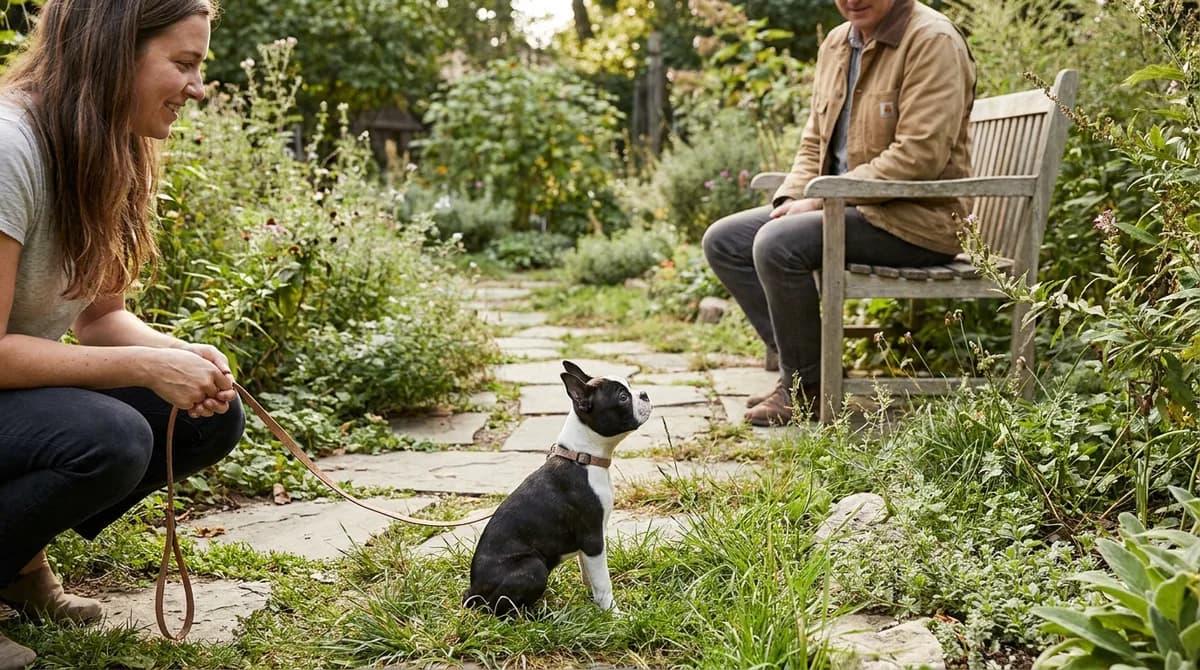
AAHA's behavior guidance explains why social exposure should not automatically wait until an entire vaccination series is finished. That does not mean every setting is safe. Discuss local disease risk, class hygiene, and appropriate contacts with your veterinarian. Avoid uncontrolled exposure to sick or unknown dogs and heavily used dog areas until the veterinary team says the setting is appropriate.
Begin with small experiences:
- A calm visitor sitting without reaching for the puppy.
- A household sound at a comfortable volume and distance.
- A safe new surface the puppy can approach voluntarily.
- A short ride or observation outing appropriate to its care plan.
Back up when the puppy freezes, hides, tries to leave, or becomes increasingly distressed. More intensity is not automatically better learning. Short, comfortable experiences repeated over time are preferable to a crowded outing that leaves the puppy overwhelmed. WebVet's puppy vaccine schedule provides context for the veterinary conversation about timing and risk.
Teething, handling, and gentle grooming
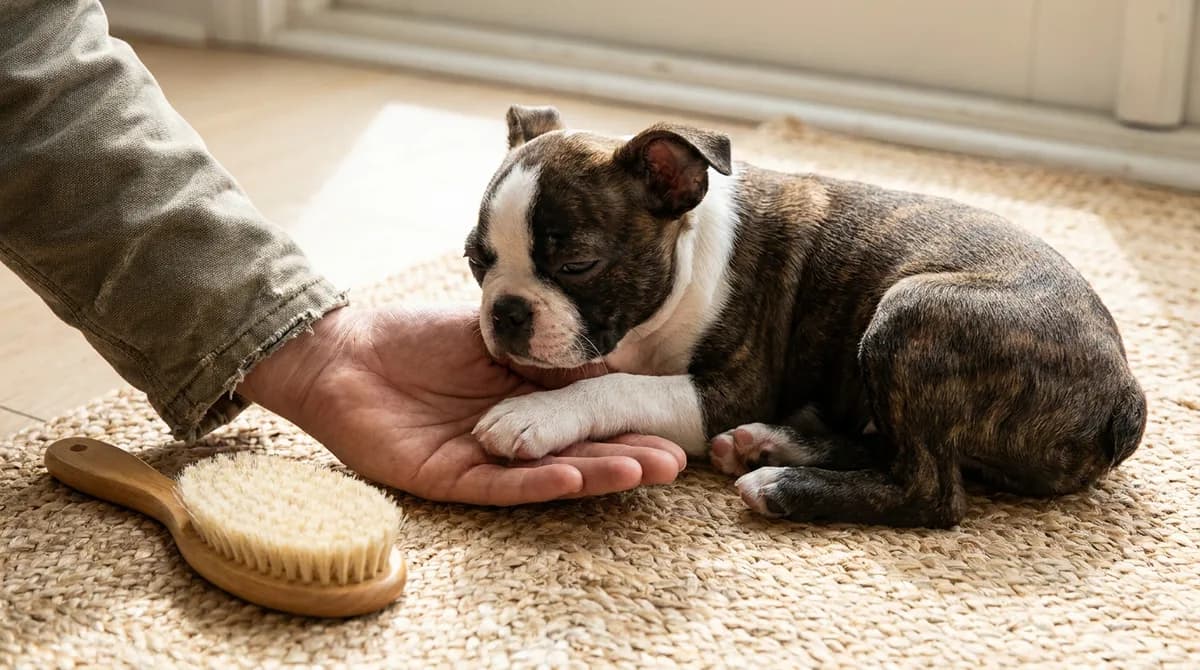
Make routine care familiar before it becomes urgent. Touch a paw briefly, reward calm participation, and release it. Build toward looking at ears, checking harness contact areas, and brushing without holding the puppy through a struggle. Several successful seconds are more useful than one long forced session.
Choose chewing items for the individual puppy's size and behavior, supervise use, and remove damaged items or pieces small enough to swallow. Do not assume “puppy toy” means safe for every mouth or that harder chewing is better during teething. Ask the clinic about a suitable choice if the puppy has dental discomfort or repeatedly breaks toys.
For dental handling, a Virbac C.E.T. Dual-Ended Dog & Cat Toothbrush lets you compare two brush-head sizes. Introduce the tool gradually with a pet toothpaste your veterinary team considers suitable, such as Virbac C.E.T. Enzymatic Poultry Flavor Dog & Cat Toothpaste. UC Davis's tooth-brushing guide describes a progressive approach. Do not force brushing over a painful mouth.
Breathing, heat, eyes, and the first veterinary visits
Arrange a veterinary visit soon after bringing the puppy home and bring all existing records. Ask about the vaccination and parasite-prevention plan, feeding, identification, and any concerns observed during the first days. Reproductive-care decisions should be individualized with the veterinarian rather than copied from a fixed-age rule online.
Boston Terriers are short-muzzled dogs, so breathing comfort matters at any age. AAHA identifies Boston Terriers among breeds at increased risk of overheating. Plan activity for suitable conditions, provide rest and water, and avoid assuming that an enthusiastic puppy can safely continue because it still wants to play.
- Severe breathing difficulty, collapse, or blue or gray gums needs immediate veterinary help. New squinting, an injured-looking eye, or persistent eye discomfort also deserves a prompt call to the clinic.
Keep the distinction between normal observation and diagnosis clear:
- Record a new noise or change in activity tolerance for the veterinarian.
- Avoid using human medication, leftover eye drops, or a guessed treatment.
- Ask which changes require a same-day appointment and which should be monitored.
Your puppy's records and examination are more useful than a breeder's broad promise that a line has no problems. Health screening reduces uncertainty about specific questions; it cannot eliminate every possible illness.
Is a boy or girl Boston Terrier better?
Neither a male nor a female puppy is universally better. Match the individual puppy's behavior, confidence, and needs to your household, and consider any resident animals. Claims that every male is more affectionate or every female is easier to train are too broad to guide a responsible choice.
Ask the breeder or foster carer what they observe across ordinary days, not only during one exciting visit. A very active puppy may settle well after rest, and a quiet puppy may simply be tired or unfamiliar with the setting. Discuss your routine honestly so the placement decision considers more than appearance or sex.
What does a Boston Terrier puppy cost?
A quoted puppy price is not a national average. The acquisition fee is only part of the first-year commitment. Ask what a breeder or rescue fee includes, then budget for the care still due, equipment, training, and reliable help during the day. A deposit or registration document is not a guarantee of health, and a higher price does not remove future veterinary risk.
Our Boston Terrier price guide provides current attributed fee examples and an adjustable first-year budget. Use that separate calculation before committing rather than choosing a puppy solely because its advertised price is lower.
Will this puppy fit your household as an adult?
A Boston Terrier can be a sociable, affectionate companion, but it still needs time, appropriate activity, and continued training. The adult dog's temperament will reflect individual traits and experience; a puppy's size does not predict how easily it will cope with your working hours, children, or other pets.
Our Boston Terrier breed profile covers adult personality, breed history, coat colors, and day-to-day care. It also explains why the modern breed should not be reduced to a recipe for crossing two dogs, or valued by claims about the rarest color. Use the profile for adult breed selection while keeping this first-year plan focused on the puppy in front of you.
Thinking beyond the first year
The breed club gives an approximate life-expectancy reference of 11 to 13 years. An individual dog may live shorter or longer, so this is a long-term responsibility rather than a fixed timetable. Habits established now can make feeding, examination, grooming, and home care easier to continue as the dog ages.
The Boston Terrier lifespan guide explains that range and later-life care. Keep records from the beginning, but do not judge each month against a rigid maturity deadline. Continue adjusting the routine as the dog grows and as your veterinarian or training professional identifies new needs.
Boston Terrier puppy FAQs
Only if you can provide each puppy with individual care, training, rest, and social experiences. Two puppies do not replace human supervision or teach one another everything they need. Discuss the practical commitment with the rescue or breeder and a qualified training professional before deciding.
Plan introductions around both dogs' health, temperament, and comfort. Start with appropriate supervised contact, give each dog space and a protected rest area, and separate them when you cannot supervise. Ask your veterinarian about infection risk and seek professional help if either dog is frightened or unsafe.
An adult should supervise calm interactions on the floor and let the puppy approach or move away. Children can help with a simple reward-based exercise under guidance, but should not grab, chase, lift, or interrupt a resting puppy. Give the puppy a protected place where children do not follow.

Kristine Lacoste has been researching dog and cat breeds for nearly a decade and has observed the animals up close at dog shows in both the United States and the United Kingdom. She is the author of the book One Unforgettable Journey, which was named as a finalist for a Maxwell Award from the Dog Writers Association of America, and was host of a weekly pet news segment on the National K-9 Academy Radio Show. In addition, she was the New Orleans coordinator for Dogs on Deployment, a nonprofit that helps military members and their pets, for 3 years. Kristine has researched and written about pet behaviors and care for many years. She holds a bachelor’s degree in psychology, another bachelor’s degree in English and a Master of Business Administration degree.
Sign up for expert-backed reviews and safety alerts all in one place.