Ragdoll Cat Colors: A Visual Guide to Every Point Color and Pattern
A visual guide to every Ragdoll cat color and pattern: the 6 recognized point colors, the 3 white-marking patterns, lynx and tortie modifiers, a rarity ranking, a color chart, and the honest answer on solid black Ragdolls.
Petful is reader supported. As an affiliate of platforms like Amazon and Chewy, we may earn a commission when you buy through links on this page. There is no extra cost to you.
The Cat Fanciers' Association (CFA) recognizes exactly 6 ragdoll cat colors, and every one of them is a "point" color, meaning the shade shows up on the ears, face (mask), legs, and tail while the body stays much paler. That single genetic rule (the colorpoint gene) is the key to understanding the entire palette, and it explains why some shades you may have searched for, like a solid black ragdoll, are not officially part of the breed at all. This guide walks through all 6 colors, the 3 white-marking patterns, the lynx and tortie modifiers that multiply them into dozens of looks, and a clear rarity ranking, with a photo for each major color so you can match what you are seeing to its real name.
- 1There are 6 recognized ragdoll point colors: seal, blue, chocolate, lilac, red (flame), and cream
- 2Those colors appear in 3 patterns: colorpoint (no white), mitted (white chin, mittens, and belly stripe), and bicolor (inverted white V on the face)
- 3Lynx (tabby) and tortie modifiers layer on top, creating dozens of named combinations
- 4Every purebred Ragdoll has blue eyes and is born pure white, developing color over the first 2 years
- 5A true solid black Ragdoll is not a recognized color because the pointed gene always lightens the body

Sign up for expert-backed reviews and safety alerts all in one place.
The genetics, kept simple: why Ragdolls are "pointed"
Every Ragdoll carries the colorpoint gene, the same temperature-sensitive gene found in Siamese and Himalayan cats. According to the CFA breed standard, this gene means "the body is always lighter in color than the head, legs and tail." Here is the simple version of why that happens: the enzyme that produces dark pigment only works properly in the cooler parts of a cat's body. The extremities (ears, face, paws, and tail) run a couple of degrees cooler than the warm core, so pigment develops there and the warm trunk stays pale.
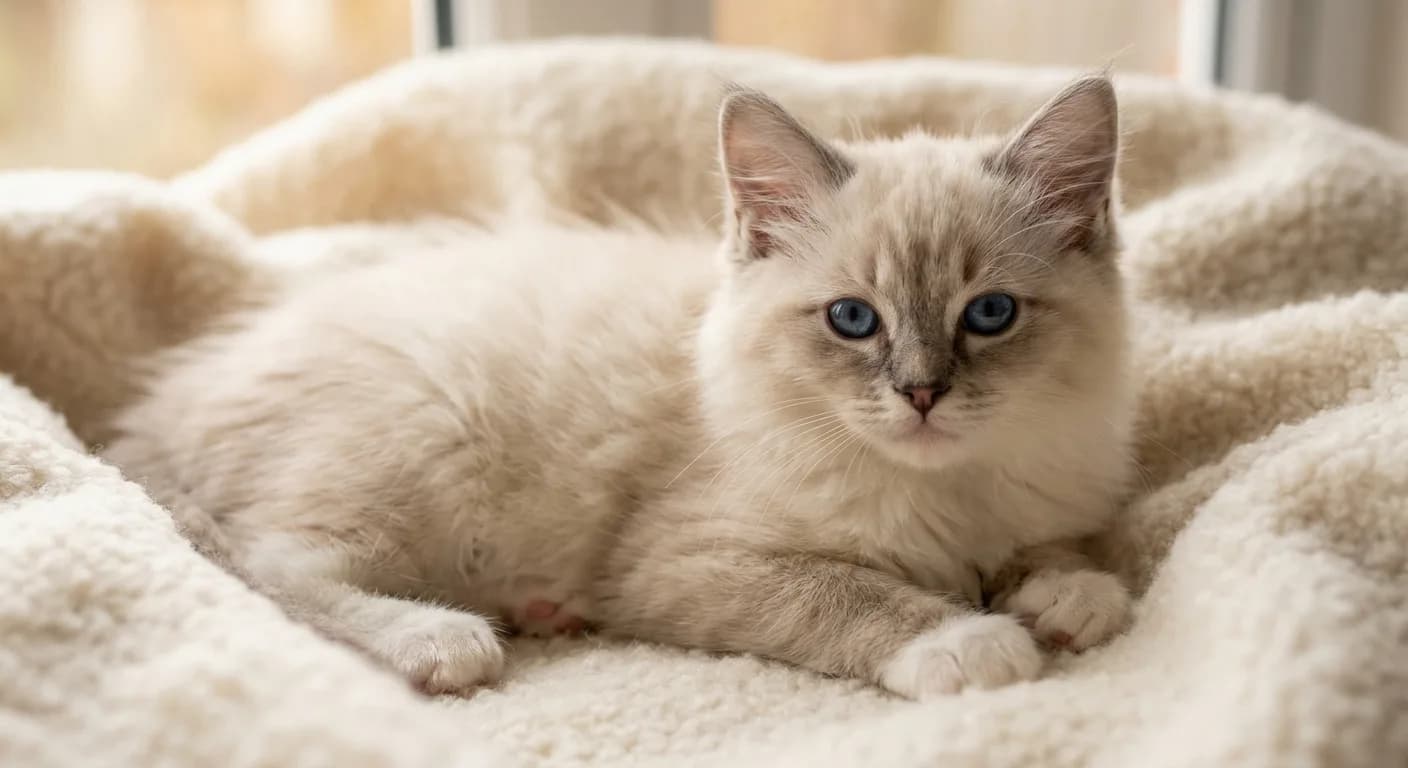
This is also why Ragdoll kittens are born almost pure white. In the warm, even temperature of the womb the pigment enzyme never switches on, so newborns arrive cream to white all over. The points start to show within the first week or two, then deepen slowly. Ragdolls are a slow-maturing breed, and the CFA notes they do not reach full coat color until around 2 years of age. A seal point you meet as a pale kitten can darken dramatically by adulthood.

Compare coverage choices for your pet, then request a quote directly on Lemonade.
- Check a price for your pet
- Review available coverage choices
- See the terms before you decide
Eligibility, waiting periods, limits and exclusions apply.
Petful may earn a commission when you click through to Lemonade, at no extra cost to you.
- Ragdoll points darken with age and with temperature, so a cat can look noticeably lighter in summer and richer in a cold winter. Judge final color at maturity, not from a kitten photo.
One trait never changes with temperature or age: the eyes. Every Ragdoll has blue eyes, and a deeper blue is prized. The CFA standard is blunt about it and lists "eyes other than blue" as a disqualification. If a cat marketed as a Ragdoll has green, gold, or copper eyes, that is your first clue it is not a traditionally pointed, show-standard Ragdoll. We come back to that in the black Ragdoll section below. For the full breed picture, see our Ragdoll cat breed profile.
The 6 recognized ragdoll cat colors
These 6 are the foundation. Each is a "point" color: the shade you see on the ears, mask, legs, and tail. They come in 3 dilute-and-dense pairs, which is the cleanest way to remember them. Seal and blue are by far the most common; chocolate and lilac are the rarest of the standard six because they require both parents to carry a recessive gene.
Seal point (the classic)
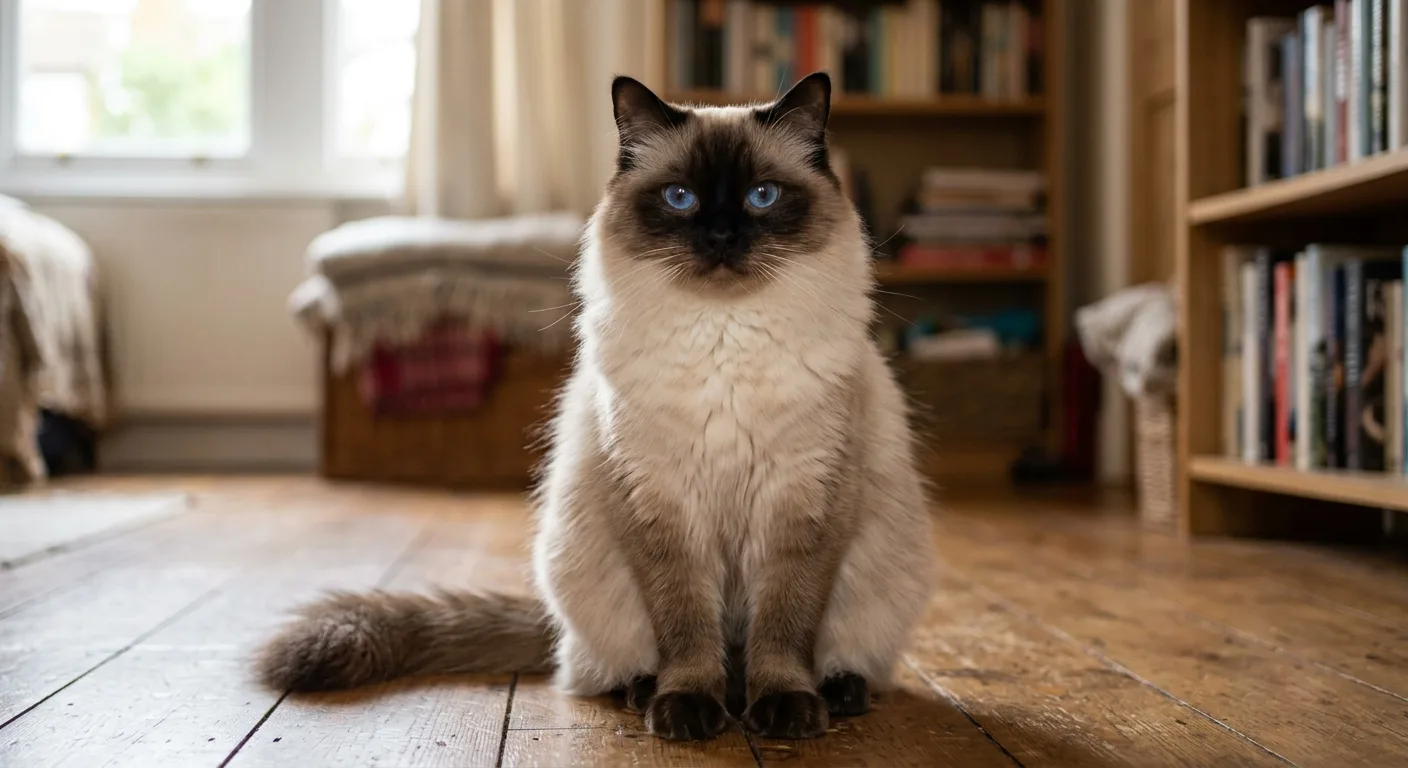
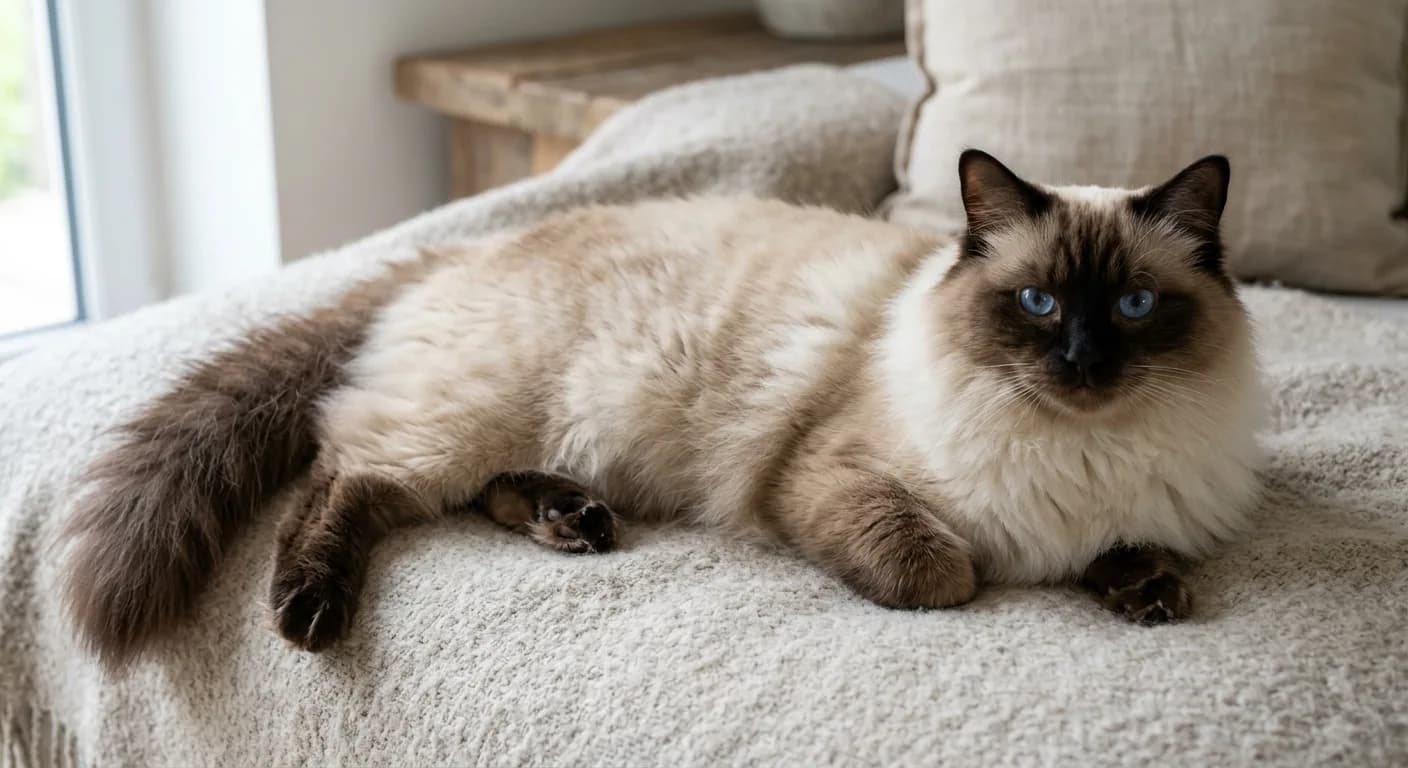
The seal point is the image most people picture when they hear "Ragdoll." The points are a deep, rich, cool-toned dark brown (almost black at the ears and mask), set against a pale fawn-to-cream body for high contrast. The CFA describes the points as "deep seal brown." Seal is the genetically dominant, fully saturated color, which is why it is the single most common Ragdoll shade.

Never Scoop Again® with the Whisker Litter-Robot, the smart self-cleaning automatic litter box. Monitor visits and track weights for better overall care in the Whisker® app. Multi-cat friendly.
Petful may earn a commission when you click through to Whisker, at no extra cost to you.
Blue point
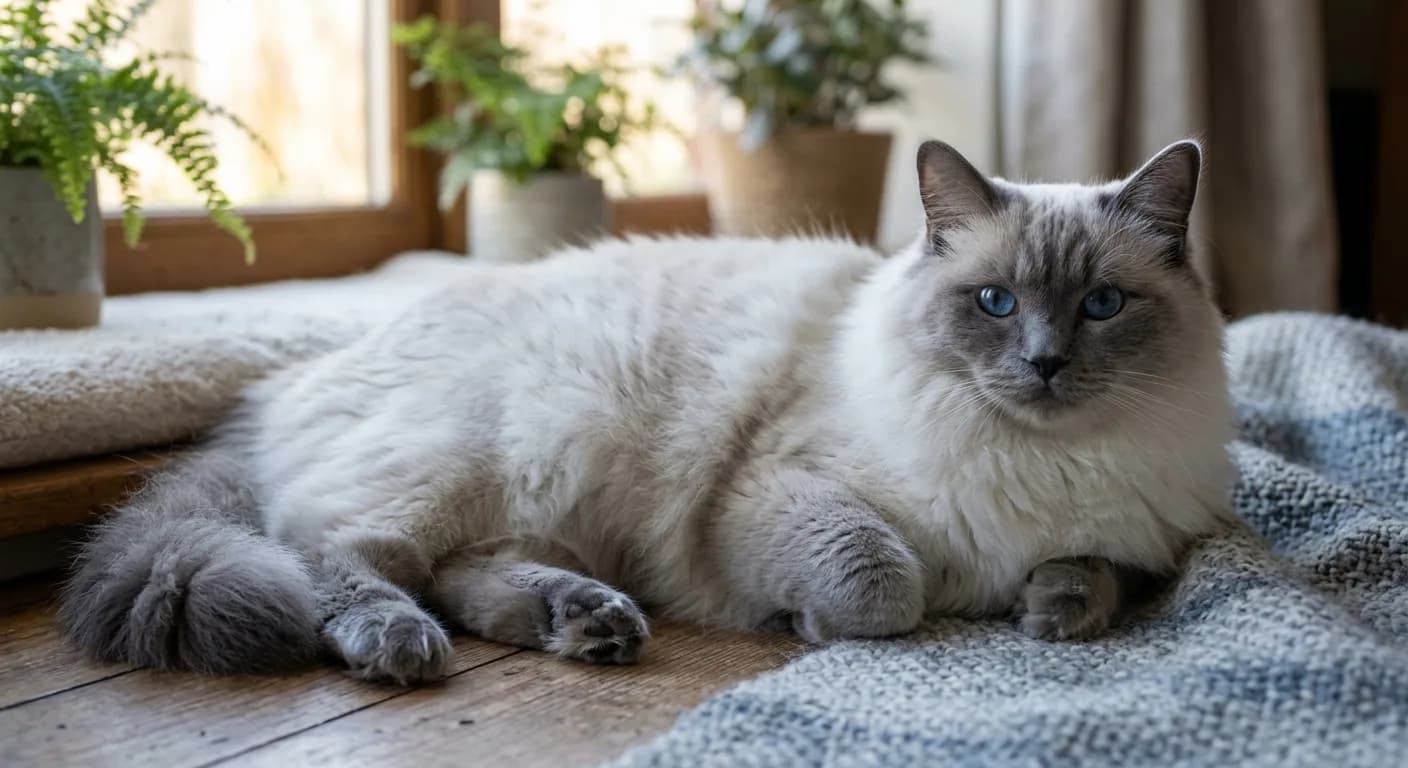
Blue is the dilute version of seal. Instead of dark brown, the points are a soft, muted blue-grey (think slate or steel), and the body is a cool bluish-white. The CFA standard calls for "deep blue-grey" points over a body that is "bluish white, cold in tone." Blue and seal together account for the large majority of Ragdolls you will ever see.
Chocolate point
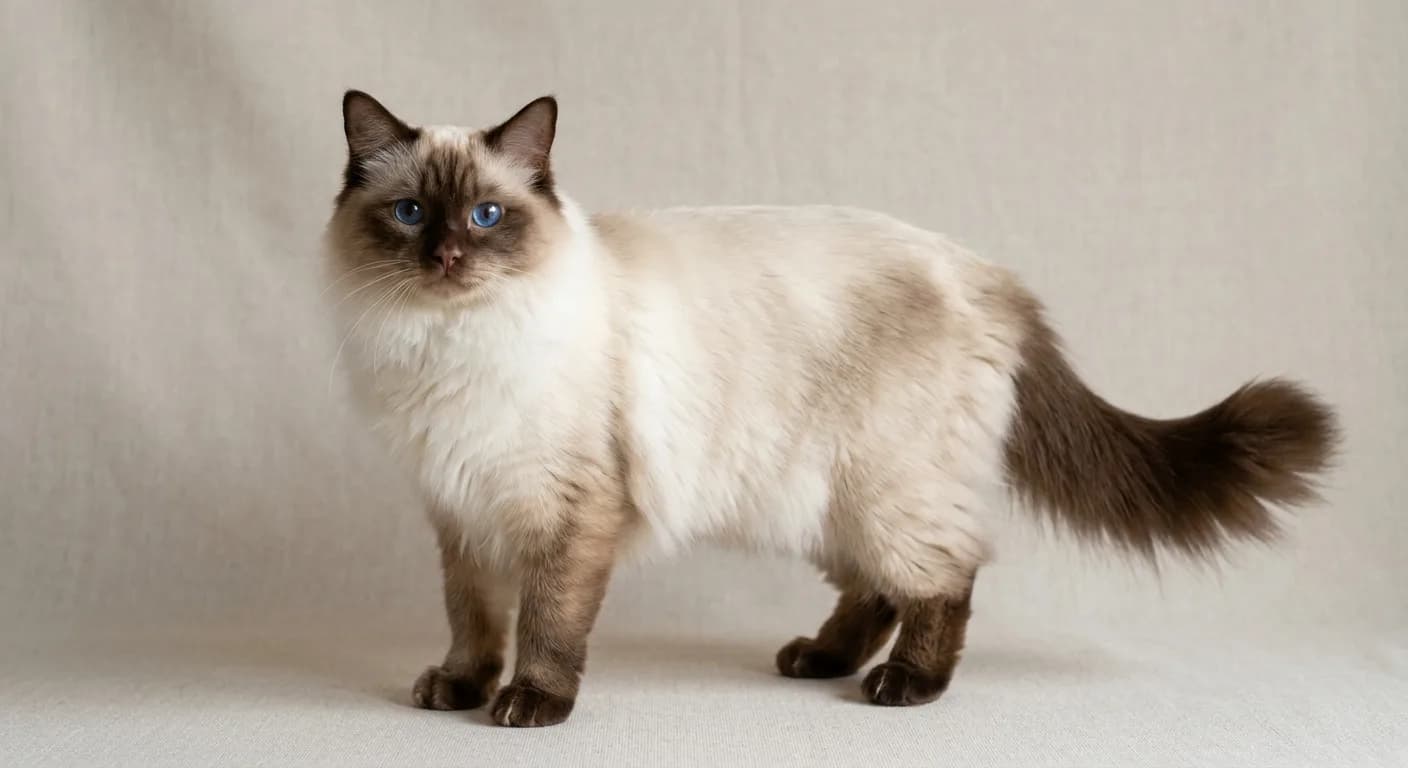
Chocolate is a warmer, lighter brown than seal, often compared to milk chocolate, over an ivory body. The CFA describes it as "milk-chocolate color, warm in tone." It is genuinely uncommon because chocolate is recessive: both parents must carry the chocolate gene to produce it, so you see far fewer chocolate points than seals.
Lilac point
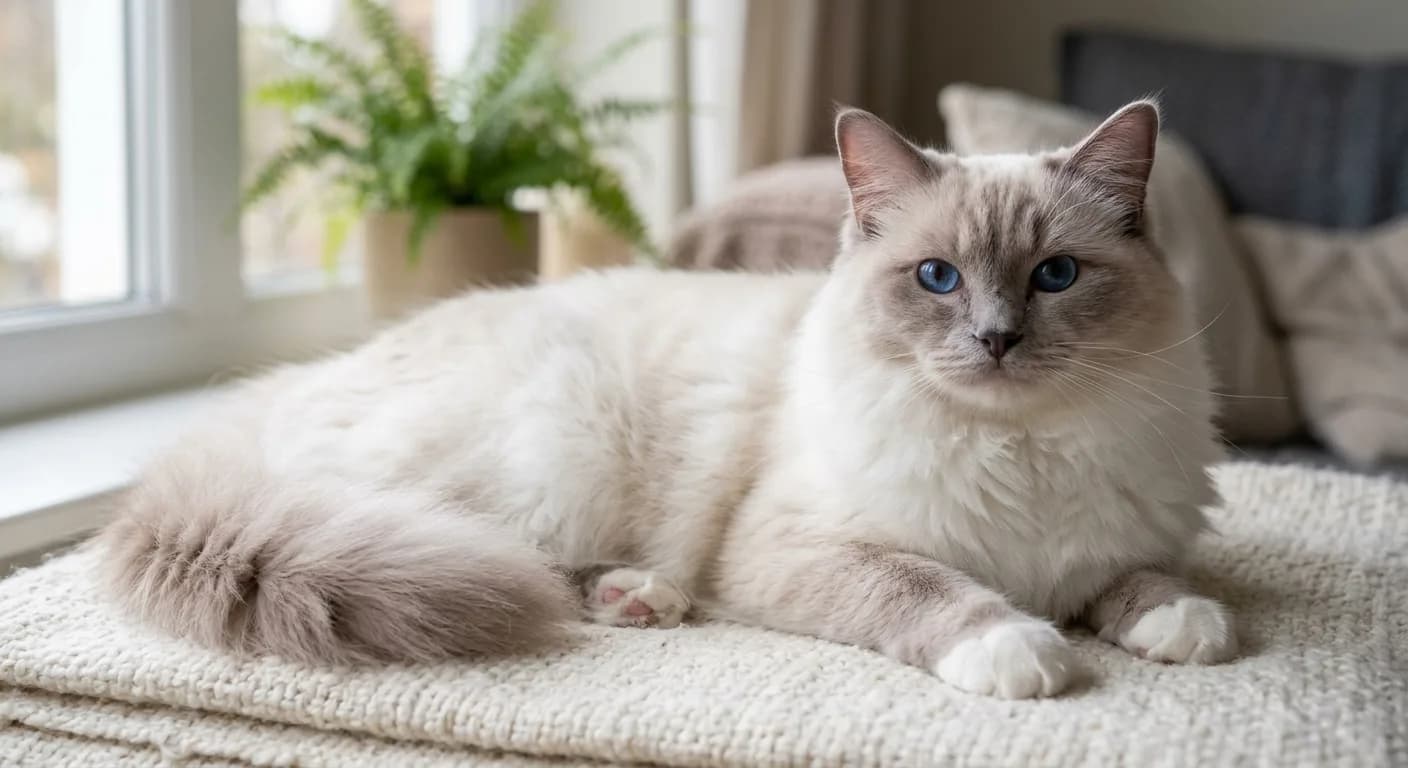
Lilac (sometimes called frost) is the dilute of chocolate: a pale, frosty grey with a distinct pinkish or lavender cast, over a near-white body with a warm, milky tone. The CFA calls it "frosty grey with pinkish tone." Because it needs the recessive chocolate gene plus the dilute gene, lilac is one of the rarest of the six standard colors.
Red point (flame point)
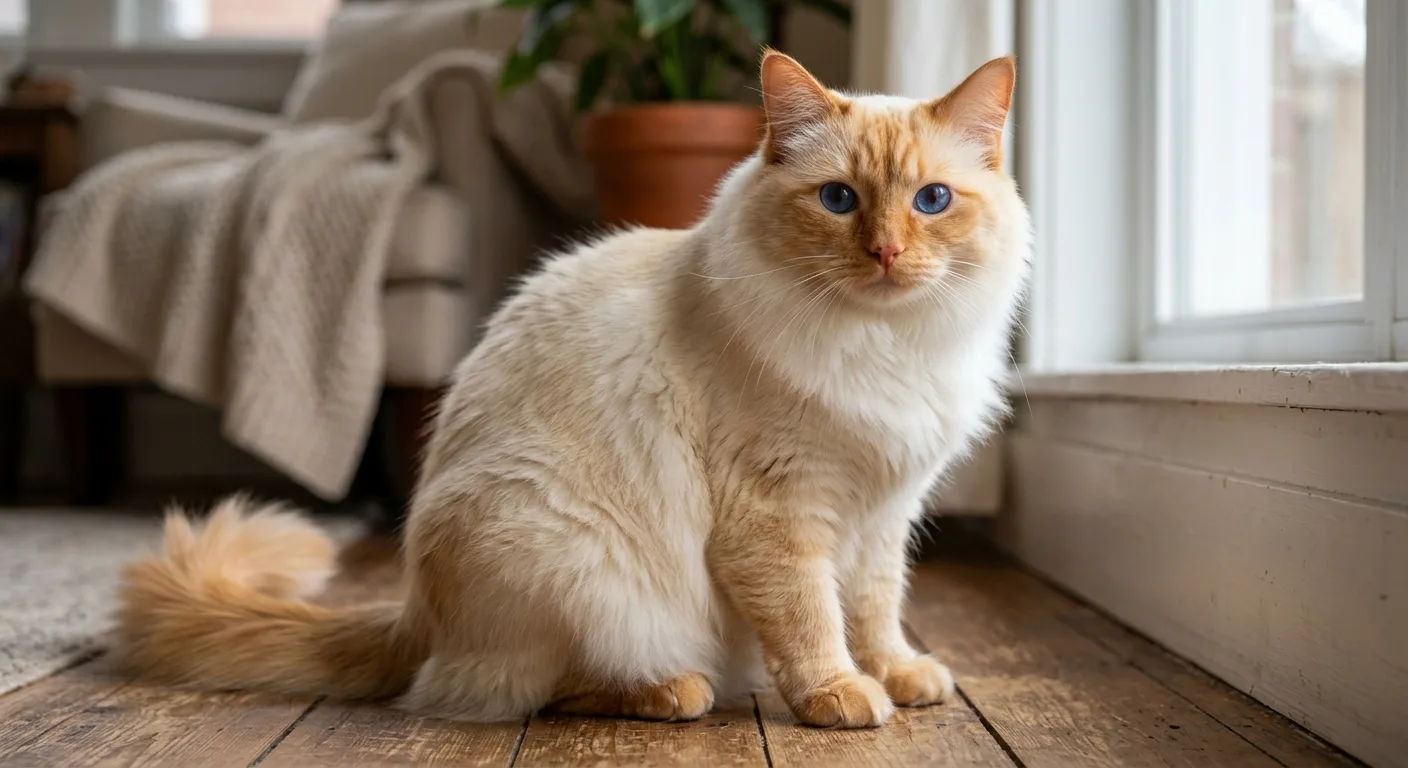
Red, also called flame, brings warm orange into the breed. The points range from soft apricot to a deeper reddish-orange, and the body is a creamy white. Red points commonly show faint tabby-like striping even when they are not officially lynx, and freckles on the nose and lips are common as they age. Red is sex-linked, which is part of why it interacts with the tortie pattern in interesting ways (more on that below).
Cream point
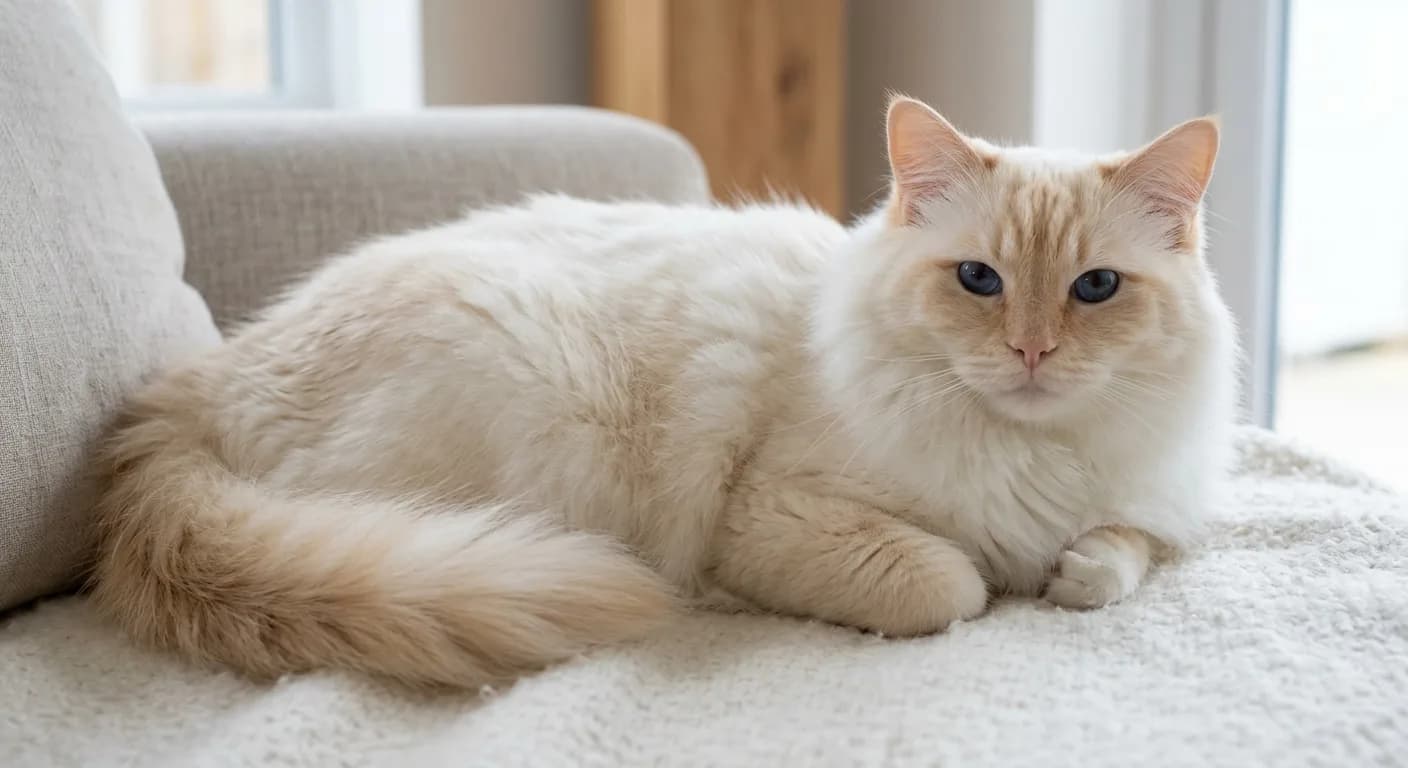
Cream is the dilute of red: a soft, pale buff or peachy tone over an off-white body, the most delicate of the six. From a distance a cream point can read as almost solid white with the faintest warm wash at the ears and nose. The CFA describes it as a "pale buff cream."
- Seal and blue are a pair (dark brown and its grey dilute). Chocolate and lilac are a pair (warm brown and its pinkish-grey dilute). Red and cream are a pair (orange and its peachy dilute). Learn the three pairs and the whole palette clicks.
The 3 ragdoll patterns: where the white goes
Color tells you the shade of the points. Pattern tells you where (and whether) white appears. The Ragdoll has 3 core patterns, and the CFA spells out precise white-marking rules for each. A fourth, the van, is the most extreme bicolor variation and is uncommon.
Colorpoint (no white)
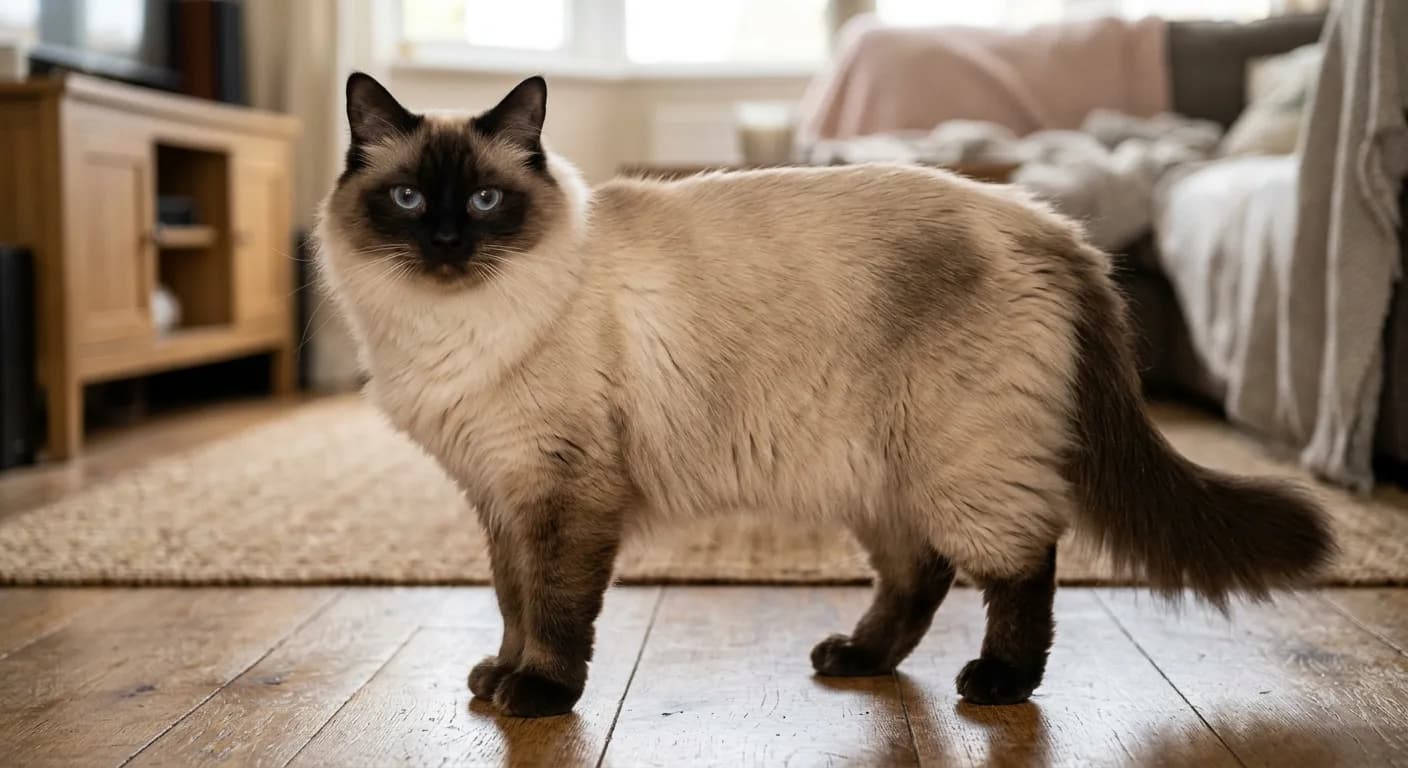
The classic colorpoint has no white at all. The points are solid and contrast cleanly with the pale body, and the paw pads and nose leather are fully colored. The CFA is strict here: any white locket or spot anywhere on a colorpoint is a disqualification. This is the pattern that looks most like a Siamese silhouette, just on a much larger, plusher cat.
Mitted (white chin, mittens, and belly stripe)
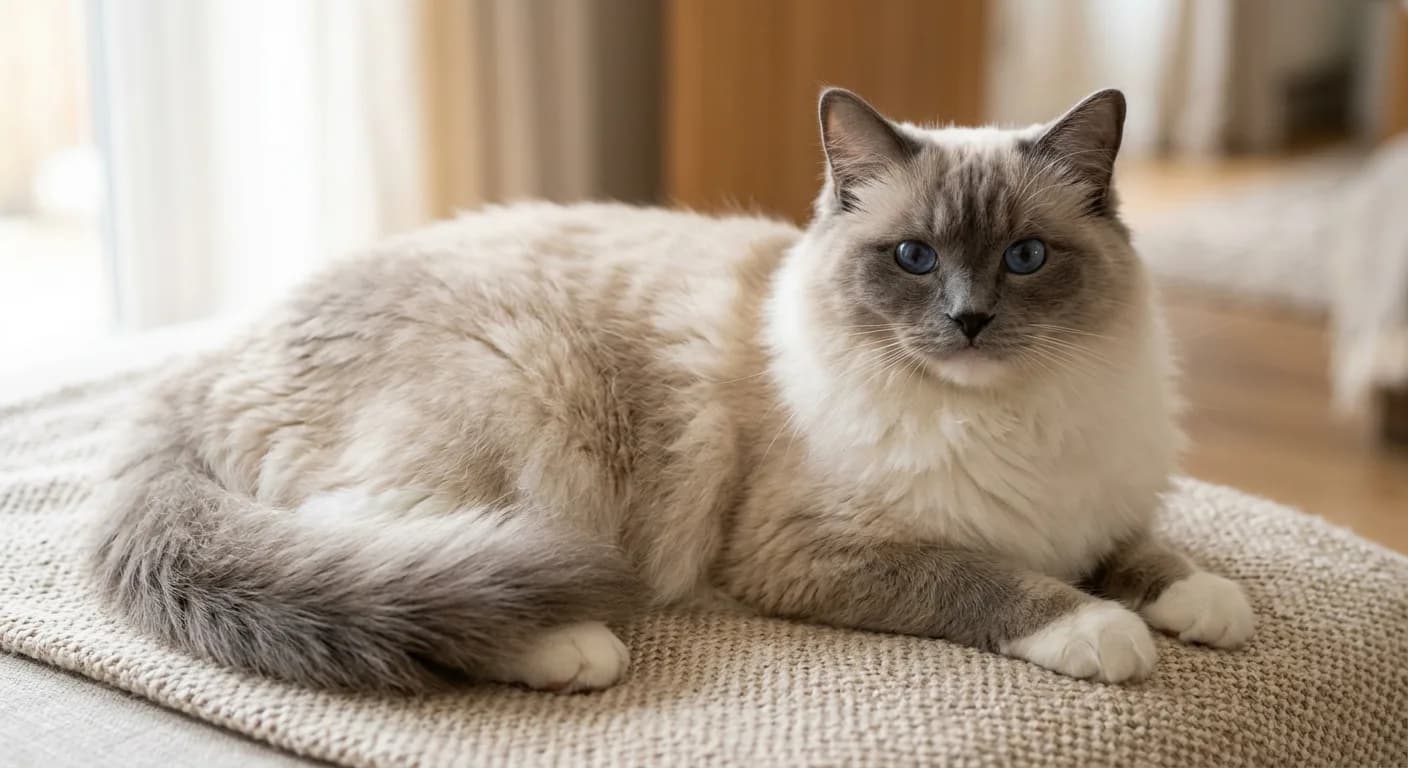
The mitted pattern adds crisp white in specific places: white "mittens" on the front paws, taller white "boots" on the back legs that go up to and around the hocks (no higher than mid-thigh), a white chin, and a white stripe running down the chest and belly. A white blaze on the nose is allowed but optional. The white chin is the classic tell that separates a mitted Ragdoll from a Birman. Mitted Ragdolls keep the solid mask of a colorpoint but with those white accents below. For more, see Petful’s guide to Birman vs Ragdoll.

63-inch multi-level cat tree with scratch posts, hammock, plush perches, and dangling toys. Vertical territory is non-negotiable for high-energy climbing breeds like the Bengal.
Petful may earn a commission when you click through to Chewy, at no extra cost to you.
Bicolor (inverted white V on the face)
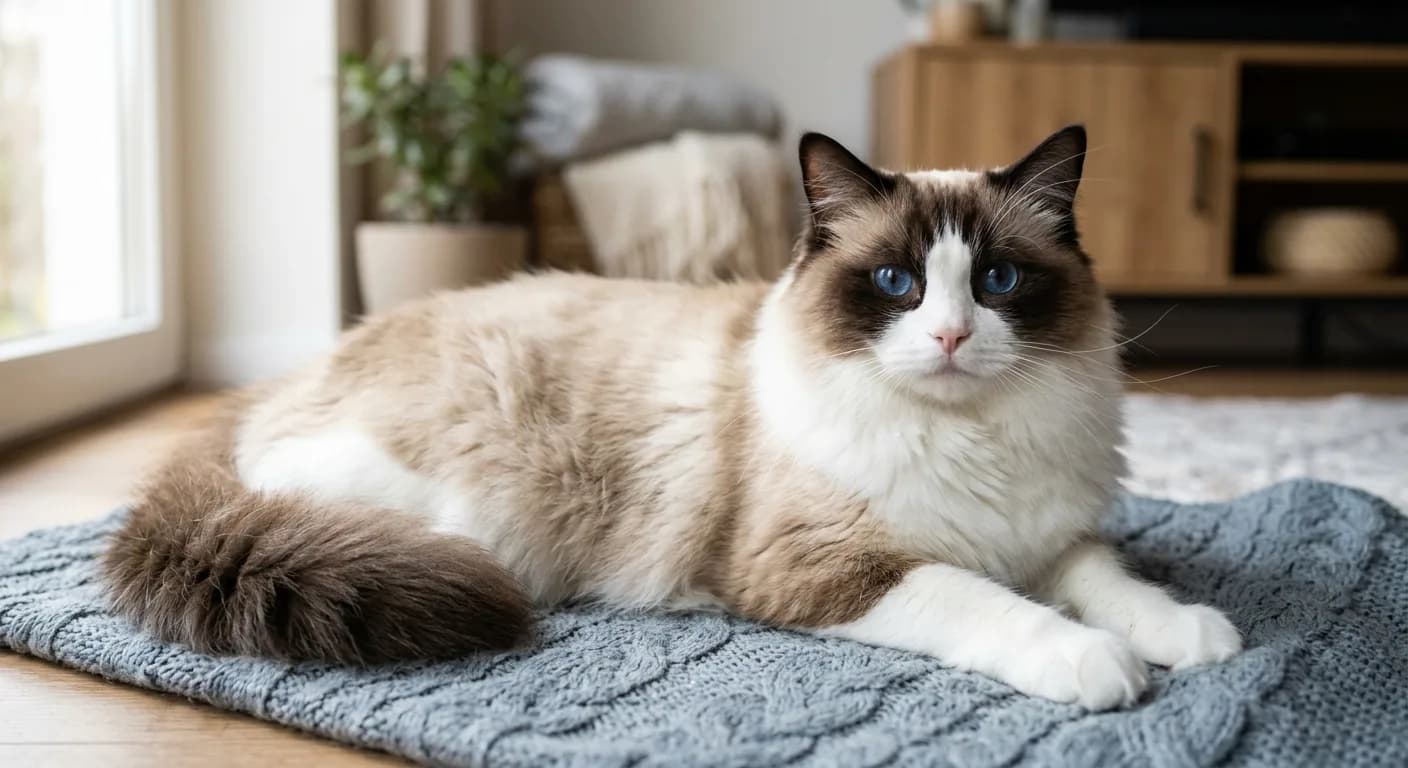
The bicolor is the most white-heavy of the three standard patterns. It is defined by an inverted white "V" mask on the face that stays within the outer edges of the eyes, plus a white chest, white legs and feet, and a white underside. Only the ears, the outer mask, and the tail carry full point color, which gives bicolors their striking "masked" look. The most extreme version, the van, restricts color to just the ears, tail, and a small mask while the rest of the cat is glistening white.
- Mitted cats have a fully colored mask with white only on the chin, paws, and belly stripe. Bicolors have a bold white V cut right into the mask. If the white climbs onto the face in a V, it is a bicolor, not mitted.
Lynx and tortie: the modifiers that multiply the looks
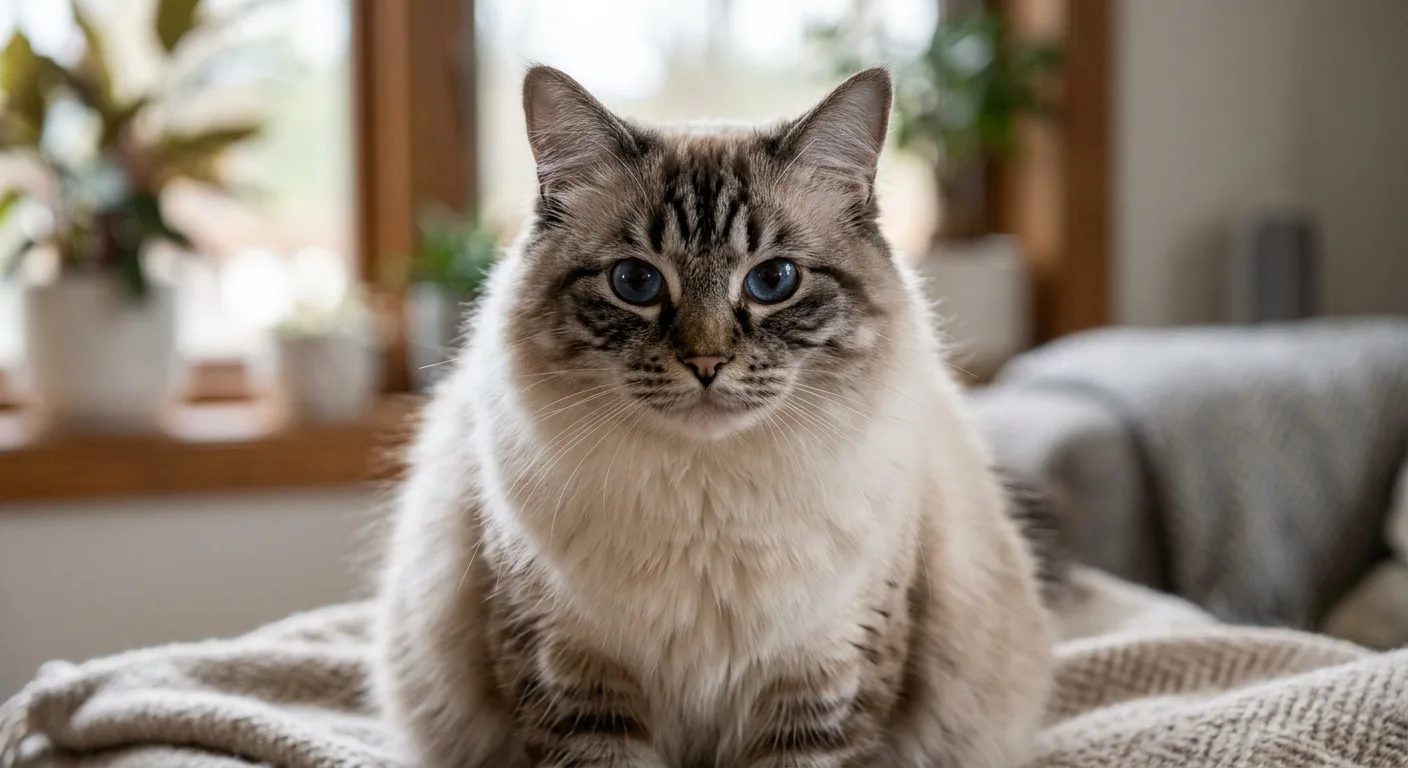
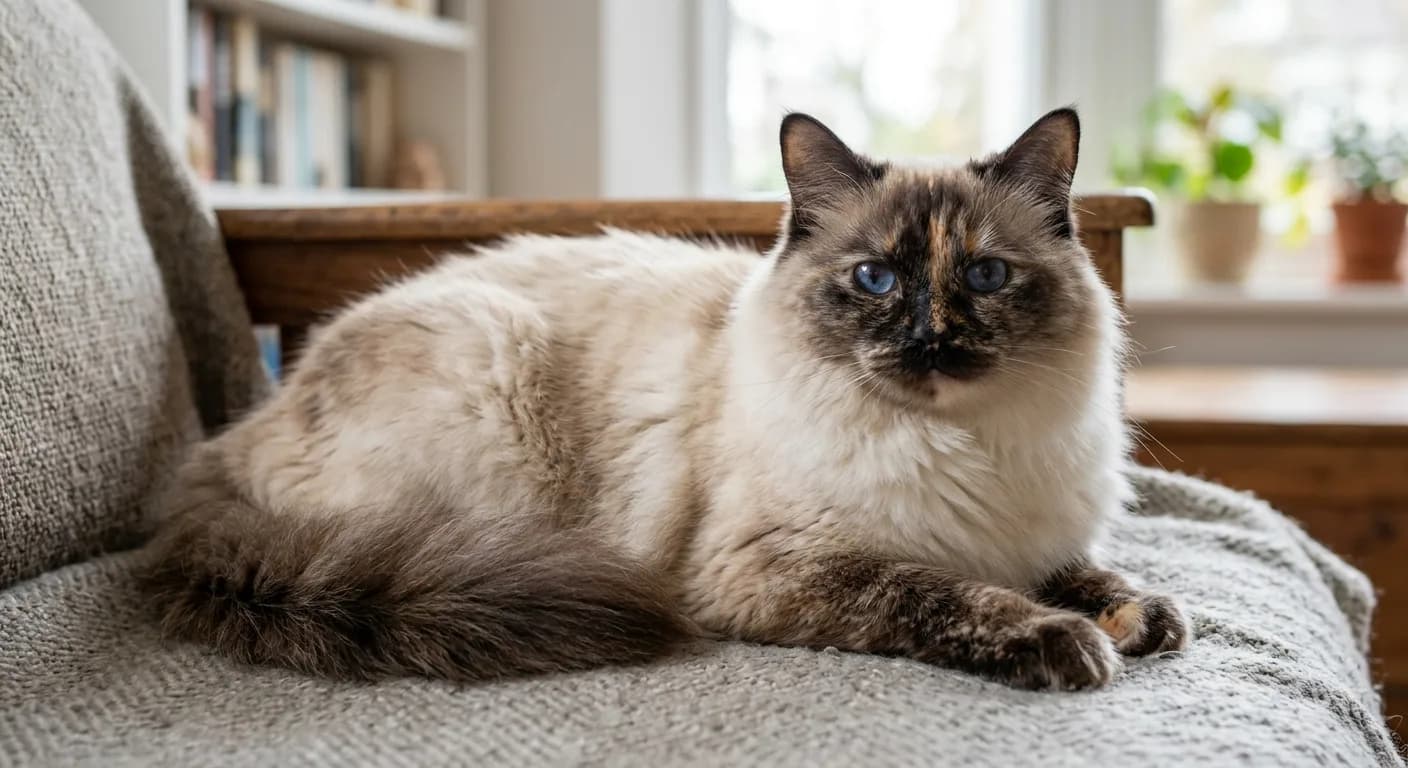
Layer two modifiers on top of the 6 colors and 3 patterns and you get the dozens of named combinations breeders advertise. These are not separate colors; they are patterns-within-the-points.
- Lynx (tabby points): The lynx modifier adds tabby striping to the points, including barred legs and a distinct "M" marking on the forehead, with lighter rings around the eyes and often a pink-edged nose. Any base color can be lynx, so you get seal lynx point, blue lynx point, and so on. Lynx points read as softer and more "wild-marked" than solid points.
- Tortie (tortoiseshell points): The tortie modifier mottles red or cream into the base color, so a seal tortie point shows patches and flecks of red within the brown. Because the red gene is carried on the X chromosome, tortie Ragdolls are almost always female. A male tortie is a genuine rarity (it requires an extra X chromosome) and is usually sterile.
- Torbie (tortie plus lynx): Stack both modifiers and you get a torbie (also written tortie-lynx), which shows mottled tortie coloring with tabby striping over the top. It is the busiest, most intricate of the point patterns.
- Read the names left to right: base color, then modifier, then pattern. "Blue lynx mitted" means a blue point, with tabby striping, in the mitted white pattern. Once you know the parts, you can decode any label on a breeder's site.
Is there a solid black ragdoll cat?
This is one of the most-searched and most-confused Ragdoll questions, so here is the honest answer. A true solid black Ragdoll is not a recognized color under traditional show standards, and the reason is genetic: the colorpoint gene that defines the breed always lightens the body relative to the points, so a Ragdoll physically cannot be a uniform dense black the way a Bombay or a black domestic shorthair can. The major registry, the CFA, does not accept solid black as a valid Ragdoll color.

108-oz stainless steel pet fountain with quiet pump and water-level window. Bengals are notoriously water-obsessed; a flowing fountain encourages hydration and pulls them away from sinks and toilets.
Petful may earn a commission when you click through to Chewy, at no extra cost to you.
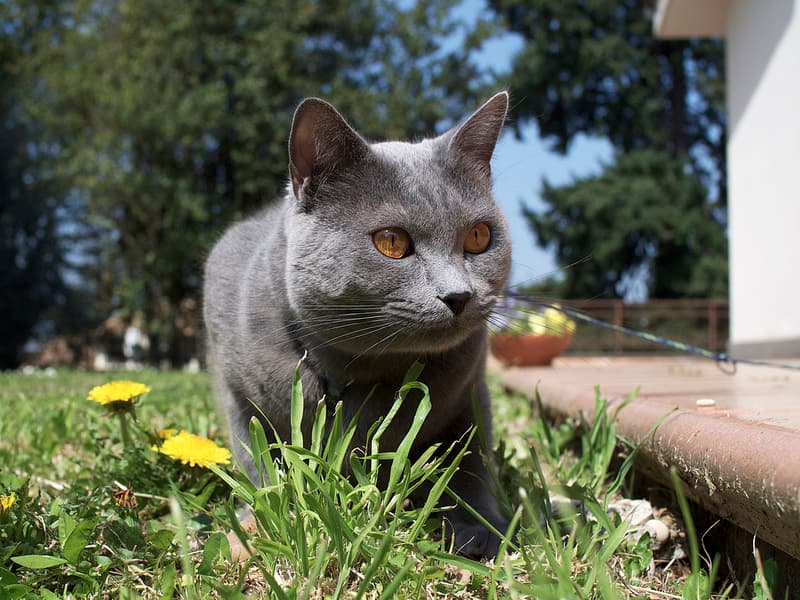
So what are people actually seeing when they meet a "black Ragdoll"? Usually one of a few things. Many are very dark seal points or seal Ragdolls carrying a non-pointed gene, so the body is much darker than a typical seal but is not truly solid black, and the points are still a touch darker than the body. Some are Ragdoll mixes or Ragdoll-type cats (large, plush, sweet-natured) that happen to be black but are not pedigreed pointed Ragdolls. A reliable tell is the eyes: traditional Ragdolls have blue eyes, while a solid black cat marketed as a Ragdoll typically has gold, copper, or green eyes, which a pointed Ragdoll never has.
There is a nuance worth noting. The International Cat Association (TICA) registers the broader Ragdoll-related "Cherubim" and outcross lines more permissively than the CFA, and some breeders sell non-pointed solid Ragdolls (including very dark ones) at a premium, often advertised at $1,800 to $5,000 because they are marketed as rare. That price tag reflects novelty and marketing, not official breed recognition. If a blue-eyed, traditionally pointed Ragdoll is your goal, a "solid black Ragdoll" is not it.
- A solid black, non-pointed coat is outside the CFA Ragdoll standard. Before paying a premium, ask for the pedigree and registry, and remember that a genuine pointed Ragdoll always has blue eyes. For what these cats actually cost, see our Ragdoll price guide.
For a realistic look at what you should budget for any Ragdoll, traditional or novelty, see our full Ragdoll cat price breakdown.
Ragdoll color rarity ranking
Rarity comes down to genetics: dominant colors are common, recessive and dilute colors are rare, and the more modifiers you stack, the rarer the exact combination. Breeders widely report the following general order, from most common to least. Treat this as a practical guide rather than a fixed census, since exact frequencies vary by breeding line and country.
| Color or Variation | Relative Rarity | What Drives It |
|---|---|---|
| Seal point | Most common | Dominant, fully saturated color |
| Blue point | Common | Popular dilute of seal |
| Seal or blue bicolor and mitted | Common | High-demand patterns, widely bred |
| Red (flame) and cream points | Less common | Sex-linked color, fewer breeding lines |
| Chocolate point | Rare | Requires recessive gene from both parents |
| Lilac point | Rarer | Needs recessive chocolate plus dilute gene |
| Lynx and tortie variations | Varies, often uncommon | Depends on the base color underneath |
| Solid black (non-pointed) | Not recognized | Outside the CFA pointed standard |
- Chocolate and lilac are rarer simply because the genetics are harder to line up, not because the cats are healthier or higher quality. Color should be a preference, never a substitute for health testing and a reputable breeder.
Ragdoll color chart: the full at-a-glance reference
Use this chart to translate a coat you are looking at into its proper name. Match the point shade in the first column, then check the body tone and the typical eye color to confirm you are looking at a pointed Ragdoll.
| Point Color | Point Description | Body Tone | Eye Color |
|---|---|---|---|
| Seal | Deep cool dark brown | Pale fawn to cream | Blue |
| Blue | Soft slate blue-grey | Cool bluish white | Blue |
| Chocolate | Warm milk-chocolate brown | Ivory | Blue |
| Lilac | Frosty pinkish grey | Milky off-white | Blue |
| Red (flame) | Apricot to reddish orange | Creamy white | Blue |
| Cream | Pale peachy buff | Off-white | Blue |
How patterns and colors combine in real life
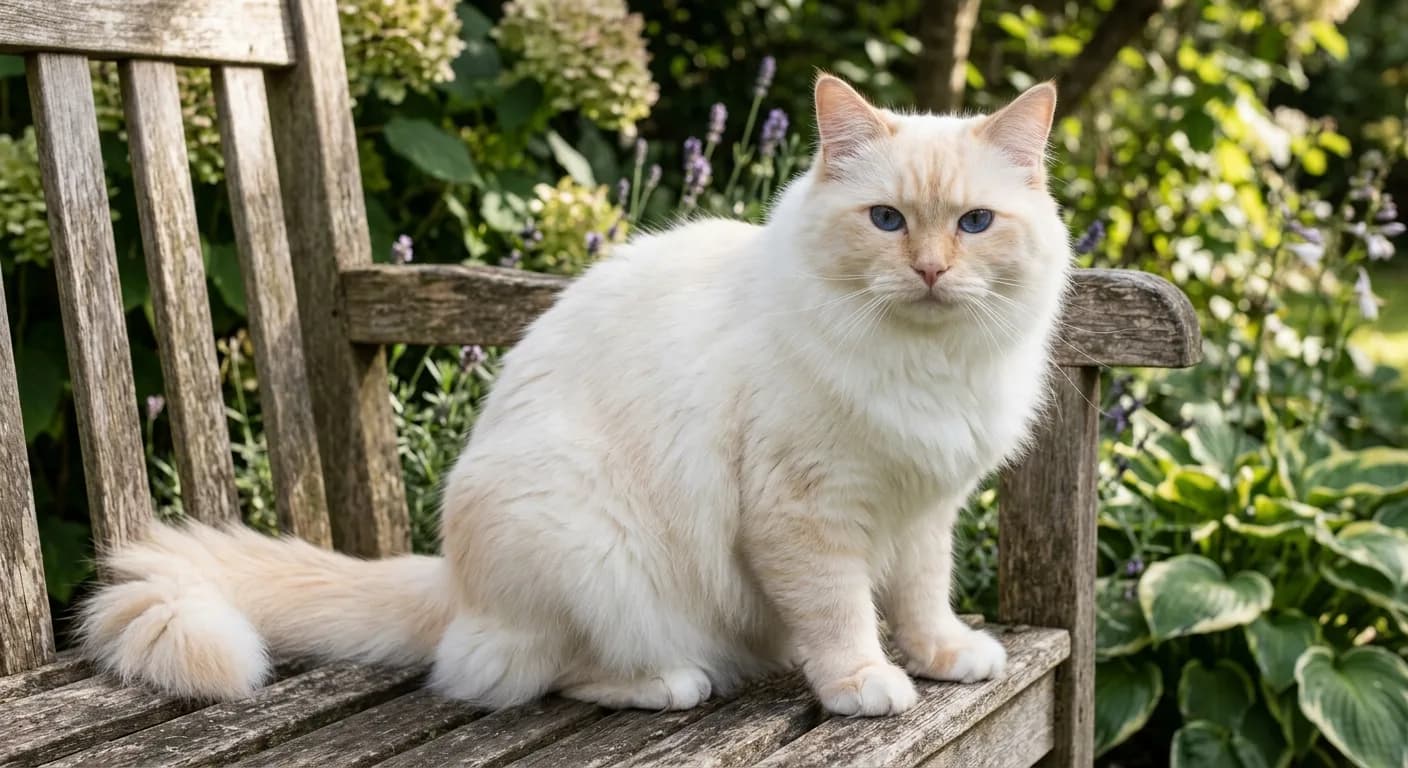
Because each of the 6 colors can appear in each of the 3 patterns, and then carry a lynx and/or tortie modifier on top, a single base color like seal can present as a dozen distinct looks: seal colorpoint, seal mitted, seal bicolor, seal lynx point, seal lynx mitted, seal tortie point, seal torbie, and so on. That combinatorial math is why some galleries list "24 colors" or more, when in reality they are showing 6 colors multiplied out across patterns and modifiers.
For buyers, the practical takeaway is to separate the two decisions. First pick the point color you love (or are open to). Then decide how much white you want: none (colorpoint), a little (mitted), or a lot (bicolor). Everything else is a modifier on those two choices. If you are weighing the Ragdoll against other big, plush breeds, our Ragdoll vs Maine Coon comparison breaks down how their coats and colors differ, and you can see how a different pointed-and-solid breed handles color in our guide to Maine Coon colors.
- No Ragdoll color is immune to the breed's known concerns, including hypertrophic cardiomyopathy (HCM). Choose a breeder who screens for HCM and PKD by color or not, and never let a rare or trendy coat substitute for documented health testing.
Do color and pattern affect personality or price?
Color and pattern do not change temperament. The trademark Ragdoll personality (docile, affectionate, floppy when held) comes from the breed itself, not the coat, so a seal mitted and a lilac bicolor should be equally laid-back. What color can affect is price. The most common shades (seal and blue) are usually the most affordable simply because they are widely available, while rarer colors like chocolate and lilac, and heavily marketed "novelty" coats, command higher prices driven by scarcity and demand rather than any difference in quality. If you are comparing the Ragdoll's silky single coat to a denser, more old-world coat, the Persian cat guide is a useful contrast.
- 1Pick the point color first, then decide how much white you want (colorpoint, mitted, or bicolor)
- 2Seal and blue are the most common and most affordable; chocolate and lilac are the rarest standard colors
- 3Lynx and tortie are modifiers, not separate colors, and they explain most "rare" labels
- 4A pointed Ragdoll always has blue eyes; gold or green eyes signal a non-standard or mixed cat
- 5Never let coat color override health testing when choosing a breeder
Frequently asked questions about ragdoll cat colors
Among the 6 recognized colors, lilac point is generally the rarest because it requires both the recessive chocolate gene and the dilute gene, followed closely by chocolate point. Rare modifier combinations such as a true male tortie are rarer still, but a solid black coat is not a recognized Ragdoll color at all.
The CFA recognizes 6 point colors: seal, blue, chocolate, lilac, red (also called flame), and cream. Each appears in 3 patterns (colorpoint, mitted, and bicolor) and can carry lynx (tabby) or tortie modifiers, which is why you see dozens of named combinations.
Not as an officially recognized color. The colorpoint gene that defines the breed always lightens the body relative to the points, so a true solid black Ragdoll is outside the CFA standard. Most "black Ragdolls" are very dark seal points, non-pointed Ragdoll-type cats, or mixes, and they usually have gold or green eyes rather than the breed's signature blue.
Solid black, non-pointed cats sold as Ragdolls are uncommon and are often marketed at a premium of roughly $1,800 to $5,000, but rarity here reflects novelty and the fact that the coat falls outside the traditional standard, not official breed recognition. TICA registers some broader Ragdoll-related lines, while the CFA does not accept solid black.
In shelters generally, plain solid black cats are statistically the least adopted, a pattern sometimes called "black cat syndrome." Within Ragdolls specifically the dynamic flips: the rarer recessive colors like chocolate and lilac are often the most in demand, while common seal and blue are the most available and affordable.
Always blue. Vivid blue is the only eye color the CFA accepts for the breed, and "eyes other than blue" is a listed disqualification. Eye color does not change with coat color, so every seal, blue, chocolate, lilac, red, and cream Ragdoll has blue eyes.
Yes. Because the pigment-producing enzyme only activates in the cooler parts of the body and the womb is uniformly warm, Ragdoll kittens are born nearly pure white. Points emerge within the first week or two and continue darkening, with full coat color reached around 2 years of age.
Yes. Ragdolls are slow-maturing, and their points deepen over the first 2 years. Cooler temperatures can also make the coat appear darker, so the same cat may look slightly lighter in summer and richer in winter. Judge a cat's final color at adulthood, not as a kitten.
Seal point is the most popular and the classic Ragdoll look, the deep dark-brown points over a pale cream body that most people picture when they think of the breed. Blue point, the grey dilute of seal, is a close second. Both are common, widely bred, and usually the most affordable.
The rarer colors and patterns command a premium. Lilac and chocolate points cost more because their recessive genetics are harder to line up, and standout patterns such as lynx (tabby) points and bicolor markings also push the price up. Expect the top of a reputable breeder's range, with the rarest pet-quality kittens reaching toward the higher end.

Coreen Saito is a pet writer and longtime shelter volunteer with more than a decade in animal rescue. She covers cat behavior, breed care, and the small, ordinary science of sharing a life with companion animals, with a particular focus on honest takes about the products and decisions that actually matter. At home in Arizona, she's outranked by Mac (a dog with the loudest opinion in the house), Rebel (a cat who governs by quiet authority), and Meri (an orange tabby who runs the late shift and the laundry basket). She writes about all three, plus the rescues that keep coming through her life, at LifeWithMinty.com.
Sign up for expert-backed reviews and safety alerts all in one place.