Ragdoll Cat Price in 2026: Full Cost Guide ($75 to $5,000+)
What does a Ragdoll cat really cost? Pet-quality kittens run $1,000 to $2,800 from a registered breeder, rare colors cost more, and adoption starts near $75. Here is the full 2026 price guide, plus first-year and monthly costs.
Petful is reader supported. As an affiliate of platforms like Amazon and Chewy, we may earn a commission when you buy through links on this page. There is no extra cost to you.
The Ragdoll cat price from a reputable breeder typically runs $1,000 to $2,800 for a pet kitten, with show and breeding quality reaching $3,000 to $5,000 or more, according to pricing reported by catteries registered with The International Cat Association (TICA) and the Cat Fanciers' Association (CFA). Adoption through a rescue costs far less, usually $75 to $600. Those headline numbers are only the beginning, because the silky blue-eyed bundle you bring home will cost roughly $1,500 to $2,400 in first-year setup and care on top of the purchase. This guide breaks down every dollar: by quality tier, by color and pattern, by region, plus the real annual and monthly cost of living with one of these gentle giants.
- 1A pet-quality Ragdoll kitten from a registered breeder costs about $1,000 to $2,800 in 2026 (most fall $1,500 to $2,500)
- 2Rare colors (lilac, chocolate, cream, flame) and the bicolor pattern command a premium over standard seal and blue points
- 3Rescue or adoption is the cheapest route at roughly $75 to $600
- 4Plan for $1,500 to $2,400 in first-year costs and $90 to $200 per month ongoing
- 5A kitten advertised as a registered, health-tested Ragdoll for well under $1,000 from a "breeder" is a major red flag for a backyard breeder or scam, though shelters and rescues legitimately charge less

Sign up for expert-backed reviews and safety alerts all in one place.
How Much Does a Ragdoll Cat Cost?
A Ragdoll cat costs between $75 and $5,000 or more depending entirely on where it comes from and its quality grade. Here is the honest range in plain dollars, because "it depends" is not an answer when you are budgeting.
The single biggest factor is the source. A kitten from a health-tested, registered breeder sits at the top. A retired adult or a rescue sits at the bottom. Everything else (color, pattern, pedigree, region) moves the number within those goalposts.
| Source / Quality | Typical Price Range | What You Get |
|---|---|---|
| Rescue or adoption | $75 to $600 | Often an adult, vaccinated and altered, no pedigree |
| Retired breeding adult | $400 to $900 | Adult cat, spayed/neutered, leaving a cattery |
| Pet-quality kitten (breeder) | $1,000 to $2,800 | Registered, vaccinated, altered, health-tested parents |
| Show-quality kitten | $3,000 to $5,000+ | Conformation to breed standard, top pedigree |
| Breeding-rights kitten | $3,000 to $5,000+ | Intact, full registration, breeding contract |
These figures align with what TICA-registered and CFA-registered catteries publish and with editorial cost guides from sources like Catster. Pet-quality simply means the kitten is a wonderful companion that has a minor cosmetic trait (a slightly off marking, for example) keeping it out of the show ring. A pet-quality Ragdoll is just as healthy, affectionate, and beautiful as a show cat, because the grade refers only to conformation for competition, not to health or temperament.
For a side-by-side look at how this breed compares on cost to another popular large cat, see our Maine Coon cost guide, and for the full personality and care picture read the complete Ragdoll cat breed profile.
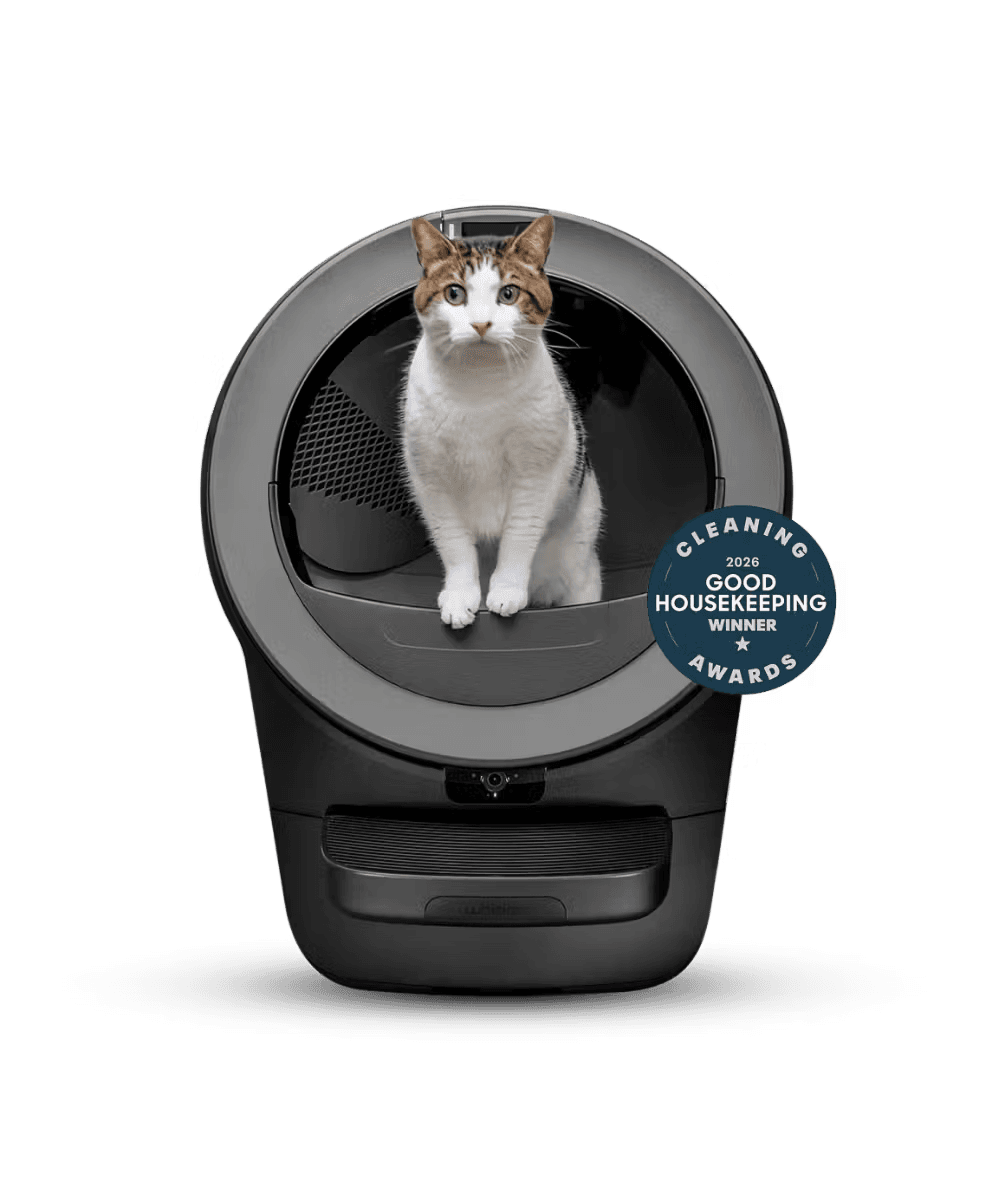
Never Scoop Again® with the Whisker Litter-Robot, the smart self-cleaning automatic litter box. Monitor visits and track weights for better overall care in the Whisker® app. Multi-cat friendly.
Petful may earn a commission when you click through to Whisker, at no extra cost to you.
Ragdoll Cat Price by Color and Pattern
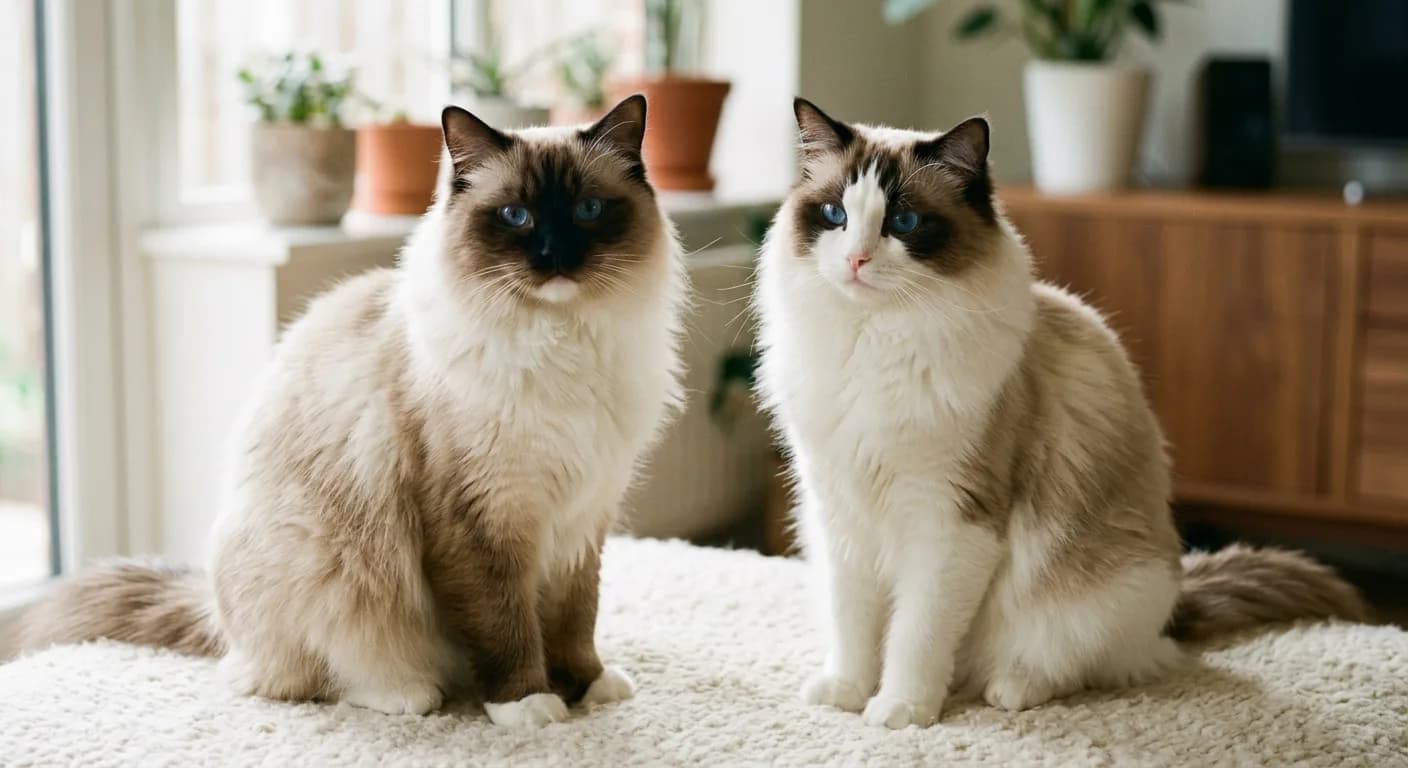
Not all Ragdolls cost the same, and color plus pattern is where breeders adjust the price the most. The Ragdoll is a color-pointed breed, meaning the body stays pale while the face, ears, legs, and tail carry the darker color, and the eyes are always blue. Three patterns and a spread of point colors drive the premium.
The three recognized patterns are colorpoint (no white at all), mitted (white chin, white mitten paws, and a white belly stripe), and bicolor (an inverted white V on the face with a mostly white body). Bicolor is generally the most in-demand pattern and tends to sit at the higher end. On top of pattern, the point color matters: seal and blue are the classic, most available colors, while chocolate, lilac, cream, and flame (red) are genuinely rare and priced accordingly. According to breed color references, lilac and chocolate bicolors are among the rarest combinations in the United States.
| Color or Pattern | Rarity | Typical Effect on Price |
|---|---|---|
| Seal point or blue point | Most common | Baseline breeder price |
| Mitted pattern | Common | Baseline to slight premium |
| Bicolor pattern | In high demand | Often a premium over colorpoint |
| Lynx (tabby) or tortie points | Uncommon | Modest premium |
| Chocolate, lilac, cream, flame (red) | Rare | Notable premium, frequently the top of a breeder's range |
A deeper breakdown of every recognized shade, including how points darken with age, lives in our Ragdoll cat colors guide.
Why Are Ragdoll Cats So Expensive?
Ragdoll cats are expensive because responsible breeding is genuinely costly, not because of hype. A reputable breeder is recovering real expenses, and the price reflects the difference between a healthy, well-socialized kitten and a gamble. Here is exactly where the money goes.
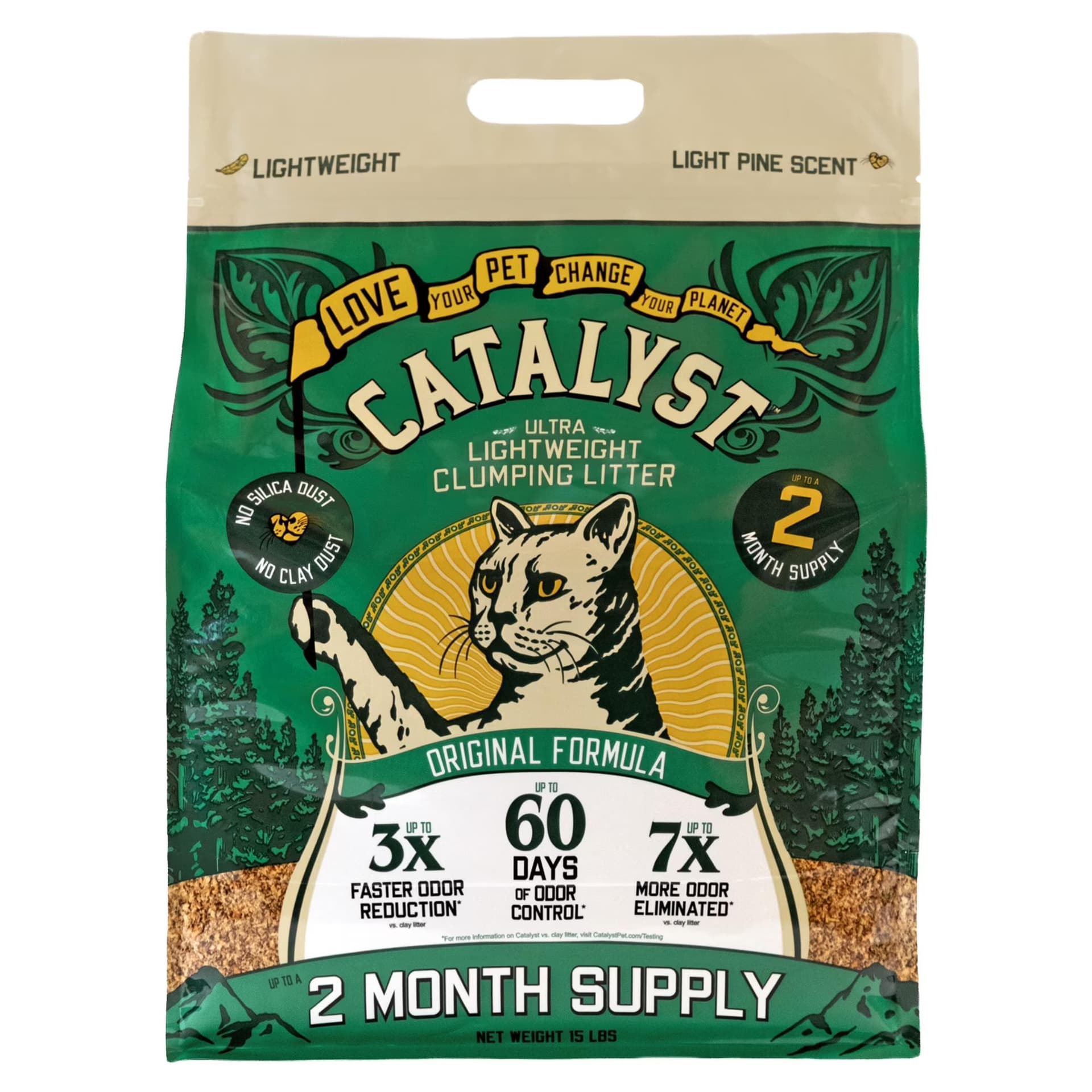
Lightweight softwood clumping cat litter that delivers up to a 2-month supply per 15-lb bag. Up to 7x more odor reduction and 3x faster odor elimination than clay, with up to 95% less airborne dust. No clay, no silica, light pine scent.
Petful may earn a commission when you click through to Walmart, at no extra cost to you.
Genetic health testing. The Ragdoll breed carries a breed-specific mutation in the MYBPC3 gene (the R820W variant) linked to hypertrophic cardiomyopathy (HCM), the most common heart disease in cats. TICA materials note the condition affects a meaningful share of the breed, and DNA testing through labs such as the UC Davis Veterinary Genetics Laboratory or North Carolina State University's veterinary genetics service lets breeders test breeding cats and avoid pairing two carriers. Ethical programs also screen for polycystic kidney disease (PKD). Testing every breeding cat costs hundreds of dollars per animal and is the clearest line separating a reputable breeder from a backyard one.
Registration and pedigree. Registering a cattery and each litter with TICA or CFA, maintaining documented multi-generation pedigrees, and showing cats to prove breeding stock all cost money and time that get built into the kitten price.
Veterinary care before you ever meet the kitten. A reputable kitten leaves with a full vaccination series, deworming, a veterinary health check, a microchip, and usually a spay or neuter already done. Those vet bills are baked into the price.
Time, socialization, and overhead. Quality breeders raise kittens underfoot for 12 to 16 weeks, not the 8 weeks a backyard seller might rush. That extra month-plus of premium food, litter, and daily handling, plus cattery overhead, adds up to what experienced breeders describe as tens of thousands of dollars in annual program costs.
- When a registered breeder charges $1,500 to $2,500, a large chunk is HCM and PKD genetic testing, registration, and full veterinary work. A kitten advertised as a registered, health-tested Ragdoll for well under $1,000 from a "breeder" almost never includes any of that, which is why the upfront savings often turn into a heartbreaking vet bill later. A shelter or rescue charging less is a different story, because it is not a breeder.
How Much Does a Ragdoll Cat Cost in Dollars? (Quick Answer)
In dollars, expect to pay about $1,000 to $2,800 for a pet-quality Ragdoll kitten from a registered breeder in the United States in 2026, $3,000 to $5,000 or more for show or breeding quality, and $75 to $600 to adopt one from a rescue. The very rare colors and breeding-rights kittens sit at the top of the range. Geography then shifts those numbers up or down, which is the next piece of the puzzle.
Ragdoll Cat Price by Location
Where you buy changes the price. Ragdoll demand and the cost of running a cattery vary by region, so the same quality kitten can differ by hundreds of dollars between states. High cost-of-living metro areas and places with few local breeders tend to run higher, while areas with more catteries and lower overhead can be more affordable. Buyers in California, Texas, and the Northeast frequently report the higher end of the range, partly reflected in related searches like "ragdoll cat price near California" and "ragdoll cat price near Texas."

63-inch multi-level cat tree with scratch posts, hammock, plush perches, and dangling toys. Vertical territory is non-negotiable for high-energy climbing breeds like the Bengal.
Petful may earn a commission when you click through to Chewy, at no extra cost to you.
| Region | Typical Pet-Quality Range | Notes |
|---|---|---|
| California and West Coast | $1,800 to $2,800 | High demand and high cost of living |
| Texas and the South | $1,400 to $2,500 | Strong cattery presence, wide range |
| Northeast (NY, NJ, New England) | $1,800 to $2,800 | High demand, fewer budget options |
| Midwest | $1,000 to $2,200 | Often the most affordable region |
| Pacific Northwest | $1,500 to $2,600 | Moderate to high |
If a distant breeder has the kitten you want, factor in transport: ground pet transport often runs $200 to $600 and in-cabin air travel adds roughly $100 to $200 on top of the kitten price. If you are price shopping across regions, include that shipping in the comparison so a "cheaper" far-away kitten does not actually cost more once it lands on your doorstep.
Kitten vs. Adult Ragdoll: Which Costs More?
Kittens cost the most. A 12-to-16-week-old kitten is at peak demand, so it carries the full breeder price of $1,000 to $2,800. Retired breeding adults are the value play: catteries rehome them once their breeding career ends, usually for $400 to $900, already spayed or neutered and fully vaccinated. You miss the kitten stage but gain a calm, litter-trained adult with a known temperament. Rescues fall lower still, typically $75 to $600, and most rescue Ragdolls are adults or older kittens.
- If kitten antics are not a must-have, ask reputable breeders about retired adults. You get a purebred, health-checked, already-altered Ragdoll for a fraction of kitten pricing, and you give a wonderful cat a soft landing.
What Is the Cheapest Way to Get a Ragdoll Cat?
The cheapest legitimate way to get a Ragdoll is adoption or rescue, at roughly $75 to $600. Breed-specific rescues, regional Ragdoll rescue groups, and general shelters occasionally have Ragdolls or Ragdoll mixes, and the adoption fee usually covers vaccinations, spay/neuter, and a microchip, which makes the true value even higher. The second cheapest route is a retired adult from a breeder at $400 to $900.
What is not a safe way to save money is chasing a too-good-to-be-true breeder price. A kitten advertised by a "breeder" as a registered, health-tested Ragdoll for well under $1,000 (think listings like "purebred Ragdoll kittens for sale $200," a real and common search) is a major warning sign. Genuine, health-tested kittens from a registered cattery cannot be produced for that price, so such a listing is typically a backyard breeder skipping health testing, an unregistered cat with no real pedigree, a sick or under-age kitten, or an outright scam taking a deposit for a cat that does not exist. A shelter or rescue charging a low fee is the legitimate exception, because it is rehoming cats rather than selling pedigreed kittens, so do not treat every sub-$1,000 Ragdoll as a scam.
- Be extremely cautious of any kitten a "breeder" advertises as a registered, health-tested Ragdoll for well under $1,000. Red flags include no HCM or PKD genetic testing, no TICA or CFA registration, refusing a video call or in-person visit, requesting payment by gift card or wire only, kittens "ready" before 12 weeks, and a price that seems impossibly low. Reputable breeders welcome questions and show health documentation. A shelter or rescue charging a modest fee is not the same thing, because it is rehoming cats rather than selling pedigreed kittens.
For breed temperament and size context that helps you decide between a Ragdoll and a similar gentle giant, our Ragdoll vs. Maine Coon comparison lays out the differences side by side, and if you are weighing the look-alike breed our Ragamuffin vs. Ragdoll guide clears up the confusion.

108-oz stainless steel pet fountain with quiet pump and water-level window. Bengals are notoriously water-obsessed; a flowing fountain encourages hydration and pulls them away from sinks and toilets.
Petful may earn a commission when you click through to Chewy, at no extra cost to you.
First-Year Cost of Owning a Ragdoll Cat
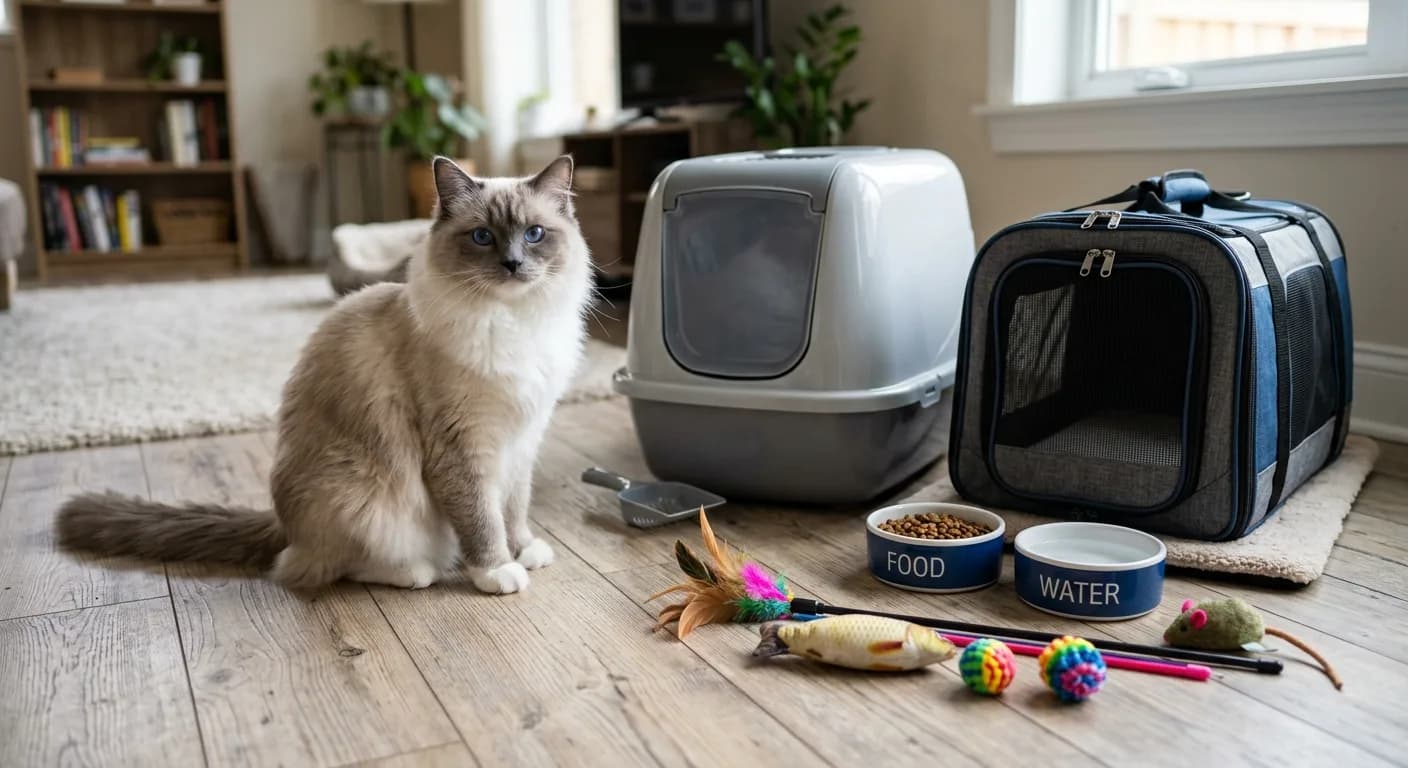
The purchase price is the down payment. Year one carries the heaviest ongoing spend because you are buying everything from scratch on top of food and vet care. Expect roughly $1,500 to $2,400 in the first year beyond the cat itself, and more if you opt for premium gear.
| Item | Typical Cost | Notes |
|---|---|---|
| Initial vet exam, vaccines, microchip | $150 to $400 | If not already included by the breeder |
| Spay or neuter | $50 to $250 | Often done by breeder before pickup |
| Litter box and scoop | $30 to $50 | A large box suits this big breed |
| Carrier | $40 to $60 | Sturdy, large enough for an adult |
| Food and water bowls | $15 to $40 | Ceramic or stainless steel |
| Bed and scratching posts | $60 to $120 | Ragdolls love to lounge and stretch |
| Cat tree and toys | $80 to $200 | Mental and physical enrichment |
| Grooming tools (slicker brush, comb, nail clippers) | $20 to $45 | The plush coat needs regular brushing |
| First-year food | $400 to $1,000 | Quality cat food for a large breed |
A Ragdoll has a silky, plush, semi-long single coat (not a heavy double coat), so it sheds less and tangles less than people expect. That keeps grooming costs modest: a good slicker brush and a comb plus weekly brushing usually does the job at home, with professional grooming optional rather than required.
Annual and Monthly Cost of a Ragdoll Cat
After year one, the recurring cost settles down. Plan for about $90 to $200 per month, or roughly $1,100 to $2,400 a year, to keep a Ragdoll healthy and happy. Food, litter, routine vet care, and pet insurance are the core line items. This breed is large and people-oriented, so quality food and enrichment are worth budgeting for rather than trimming.
| Expense | Annual Cost | Monthly Cost |
|---|---|---|
| Quality cat food | $400 to $1,000 | $35 to $85 |
| Litter and litter supplies | $180 to $420 | $15 to $35 |
| Routine vet care and vaccines | $200 to $500 | $17 to $42 |
| Pet insurance | $240 to $600 | $20 to $50 |
| Grooming supplies and replacements | $60 to $180 | $5 to $15 |
| Toys, treats, enrichment | $120 to $300 | $10 to $25 |
| Estimated total | $1,200 to $3,000 | $100 to $250 |
- Because the Ragdoll breed is predisposed to HCM (a heart condition) and can be prone to urinary issues, a single emergency can run into the thousands. A policy at $20 to $50 a month often costs far less than one cardiac or urinary workup, which is why many Ragdoll owners insure early while the cat is young and premiums are lowest.
Beyond the basics, budget a cushion for the occasional dental cleaning ($150 to $400), boarding or a pet sitter when you travel ($25 to $50 a day), and the heart screening or echocardiogram a vet may recommend given the breed's HCM risk.
What Are the Cons of a Ragdoll Cat? (Cost and Care Trade-offs)
No breed is all upside, and the honest cons of a Ragdoll mostly tie back to cost and care commitment. They are one of the more expensive cats to buy and to insure because of their breed-specific health risks. They are large (males often 15 to 20 pounds), so they eat more and need bigger gear. Their plush coat, while easier than a double coat, still needs weekly brushing to prevent mats. They are intensely social and do not love being left alone for long stretches, so a second pet or a companion at home is a real consideration. And their docile, trusting nature means they should be kept as indoor cats, which is safer but adds enrichment to your to-do list. None of these are deal-breakers, but they are the realistic flip side of the gentle, dog-like temperament people fall in love with.
- The Ragdoll's predisposition to hypertrophic cardiomyopathy (HCM) and occasional urinary issues is the biggest long-term cost consideration. Buying from a breeder who DNA-tests for the MYBPC3 (R820W) mutation and screens for PKD stacks the odds in your favor, and pet insurance covers the rest.
Is a Ragdoll Cat Worth the Price?
For most owners, yes. You are paying for a large, strikingly beautiful, affectionate cat with a famously gentle temperament, and when you buy from a health-tested breeder, a much lower risk of devastating genetic disease. The smart move is to spend on the front end (a reputable, registered, HCM-tested and PKD-screened breeder, or a rescue) and then budget honestly for the ongoing $100 to $250 a month. That approach costs more upfront than a bargain kitten but far less than the vet bills, heartbreak, and scams that come with chasing the cheapest Ragdoll you can find.
A pet-quality Ragdoll kitten from a reputable, registered breeder should cost about $1,000 to $2,800 in 2026 (most fall $1,500 to $2,500), including vaccinations, a health check, and HCM and PKD genetic testing of the parents. Show or breeding-quality kittens run $3,000 to $5,000 or more. A kitten advertised as registered and health-tested for well under $1,000 from a "breeder" is a major warning sign, though a shelter or rescue charging less is legitimate.
Ragdoll cats are expensive because reputable breeders pay for genetic health testing (HCM via the MYBPC3 R820W mutation and PKD), TICA or CFA registration, documented pedigrees, full veterinary care, vaccinations, microchipping, spay or neuter, and 12 to 16 weeks of premium raising and socialization before the kitten goes home. The price reflects a healthy, well-bred cat rather than a gamble.
In US dollars, a pet-quality Ragdoll kitten costs roughly $1,000 to $2,800, show or breeding quality costs $3,000 to $5,000 or more, a retired adult costs $400 to $900, and adoption from a rescue costs about $75 to $600. Rare colors and patterns sit at the top of the pet-quality range, and full breeding rights command the most.
The cheapest legitimate way is adoption or rescue at about $75 to $600, which usually includes vaccines, spay or neuter, and a microchip. A retired breeding adult from a cattery at $400 to $900 is the next most affordable. Be wary of a "breeder" advertising a registered, health-tested kitten for well under $1,000, which is typically a scam or an untested backyard kitten, but a low rescue fee is fine.
Ongoing care for a Ragdoll runs about $100 to $250 per month, covering quality food, litter, routine vet care, pet insurance, grooming supplies, and enrichment. The first year is higher, roughly $1,500 to $2,400 in setup costs, because you are buying everything from scratch.
The main cons are cost and care commitment. Ragdolls are pricey to buy and to insure because of breed-specific health risks like HCM, they are large and eat more, their plush coat needs weekly brushing, they are very social and dislike being left alone for long, and they should be kept indoors. The gentle temperament is the trade-off for that extra care and budget.
Ragdolls are a bit more expensive to care for than the average cat, mostly because they are large and predisposed to health issues like HCM. Plan for about $90 to $200 per month (roughly $1,100 to $2,400 a year) covering quality food, litter, routine vet care, pet insurance, grooming, and enrichment, with the first year higher at about $1,500 to $2,400 in setup costs. The plush single coat keeps grooming costs modest, but budgeting for pet insurance and heart screening is wise given the breed's HCM risk.
A Ragdoll without registration papers usually sells for less than a registered one, often a few hundred dollars up to around $1,000, but a low price plus no papers is a red flag. It typically signals a backyard breeder who skipped TICA or CFA registration and the HCM and PKD genetic testing that protect the kitten's health. You save money upfront and lose the proof of pedigree and the health screening, which is why a tested, registered kitten or a rescue is the safer choice.

Coreen Saito is a pet writer and longtime shelter volunteer with more than a decade in animal rescue. She covers cat behavior, breed care, and the small, ordinary science of sharing a life with companion animals, with a particular focus on honest takes about the products and decisions that actually matter. At home in Arizona, she's outranked by Mac (a dog with the loudest opinion in the house), Rebel (a cat who governs by quiet authority), and Meri (an orange tabby who runs the late shift and the laundry basket). She writes about all three, plus the rescues that keep coming through her life, at LifeWithMinty.com.
Sign up for expert-backed reviews and safety alerts all in one place.