Ragamuffin vs Ragdoll: What Sets These Plush Lap Cats Apart
Ragamuffin vs Ragdoll cats look almost identical because one was bred from the other. Here is the simple rule that tells them apart, plus how their size, coat, grooming, and famously docile temperament compare so you can pick the right plush lap cat.
Petful is reader supported. As an affiliate of platforms like Amazon and Chewy, we may earn a commission when you buy through links on this page. There is no extra cost to you.
When it comes to ragamuffin vs ragdoll, the short answer is that these two breeds are closely related: the Ragamuffin was bred directly from the Ragdoll, and the single biggest difference is the variety of colors and eye colors each one is allowed to have. Ragdolls come only in pointed patterns and always have blue eyes, while Ragamuffins come in nearly any color and pattern with any eye color. Beyond that one visual rule, the two are remarkably alike: both are large, gentle, dog-like lap cats with plush semi-long coats and affectionate, people-first personalities. If you have been staring at two fluffy photos wondering which is which, the color and eye rule is the shortcut that almost always gives you the answer.
- 1The Ragamuffin was developed from the Ragdoll in the early 1990s, so they share looks and temperament
- 2The defining difference: Ragdolls are always pointed with blue eyes; Ragamuffins come in nearly any color, pattern, and eye color
- 3Both are big, docile, affectionate cats with plush coats and similar moderate grooming needs

Sign up for expert-backed reviews and safety alerts all in one place.
Ragamuffin vs Ragdoll: Quick Comparison
Use this side-by-side to settle the most common questions at a glance. The rows that matter most for telling them apart are colors and eye color.
Never Scoop Again® with the Whisker Litter-Robot, the smart self-cleaning automatic litter box. Monitor visits and track weights for better overall care in the Whisker® app. Multi-cat friendly.
Petful may earn a commission when you click through to Whisker, at no extra cost to you.
| Trait | Ragamuffin | Ragdoll |
|---|---|---|
| Origin | Bred from the Ragdoll in the early 1990s; CFA championship status in 2011 | Developed in California in the 1960s by Ann Baker |
| Colors and patterns | Nearly any color and pattern, with or without white (pointed cats are not shown) | Pointed only: seal, blue, chocolate, lilac, red, cream |
| Eye color | Any color, including odd-eyed | Always blue |
| Size | Large; roughly 10-20 lb, females smaller than males | Large; roughly 10-20 lb, among the biggest domestic breeds |
| Coat | Plush, semi-long, rabbit-soft | Plush, semi-long, silky with a pointed contrast |
| Temperament | Docile, affectionate, dog-like, loves laps | Docile, affectionate, dog-like, famously goes limp when held |
| Typical price | About $800-2,000 from a reputable breeder | About $800-2,500 from a reputable breeder |
Shared History: Why They Look So Similar
The reason the ragamuffin vs ragdoll question is so confusing is that one breed literally grew out of the other. The Ragdoll came first, developed in California in the 1960s by breeder Ann Baker, who trademarked the name and ran a tightly controlled breeding program around it. Petful’s separate guide to Ragdoll cat prices breaks down breeder, adoption, and lifetime costs.
In the early 1990s, a group of breeders who had been working within that program chose to break away from Baker's registry and establish their own line. Because the Ragdoll name was trademarked, they needed a new name, and the Ragamuffin was born. To broaden the gene pool, these breeders crossed their cats with carefully chosen domestic longhairs, which is exactly why the Ragamuffin ended up with a far wider range of colors and patterns than its pointed parent breed. The Cat Fanciers' Association (CFA) granted the Ragamuffin registration in 2003 and full championship status in 2011.
So they share a common ancestor, a similar body type, and an almost identical temperament. The split was about registry politics and breeding goals, not a dramatic change in the cat itself. If you want the deeper story on each breed individually, our Ragamuffin breed profile and our Ragdoll cat breed profile cover their full backgrounds, care needs, and personalities.

Compare coverage choices for your pet, then request a quote directly on Lemonade.
- Check a price for your pet
- Review available coverage choices
- See the terms before you decide
Eligibility, waiting periods, limits and exclusions apply.
Petful may earn a commission when you click through to Lemonade, at no extra cost to you.
Key Differences Between Ragamuffin and Ragdoll
The difference between Ragamuffin and Ragdoll really comes down to four areas. The first is the one that does almost all the work when you are trying to identify a cat in a photo.
Colors and Eye Color (The Big One)
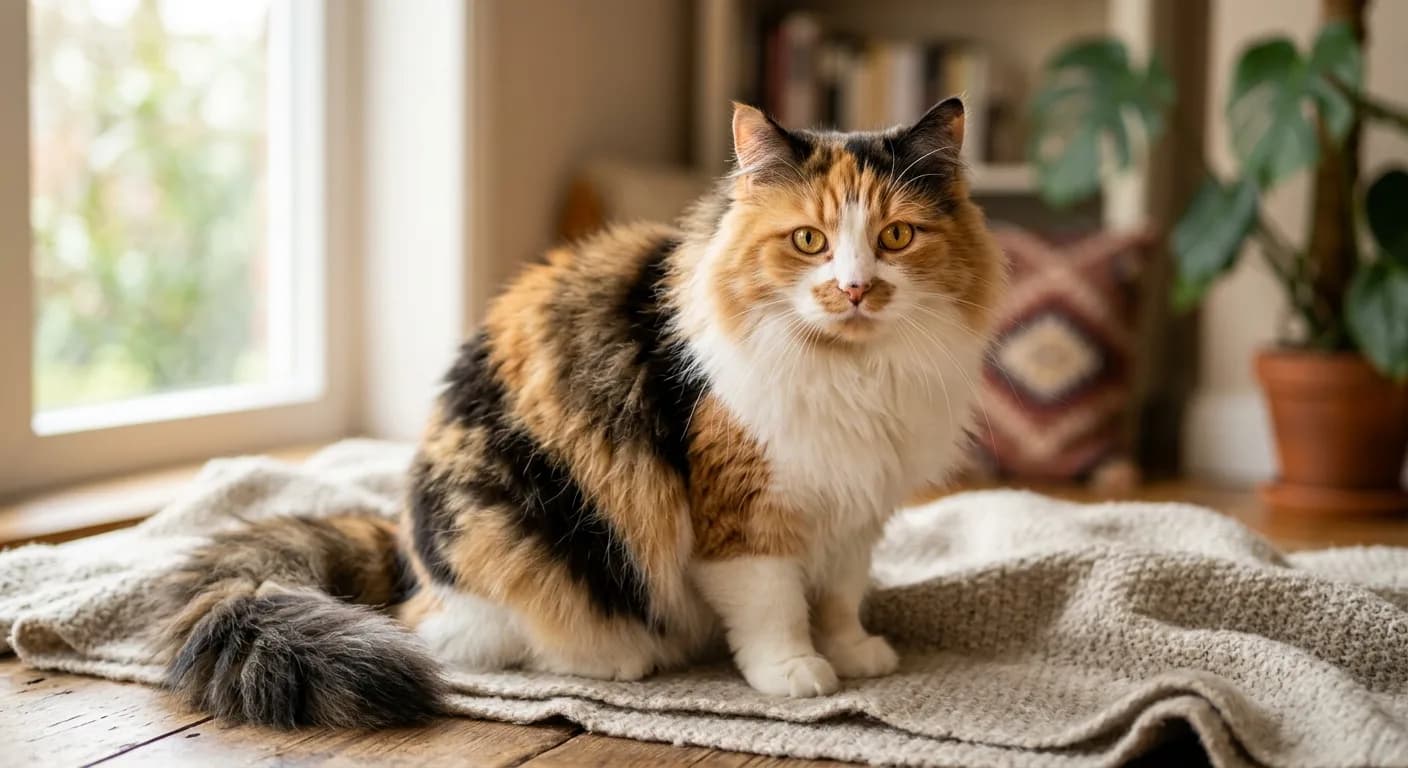
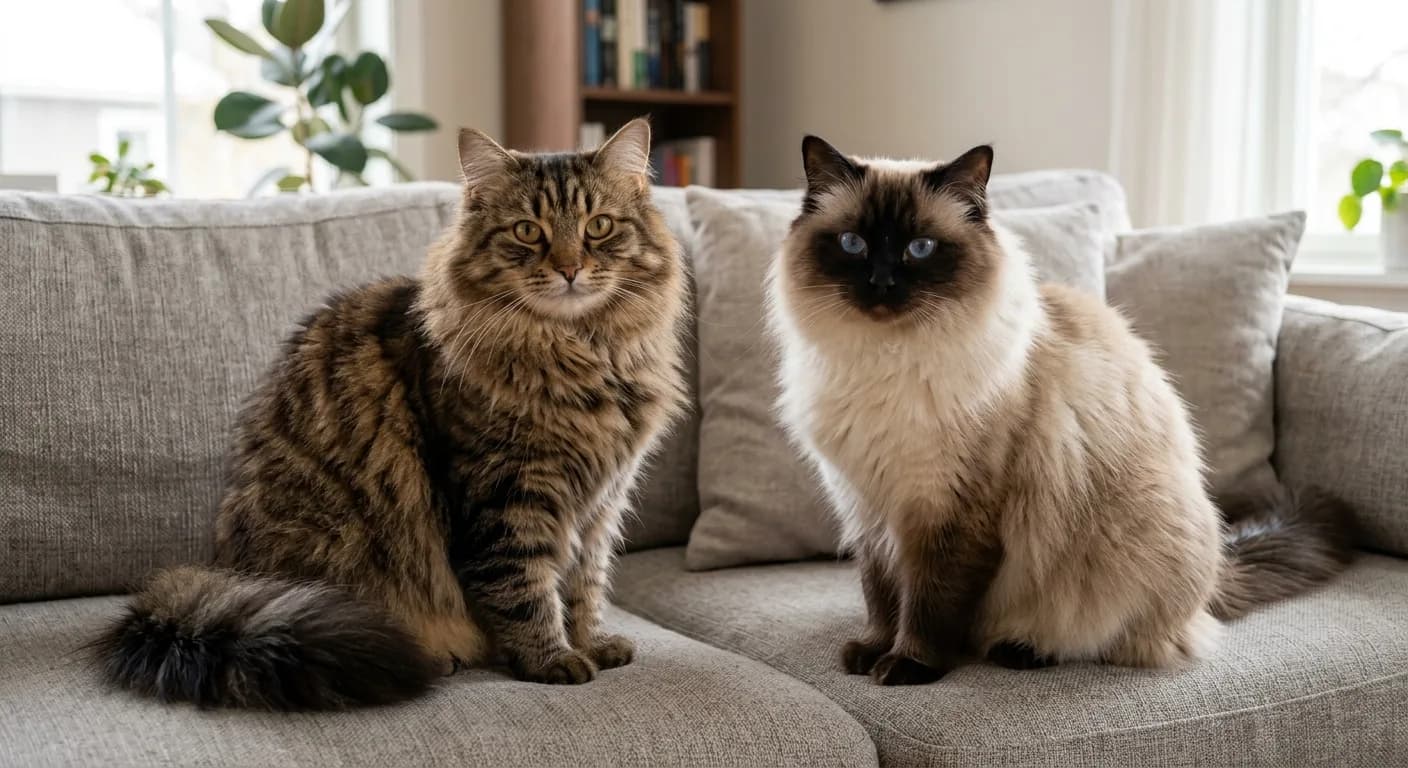
This is the rule that matters most. A Ragdoll is always pointed and always has blue eyes. Pointed means the body is lighter than the "points" (the ears, face, legs, and tail), in one of six colors: seal, blue, chocolate, lilac, red, or cream. The breed standard is strict about it, and a Ragdoll with any eye color other than blue is disqualified in the show ring.
A Ragamuffin is the opposite kind of flexible. It is allowed in nearly any color and pattern, with or without white, and in any eye color, including odd-eyed cats with two different colored eyes. The one thing a show Ragamuffin is not supposed to be is pointed, since that is the Ragdoll's signature. So if you see a solid brown, tabby, calico, or tortoiseshell fluffball with green or gold eyes, you are almost certainly looking at a Ragamuffin and not a Ragdoll.
That single contrast is why the difference between Ragamuffin and Ragdoll is usually so easy to spot once you know what to look for: check the eyes and check for points.

63-inch multi-level cat tree with scratch posts, hammock, plush perches, and dangling toys. Vertical territory is non-negotiable for high-energy climbing breeds like the Bengal.
Petful may earn a commission when you click through to Chewy, at no extra cost to you.
Size and Build
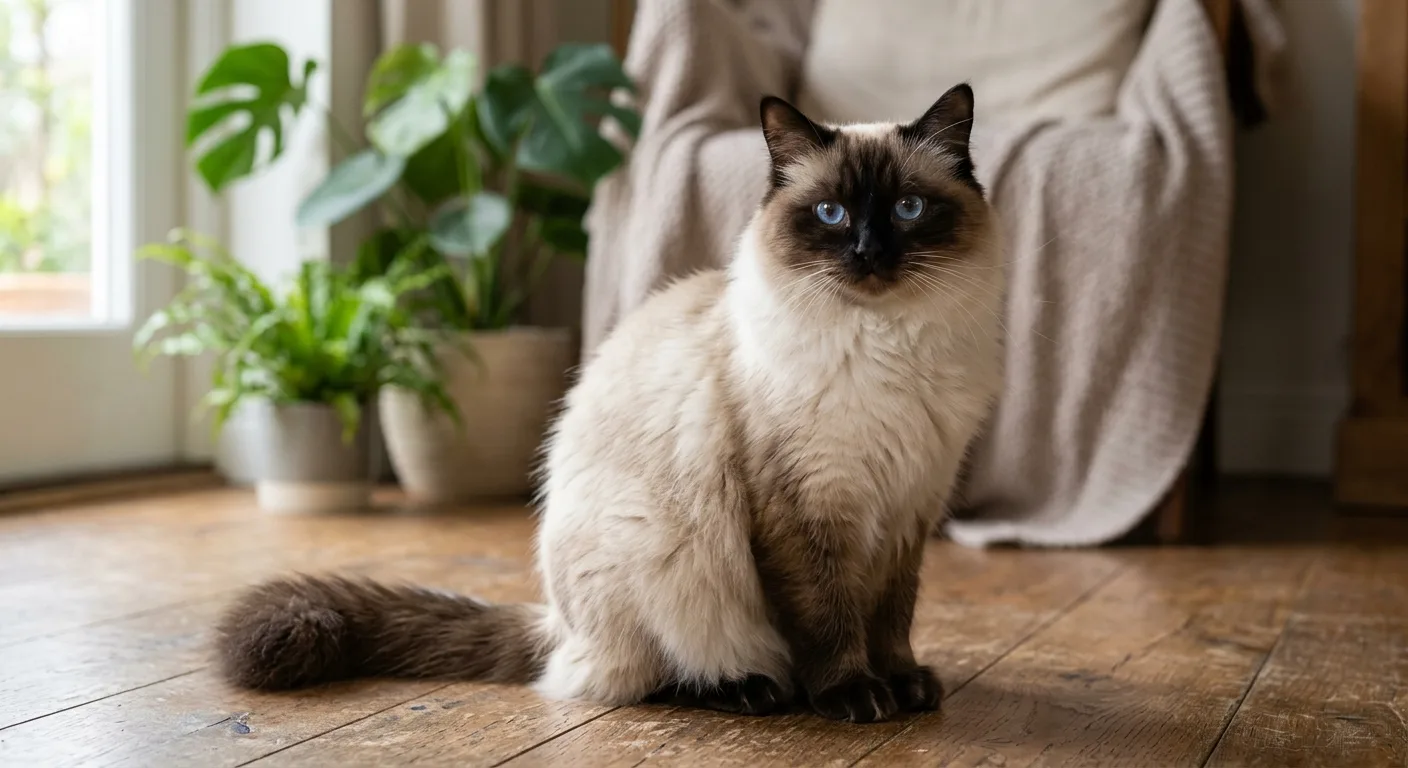
On ragamuffin vs ragdoll size, the two breeds are very close. Both are large, heavy-boned cats that typically weigh somewhere in the 10-20 pound range, with males running noticeably bigger than females. Ragdolls are often cited as one of the largest domestic breeds, and Ragamuffins are right there with them.
Neither breed reaches full size quickly. Both are slow to mature and may keep filling out until around age four, so a young adult of either breed will still gain weight and substance over time. Build-wise, the Ragamuffin tends to carry a slightly rounder head and a sweeter, more "teddy bear" muzzle, while the Ragdoll's head is a broad modified wedge, but these are subtle differences most pet owners would not notice side by side.
Coat and Grooming
Both breeds wear a plush, semi-long coat that feels soft and rabbit-like rather than heavy. Because neither has a dense, woolly undercoat, they mat less than you might expect for a long-haired cat, and grooming needs are moderate rather than demanding.

108-oz stainless steel pet fountain with quiet pump and water-level window. Bengals are notoriously water-obsessed; a flowing fountain encourages hydration and pulls them away from sinks and toilets.
Petful may earn a commission when you click through to Chewy, at no extra cost to you.
A thorough combing once or twice a week is usually enough to keep either breed tangle-free, with a little extra attention during seasonal shedding. The practical takeaway: grooming is essentially a tie, so it should not be the deciding factor in the Ragamuffin vs Ragdoll decision.
Temperament
Here the two breeds are nearly indistinguishable, and it is the best part of both. Ragamuffins and Ragdolls are famous for being docile, affectionate, and downright dog-like, following their people from room to room and melting into a lap at the first opportunity. Ragdolls earned their name from a tendency to go limp and relaxed when picked up, and Ragamuffins share that same laid-back, cuddle-seeking nature.
Both are gentle with children and other pets, quiet-voiced, and far more interested in companionship than in athletic mischief. If your heart is set on a sociable, easygoing cat that genuinely wants to be near you, you cannot go wrong with either one.
Which Breed Is Right for You?
For most pet homes, the choice between these two comes down to looks, not lifestyle, because their personalities and care needs overlap so heavily. If you specifically love the classic pointed look with those striking blue eyes, the Ragdoll is the breed for you. If you want that same plush, gentle lap cat but in a solid, tabby, tortie, or calico coat (or you simply love the idea of green or gold eyes), the Ragamuffin gives you that variety.
A few practical notes. Ragdolls are more widely available and more heavily marketed, so you may find breeders more easily, while Ragamuffins can take a little more searching. Whichever you choose, buy from a reputable breeder who health-tests their cats, since both breeds can carry a risk for hypertrophic cardiomyopathy (HCM), a common feline heart condition. If you are leaning toward the more colorful option, our full Ragamuffin breed guide walks through everything a new owner should know. Either way, you are getting one of the friendliest, most affectionate cats in the fancy.
- Whether you lean Ragamuffin or Ragdoll, ask whether the parents are screened for HCM (hypertrophic cardiomyopathy). A responsible breeder will share results without hesitation, and it is the single most useful health question you can ask for either breed.
Not exactly. The Ragamuffin was bred from the Ragdoll in the early 1990s when a group of breeders broke away from the Ragdoll's registry and started their own line. They share ancestry and look similar, but the Ragamuffin is now a separate breed that comes in far more colors, patterns, and eye colors than the always-pointed, always-blue-eyed Ragdoll.
No, the two are about the same size. Both are large, heavy-boned cats that typically weigh between 10 and 20 pounds, with males larger than females. Ragdolls are often called one of the largest domestic breeds, and Ragamuffins are comparable. Neither reaches full size until around age four.
They can, but they do not have to. Ragamuffins are allowed any eye color, including green, gold, and odd-eyed combinations. Blue eyes are the rule for Ragdolls, not Ragamuffins, so blue eyes alone do not tell the two breeds apart.

Coreen Saito is a pet writer and longtime shelter volunteer with more than a decade in animal rescue. She covers cat behavior, breed care, and the small, ordinary science of sharing a life with companion animals, with a particular focus on honest takes about the products and decisions that actually matter. At home in Arizona, she's outranked by Mac (a dog with the loudest opinion in the house), Rebel (a cat who governs by quiet authority), and Meri (an orange tabby who runs the late shift and the laundry basket). She writes about all three, plus the rescues that keep coming through her life, at LifeWithMinty.com.
Sign up for expert-backed reviews and safety alerts all in one place.